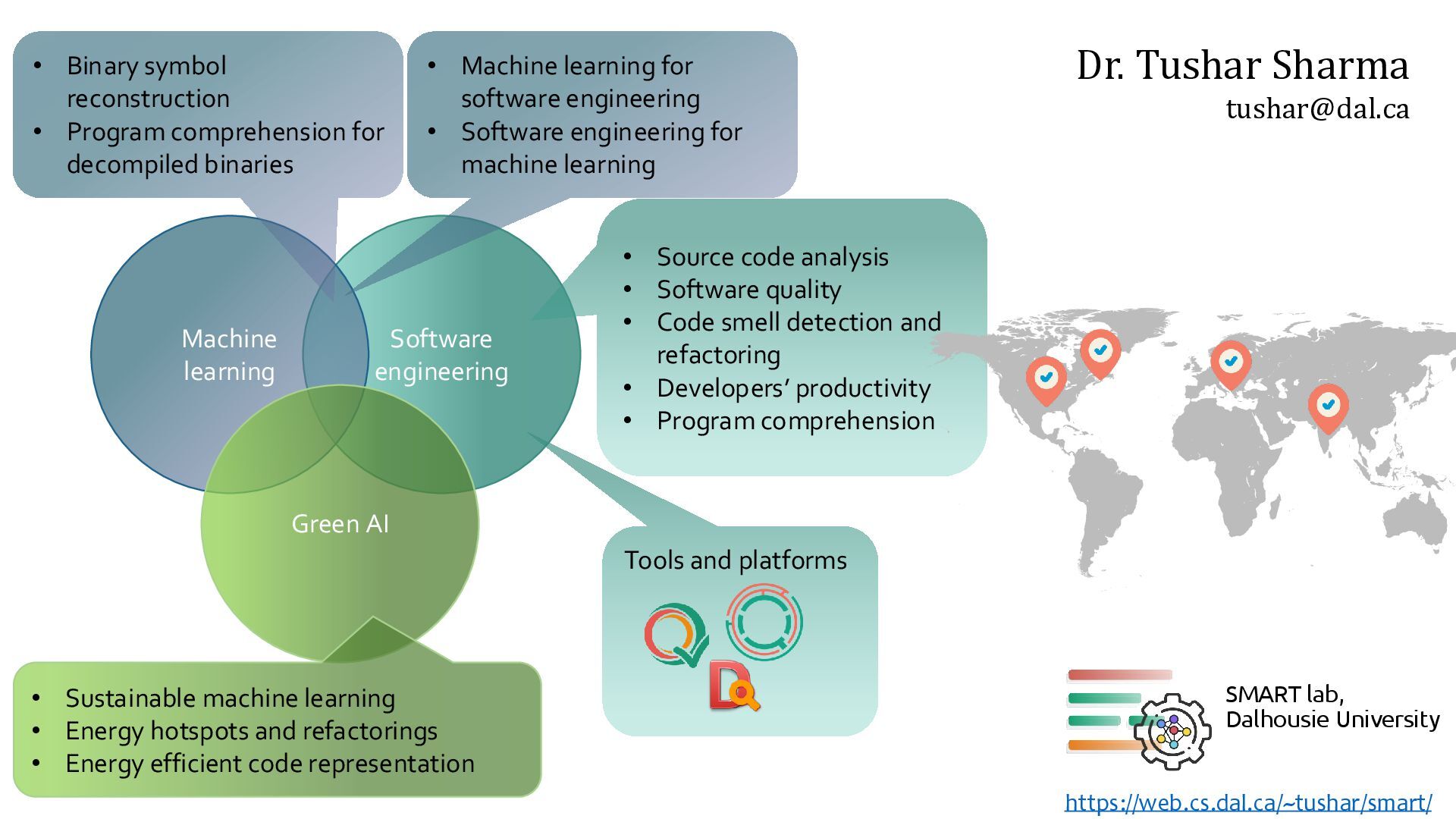
quality • Code smell detection and refactoring • Developers’ productivity • Program comprehension • Machine learning for software engineering • Software engineering for machine learning https://web.cs.dal.ca/~tushar/smart/ • Binary symbol reconstruction • Program comprehension for decompiled binaries Green AI • Sustainable machine learning • Energy hotspots and refactorings • Energy efficient code representation Dr. Tushar Sharma [email protected] SMART lab, Dalhousie University Tools and platforms
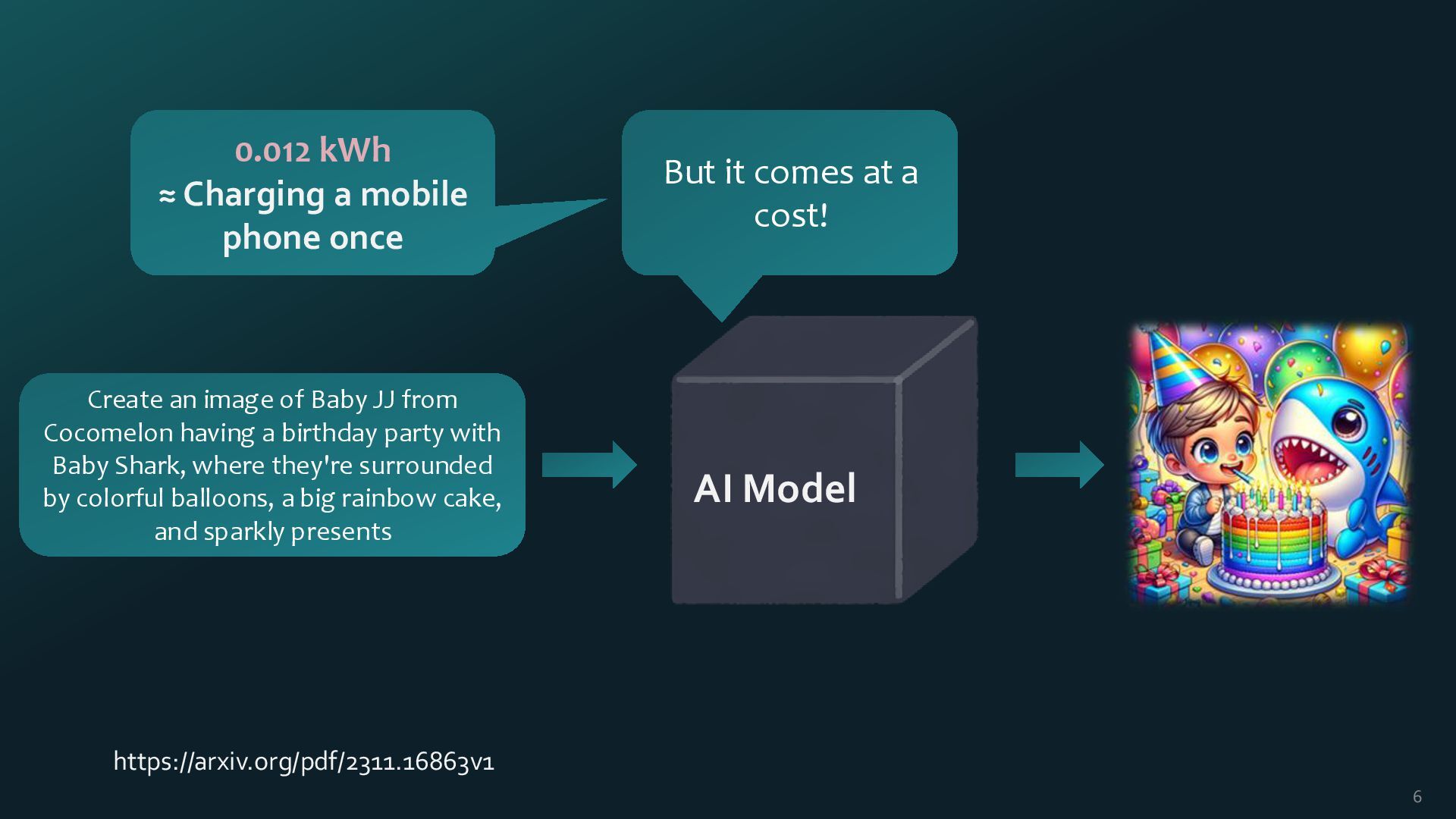
a birthday party with Baby Shark, where they're surrounded by colorful balloons, a big rainbow cake, and sparkly presents AI Model https://arxiv.org/pdf/2311.16863v1 But it comes at a cost! 0.012 kWh ≈ Charging a mobile phone once
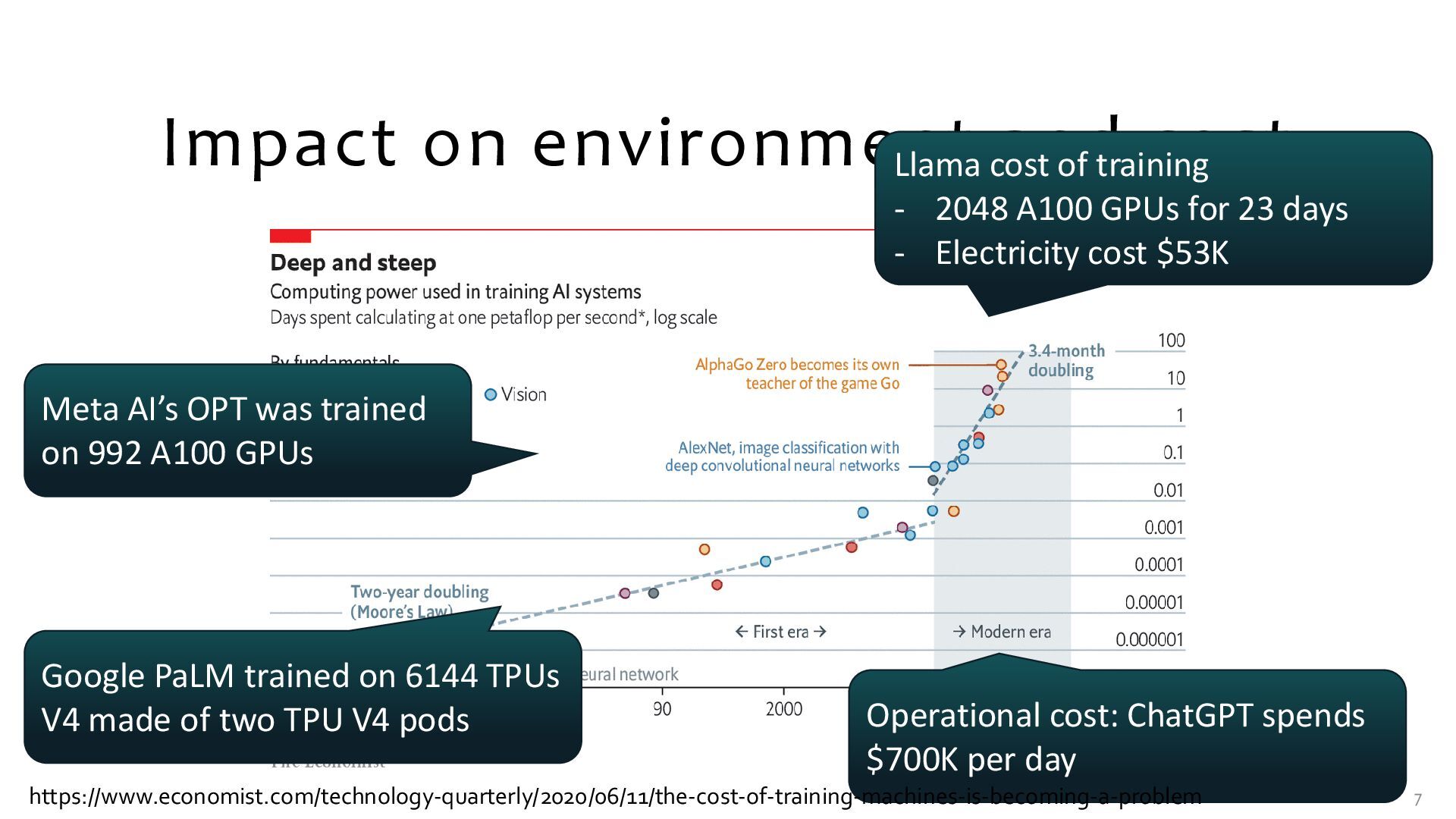
- 2048 A100 GPUs for 23 days - Electricity cost $53K Operational cost: ChatGPT spends $700K per day Google PaLM trained on 6144 TPUs V4 made of two TPU V4 pods Meta AI’s OPT was trained on 992 A100 GPUs https://www.economist.com/technology-quarterly/2020/06/11/the-cost-of-training-machines-is-becoming-a-problem
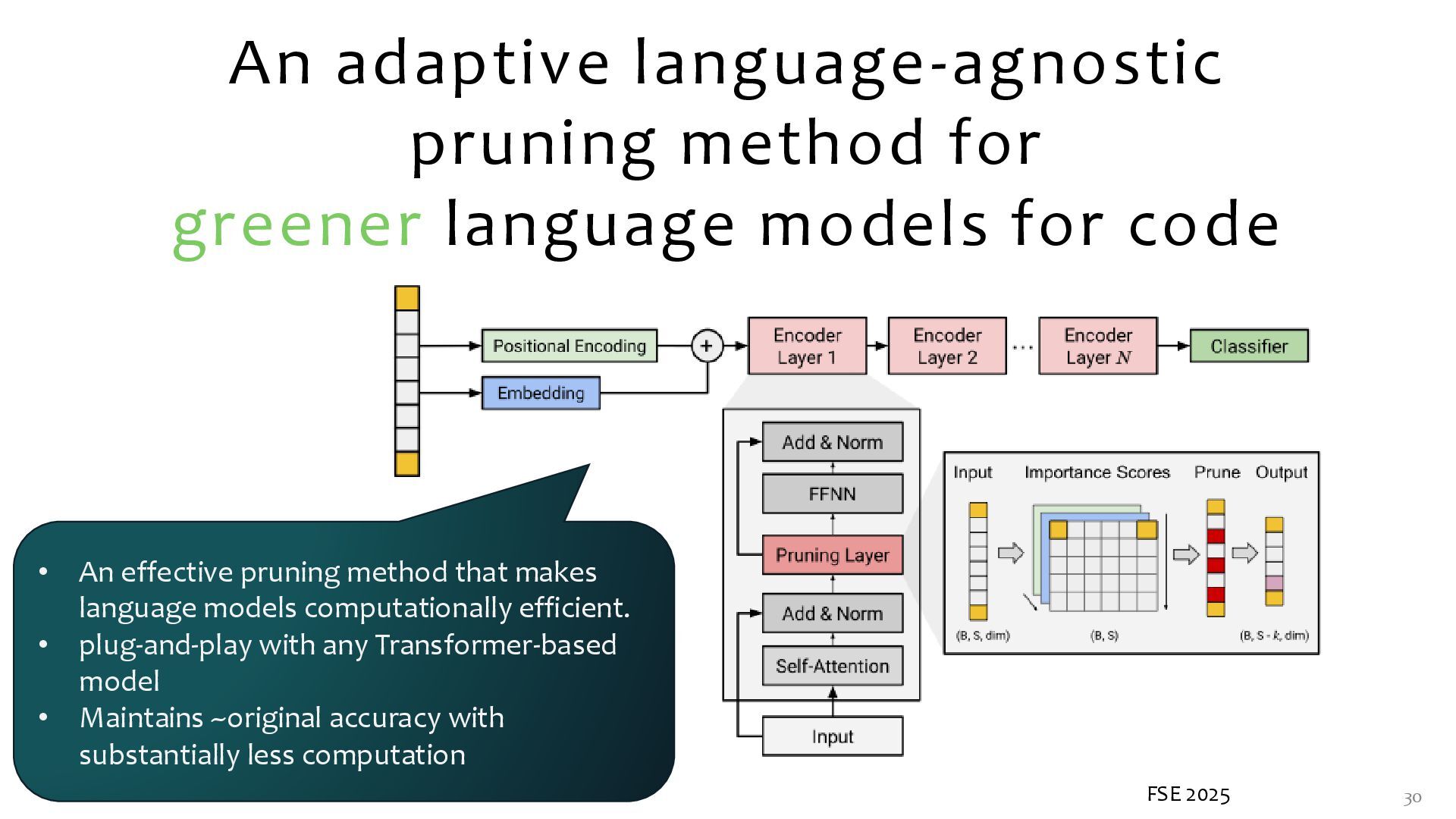
code 30 • An effective pruning method that makes language models computationally efficient. • plug-and-play with any Transformer-based model • Maintains ~original accuracy with substantially less computation FSE 2025
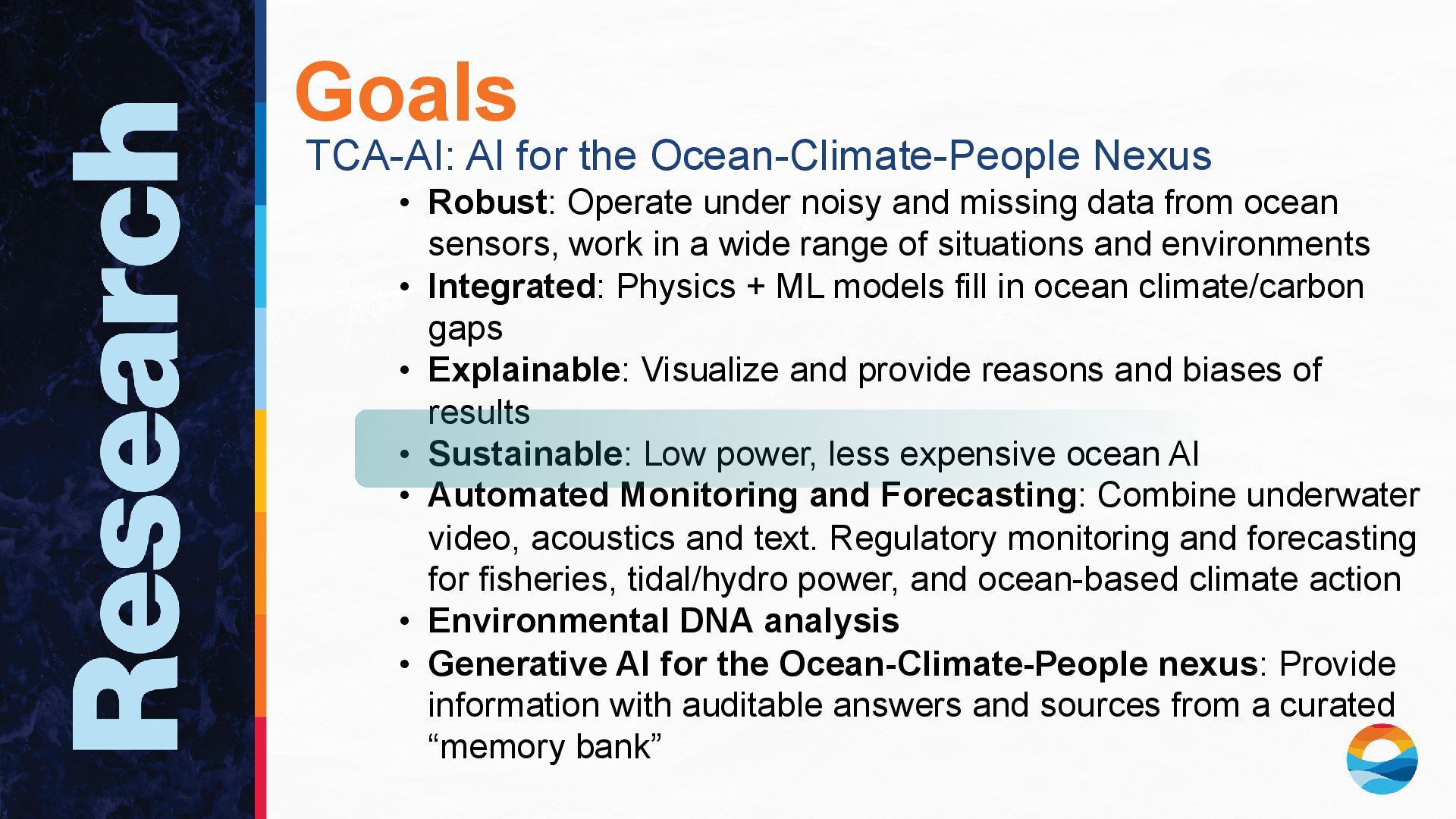
under noisy and missing data from ocean sensors, work in a wide range of situations and environments • Integrated: Physics + ML models fill in ocean climate/carbon gaps • Explainable: Visualize and provide reasons and biases of results • Sustainable: Low power, less expensive ocean AI • Automated Monitoring and Forecasting: Combine underwater video, acoustics and text. Regulatory monitoring and forecasting for fisheries, tidal/hydro power, and ocean-based climate action • Environmental DNA analysis • Generative AI for the Ocean-Climate-People nexus: Provide information with auditable answers and sources from a curated “memory bank”
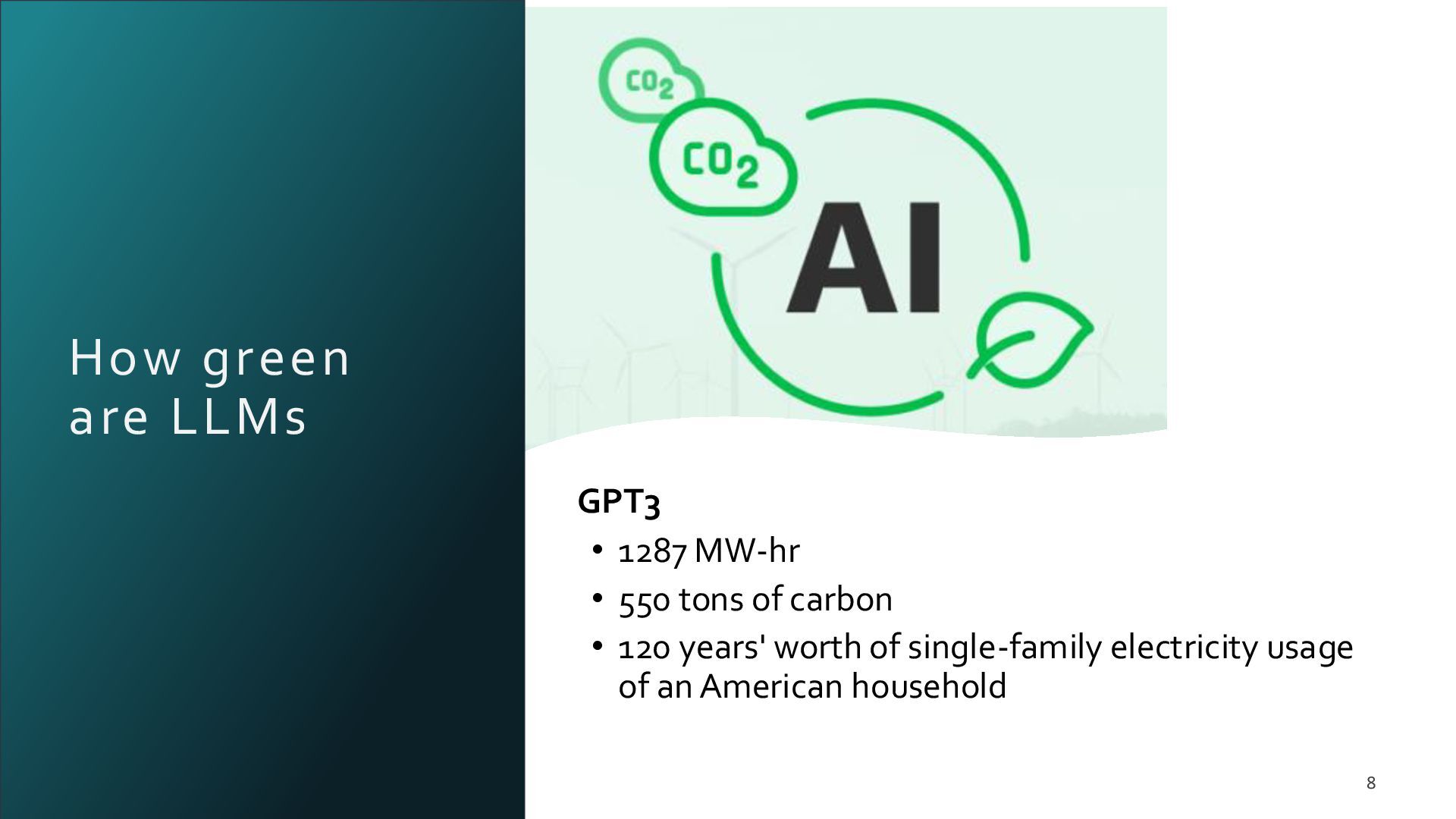
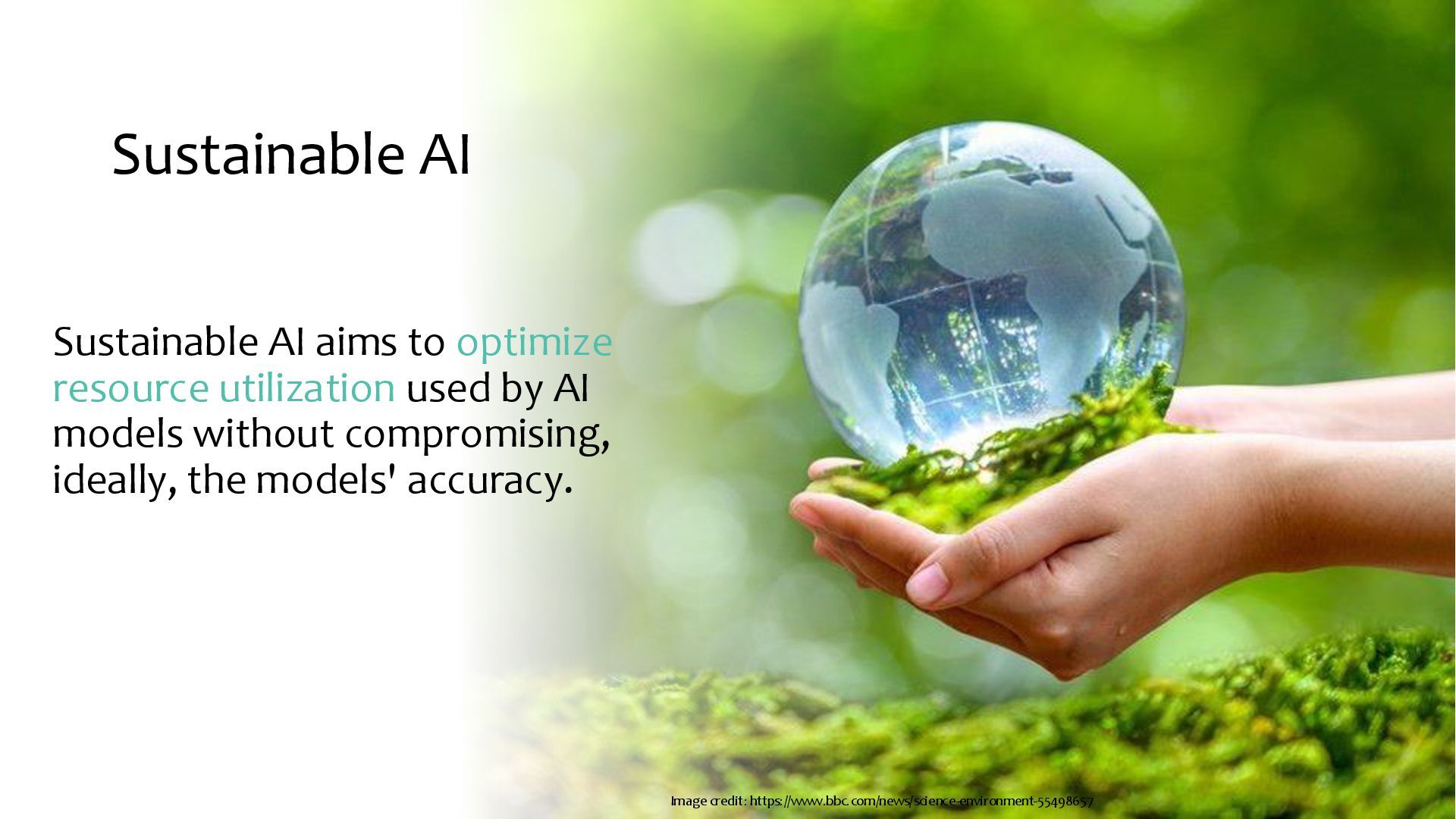
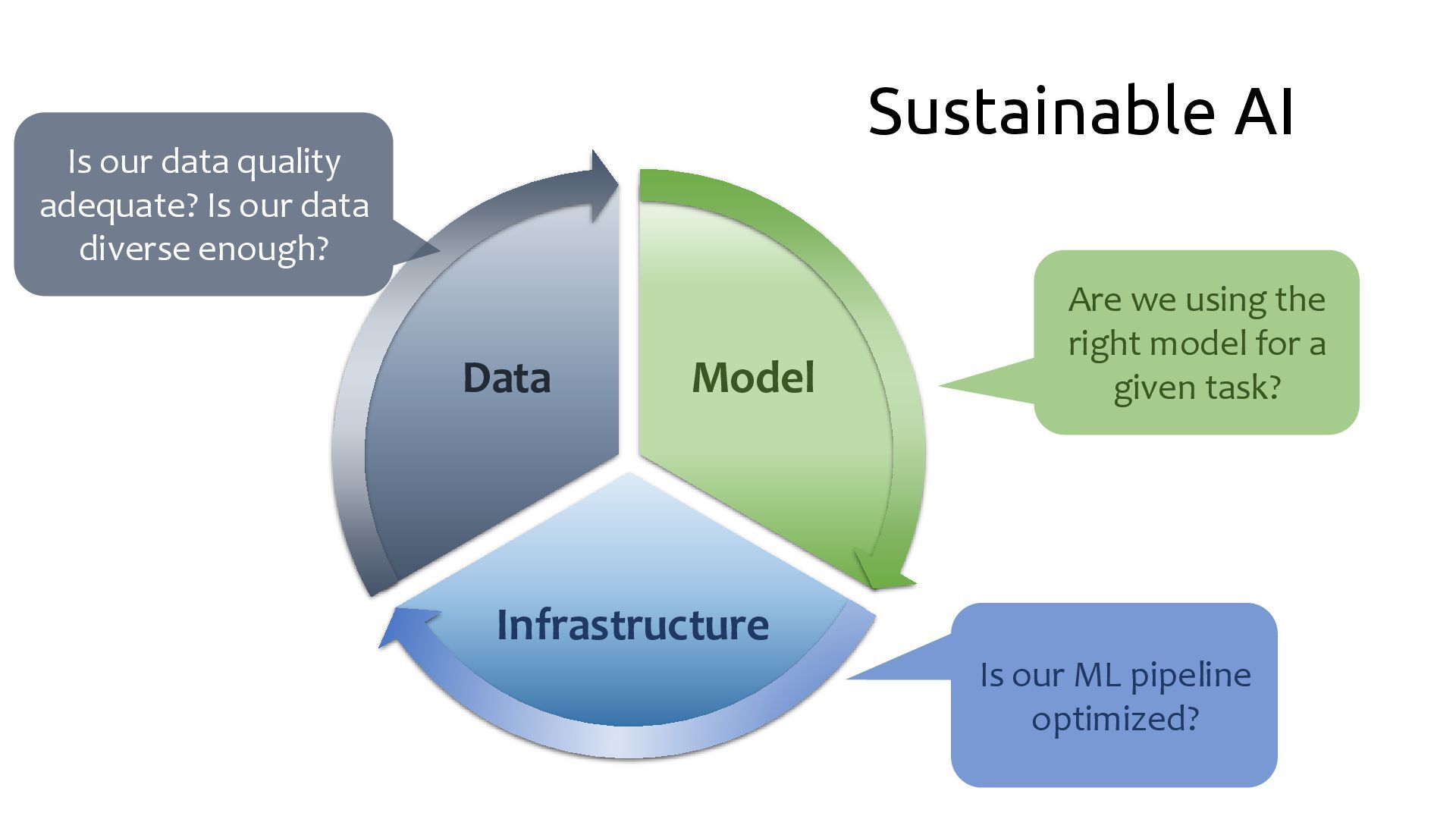
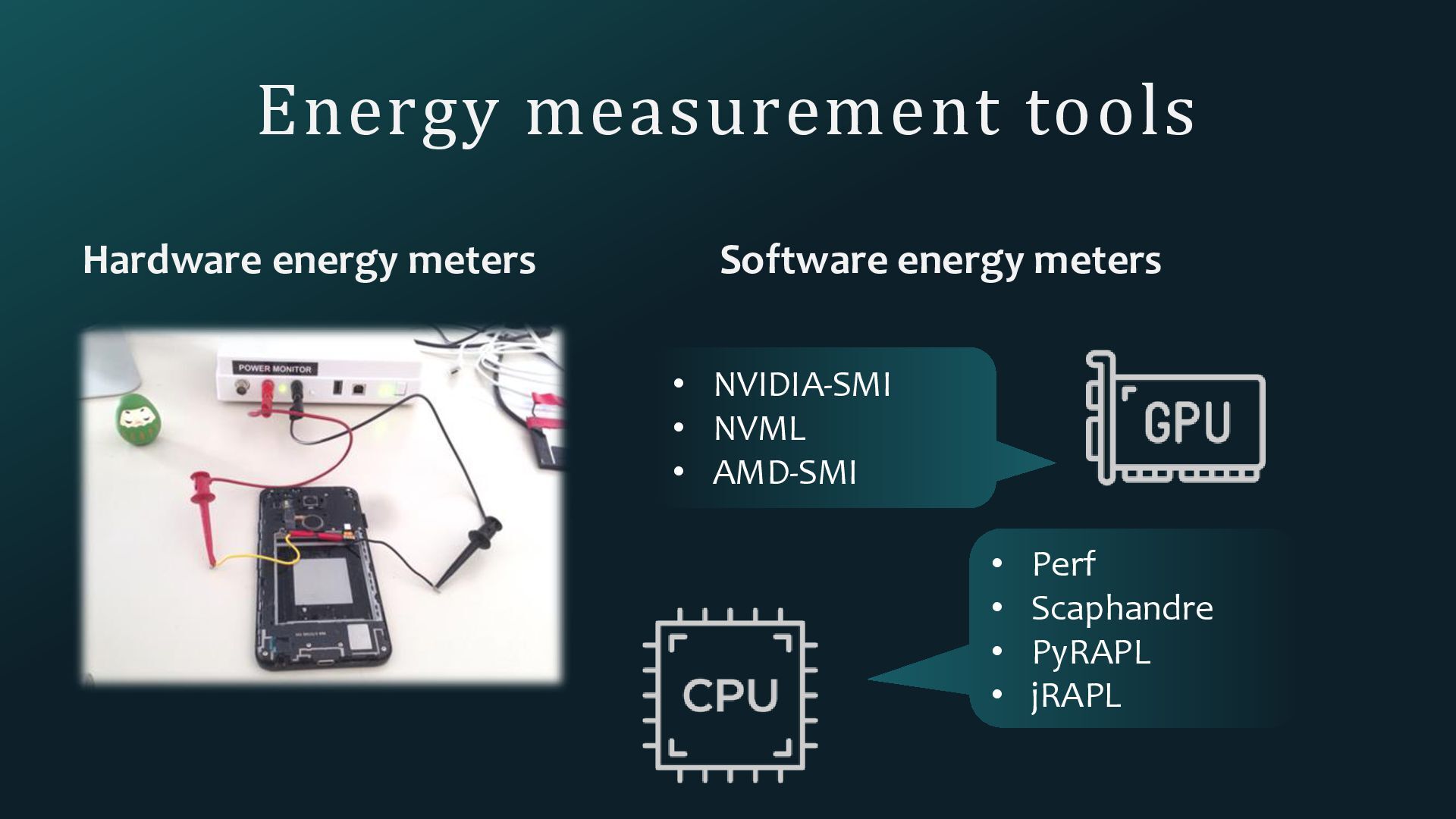
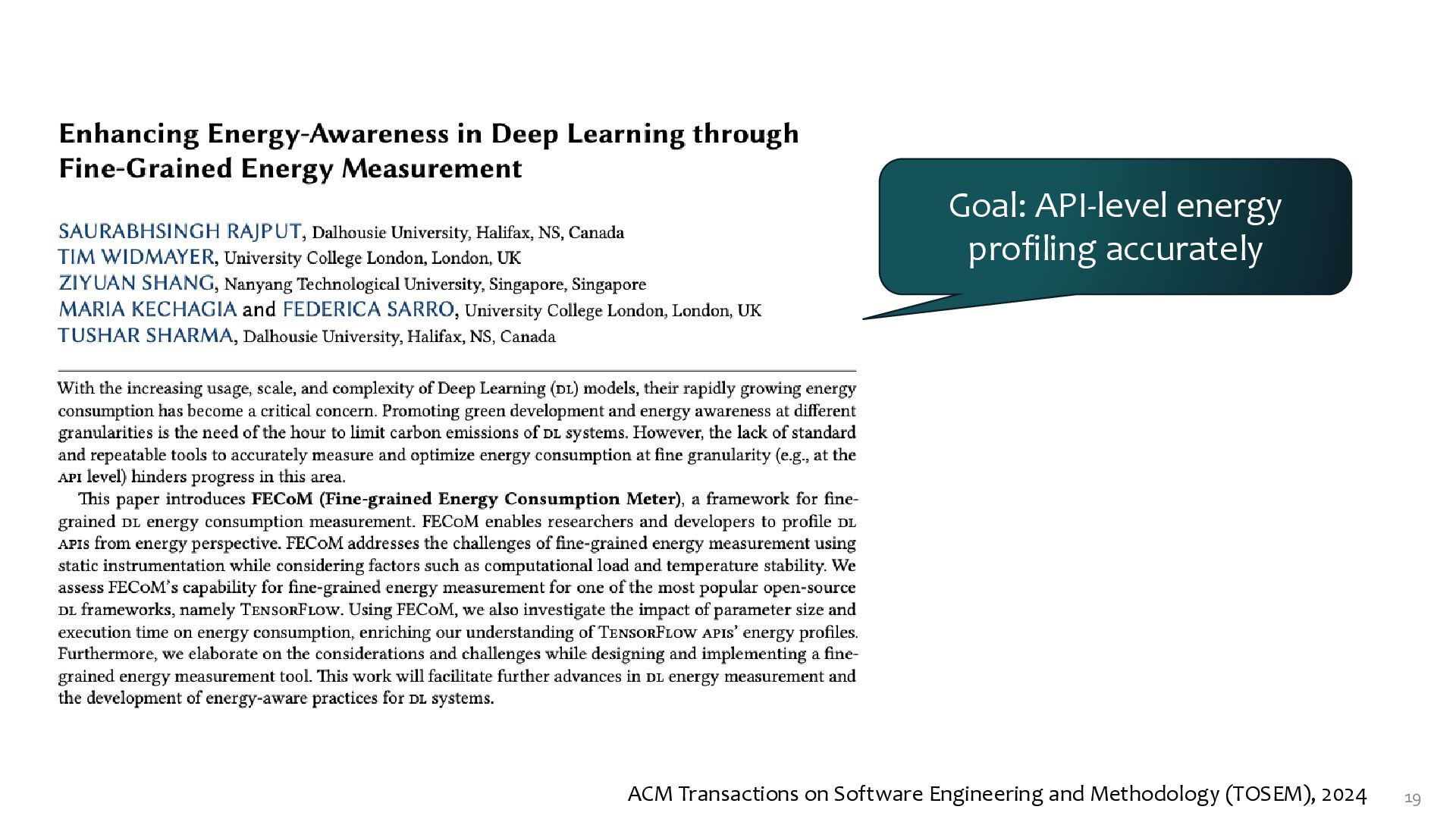
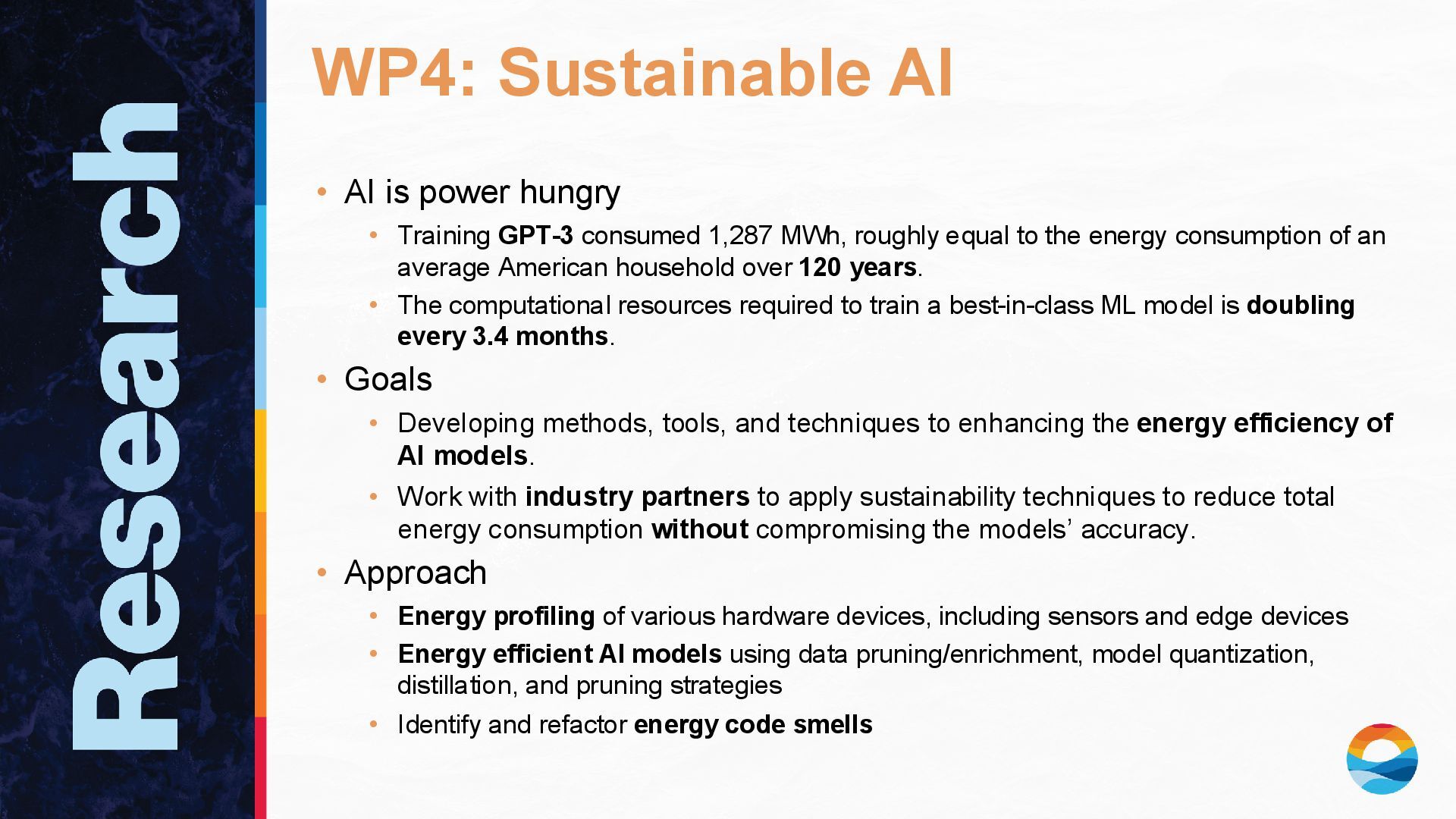
MWh, roughly equal to the energy consumption of an average American household over 120 years. • The computational resources required to train a best-in-class ML model is doubling every 3.4 months. • Goals • Developing methods, tools, and techniques to enhancing the energy efficiency of AI models. • Work with industry partners to apply sustainability techniques to reduce total energy consumption without compromising the models’ accuracy. • Approach • Energy profiling of various hardware devices, including sensors and edge devices • Energy efficient AI models using data pruning/enrichment, model quantization, distillation, and pruning strategies • Identify and refactor energy code smells WP4: Sustainable AI
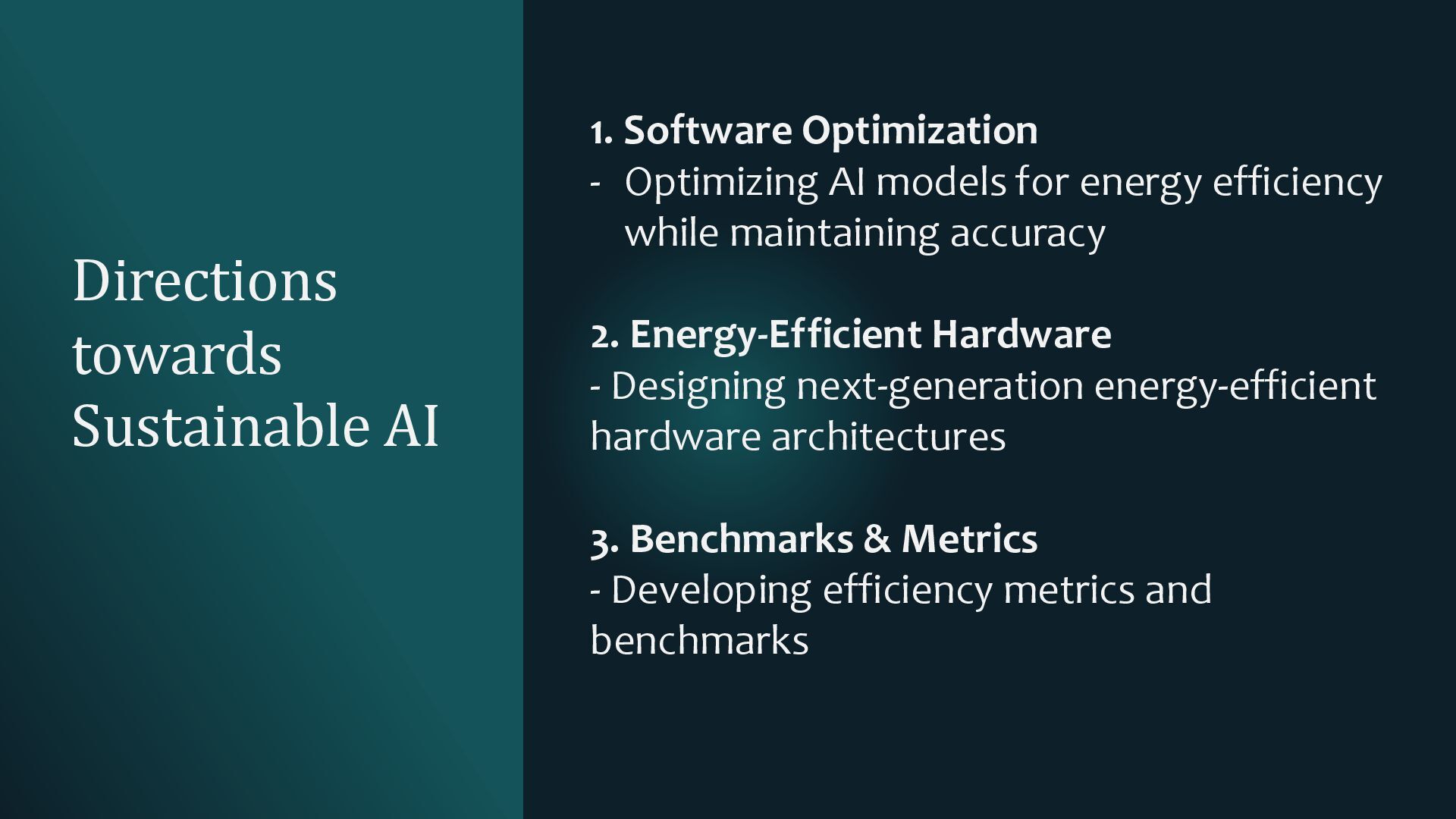
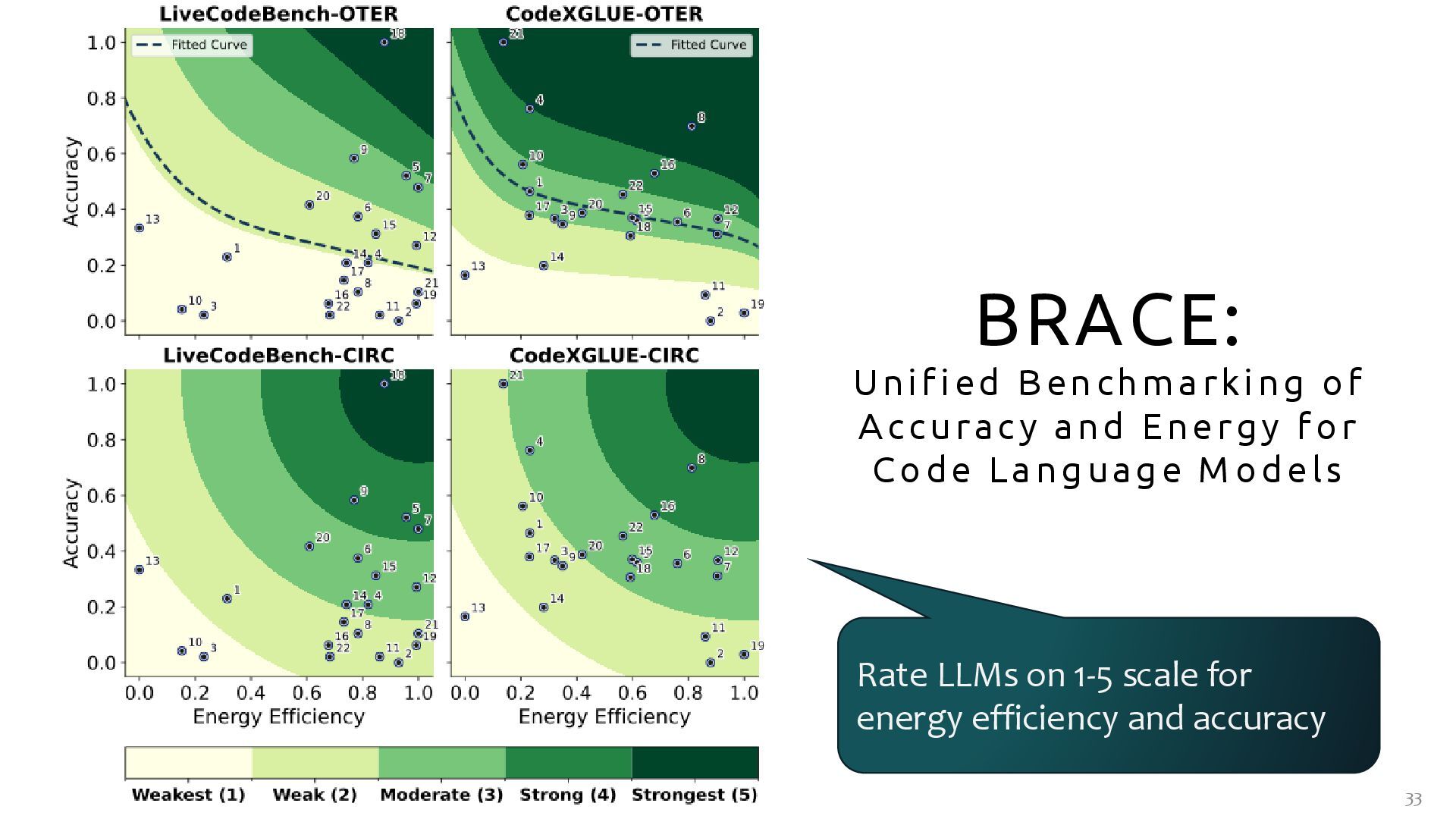
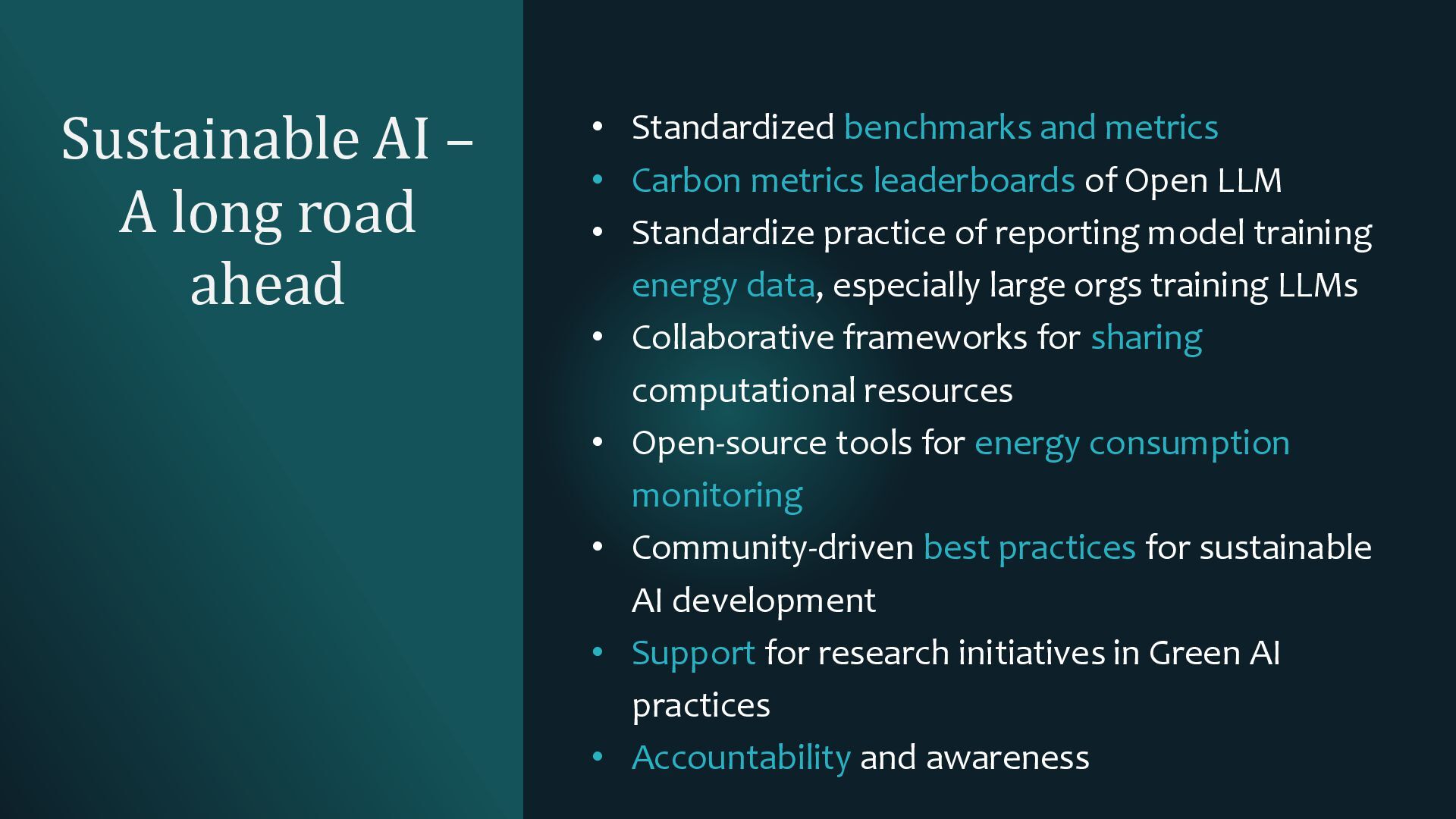
and metrics • Carbon metrics leaderboards of Open LLM • Standardize practice of reporting model training energy data, especially large orgs training LLMs • Collaborative frameworks for sharing computational resources • Open-source tools for energy consumption monitoring • Community-driven best practices for sustainable AI development • Support for research initiatives in Green AI practices • Accountability and awareness


 tusharma
 daidaidai
 freee
freee
 x5gtrn
 kentarofujii
 yukisakai1225
 benjagm
.png) yamad
yamad
 pfn
pfn
 takuroabe
 jtakeda
 colopl
 yu23ki14
 codingconduct
 colly
colly
 maltzj
 nikkihalliwell
 addyosmani
 seathinner
 frankvandijk
 katarinadahlin
 chrisshort
 reverentgeek
 jonoalderson
 brettharned
![Thank you! Tushar Sharma [email protected] SMART Lab, Dalhousie University](https://files.speakerdeck.com/presentations/ad623159bb7a443ab8f7beb19a55a7a0/slide_29.jpg)