Share
Embed
How Corporate Video Helps Businesses Build Trust, Communicate, and Grow
Discover how corporate video helps businesses build trust, improve communication, strengthen brand identity, and support growth through engaging visual storytelling and strategic video content.
Visual Captive
November 12, 2026
Transcript
5 slides
-
How Corporate Video Helps Businesses Build Trust, Communicate, and Grow
Businesses need more than a good product or service to stand out. They also need to communicate their value, explain what makes them different, and build relationships with customers. Video makes these messages easier to understand by combining visuals, sound, interviews, and storytelling. From introducing a company to demonstrating a product or sharing customer experiences, video content gives businesses a practical way to communicate with different audiences. It can support marketing, sales, recruitment, and internal communication when each video is created with a clear purpose. For businesses looking to strengthen their brand and connect with customers across different markets, a well-planned video strategy can make communication more engaging, consistent, and memorable. What Is Corporate Video and Why Does It Matter? Corporate video is professionally produced visual content that helps an organization communicate its identity, products, services, values, or expertise. Unlike general -
entertainment content, these videos are created around specific business and
communication objectives. Companies use them to introduce their operations, explain complex services, share company updates, train employees, and demonstrate their capabilities. Video also helps make information easier to follow. For example, a manufacturing company can show how its equipment works instead of relying entirely on technical descriptions. A financial services firm can use an expert interview to explain a complicated subject in a more approachable way. The value comes from matching the video format with the message and the audience. Types of Corporate Videos Businesses Can Create Different business objectives require different video formats. Some are designed to attract potential customers, while others help employees, partners, or existing clients understand the organization. Here are several useful formats: 1. Company Overview Videos A company profile video introduces an organization's background, services, people, and values. It gives prospective customers and business partners a clearer picture of what the company does and how it operates. 2. Customer Testimonials and Case Studies Customer testimonial videos share genuine client experiences. Case study videos can go further by explaining a customer's challenge, the solution provided, and the measurable outcome, where verified results are available. 3. Product and Service Demonstration Videos These videos show how a product works or explain how a service solves a particular problem. They are especially useful when a business offers technical, specialized, or complex solutions. -
4. Employee and Recruitment Videos Employee interviews and company culture
videos help communicate workplace values, team experiences, and career opportunities. They can give potential candidates a more realistic understanding of the organization. 5. Training and Internal Communication Videos Businesses can use training videos, onboarding materials, and leadership updates to share information consistently across departments and locations. How Corporate Videos Support Business Growth A thoughtful video content strategy can support several areas of business communication. • Building customer trust: Interviews, demonstrations, and authentic customer experiences help audiences understand the people and expertise behind a business. • Improving communication: Visual explanations can make complicated products, processes, and services easier to understand. • Supporting marketing and sales: Videos can introduce solutions, answer common questions, and help potential customers evaluate their options. • Strengthening recruitment: Employee stories and workplace footage can communicate company culture to prospective candidates. • Improving employee engagement: Consistent training and internal updates help teams access important information in an understandable format. However, video does not automatically generate leads or sales. Its effectiveness depends on the quality of the message, audience relevance, distribution, and the business objective. What Goes Into a Successful Corporate Video? Effective business video production starts well before filming. A structured workflow helps keep the project aligned with its intended purpose. 1. Discovery and strategy: Identify the target audience, communication challenge, key message, and desired outcome. 2. Pre-production and planning: Develop the concept, script, storyboard, filming schedule, locations, and production requirements. 3. Filming: Capture interviews, product demonstrations, workplace footage, and supporting visuals that communicate the message clearly. 4. Post-production: Edit the footage, refine the audio, add graphics, complete color correction, and prepare the final versions. -
5. Delivery: Export the video in suitable formats for its
intended platforms and uses. Planning also involves practical considerations such as stakeholder approvals, employee consent, music licensing, and brand guidelines. Addressing these details early can help prevent unnecessary delays. How to Distribute and Repurpose Corporate Video Content Creating a video is only one part of a successful video marketing strategy. Businesses also need to consider where their audiences are most likely to watch it. Different platforms serve different purposes: Platform Suitable video content Company website Brand films, company overviews, and service explainers LinkedIn Executive interviews, customer stories, and industry insights YouTube Product demonstrations, tutorials, and educational videos Email campaigns Short explainers and customer testimonials Recruitment pages Employee stories and workplace culture videos A single production shoot can also generate multiple assets. For example, a company interview can become a full-length website video, shorter social media clips, and promotional content for email campaigns. Planning these deliverables before filming helps businesses get more value from their production investment. What Should Businesses Consider Before Hiring a Video Production Company? Choosing a production partner involves more than comparing equipment or reviewing showreels. Businesses should consider: • Relevant portfolio: Look for examples that demonstrate experience with similar industries, audiences, or video formats. -
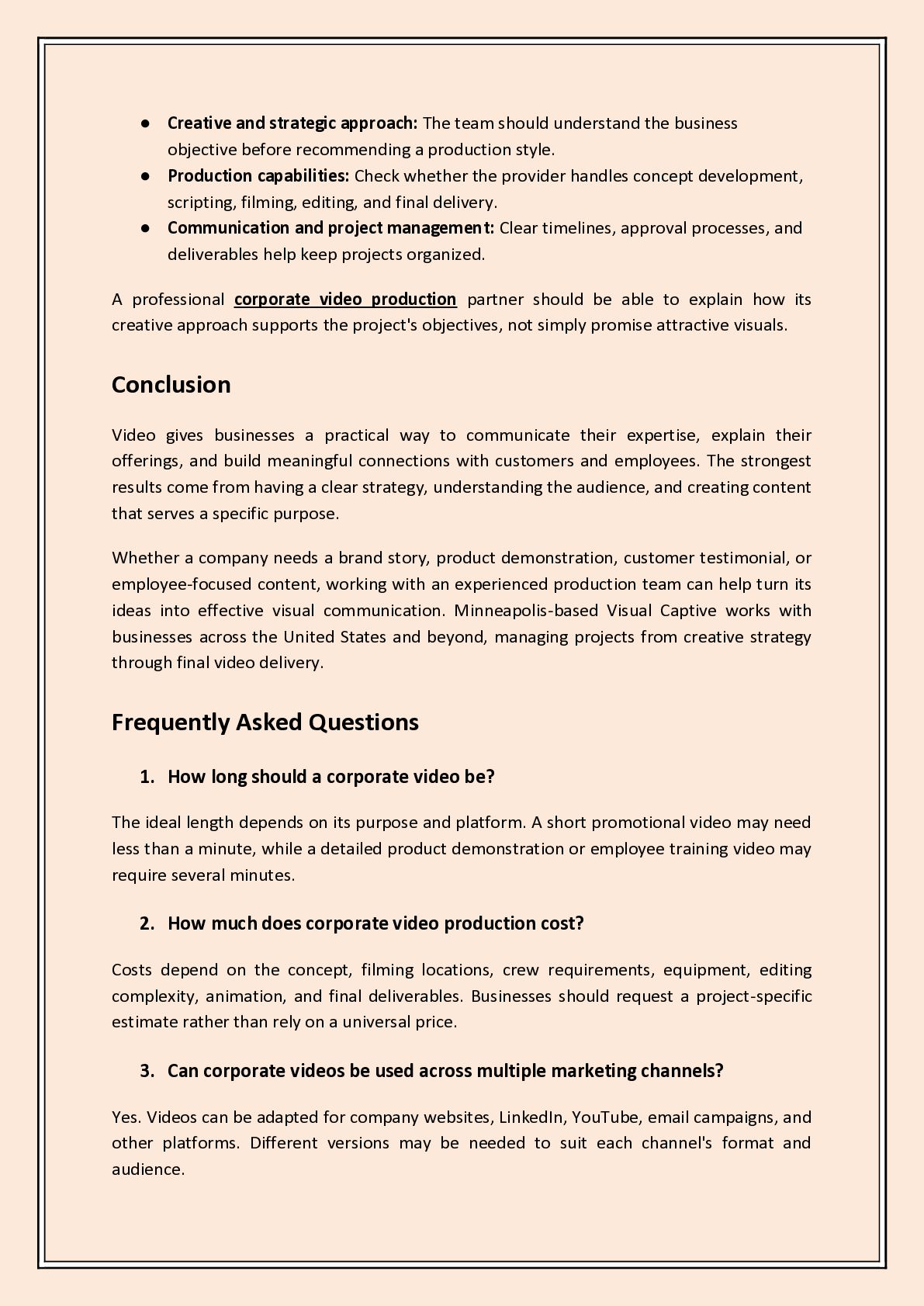
• Creative and strategic approach: The team should understand the
business objective before recommending a production style. • Production capabilities: Check whether the provider handles concept development, scripting, filming, editing, and final delivery. • Communication and project management: Clear timelines, approval processes, and deliverables help keep projects organized. A professional corporate video production partner should be able to explain how its creative approach supports the project's objectives, not simply promise attractive visuals. Conclusion Video gives businesses a practical way to communicate their expertise, explain their offerings, and build meaningful connections with customers and employees. The strongest results come from having a clear strategy, understanding the audience, and creating content that serves a specific purpose. Whether a company needs a brand story, product demonstration, customer testimonial, or employee-focused content, working with an experienced production team can help turn its ideas into effective visual communication. Minneapolis-based Visual Captive works with businesses across the United States and beyond, managing projects from creative strategy through final video delivery. Frequently Asked Questions 1. How long should a corporate video be? The ideal length depends on its purpose and platform. A short promotional video may need less than a minute, while a detailed product demonstration or employee training video may require several minutes. 2. How much does corporate video production cost? Costs depend on the concept, filming locations, crew requirements, equipment, editing complexity, animation, and final deliverables. Businesses should request a project-specific estimate rather than rely on a universal price. 3. Can corporate videos be used across multiple marketing channels? Yes. Videos can be adapted for company websites, LinkedIn, YouTube, email campaigns, and other platforms. Different versions may be needed to suit each channel's format and audience.