PROVIDED FOR INFORMATIONAL PURPOSES ONLY. • WHILST EFFORTS WERE MADE TO VERIFY THE COMPLETENESS AND ACCURACY OF THE INFORMATION CONTAINED IN THIS PRESENTATION, IT IS PROVIDED “AS IS”, WITHOUT WARRANTY OF ANY KIND, EXPRESS OR IMPLIED. • ALL PERFORMANCE DATA INCLUDED IN THIS PRESENTATION HAVE BEEN GATHERED IN A CONTROLLED ENVIRONMENT. YOUR OWN TEST RESULTS MAY VARY BASED ON HARDWARE, SOFTWARE OR INFRASTRUCTURE DIFFERENCES. • ALL DATA INCLUDED IN THIS PRESENTATION ARE MEANT TO BE USED ONLY AS A GUIDE. • IN ADDITION, THE INFORMATION CONTAINED IN THIS PRESENTATION IS BASED ON IBM’S CURRENT PRODUCT PLANS AND STRATEGY, WHICH ARE SUBJECT TO CHANGE BY IBM, WITHOUT NOTICE. • IBM AND ITS AFFILIATED COMPANIES SHALL NOT BE RESPONSIBLE FOR ANY DAMAGES ARISING OUT OF THE USE OF, OR OTHERWISE RELATED TO, THIS PRESENTATION OR ANY OTHER DOCUMENTATION. • NOTHING CONTAINED IN THIS PRESENTATION IS INTENDED TO, OR SHALL HAVE THE EFFECT OF: • CREATING ANY WARRANT OR REPRESENTATION FROM IBM, ITS AFFILIATED COMPANIES OR ITS OR THEIR SUPPLIERS AND/OR LICENSORS 2
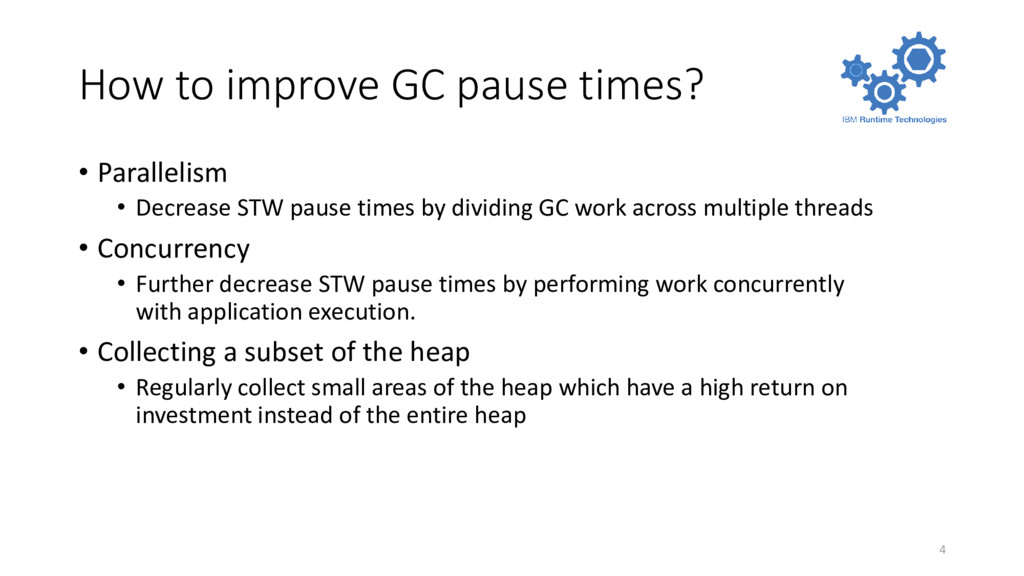
STW pause times by dividing GC work across multiple threads • Concurrency • Further decrease STW pause times by performing work concurrently with application execution. • Collecting a subset of the heap • Regularly collect small areas of the heap which have a high return on investment instead of the entire heap 4
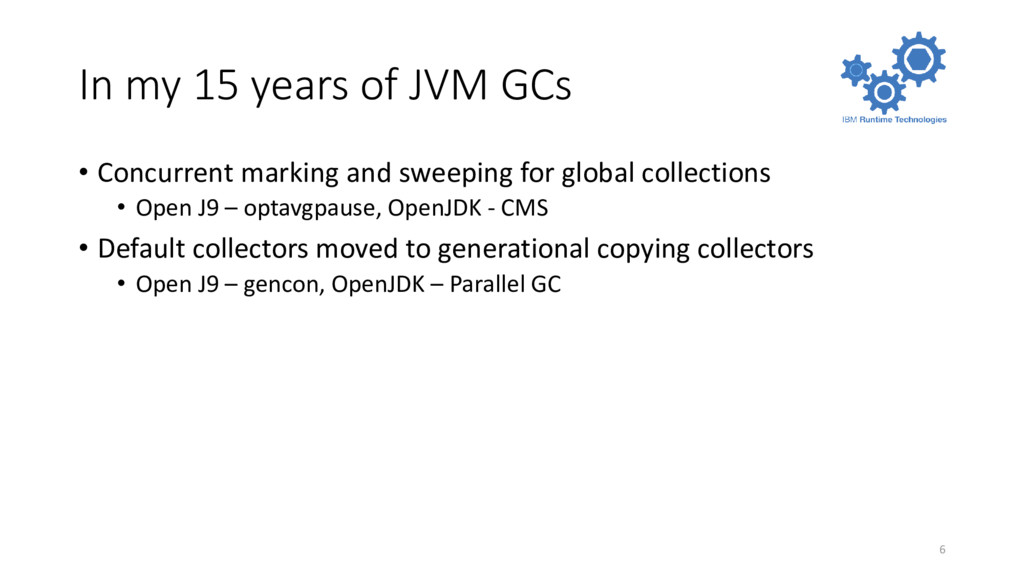
and sweeping for global collections • Open J9 – optavgpause, OpenJDK - CMS • Default collectors moved to generational copying collectors • Open J9 – gencon, OpenJDK – Parallel GC 6
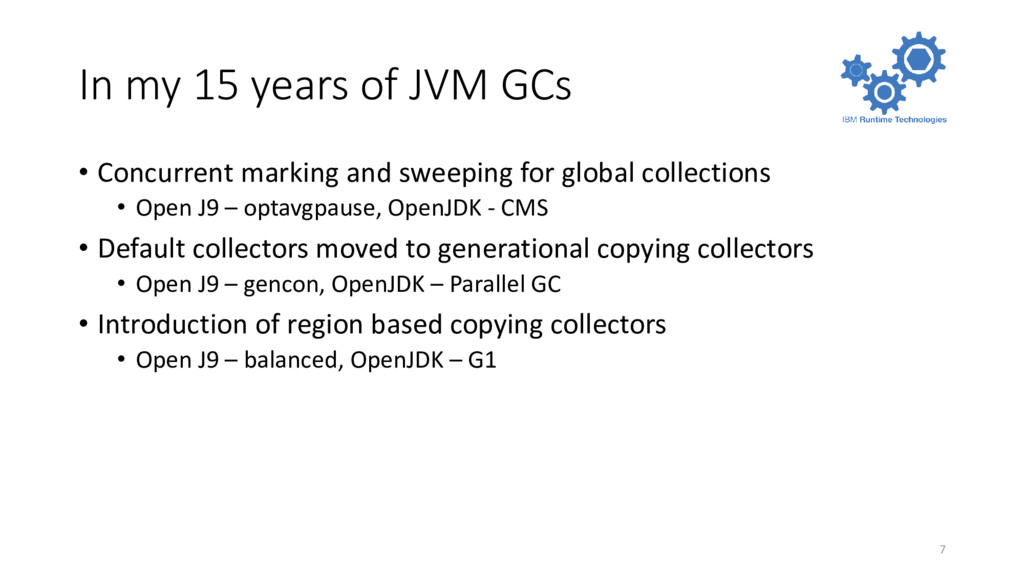
and sweeping for global collections • Open J9 – optavgpause, OpenJDK - CMS • Default collectors moved to generational copying collectors • Open J9 – gencon, OpenJDK – Parallel GC • Introduction of region based copying collectors • Open J9 – balanced, OpenJDK – G1 7
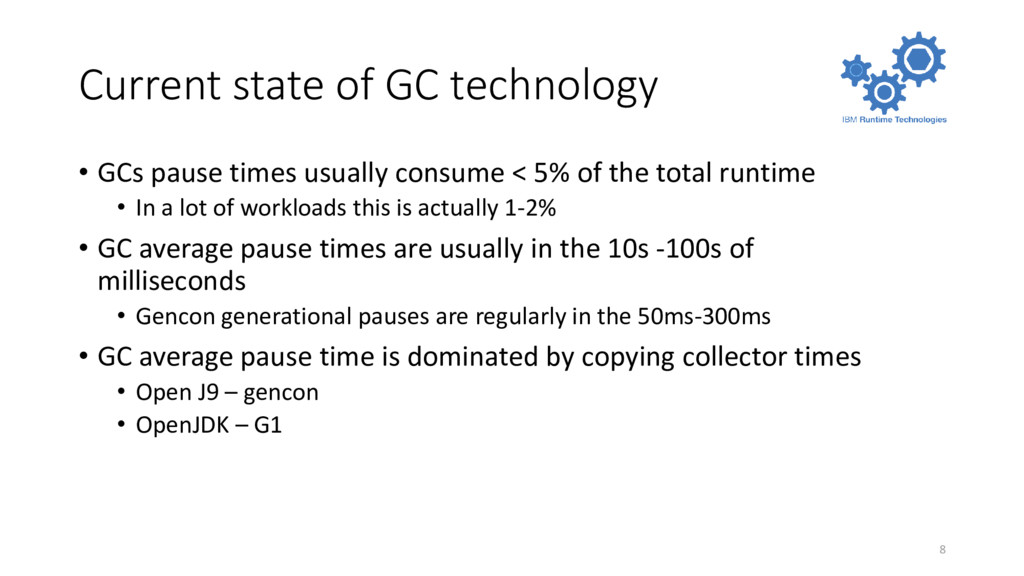
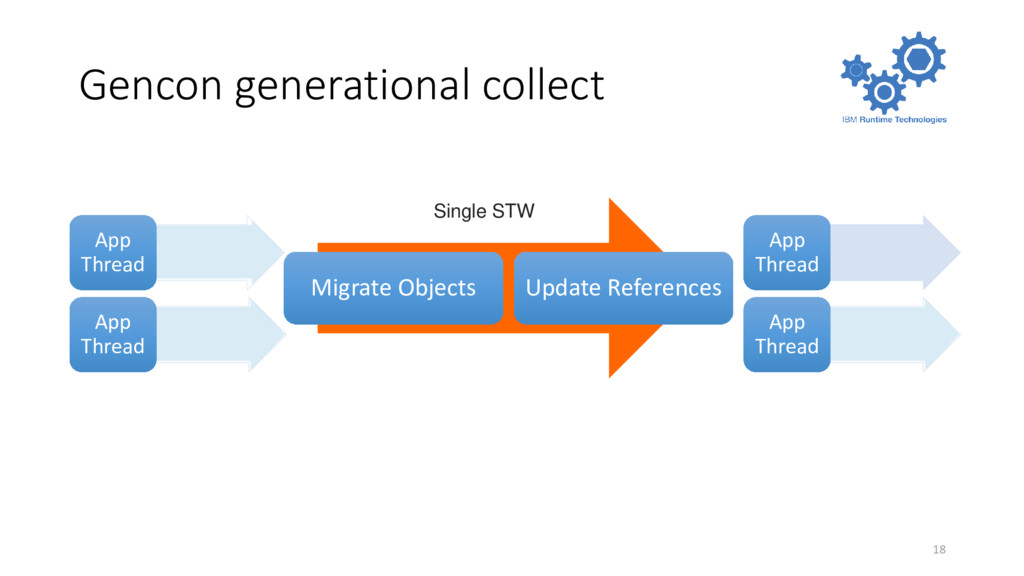
consume < 5% of the total runtime • In a lot of workloads this is actually 1-2% • GC average pause times are usually in the 10s -100s of milliseconds • Gencon generational pauses are regularly in the 50ms-300ms • GC average pause time is dominated by copying collector times • Open J9 – gencon • OpenJDK – G1 8
parallelism • Use more efficient data structures for GC work • Select better ROI areas for collection • ………. • Perform copying concurrently • Provide a significant improvement to STW pause times • Potential for performance losses due to read barriers • Potential performance issues with a copy storm at the beginning of a GC 12
• Available in IBM JDK8 SR5 and Eclipse OpenJ9 • Hardware support via guarded storage facility on z14 for zOS and zLinux • Software only support on Linux x86-64 (Eclipse OpenJ9 only) • Enabled with: • -Xgc:concurrentScavenge • View OpenJ9 source here: • https://github.com/eclipse/openj9/ 13
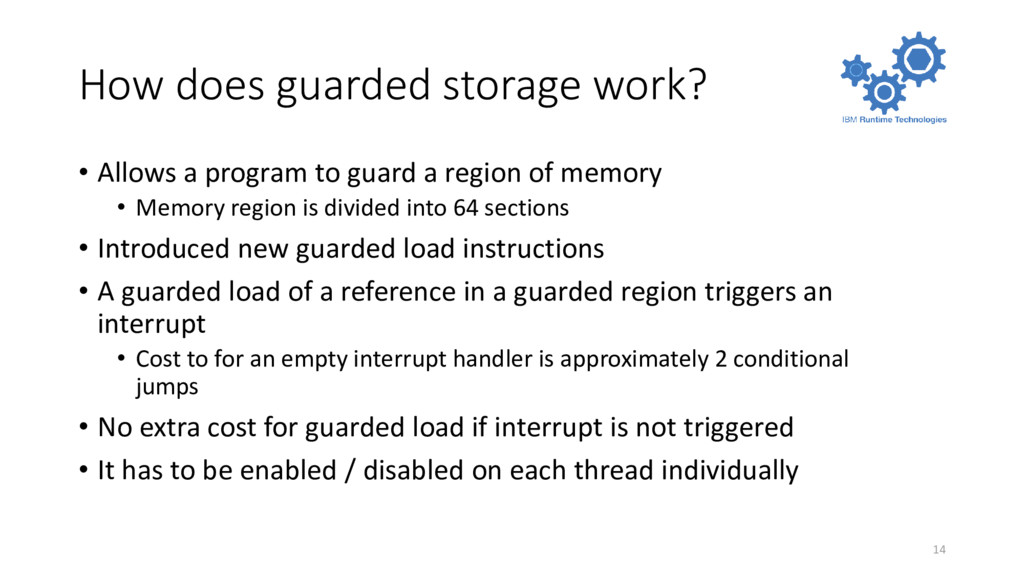
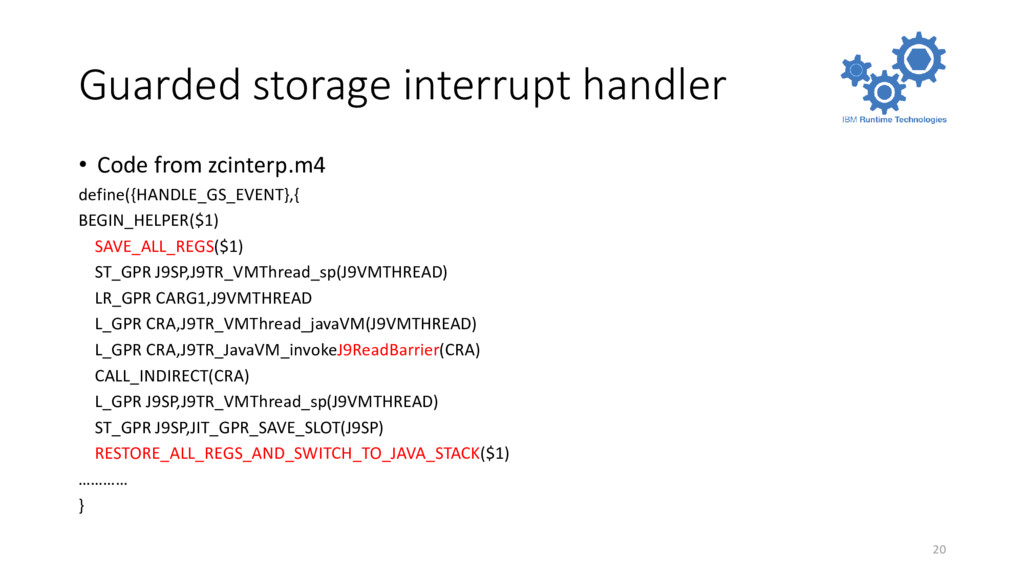
guard a region of memory • Memory region is divided into 64 sections • Introduced new guarded load instructions • A guarded load of a reference in a guarded region triggers an interrupt • Cost to for an empty interrupt handler is approximately 2 conditional jumps • No extra cost for guarded load if interrupt is not triggered • It has to be enabled / disabled on each thread individually 14
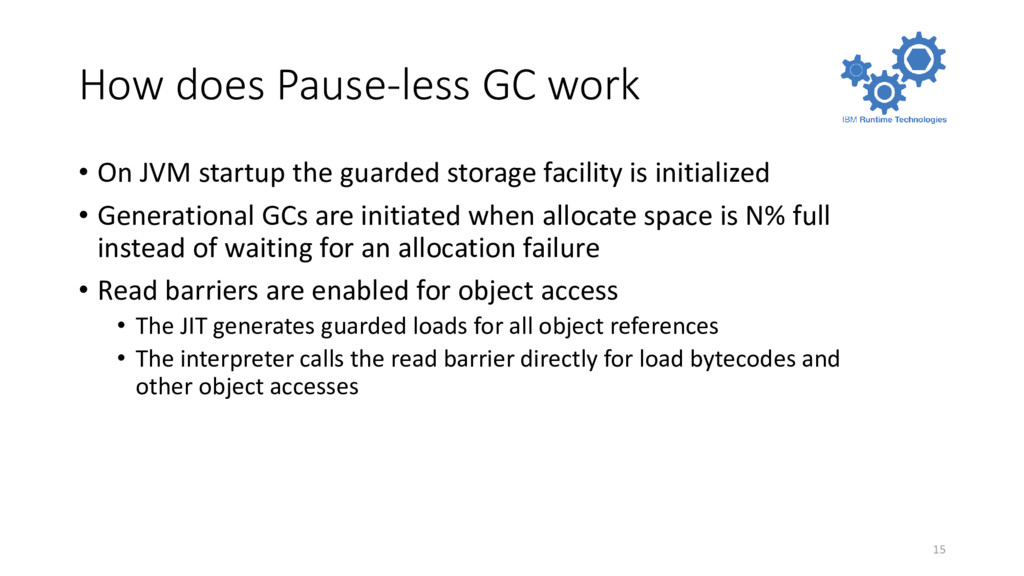
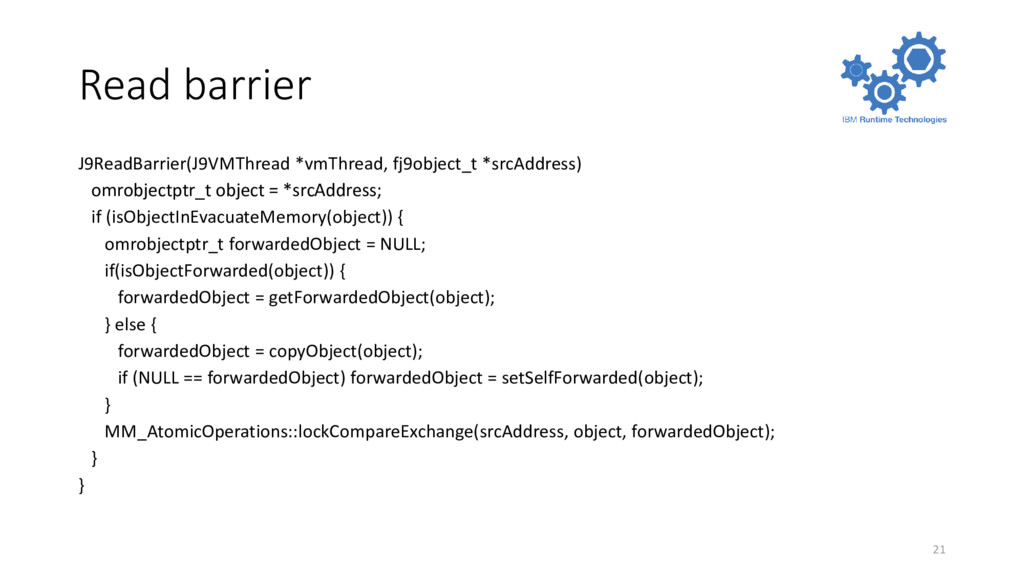
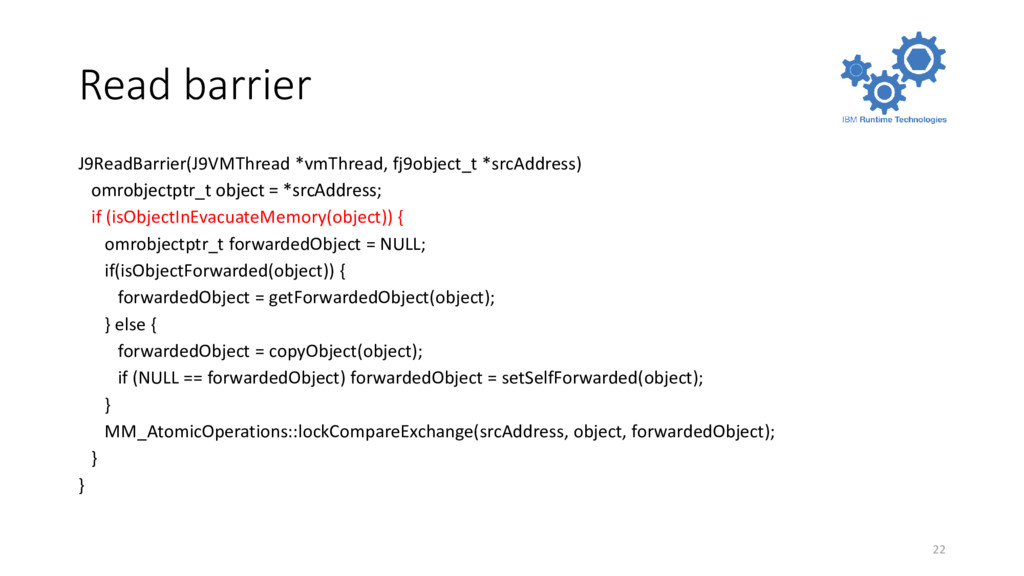
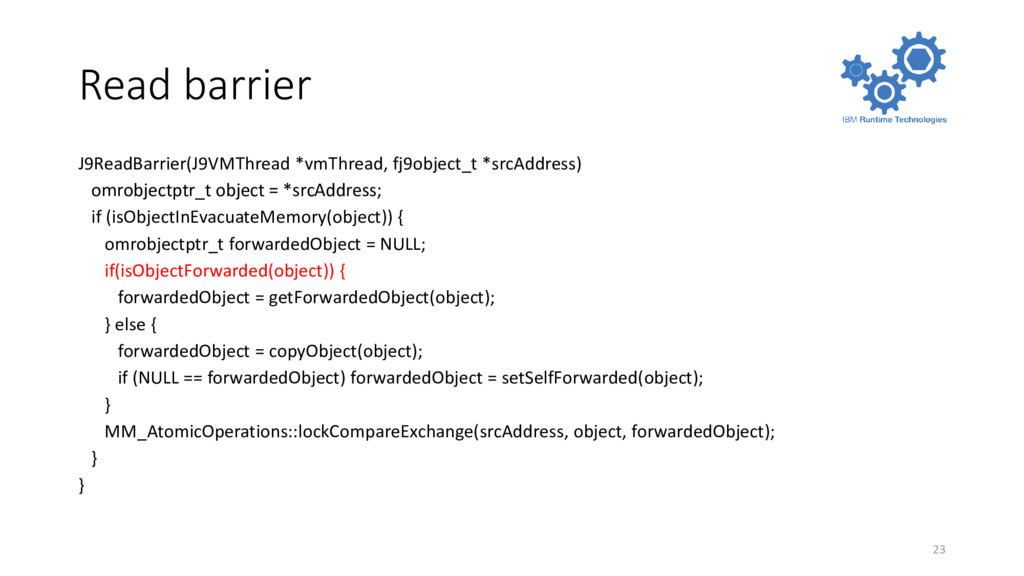
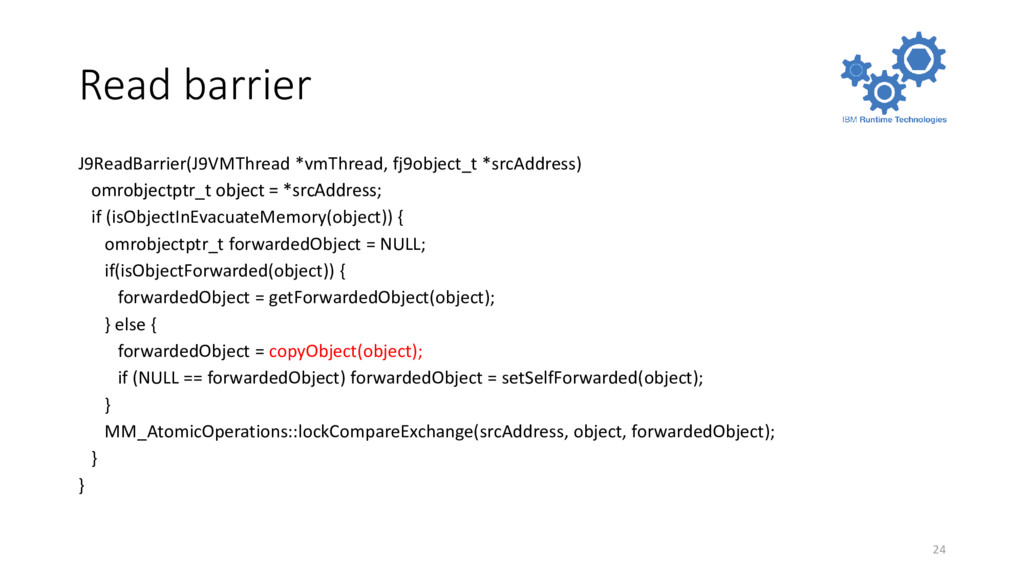
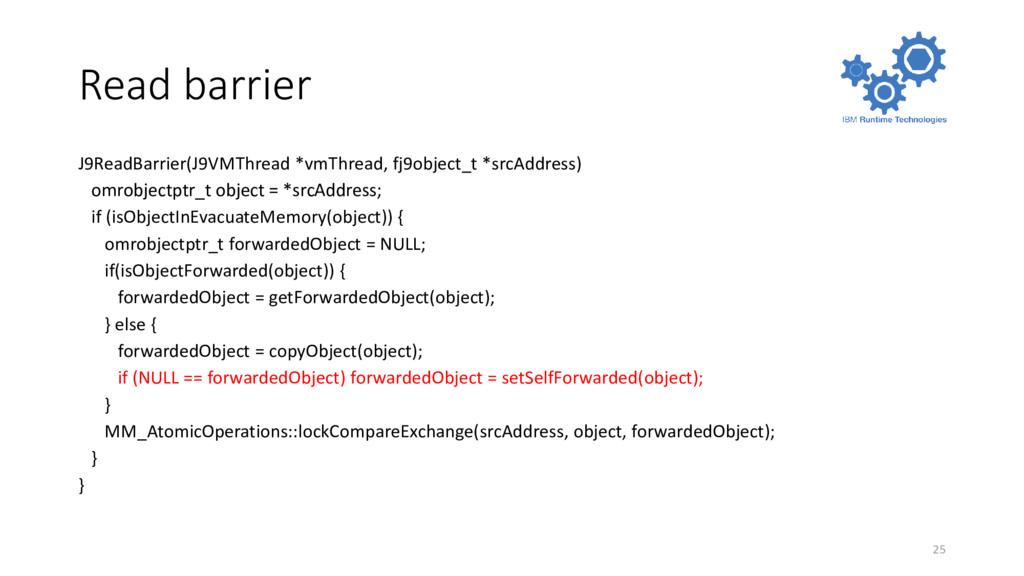
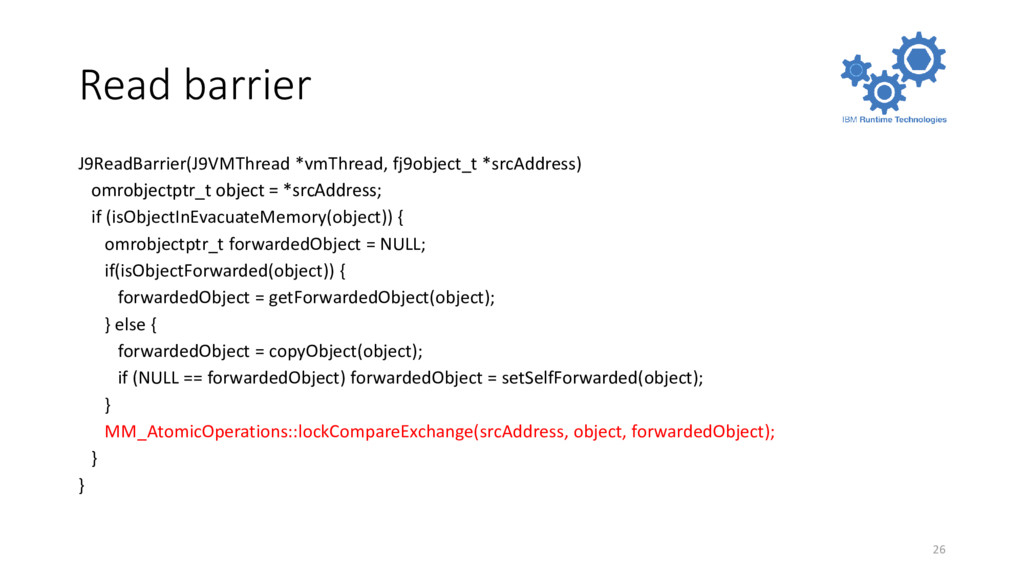
guarded storage facility is initialized • Generational GCs are initiated when allocate space is N% full instead of waiting for an allocation failure • Read barriers are enabled for object access • The JIT generates guarded loads for all object references • The interpreter calls the read barrier directly for load bytecodes and other object accesses 15
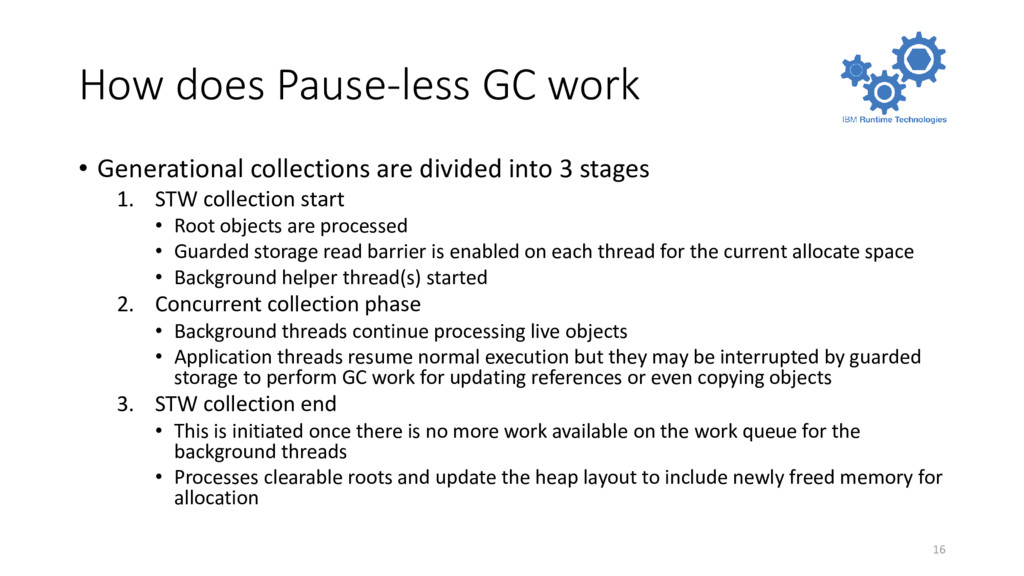
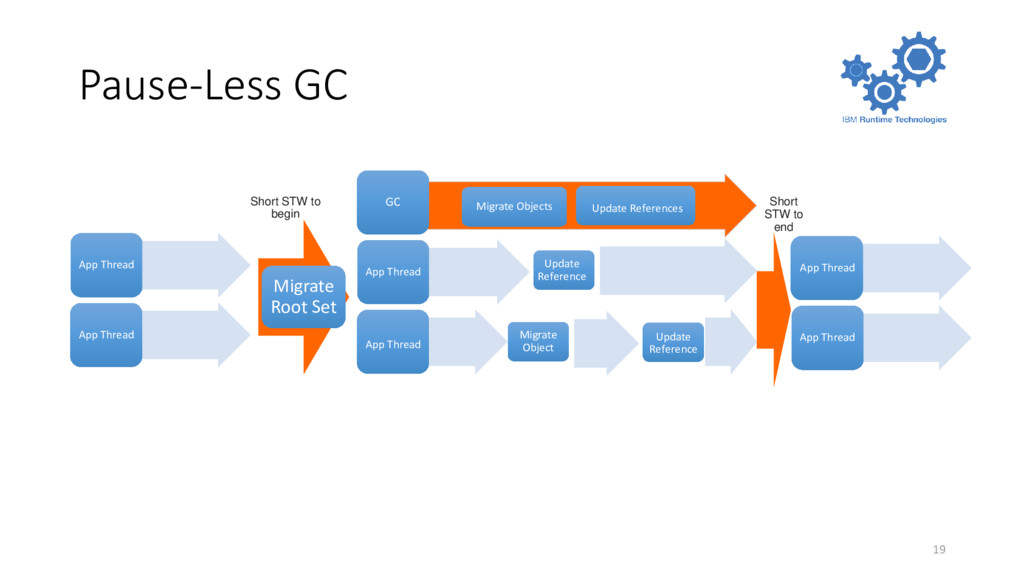
into 3 stages 1. STW collection start • Root objects are processed • Guarded storage read barrier is enabled on each thread for the current allocate space • Background helper thread(s) started 2. Concurrent collection phase • Background threads continue processing live objects • Application threads resume normal execution but they may be interrupted by guarded storage to perform GC work for updating references or even copying objects 3. STW collection end • This is initiated once there is no more work available on the work queue for the background threads • Processes clearable roots and update the heap layout to include newly freed memory for allocation 16
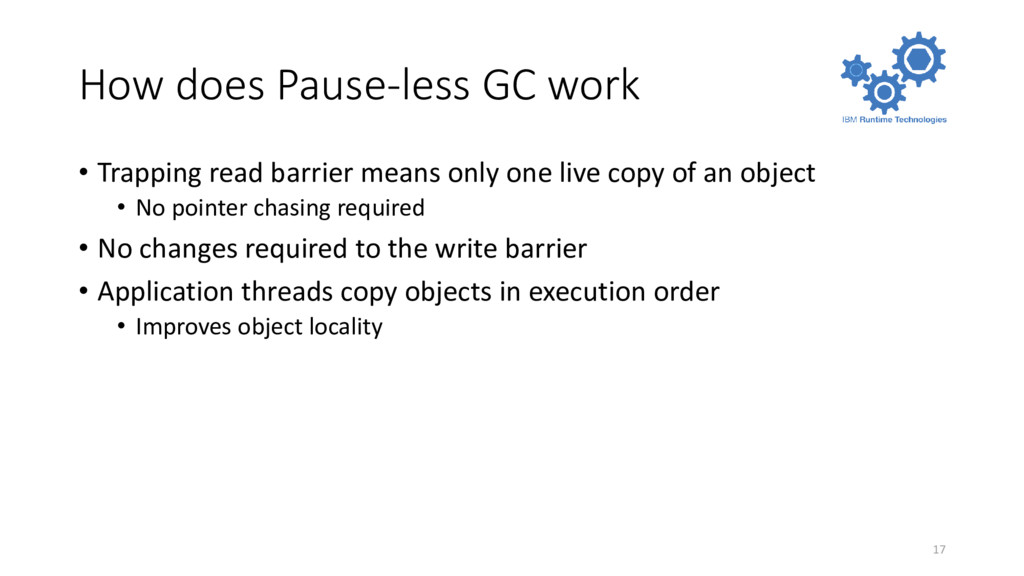
only one live copy of an object • No pointer chasing required • No changes required to the write barrier • Application threads copy objects in execution order • Improves object locality 17
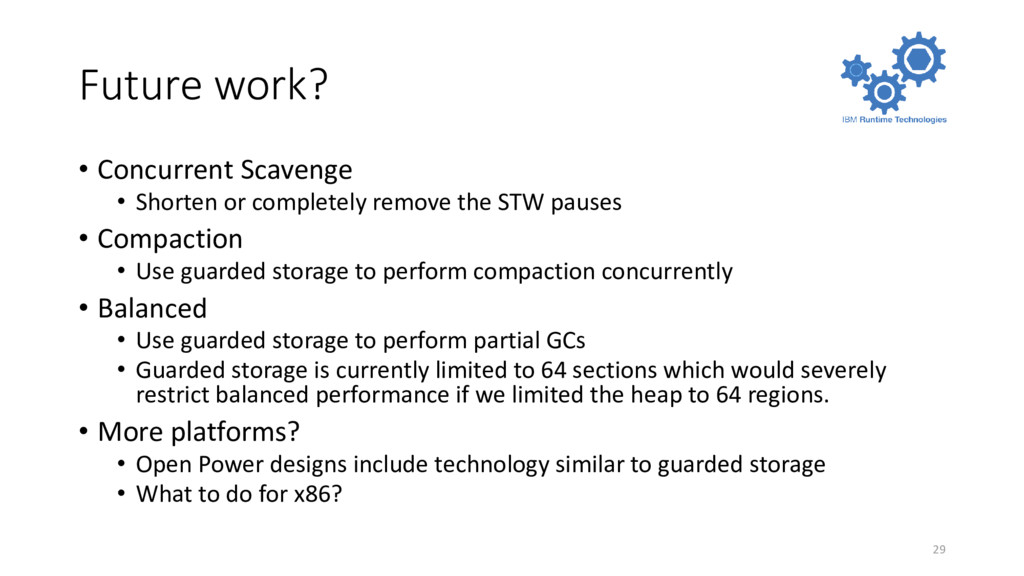
the STW pauses • Compaction • Use guarded storage to perform compaction concurrently • Balanced • Use guarded storage to perform partial GCs • Guarded storage is currently limited to 64 sections which would severely restrict balanced performance if we limited the heap to 64 regions. • More platforms? • Open Power designs include technology similar to guarded storage • What to do for x86? 29
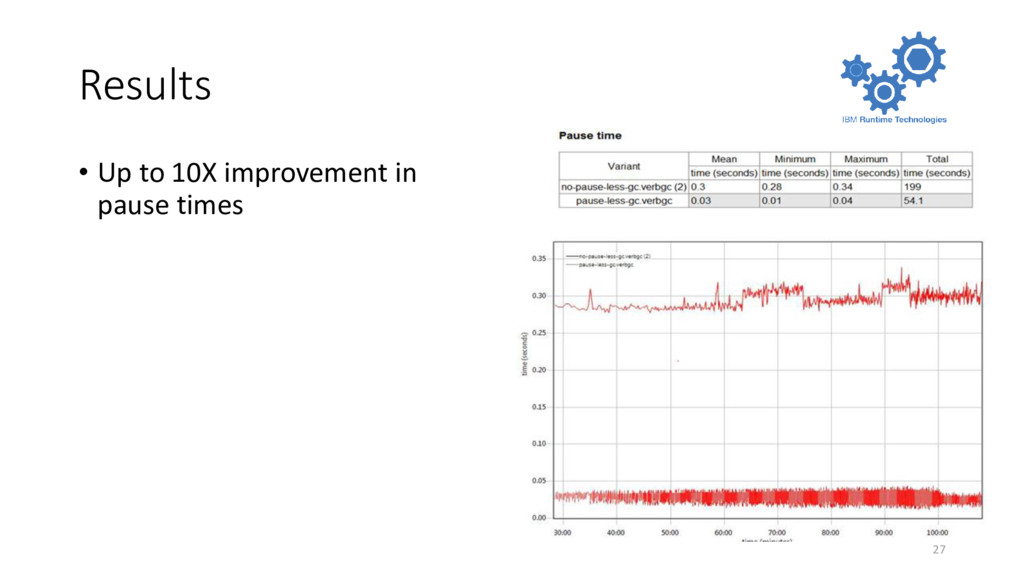
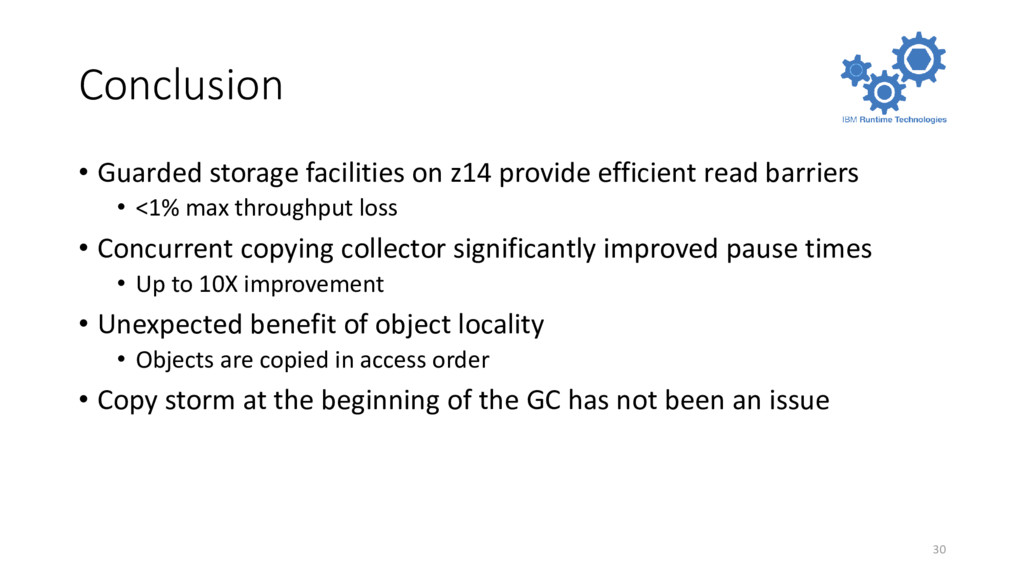
barriers • <1% max throughput loss • Concurrent copying collector significantly improved pause times • Up to 10X improvement • Unexpected benefit of object locality • Objects are copied in access order • Copy storm at the beginning of the GC has not been an issue 30


 vmm
vmm
 uchi8977
 bvr7352
 juanmartin2026
 camel_404
 matleenalaakso
 ishii_mit
 signer
 naoji_taniguchi_ksk_0827
 akiraasano
 masakiokuda
 bunnchinn3
 techseoconnect
 charlesmeaden
 seathinner
 addyosmani
 chriscoyier
 nmsamuel
 thirion
 soysaucechin
 aleyda
 joshbly
 sabderemane