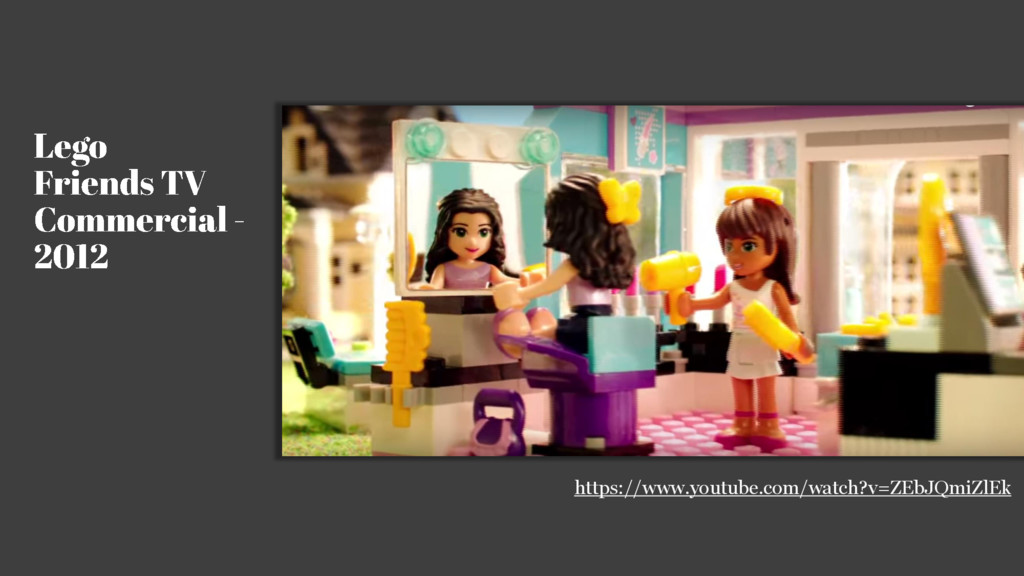
Misrepresentation of genders by the media manifests in everyday life • Children’s toy market especially powerful in establishment of gender roles in society • Most modern companies have improved so as to not to offend
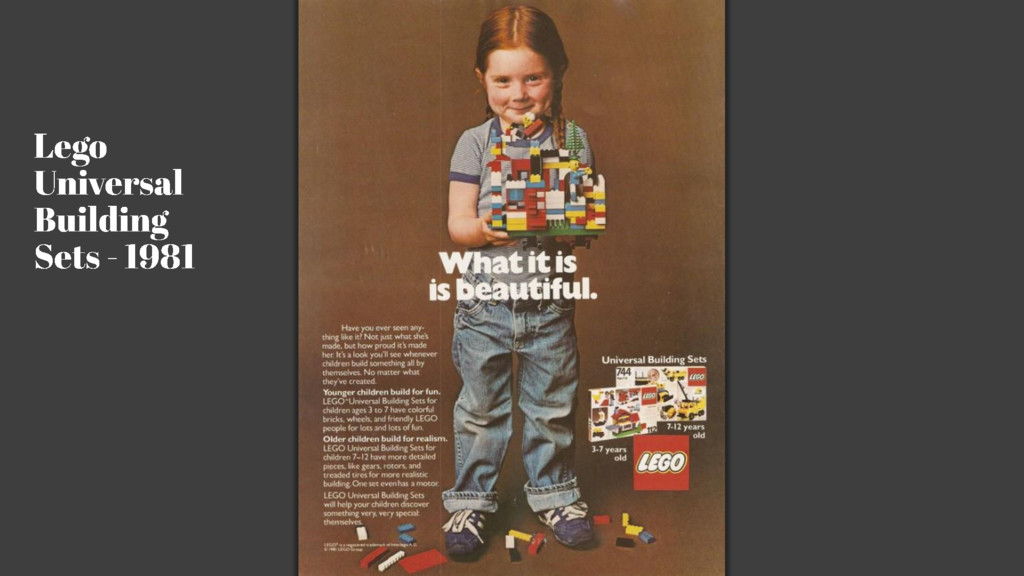
Lego was more about imagination, creation, learning than gender roles • Ad catches attention with bold headline and striking image, holds it by provoking thought
“Younger children build for fun … Older children build for realism. Lego Universal Building Sets will help your children discover something very, very special: themselves.” • Advertisement primarily targeted at parents
companies • Product line launched primarily to capture the female market • Most recent Lego products prior to Friends were highly male- oriented e.g. movie franchises • Ad catches attention with bright pink colours, flowery fonts
male figures • Reinforces to young girls the life they should aspire to • Desire to buy the product to live up to what the media portrays as the modern world’s expectations of women
and product caused disapproval and anger at its portrayal of females and marketing tactics • Absence of male figures promotes and reinforces ideas of gender separation and inequality • 1981 ad breaks trend of gender roles in advertising
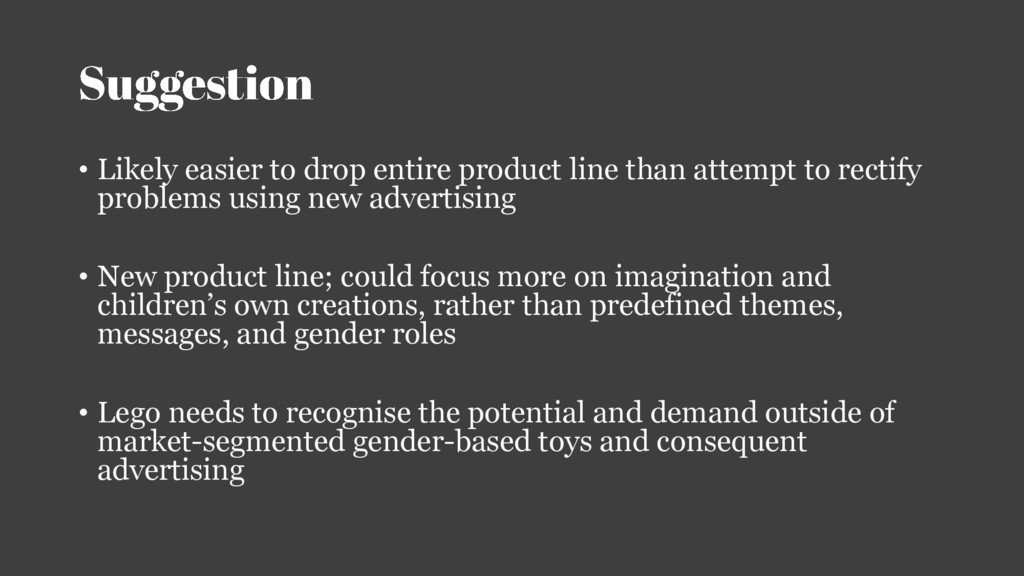
to rectify problems using new advertising • New product line; could focus more on imagination and children’s own creations, rather than predefined themes, messages, and gender roles • Lego needs to recognise the potential and demand outside of market-segmented gender-based toys and consequent advertising
Most Internet Famous Vintage Lego Ad Think About Them Now?, viewed 24 February 2016, http://www.themarysue.com/girl-in-old-lego-ad/ • Day, L 2014, The Little Girl from the 1981 Lego Ad is All Grown Up, and She’s Got Something to Say, viewed 24 February 2016, http://www.womenyoushouldknow.net/little-girl-1981-lego-ad- grown-shes-got-something-say/ • Lego Club TV, LEGO Friends 2012 TVC, online video, viewed 20 February, https://www.youtube.com/watch?v=ZEbJQmiZlEk


 techseoconnect
 colly
 inesmontani
 marcduiker
 mojombo
 palkan
 axbom
 joshbly
 cassininazir
 aleyda
 tammyeverts