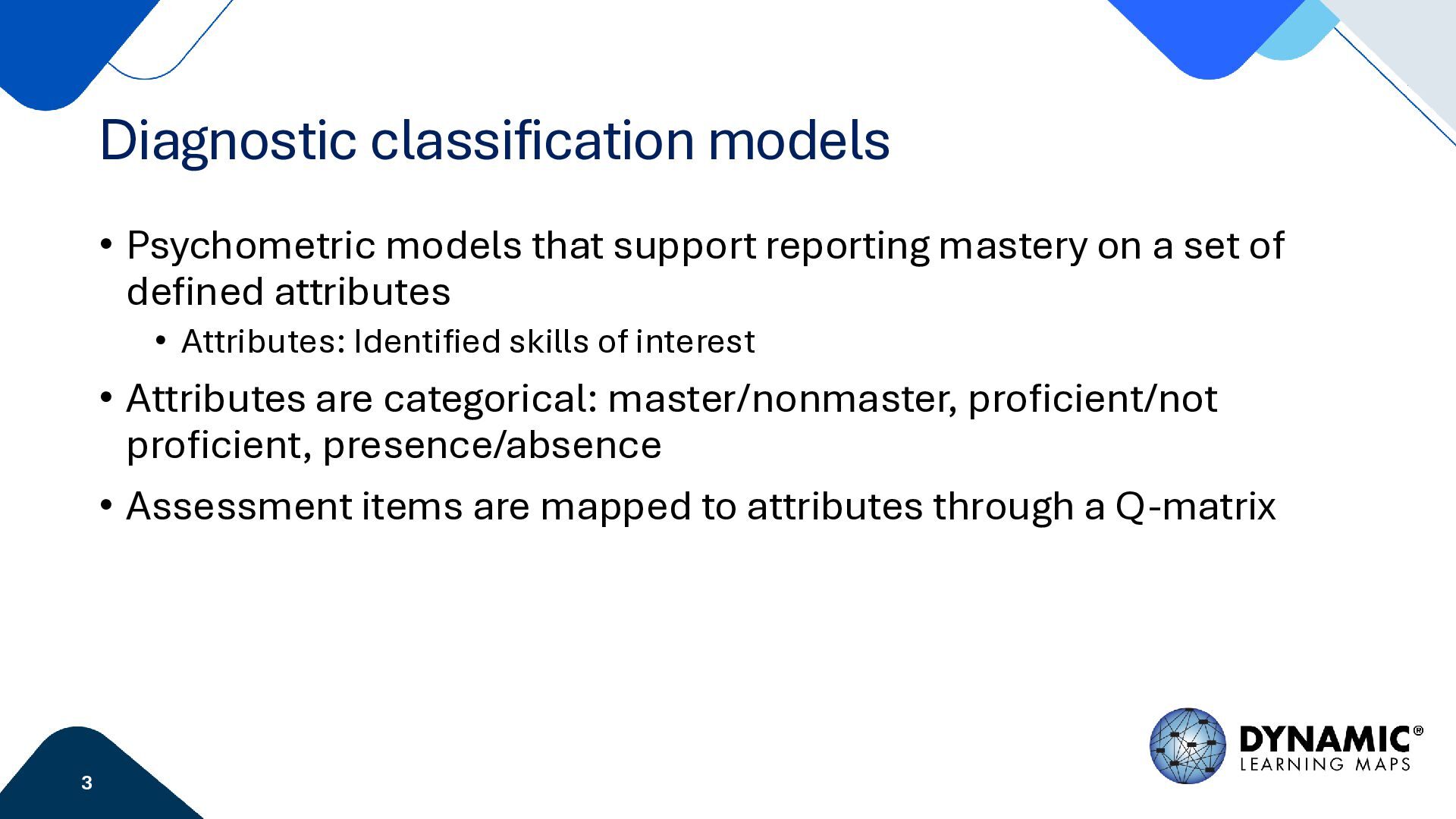
on a set of defined attributes • Attributes: Identified skills of interest • Attributes are categorical: master/nonmaster, proficient/not proficient, presence/absence • Assessment items are mapped to attributes through a Q-matrix 3
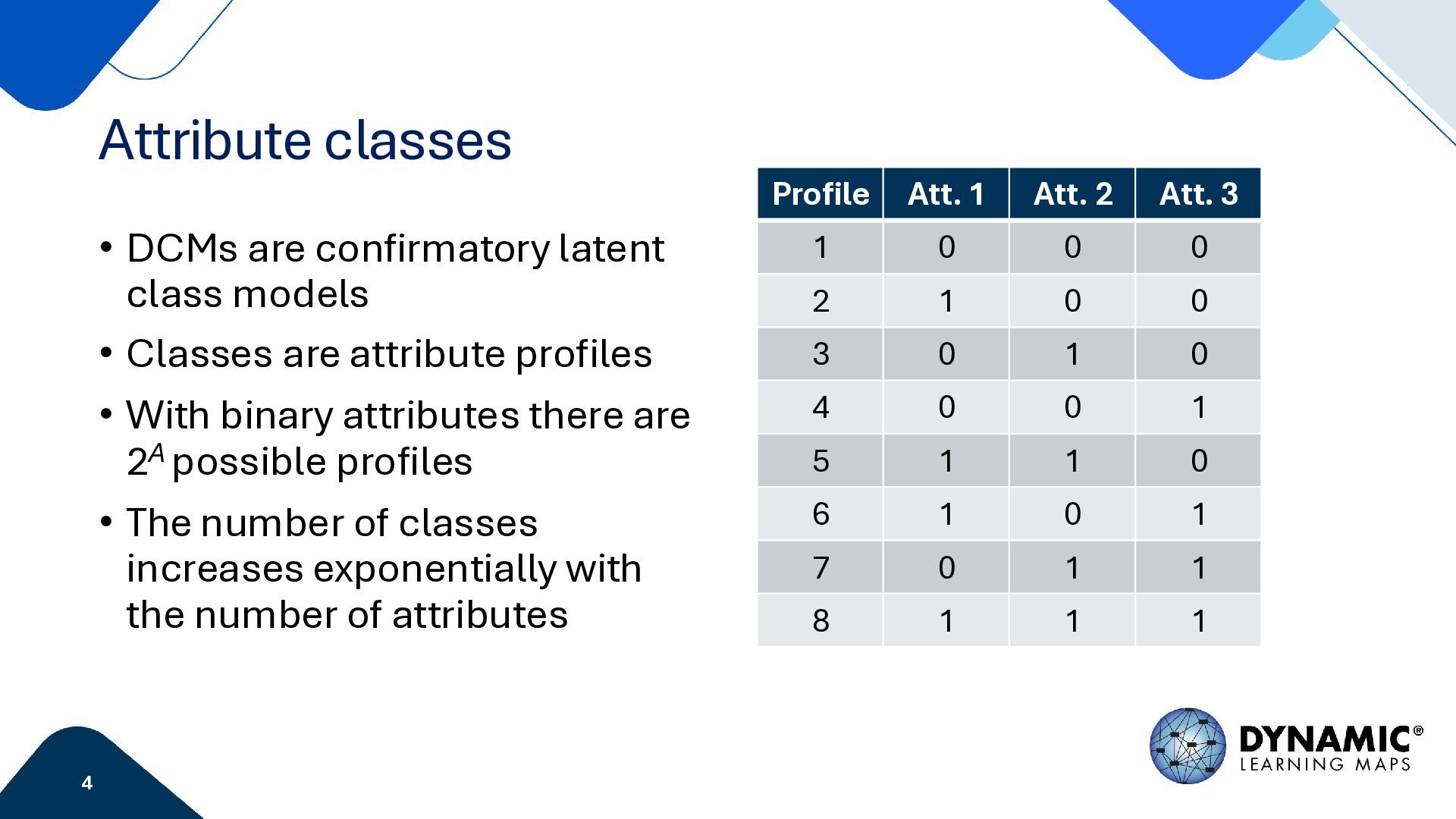
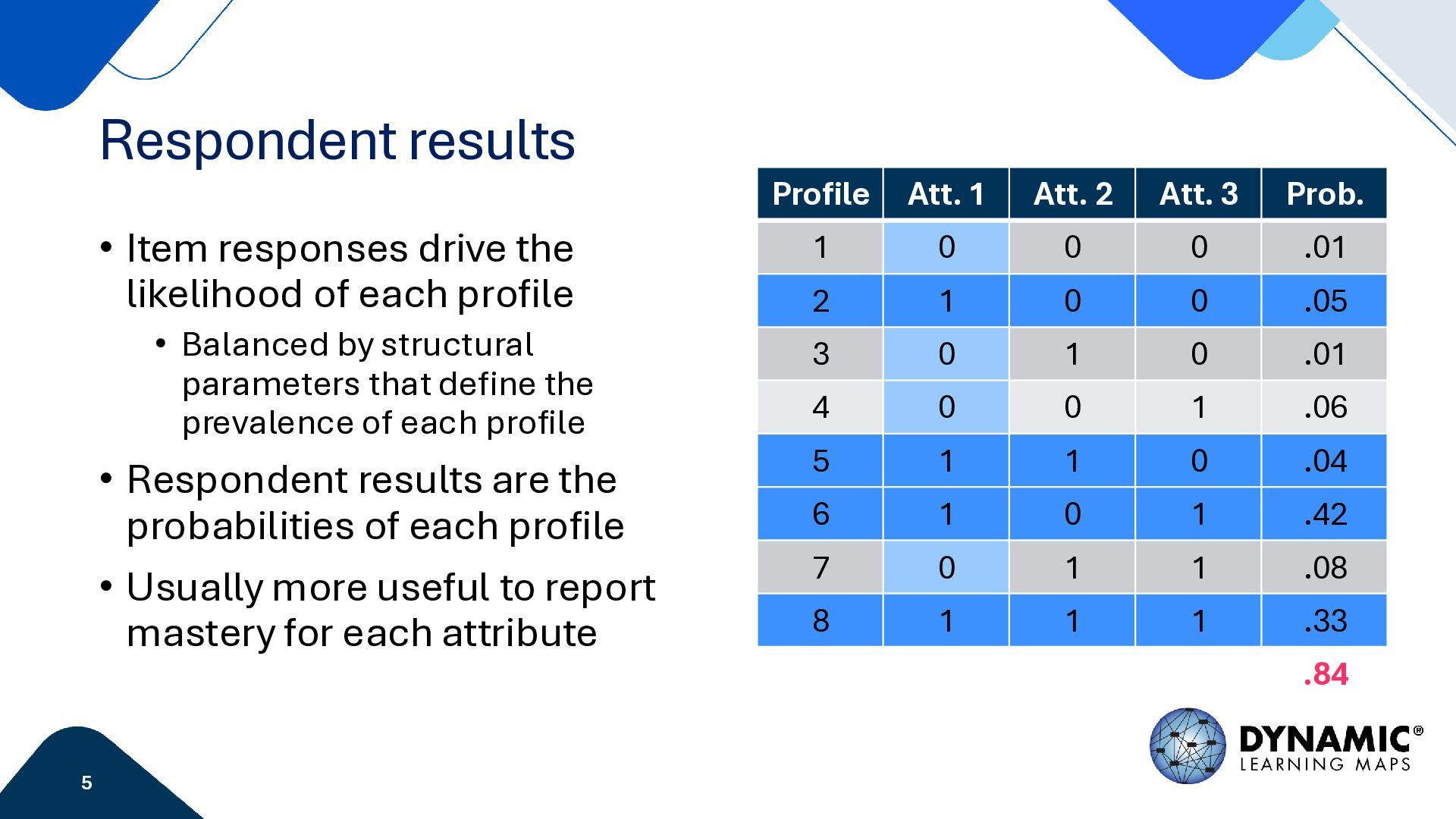
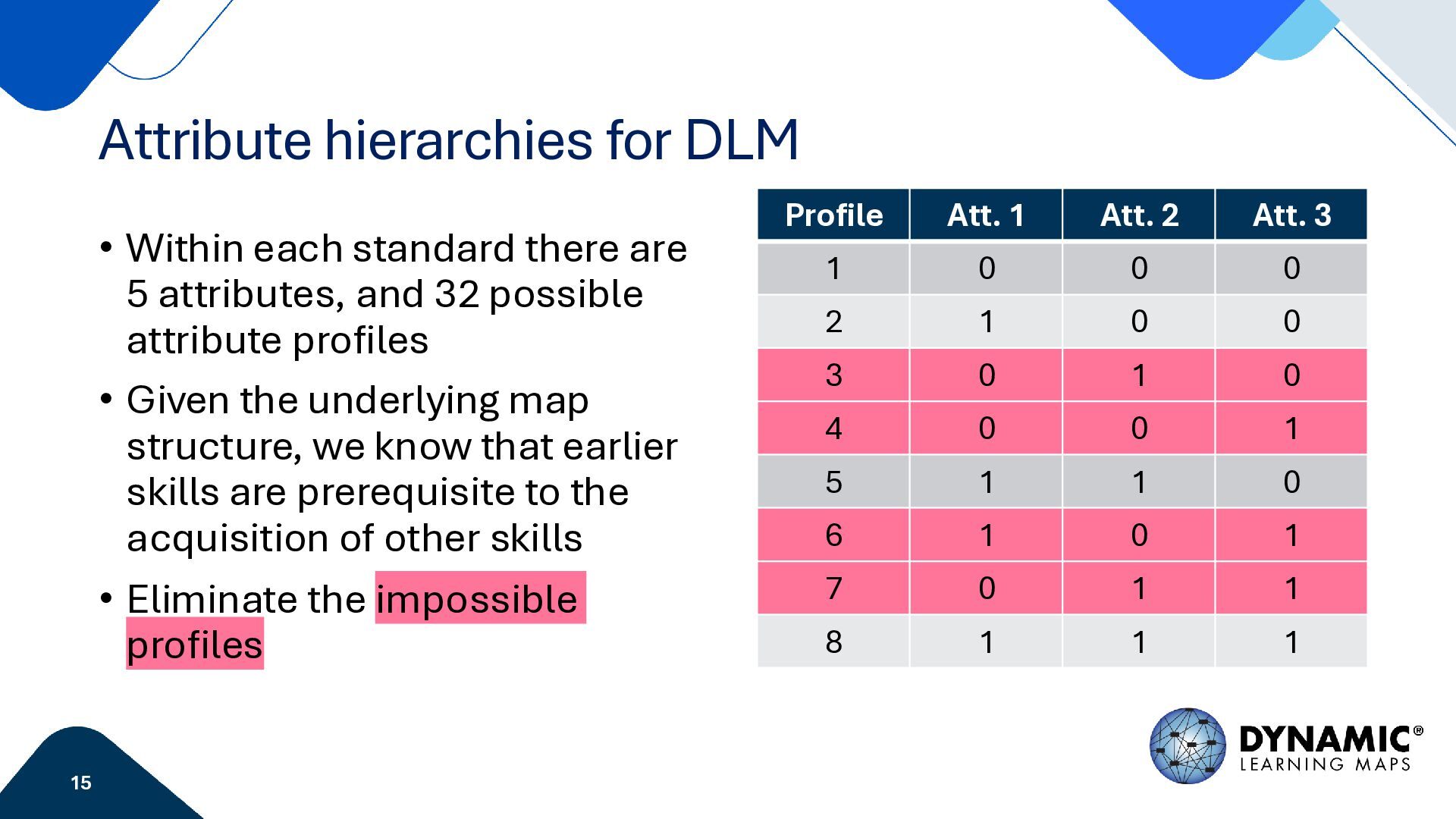
0 2 1 0 0 3 0 1 0 4 0 0 1 5 1 1 0 6 1 0 1 7 0 1 1 8 1 1 1 Attribute classes • DCMs are confirmatory latent class models • Classes are attribute profiles • With binary attributes there are 2A possible profiles • The number of classes increases exponentially with the number of attributes 4
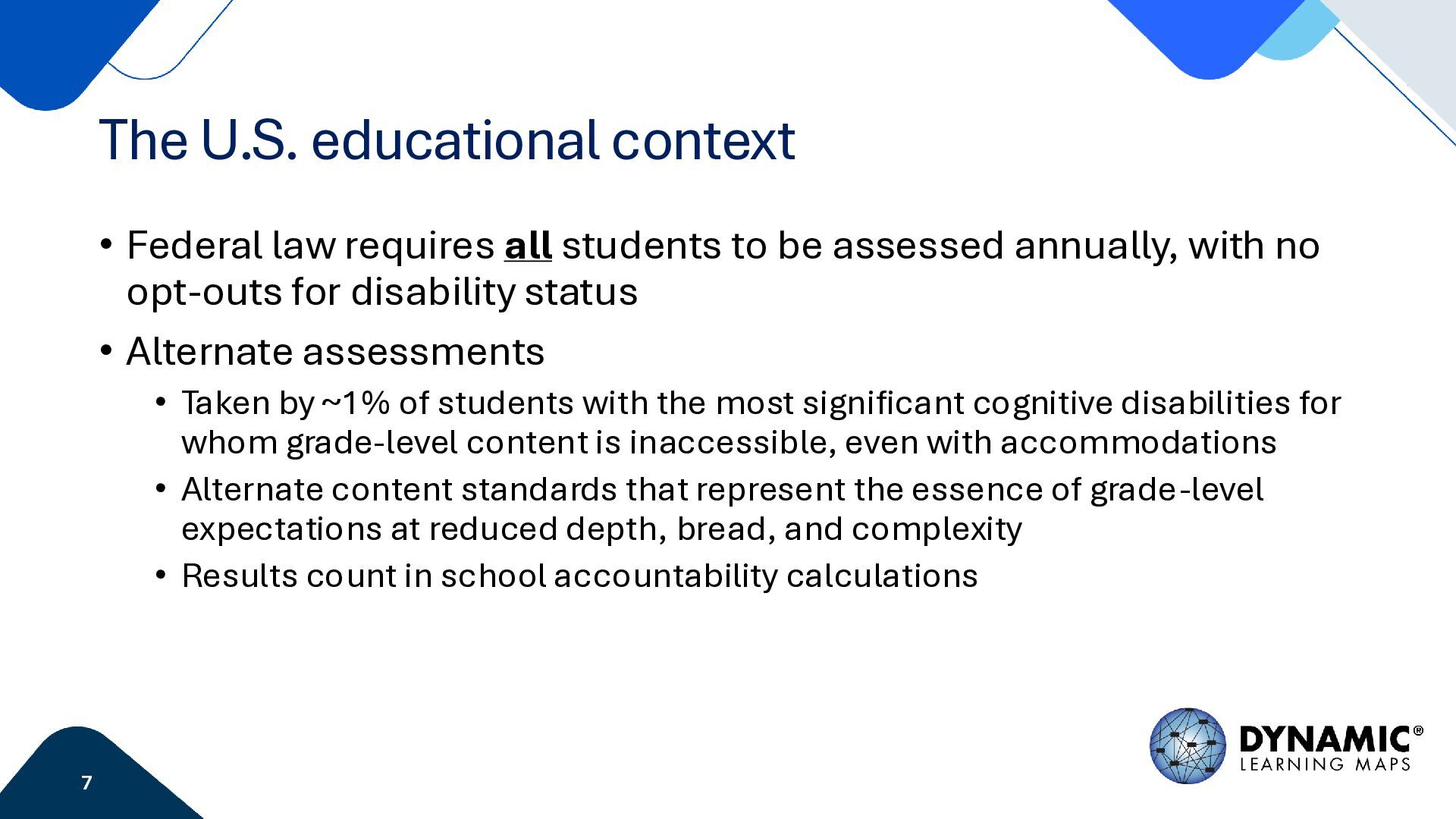
students to be assessed annually, with no opt-outs for disability status • Alternate assessments • Taken by ~1% of students with the most significant cognitive disabilities for whom grade-level content is inaccessible, even with accommodations • Alternate content standards that represent the essence of grade-level expectations at reduced depth, bread, and complexity • Results count in school accountability calculations
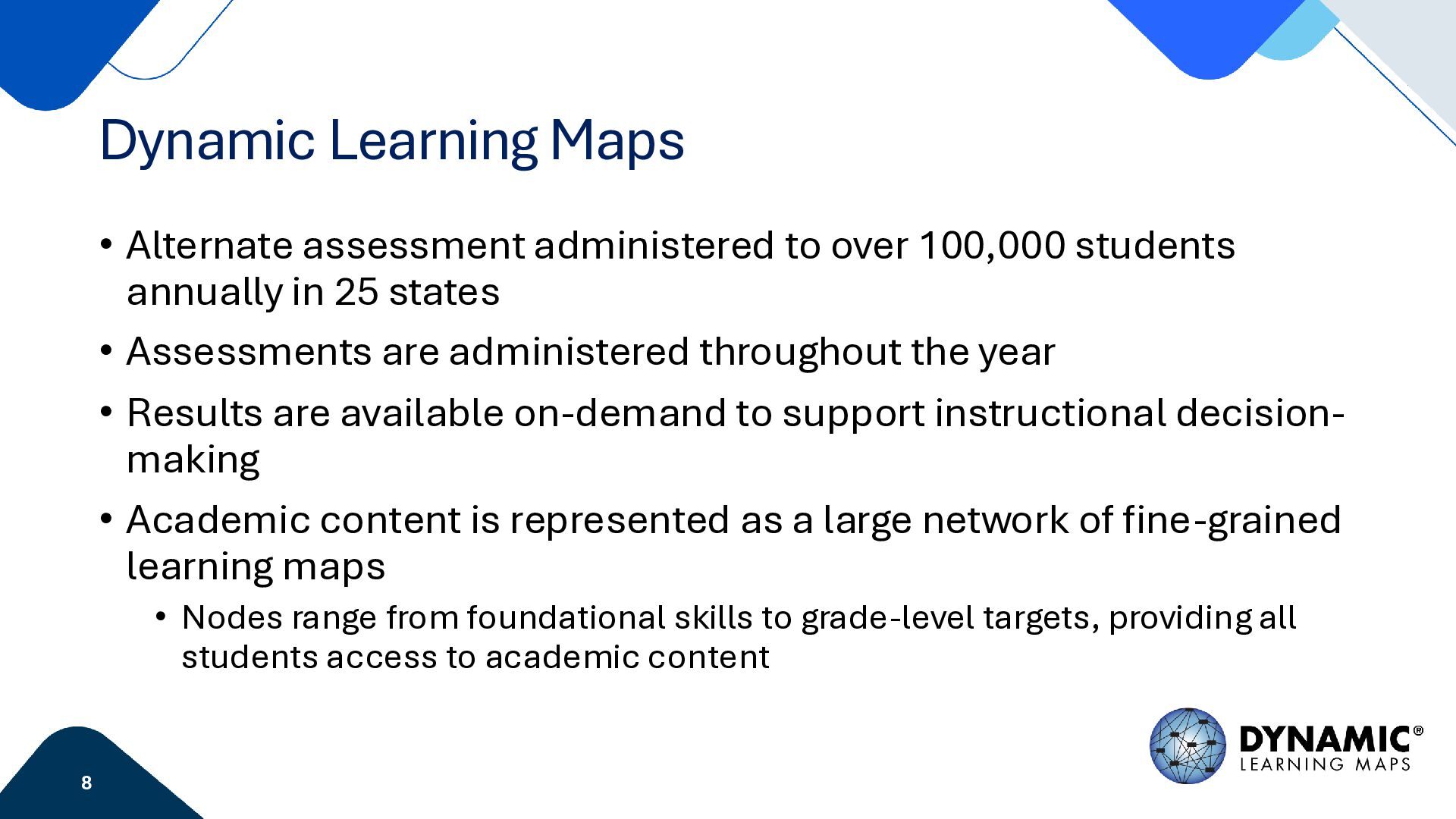
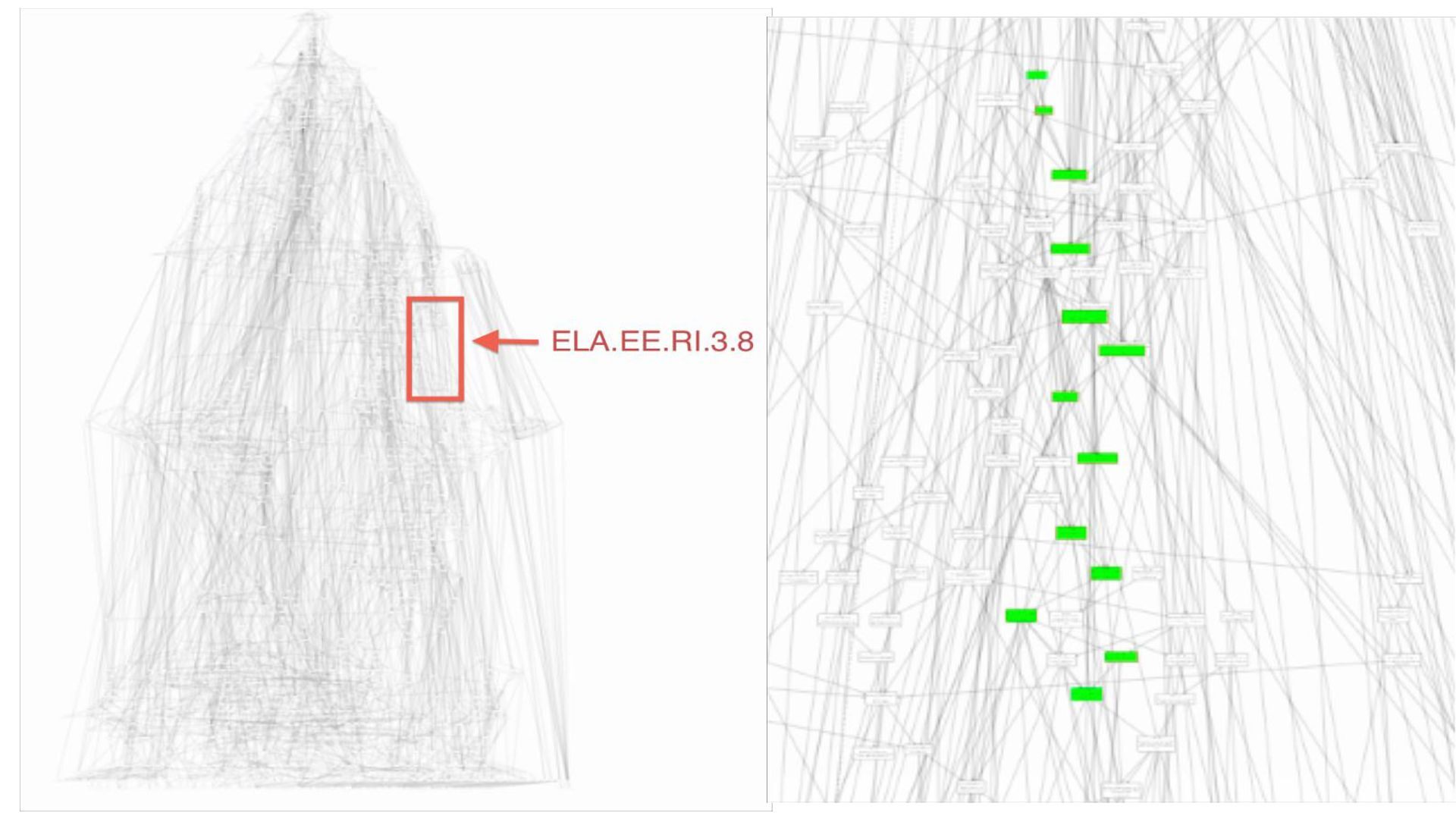
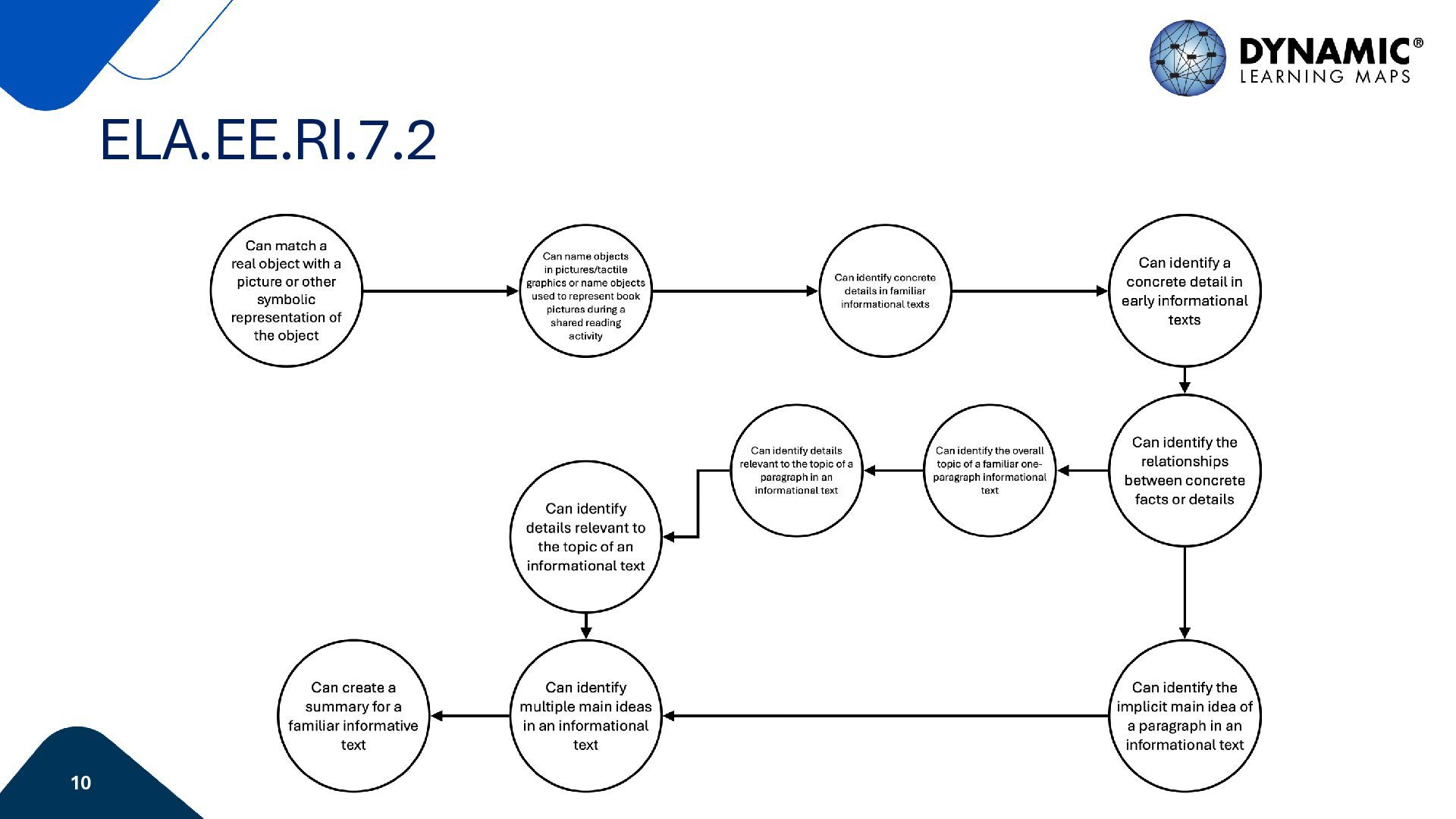
students annually in 25 states • Assessments are administered throughout the year • Results are available on-demand to support instructional decision- making • Academic content is represented as a large network of fine-grained learning maps • Nodes range from foundational skills to grade-level targets, providing all students access to academic content 8
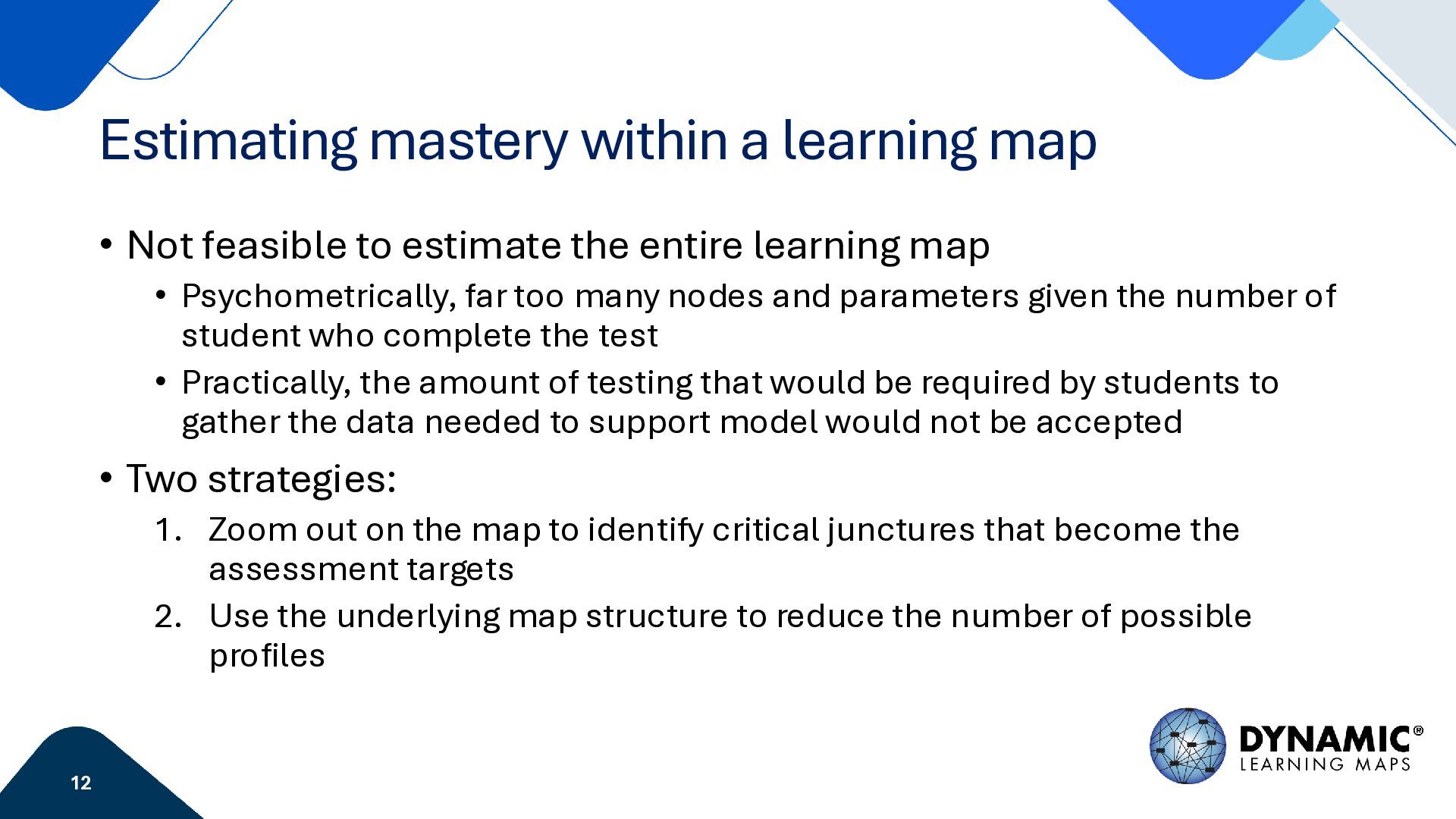
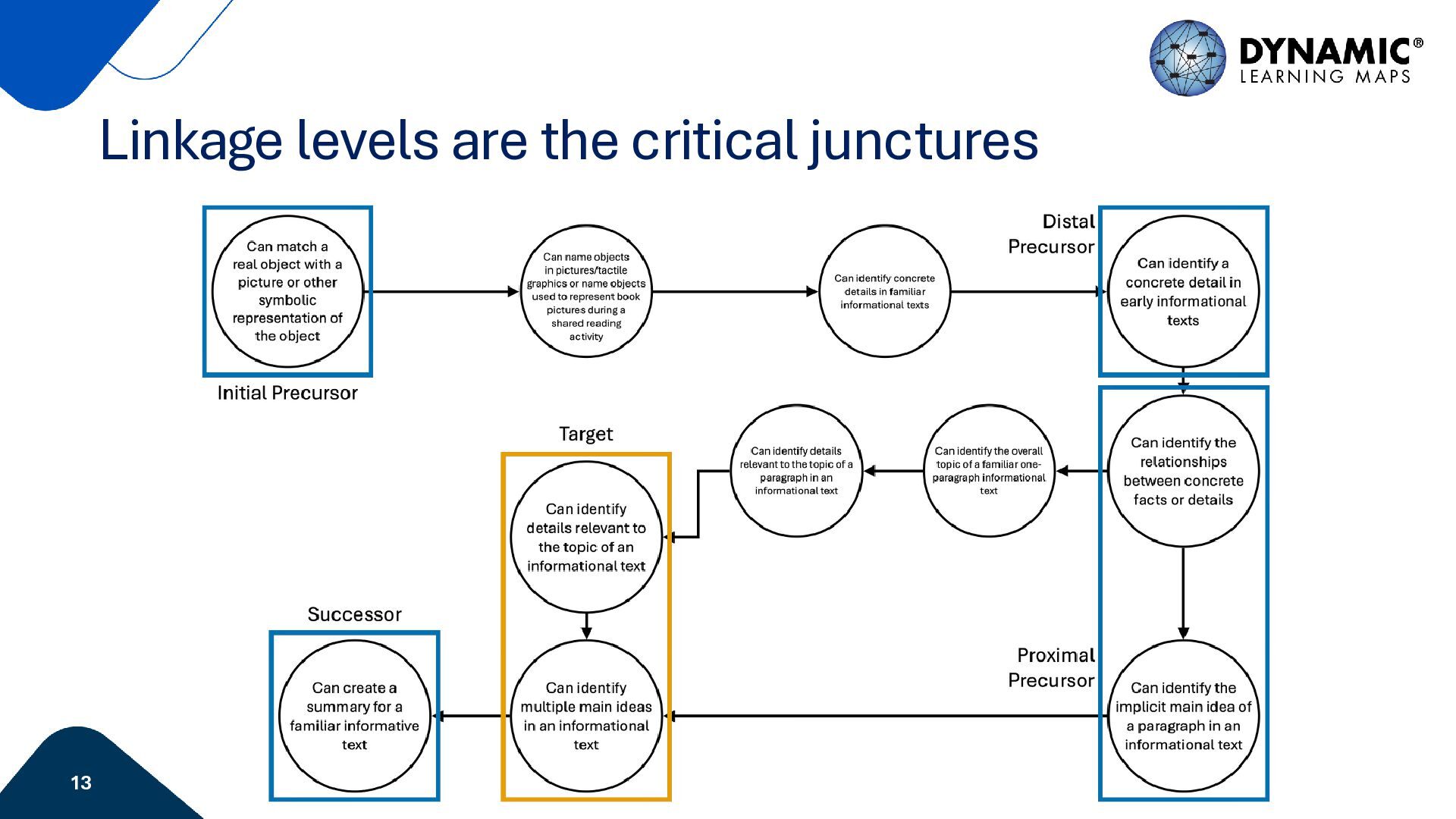
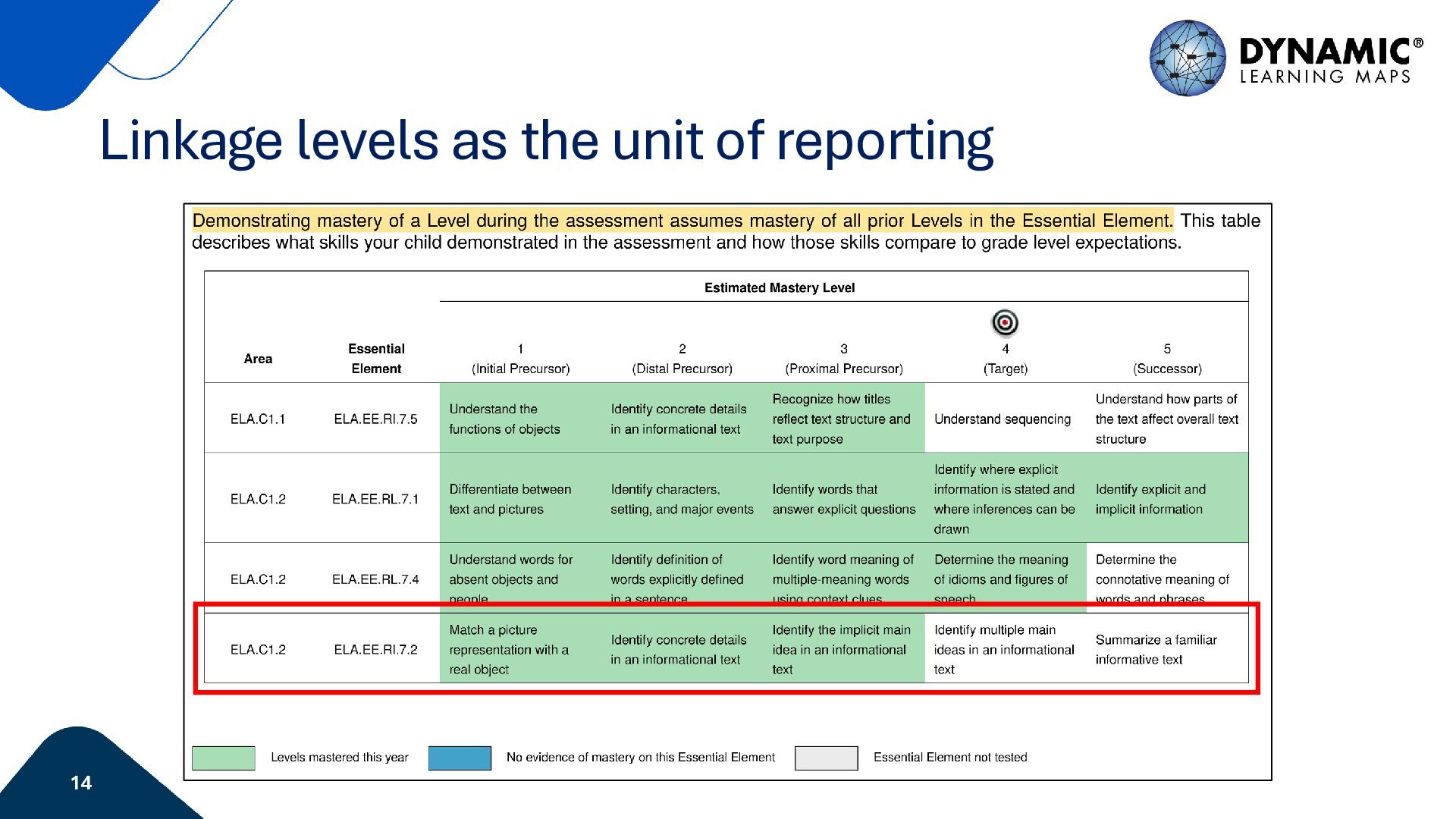
estimate the entire learning map • Psychometrically, far too many nodes and parameters given the number of student who complete the test • Practically, the amount of testing that would be required by students to gather the data needed to support model would not be accepted • Two strategies: 1. Zoom out on the map to identify critical junctures that become the assessment targets 2. Use the underlying map structure to reduce the number of possible profiles 12
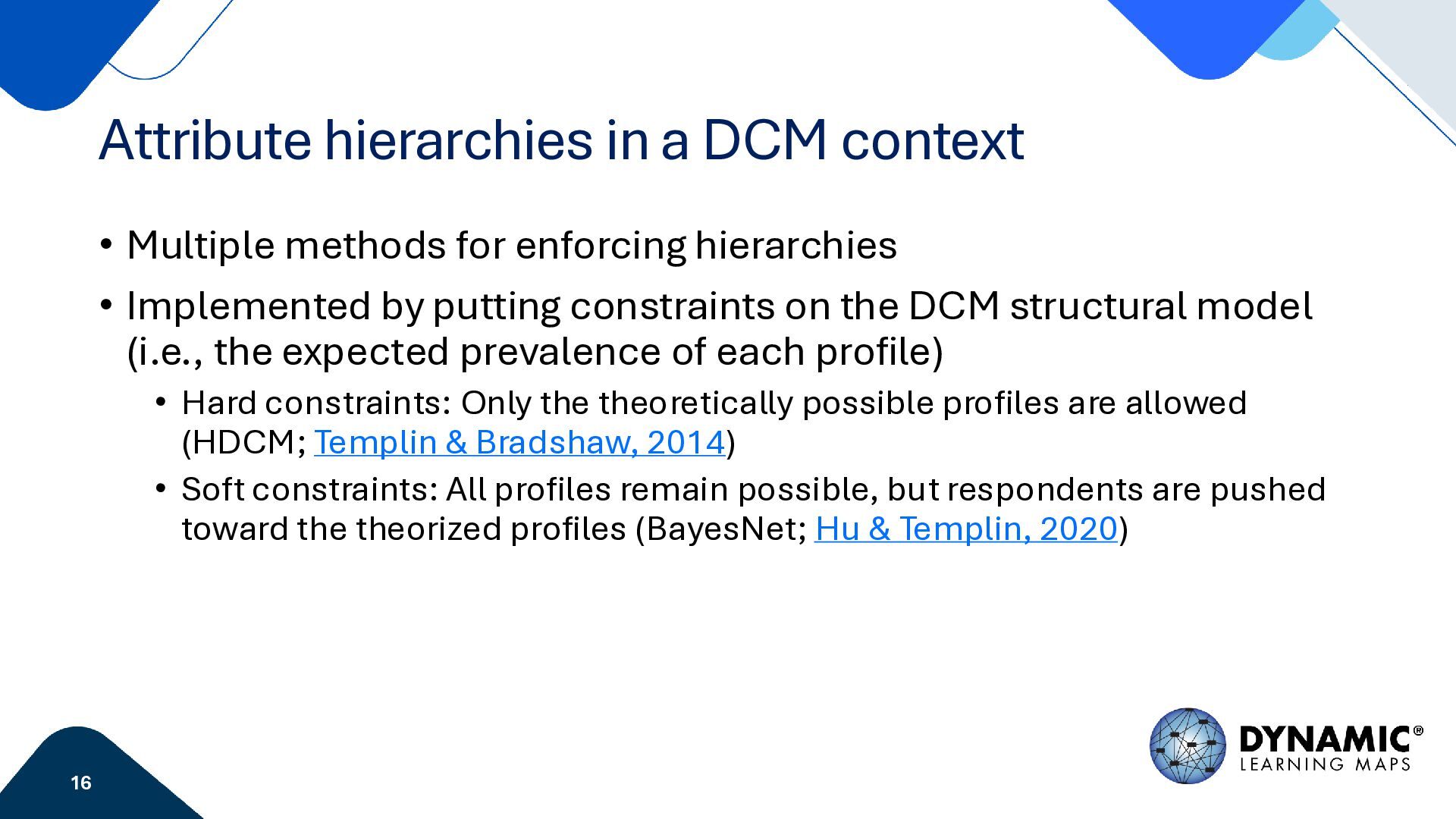
enforcing hierarchies • Implemented by putting constraints on the DCM structural model (i.e., the expected prevalence of each profile) • Hard constraints: Only the theoretically possible profiles are allowed (HDCM; Templin & Bradshaw, 2014) • Soft constraints: All profiles remain possible, but respondents are pushed toward the theorized profiles (BayesNet; Hu & Templin, 2020) 16
within each content standard • Reduces the number of profiles from 25 = 32 to only 6 • Greatly reduces the number of item parameters needed as well • Testable! Fit the full model and hierarchical model to compare fit 17 Thompson and Nash (2022)
• Mastery of linkage levels on one standard does not directly inform mastery on other standards • Indirect evidence for the structure of the learning map • Linkage levels are not 1:1 with nodes in the learning map • Empirical support for the ordering of linkage levels only indicates general agreement with the ordering of nodes within the map 18


 wjakethompson
 eller86
 hiola
hiola
 matleenalaakso
 aokiplayer
 bunnchinn3
 signer
 pawan_pharm
 doratex
 akiraasano
 ivargrimstad
 akosma
 nikkihalliwell
 mkilby
 inesmontani
 bkeepers
 rakko
rakko
 apolaine
 axbom
axbom
 sarafernandez
 matthewcrist
 sferik
![wjakethompson.com [email protected] 0000-0001-7339-0300 in/wjakethompson @wjakethompson @wjakethompson.com @[email protected] @wjakethompson Thank you!](https://files.speakerdeck.com/presentations/0066bdff16a54852bade74f571f0eb71/slide_18.jpg)