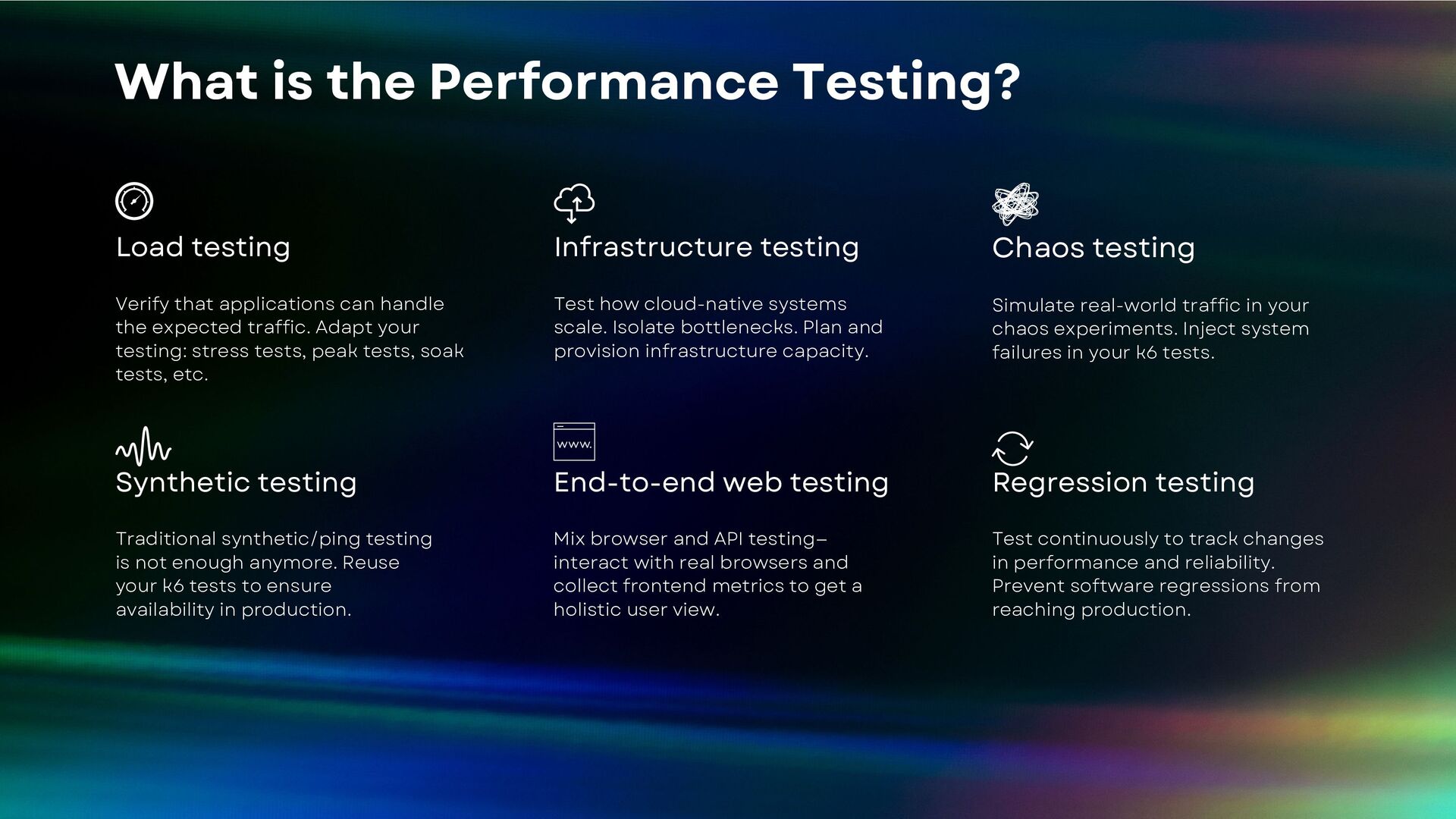
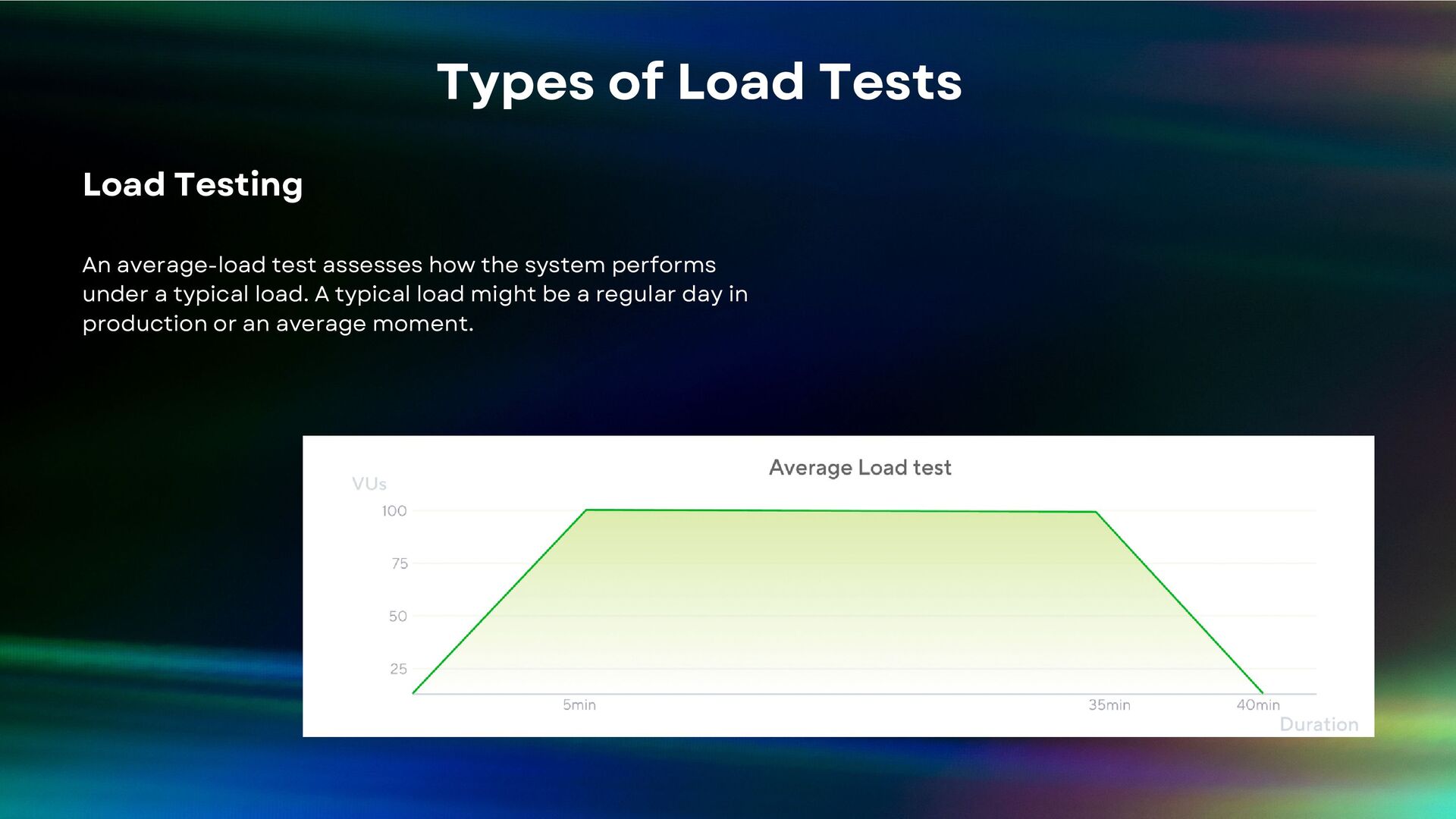
can handle the expected traffic. Adapt your testing: stress tests, peak tests, soak tests, etc. Infrastructure testing Test how cloud-native systems scale. Isolate bottlenecks. Plan and provision infrastructure capacity. Chaos testing Simulate real-world traffic in your chaos experiments. Inject system failures in your k6 tests. Synthetic testing Traditional synthetic/ping testing is not enough anymore. Reuse your k6 tests to ensure availability in production. End-to-end web testing Mix browser and API testing— interact with real browsers and collect frontend metrics to get a holistic user view. Regression testing Test continuously to track changes in performance and reliability. Prevent software regressions from reaching production.
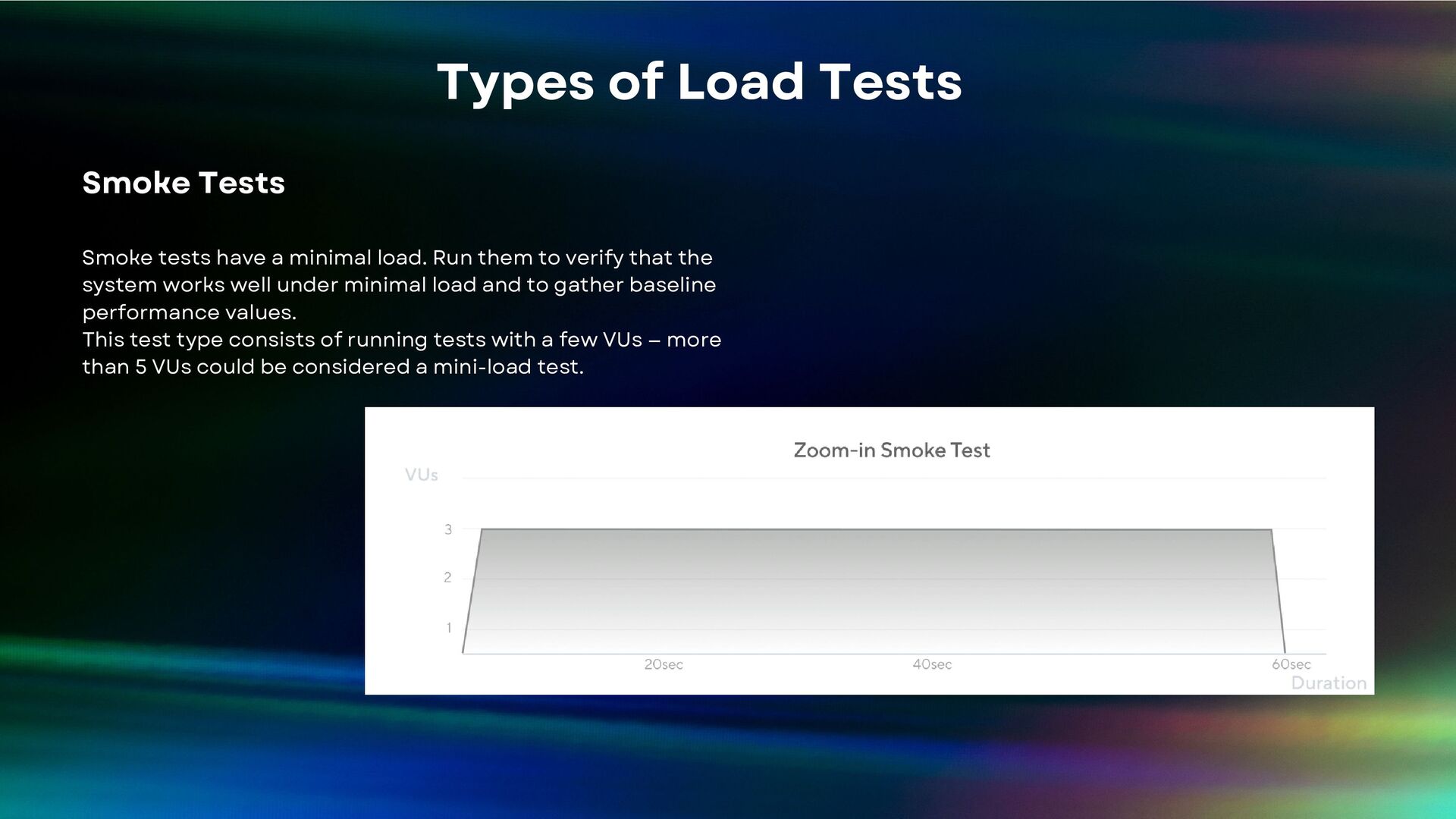
to verify that the system works well under minimal load and to gather baseline performance values. This test type consists of running tests with a few VUs — more than 5 VUs could be considered a mini-load test. Types of Load Tests
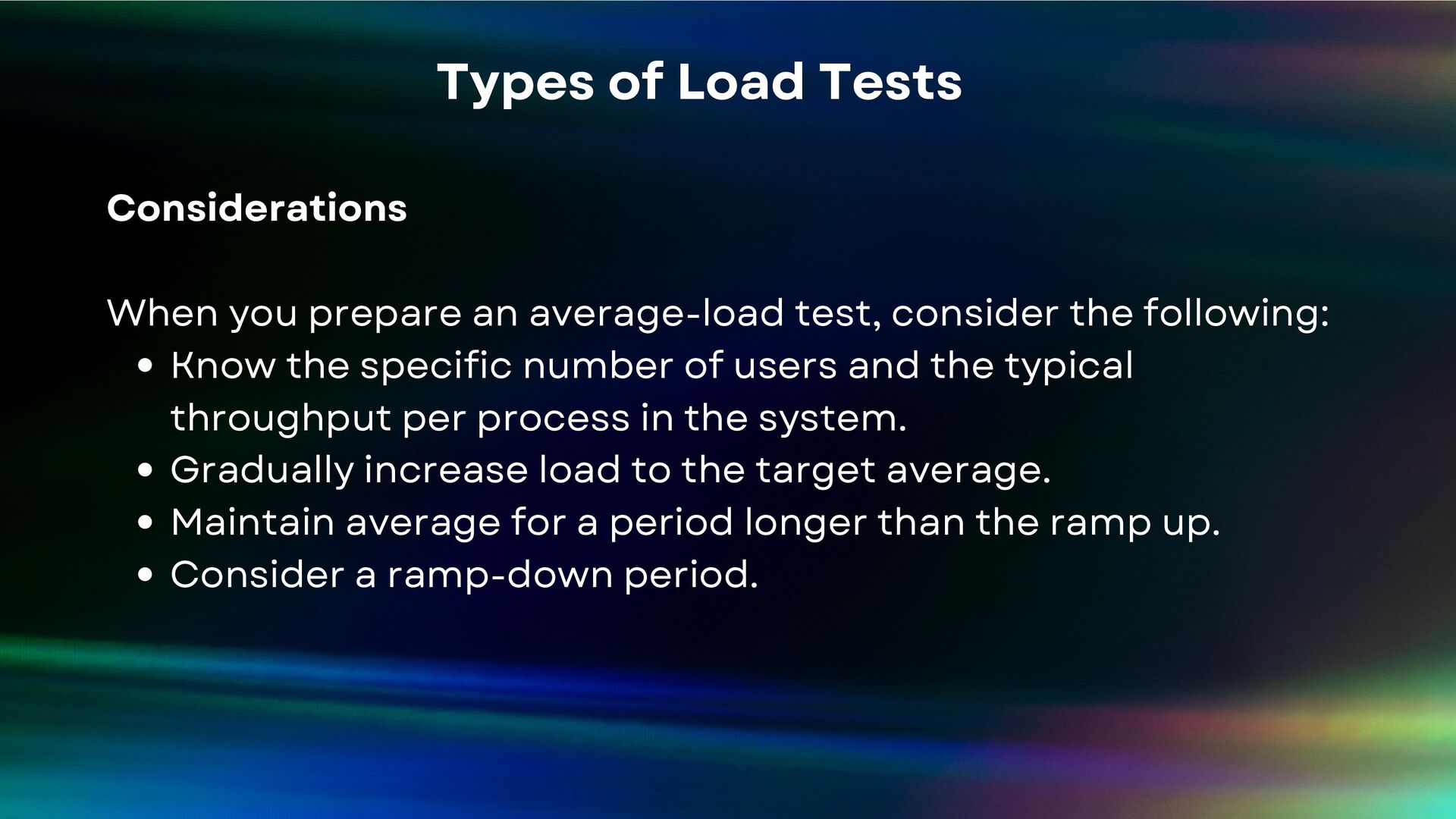
per process in the system. Gradually increase load to the target average. Maintain average for a period longer than the ramp up. Consider a ramp-down period. Considerations When you prepare an average-load test, consider the following: Types of Load Tests
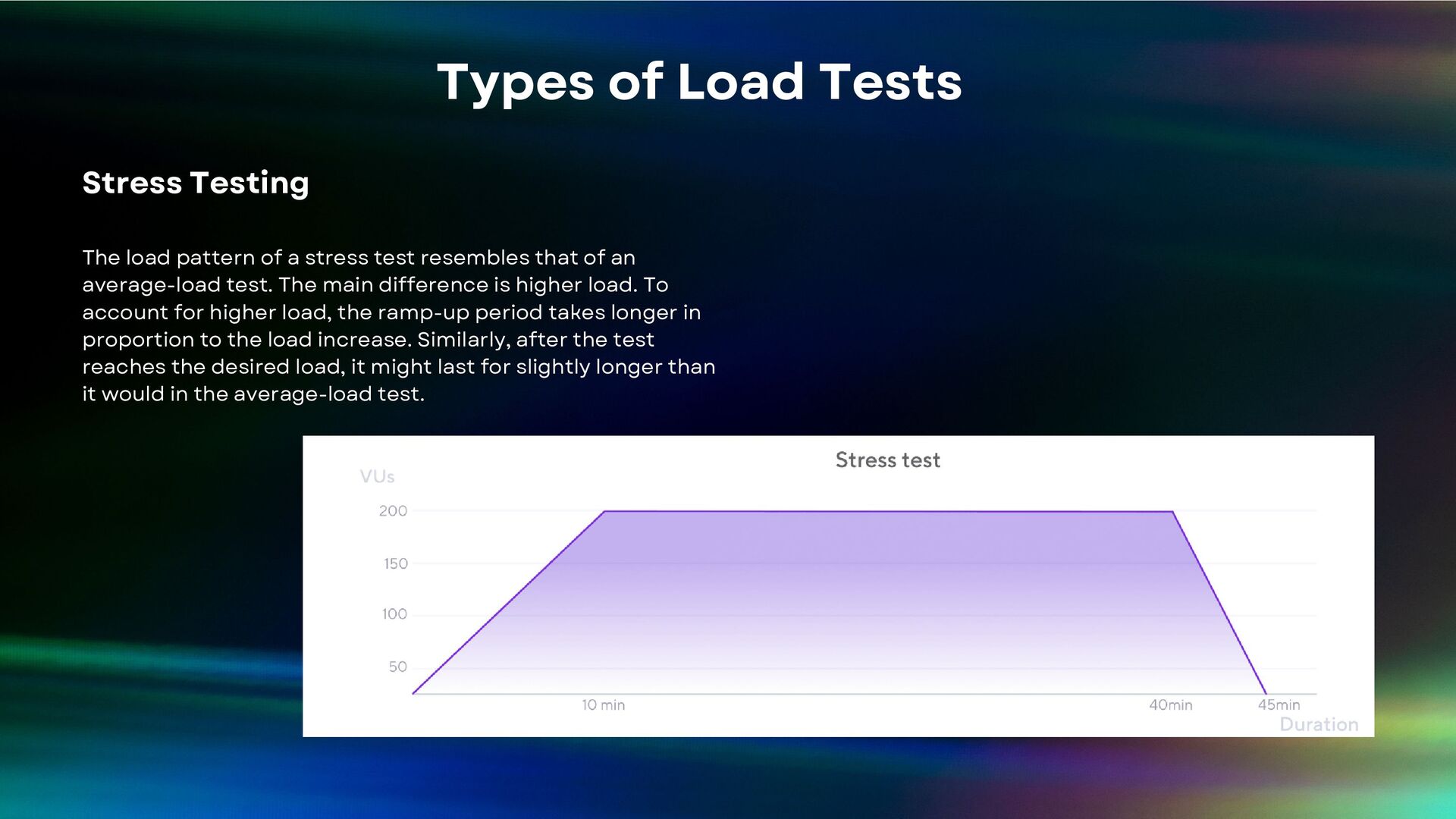
that of an average-load test. The main difference is higher load. To account for higher load, the ramp-up period takes longer in proportion to the load increase. Similarly, after the test reaches the desired load, it might last for slightly longer than it would in the average-load test. Types of Load Tests
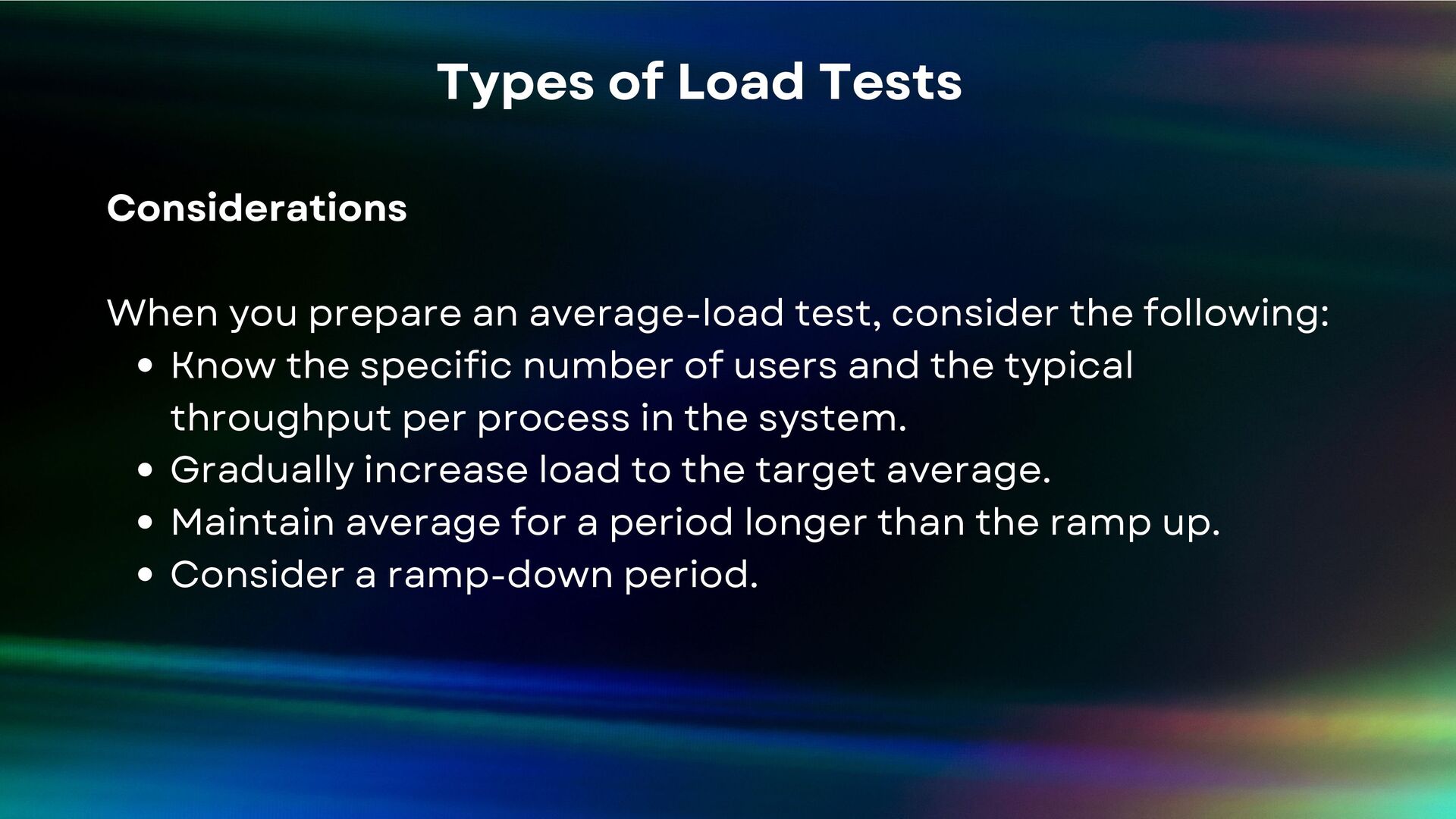
per process in the system. Gradually increase load to the target average. Maintain average for a period longer than the ramp up. Consider a ramp-down period. Considerations When you prepare an average-load test, consider the following: Types of Load Tests
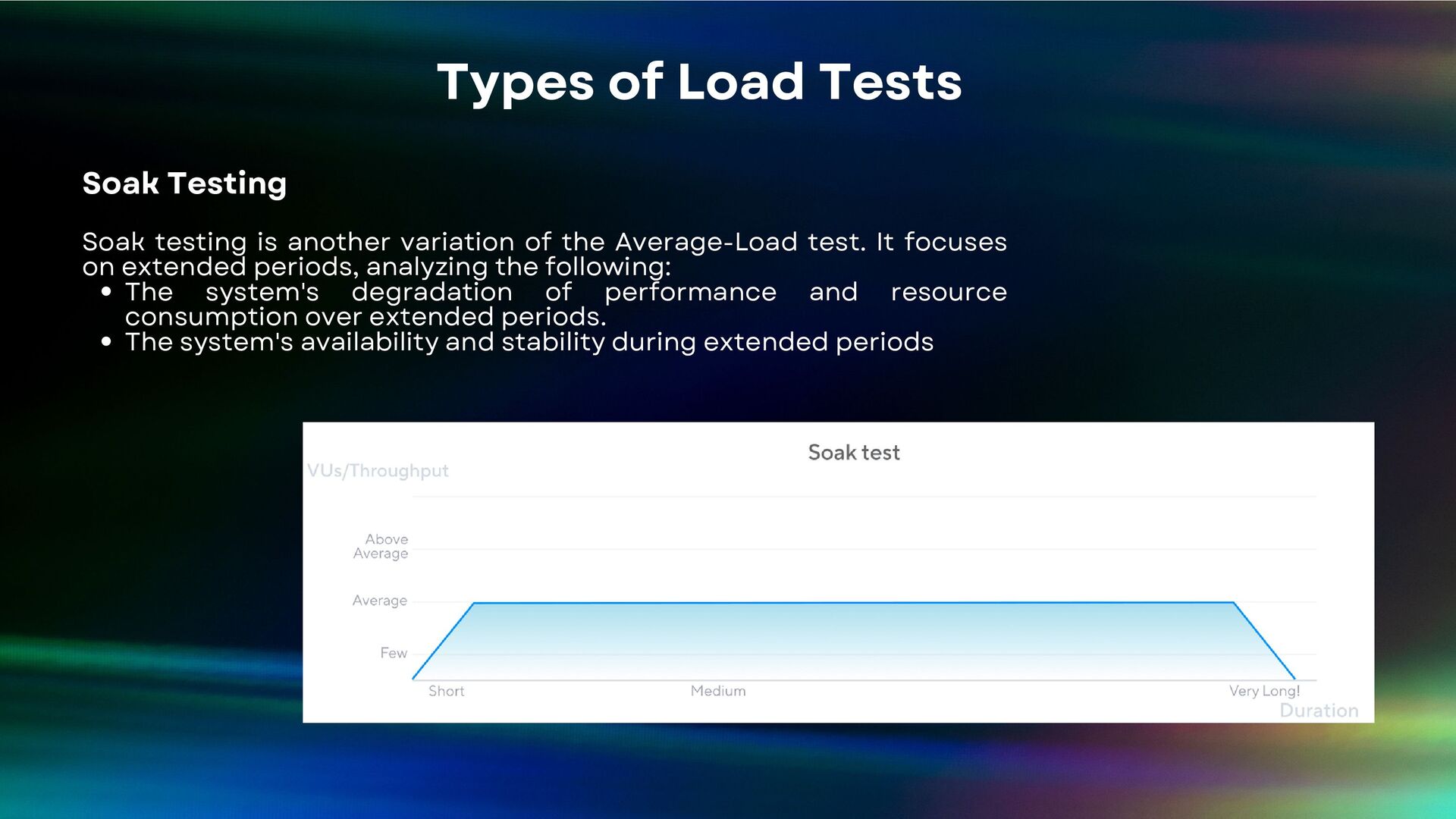
periods. The system's availability and stability during extended periods Soak Testing Soak testing is another variation of the Average-Load test. It focuses on extended periods, analyzing the following: Types of Load Tests
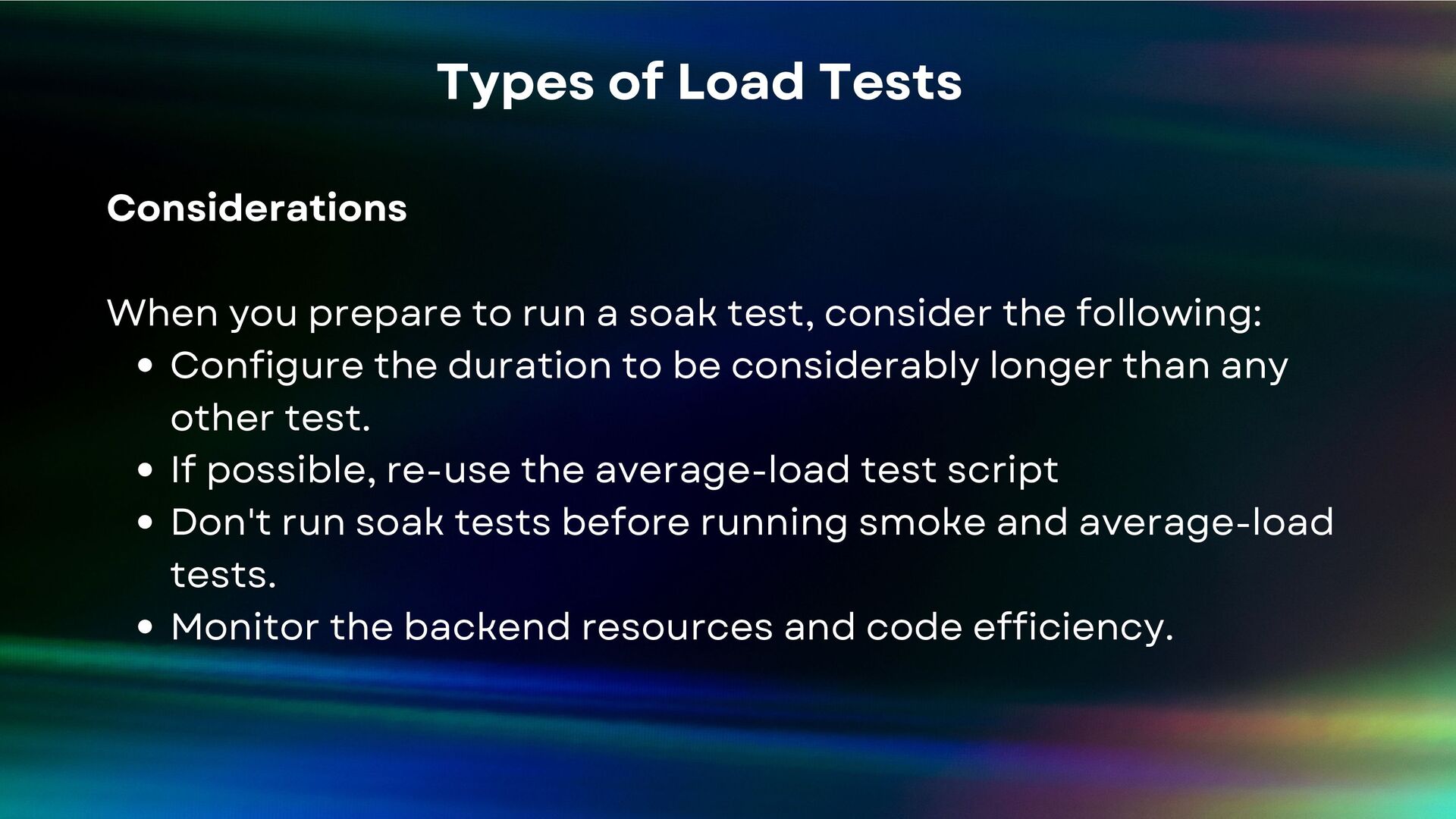
test. If possible, re-use the average-load test script Don't run soak tests before running smoke and average-load tests. Monitor the backend resources and code efficiency. Considerations When you prepare to run a soak test, consider the following: Types of Load Tests


 yusuftayman
 timakin
 ___akari11
 ivargrimstad
 mofurune
 kishida
 n_takehata
 akihisaikeda
 ryu1013
 optim
optim
 htkym
htkym
.jpg) yumnumm
yumnumm
 y0hgi
y0hgi
 gurzu
gurzu
 inesmontani
 dougneiner
 letsgokoyo
 kevinliebholz
 mlcsv
mlcsv
 techseoconnect
 aleyda
 reverentgeek
 retrage
 jdejongh
 frankvandijk