Upgrade to Pro — share decks privately, control downloads, hide ads and more …

๐—–๐—ผ๐—น๐—ฑ ๐—ฆ๐—ฒ๐—ฎ๐—น ๐—”๐—ฑ๐—ต๐—ฒ๐˜€๐—ถ๐˜ƒ๐—ฒ ๐— ๐—ฎ๐—ฟ๐—ธ๐—ฒ๐˜: ๐—”๐—ฑ๐˜ƒ๐—ฎ๐—ป๐—ฐ๐—ถ๐—ป๐—ด ๐—˜๐—ณ๐—ณ๐—ถ๐—ฐ๐—ถ๐—ฒ๐—ป๐˜ ...

๐—–๐—ผ๐—น๐—ฑ ๐—ฆ๐—ฒ๐—ฎ๐—น ๐—”๐—ฑ๐—ต๐—ฒ๐˜€๐—ถ๐˜ƒ๐—ฒ ๐— ๐—ฎ๐—ฟ๐—ธ๐—ฒ๐˜: ๐—”๐—ฑ๐˜ƒ๐—ฎ๐—ป๐—ฐ๐—ถ๐—ป๐—ด ๐—˜๐—ณ๐—ณ๐—ถ๐—ฐ๐—ถ๐—ฒ๐—ป๐˜ ๐—ฎ๐—ป๐—ฑ ๐—ฆ๐˜‚๐˜€๐˜๐—ฎ๐—ถ๐—ป๐—ฎ๐—ฏ๐—น๐—ฒ ๐—ฃ๐—ฎ๐—ฐ๐—ธ๐—ฎ๐—ด๐—ถ๐—ป๐—ดย ๐—ฆ๐—ผ๐—น๐˜‚๐˜๐—ถ๐—ผ๐—ป๐˜€

The global cold seal adhesive market is witnessing steady expansion as industries increasingly adopt fast, efficient, and temperature-sensitive packaging solutions. Cold seal adhesives allow materials to bond without heat activation, making them highly suitable for packaging products such as confectionery, medical supplies, pharmaceuticals, and temperature-sensitive goods.

Avatar for Joydeep Dey

Joydeep Dey

May 12, 2026

Other Decks in Business

Transcript

  1. Title Advancements, Market Dynamics, and Future Outlook of the OLED

    TDDI (Touch and Display Driver Integration) Chips Market Author: Minal Dutta Next Move Strategy Consulting Correspondence: [email protected] Co-Author: Supradip Baul Next Move Strategy Consulting Correspondence: [email protected] Co-Author: Debashree Dey Next Move Strategy Consulting Correspondence: [email protected] Co-Author: Joydeep Dey Next Move Strategy Consulting Correspondence: [email protected] Co-Author: Sanyukta Dey Next Move Strategy Consulting Correspondence: [email protected]
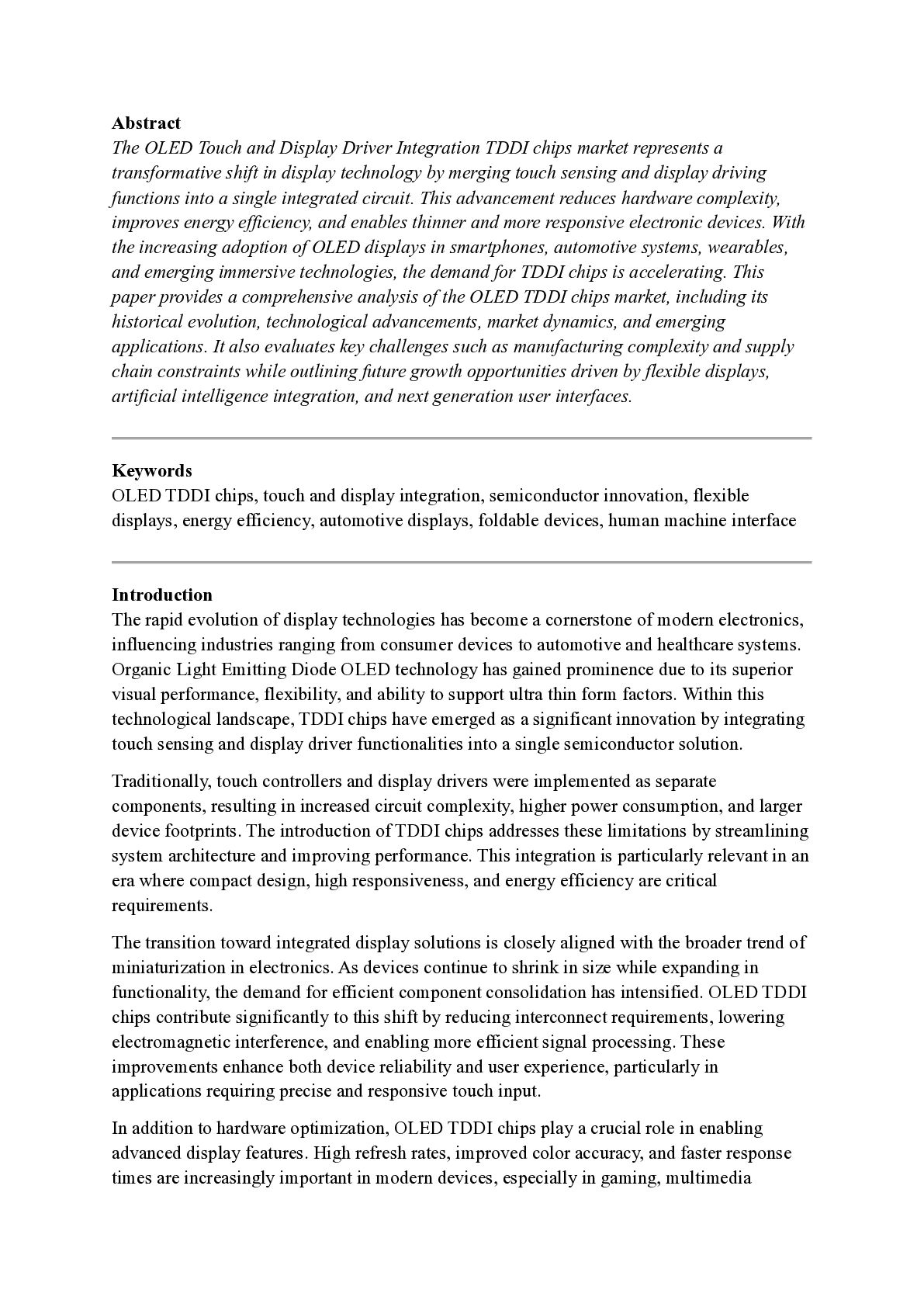
  2. Abstract The OLED Touch and Display Driver Integration TDDI chips

    market represents a transformative shift in display technology by merging touch sensing and display driving functions into a single integrated circuit. This advancement reduces hardware complexity, improves energy efficiency, and enables thinner and more responsive electronic devices. With the increasing adoption of OLED displays in smartphones, automotive systems, wearables, and emerging immersive technologies, the demand for TDDI chips is accelerating. This paper provides a comprehensive analysis of the OLED TDDI chips market, including its historical evolution, technological advancements, market dynamics, and emerging applications. It also evaluates key challenges such as manufacturing complexity and supply chain constraints while outlining future growth opportunities driven by flexible displays, artificial intelligence integration, and next generation user interfaces. Keywords OLED TDDI chips, touch and display integration, semiconductor innovation, flexible displays, energy efficiency, automotive displays, foldable devices, human machine interface Introduction The rapid evolution of display technologies has become a cornerstone of modern electronics, influencing industries ranging from consumer devices to automotive and healthcare systems. Organic Light Emitting Diode OLED technology has gained prominence due to its superior visual performance, flexibility, and ability to support ultra thin form factors. Within this technological landscape, TDDI chips have emerged as a significant innovation by integrating touch sensing and display driver functionalities into a single semiconductor solution. Traditionally, touch controllers and display drivers were implemented as separate components, resulting in increased circuit complexity, higher power consumption, and larger device footprints. The introduction of TDDI chips addresses these limitations by streamlining system architecture and improving performance. This integration is particularly relevant in an era where compact design, high responsiveness, and energy efficiency are critical requirements. The transition toward integrated display solutions is closely aligned with the broader trend of miniaturization in electronics. As devices continue to shrink in size while expanding in functionality, the demand for efficient component consolidation has intensified. OLED TDDI chips contribute significantly to this shift by reducing interconnect requirements, lowering electromagnetic interference, and enabling more efficient signal processing. These improvements enhance both device reliability and user experience, particularly in applications requiring precise and responsive touch input. In addition to hardware optimization, OLED TDDI chips play a crucial role in enabling advanced display features. High refresh rates, improved color accuracy, and faster response times are increasingly important in modern devices, especially in gaming, multimedia
  3. consumption, and professional applications. The integration of touch and display

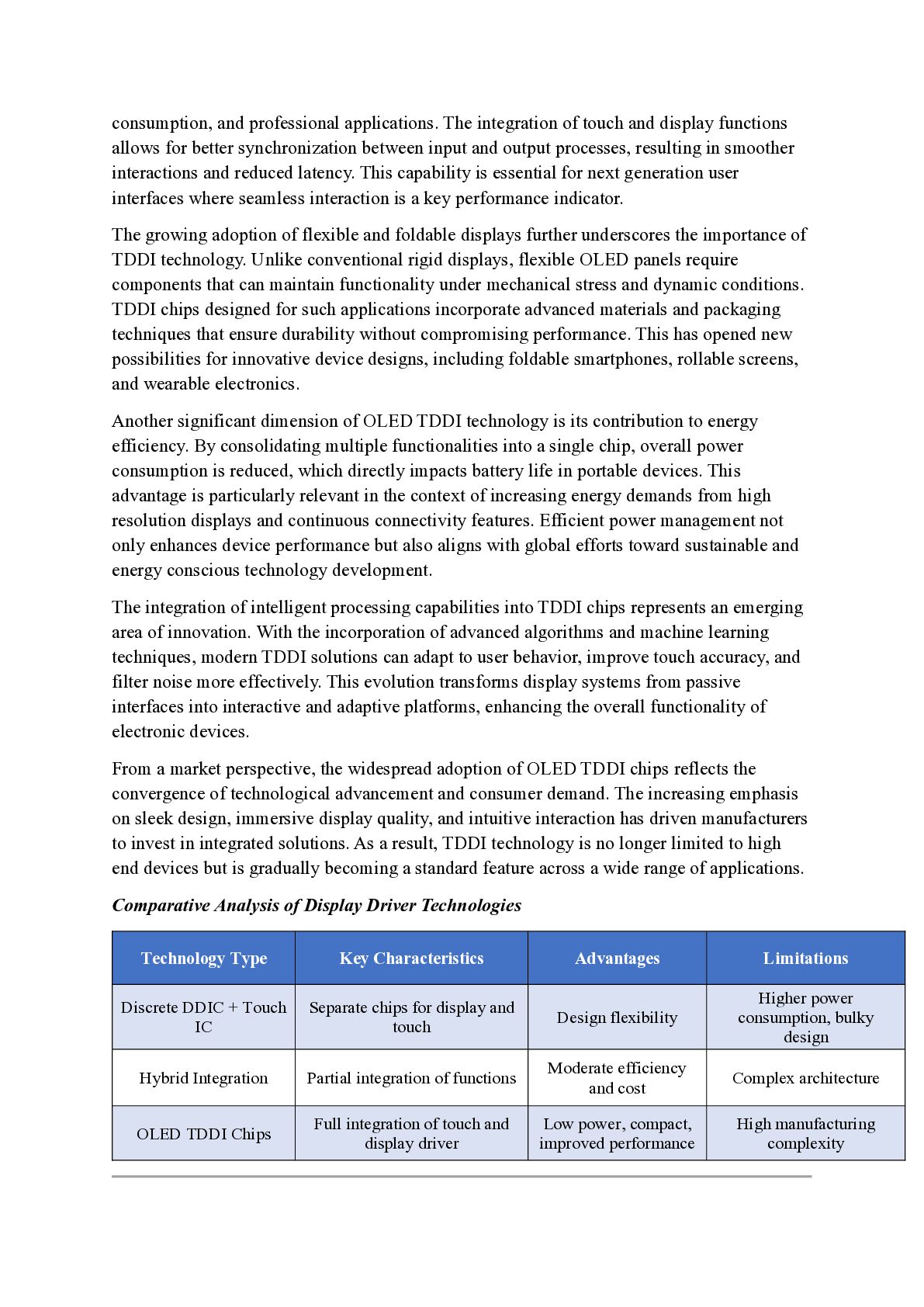
    functions allows for better synchronization between input and output processes, resulting in smoother interactions and reduced latency. This capability is essential for next generation user interfaces where seamless interaction is a key performance indicator. The growing adoption of flexible and foldable displays further underscores the importance of TDDI technology. Unlike conventional rigid displays, flexible OLED panels require components that can maintain functionality under mechanical stress and dynamic conditions. TDDI chips designed for such applications incorporate advanced materials and packaging techniques that ensure durability without compromising performance. This has opened new possibilities for innovative device designs, including foldable smartphones, rollable screens, and wearable electronics. Another significant dimension of OLED TDDI technology is its contribution to energy efficiency. By consolidating multiple functionalities into a single chip, overall power consumption is reduced, which directly impacts battery life in portable devices. This advantage is particularly relevant in the context of increasing energy demands from high resolution displays and continuous connectivity features. Efficient power management not only enhances device performance but also aligns with global efforts toward sustainable and energy conscious technology development. The integration of intelligent processing capabilities into TDDI chips represents an emerging area of innovation. With the incorporation of advanced algorithms and machine learning techniques, modern TDDI solutions can adapt to user behavior, improve touch accuracy, and filter noise more effectively. This evolution transforms display systems from passive interfaces into interactive and adaptive platforms, enhancing the overall functionality of electronic devices. From a market perspective, the widespread adoption of OLED TDDI chips reflects the convergence of technological advancement and consumer demand. The increasing emphasis on sleek design, immersive display quality, and intuitive interaction has driven manufacturers to invest in integrated solutions. As a result, TDDI technology is no longer limited to high end devices but is gradually becoming a standard feature across a wide range of applications. Comparative Analysis of Display Driver Technologies Technology Type Key Characteristics Advantages Limitations Discrete DDIC + Touch IC Separate chips for display and touch Design flexibility Higher power consumption, bulky design Hybrid Integration Partial integration of functions Moderate efficiency and cost Complex architecture OLED TDDI Chips Full integration of touch and display driver Low power, compact, improved performance High manufacturing complexity
  4. Market Overview The global OLED TDDI (Touch and Display Driver

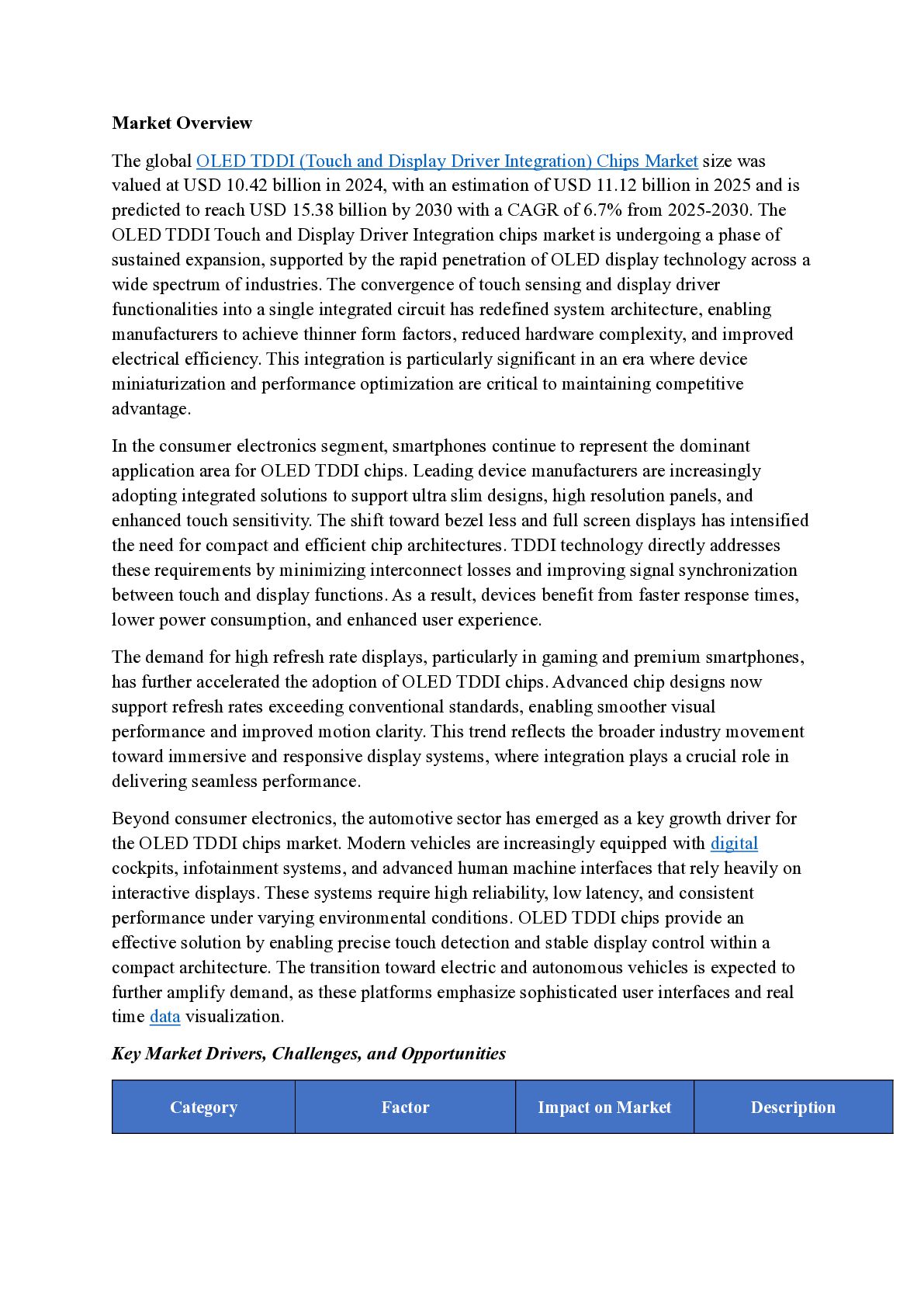
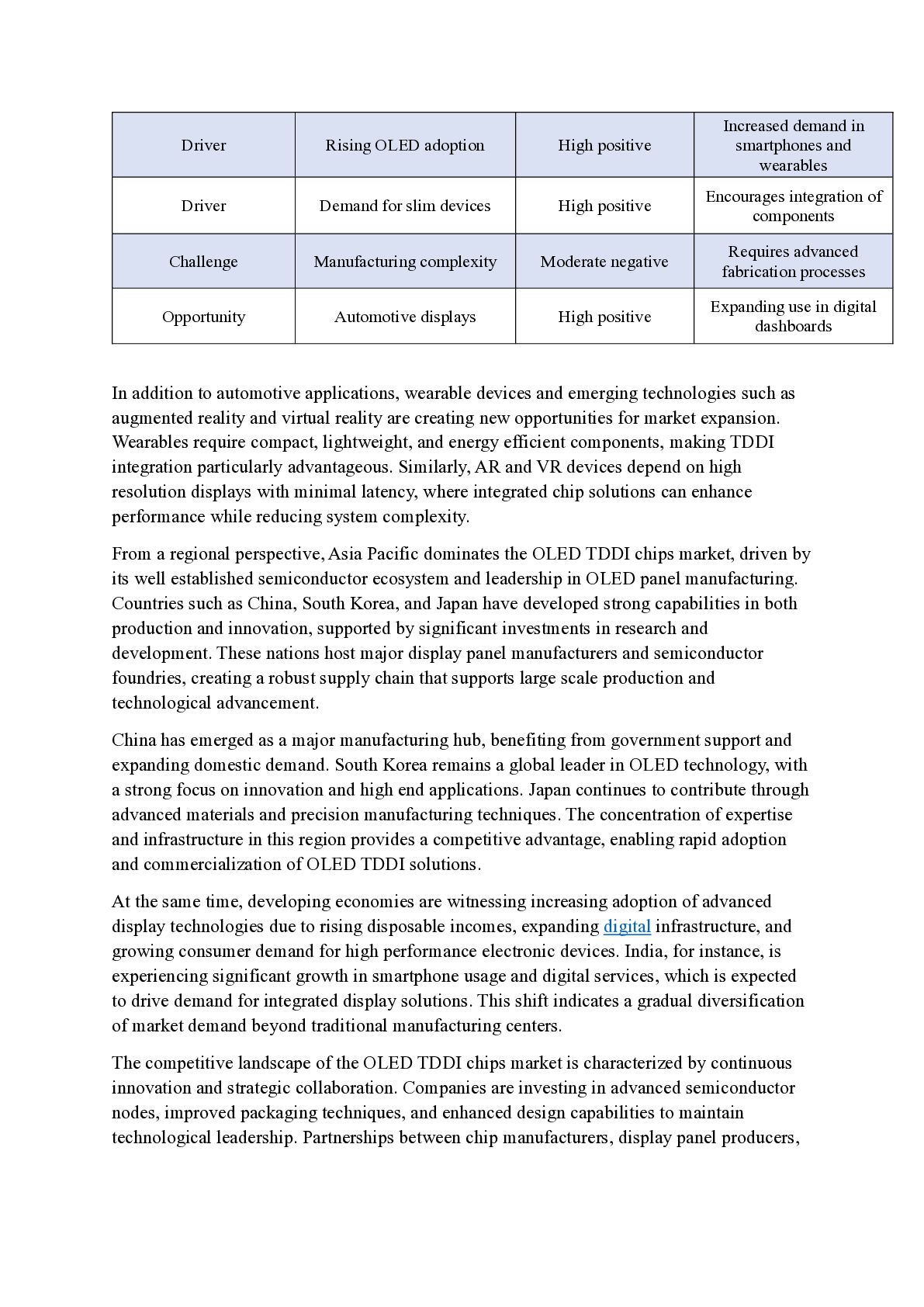
    Integration) Chips Market size was valued at USD 10.42 billion in 2024, with an estimation of USD 11.12 billion in 2025 and is predicted to reach USD 15.38 billion by 2030 with a CAGR of 6.7% from 2025-2030. The OLED TDDI Touch and Display Driver Integration chips market is undergoing a phase of sustained expansion, supported by the rapid penetration of OLED display technology across a wide spectrum of industries. The convergence of touch sensing and display driver functionalities into a single integrated circuit has redefined system architecture, enabling manufacturers to achieve thinner form factors, reduced hardware complexity, and improved electrical efficiency. This integration is particularly significant in an era where device miniaturization and performance optimization are critical to maintaining competitive advantage. In the consumer electronics segment, smartphones continue to represent the dominant application area for OLED TDDI chips. Leading device manufacturers are increasingly adopting integrated solutions to support ultra slim designs, high resolution panels, and enhanced touch sensitivity. The shift toward bezel less and full screen displays has intensified the need for compact and efficient chip architectures. TDDI technology directly addresses these requirements by minimizing interconnect losses and improving signal synchronization between touch and display functions. As a result, devices benefit from faster response times, lower power consumption, and enhanced user experience. The demand for high refresh rate displays, particularly in gaming and premium smartphones, has further accelerated the adoption of OLED TDDI chips. Advanced chip designs now support refresh rates exceeding conventional standards, enabling smoother visual performance and improved motion clarity. This trend reflects the broader industry movement toward immersive and responsive display systems, where integration plays a crucial role in delivering seamless performance. Beyond consumer electronics, the automotive sector has emerged as a key growth driver for the OLED TDDI chips market. Modern vehicles are increasingly equipped with digital cockpits, infotainment systems, and advanced human machine interfaces that rely heavily on interactive displays. These systems require high reliability, low latency, and consistent performance under varying environmental conditions. OLED TDDI chips provide an effective solution by enabling precise touch detection and stable display control within a compact architecture. The transition toward electric and autonomous vehicles is expected to further amplify demand, as these platforms emphasize sophisticated user interfaces and real time data visualization. Key Market Drivers, Challenges, and Opportunities Category Factor Impact on Market Description
  5. Driver Rising OLED adoption High positive Increased demand in smartphones

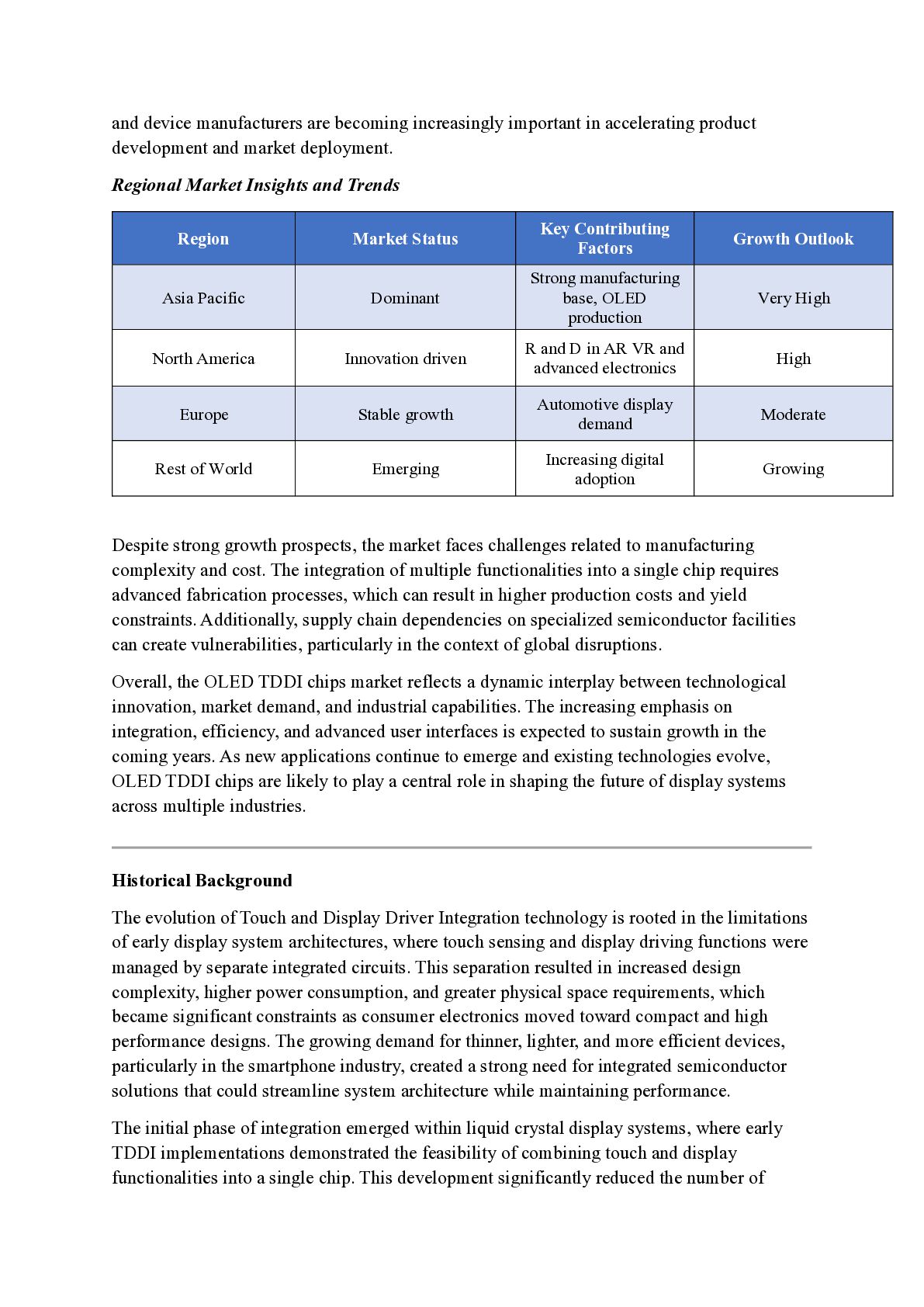
    and wearables Driver Demand for slim devices High positive Encourages integration of components Challenge Manufacturing complexity Moderate negative Requires advanced fabrication processes Opportunity Automotive displays High positive Expanding use in digital dashboards In addition to automotive applications, wearable devices and emerging technologies such as augmented reality and virtual reality are creating new opportunities for market expansion. Wearables require compact, lightweight, and energy efficient components, making TDDI integration particularly advantageous. Similarly, AR and VR devices depend on high resolution displays with minimal latency, where integrated chip solutions can enhance performance while reducing system complexity. From a regional perspective, Asia Pacific dominates the OLED TDDI chips market, driven by its well established semiconductor ecosystem and leadership in OLED panel manufacturing. Countries such as China, South Korea, and Japan have developed strong capabilities in both production and innovation, supported by significant investments in research and development. These nations host major display panel manufacturers and semiconductor foundries, creating a robust supply chain that supports large scale production and technological advancement. China has emerged as a major manufacturing hub, benefiting from government support and expanding domestic demand. South Korea remains a global leader in OLED technology, with a strong focus on innovation and high end applications. Japan continues to contribute through advanced materials and precision manufacturing techniques. The concentration of expertise and infrastructure in this region provides a competitive advantage, enabling rapid adoption and commercialization of OLED TDDI solutions. At the same time, developing economies are witnessing increasing adoption of advanced display technologies due to rising disposable incomes, expanding digital infrastructure, and growing consumer demand for high performance electronic devices. India, for instance, is experiencing significant growth in smartphone usage and digital services, which is expected to drive demand for integrated display solutions. This shift indicates a gradual diversification of market demand beyond traditional manufacturing centers. The competitive landscape of the OLED TDDI chips market is characterized by continuous innovation and strategic collaboration. Companies are investing in advanced semiconductor nodes, improved packaging techniques, and enhanced design capabilities to maintain technological leadership. Partnerships between chip manufacturers, display panel producers,
  6. and device manufacturers are becoming increasingly important in accelerating product

    development and market deployment. Regional Market Insights and Trends Region Market Status Key Contributing Factors Growth Outlook Asia Pacific Dominant Strong manufacturing base, OLED production Very High North America Innovation driven R and D in AR VR and advanced electronics High Europe Stable growth Automotive display demand Moderate Rest of World Emerging Increasing digital adoption Growing Despite strong growth prospects, the market faces challenges related to manufacturing complexity and cost. The integration of multiple functionalities into a single chip requires advanced fabrication processes, which can result in higher production costs and yield constraints. Additionally, supply chain dependencies on specialized semiconductor facilities can create vulnerabilities, particularly in the context of global disruptions. Overall, the OLED TDDI chips market reflects a dynamic interplay between technological innovation, market demand, and industrial capabilities. The increasing emphasis on integration, efficiency, and advanced user interfaces is expected to sustain growth in the coming years. As new applications continue to emerge and existing technologies evolve, OLED TDDI chips are likely to play a central role in shaping the future of display systems across multiple industries. Historical Background The evolution of Touch and Display Driver Integration technology is rooted in the limitations of early display system architectures, where touch sensing and display driving functions were managed by separate integrated circuits. This separation resulted in increased design complexity, higher power consumption, and greater physical space requirements, which became significant constraints as consumer electronics moved toward compact and high performance designs. The growing demand for thinner, lighter, and more efficient devices, particularly in the smartphone industry, created a strong need for integrated semiconductor solutions that could streamline system architecture while maintaining performance. The initial phase of integration emerged within liquid crystal display systems, where early TDDI implementations demonstrated the feasibility of combining touch and display functionalities into a single chip. This development significantly reduced the number of
  7. components required, leading to thinner display modules and improved energy

    efficiency. Although early solutions faced challenges related to signal interference and limited processing capability, continuous advancements in circuit design and signal processing techniques gradually improved their reliability and performance. The transition from LCD to OLED technology marked a critical turning point in the evolution of TDDI chips. OLED displays introduced unique advantages such as self emissive pixels, higher contrast ratios, and the ability to support flexible and foldable form factors. These characteristics aligned well with the objectives of integration, enabling more sophisticated and compact chip designs. As a result, the development of OLED compatible TDDI chips accelerated, supported by innovations in materials science and display engineering. Advancements in semiconductor manufacturing have played a central role in enabling modern OLED TDDI solutions. The shift toward smaller process nodes allowed for higher transistor density, improved processing speed, and reduced power consumption within integrated chips. At the same time, the introduction of advanced packaging techniques such as chip on flex and chip on plastic improved the adaptability of TDDI chips to flexible and curved display surfaces. These innovations addressed key challenges related to durability, signal integrity, and mechanical stress, particularly in foldable and wearable devices. Another important milestone in the historical development of OLED TDDI technology has been the refinement of touch sensing algorithms and noise reduction techniques. Early integrated systems often struggled with interference between display signals and touch input detection. However, improvements in filtering methods, synchronization mechanisms, and circuit isolation have enabled highly accurate and responsive touch performance, even in high resolution and high refresh rate displays. The widespread adoption of OLED TDDI chips in modern electronic devices reflects the cumulative impact of these technological advancements. Today, integrated chips are not only standard in premium smartphones but are also expanding into automotive displays, wearable electronics, and industrial interfaces. This progression highlights a broader shift toward system level integration in semiconductor design, where efficiency, compactness, and multifunctionality are prioritized. Looking at the broader historical trajectory, the development of OLED TDDI chips illustrates the convergence of multiple technological domains, including display engineering, semiconductor fabrication, and user interface design. The continuous evolution of these chips has been driven by both market demands and engineering innovation, resulting in a mature technology that serves as a foundation for next generation display systems. Technological Advancements and Integration Trends in OLED TDDI Chips The rapid evolution of OLED Touch and Display Driver Integration TDDI chips is fundamentally reshaping the design and performance capabilities of modern display systems. As consumer demand intensifies for thinner, more responsive, and energy efficient devices,
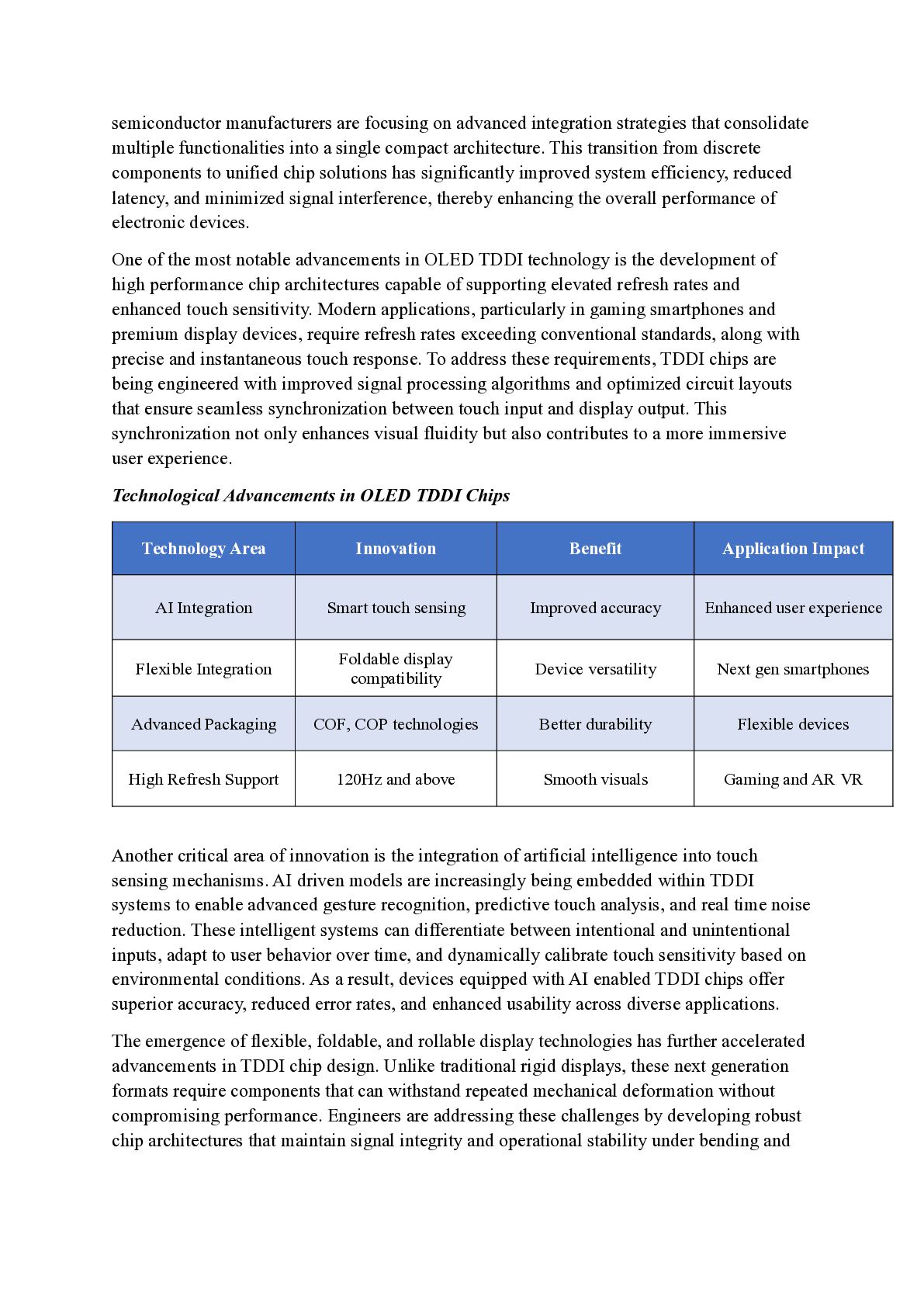
  8. semiconductor manufacturers are focusing on advanced integration strategies that consolidate

    multiple functionalities into a single compact architecture. This transition from discrete components to unified chip solutions has significantly improved system efficiency, reduced latency, and minimized signal interference, thereby enhancing the overall performance of electronic devices. One of the most notable advancements in OLED TDDI technology is the development of high performance chip architectures capable of supporting elevated refresh rates and enhanced touch sensitivity. Modern applications, particularly in gaming smartphones and premium display devices, require refresh rates exceeding conventional standards, along with precise and instantaneous touch response. To address these requirements, TDDI chips are being engineered with improved signal processing algorithms and optimized circuit layouts that ensure seamless synchronization between touch input and display output. This synchronization not only enhances visual fluidity but also contributes to a more immersive user experience. Technological Advancements in OLED TDDI Chips Technology Area Innovation Benefit Application Impact AI Integration Smart touch sensing Improved accuracy Enhanced user experience Flexible Integration Foldable display compatibility Device versatility Next gen smartphones Advanced Packaging COF, COP technologies Better durability Flexible devices High Refresh Support 120Hz and above Smooth visuals Gaming and AR VR Another critical area of innovation is the integration of artificial intelligence into touch sensing mechanisms. AI driven models are increasingly being embedded within TDDI systems to enable advanced gesture recognition, predictive touch analysis, and real time noise reduction. These intelligent systems can differentiate between intentional and unintentional inputs, adapt to user behavior over time, and dynamically calibrate touch sensitivity based on environmental conditions. As a result, devices equipped with AI enabled TDDI chips offer superior accuracy, reduced error rates, and enhanced usability across diverse applications. The emergence of flexible, foldable, and rollable display technologies has further accelerated advancements in TDDI chip design. Unlike traditional rigid displays, these next generation formats require components that can withstand repeated mechanical deformation without compromising performance. Engineers are addressing these challenges by developing robust chip architectures that maintain signal integrity and operational stability under bending and
  9. stretching conditions. This involves the use of flexible substrates, advanced

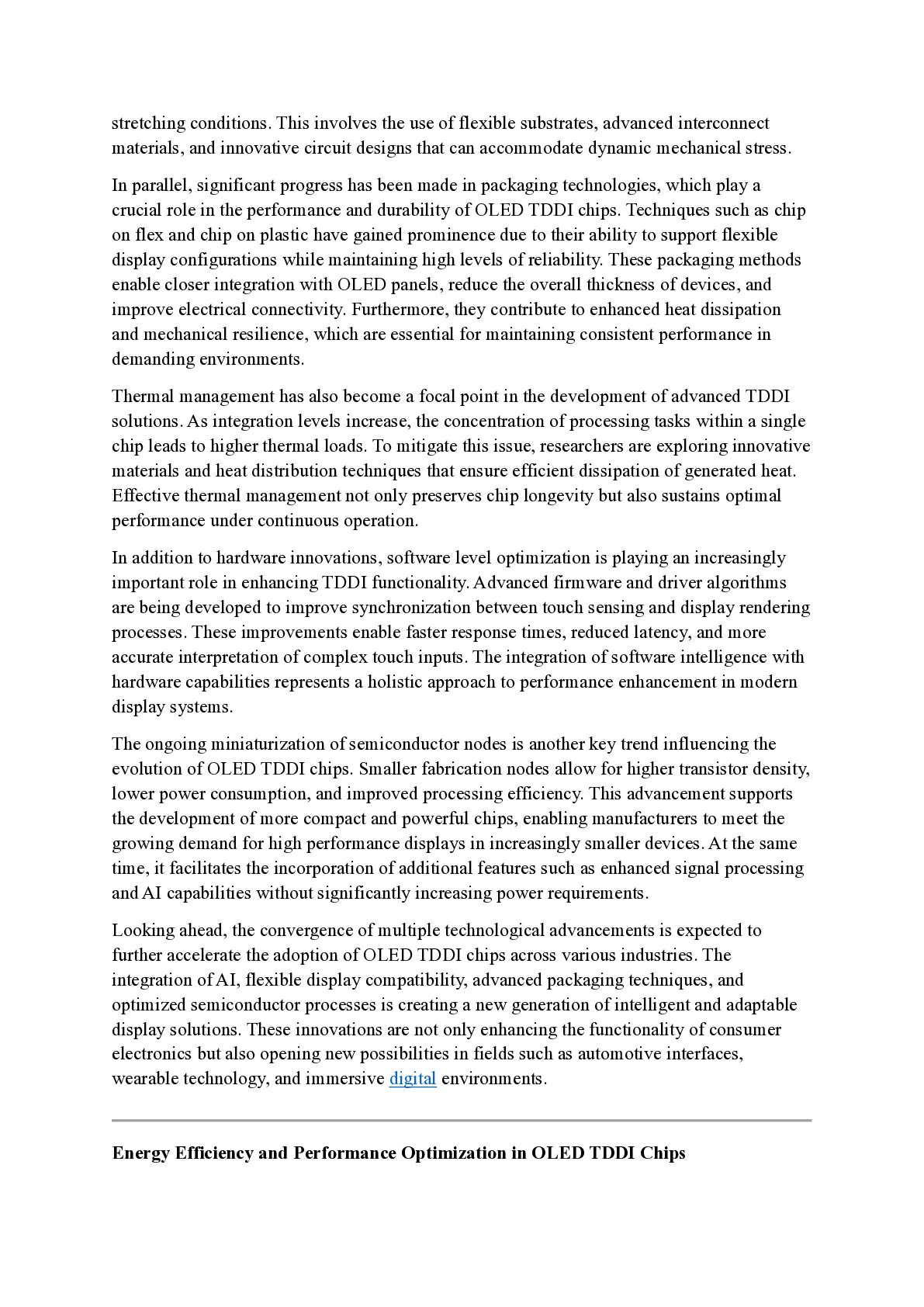
    interconnect materials, and innovative circuit designs that can accommodate dynamic mechanical stress. In parallel, significant progress has been made in packaging technologies, which play a crucial role in the performance and durability of OLED TDDI chips. Techniques such as chip on flex and chip on plastic have gained prominence due to their ability to support flexible display configurations while maintaining high levels of reliability. These packaging methods enable closer integration with OLED panels, reduce the overall thickness of devices, and improve electrical connectivity. Furthermore, they contribute to enhanced heat dissipation and mechanical resilience, which are essential for maintaining consistent performance in demanding environments. Thermal management has also become a focal point in the development of advanced TDDI solutions. As integration levels increase, the concentration of processing tasks within a single chip leads to higher thermal loads. To mitigate this issue, researchers are exploring innovative materials and heat distribution techniques that ensure efficient dissipation of generated heat. Effective thermal management not only preserves chip longevity but also sustains optimal performance under continuous operation. In addition to hardware innovations, software level optimization is playing an increasingly important role in enhancing TDDI functionality. Advanced firmware and driver algorithms are being developed to improve synchronization between touch sensing and display rendering processes. These improvements enable faster response times, reduced latency, and more accurate interpretation of complex touch inputs. The integration of software intelligence with hardware capabilities represents a holistic approach to performance enhancement in modern display systems. The ongoing miniaturization of semiconductor nodes is another key trend influencing the evolution of OLED TDDI chips. Smaller fabrication nodes allow for higher transistor density, lower power consumption, and improved processing efficiency. This advancement supports the development of more compact and powerful chips, enabling manufacturers to meet the growing demand for high performance displays in increasingly smaller devices. At the same time, it facilitates the incorporation of additional features such as enhanced signal processing and AI capabilities without significantly increasing power requirements. Looking ahead, the convergence of multiple technological advancements is expected to further accelerate the adoption of OLED TDDI chips across various industries. The integration of AI, flexible display compatibility, advanced packaging techniques, and optimized semiconductor processes is creating a new generation of intelligent and adaptable display solutions. These innovations are not only enhancing the functionality of consumer electronics but also opening new possibilities in fields such as automotive interfaces, wearable technology, and immersive digital environments. Energy Efficiency and Performance Optimization in OLED TDDI Chips
  10. Energy efficiency has emerged as a defining parameter in the

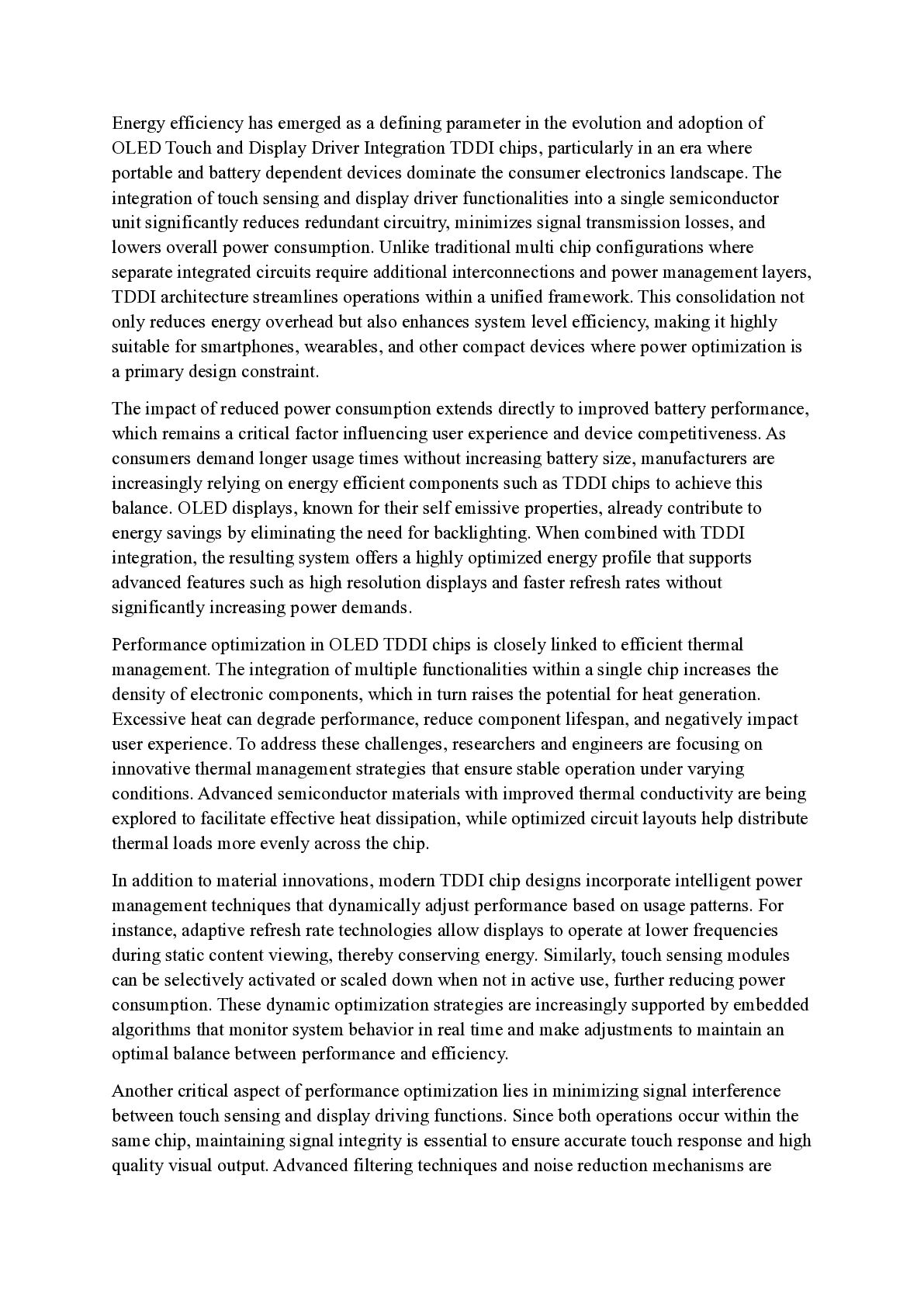
    evolution and adoption of OLED Touch and Display Driver Integration TDDI chips, particularly in an era where portable and battery dependent devices dominate the consumer electronics landscape. The integration of touch sensing and display driver functionalities into a single semiconductor unit significantly reduces redundant circuitry, minimizes signal transmission losses, and lowers overall power consumption. Unlike traditional multi chip configurations where separate integrated circuits require additional interconnections and power management layers, TDDI architecture streamlines operations within a unified framework. This consolidation not only reduces energy overhead but also enhances system level efficiency, making it highly suitable for smartphones, wearables, and other compact devices where power optimization is a primary design constraint. The impact of reduced power consumption extends directly to improved battery performance, which remains a critical factor influencing user experience and device competitiveness. As consumers demand longer usage times without increasing battery size, manufacturers are increasingly relying on energy efficient components such as TDDI chips to achieve this balance. OLED displays, known for their self emissive properties, already contribute to energy savings by eliminating the need for backlighting. When combined with TDDI integration, the resulting system offers a highly optimized energy profile that supports advanced features such as high resolution displays and faster refresh rates without significantly increasing power demands. Performance optimization in OLED TDDI chips is closely linked to efficient thermal management. The integration of multiple functionalities within a single chip increases the density of electronic components, which in turn raises the potential for heat generation. Excessive heat can degrade performance, reduce component lifespan, and negatively impact user experience. To address these challenges, researchers and engineers are focusing on innovative thermal management strategies that ensure stable operation under varying conditions. Advanced semiconductor materials with improved thermal conductivity are being explored to facilitate effective heat dissipation, while optimized circuit layouts help distribute thermal loads more evenly across the chip. In addition to material innovations, modern TDDI chip designs incorporate intelligent power management techniques that dynamically adjust performance based on usage patterns. For instance, adaptive refresh rate technologies allow displays to operate at lower frequencies during static content viewing, thereby conserving energy. Similarly, touch sensing modules can be selectively activated or scaled down when not in active use, further reducing power consumption. These dynamic optimization strategies are increasingly supported by embedded algorithms that monitor system behavior in real time and make adjustments to maintain an optimal balance between performance and efficiency. Another critical aspect of performance optimization lies in minimizing signal interference between touch sensing and display driving functions. Since both operations occur within the same chip, maintaining signal integrity is essential to ensure accurate touch response and high quality visual output. Advanced filtering techniques and noise reduction mechanisms are
  11. employed to isolate signals and prevent cross interference. This not

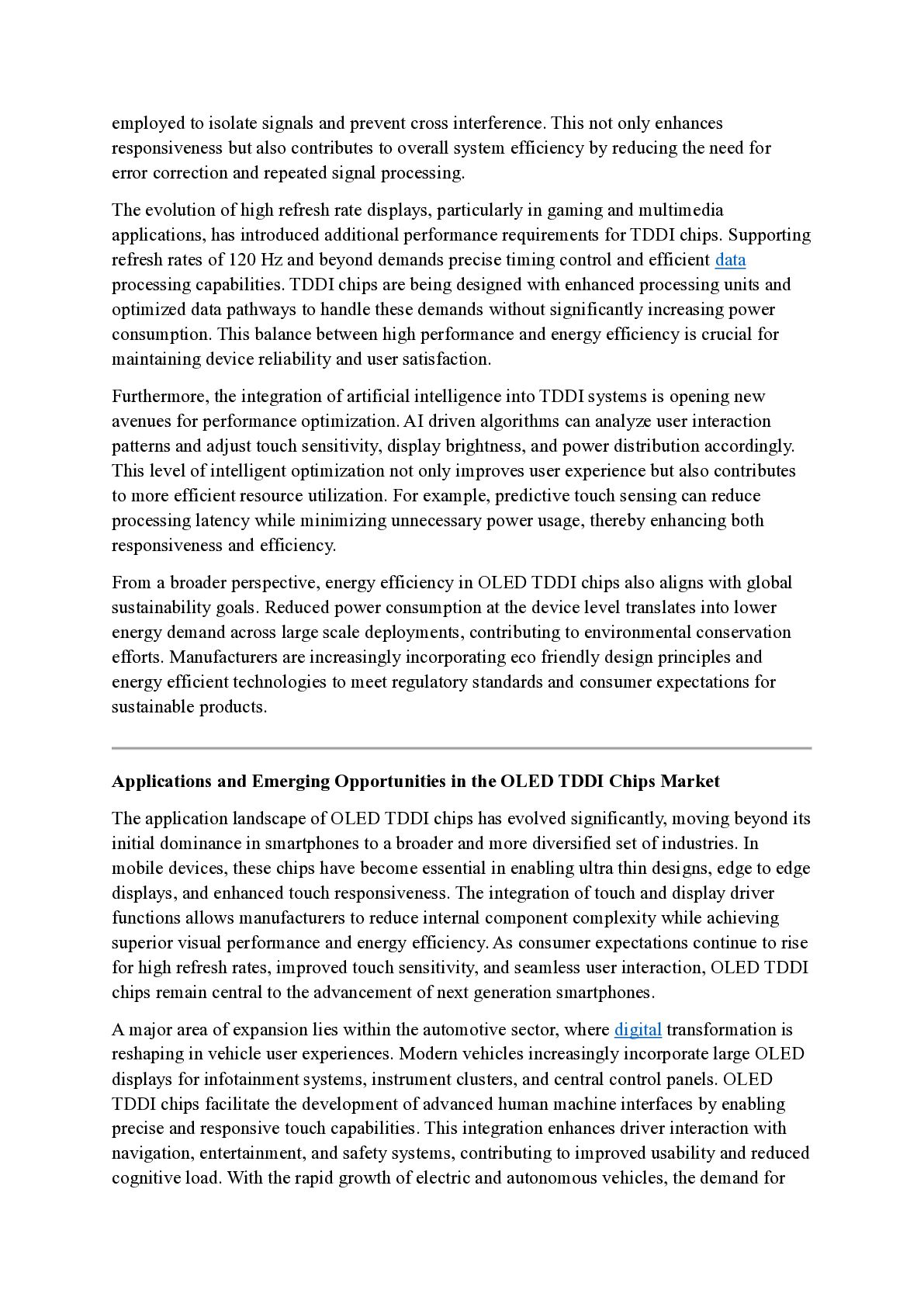
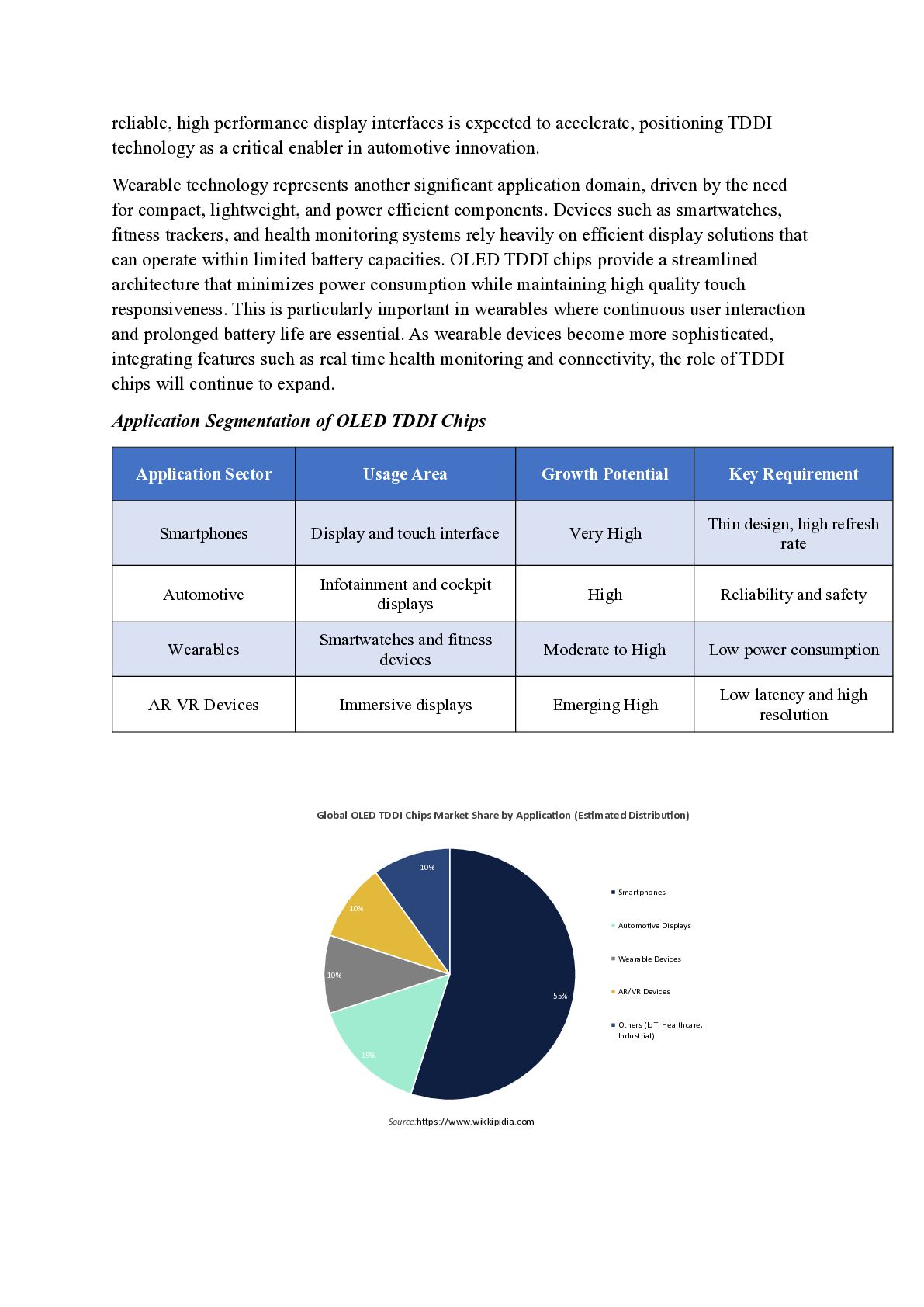
    only enhances responsiveness but also contributes to overall system efficiency by reducing the need for error correction and repeated signal processing. The evolution of high refresh rate displays, particularly in gaming and multimedia applications, has introduced additional performance requirements for TDDI chips. Supporting refresh rates of 120 Hz and beyond demands precise timing control and efficient data processing capabilities. TDDI chips are being designed with enhanced processing units and optimized data pathways to handle these demands without significantly increasing power consumption. This balance between high performance and energy efficiency is crucial for maintaining device reliability and user satisfaction. Furthermore, the integration of artificial intelligence into TDDI systems is opening new avenues for performance optimization. AI driven algorithms can analyze user interaction patterns and adjust touch sensitivity, display brightness, and power distribution accordingly. This level of intelligent optimization not only improves user experience but also contributes to more efficient resource utilization. For example, predictive touch sensing can reduce processing latency while minimizing unnecessary power usage, thereby enhancing both responsiveness and efficiency. From a broader perspective, energy efficiency in OLED TDDI chips also aligns with global sustainability goals. Reduced power consumption at the device level translates into lower energy demand across large scale deployments, contributing to environmental conservation efforts. Manufacturers are increasingly incorporating eco friendly design principles and energy efficient technologies to meet regulatory standards and consumer expectations for sustainable products. Applications and Emerging Opportunities in the OLED TDDI Chips Market The application landscape of OLED TDDI chips has evolved significantly, moving beyond its initial dominance in smartphones to a broader and more diversified set of industries. In mobile devices, these chips have become essential in enabling ultra thin designs, edge to edge displays, and enhanced touch responsiveness. The integration of touch and display driver functions allows manufacturers to reduce internal component complexity while achieving superior visual performance and energy efficiency. As consumer expectations continue to rise for high refresh rates, improved touch sensitivity, and seamless user interaction, OLED TDDI chips remain central to the advancement of next generation smartphones. A major area of expansion lies within the automotive sector, where digital transformation is reshaping in vehicle user experiences. Modern vehicles increasingly incorporate large OLED displays for infotainment systems, instrument clusters, and central control panels. OLED TDDI chips facilitate the development of advanced human machine interfaces by enabling precise and responsive touch capabilities. This integration enhances driver interaction with navigation, entertainment, and safety systems, contributing to improved usability and reduced cognitive load. With the rapid growth of electric and autonomous vehicles, the demand for
  12. reliable, high performance display interfaces is expected to accelerate, positioning

    TDDI technology as a critical enabler in automotive innovation. Wearable technology represents another significant application domain, driven by the need for compact, lightweight, and power efficient components. Devices such as smartwatches, fitness trackers, and health monitoring systems rely heavily on efficient display solutions that can operate within limited battery capacities. OLED TDDI chips provide a streamlined architecture that minimizes power consumption while maintaining high quality touch responsiveness. This is particularly important in wearables where continuous user interaction and prolonged battery life are essential. As wearable devices become more sophisticated, integrating features such as real time health monitoring and connectivity, the role of TDDI chips will continue to expand. Application Segmentation of OLED TDDI Chips Application Sector Usage Area Growth Potential Key Requirement Smartphones Display and touch interface Very High Thin design, high refresh rate Automotive Infotainment and cockpit displays High Reliability and safety Wearables Smartwatches and fitness devices Moderate to High Low power consumption AR VR Devices Immersive displays Emerging High Low latency and high resolution
  13. Emerging immersive technologies, including augmented reality and virtual reality, present

    new and promising opportunities for OLED TDDI integration. These applications require displays that offer high resolution, low latency, and precise touch or gesture input to create realistic and engaging user experiences. OLED technology, combined with integrated driver solutions, supports these requirements by delivering faster response times and improved visual clarity. TDDI chips can also contribute to reducing the overall size and weight of AR and VR devices, making them more comfortable and accessible for extended use. As the ecosystem for immersive technologies grows, the demand for advanced display integration solutions is expected to increase significantly. The healthcare sector is also witnessing the adoption of OLED TDDI chips in various medical devices and diagnostic equipment. Applications such as portable monitors, imaging systems, and patient interface devices require displays that are not only high resolution but also highly responsive and reliable. Integrated TDDI solutions help reduce system complexity and improve operational efficiency, which is critical in medical environments where accuracy and reliability are paramount. Additionally, the growing trend toward telemedicine and remote patient monitoring is driving the need for advanced display technologies that can support interactive and user friendly interfaces. Industrial applications further broaden the scope of the OLED TDDI chips market. In manufacturing and automation environments, display systems are used for control panels, monitoring systems, and human machine interfaces. These applications demand durability, precision, and consistent performance under varying conditions. OLED TDDI chips provide the necessary integration and efficiency to support these requirements, enabling more intuitive and responsive control systems. The increasing adoption of smart factories and Industry 4.0 technologies is expected to drive further demand for advanced display solutions in industrial settings. In addition to these established sectors, new opportunities are emerging in smart home systems and Internet of Things ecosystems. Devices such as smart appliances, home control panels, and interactive displays benefit from integrated touch and display solutions that enhance user interaction while maintaining energy efficiency. The ability of OLED TDDI chips to support compact and visually appealing designs aligns well with the growing emphasis on user centric and aesthetically pleasing consumer products. Overall, the applications and emerging opportunities for OLED TDDI chips reflect a dynamic and expanding market driven by technological innovation and evolving user demands. As industries continue to prioritize integration, efficiency, and advanced functionality, OLED TDDI chips are positioned to play a pivotal role in shaping the future of display technologies across a wide range of applications. Challenges and Market Constraints in the OLED TDDI Chips Market The OLED TDDI chips market, while demonstrating strong growth potential, is characterized by a complex set of technological, economic, and operational challenges that influence its
  14. scalability and long term sustainability. One of the most significant

    constraints lies in the inherent complexity of integrating touch sensing and display driver functionalities into a single chip. This level of integration requires advanced semiconductor fabrication processes, often involving smaller node technologies and high precision engineering. As a result, manufacturers must invest heavily in research, design optimization, and production infrastructure, which increases overall development costs. In the early stages of production, yield rates tend to be lower due to the sensitivity of integrated architectures, further adding to cost pressures and limiting immediate large scale adoption. Another critical challenge is the dependency on specialized semiconductor foundries. OLED TDDI chips cannot be produced using conventional fabrication setups alone, as they require specific process technologies and materials tailored for high performance display integration. This reliance creates vulnerabilities in the supply chain, especially during periods of global disruption such as semiconductor shortages, geopolitical tensions, or logistical constraints. Any interruption in the supply of wafers, substrates, or packaging components can directly impact production timelines and market availability. Additionally, the concentration of manufacturing capabilities in specific regions increases exposure to regional risks, making diversification of supply sources a strategic necessity for industry players. Technical challenges also emerge prominently in the context of flexible and foldable OLED displays. Unlike rigid displays, these advanced formats introduce mechanical stress that can affect the performance and reliability of integrated chips. Ensuring consistent touch sensitivity and display accuracy under repeated bending or folding conditions requires sophisticated design approaches and robust materials. Signal integrity becomes a critical concern, as deformation can lead to noise interference or data transmission inconsistencies. Engineers must therefore develop solutions that maintain electrical stability while accommodating mechanical flexibility, which adds another layer of complexity to product development. Thermal management represents an additional constraint, as the integration of multiple functions into a single chip increases power density and heat generation. Efficient heat dissipation is essential to maintain performance and prevent degradation of both the chip and the display panel. However, achieving effective thermal control within compact device architectures remains challenging. Inadequate thermal management can lead to reduced lifespan, compromised performance, and potential reliability issues, particularly in high refresh rate or high resolution applications. Cost competitiveness is another factor shaping the market landscape. While TDDI integration offers long term benefits in terms of reduced component count and improved efficiency, the initial investment required for development and manufacturing can be substantial. Smaller manufacturers or new entrants may find it difficult to compete with established players that possess advanced fabrication capabilities and economies of scale. This creates a barrier to entry and contributes to market consolidation, where a limited number of companies dominate technological advancements and production capacity.
  15. Furthermore, the rapid pace of technological change introduces uncertainty in

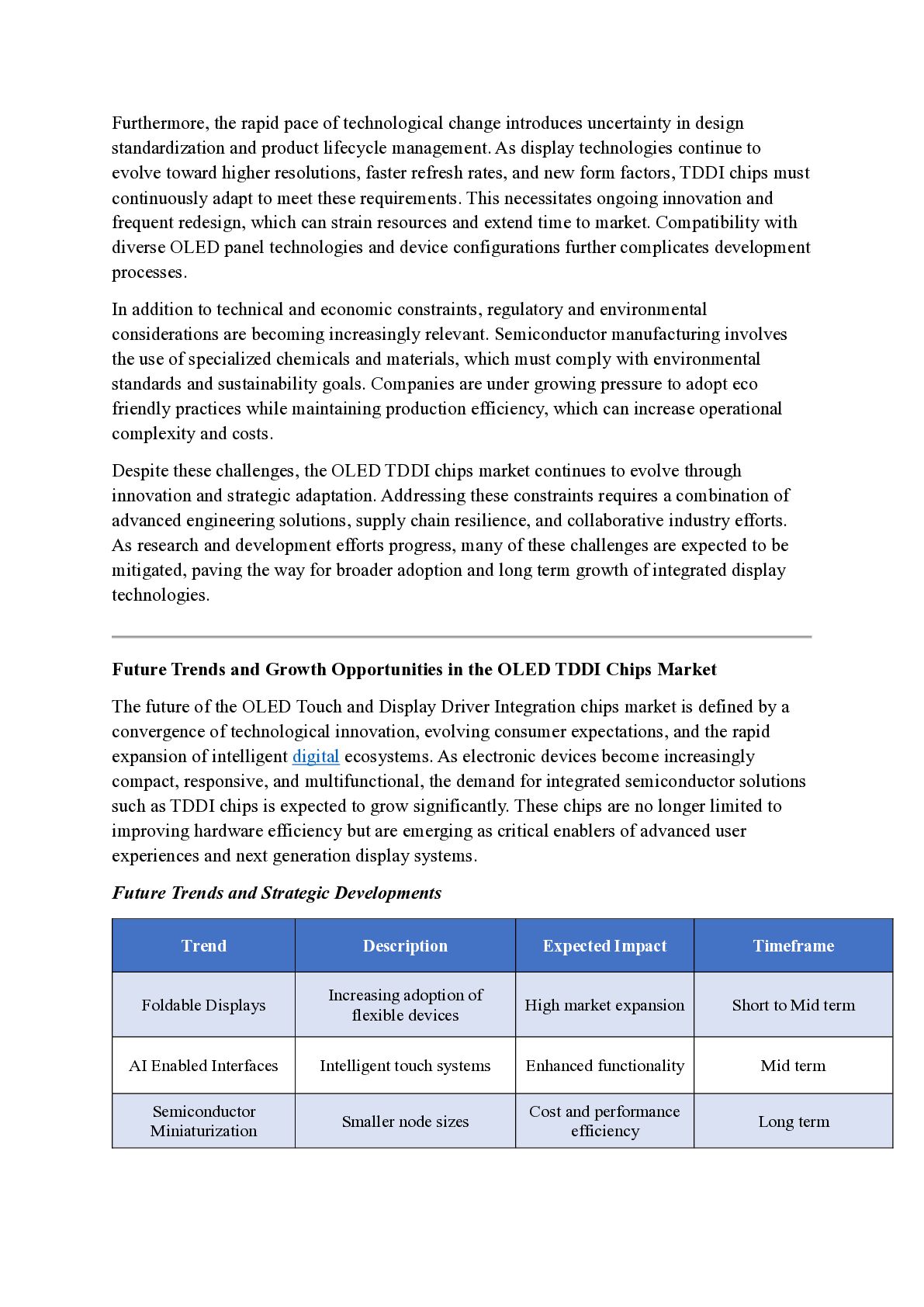
    design standardization and product lifecycle management. As display technologies continue to evolve toward higher resolutions, faster refresh rates, and new form factors, TDDI chips must continuously adapt to meet these requirements. This necessitates ongoing innovation and frequent redesign, which can strain resources and extend time to market. Compatibility with diverse OLED panel technologies and device configurations further complicates development processes. In addition to technical and economic constraints, regulatory and environmental considerations are becoming increasingly relevant. Semiconductor manufacturing involves the use of specialized chemicals and materials, which must comply with environmental standards and sustainability goals. Companies are under growing pressure to adopt eco friendly practices while maintaining production efficiency, which can increase operational complexity and costs. Despite these challenges, the OLED TDDI chips market continues to evolve through innovation and strategic adaptation. Addressing these constraints requires a combination of advanced engineering solutions, supply chain resilience, and collaborative industry efforts. As research and development efforts progress, many of these challenges are expected to be mitigated, paving the way for broader adoption and long term growth of integrated display technologies. Future Trends and Growth Opportunities in the OLED TDDI Chips Market The future of the OLED Touch and Display Driver Integration chips market is defined by a convergence of technological innovation, evolving consumer expectations, and the rapid expansion of intelligent digital ecosystems. As electronic devices become increasingly compact, responsive, and multifunctional, the demand for integrated semiconductor solutions such as TDDI chips is expected to grow significantly. These chips are no longer limited to improving hardware efficiency but are emerging as critical enablers of advanced user experiences and next generation display systems. Future Trends and Strategic Developments Trend Description Expected Impact Timeframe Foldable Displays Increasing adoption of flexible devices High market expansion Short to Mid term AI Enabled Interfaces Intelligent touch systems Enhanced functionality Mid term Semiconductor Miniaturization Smaller node sizes Cost and performance efficiency Long term
  16. Expansion in Emerging Markets Growing digital ecosystems Increased demand Ongoing

    One of the most transformative trends shaping this market is the integration of artificial intelligence into touch sensing and display control mechanisms. AI driven TDDI chips are capable of enhancing touch accuracy, reducing noise interference, and enabling predictive interaction models. This allows devices to interpret gestures more intuitively and adapt to user behavior in real time. As human machine interaction becomes more sophisticated, particularly in smart devices and automotive interfaces, the role of intelligent TDDI solutions will become increasingly central. This evolution represents a shift from passive display components to active, context aware systems that contribute to overall device intelligence. Another major growth driver is the rapid adoption of flexible, foldable, and rollable OLED displays. These advanced form factors require highly adaptable and durable chip architectures capable of maintaining performance under mechanical stress and repeated deformation. TDDI chips are uniquely positioned to support these innovations by reducing the need for multiple layers of circuitry and enabling seamless integration within flexible substrates. As leading electronics manufacturers continue to invest in foldable smartphones, wearable devices, and experimental display formats, the demand for robust and flexible TDDI solutions is expected to accelerate. Advancements in semiconductor manufacturing are also playing a crucial role in shaping the future of this market. The transition to smaller process nodes allows for higher transistor density, improved processing speed, and reduced power consumption. These improvements contribute directly to the efficiency and performance of TDDI chips. In parallel, innovations in packaging technologies such as chip on flex and chip on plastic are enabling better compatibility with modern display architectures. These packaging methods enhance durability, reduce thickness, and support the integration of chips into unconventional device designs. As manufacturing techniques continue to mature, production costs are expected to decline, making TDDI technology more accessible across a wider range of applications. The expansion of digital ecosystems in emerging markets presents another significant opportunity for growth. Increasing smartphone penetration, rising disposable incomes, and rapid urbanization are driving demand for advanced consumer electronics in regions such as Asia Pacific, Latin America, and parts of Africa. These markets are not only adopting existing technologies but are also becoming important centers for innovation and production. As governments and private sectors invest in digital infrastructure, the demand for efficient and high performance display solutions will continue to rise, creating new opportunities for TDDI chip manufacturers. In addition to consumer electronics, the application landscape of OLED TDDI chips is expanding into diverse sectors. The automotive industry is undergoing a transformation toward digital and connected systems, where high quality touch displays are essential for navigation, infotainment, and vehicle control interfaces. TDDI chips enable seamless interaction and improved reliability in these environments, supporting the development of
  17. advanced driver assistance systems and autonomous driving technologies. Similarly, wearable

    devices and healthcare equipment are incorporating integrated display solutions to provide real time data visualization and user friendly interfaces. These applications require compact, energy efficient, and highly responsive components, further reinforcing the relevance of TDDI technology. The convergence of display technologies with immersive platforms such as augmented reality and virtual reality is opening new frontiers for research and development. These platforms demand ultra high resolution displays, low latency, and precise touch or gesture recognition capabilities. TDDI chips can play a critical role in meeting these requirements by enabling efficient signal processing and integration within compact form factors. As the concept of the metaverse and immersive digital environments gains traction, the need for advanced display solutions will continue to grow, positioning OLED TDDI chips as key components in this evolving ecosystem. Despite these opportunities, the market must address several challenges to fully realize its potential. The complexity of integrating multiple functions into a single chip requires advanced design expertise and precise manufacturing processes. Ensuring consistent performance across different device types and environmental conditions remains a technical hurdle. Additionally, supply chain dependencies and fluctuations in semiconductor availability can impact production and pricing. Addressing these challenges will require collaborative efforts among semiconductor manufacturers, device producers, and research institutions. Looking ahead, the OLED TDDI chips market is poised for sustained growth driven by continuous innovation and expanding application domains. The integration of intelligence, flexibility, and efficiency into a single semiconductor solution aligns with the broader trends of digital transformation and user centric design. As industries continue to push the boundaries of what display technologies can achieve, TDDI chips will play an increasingly vital role in enabling the next generation of electronic devices. Conclusion The OLED TDDI chips market stands as a transformative milestone in the evolution of display technologies, reflecting a clear shift toward integration driven design and performance efficiency. The convergence of touch sensing and display driver functionalities within a single semiconductor architecture has significantly simplified system design while enhancing responsiveness, reducing power consumption, and enabling ultra thin device profiles. This integration not only addresses the inefficiencies associated with traditional multi chip configurations but also aligns with the broader industry demand for compact and high performance electronic systems. A defining characteristic of this market is its strong and sustained growth trajectory, supported by the widespread adoption of OLED displays across multiple industries. In consumer electronics, particularly smartphones and wearable devices, OLED TDDI chips
  18. have become essential in achieving high resolution displays, faster refresh

    rates, and seamless touch interaction. At the same time, the automotive sector is emerging as a critical growth avenue, where advanced human machine interfaces and digital cockpit systems rely heavily on integrated display solutions to deliver safety, precision, and user convenience. The expansion into emerging technologies such as augmented reality and virtual reality further reinforces the relevance of TDDI chips in enabling immersive and interactive experiences. Technological innovation continues to play a central role in shaping the future of the OLED TDDI chips market. Advancements in semiconductor fabrication processes, including the adoption of smaller node sizes and improved circuit integration techniques, are enhancing chip efficiency and performance. The incorporation of artificial intelligence into touch sensing systems introduces a new dimension of functionality, allowing devices to interpret user inputs more accurately and adapt to dynamic usage patterns. In addition, the development of flexible and foldable displays has driven significant progress in chip design and packaging, ensuring reliability and performance even under mechanical stress conditions. Despite these promising developments, the market faces several structural and technical challenges that require careful consideration. The complexity associated with manufacturing integrated chips remains a significant barrier, as it demands high precision, advanced fabrication facilities, and substantial investment. Cost pressures can impact adoption rates, particularly in price sensitive markets, while supply chain dependencies on specialized semiconductor foundries introduce vulnerabilities in production continuity. Furthermore, maintaining consistent performance in flexible and next generation display formats continues to be an area of ongoing research and development. Looking ahead, the OLED TDDI chips market is expected to evolve in response to both technological advancements and shifting consumer expectations. The increasing demand for energy efficient devices, coupled with the rapid expansion of connected ecosystems, will further accelerate the adoption of integrated display solutions. Opportunities in emerging markets, supported by digital transformation initiatives and rising consumer demand, are likely to contribute to market expansion. Additionally, continued research into advanced materials, packaging technologies, and intelligent processing systems will unlock new capabilities and applications for TDDI chips. In a broader context, OLED TDDI technology represents more than just an incremental improvement in display systems. It embodies a fundamental shift toward smarter, more integrated, and highly efficient electronic architectures. As industries continue to prioritize performance, sustainability, and user experience, OLED TDDI chips are poised to play a pivotal role in shaping the next generation of electronic devices. Their ability to support innovation across diverse sectors highlights their strategic importance and underscores their potential to redefine the future landscape of display technology. References:
  19. 1. https://www.nextmsc.com/report/oled-tddi-touch-and-display-driver-integration- chips-market-se3431 2. https://www.nextmsc.com/report/data-center-cooling-market 3. https://www.nextmsc.com/report/data-lakes-market 4. https://www.nextmsc.com/report/data-migration-market 5.

    https://www.nextmsc.com/report/data-fabric-market 6. https://www.nextmsc.com/report/digital-pathology-market 7. https://www.nextmsc.com/report/digital-pen-market 8. https://www.nextmsc.com/report/digital-oilfield-market 9. https://www.nextmsc.com/report/digital-textile-printing-machine-market 10. https://www.nextmsc.com/report/digital-twin-market