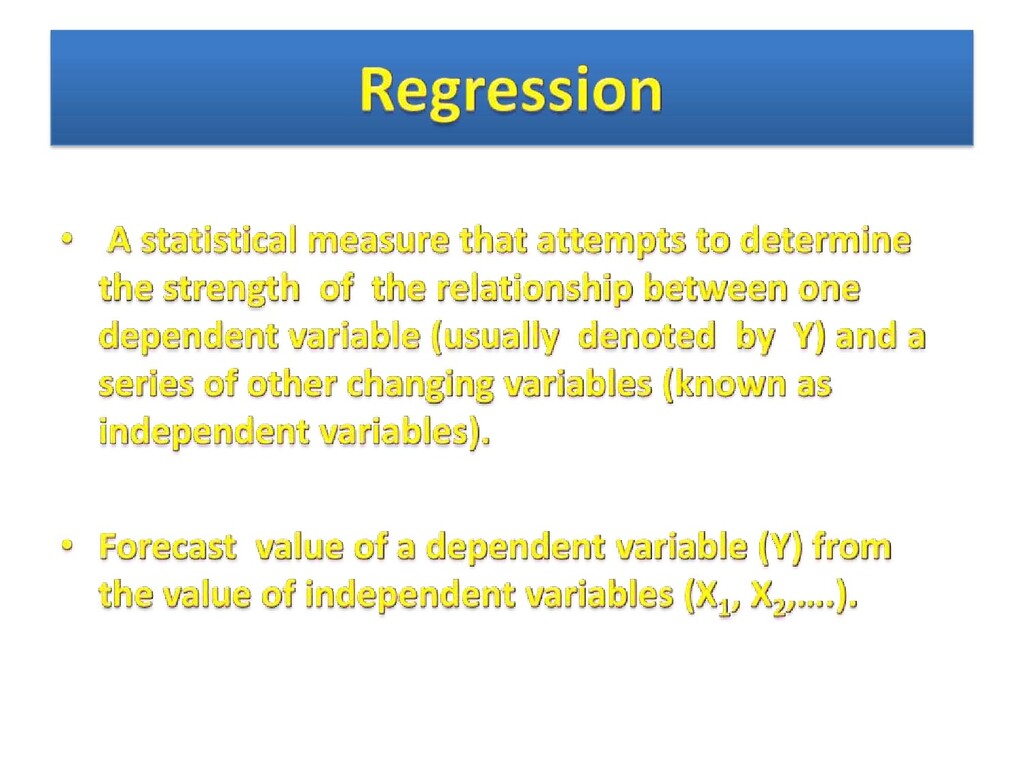
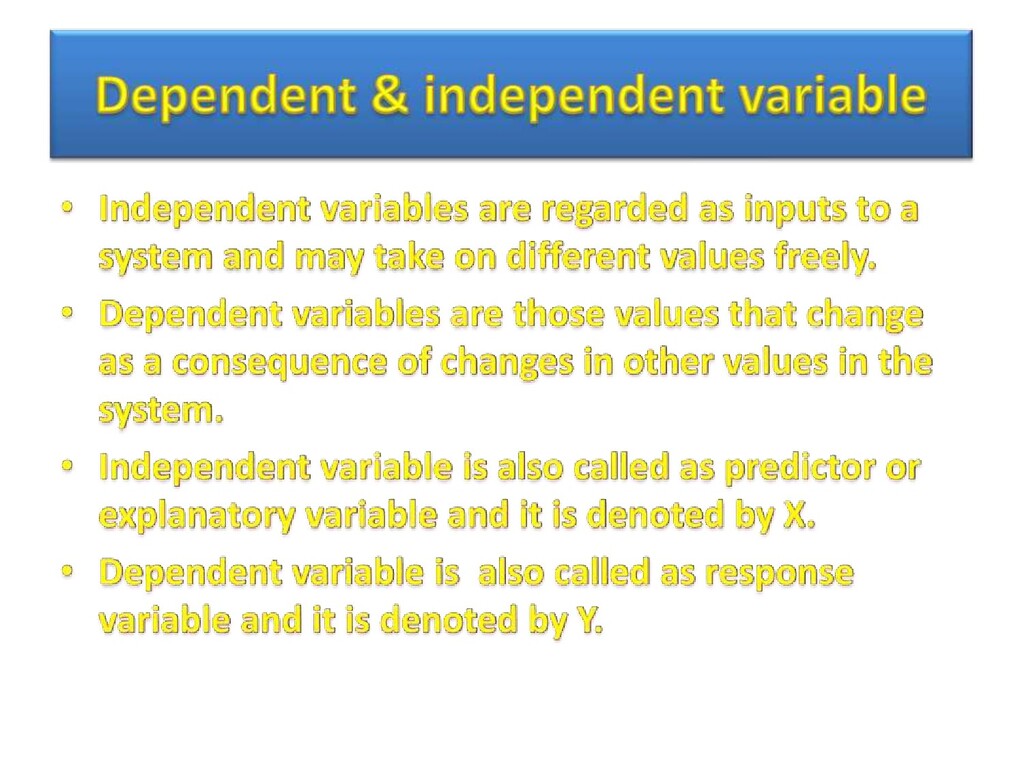
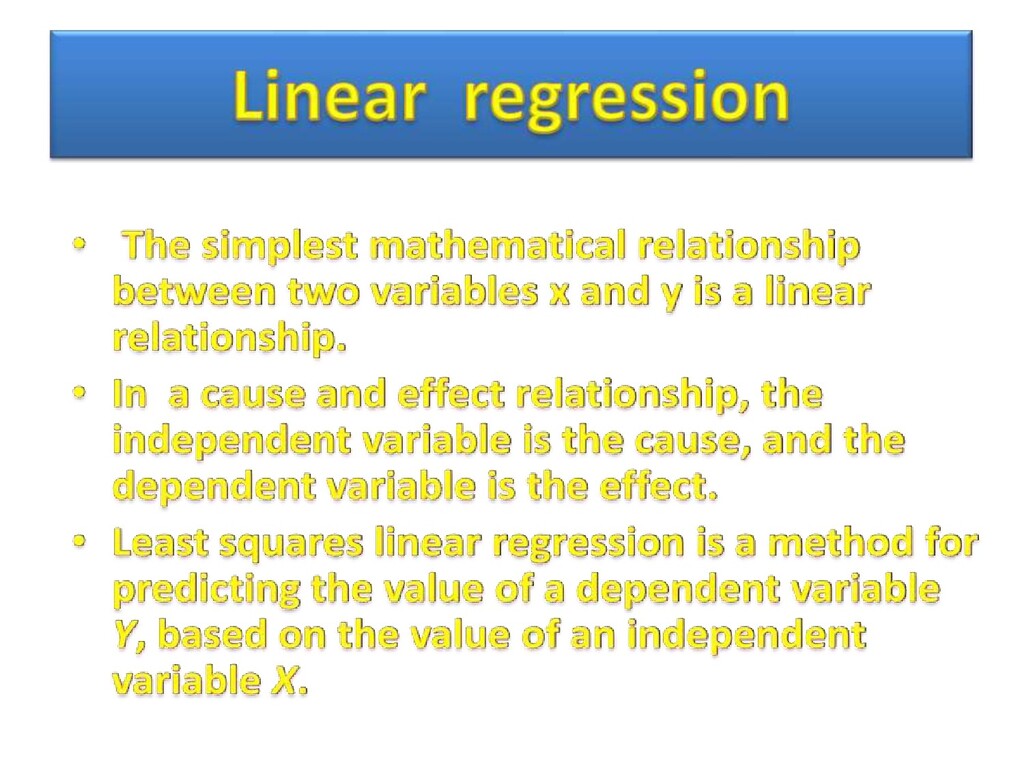
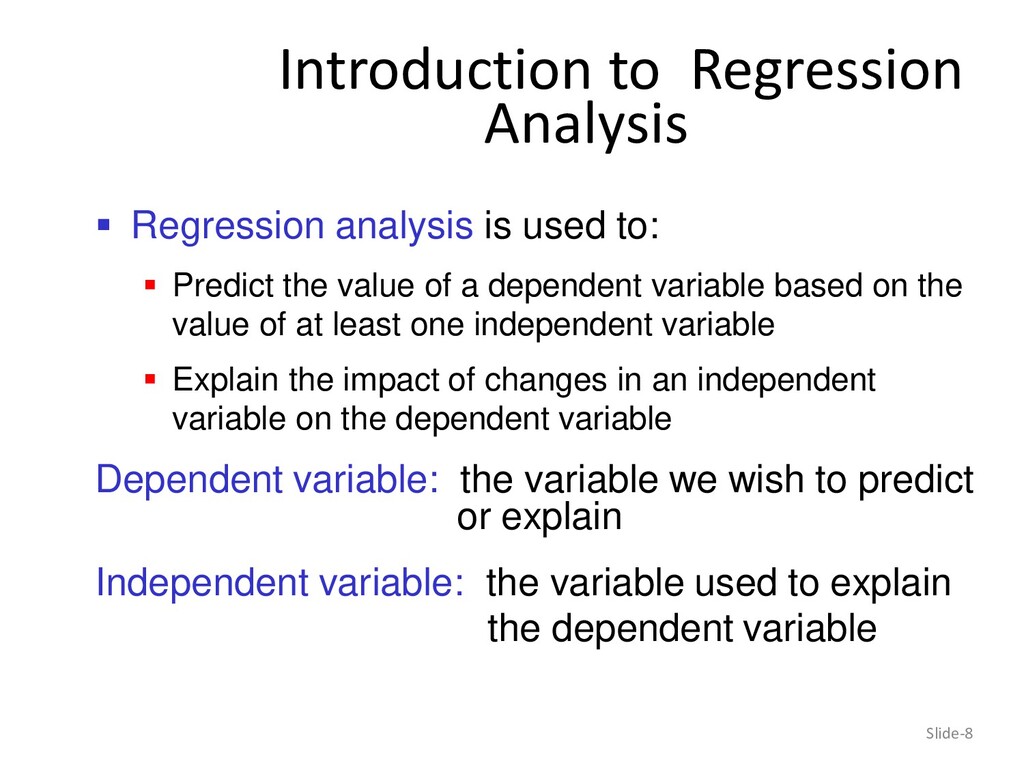
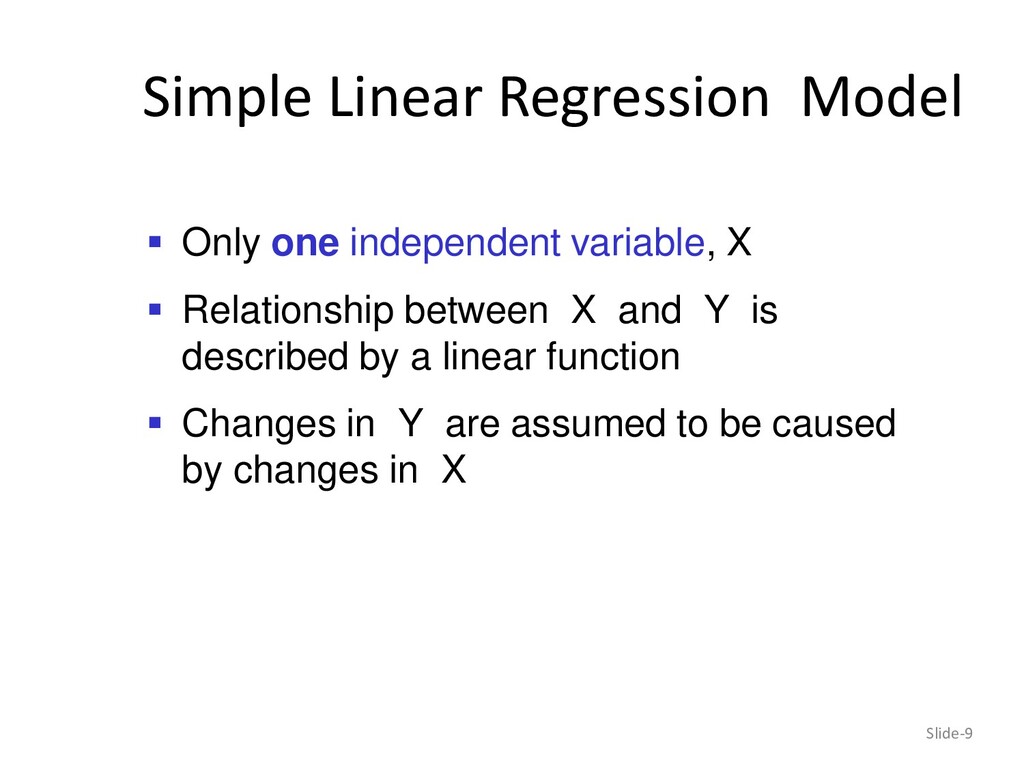
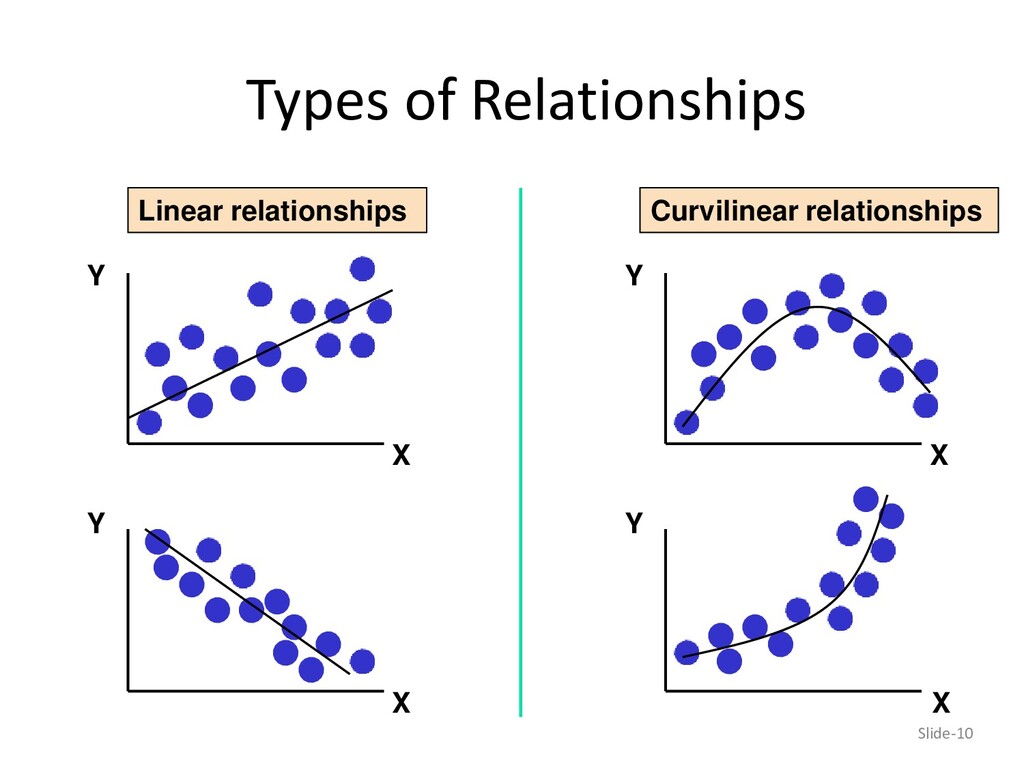
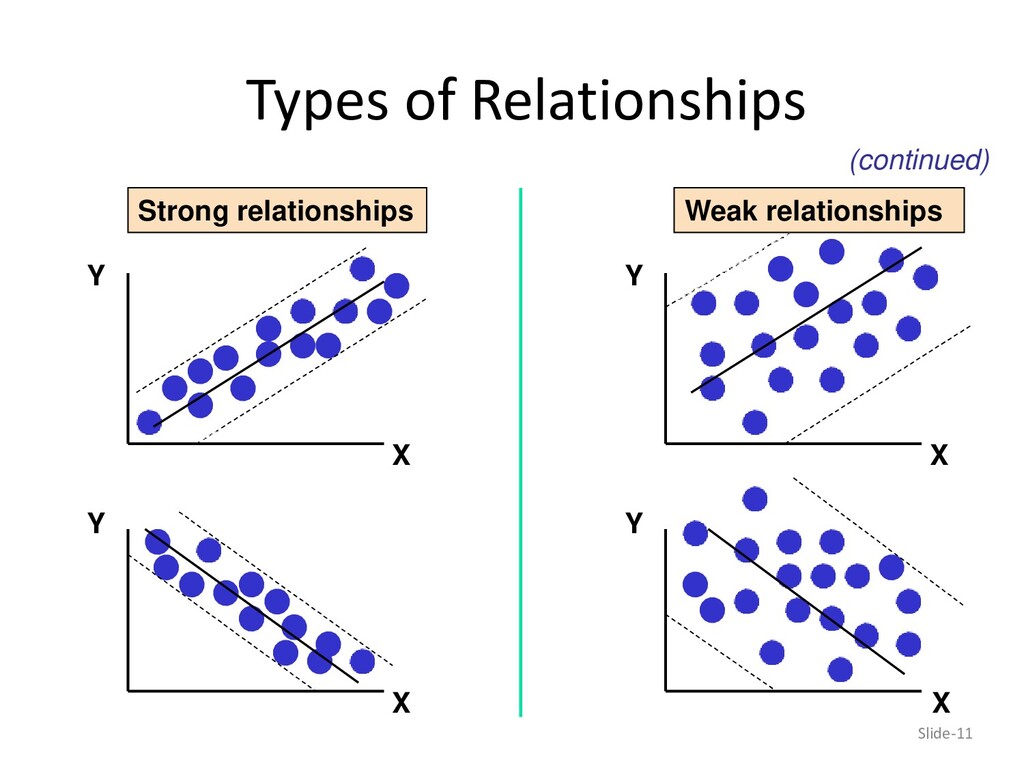
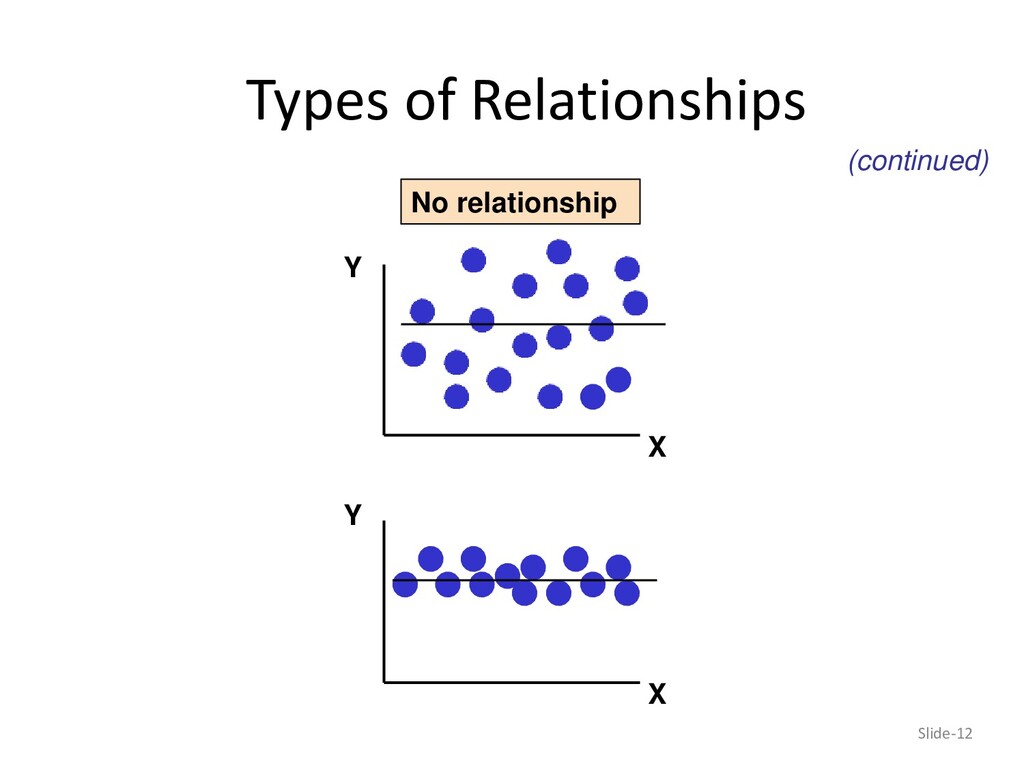
to: Predict the value of a dependent variable based on the value of at least one independent variable Explain the impact of changes in an independent variable on the dependent variable Dependent variable: the variable we wish to predict or explain Independent variable: the variable used to explain the dependent variable
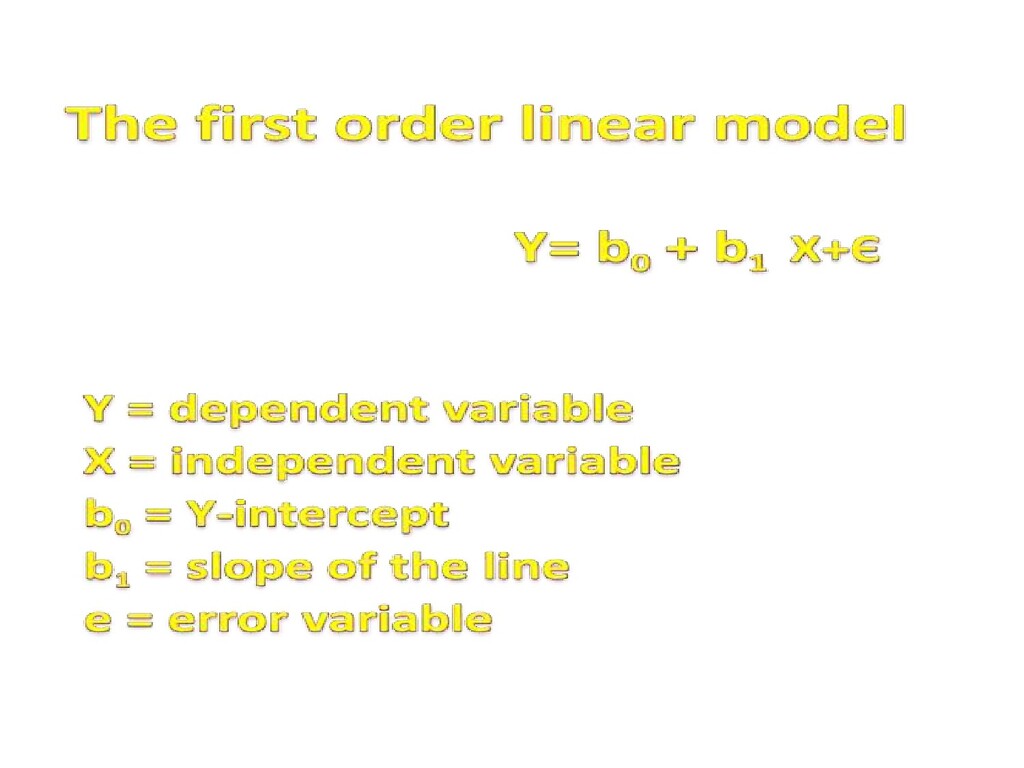
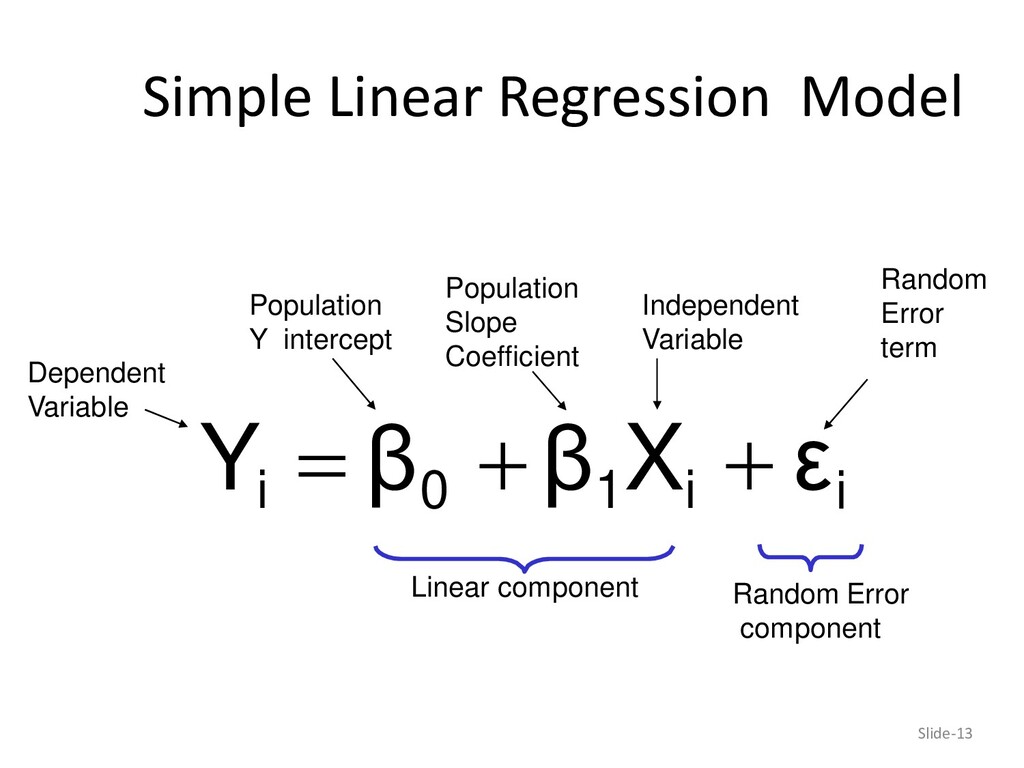
Linear component Simple Linear Regression Model Slide-13 Population Y intercept Population Slope Coefficient Random Error term Dependent Variable Independent Variable ε i Random Error component
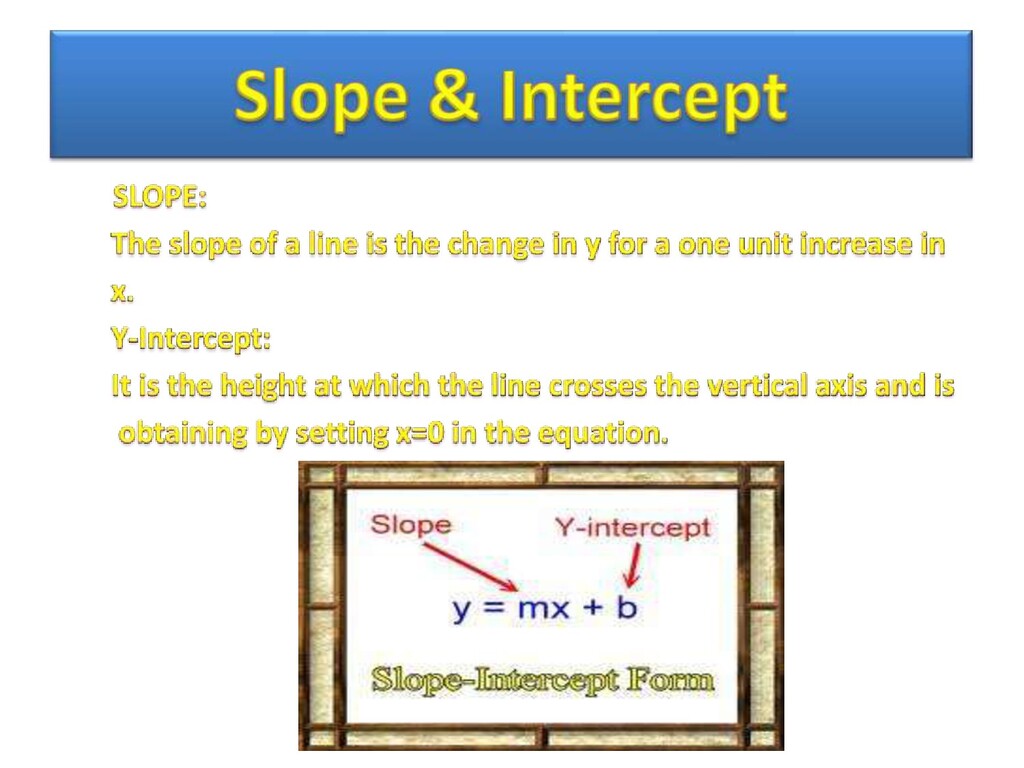
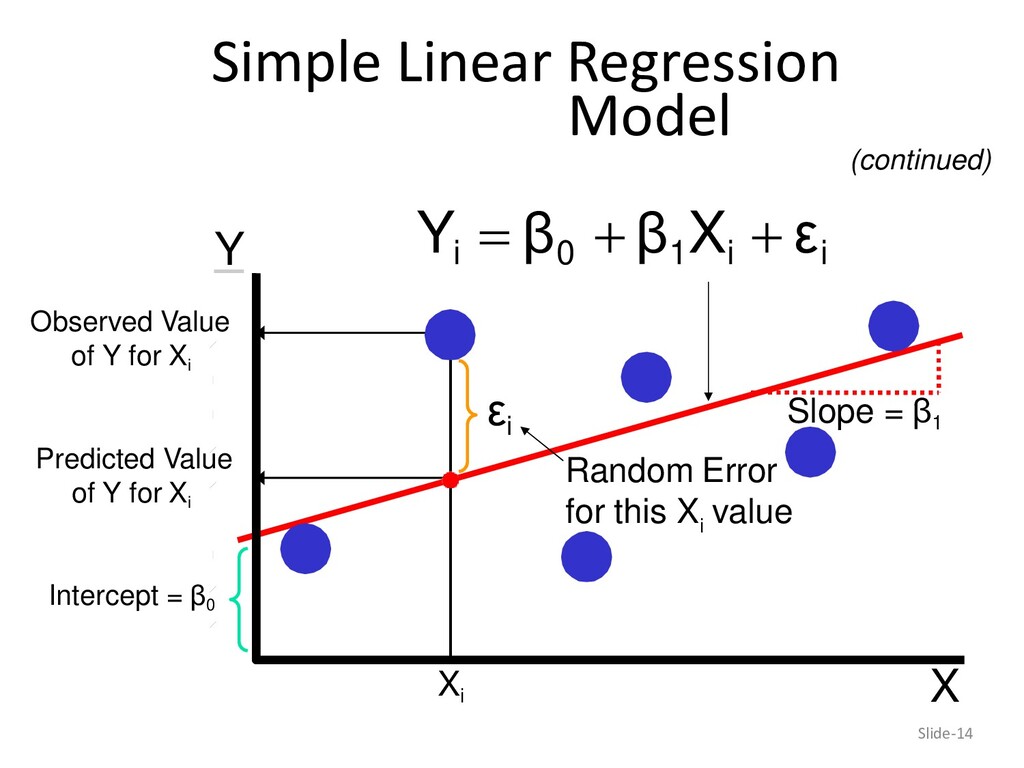
Value of Y for Xi Predicted Value of Y for Xi Y i β 0 β 1 X i ε i X i Slope = β 1 Simple Linear Regression Model (continued) Slide-14 Intercept = β 0 ε i
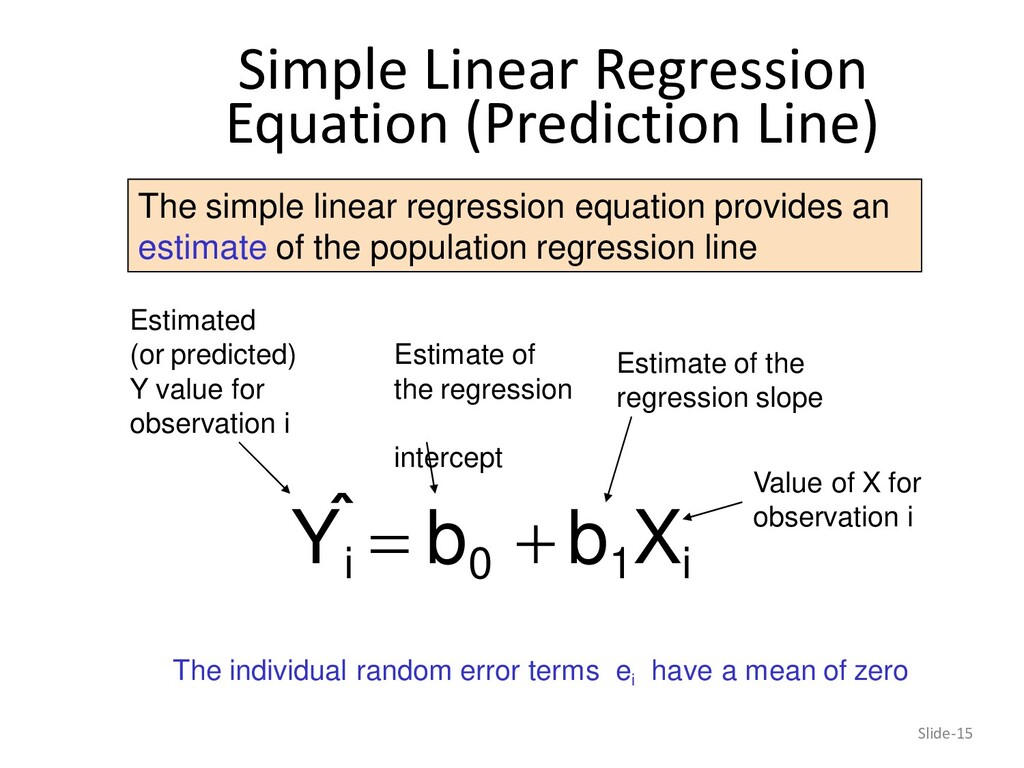
The simple linear regression equation provides an estimate of the population regression line Simple Linear Regression Equation (Prediction Line) Slide-15 Estimate of the regression intercept Estimate of the regression slope Estimated (or predicted) Y value for observation i Value of X for observation i The individual random error terms ei have a mean of zero
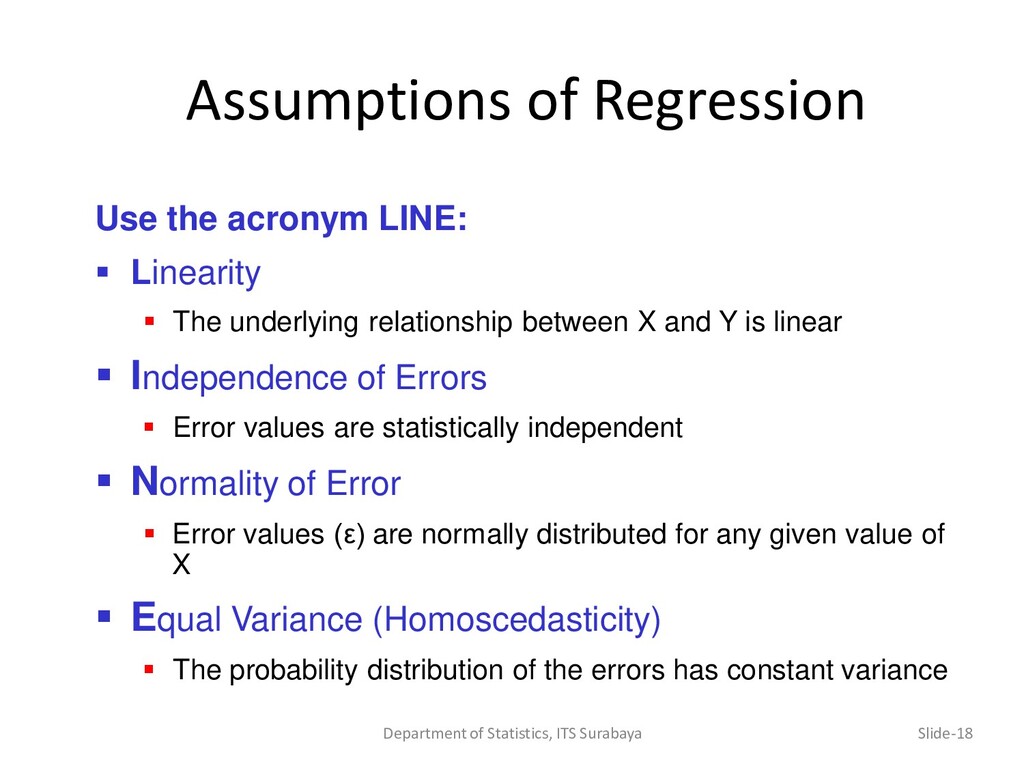
the acronym LINE: Linearity The underlying relationship between X and Y is linear Independence of Errors Error values are statistically independent Normality of Error Error values (ε) are normally distributed for any given value of X Equal Variance (Homoscedasticity) The probability distribution of the errors has constant variance
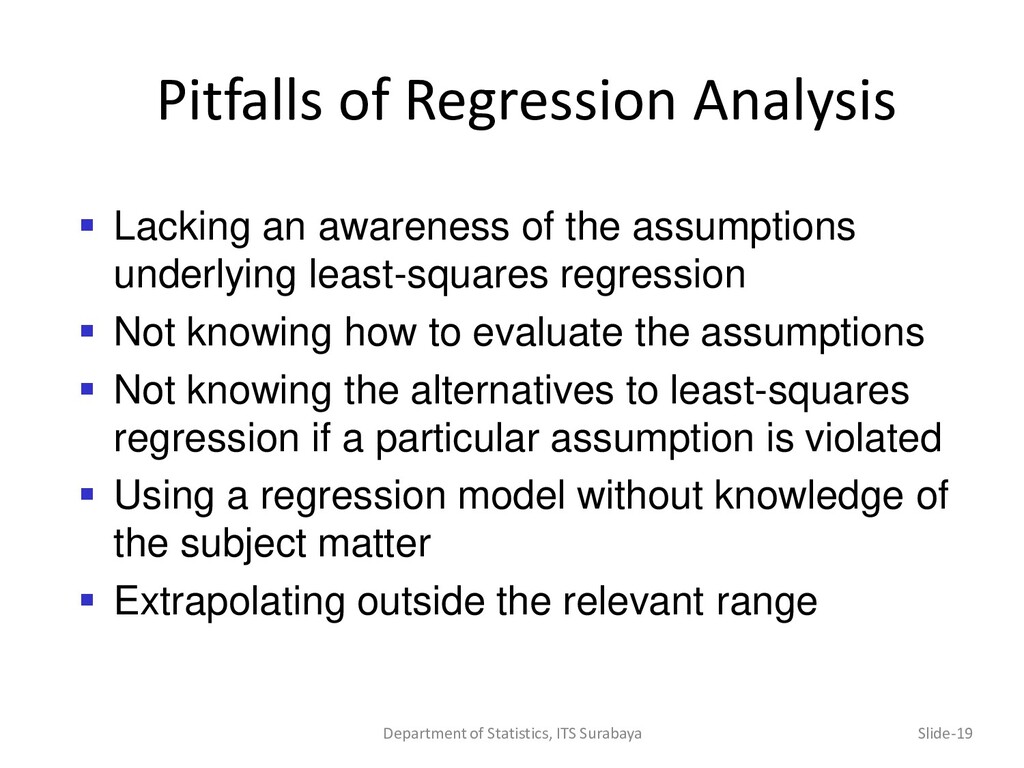
Lacking an awareness of the assumptions underlying least-squares regression Not knowing how to evaluate the assumptions Not knowing the alternatives to least-squares regression if a particular assumption is violated Using a regression model without knowledge of the subject matter Extrapolating outside the relevant range


 aasthakohli
 pawan_pharm
 bvr7352
 naoji_taniguchi_ksk_0827
 yatabe
 ainischool
 jdbedics
 signer
 juanmartin2026
 soudai
 tmiket
 jmmastey
 notwaldorf
 aleyda
 lemiorhan
 deanohume
 marktimemedia
 moore
moore
 leimatthew05
 panda_program
 tanoku
 chikuwait