Upgrade to Pro — share decks privately, control downloads, hide ads and more …

RAG vs Fine-Tuning: Choosing the Right Approach...

Avatar for Abed Matini Abed Matini
November 08, 2025

RAG vs Fine-Tuning: Choosing the Right Approach for Your GenAI App

A practical breakdown of when to use Retrieval-Augmented Generation vs. fine-tuning when building GenAI applications — covering the RAG pipeline (chunking, embedding, retrieval, reranking, generation), hybrid search, and a decision framework for choosing between the two approaches.
Originally presented at DevFest Cape Town 2025.

Avatar for Abed Matini

Abed Matini

November 08, 2025

More Decks by Abed Matini

Other Decks in Technology

Transcript

  1. Cape Town 2025 RAG vs Fine-Tuning: Choosing the Right Approach

    for Your GenAI Apps Abed Matini Senior Backend Developer, Ogilvy
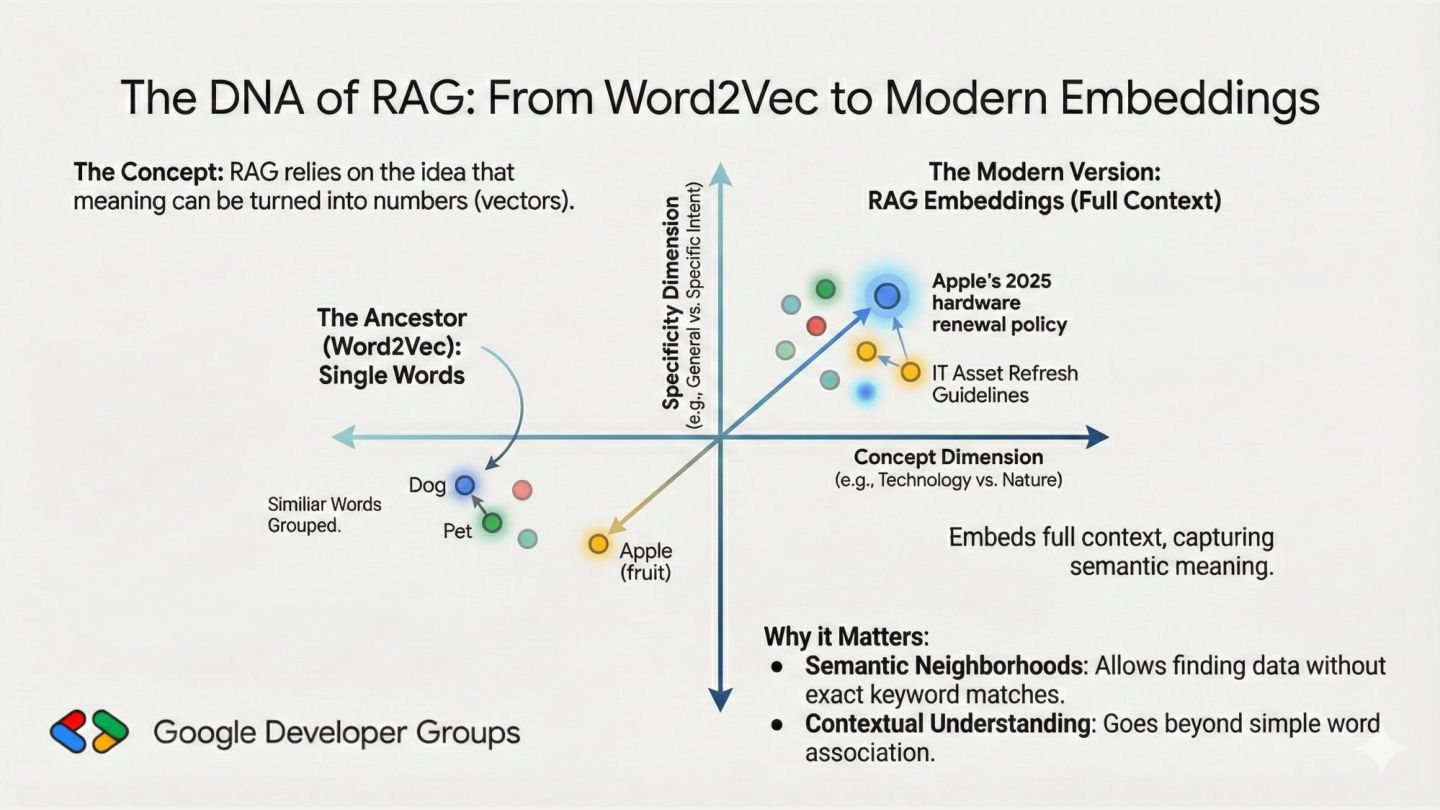
  2. Agenda • What is Fine-Tuning? What is RAG? • Search

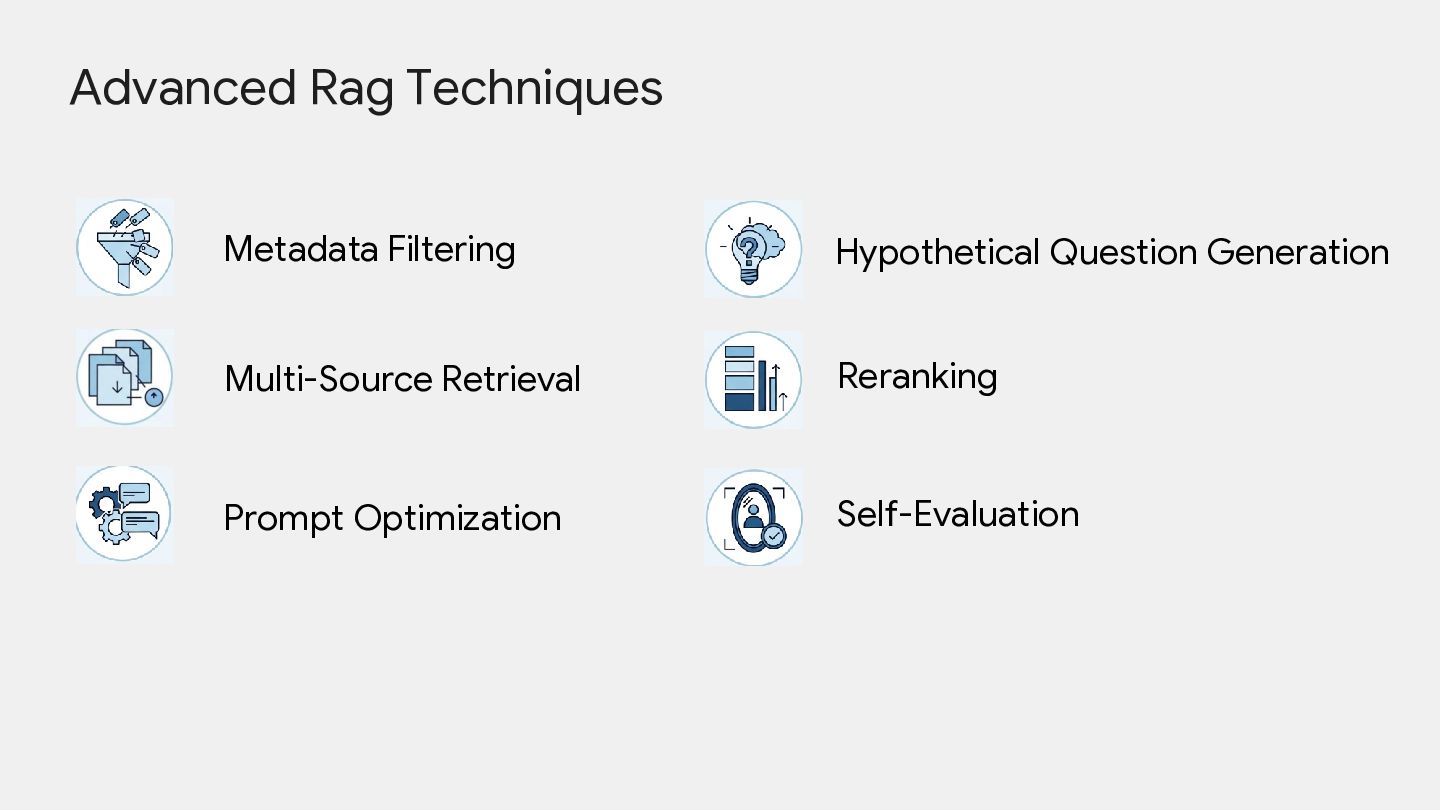
    in RAG: Keyword, Semantic, Hybrid • Live Demo • RAG vs. Fine-Tuning • Advanced RAG Techniques
  3. Why vanilla LLMs fall short • Knowledge cutoff; no access

    to private data • Hallucinations and lack of citations • Compliance, auditability, and governance needs • Rapidly changing information • Cost and maintenance in real apps
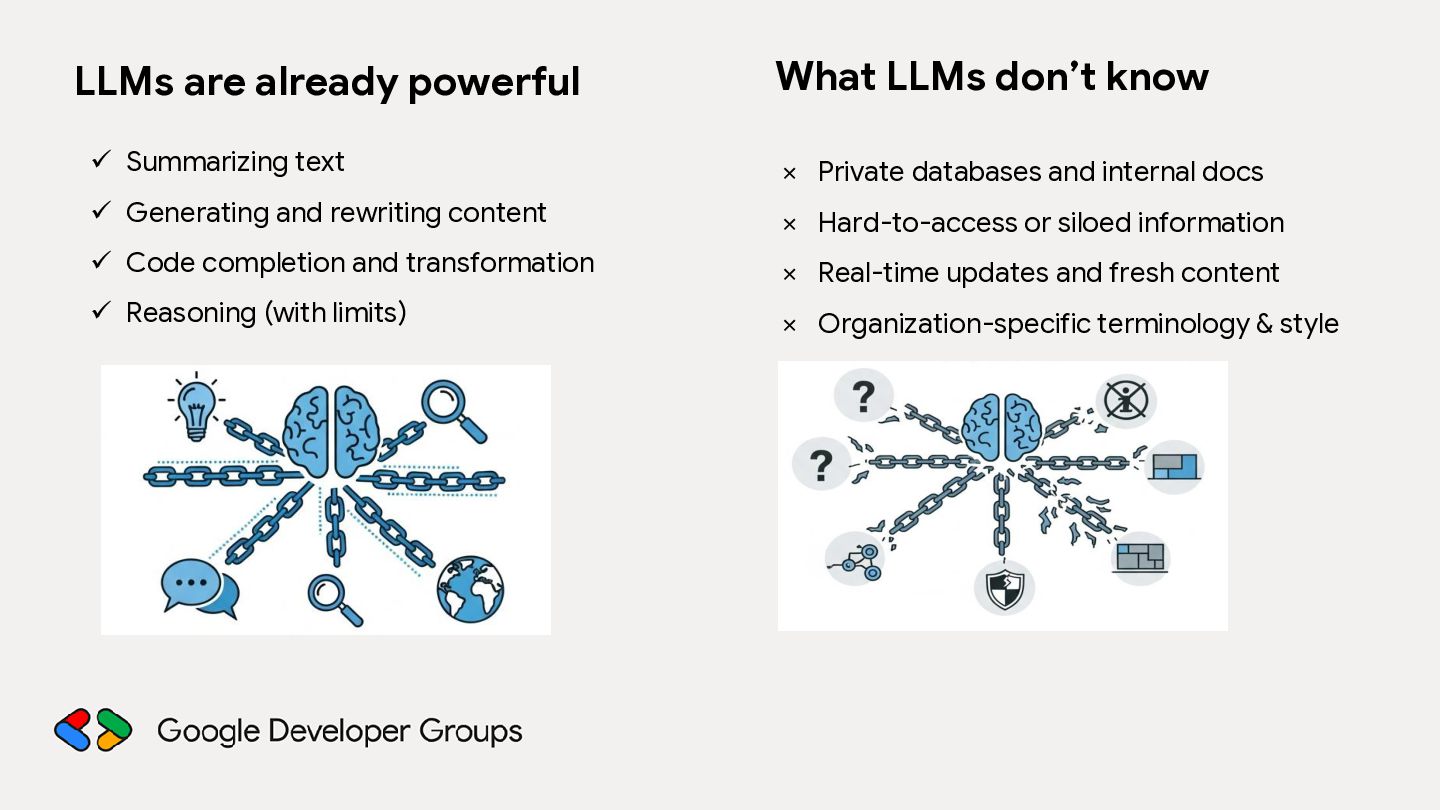
  4. LLMs are already powerful What LLMs don’t know ✓ Summarizing

    text × Private databases and internal docs ✓ Generating and rewriting content × Hard-to-access or siloed information ✓ Code completion and transformation × Real-time updates and fresh content ✓ Reasoning (with limits) × Organization-specific terminology & style
  5. What is Fine-Tuning? Fine-tuning involves further training a pre-trained LLM

    on a taskspecific dataset, fine-tuning helps it specialize in a particular area. • Requires labeled data and training infrastructure
  6. Fine-Tuning Key Benefits • Further trains model weights for specific

    tasks or styles • Improves consistency, structured outputs, domain vocabulary • Improved accuracy, enhanced specificity, • Reduced hallucinations & bias.
  7. What is RAG? Retrieval-Augmented Generation (RAG) is a framework that

    enhances LLMs by connecting them to external knowledge sources.
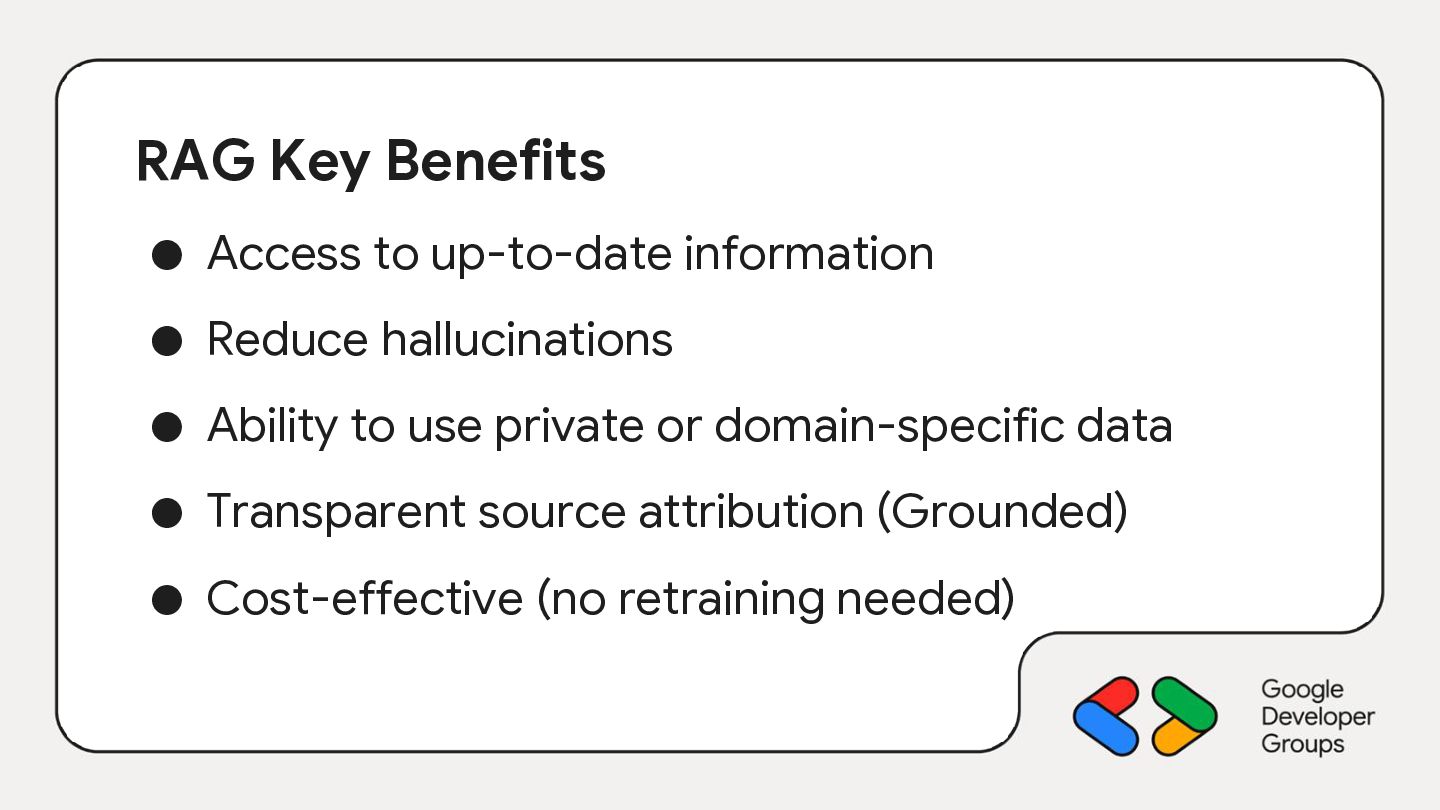
  8. RAG Key Benefits • Access to up-to-date information • Reduce

    hallucinations • Ability to use private or domain-specific data • Transparent source attribution (Grounded) • Cost-effective (no retraining needed)
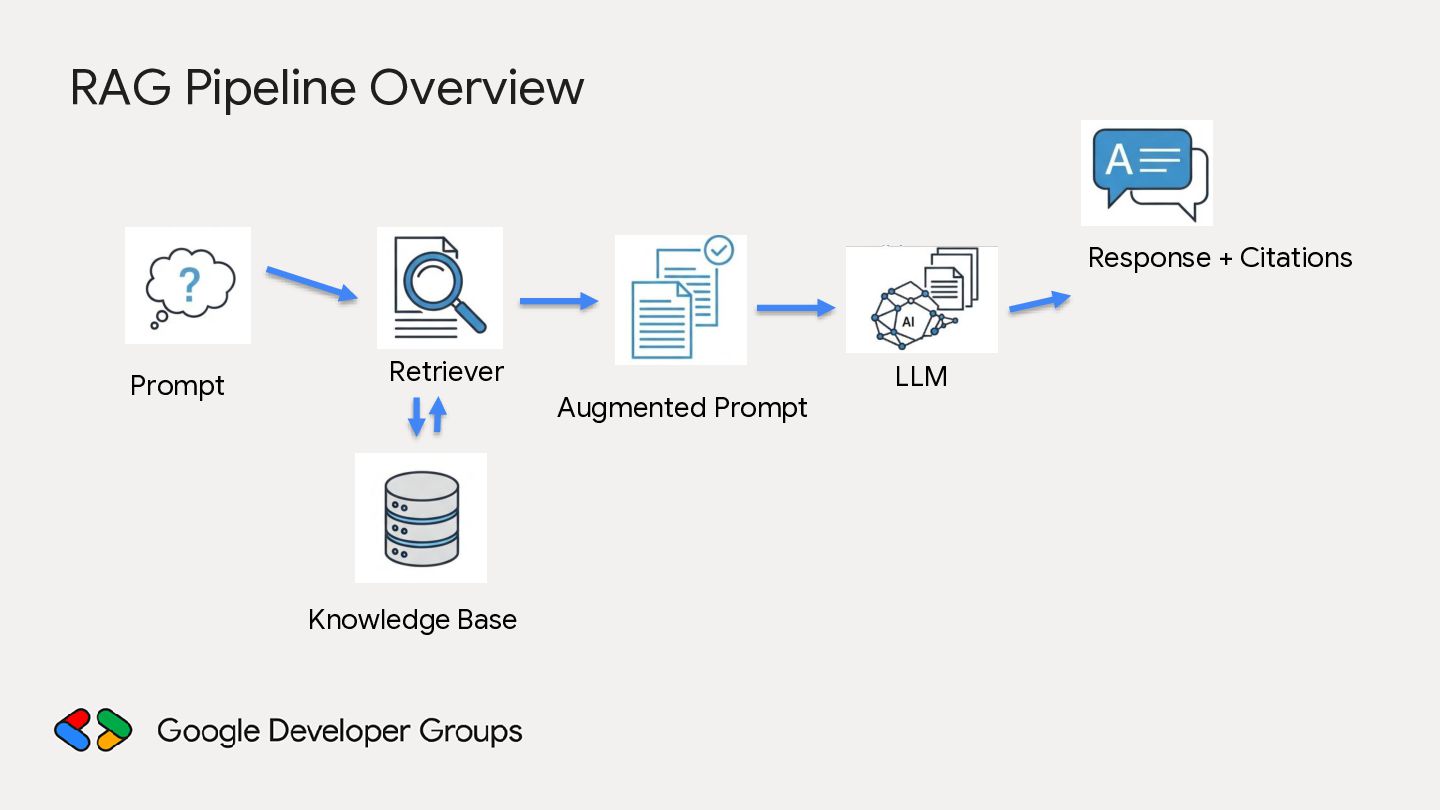
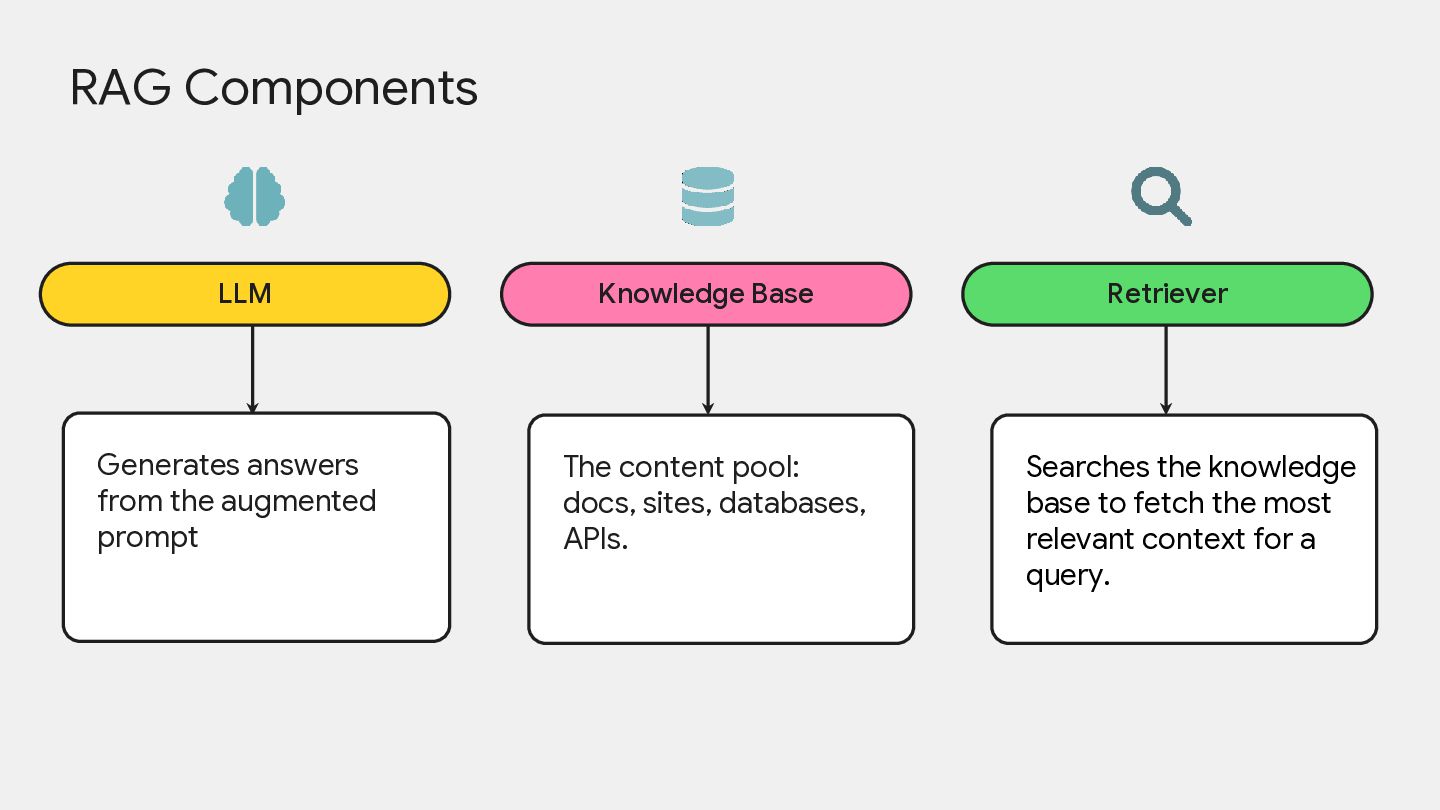
  9. RAG Components LLM Knowledge Base Generates answers from the augmented

    prompt The content pool: docs, sites, databases, APIs. Retriever Searches the knowledge base to fetch the most relevant context for a query.
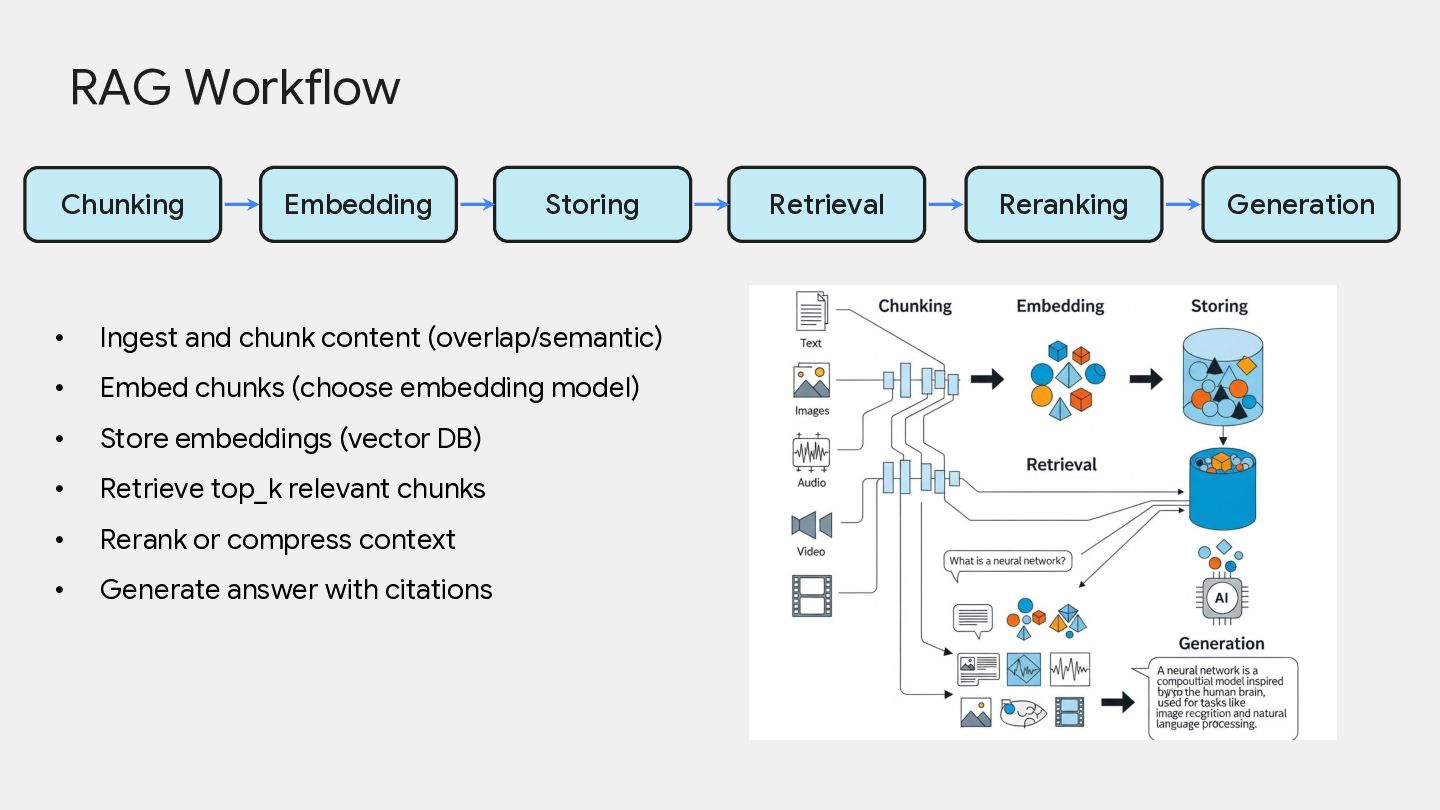
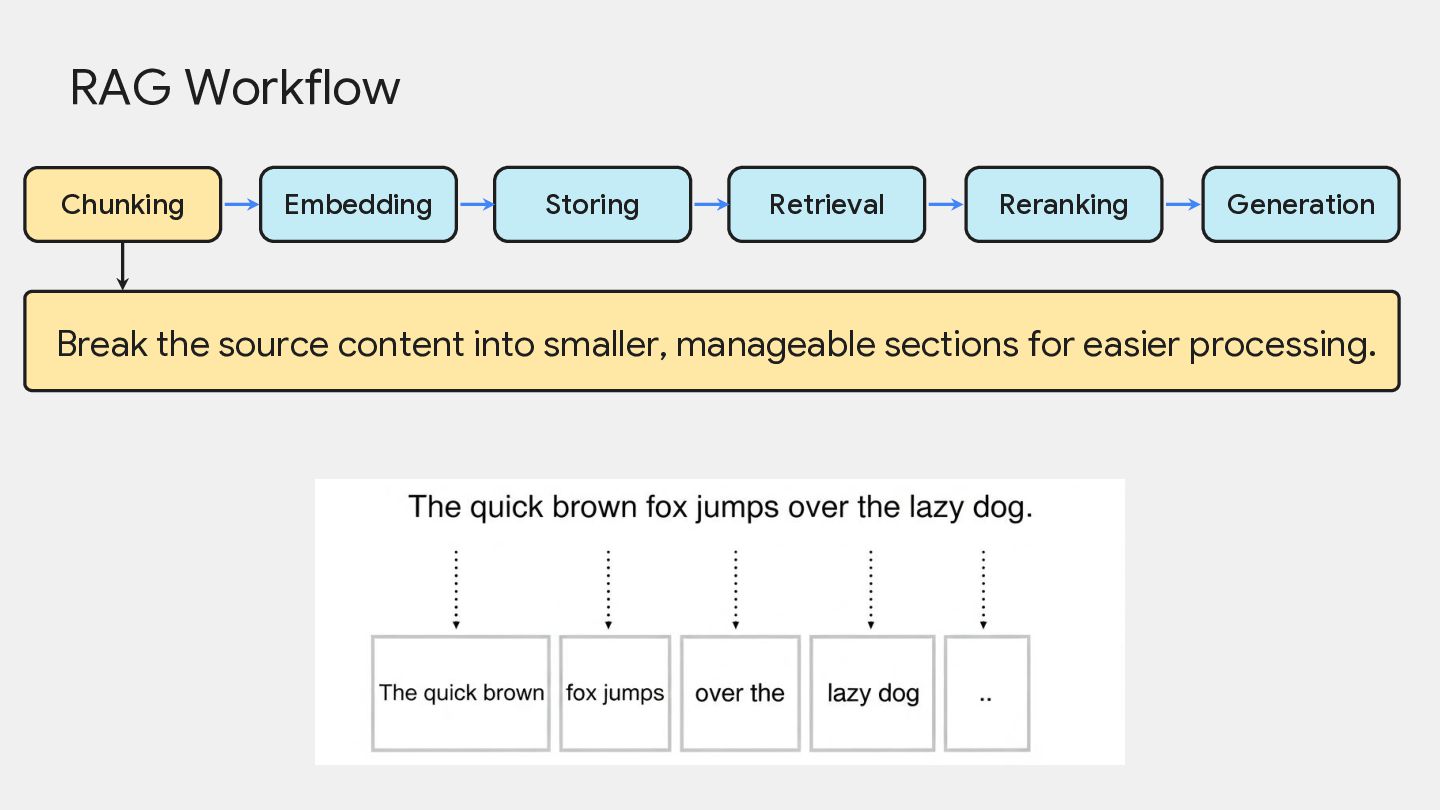
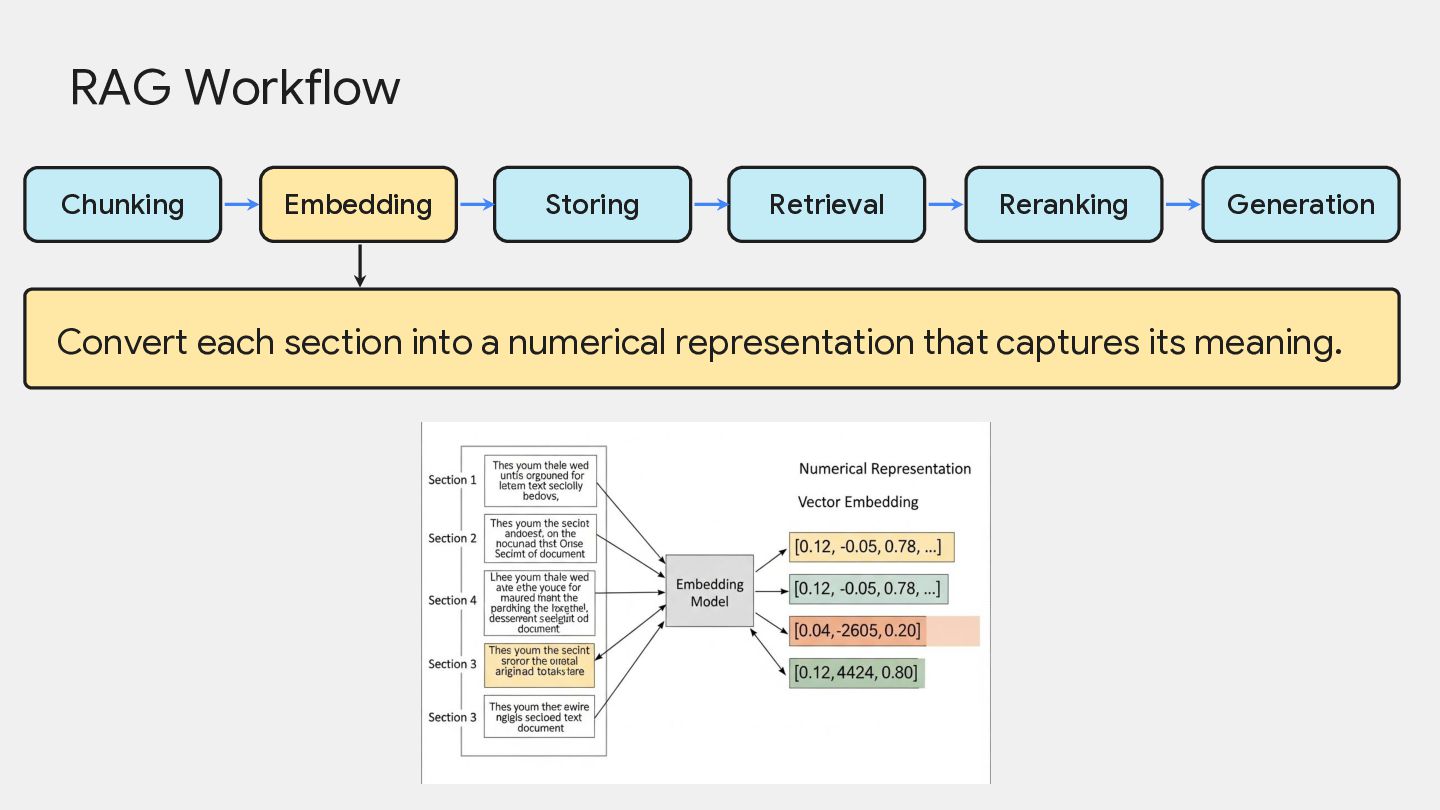
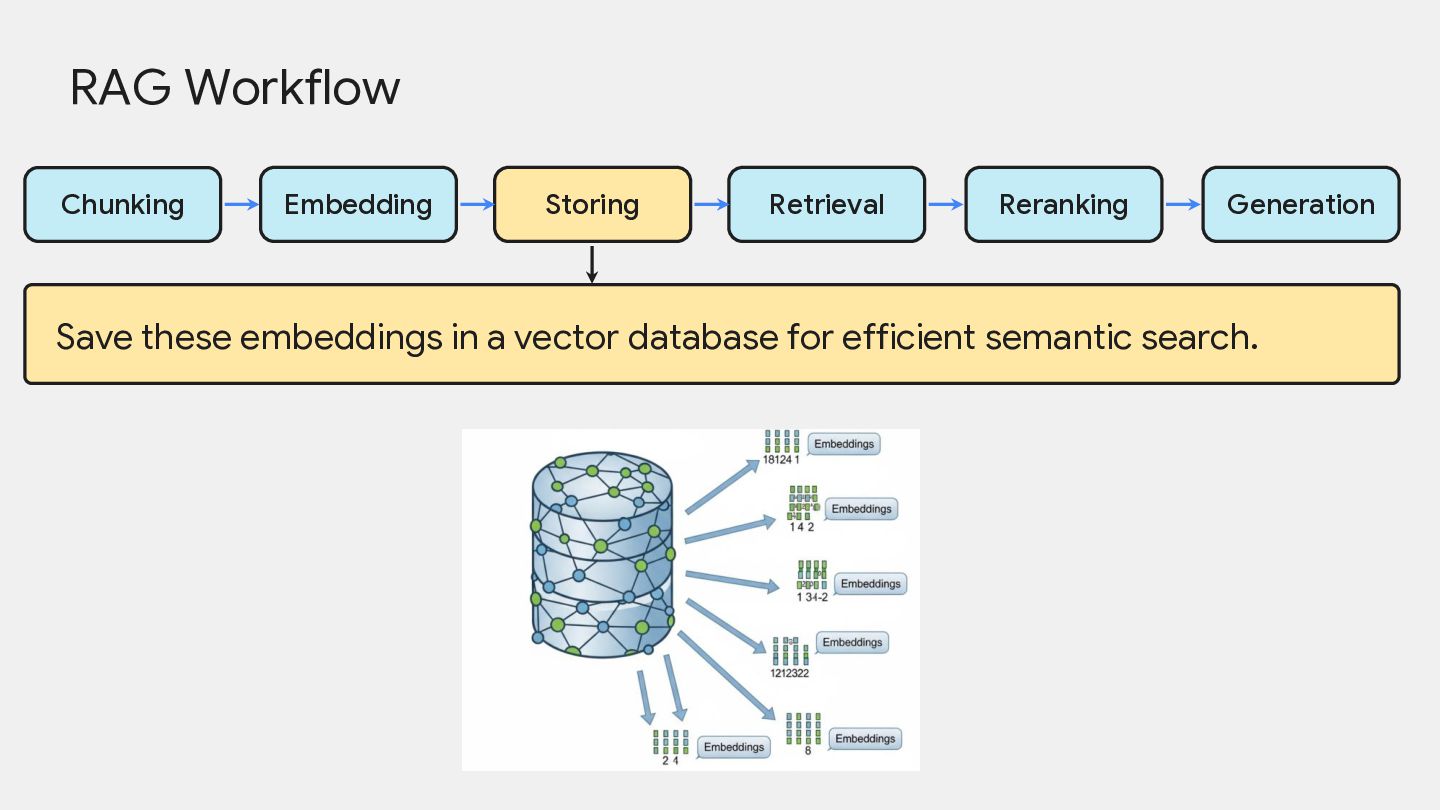
  10. RAG Workflow Chunking Embedding Storing • Ingest and chunk content

    (overlap/semantic) • Embed chunks (choose embedding model) • Store embeddings (vector DB) • Retrieve top_k relevant chunks • Rerank or compress context • Generate answer with citations Retrieval Reranking Generation
  11. RAG Workflow Chunking Embedding Storing Retrieval Reranking Generation Break the

    source content into smaller, manageable sections for easier processing.
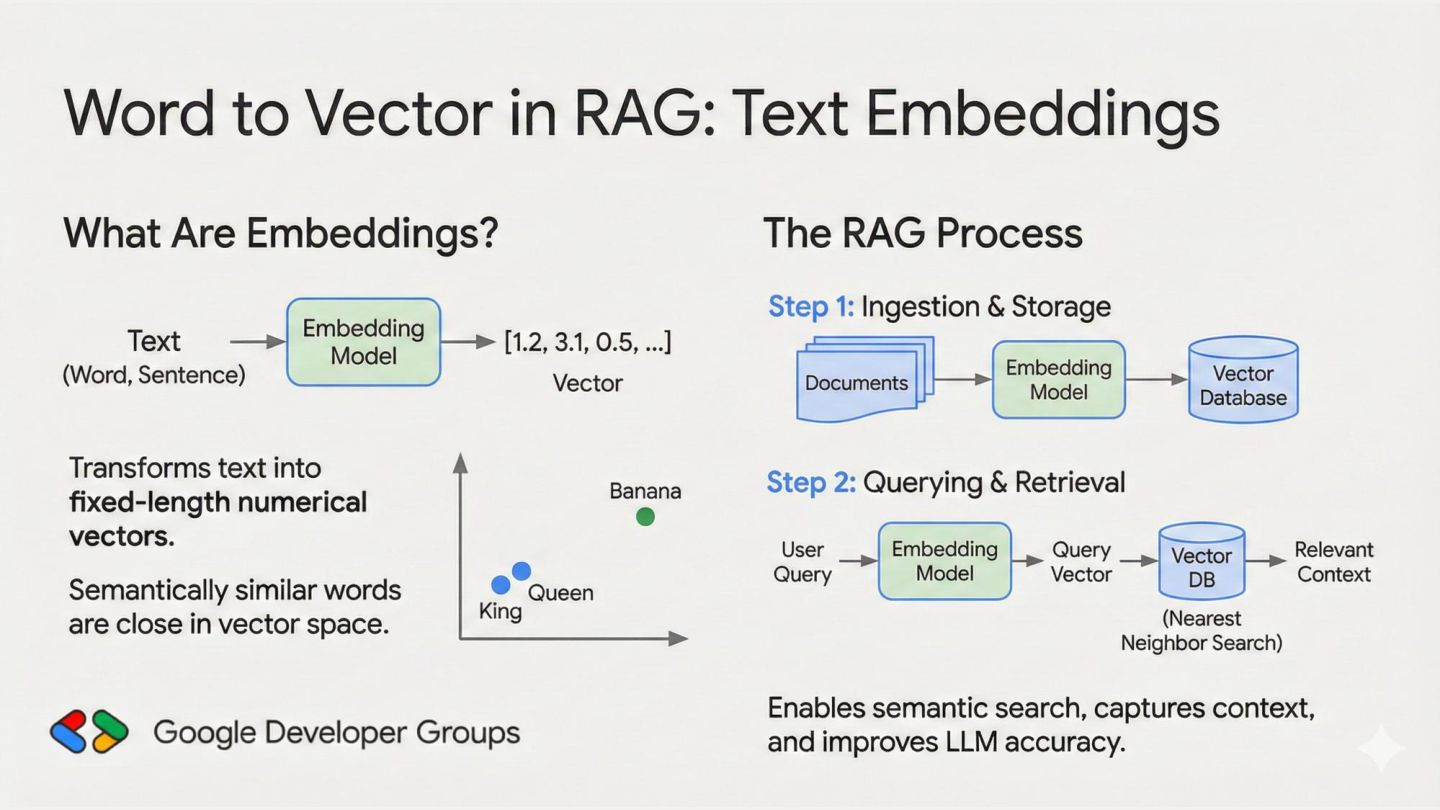
  12. RAG Workflow Chunking Embedding Storing Retrieval Reranking Generation Convert each

    section into a numerical representation that captures its meaning.
  13. RAG Workflow Chunking Embedding Storing Retrieval Reranking Generation Save these

    embeddings in a vector database for efficient semantic search.
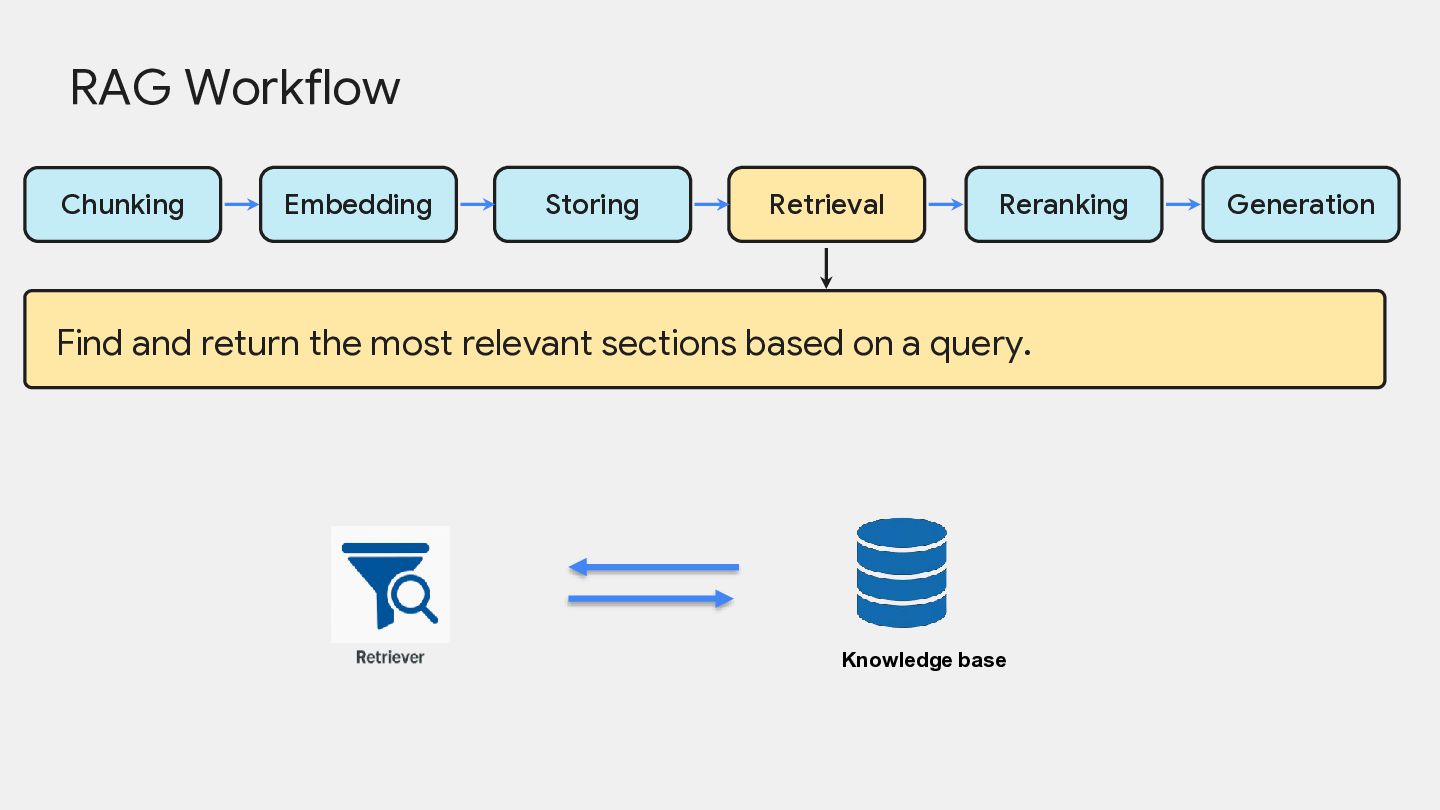
  14. RAG Workflow Chunking Embedding Storing Retrieval Reranking Find and return

    the most relevant sections based on a query. Knowledge base Generation
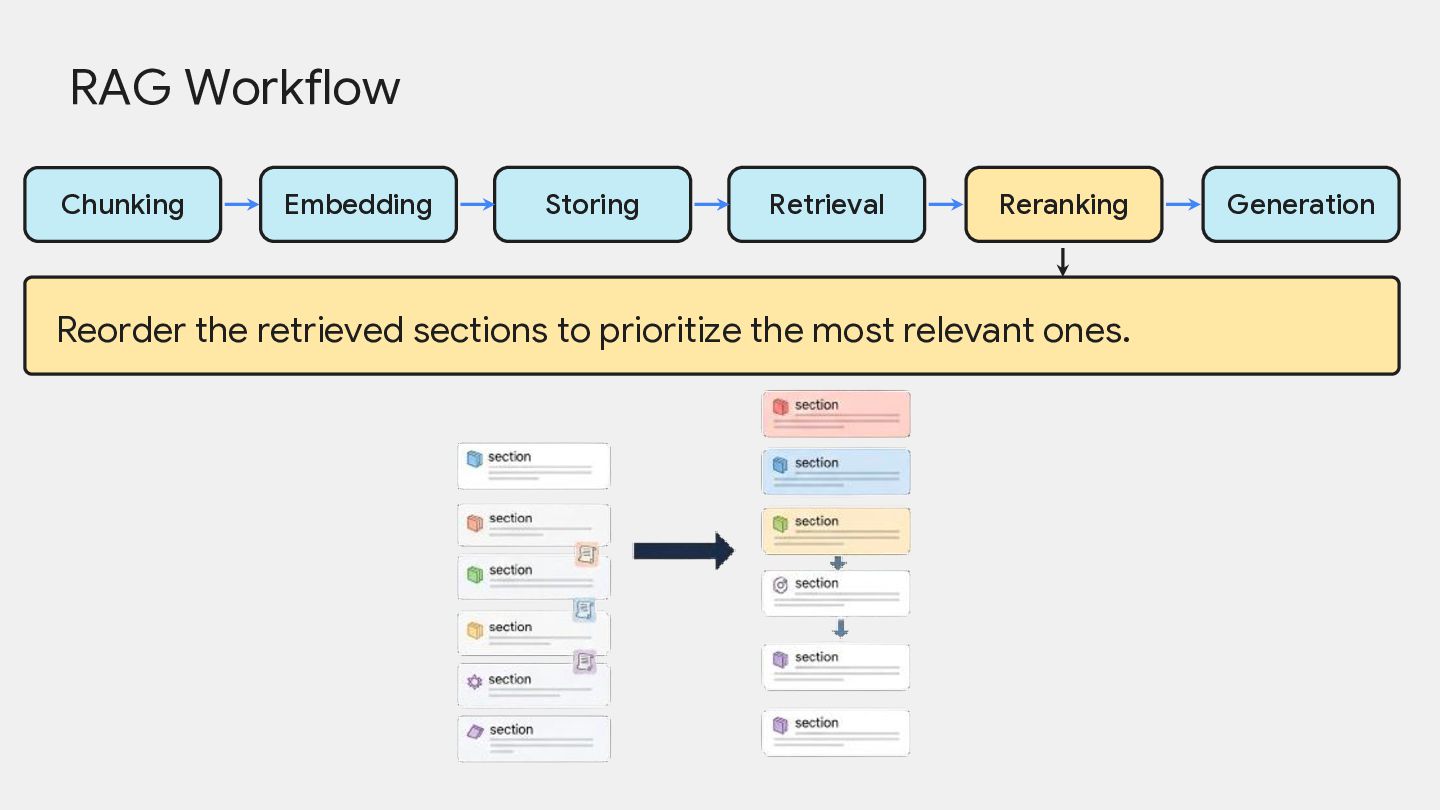
  15. RAG Workflow Chunking Embedding Storing Retrieval Reranking Reorder the retrieved

    sections to prioritize the most relevant ones. Generation
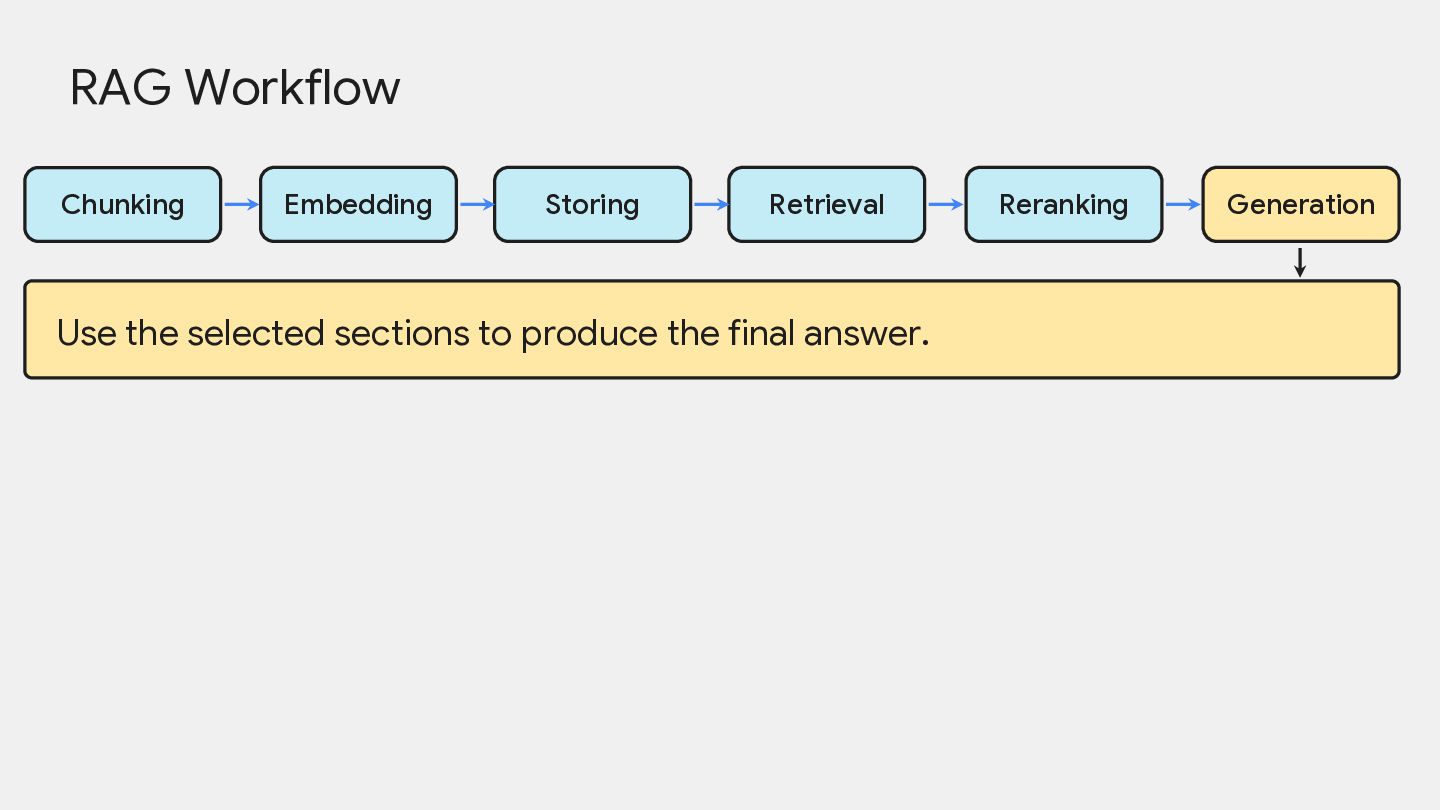
  16. RAG Workflow Chunking Embedding Storing Retrieval Use the selected sections

    to produce the final answer. Reranking Generation
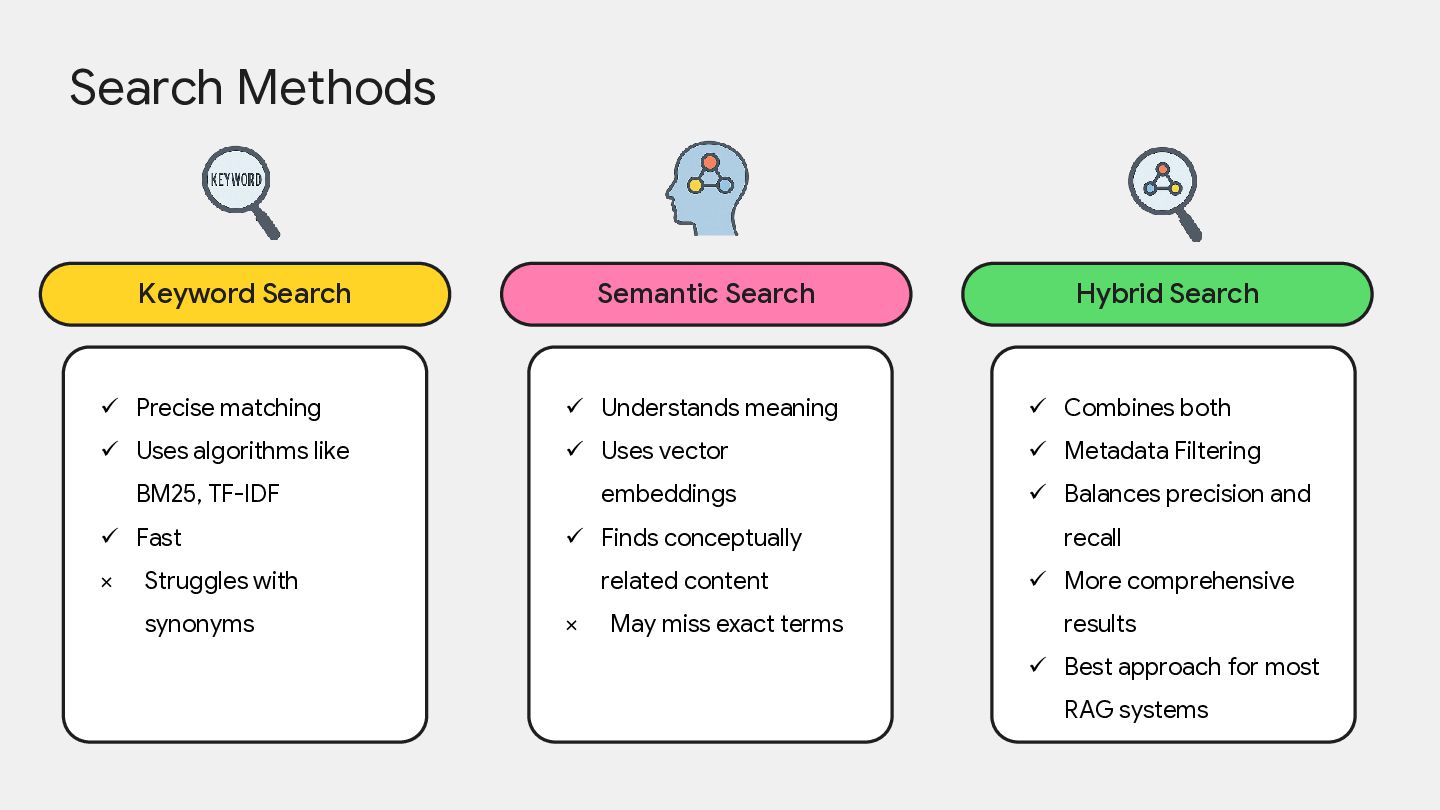
  17. Search Methods Keyword Search Semantic Search Hybrid Search ✓ Precise

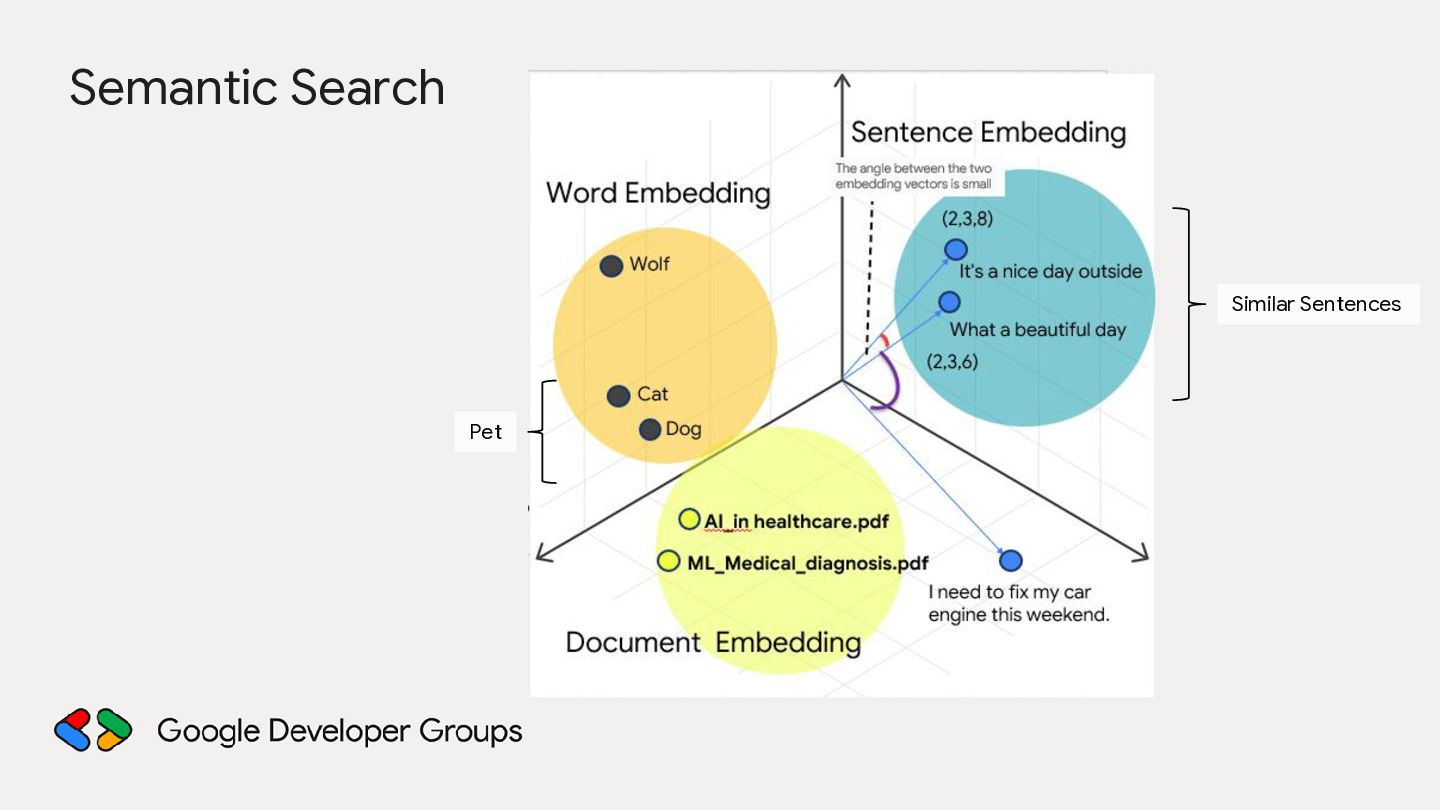
    matching ✓ Understands meaning ✓ Combines both ✓ Uses algorithms like ✓ Uses vector ✓ Metadata Filtering BM25, TF-IDF ✓ Fast × embeddings ✓ Finds conceptually Struggles with synonyms related content × May miss exact terms ✓ Balances precision and recall ✓ More comprehensive results ✓ Best approach for most RAG systems
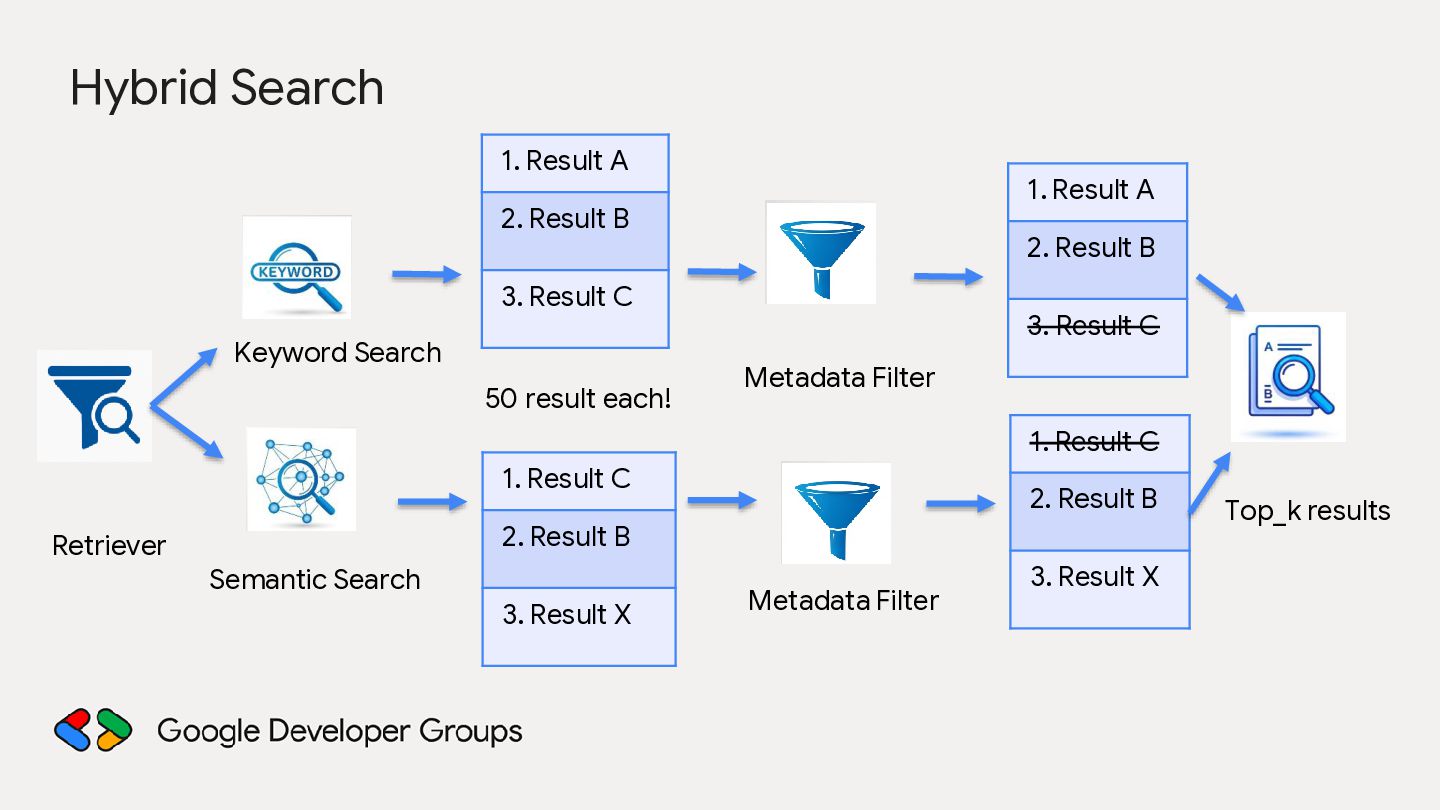
  18. Hybrid Search 1. Result A 1. Result A 2. Result

    B 2. Result B 3. Result C Keyword Search 50 result each! 3. Result C Metadata Filter 1. Result C 1. Result C Retriever 2. Result B 2. Result B Semantic Search 3. Result X Metadata Filter 3. Result X Top_k results
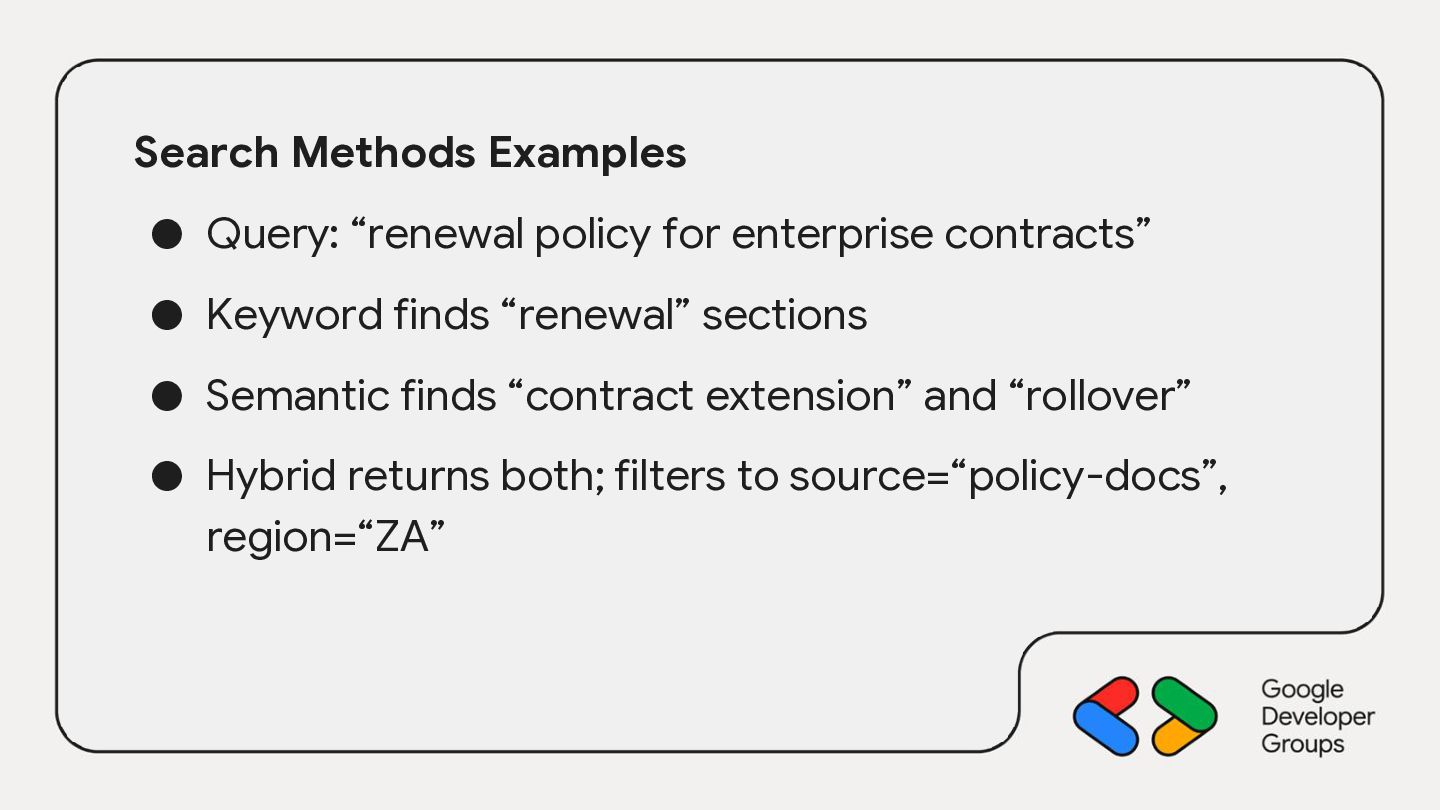
  19. Search Methods Examples • Query: “renewal policy for enterprise contracts”

    • Keyword finds “renewal” sections • Semantic finds “contract extension” and “rollover” • Hybrid returns both; filters to source=“policy-docs”, region=“ZA”
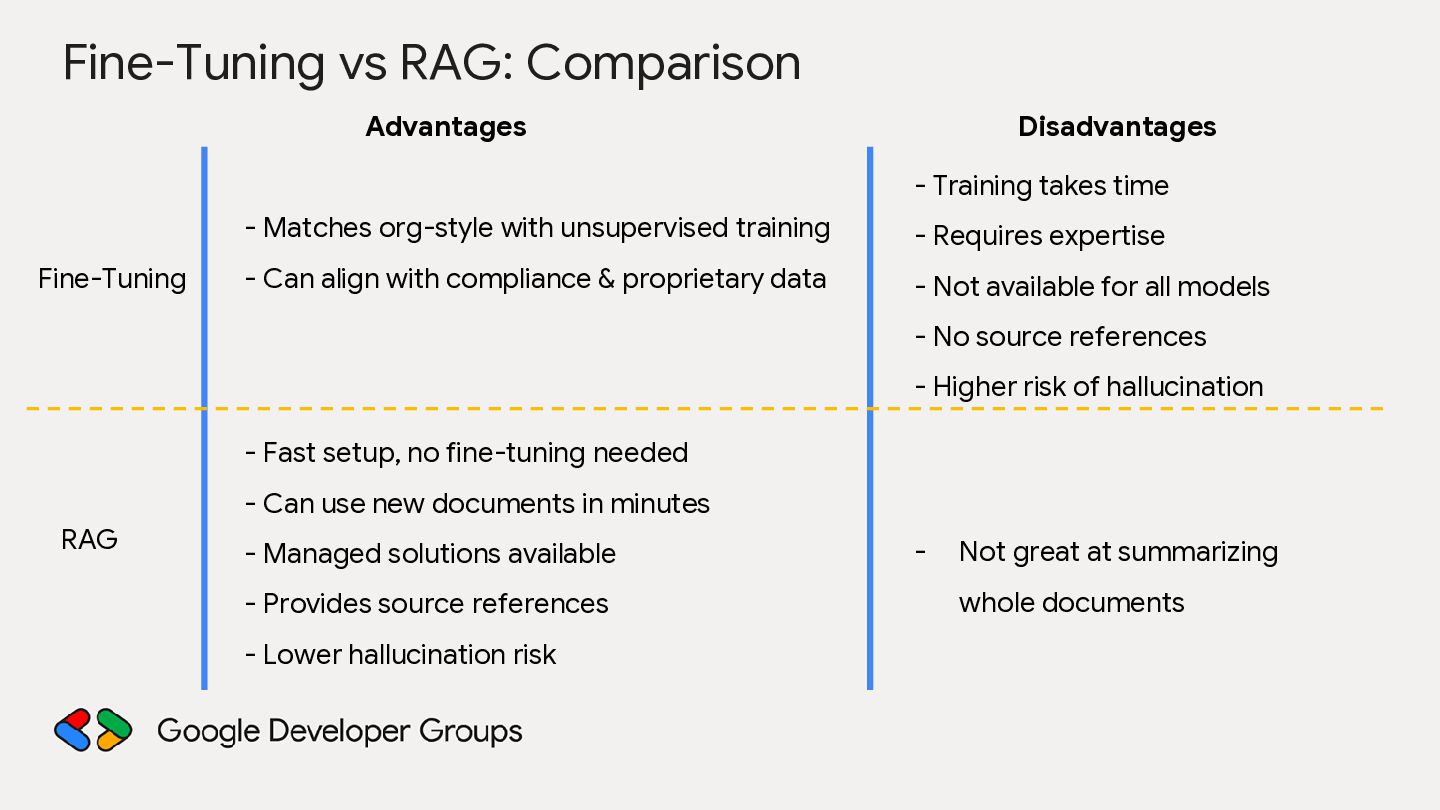
  20. Fine-Tuning vs RAG: Comparison Advantages Disadvantages - Training takes time

    Fine-Tuning - Matches org-style with unsupervised training - Requires expertise - Can align with compliance & proprietary data - Not available for all models - No source references - Higher risk of hallucination - Fast setup, no fine-tuning needed - Can use new documents in minutes RAG - Managed solutions available - Provides source references - Lower hallucination risk - Not great at summarizing whole documents
  21. Cape Town Start with Rag for custom document Q&A. Use

    Fine-tuning if you need tasks like summarization or ogspecific style.
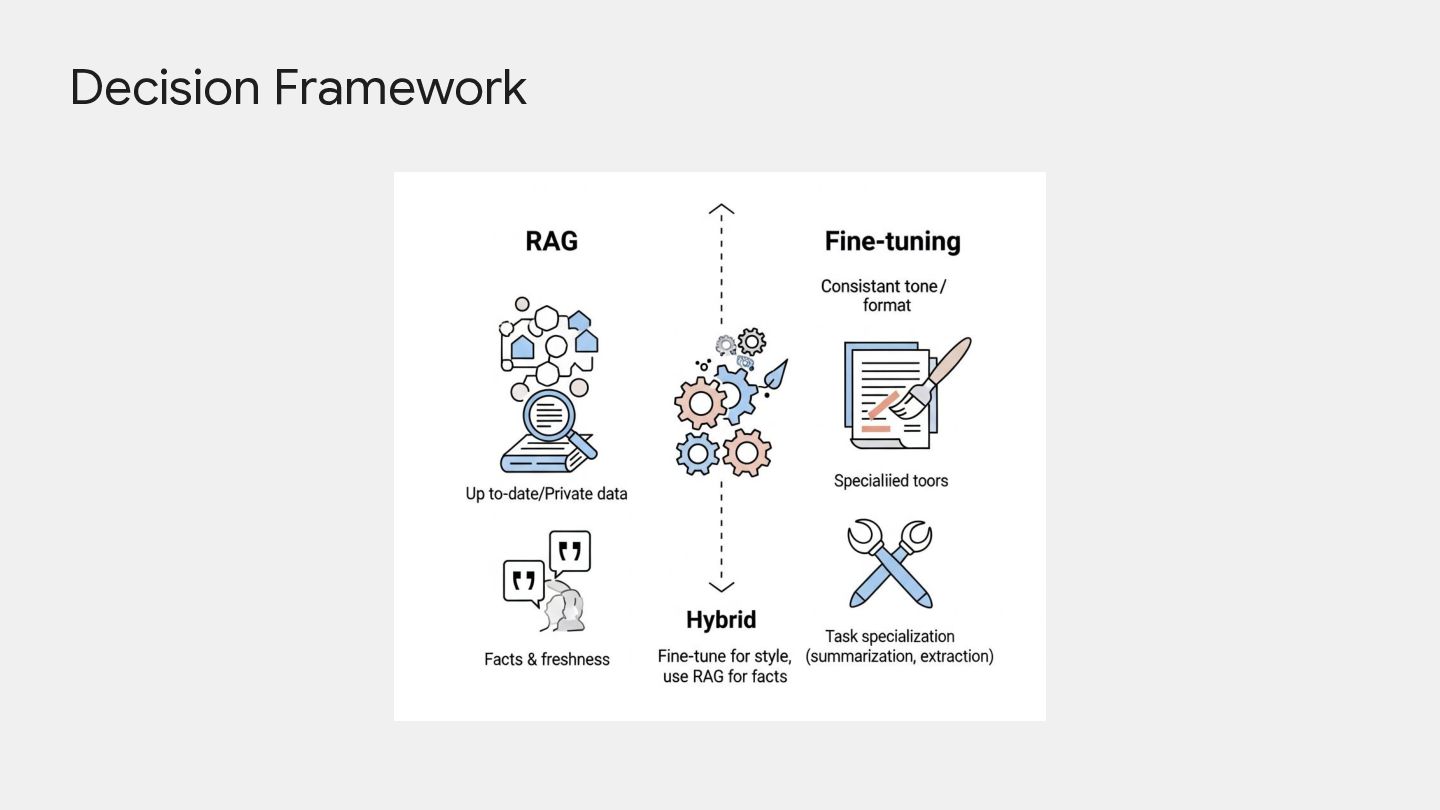
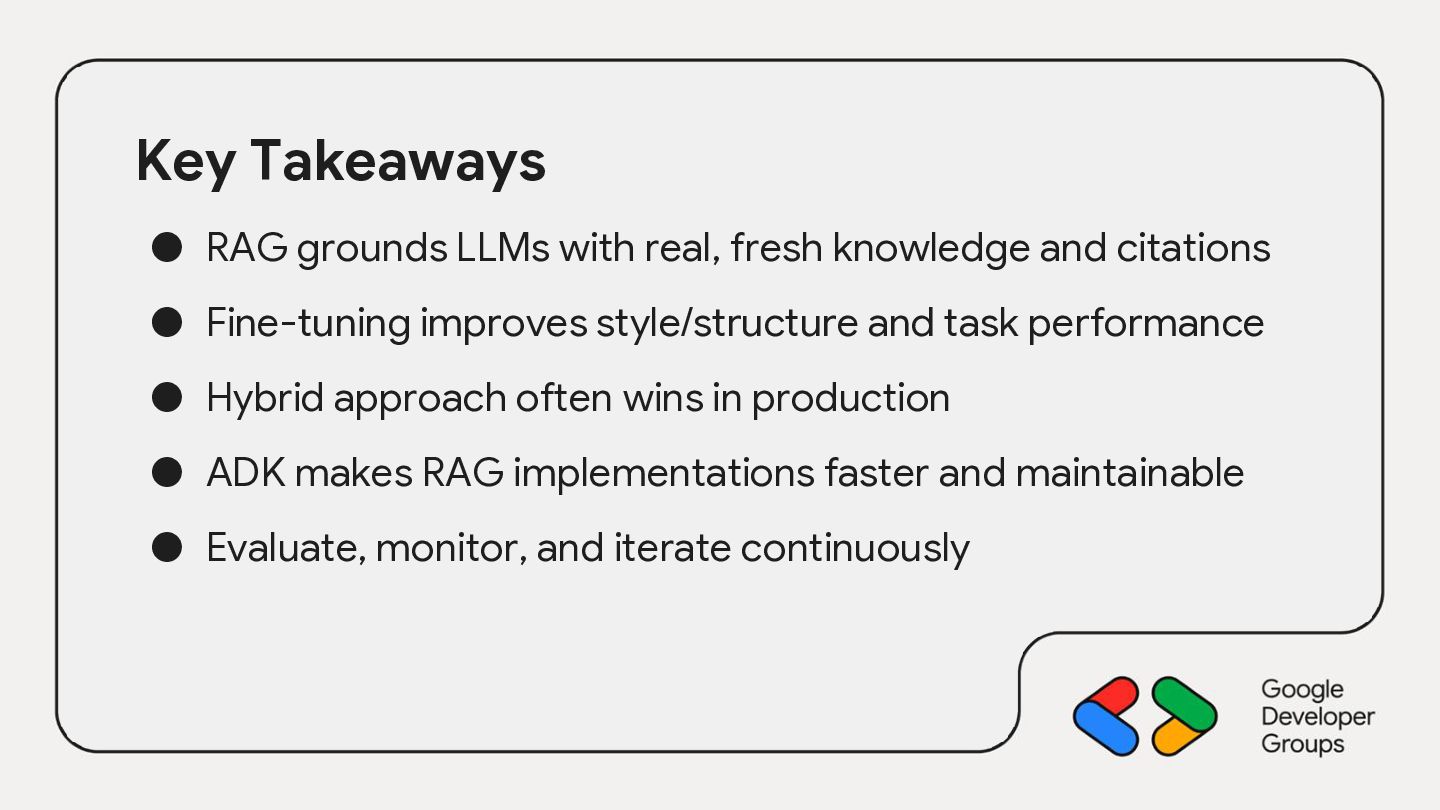
  22. Key Takeaways • RAG grounds LLMs with real, fresh knowledge

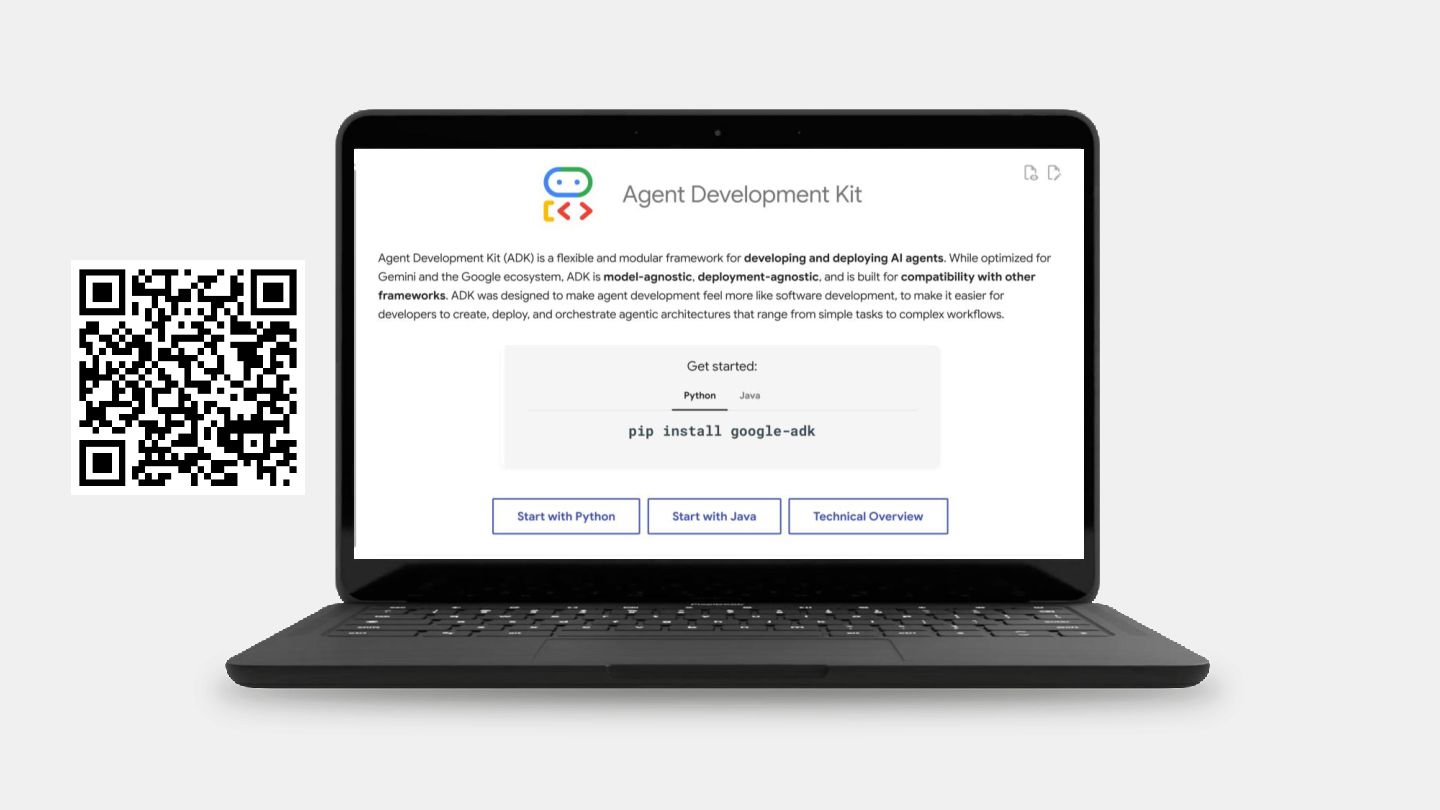
    and citations • Fine-tuning improves style/structure and task performance • Hybrid approach often wins in production • ADK makes RAG implementations faster and maintainable • Evaluate, monitor, and iterate continuously