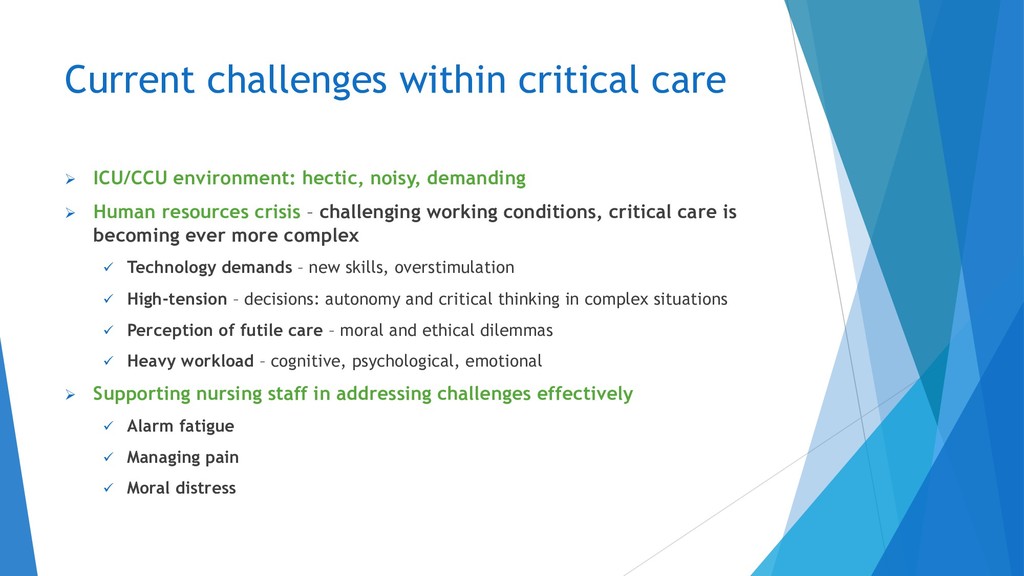
demanding Ø Human resources crisis – challenging working conditions, critical care is becoming ever more complex ü Technology demands – new skills, overstimulation ü High-tension – decisions: autonomy and critical thinking in complex situations ü Perception of futile care – moral and ethical dilemmas ü Heavy workload – cognitive, psychological, emotional Ø Supporting nursing staff in addressing challenges effectively ü Alarm fatigue ü Managing pain ü Moral distress
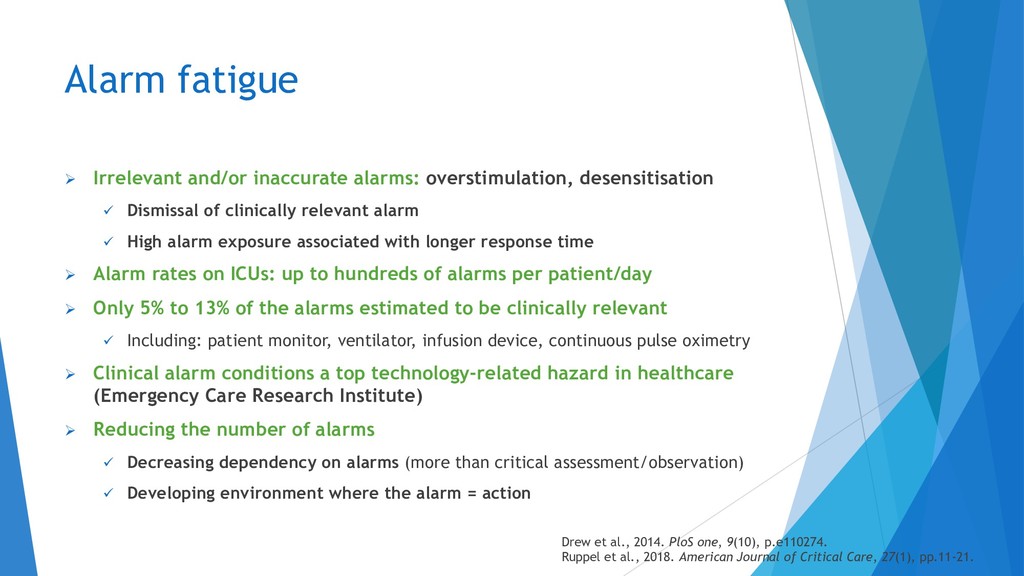
Dismissal of clinically relevant alarm ü High alarm exposure associated with longer response time Ø Alarm rates on ICUs: up to hundreds of alarms per patient/day Ø Only 5% to 13% of the alarms estimated to be clinically relevant ü Including: patient monitor, ventilator, infusion device, continuous pulse oximetry Ø Clinical alarm conditions a top technology-related hazard in healthcare (Emergency Care Research Institute) Ø Reducing the number of alarms ü Decreasing dependency on alarms (more than critical assessment/observation) ü Developing environment where the alarm = action Drew et al., 2014. PloS one, 9(10), p.e110274. Ruppel et al., 2018. American Journal of Critical Care, 27(1), pp.11-21.
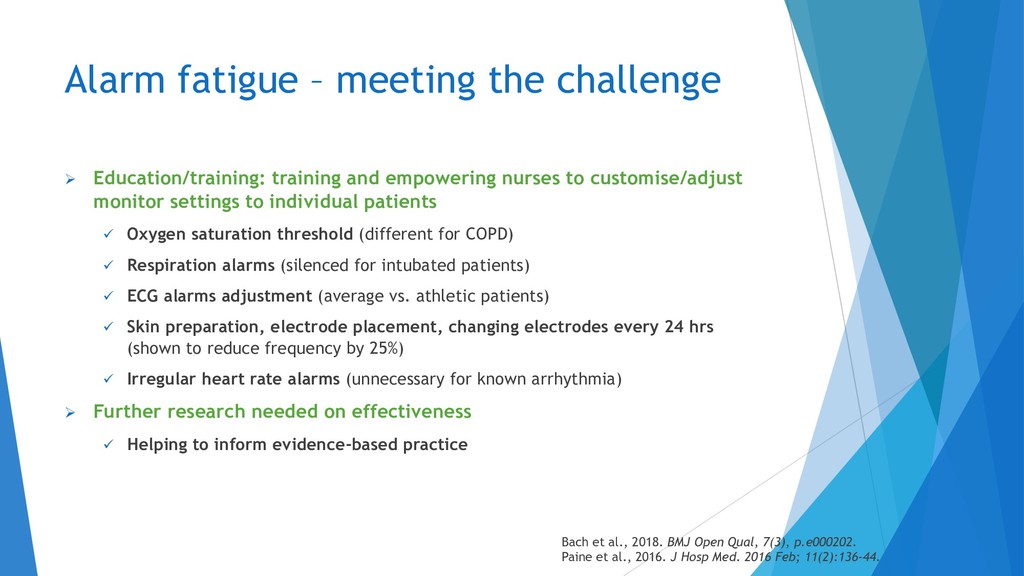
empowering nurses to customise/adjust monitor settings to individual patients ü Oxygen saturation threshold (different for COPD) ü Respiration alarms (silenced for intubated patients) ü ECG alarms adjustment (average vs. athletic patients) ü Skin preparation, electrode placement, changing electrodes every 24 hrs (shown to reduce frequency by 25%) ü Irregular heart rate alarms (unnecessary for known arrhythmia) Ø Further research needed on effectiveness ü Helping to inform evidence-based practice Bach et al., 2018. BMJ Open Qual, 7(3), p.e000202. Paine et al., 2016. J Hosp Med. 2016 Feb; 11(2):136-44.
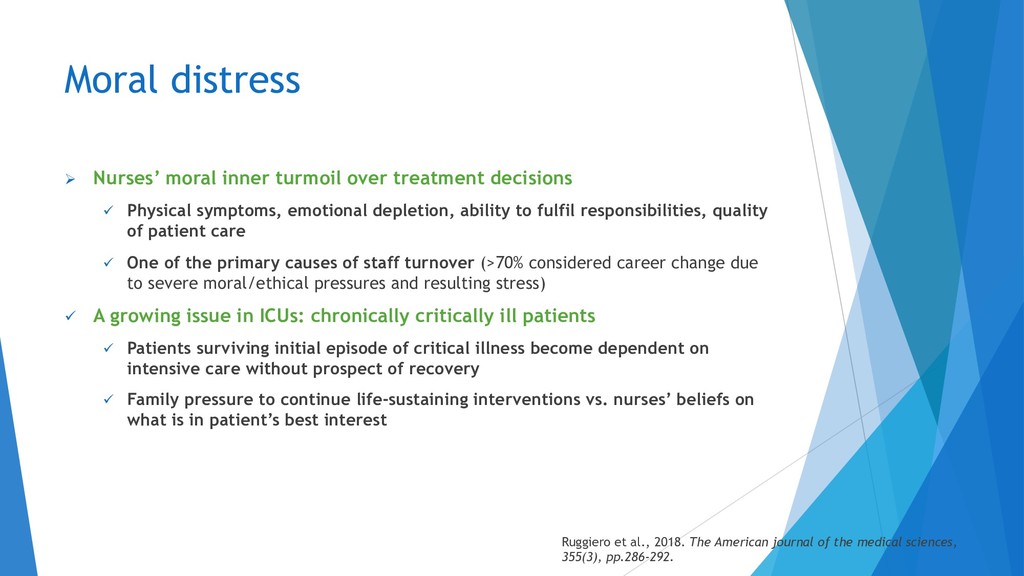
ü Physical symptoms, emotional depletion, ability to fulfil responsibilities, quality of patient care ü One of the primary causes of staff turnover (>70% considered career change due to severe moral/ethical pressures and resulting stress) ü A growing issue in ICUs: chronically critically ill patients ü Patients surviving initial episode of critical illness become dependent on intensive care without prospect of recovery ü Family pressure to continue life-sustaining interventions vs. nurses’ beliefs on what is in patient’s best interest Ruggiero et al., 2018. The American journal of the medical sciences, 355(3), pp.286-292.
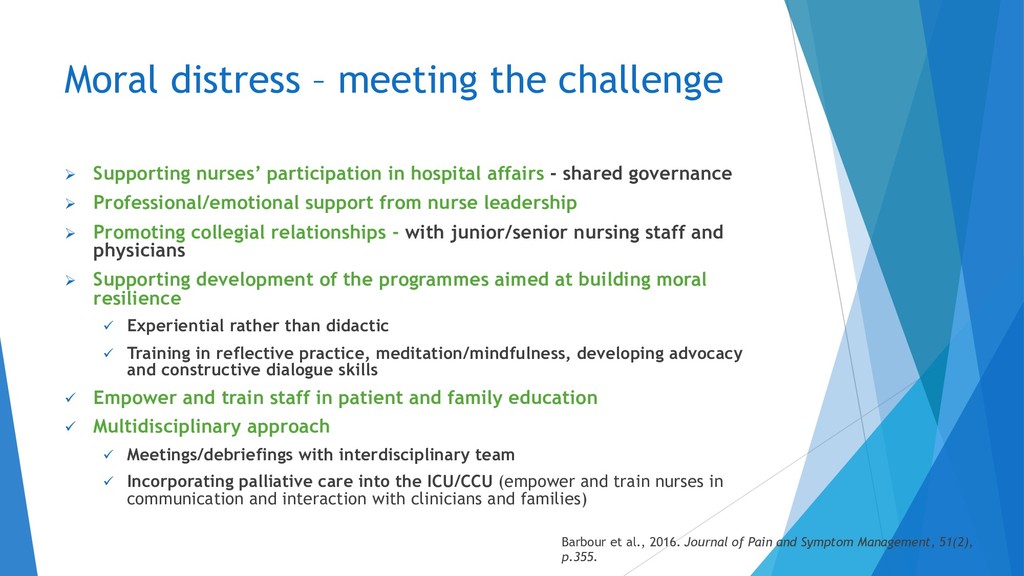
in hospital affairs - shared governance Ø Professional/emotional support from nurse leadership Ø Promoting collegial relationships - with junior/senior nursing staff and physicians Ø Supporting development of the programmes aimed at building moral resilience ü Experiential rather than didactic ü Training in reflective practice, meditation/mindfulness, developing advocacy and constructive dialogue skills ü Empower and train staff in patient and family education ü Multidisciplinary approach ü Meetings/debriefings with interdisciplinary team ü Incorporating palliative care into the ICU/CCU (empower and train nurses in communication and interaction with clinicians and families) Barbour et al., 2016. Journal of Pain and Symptom Management, 51(2), p.355.
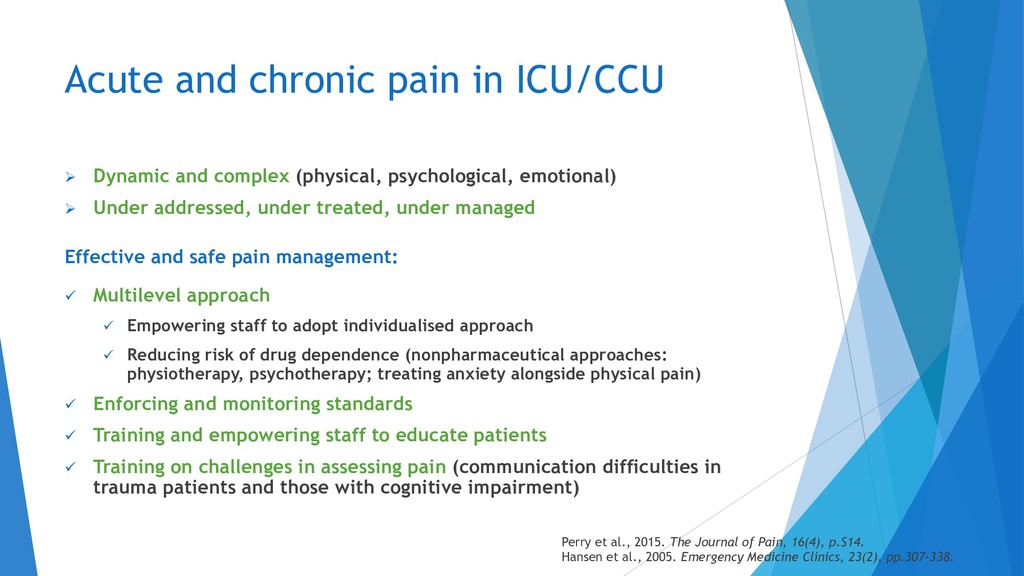
(physical, psychological, emotional) Ø Under addressed, under treated, under managed Effective and safe pain management: ü Multilevel approach ü Empowering staff to adopt individualised approach ü Reducing risk of drug dependence (nonpharmaceutical approaches: physiotherapy, psychotherapy; treating anxiety alongside physical pain) ü Enforcing and monitoring standards ü Training and empowering staff to educate patients ü Training on challenges in assessing pain (communication difficulties in trauma patients and those with cognitive impairment) Perry et al., 2015. The Journal of Pain, 16(4), p.S14. Hansen et al., 2005. Emergency Medicine Clinics, 23(2), pp.307-338.
from senior staff - boost nurses’ sense of participation in governance and confidence to make autonomous decisions Ø Providing training, education and support for self-development Ø Participating in developing research and audit plans Thank you!


 bvr7352
 mariooc
 3l4l5
3l4l5
 fmarot
 terasawat
 cbtlibrary
 signer
 hiola
hiola
 pawan_pharm
 kentaroy47
 ainischool
 aleyda
 palkan
 techseoconnect
 danielanewman
 davidcarrasco
 tamaranovitovic
 sstephenson
 takai
takai
 pedronauck
 apolaine
 bkeepers
 ryanjones