Essentially, energy is nature's ultimate currency—it is constantly exchanged, redistributed, and converted, but the universal balance sheet always stays perfectly balanced.
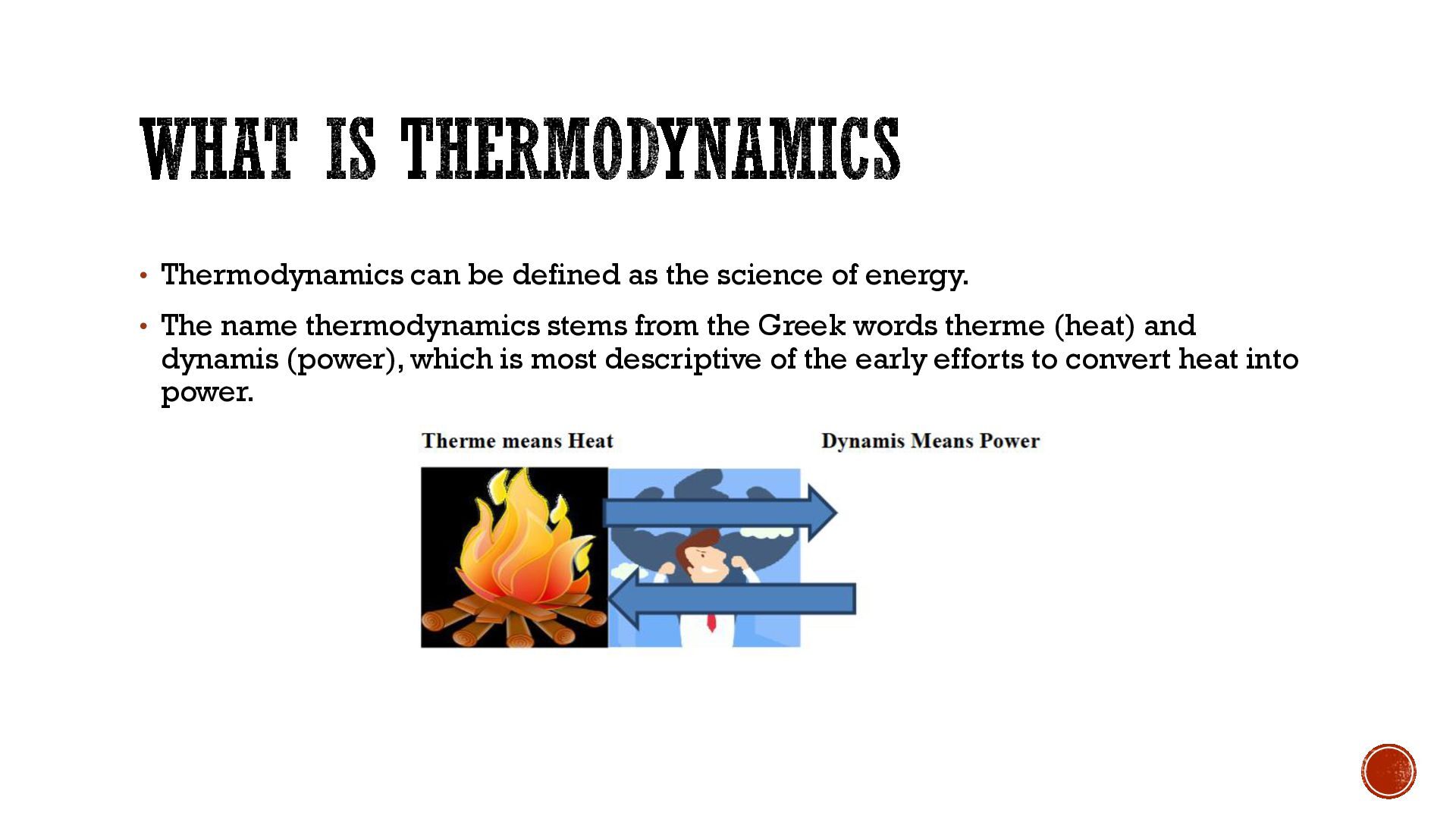
• The name thermodynamics stems from the Greek words therme (heat) and dynamis (power), which is most descriptive of the early efforts to convert heat into power.
i.e Heat & Power (Work) and the effect of energy interaction on the physical properties of system or matter. The physical properties that we sense normally by our organs. Energy: is defined as capacity to do work. If you have more energy you do more work. Power: Is Rate of doing work.
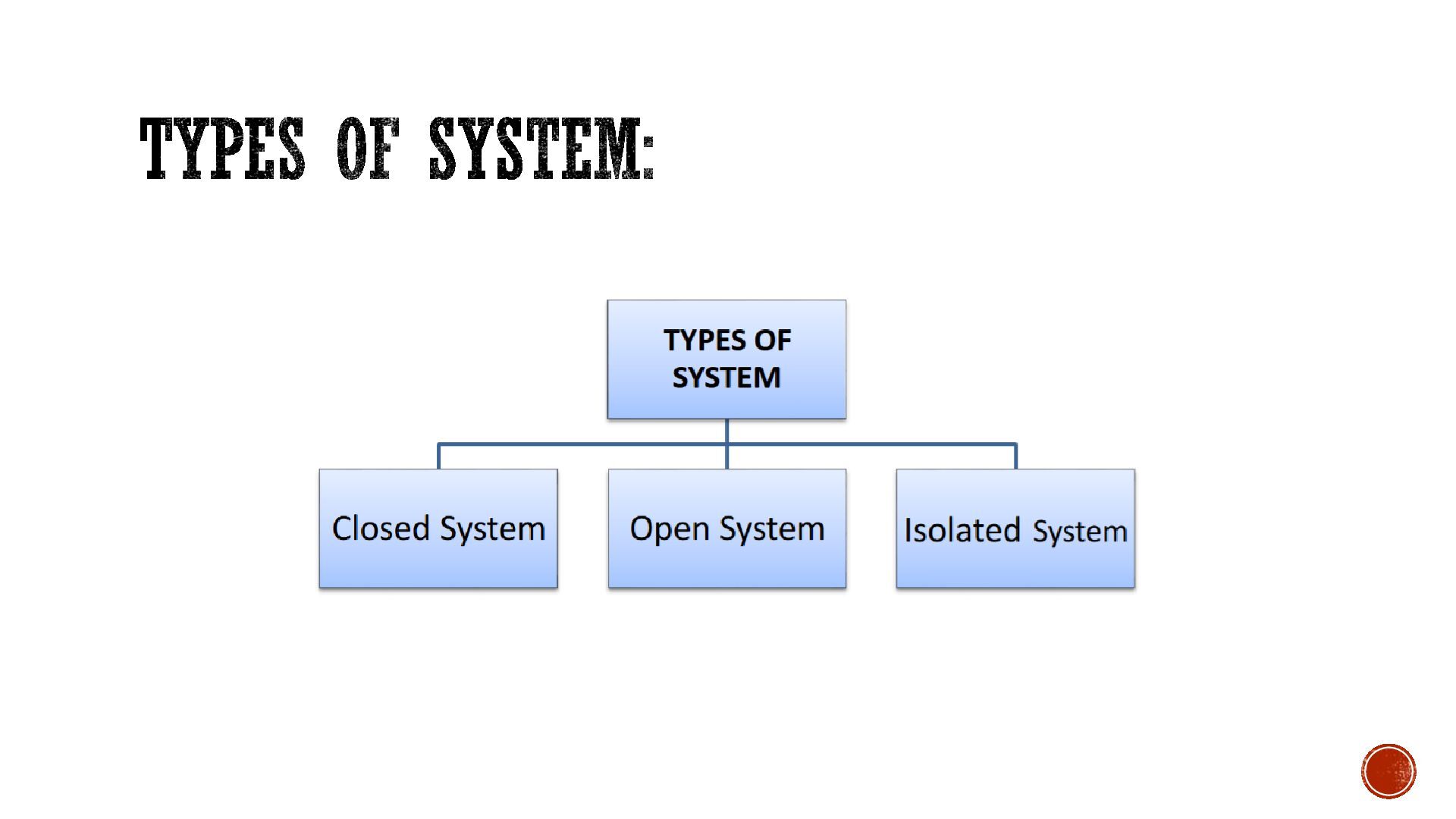
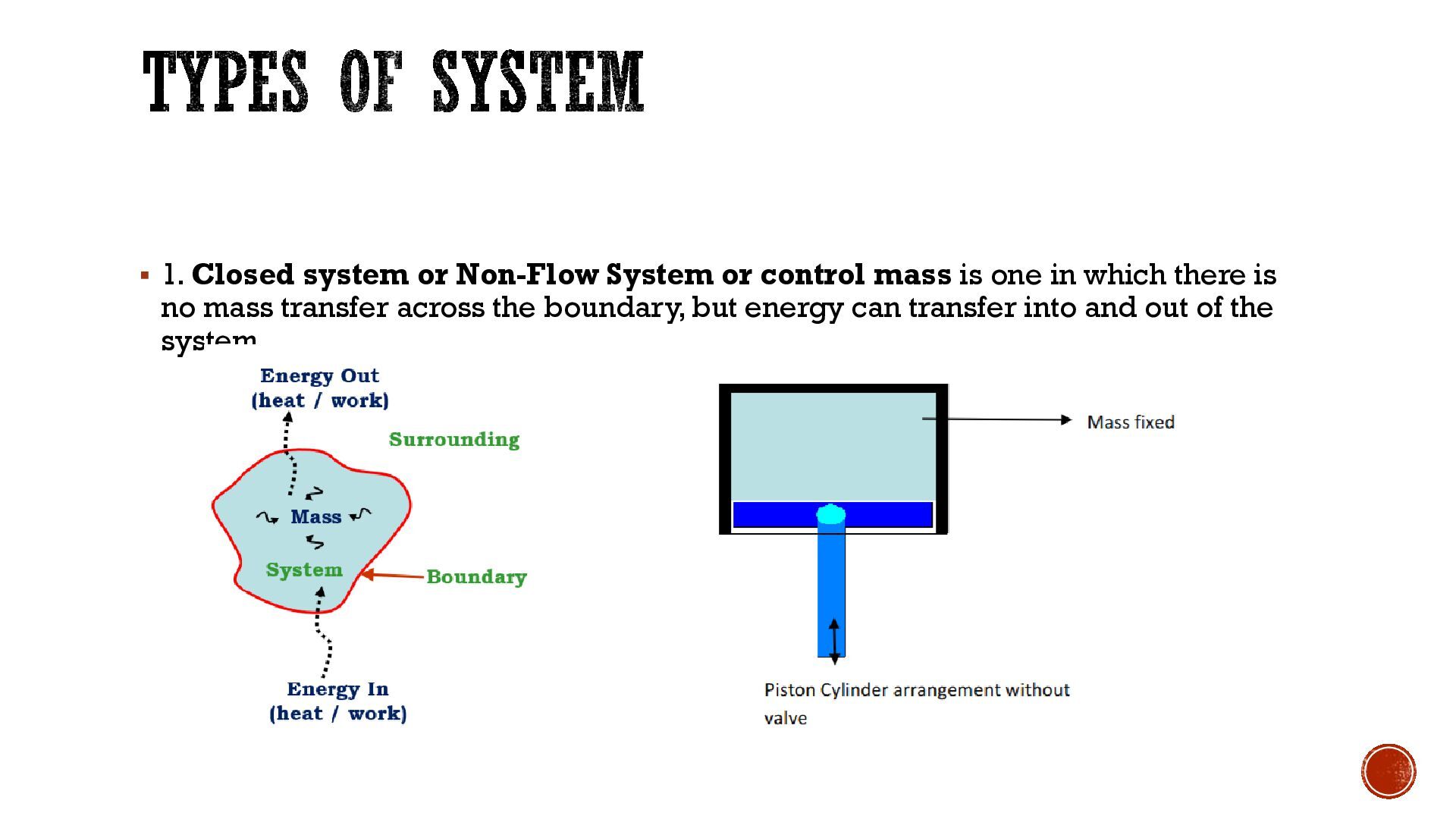
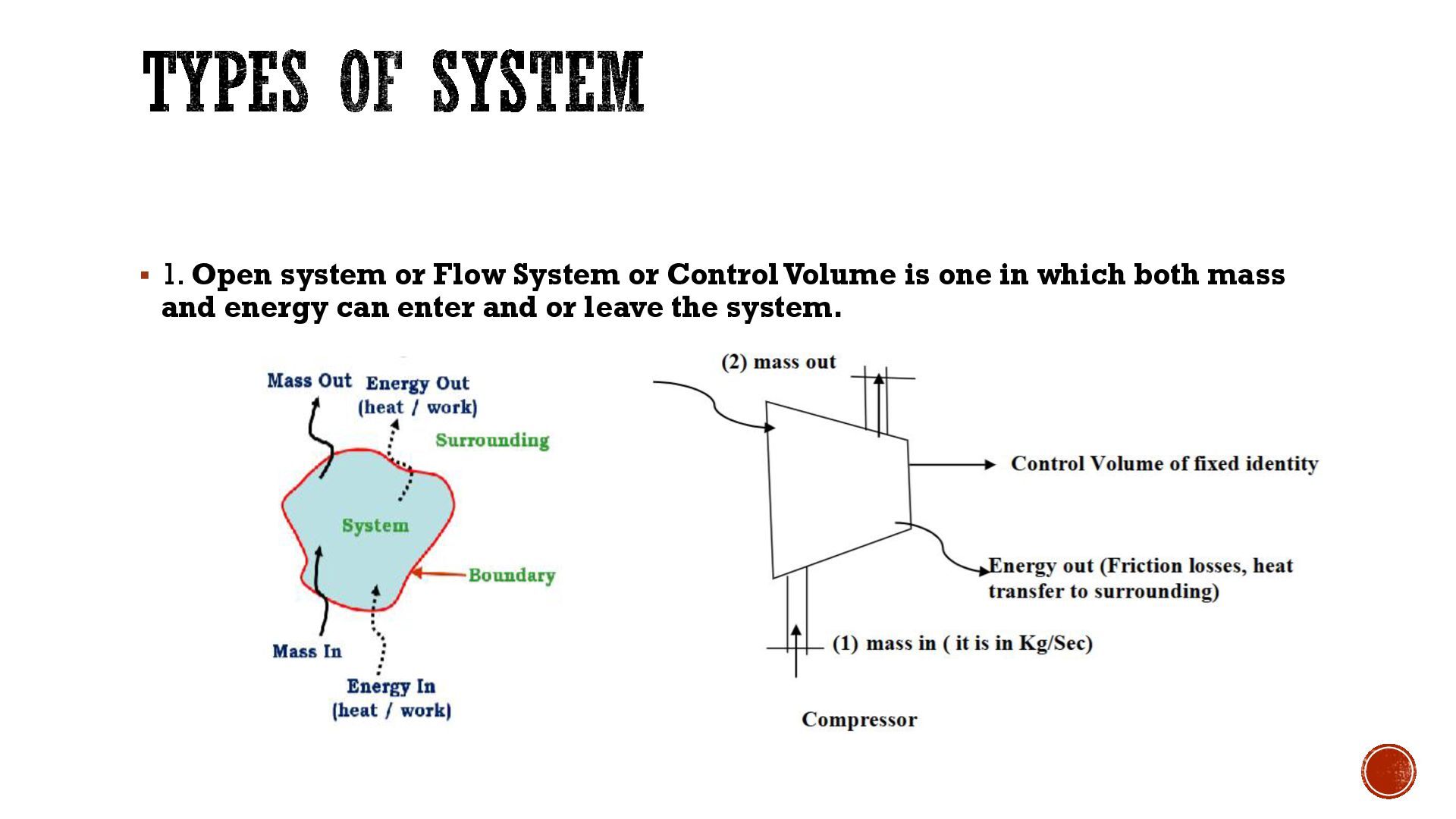
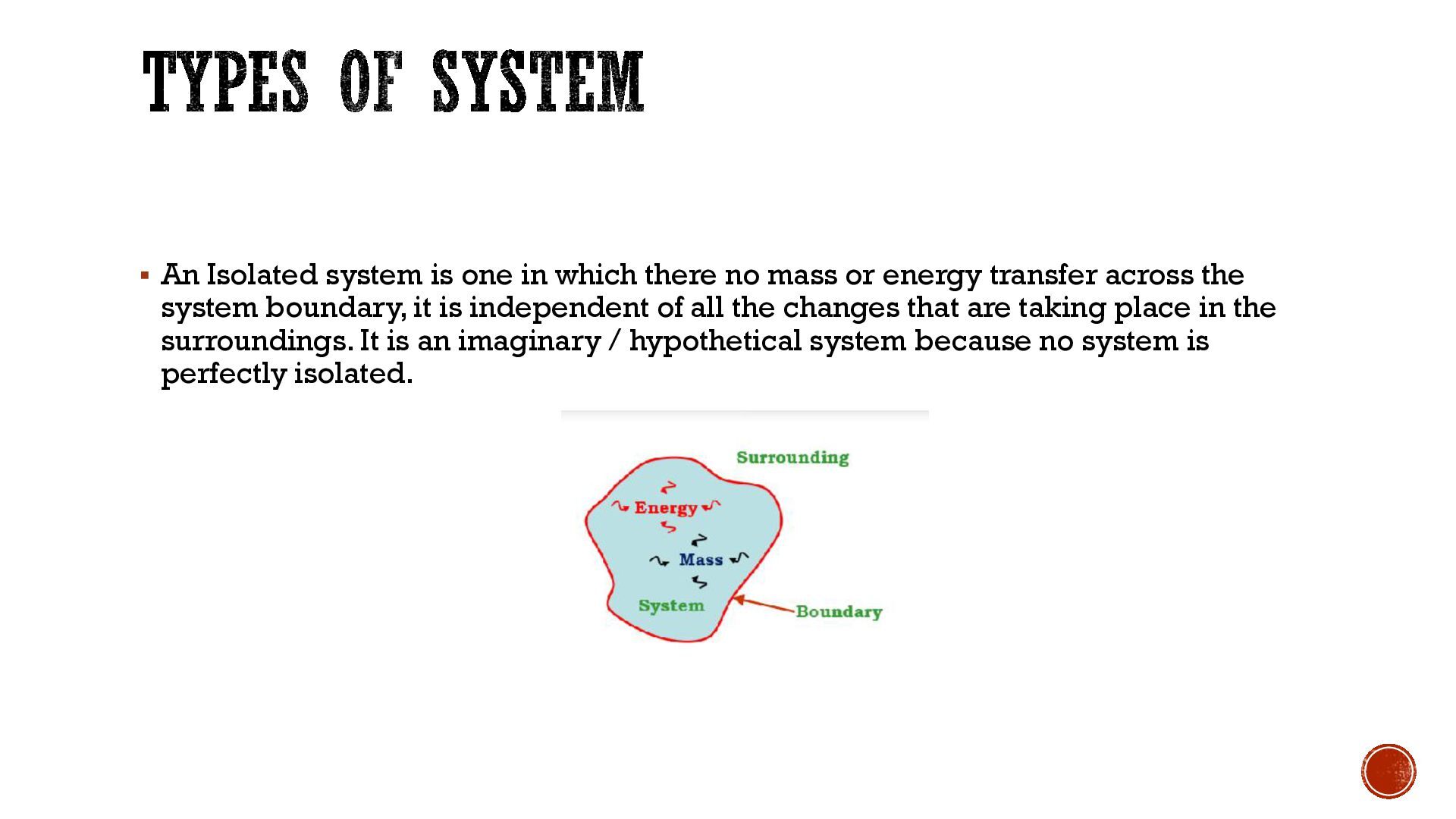
of matter (Finite quantity e.g. Control Mass in Kg)or region of space (Finite region, e.g. control volume) upon which attention is concentrated in the analysis of the problem During driving a car, car is a system for driver. Boundary of a System: To fix the limits of a system, there must be a partition around the system. This partition is known as the system’s boundary. Surrounding of a System: Everything outside the boundary of a system is called the surrounding of the system.
mass or energy transfer across the system boundary, it is independent of all the changes that are taking place in the surroundings. It is an imaginary / hypothetical system because no system is perfectly isolated.
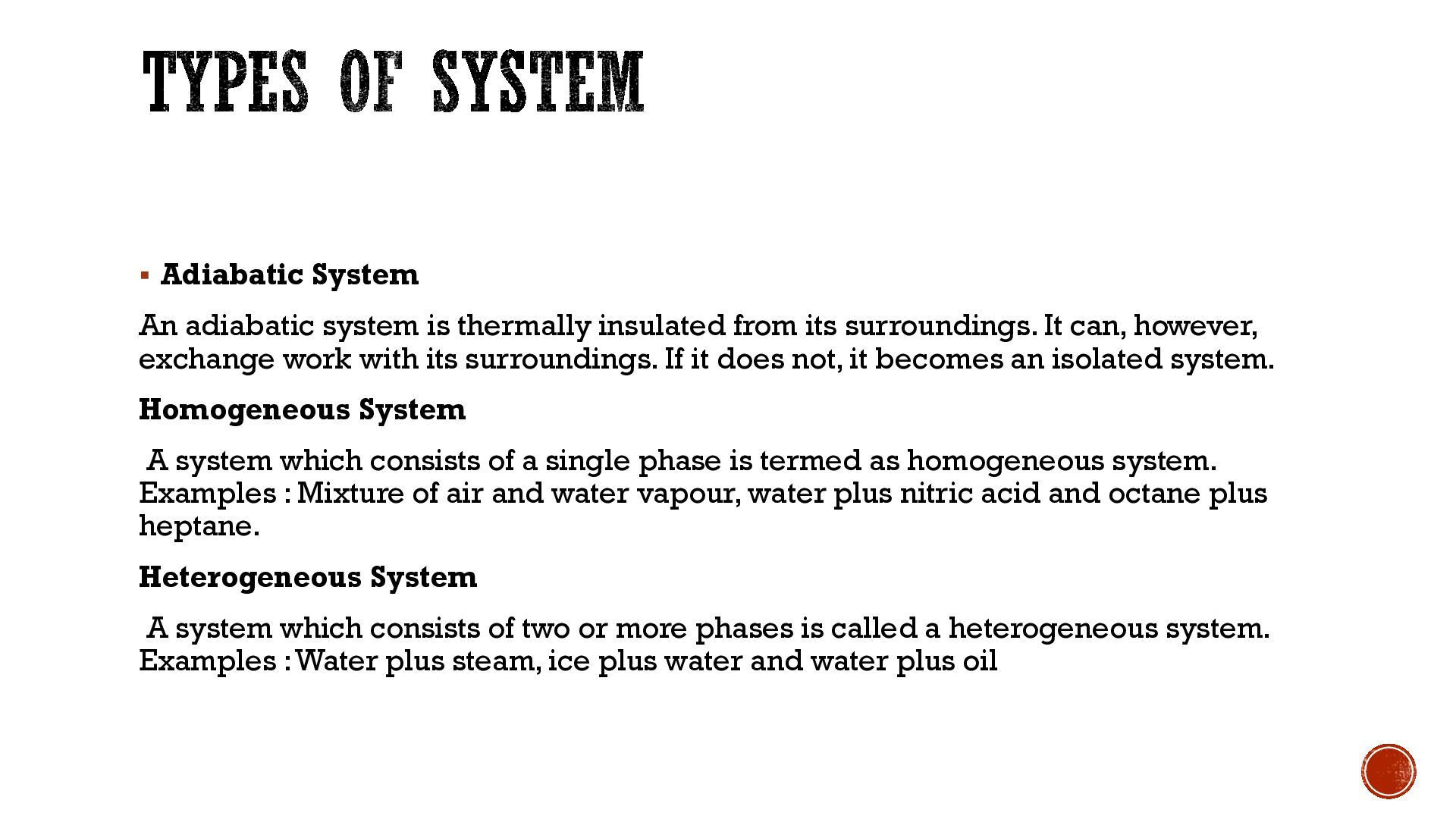
its surroundings. It can, however, exchange work with its surroundings. If it does not, it becomes an isolated system. Homogeneous System A system which consists of a single phase is termed as homogeneous system. Examples : Mixture of air and water vapour, water plus nitric acid and octane plus heptane. Heterogeneous System A system which consists of two or more phases is called a heterogeneous system. Examples : Water plus steam, ice plus water and water plus oil
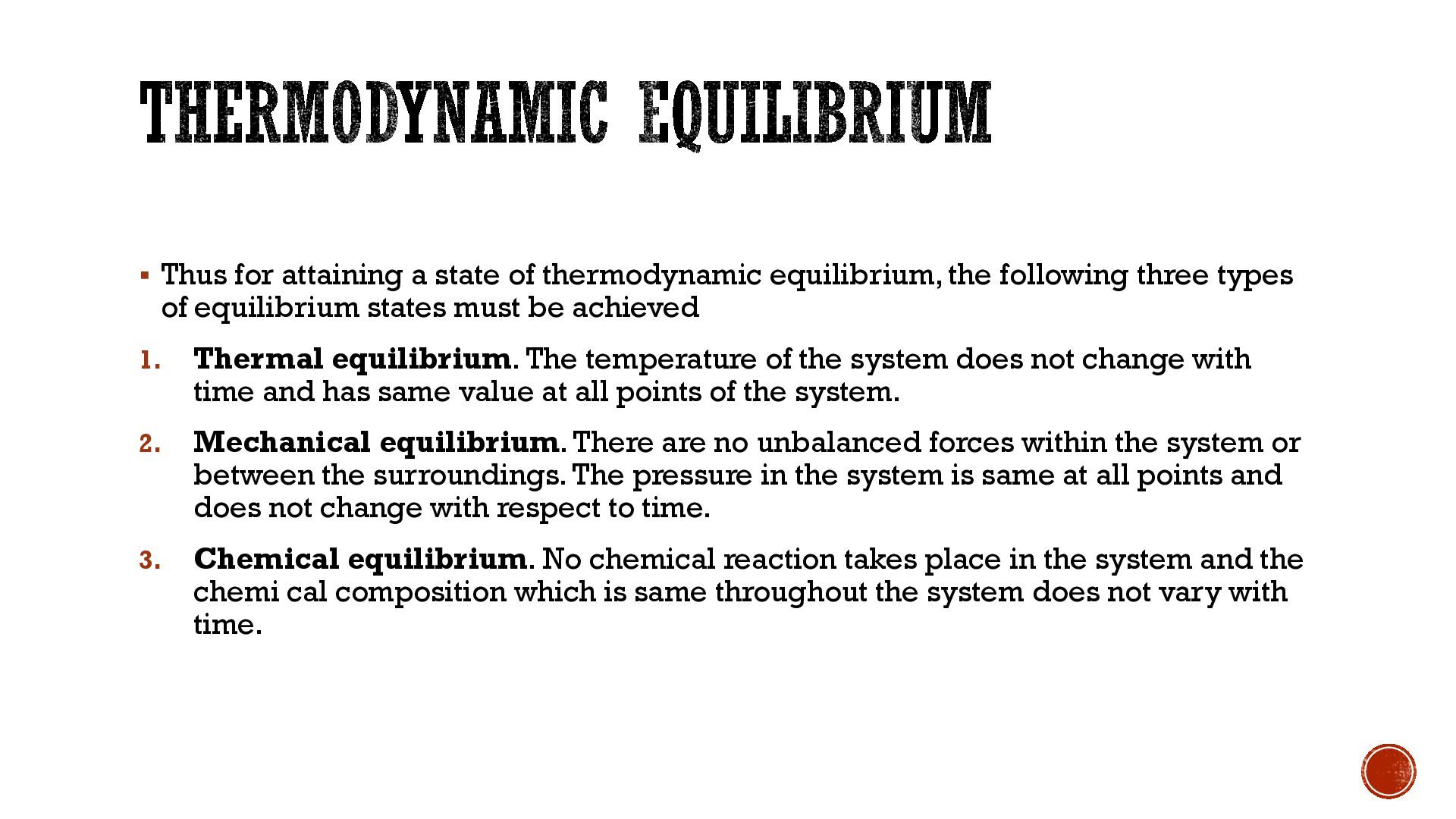
following three types of equilibrium states must be achieved 1. Thermal equilibrium. The temperature of the system does not change with time and has same value at all points of the system. 2. Mechanical equilibrium. There are no unbalanced forces within the system or between the surroundings. The pressure in the system is same at all points and does not change with respect to time. 3. Chemical equilibrium. No chemical reaction takes place in the system and the chemi cal composition which is same throughout the system does not vary with time.
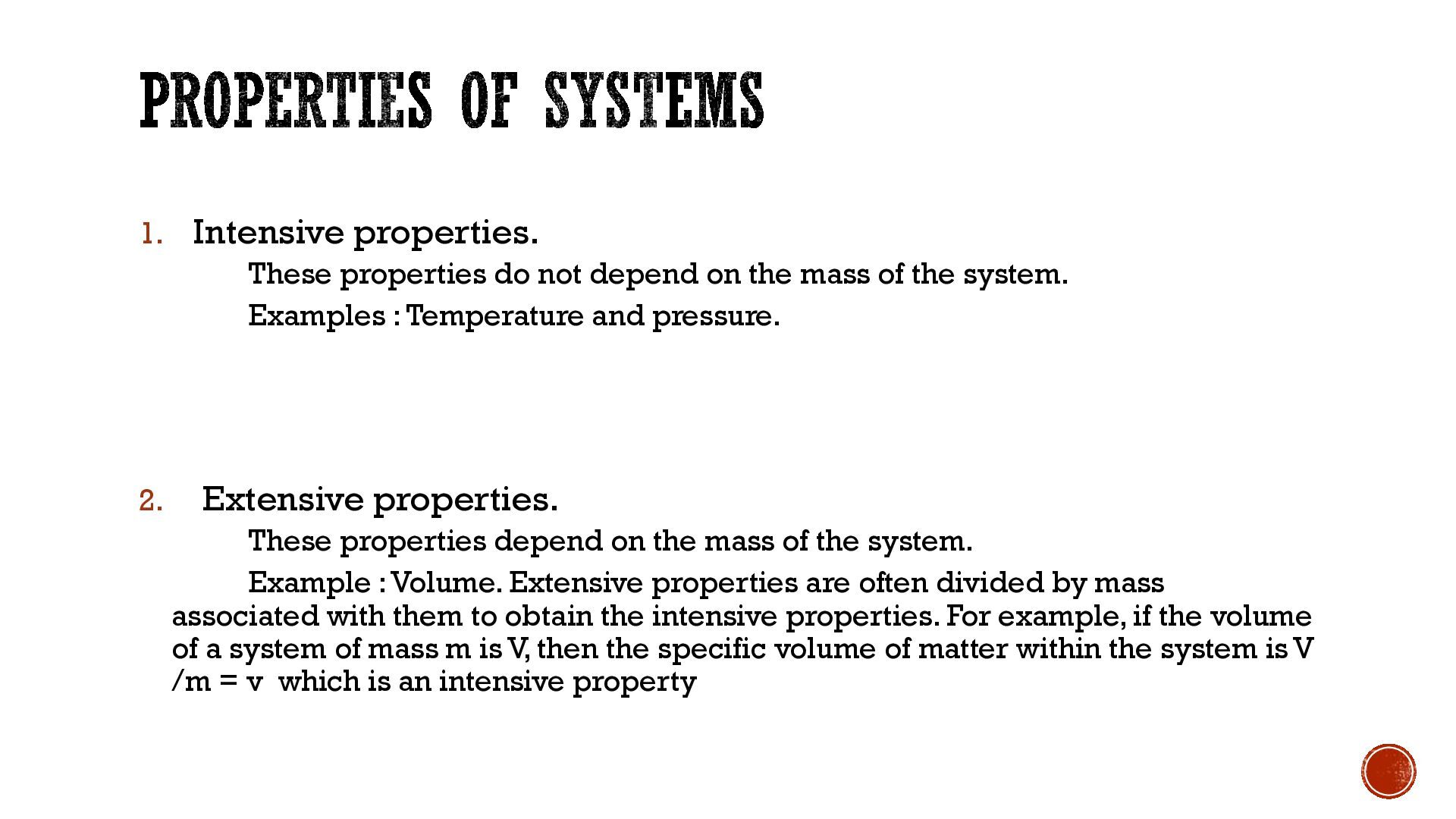
mass of the system. Examples : Temperature and pressure. 2. Extensive properties. These properties depend on the mass of the system. Example : Volume. Extensive properties are often divided by mass associated with them to obtain the intensive properties. For example, if the volume of a system of mass m is V, then the specific volume of matter within the system is V /m = v which is an intensive property
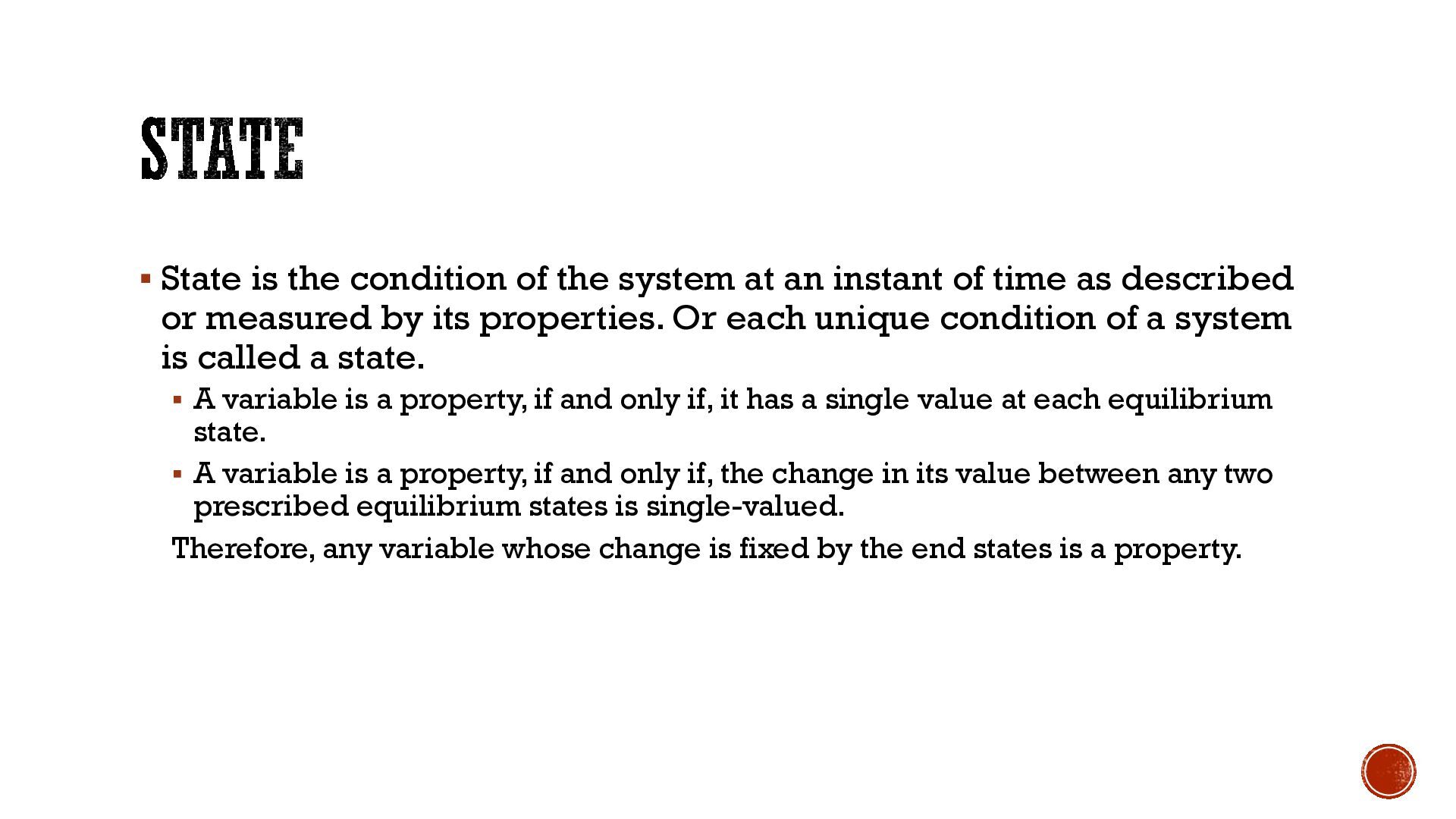
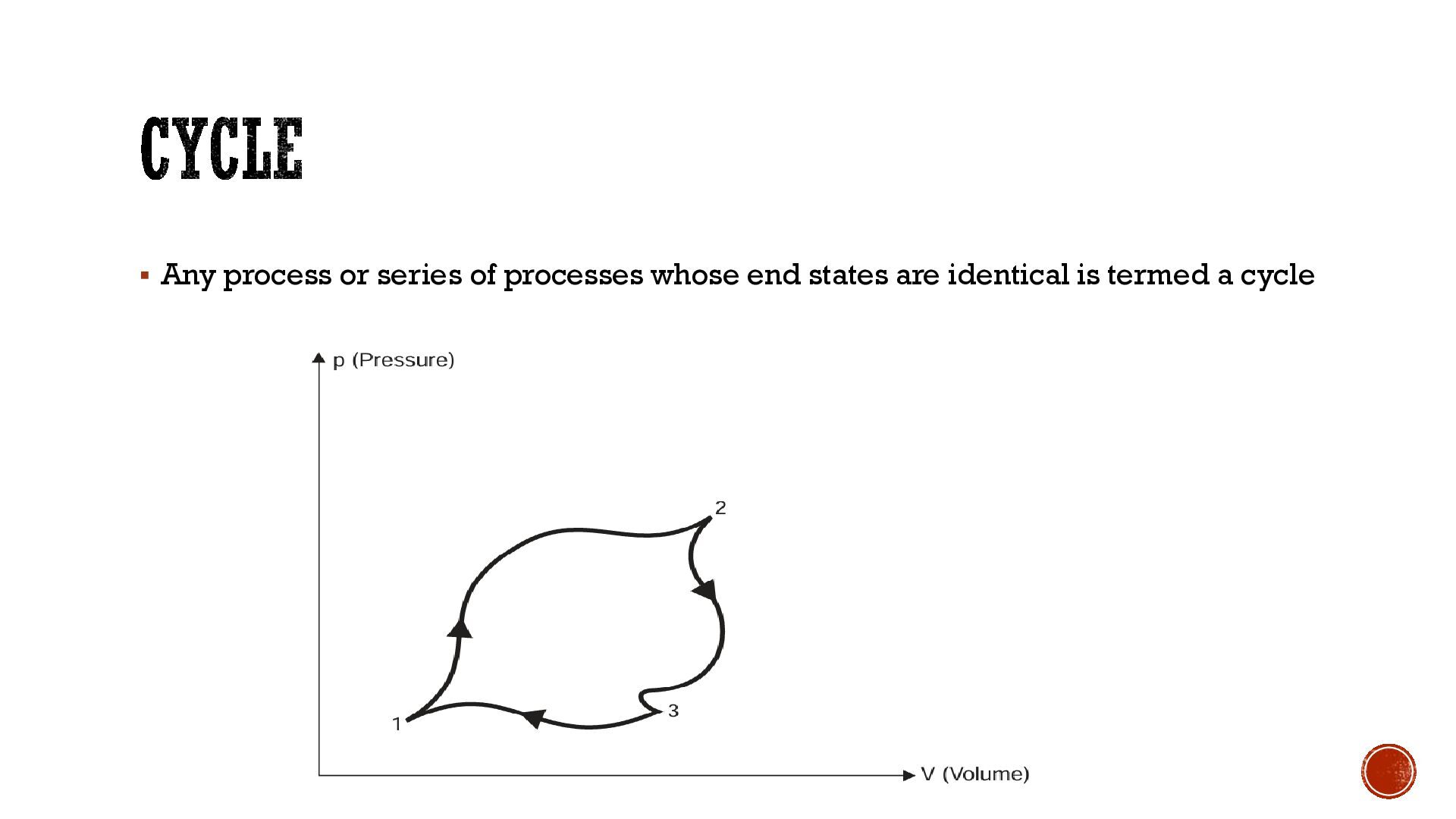
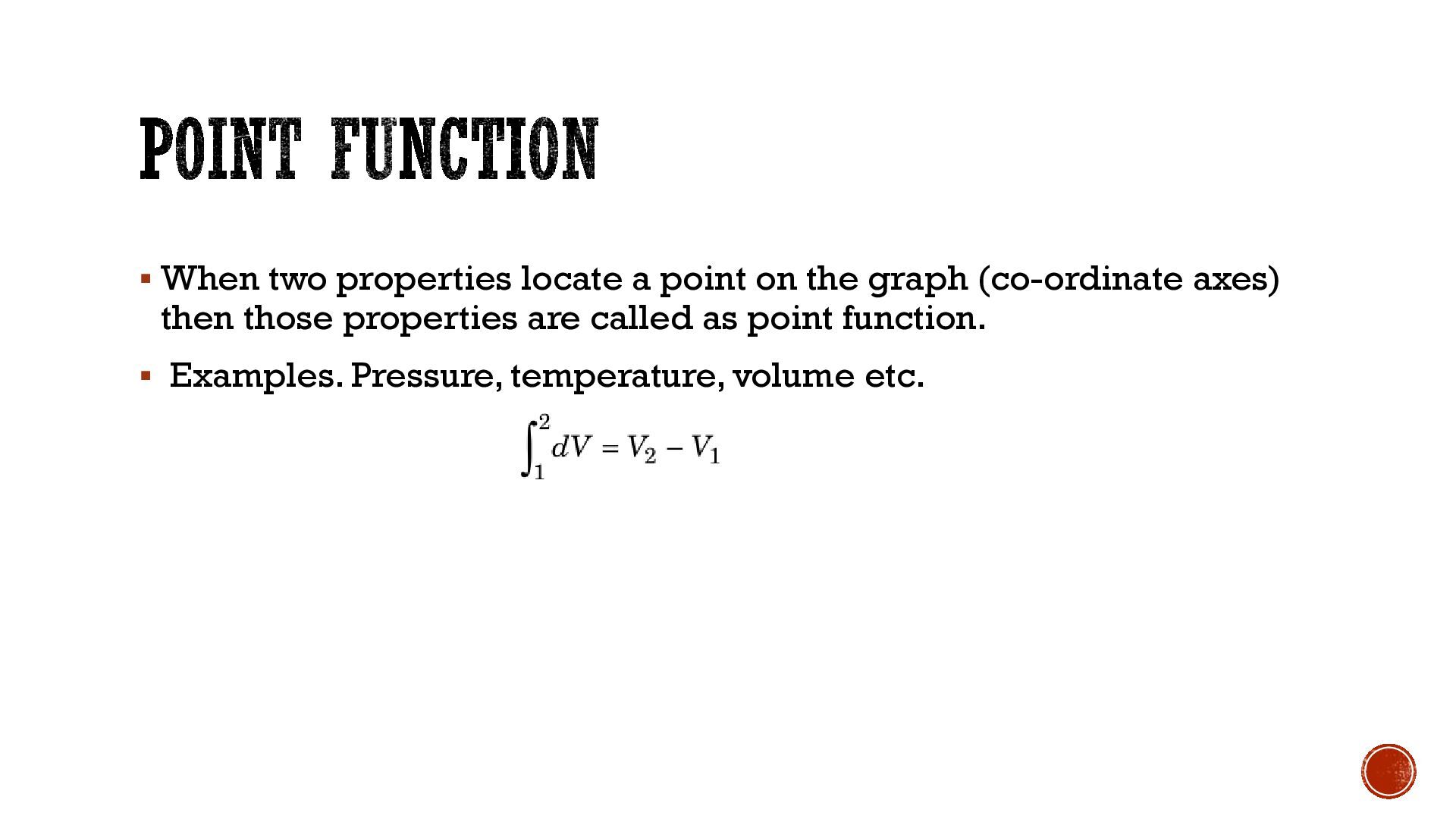
instant of time as described or measured by its properties. Or each unique condition of a system is called a state. A variable is a property, if and only if, it has a single value at each equilibrium state. A variable is a property, if and only if, the change in its value between any two prescribed equilibrium states is single-valued. Therefore, any variable whose change is fixed by the end states is a property.
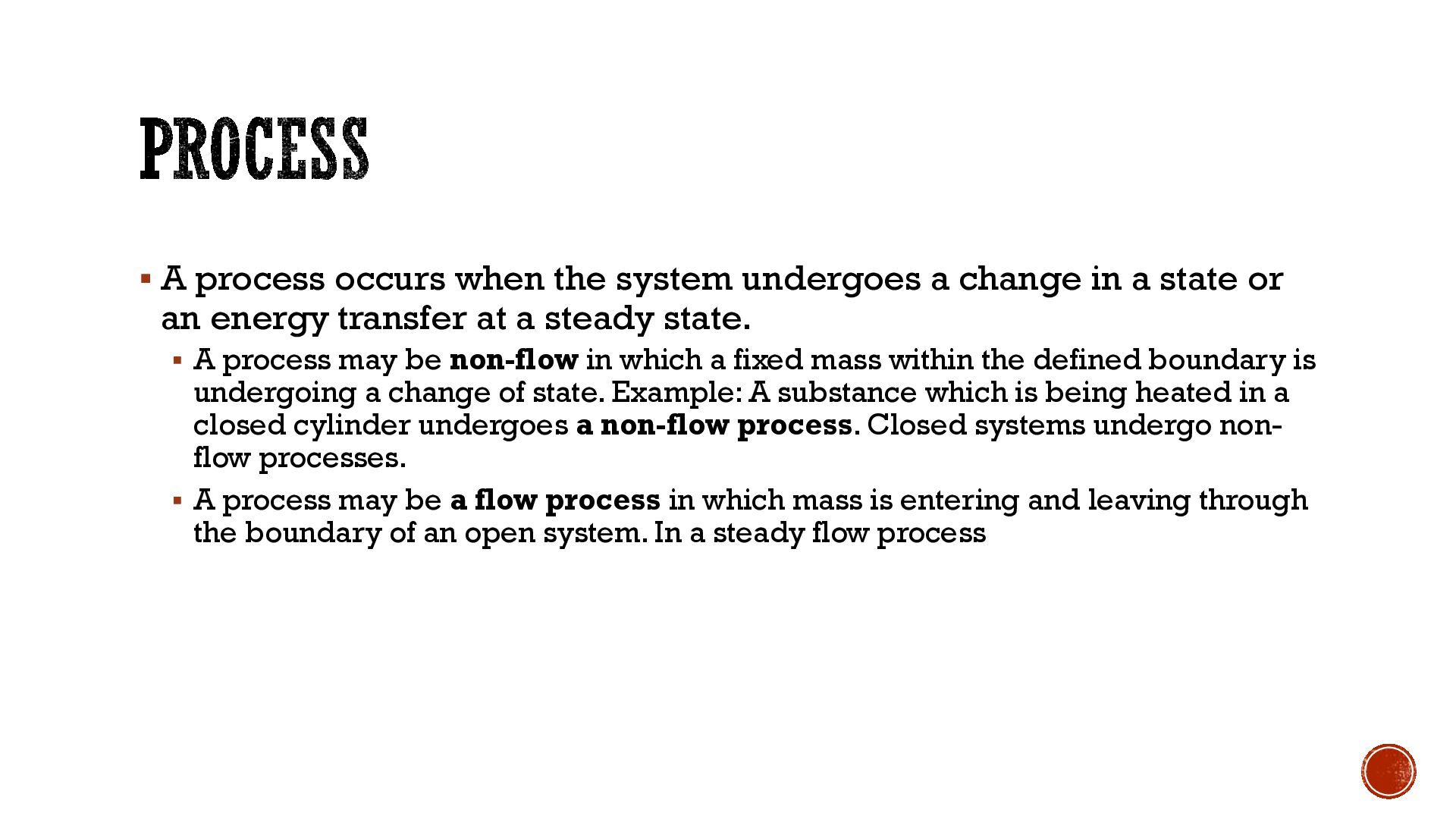
in a state or an energy transfer at a steady state. A process may be non-flow in which a fixed mass within the defined boundary is undergoing a change of state. Example: A substance which is being heated in a closed cylinder undergoes a non-flow process. Closed systems undergo nonflow processes. A process may be a flow process in which mass is entering and leaving through the boundary of an open system. In a steady flow process
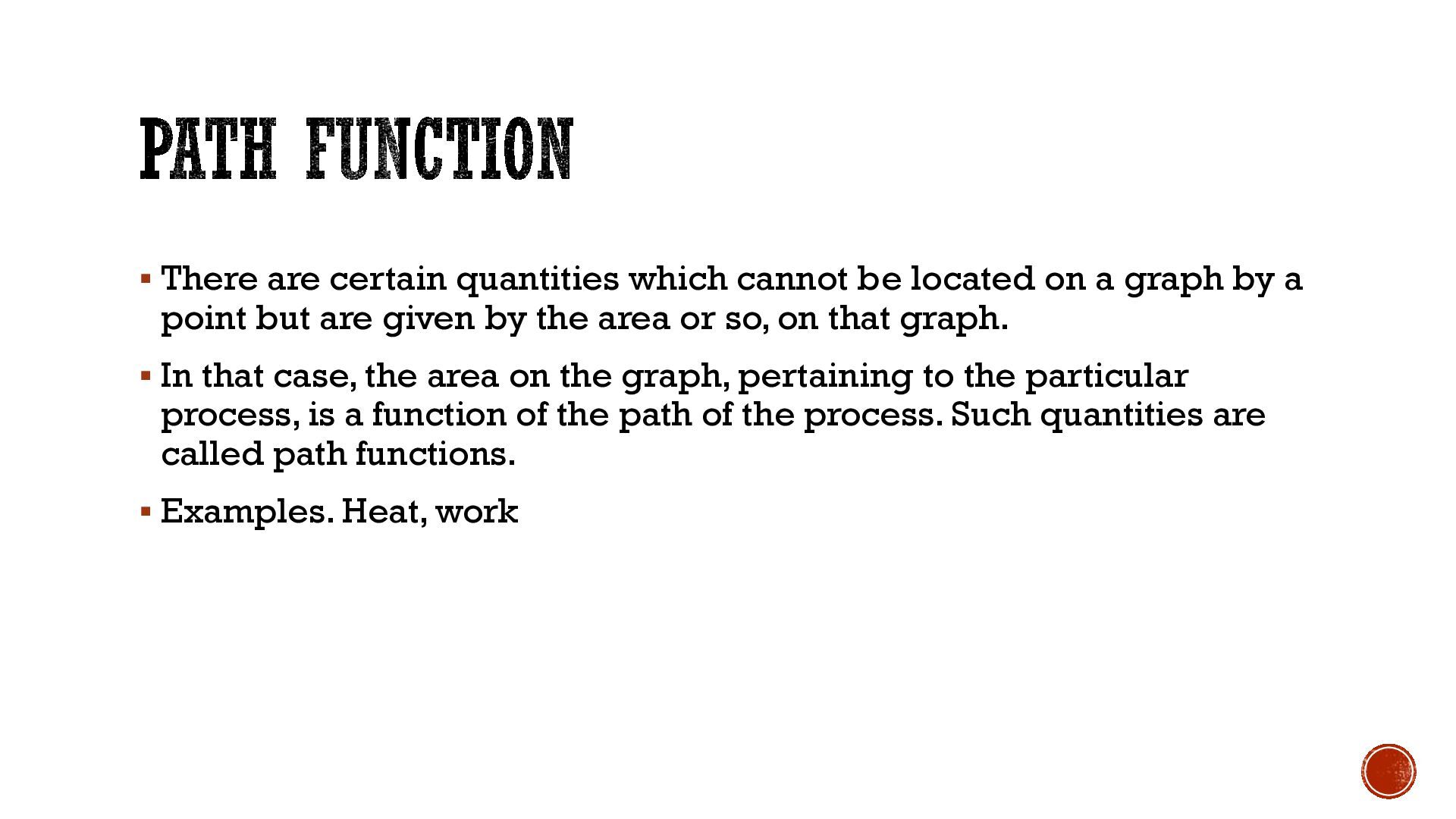
a graph by a point but are given by the area or so, on that graph. In that case, the area on the graph, pertaining to the particular process, is a function of the path of the process. Such quantities are called path functions. Examples. Heat, work
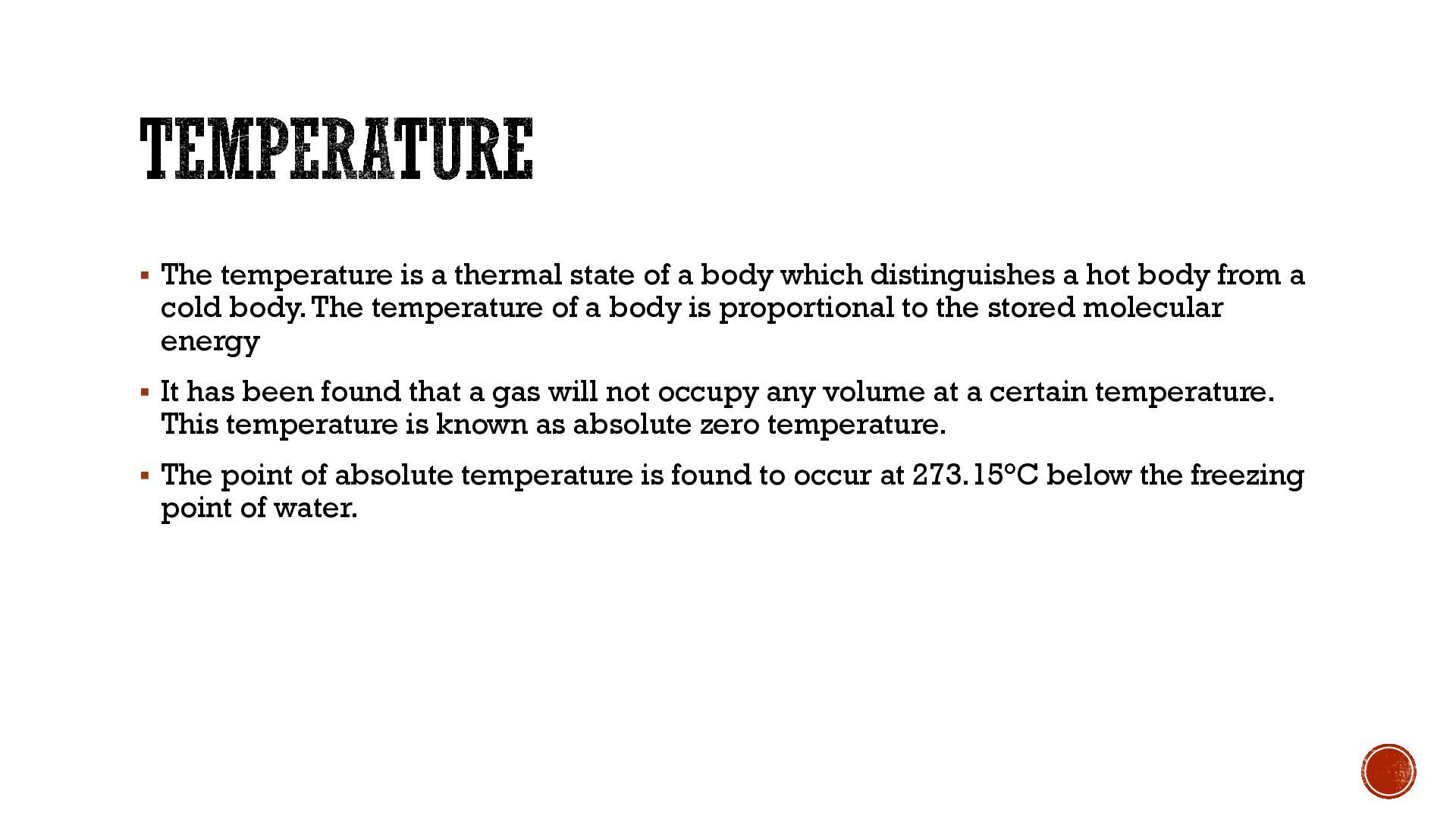
which distinguishes a hot body from a cold body. The temperature of a body is proportional to the stored molecular energy It has been found that a gas will not occupy any volume at a certain temperature. This temperature is known as absolute zero temperature. The point of absolute temperature is found to occur at 273.15°C below the freezing point of water.
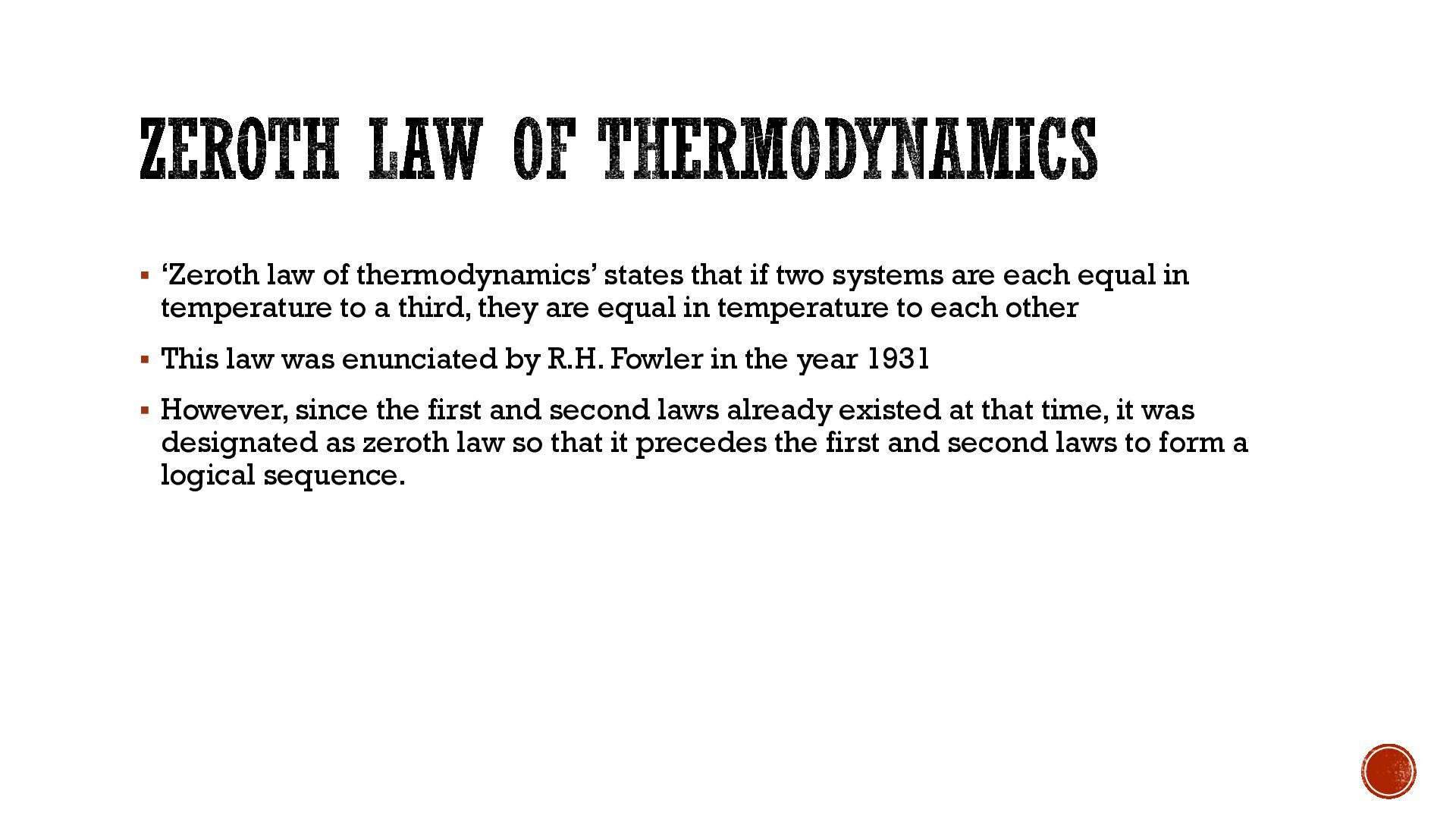
are each equal in temperature to a third, they are equal in temperature to each other This law was enunciated by R.H. Fowler in the year 1931 However, since the first and second laws already existed at that time, it was designated as zeroth law so that it precedes the first and second laws to form a logical sequence.
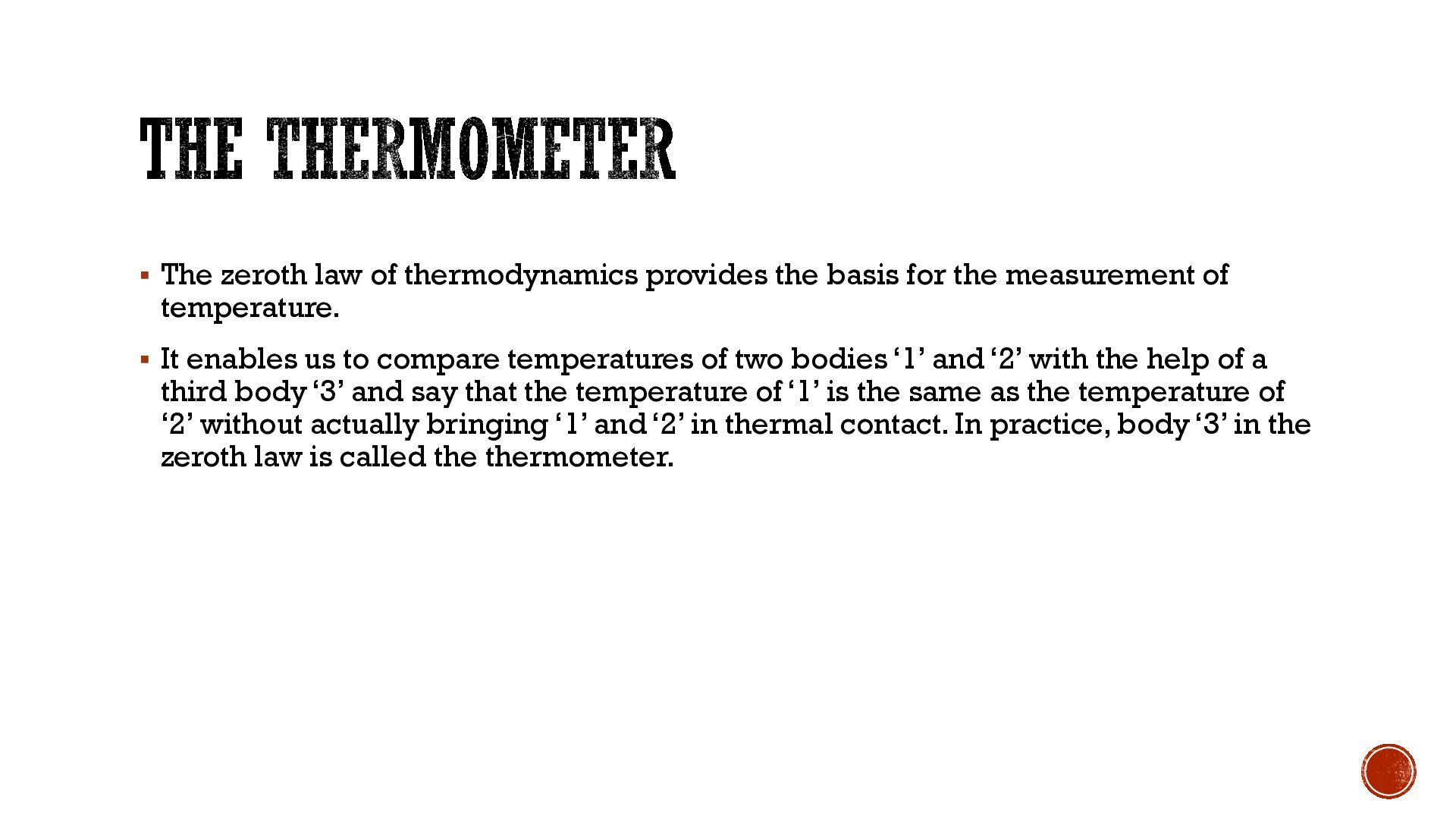
the measurement of temperature. It enables us to compare temperatures of two bodies ‘1’ and ‘2’ with the help of a third body ‘3’ and say that the temperature of ‘1’ is the same as the temperature of ‘2’ without actually bringing ‘1’ and ‘2’ in thermal contact. In practice, body ‘3’ in the zeroth law is called the thermometer.
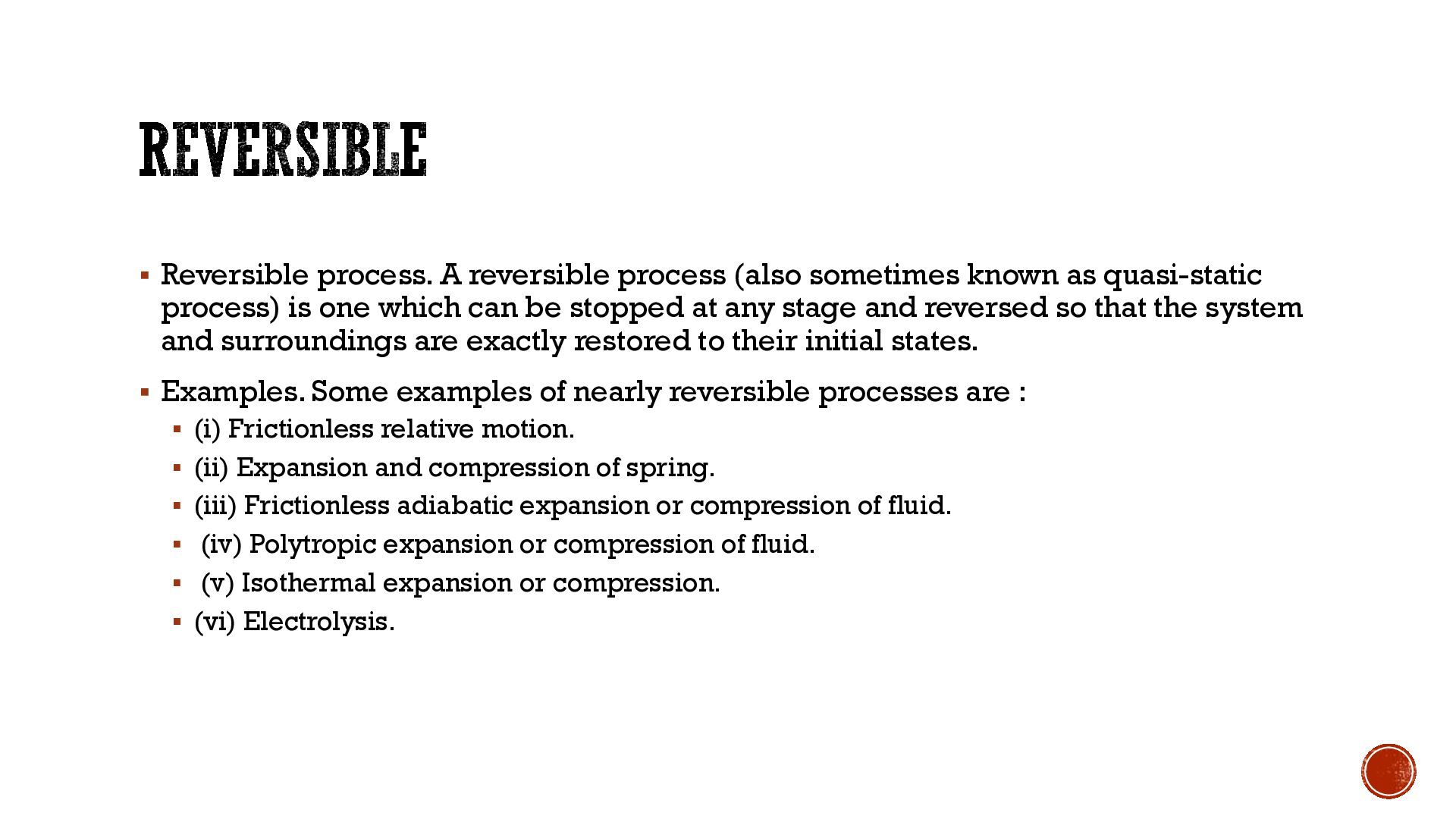
quasi-static process) is one which can be stopped at any stage and reversed so that the system and surroundings are exactly restored to their initial states. Examples. Some examples of nearly reversible processes are : (i) Frictionless relative motion. (ii) Expansion and compression of spring. (iii) Frictionless adiabatic expansion or compression of fluid. (iv) Polytropic expansion or compression of fluid. (v) Isothermal expansion or compression. (vi) Electrolysis.
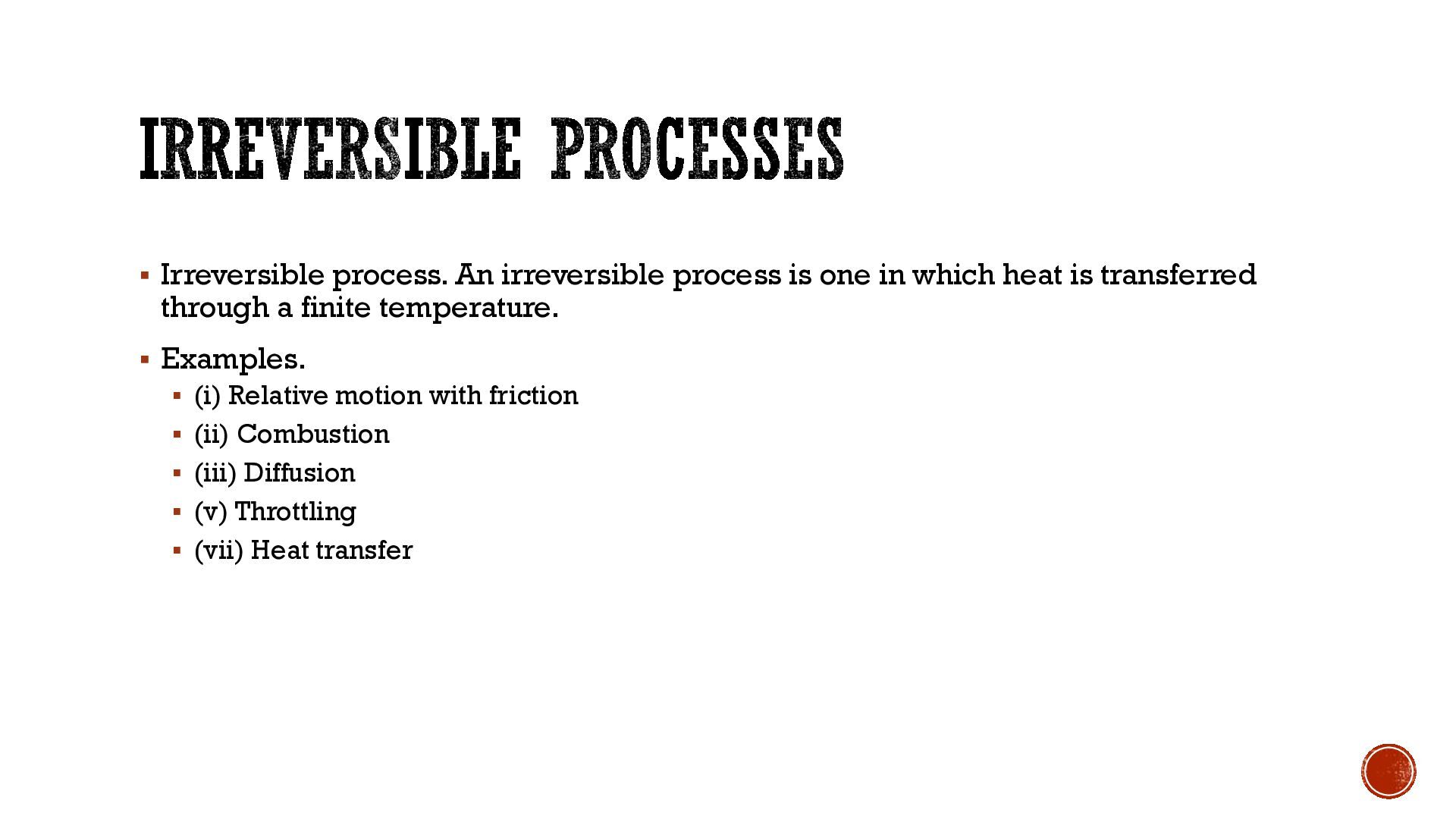
heat is transferred through a finite temperature. Examples. (i) Relative motion with friction (ii) Combustion (iii) Diffusion (v) Throttling (vii) Heat transfer
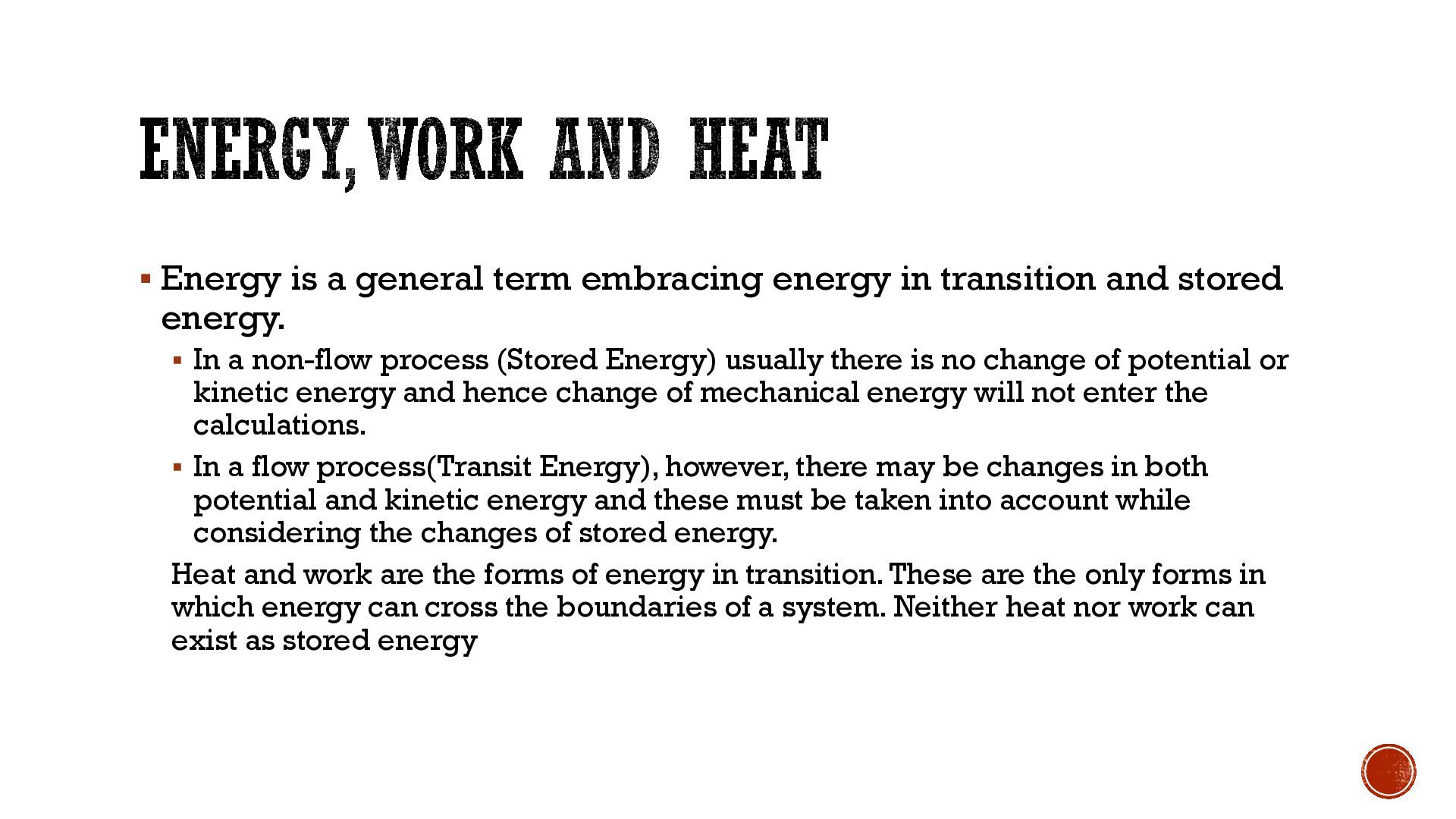
and stored energy. In a non-flow process (Stored Energy) usually there is no change of potential or kinetic energy and hence change of mechanical energy will not enter the calculations. In a flow process(Transit Energy), however, there may be changes in both potential and kinetic energy and these must be taken into account while considering the changes of stored energy. Heat and work are the forms of energy in transition. These are the only forms in which energy can cross the boundaries of a system. Neither heat nor work can exist as stored energy
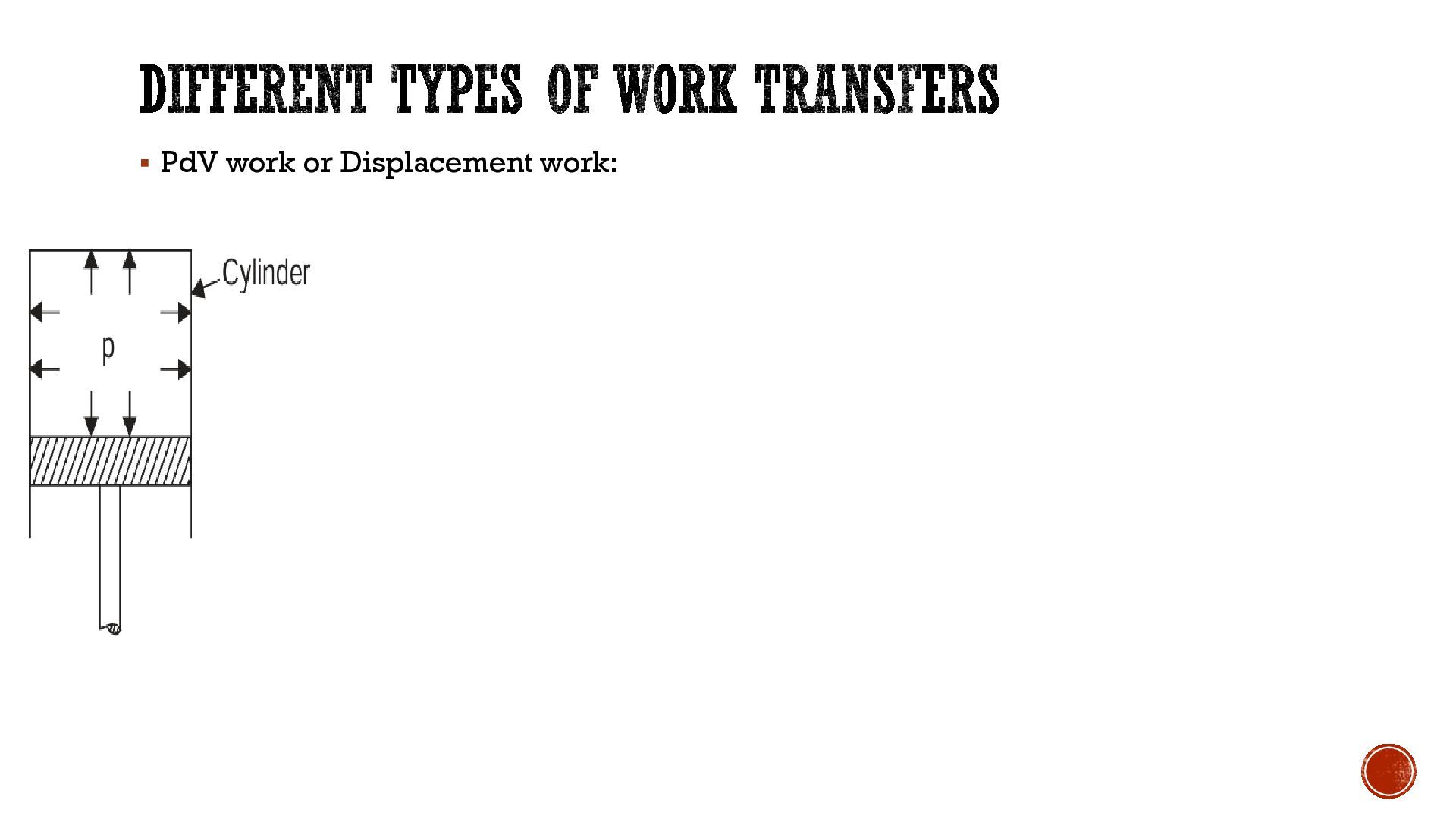
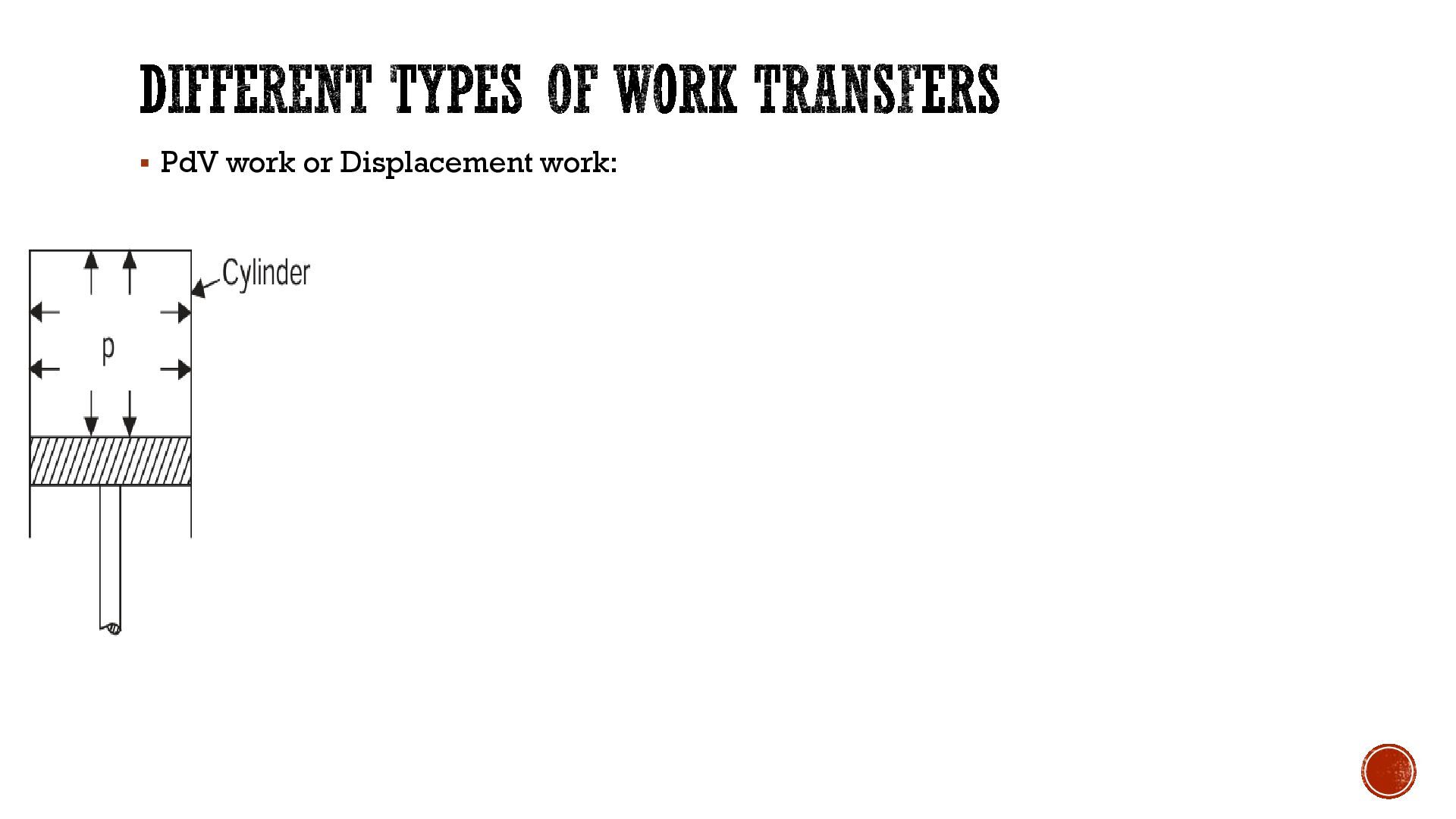
moves through a distance Work is a transient quantity which only appears at the boundary while a change of state is taking place within a system. Work is ‘something’ which appears at the boundary when a system changes its state due to the movement of a part of the boundary under the action of a force. Sign convention : If the work is done by the system on the surroundings, e.g., when a fluid expands pushing a piston outwards, the work is said to be positive. Work output of the system = + W If the work is done on the system by the surroundings, e.g., when a force is applied to a rotating handle, or to a piston to compress a fluid, the work is said to be negative. Work input to system = – W
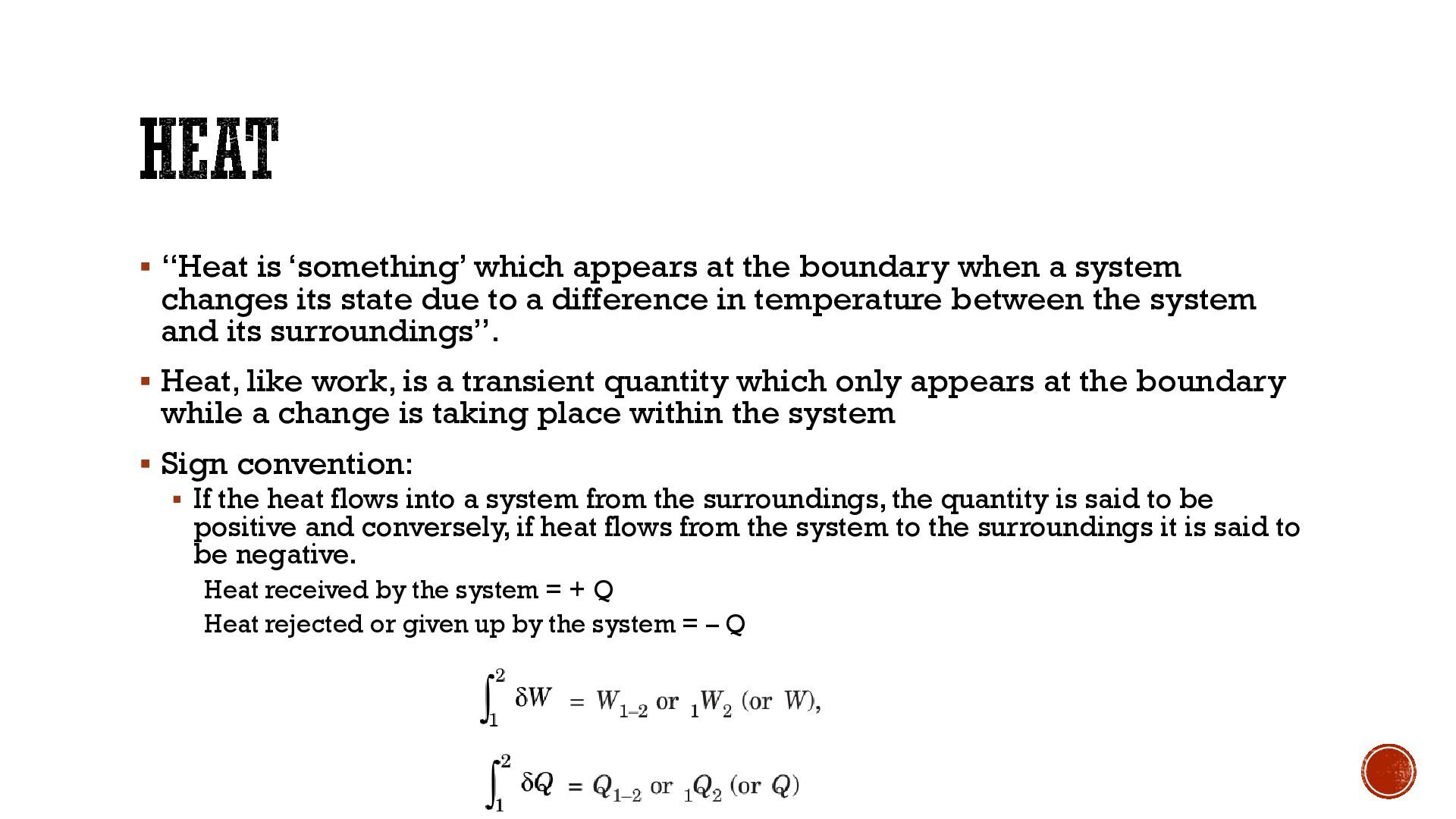
a system changes its state due to a difference in temperature between the system and its surroundings”. Heat, like work, is a transient quantity which only appears at the boundary while a change is taking place within the system Sign convention: If the heat flows into a system from the surroundings, the quantity is said to be positive and conversely, if heat flows from the system to the surroundings it is said to be negative. Heat received by the system = + Q Heat rejected or given up by the system = – Q


 uranoken
 signer
 cbtlibrary
 ytapples613
 pawan_pharm
 robintux
 hiola
 kaityo256
 akiraasano
 bunnchinn3
 jct
 aleyda
 marketingsoph
 jnunemaker
 keathley
 frankvandijk
 nonsquared
 kristinabergwall1
 mlcsv
 rakko
 kevinliebholz
 swwweet