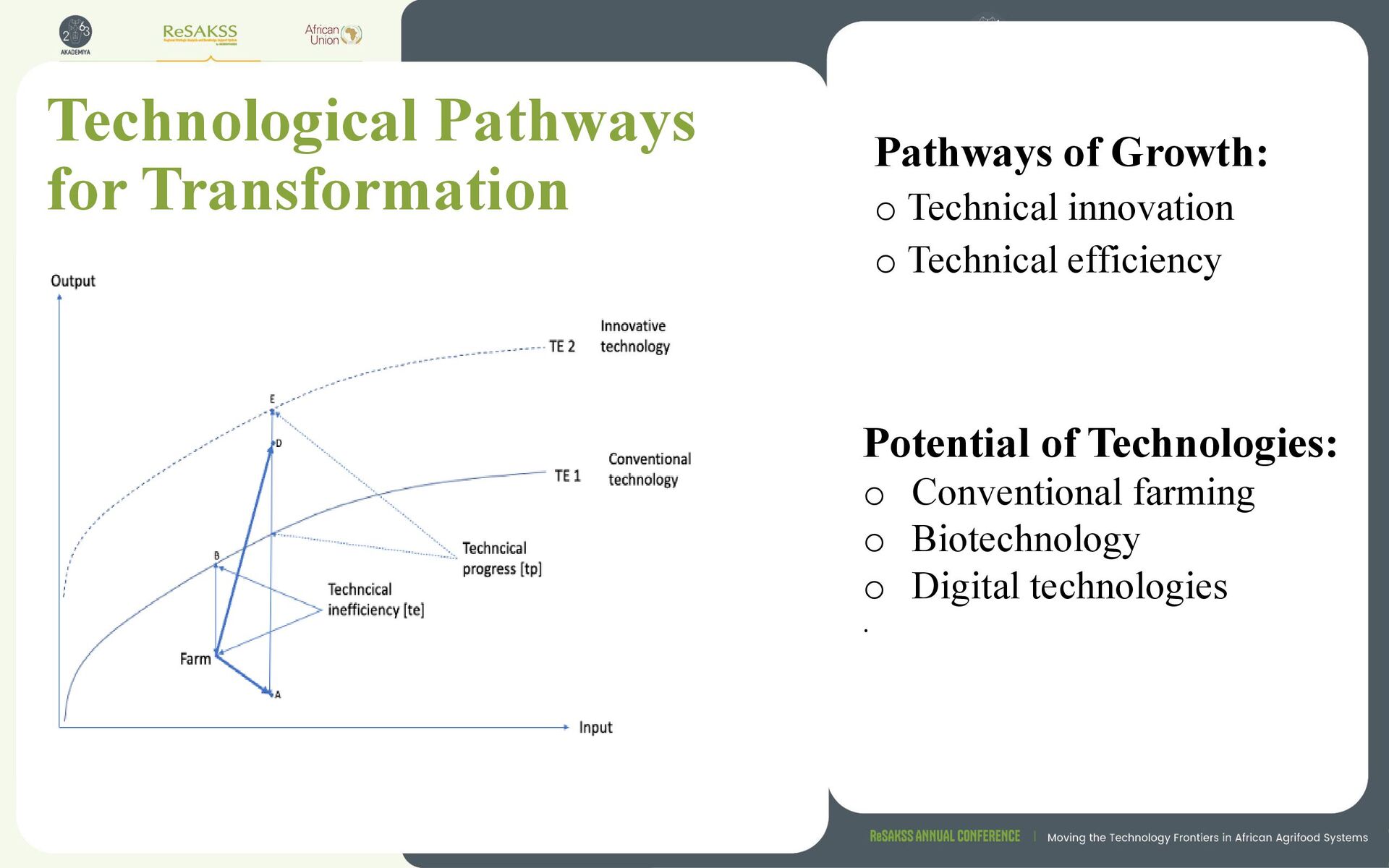
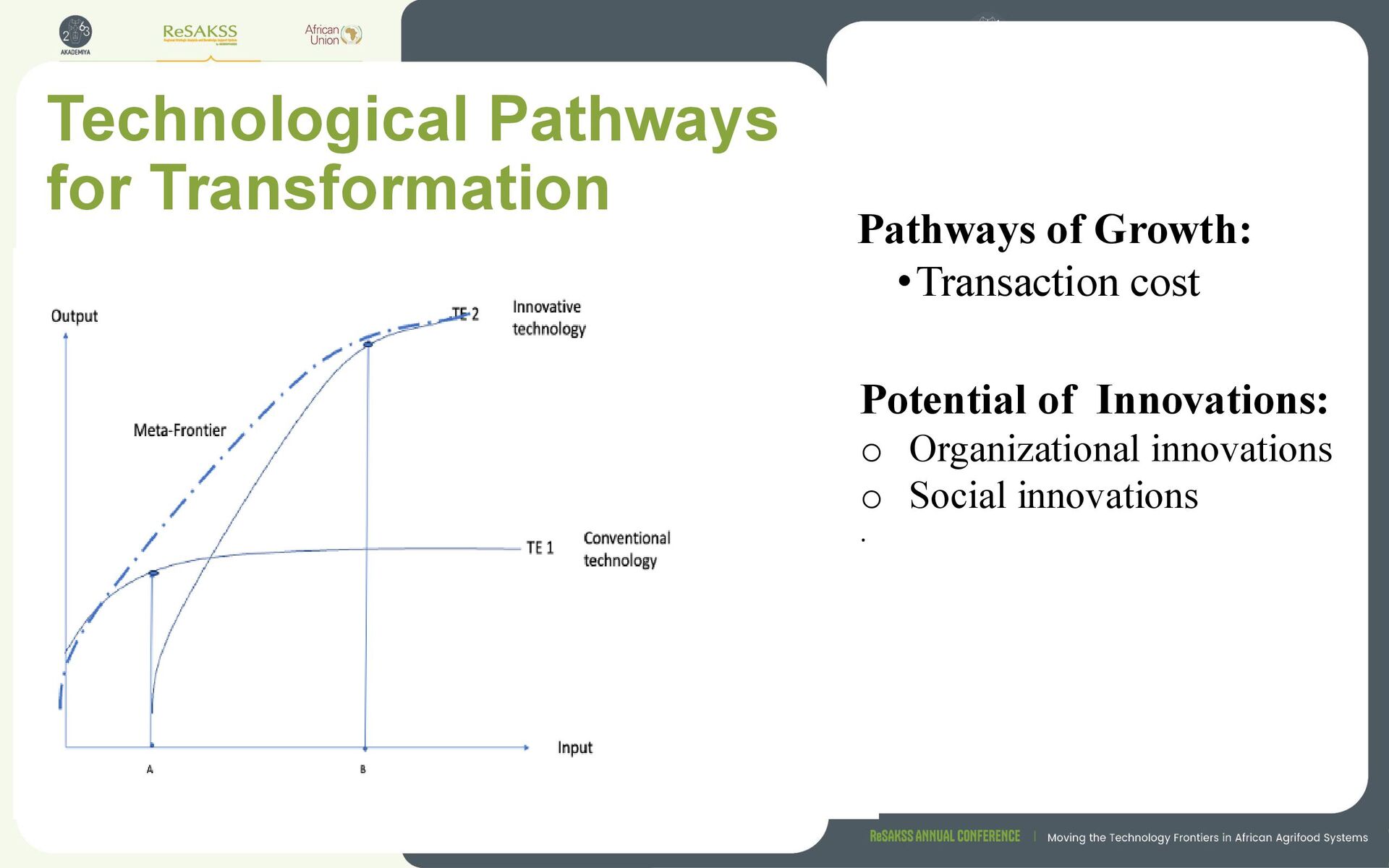
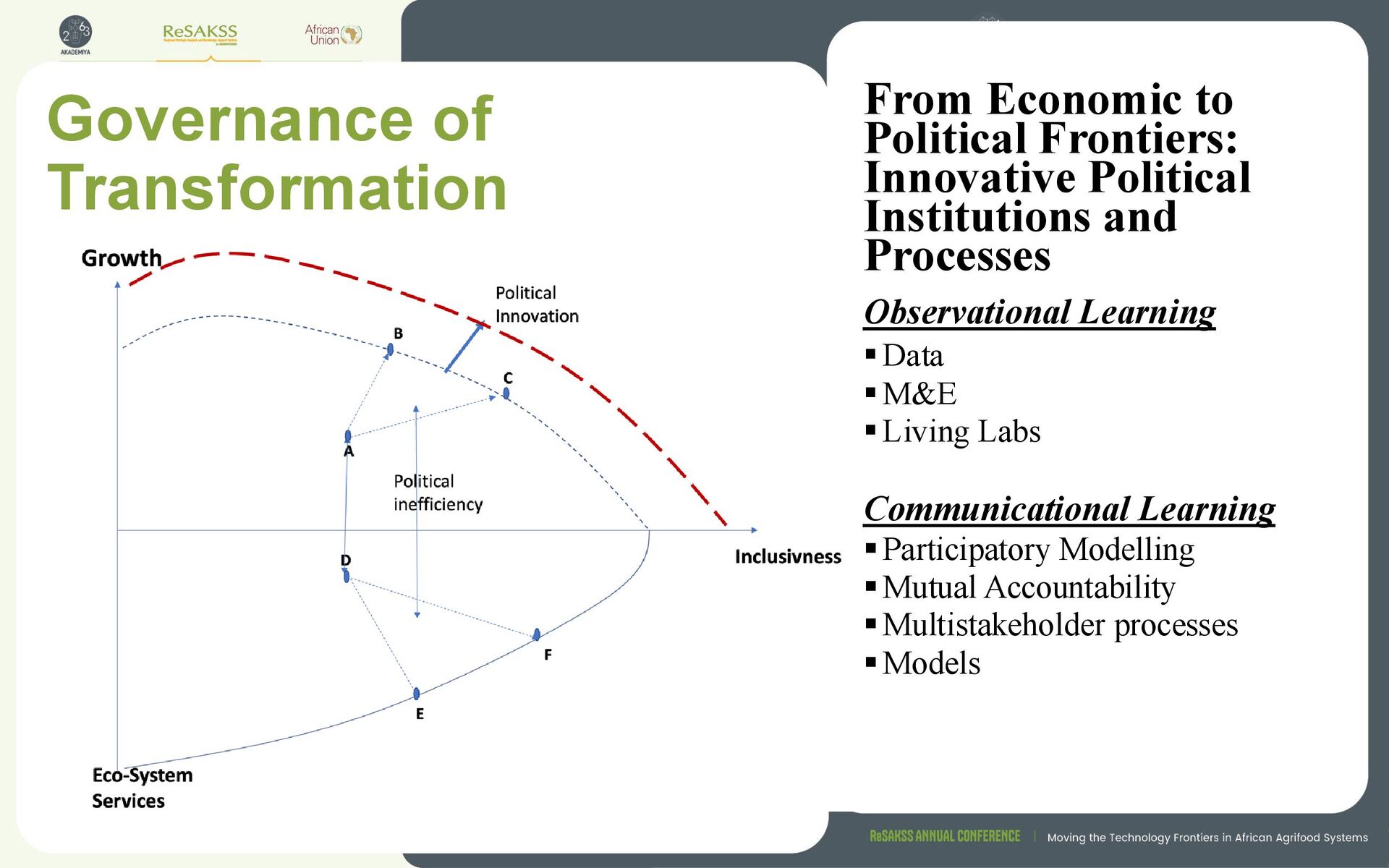
in disarray: • markets no more optimal coordination mechanism, markets fail providing eco-system services, healthy nutrition or social justice • Reordering of global trade, economic and political system: Trumpism, Ukraine war, Gaza Invasion Agri-food system transformation • Africa stands at a decisive juncture in the transformation of its agrifood systems contributiing to a sustainable and inclusive development . • It requires a bundle of technical, institutional, and socio-political innovations, embedded in coherent strategies under CAADP 2026– 2035 and the Kampala Declaration. The 2025 Annual Trends and Outlook Report (ATOR2025), “Moving the Technology Frontiers in African Agri-Food Systems” aims to contribute to this agenda. • It explores pathways for advancing Africa’s agrifood technology frontier in ways that promote sustainable, resilient, and inclusive development. ATOR2025 report is guided by several cross-cutting questions: ➢ Understanding Africa’s Productivity Lag ➢ Technological Pathways for Transformation ➢ Institutions, Governance, and Policy Strategy ➢ Data, Measurement and Models
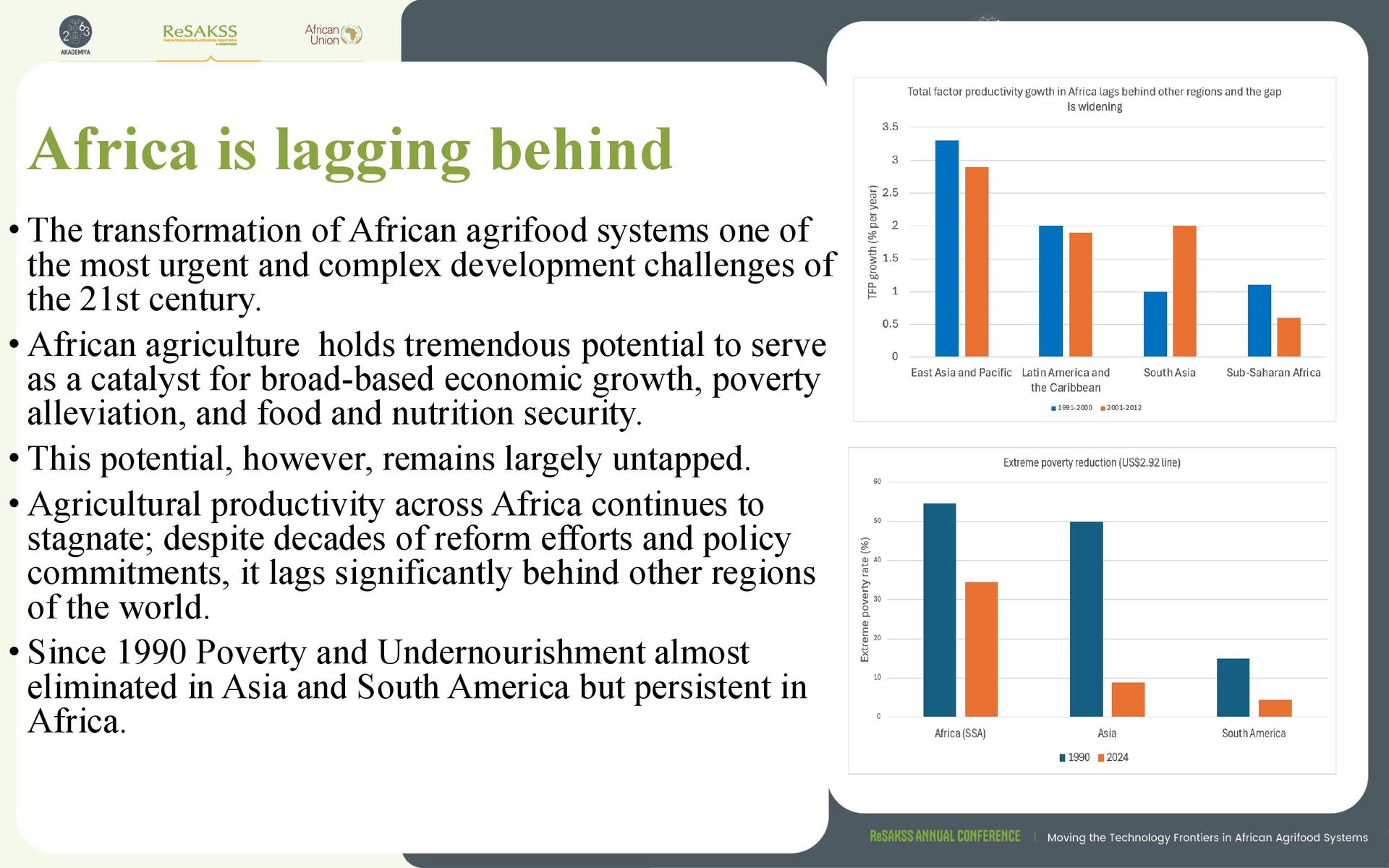
systems one of the most urgent and complex development challenges of the 21st century. • African agriculture holds tremendous potential to serve as a catalyst for broad-based economic growth, poverty alleviation, and food and nutrition security. • This potential, however, remains largely untapped. • Agricultural productivity across Africa continues to stagnate; despite decades of reform efforts and policy commitments, it lags significantly behind other regions of the world. • Since 1990 Poverty and Undernourishment almost eliminated in Asia and South America but persistent in Africa.
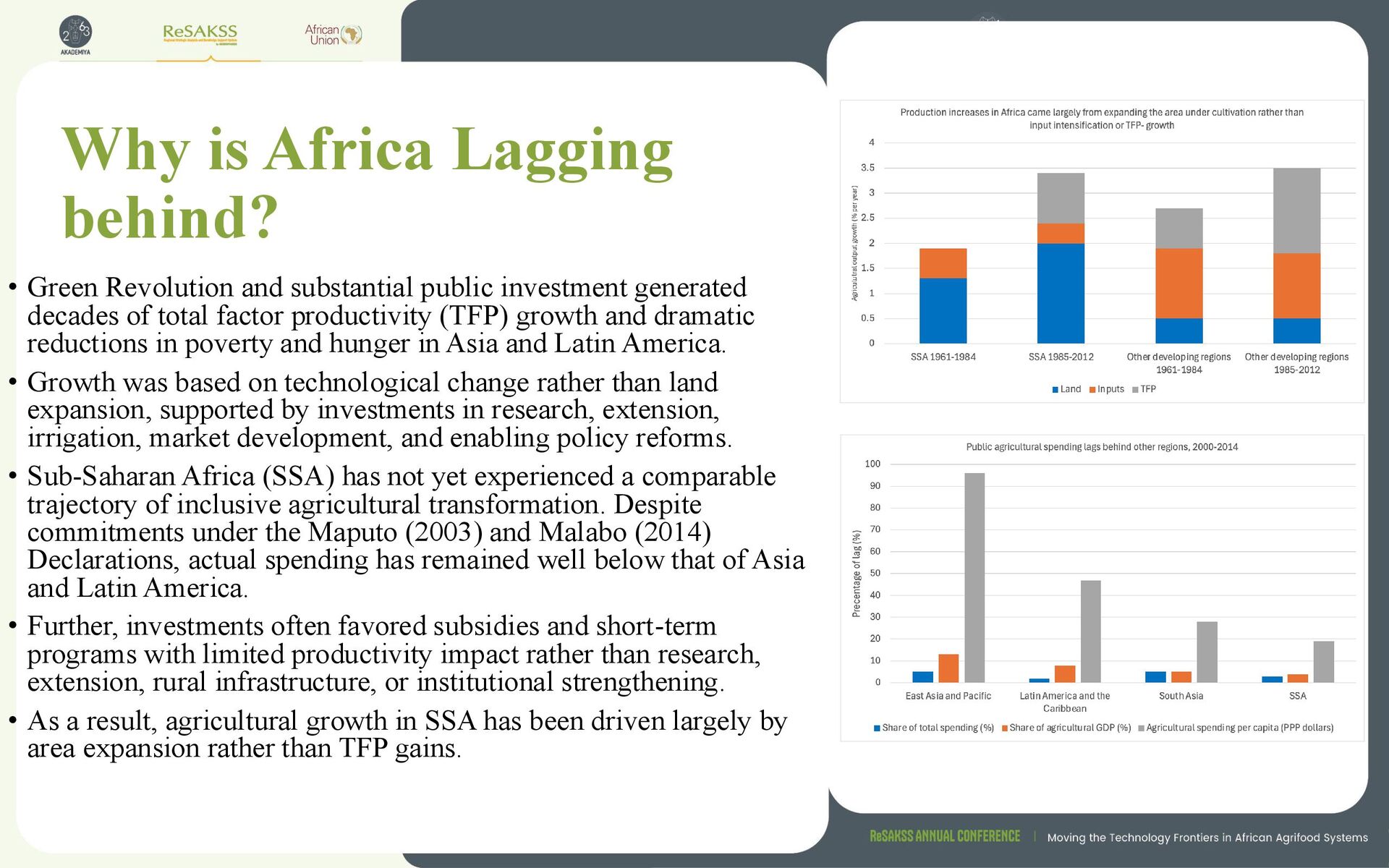
public investment generated decades of total factor productivity (TFP) growth and dramatic reductions in poverty and hunger in Asia and Latin America. • Growth was based on technological change rather than land expansion, supported by investments in research, extension, irrigation, market development, and enabling policy reforms. • Sub-Saharan Africa (SSA) has not yet experienced a comparable trajectory of inclusive agricultural transformation. Despite commitments under the Maputo (2003) and Malabo (2014) Declarations, actual spending has remained well below that of Asia and Latin America. • Further, investments often favored subsidies and short-term programs with limited productivity impact rather than research, extension, rural infrastructure, or institutional strengthening. • As a result, agricultural growth in SSA has been driven largely by area expansion rather than TFP gains.
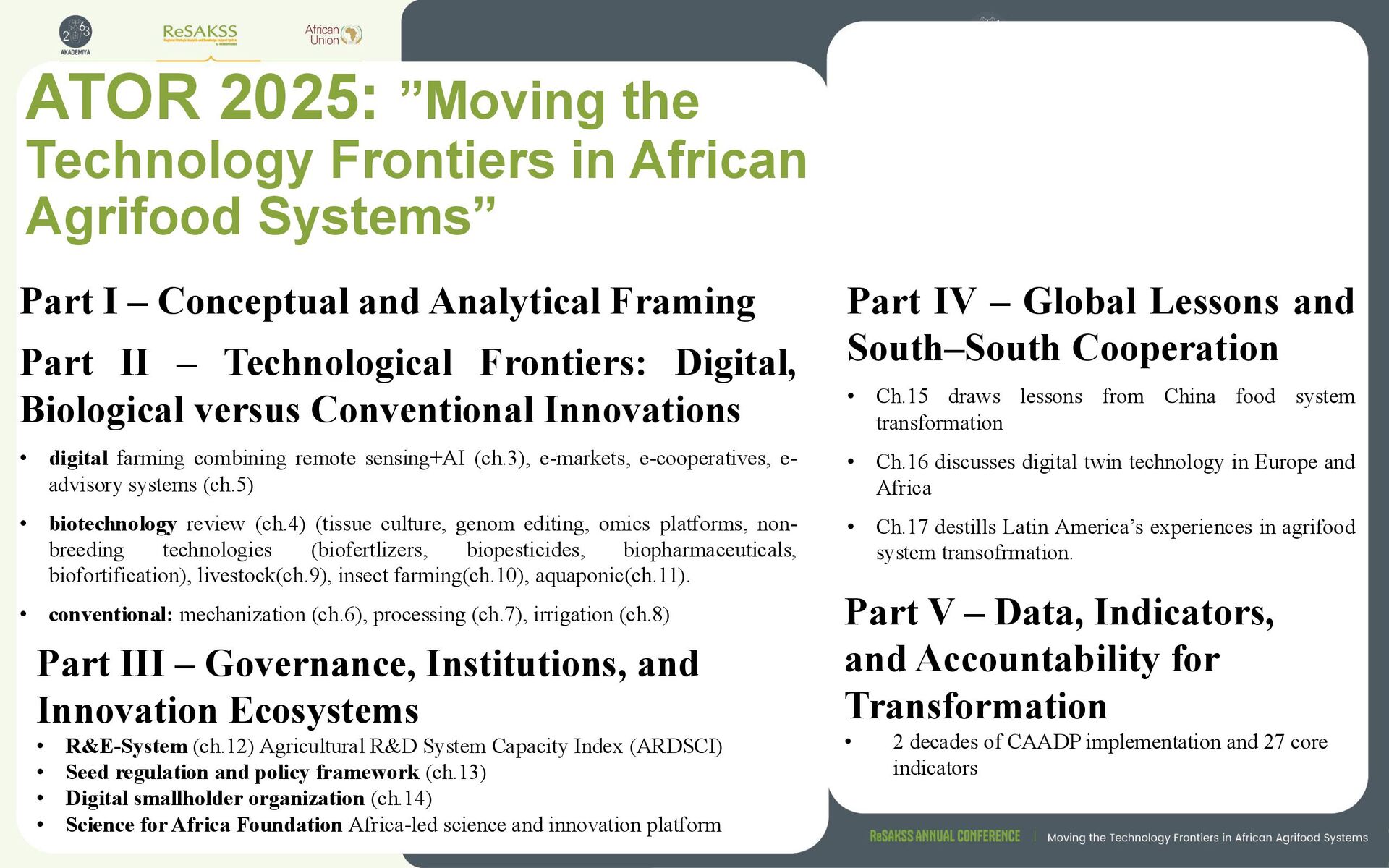
Part I – Conceptual and Analytical Framing Part II – Technological Frontiers: Digital, Biological versus Conventional Innovations • digital farming combining remote sensing+AI (ch.3), e-markets, e-cooperatives, e- advisory systems (ch.5) • biotechnology review (ch.4) (tissue culture, genom editing, omics platforms, non- breeding technologies (biofertlizers, biopesticides, biopharmaceuticals, biofortification), livestock(ch.9), insect farming(ch.10), aquaponic(ch.11). • conventional: mechanization (ch.6), processing (ch.7), irrigation (ch.8) Part III – Governance, Institutions, and Innovation Ecosystems • R&E-System (ch.12) Agricultural R&D System Capacity Index (ARDSCI) • Seed regulation and policy framework (ch.13) • Digital smallholder organization (ch.14) • Science for Africa Foundation Africa-led science and innovation platform Part IV – Global Lessons and South–South Cooperation • Ch.15 draws lessons from China food system transformation • Ch.16 discusses digital twin technology in Europe and Africa • Ch.17 destills Latin America’s experiences in agrifood system transofrmation. Part V – Data, Indicators, and Accountability for Transformation • 2 decades of CAADP implementation and 27 core indicators
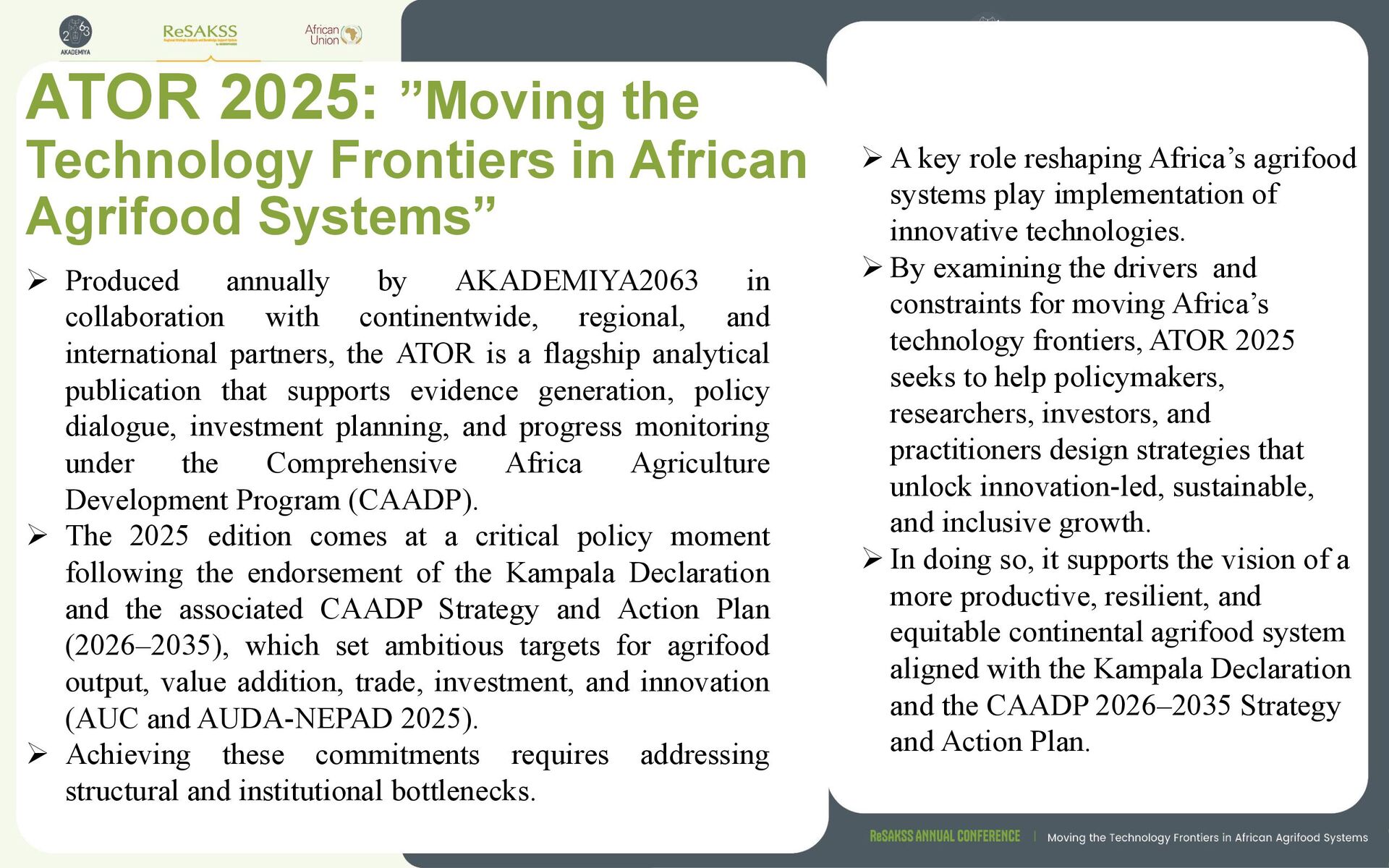
➢ Produced annually by AKADEMIYA2063 in collaboration with continentwide, regional, and international partners, the ATOR is a flagship analytical publication that supports evidence generation, policy dialogue, investment planning, and progress monitoring under the Comprehensive Africa Agriculture Development Program (CAADP). ➢ The 2025 edition comes at a critical policy moment following the endorsement of the Kampala Declaration and the associated CAADP Strategy and Action Plan (2026–2035), which set ambitious targets for agrifood output, value addition, trade, investment, and innovation (AUC and AUDA-NEPAD 2025). ➢ Achieving these commitments requires addressing structural and institutional bottlenecks. ➢ A key role reshaping Africa’s agrifood systems play implementation of innovative technologies. ➢ By examining the drivers and constraints for moving Africa’s technology frontiers, ATOR 2025 seeks to help policymakers, researchers, investors, and practitioners design strategies that unlock innovation-led, sustainable, and inclusive growth. ➢ In doing so, it supports the vision of a more productive, resilient, and equitable continental agrifood system aligned with the Kampala Declaration and the CAADP 2026–2035 Strategy and Action Plan.
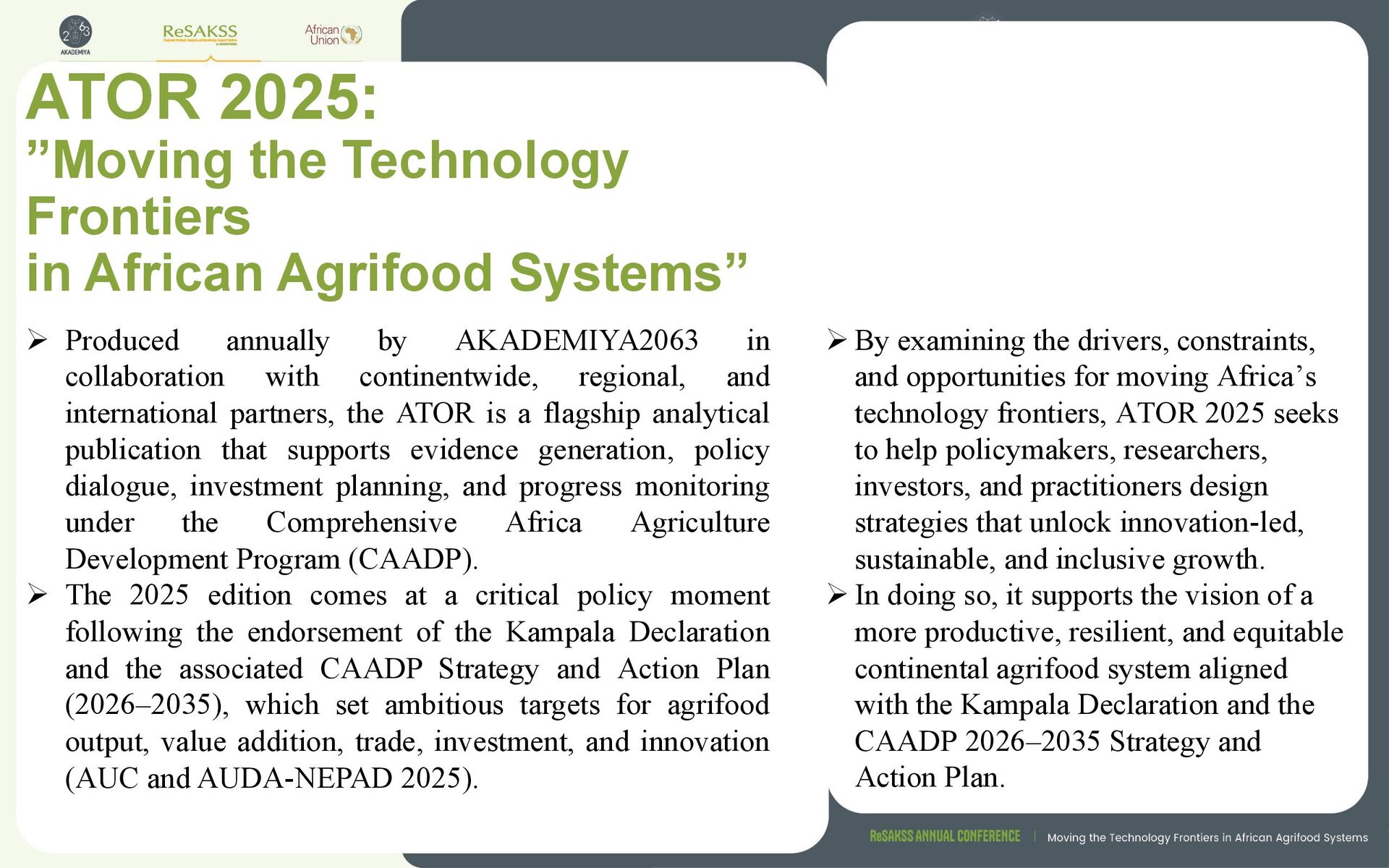
➢ Produced annually by AKADEMIYA2063 in collaboration with continentwide, regional, and international partners, the ATOR is a flagship analytical publication that supports evidence generation, policy dialogue, investment planning, and progress monitoring under the Comprehensive Africa Agriculture Development Program (CAADP). ➢ The 2025 edition comes at a critical policy moment following the endorsement of the Kampala Declaration and the associated CAADP Strategy and Action Plan (2026–2035), which set ambitious targets for agrifood output, value addition, trade, investment, and innovation (AUC and AUDA-NEPAD 2025). ➢ By examining the drivers, constraints, and opportunities for moving Africa’s technology frontiers, ATOR 2025 seeks to help policymakers, researchers, investors, and practitioners design strategies that unlock innovation-led, sustainable, and inclusive growth. ➢ In doing so, it supports the vision of a more productive, resilient, and equitable continental agrifood system aligned with the Kampala Declaration and the CAADP 2026–2035 Strategy and Action Plan.


 akademiya2063
 gpeyre
 sishi
sishi
 institutdelelevage
 yumulab
 casualconc
 ayaniwa
 kento1109
 enochan
 reokashiwa
 kzmssk
 smashingmag
 mongodb
 davidcarrasco
 uxyall
 eileencodes
 tmiket
 wjessup
 raygrieselhuber
 cassininazir
 nikkihalliwell
 jct
jct