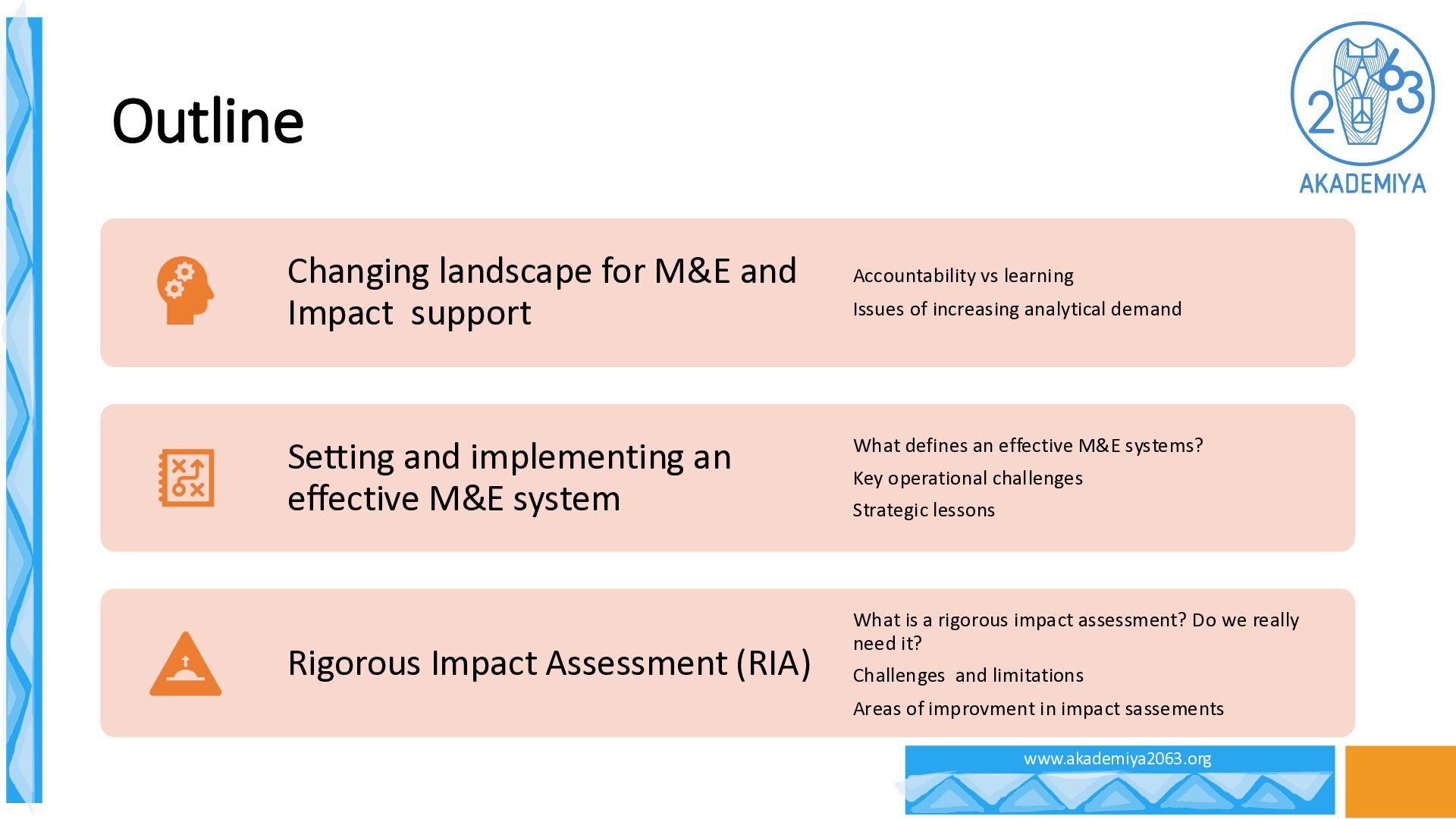
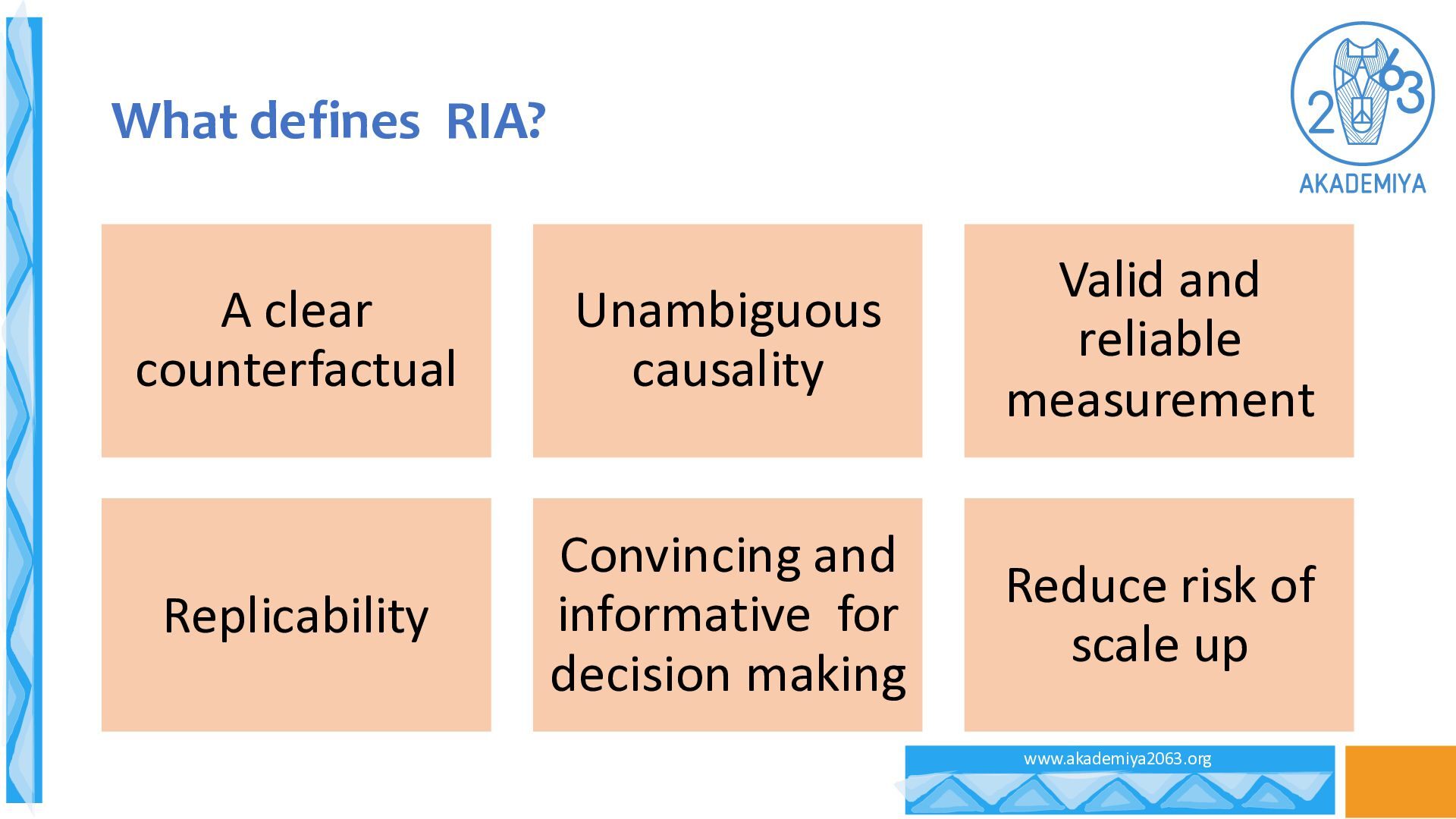
vs learning Issues of increasing analytical demand Setting and implementing an effective M&E system What defines an effective M&E systems? Key operational challenges Strategic lessons Rigorous Impact Assessment (RIA) What is a rigorous impact assessment? Do we really need it? Challenges and limitations Areas of improvment in impact sassements
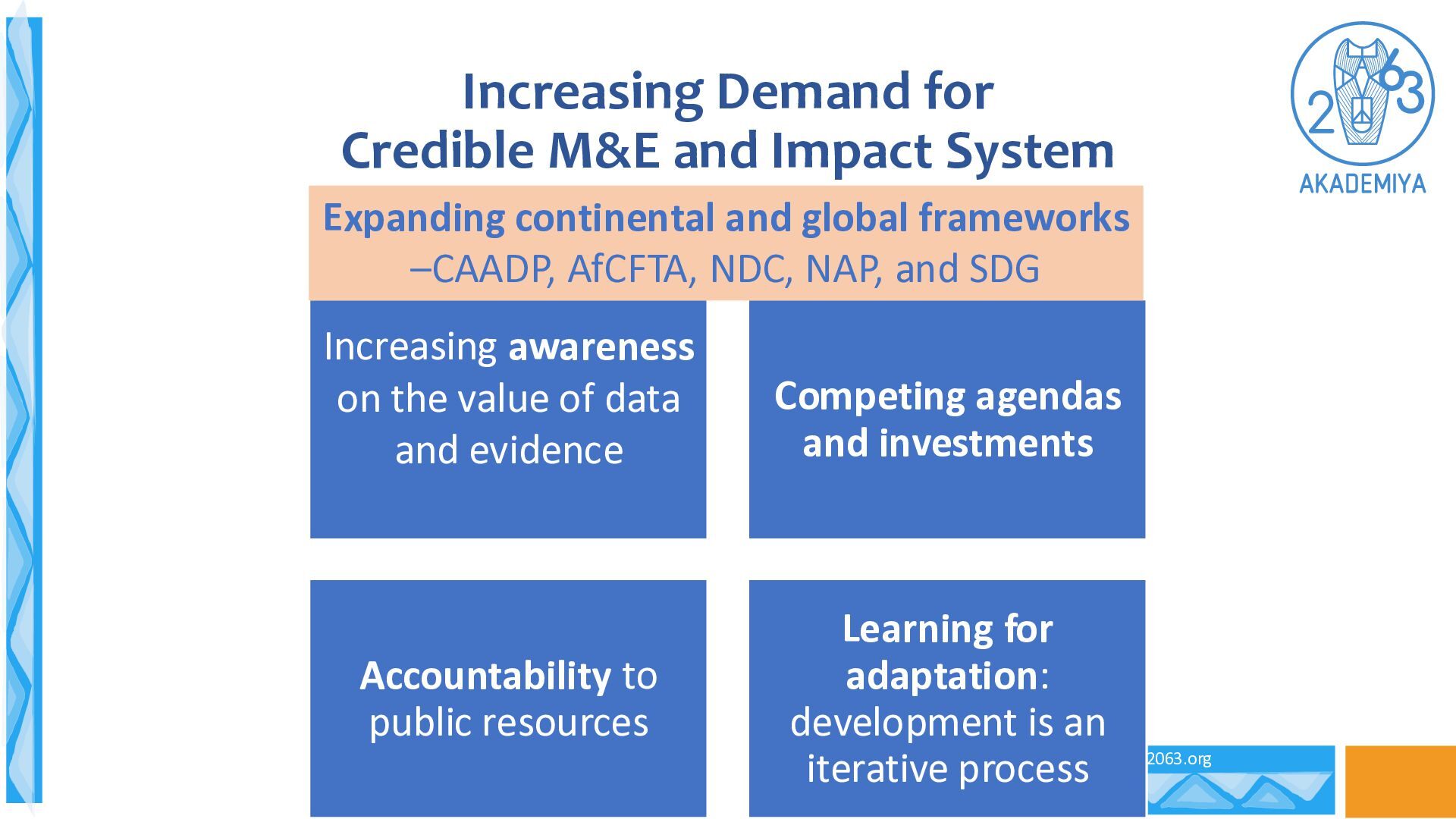
awareness on the value of data and evidence Competing agendas and investments Accountability to public resources Learning for adaptation: development is an iterative process Expanding continental and global frameworks –CAADP, AfCFTA, NDC, NAP, and SDG
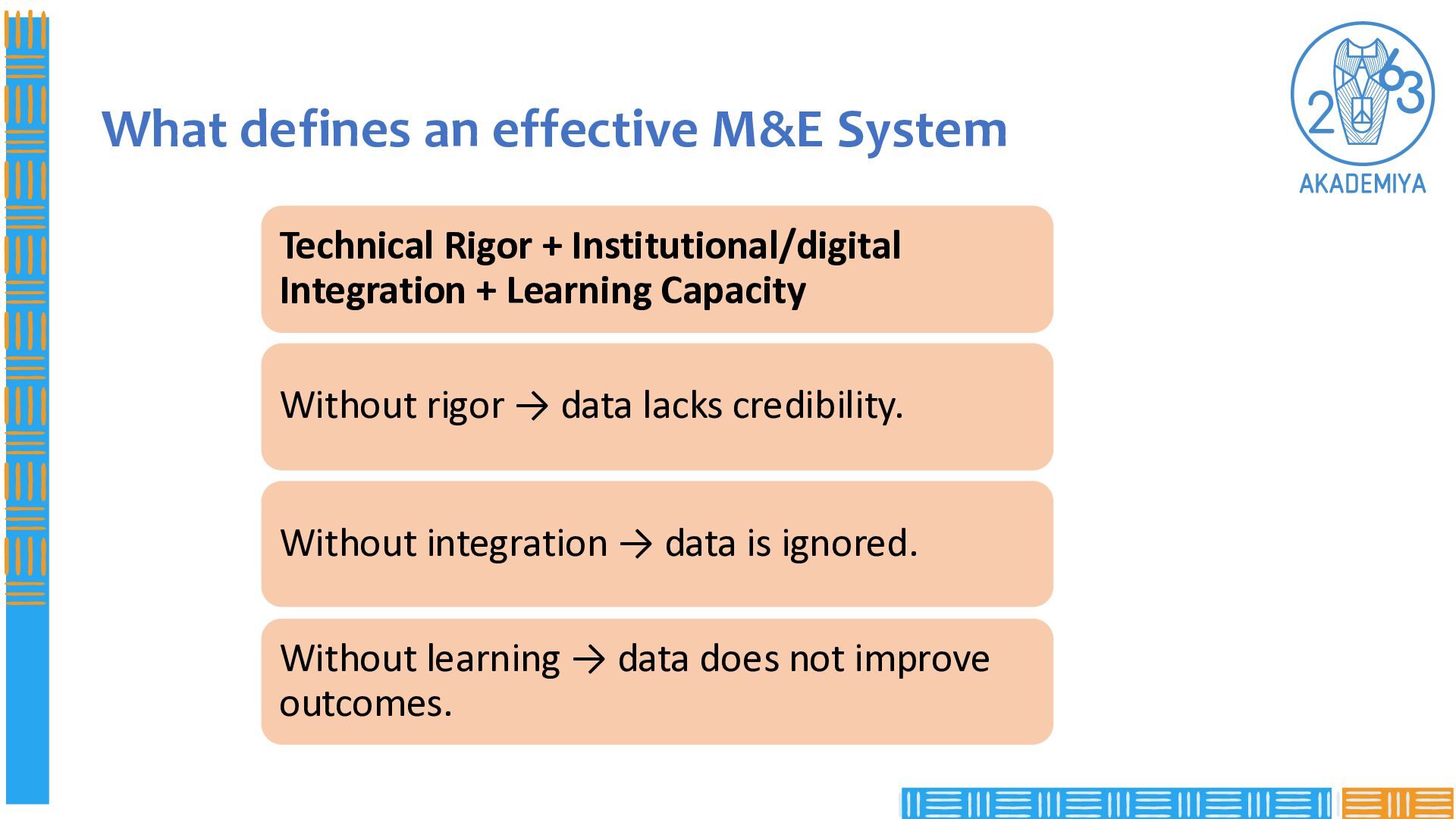
Integration + Learning Capacity Without rigor → data lacks credibility. Without integration → data is ignored. Without learning → data does not improve outcomes.
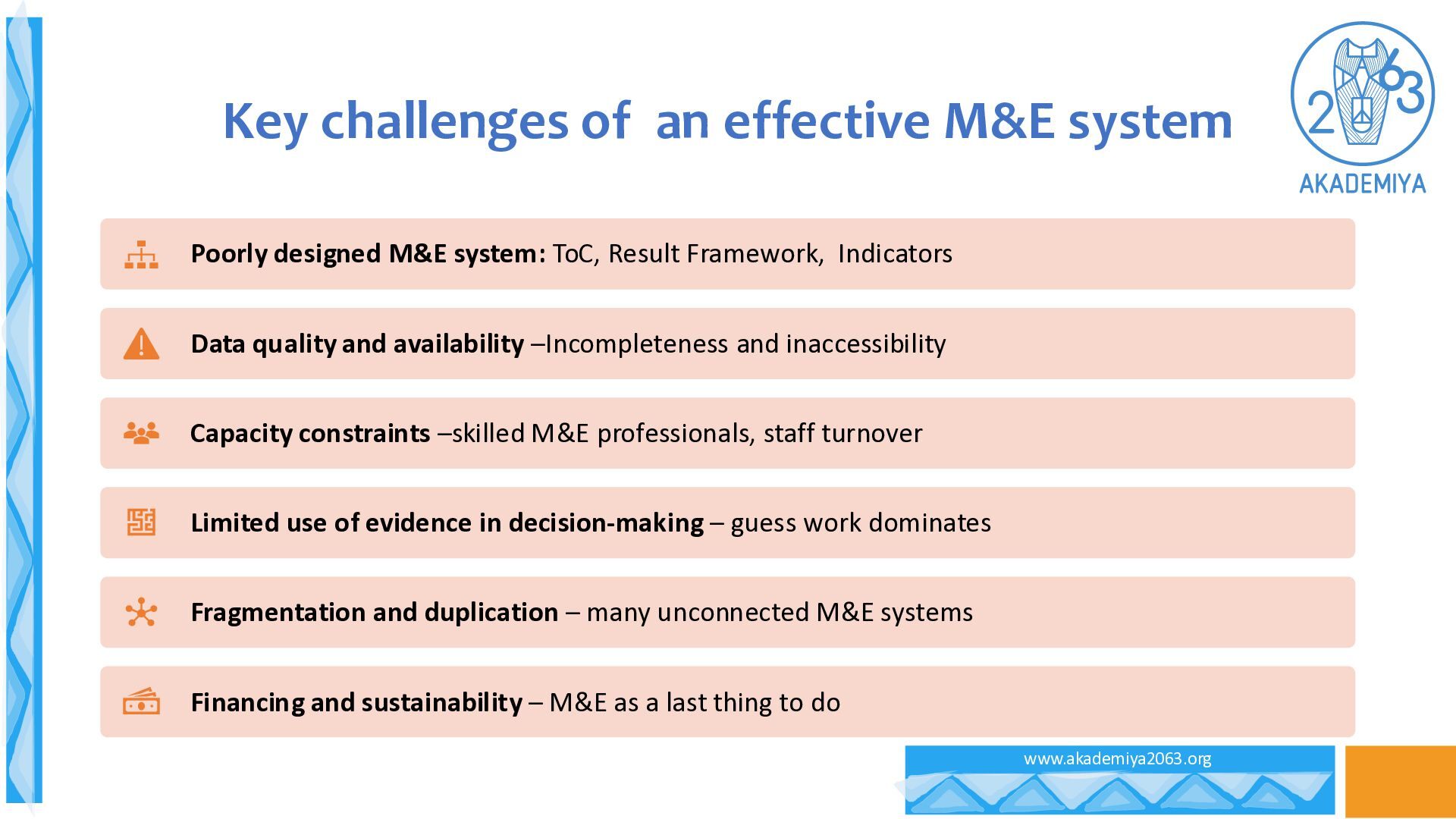
M&E system: ToC, Result Framework, Indicators Data quality and availability –Incompleteness and inaccessibility Capacity constraints –skilled M&E professionals, staff turnover Limited use of evidence in decision-making – guess work dominates Fragmentation and duplication – many unconnected M&E systems Financing and sustainability – M&E as a last thing to do
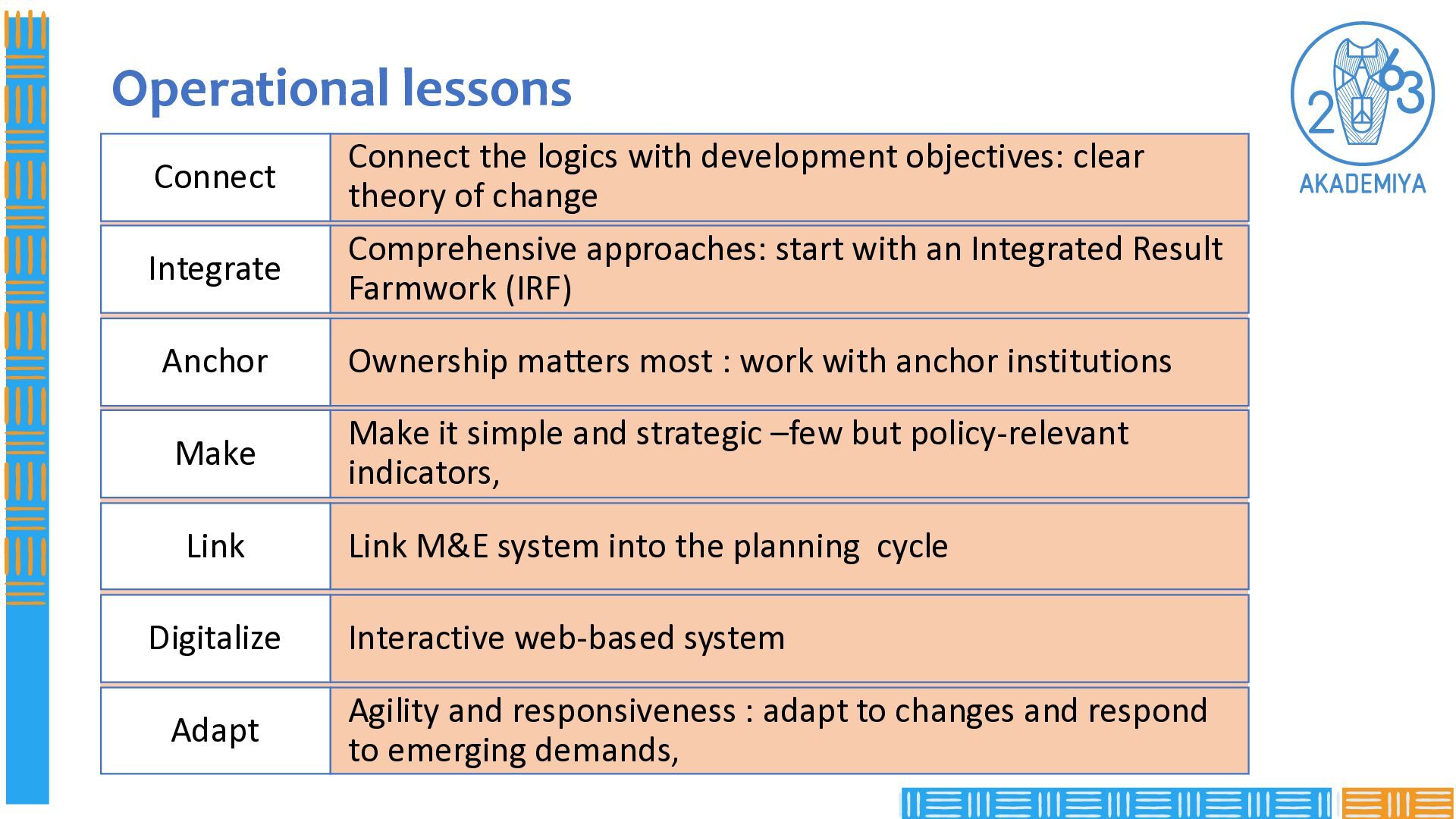
of change Connect Comprehensive approaches: start with an Integrated Result Farmwork (IRF) Integrate Ownership matters most : work with anchor institutions Anchor Make it simple and strategic –few but policy-relevant indicators, Make Link M&E system into the planning cycle Link Interactive web-based system Digitalize Agility and responsiveness : adapt to changes and respond to emerging demands, Adapt
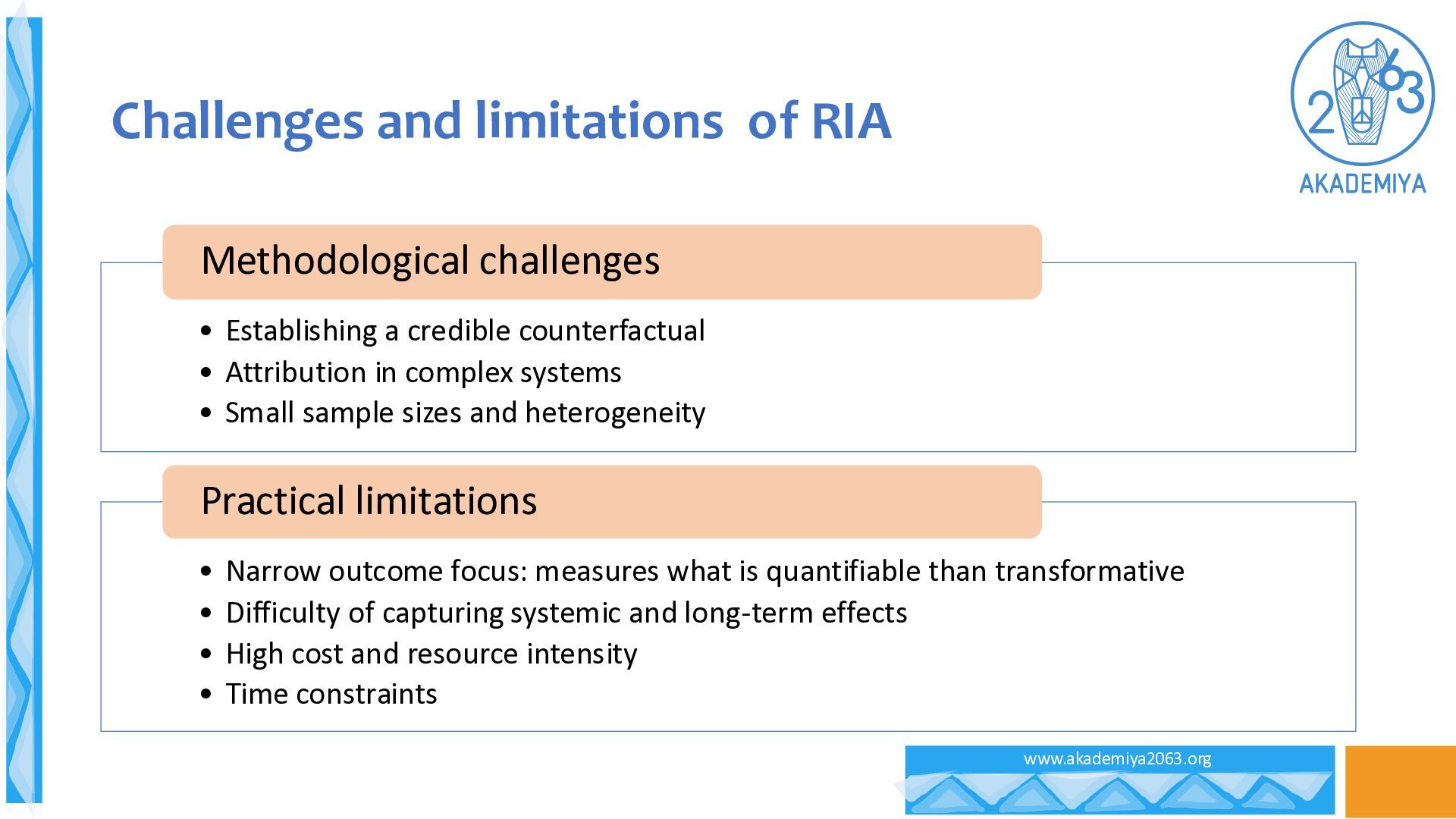
counterfactual • Attribution in complex systems • Small sample sizes and heterogeneity Methodological challenges • Narrow outcome focus: measures what is quantifiable than transformative • Difficulty of capturing systemic and long-term effects • High cost and resource intensity • Time constraints Practical limitations
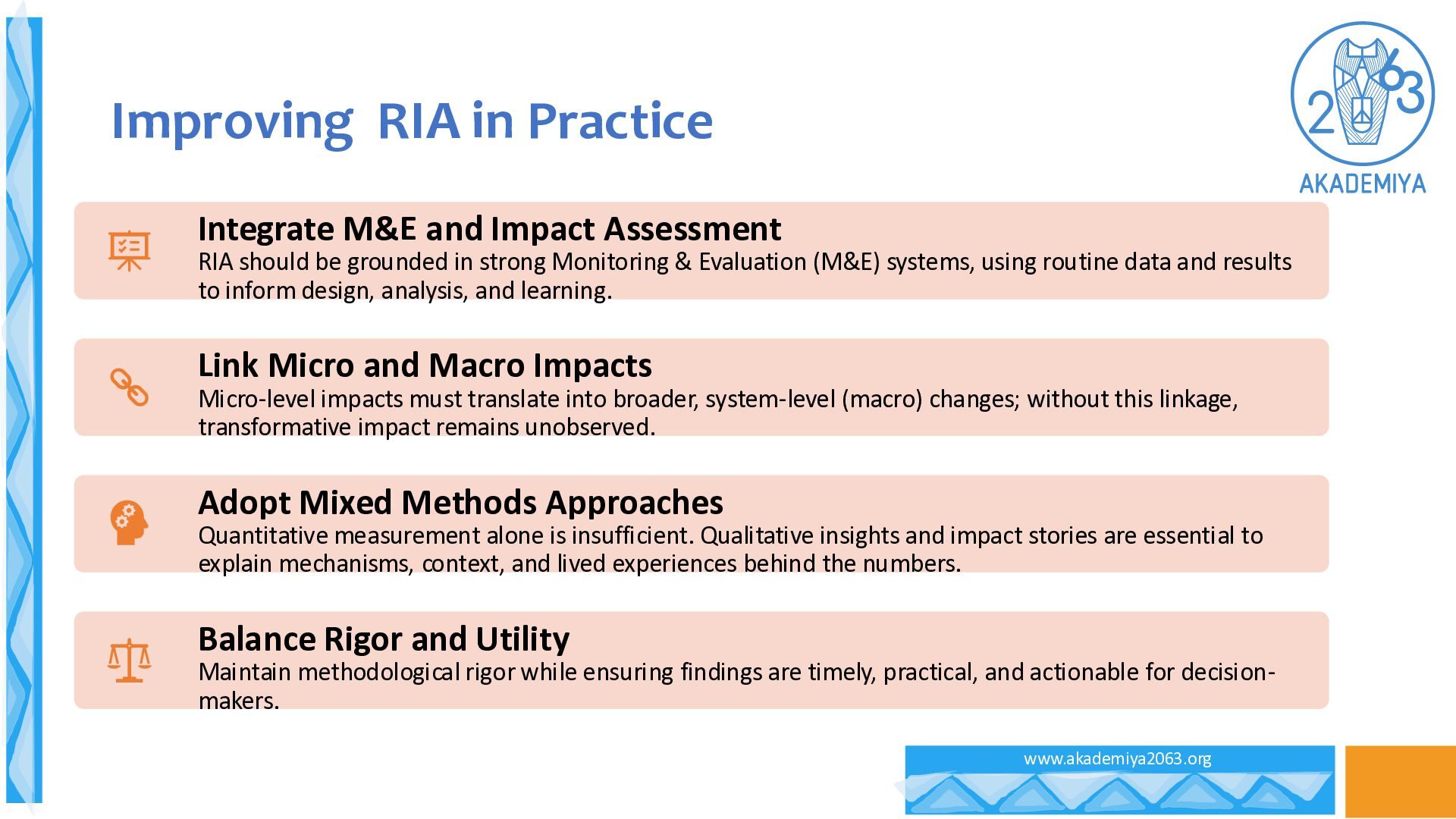
RIA should be grounded in strong Monitoring & Evaluation (M&E) systems, using routine data and results to inform design, analysis, and learning. Link Micro and Macro Impacts Micro-level impacts must translate into broader, system-level (macro) changes; without this linkage, transformative impact remains unobserved. Adopt Mixed Methods Approaches Quantitative measurement alone is insufficient. Qualitative insights and impact stories are essential to explain mechanisms, context, and lived experiences behind the numbers. Balance Rigor and Utility Maintain methodological rigor while ensuring findings are timely, practical, and actionable for decision- makers.
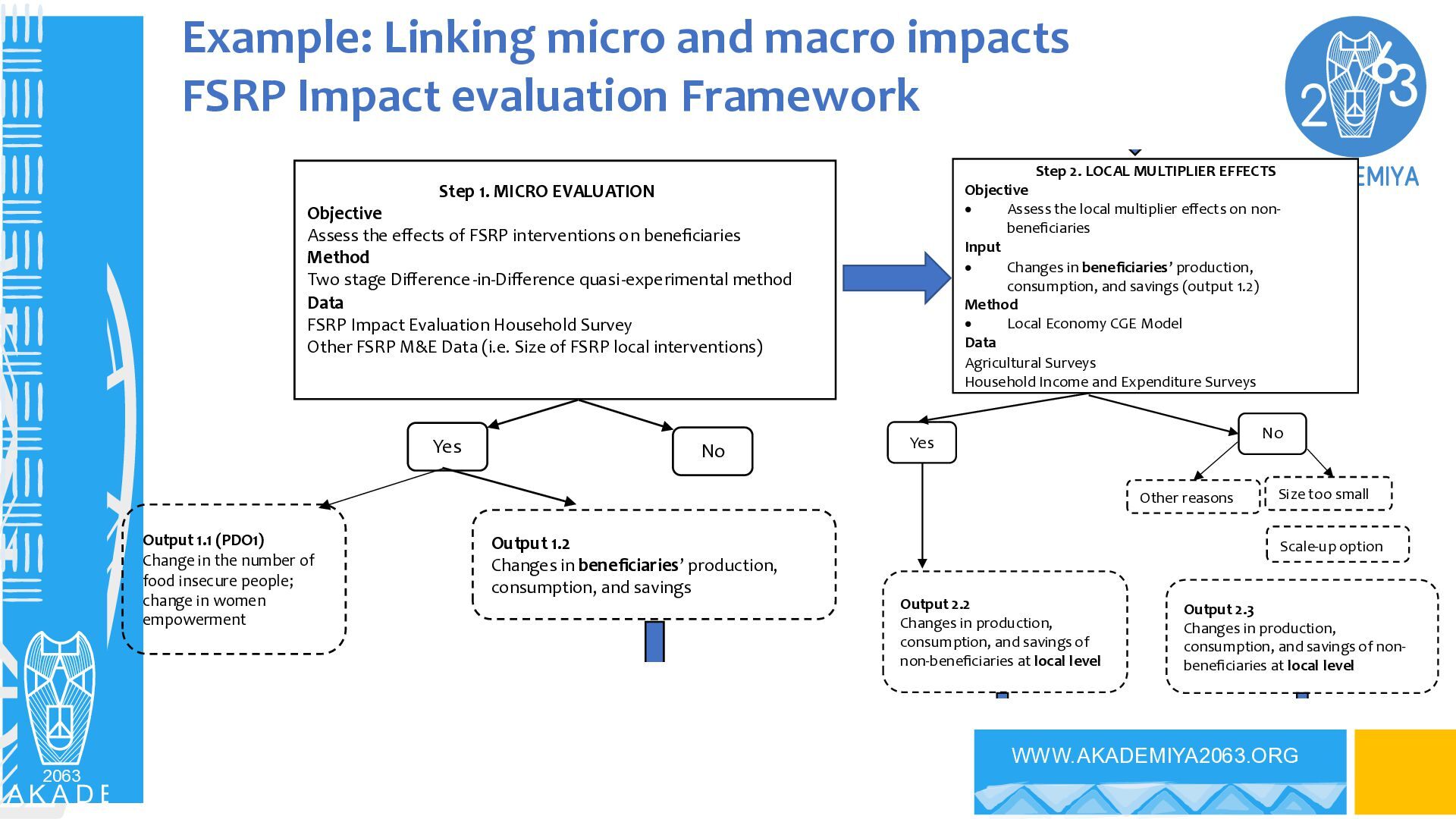
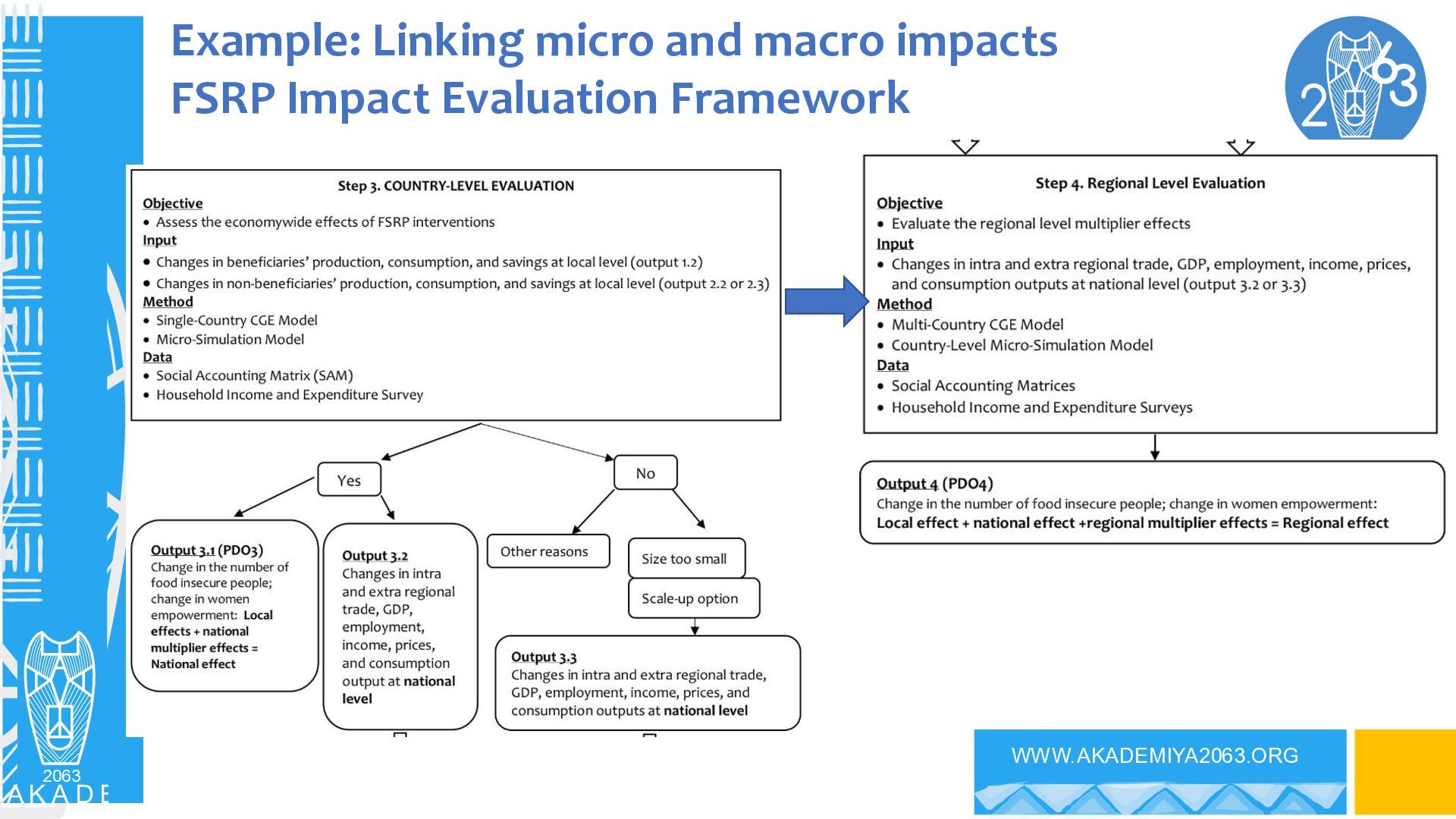
evaluation Framework Step MI E A A I ective Met o D t utput D utput 2 e e ci ries Step 2 A M I IE E E S ective I put utput D utput 2 e e ci ries Step 2 A M I IE E E S ective I put e e ci ries Met o D t utput 2 2 oc eve utput 2 3 oc eve


 akademiya2063
 tkng
tkng
.png) satai
satai
 yukako_nakano
 rikkabotan7
 junkashihara
 ayatokanada
 ept
ept
 gpeyre
 mickey_0226
 analokmaus
 ontheslope
 fr0gger
 notwaldorf
 aleyda
 apolaine
 csswizardry
 tmiket
 katiecoart
 charlesmeaden
 nwiizo
 techseoconnect
 kevinliebholz
 aarron
 427marketing