Technology Development and Adoption in Chinese Agrifood Systems: Implications for Africa Ting MENG,Yuqi MEI,Shenggen FAN Academy of Global Food Economics and Policy College of Economics and Management China Agricultural University January 20, 2026
Technologies along China’s Agrifood Value Chains •3. Suitability for Africa of Technologies in Agrifood Systems •4. Cooperation and Innovation Why What How So what
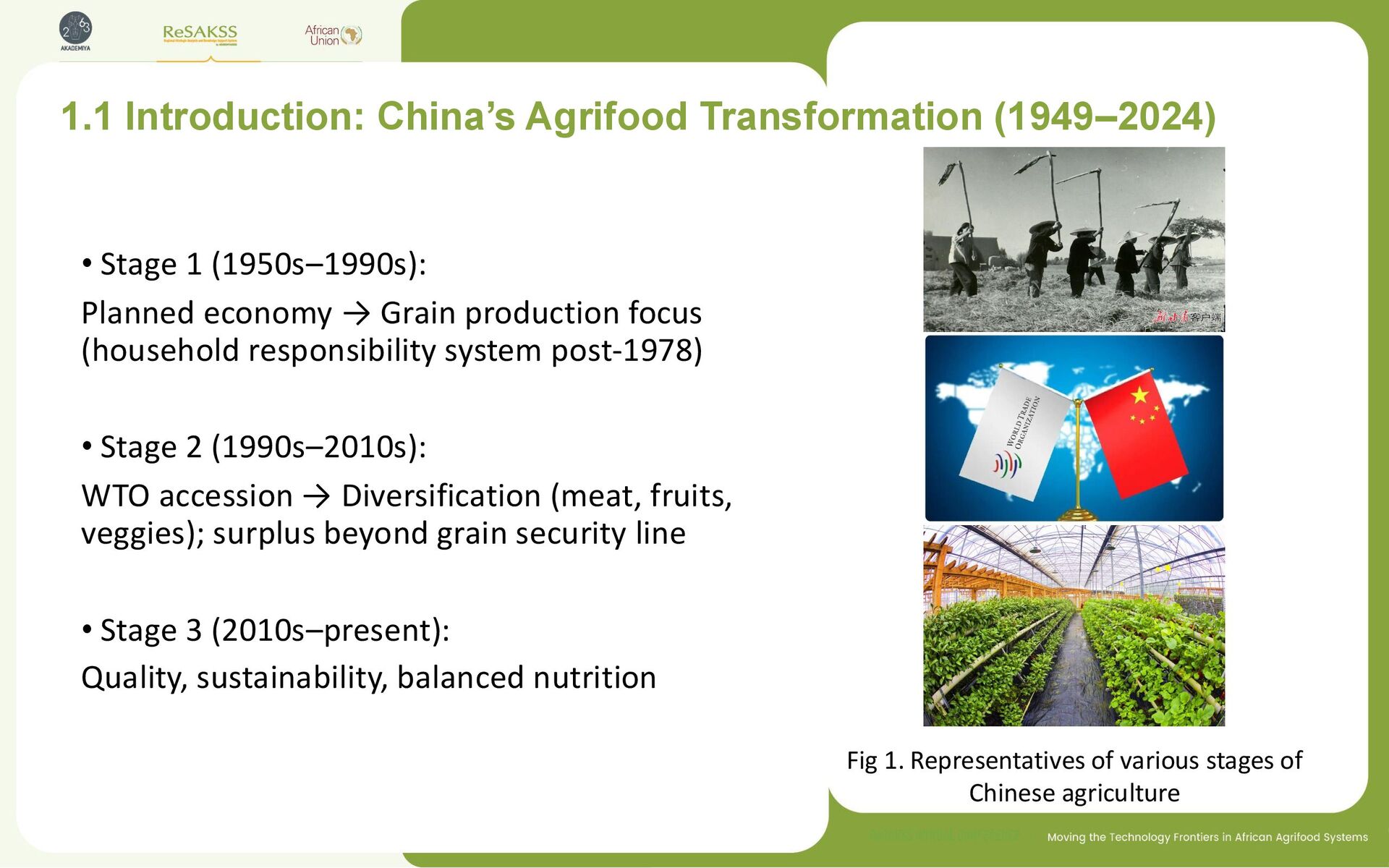
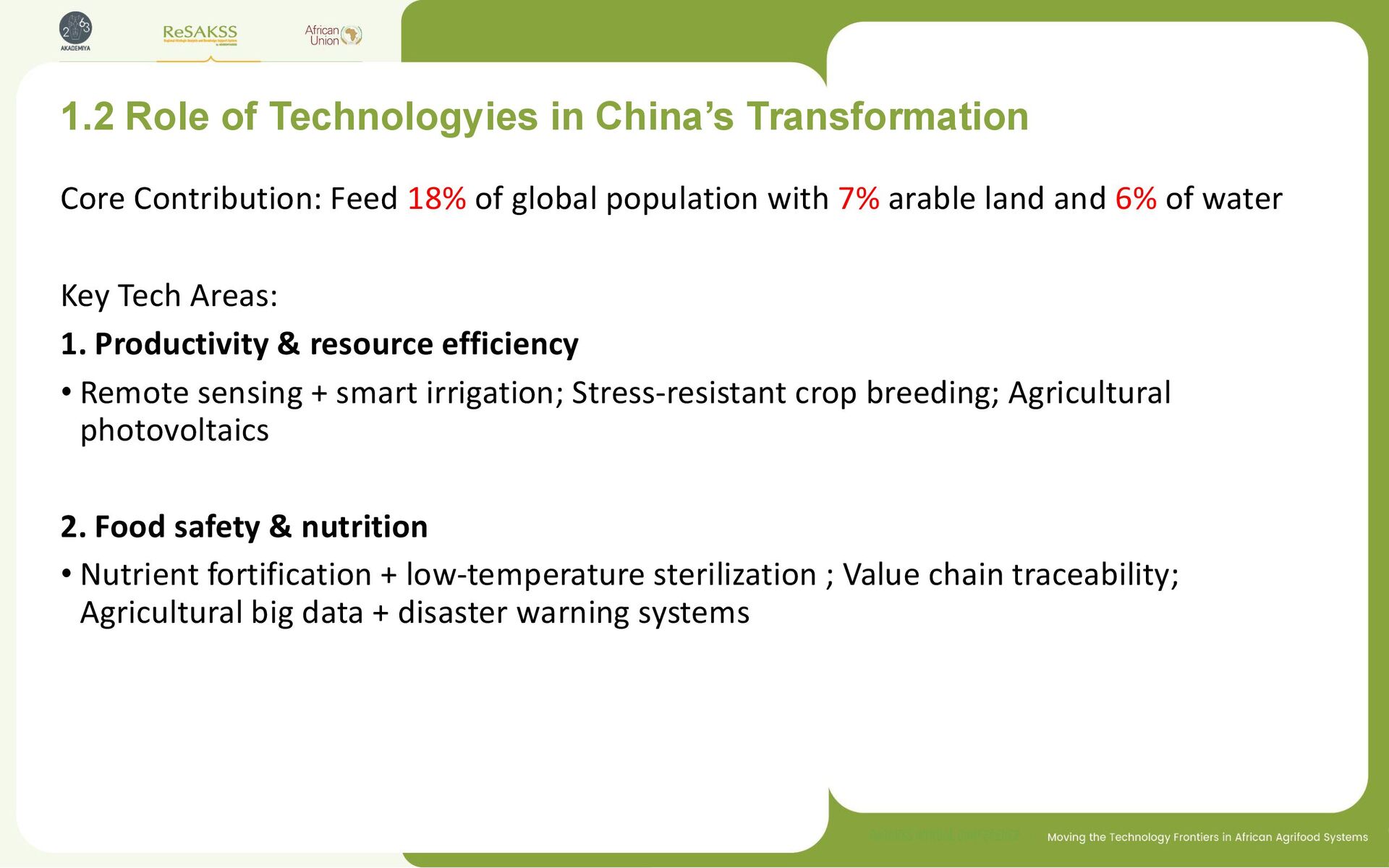
land and 6% of water Key Tech Areas: 1. Productivity & resource efficiency • Remote sensing + smart irrigation; Stress-resistant crop breeding; Agricultural photovoltaics 2. Food safety & nutrition • Nutrient fortification + low-temperature sterilization ; Value chain traceability; Agricultural big data + disaster warning systems 1.2 Role of Technologyies in China’s Transformation
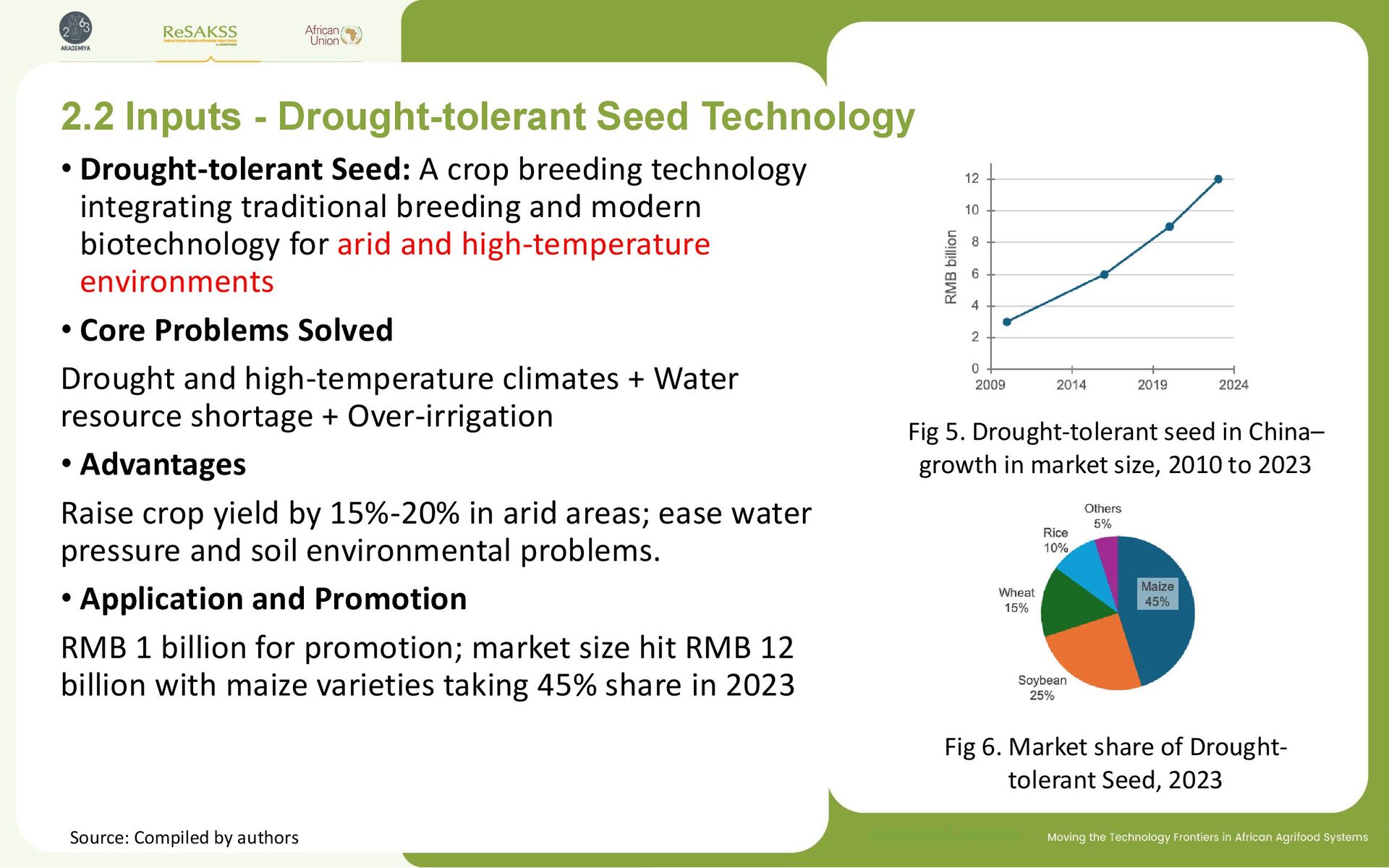
and modern biotechnology for arid and high-temperature environments • Core Problems Solved Drought and high-temperature climates + Water resource shortage + Over-irrigation • Advantages Raise crop yield by 15%-20% in arid areas; ease water pressure and soil environmental problems. • Application and Promotion RMB 1 billion for promotion; market size hit RMB 12 billion with maize varieties taking 45% share in 2023 2.2 Inputs - Drought-tolerant Seed Technology Fig 5. Drought-tolerant seed in China– growth in market size, 2010 to 2023 Source: Compiled by authors Fig 6. Market share of Drought- tolerant Seed, 2023
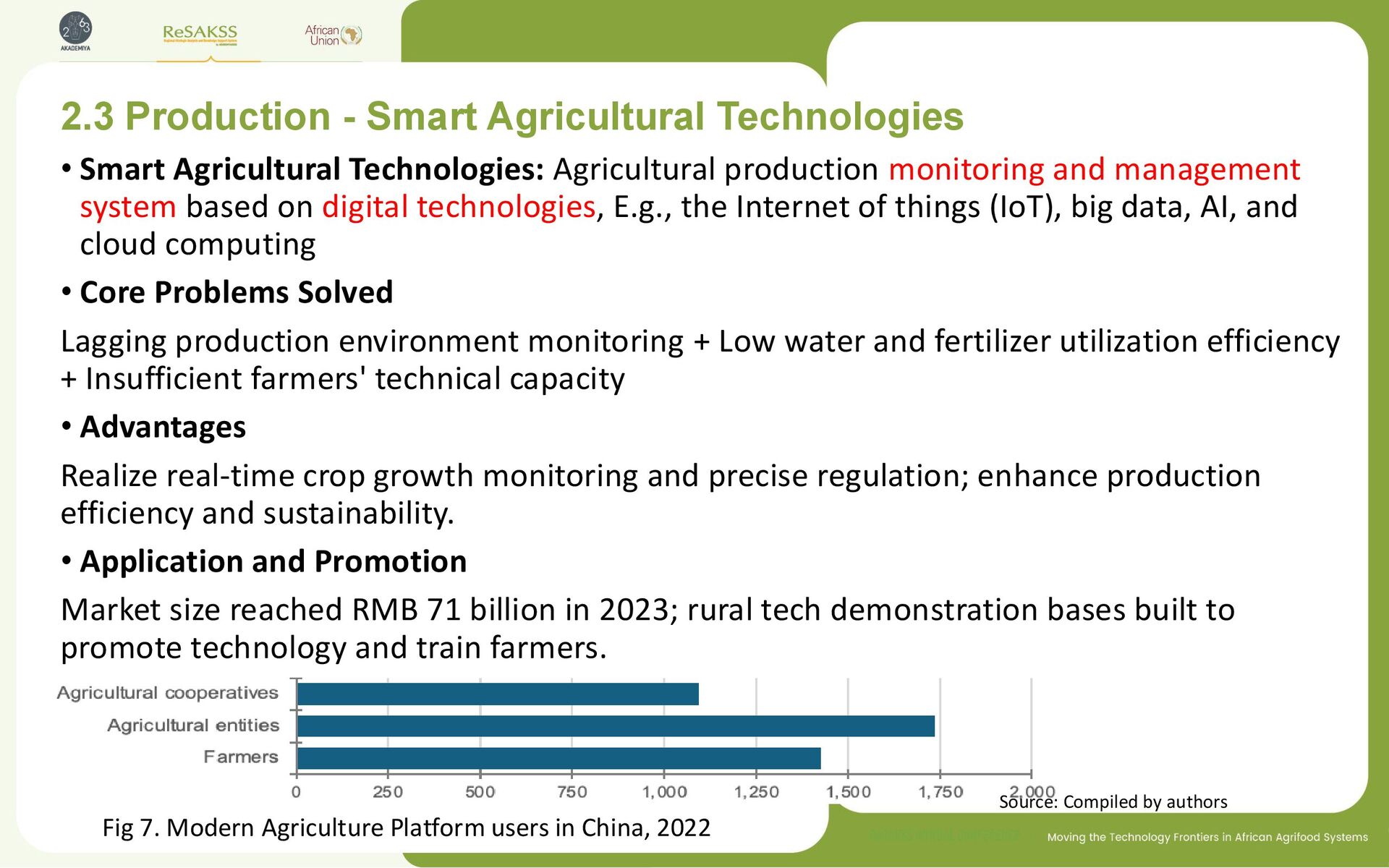
Platform users in China, 2022 • Smart Agricultural Technologies: Agricultural production monitoring and management system based on digital technologies, E.g., the Internet of things (IoT), big data, AI, and cloud computing • Core Problems Solved Lagging production environment monitoring + Low water and fertilizer utilization efficiency + Insufficient farmers' technical capacity • Advantages Realize real-time crop growth monitoring and precise regulation; enhance production efficiency and sustainability. • Application and Promotion Market size reached RMB 71 billion in 2023; rural tech demonstration bases built to promote technology and train farmers. Source: Compiled by authors
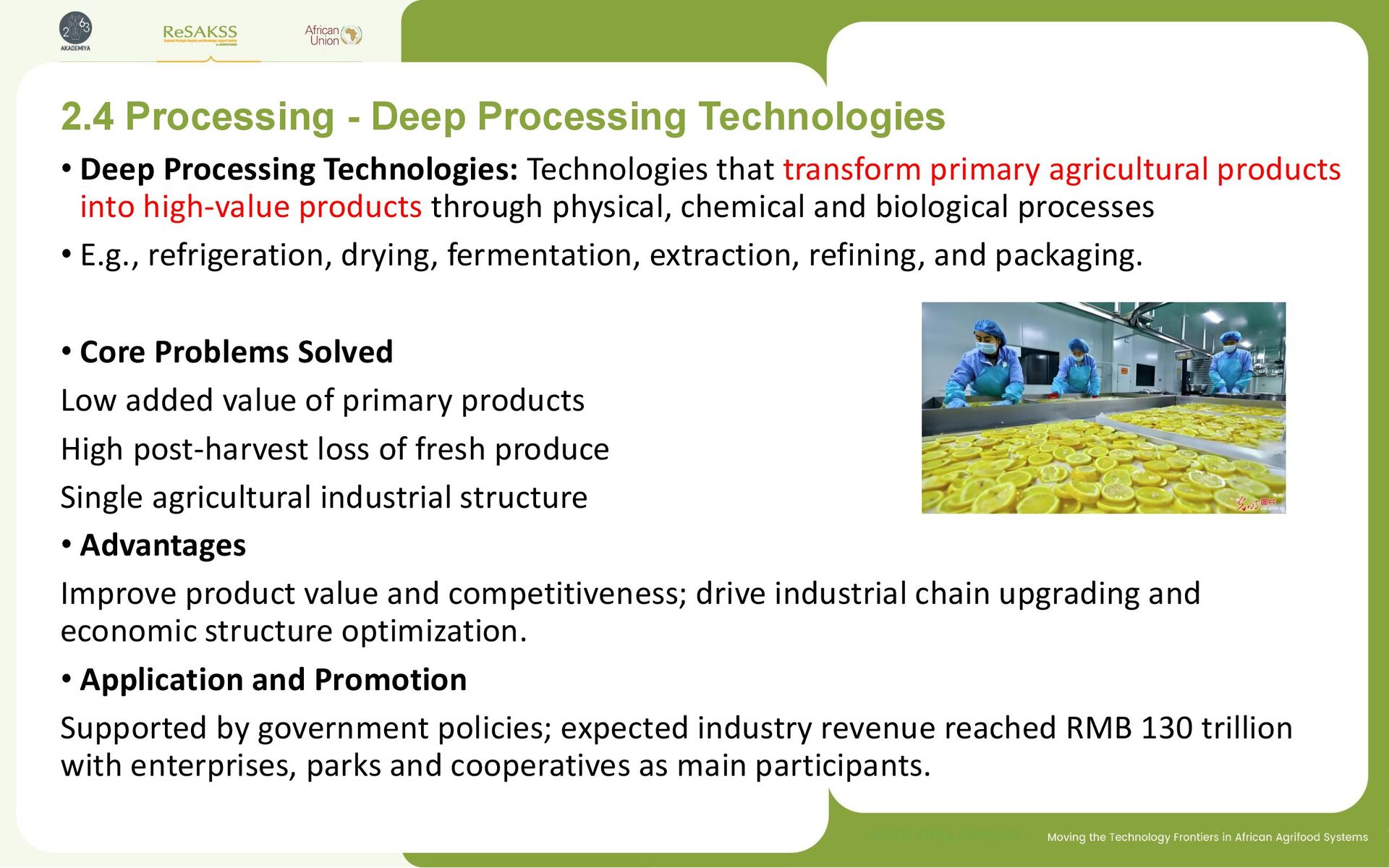
Technologies that transform primary agricultural products into high-value products through physical, chemical and biological processes • E.g., refrigeration, drying, fermentation, extraction, refining, and packaging. • Core Problems Solved Low added value of primary products High post-harvest loss of fresh produce Single agricultural industrial structure • Advantages Improve product value and competitiveness; drive industrial chain upgrading and economic structure optimization. • Application and Promotion Supported by government policies; expected industry revenue reached RMB 130 trillion with enterprises, parks and cooperatives as main participants.
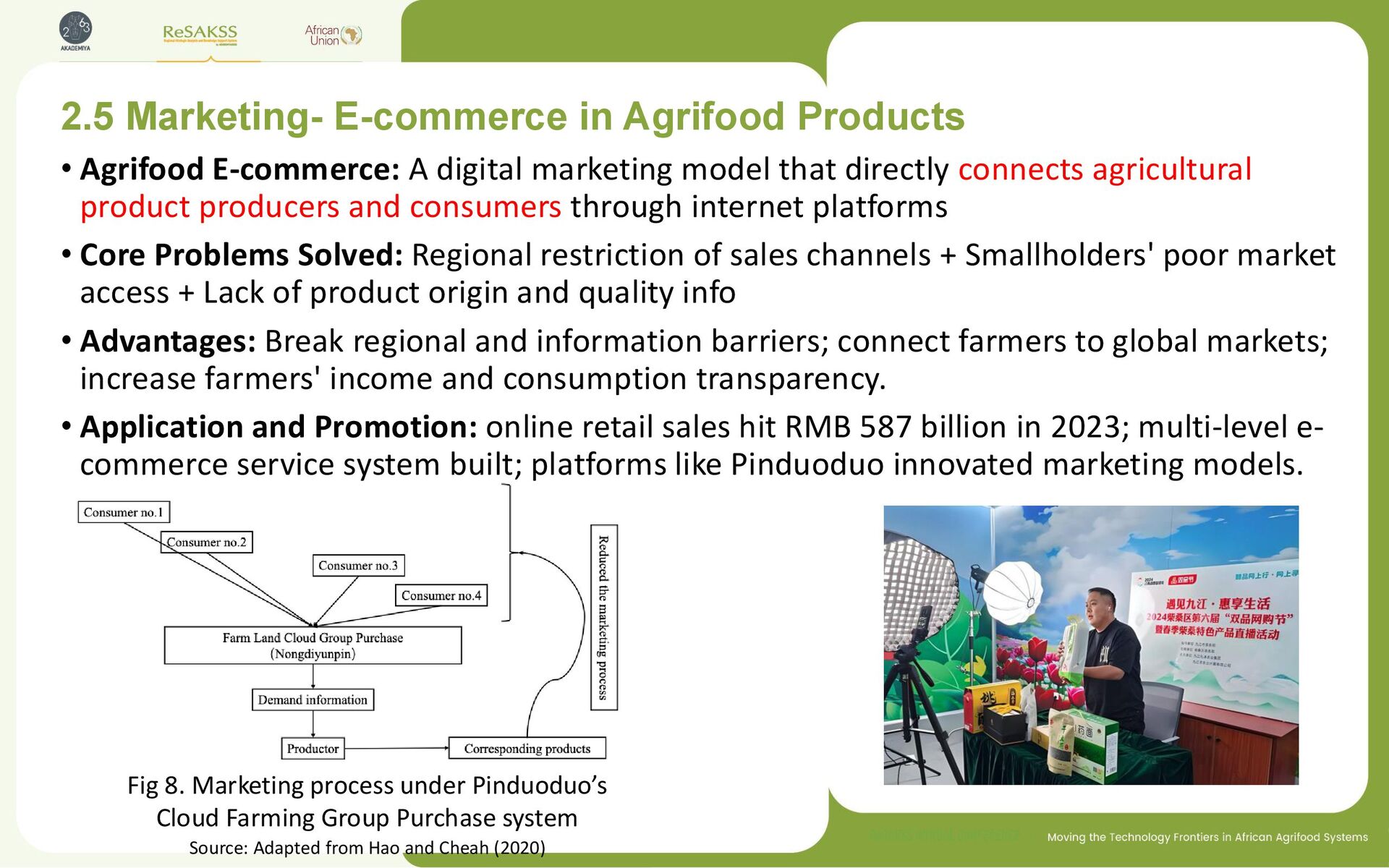
digital marketing model that directly connects agricultural product producers and consumers through internet platforms • Core Problems Solved: Regional restriction of sales channels + Smallholders' poor market access + Lack of product origin and quality info • Advantages: Break regional and information barriers; connect farmers to global markets; increase farmers' income and consumption transparency. • Application and Promotion: online retail sales hit RMB 587 billion in 2023; multi-level e- commerce service system built; platforms like Pinduoduo innovated marketing models. Fig 8. Marketing process under Pinduoduo’s Cloud Farming Group Purchase system Source: Adapted from Hao and Cheah (2020)
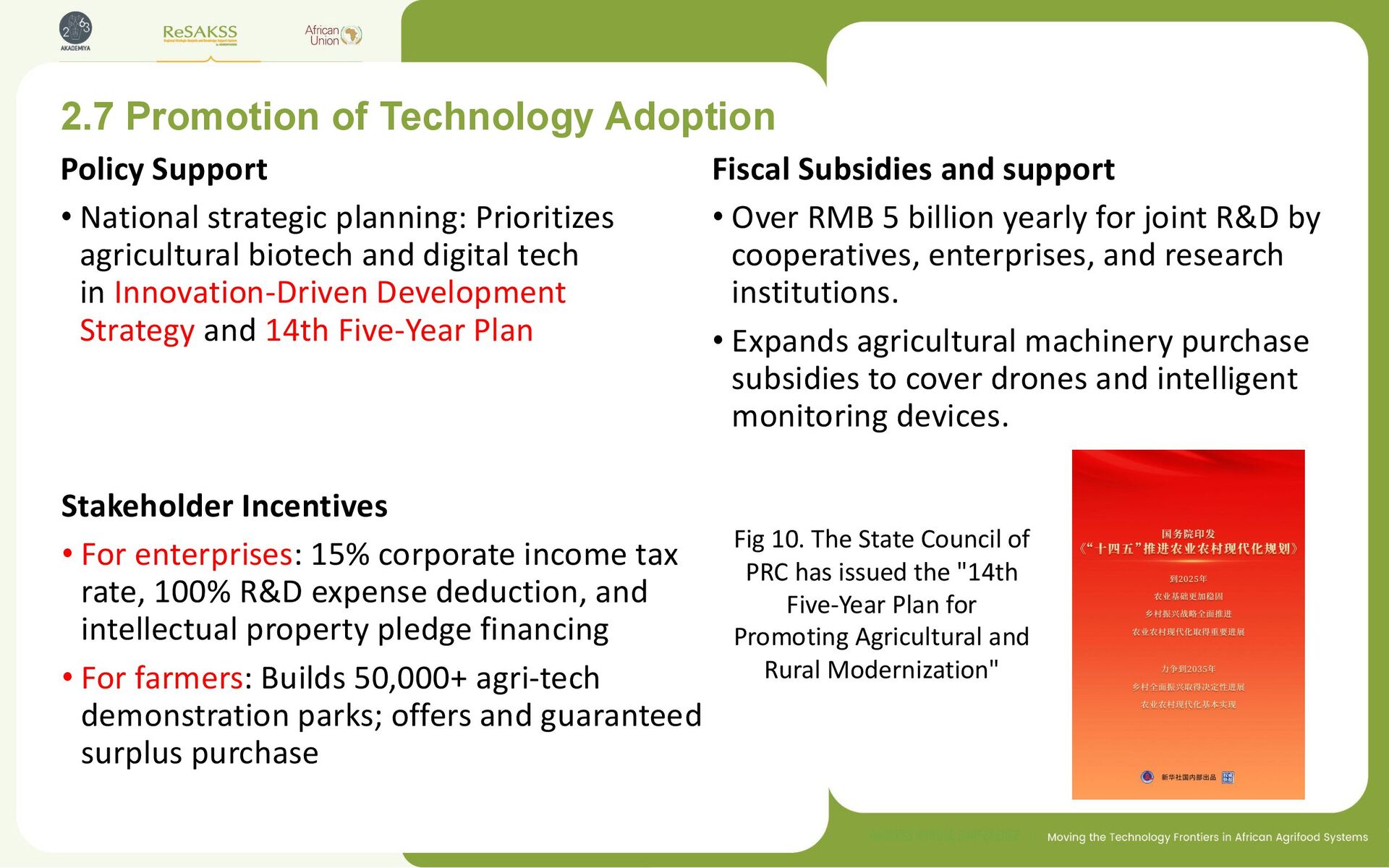
planning: Prioritizes agricultural biotech and digital tech in Innovation-Driven Development Strategy and 14th Five-Year Plan Fiscal Subsidies and support • Over RMB 5 billion yearly for joint R&D by cooperatives, enterprises, and research institutions. • Expands agricultural machinery purchase subsidies to cover drones and intelligent monitoring devices. Stakeholder Incentives • For enterprises: 15% corporate income tax rate, 100% R&D expense deduction, and intellectual property pledge financing • For farmers: Builds 50,000+ agri-tech demonstration parks; offers and guaranteed surplus purchase Fig 10. The State Council of PRC has issued the "14th Five-Year Plan for Promoting Agricultural and Rural Modernization"
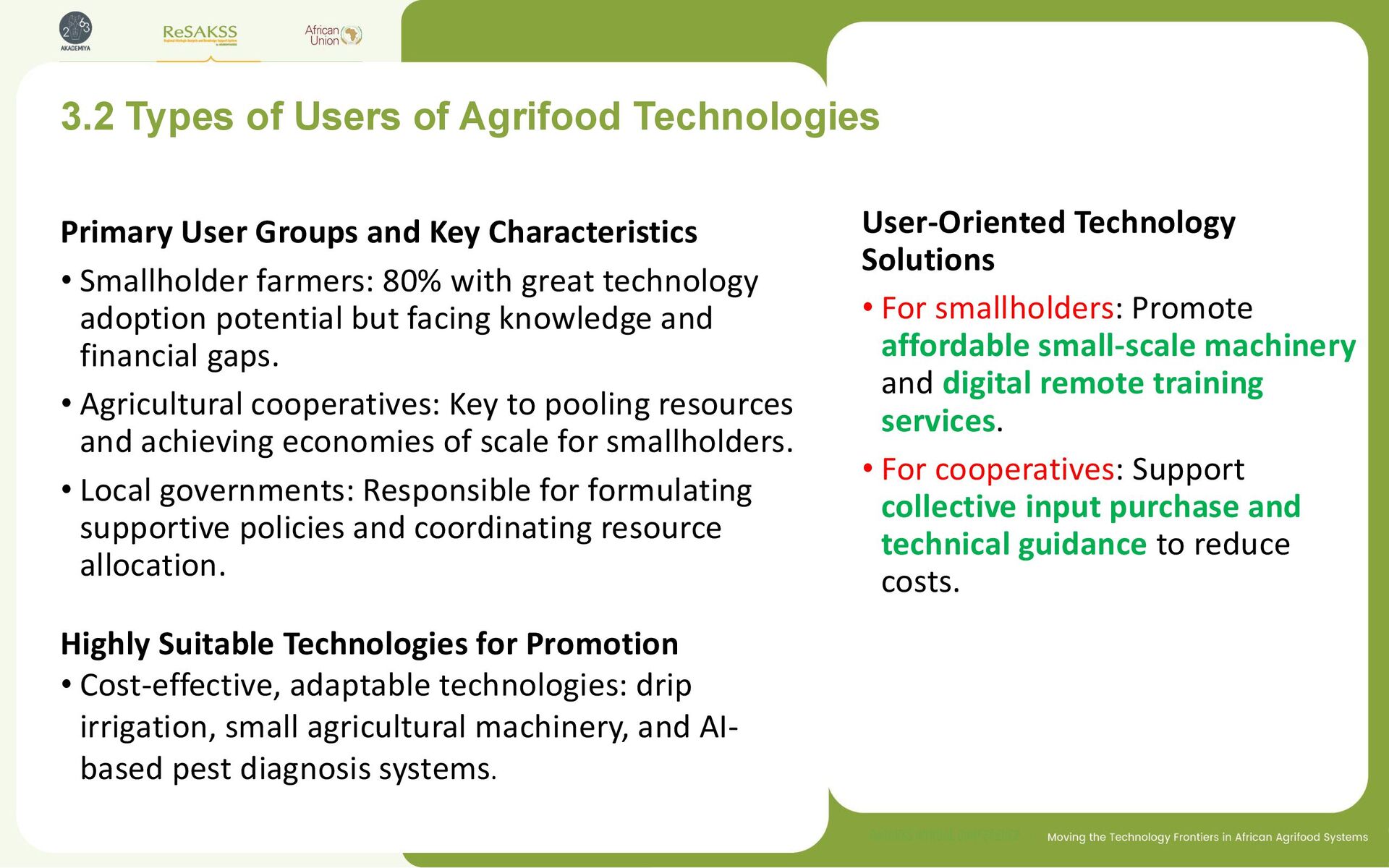
and Key Characteristics • Smallholder farmers: 80% with great technology adoption potential but facing knowledge and financial gaps. • Agricultural cooperatives: Key to pooling resources and achieving economies of scale for smallholders. • Local governments: Responsible for formulating supportive policies and coordinating resource allocation. User-Oriented Technology Solutions • For smallholders: Promote affordable small-scale machinery and digital remote training services. • For cooperatives: Support collective input purchase and technical guidance to reduce costs. Highly Suitable Technologies for Promotion • Cost-effective, adaptable technologies: drip irrigation, small agricultural machinery, and AI- based pest diagnosis systems.
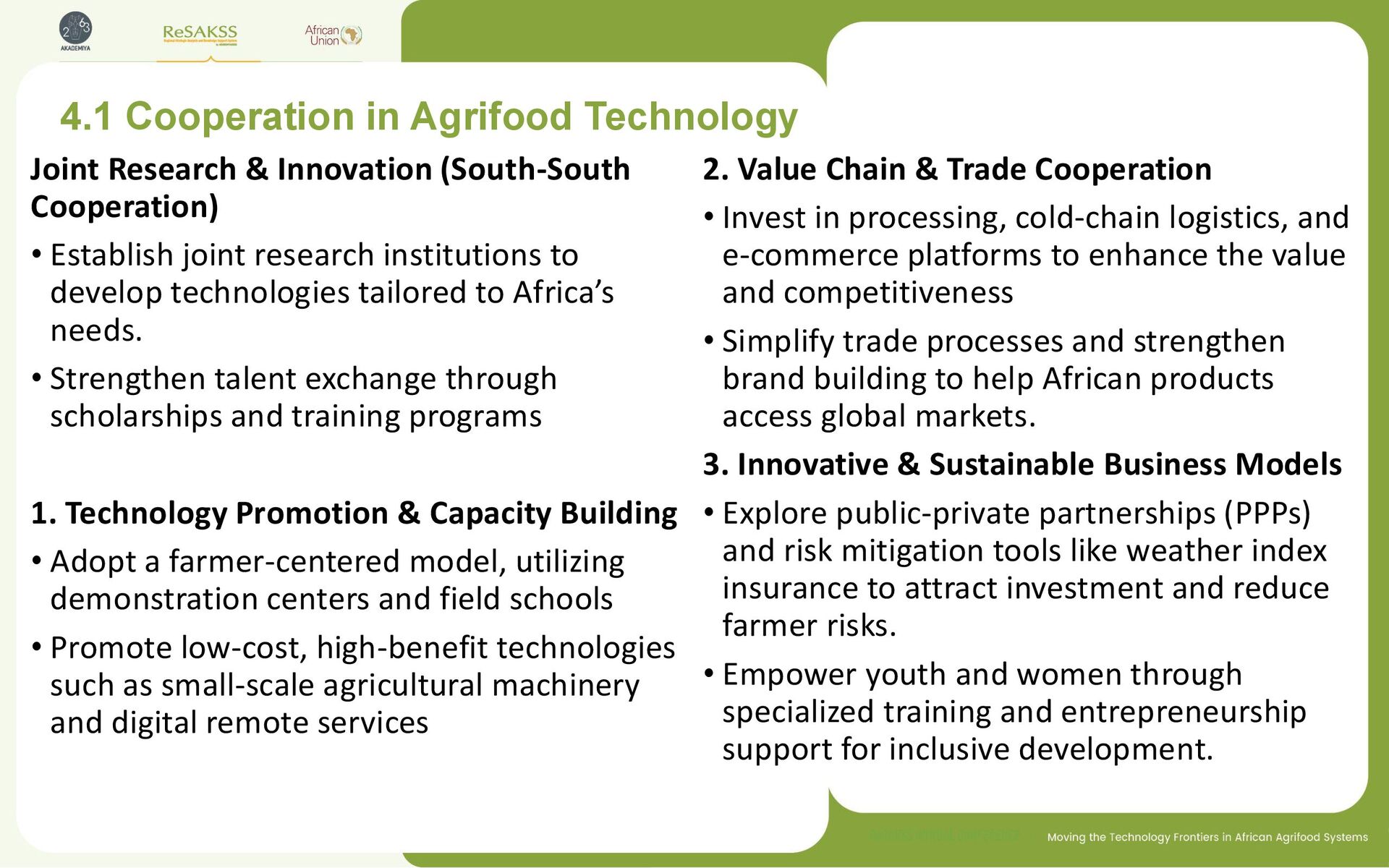
Cooperation) • Establish joint research institutions to develop technologies tailored to Africa’s needs. • Strengthen talent exchange through scholarships and training programs 1. Technology Promotion & Capacity Building • Adopt a farmer-centered model, utilizing demonstration centers and field schools • Promote low-cost, high-benefit technologies such as small-scale agricultural machinery and digital remote services 2. Value Chain & Trade Cooperation • Invest in processing, cold-chain logistics, and e-commerce platforms to enhance the value and competitiveness • Simplify trade processes and strengthen brand building to help African products access global markets. 3. Innovative & Sustainable Business Models • Explore public-private partnerships (PPPs) and risk mitigation tools like weather index insurance to attract investment and reduce farmer risks. • Empower youth and women through specialized training and entrepreneurship support for inclusive development.
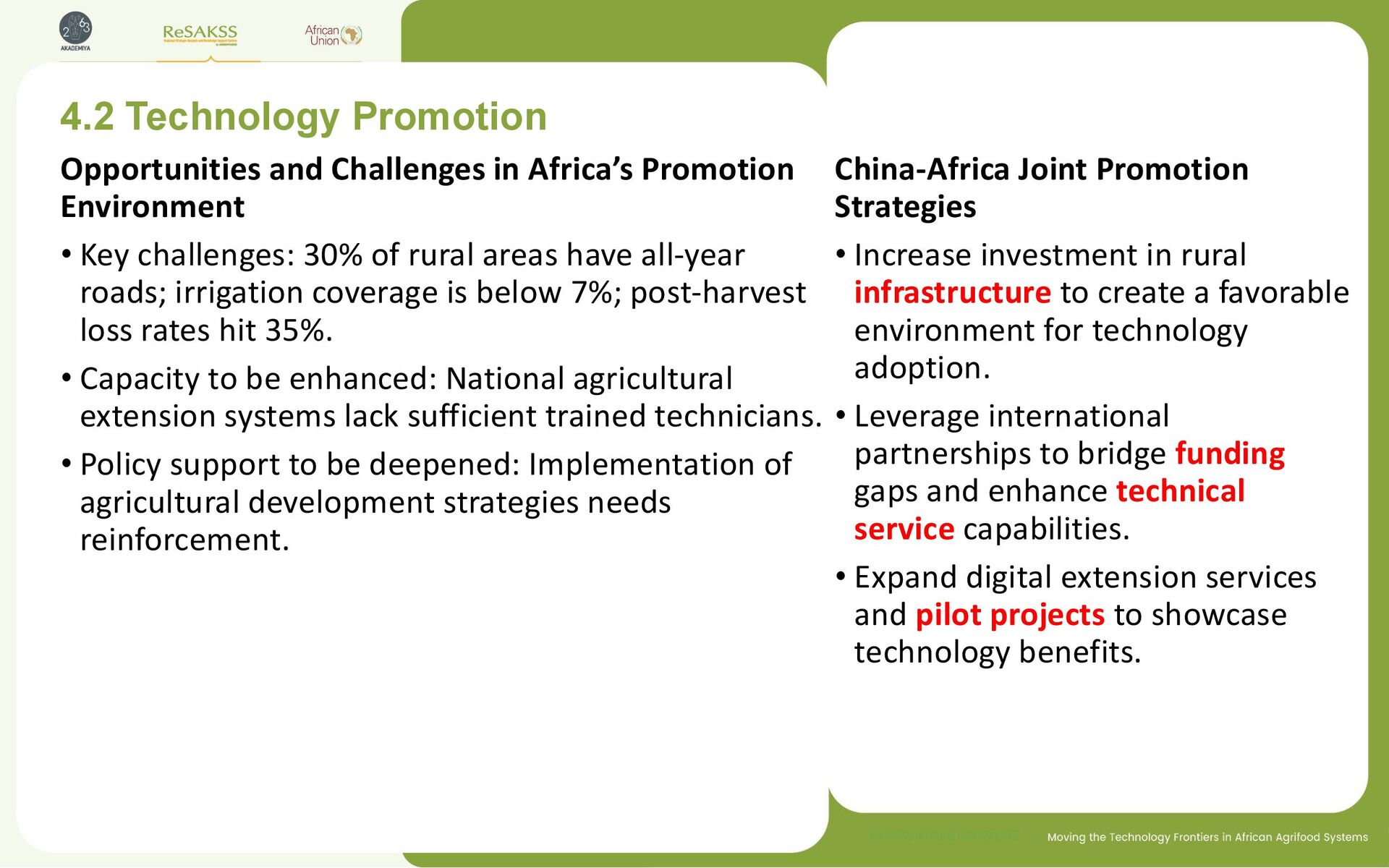
• Key challenges: 30% of rural areas have all-year roads; irrigation coverage is below 7%; post-harvest loss rates hit 35%. • Capacity to be enhanced: National agricultural extension systems lack sufficient trained technicians. • Policy support to be deepened: Implementation of agricultural development strategies needs reinforcement. China-Africa Joint Promotion Strategies • Increase investment in rural infrastructure to create a favorable environment for technology adoption. • Leverage international partnerships to bridge funding gaps and enhance technical service capabilities. • Expand digital extension services and pilot projects to showcase technology benefits.


 akademiya2063
 institutdelelevage
 mickey_0226
 de9uch1
 imai448
 shunk031
 takehaya
 ept
ept
 sishi
sishi
 hellosct1
 nzw0301
 codingconduct
 addyosmani
 aleyda
 lindahogenes
 palkan
 tmiket
 cassininazir
 lynnandtonic
 mfonobong
 takai
takai
 kimpetersen