Upgrade to Pro
— share decks privately, control downloads, hide ads and more …
Speaker Deck
Sign up for free
Menu
Search
Features
All features
Private URLs
Password Protection
Custom URLS
Scheduled publishing
Remove Branding
Restrict embedding
Deck Collections
Notes
Features
All features
Private URLs
Password Protection
Custom URLS
Scheduled publishing
Remove Branding
Restrict embedding
Deck Collections
Notes
Explore
Featured decks
Featured speakers
Programming
Technology
Storyboards
Explore
Featured decks
Featured speakers
Programming
Technology
Storyboards
Pricing
Search
Sign in
Sign up for free
A closer look into Retro's Iconic objects
Search
Sponsored
·
Your Podcast. Everywhere. Effortlessly.
Share. Educate. Inspire. Entertain. You do you. We'll handle the rest.
→
AlexWauthy
November 28, 2025
Education
5
0
Share
Embed
Copy iframe code
Copy JS code
Copy link
Start on current slide
A closer look into Retro's Iconic objects
AlexWauthy
November 28, 2025
Other Decks in Education
See All in Education
20260908_ターゲットとスコープを決める発表法
masakiokuda
1
140
武藤の処世術を書いてみた
mutomasa
0
140
Sekolah Sabat - Triwulan 4 2026 - Pelajaran 1
hiola
0
13k
日本における応用言語学・言語教育学 これまでとこれから
terasawat
0
170
形骸化しない社内勉強会の取り組み - オーナーシップの作り方 / In-house study session
soudai
PRO
1
430
観察、仮説、実行、検証、計画、提案を一年で3000回トレーニングする方法/3000 Thinking Loops in 365 Days
moriyuya
5
1.5k
BRIEF OUTLINE OF IMPORTANT PLANT CONSTITUENTS
pawan_pharm
0
210
General Introduction, Composition, Chemistry & Chemical Classes, Biosources, Therapeutic uses and Commercial Application of Secondary Metabolites.
drpoonamkc
0
170
Sanapilvet opetuksessa
matleenalaakso
1
36k
CSS3 and Responsive Web Design - Lecture 5 - Web Technologies (1019888BNR)
signer
PRO
1
3.5k
響け!ユーフォニアムと考える「決め方」/Thinking About Decision-Making with Sound! Euphonium
3l4l5
1
200
1007
cbtlibrary
0
220
Featured
See All Featured
Faster Mobile Websites
deanohume
310
32k
Redefining SEO in the New Era of Traffic Generation
szymonslowik
1
480
It's Worth the Effort
3n
188
29k
The Art of Delivering Value - GDevCon NA Keynote
reverentgeek
16
2.2k
YesSQL, Process and Tooling at Scale
rocio
174
15k
Navigating Team Friction
lara
192
16k
<Decoding/> the Language of Devs - We Love SEO 2024
nikkihalliwell
1
360
Testing 201, or: Great Expectations
jmmastey
46
8.3k
Unlocking the hidden potential of vector embeddings in international SEO
frankvandijk
0
990
Avoiding the “Bad Training, Faster” Trap in the Age of AI
tmiket
0
270
Un-Boring Meetings
codingconduct
0
460
The Web Performance Landscape in 2024 [PerfNow 2024]
tammyeverts
12
1.3k
Transcript
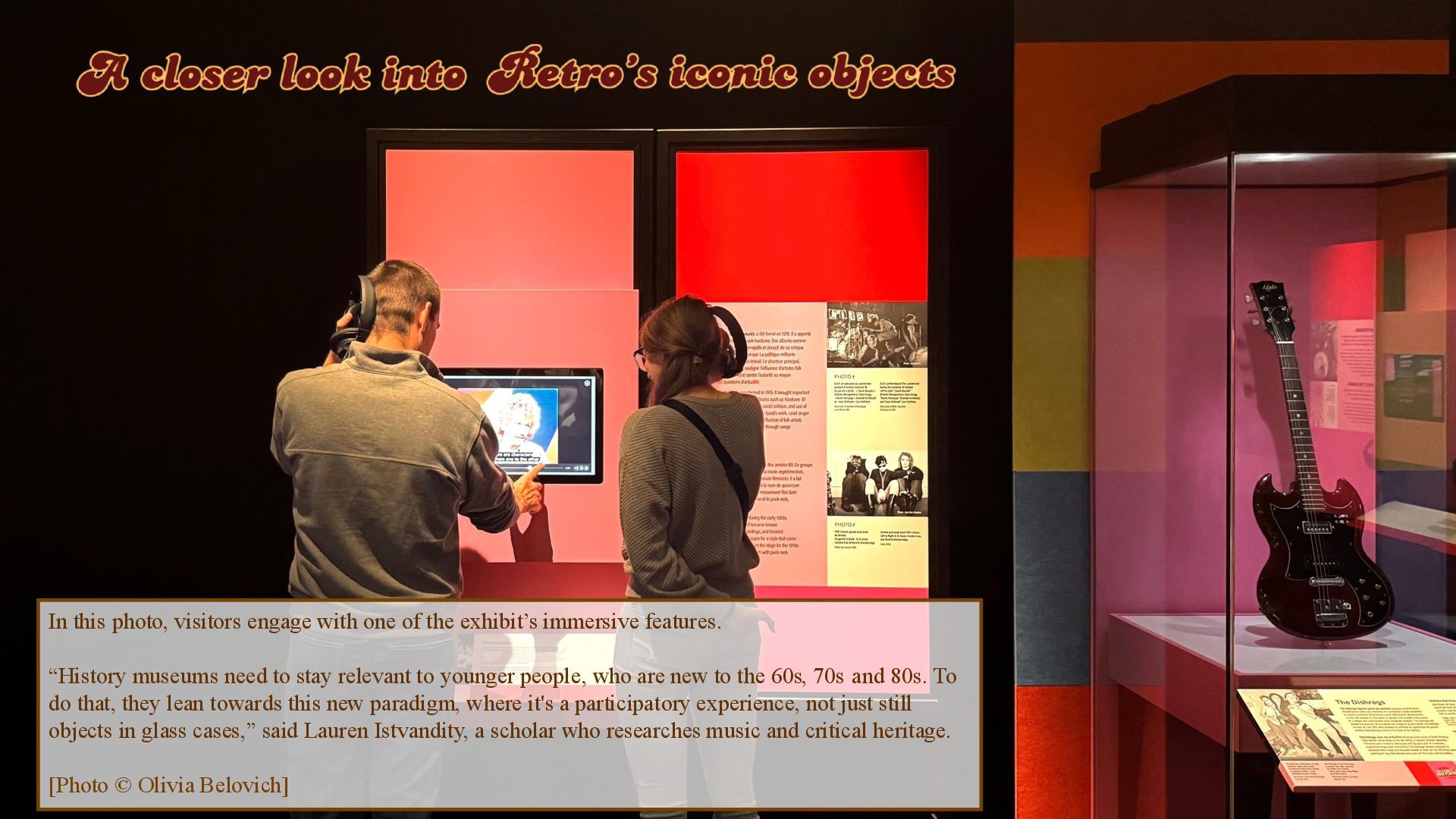
In this photo, visitors engage with one of the exhibit’s
immersive features. “History museums need to stay relevant to younger people, who are new to the 60s, 70s and 80s. To do that, they lean towards this new paradigm, where it's a participatory experience, not just still objects in glass cases,” said Lauren Istvandity, a scholar who researches music and critical heritage. [Photo © Olivia Belovich]
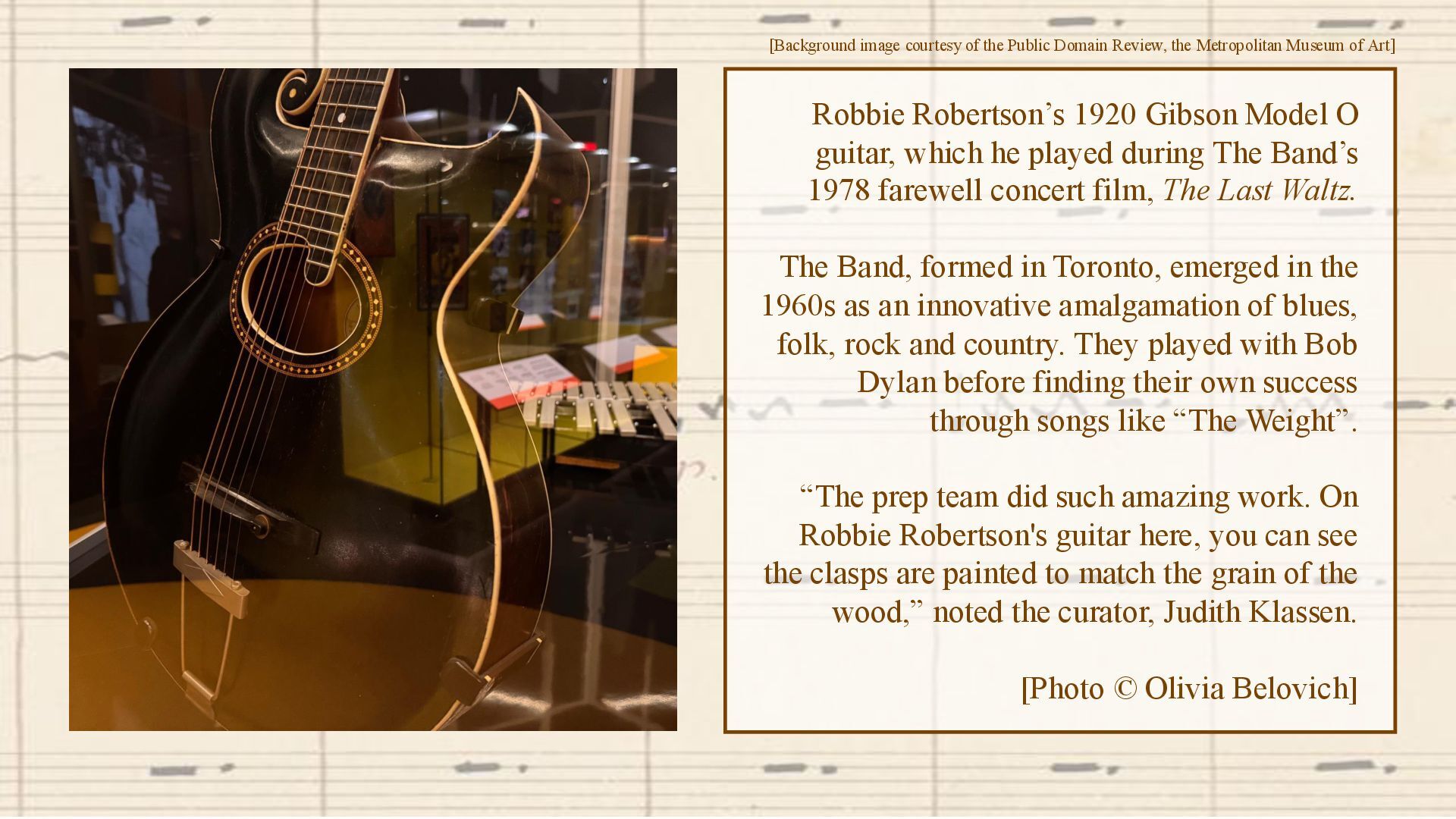
Robbie Robertson’s 1920 Gibson Model O guitar, which he played
during The Band’s 1978 farewell concert film, The Last Waltz. The Band, formed in Toronto, emerged in the 1960s as an innovative amalgamation of blues, folk, rock and country. They played with Bob Dylan before finding their own success through songs like “The Weight”. “The prep team did such amazing work. On Robbie Robertson's guitar here, you can see the clasps are painted to match the grain of the wood,” noted the curator, Judith Klassen. [Photo © Olivia Belovich] [Background image courtesy of the Public Domain Review, the Metropolitan Museum of Art]
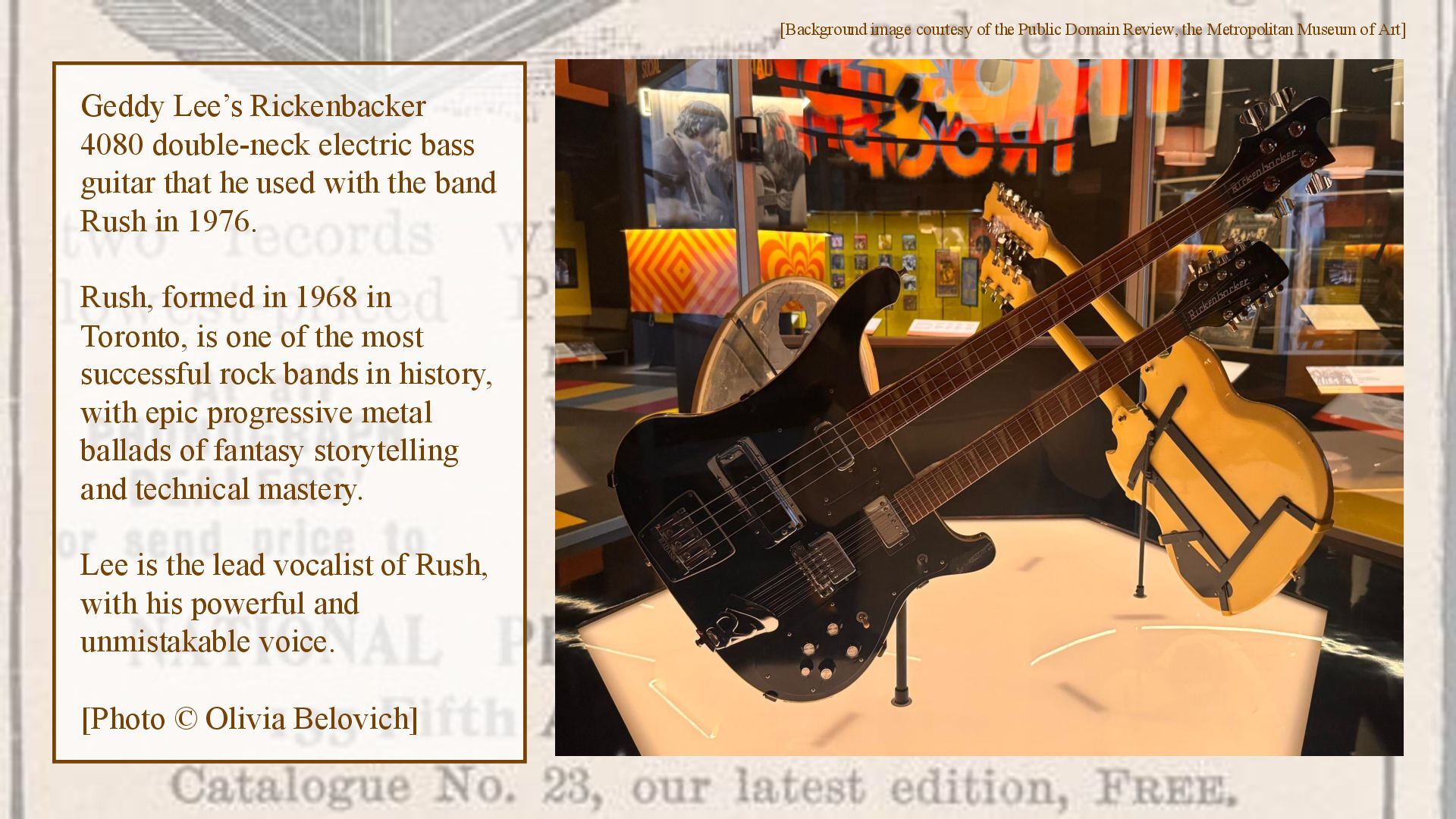
Geddy Lee’s Rickenbacker 4080 double-neck electric bass guitar that he
used with the band Rush in 1976. Rush, formed in 1968 in Toronto, is one of the most successful rock bands in history, with epic progressive metal ballads of fantasy storytelling and technical mastery. Lee is the lead vocalist of Rush, with his powerful and unmistakable voice. [Photo © Olivia Belovich] [Background image courtesy of the Public Domain Review, the Metropolitan Museum of Art]
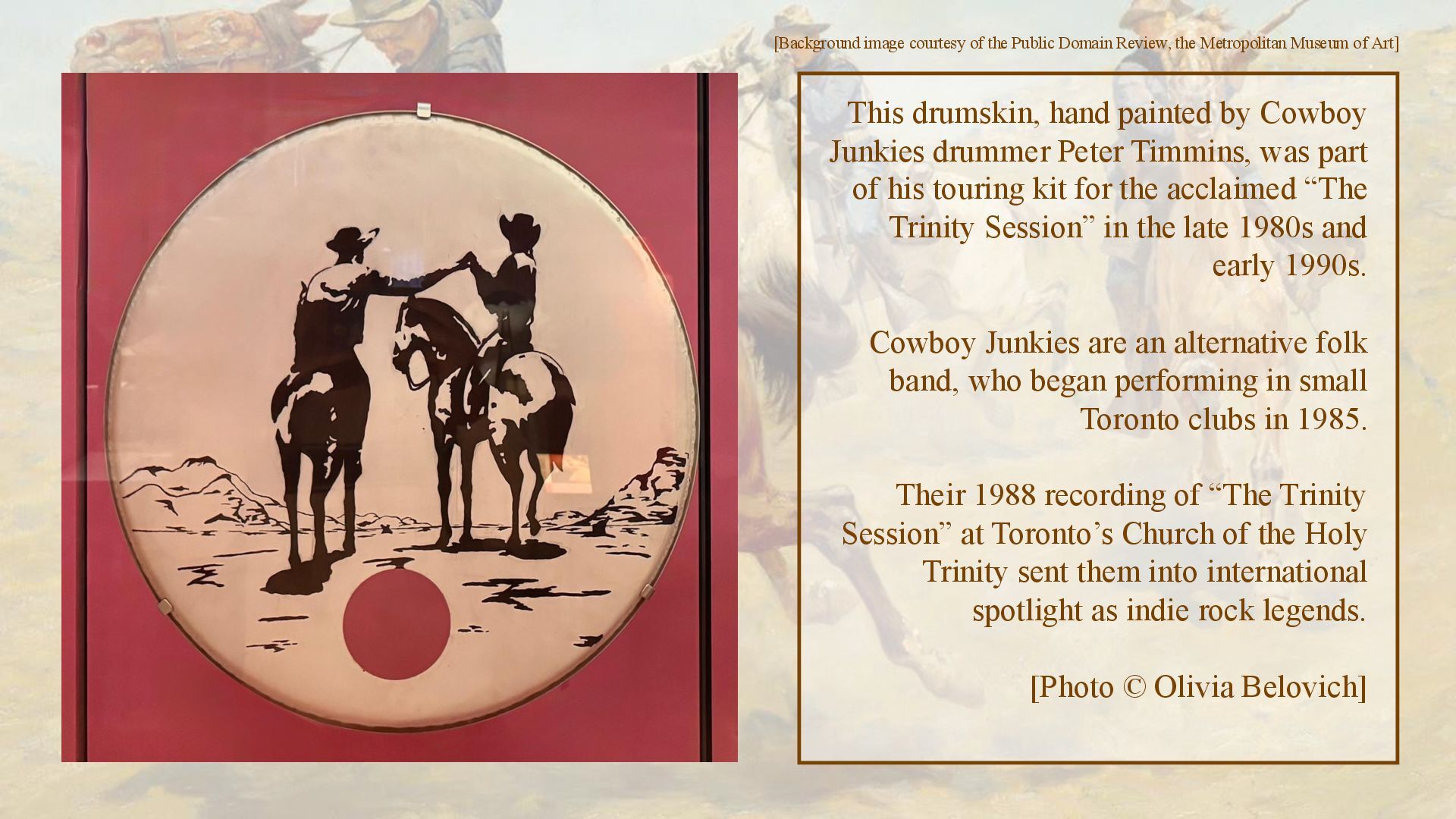
This drumskin, hand painted by Cowboy Junkies drummer Peter Timmins,
was part of his touring kit for the acclaimed “The Trinity Session” in the late 1980s and early 1990s. Cowboy Junkies are an alternative folk band, who began performing in small Toronto clubs in 1985. Their 1988 recording of “The Trinity Session” at Toronto’s Church of the Holy Trinity sent them into international spotlight as indie rock legends. [Photo © Olivia Belovich] [Background image courtesy of the Public Domain Review, the Metropolitan Museum of Art]
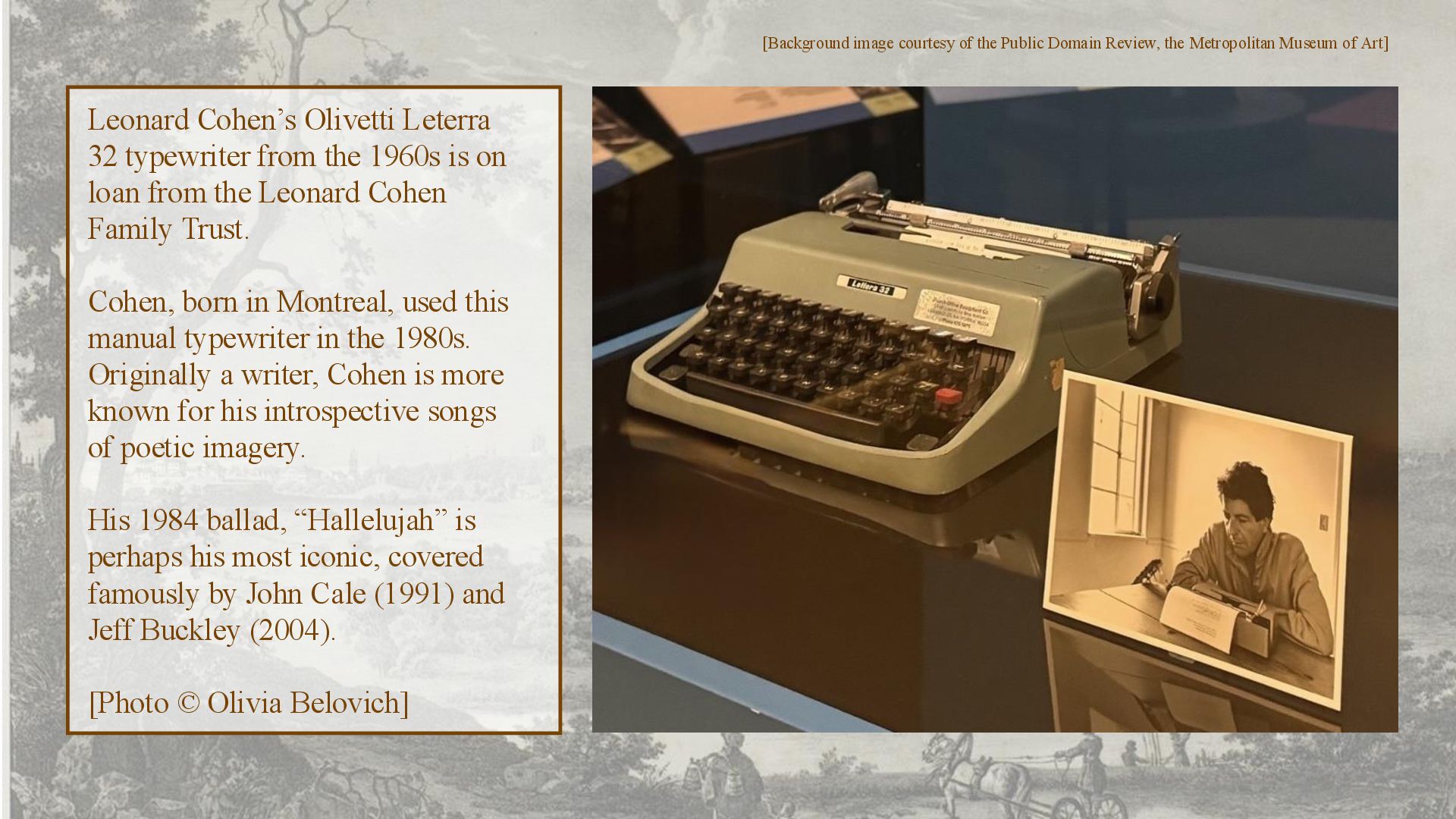
Leonard Cohen’s Olivetti Leterra 32 typewriter from the 1960s is
on loan from the Leonard Cohen Family Trust. Cohen, born in Montreal, used this manual typewriter in the 1980s. Originally a writer, Cohen is more known for his introspective songs of poetic imagery. His 1984 ballad, “Hallelujah” is perhaps his most iconic, covered famously by John Cale (1991) and Jeff Buckley (2004). [Photo © Olivia Belovich] [Background image courtesy of the Public Domain Review, the Metropolitan Museum of Art]
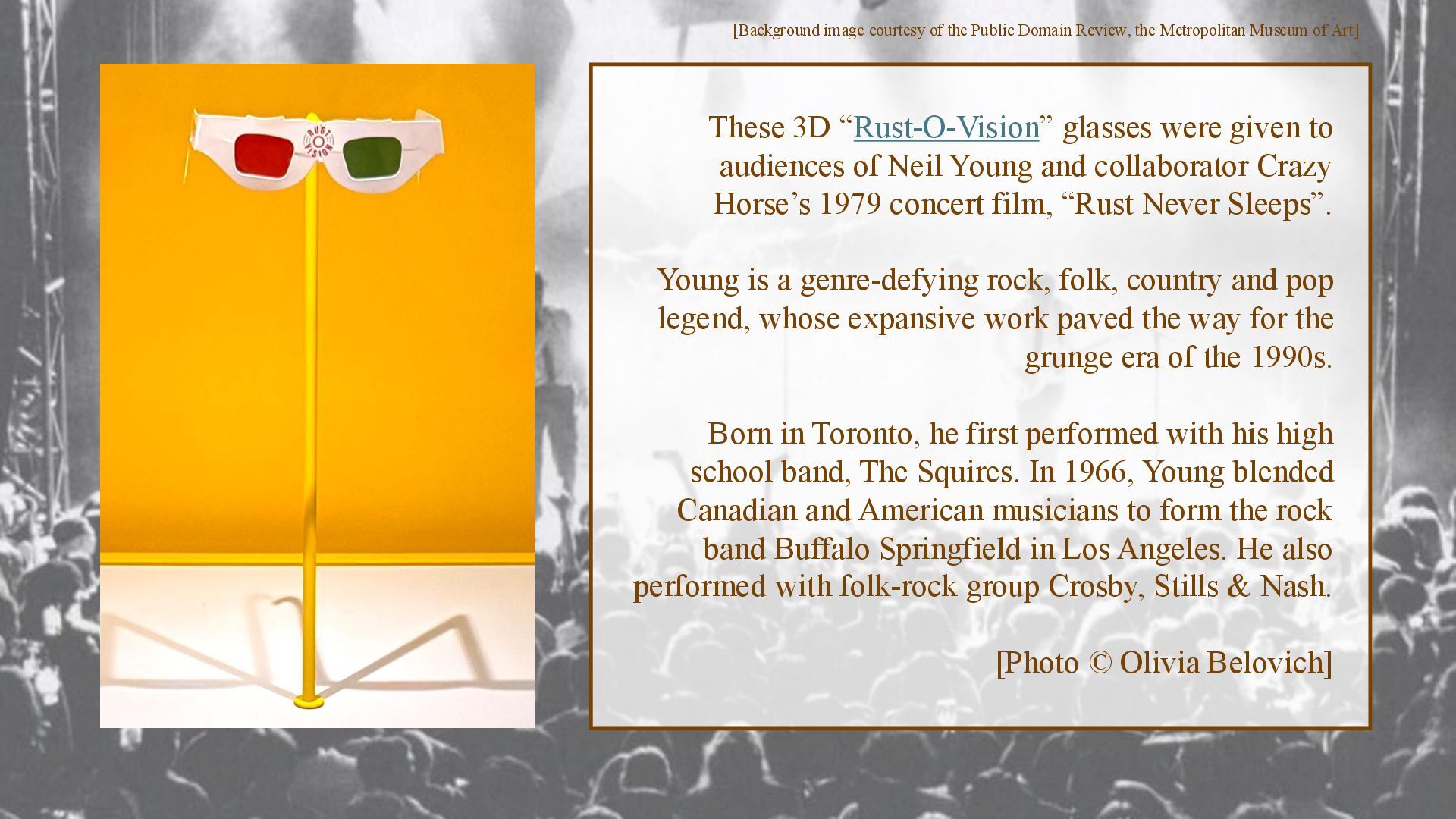
These 3D “Rust-O-Vision” glasses were given to audiences of Neil
Young and collaborator Crazy Horse’s 1979 concert film, “Rust Never Sleeps”. Young is a genre-defying rock, folk, country and pop legend, whose expansive work paved the way for the grunge era of the 1990s. Born in Toronto, he first performed with his high school band, The Squires. In 1966, Young blended Canadian and American musicians to form the rock band Buffalo Springfield in Los Angeles. He also performed with folk-rock group Crosby, Stills & Nash. [Photo © Olivia Belovich] [Background image courtesy of the Public Domain Review, the Metropolitan Museum of Art]


 masakiokuda
 mutomasa
 hiola
 terasawat
 soudai
 moriyuya
 pawan_pharm
 drpoonamkc
 matleenalaakso
 signer
 3l4l5
 cbtlibrary
 deanohume
 szymonslowik
 3n
 reverentgeek
 rocio
 lara
 nikkihalliwell
 jmmastey
 frankvandijk
 tmiket
 codingconduct
 tammyeverts