Everything You Need to Know About Pickling and Passivation
Learn everything about pickling and passivation, their benefits, applications, and why trusted Chemical Manufacturers in UAE are essential for corrosion protection.
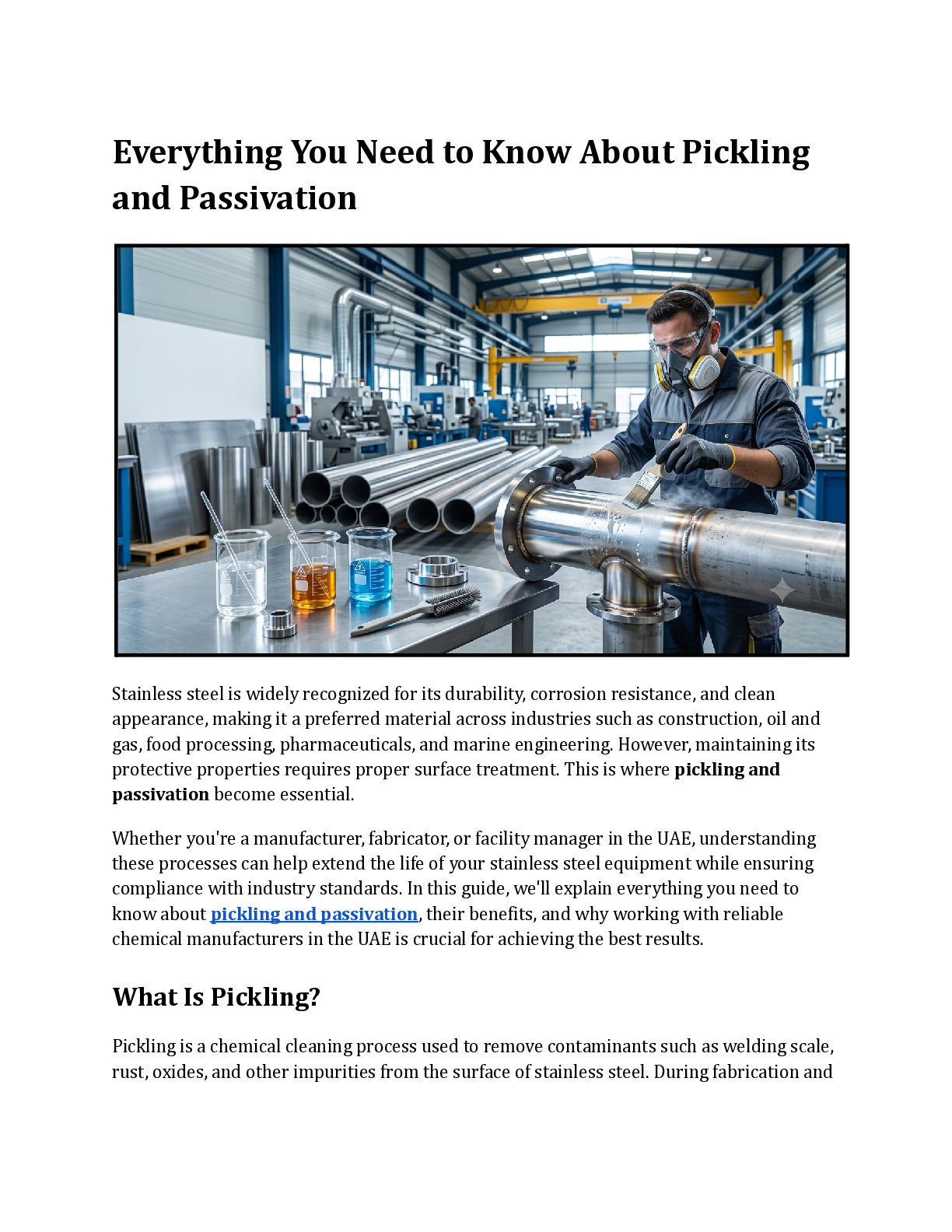
steel is widely recognized for its durability, corrosion resistance, and clean appearance, making it a preferred material across industries such as construction, oil and gas, food processing, pharmaceuticals, and marine engineering. However, maintaining its protective properties requires proper surface treatment. This is where pickling and passivation become essential. Whether you're a manufacturer, fabricator, or facility manager in the UAE, understanding these processes can help extend the life of your stainless steel equipment while ensuring compliance with industry standards. In this guide, we'll explain everything you need to know about pickling and passivation, their benefits, and why working with reliable chemical manufacturers in the UAE is crucial for achieving the best results. What Is Pickling? Pickling is a chemical cleaning process used to remove contaminants such as welding scale, rust, oxides, and other impurities from the surface of stainless steel. During fabrication and
that reduce its corrosion resistance. Pickling typically involves applying a mixture of nitric acid and hydrofluoric acid or specially formulated pickling gels and pastes. These chemicals dissolve surface contaminants without damaging the base metal, restoring the clean metallic finish. The process is commonly used in industries where hygiene, corrosion resistance, and long-term durability are essential. What Is Passivation? Passivation is the process of enhancing the natural chromium oxide layer that protects stainless steel from corrosion. Unlike pickling, passivation does not remove heavy scale or oxide deposits. Instead, it removes free iron particles and surface contaminants that could lead to rust formation. After cleaning, the stainless steel is treated with a passivating solution, allowing a protective oxide film to form naturally when exposed to oxygen. According to industry studies, properly passivated stainless steel can significantly improve corrosion resistance, particularly in harsh environments such as coastal regions like the UAE, where high humidity and salt exposure accelerate corrosion. Pickling vs. Passivation: What's the Difference? Although these terms are often used together, they serve different purposes. Pickling removes welding discoloration, oxide layers, rust, and surface contamination, while passivation strengthens the protective chromium oxide layer that prevents future corrosion. In many industrial applications, pickling is performed first, followed by passivation to maximize corrosion resistance and ensure long-term performance. Why Are Pickling and Passivation Important? Investing in proper surface treatment offers several advantages for businesses across multiple industries.
corrosion. Removing contaminants and restoring the protective oxide layer allows stainless steel to withstand aggressive environments more effectively. Longer Equipment Life Industrial equipment, pipelines, tanks, and processing machinery last significantly longer when protected against corrosion, reducing maintenance costs and unexpected downtime. Better Hygiene Standards Industries such as food processing, pharmaceuticals, and healthcare require exceptionally clean stainless steel surfaces. Pickling and passivation help eliminate contaminants that may harbor bacteria or compromise product quality. Enhanced Appearance Surface treatments restore the bright, uniform finish of stainless steel, making fabricated components look cleaner and more professional. Compliance with Industry Standards Many sectors follow strict quality standards, including ASTM and ISO guidelines, where proper surface treatment is recommended to ensure product performance and reliability. Industries That Benefit from Pickling and Passivation In the UAE, these chemical processes are widely used across various sectors. Oil and gas facilities depend on corrosion-resistant pipelines and equipment operating under challenging conditions. Food and beverage manufacturers require hygienic stainless steel processing systems. Pharmaceutical companies rely on contamination-free equipment to maintain product quality. Marine industries benefit from increased resistance to saltwater corrosion, while construction projects use treated stainless steel for long-lasting architectural applications. With the UAE's growing industrial infrastructure, demand for specialized treatment chemicals continues to rise.
in UAE is essential for obtaining high-quality pickling and passivation chemicals that meet international safety and performance standards. Reliable manufacturers offer consistent product quality, technical support, customized chemical formulations, and compliance with environmental regulations. They also help businesses choose the right products based on the type of stainless steel, application requirements, and operating environment. Working with experienced chemical suppliers ensures effective surface treatment while minimizing operational risks and maximizing equipment lifespan. Best Practices for Pickling and Passivation To achieve optimal results, always prepare the metal surface thoroughly before treatment by removing grease, oil, and loose contaminants. Follow the recommended chemical concentrations and exposure times, as excessive treatment may affect surface quality. Proper rinsing after pickling is equally important to eliminate residual chemicals before passivation begins. Additionally, operators should always use appropriate personal protective equipment (PPE) and follow safety guidelines when handling industrial chemicals. Partnering with experienced professionals helps ensure these processes are performed safely and effectively. Conclusion Understanding pickling and passivation is essential for maintaining the performance, appearance, and longevity of stainless steel components across industrial applications. These processes improve corrosion resistance, support regulatory compliance, and reduce long-term maintenance costs, making them a valuable investment for businesses throughout the UAE. If you're looking for premium-quality industrial chemicals from trusted chemical manufacturers in the UAE, Al Taher Industries LLC offers reliable solutions designed to meet the highest industry standards. Contact us today to discover high-performance


 m3c
m3c
.png) speakbuddy
speakbuddy
 kazumakitao
 freee
freee
 ashisuto_career
 todatomohiro
 superstudio
 tamagakiyuya
 nishika_kae
 tsuchihashi
 xinghr
 behealthy
 codingconduct
 productmarketing
 samtorres
 addyosmani
 marcelosomers
 jacobian
 axbom
axbom
 lemiorhan
 jnunemaker
 popppiees
 cassininazir
 danielanewman