Share
Embed
Transcript
96 slides
-
biomimetics I guess we can learn from nature it may
take time exact copies don’t make sense -
biomimetics I guess we can learn from nature it may
take time exact copies don’t make sense -
biomimetics - microfluidics what type of microfluidics do we find
in nature ? how is fluid pumping done ? what is it designed for ? lessons to the engineer -
biomimetics - microfluidics what is network designed for ? perfusion,
removal equally distribute liquid from one point to large area damage tolerance mechanical stability -
leaf venation the PDMS copy, red ink Wenming Wu et
al, RSC Advances 6, 22469-22475 (2016) -
leaf venation manufacturing Wenming Wu et al, RSC Advances 6,
22469-22475 (2016) -
W.J.s’Gravesande, „Mathematical Elements of Natural Philosophy confirm’d by experiments, or
an introduction to Sir Isaac Newton’s philosophy“, plate 120, fig.2 ,London 1747 -
• liquid chromatography, electrochemical detection • silicon – glass chip,
design 1987, fab 1987 hitachi ltd. japan • manz, miyahara, miura, watanabe, miyagi, sato, sensors & actuators B1, 249-255, 1990 -
example micro well plate volume of 1µL 1nL 1pL (1mm)3
(100µm)3 (10µm)3 600,000,000 600,000 600 25 / cm2 2500 / cm2 250 ,000/ cm2 17 min 10s 100ms 1.5 /min / cm2 250 /s / cm2 2,500,000 /s / cm2 # molecules (1nM solution) # volumes In array diffusion time # reactions (diffusion controlled) is a cube of -
flow injection analysis, 1989-92 Ciba-Geigy / CSEM – Sabeth Verpoorte
et al. Jointly with Neuchatel University & CSEM Bart van der Schoot and Nico de Rooij -
1989-91 CE on chip Ciba-Geigy, Basel – Jed Harrison et
al. Microfab IMT Greifensee (then part of Mettler Toledo, Ciba-Geigy) -
• capillary electrophoresis, flow injection, electrochemical detection • glass –
glass chip, design 1989, fab 1989 mettler imt switzerland • manz, fettinger, lüdi, widmer, svs bulletin 5, 4-10, 1990 -
• capillary electrophoresis, injection, electrochemical detection • glass – glass
chip, design 1989, fab 1989 mettler imt switzerland • manz, harrison, fettinger, verpoorte, lüdi, widmer, proc. transducers 1991 san francisco, 939-941, 1991 -
• capillary electrophoresis, injection • glass – glass chip, design
1992, fab 1992 mettler imt switzerland • effenhauser, manz, widmer, anal.chem. 65, 2637-2642, 1993 -
flu o re s c e n c e [a
rb . u n its ] tim e [s ] 0 4 0 8 0 1 2 0 1 6 0 1 2 3 4 5 6 c y c le # 7 8 t 7 s s y n c h r. flu o re s c e n c e [a rb . u n its ] tim e [s ] 0 4 0 8 0 1 2 0 1 6 0 1 2 3 4 5 6 c y c le # 7 8 t 7 s s y n c h r. flu o re s c e n c e [a rb . u n its ] tim e [s ] 0 4 0 8 0 1 2 0 1 6 0 1 2 3 4 5 6 c y c le # 7 8 t 7 s s y n c h r. electrophoresis FITC labeled amino acids D.J.Harrison, K.Flury, K.Seiler, Z.Fan, C.S.Effenhauser, A.Manz, Science 261, 895-897 (1993) C.S.Effenhauser, A.Manz, H.M.Widmer, Anal. Chem. 65, 2637-2642 (1993) -
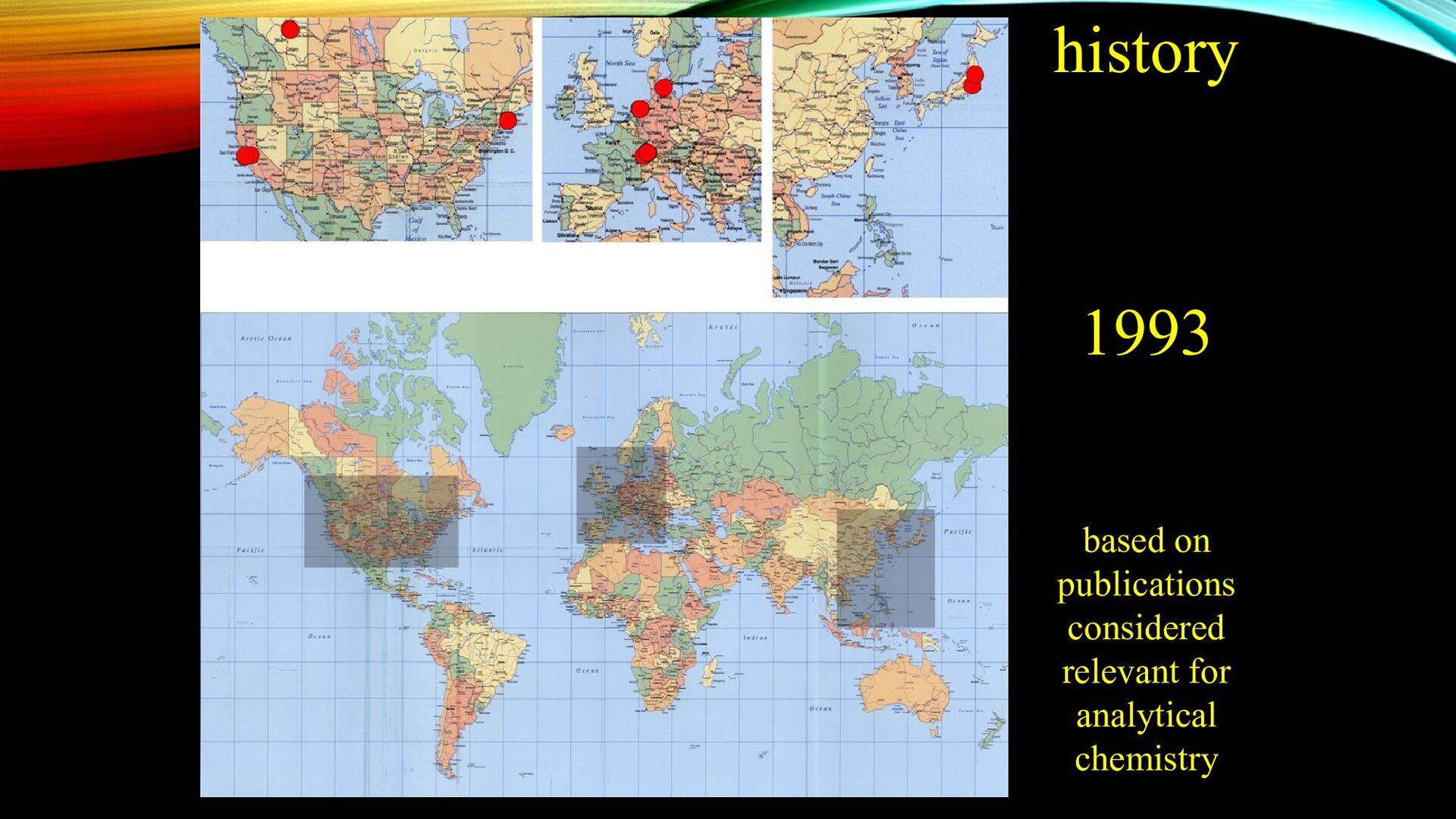
history of “lab on chip” activities based on publications considered
relevant for analytical chemistry -
history 1991 based on publications considered relevant for analytical chemistry
CE on chip presented at HPLC91 Basel -
history 1994 based on publications considered relevant for analytical chemistry
1st micro TAS conference -
history 1999 based on publications considered relevant for analytical chemistry
Caliper goes public -
history 2001 based on publications considered relevant for analytical chemistry
1st issue of „Lab Chip“ journal -
• substrate materials used glass-glass pdms-pdms pdms- glass glass-silicon silicon-silicon
pmma- pmma glass-glass pdms-pdms pdms-glass glass-silicon silicon-silicon pmma-pmma glass-gold-glass glass-laminate-glass glass-silicon-glass ordyl multi-layer glass pdms-copper pdms-silicon pdms-silicon-pdms quartz-quartz substrate materials -
• integrated featurs, like metal electrodes, heaters, membranes etc integrated
features metal electrodes heaters porous membrane nothing metal electrodes heaters porous membrane slit array outside liquid membrane planar waveguides x-ray source t sensor phase quides nothing -
• topology • spider, tree, loop, network, etc topology of
channels tree, spider single channel 1 loop central ch array, tree central bed, ch around binary branching structure non-binary branching well tree, spider single channel 1 loop central ch array, tree central bed, ch around binary branching structure non-binary branching well central chamber, frit, tree network central chamber, single ch -
• interfacing type • (“chip to world interface”) interfacing type
eppendorf pipets, open fused silica tubing don't know, not used plastic tubing - glue flat metal plates large holes, thick glass cover flat plastic plates large holes, thick pdms cover eppendorf pipets, open fused silica tubing don't know, not used plastic tubing - glue flat metal plates large holes, thick glass cover flat plastic plates large holes, thick pdms cover -
• what is the chip used for? application area separation
detection reaction biology basics application pumping sample prep separation detection reaction biology basics application pumping sample prep -
• How many chips were in direct line to commercialization?
commercializations commercial attempt no attempt commercial attempt no attempt -
biomimetics - microfluidics Cell culture model (replace animal model) Perfusion
allowing 3d cell cultures for longer term Liver cells, human and zebra fish Increased size of cell culture better analysis of low abundancy metabolites -
Increased size of cell culture better analysis of low
abundancy metabolites compounds in blood a) clinically used b) existing a) b) -
a) b) single cell 20 x 20 x 20 um
8.10-15 m3 hormones 10-9 ... 10-12 M hormones per cell volume 8.10-21 mol/cell ... 8.10-24 mol/cell large cell culture (10 cm)3 1011 cells in culture hormones 10-9 ... 10-12 M hormones per cell volume 8.10-10 mol/culture ... 8.10-13 mol/culture larger volume cell cultures are easier for low abundancy metabolite assays, but will show average values only single cell assays can show cell variability, but only for high enough concentration metabolites -
perfusion for cell culture (0.1 µL) differentiate HepaRG cells directly
in microfluidic device CK18 / CK19 expression level (microfluidic chip by Mimetas) M.Jang et al, Biomicrofluidics 9, 034113 (2015), M.Jang et al, Biomedical Microdevices (in press 2018) -
Porous membrane Cell Culture Medium 75µL/h Novel cell culture device
for long-term toxicology studies Principle: - Cells embedded in 3D matrix (Matrigel) - Perfusion of cell culture medium through the matrix - Improved nutrient supply and removal of metabolic waste products perfusion for cell culture (1 mL) -
perfusion for cell culture epithelial cell viability in newly developed
device after 7d comparable to the non-perfused control measured by live/dead staining and flow cytometry Comparison of cell viabilities after 7d -
perfusion for cell culture Comparison of number of cells after
7d Comparison of device and control shows significant increase in number of cells recovered from newly developed device after 7d in culture. Next steps: address reproducibility optimise perfusion apply to human liver cells zebra fish liver cells -
perfusion for cell culture • can we cultivate large volumes
of cells „on chip“? • like: Daphnia or zebra fish liver cell culture, in g quantities? • imaging of such cell culture nearly impossible • off line analysis is disruptive, flow cytometry • indirect analysis, metabolites • analysis of headspace (volatile metabolites) -
• HepaRG cells ? A human hepatic progenitor cell line
that can differentiate into hepatocyte and biliary like cells. 9 days 2 week 5 Days Progenitor cells Hepatocyte-like cell surrounded by epithelial cells, biliary cell. Fully differentiation to hepatocyte and biliary cell 1 month 2%DMSO Introduction of HepaRG cells -
Medium flow MG Col 14 Days Chip cultivation 5 Days
Progenitor cells (PGC) Not fully differentiated cells (NFDC) 14 Days Flask cultivation Medium flow Medium flow Medium flow 2. Flow direction 3. With & Without DMSO Medium flow Medium flow 1. Matrix Flo w Flow Flo w Flow Y Z Flo w Flo w X Y • Motivation Differentiate HepaRG cells directly in microfluidic device to reduce time and DMSO treatment • Strategies - Different Matrix (Matrigel vs. Collagen I) - Flow direction ( One side vs. Both side) - DMSO treatment (with vs.without) Aim of Research -
Medium flow MG Col PGC NFDC 1. Matrix CK19 (Biliary
cells marker) Albumin (Hepatocyte marker) Matrigel vs. Collagen I Matrigel : co-expression of albumin and CK19. Collagen I : Albumin expression very low, only CK19 expression -
Medium flow Medium flow Medium flow PGC NFDC Cell
cluster size PGC (One) PGC (Both) NFDC (One) NFDC (Both) 2. Flow direction One side flow vs.Both side flow Flow influenced on generation of cell clusters. Cells under both side of flow : spheroid is bigger -
PGC Medium flow Medium flow Medium flow NFDC NTCP expression
One side flow vs.Both side flow Flow influenced on expression level of membrane protein. 2. Flow direction -
PGC + DMSO NFDC - DMSO + DMSO - DMSO
Cell viability -/- +/+ -/- +/+ PGC NFDC 0 20 40 60 80 100 Cell viability % +DMSO vs. - DMSO DMSO reduced cell viability significantly. -
PGC CK18/19 expression level -DMSO NFDC +DMSO PG C
-D M SO PG C +D M SO N FD C -D M SO N FD C +D M SO 0 20 40 60 80 100 CK18/CK19 Ratio +DMSO vs. - DMSO DMSO reduced both CK18,CK19 expression level. PGC shows the highest ratio of CK18 expression level CK18(Hepatocyte)/19(Bilary cell) -
CYP3A4, ALBUMIN EXPRESSION PGC NFDC -DMSO +DMSO CYP1A
induction assay 3 Day 7 Day 14Day 0 10 20 30 PGC -DMSO PGC +DMSO UDC -DMSO UDC +DMSO -DMSO +DMSO -DMSO +DMSO PGC NFDC 0 1 2 3 4 5 -DMSO Fold change ng/day/cell Albumin production +DMSO vs. - DMSO PGC without DMSO : the best cultivation in microfluidic device -
Distribution of cell population Z= 64 µ m Z=64µm Z=113µm
XZ YZ Y X Z CK18/ CK19 expression in PGC 30µm-80µm : stable cell spheriods Cell distribution : CK19(Biliary cells) surrounded by CK18 (Hepatocytes) -
Cell polarization Y X Z NTCP (Basolateral membrane) expression
in PGC Z=36µm Z=63µm Z=100µm XZ YZ Most of Spheroid (30-80µm) express NTCP Differentiated HepaRG cells in microfluidic device show highly polarized basolateral membrame. -
Conclusion 1. Only matrigel induce cells to differentiate to hepatocyte
but not collagen I. 2. Both side of flow helped cells to form cell cluster and express membrane protein. 3. DMSO influenced on cell viability and albumin production but not for CYP expression level. 4. Differentiated progenitor cells in microfludic device showed highly polarized membrane protein. Finally, Progenitor cells can differentiate into hepatocyte-like cells in microfluidic device for 2 weeks without DMSO. -
ecotoxicology, chronic toxicity Metabolites of Daphnia magna (Crustacea) Keep Daphnia
alive for days Take headspace (air above water) as samples Analyze contents, qualitative and quantitative Search for biomarkers for Daphnia presence and „happyness“ -
Daphnia metabolites Human excretion, example Weight 80 kg, volume 80
L Feces per day ca 250 g, of which 60 g are solids Urine per day ca 1 L, of which 120 g are solids Total excreted metabolites ca 120 g per day Daphnia excretion ??? Weight 8 mg, volume 8 mL Total excreted metabolites ca 12 mg per day (in 1 L of water, that is in the order of 12 ppb) -
Daphnia metabolites head space analysis equilibrium of volatile molecules between
gas and water phase depends on vapor pressure advantage: easy access easy analysis reversible gas phase water phase -
Daphnia metabolites Method: acidification, headspace, gas chromatography, mass spectrometry Collaboration
with INM, Yuliya Silina red: algae feed black: Daphnia -
Daphnia metabolites Method: acidification, headspace, gas chromatography, mass spectrometry Collaboration
with INM, Yuliya Silina red: algae feed black: Daphnia algae feed: many oxygen containing compounds, ethers, alcohols Daphnia: many fatty acid derivatives, aldehydes, ketones -
Daphnia metabolites Next steps: Reproducibilty ? Life cycle of Daphnia
? Stressed Daphnia ? Identify biomarker molecule Can it be used for envirotox monitoring ? Develop chemical sensor / µTAS chip for it -
Felix Löser Jun Hyung Im André-René Blaudszun Matthias Altmeyer Mi
Jang Wenming Wu Leon Abelmann, prof Xiangping Li Jonathan O‘Connor Agu Vahtrik Irving Mbougue Djuemo Chang Gyun Park acknowledgements