Upgrade to Pro — share decks privately, control downloads, hide ads and more …

Angle Electric Service – Reliable Electrical S...

Angle Electric Service – Reliable Electrical Solutions in Juhapura, Ahmedabad

Foram Angle Electric Service is a trusted name in Juhapura, Ahmedabad, offering professional and affordable electrical solutions for homes, offices, and commercial spaces. With a focus on safety, efficiency, and quality workmanship, we handle everything from basic electrical repairs and wiring to advanced installations and maintenance.

Other Decks in Business

Transcript

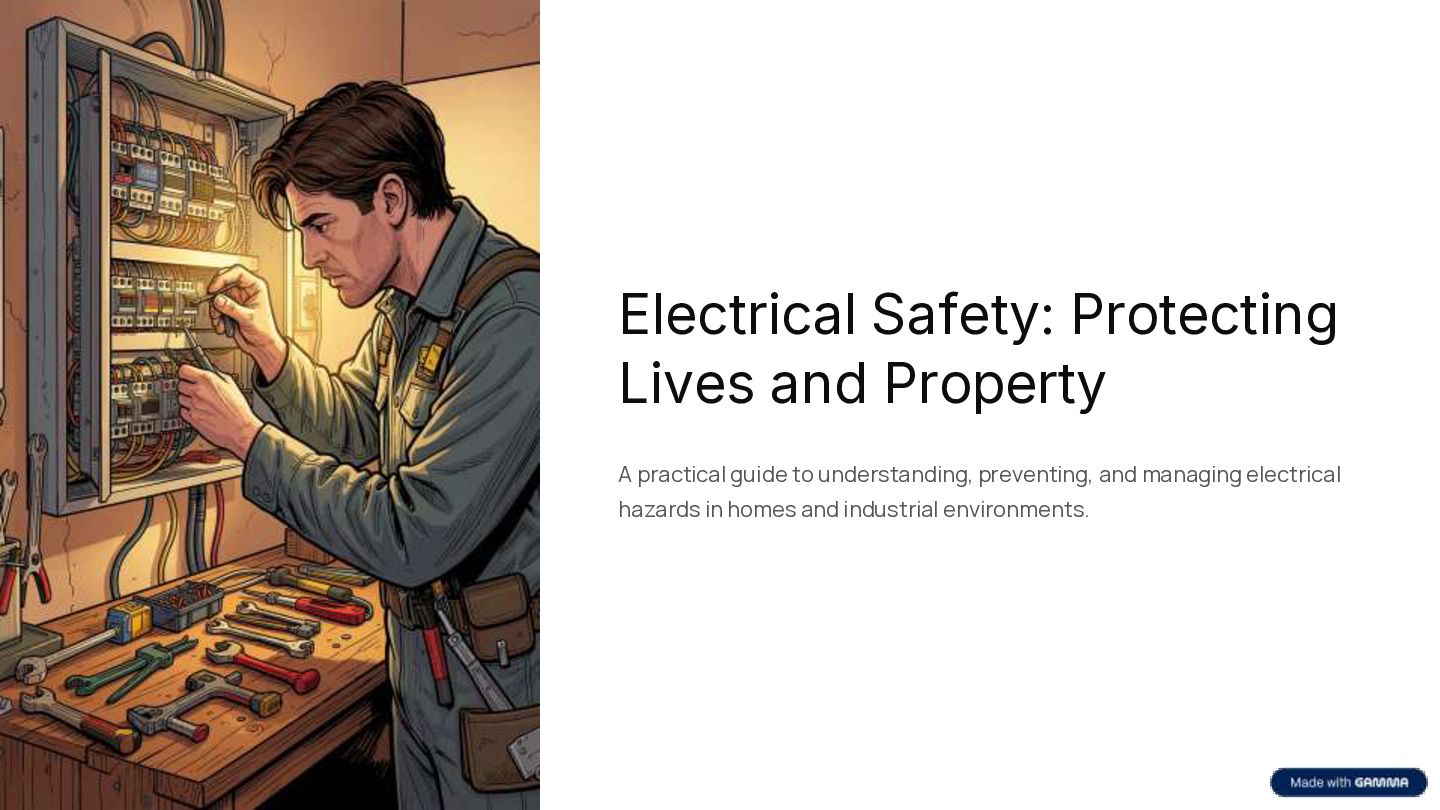
  1. Electrical Safety: Protecting Lives and Property A practical guide to

    understanding, preventing, and managing electrical hazards in homes and industrial environments.
  2. The Invisible Danger: Electricity's Power and Peril Why It Matters

    Electricity powers modern life — but it is also one of the most serious workplace and home hazards, capable of causing electric shock, electrocution, fires, and explosions. The Scale of the Problem OSHA estimates thousands of electrocutions occur annually, with hundreds directly involving consumer products. Electrical incidents remain one of the leading causes of workplace fatalities worldwide.
  3. Home Hazards: The Silent Threats 46K Home Fires Per Year

    Involving electrical distribution systems in the UK and US combined 100s Deaths Annually Resulting from home electrical fires and related accidents £Bn Property Loss Millions in damage caused by preventable electrical incidents each year Common culprits include faulty wiring, overloaded circuits, damaged cords, and improper use of extension cords. Even seemingly minor issues — such as an incorrectly wired plug — can lead to fatal accidents or devastating fires.
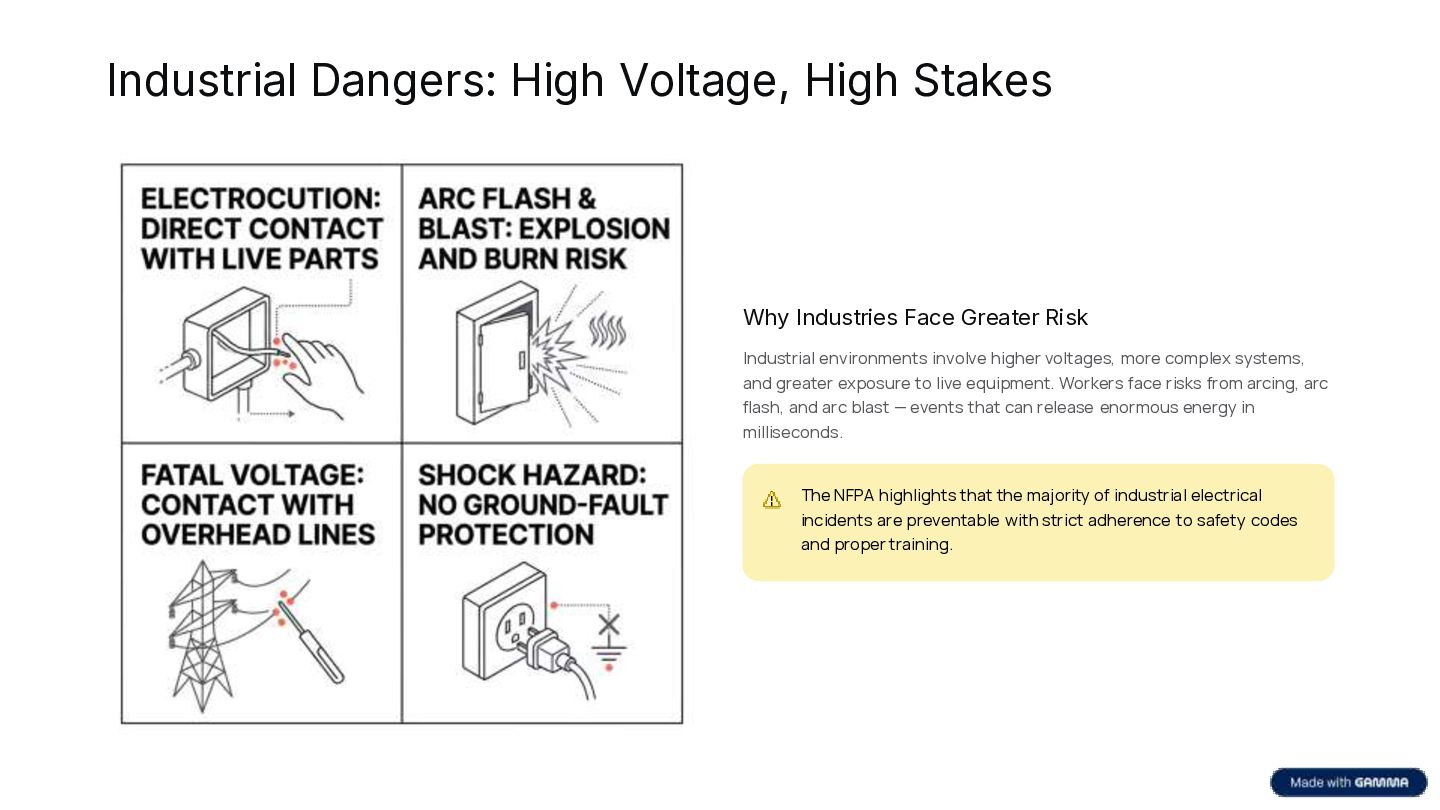
  4. Industrial Dangers: High Voltage, High Stakes Why Industries Face Greater

    Risk Industrial environments involve higher voltages, more complex systems, and greater exposure to live equipment. Workers face risks from arcing, arc flash, and arc blast — events that can release enormous energy in milliseconds. The NFPA highlights that the majority of industrial electrical incidents are preventable with strict adherence to safety codes and proper training.
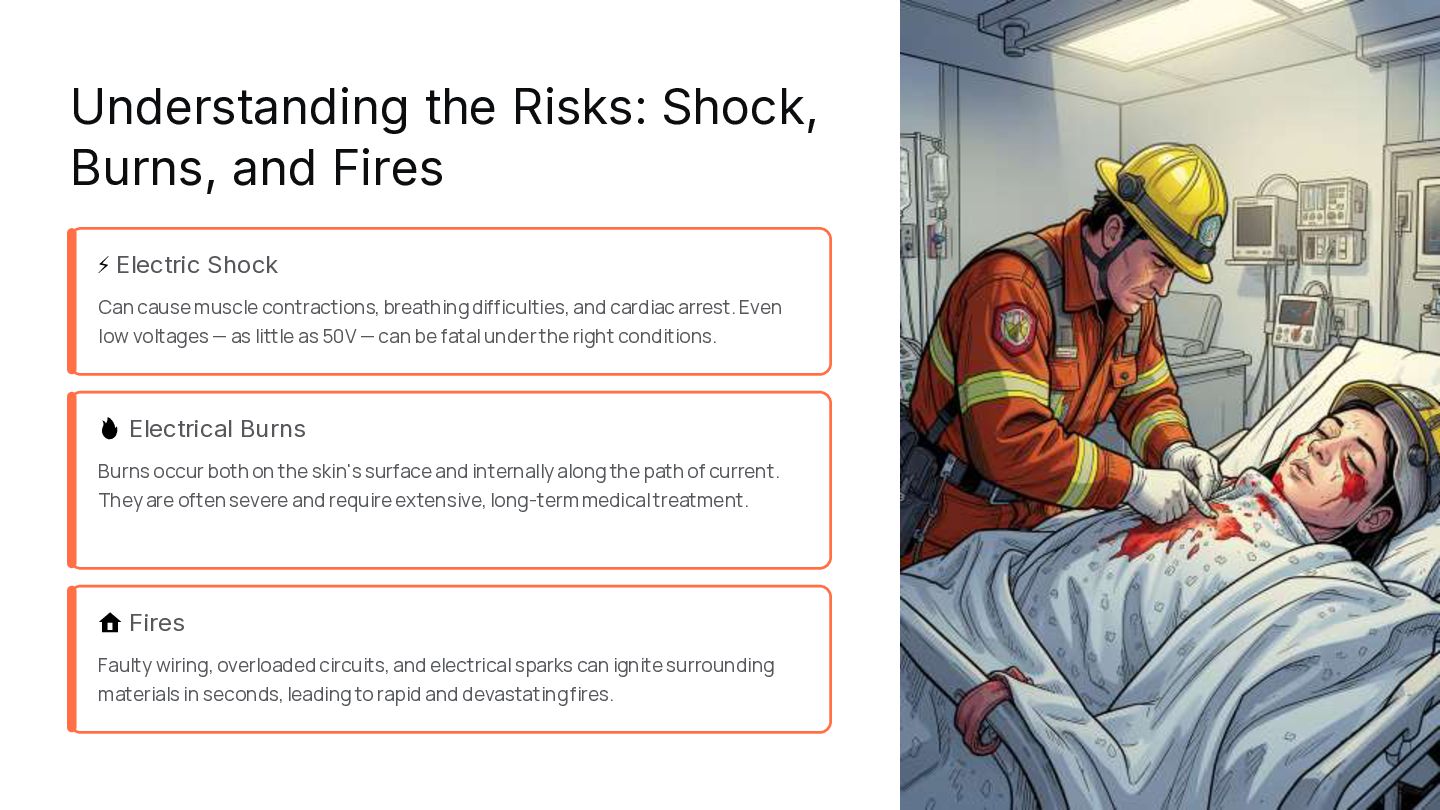
  5. Understanding the Risks: Shock, Burns, and Fires ⚡ Electric Shock

    Can cause muscle contractions, breathing difficulties, and cardiac arrest. Even low voltages — as little as 50V — can be fatal under the right conditions. 🔥 Electrical Burns Burns occur both on the skin's surface and internally along the path of current. They are often severe and require extensive, long-term medical treatment. 🏠 Fires Faulty wiring, overloaded circuits, and electrical sparks can ignite surrounding materials in seconds, leading to rapid and devastating fires.
  6. Prevention is Key: Essential Safety Measures Insulation Properly insulated wires

    and equipment prevent accidental contact with live parts, forming the first line of defence. Guarding Live parts must be enclosed or guarded to prevent unauthorised access and reduce the risk of accidental contact. Grounding Provides a safe path for fault current to flow to earth, preventing dangerous voltage build-up and reducing shock risk. Circuit Protection Fuses and circuit breakers interrupt power during overloads or short circuits, protecting both people and equipment.
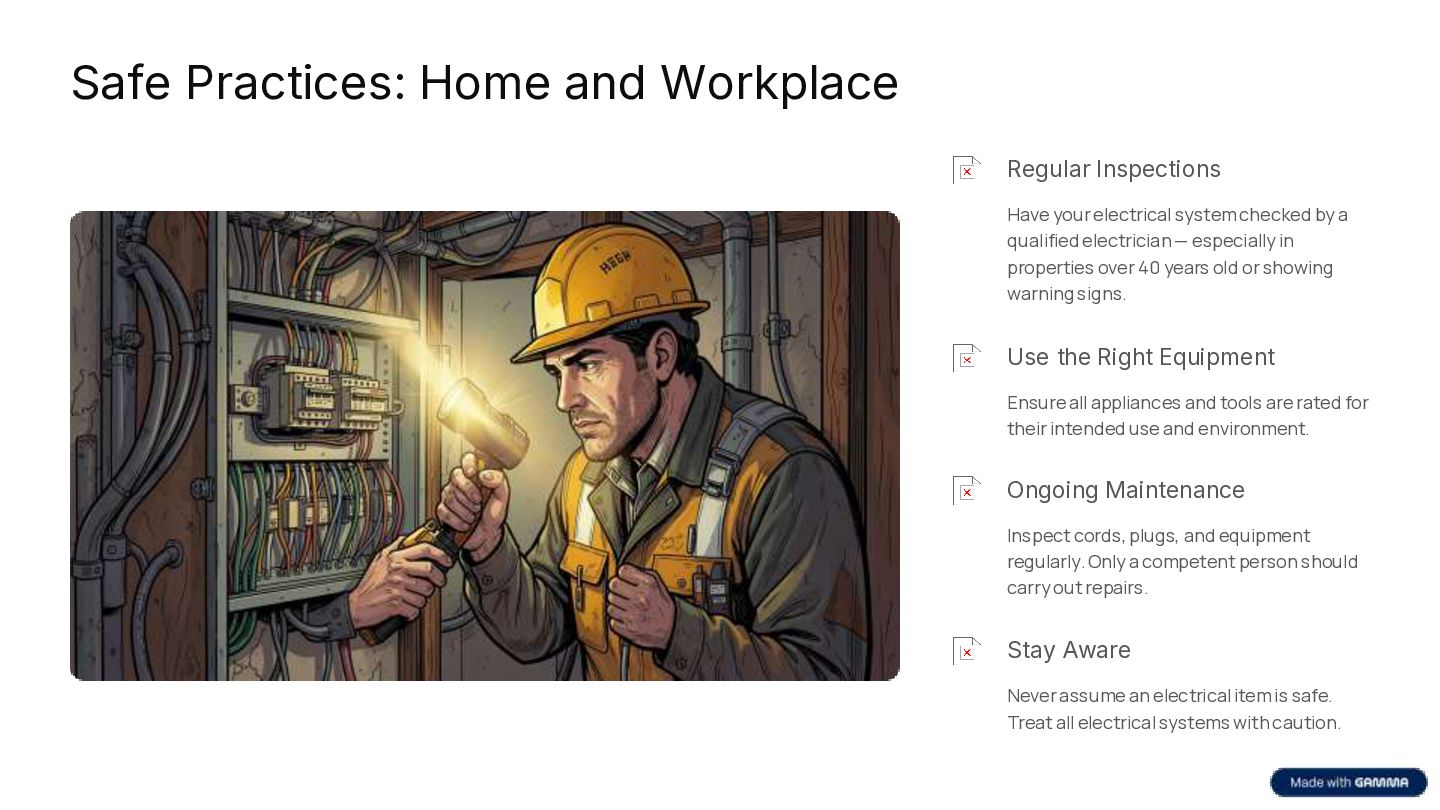
  7. Safe Practices: Home and Workplace Regular Inspections Have your electrical

    system checked by a qualified electrician — especially in properties over 40 years old or showing warning signs. Use the Right Equipment Ensure all appliances and tools are rated for their intended use and environment. Ongoing Maintenance Inspect cords, plugs, and equipment regularly. Only a competent person should carry out repairs. Stay Aware Never assume an electrical item is safe. Treat all electrical systems with caution.
  8. The Role of Regulations: OSHA and NFPA OSHA Standards The

    Occupational Safety and Health Administration sets mandatory standards to protect workers from electrical hazards, covering electric utilisation systems, safe working distances, and requirements for personal protective equipment (PPE). OSHA's performance-based standards focus on outcomes — employers must demonstrate hazards are effectively controlled. NFPA 70E® The Standard for Electrical Safety in the Workplace® provides detailed, prescriptive safe work practices and maintenance requirements. It complements OSHA by offering specific technical guidance on arc flash boundaries, PPE categories, and lockout/tagout procedures. Together, OSHA and NFPA 70E form a comprehensive framework that, when followed, dramatically reduces workplace electrical incidents.
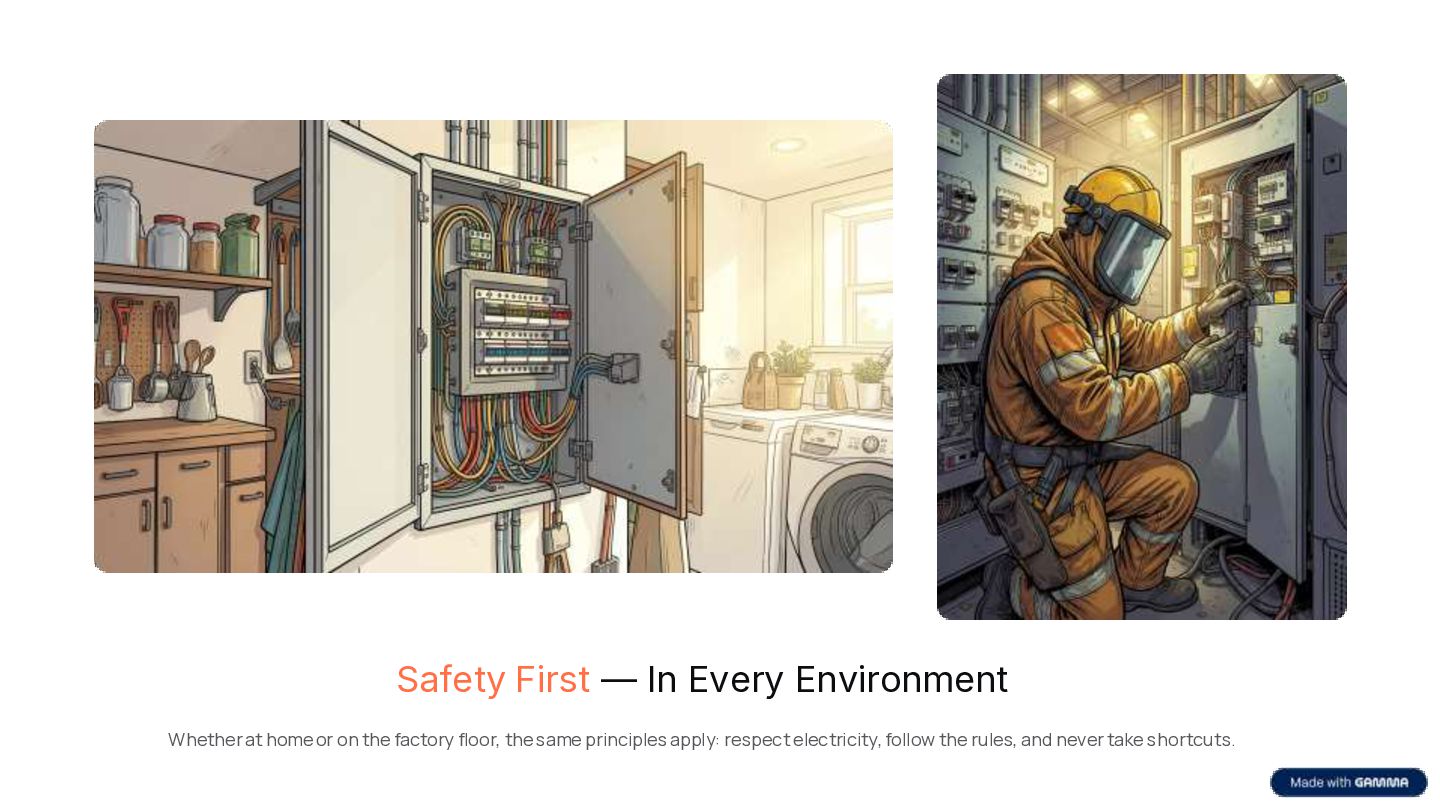
  9. Safety First — In Every Environment Whether at home or

    on the factory floor, the same principles apply: respect electricity, follow the rules, and never take shortcuts.
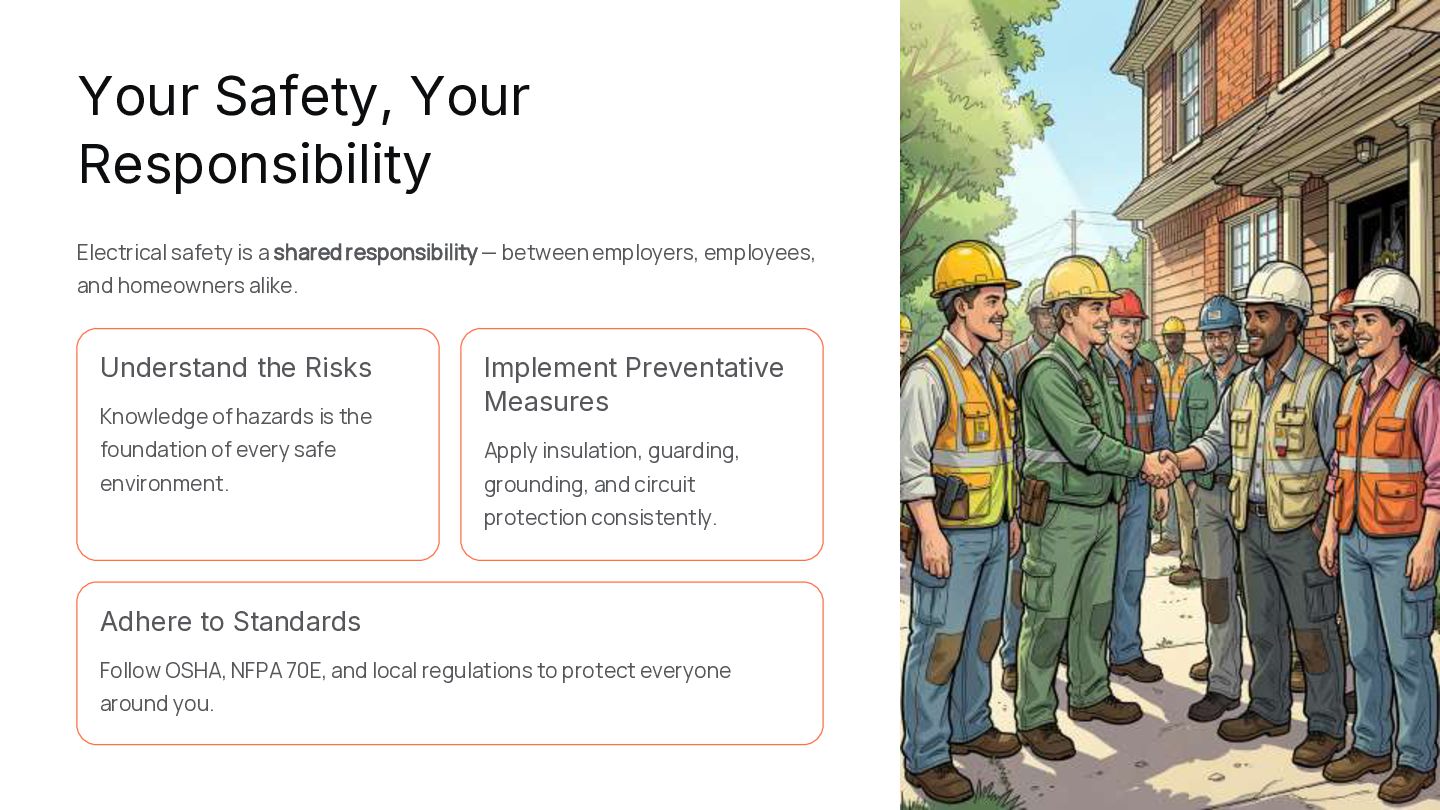
  10. Your Safety, Your Responsibility Electrical safety is a shared responsibility—

    between employers, employees, and homeowners alike. Understand the Risks Knowledge of hazards is the foundation of every safe environment. Implement Preventative Measures Apply insulation, guarding, grounding, and circuit protection consistently. Adhere to Standards Follow OSHA, NFPA 70E, and local regulations to protect everyone around you.