$30 off During Our Annual Pro Sale. View Details »

Study of Sleep Quality in Geopathic Stress- Qua...

Avatar for Anuj Singh Anuj Singh
December 15, 2025

Study of Sleep Quality in Geopathic Stress- Quantitative Research

This quantitative research investigates the negative impact of Geopathic Stress (GS)—disturbances from geological features like underground water—on sleep quality. Conducted at AIIMS, New Delhi, the study used Polysomnography to measure sleep metrics in GS areas. The results showed that using the Enviromat significantly improved subjects' average sleep efficiency from $80.78\%$ to $87.08\%$ ($p=0.0021$), as well as reducing wake time, snoring, and apnea events. These findings highlight Enviromat as an effective intervention for mitigating the detrimental effects of GS on sleep and enhancing overall well-being

https://environics.in/

Avatar for Anuj Singh

Anuj Singh

December 15, 2025
Tweet

Other Decks in Research

Transcript

  1. Volume 4 | Issue 3 | 1 of 5 Int

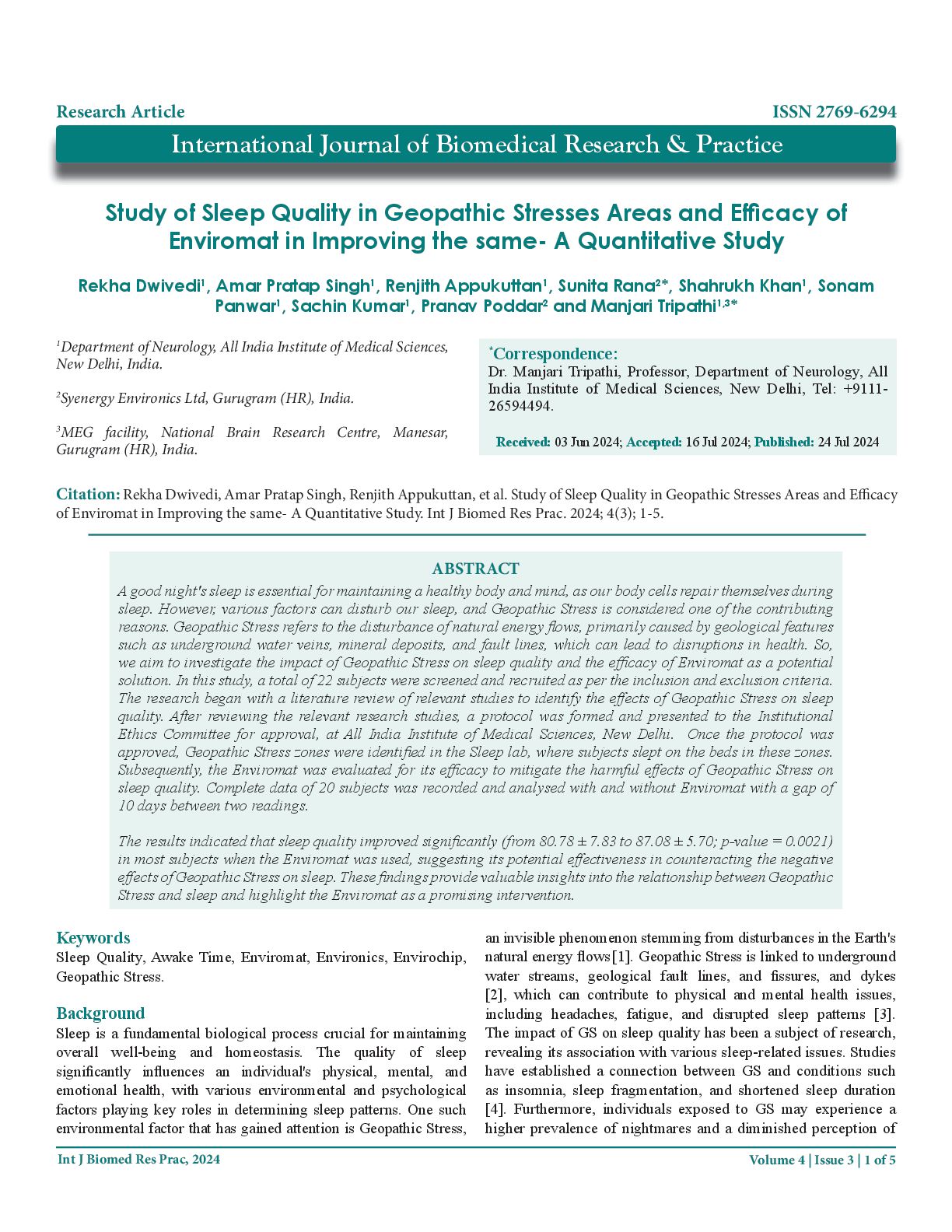
    J Biomed Res Prac, 2024 Study of Sleep Quality in Geopathic Stresses Areas and Efficacy of Enviromat in Improving the same- A Quantitative Study Rekha Dwivedi1, Amar Pratap Singh1, Renjith Appukuttan1, Sunita Rana2*, Shahrukh Khan1, Sonam Panwar1, Sachin Kumar1, Pranav Poddar2 and Manjari Tripathi1,3* 1Department of Neurology, All India Institute of Medical Sciences, New Delhi, India. 2Syenergy Environics Ltd, Gurugram (HR), India. 3MEG facility, National Brain Research Centre, Manesar, Gurugram (HR), India. International Journal of Biomedical Research & Practice ISSN 2769-6294 Research Article Citation: Rekha Dwivedi, Amar Pratap Singh, Renjith Appukuttan, et al. Study of Sleep Quality in Geopathic Stresses Areas and Efficacy of Enviromat in Improving the same- A Quantitative Study. Int J Biomed Res Prac. 2024; 4(3); 1-5. *Correspondence: Dr. Manjari Tripathi, Professor, Department of Neurology, All India Institute of Medical Sciences, New Delhi, Tel: +9111- 26594494. Received: 03 Jun 2024; Accepted: 16 Jul 2024; Published: 24 Jul 2024 ABSTRACT A good night's sleep is essential for maintaining a healthy body and mind, as our body cells repair themselves during sleep. However, various factors can disturb our sleep, and Geopathic Stress is considered one of the contributing reasons. Geopathic Stress refers to the disturbance of natural energy flows, primarily caused by geological features such as underground water veins, mineral deposits, and fault lines, which can lead to disruptions in health. So, we aim to investigate the impact of Geopathic Stress on sleep quality and the efficacy of Enviromat as a potential solution. In this study, a total of 22 subjects were screened and recruited as per the inclusion and exclusion criteria. The research began with a literature review of relevant studies to identify the effects of Geopathic Stress on sleep quality. After reviewing the relevant research studies, a protocol was formed and presented to the Institutional Ethics Committee for approval, at All India Institute of Medical Sciences, New Delhi. Once the protocol was approved, Geopathic Stress zones were identified in the Sleep lab, where subjects slept on the beds in these zones. Subsequently, the Enviromat was evaluated for its efficacy to mitigate the harmful effects of Geopathic Stress on sleep quality. Complete data of 20 subjects was recorded and analysed with and without Enviromat with a gap of 10 days between two readings. The results indicated that sleep quality improved significantly (from 80.78 ± 7.83 to 87.08 ± 5.70; p-value = 0.0021) in most subjects when the Enviromat was used, suggesting its potential effectiveness in counteracting the negative effects of Geopathic Stress on sleep. These findings provide valuable insights into the relationship between Geopathic Stress and sleep and highlight the Enviromat as a promising intervention. Keywords Sleep Quality, Awake Time, Enviromat, Environics, Envirochip, Geopathic Stress. Background Sleep is a fundamental biological process crucial for maintaining overall well-being and homeostasis. The quality of sleep significantly influences an individual's physical, mental, and emotional health, with various environmental and psychological factors playing key roles in determining sleep patterns. One such environmental factor that has gained attention is Geopathic Stress, an invisible phenomenon stemming from disturbances in the Earth's natural energy flows [1]. Geopathic Stress is linked to underground water streams, geological fault lines, and fissures, and dykes [2], which can contribute to physical and mental health issues, including headaches, fatigue, and disrupted sleep patterns [3]. The impact of GS on sleep quality has been a subject of research, revealing its association with various sleep-related issues. Studies have established a connection between GS and conditions such as insomnia, sleep fragmentation, and shortened sleep duration [4]. Furthermore, individuals exposed to GS may experience a higher prevalence of nightmares and a diminished perception of
  2. Volume 4 | Issue 3 | 2 of 5 Int

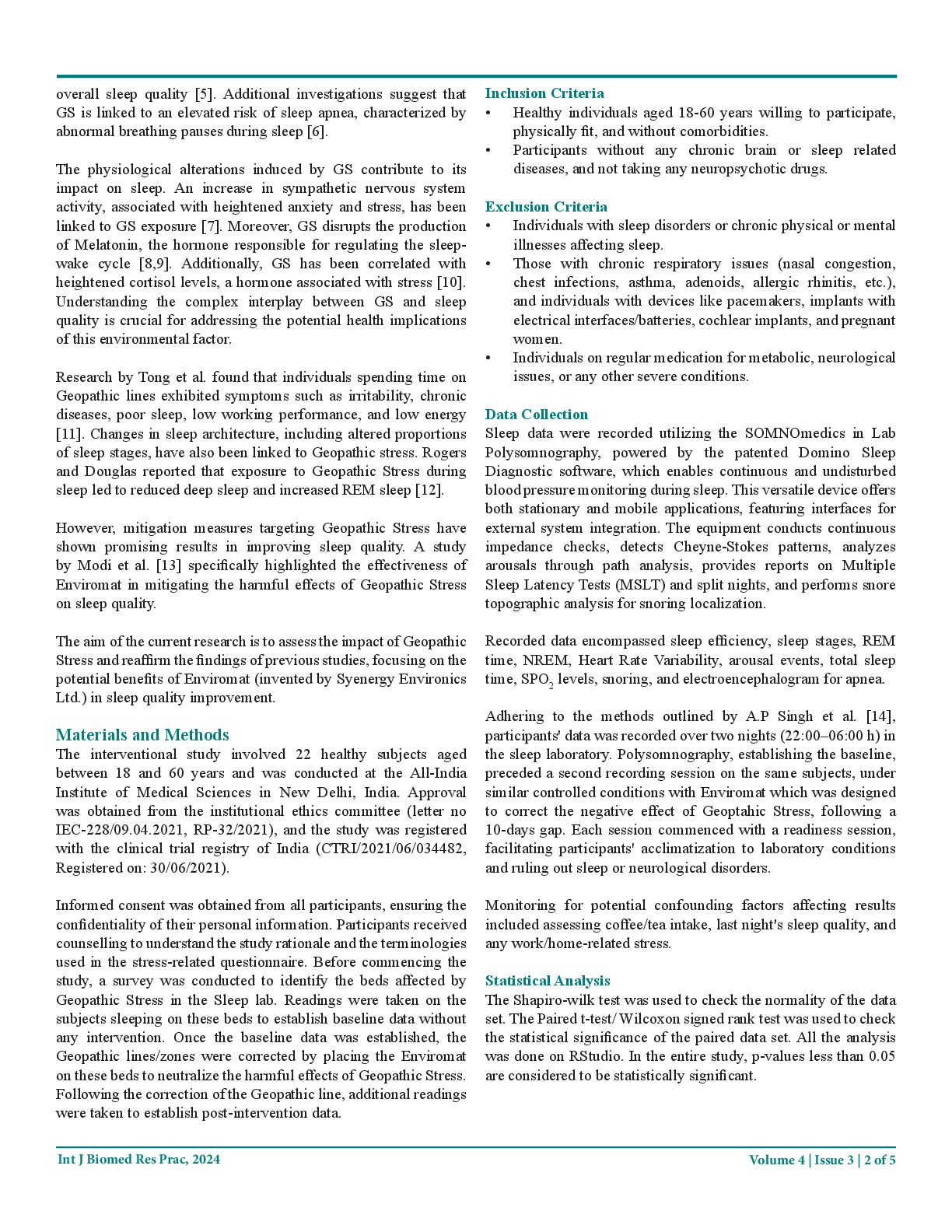
    J Biomed Res Prac, 2024 overall sleep quality [5]. Additional investigations suggest that GS is linked to an elevated risk of sleep apnea, characterized by abnormal breathing pauses during sleep [6]. The physiological alterations induced by GS contribute to its impact on sleep. An increase in sympathetic nervous system activity, associated with heightened anxiety and stress, has been linked to GS exposure [7]. Moreover, GS disrupts the production of Melatonin, the hormone responsible for regulating the sleep- wake cycle [8,9]. Additionally, GS has been correlated with heightened cortisol levels, a hormone associated with stress [10]. Understanding the complex interplay between GS and sleep quality is crucial for addressing the potential health implications of this environmental factor. Research by Tong et al. found that individuals spending time on Geopathic lines exhibited symptoms such as irritability, chronic diseases, poor sleep, low working performance, and low energy [11]. Changes in sleep architecture, including altered proportions of sleep stages, have also been linked to Geopathic stress. Rogers and Douglas reported that exposure to Geopathic Stress during sleep led to reduced deep sleep and increased REM sleep [12]. However, mitigation measures targeting Geopathic Stress have shown promising results in improving sleep quality. A study by Modi et al. [13] specifically highlighted the effectiveness of Enviromat in mitigating the harmful effects of Geopathic Stress on sleep quality. The aim of the current research is to assess the impact of Geopathic Stress and reaffirm the findings of previous studies, focusing on the potential benefits of Enviromat (invented by Syenergy Environics Ltd.) in sleep quality improvement. Materials and Methods The interventional study involved 22 healthy subjects aged between 18 and 60 years and was conducted at the All-India Institute of Medical Sciences in New Delhi, India. Approval was obtained from the institutional ethics committee (letter no IEC-228/09.04.2021, RP-32/2021), and the study was registered with the clinical trial registry of India (CTRI/2021/06/034482, Registered on: 30/06/2021). Informed consent was obtained from all participants, ensuring the confidentiality of their personal information. Participants received counselling to understand the study rationale and the terminologies used in the stress-related questionnaire. Before commencing the study, a survey was conducted to identify the beds affected by Geopathic Stress in the Sleep lab. Readings were taken on the subjects sleeping on these beds to establish baseline data without any intervention. Once the baseline data was established, the Geopathic lines/zones were corrected by placing the Enviromat on these beds to neutralize the harmful effects of Geopathic Stress. Following the correction of the Geopathic line, additional readings were taken to establish post-intervention data. Inclusion Criteria • Healthy individuals aged 18-60 years willing to participate, physically fit, and without comorbidities. • Participants without any chronic brain or sleep related diseases, and not taking any neuropsychotic drugs. Exclusion Criteria • Individuals with sleep disorders or chronic physical or mental illnesses affecting sleep. • Those with chronic respiratory issues (nasal congestion, chest infections, asthma, adenoids, allergic rhinitis, etc.), and individuals with devices like pacemakers, implants with electrical interfaces/batteries, cochlear implants, and pregnant women. • Individuals on regular medication for metabolic, neurological issues, or any other severe conditions. Data Collection Sleep data were recorded utilizing the SOMNOmedics in Lab Polysomnography, powered by the patented Domino Sleep Diagnostic software, which enables continuous and undisturbed blood pressure monitoring during sleep. This versatile device offers both stationary and mobile applications, featuring interfaces for external system integration. The equipment conducts continuous impedance checks, detects Cheyne-Stokes patterns, analyzes arousals through path analysis, provides reports on Multiple Sleep Latency Tests (MSLT) and split nights, and performs snore topographic analysis for snoring localization. Recorded data encompassed sleep efficiency, sleep stages, REM time, NREM, Heart Rate Variability, arousal events, total sleep time, SPO 2 levels, snoring, and electroencephalogram for apnea. Adhering to the methods outlined by A.P Singh et al. [14], participants' data was recorded over two nights (22:00–06:00 h) in the sleep laboratory. Polysomnography, establishing the baseline, preceded a second recording session on the same subjects, under similar controlled conditions with Enviromat which was designed to correct the negative effect of Geoptahic Stress, following a 10-days gap. Each session commenced with a readiness session, facilitating participants' acclimatization to laboratory conditions and ruling out sleep or neurological disorders. Monitoring for potential confounding factors affecting results included assessing coffee/tea intake, last night's sleep quality, and any work/home-related stress. Statistical Analysis The Shapiro-wilk test was used to check the normality of the data set. The Paired t-test/ Wilcoxon signed rank test was used to check the statistical significance of the paired data set. All the analysis was done on RStudio. In the entire study, p-values less than 0.05 are considered to be statistically significant.
  3. Volume 4 | Issue 3 | 3 of 5 Int

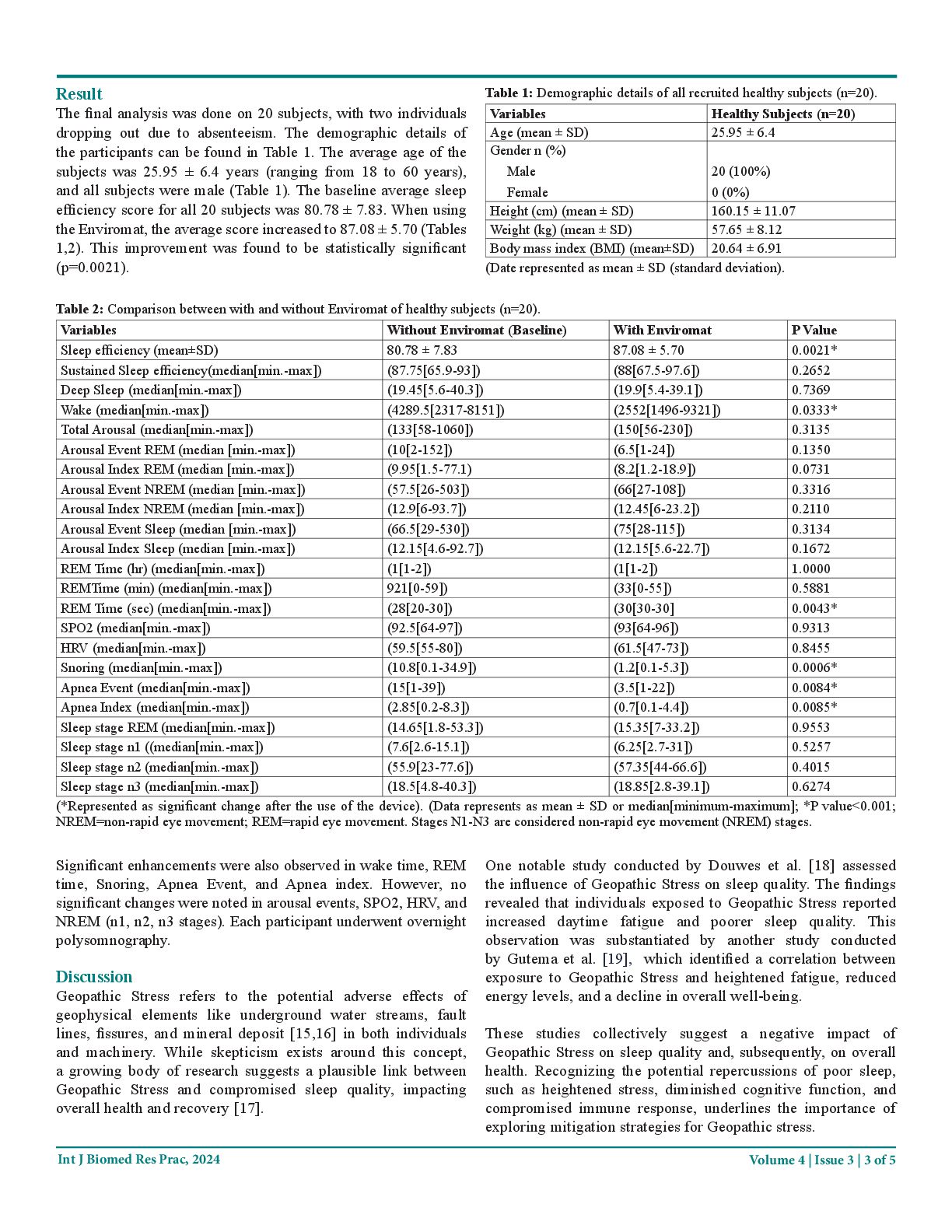
    J Biomed Res Prac, 2024 Result The final analysis was done on 20 subjects, with two individuals dropping out due to absenteeism. The demographic details of the participants can be found in Table 1. The average age of the subjects was 25.95 ± 6.4 years (ranging from 18 to 60 years), and all subjects were male (Table 1). The baseline average sleep efficiency score for all 20 subjects was 80.78 ± 7.83. When using the Enviromat, the average score increased to 87.08 ± 5.70 (Tables 1,2). This improvement was found to be statistically significant (p=0.0021). Table 1: Demographic details of all recruited healthy subjects (n=20). Variables Healthy Subjects (n=20) Age (mean ± SD) 25.95 ± 6.4 Gender n (%) Male Female 20 (100%) 0 (0%) Height (cm) (mean ± SD) 160.15 ± 11.07 Weight (kg) (mean ± SD) 57.65 ± 8.12 Body mass index (BMI) (mean±SD) 20.64 ± 6.91 (Date represented as mean ± SD (standard deviation). Table 2: Comparison between with and without Enviromat of healthy subjects (n=20). Variables Without Enviromat (Baseline) With Enviromat P Value Sleep efficiency (mean±SD) 80.78 ± 7.83 87.08 ± 5.70 0.0021* Sustained Sleep efficiency(median[min.-max]) (87.75[65.9-93]) (88[67.5-97.6]) 0.2652 Deep Sleep (median[min.-max]) (19.45[5.6-40.3]) (19.9[5.4-39.1]) 0.7369 Wake (median[min.-max]) (4289.5[2317-8151]) (2552[1496-9321]) 0.0333* Total Arousal (median[min.-max]) (133[58-1060]) (150[56-230]) 0.3135 Arousal Event REM (median [min.-max]) (10[2-152]) (6.5[1-24]) 0.1350 Arousal Index REM (median [min.-max]) (9.95[1.5-77.1) (8.2[1.2-18.9]) 0.0731 Arousal Event NREM (median [min.-max]) (57.5[26-503]) (66[27-108]) 0.3316 Arousal Index NREM (median [min.-max]) (12.9[6-93.7]) (12.45[6-23.2]) 0.2110 Arousal Event Sleep (median [min.-max]) (66.5[29-530]) (75[28-115]) 0.3134 Arousal Index Sleep (median [min.-max]) (12.15[4.6-92.7]) (12.15[5.6-22.7]) 0.1672 REM Time (hr) (median[min.-max]) (1[1-2]) (1[1-2]) 1.0000 REMTime (min) (median[min.-max]) 921[0-59]) (33[0-55]) 0.5881 REM Time (sec) (median[min.-max]) (28[20-30]) (30[30-30] 0.0043* SPO2 (median[min.-max]) (92.5[64-97]) (93[64-96]) 0.9313 HRV (median[min.-max]) (59.5[55-80]) (61.5[47-73]) 0.8455 Snoring (median[min.-max]) (10.8[0.1-34.9]) (1.2[0.1-5.3]) 0.0006* Apnea Event (median[min.-max]) (15[1-39]) (3.5[1-22]) 0.0084* Apnea Index (median[min.-max]) (2.85[0.2-8.3]) (0.7[0.1-4.4]) 0.0085* Sleep stage REM (median[min.-max]) (14.65[1.8-53.3]) (15.35[7-33.2]) 0.9553 Sleep stage n1 ((median[min.-max]) (7.6[2.6-15.1]) (6.25[2.7-31]) 0.5257 Sleep stage n2 (median[min.-max]) (55.9[23-77.6]) (57.35[44-66.6]) 0.4015 Sleep stage n3 (median[min.-max]) (18.5[4.8-40.3]) (18.85[2.8-39.1]) 0.6274 (*Represented as significant change after the use of the device). (Data represents as mean ± SD or median[minimum-maximum]; *P value<0.001; NREM=non-rapid eye movement; REM=rapid eye movement. Stages N1-N3 are considered non-rapid eye movement (NREM) stages. Significant enhancements were also observed in wake time, REM time, Snoring, Apnea Event, and Apnea index. However, no significant changes were noted in arousal events, SPO2, HRV, and NREM (n1, n2, n3 stages). Each participant underwent overnight polysomnography. Discussion Geopathic Stress refers to the potential adverse effects of geophysical elements like underground water streams, fault lines, fissures, and mineral deposit [15,16] in both individuals and machinery. While skepticism exists around this concept, a growing body of research suggests a plausible link between Geopathic Stress and compromised sleep quality, impacting overall health and recovery [17]. One notable study conducted by Douwes et al. [18] assessed the influence of Geopathic Stress on sleep quality. The findings revealed that individuals exposed to Geopathic Stress reported increased daytime fatigue and poorer sleep quality. This observation was substantiated by another study conducted by Gutema et al. [19], which identified a correlation between exposure to Geopathic Stress and heightened fatigue, reduced energy levels, and a decline in overall well-being. These studies collectively suggest a negative impact of Geopathic Stress on sleep quality and, subsequently, on overall health. Recognizing the potential repercussions of poor sleep, such as heightened stress, diminished cognitive function, and compromised immune response, underlines the importance of exploring mitigation strategies for Geopathic stress.
  4. Volume 4 | Issue 3 | 4 of 5 Int

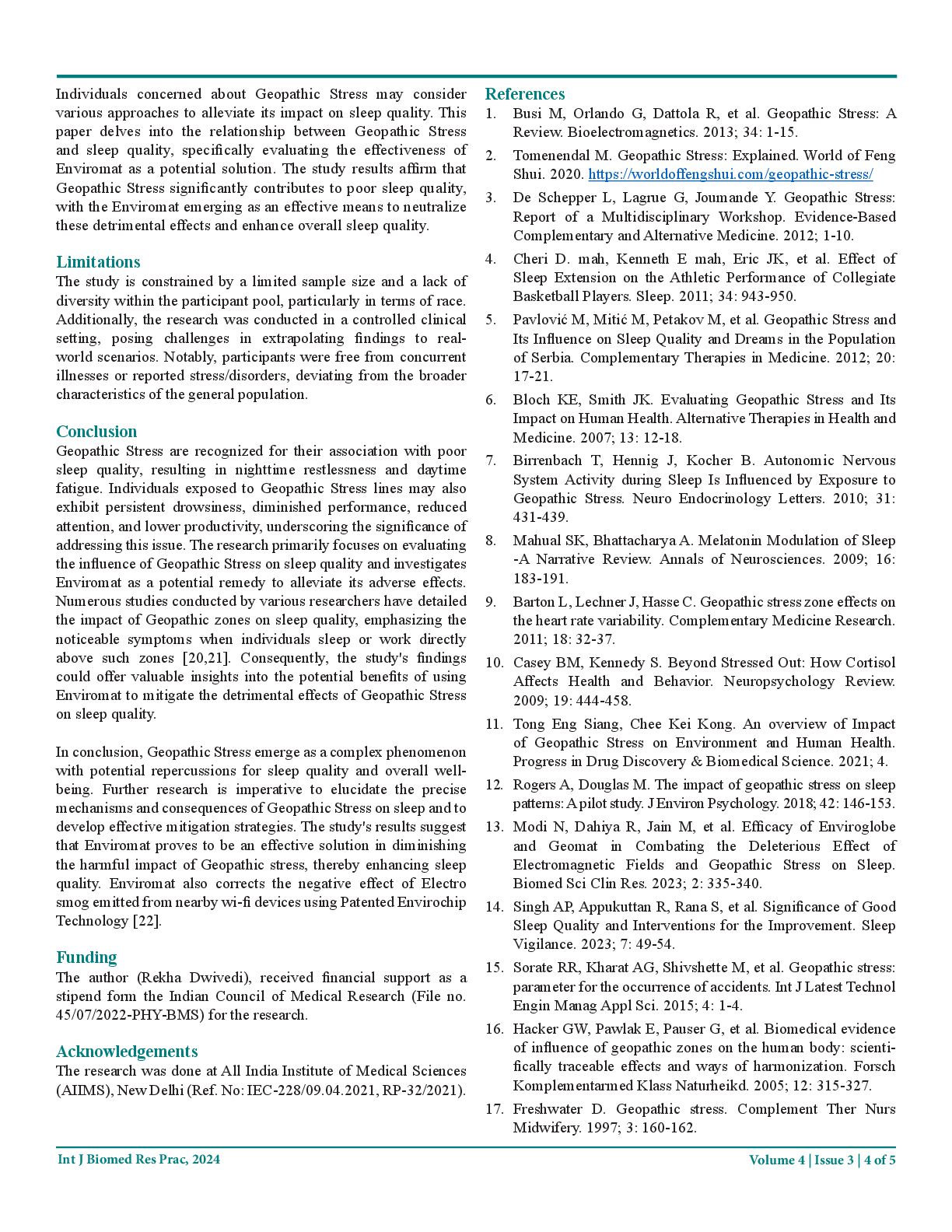
    J Biomed Res Prac, 2024 Individuals concerned about Geopathic Stress may consider various approaches to alleviate its impact on sleep quality. This paper delves into the relationship between Geopathic Stress and sleep quality, specifically evaluating the effectiveness of Enviromat as a potential solution. The study results affirm that Geopathic Stress significantly contributes to poor sleep quality, with the Enviromat emerging as an effective means to neutralize these detrimental effects and enhance overall sleep quality. Limitations The study is constrained by a limited sample size and a lack of diversity within the participant pool, particularly in terms of race. Additionally, the research was conducted in a controlled clinical setting, posing challenges in extrapolating findings to real- world scenarios. Notably, participants were free from concurrent illnesses or reported stress/disorders, deviating from the broader characteristics of the general population. Conclusion Geopathic Stress are recognized for their association with poor sleep quality, resulting in nighttime restlessness and daytime fatigue. Individuals exposed to Geopathic Stress lines may also exhibit persistent drowsiness, diminished performance, reduced attention, and lower productivity, underscoring the significance of addressing this issue. The research primarily focuses on evaluating the influence of Geopathic Stress on sleep quality and investigates Enviromat as a potential remedy to alleviate its adverse effects. Numerous studies conducted by various researchers have detailed the impact of Geopathic zones on sleep quality, emphasizing the noticeable symptoms when individuals sleep or work directly above such zones [20,21]. Consequently, the study's findings could offer valuable insights into the potential benefits of using Enviromat to mitigate the detrimental effects of Geopathic Stress on sleep quality. In conclusion, Geopathic Stress emerge as a complex phenomenon with potential repercussions for sleep quality and overall well- being. Further research is imperative to elucidate the precise mechanisms and consequences of Geopathic Stress on sleep and to develop effective mitigation strategies. The study's results suggest that Enviromat proves to be an effective solution in diminishing the harmful impact of Geopathic stress, thereby enhancing sleep quality. Enviromat also corrects the negative effect of Electro smog emitted from nearby wi-fi devices using Patented Envirochip Technology [22]. Funding The author (Rekha Dwivedi), received financial support as a stipend form the Indian Council of Medical Research (File no. 45/07/2022-PHY-BMS) for the research. Acknowledgements The research was done at All India Institute of Medical Sciences (AIIMS), New Delhi (Ref. No: IEC-228/09.04.2021, RP-32/2021). References 1. Busi M, Orlando G, Dattola R, et al. Geopathic Stress: A Review. Bioelectromagnetics. 2013; 34: 1-15. 2. Tomenendal M. Geopathic Stress: Explained. World of Feng Shui. 2020. https://worldoffengshui.com/geopathic-stress/ 3. De Schepper L, Lagrue G, Joumande Y. Geopathic Stress: Report of a Multidisciplinary Workshop. Evidence-Based Complementary and Alternative Medicine. 2012; 1-10. 4. Cheri D. mah, Kenneth E mah, Eric JK, et al. Effect of Sleep Extension on the Athletic Performance of Collegiate Basketball Players. Sleep. 2011; 34: 943-950. 5. Pavlović M, Mitić M, Petakov M, et al. Geopathic Stress and Its Influence on Sleep Quality and Dreams in the Population of Serbia. Complementary Therapies in Medicine. 2012; 20: 17-21. 6. Bloch KE, Smith JK. Evaluating Geopathic Stress and Its Impact on Human Health. Alternative Therapies in Health and Medicine. 2007; 13: 12-18. 7. Birrenbach T, Hennig J, Kocher B. Autonomic Nervous System Activity during Sleep Is Influenced by Exposure to Geopathic Stress. Neuro Endocrinology Letters. 2010; 31: 431-439. 8. Mahual SK, Bhattacharya A. Melatonin Modulation of Sleep -A Narrative Review. Annals of Neurosciences. 2009; 16: 183-191. 9. Barton L, Lechner J, Hasse C. Geopathic stress zone effects on the heart rate variability. Complementary Medicine Research. 2011; 18: 32-37. 10. Casey BM, Kennedy S. Beyond Stressed Out: How Cortisol Affects Health and Behavior. Neuropsychology Review. 2009; 19: 444-458. 11. Tong Eng Siang, Chee Kei Kong. An overview of Impact of Geopathic Stress on Environment and Human Health. Progress in Drug Discovery & Biomedical Science. 2021; 4. 12. Rogers A, Douglas M. The impact of geopathic stress on sleep patterns: A pilot study. J Environ Psychology. 2018; 42: 146-153. 13. Modi N, Dahiya R, Jain M, et al. Efficacy of Enviroglobe and Geomat in Combating the Deleterious Effect of Electromagnetic Fields and Geopathic Stress on Sleep. Biomed Sci Clin Res. 2023; 2: 335-340. 14. Singh AP, Appukuttan R, Rana S, et al. Significance of Good Sleep Quality and Interventions for the Improvement. Sleep Vigilance. 2023; 7: 49-54. 15. Sorate RR, Kharat AG, Shivshette M, et al. Geopathic stress: parameter for the occurrence of accidents. Int J Latest Technol Engin Manag Appl Sci. 2015; 4: 1-4. 16. Hacker GW, Pawlak E, Pauser G, et al. Biomedical evidence of influence of geopathic zones on the human body: scienti- fically traceable effects and ways of harmonization. Forsch Komplementarmed Klass Naturheikd. 2005; 12: 315-327. 17. Freshwater D. Geopathic stress. Complement Ther Nurs Midwifery. 1997; 3: 160-162.
  5. Volume 4 | Issue 3 | 5 of 5 Int

    J Biomed Res Prac, 2024 18. Gutema PM, Kebede DA, Desta B. Effects of geopathic stress on physical and psychological health: PanACEA study in the Bheri-Nepal. BMC Public Health. 2009; 9: 483. 19. Poddar A, Rana S. Effect of Geopathic Stress and its correction on human body and machinery breakdown. Landmark Res J Med Med Sci. 2014; 1: 041-045. 20. Ajay Poddar, Sunita Rana, Mansi Jain. Neutralizing Geopathic Stress and Biological Effects of EMR from Mobile, Laptops, Routers, and Mobile Towers. International Journal of Science and Research. 2022; 11: 1036-1038. 21. Rana S, Chandra P, Chopra S, et al. Effect on Heart Rate Variability due to Mobile usage and mitigation with Envirochip. Bio Med. 2022; 14: 100491. 22. Poddar A, Rana S, Mittal V, et al. Change in pulse rate with Enviro Chip and dummy chip fixed on radiation emitting devices like mobile phones/computers/laptops of users-A double blind crossover study. J Biomedical Science and Engineering. 2013; 6: 805-811. © 2024 Rekha Dwivedi, et al. This article is distributed under the terms of the Creative Commons Attribution 4.0 International License