Upgrade to Pro — share decks privately, control downloads, hide ads and more …

PyCon 2017: Decorators, unwrapped

PyCon 2017: Decorators, unwrapped

How Python decorators work, step by step.

Avatar for astrosilverio

astrosilverio

May 20, 2017

Other Decks in Programming

Transcript

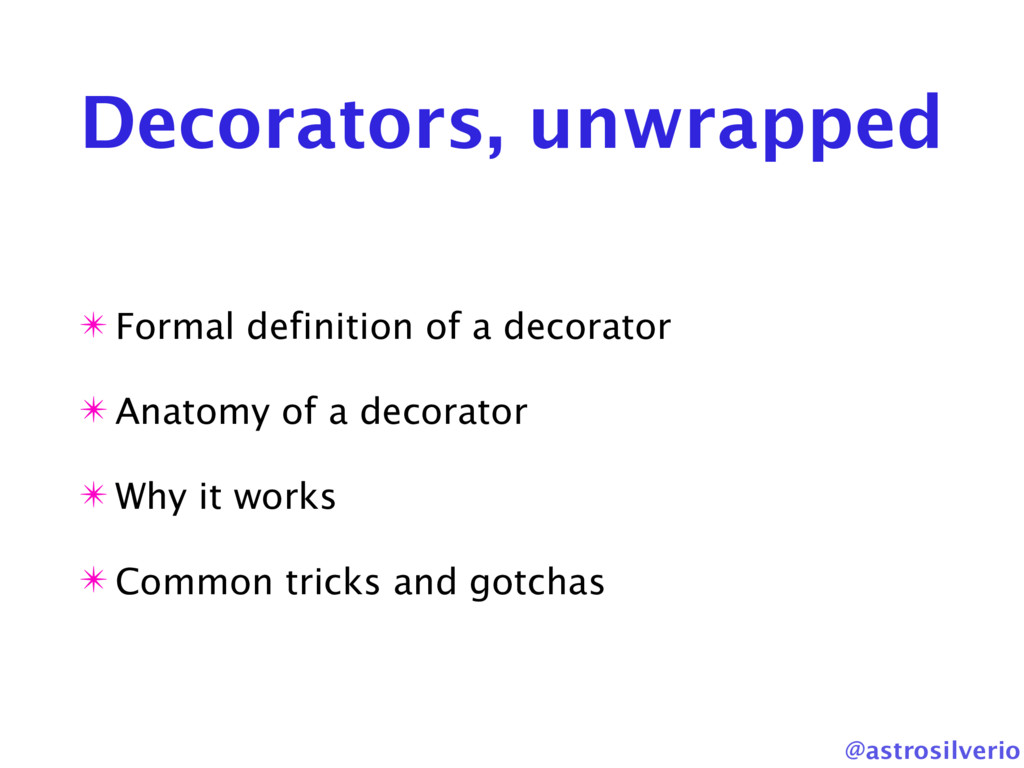
  1. @astrosilverio Decorators, unwrapped ✴ Formal definition of a decorator ✴

    Anatomy of a decorator ✴ Why it works ✴ Common tricks and gotchas
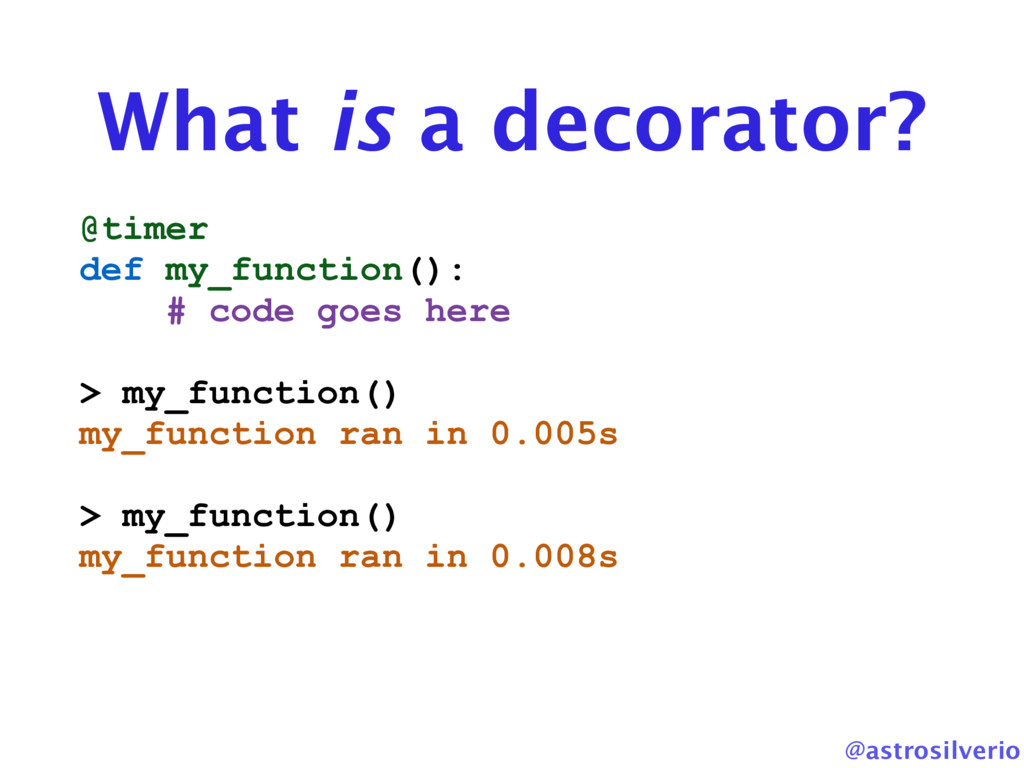
  2. @astrosilverio What is a decorator? @timer def my_function(): # code

    goes here > my_function() my_function ran in 0.005s > my_function() my_function ran in 0.008s
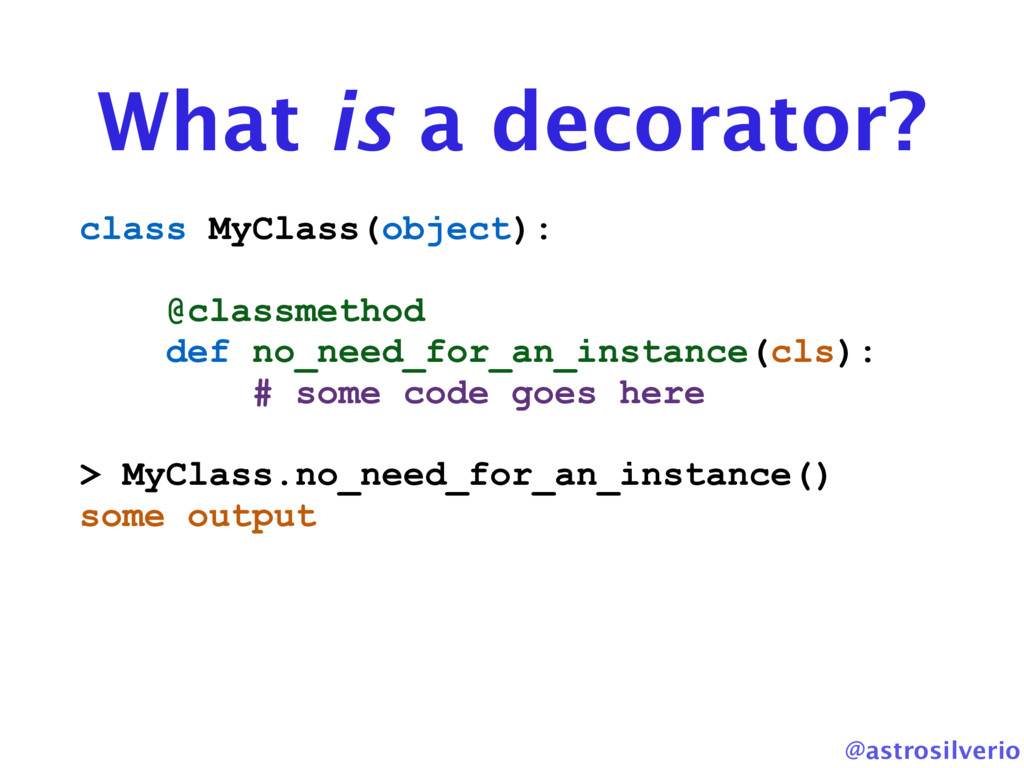
  3. @astrosilverio What is a decorator? class MyClass(object): @classmethod def no_need_for_an_instance(cls):

    # some code goes here > MyClass.no_need_for_an_instance() some output
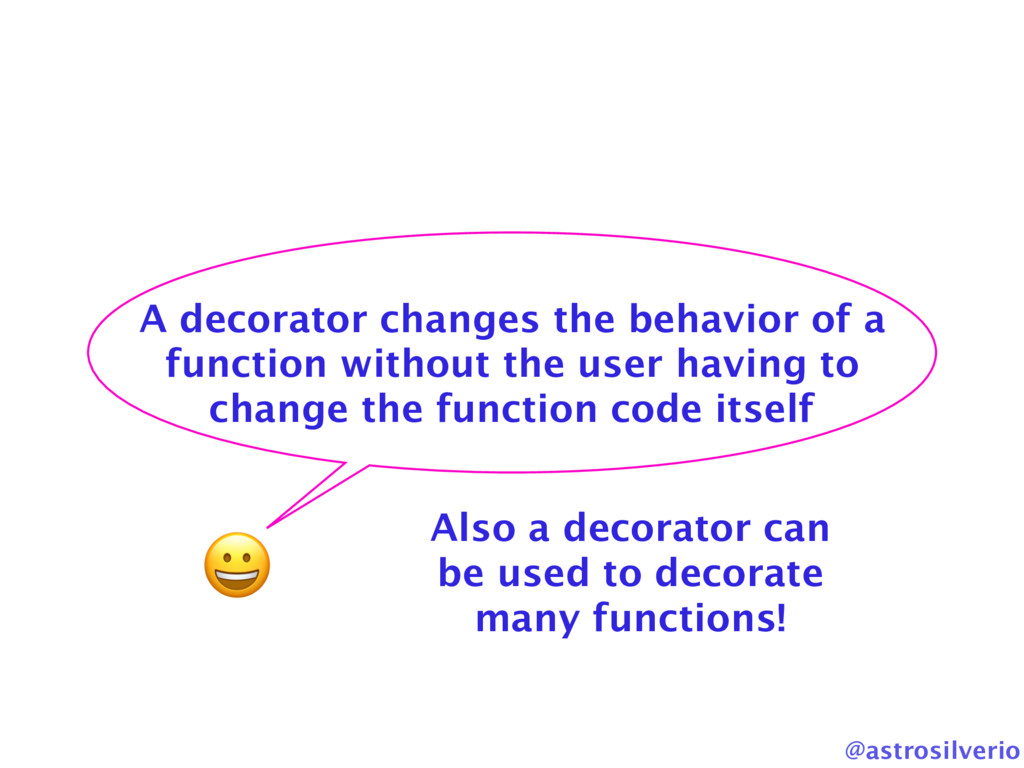
  4. @astrosilverio A decorator changes the behavior of a function without

    the user having to change the function code itself Also a decorator can be used to decorate many functions!
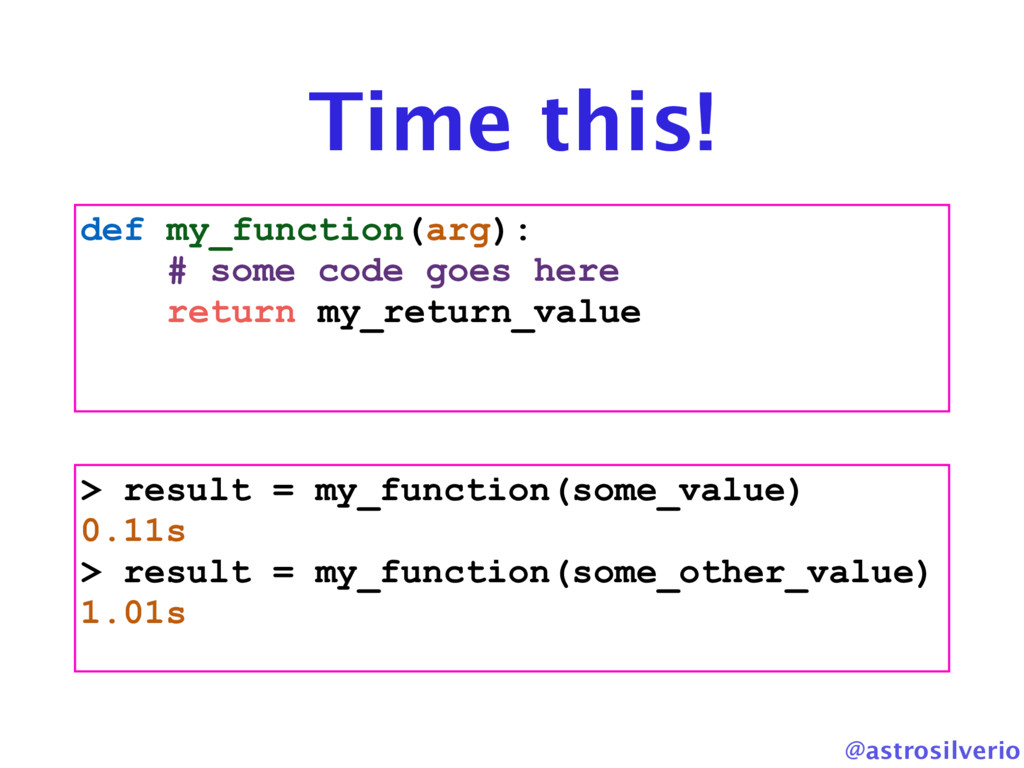
  5. @astrosilverio Time this! def my_function(arg): # some code goes here

    return my_return_value > result = my_function(some_value) 0.11s > result = my_function(some_other_value) 1.01s
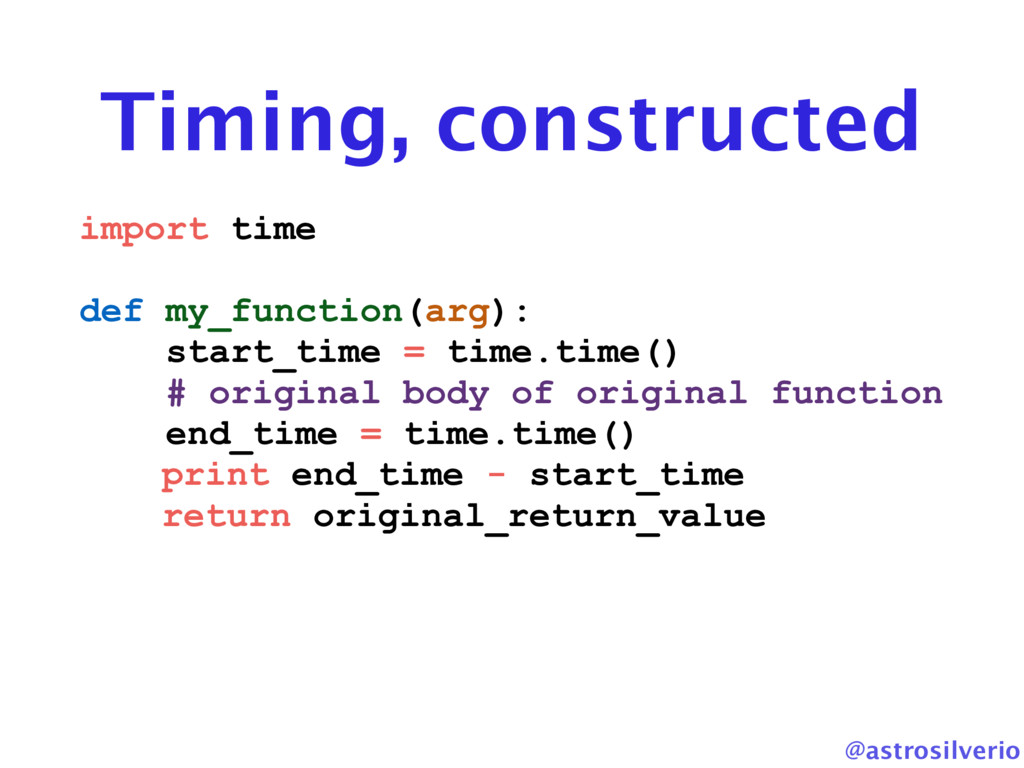
  6. @astrosilverio Timing, constructed import time def my_function(arg): start_time = time.time()

    # original body of original function end_time = time.time() print end_time - start_time return original_return_value
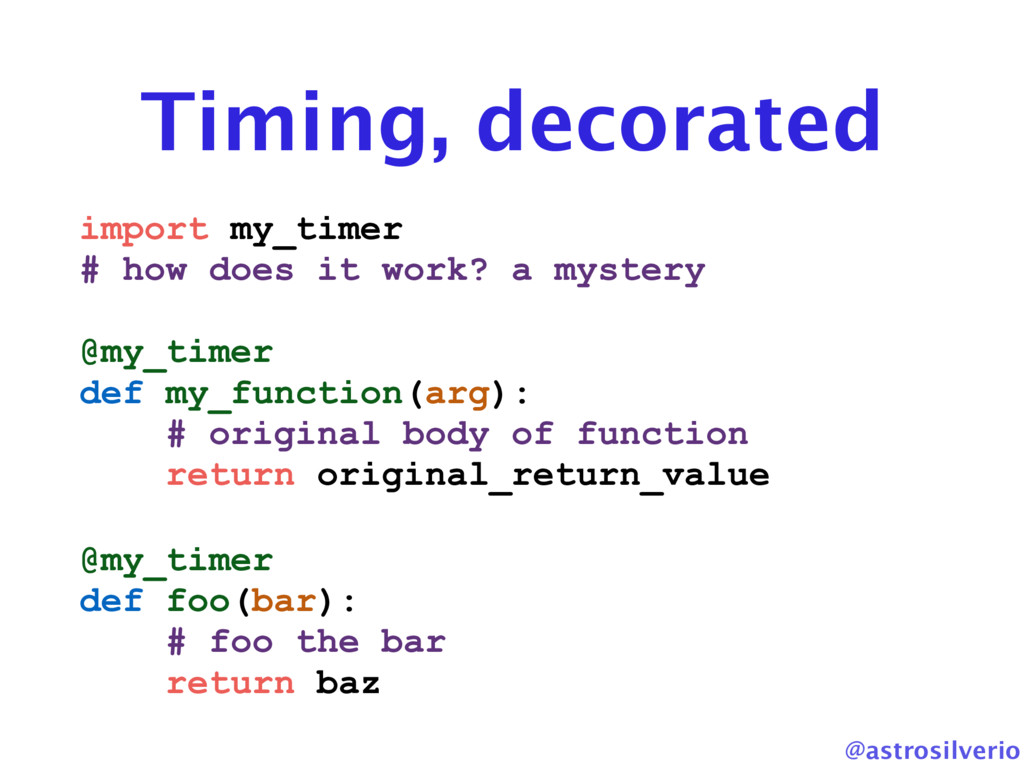
  7. @astrosilverio Timing, decorated import my_timer # how does it work?

    a mystery @my_timer def my_function(arg): # original body of function return original_return_value @my_timer def foo(bar): # foo the bar return baz
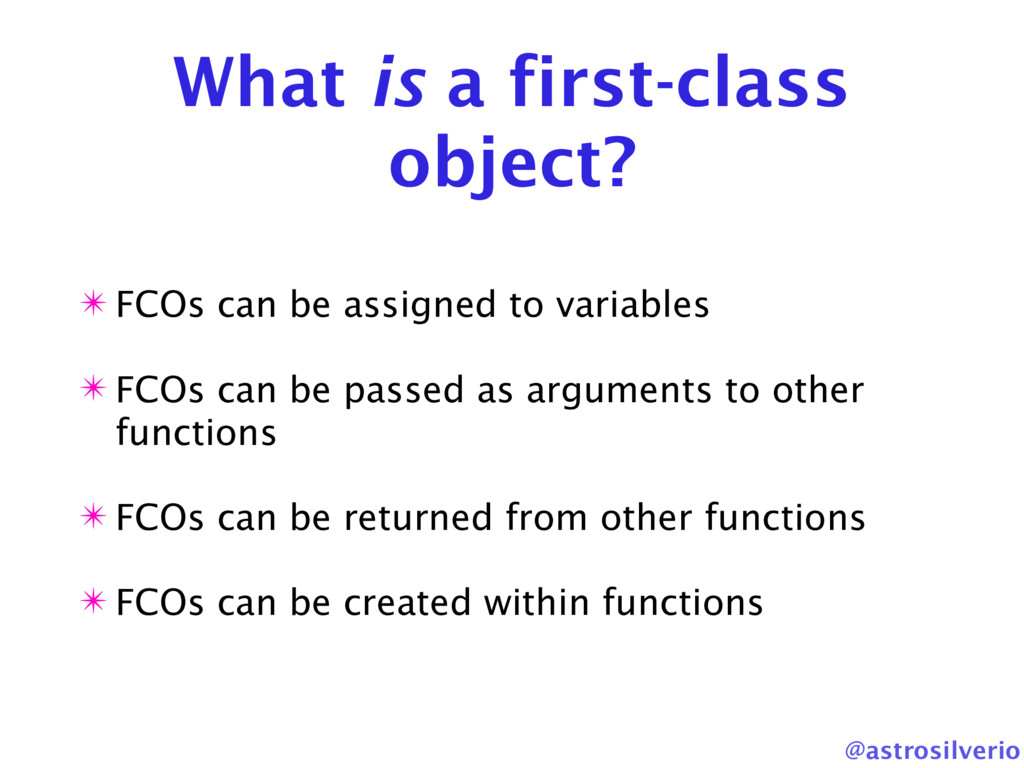
  8. @astrosilverio What is a first-class object? ✴ FCOs can be

    assigned to variables ✴ FCOs can be passed as arguments to other functions ✴ FCOs can be returned from other functions ✴ FCOs can be created within functions
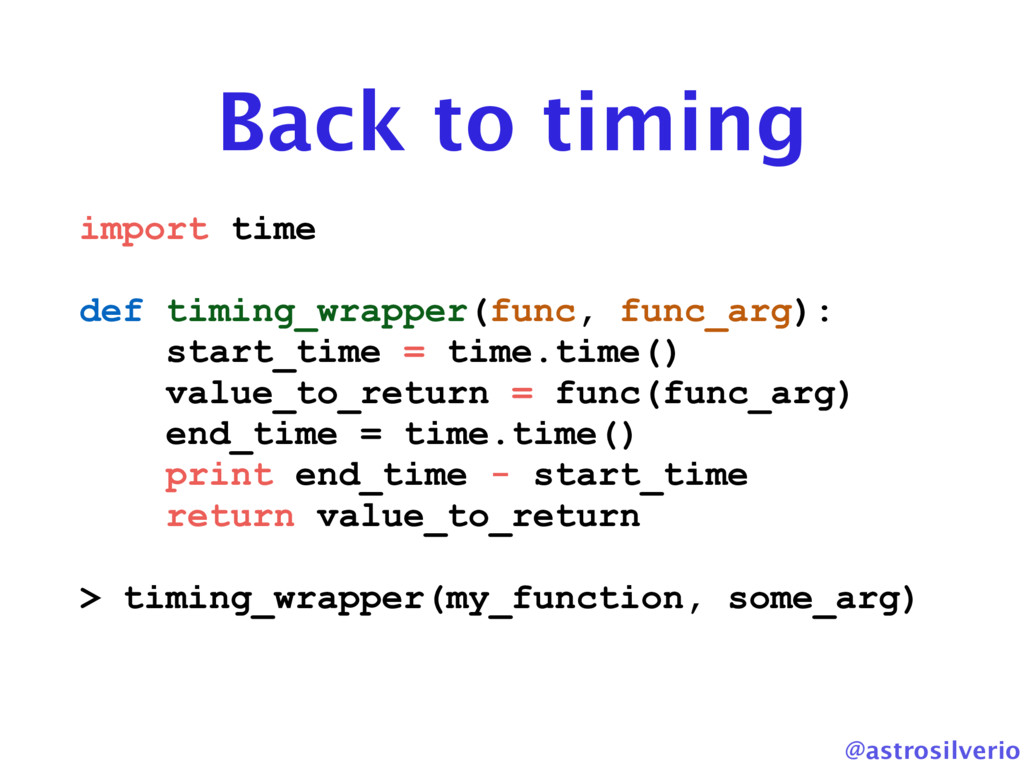
  9. @astrosilverio Back to timing import time def timing_wrapper(func, func_arg): start_time

    = time.time() value_to_return = func(func_arg) end_time = time.time() print end_time - start_time return value_to_return > timing_wrapper(my_function, some_arg)
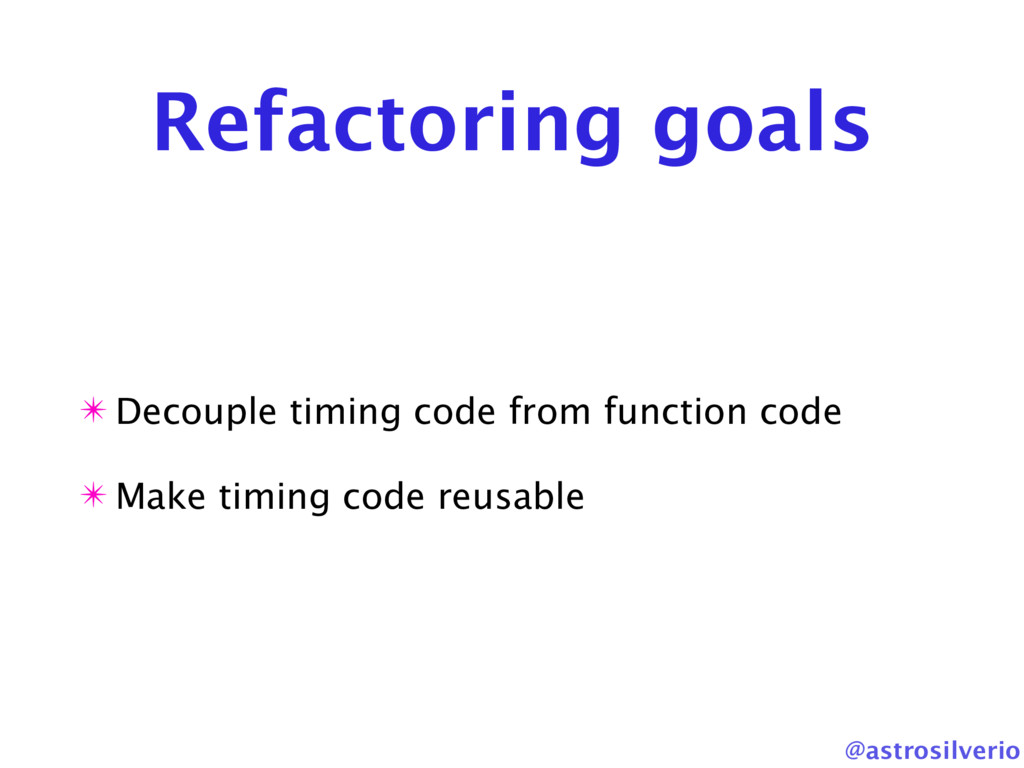
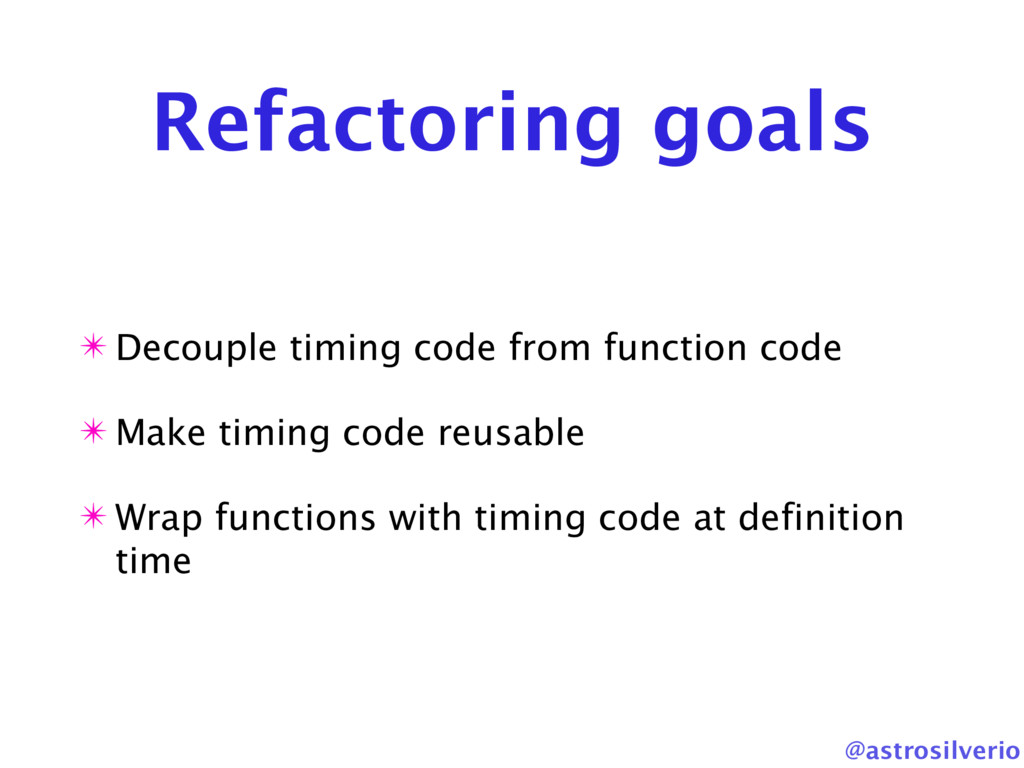
  10. @astrosilverio Refactoring goals ✴ Decouple timing code from function code

    ✴ Make timing code reusable ✴ Wrap functions with timing code at definition time
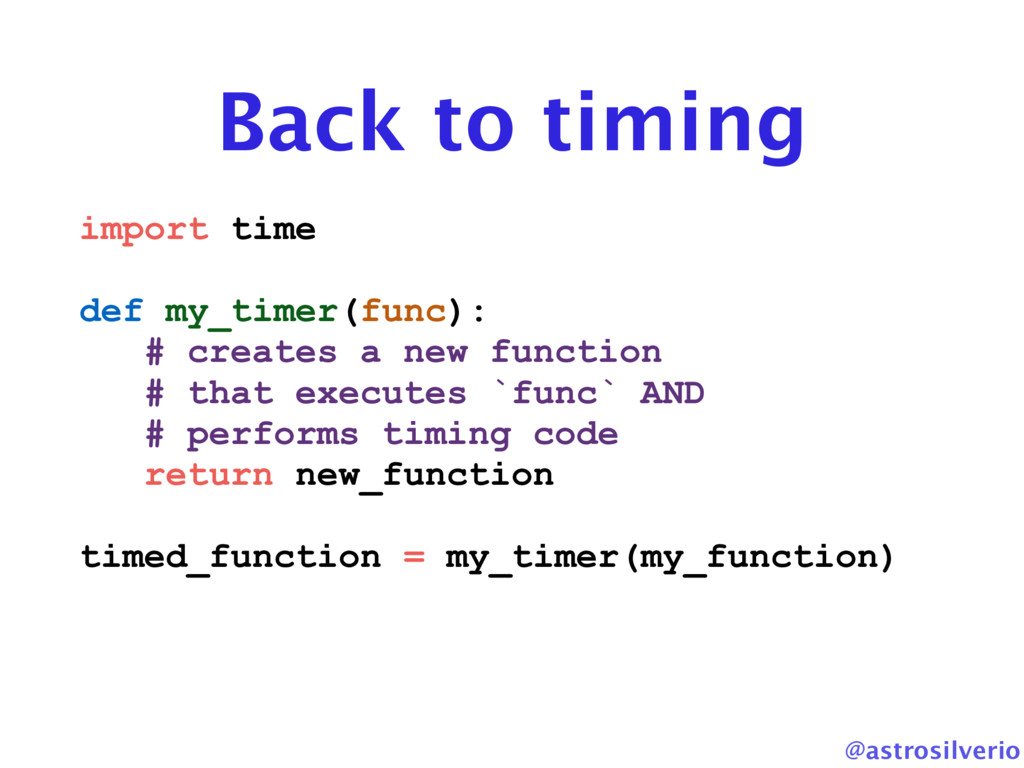
  11. @astrosilverio Back to timing import time def my_timer(func): # creates

    a new function # that executes `func` AND # performs timing code return new_function timed_function = my_timer(my_function)
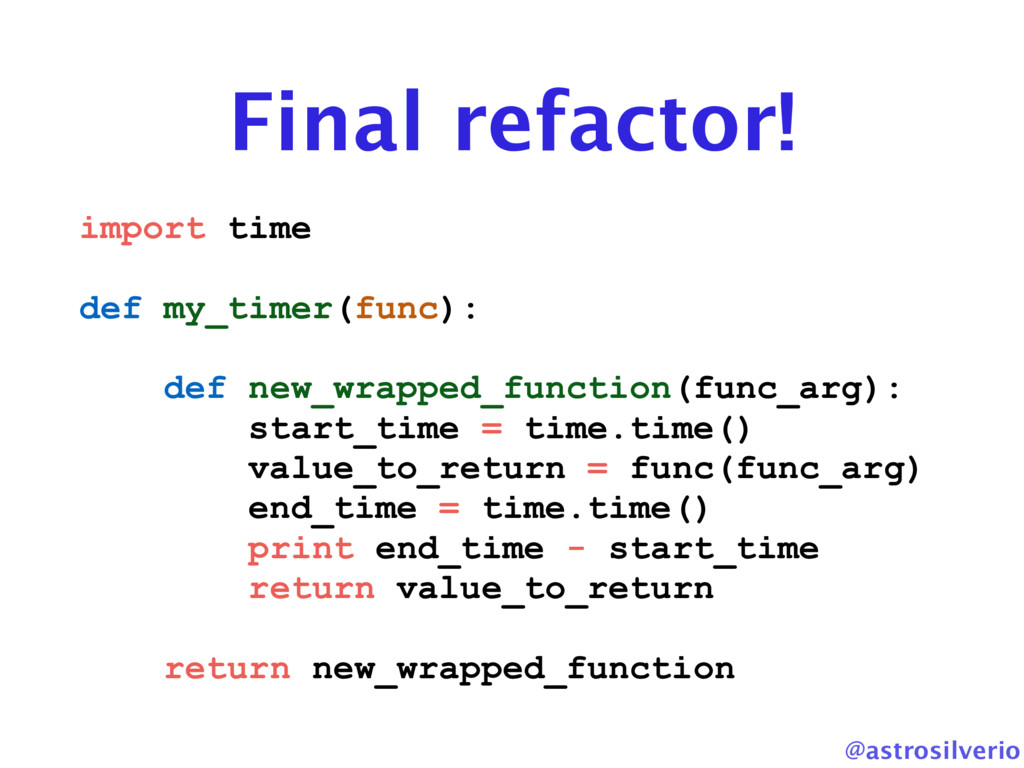
  12. @astrosilverio Final refactor! import time def my_timer(func): def new_wrapped_function(func_arg): start_time

    = time.time() value_to_return = func(func_arg) end_time = time.time() print end_time - start_time return value_to_return return new_wrapped_function
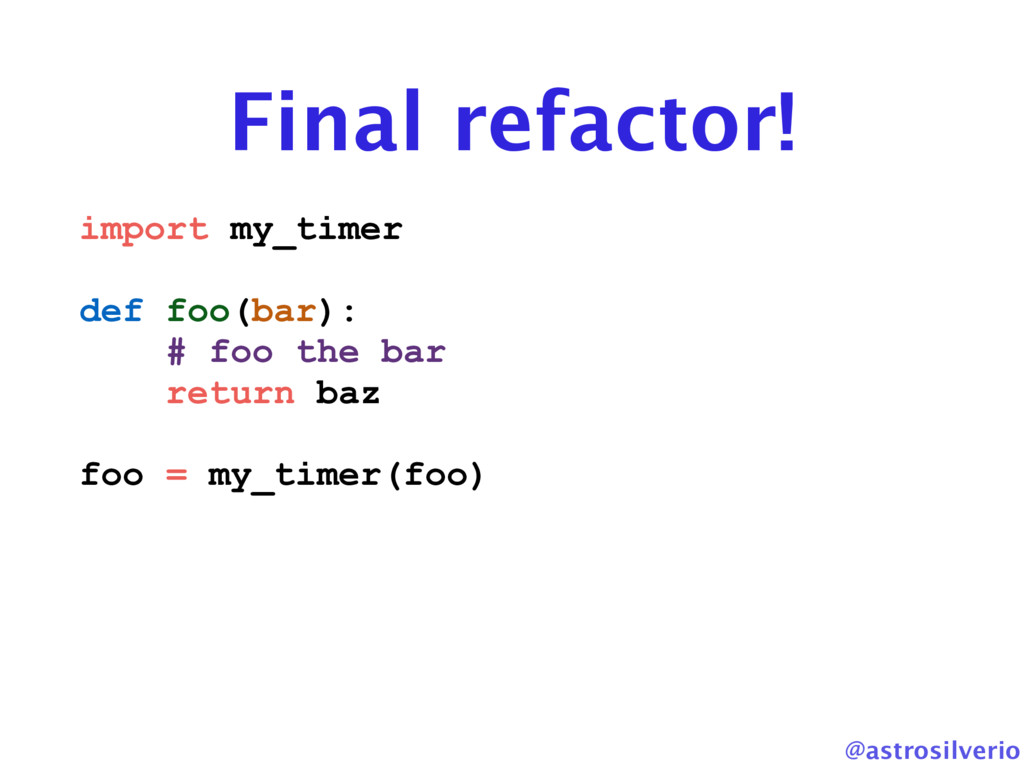
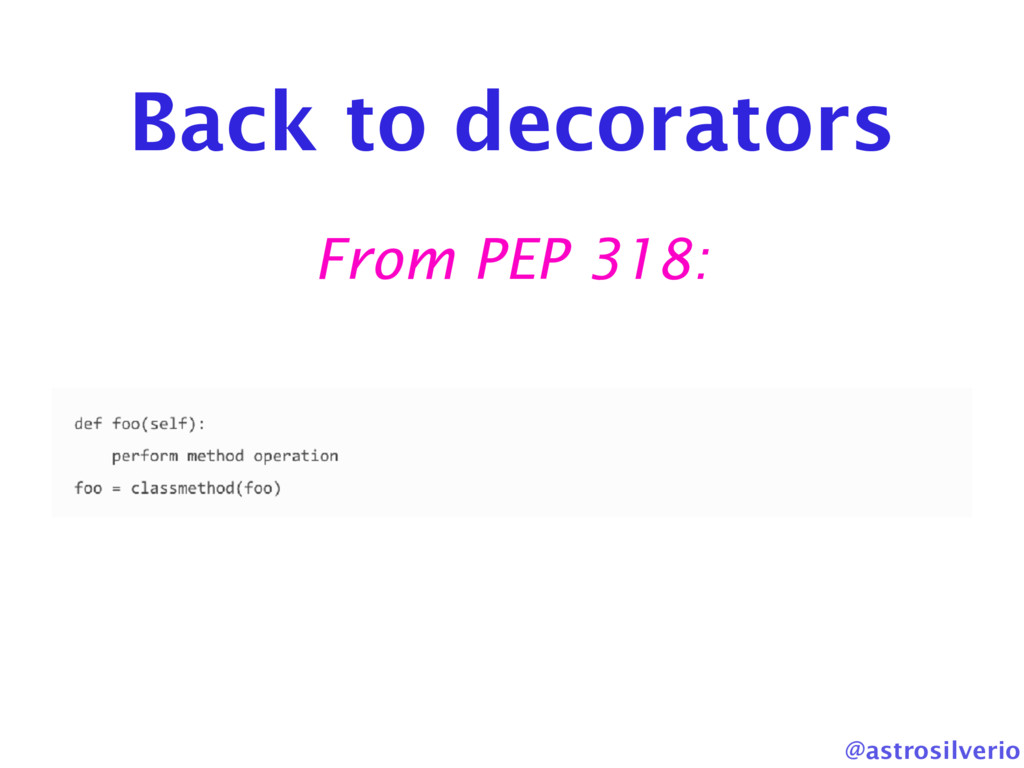
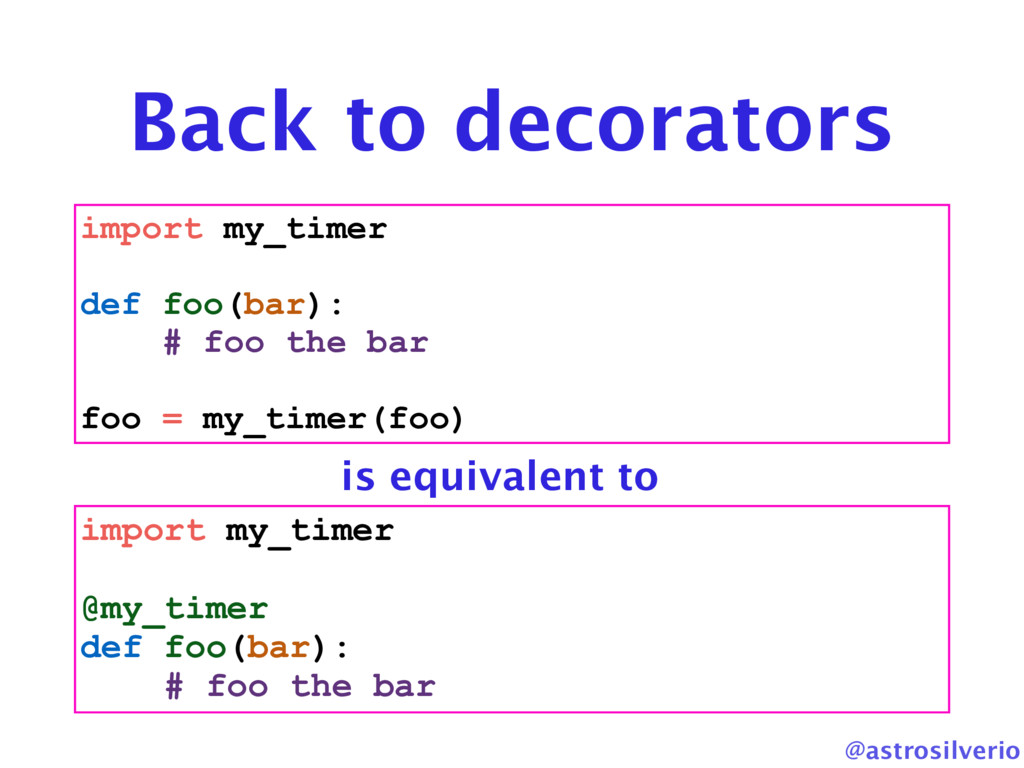
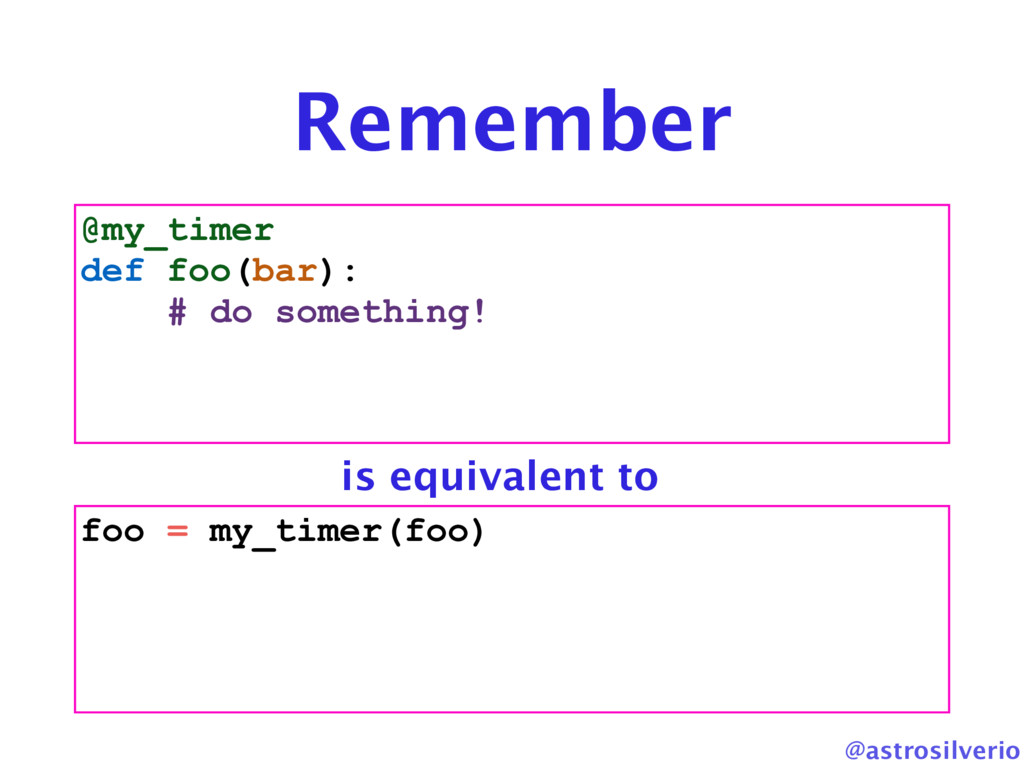
  13. @astrosilverio Back to decorators import my_timer def foo(bar): # foo

    the bar foo = my_timer(foo) import my_timer @my_timer def foo(bar): # foo the bar is equivalent to
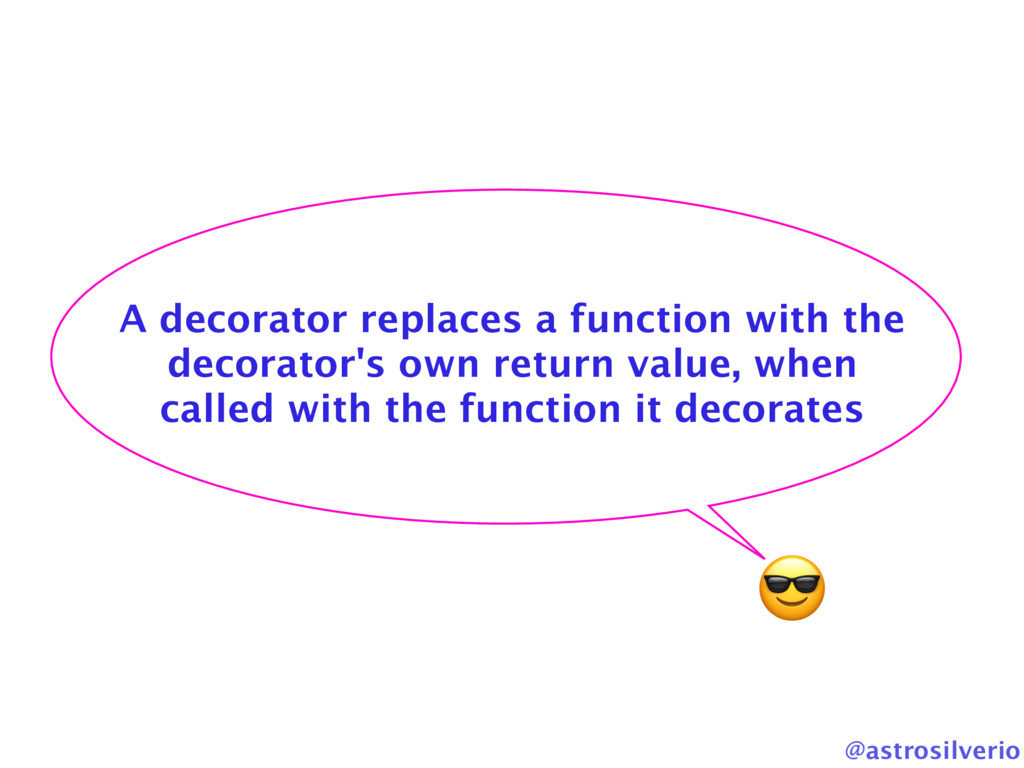
  14. @astrosilverio A decorator replaces a function with the decorator's own

    return value, when called with the function it decorates
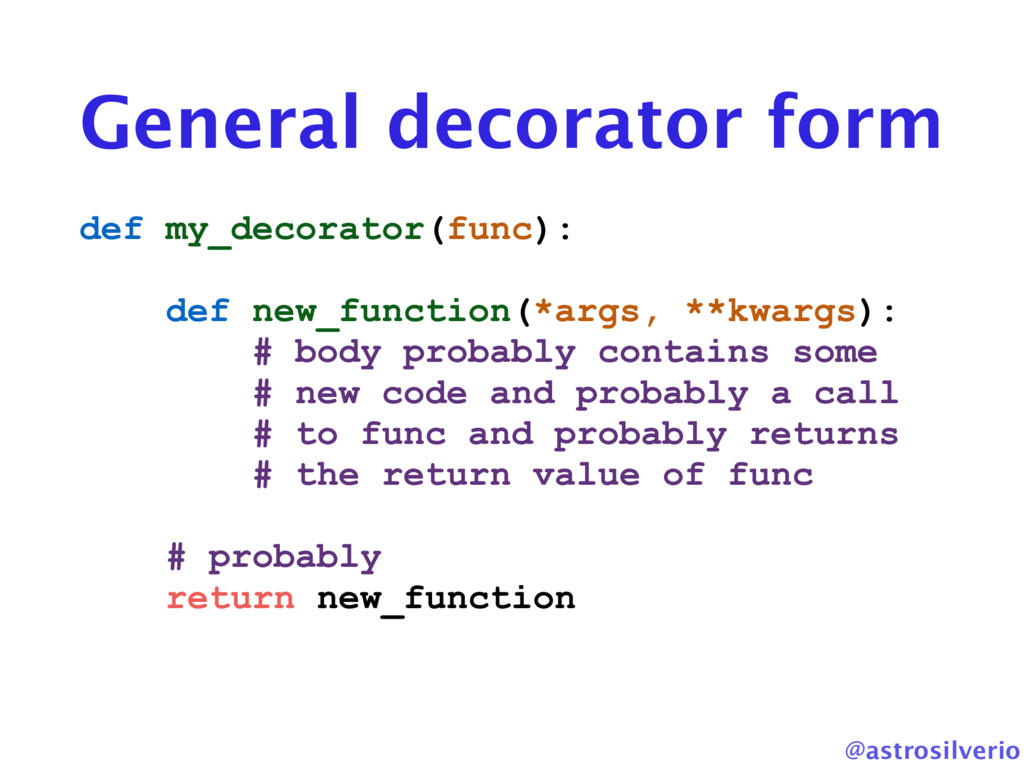
  15. @astrosilverio General decorator form def my_decorator(func): def new_function(*args, **kwargs): #

    body probably contains some # new code and probably a call # to func and probably returns # the return value of func # probably return new_function
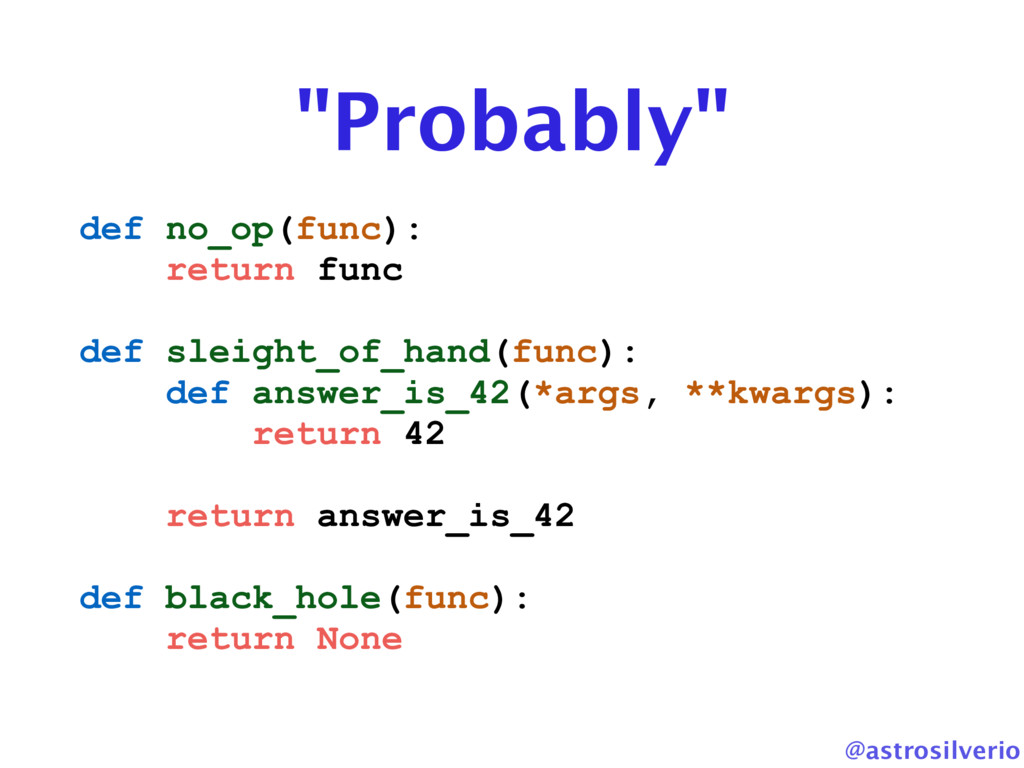
  16. @astrosilverio "Probably" def no_op(func): return func def sleight_of_hand(func): def answer_is_42(*args,

    **kwargs): return 42 return answer_is_42 def black_hole(func): return None
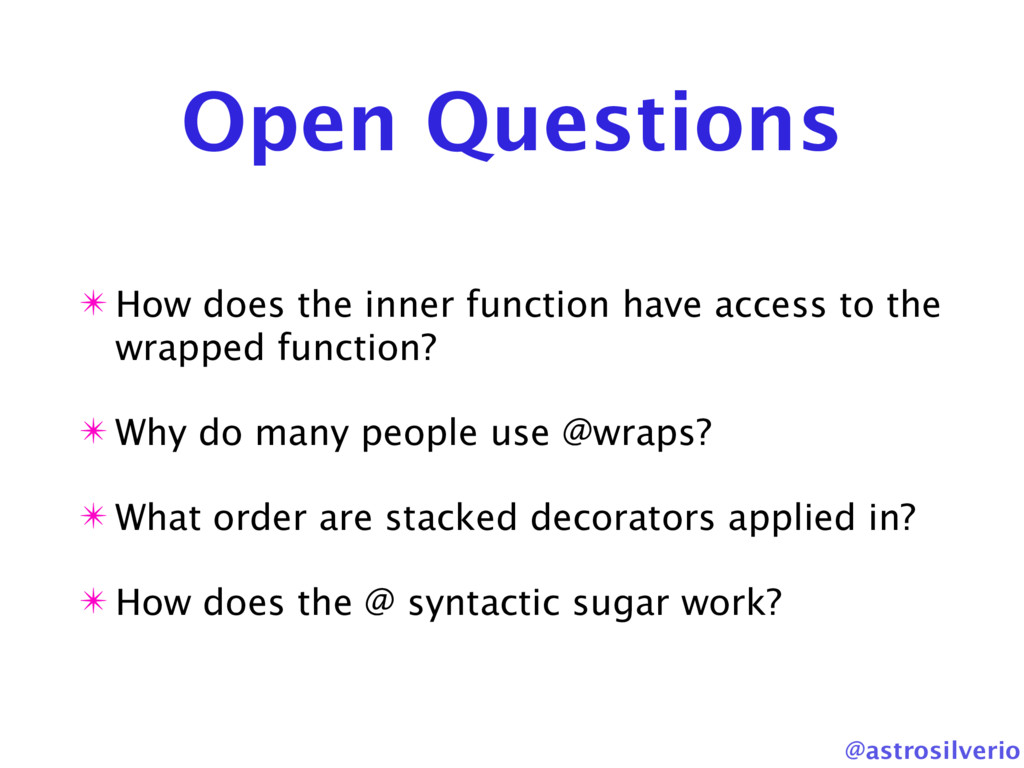
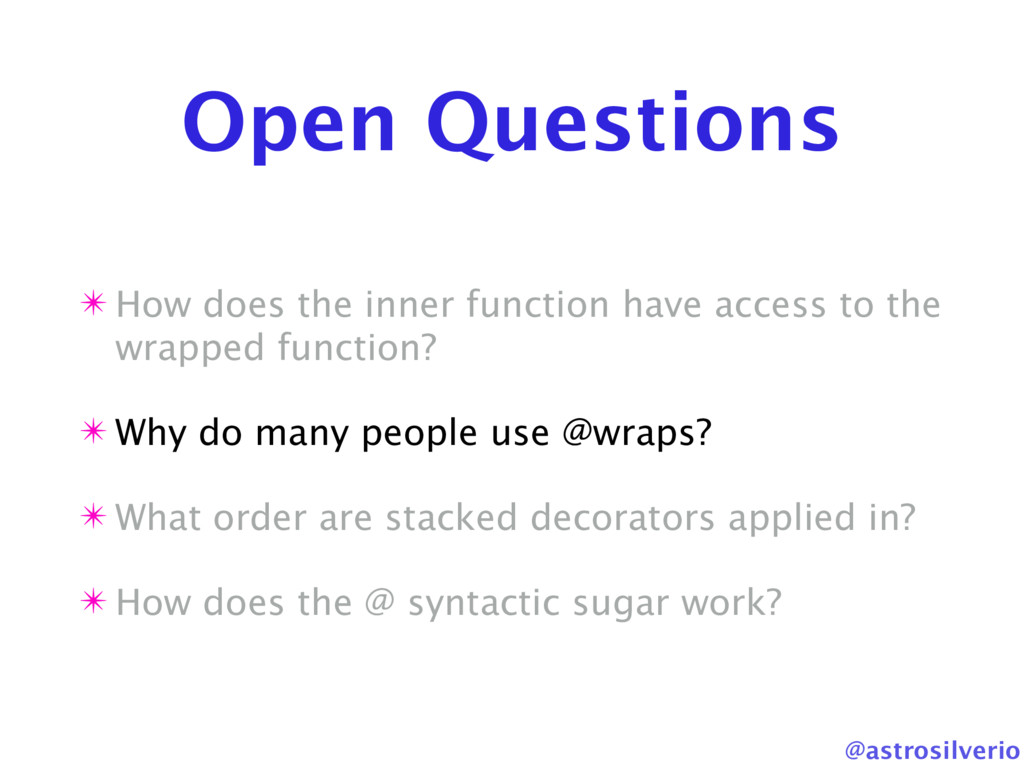
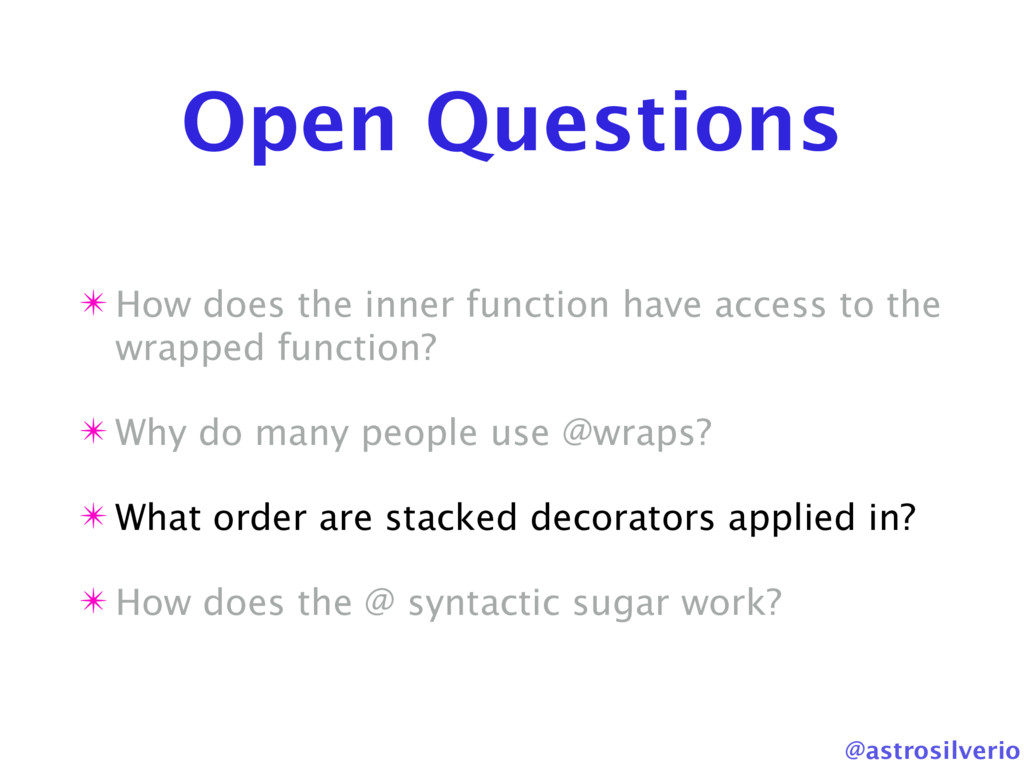
  17. @astrosilverio Open Questions ✴ How does the inner function have

    access to the wrapped function? ✴ Why do many people use @wraps? ✴ What order are stacked decorators applied in? ✴ How does the @ syntactic sugar work?
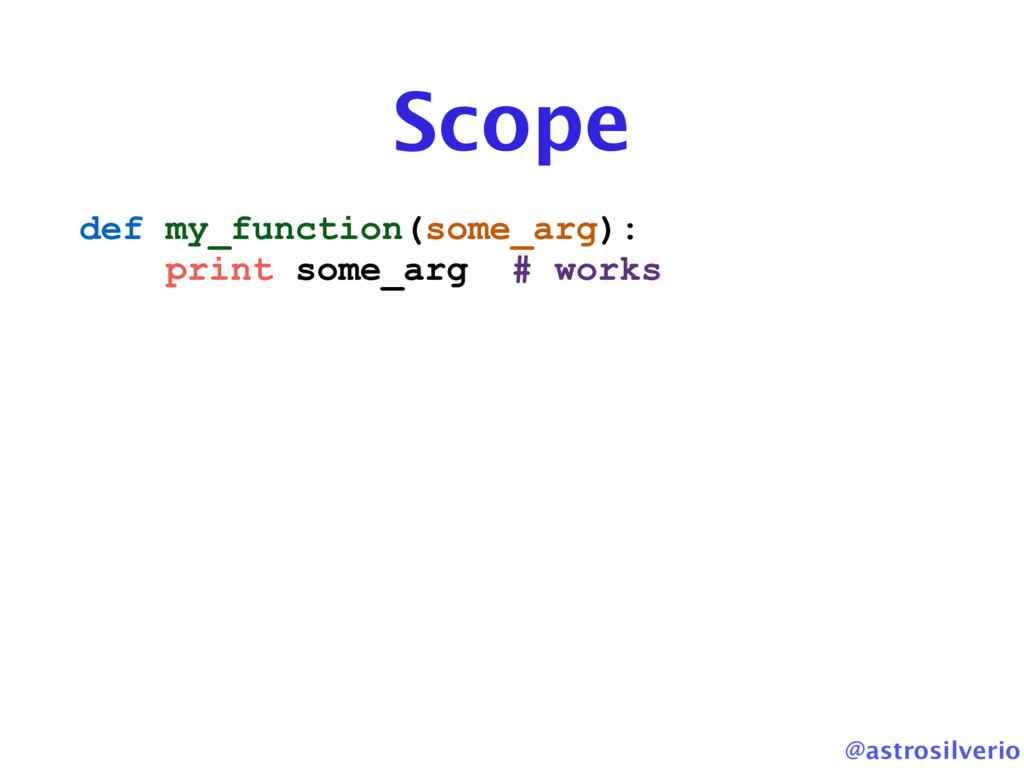
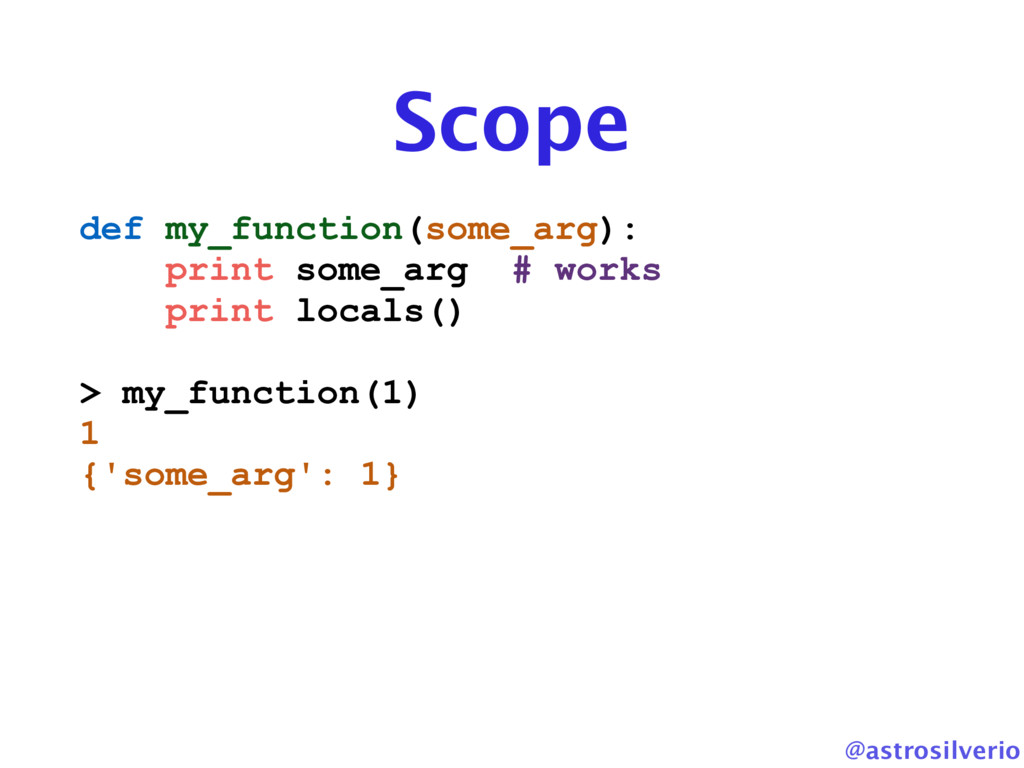
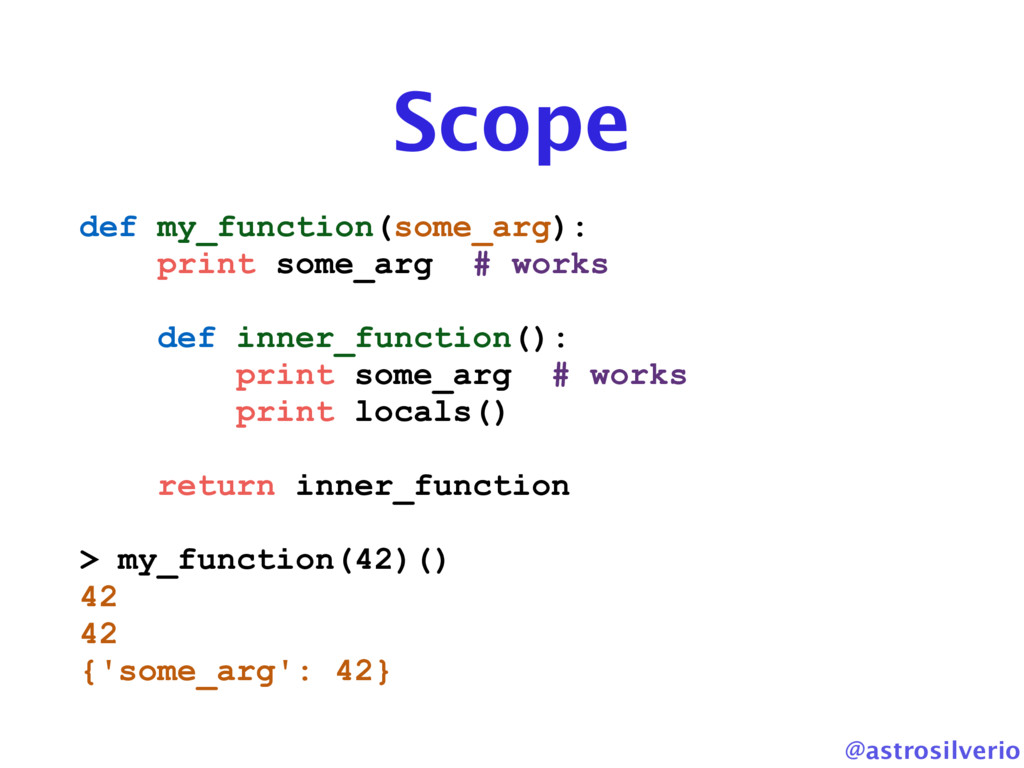
  18. @astrosilverio Scope def my_function(some_arg): print some_arg # works def inner_function():

    print some_arg # works print locals() return inner_function > my_function(42)() 42 42 {'some_arg': 42}
  19. @astrosilverio Open Questions ✴ How does the inner function have

    access to the wrapped function? ✴ Why do many people use @wraps? ✴ What order are stacked decorators applied in? ✴ How does the @ syntactic sugar work?
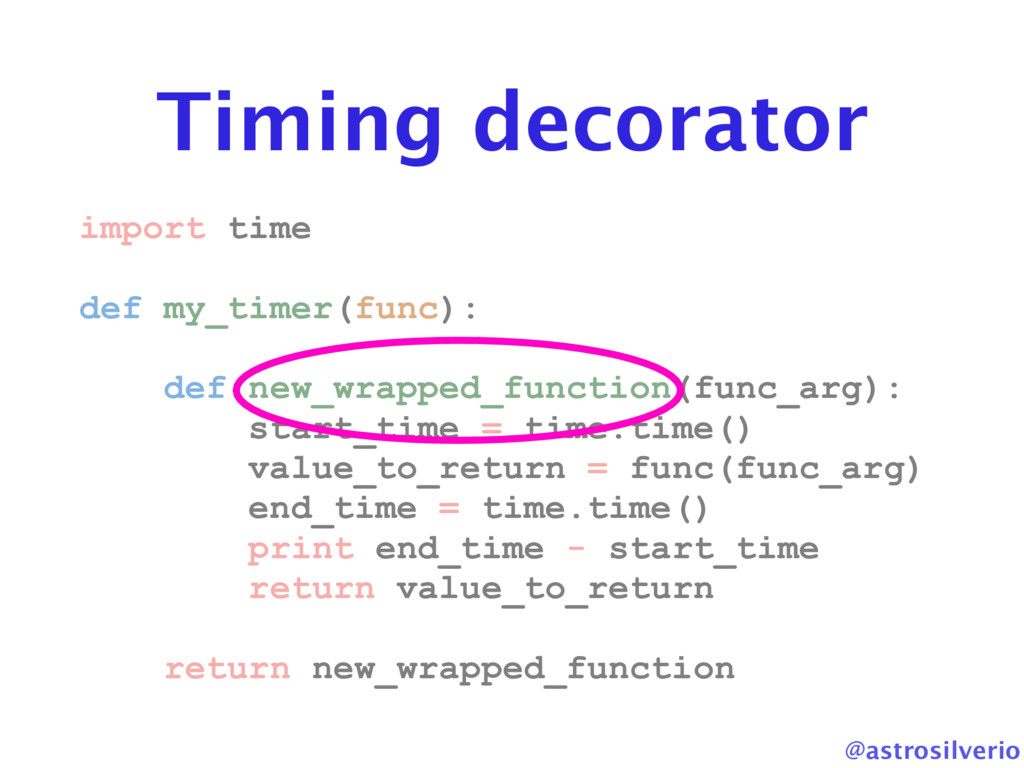
  20. @astrosilverio Timing decorator import time def my_timer(func): def new_wrapped_function(func_arg): start_time

    = time.time() value_to_return = func(func_arg) end_time = time.time() print end_time - start_time return value_to_return return new_wrapped_function
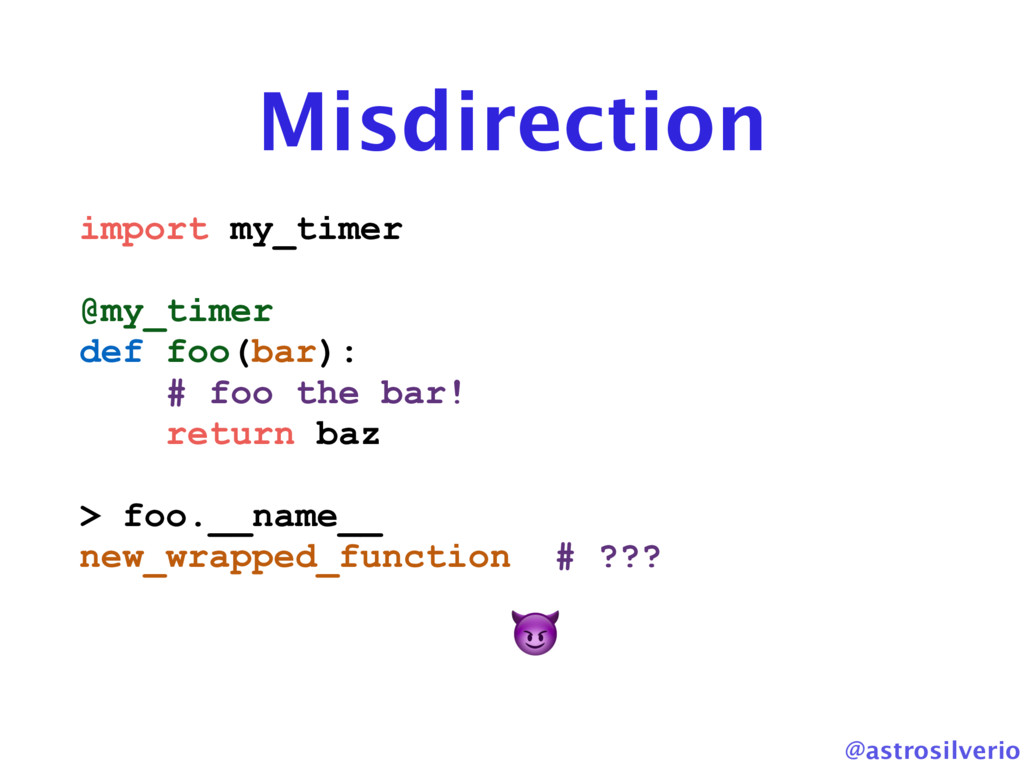
  21. @astrosilverio Misdirection import my_timer @my_timer def foo(bar): # foo the

    bar! return baz > foo.__name__ new_wrapped_function # ???
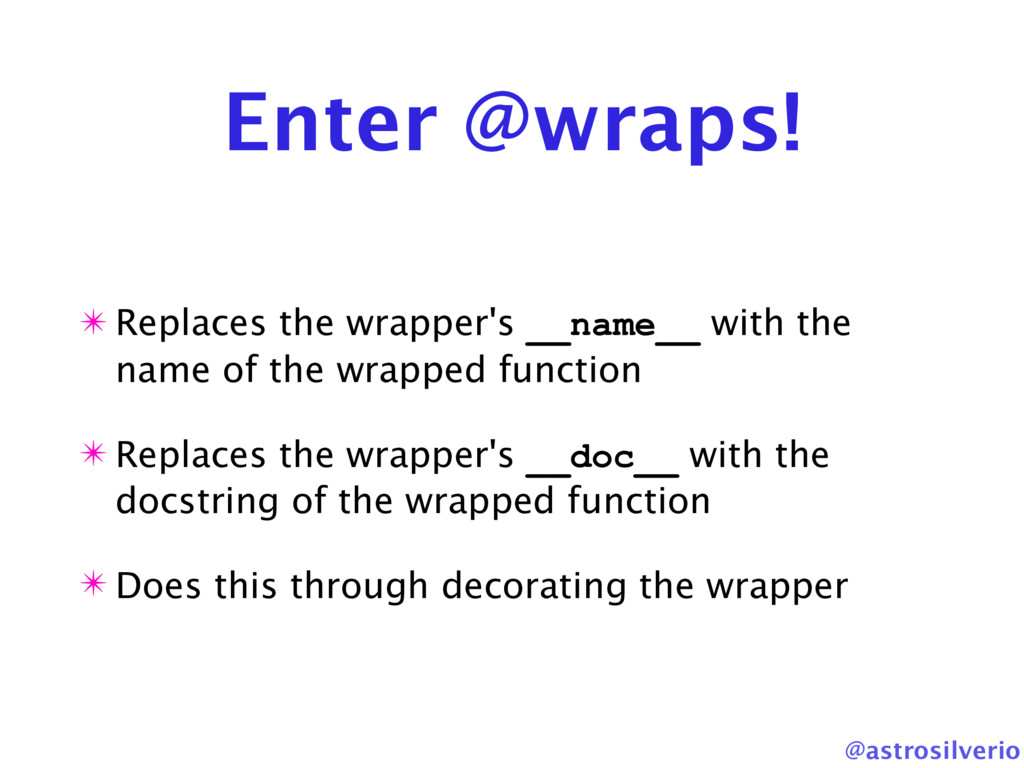
  22. @astrosilverio Enter @wraps! ✴ Replaces the wrapper's __name__ with the

    name of the wrapped function ✴ Replaces the wrapper's __doc__ with the docstring of the wrapped function ✴ Does this through decorating the wrapper
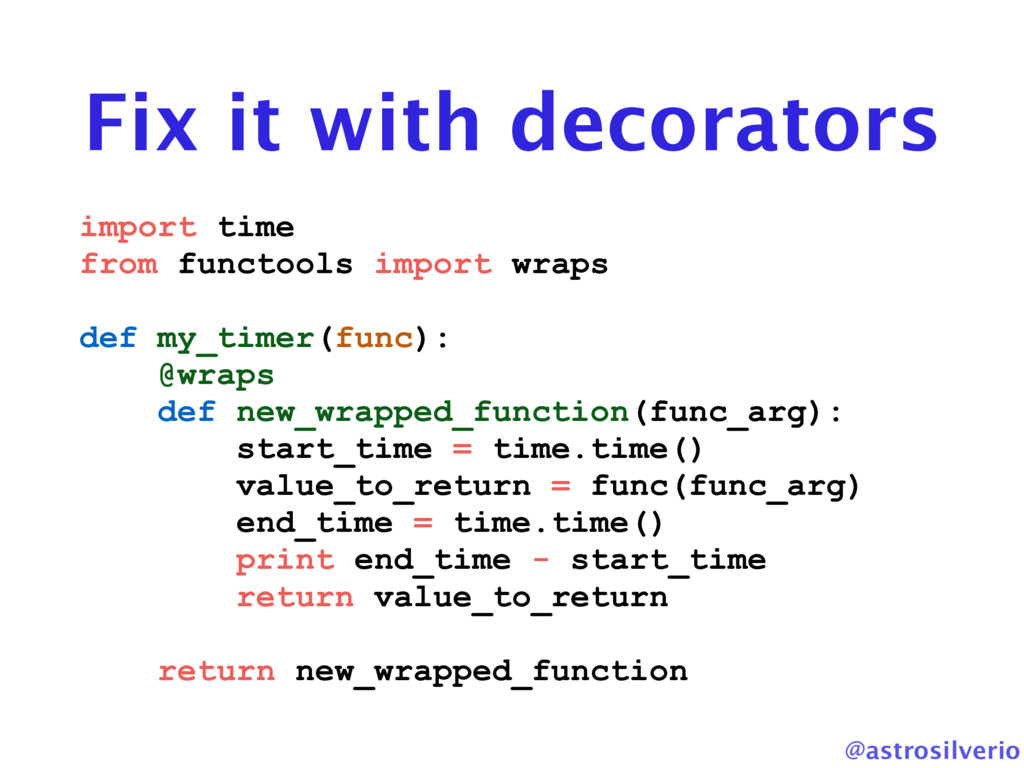
  23. @astrosilverio Fix it with decorators import time from functools import

    wraps def my_timer(func): @wraps def new_wrapped_function(func_arg): start_time = time.time() value_to_return = func(func_arg) end_time = time.time() print end_time - start_time return value_to_return return new_wrapped_function
  24. @astrosilverio Open Questions ✴ How does the inner function have

    access to the wrapped function? ✴ Why do many people use @wraps? ✴ What order are stacked decorators applied in? ✴ How does the @ syntactic sugar work?
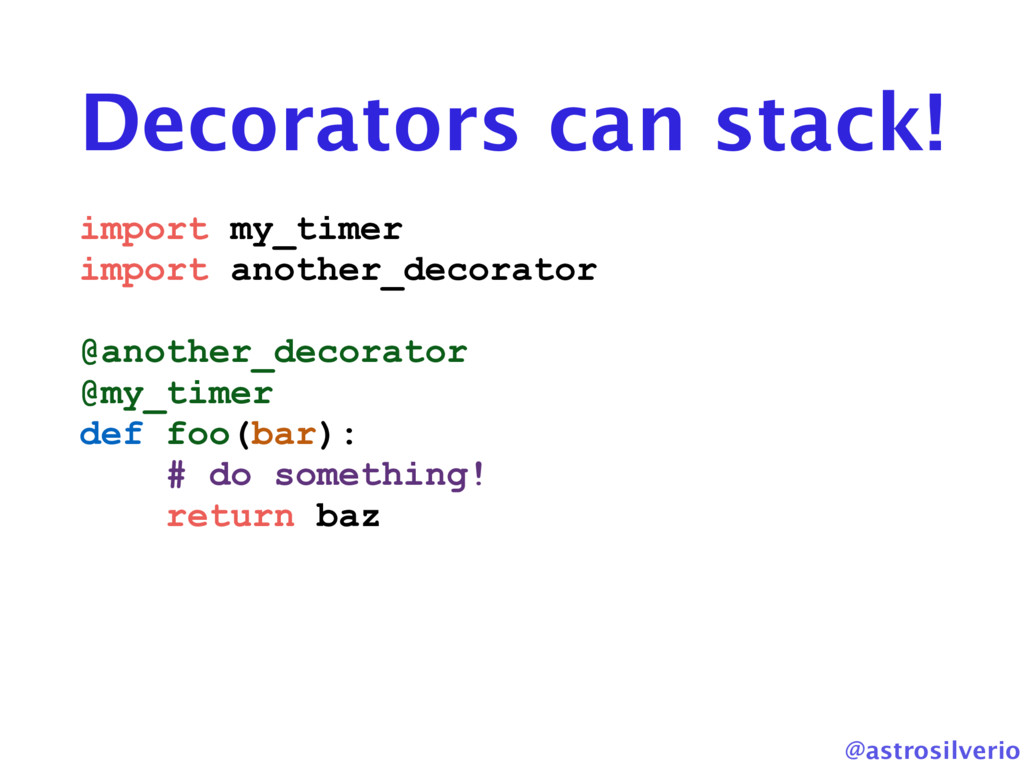
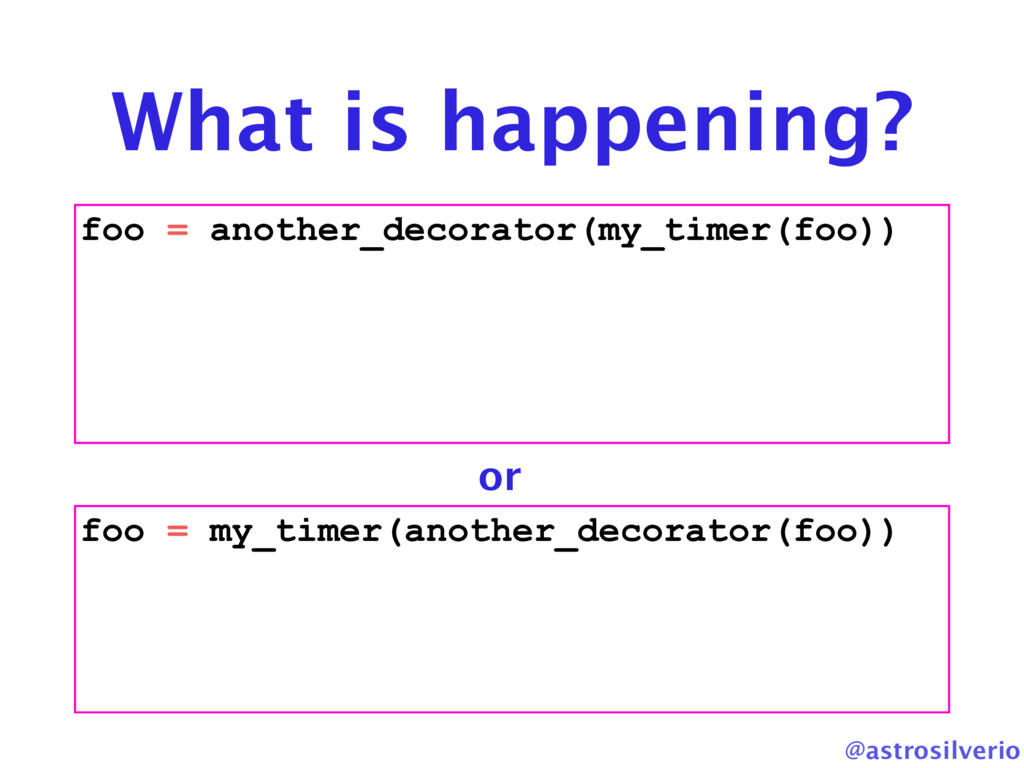
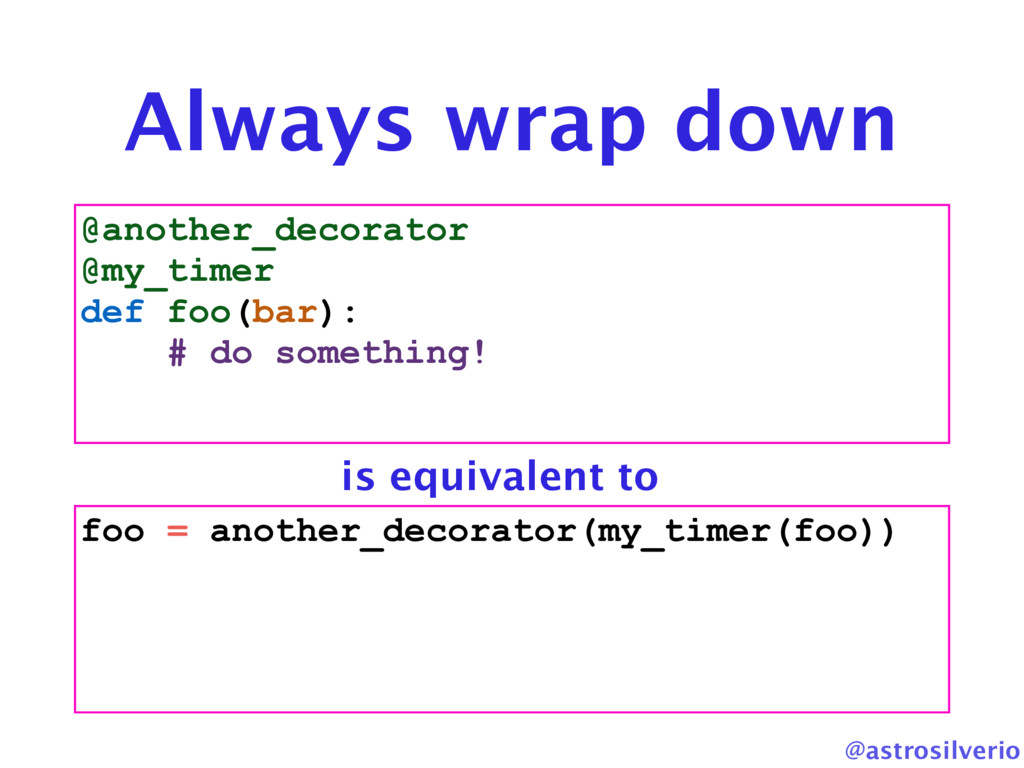
  25. @astrosilverio Always wrap down @another_decorator @my_timer def foo(bar): # do

    something! foo = another_decorator(my_timer(foo)) is equivalent to
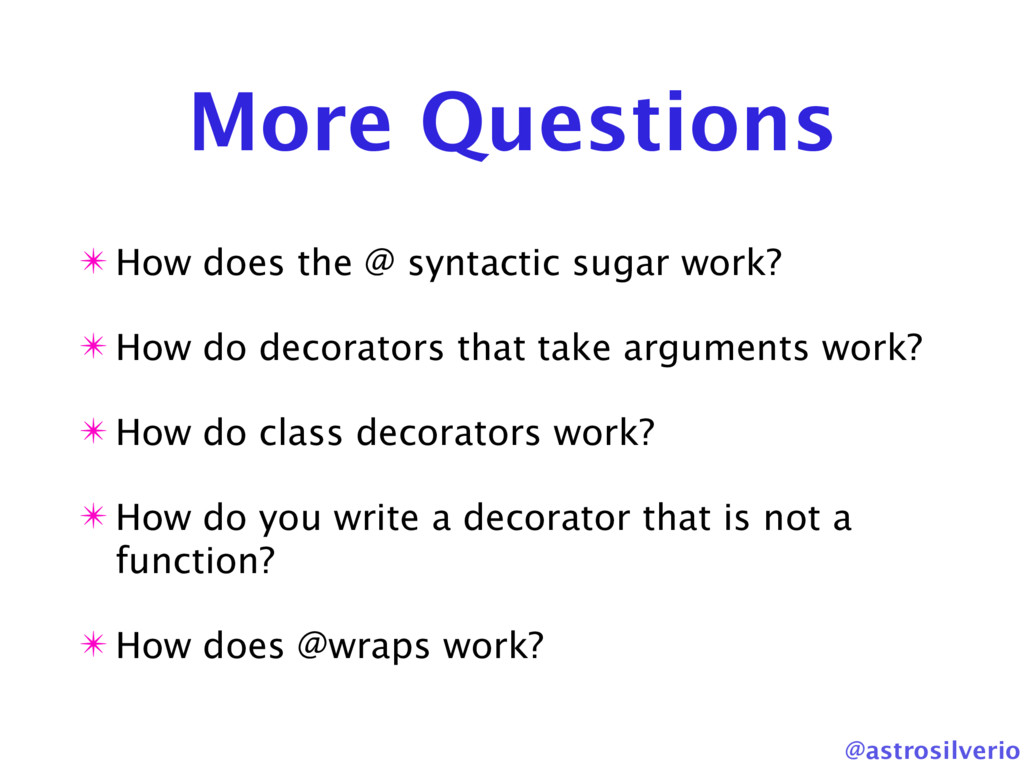
  26. @astrosilverio More Questions ✴ How does the @ syntactic sugar

    work? ✴ How do decorators that take arguments work? ✴ How do class decorators work? ✴ How do you write a decorator that is not a function? ✴ How does @wraps work?
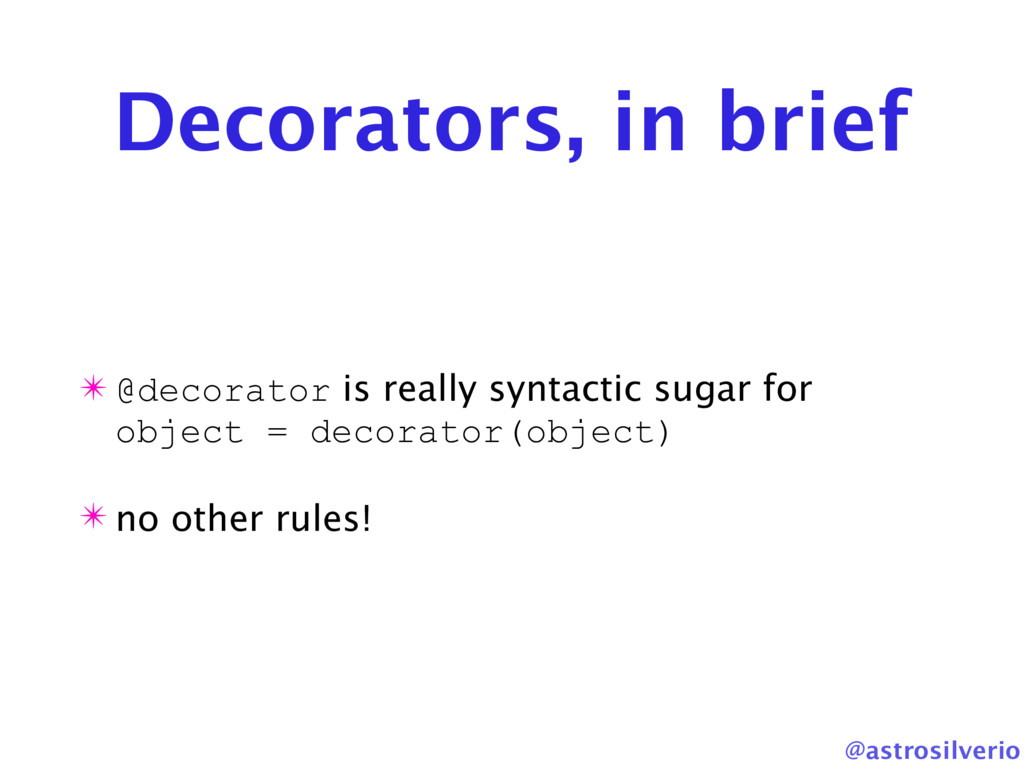
  27. @astrosilverio Decorators, in brief ✴ @decorator is really syntactic sugar

    for object = decorator(object) ✴ no other rules!