Upgrade to Pro — share decks privately, control downloads, hide ads and more …

CHAPTER 2

Avatar for Noraziah Hamid Noraziah Hamid
December 16, 2014

CHAPTER 2

BUILT UP RATE

Avatar for Noraziah Hamid

Noraziah Hamid

December 16, 2014
Tweet

More Decks by Noraziah Hamid

Other Decks in Education

Transcript

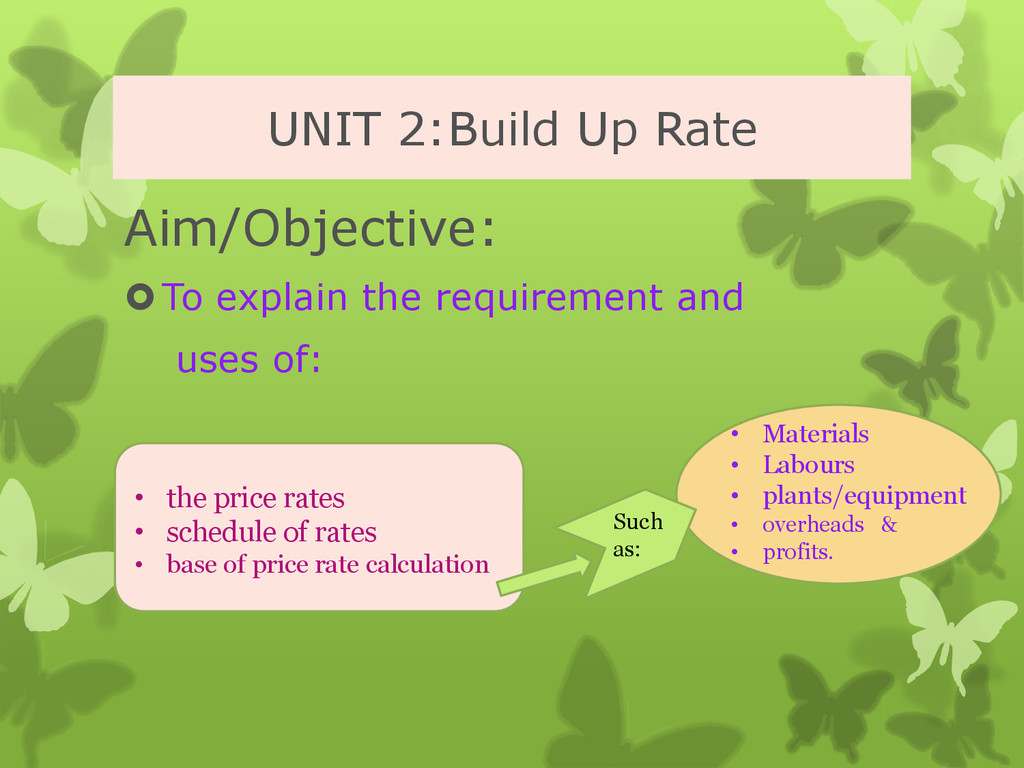
  1. UNIT 2:Build Up Rate Aim/Objective: To explain the requirement and

    uses of: • the price rates • schedule of rates • base of price rate calculation Such as: • Materials • Labours • plants/equipment • overheads & • profits.
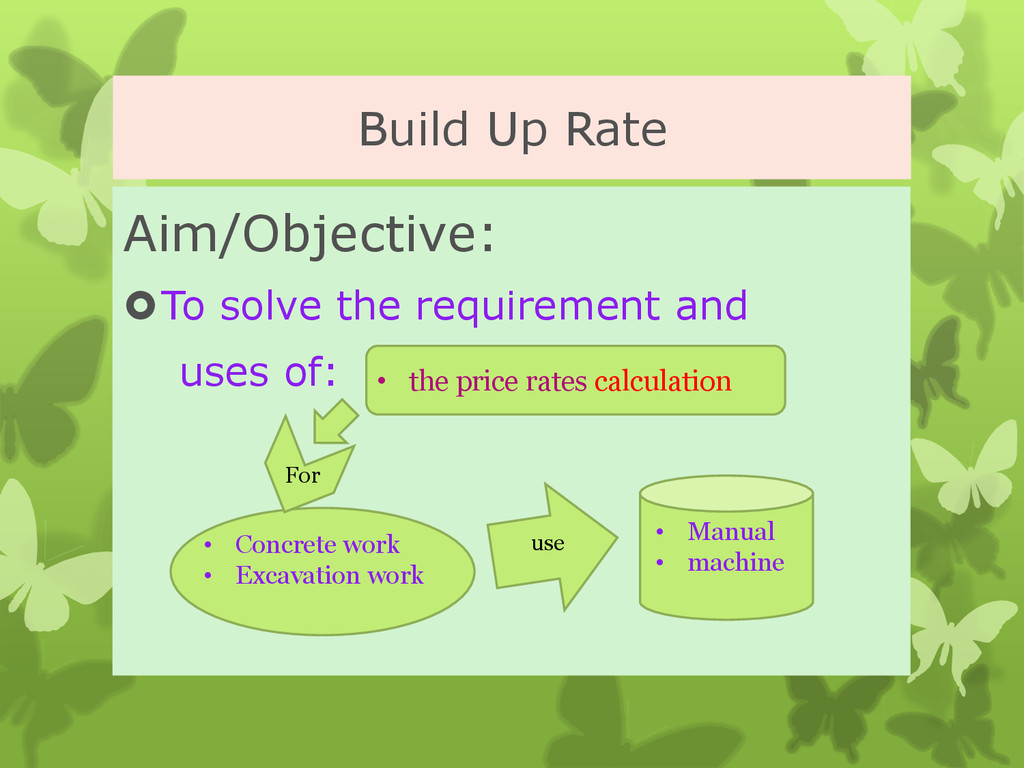
  2. Build Up Rate Aim/Objective: To solve the requirement and uses

    of: • the price rates calculation For • Concrete work • Excavation work • Manual • machine use
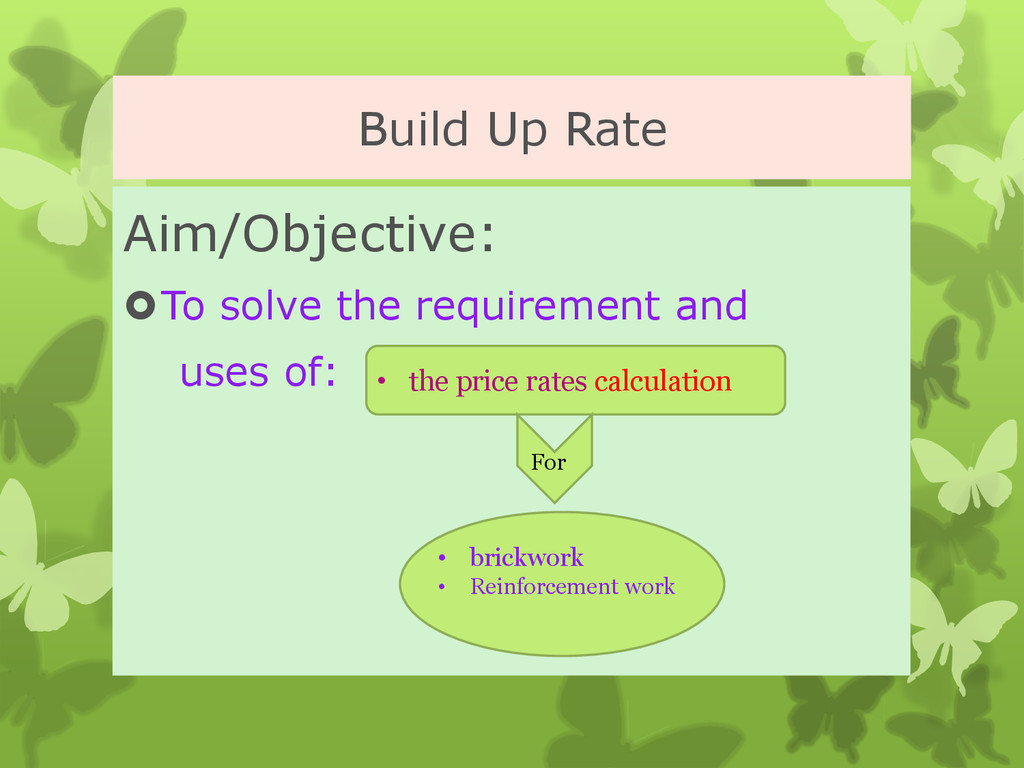
  3. Build Up Rate Aim/Objective: To solve the requirement and uses

    of: • the price rates calculation For • brickwork • Reinforcement work
  4. Introduction There are thousands item of work involved in the

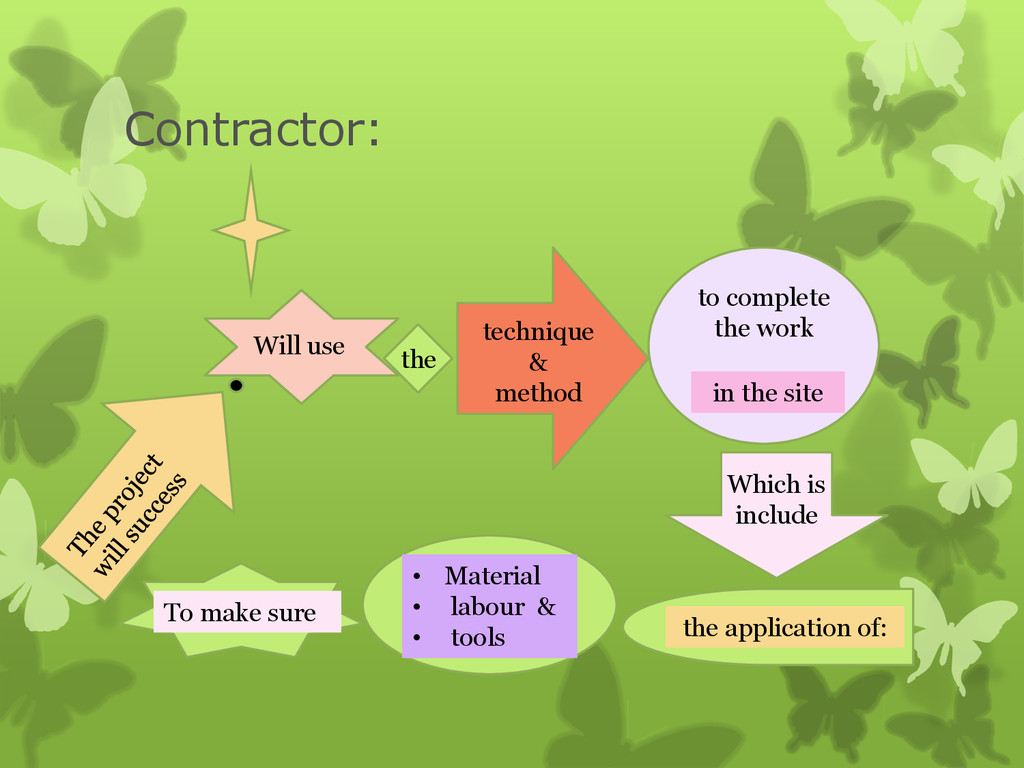
    construction work . Contractor will use the technique and method:  to complete the work  to make sure the project will success.
  5. Contractor: Will use technique & method the to complete the

    work in the site Which is include the application of: • Material • labour & • tools To make sure
  6. Therefor; there are needs the contractor’s expenses of money. Contractor

    :  who have a lot of experience in the construction site not facing a lot of problems because:  the previous information and data about the works will help them: o in the money expenses within the construction period.
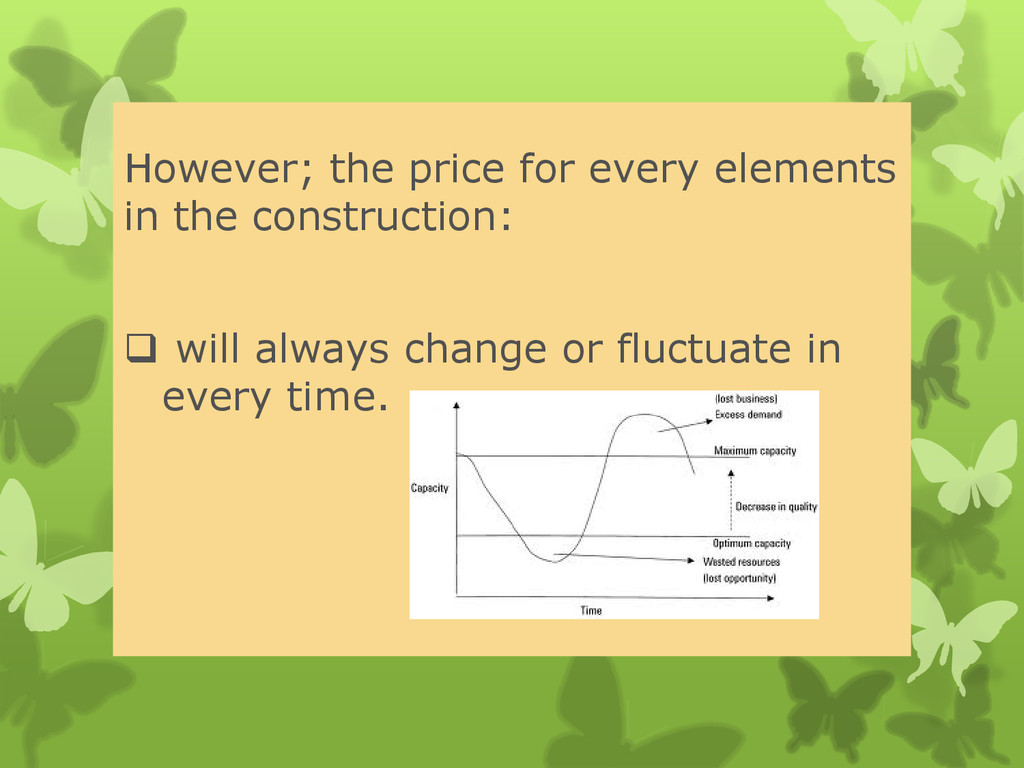
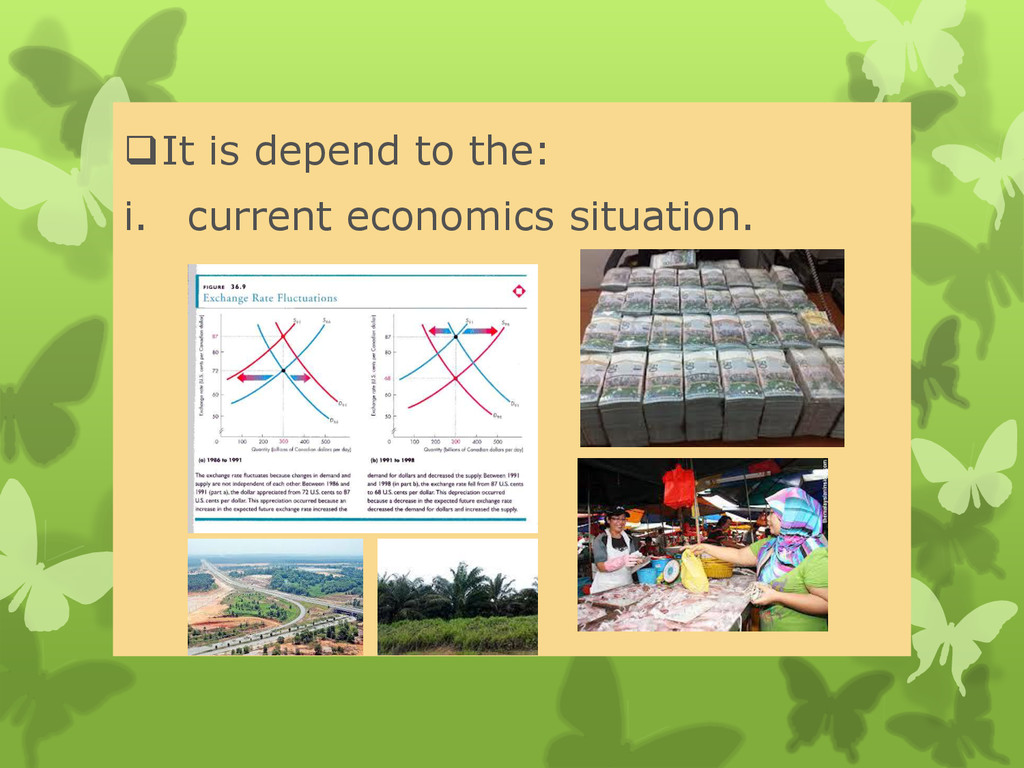
  7. However; the price for every elements in the construction: 

    will always change or fluctuate in every time.
  8. Therefor: the knowledge of :  material cost  labour

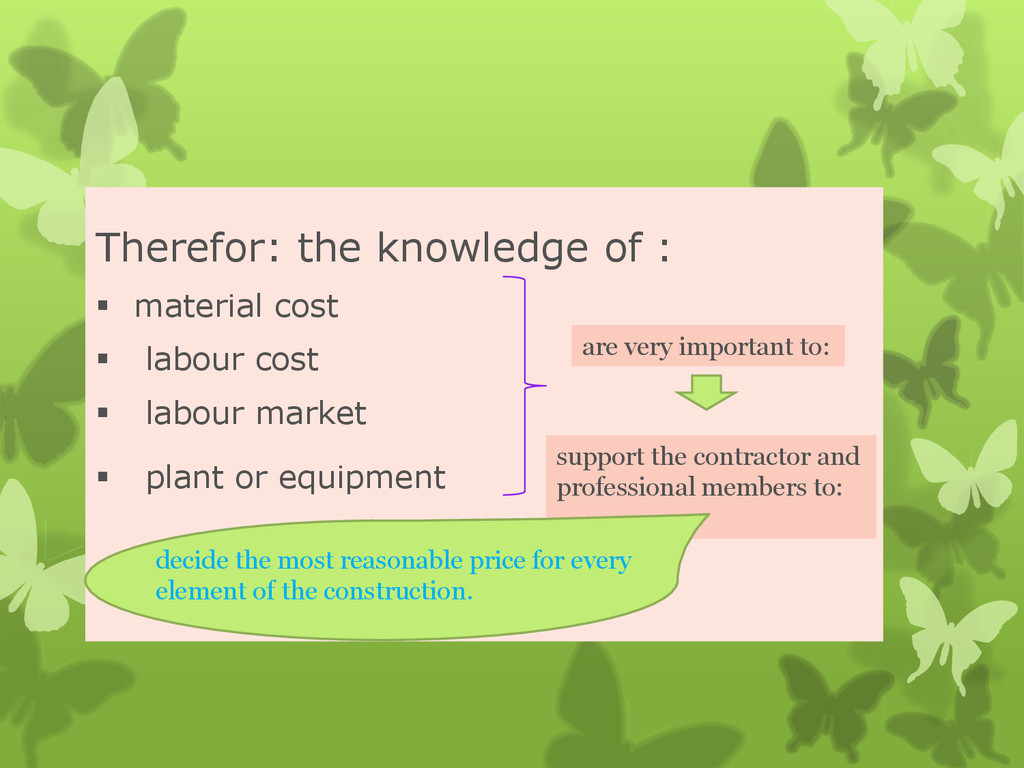
    cost  labour market  plant or equipment are very important to: support the contractor and professional members to: decide the most reasonable price for every element of the construction.
  9. The importance and uses of Build up rates in Estimating

    work.  The professional members such as:  Quantity Surveyor(Q.S) :will use the build up rate in the design stage.  to get the estimate for the project.
  10. The importance and uses of Build up rates in Estimating

    work.  Q.S will get the estimate for the project for the several purpose such as: 1.to know the budget from the Client 2.To know the appropriateness of design(suitable) based on the client’s budget. 3.As the information, data and the record for the forecast projects.
  11. BUILD UP RATES  Basic Of Built-Up Rate Calculation Need.

    a. Material cost b. Labour cost c. Mechinary and tool / equipment cost d. Overhead cost e. Profit cost
  12. BUILD UP RATES  Condition:  Not all the item

    in the construction work must include all the above factor.  It’s based on the type dan method of work will proceed on site.
  13. BUILD UP RATES  Example: a) Excavation work manually. 

    Only labour cost, overhead and profit of the company must be considered.  No material cost involve.
  14. BUILD UP RATES  Example: b) Brickwall work.  material

    cost involve.  Only labour cost, overhead and profit of the company must be considered.
  15. BUILD UP RATES  Example: c) Concrete work by machine.

     All five(5) costs above involve. • Materials • Labours • plants/equipment • overheads & • profits.
  16. Uses And Requirement of Build Up rates 1. To know

    breakdown of the cost 2. To price up cost 3. Get budget 4. To know overhead 5. To know the construction building cost
  17. Basic price of materials  Transportation or delivery cost to

    the site Storage cost  Wastage and shrinkage or damages cost Material Cost
  18.  Basic price of materials  Price there are not

    include the profit, transportation cost and other cost.  Price from factory or from supplier. Material Cost • Market price
  19. Basic price of materials  Basic price will fluctuate from

    time to time and from one place to another place.  North and South – different effects to the basic price. Material Cost • Fluctuation price
  20. Transportation or delivery cost to the site.  Delivery cost

    of material to the site.  Extra cost to delivery material to the site.  Supplier decide the price base on the distance of the place to deliver the material. Material Cost
  21.  If the site is far away from the factory

    or warehouse :  the delivery cost is more expensive.  This increasement happen because of cost unloading the material to the site. Material Cost
  22.  This cost must included to the transportation cost because

    it must consider wether it is use labour or mechine like forklift , crane or other machinary. Material Cost
  23. Storage  cost to storage the perishable building materials(can easily

    be damaged):  like cement, glass, tiles, flammable materilas like woods etc.  Purpose to storage: for safety Material Cost
  24. Wastage and shrinkage or damages cost  Easy damages or

    substance noy fully utilized materials (not fully used):  wastage.  estimate for wastage: 10% -15%  material on site gone to waste and damage. Material Cost
  25.  Valuation of different waste:  Based on on types

    of materials, types of work and work efficiency.  Wastage is calculated from the order stage until to the construction proces. Material Cost
  26.  basically the value of wastage depend to the types

    of the materials:  base on percentage: Material Cost
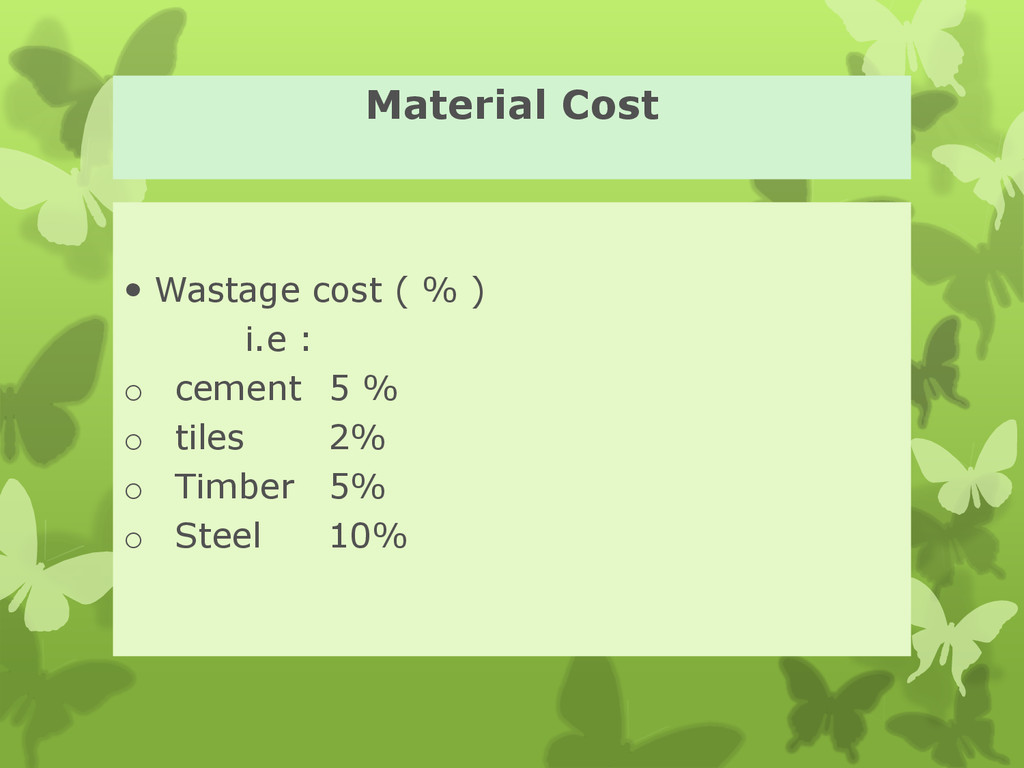
  27. Material Cost  Wastage cost ( % ) i.e :

    o cement 5 % o tiles 2% o Timber 5% o Steel 10%
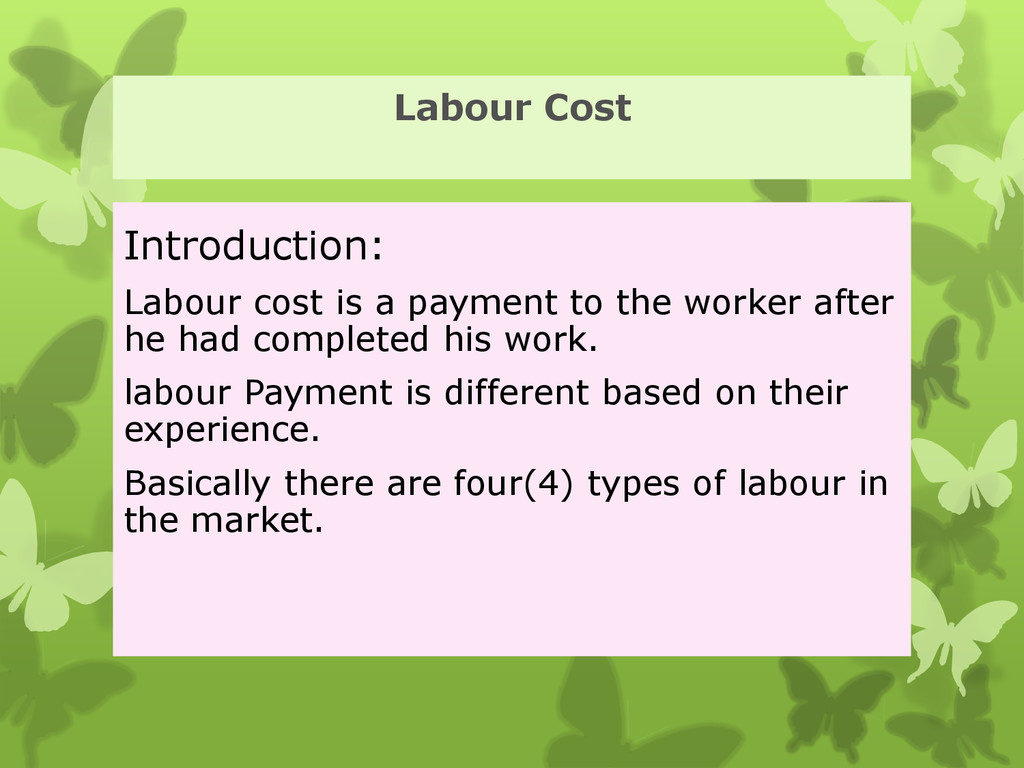
  28. Labour Cost Introduction: Labour cost is a payment to the

    worker after he had completed his work. labour Payment is different based on their experience. Basically there are four(4) types of labour in the market.
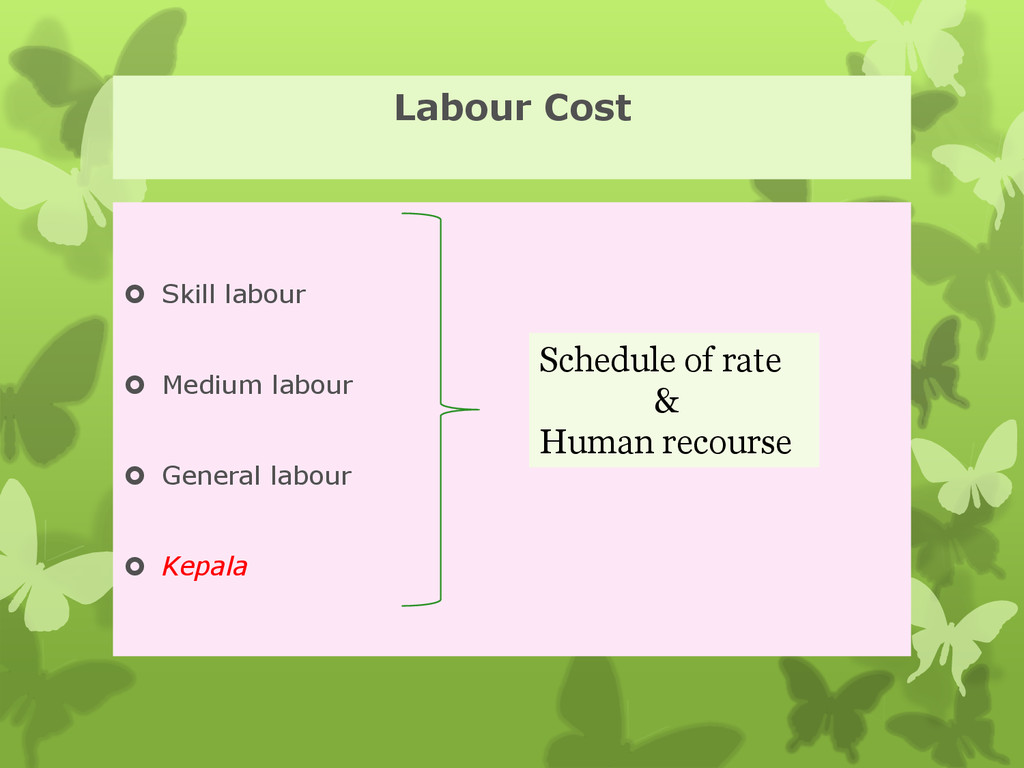
  29. Labour Cost  Skill labour  Medium labour  General

    labour  Kepala Schedule of rate & Human recourse
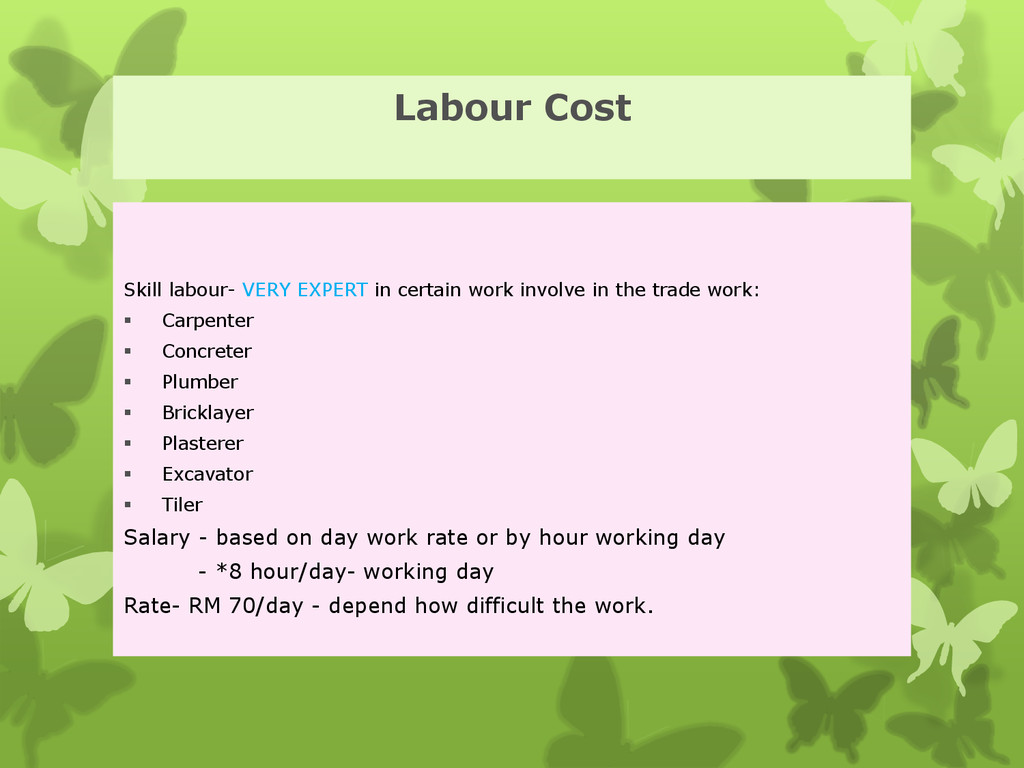
  30. Labour Cost Skill labour- VERY EXPERT in certain work involve

    in the trade work:  Carpenter  Concreter  Plumber  Bricklayer  Plasterer  Excavator  Tiler Salary - based on day work rate or by hour working day - *8 hour/day- working day Rate- RM 70/day - depend how difficult the work.
  31. Labour Cost  Medium labour- assistant to skill labour -

    a lot of work to be done by the same skill labour.  Salary – around RM 35.00 - RM 40.00
  32. Labour Cost  General labour– follow the instruction from skill

    labour or medium labour. - do the work like: transport material by manual remove the material site clearing from the surplus  Salary- around RM 20 – RM 30
  33. Labour Cost  Kepala – Leader for the gang or

    group of workers: Skill workers, Medium workers, General workers - Responsible to operate and supervise on site the construction work on behalf of the contractor. - very expert in certain field: manage the material on site, tools/equipment,labour.
  34. Labour Cost  Kepala – paid by salary and allocated

    in company overhead cost .  Salary- around RM 20 – RM 30  Labour constant:
  35. Labour Cost  Labour constant – Average time taken by

    the worker to complete their work based on the certain unit. • Skill and labour capacity is not similar to each other. • Skill must be measured by labour constant. • Unit : hour/m, hour/m2 : hour/m3 ,hour/kg : etc.
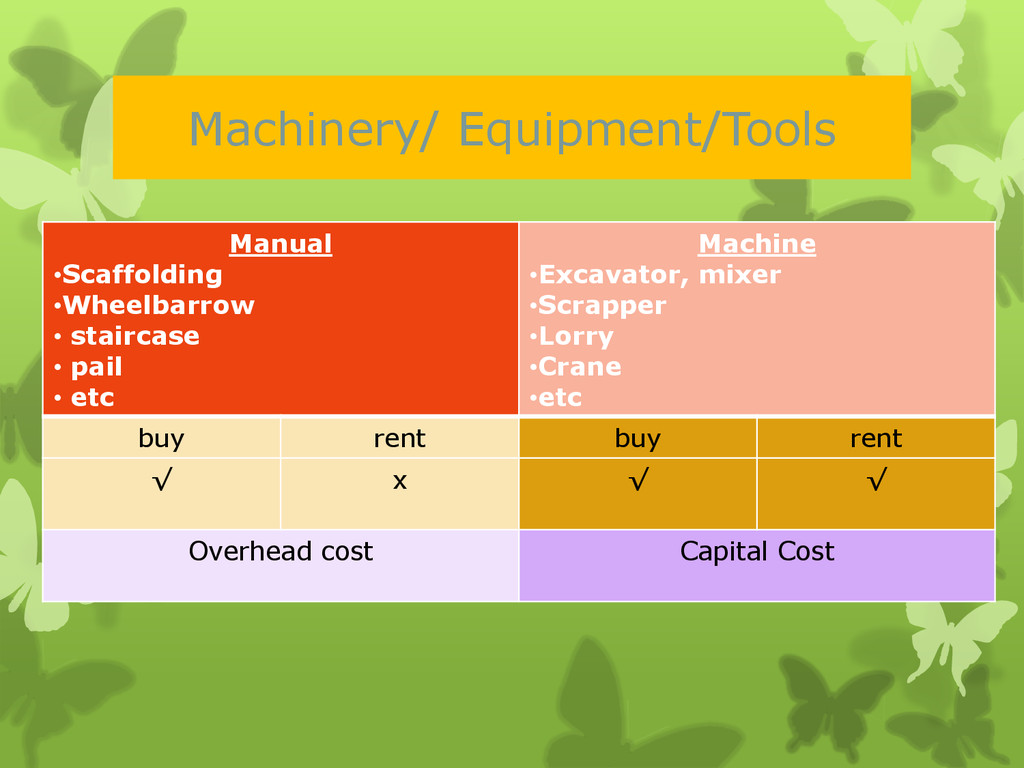
  36. Machinery/ Equipment/Tools Manual •Scaffolding •Wheelbarrow • staircase • pail •

    etc Machine •Excavator, mixer •Scrapper •Lorry •Crane •etc buy rent buy rent √ x √ √ Overhead cost Capital Cost
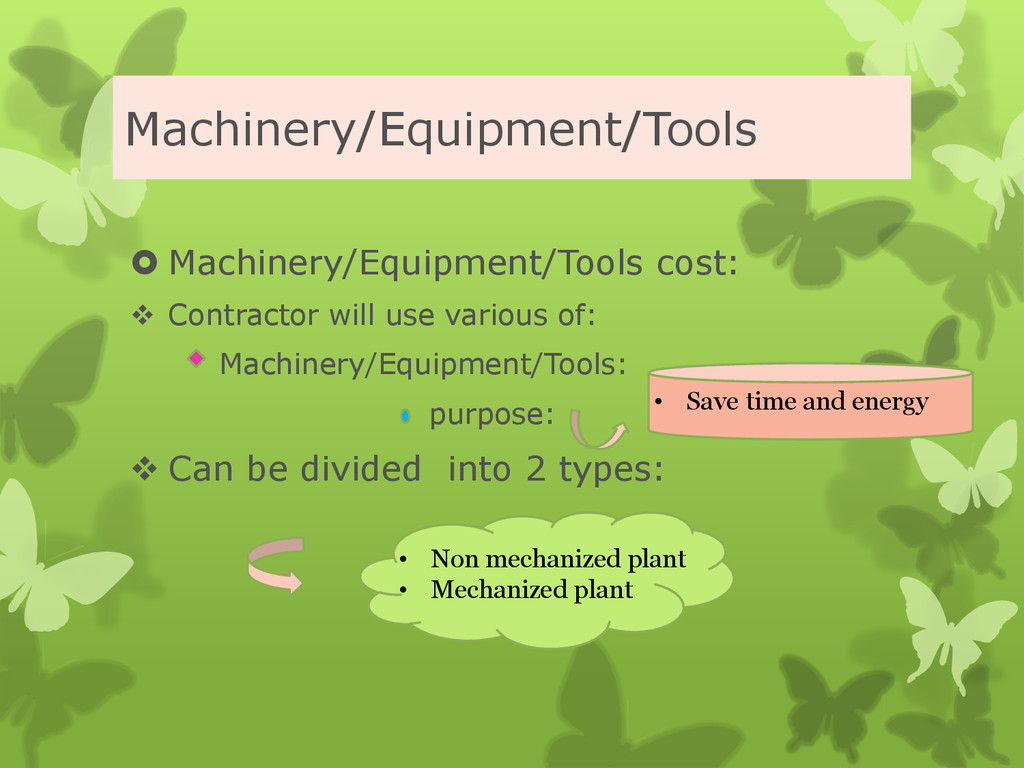
  37. Machinery/Equipment/Tools  Machinery/Equipment/Tools cost:  Contractor will use various of:

    Machinery/Equipment/Tools: purpose:  Can be divided into 2 types: • Save time and energy • Non mechanized plant • Mechanized plant
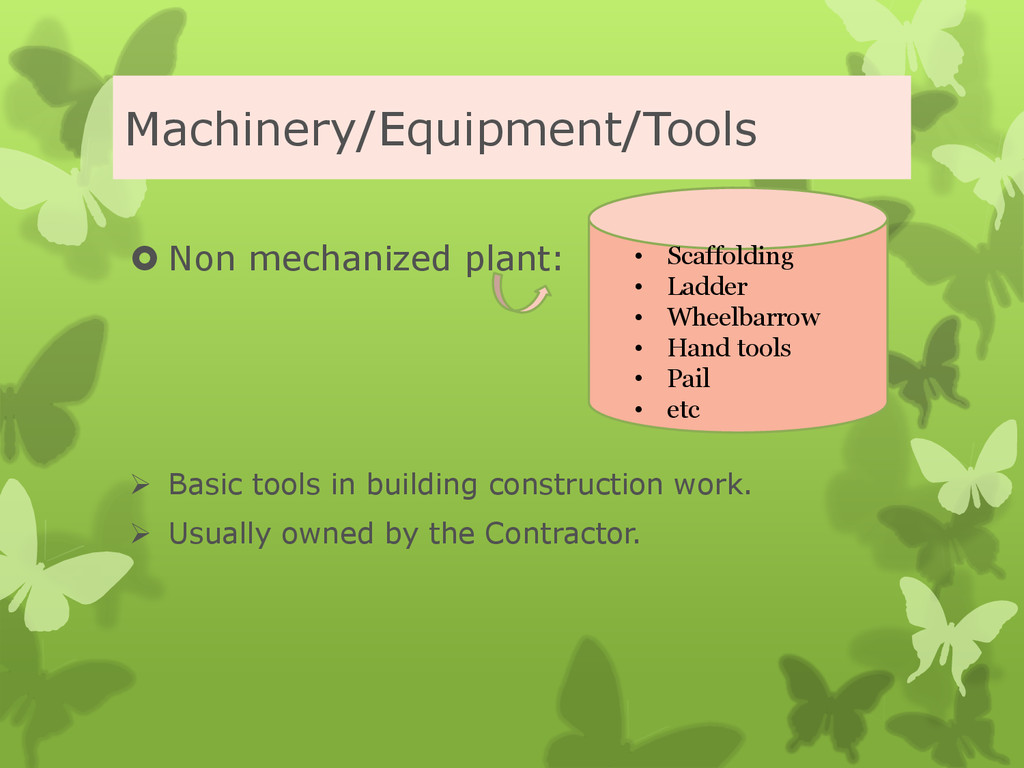
  38. Machinery/Equipment/Tools  Non mechanized plant:  Basic tools in building

    construction work.  Usually owned by the Contractor. • Scaffolding • Ladder • Wheelbarrow • Hand tools • Pail • etc
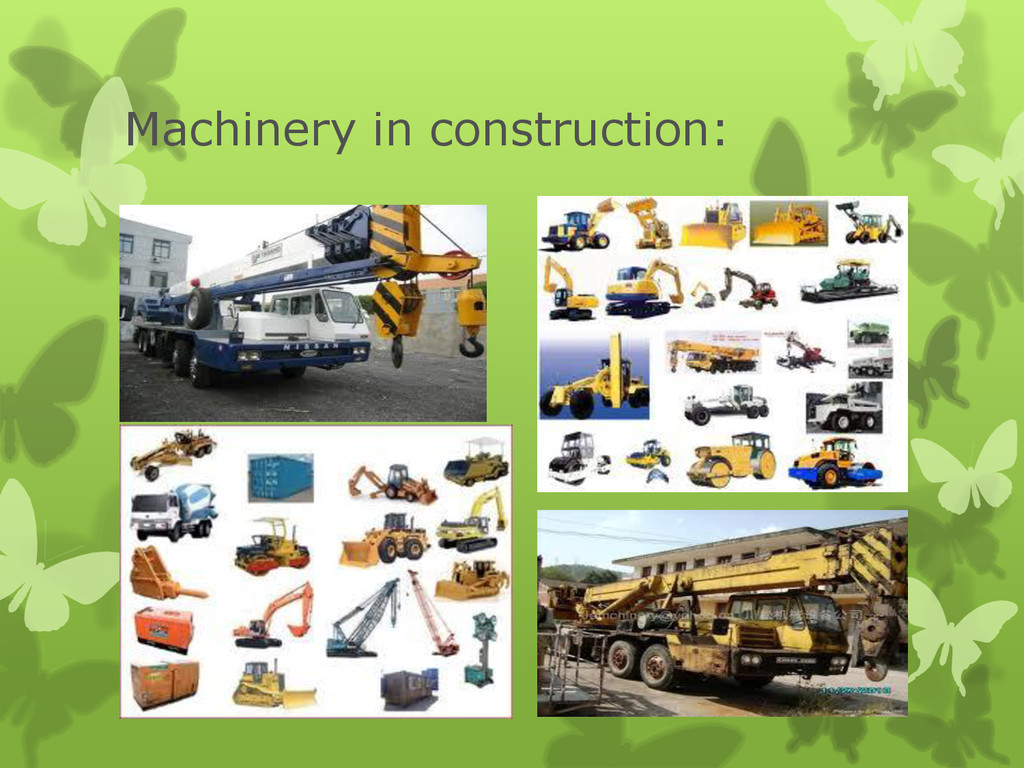
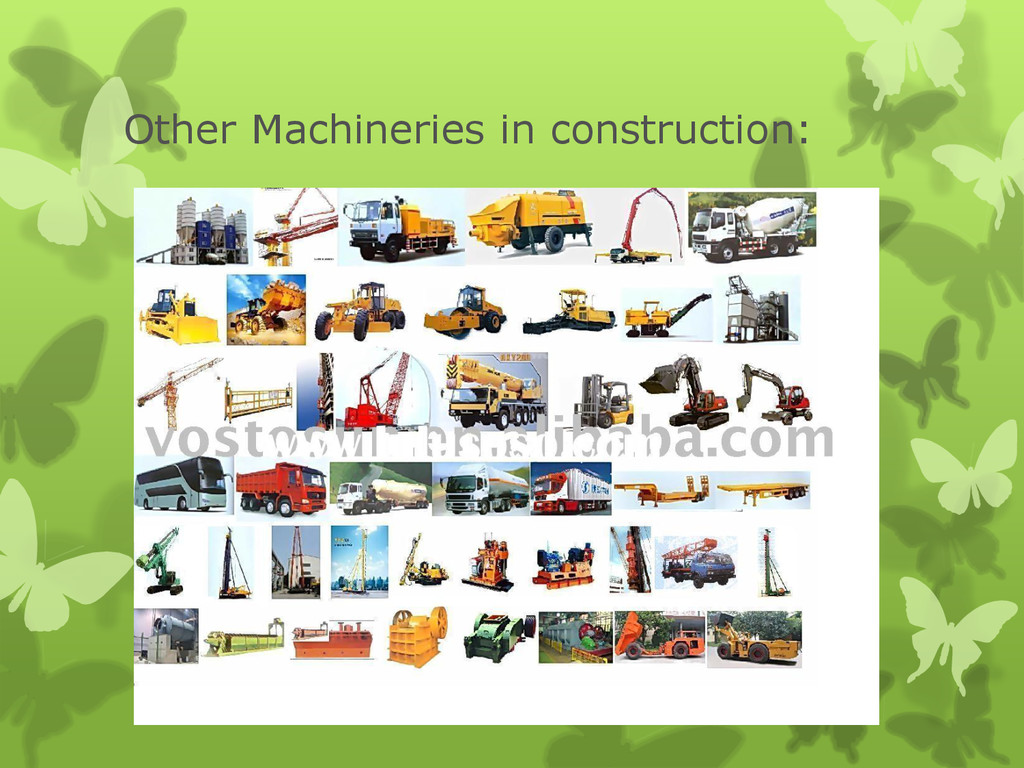
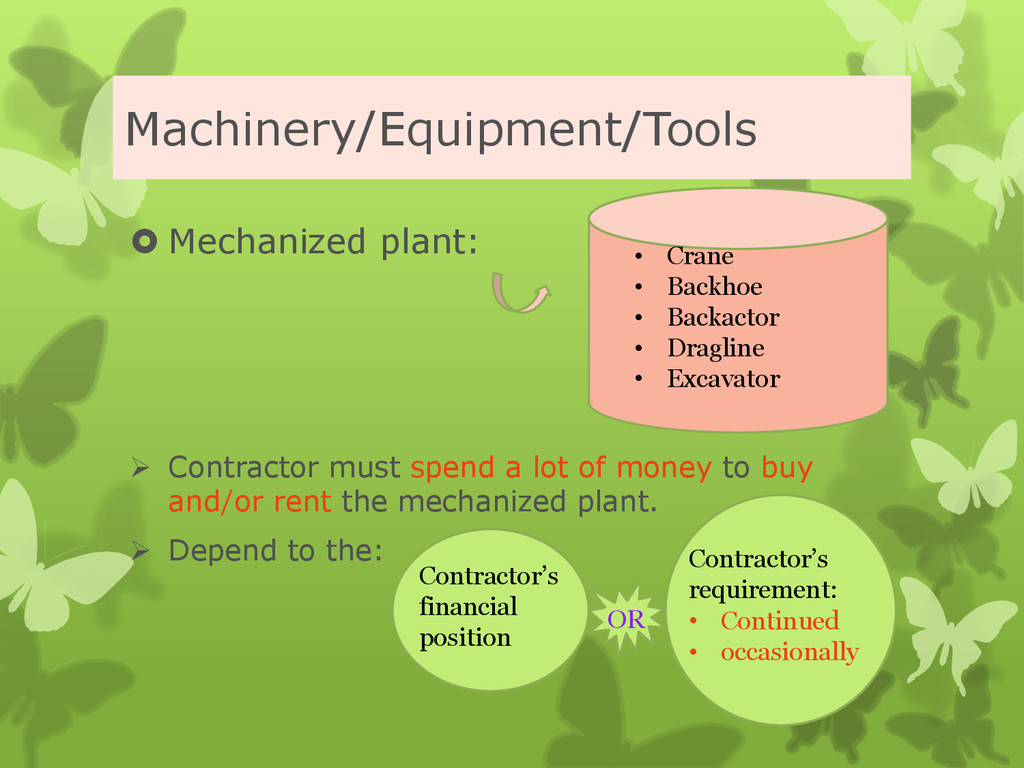
  39. Machinery/Equipment/Tools  Mechanized plant:  Contractor must spend a lot

    of money to buy and/or rent the mechanized plant.  Depend to the: • Crane • Backhoe • Backactor • Dragline • Excavator Contractor’s financial position Contractor’s requirement: • Continued • occasionally OR
  40. Machinery/Equipment/Tools  Mechanized plant:  Capital to buy and rent

    these devices should be recalculated to obtain the cost of capital has been issued.  How to get back the money used to purchase capital equipment ? It must:
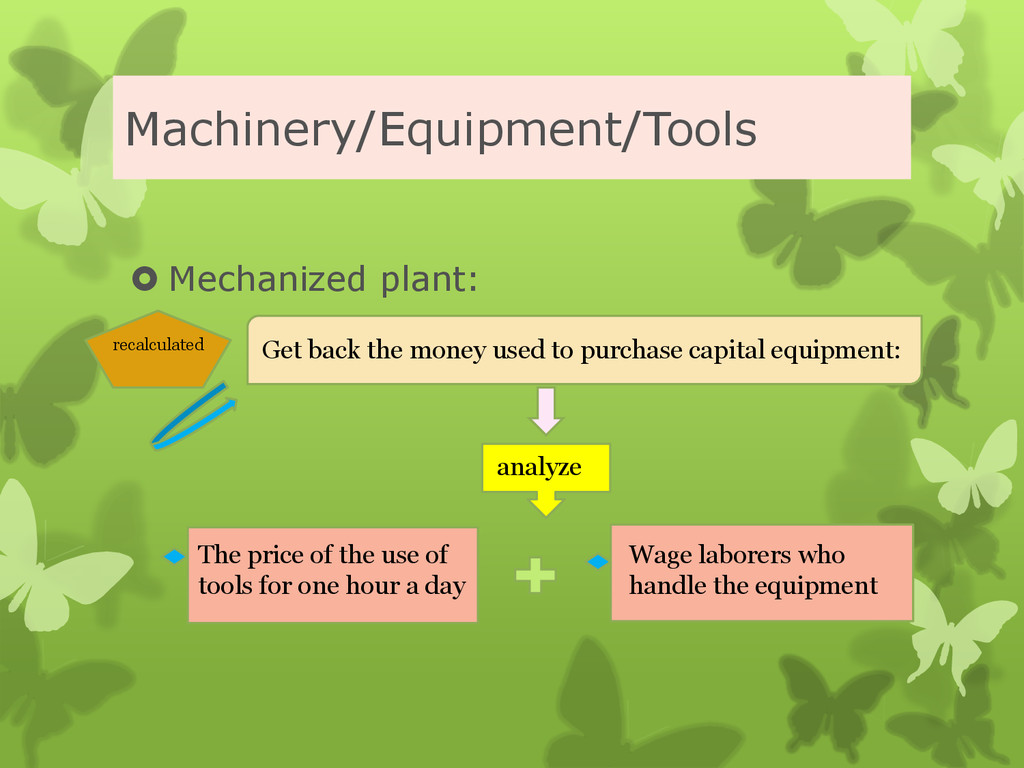
  41. Machinery/Equipment/Tools  Mechanized plant: Get back the money used to

    purchase capital equipment: recalculated analyze The price of the use of tools for one hour a day Wage laborers who handle the equipment
  42. Machinery/Equipment/Tools  Method to analyze the Machinery:  Analysis equipment

    rented: • Include the machinery, driver and fuel.  Personal machinery – buy, loan  Cost incurred by the contractor are: • Cost depletion for each machinery until it sale by second hand cost.
  43. Machinery/Equipment/Tools • Cost of lost investment- bear interest • Cost

    of maintenance. • Cost of transportation to the site. • Cost of operation –salary the driver and assistant driver, fuel to operate the machine.
  44. Overhead and Profit  Overhead cost:  Company overhead cost

    is:  To manage and administer the staff and the office equipment. • the rate of expenditure incurred by the company • Salaries • Allowance • & other payment to the staff: overtime, bonus, etc
  45. Overhead and Profit  Overhead cost:  Building: • Office

    rental • Store • Warehouse • Workshop • Non mechanized plant cost • etc.
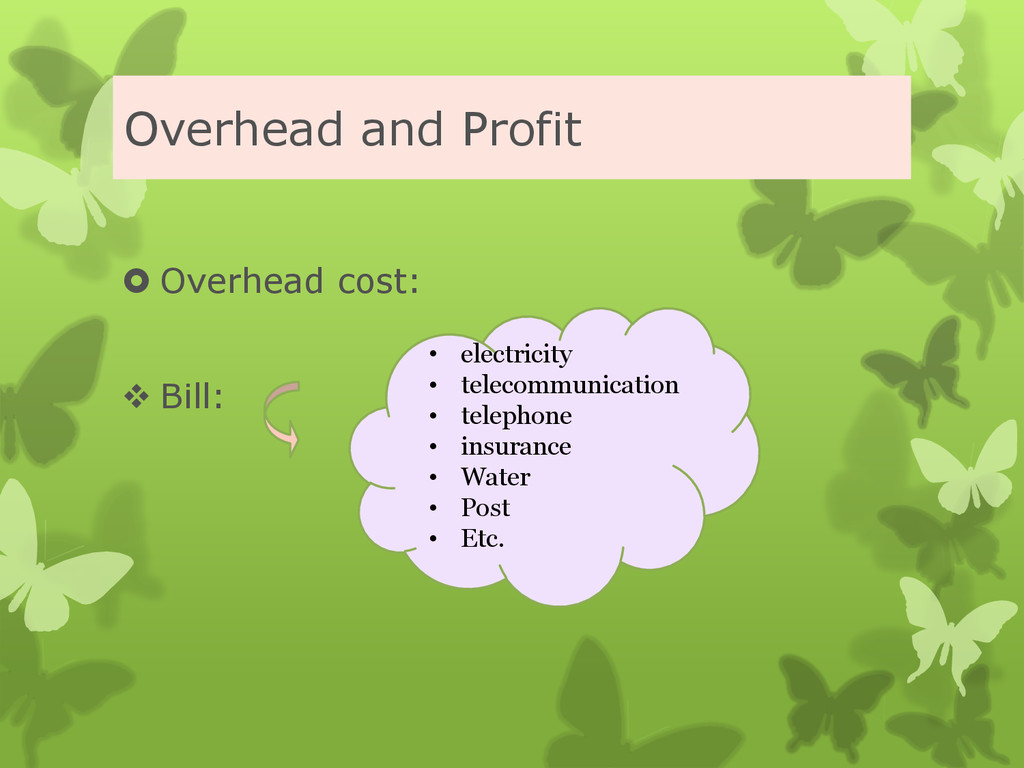
  46. Overhead and Profit  Overhead cost:  Bill: • electricity

    • telecommunication • telephone • insurance • Water • Post • Etc.
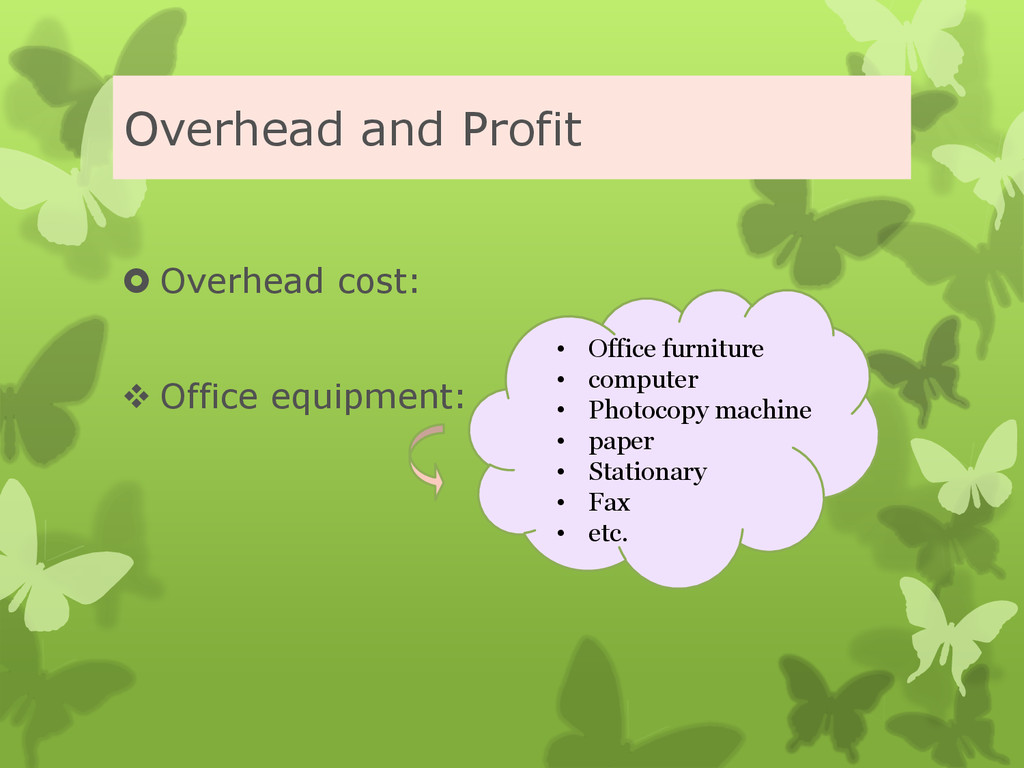
  47. Overhead and Profit  Overhead cost:  Office equipment: •

    Office furniture • computer • Photocopy machine • paper • Stationary • Fax • etc.
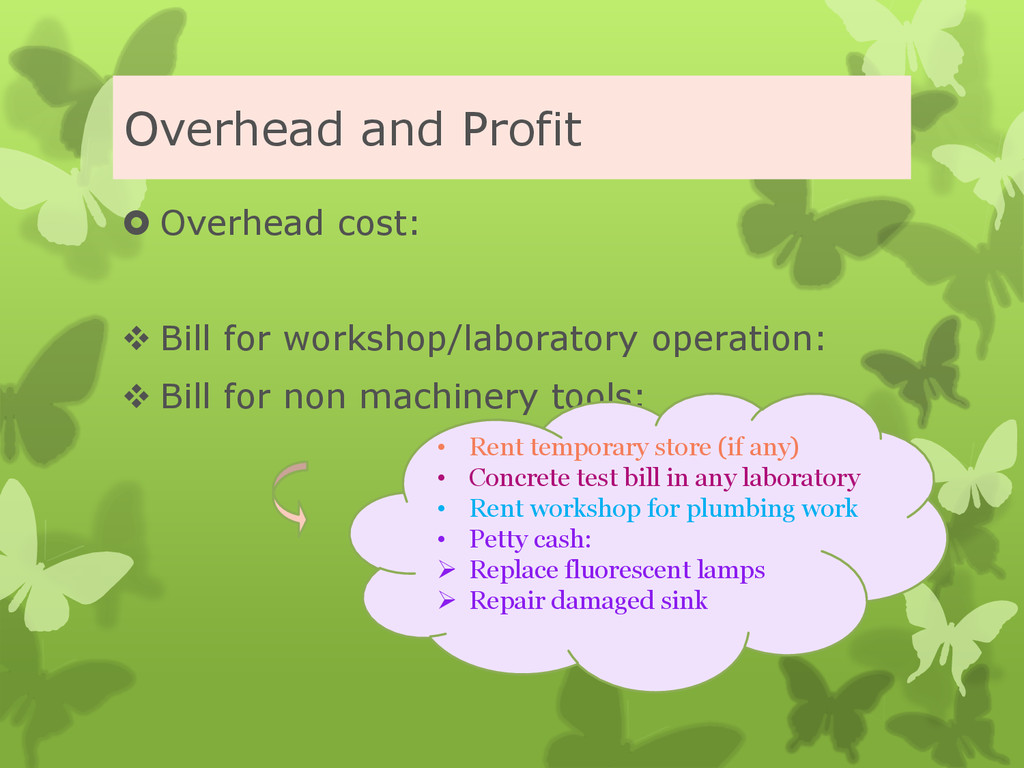
  48. Overhead and Profit  Overhead cost:  Bill for workshop/laboratory

    operation:  Bill for non machinery tools: • Rent temporary store (if any) • Concrete test bill in any laboratory • Rent workshop for plumbing work • Petty cash:  Replace fluorescent lamps  Repair damaged sink
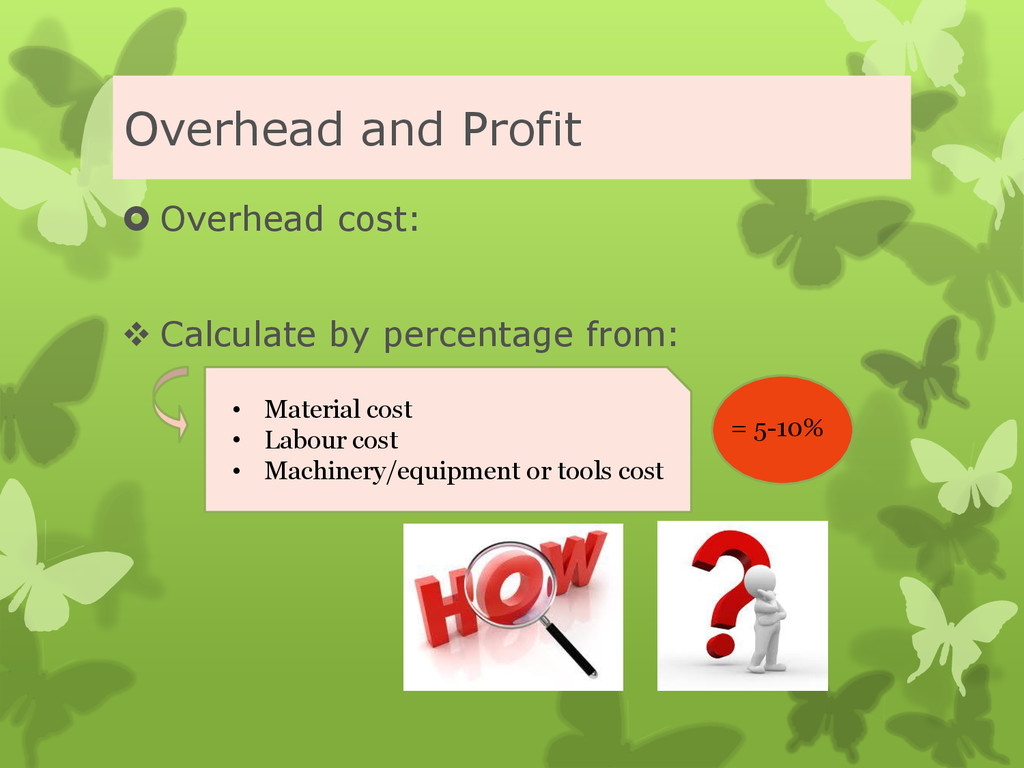
  49. Overhead and Profit  Overhead cost:  Calculate by percentage

    from: • Material cost • Labour cost • Machinery/equipment or tools cost = 5-10%
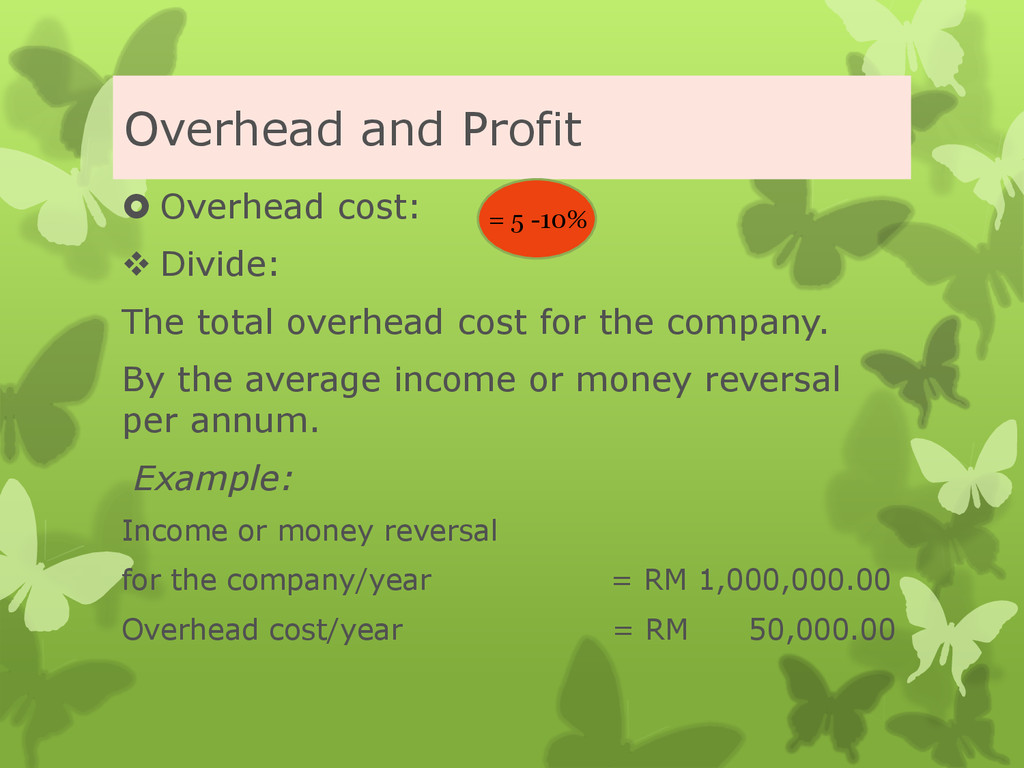
  50. Overhead and Profit  Overhead cost:  Divide: The total

    overhead cost for the company. By the average income or money reversal per annum. Example: Income or money reversal for the company/year = RM 1,000,000.00 Overhead cost/year = RM 50,000.00 = 5 -10%
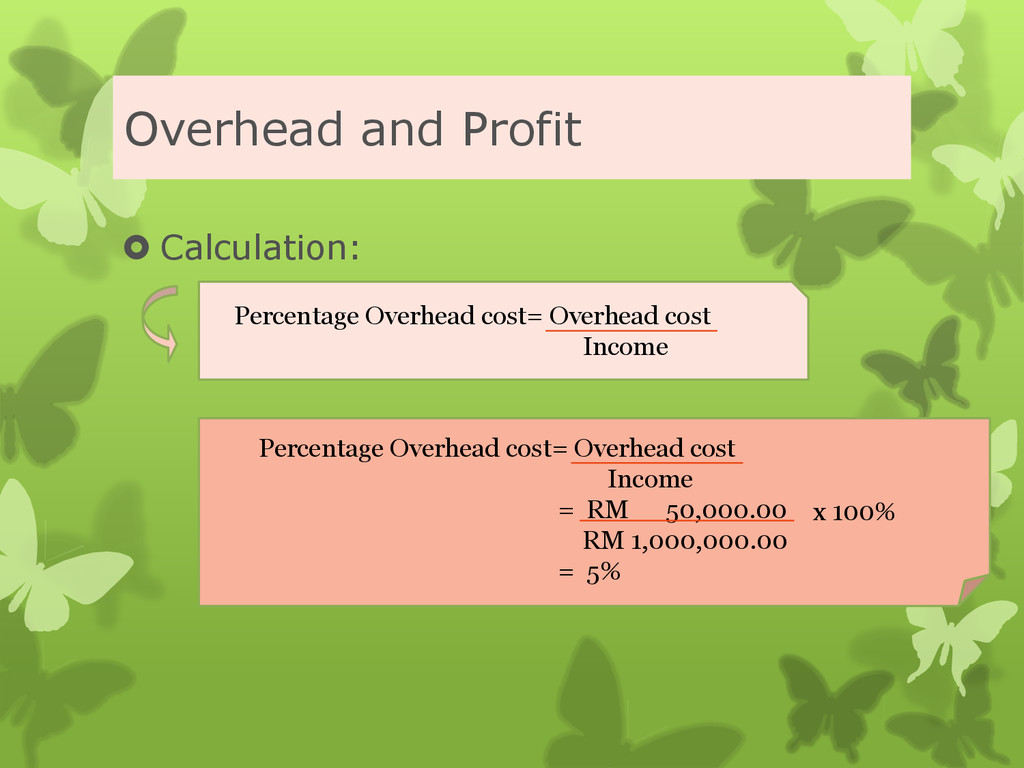
  51. Overhead and Profit  Calculation: Percentage Overhead cost= Overhead cost

    Income Percentage Overhead cost= Overhead cost Income = RM 50,000.00 RM 1,000,000.00 = 5% x 100%
  52. Overhead and Profit  Profit cost:  To ensure contractor

    business can run properly.  Company need a bid allowance to support the liability cost management and administration of a contract.
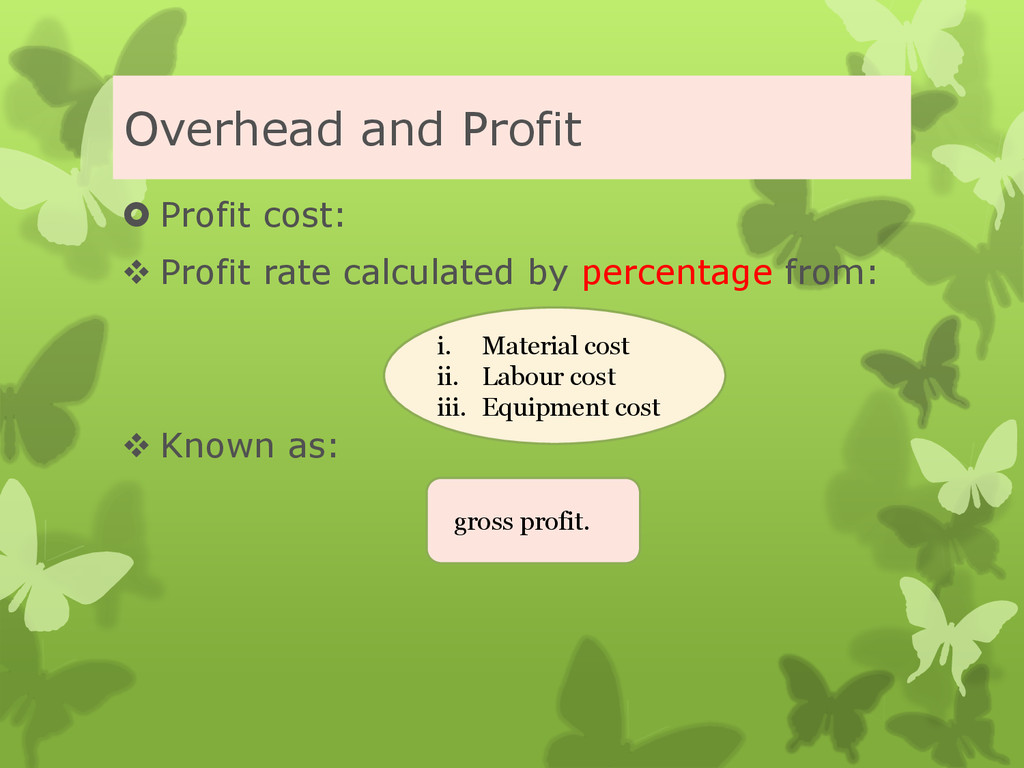
  53. Overhead and Profit  Profit cost:  Profit rate calculated

    by percentage from:  Known as: i. Material cost ii. Labour cost iii. Equipment cost gross profit.
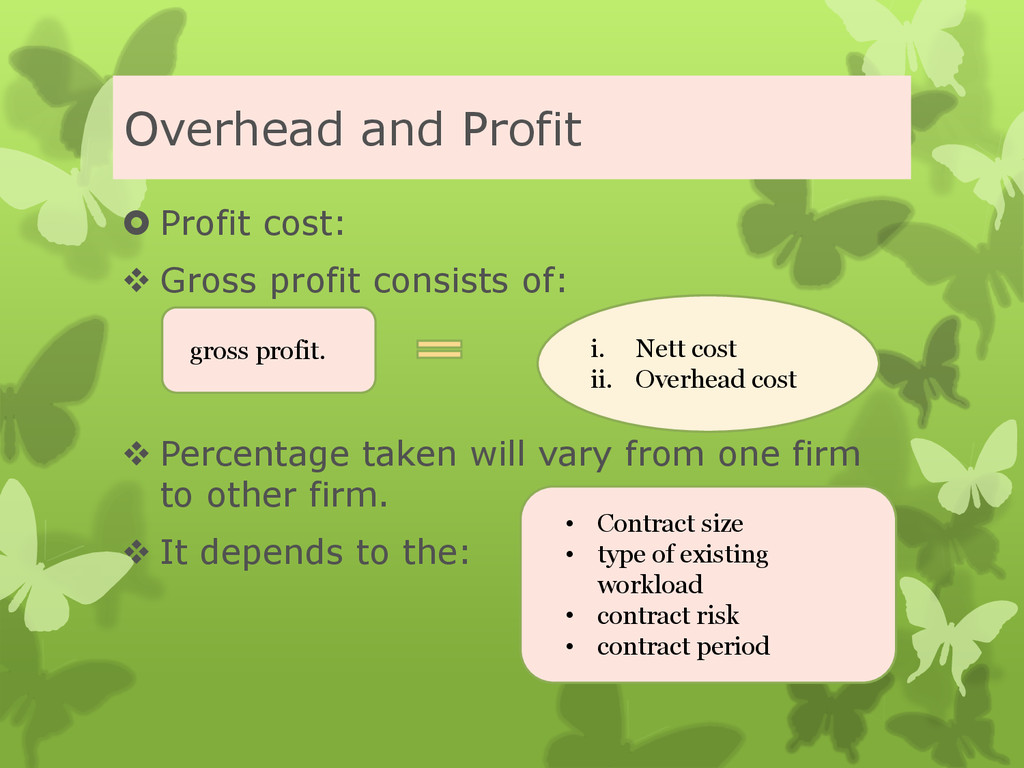
  54. Overhead and Profit  Profit cost:  Gross profit consists

    of:  Percentage taken will vary from one firm to other firm.  It depends to the: i. Nett cost ii. Overhead cost gross profit. • Contract size • type of existing workload • contract risk • contract period
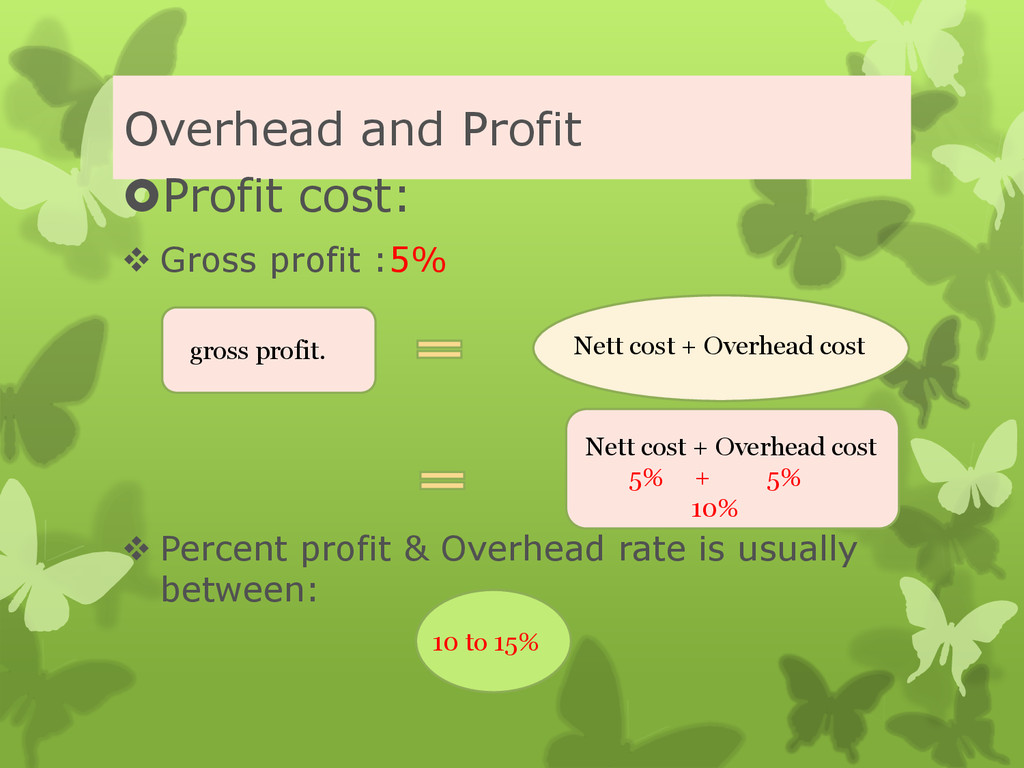
  55. Overhead and Profit Profit cost:  Gross profit :5% 

    Percent profit & Overhead rate is usually between: Nett cost + Overhead cost gross profit. Nett cost + Overhead cost 5% + 5% 10% 10 to 15%