Upgrade to Pro — share decks privately, control downloads, hide ads and more …

Ripped from the Headlines

Sponsored · Ship Features Fearlessly Turn features on and off without deploys. Used by thousands of Ruby developers.

Ripped from the Headlines

What does the news media tell us about information security incidents? What would we see if we applied the methodology of the DBIR to publicly-reported security incidents?

Avatar for Kevin Thompson

Kevin Thompson

February 25, 2014
Tweet

More Decks by Kevin Thompson

Other Decks in Technology

Transcript

  1. Ripped from the Headlines What the news tells us about

    information security incidents Suzanne Widup @SuzanneWidup Kevin Thompson @bfist
  2. About us Suzanne Widup Kevin Thompson •  Data breach geek

    • Incident Analyst • Author • Data Alchemist • Incident Librarian • Burly Northman
  3. •  Research Question •  Methodology •  Assumptions & Limitations • 

    Findings & Recommendations •  Practical Application •  Call for Volunteers Agenda
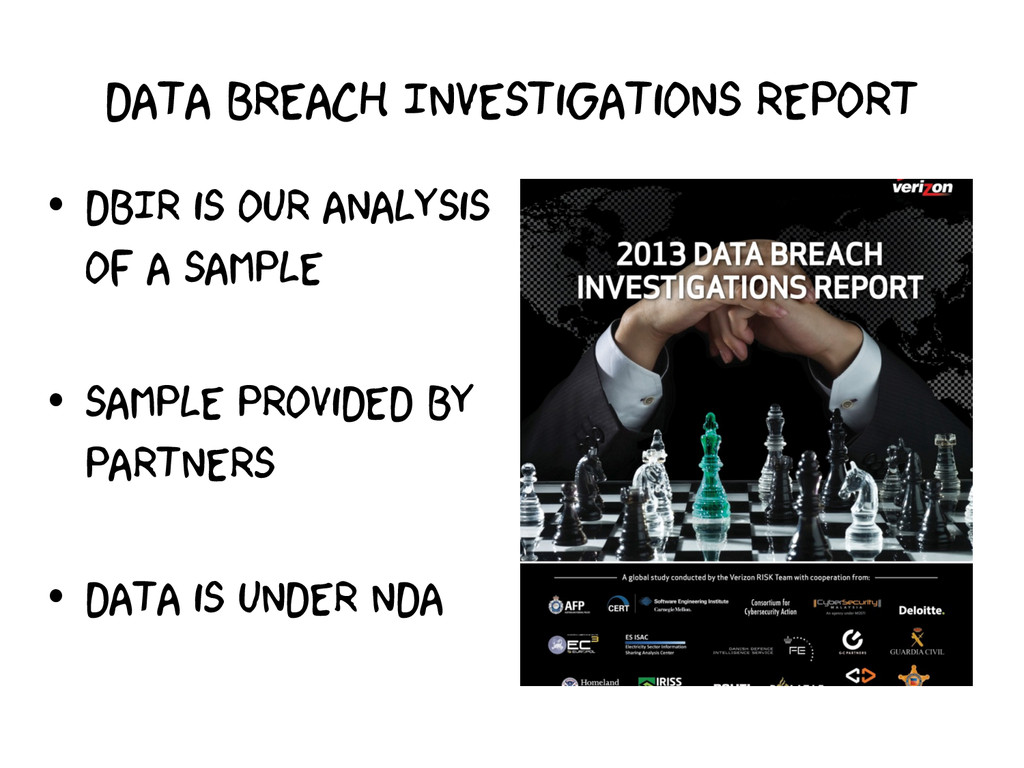
  4. Data Breach Investigations Report •  DBIR is our analysis of

    a sample •  Sample provided by partners •  Data is under NDA
  5. •  Is there another data source? •  Can we apply

    DBIR methodology to that source? •  Can the raw data provide decision support for organizations? Research Questions
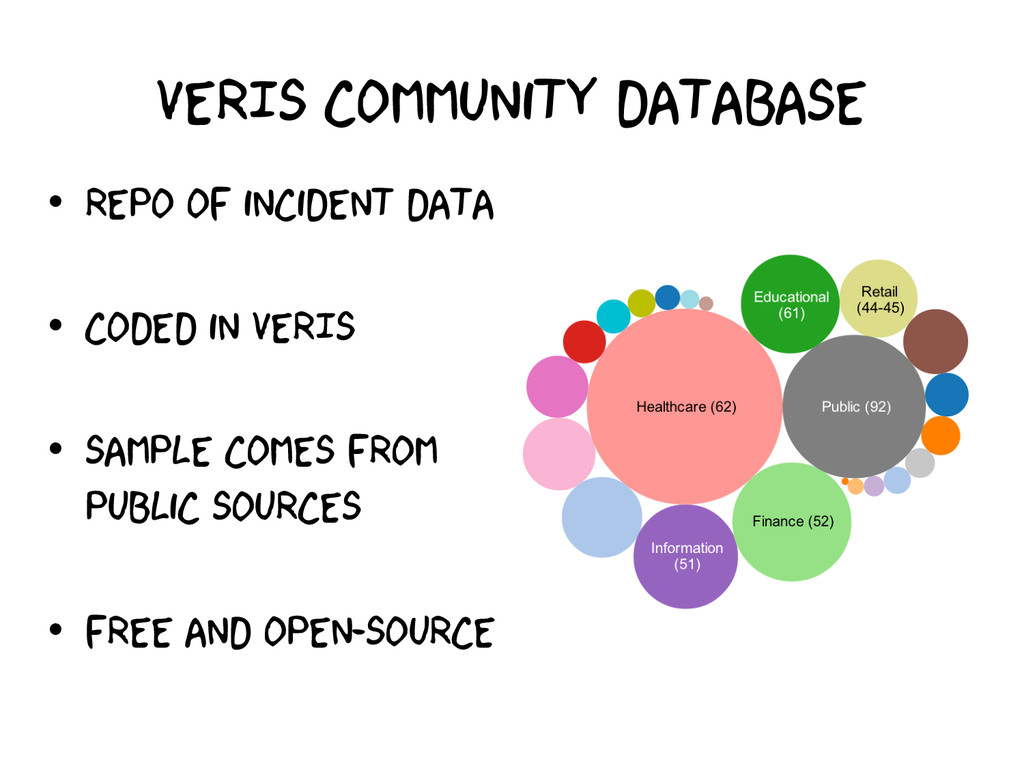
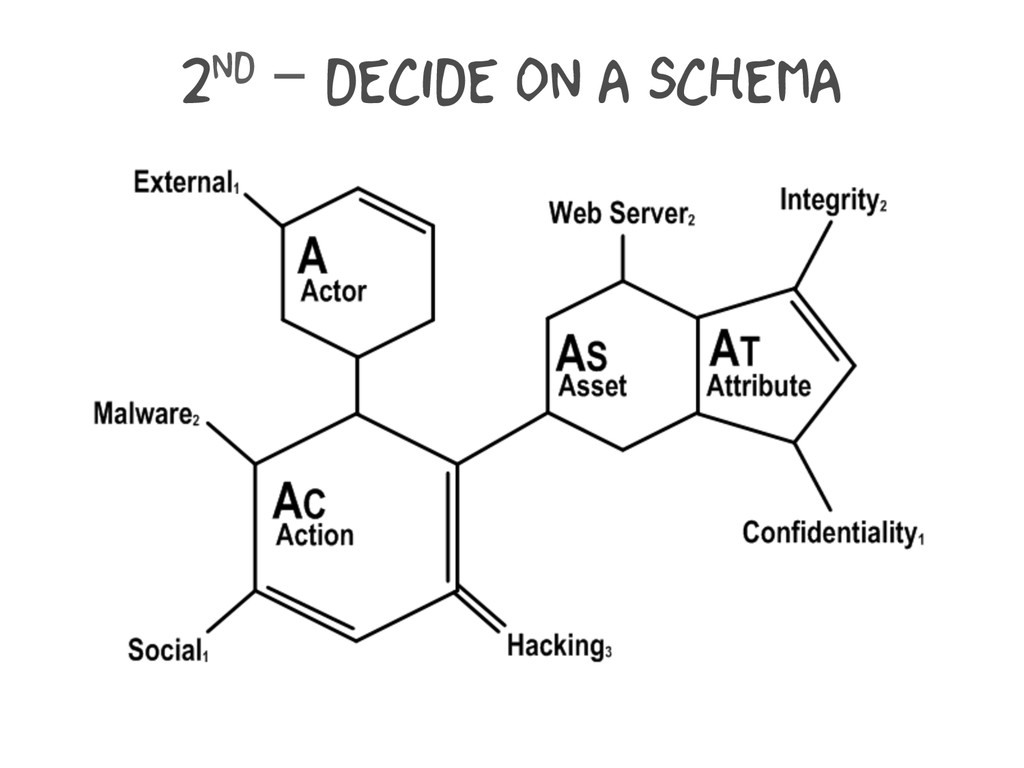
  6. VERIS Community Database •  Repo of incident data •  Coded

    in VERIS •  Sample comes from public sources •  Free and Open-Source
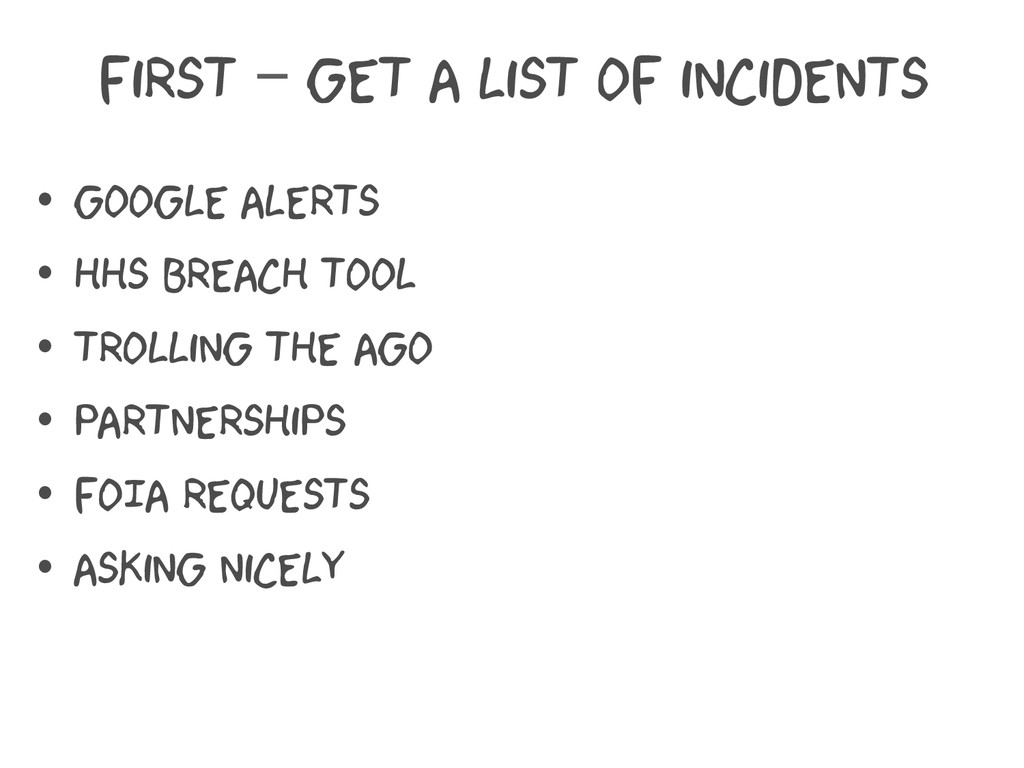
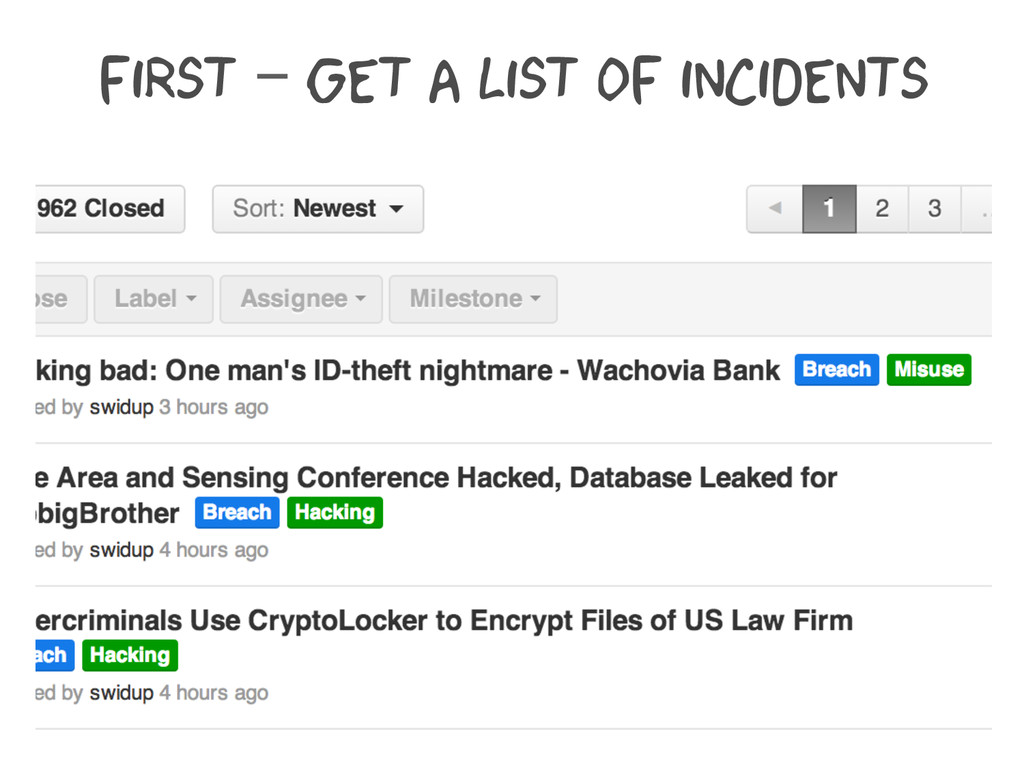
  7. •  Google Alerts •  HHS Breach Tool •  Trolling the

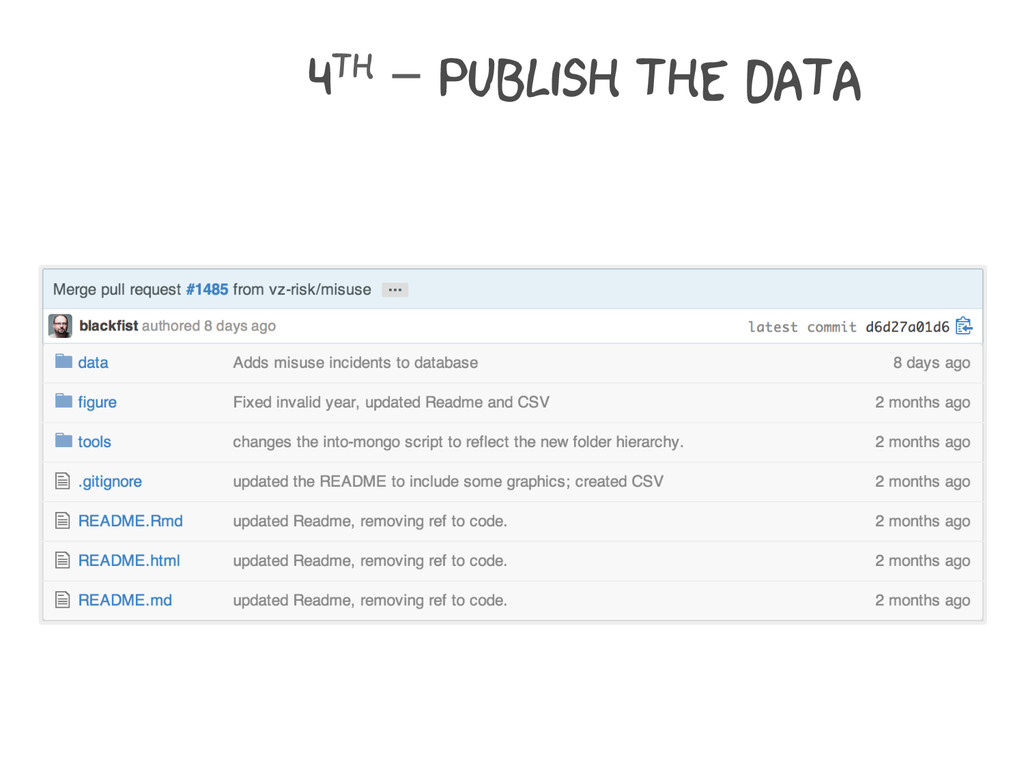
    AGO •  Partnerships •  FOIA Requests •  Asking nicely First – Get a list of incidents
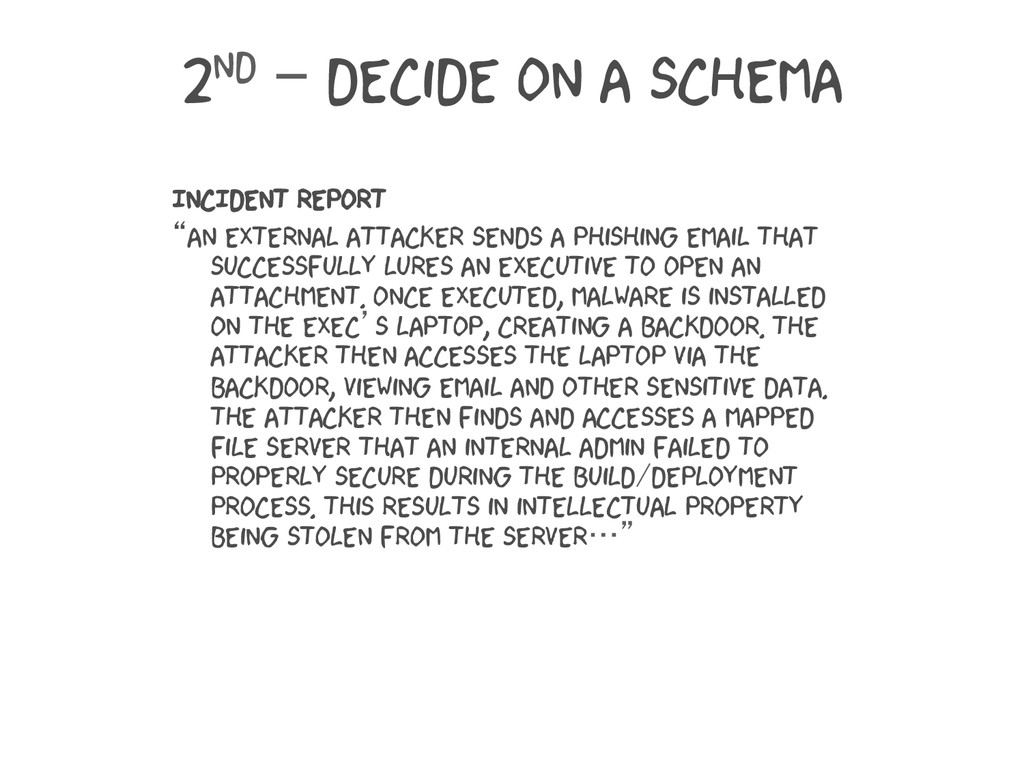
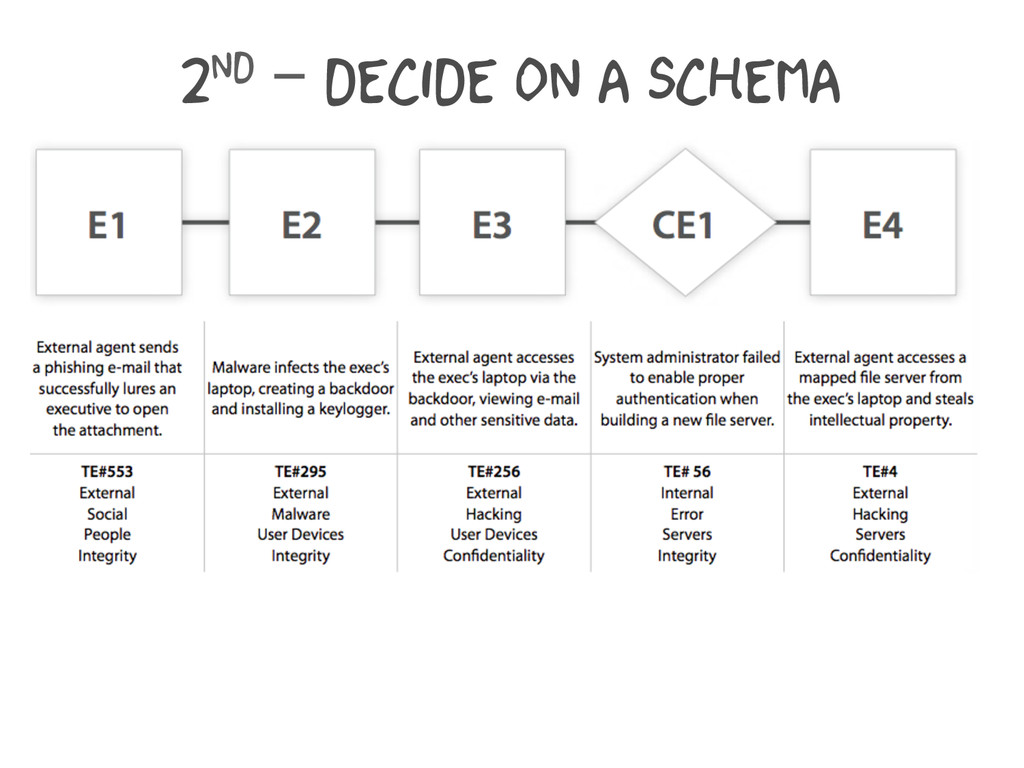
  8. INCIDENT REPORT “An external attacker sends a phishing email that

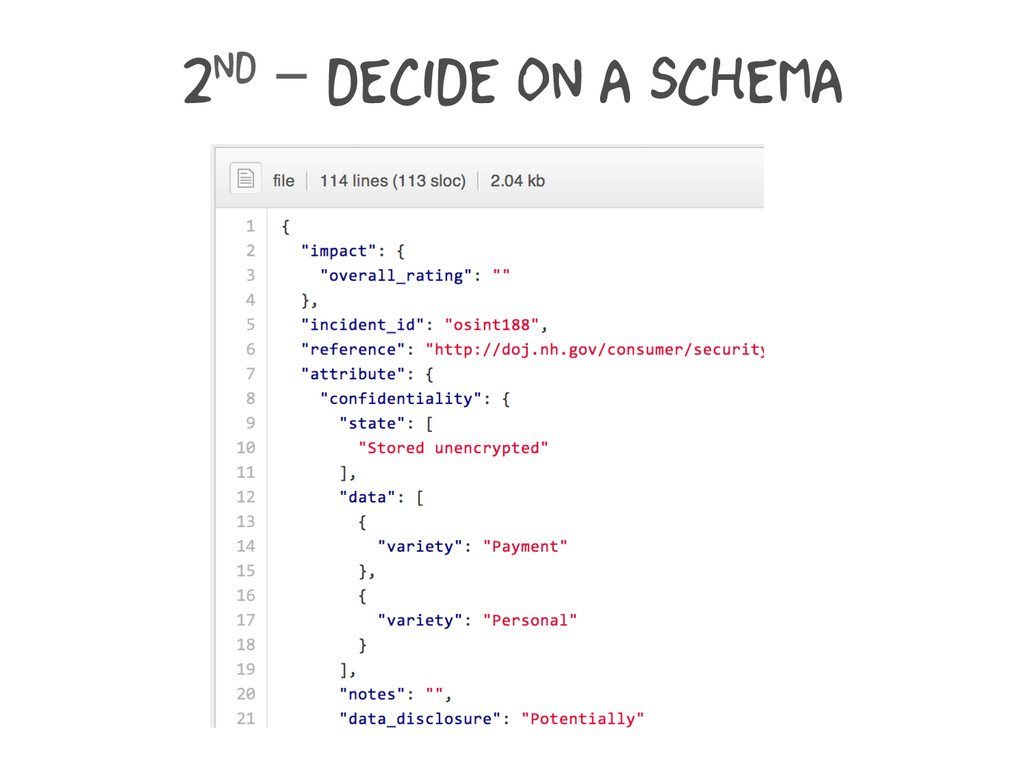
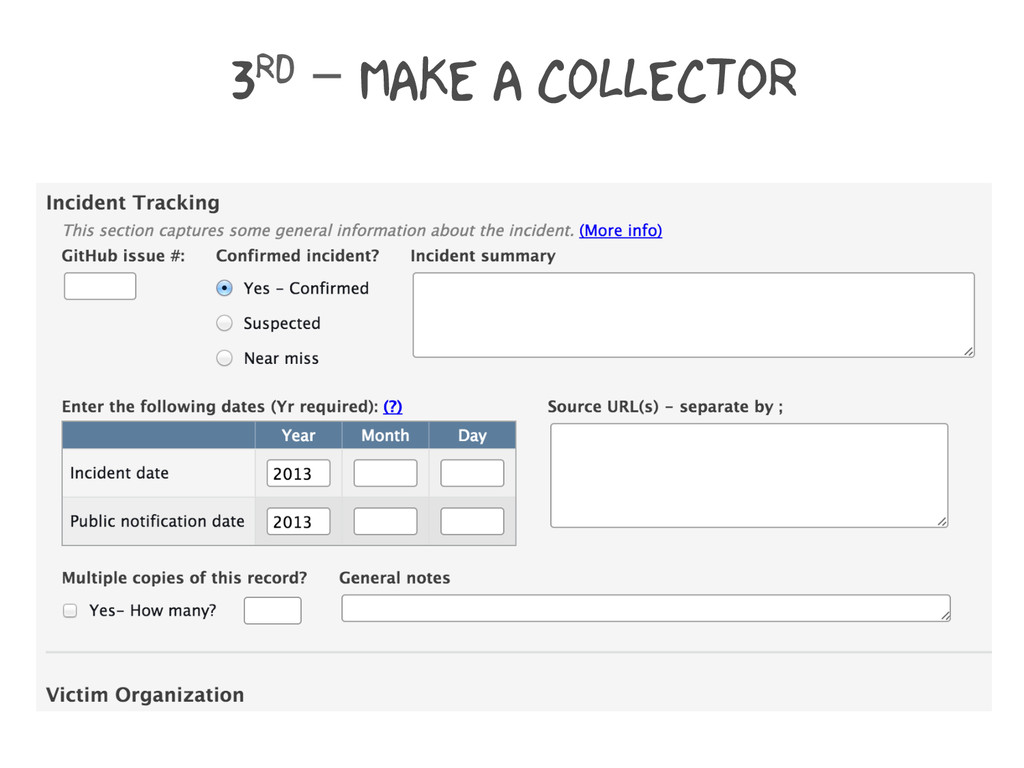
    successfully lures an executive to open an attachment. Once executed, malware is installed on the exec’s laptop, creating a backdoor. The attacker then accesses the laptop via the backdoor, viewing email and other sensitive data. The attacker then finds and accesses a mapped file server that an internal admin failed to properly secure during the build/deployment process. This results in intellectual property being stolen from the server…” 2nd – Decide on a schema
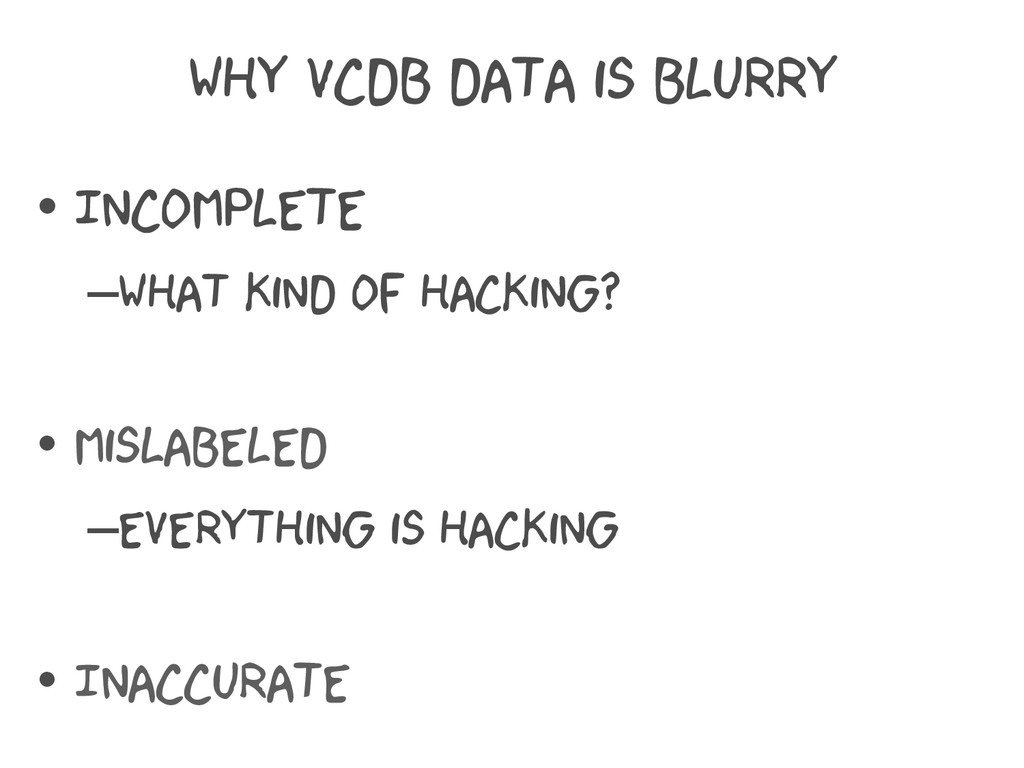
  9. • We assume (for now) that – Mistakes in a single report

    are made insignificant by the size of the sample The Data is Good Enough
  10. • We assume (for now) that – If the sample grows large

    enough we’ll have enough data to make up for missing information. The Data is Good Enough
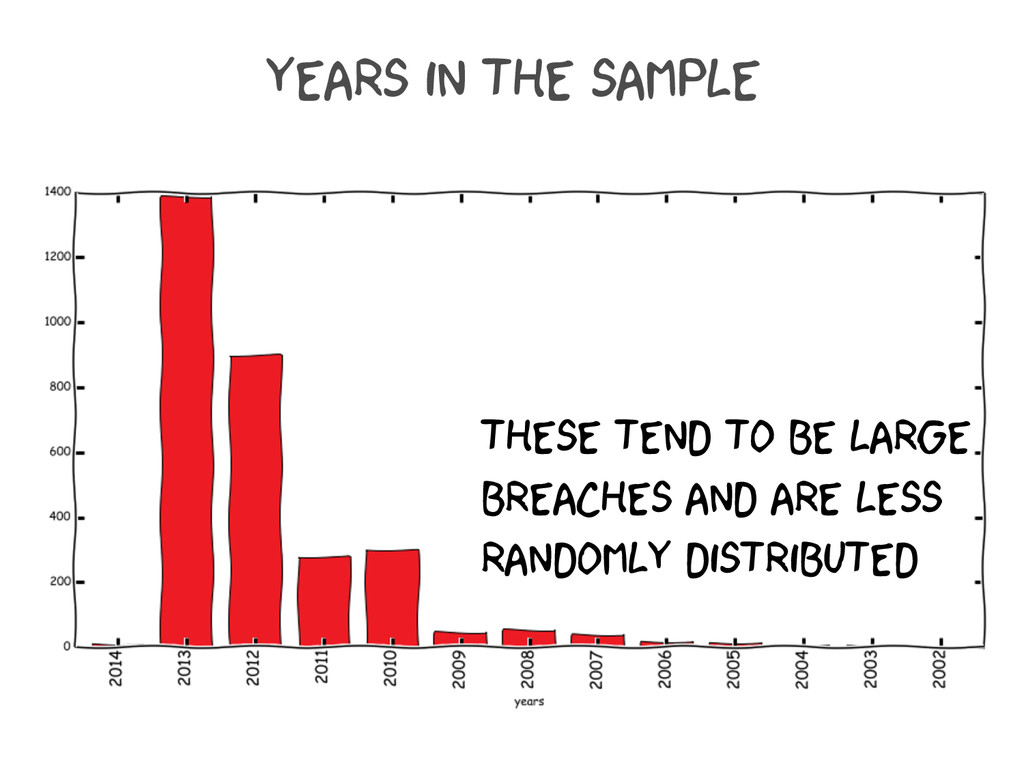
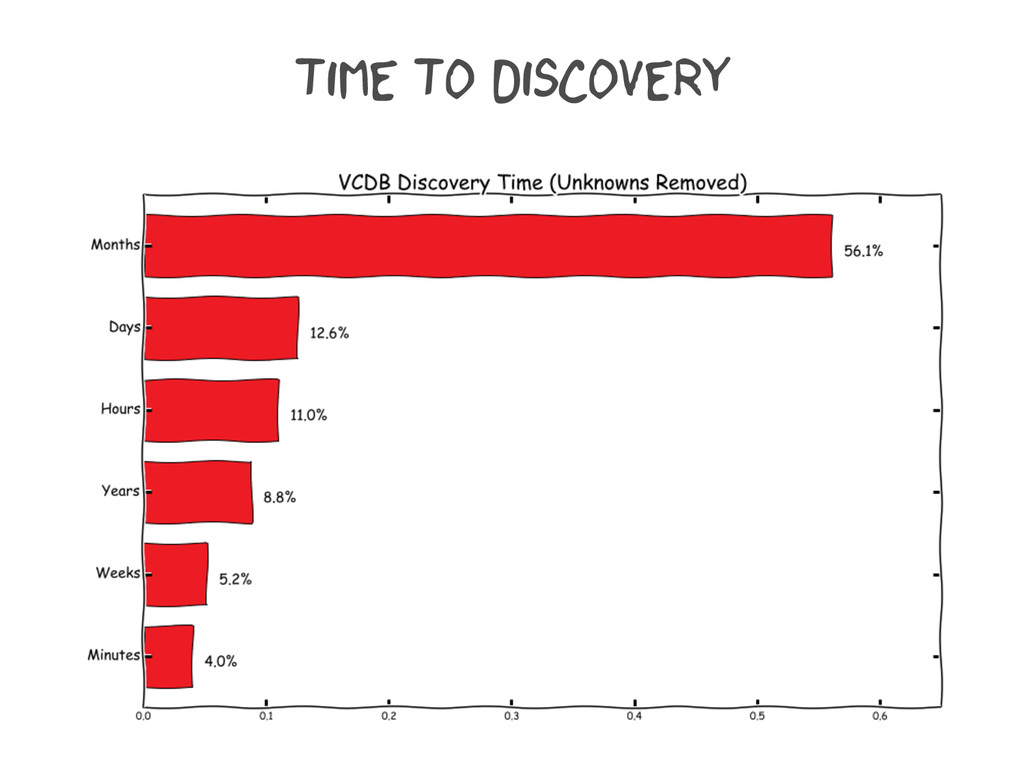
  11. Years in the Sample These tend to be large breaches

    and are less randomly distributed
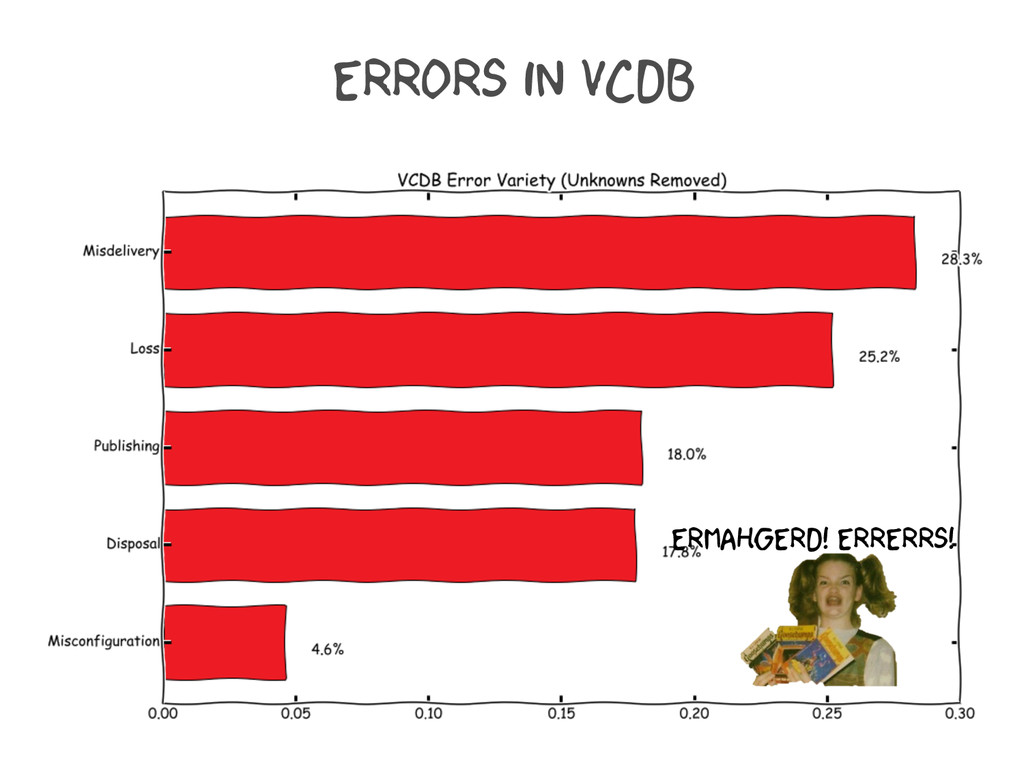
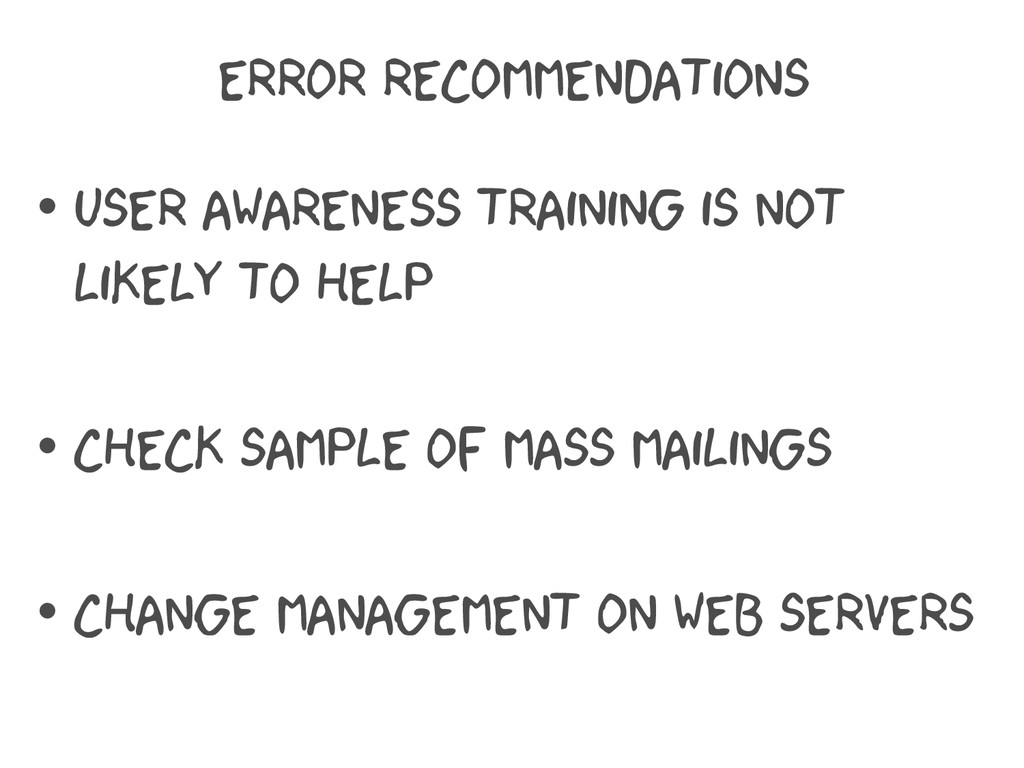
  12. • User Awareness Training is not likely to help • Check Sample

    of Mass Mailings • Change Management on Web Servers Error Recommendations
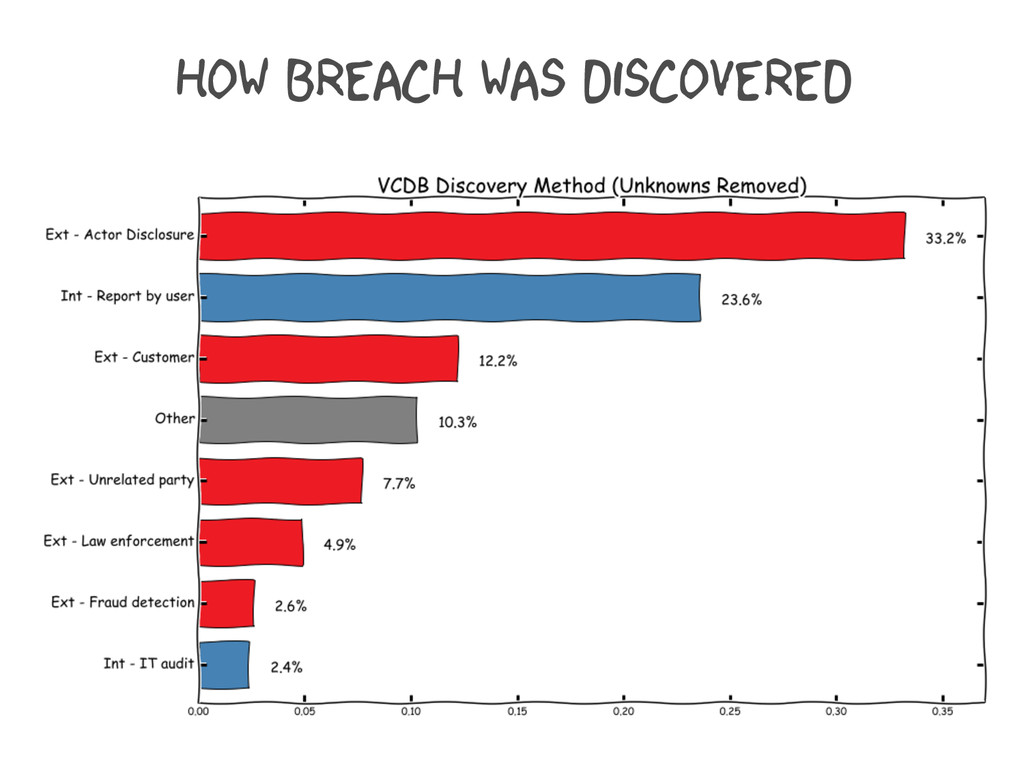
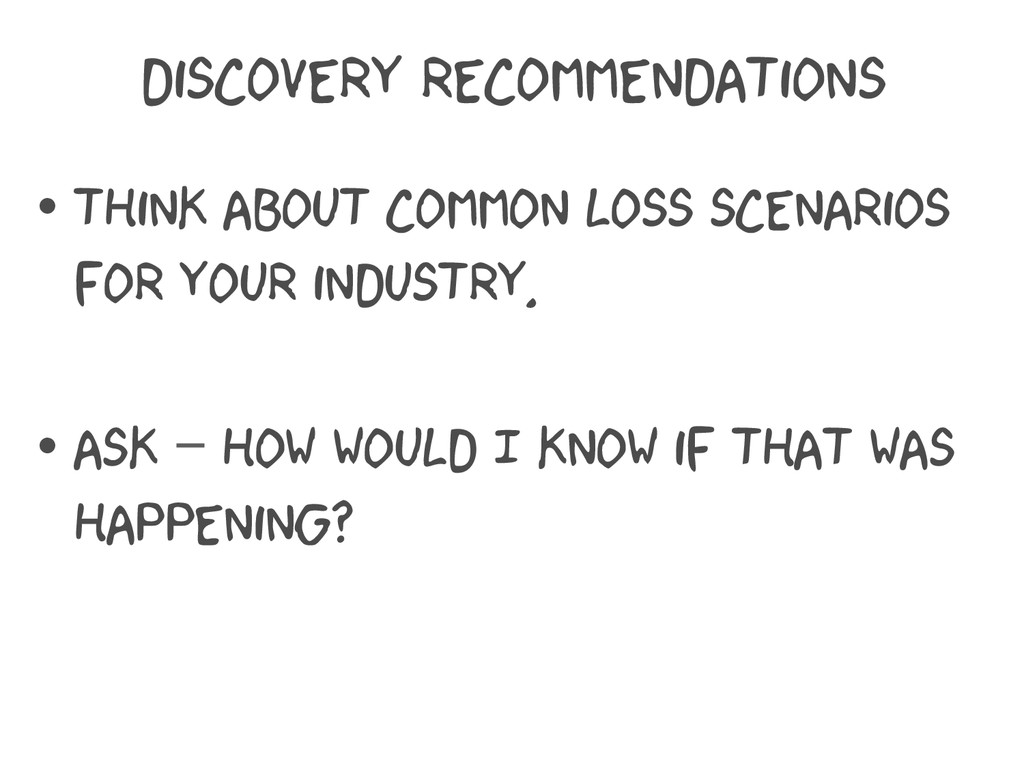
  13. • Think about common loss scenarios for your industry. • Ask –

    how would I know if that was happening? Discovery recommendations
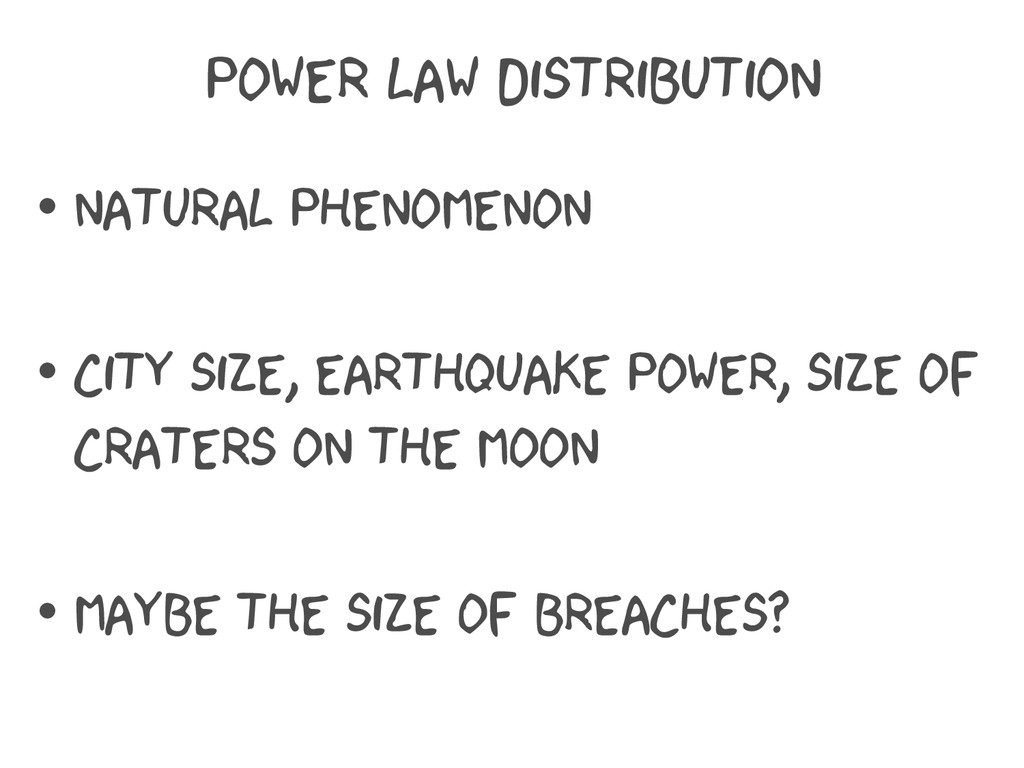
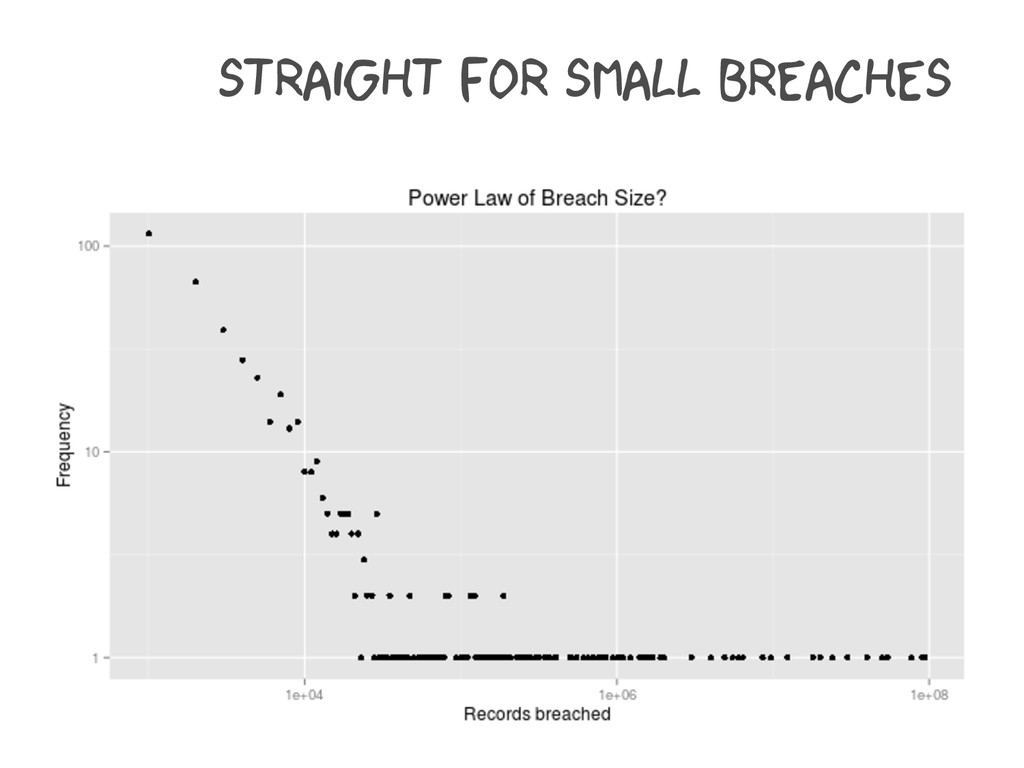
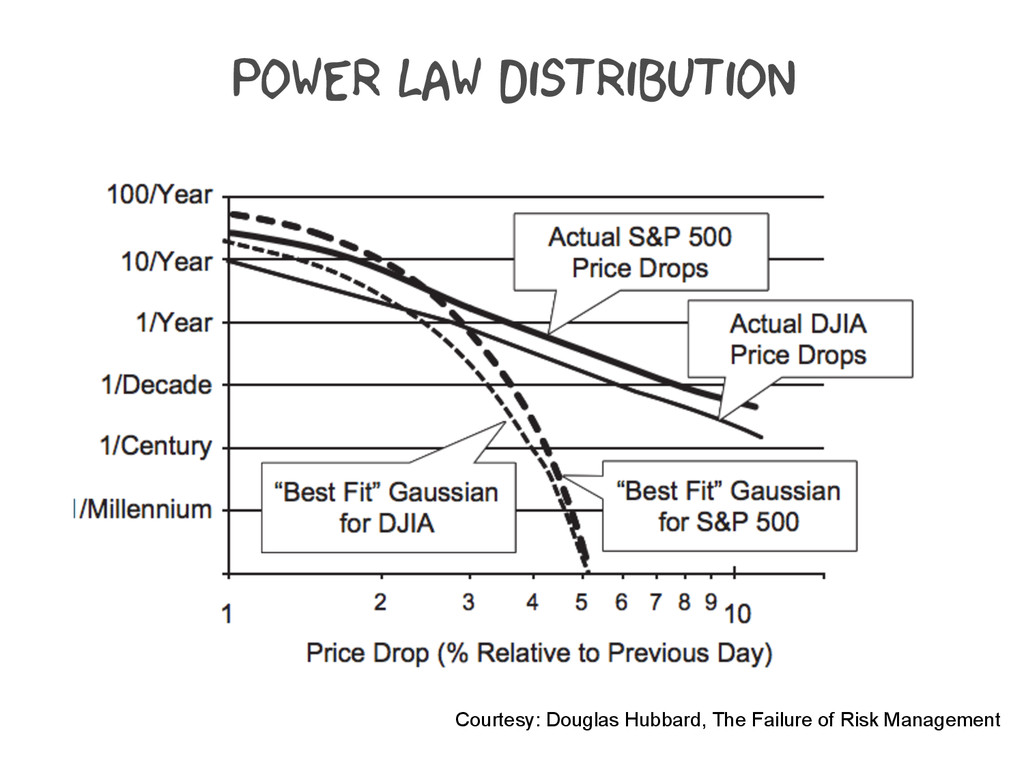
  14. • Natural phenomenon • City size, earthquake power, size of craters on

    the moon • Maybe the size of breaches? Power Law Distribution
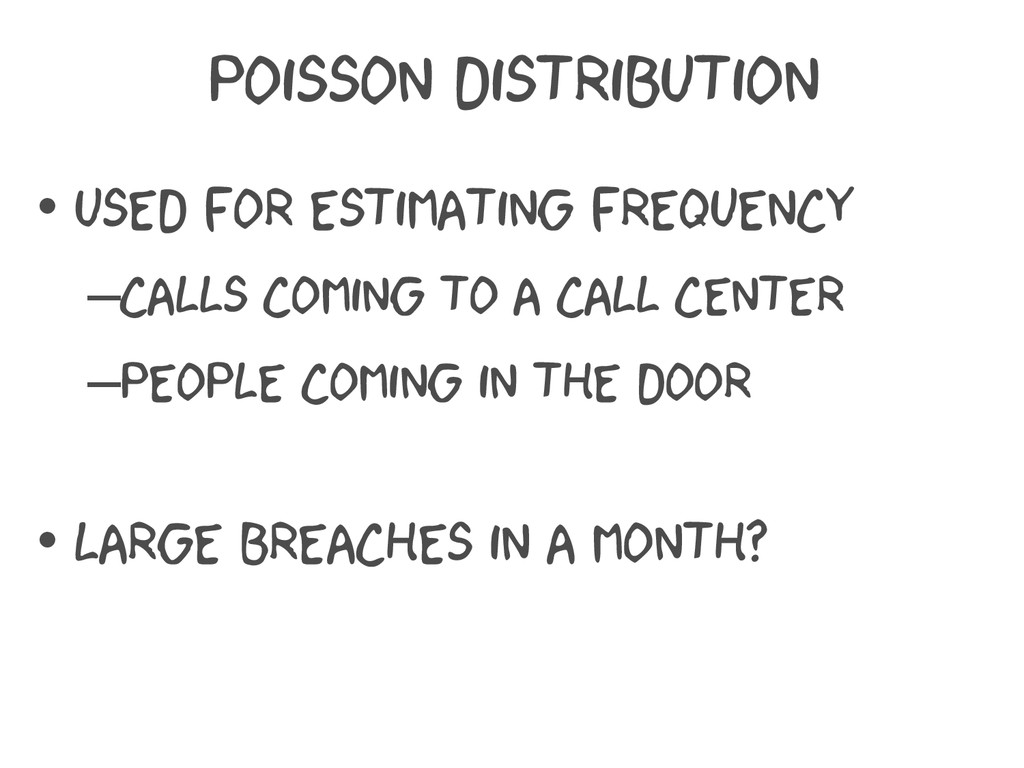
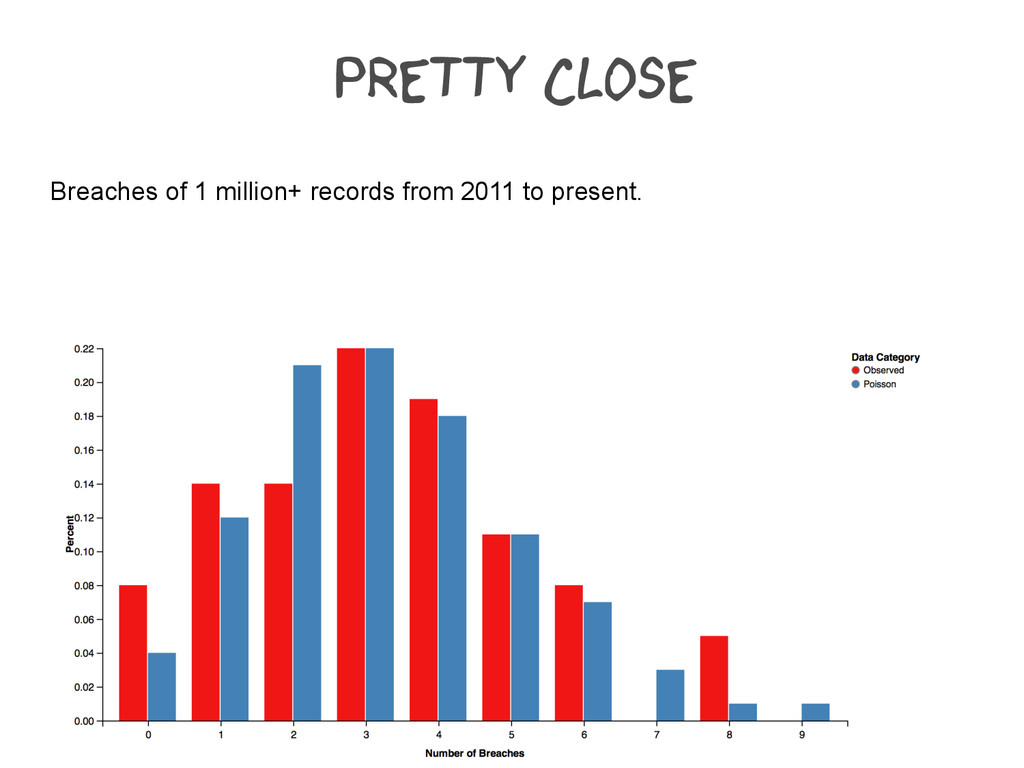
  15. • Used for estimating frequency – Calls coming to a call center

    – People coming in the door • Large breaches in a month? Poisson Distribution
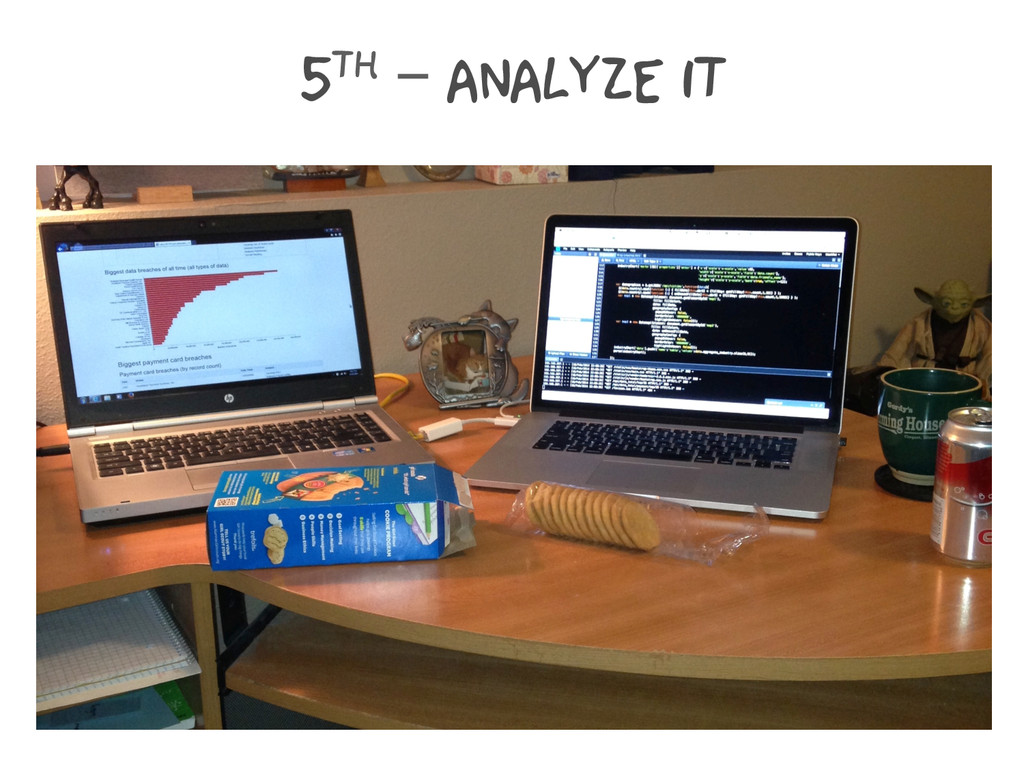
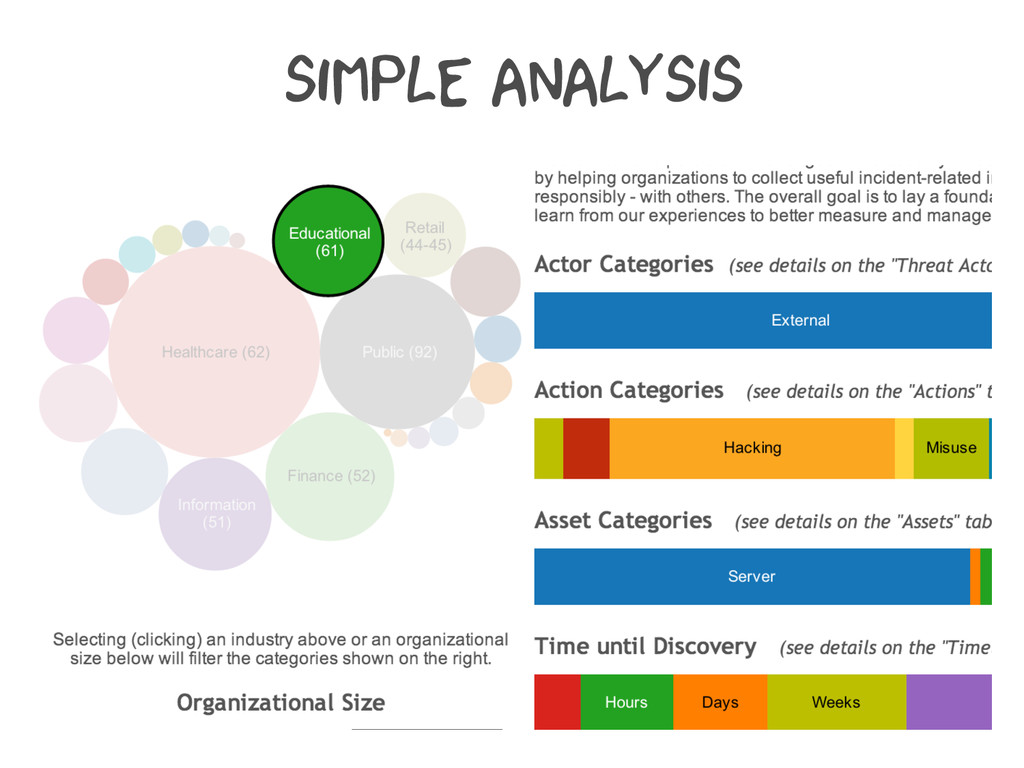
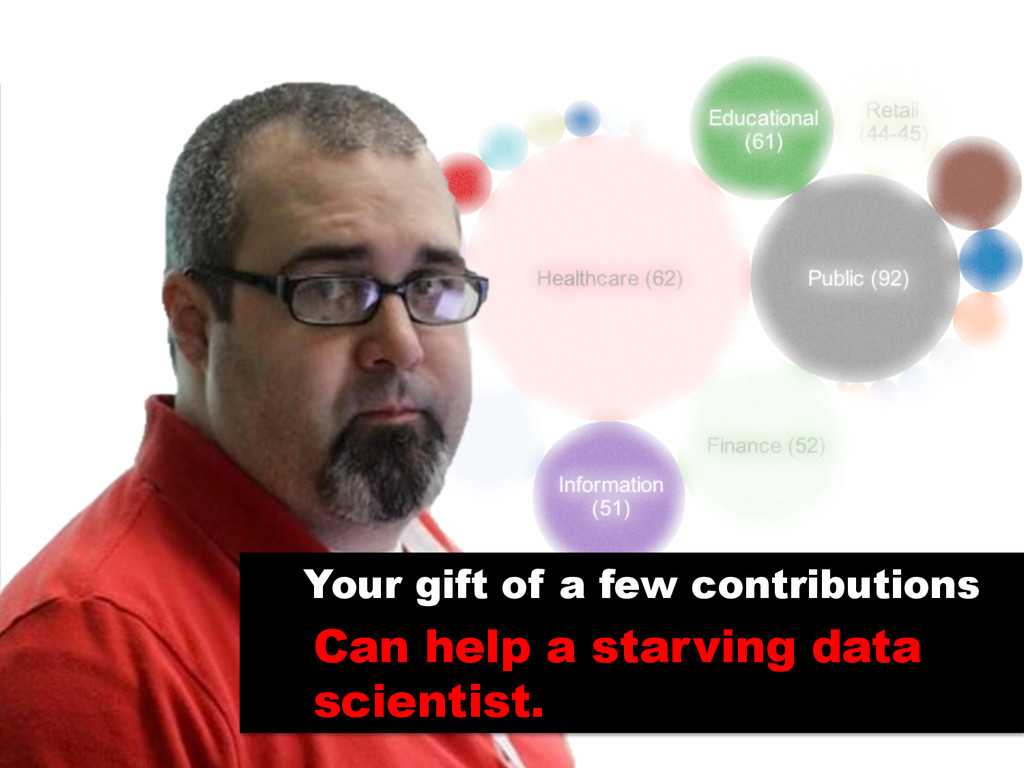
  16. •  Interactive Tableau •  Filter by industry, size, etc. • 

    Identify scenarios most relevant to your organization. •  http://public.tableausoftware.com/views/vcdb/ Overview Simple Analysis
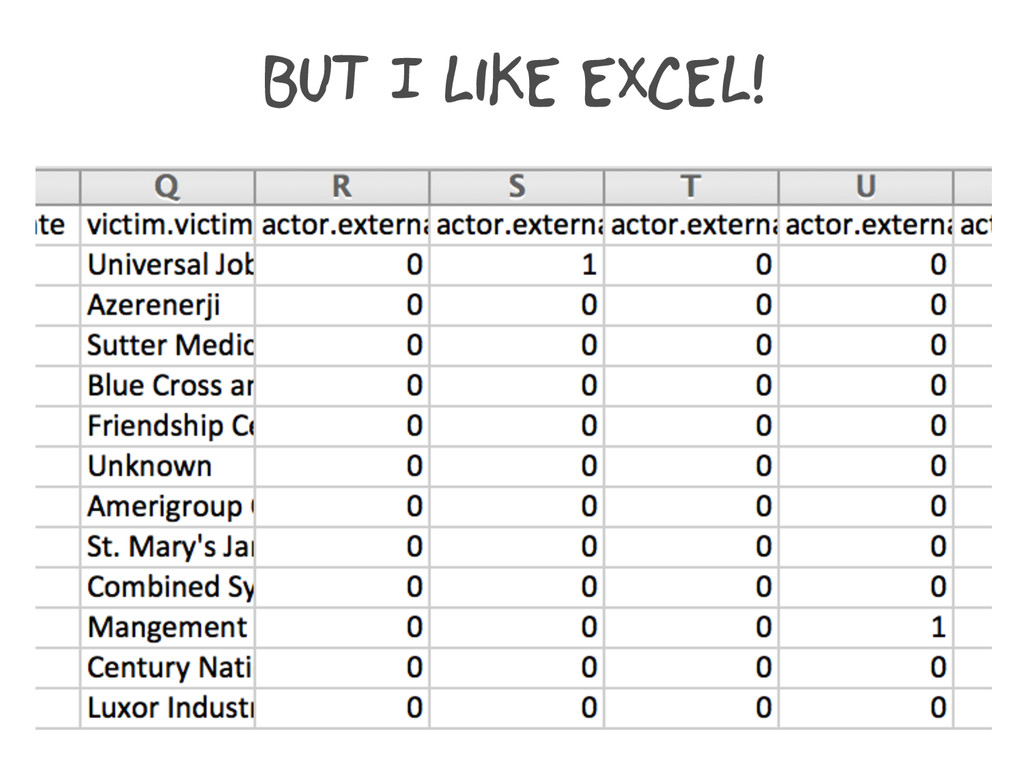
  17. •  Updated quarterly •  Limited complexity •  Quick view of

    the data •  Nicer looking than Excel Simple Analysis is Simple
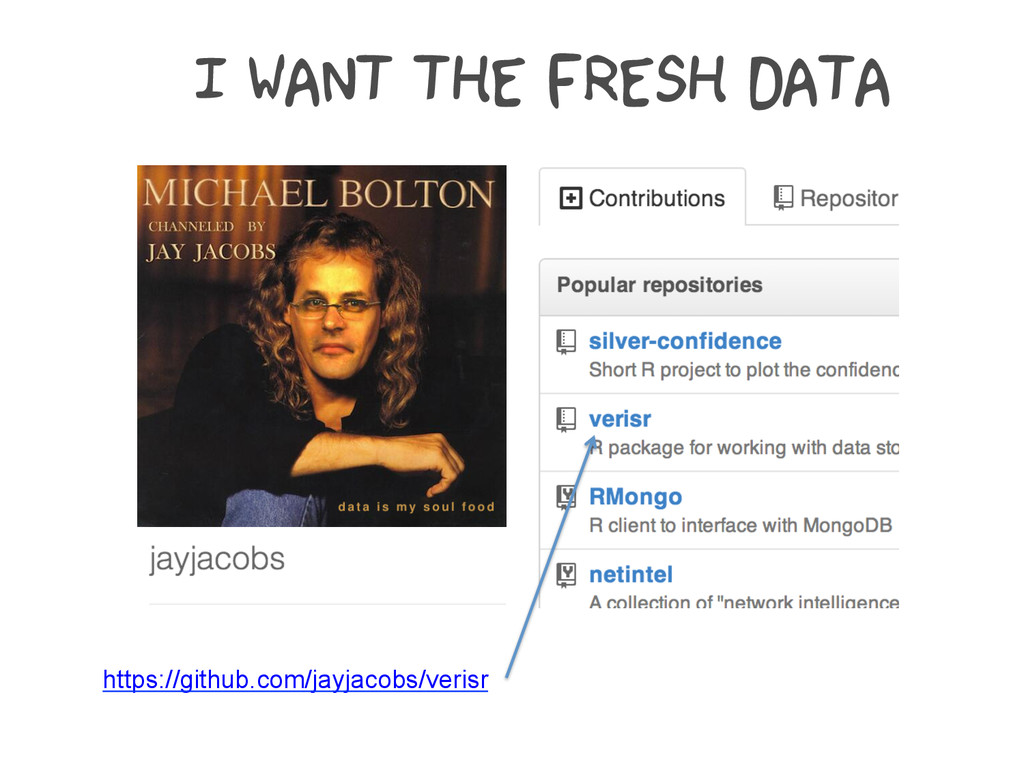
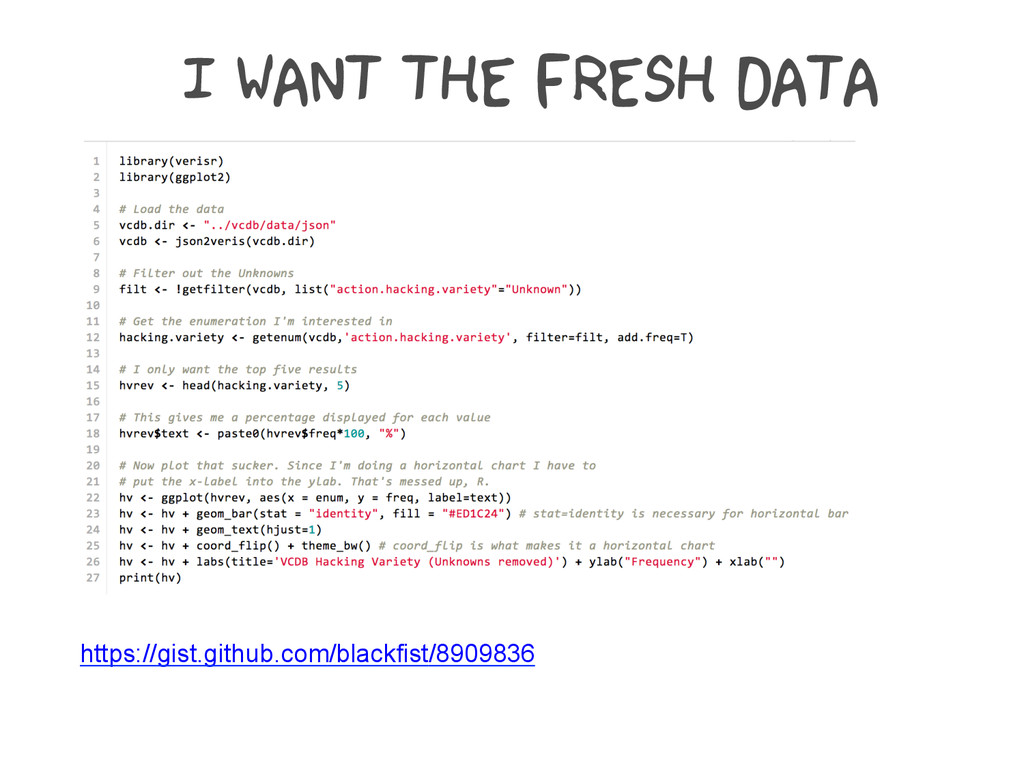
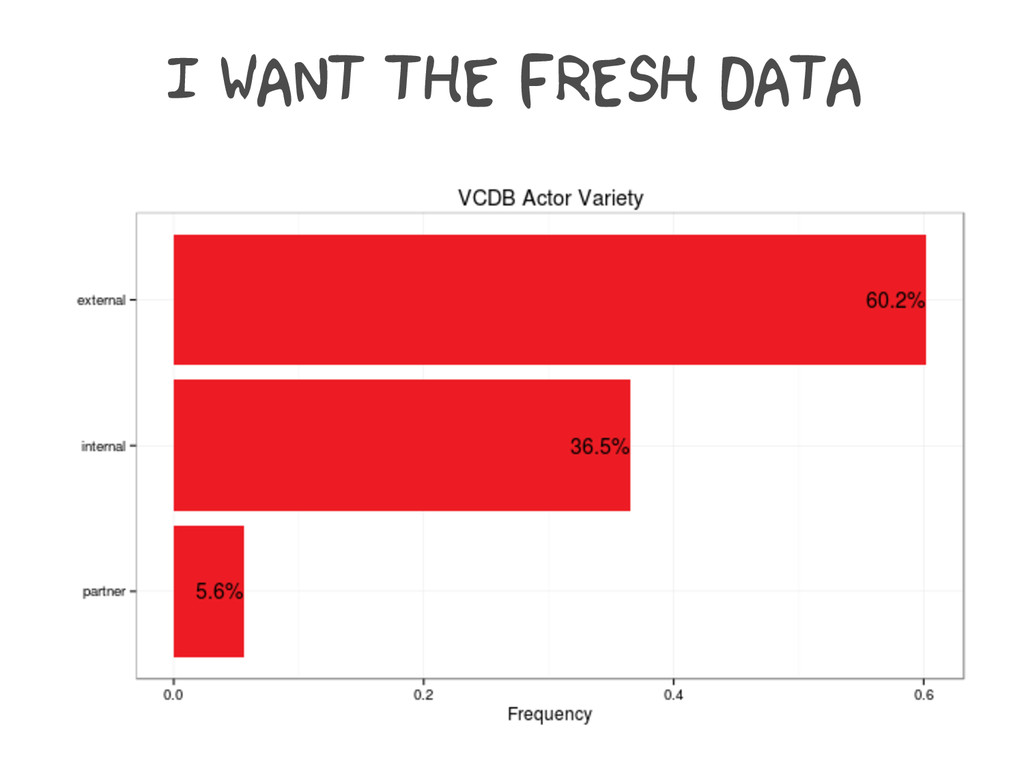
  18. • Clone the repo – Do whatever with the data – Will require

    programming skill – Need to use a tool like R to examine – Kevin uses python and d3.js. I want the fresh data
  19. •  Answer questions –  What are the highest risks in

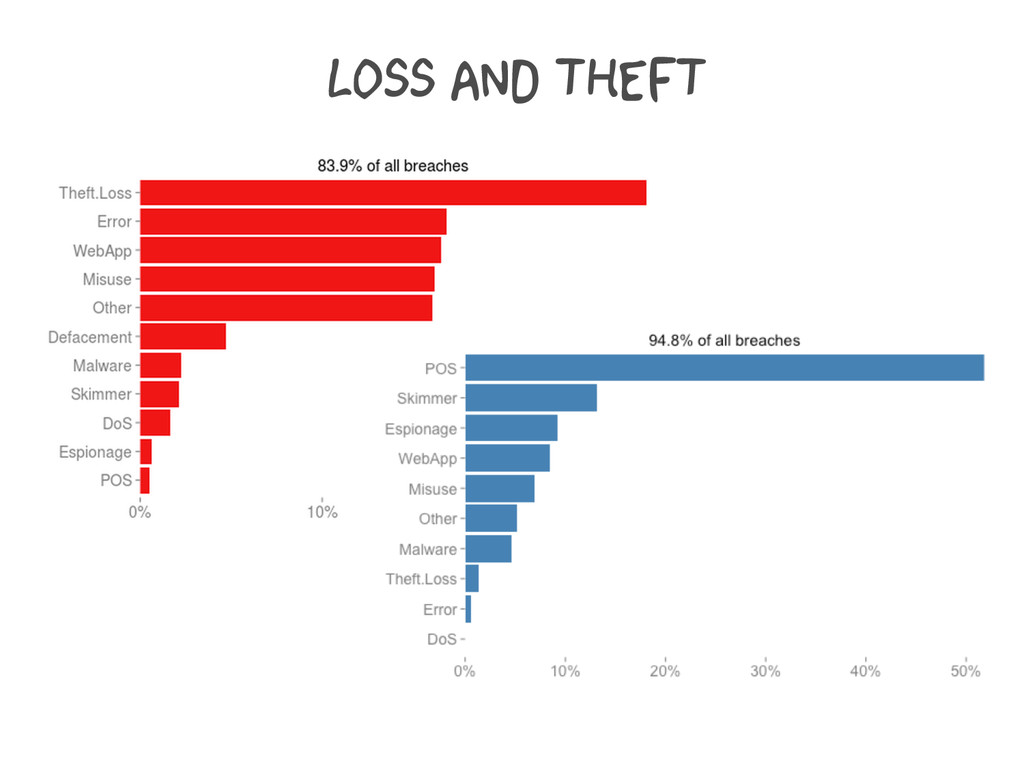
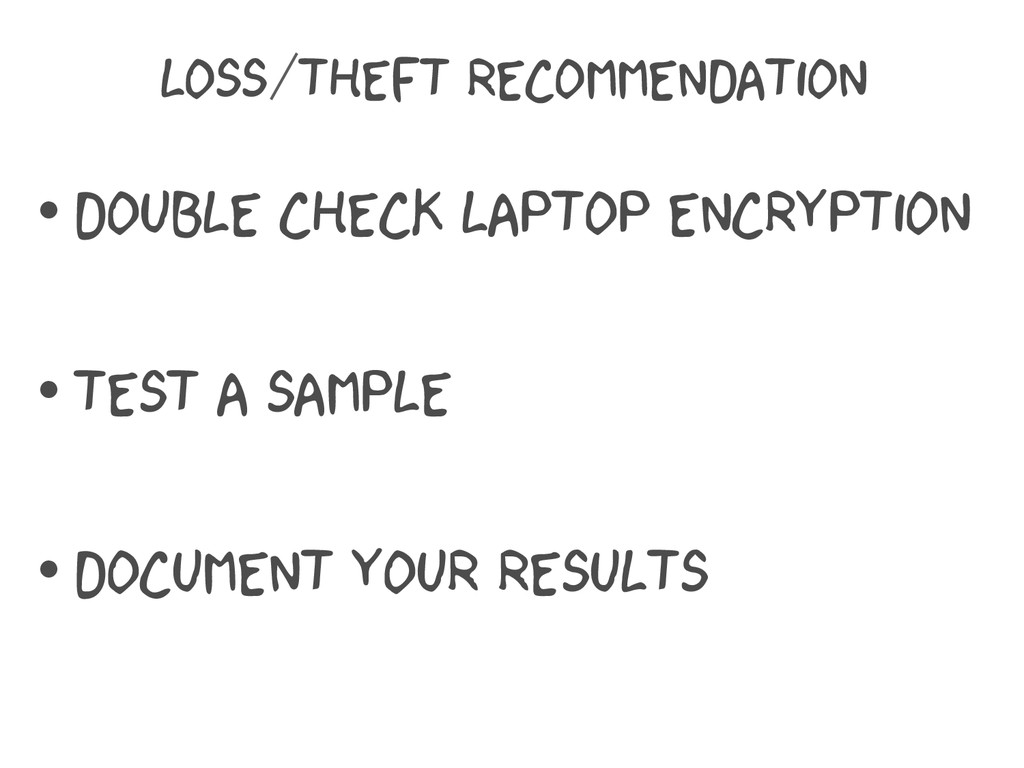
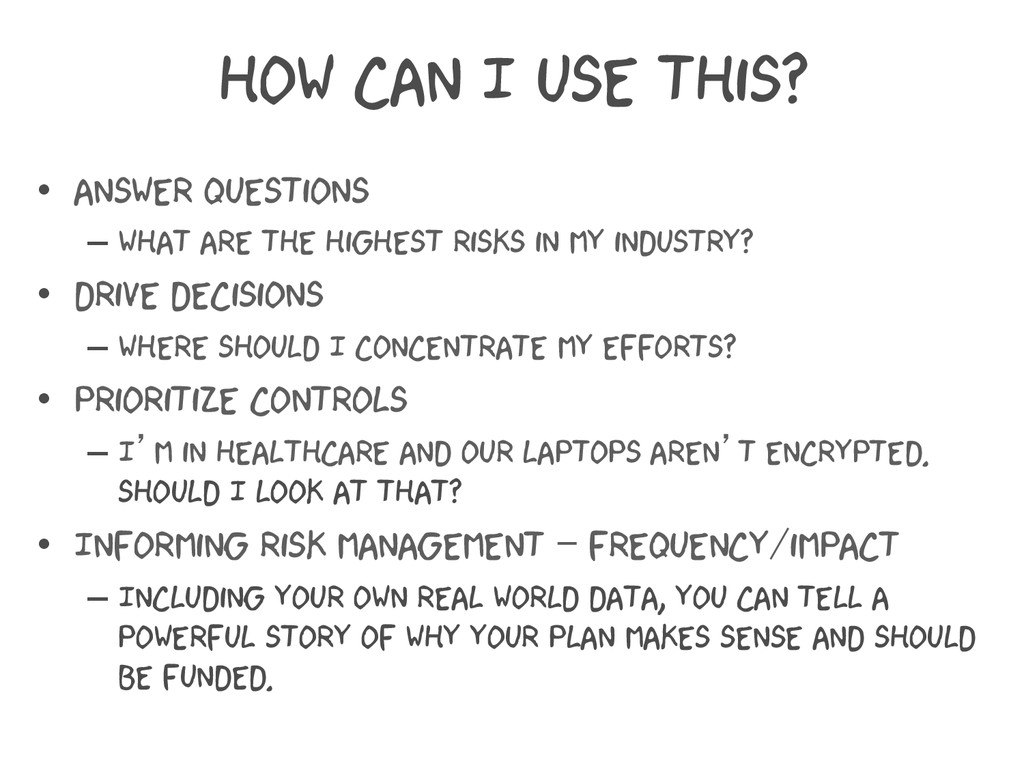
    my industry? •  Drive decisions –  Where should I concentrate my efforts? •  Prioritize controls –  I’m in Healthcare and our laptops aren’t encrypted. Should I look at that? •  Informing risk management – frequency/impact –  Including your own real world data, you can tell a powerful story of why your plan makes sense and should be funded. How Can I Use This?
  20. • Add to the list of Incidents – Create github account – Check

    for duplicates – Create new issue Contributing to VCDB
  21. • Coding Incidents – Contact us via email – We make you an

    account – Claim issues in GitHub – Code incidents in our tool – Ask Questions on mailing list Contributing to VCDB
  22. Suzanne Widup @SuzanneWidup Kevin Thompson @bfist DBIR: www.verizonbusiness.com/databreach VERIS: https://veriscommunity.net

    VCDB: https://github.com/vz-risk/VCDB Email: [email protected] VCDB Graphic: http:// public.tableausoftware.com/views/vcdb/ Overview Volunteer: [email protected]