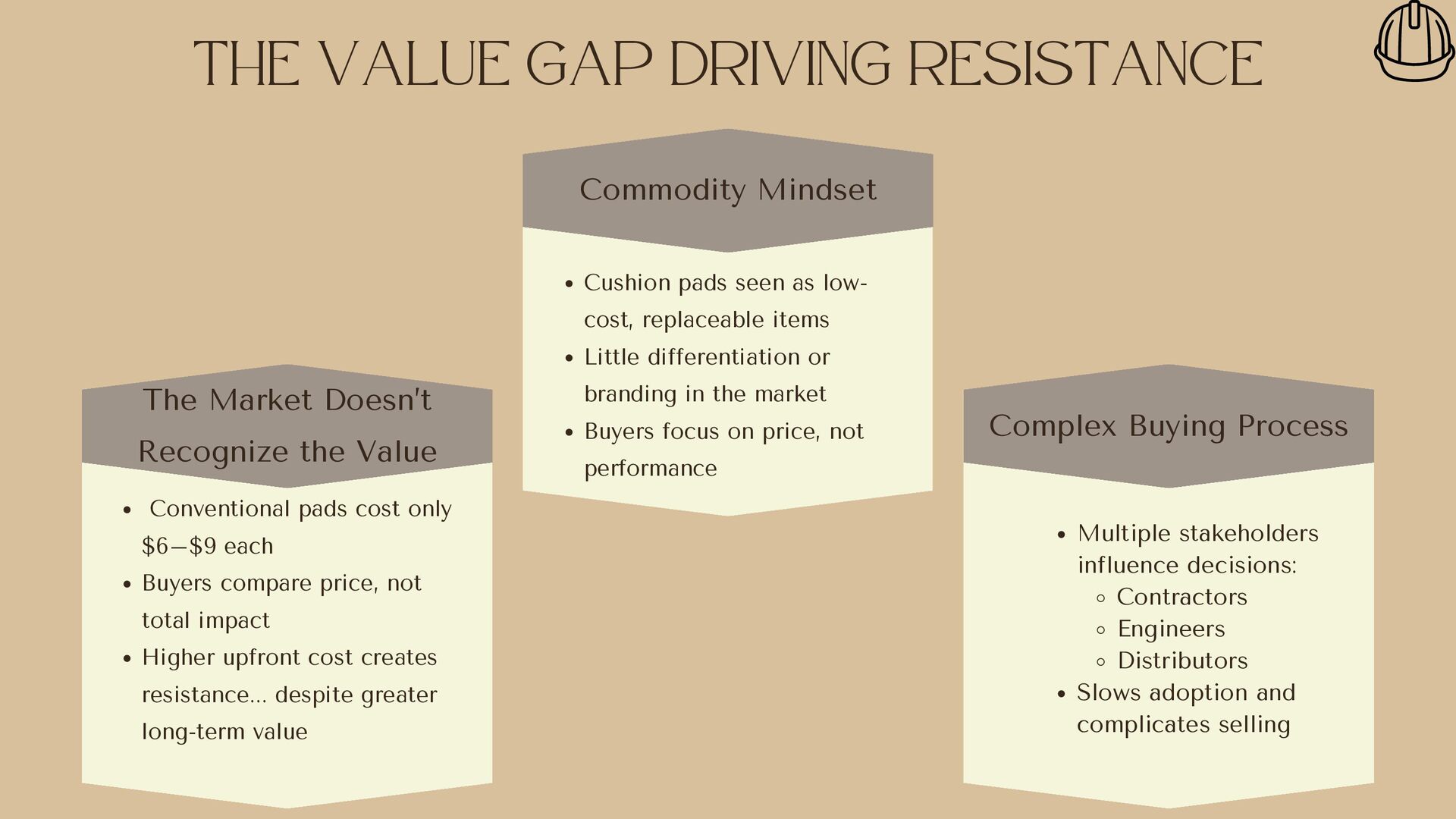
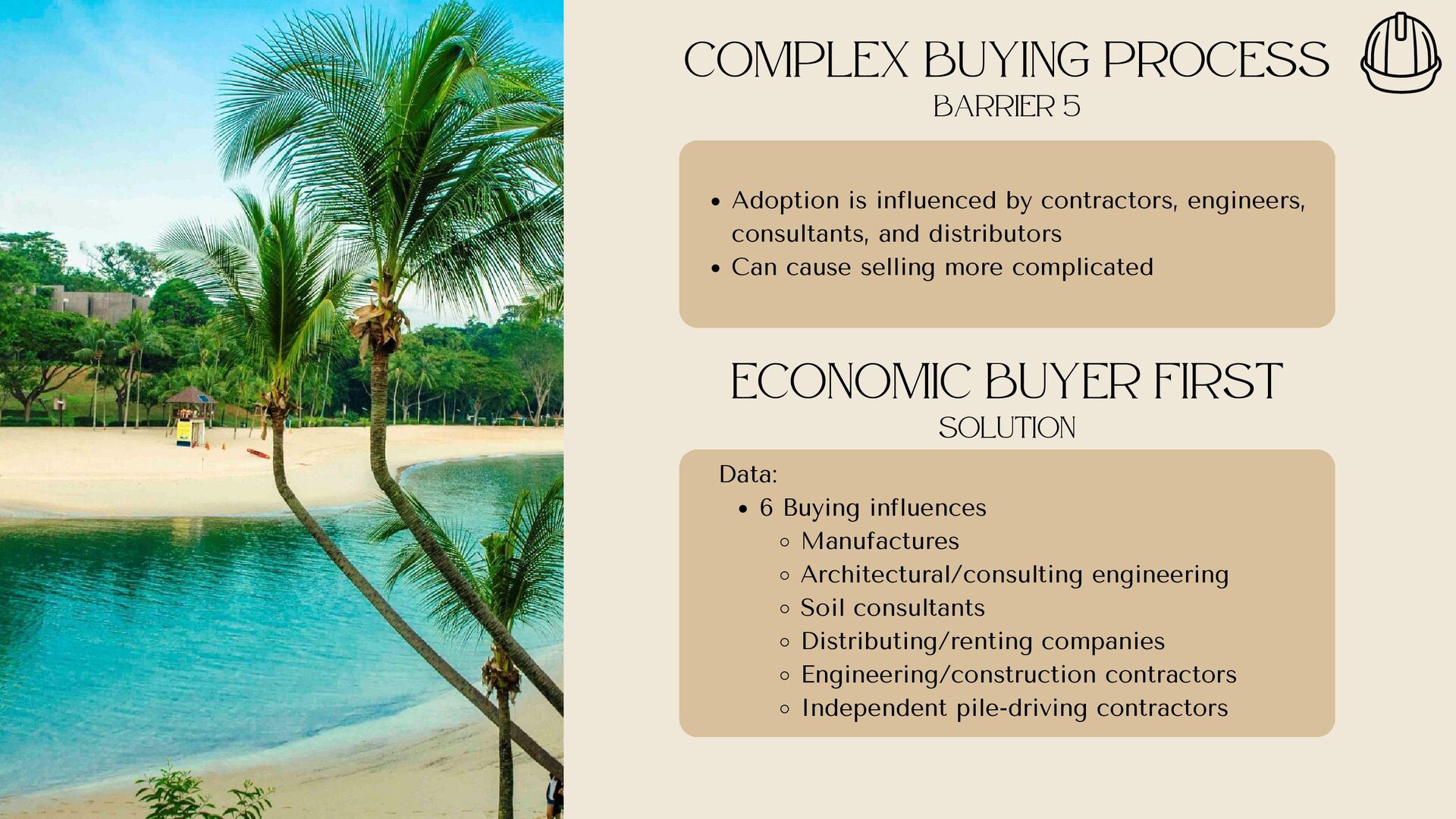
as lowcost, replaceable items Little differentiation or The Market Doesn’t Recognize the Value Conventional pads cost only $6–$9 each Buyers compare price, not total impact Higher upfront cost creates resistance... despite greater long-term value branding in the market Buyers focus on price, not Complex Buying Process performance Multiple stakeholders influence decisions: Contractors Engineers Distributors Slows adoption and complicates selling
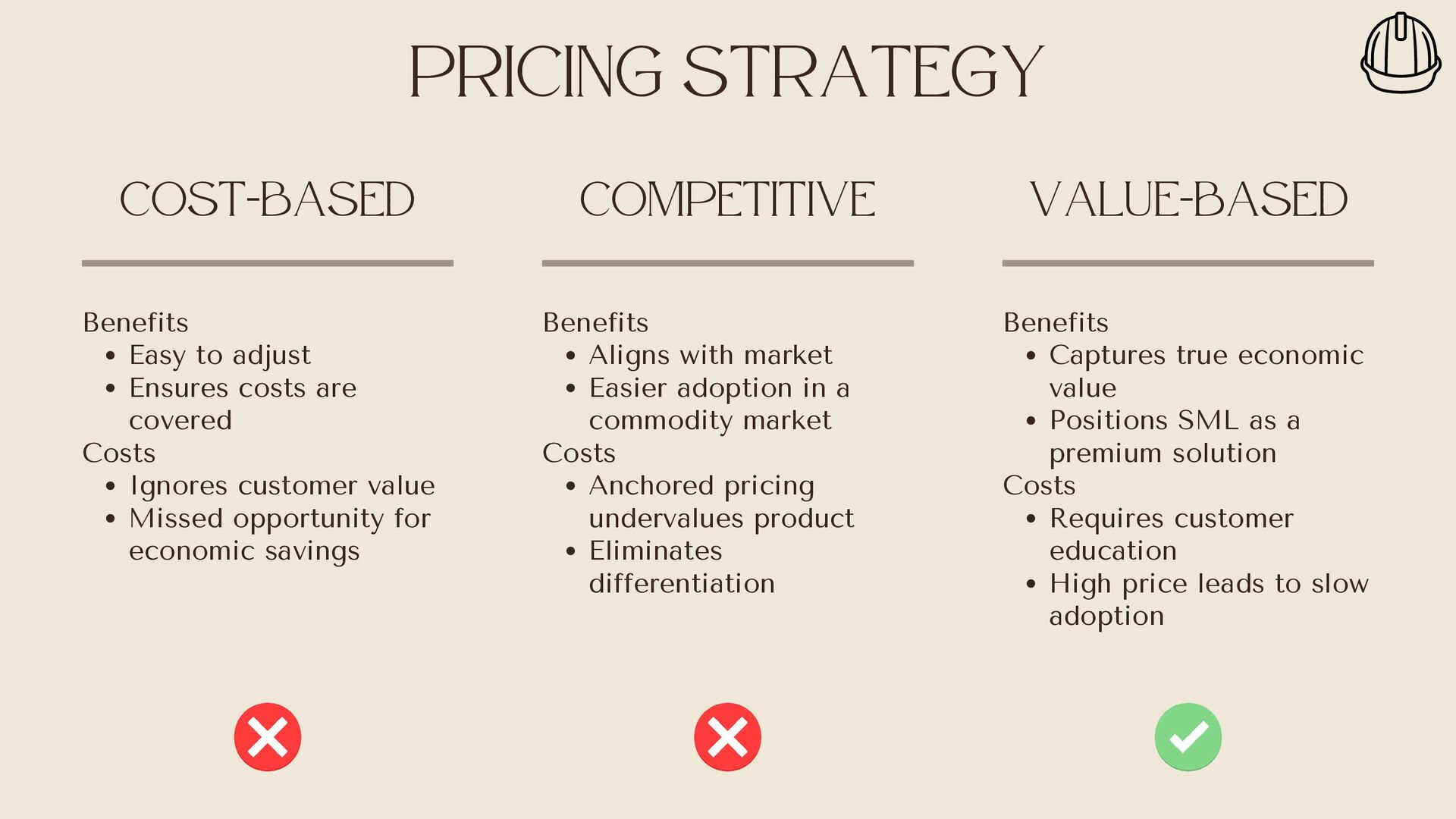
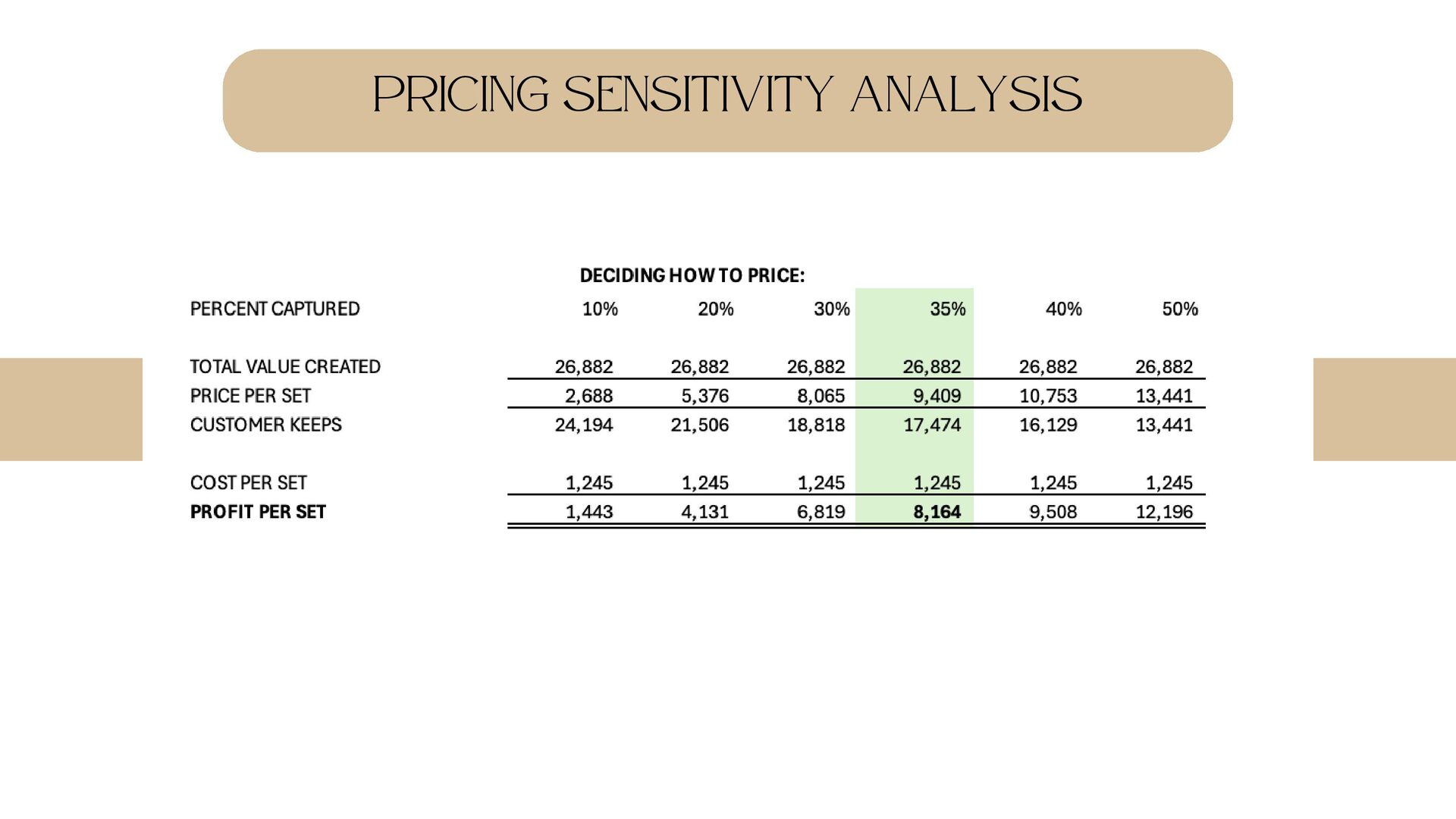
covered Costs Ignores customer value Missed opportunity for economic savings Competitive Benefits Aligns with market Easier adoption in a commodity market Costs Anchored pricing undervalues product Eliminates differentiation Value-based Benefits Captures true economic value Positions SML as a premium solution Costs Requires customer education High price leads to slow adoption
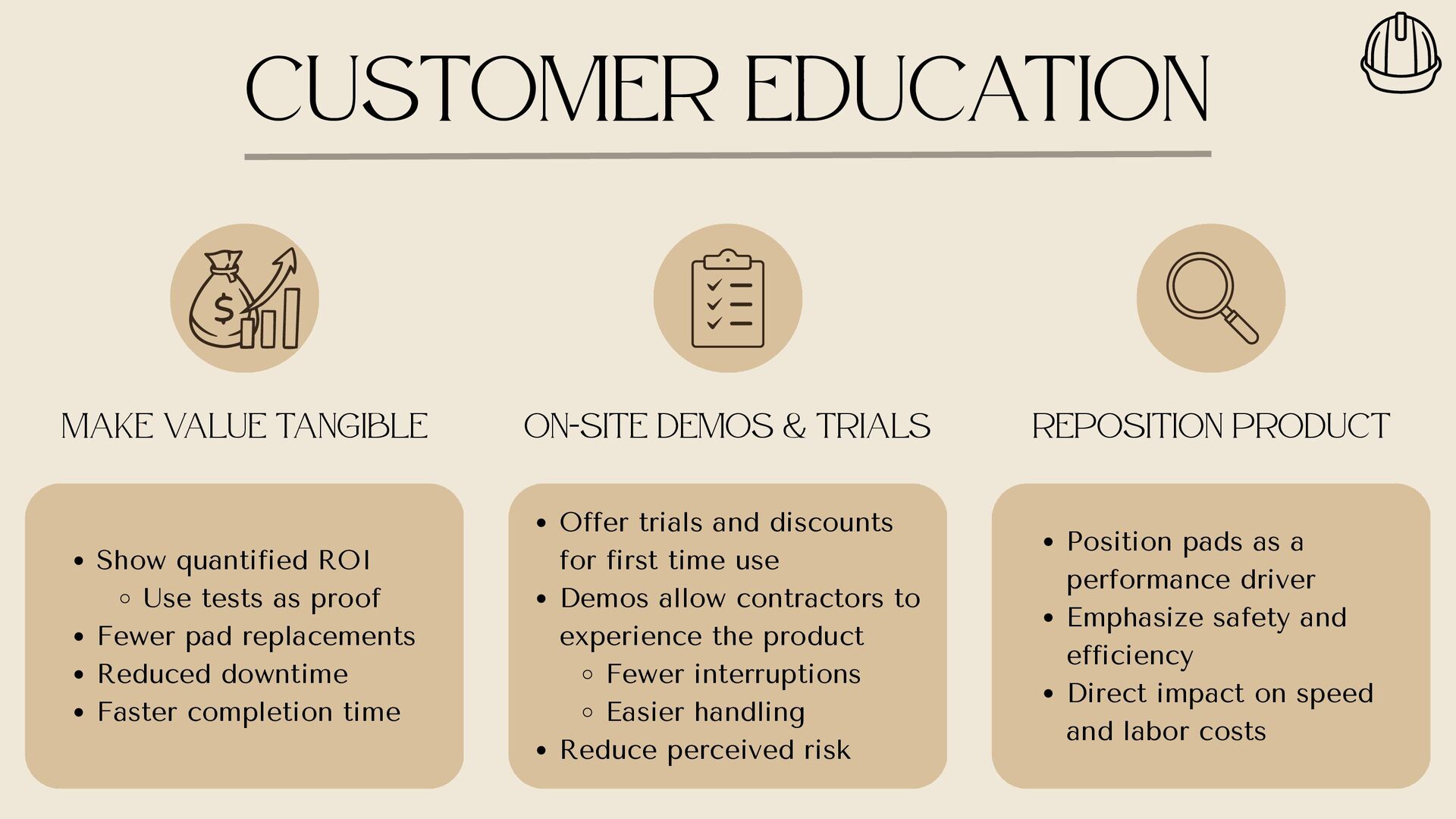
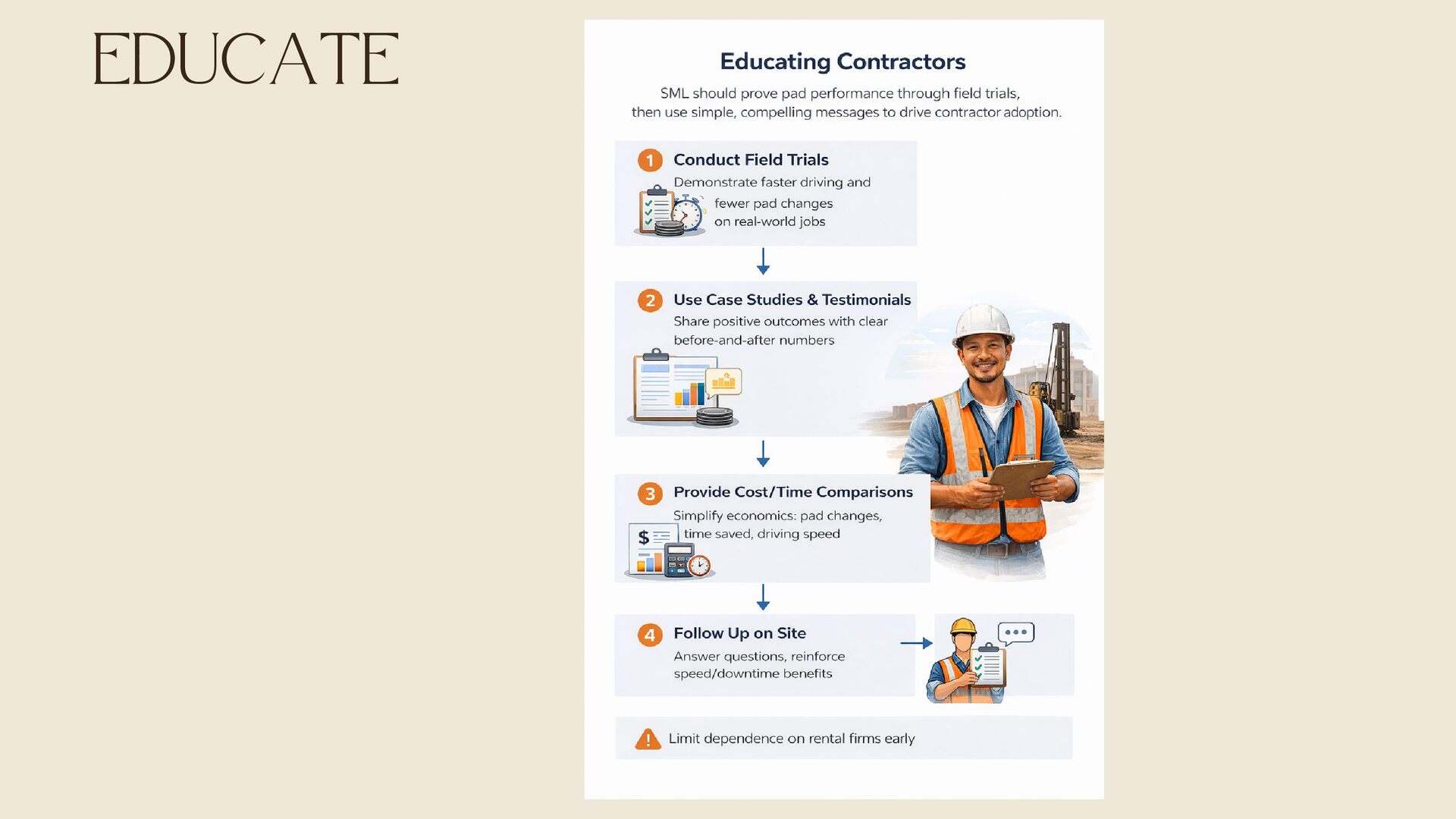
Product Show quantified ROI Use tests as proof Fewer pad replacements Reduced downtime Faster completion time Offer trials and discounts for first time use Demos allow contractors to experience the product Fewer interruptions Easier handling Reduce perceived risk Position pads as a performance driver Emphasize safety and efficiency Direct impact on speed and labor costs
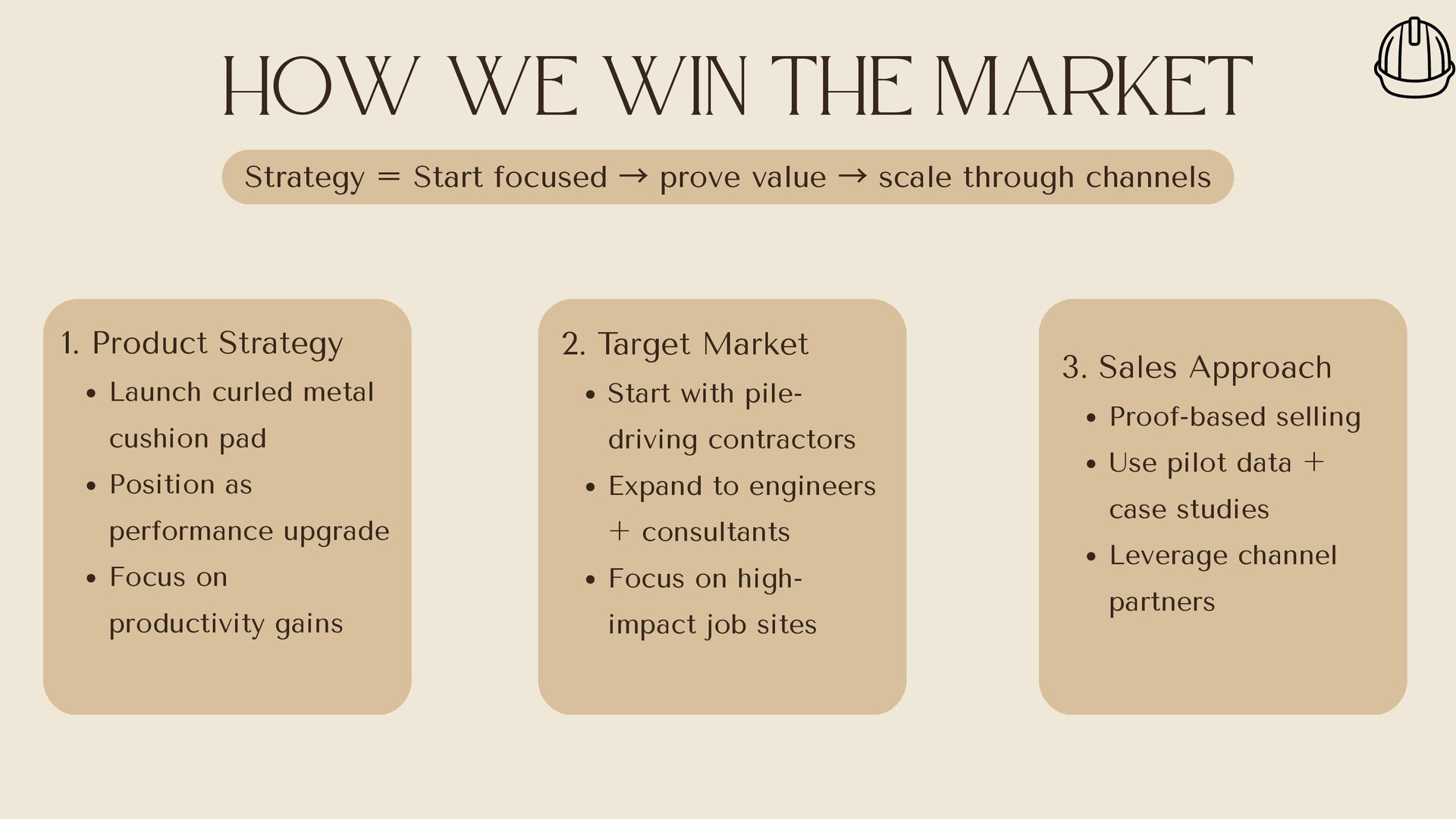
Product Strategy → prove value → scale through channels 2. Target Market Launch curled metal Start with pile- cushion pad driving contractors Position as Expand to engineers performance upgrade + consultants Focus on Focus on high- productivity gains impact job sites 3. Sales Approach Proof-based selling Use pilot data + case studies Leverage channel partners
basic consumble, so they may not immediately see SML pad as a high value innovation PRODUCTIVITY TOOL SOLUTION Data increase driving speed from 45-60 mph at Allied 33% increase from 40-50 mph at Welltech
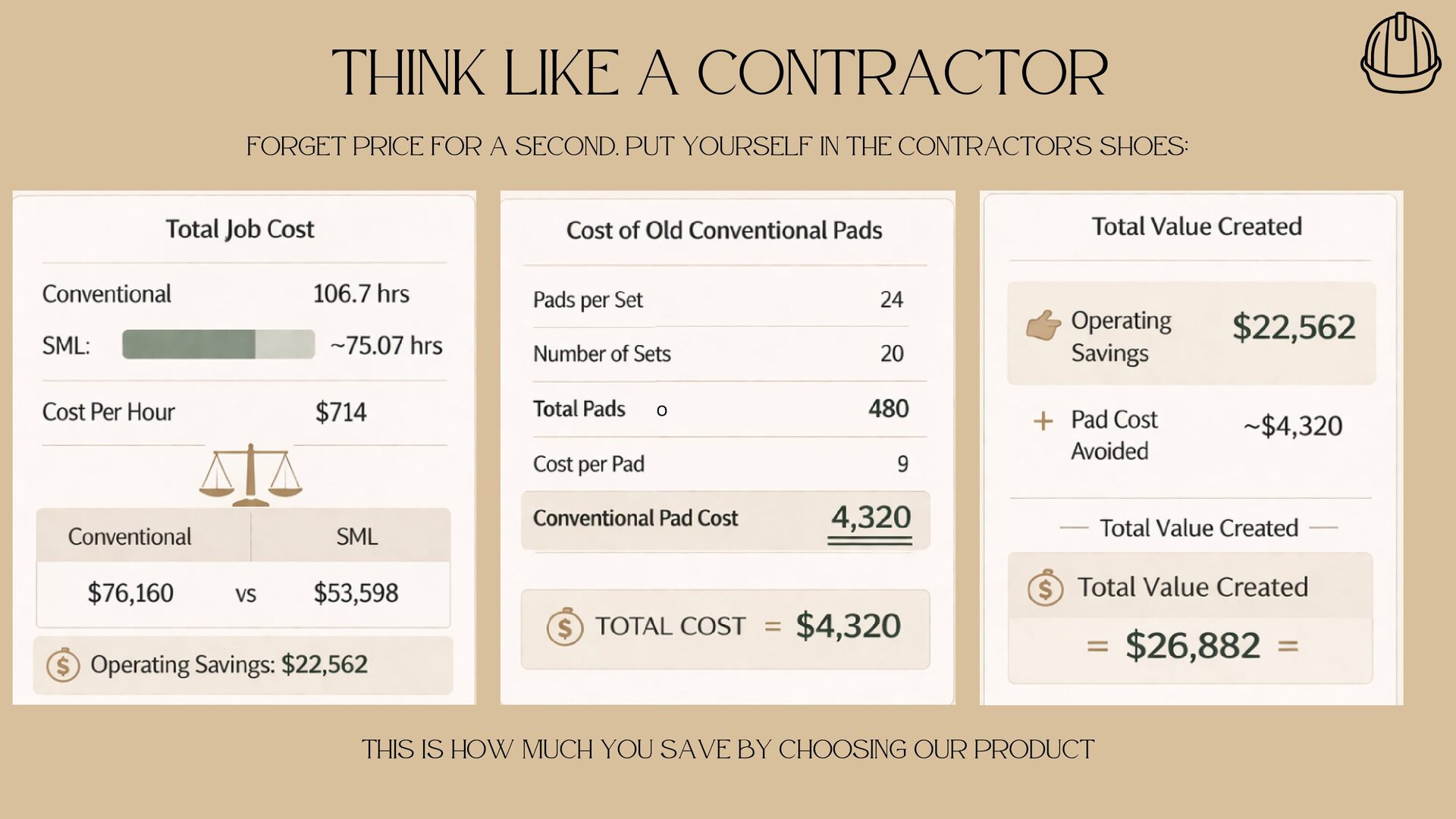
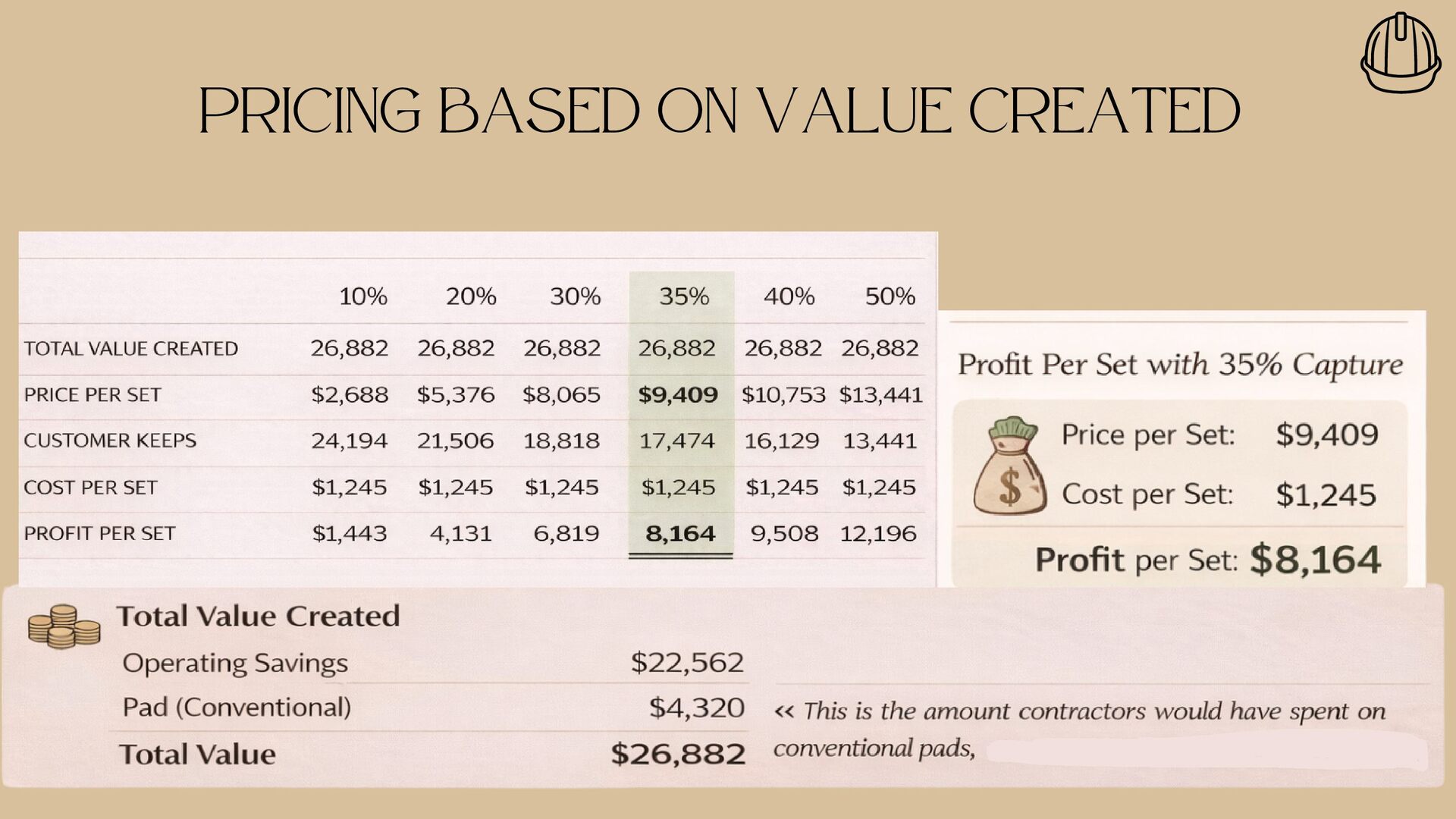
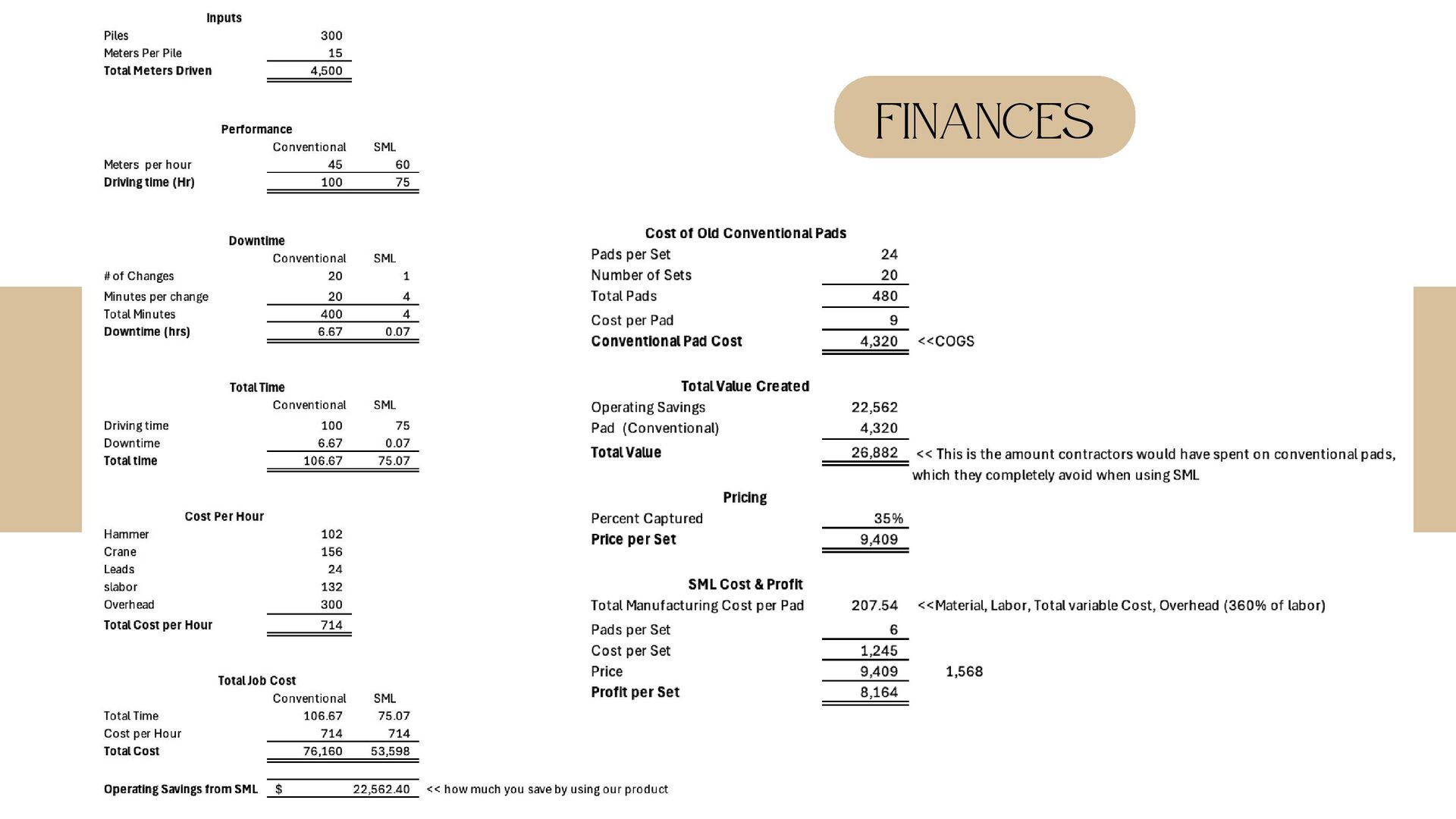
so SML may face pushback if it prices based on value rather than competitor price VALUE BASED PRICING SOLUTION Data: Allied job: driving time savings = 25 hours change over savings = 6.6 hours, total measured time savings = 31.6 hours Revenue: hourly cost- $714 = $22,600 in operating savings $3,000 in conventional pad set cost Total revenue = $25,600 for total value
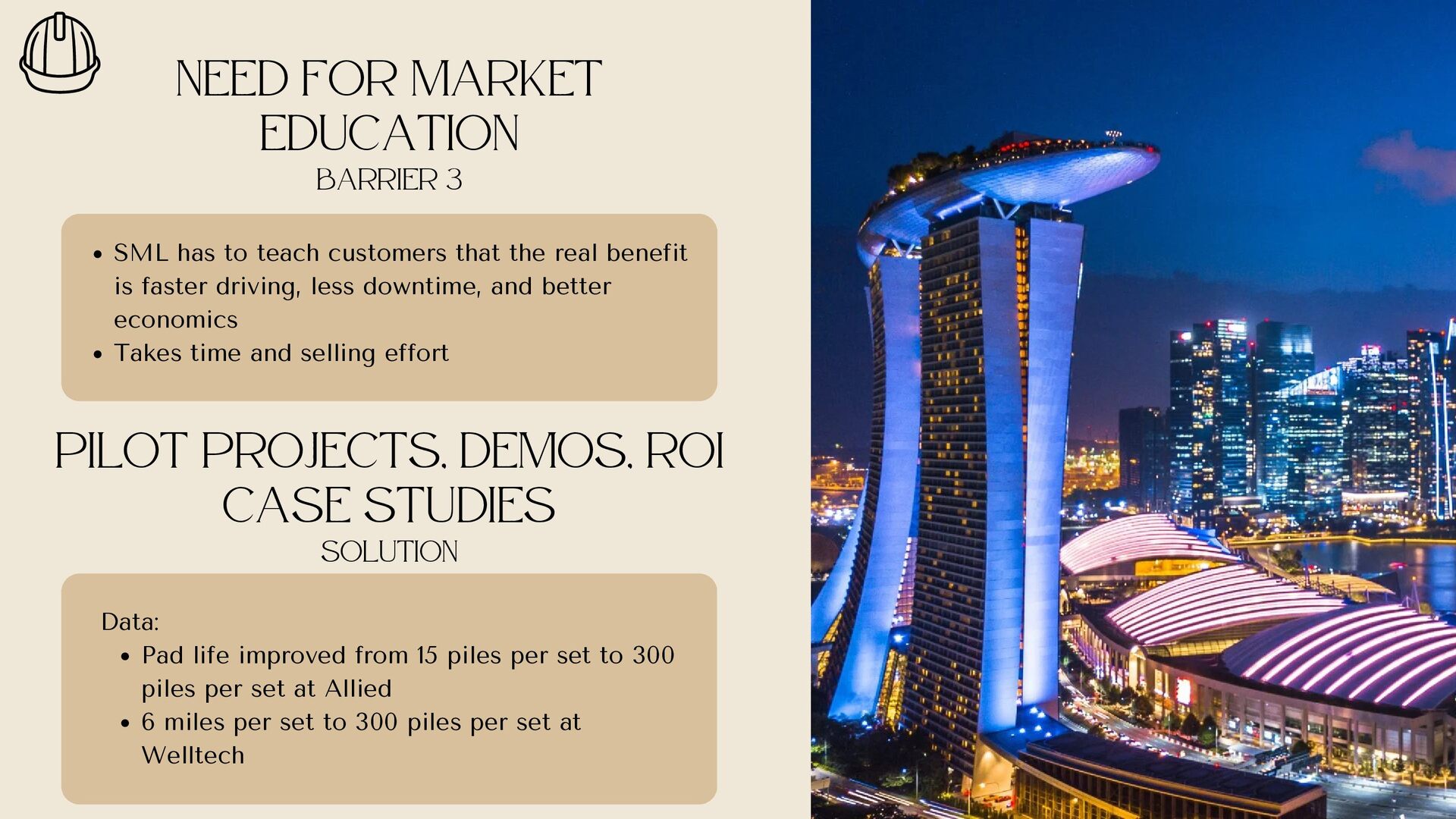
customers that the real benefit is faster driving, less downtime, and better economics Takes time and selling effort PILOT PROJECTS, DEMOS, ROI CASE STUDIES SOLUTION Data: Pad life improved from 15 piles per set to 300 piles per set at Allied 6 miles per set to 300 piles per set at Welltech
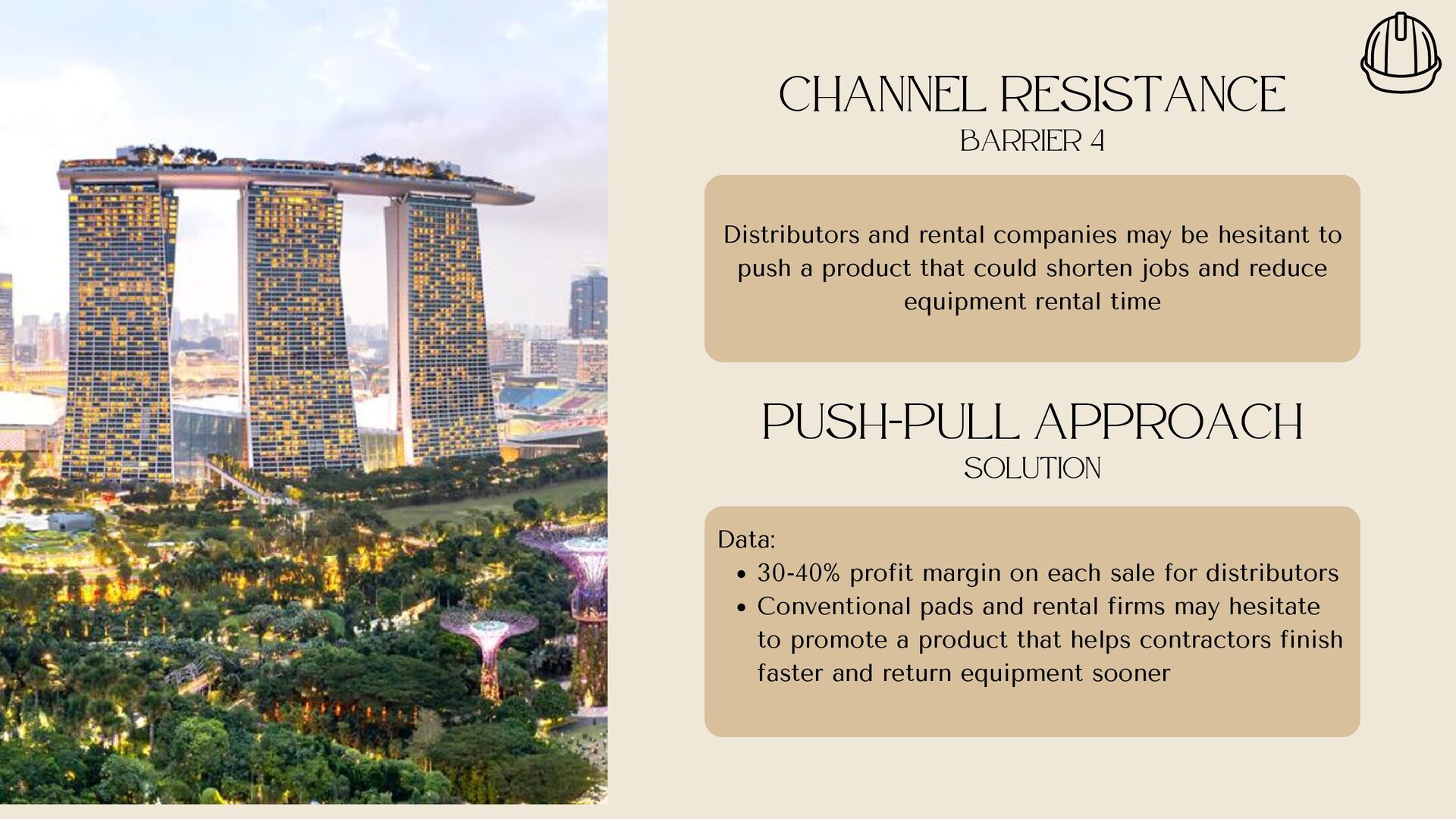
hesitant to push a product that could shorten jobs and reduce equipment rental time PUSH-PULL APPROACH SOLUTION Data: 30-40% profit margin on each sale for distributors Conventional pads and rental firms may hesitate to promote a product that helps contractors finish faster and return equipment sooner
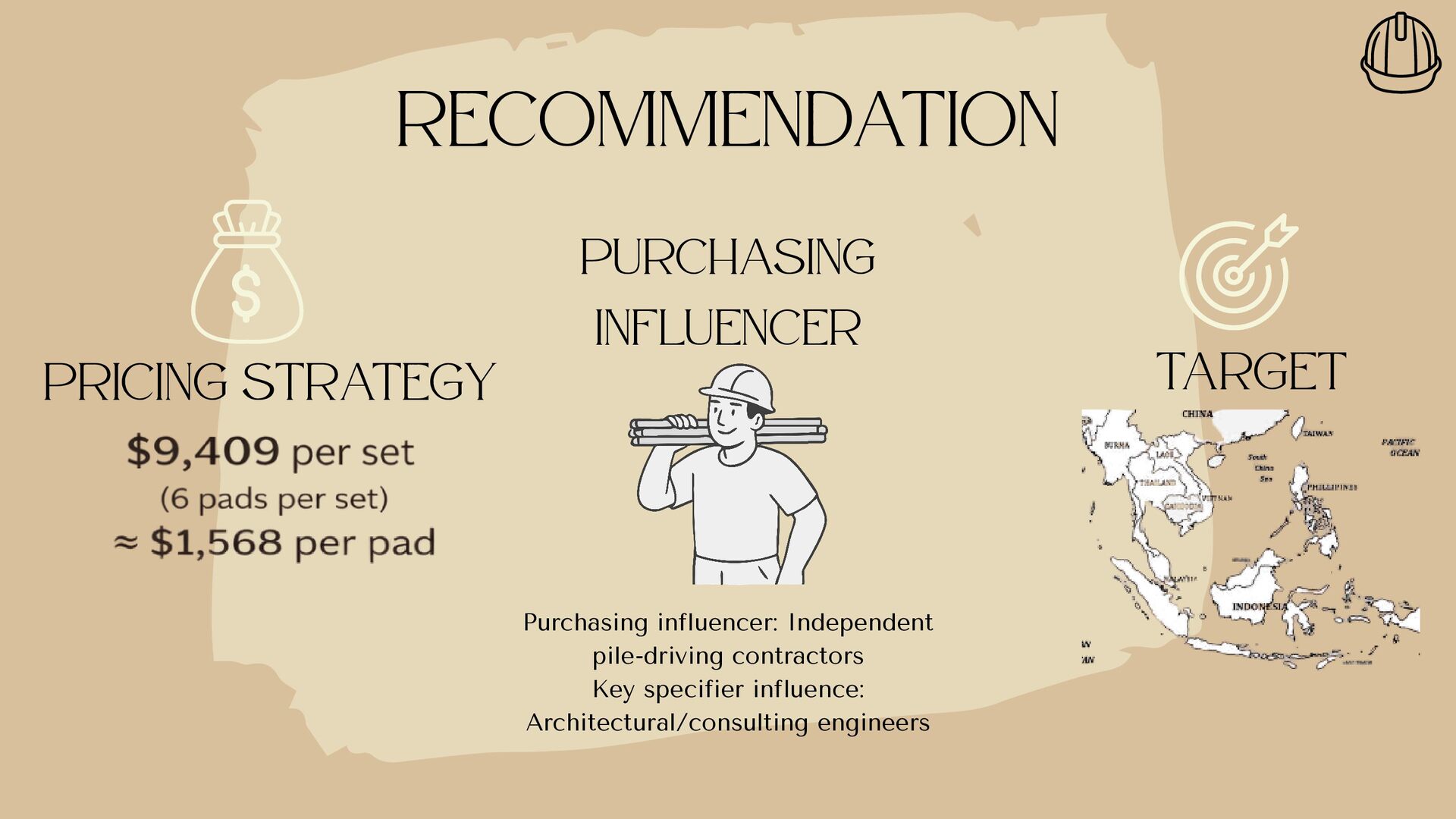
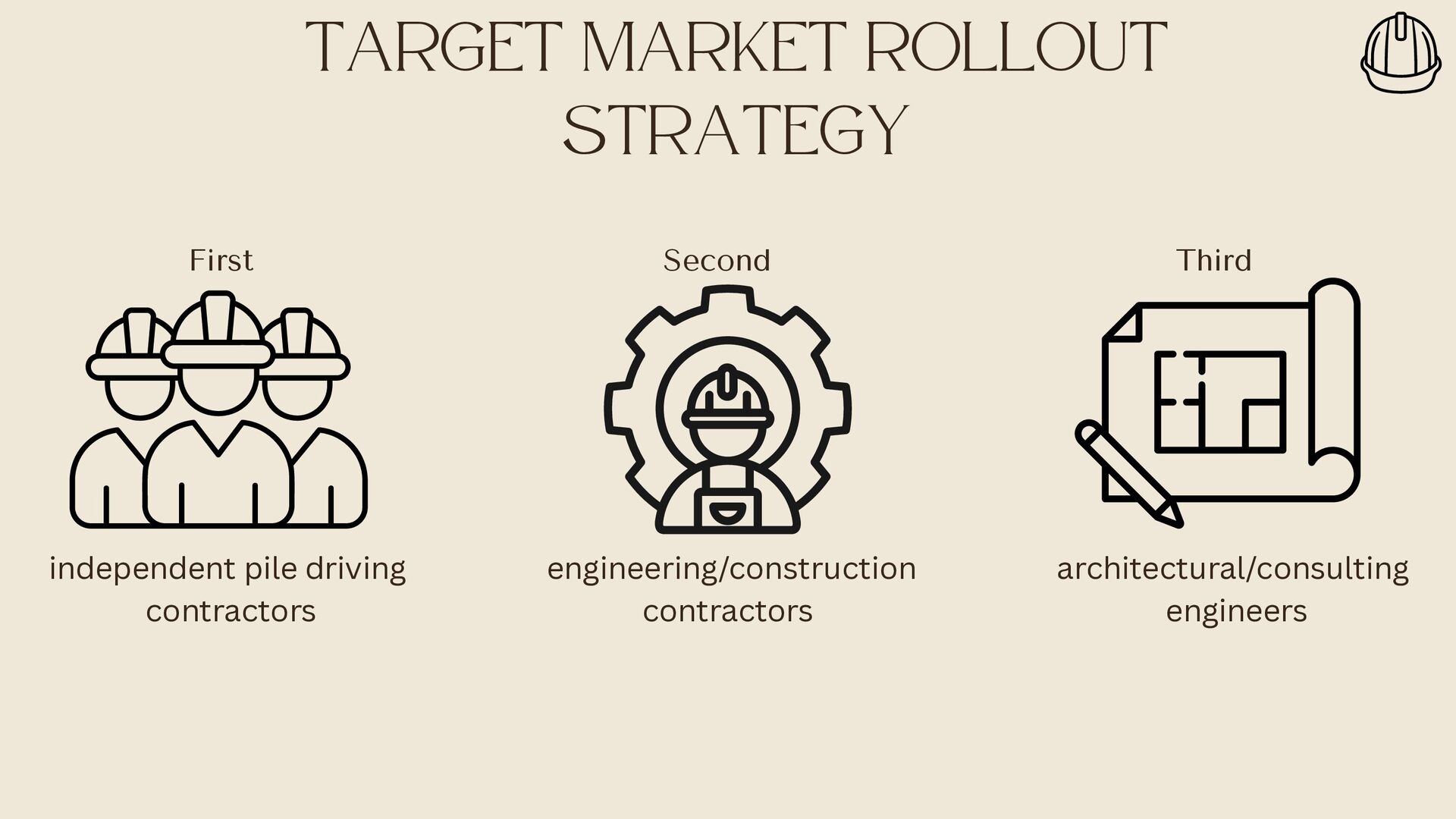
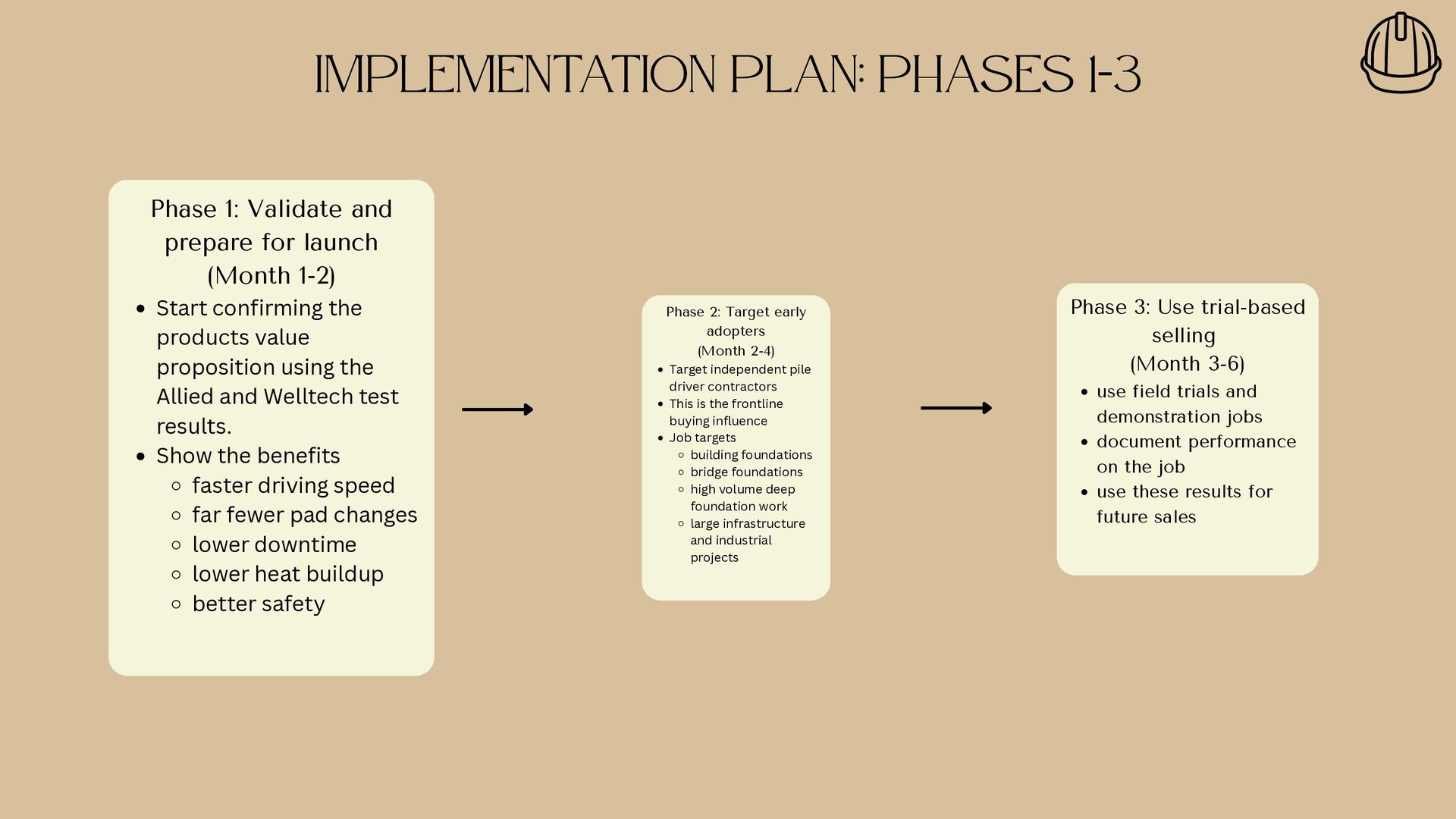
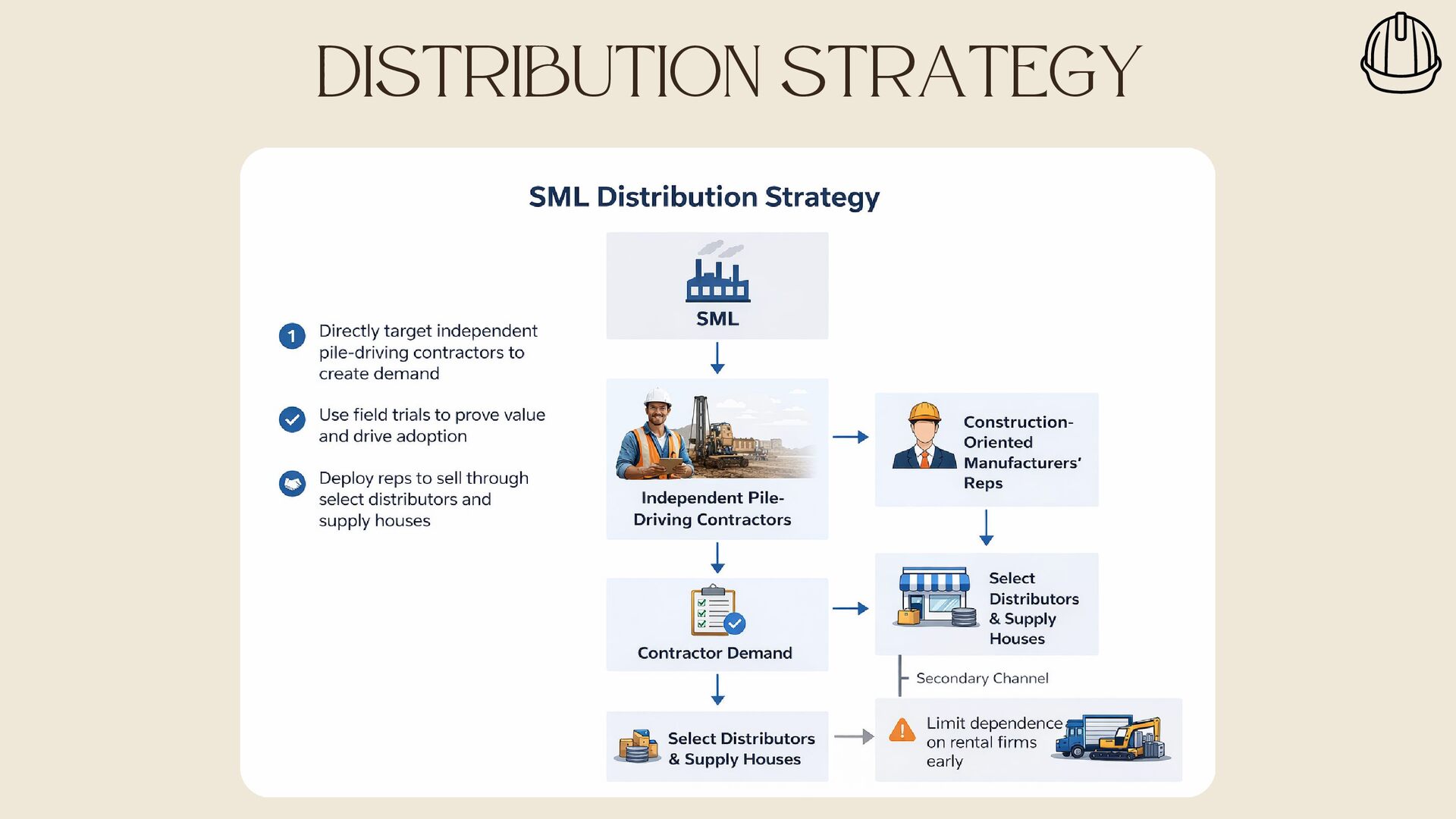
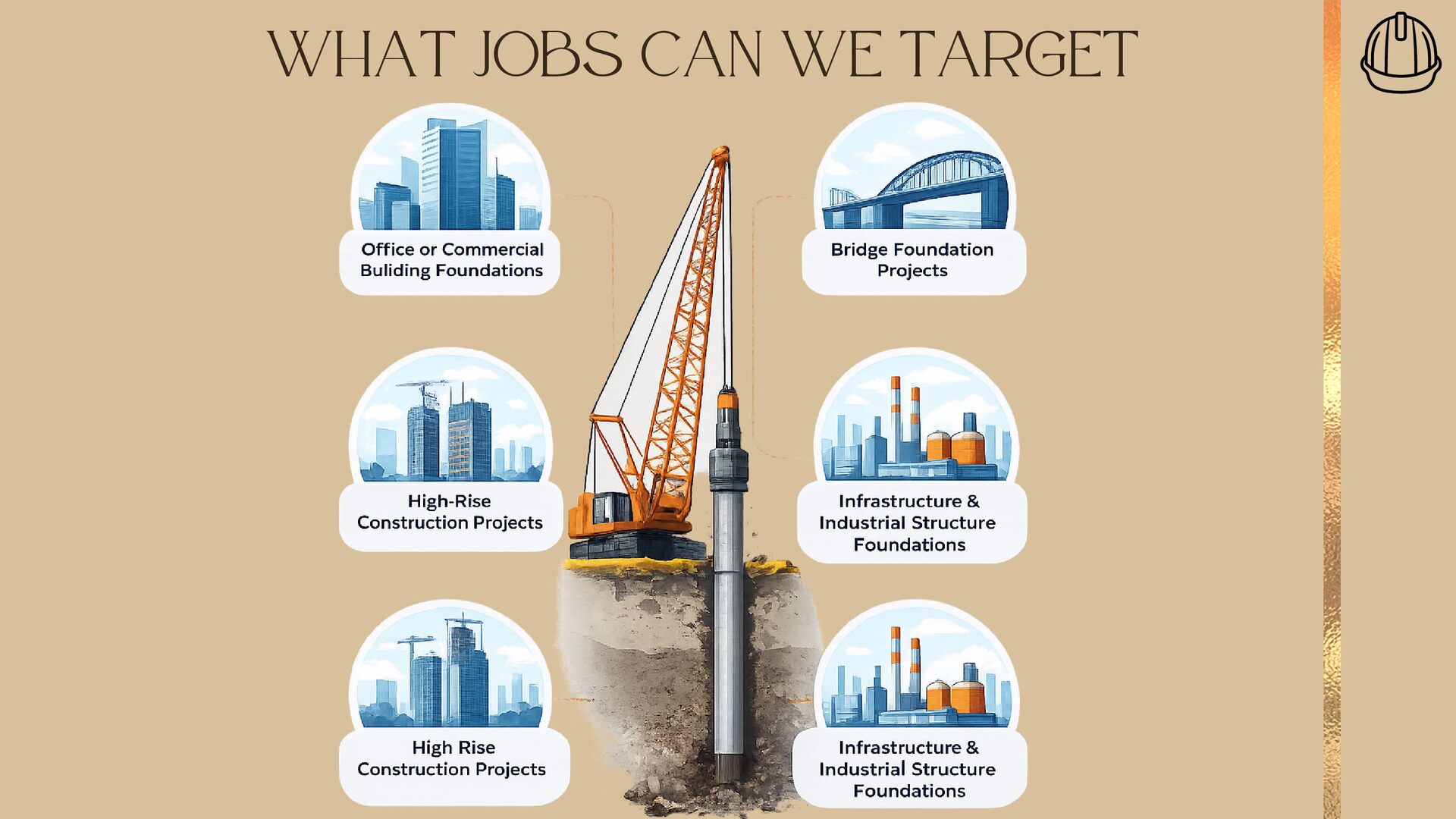
launch (Month 1-2) Start confirming the products value proposition using the Allied and Welltech test results. Show the benefits faster driving speed far fewer pad changes lower downtime lower heat buildup better safety Phase 2: Target early adopters (Month 2-4) Target independent pile driver contractors This is the frontline buying influence Job targets building foundations bridge foundations high volume deep foundation work large infrastructure and industrial projects Phase 3: Use trial-based selling (Month 3-6) use field trials and demonstration jobs document performance on the job use these results for future sales
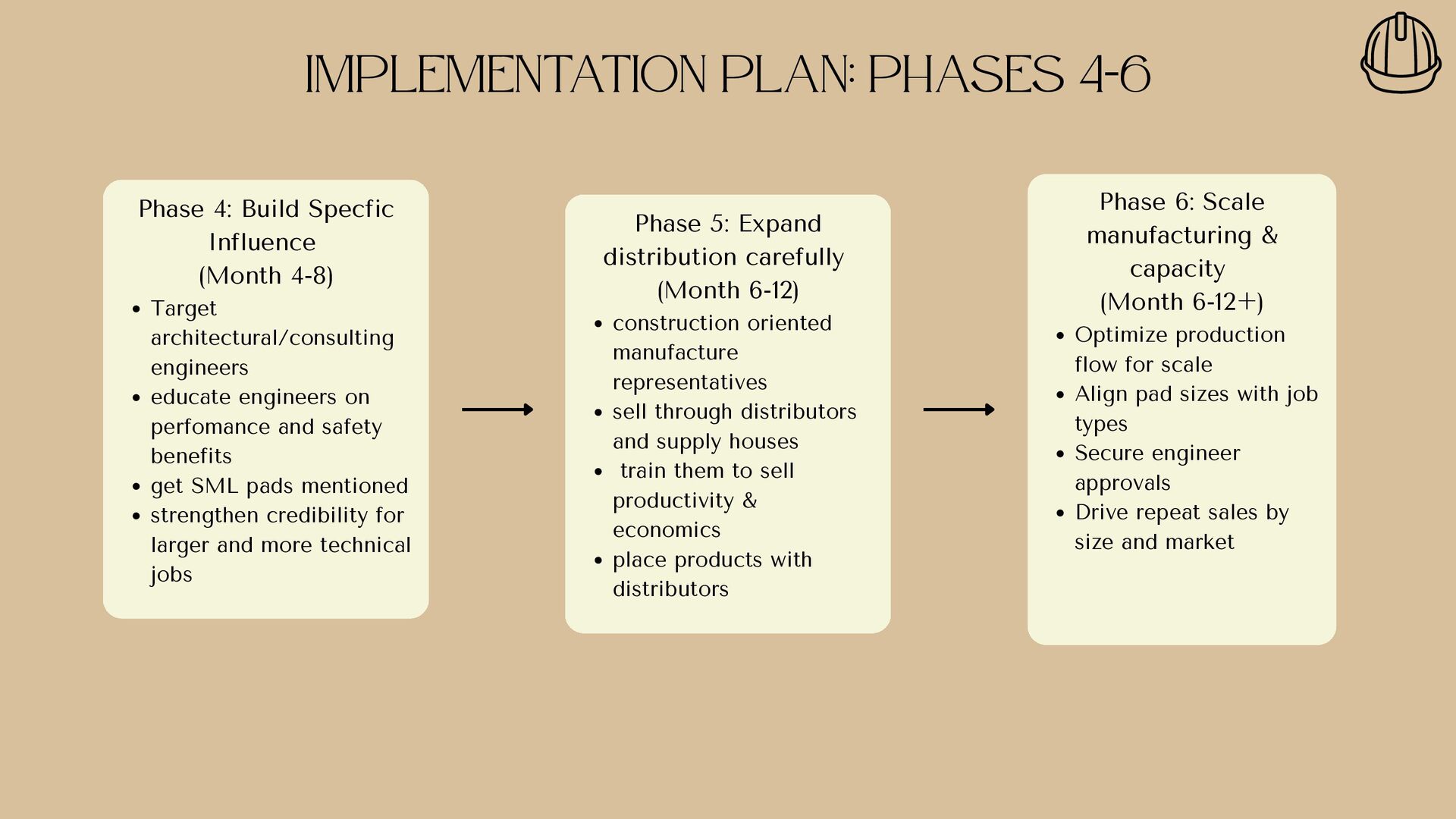
4-8) Target architectural/consulting engineers educate engineers on perfomance and safety benefits get SML pads mentioned strengthen credibility for larger and more technical jobs Phase 5: Expand distribution carefully (Month 6-12) construction oriented manufacture representatives sell through distributors and supply houses train them to sell productivity & economics place products with distributors Phase 6: Scale manufacturing & capacity (Month 6-12+) Optimize production flow for scale Align pad sizes with job types Secure engineer approvals Drive repeat sales by size and market
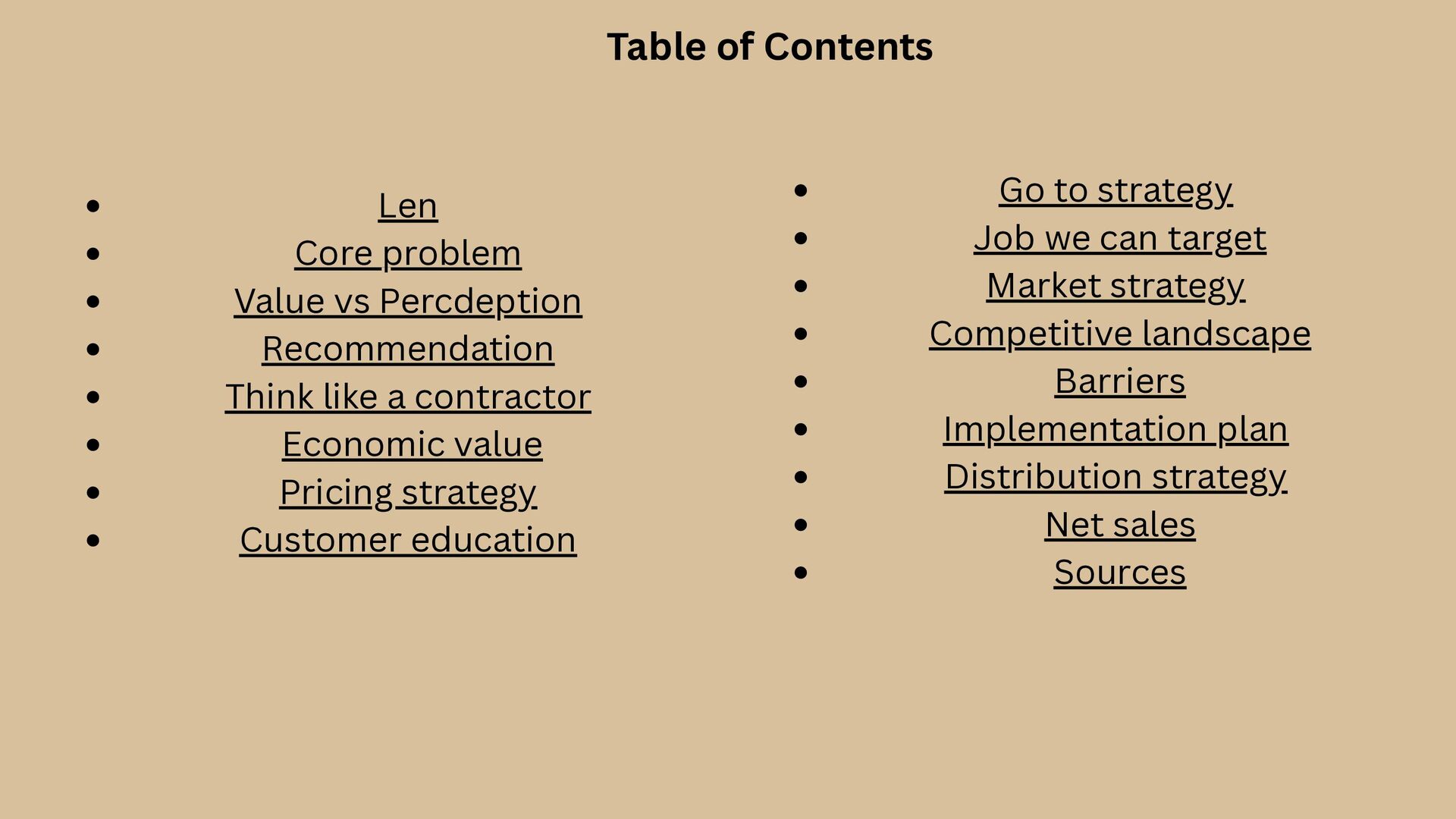
Think like a contractor Economic value Pricing strategy Customer education Go to strategy Job we can target Market strategy Competitive landscape Barriers Implementation plan Distribution strategy Net sales Sources
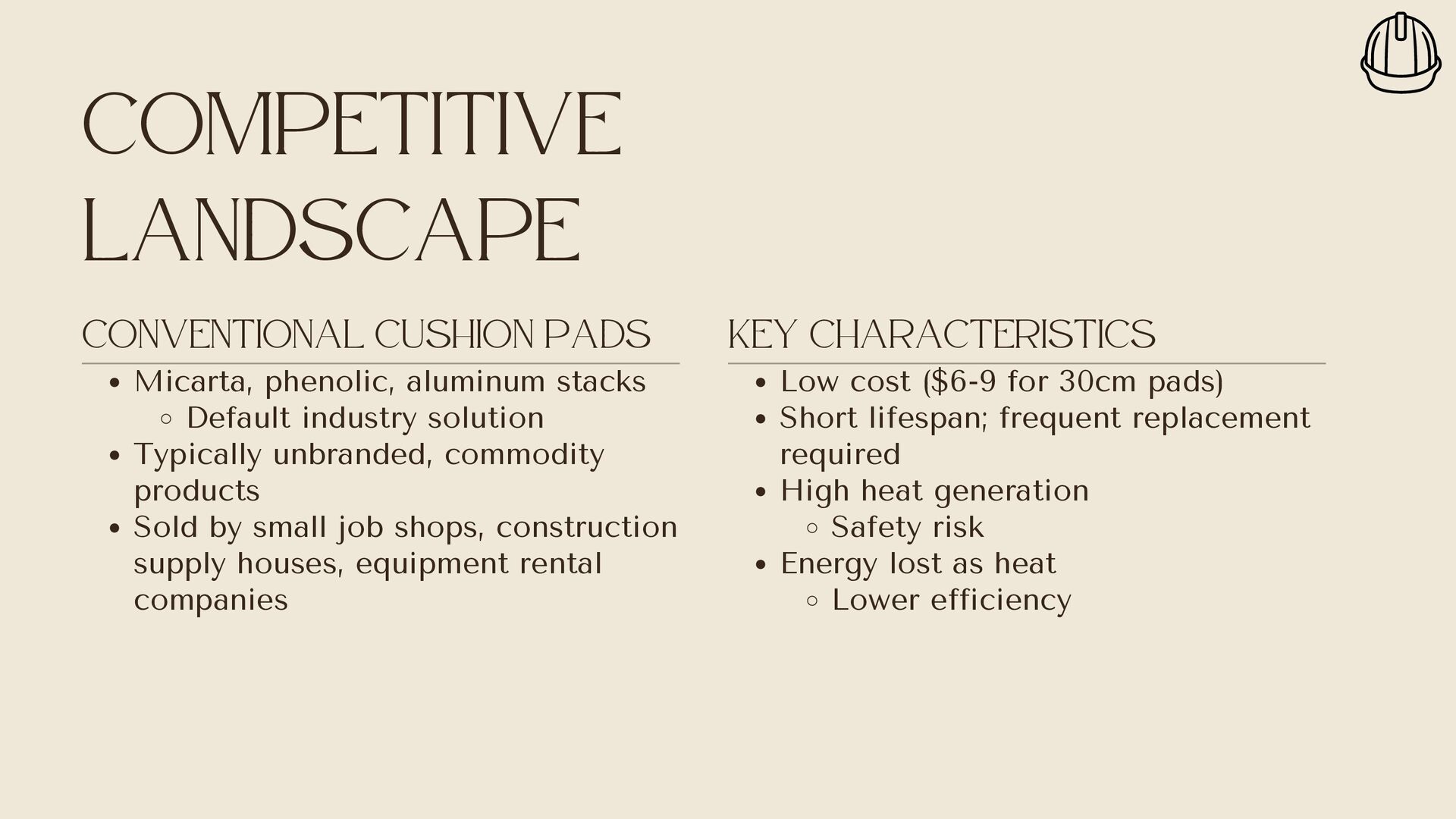
industry solution Typically unbranded, commodity products Sold by small job shops, construction supply houses, equipment rental companies Key Characteristics Low cost ($6-9 for 30cm pads) Short lifespan; frequent replacement required High heat generation Safety risk Energy lost as heat Lower efficiency


 blakedoman
 vanstee
 kristinabergwall1
 schlessera
 destraynor
 danielanewman
 szymonslowik
 tanoku
 keavy
 lcolladotor
 tammyeverts
 jcasabona
 techseoconnect