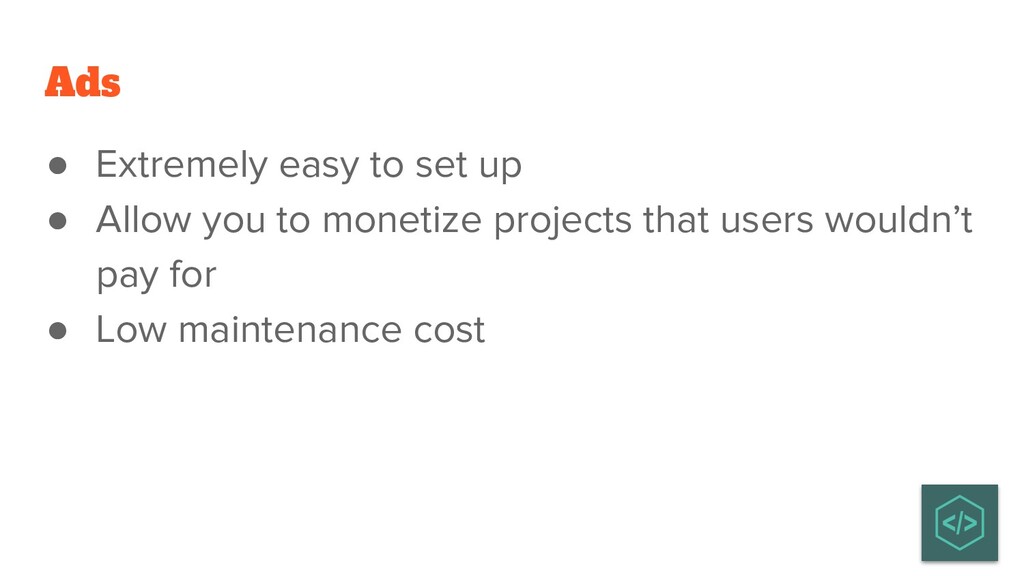
sell it once. If you paint a fence, you only get paid for it once. If you create a piece of software that's essentially free to reproduce, you can keep getting paid over and over perpetually.
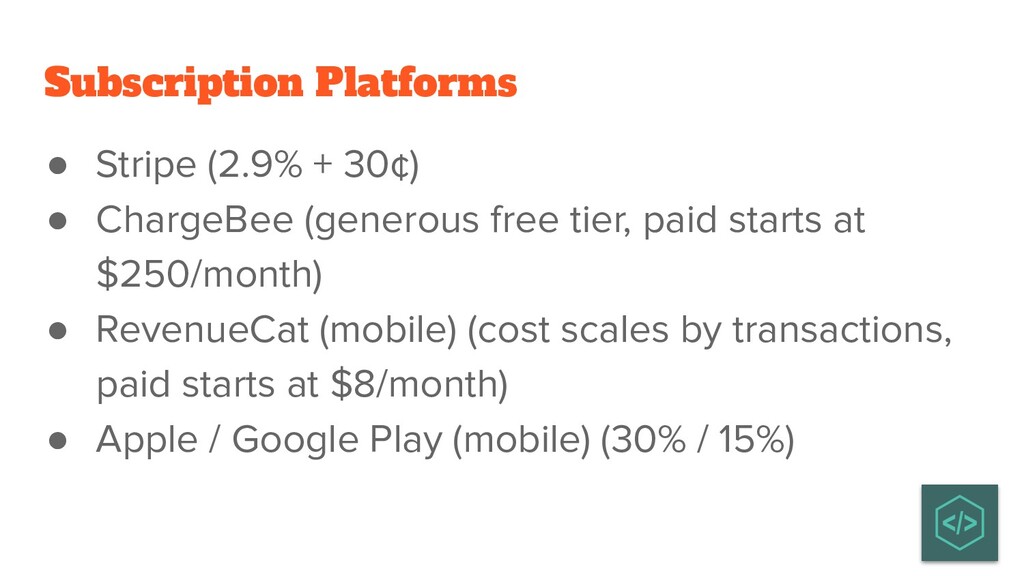
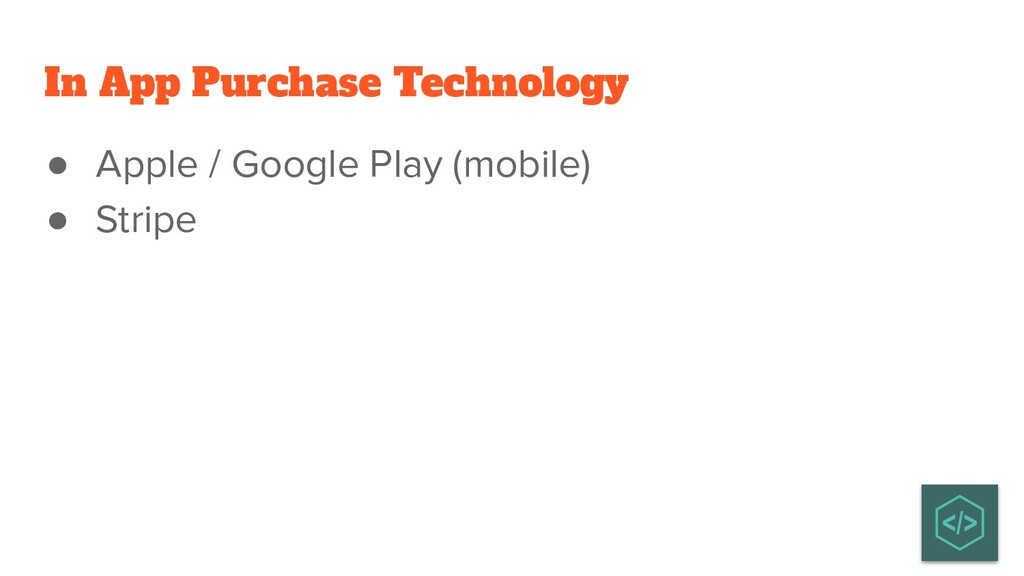
free tier, paid starts at $250/month) • RevenueCat (mobile) (cost scales by transactions, paid starts at $8/month) • Apple / Google Play (mobile) (30% / 15%)
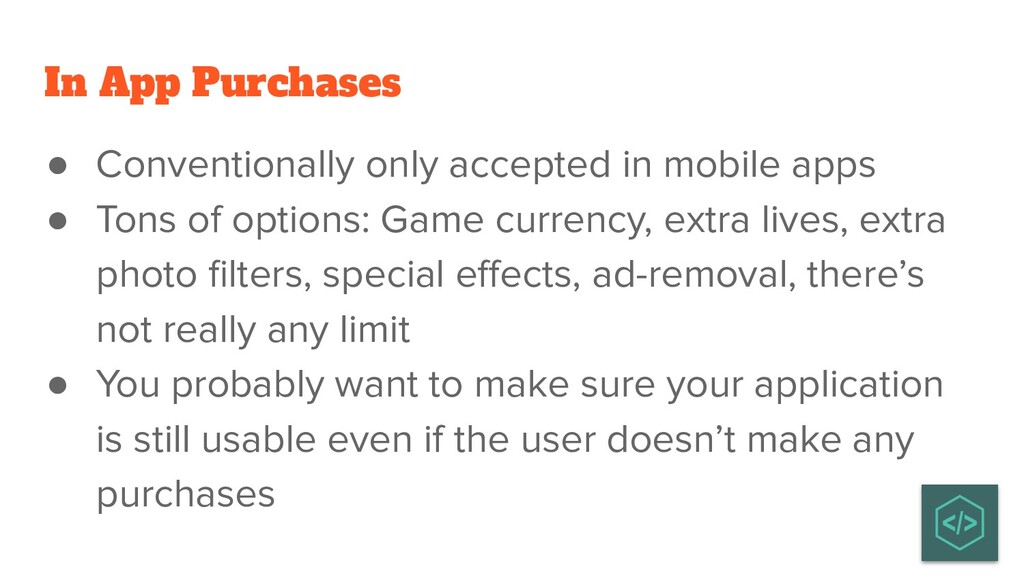
• Tons of options: Game currency, extra lives, extra photo filters, special effects, ad-removal, there’s not really any limit • You probably want to make sure your application is still usable even if the user doesn’t make any purchases
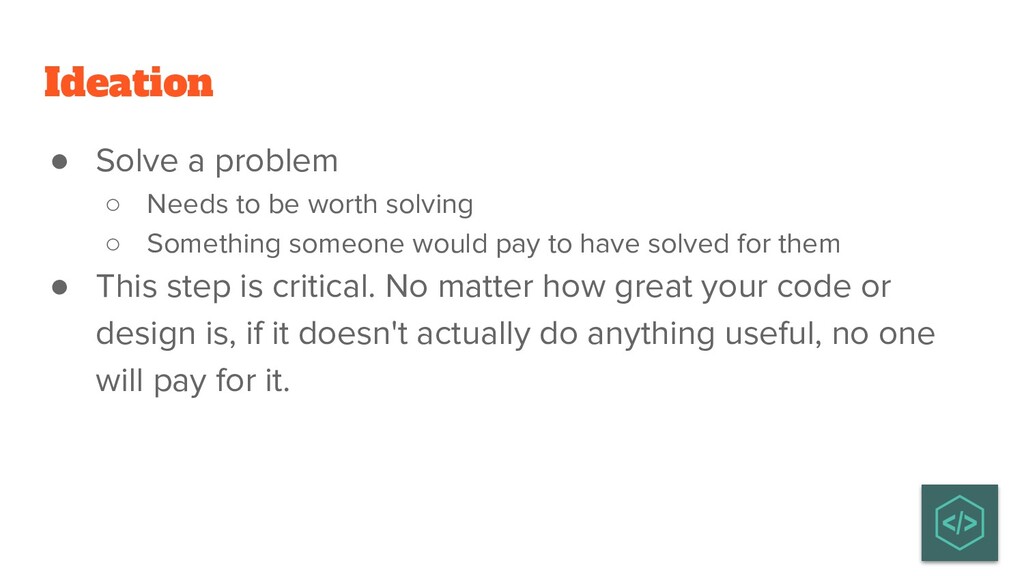
solving ◦ Something someone would pay to have solved for them • This step is critical. No matter how great your code or design is, if it doesn't actually do anything useful, no one will pay for it.
be solved? • How many people are there with this problem? • Are there any tools out there that help with this problem currently? • What do people pay to solve this problem currently (if they can). • What are the lifestyles that people with this problem lead?
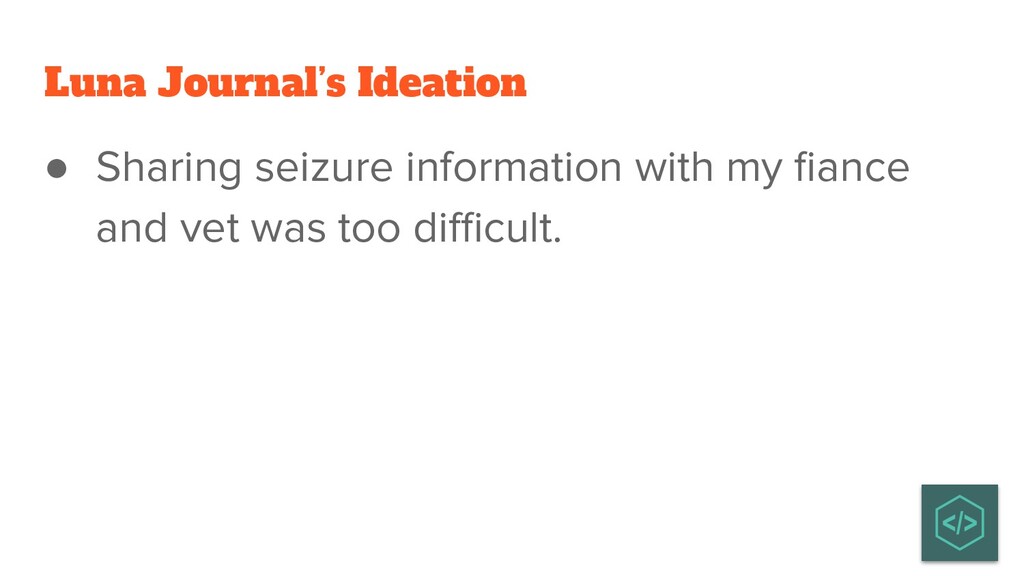
5.6k people • 1 or 2 times per week, “What app are you using to track your pet’s seizures?” • Seizures are expensive, pet owners don’t have a lot of money to spend on an app to help track seizures. • Several tools help log data, few help share it with your veterinarian.
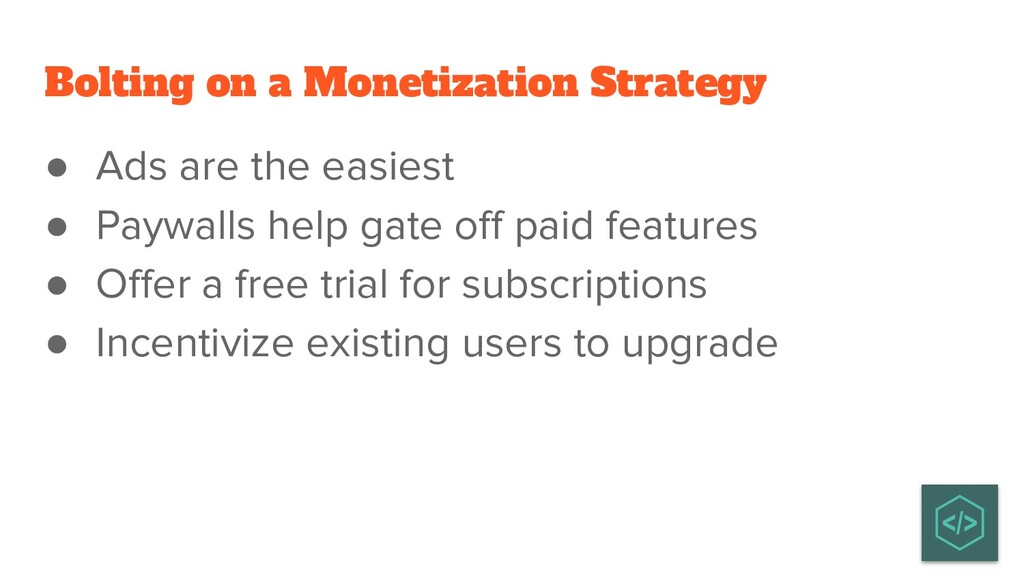
how to monetize your product, app or tool, but don’t build monetization first. • Focus on solving the problem and get a few people using it to get their feedback. Once they’ve used it, ask if they'd be willing to pay for it. If so, how much? • Good coding techniques (architectural planning, design patterns) will make it fairly easy to add monetization later.
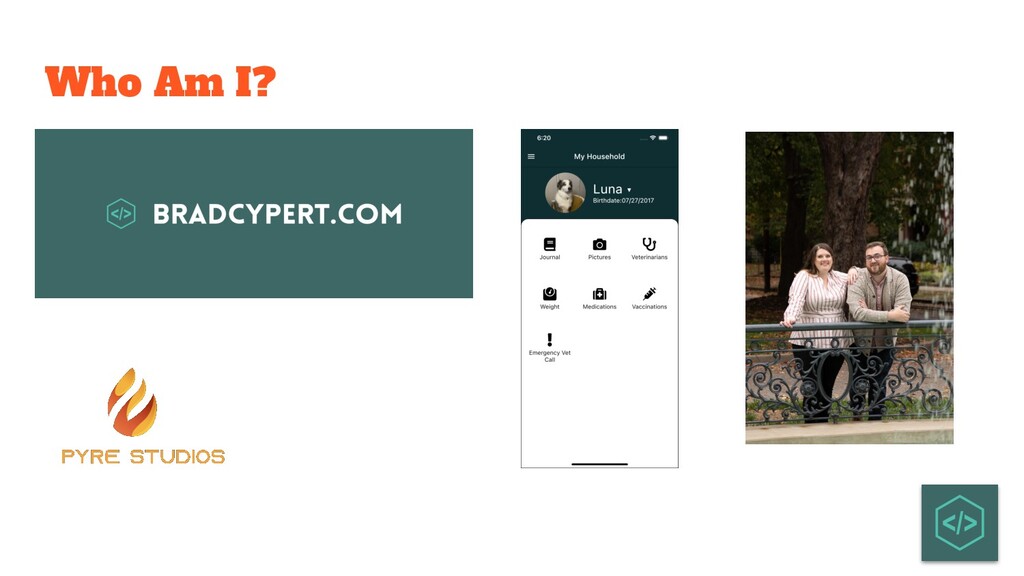
• Added support for all the core features • Pushed Luna Journal out to Friends and Family (non-medical needs pet owners) • Get feedback, implement improvements
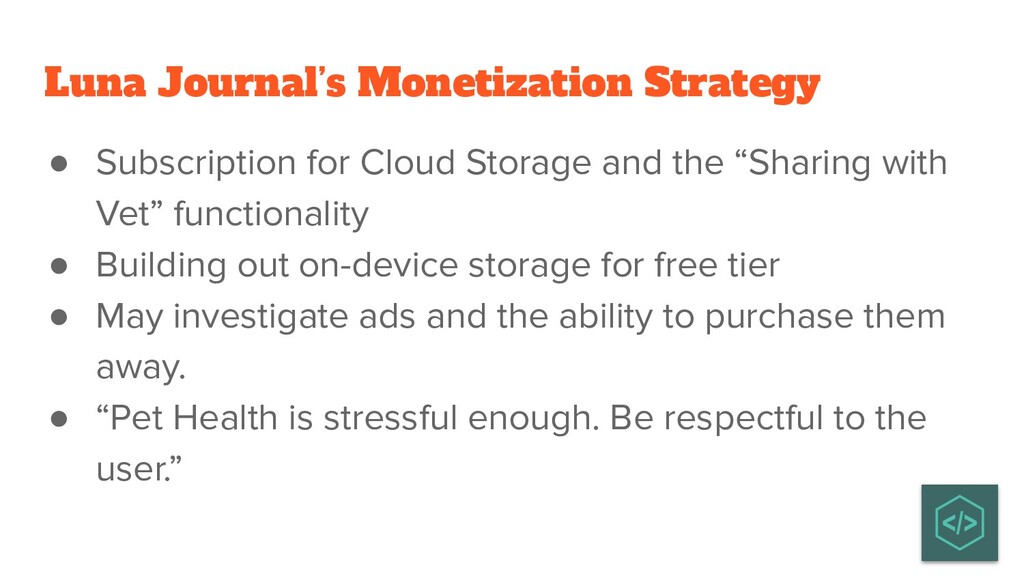
the “Sharing with Vet” functionality • Building out on-device storage for free tier • May investigate ads and the ability to purchase them away. • “Pet Health is stressful enough. Be respectful to the user.”


 bradcypert
 recruitengineers
 kakehashi
 sudoakiy
 syuchimu
 grimoh
 daidaidai
 takonda
 kworkdev
 ivry_presentationmaterials
 camiha
 pfn
pfn
 nealle
 soudai
 lauravandoore
 akashhashmi
 tammyeverts
 tessaabrams
 tammielis
 chikuwait
 ipullrank
 bcantrill
 madoxten
 rabernat
 cromwellryan