Upgrade to Pro — share decks privately, control downloads, hide ads and more …

Kitchen Air Quality and Staff Health Explained

Kitchen Air Quality and Staff Health Explained

Air quality isn’t just about comfort—it’s about compliance, performance, and fire prevention. This resource outlines how poor ventilation increases staff illness, operational downtime, and regulatory violations, and it shows proven solutions to avoid costly risks.

Avatar for Brightview Contracting Services

Brightview Contracting Services

September 30, 2025

Other Decks in Business

Transcript

  1. Breathe Easy The Science of Kitchen Air Quality & Ventilation

    Design An operator's guide to clean air, healthy staff, and efficient kitchens
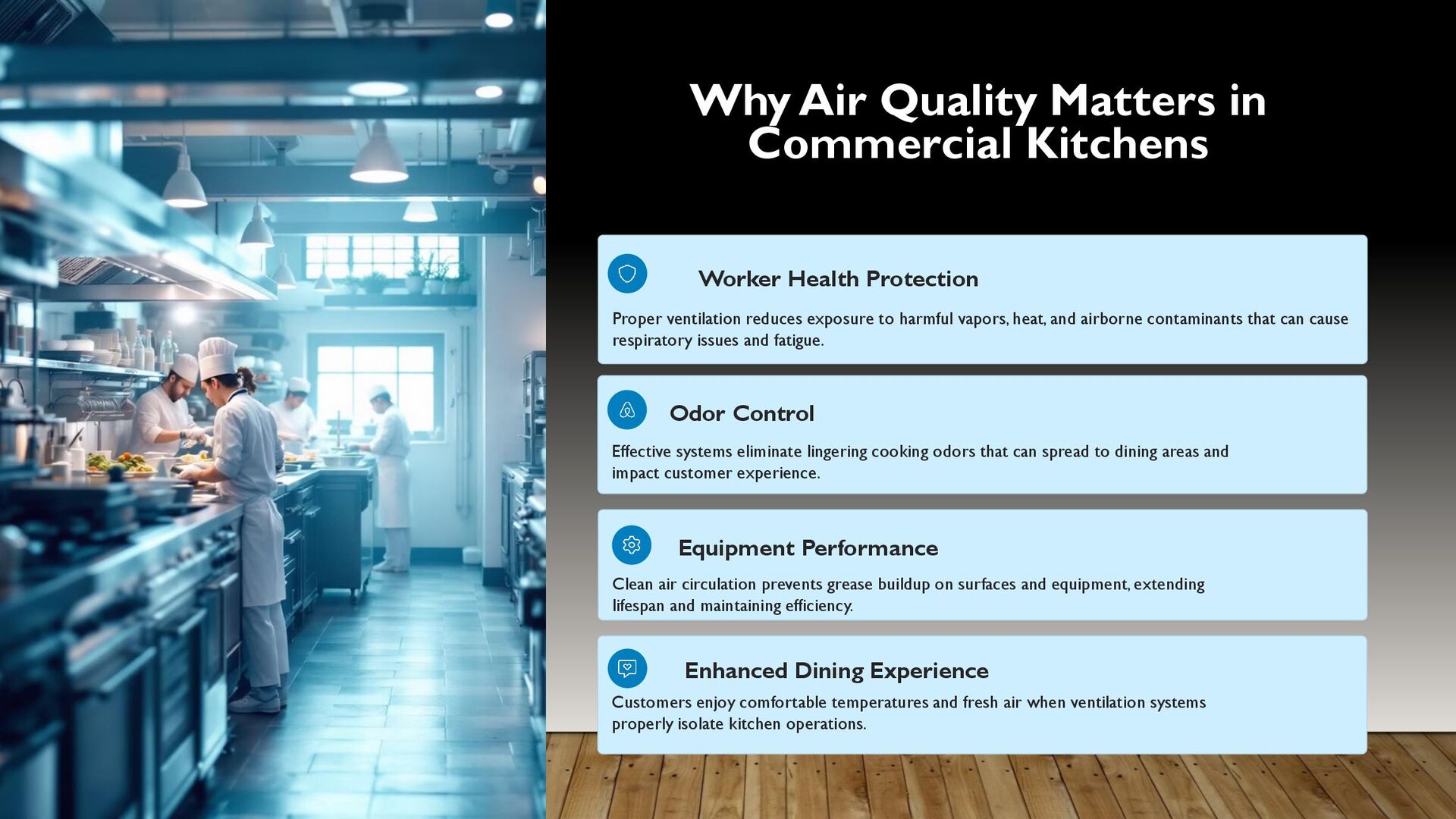
  2. Why Air Quality Matters in Commercial Kitchens Worker Health Protection

    Proper ventilation reduces exposure to harmful vapors, heat, and airborne contaminants that can cause respiratory issues and fatigue. Odor Control Effective systems eliminate lingering cooking odors that can spread to dining areas and impact customer experience. Equipment Performance Clean air circulation prevents grease buildup on surfaces and equipment, extending lifespan and maintaining efficiency. Enhanced Dining Experience Customers enjoy comfortable temperatures and fresh air when ventilation systems properly isolate kitchen operations.
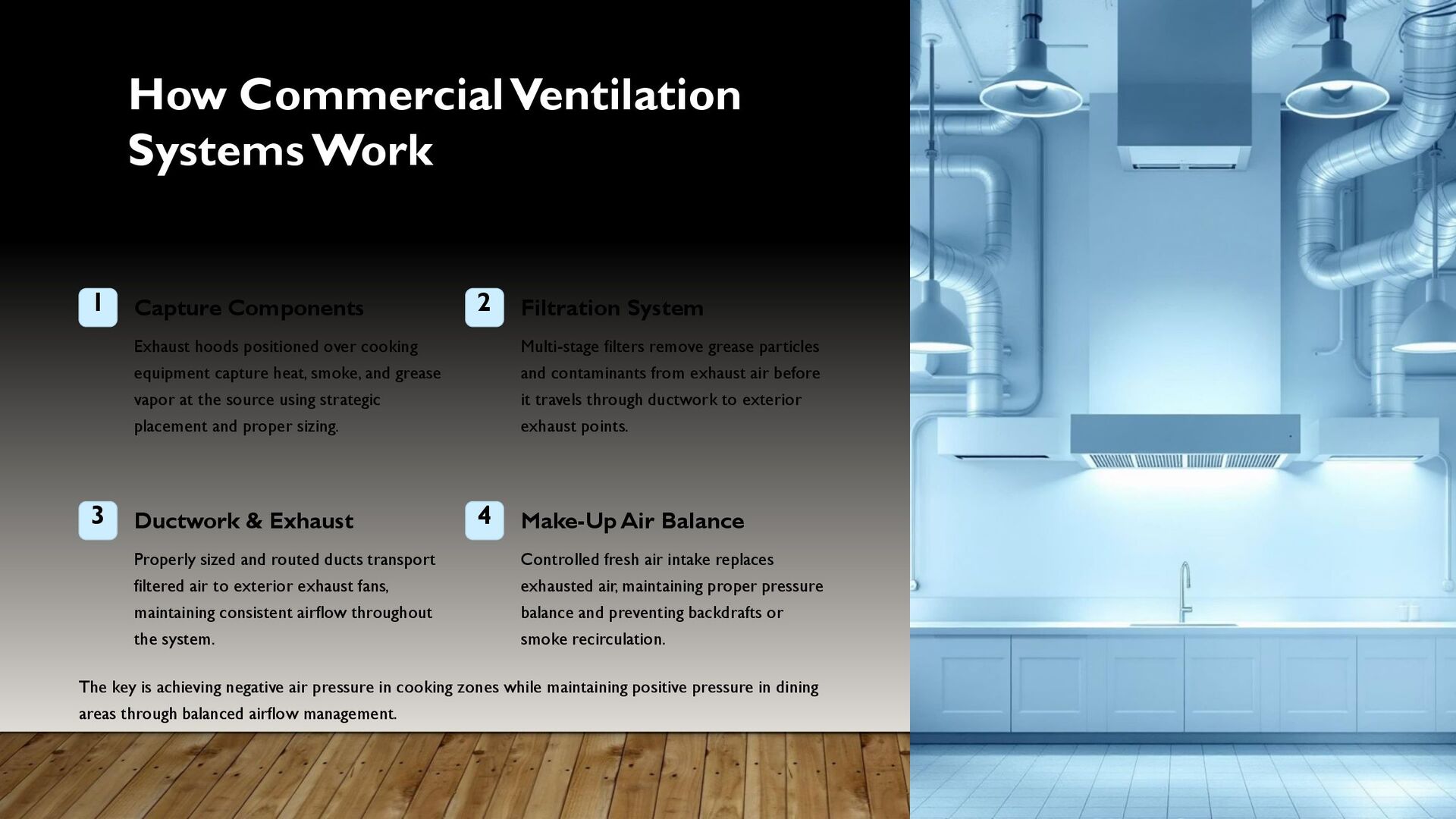
  3. How Commercial Ventilation Systems Work 1 Capture Components Exhaust hoods

    positioned over cooking equipment capture heat, smoke, and grease vapor at the source using strategic placement and proper sizing. 2 Filtration System Multi-stage filters remove grease particles and contaminants from exhaust air before it travels through ductwork to exterior exhaust points. 3 Ductwork & Exhaust Properly sized and routed ducts transport filtered air to exterior exhaust fans, maintaining consistent airflow throughout the system. 4 Make-Up Air Balance Controlled fresh air intake replaces exhausted air, maintaining proper pressure balance and preventing backdrafts or smoke recirculation. The key is achieving negative air pressure in cooking zones while maintaining positive pressure in dining areas through balanced airflow management.
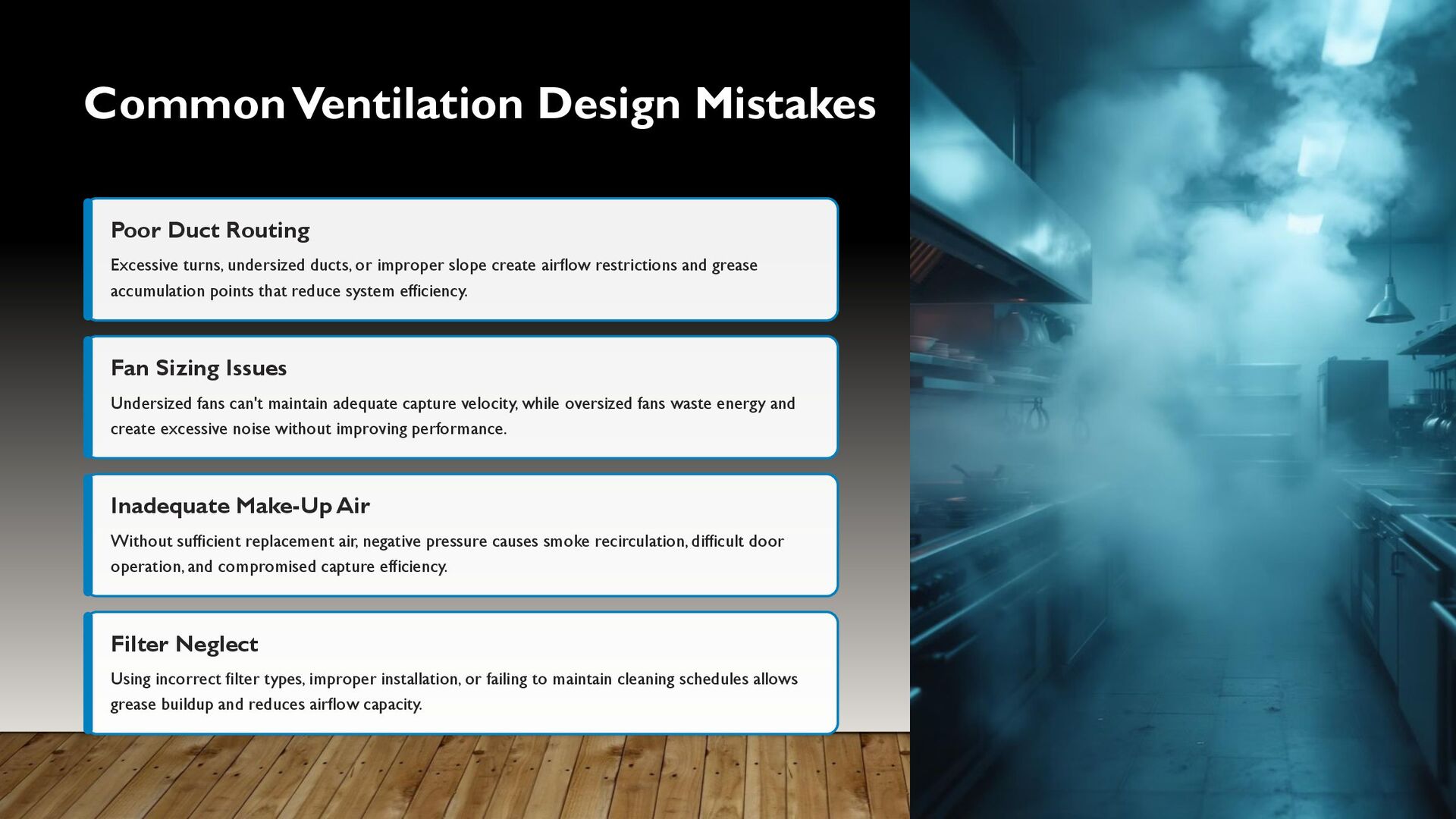
  4. Common Ventilation Design Mistakes Poor Duct Routing Excessive turns, undersized

    ducts, or improper slope create airflow restrictions and grease accumulation points that reduce system efficiency. Fan Sizing Issues Undersized fans can't maintain adequate capture velocity, while oversized fans waste energy and create excessive noise without improving performance. Inadequate Make-Up Air Without sufficient replacement air, negative pressure causes smoke recirculation, difficult door operation, and compromised capture efficiency. Filter Neglect Using incorrect filter types, improper installation, or failing to maintain cleaning schedules allows grease buildup and reduces airflow capacity.
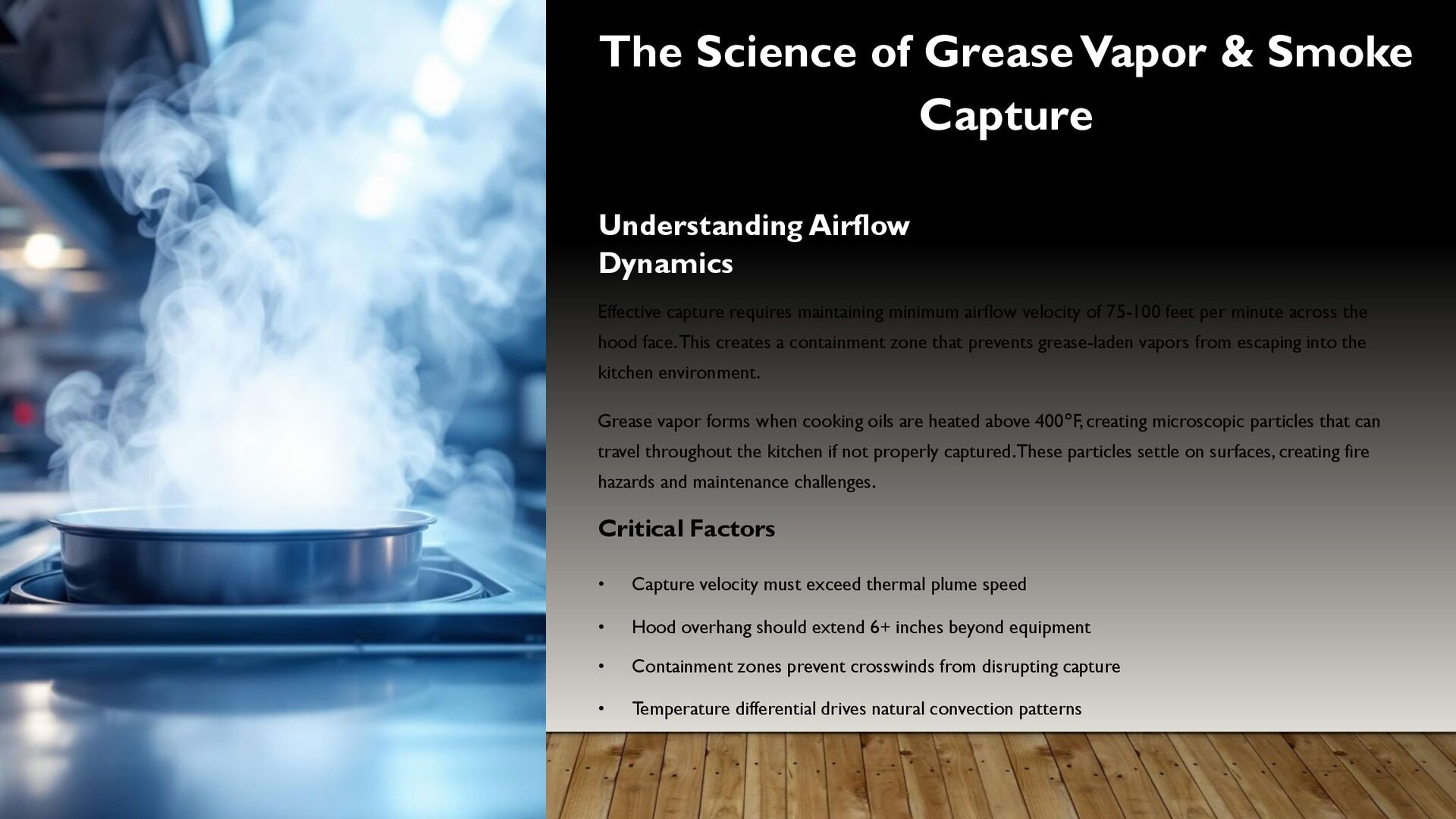
  5. The Science of Grease Vapor & Smoke Capture Understanding Airflow

    Dynamics Effective capture requires maintaining minimum airflow velocity of 75-100 feet per minute across the hood face. This creates a containment zone that prevents grease-laden vapors from escaping into the kitchen environment. Grease vapor forms when cooking oils are heated above 400°F, creating microscopic particles that can travel throughout the kitchen if not properly captured. These particles settle on surfaces, creating fire hazards and maintenance challenges. Critical Factors • Capture velocity must exceed thermal plume speed • Hood overhang should extend 6+ inches beyond equipment • Containment zones prevent crosswinds from disrupting capture • Temperature differential drives natural convection patterns
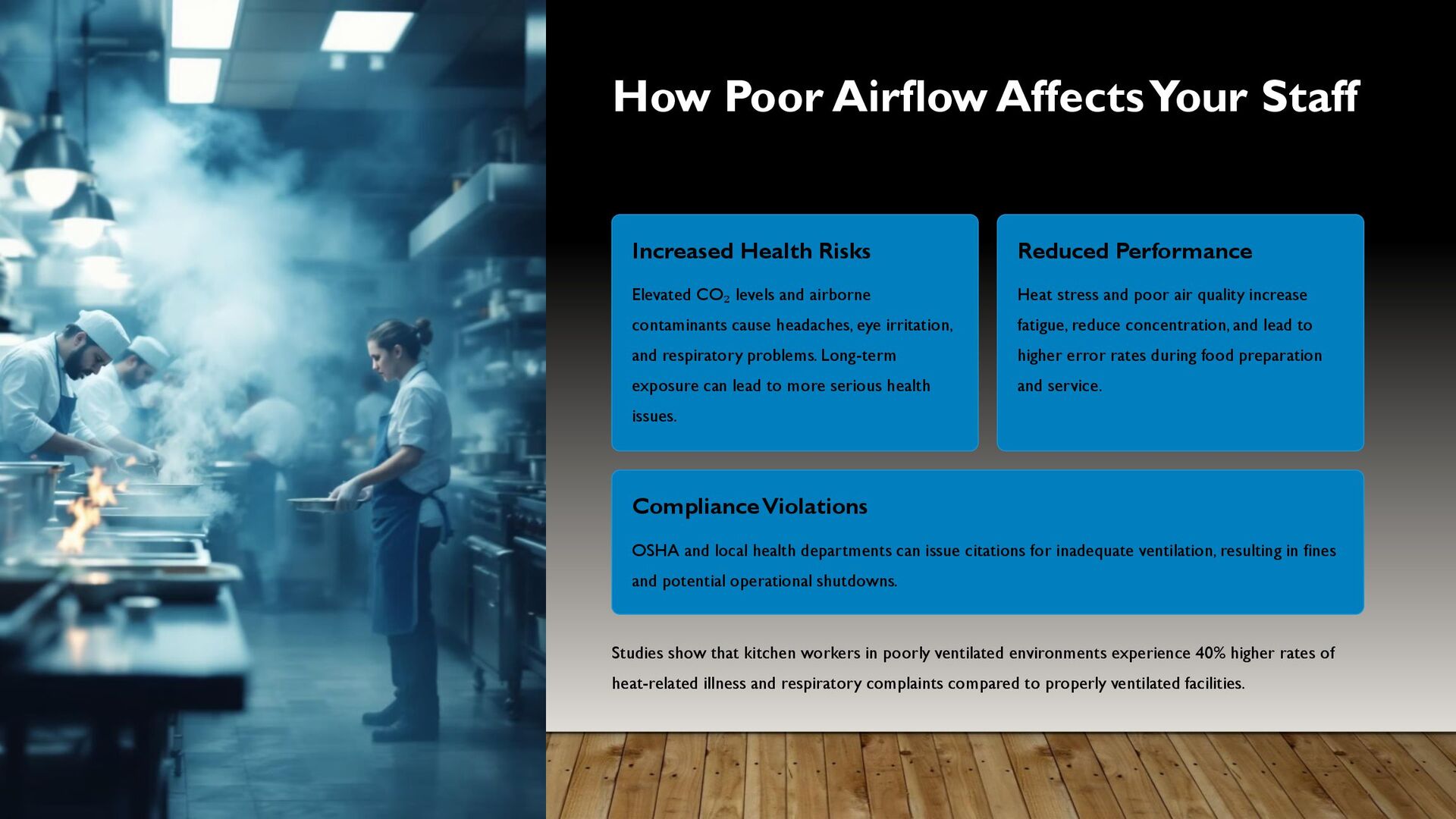
  6. How Poor Airflow Affects Your Staff Increased Health Risks Elevated

    CO₂ levels and airborne contaminants cause headaches, eye irritation, and respiratory problems. Long-term exposure can lead to more serious health issues. Reduced Performance Heat stress and poor air quality increase fatigue, reduce concentration, and lead to higher error rates during food preparation and service. Compliance Violations OSHA and local health departments can issue citations for inadequate ventilation, resulting in fines and potential operational shutdowns. Studies show that kitchen workers in poorly ventilated environments experience 40% higher rates of heat-related illness and respiratory complaints compared to properly ventilated facilities.
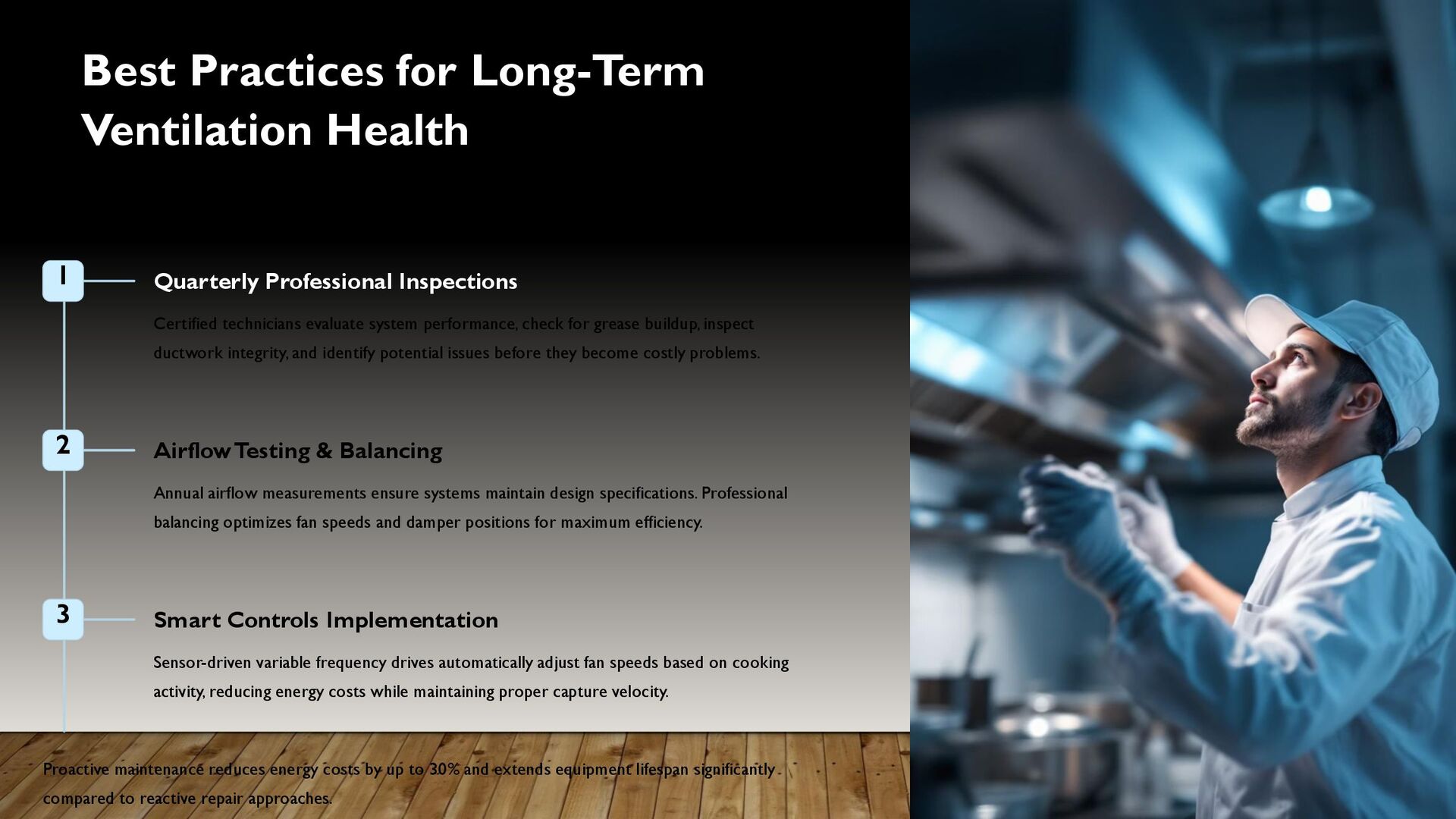
  7. Best Practices for Long-Term Ventilation Health 1 Quarterly Professional Inspections

    Certified technicians evaluate system performance, check for grease buildup, inspect ductwork integrity, and identify potential issues before they become costly problems. 2 Airflow Testing & Balancing Annual airflow measurements ensure systems maintain design specifications. Professional balancing optimizes fan speeds and damper positions for maximum efficiency. 3 Smart Controls Implementation Sensor-driven variable frequency drives automatically adjust fan speeds based on cooking activity, reducing energy costs while maintaining proper capture velocity. Proactive maintenance reduces energy costs by up to 30% and extends equipment lifespan significantly compared to reactive repair approaches.
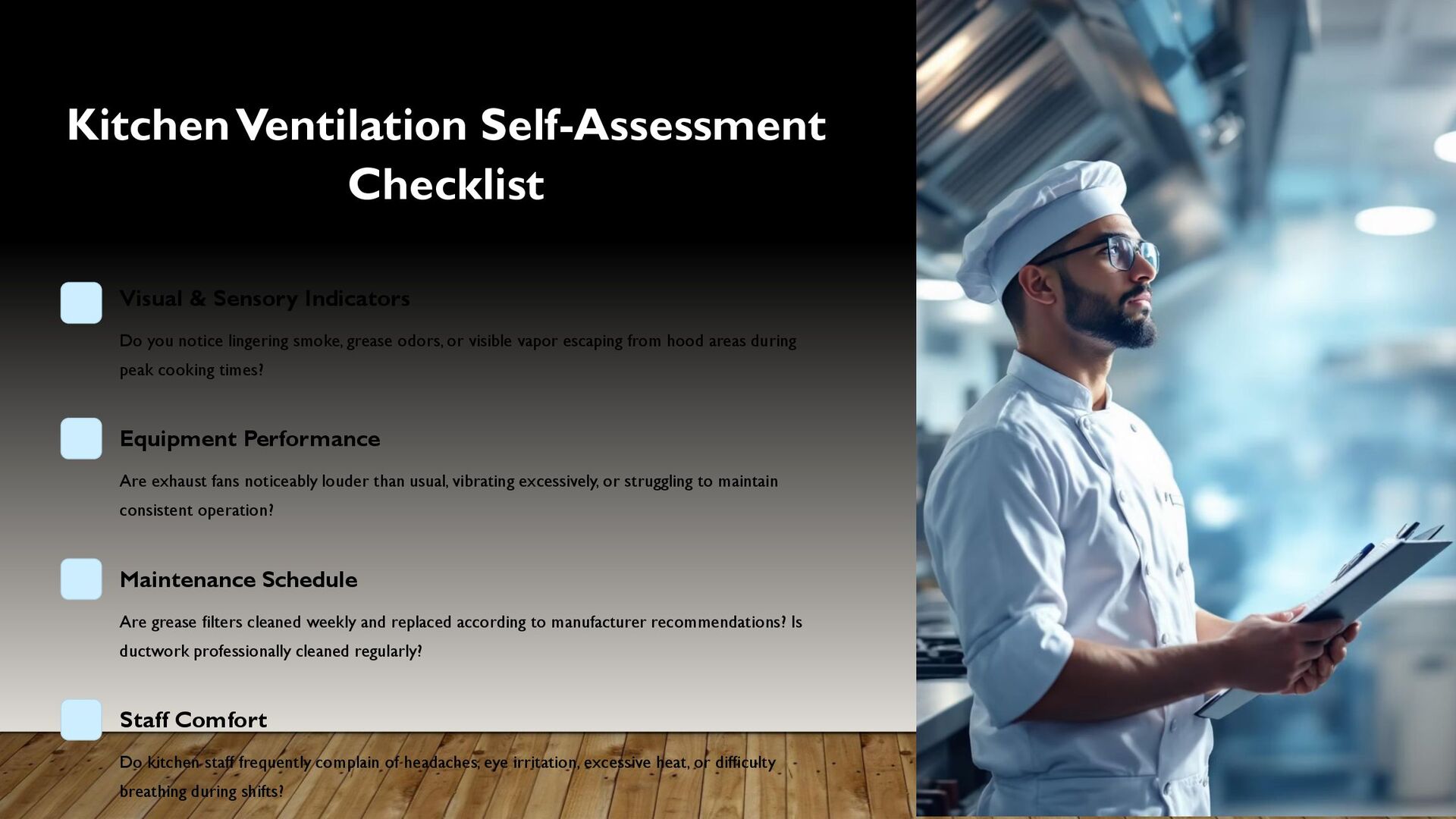
  8. Kitchen Ventilation Self-Assessment Checklist Visual & Sensory Indicators Do you

    notice lingering smoke, grease odors, or visible vapor escaping from hood areas during peak cooking times? Equipment Performance Are exhaust fans noticeably louder than usual, vibrating excessively, or struggling to maintain consistent operation? Maintenance Schedule Are grease filters cleaned weekly and replaced according to manufacturer recommendations? Is ductwork professionally cleaned regularly? Staff Comfort Do kitchen staff frequently complain of headaches, eye irritation, excessive heat, or difficulty breathing during shifts?
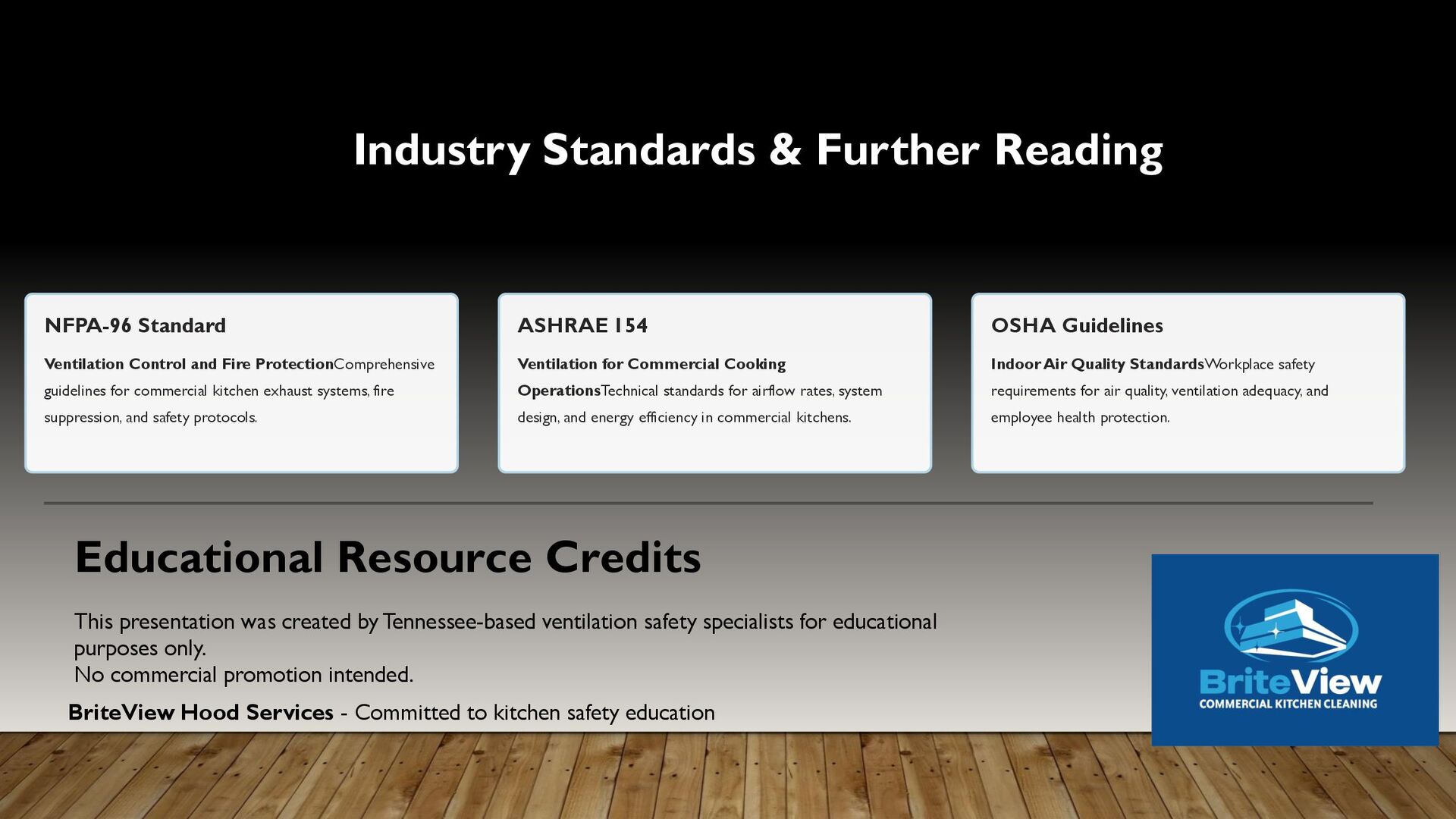
  9. Industry Standards & Further Reading NFPA-96 Standard Ventilation Control and

    Fire ProtectionComprehensive guidelines for commercial kitchen exhaust systems, fire suppression, and safety protocols. OSHA Guidelines Indoor Air Quality StandardsWorkplace safety requirements for air quality, ventilation adequacy, and employee health protection. ASHRAE 154 Ventilation for Commercial Cooking OperationsTechnical standards for airflow rates, system design, and energy efficiency in commercial kitchens. Educational Resource Credits This presentation was created by Tennessee-based ventilation safety specialists for educational purposes only. No commercial promotion intended. BriteView Hood Services - Committed to kitchen safety education
  10. Contact Information Need Expert Guidance? For additional educational materials, system

    evaluations, or professional ventilation services, contact our Tennessee-based team of certified specialists. This comprehensive guide is provided for educational purposes only to promote safer commercial kitchen operations. BriteView Hood Services Mt. Juliet, Tennessee www.briteviewhoodservices.com [email protected] Your trusted partner in commercial kitchen safety and ventilation excellence.