Share
Embed
Git
Presented at GR Dev Day 2013. View corresponding shell sessions at http://brondsema.net/presentations/grdevday-git/
Dave Brondsema
March 02, 2013
Transcript
21 slides
-
Git - the stupid content tracker Dave Brondsema SourceForge right
from the manual distributed vcs -
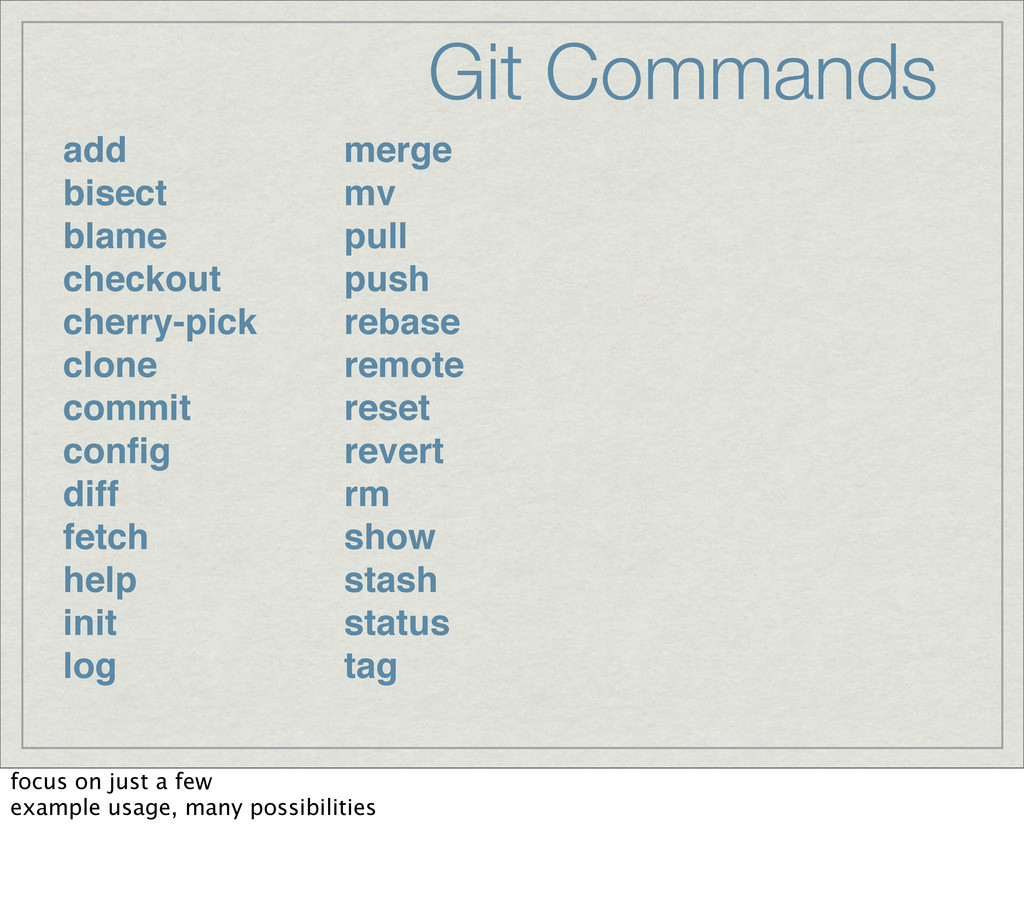
Git Commands add am archive bisect branch bundle checkout cherry-pick
citool clean clone commit describe diff fetch format-patch gc grep gui init log merge mv notes pull push rebase reset revert rm shortlog show stash status submodule tag gitk config fast-export fast-import filter-branch lost-found mergetool pack-refs prune reflog relink remote repack replace repo-config annotate blame cherry count-objects difftool fsck get-tar-commit-id help instaweb merge-tree rerere rev-parse show-branch verify-tag whatchanged archimport cvsexportcommit cvsimport cvsserver imap-send quiltimport request-pull send-email svn apply checkout-index commit-tree hash-object index-pack merge-file merge-index mktag mktree pack-objects prune-packed read-tree symbolic-ref unpack-objects update-index update-ref write-tree cat-file diff-files diff-index diff-tree for-each-ref ls-files ls-remote ls-tree merge-base name-rev pack-redundant rev-list show-index show-ref tar-tree unpack-file var verify-pack daemon fetch-pack http-backend send-pack update-server-info http-fetch http-push parse-remote receive-pack shell upload-archive upload-pack check-attr check-ref-format fmt-merge-msg mailinfo mailsplit merge-one-file patch-id peek-remote sh-setup stripspace ...also extremely powerful "porcelain", "plumbing" i don't know them all learning curve -
Git Commands add bisect blame checkout cherry-pick clone commit config
diff fetch help init log merge mv pull push rebase remote reset revert rm show stash status tag focus on just a few example usage, many possibilities -
Start git init OR git clone ... clone is really
a clone - you get it all, locally then you work locally. In contrast with SVN, you only push & pull when you specifically say so -
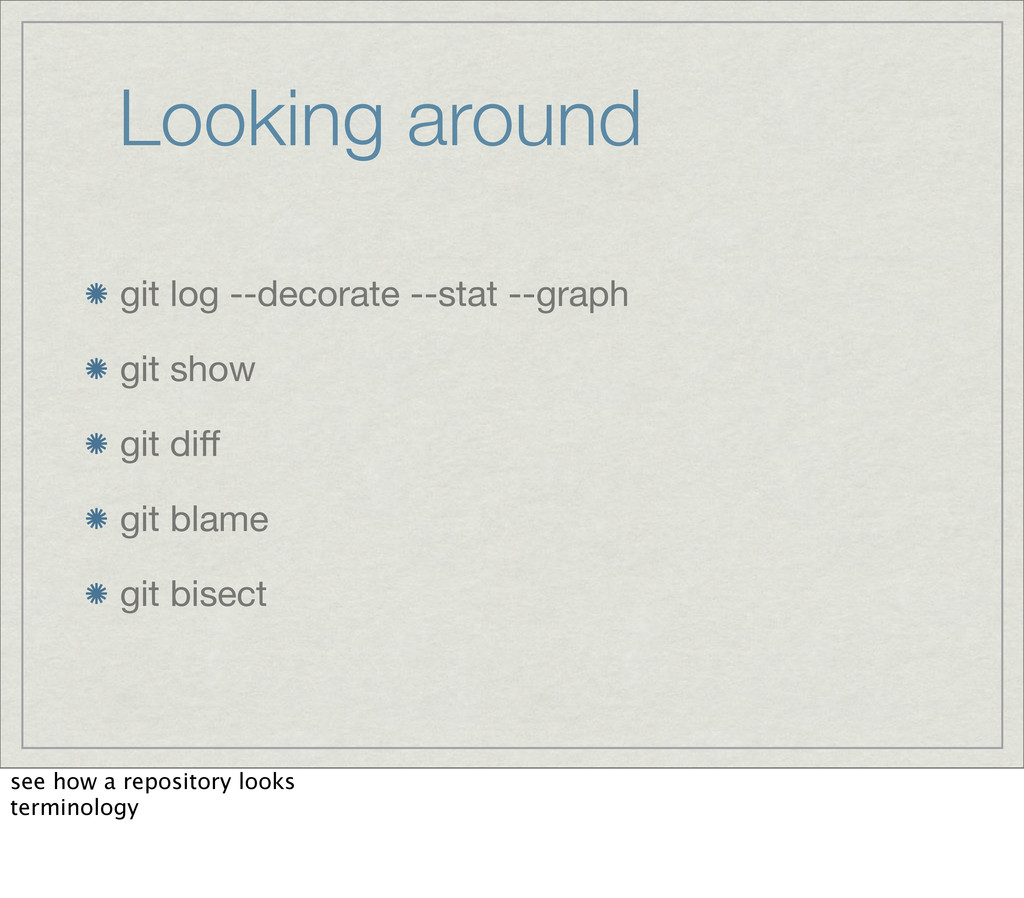
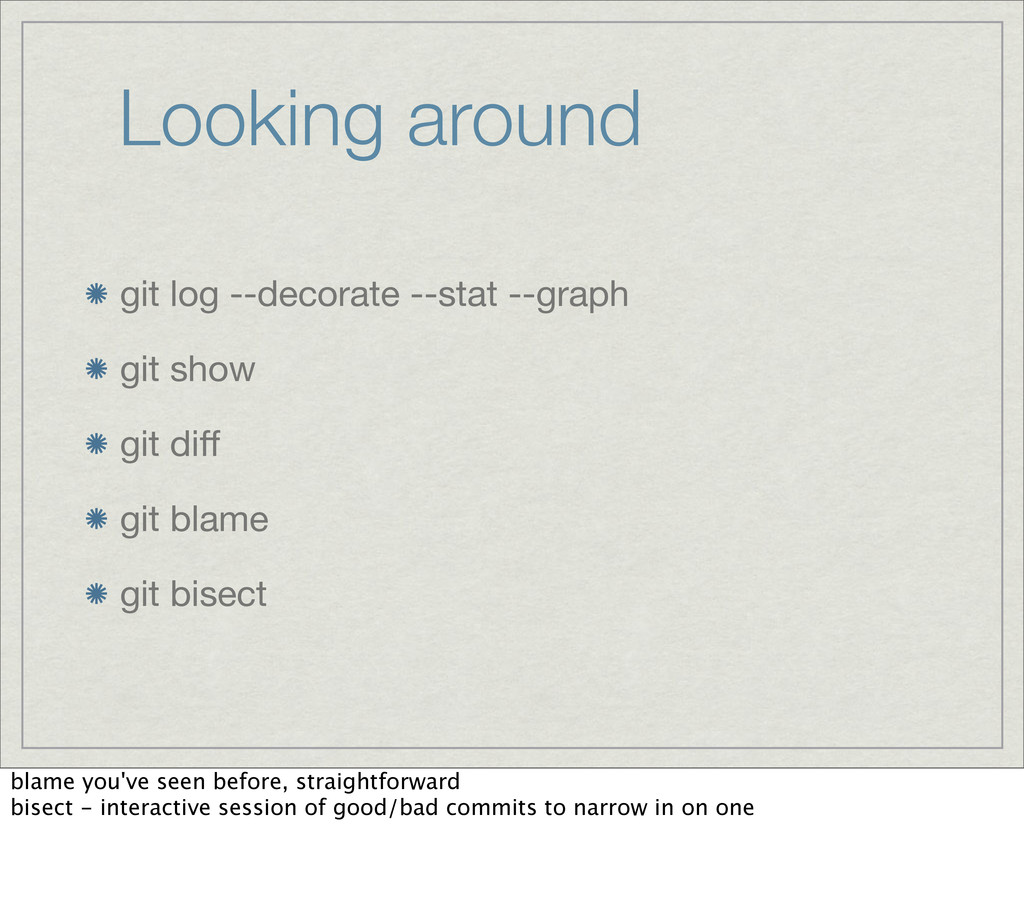
Looking around git log --decorate --stat --graph git show git
diff git blame git bisect see how a repository looks terminology -
HEAD -> where you're currently at branches. "master" is the
main one, by convention tags are just names for commits gitk, other guis -
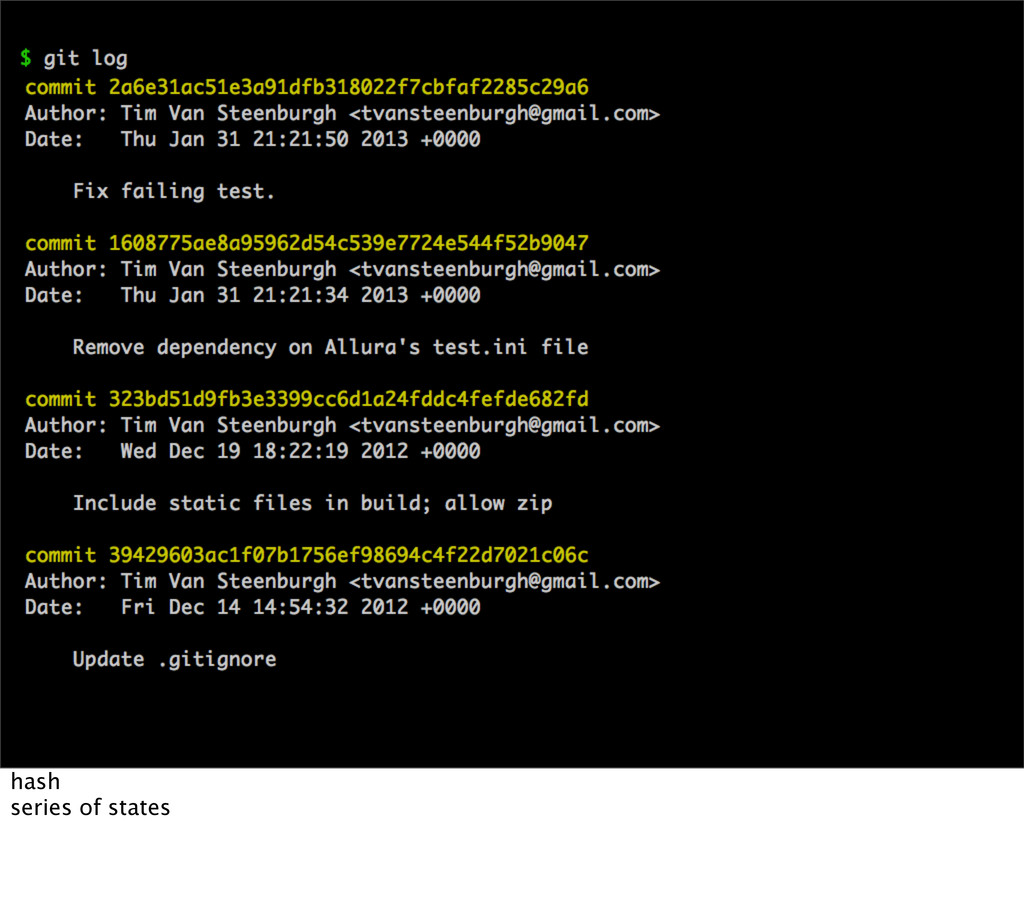
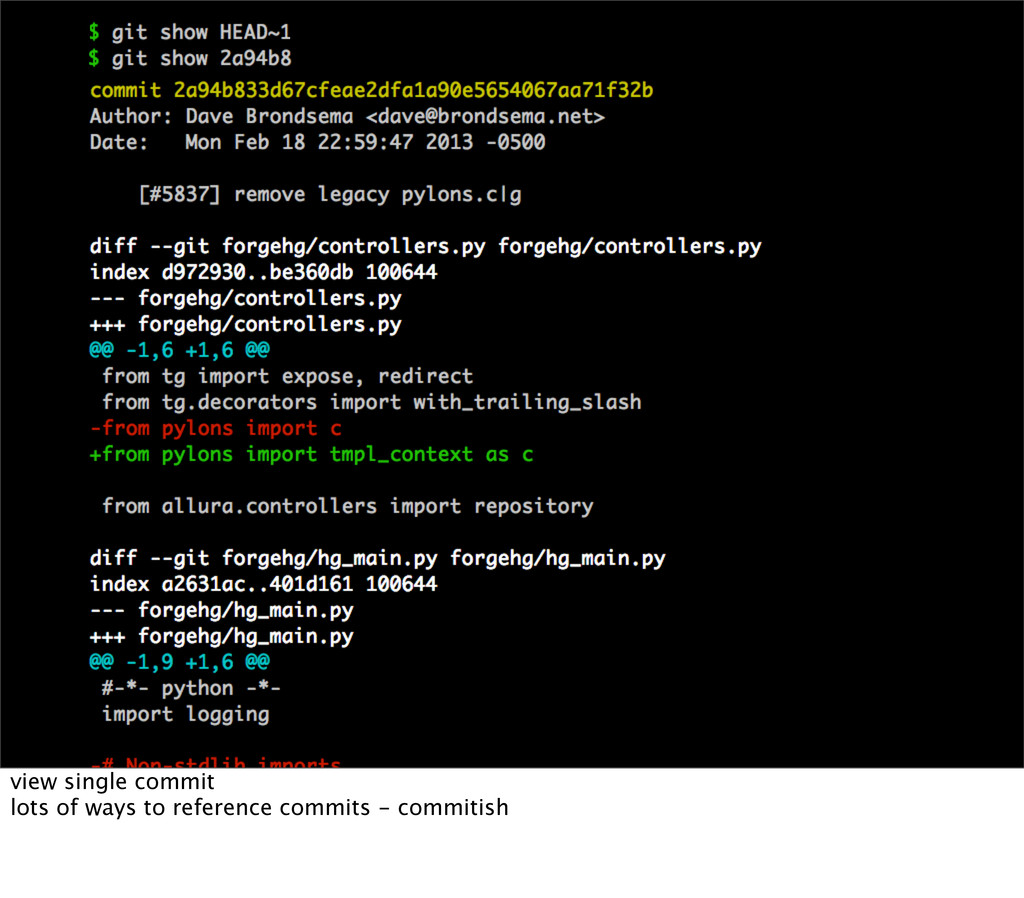
lots of ways to display it short hash diff is
very flexible, commitish, symbolic, etc -
Looking around git log --decorate --stat --graph git show git
diff git blame git bisect blame you've seen before, straightforward bisect - interactive session of good/bad commits to narrow in on one -
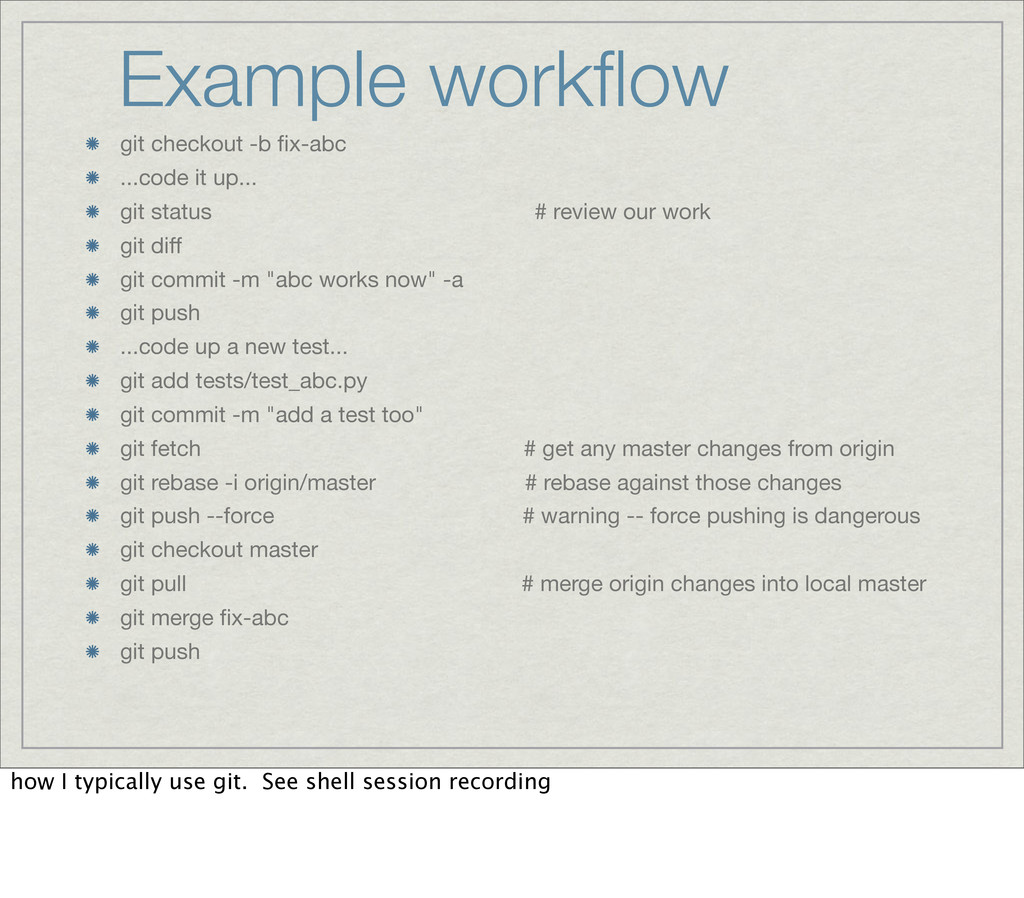
Example workflow git checkout -b fix-abc ...code it up... git
status # review our work git diff git commit -m "abc works now" -a git push ...code up a new test... git add tests/test_abc.py git commit -m "add a test too" git fetch # get any master changes from origin git rebase -i origin/master # rebase against those changes git push --force # warning -- force pushing is dangerous git checkout master git pull # merge origin changes into local master git merge fix-abc git push how I typically use git. See shell session recording -
Rebase vs Merge Some people like to keep merge commits
when branches come in to master Show shell recording warning - reverting a merge, then re-merging it is tricky -
Bonus git cherry-pick [commit-ish] git stash [...] git revert [commit-ish]
git commit --patch move individual commits around quickly move changes aside - but why not commit? revert - you can't go back in time (not without destroying stuff) - instead, new commit which is reverse of prior commit commit chunks at a time, make separate cohesive commits -
Bonus: searching history git log [-p] --grep word-in-commit-message git log
[-p] -G word-in-diff git log [-p] -S word-added-or-removed -
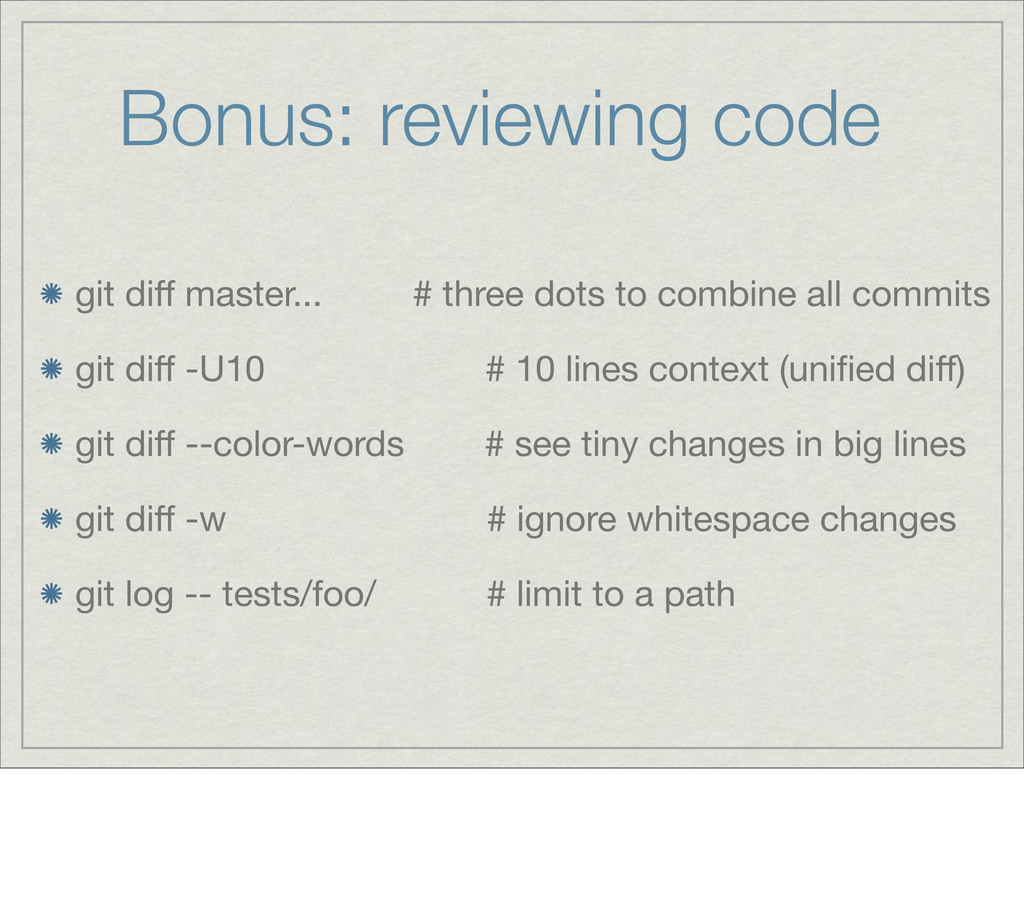
Bonus: reviewing code git diff master... # three dots to
combine all commits git diff -U10 # 10 lines context (unified diff) git diff --color-words # see tiny changes in big lines git diff -w # ignore whitespace changes git log -- tests/foo/ # limit to a path -
Bonus: fixing mistakes git checkout path/file.ext # reset file to
last commit git reset [...] # various types, soft, hard git rebase --abort # quit a rebase git merge --abort # quit a pull with conflicts "checkout" is overloaded :( a pull is a fetch+merge, conflicts mean somebody force-pushed, need to use reset