Upgrade to Pro — share decks privately, control downloads, hide ads and more …

Subtitles vs AI Dubbing for Learning from YouTube

Chris
October 27, 2026

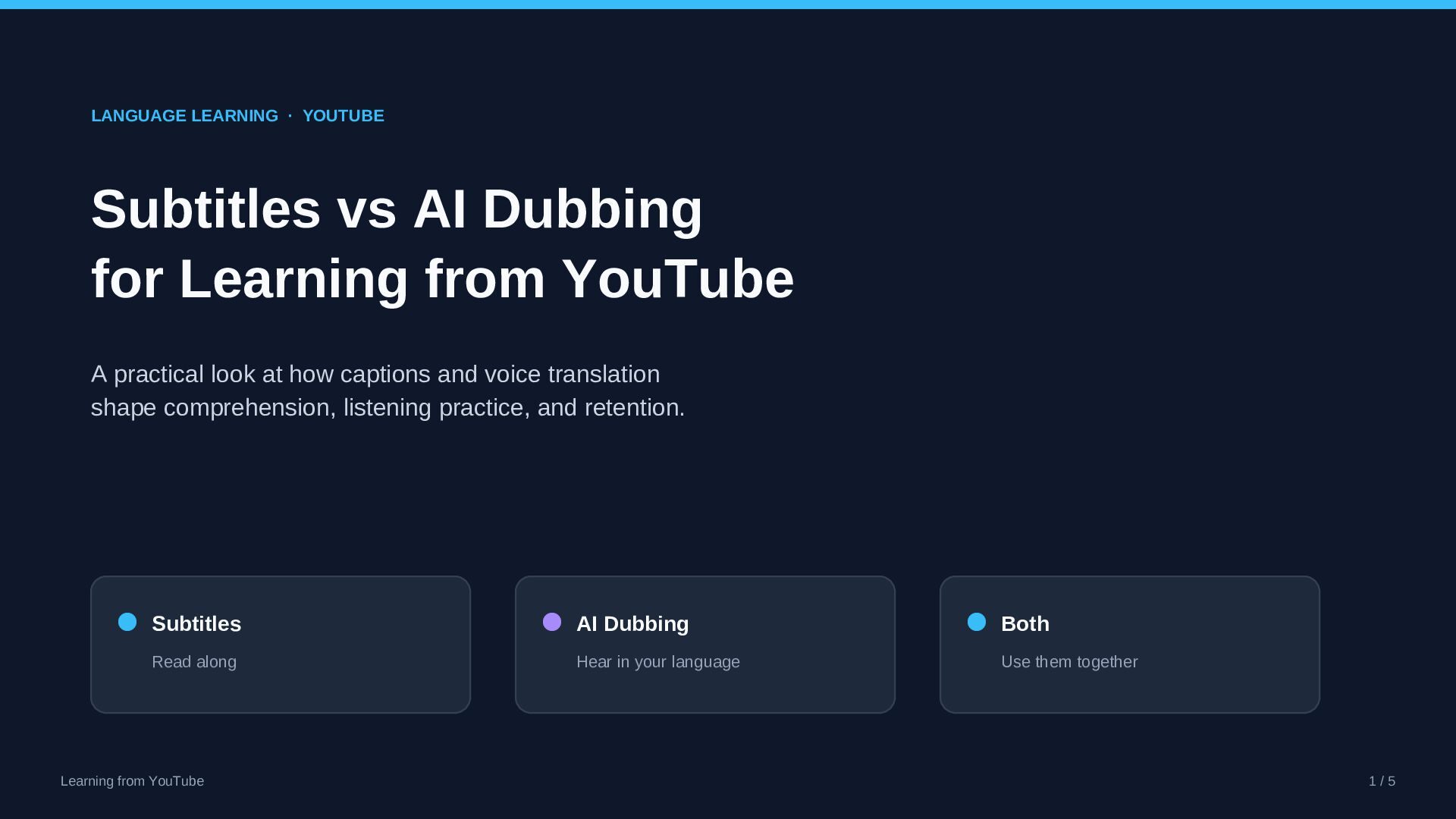
Subtitles vs AI Dubbing for Learning from YouTube

A practical look at how captions and voice translation shape comprehension, listening practice, and retention when you learn from recorded YouTube lessons.

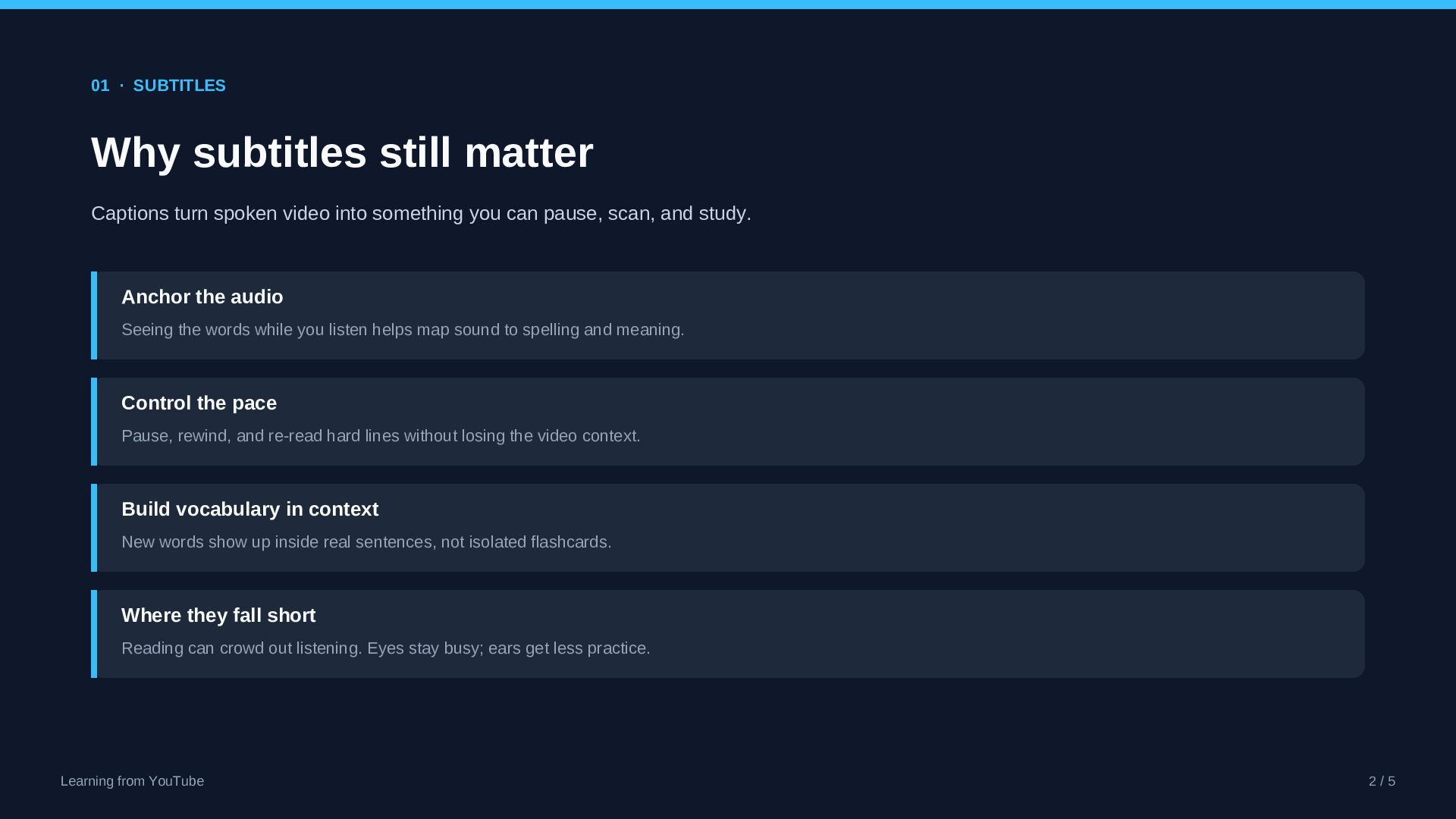
Subtitles still matter: they anchor audio to spelling, let you pause a hard line, and put new words inside real sentences. The limit is that reading can crowd out listening.

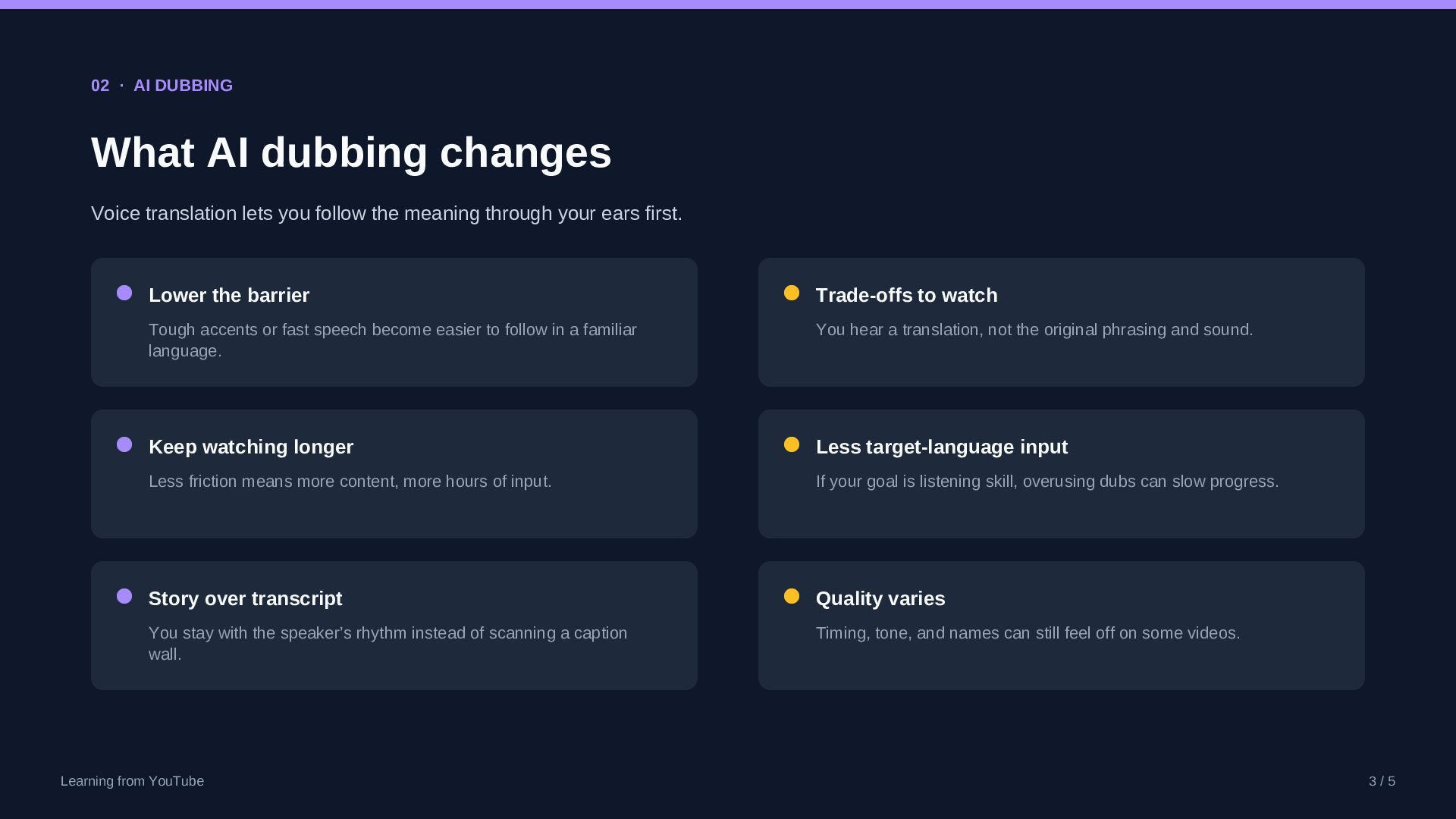
AI dubbing lets you follow the meaning through your ears first. That helps with fast speech, but you hear a translation rather than the original sound, so it is a weak default if the goal is listening skill.

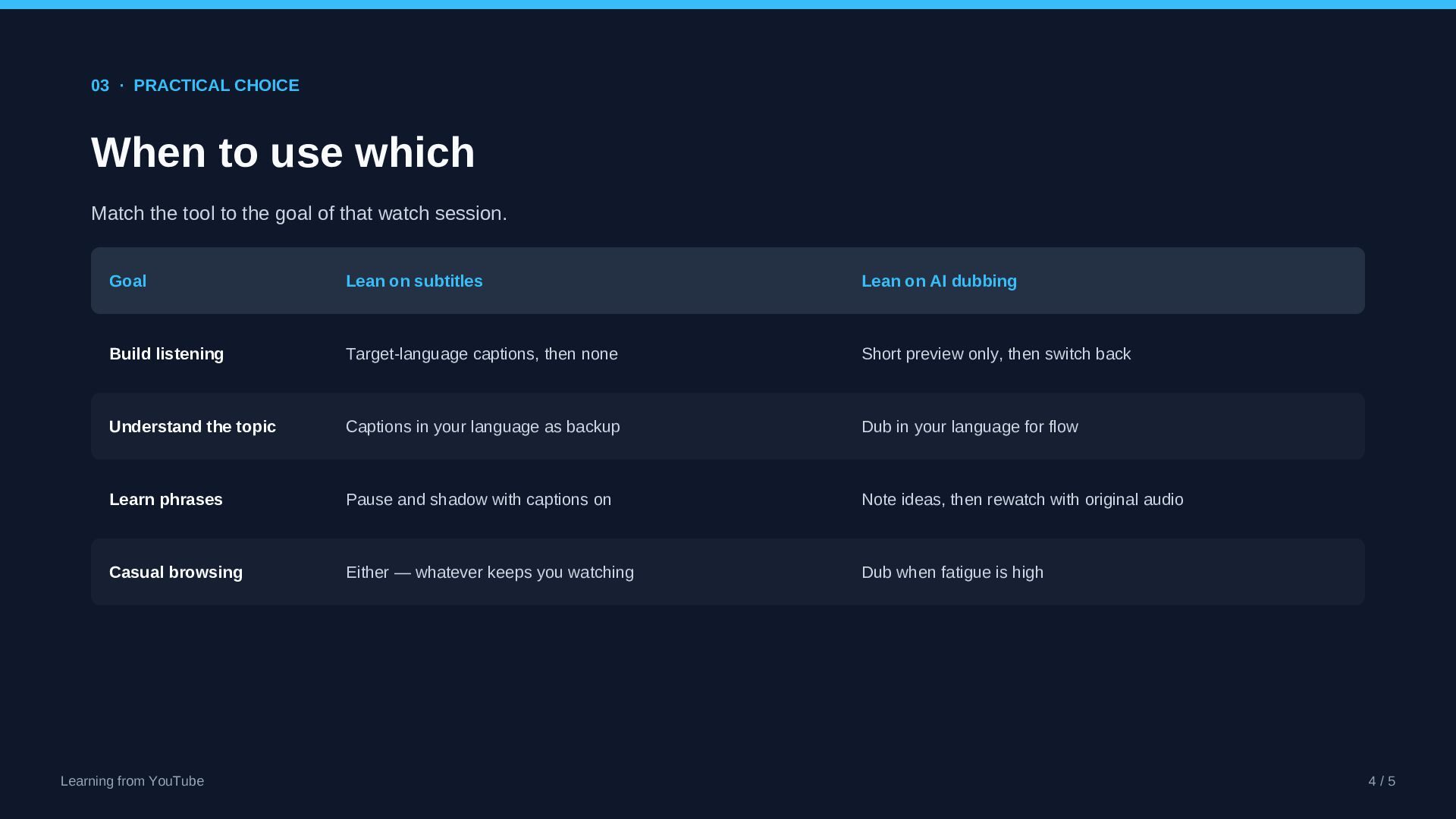
A simple rule: captions when you want to build listening; a spoken dub when you want to understand the topic or finish a long talk. Switch back to the original audio for a sentence you need verbatim. This setup is for recorded videos, not live streams.

If you want to try AI dubbing on YouTube videos yourself, EarDub is one option: https://www.eardub.com

Disclosure: I work on EarDub.

Chris

October 27, 2026

Transcript

5 slides
  1. LANGUAGE LEARNING · YOUTUBE Subtitles vs AI Dubbing for Learning

    from YouTube A practical look at how captions and voice translation shape comprehension, listening practice, and retention. Subtitles AI Dubbing Both Read along Hear in your language Use them together Learning from YouTube 1/5
  2. 01 · SUBTITLES Why subtitles still matter Captions turn spoken

    video into something you can pause, scan, and study. Anchor the audio Seeing the words while you listen helps map sound to spelling and meaning. Control the pace Pause, rewind, and re-read hard lines without losing the video context. Build vocabulary in context New words show up inside real sentences, not isolated flashcards. Where they fall short Reading can crowd out listening. Eyes stay busy; ears get less practice. Learning from YouTube 2/5
  3. 02 · AI DUBBING What AI dubbing changes Voice translation

    lets you follow the meaning through your ears first. Lower the barrier Trade-offs to watch Tough accents or fast speech become easier to follow in a familiar language. You hear a translation, not the original phrasing and sound. Keep watching longer Less target-language input Less friction means more content, more hours of input. If your goal is listening skill, overusing dubs can slow progress. Story over transcript Quality varies You stay with the speaker’s rhythm instead of scanning a caption wall. Timing, tone, and names can still feel off on some videos. Learning from YouTube 3/5
  4. 03 · PRACTICAL CHOICE When to use which Match the

    tool to the goal of that watch session. Goal Lean on subtitles Lean on AI dubbing Build listening Target-language captions, then none Short preview only, then switch back Understand the topic Captions in your language as backup Dub in your language for flow Learn phrases Pause and shadow with captions on Note ideas, then rewatch with original audio Casual browsing Either — whatever keeps you watching Dub when fatigue is high Learning from YouTube 4/5
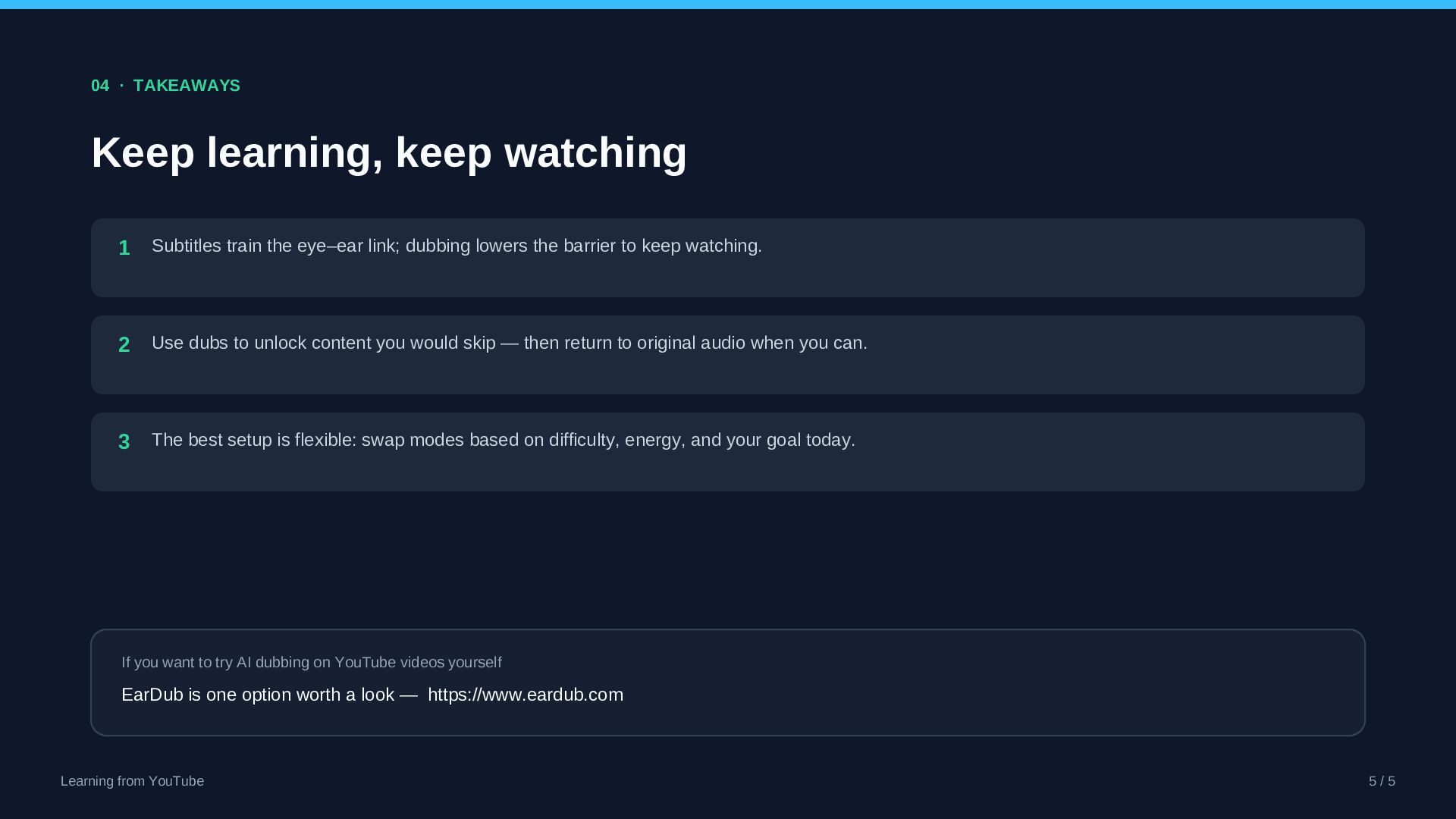
  5. 04 · TAKEAWAYS Keep learning, keep watching 1 Subtitles train

    the eye–ear link; dubbing lowers the barrier to keep watching. 2 Use dubs to unlock content you would skip — then return to original audio when you can. 3 The best setup is flexible: swap modes based on difficulty, energy, and your goal today. If you want to try AI dubbing on YouTube videos yourself EarDub is one option worth a look — https://www.eardub.com Learning from YouTube 5/5

Other Decks in Education