Upgrade to Pro — share decks privately, control downloads, hide ads and more …

7 Ways to Fail at Building a Platform

7 Ways to Fail at Building a Platform

Avatar for Coté

Coté PRO

February 02, 2026
Tweet

Resources

DIY Plattform Pitfalls

https://cote.io/diy/

The white paper this talk is based on.

TryTanzu.ai

https://trytanzu.ai

A platform you can buy that's running thousands of apps at large organizations right now. It has AI stuff too.

More Decks by Coté

Other Decks in Technology

Transcript

  1. 2

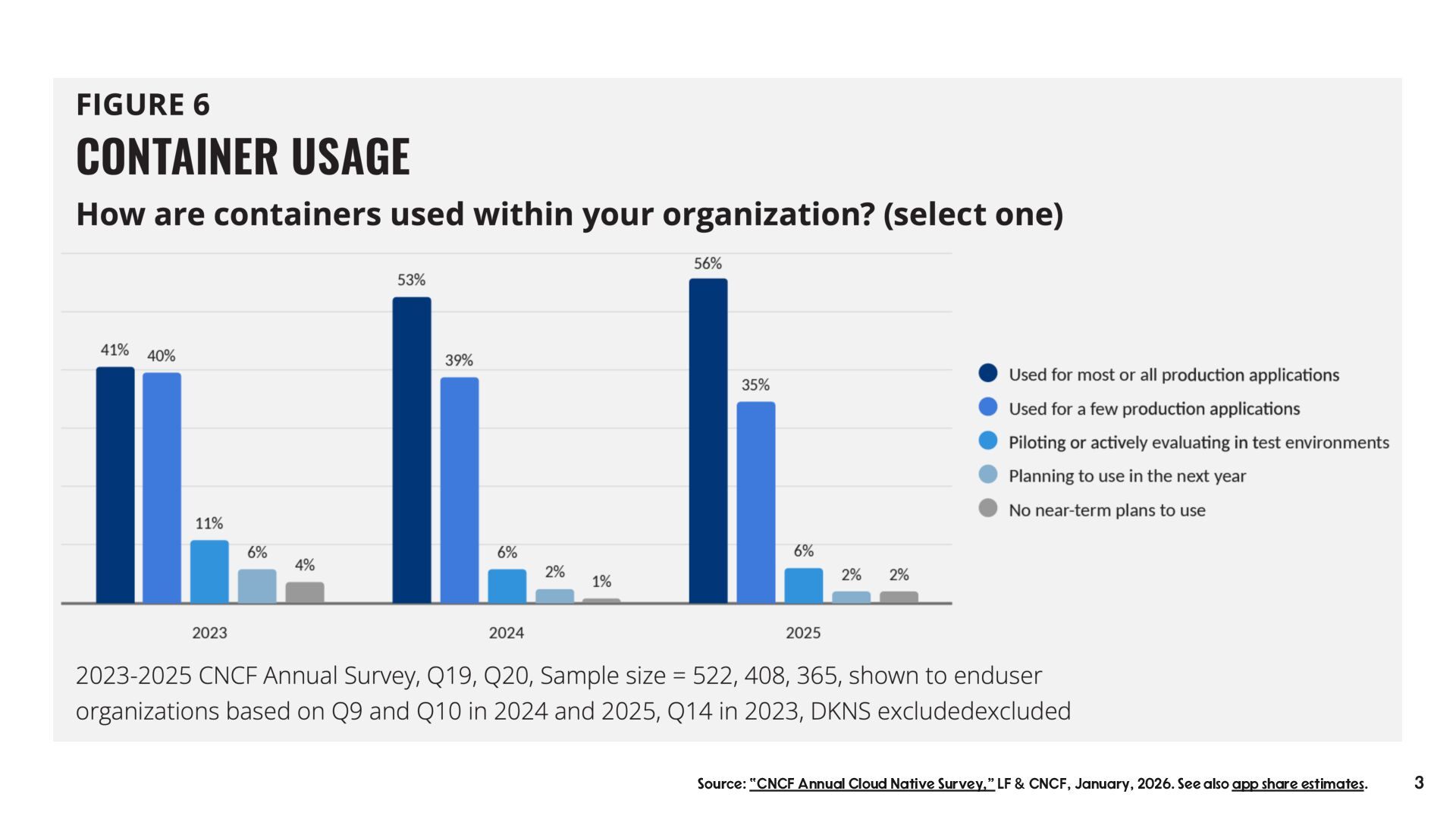
  2. 3 Source: “CNCF Annual Cloud Native Survey," LF & CNCF,

    January, 2026. See also app share estimates.
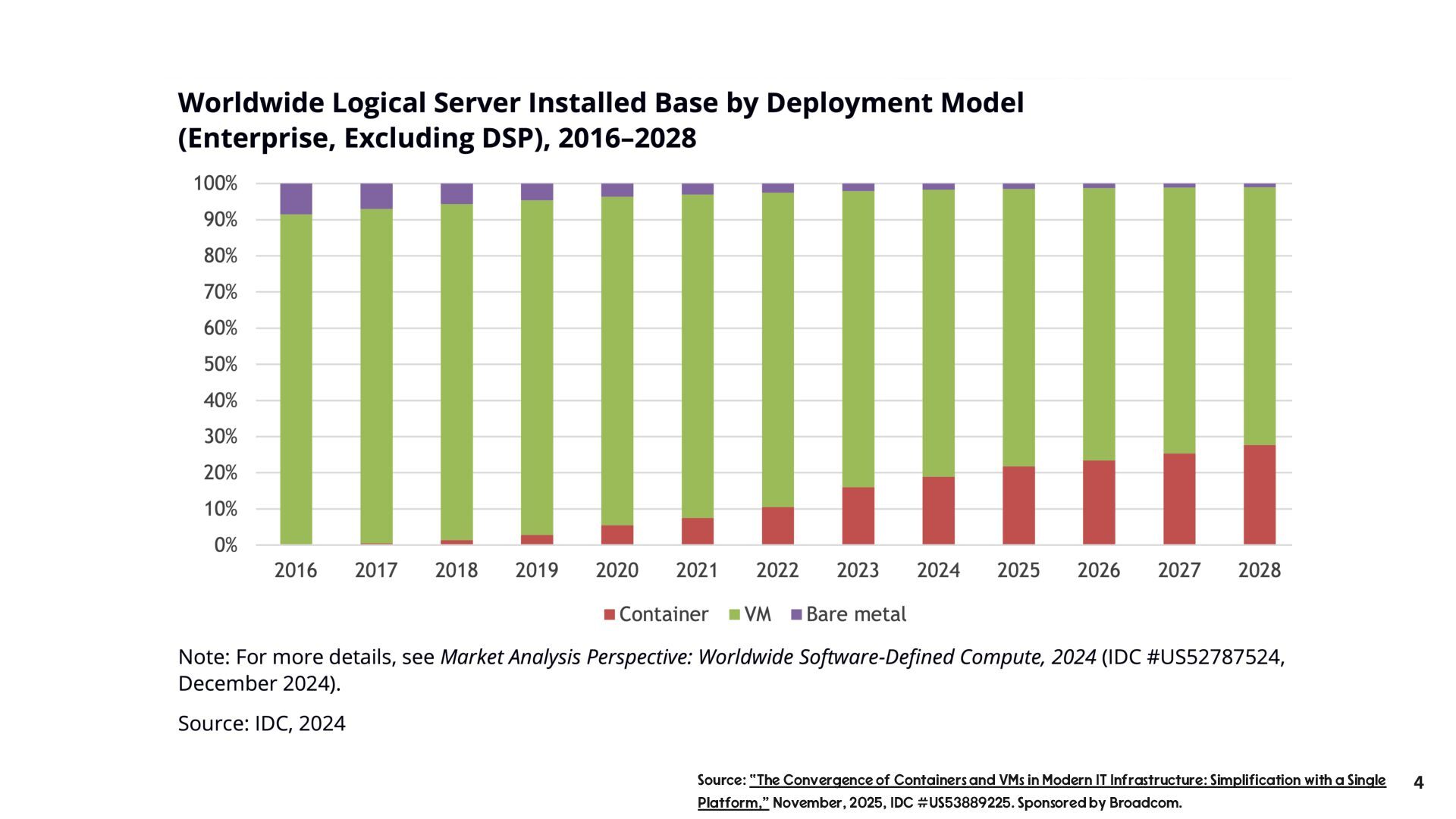
  3. 4 Source: “The Convergence of Containers and VMs in Modern

    IT Infrastructure: Simplification with a Single Platform," November, 2025, IDC #US53889225. Sponsored by Broadcom.
  4. 5 [B]y 2027, 80% of large organizations will embrace platform

    engineering to successfully scale DevOps initiatives in hybrid cloud environments — up from less than 30% in 2023.” Gartner, 2025. “
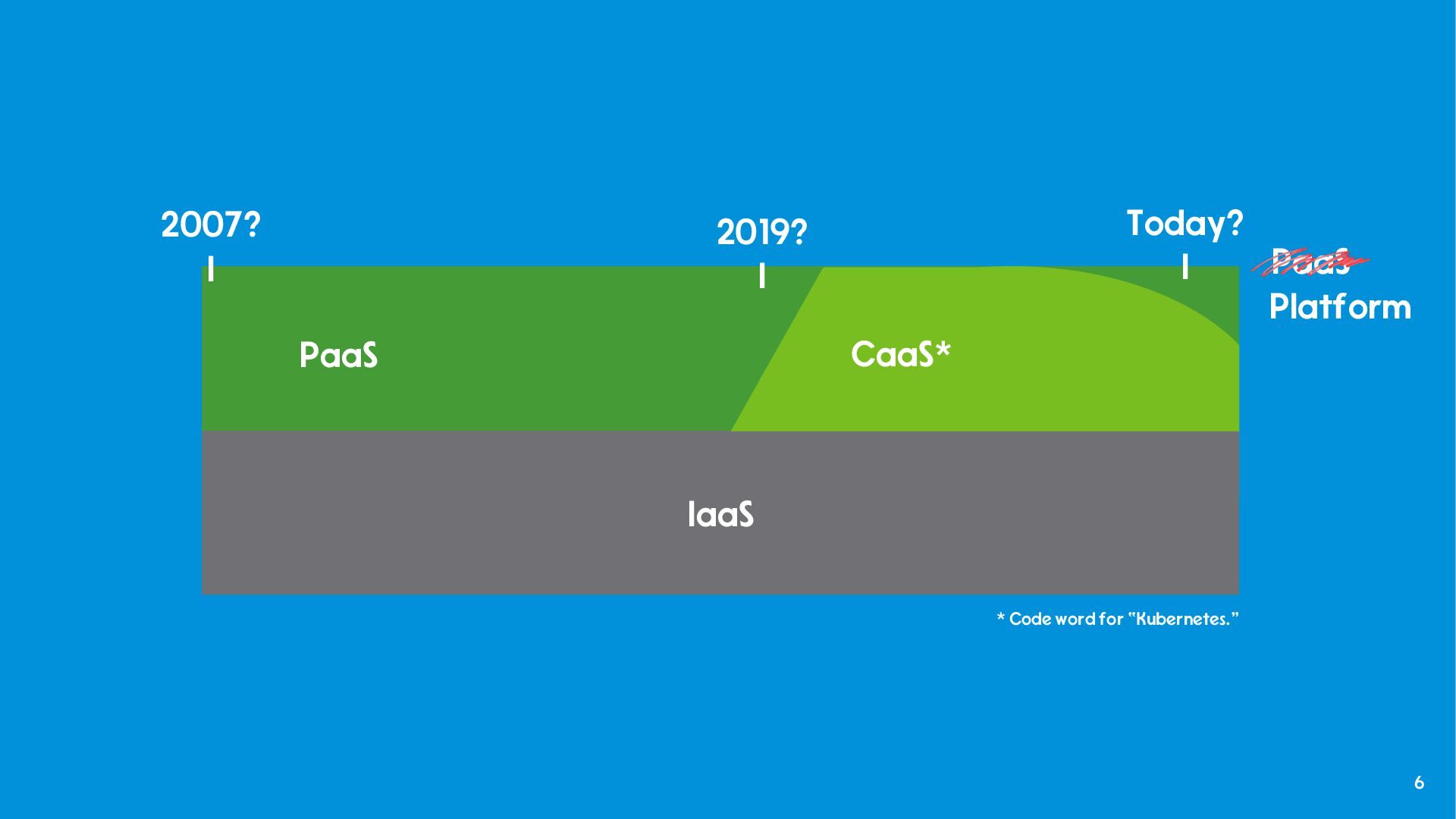
  5. 6 PaaS IaaS 2019? I 2007? I Today? I CaaS*

    PaaS Platform * Code word for “Kubernetes.”
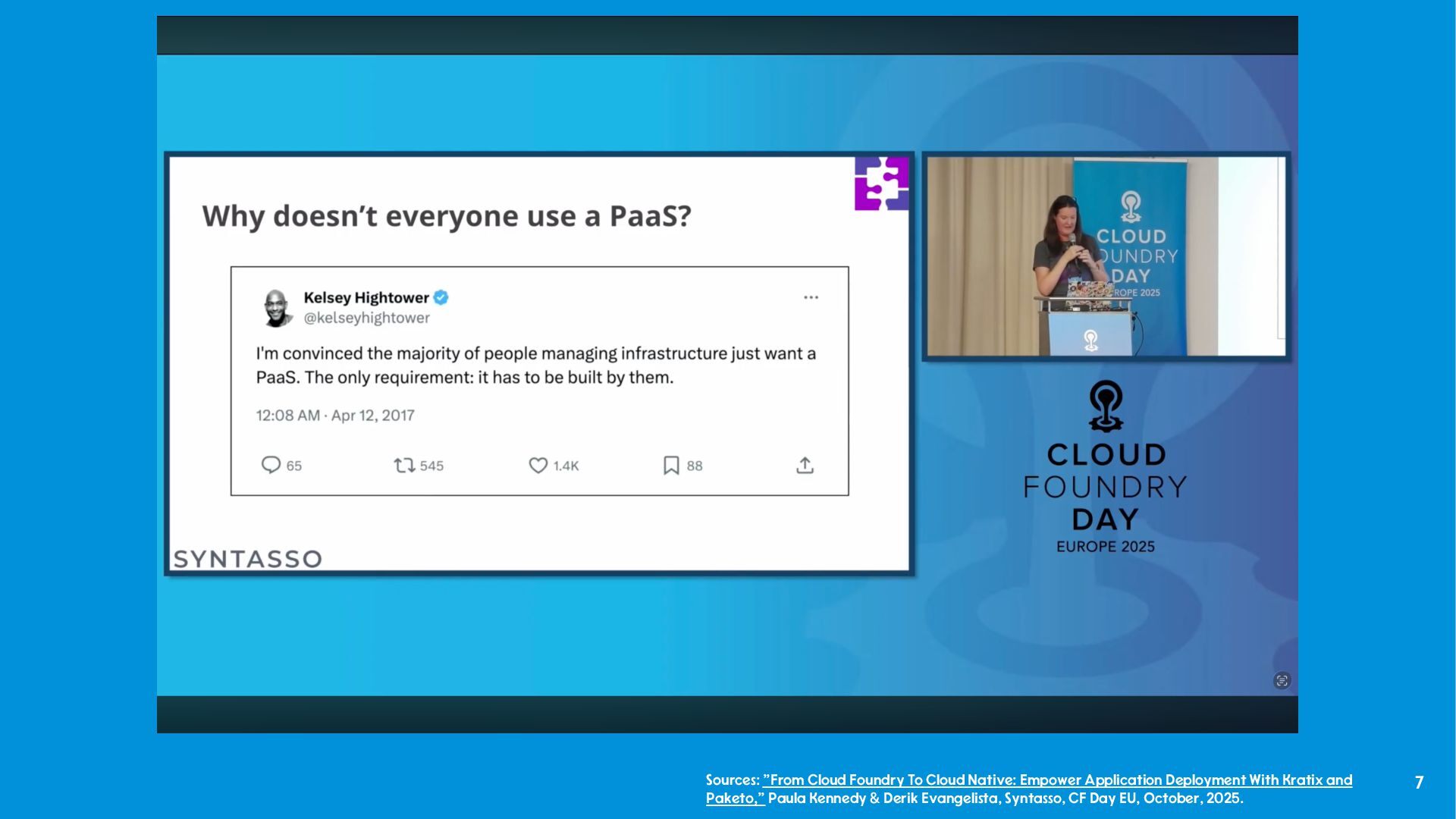
  6. 7 Sources: "From Cloud Foundry To Cloud Native: Empower Application

    Deployment With Kratix and Paketo," Paula Kennedy & Derik Evangelista, Syntasso, CF Day EU, October, 2025.
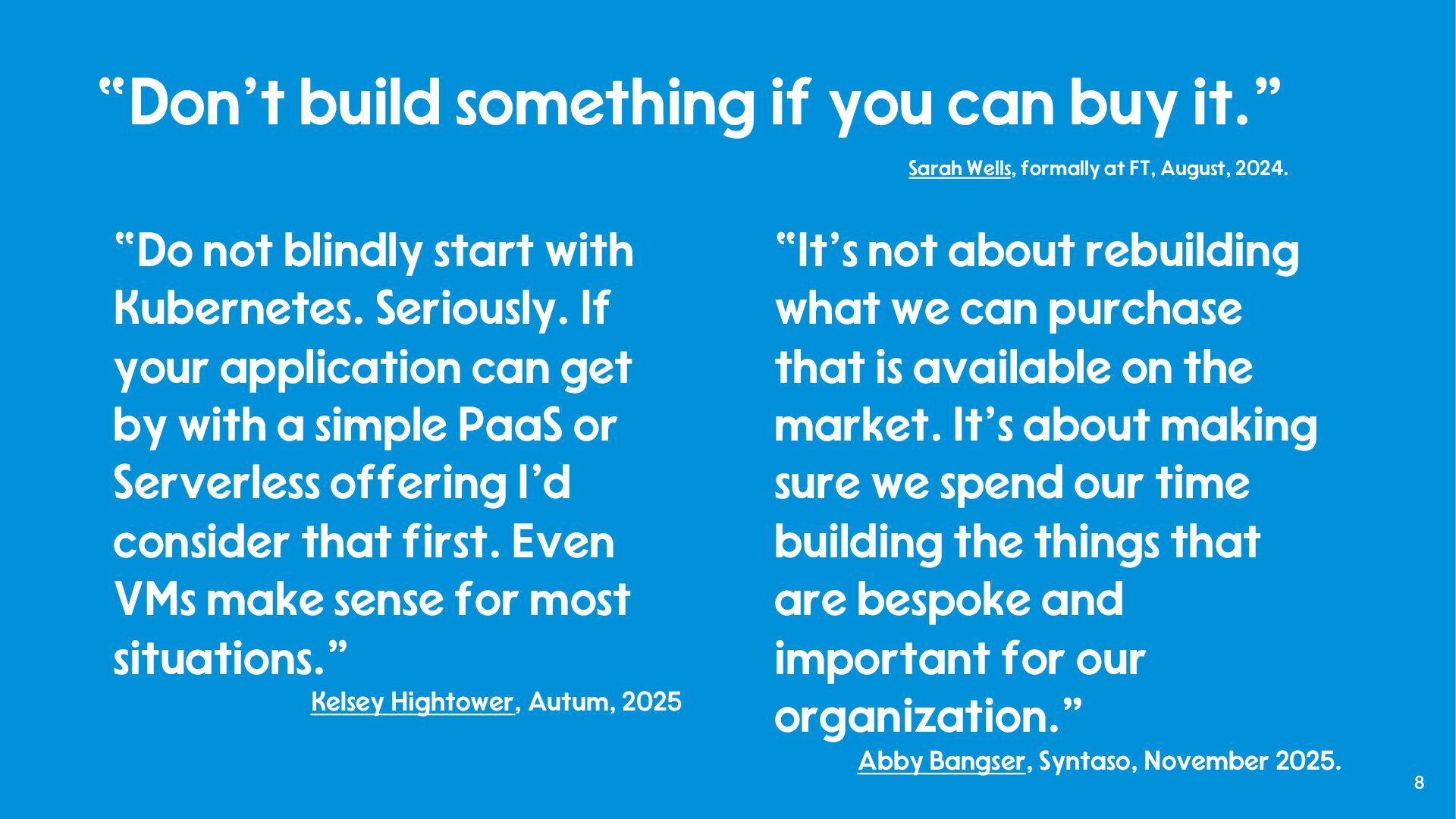
  7. 8 “Don’t build something if you can buy it.” Sarah

    Wells, formally at FT, August, 2024. “Do not blindly start with Kubernetes. Seriously. If your application can get by with a simple PaaS or Serverless offering I'd consider that first. Even VMs make sense for most situations.” Kelsey Hightower, Autum, 2025 “It's not about rebuilding what we can purchase that is available on the market. It's about making sure we spend our time building the things that are bespoke and important for our organization.” Abby Bangser, Syntaso, November 2025.
  8. 9

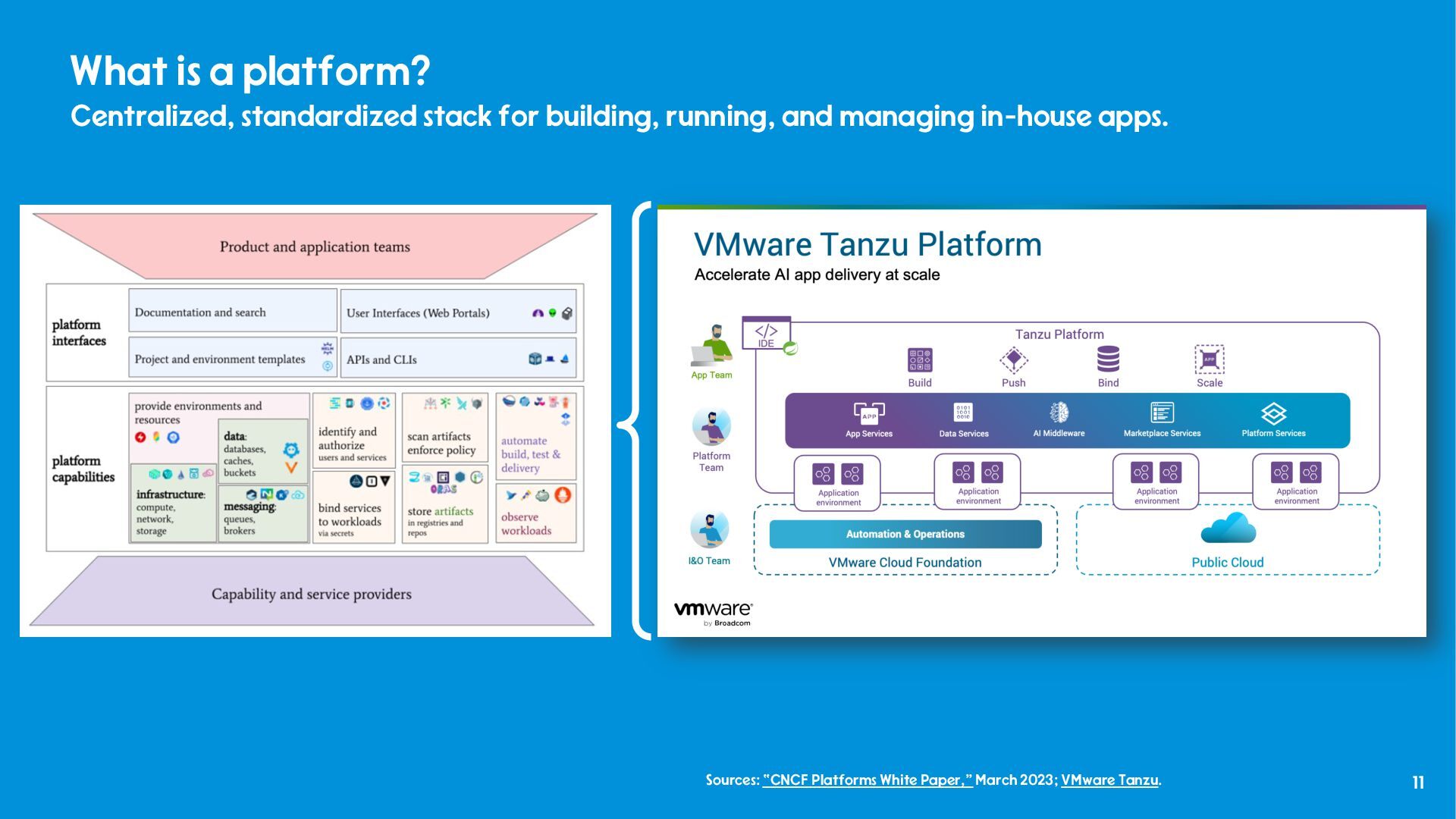
  9. 11 What is a platform? Sources: “CNCF Platforms White Paper,”

    March 2023; VMware Tanzu. Centralized, standardized stack for building, running, and managing in-house apps.
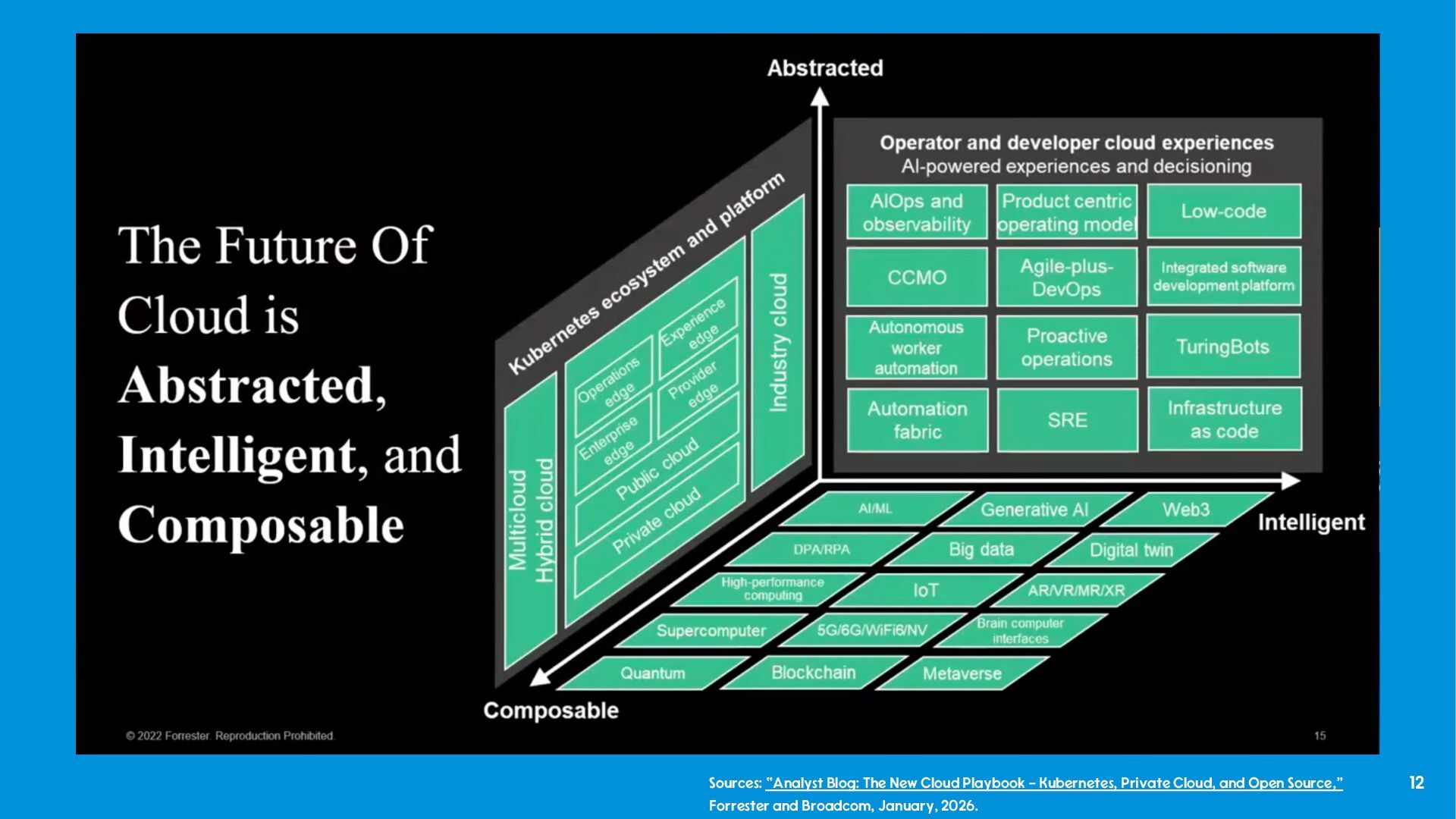
  10. 12 Sources: “Analyst Blog: The New Cloud Playbook – Kubernetes,

    Private Cloud, and Open Source,” Forrester and Broadcom, January, 2026.
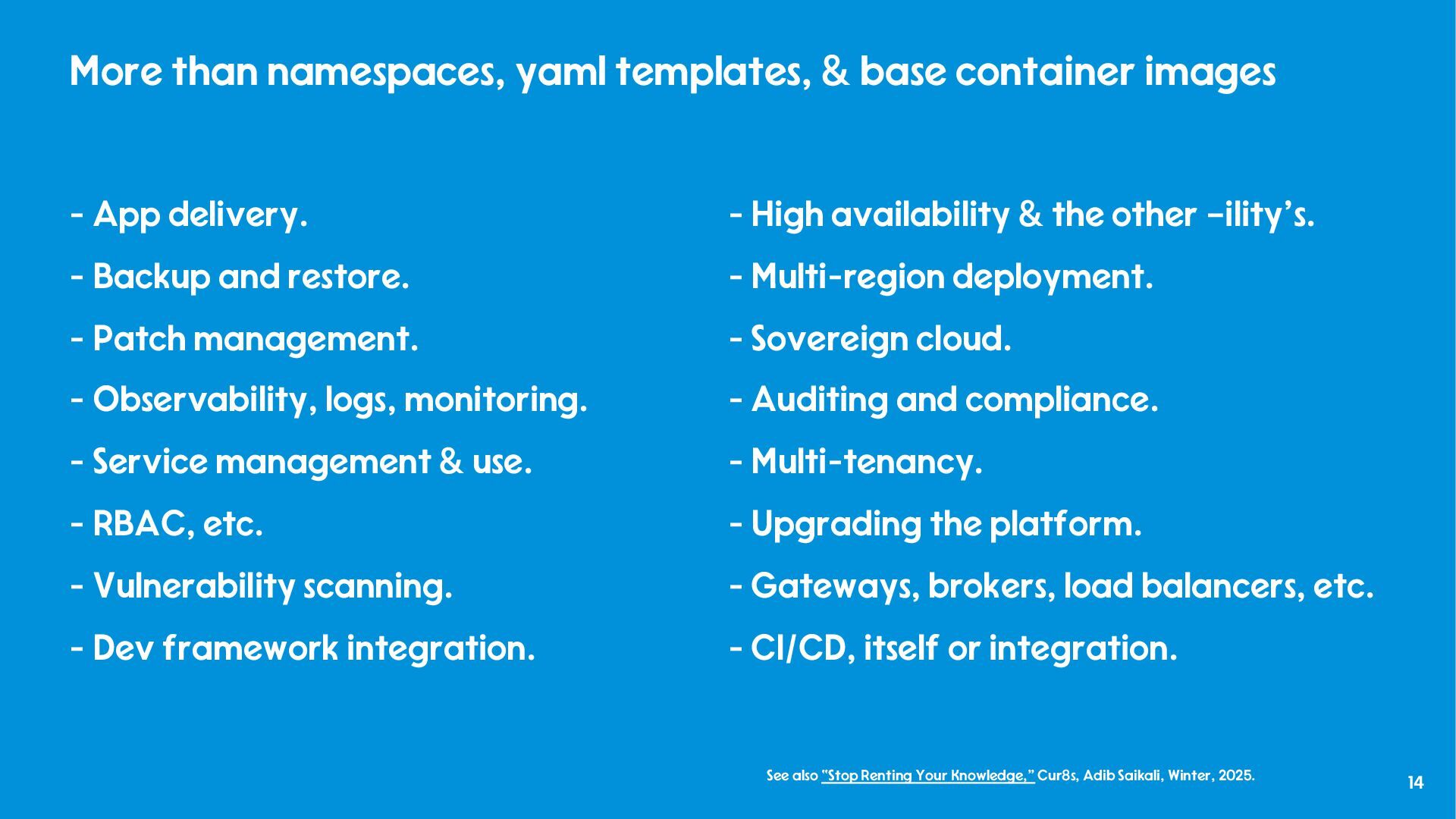
  11. 14 More than namespaces, yaml templates, & base container images

    - App delivery. - Backup and restore. - Patch management. - Observability, logs, monitoring. - Service management & use. - RBAC, etc. - Vulnerability scanning. - Dev framework integration. - High availability & the other –ility’s. - Multi-region deployment. - Sovereign cloud. - Auditing and compliance. - Multi-tenancy. - Upgrading the platform. - Gateways, brokers, load balancers, etc. - CI/CD, itself or integration. See also “Stop Renting Your Knowledge,” Cur8s, Adib Saikali, Winter, 2025.
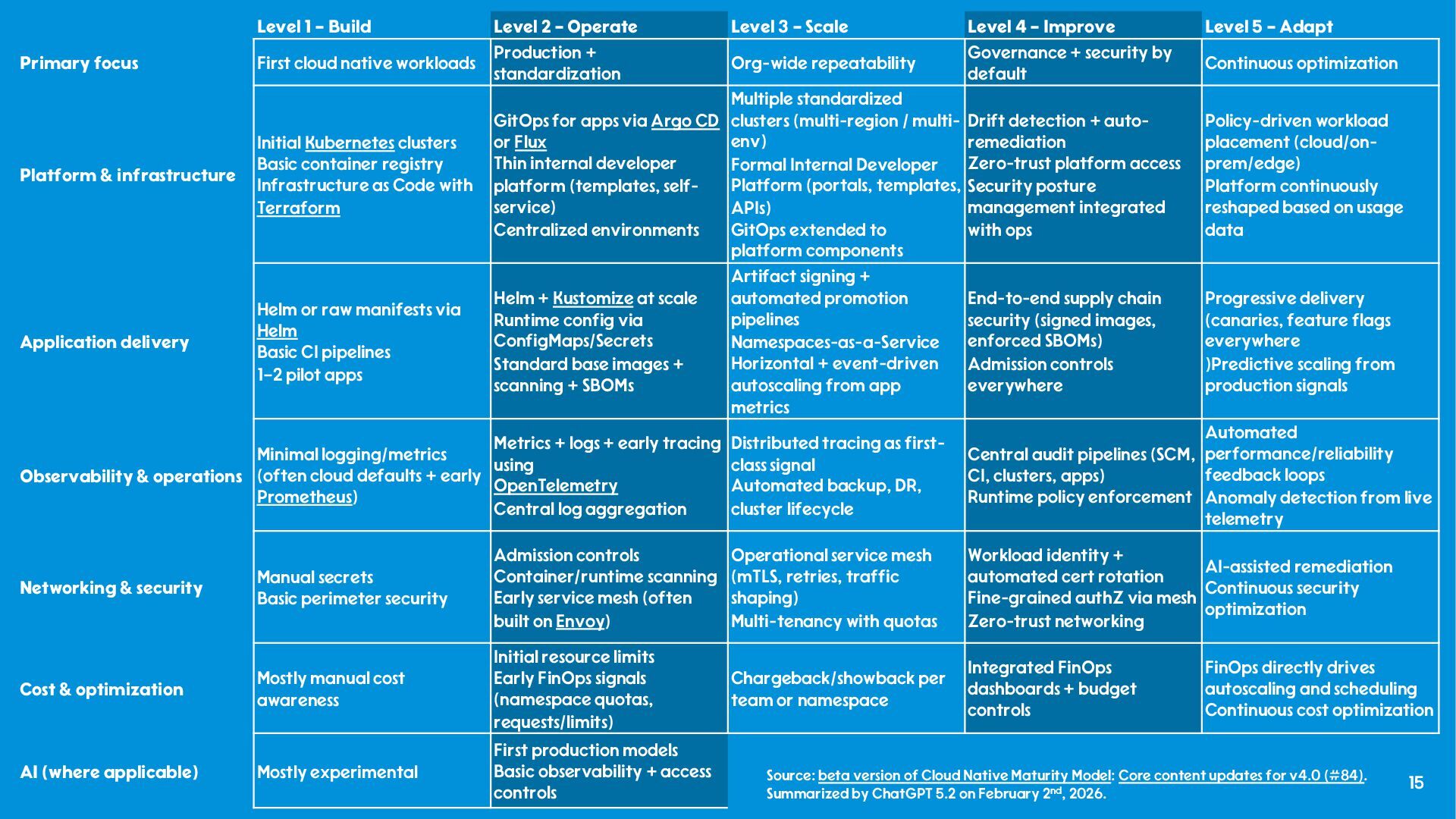
  12. 15 Level 1 – Build Level 2 – Operate Level

    3 – Scale Level 4 – Improve Level 5 – Adapt Primary focus First cloud native workloads Production + standardization Org-wide repeatability Governance + security by default Continuous optimization Platform & infrastructure Initial Kubernetes clusters Basic container registry Infrastructure as Code with Terraform GitOps for apps via Argo CD or Flux Thin internal developer platform (templates, self- service) Centralized environments Multiple standardized clusters (multi-region / multi- env) Formal Internal Developer Platform (portals, templates, APIs) GitOps extended to platform components Drift detection + auto- remediation Zero-trust platform access Security posture management integrated with ops Policy-driven workload placement (cloud/on- prem/edge) Platform continuously reshaped based on usage data Application delivery Helm or raw manifests via Helm Basic CI pipelines 1–2 pilot apps Helm + Kustomize at scale Runtime config via ConfigMaps/Secrets Standard base images + scanning + SBOMs Artifact signing + automated promotion pipelines Namespaces-as-a-Service Horizontal + event-driven autoscaling from app metrics End-to-end supply chain security (signed images, enforced SBOMs) Admission controls everywhere Progressive delivery (canaries, feature flags everywhere )Predictive scaling from production signals Observability & operations Minimal logging/metrics (often cloud defaults + early Prometheus) Metrics + logs + early tracing using OpenTelemetry Central log aggregation Distributed tracing as first- class signal Automated backup, DR, cluster lifecycle Central audit pipelines (SCM, CI, clusters, apps) Runtime policy enforcement Automated performance/reliability feedback loops Anomaly detection from live telemetry Networking & security Manual secrets Basic perimeter security Admission controls Container/runtime scanning Early service mesh (often built on Envoy) Operational service mesh (mTLS, retries, traffic shaping) Multi-tenancy with quotas Workload identity + automated cert rotation Fine-grained authZ via mesh Zero-trust networking AI-assisted remediation Continuous security optimization Cost & optimization Mostly manual cost awareness Initial resource limits Early FinOps signals (namespace quotas, requests/limits) Chargeback/showback per team or namespace Integrated FinOps dashboards + budget controls FinOps directly drives autoscaling and scheduling Continuous cost optimization AI (where applicable) Mostly experimental First production models Basic observability + access controls Source: beta version of Cloud Native Maturity Model: Core content updates for v4.0 (#84). Summarized by ChatGPT 5.2 on February 2nd, 2026.
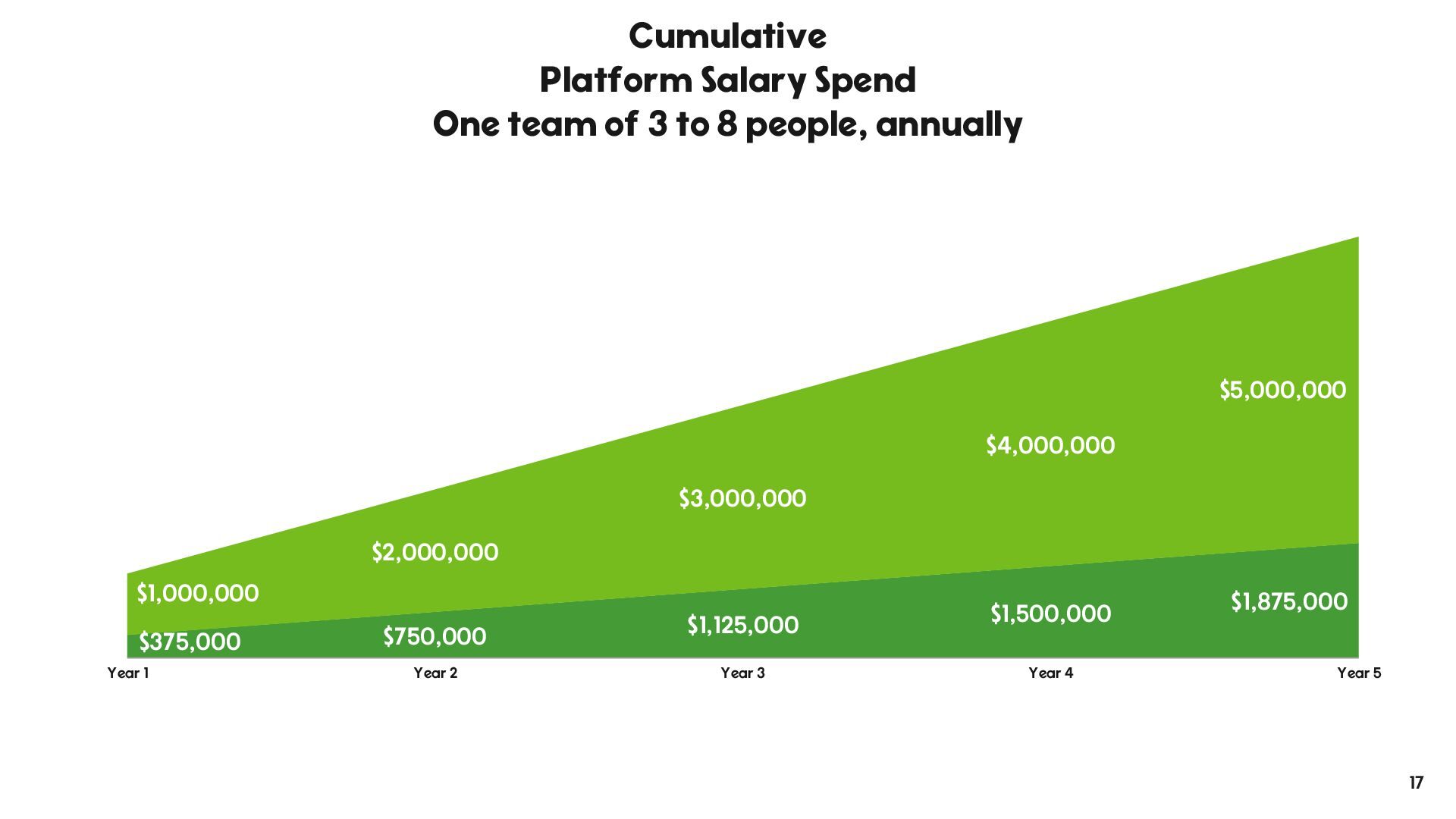
  13. 17 $375,000 $750,000 $1,125,000 $1,500,000 $1,875,000 $1,000,000 $2,000,000 $3,000,000 $4,000,000

    $5,000,000 Year 1 Year 2 Year 3 Year 4 Year 5 Cumulative Platform Salary Spend One team of 3 to 8 people, annually
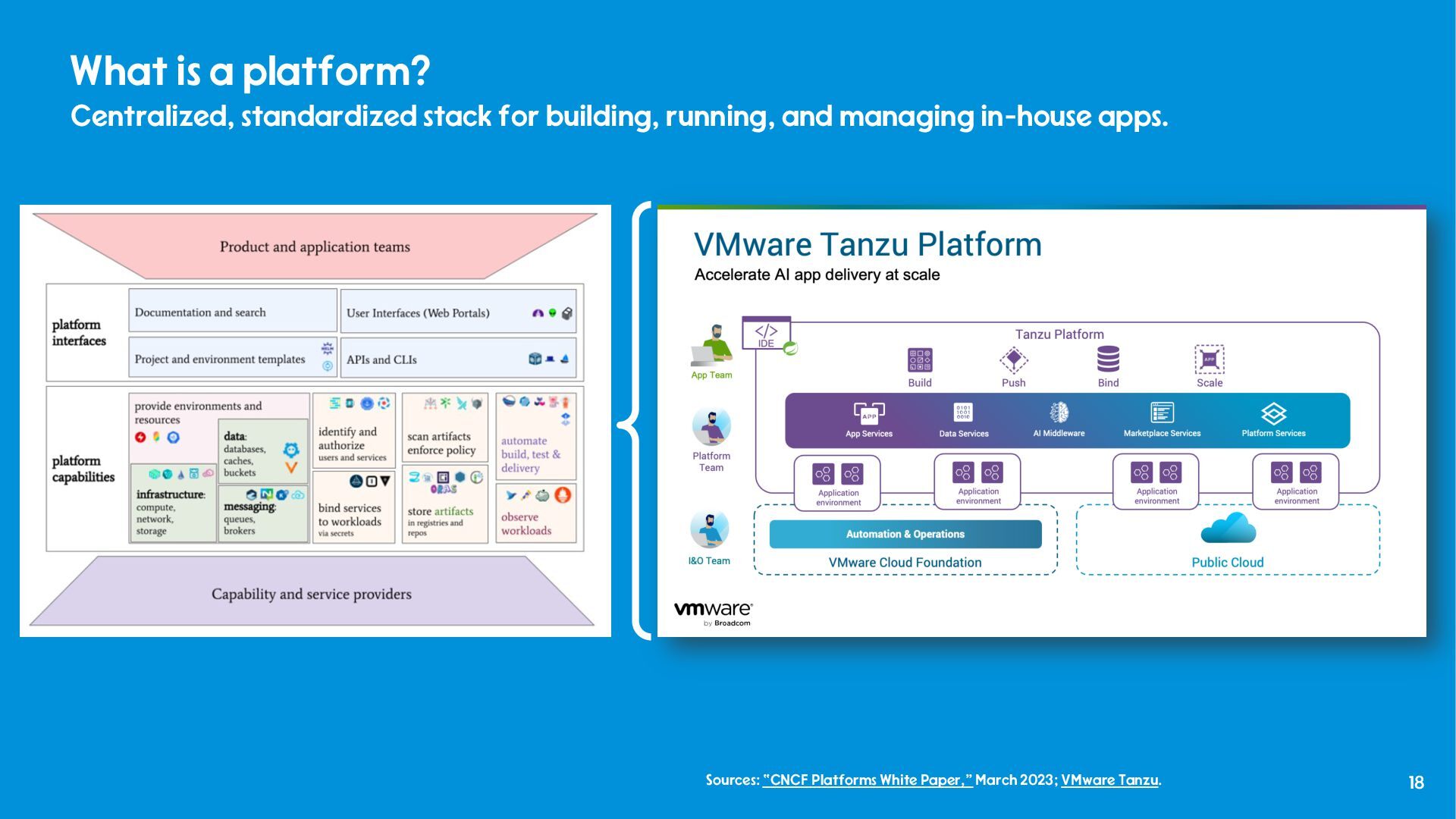
  14. 18 What is a platform? Sources: “CNCF Platforms White Paper,”

    March 2023; VMware Tanzu. Centralized, standardized stack for building, running, and managing in-house apps.
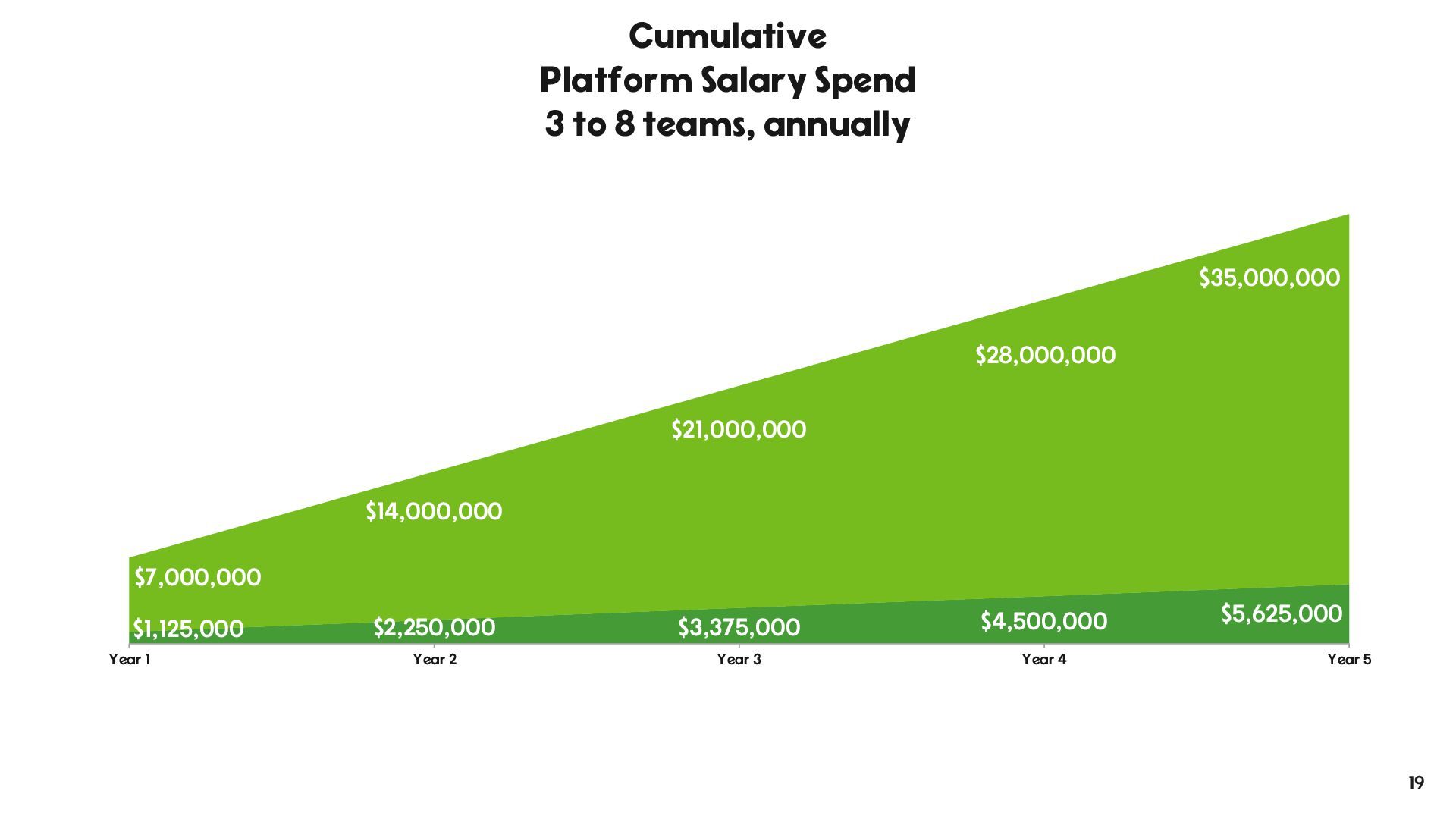
  15. 19 $1,125,000 $2,250,000 $3,375,000 $4,500,000 $5,625,000 $7,000,000 $14,000,000 $21,000,000 $28,000,000

    $35,000,000 Year 1 Year 2 Year 3 Year 4 Year 5 Cumulative Platform Salary Spend 3 to 8 teams, annually
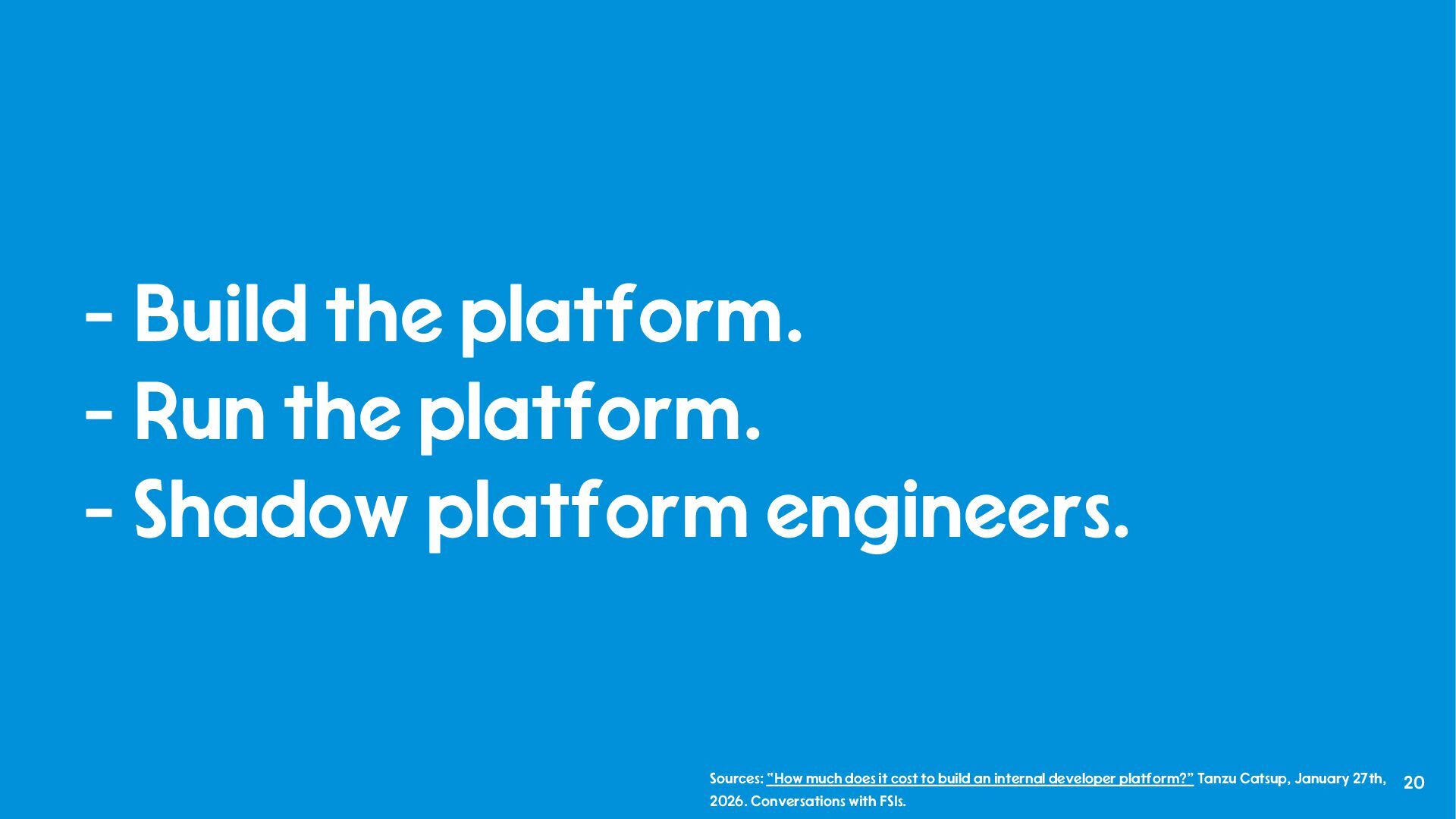
  16. 20 - Build the platform. - Run the platform. -

    Shadow platform engineers. Sources: “How much does it cost to build an internal developer platform?" Tanzu Catsup, January 27th, 2026. Conversations with FSIs.
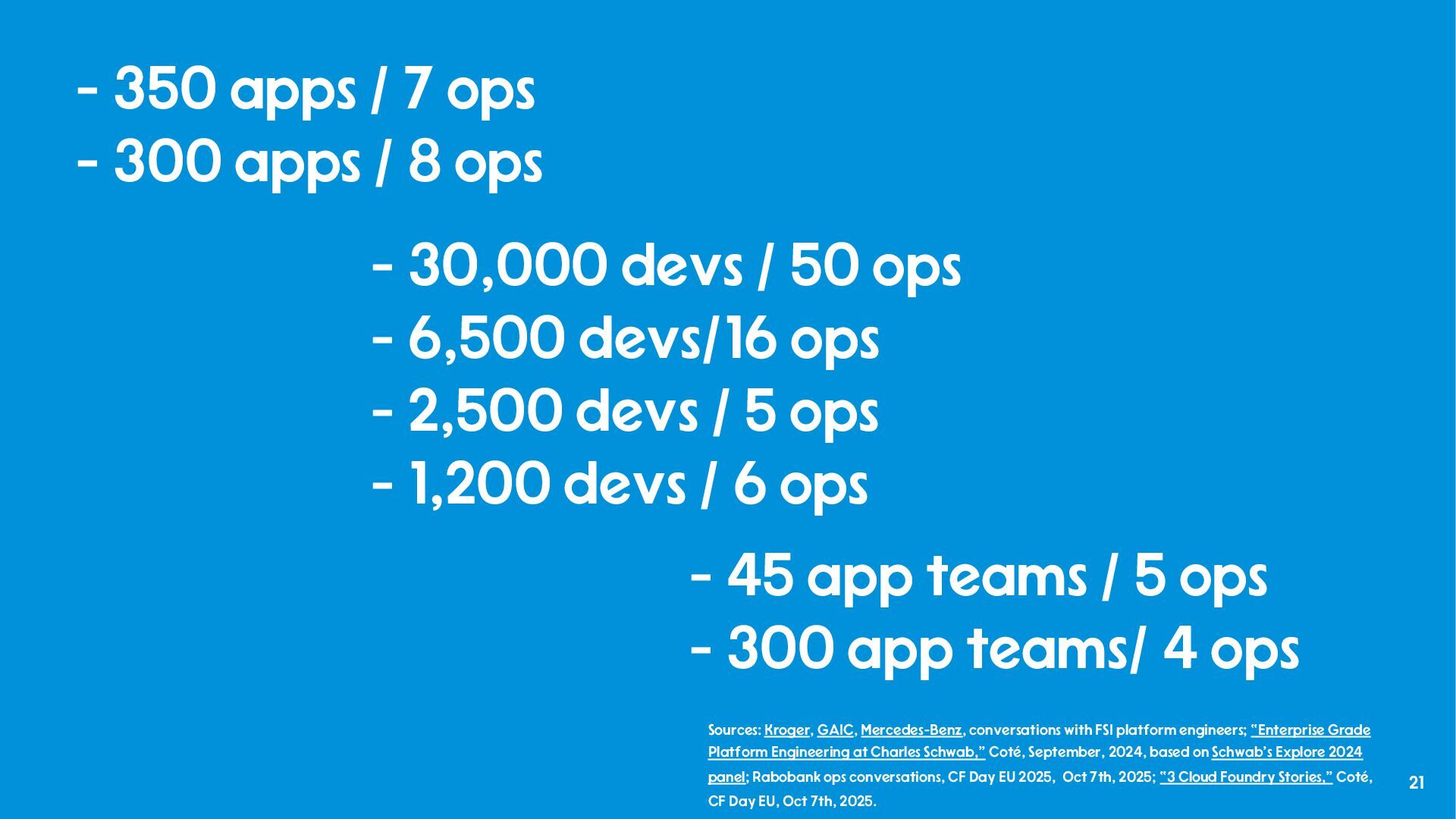
  17. 21 - 350 apps / 7 ops - 300 apps

    / 8 ops Sources: Kroger, GAIC, Mercedes-Benz, conversations with FSI platform engineers; “Enterprise Grade Platform Engineering at Charles Schwab," Coté, September, 2024, based on Schwab's Explore 2024 panel; Rabobank ops conversations, CF Day EU 2025, Oct 7th, 2025; “3 Cloud Foundry Stories," Coté, CF Day EU, Oct 7th, 2025. - 30,000 devs / 50 ops - 6,500 devs/16 ops - 2,500 devs / 5 ops - 1,200 devs / 6 ops - 45 app teams / 5 ops - 300 app teams/ 4 ops
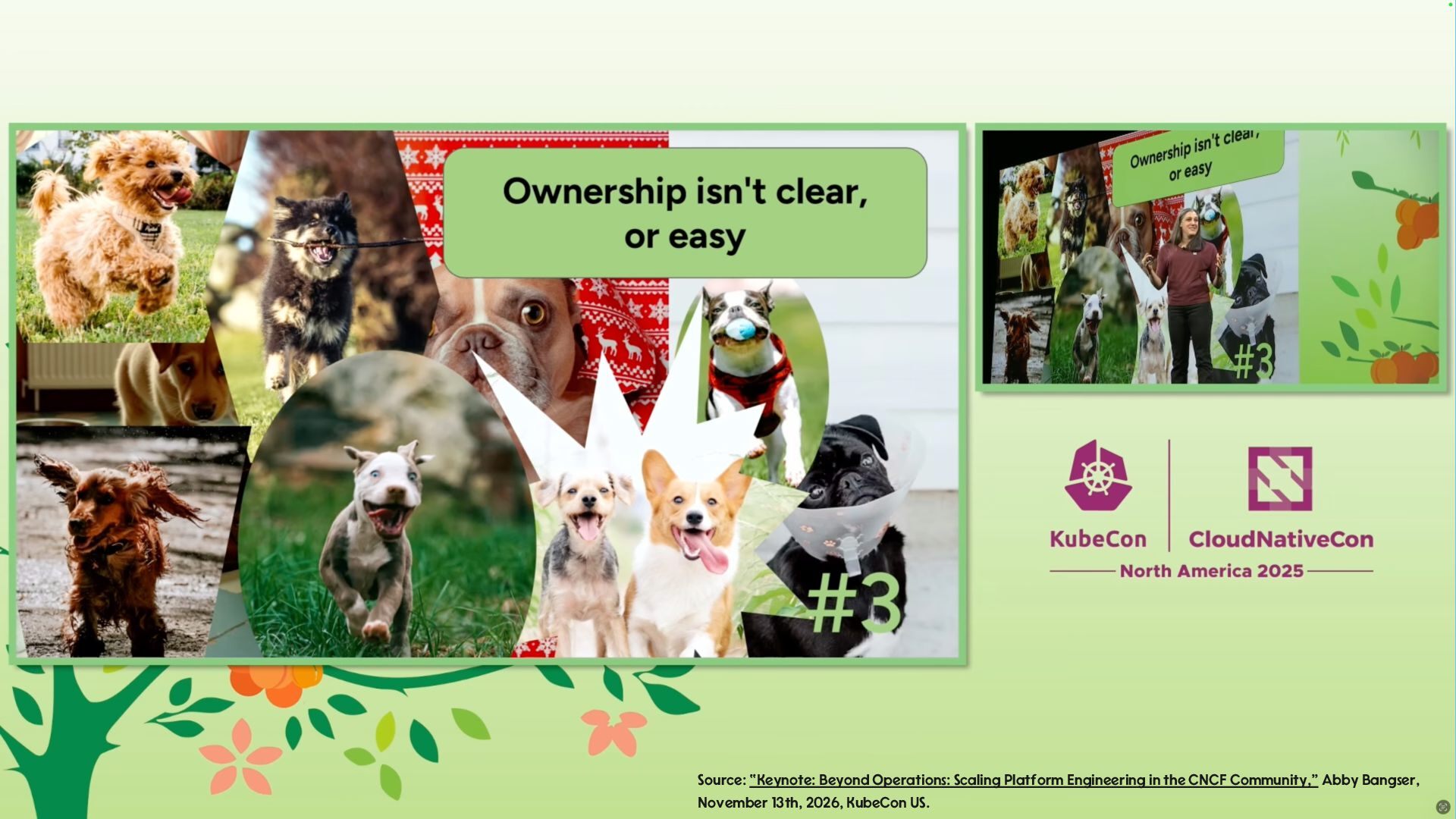
  18. 24 Source: “Keynote: Beyond Operations: Scaling Platform Engineering in the

    CNCF Community," Abby Bangser, November 13th, 2026, KubeCon US.
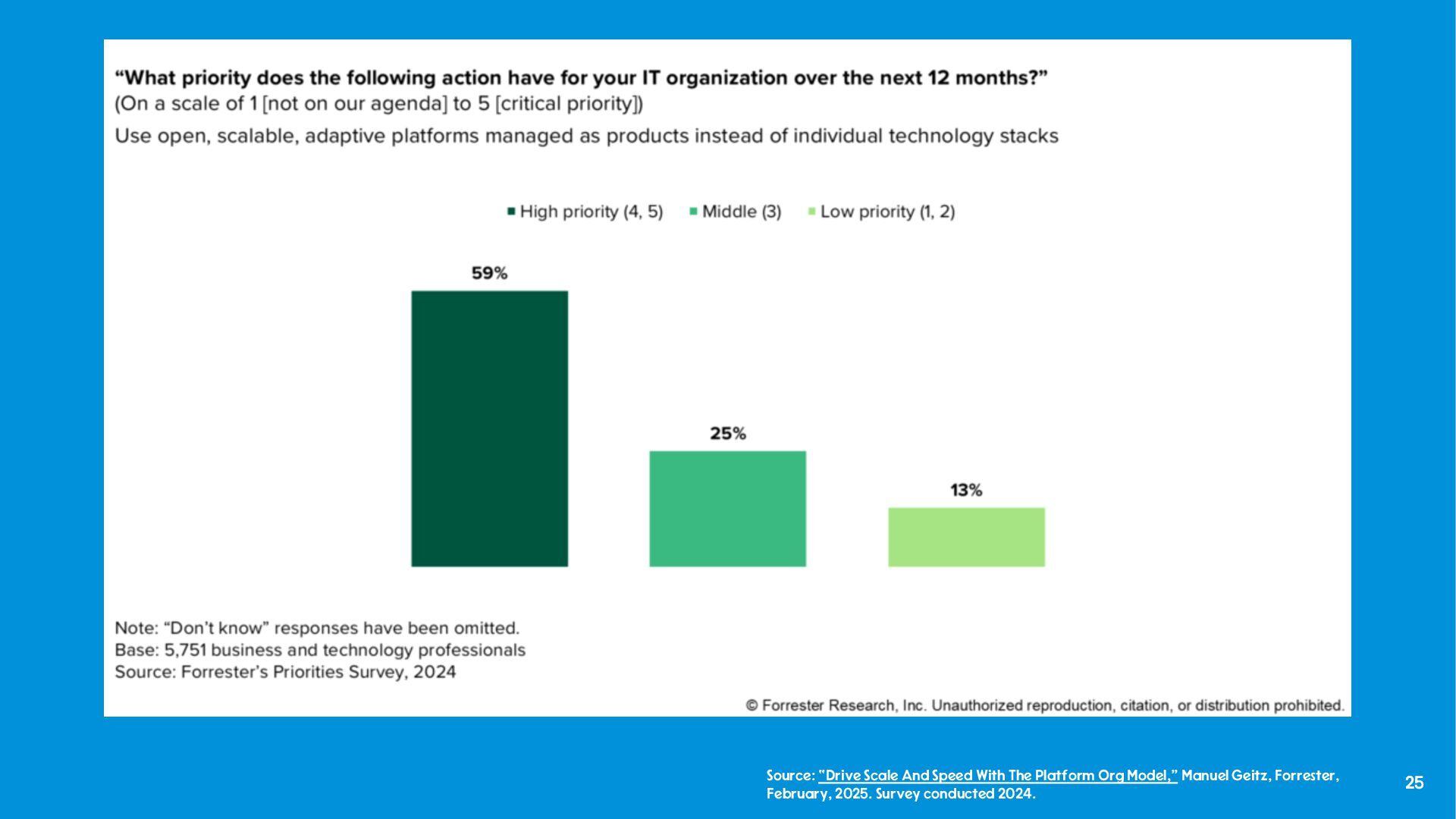
  19. 25 Source: “Drive Scale And Speed With The Platform Org

    Model," Manuel Geitz, Forrester, February, 2025. Survey conducted 2024.
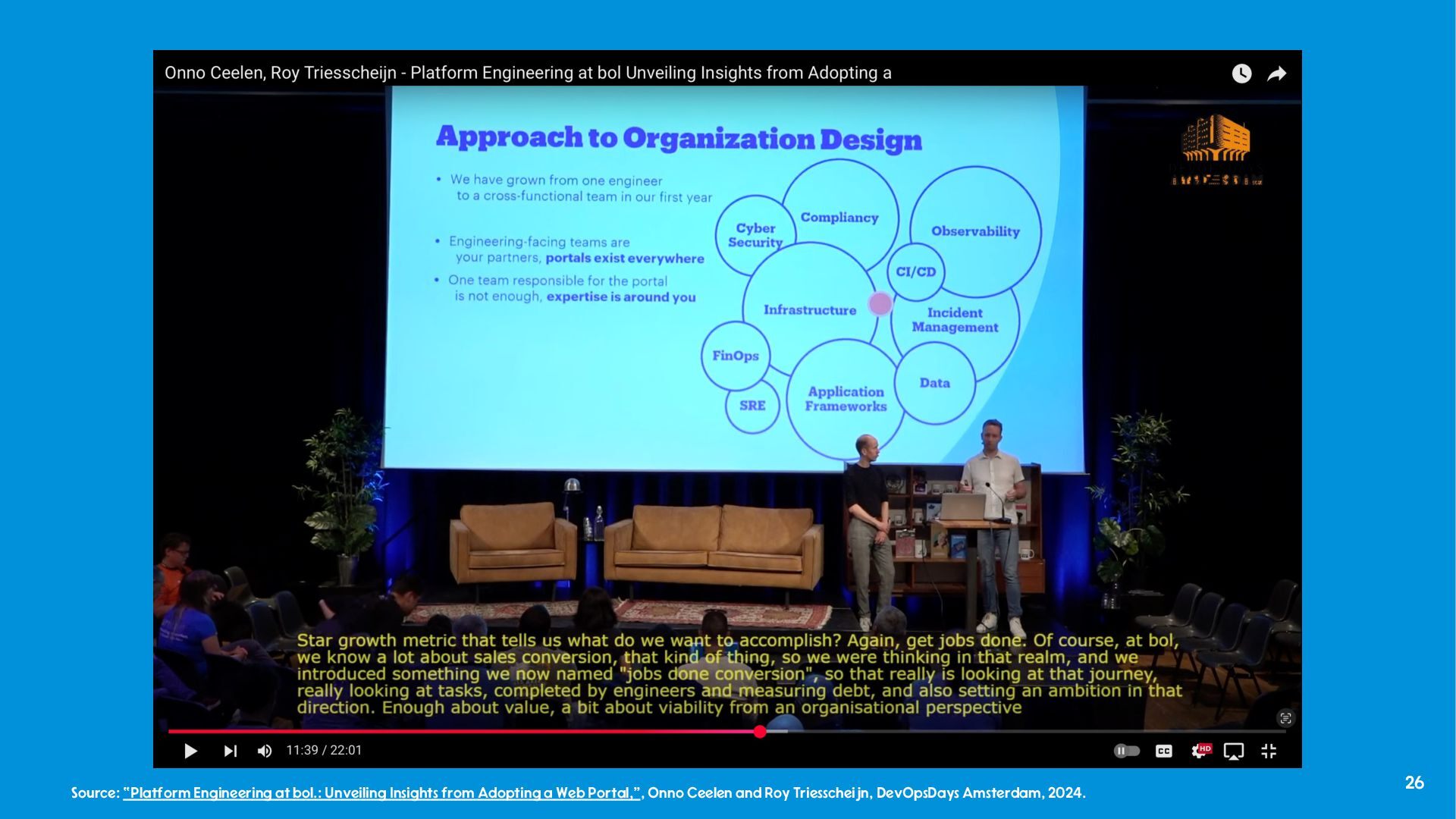
  20. 26 Source: “Platform Engineering at bol.: Unveiling Insights from Adopting

    a Web Portal,”, Onno Ceelen and Roy Triesscheijn, DevOpsDays Amsterdam, 2024.
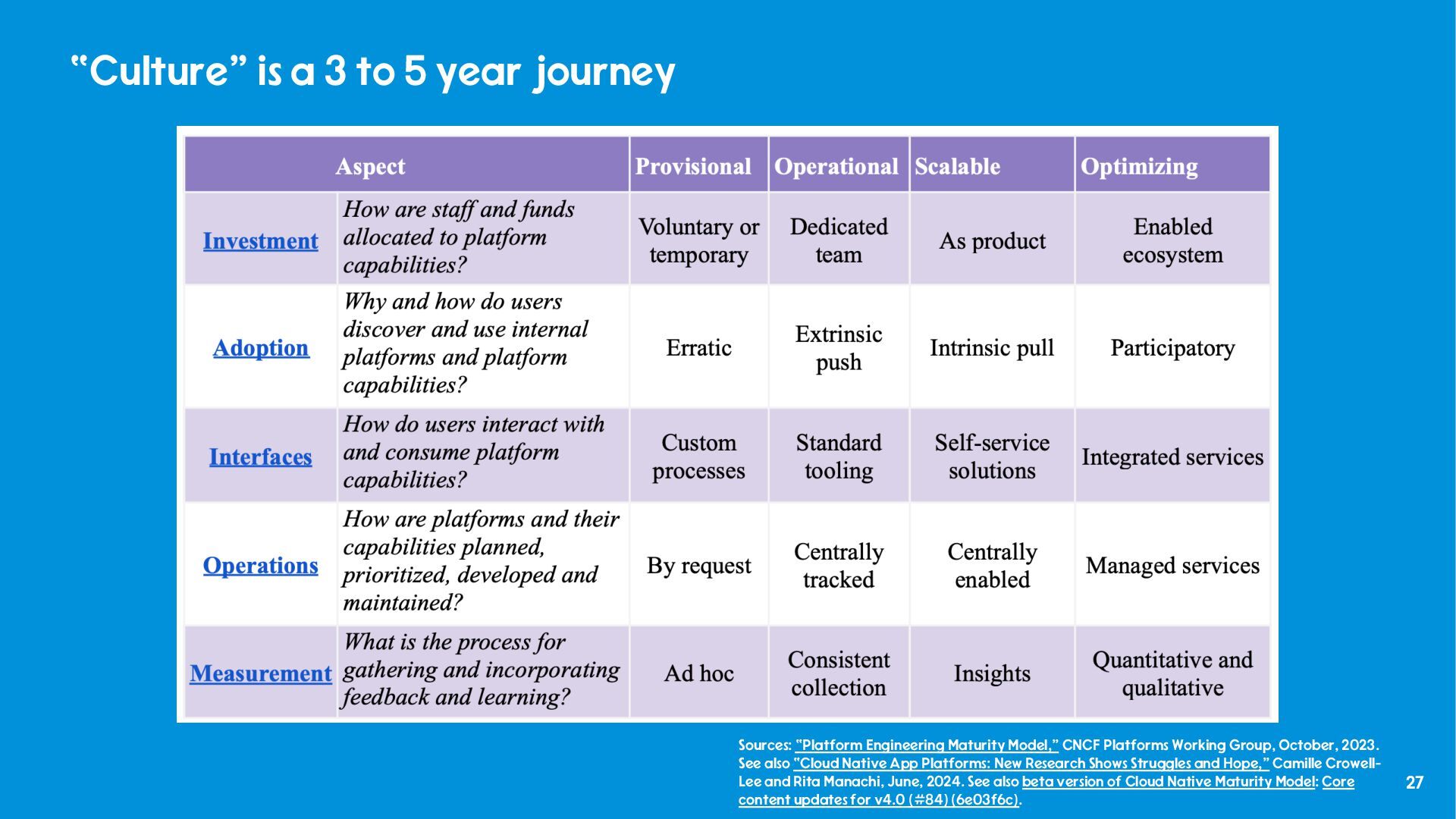
  21. 27 “Culture” is a 3 to 5 year journey Sources:

    “Platform Engineering Maturity Model," CNCF Platforms Working Group, October, 2023. See also “Cloud Native App Platforms: New Research Shows Struggles and Hope,” Camille Crowell- Lee and Rita Manachi, June, 2024. See also beta version of Cloud Native Maturity Model: Core content updates for v4.0 (#84) (6e03f6c).
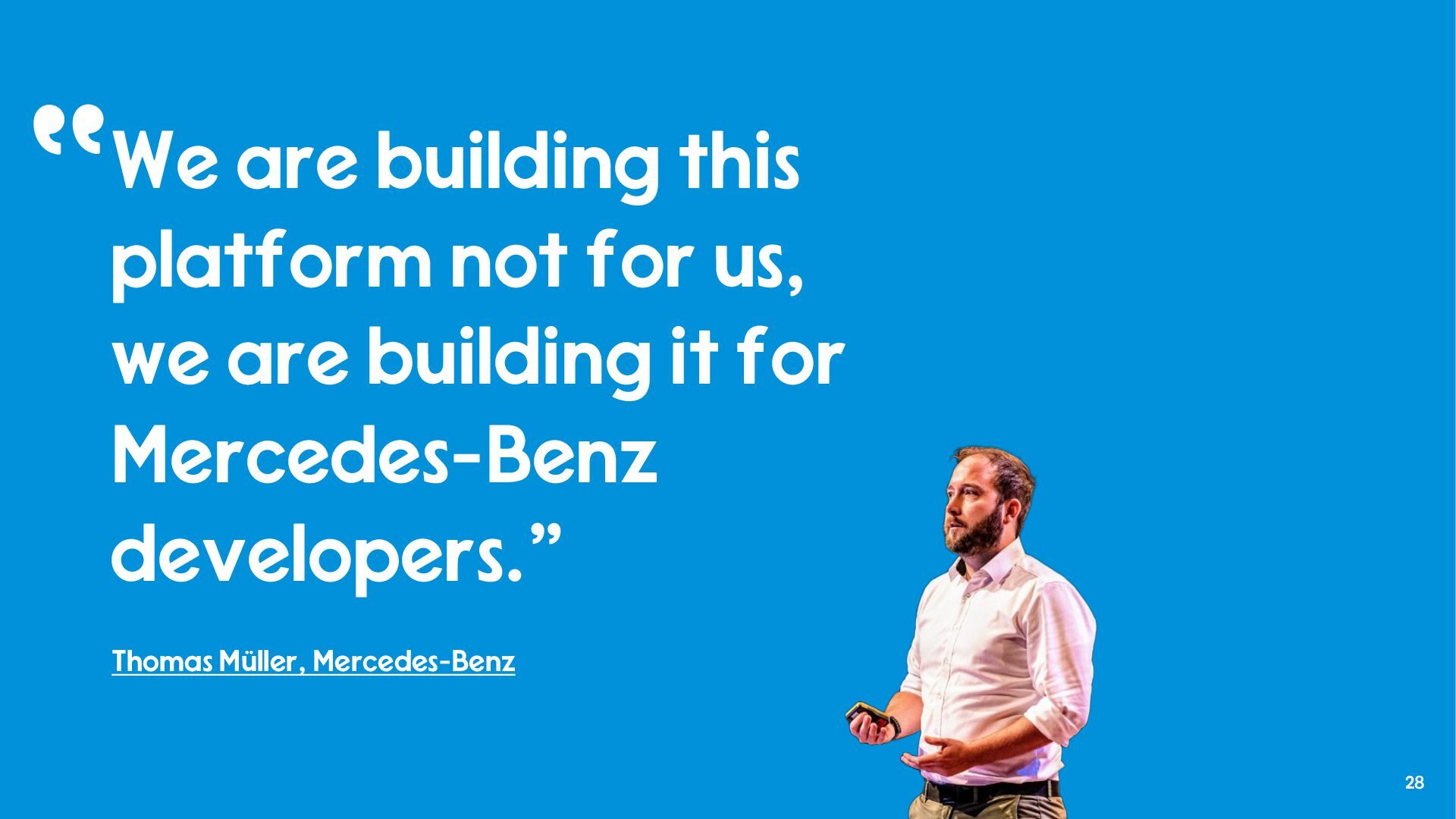
  22. 28 We are building this platform not for us, we

    are building it for Mercedes-Benz developers.” Thomas Müller, Mercedes-Benz “
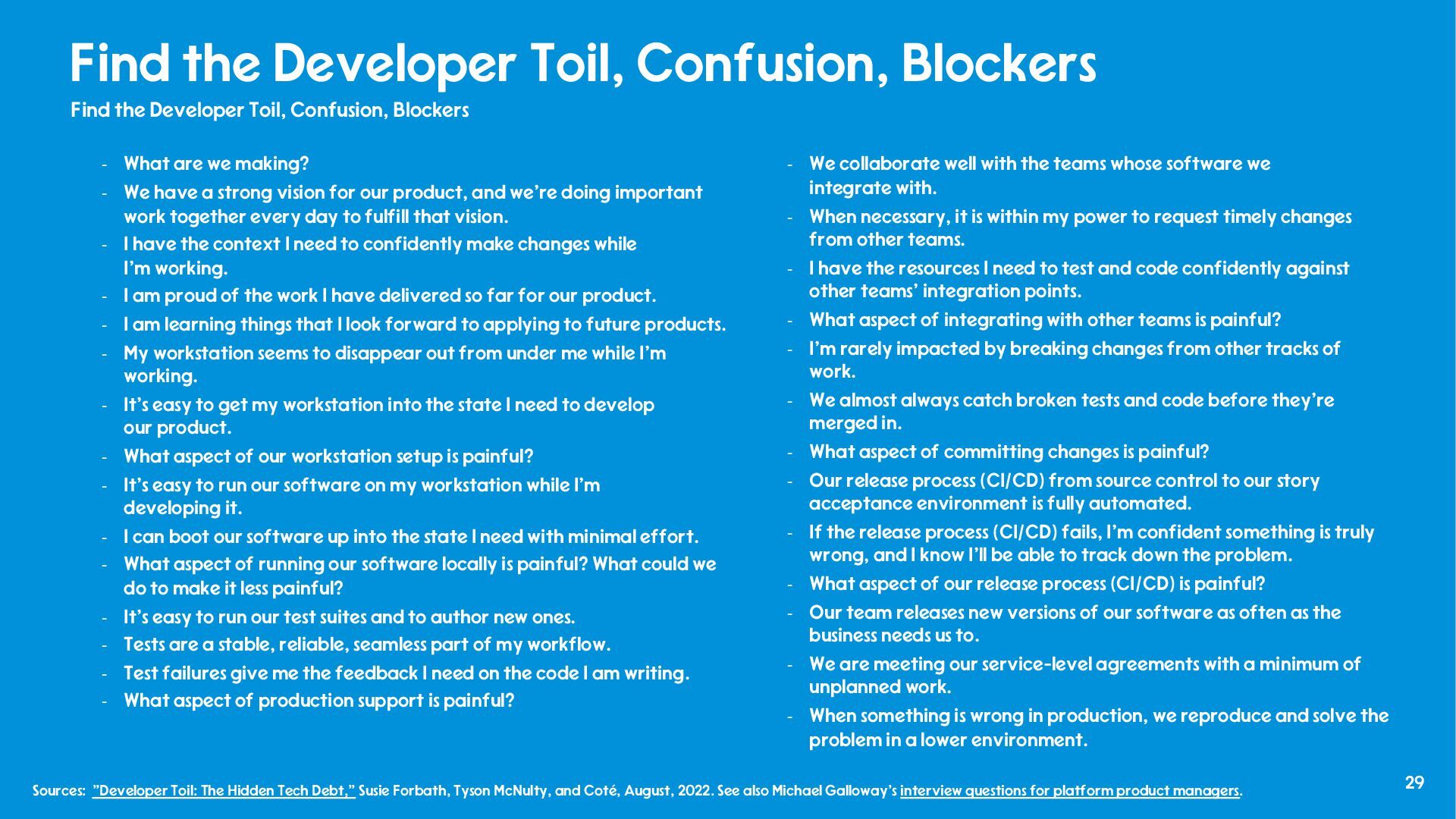
  23. 29 Find the Developer Toil, Confusion, Blockers Find the Developer

    Toil, Confusion, Blockers - What are we making? - We have a strong vision for our product, and we're doing important work together every day to fulfill that vision. - I have the context I need to confidently make changes while I'm working. - I am proud of the work I have delivered so far for our product. - I am learning things that I look forward to applying to future products. - My workstation seems to disappear out from under me while I'm working. - It's easy to get my workstation into the state I need to develop our product. - What aspect of our workstation setup is painful? - It's easy to run our software on my workstation while I’m developing it. - I can boot our software up into the state I need with minimal effort. - What aspect of running our software locally is painful? What could we do to make it less painful? - It's easy to run our test suites and to author new ones. - Tests are a stable, reliable, seamless part of my workflow. - Test failures give me the feedback I need on the code I am writing. - What aspect of production support is painful? - We collaborate well with the teams whose software we integrate with. - When necessary, it is within my power to request timely changes from other teams. - I have the resources I need to test and code confidently against other teams' integration points. - What aspect of integrating with other teams is painful? - I'm rarely impacted by breaking changes from other tracks of work. - We almost always catch broken tests and code before they're merged in. - What aspect of committing changes is painful? - Our release process (CI/CD) from source control to our story acceptance environment is fully automated. - If the release process (CI/CD) fails, I'm confident something is truly wrong, and I know I'll be able to track down the problem. - What aspect of our release process (CI/CD) is painful? - Our team releases new versions of our software as often as the business needs us to. - We are meeting our service-level agreements with a minimum of unplanned work. - When something is wrong in production, we reproduce and solve the problem in a lower environment. Sources: "Developer Toil: The Hidden Tech Debt," Susie Forbath, Tyson McNulty, and Coté, August, 2022. See also Michael Galloway’s interview questions for platform product managers.
  24. 31 - The Freedom to Leave. - Portability. - Switching

    costs. Sources: “Freedom To Leave," Simon Phipps, June, 2006; “Switching Costs and Lock-In,” Mark Schwartz, December, 2018; “Thinking About VMware Alternatives?” Keith Townsend, August, 2025. See also “Don't get locked up into avoiding lock-in,” Gregor Hohpe, September, 2019.
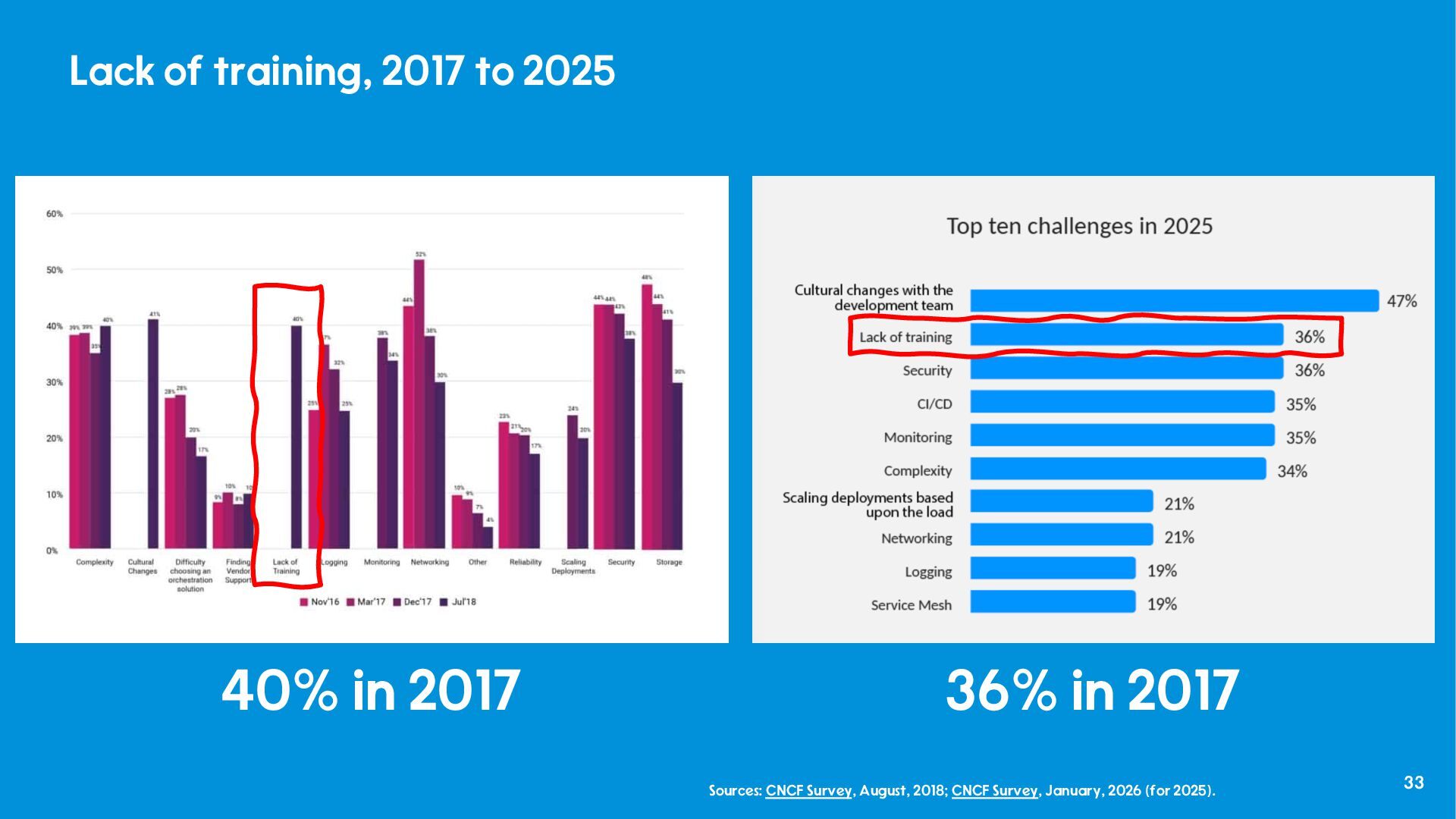
  25. 33 Sources: CNCF Survey, August, 2018; CNCF Survey, January, 2026

    (for 2025). Lack of training, 2017 to 2025 40% in 2017 36% in 2017
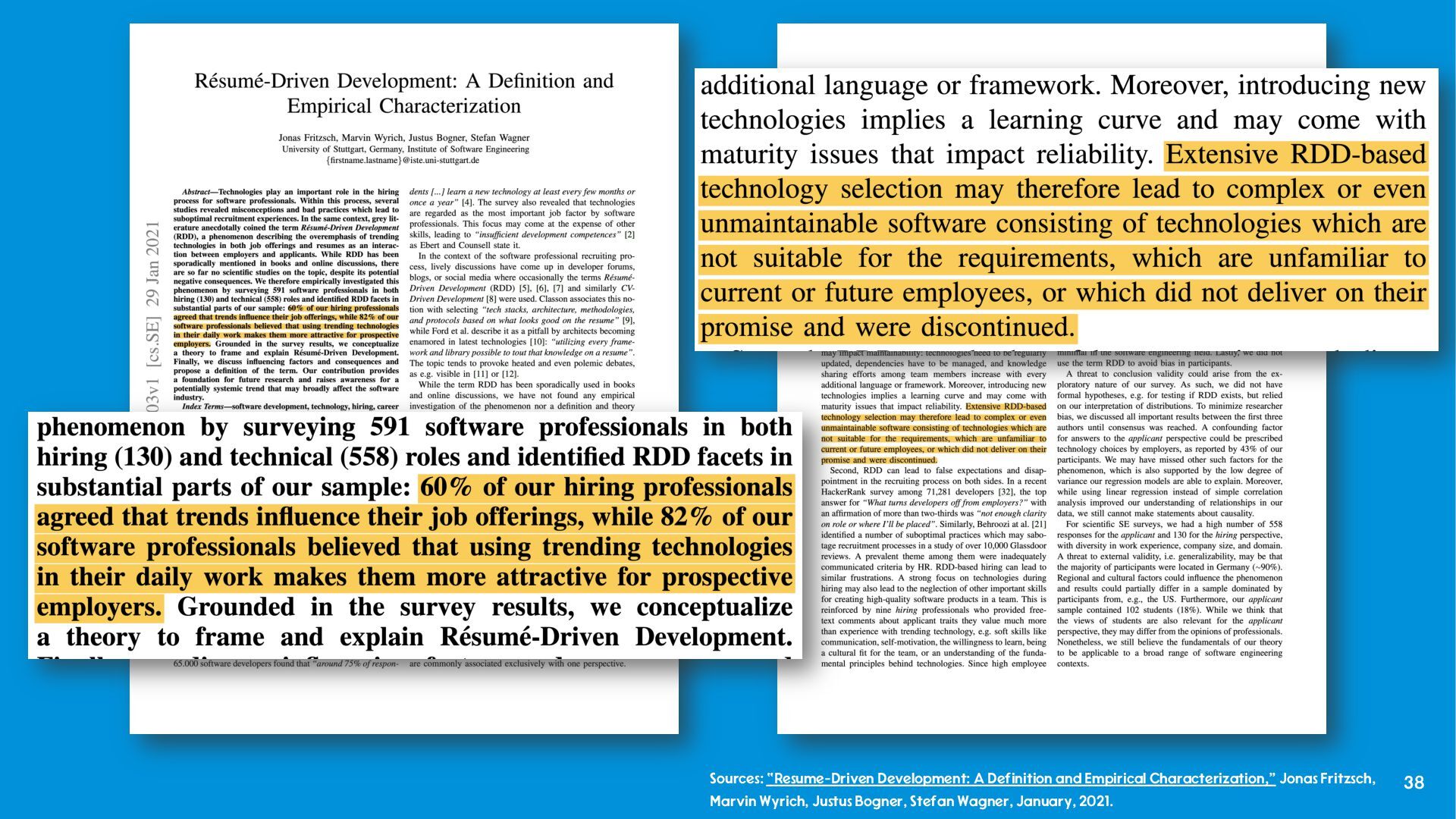
  26. 38 Sources: “Resume-Driven Development: A Definition and Empirical Characterization," Jonas

    Fritzsch, Marvin Wyrich, Justus Bogner, Stefan Wagner, January, 2021.
  27. 39

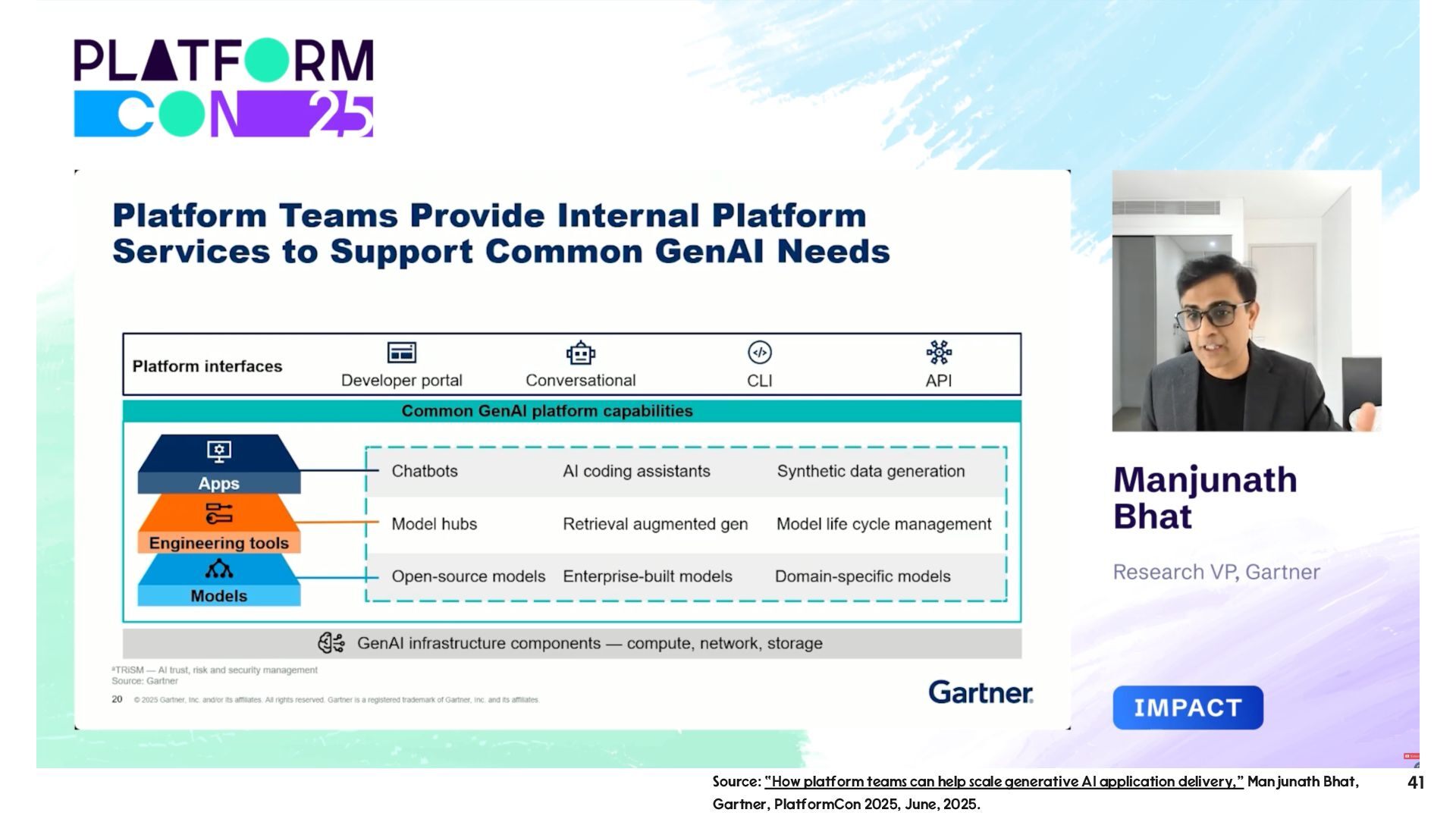
  28. 41 Source: “How platform teams can help scale generative AI

    application delivery," Manjunath Bhat, Gartner, PlatformCon 2025, June, 2025.
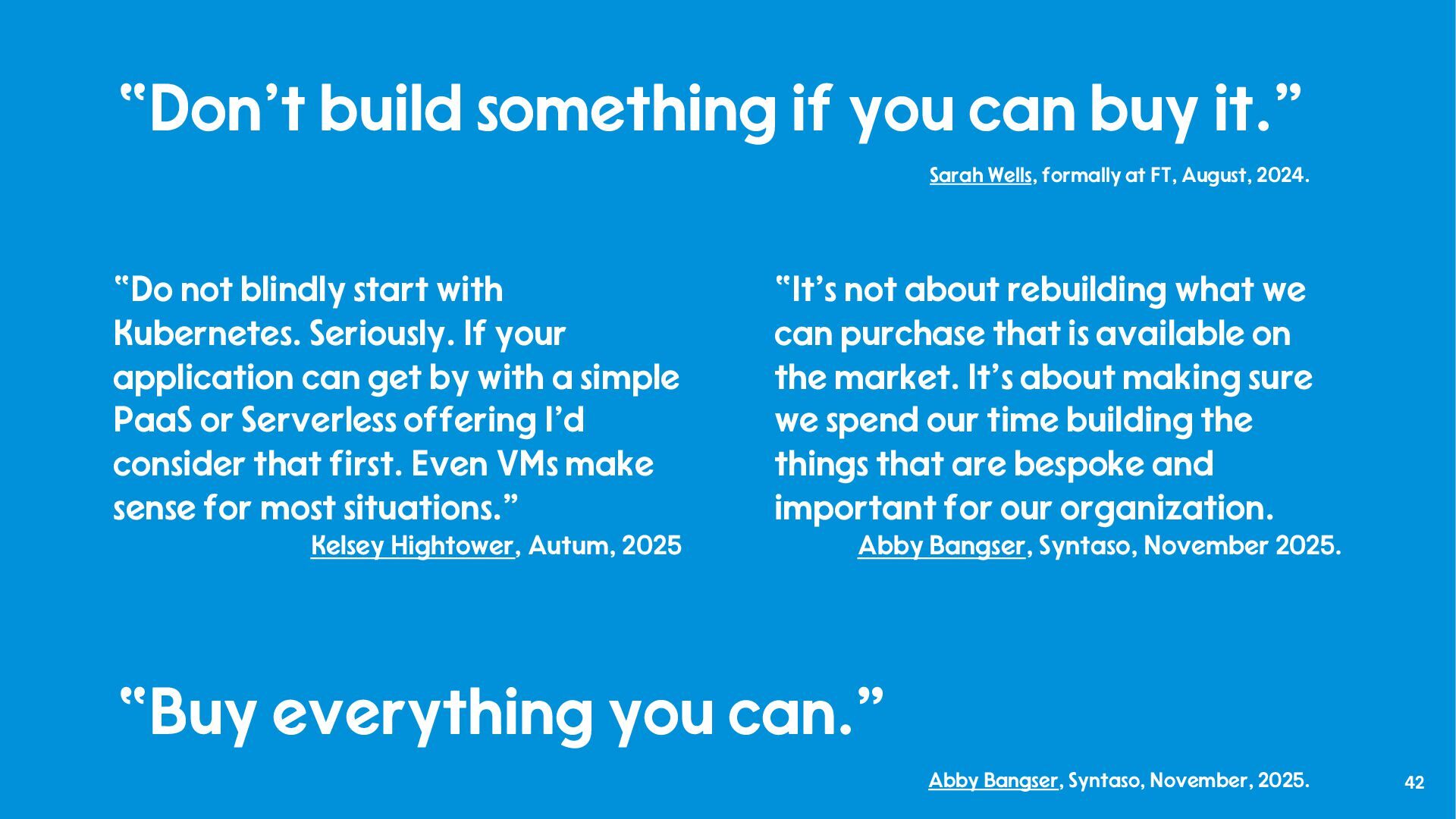
  29. 42 “Buy everything you can.” Abby Bangser, Syntaso, November, 2025.

    “Don’t build something if you can buy it.” Sarah Wells, formally at FT, August, 2024. “Do not blindly start with Kubernetes. Seriously. If your application can get by with a simple PaaS or Serverless offering I'd consider that first. Even VMs make sense for most situations.” Kelsey Hightower, Autum, 2025 “It's not about rebuilding what we can purchase that is available on the market. It's about making sure we spend our time building the things that are bespoke and important for our organization. Abby Bangser, Syntaso, November 2025.