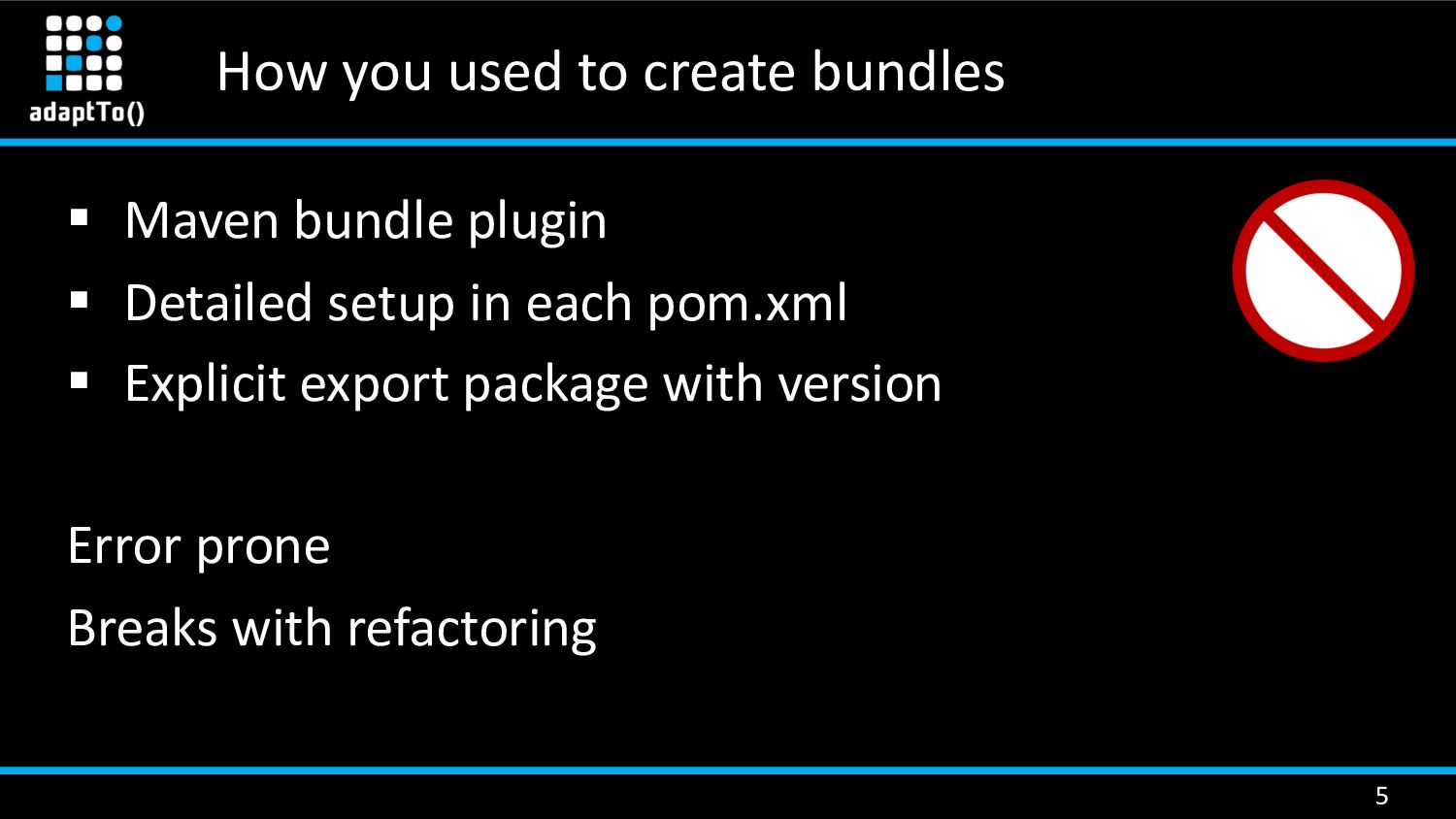
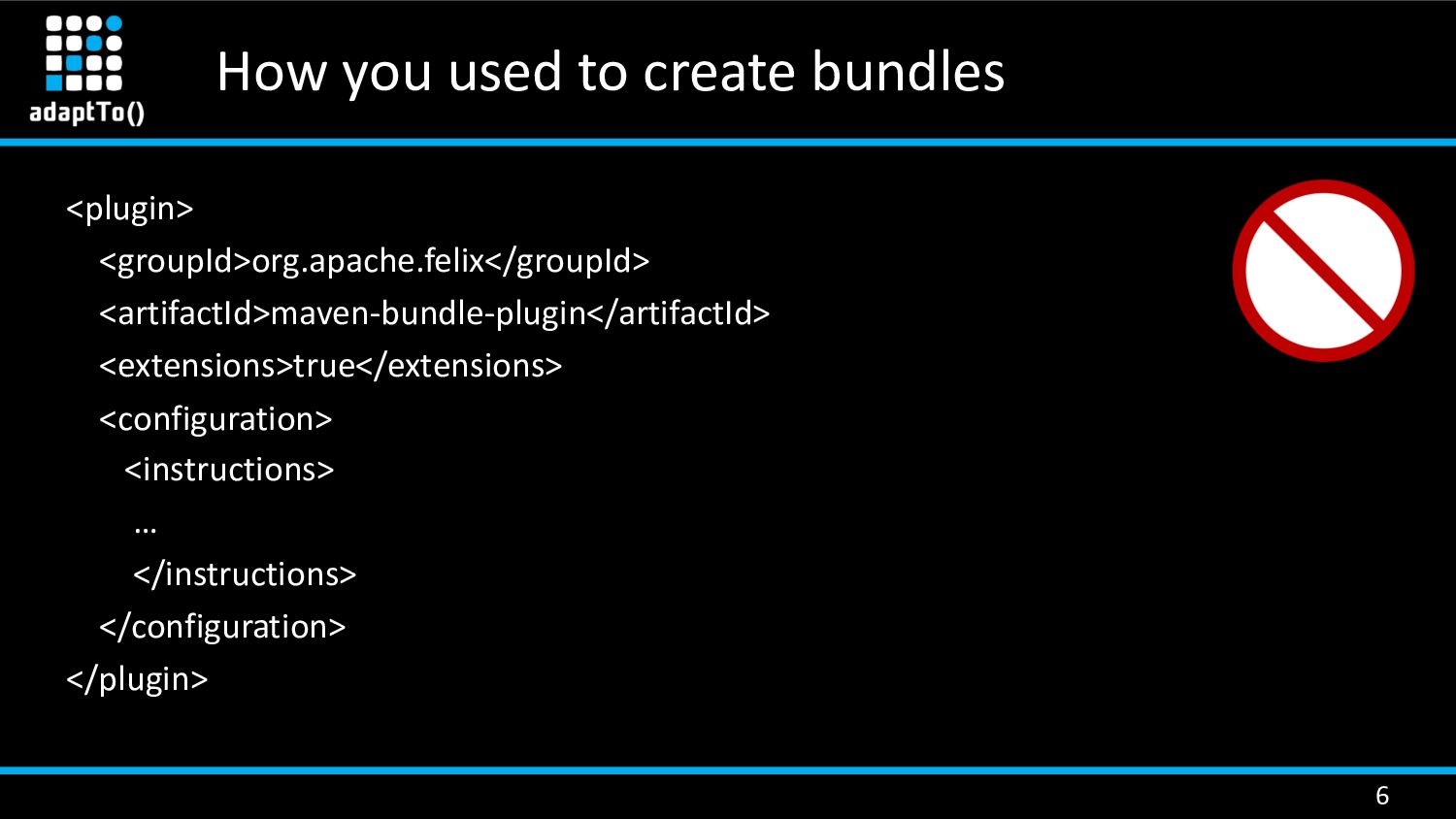
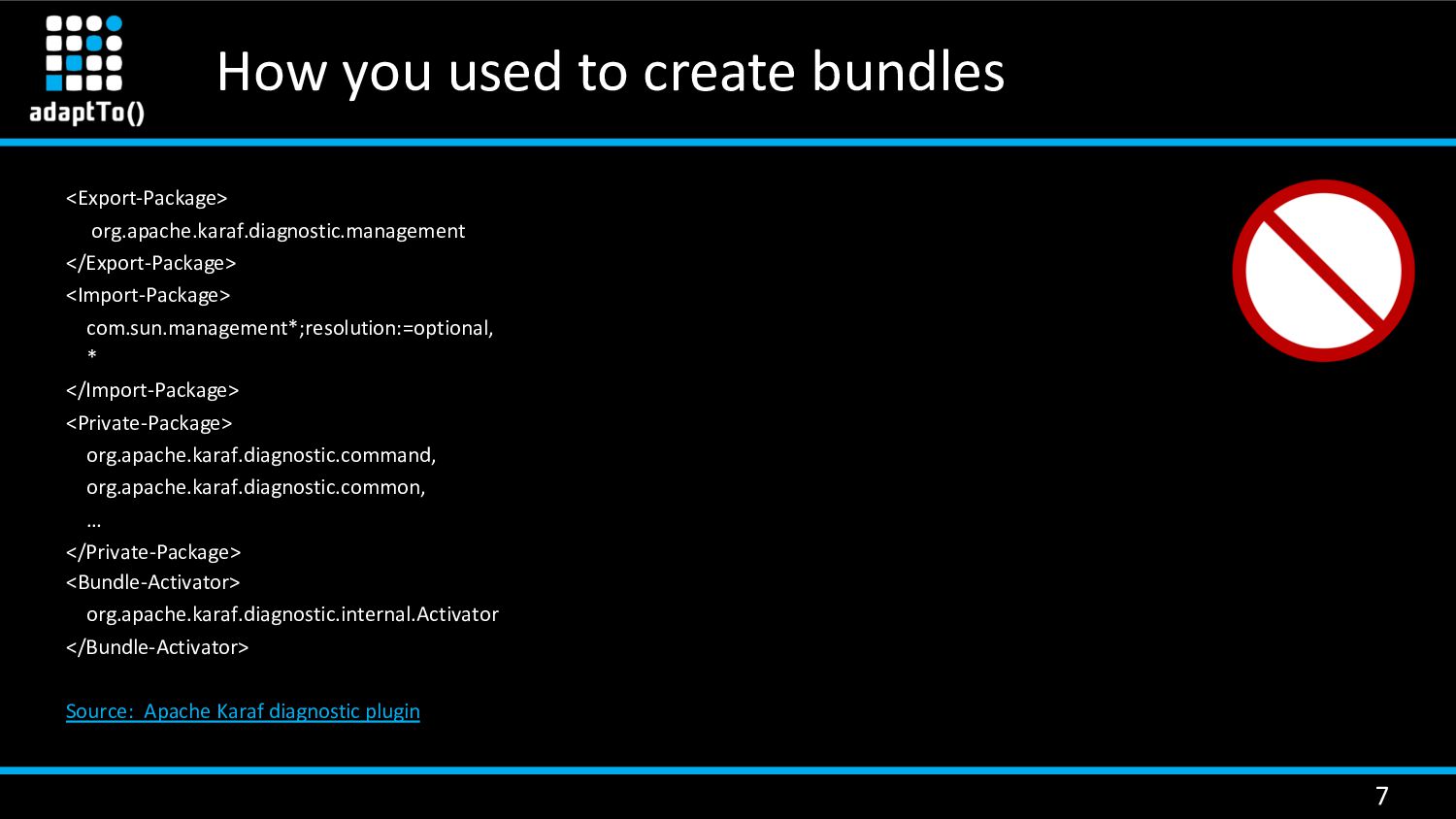
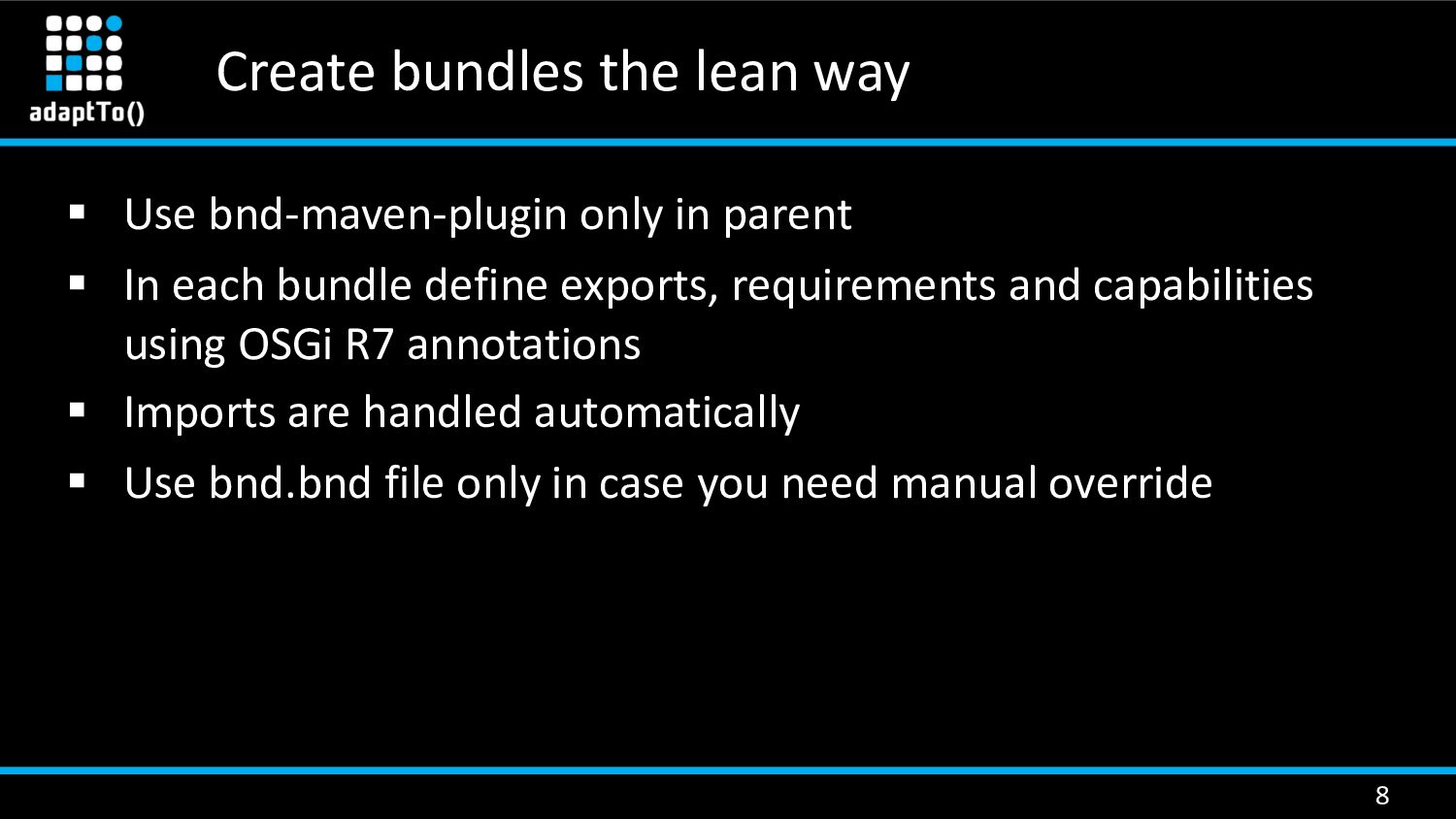
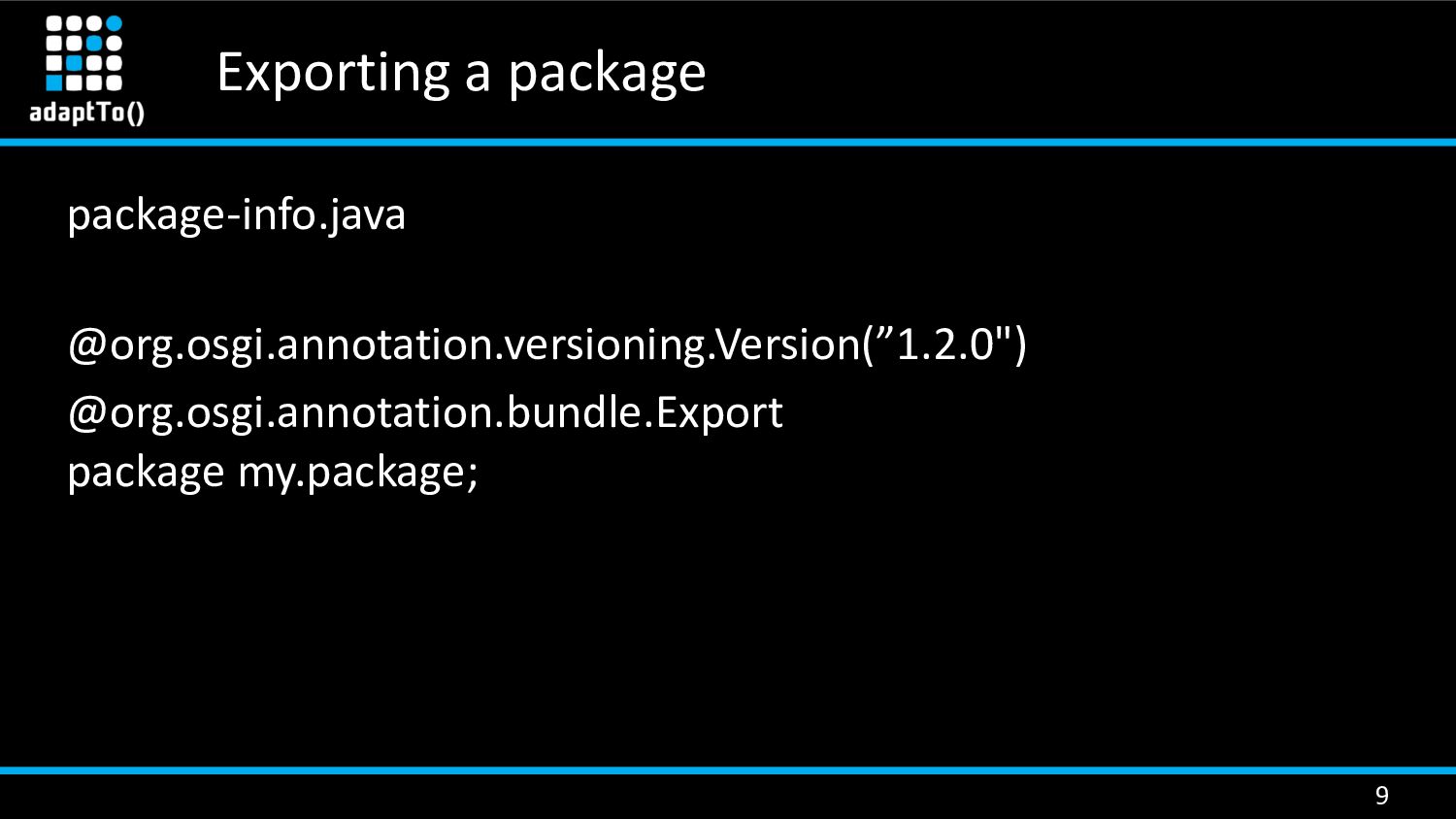
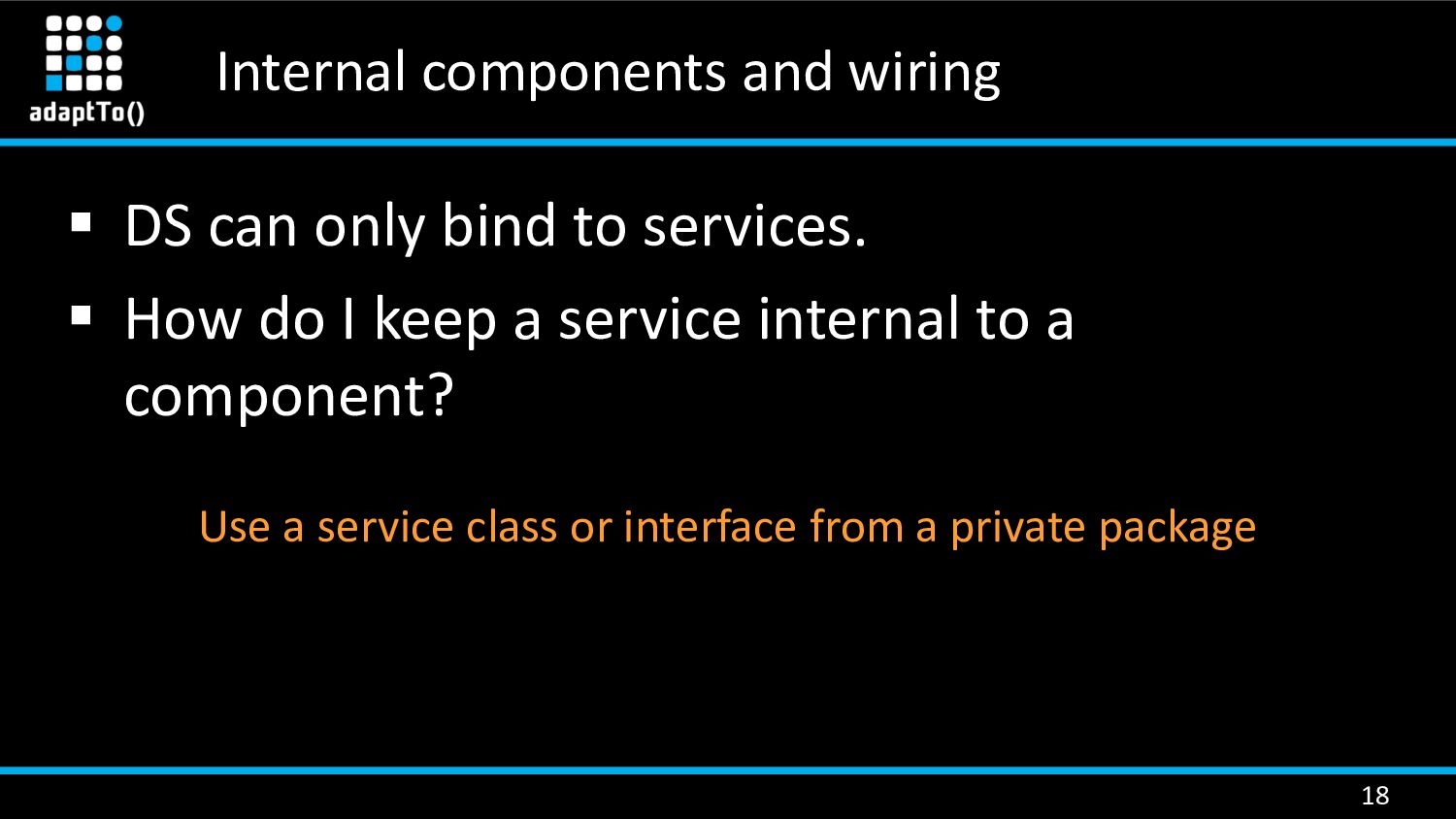
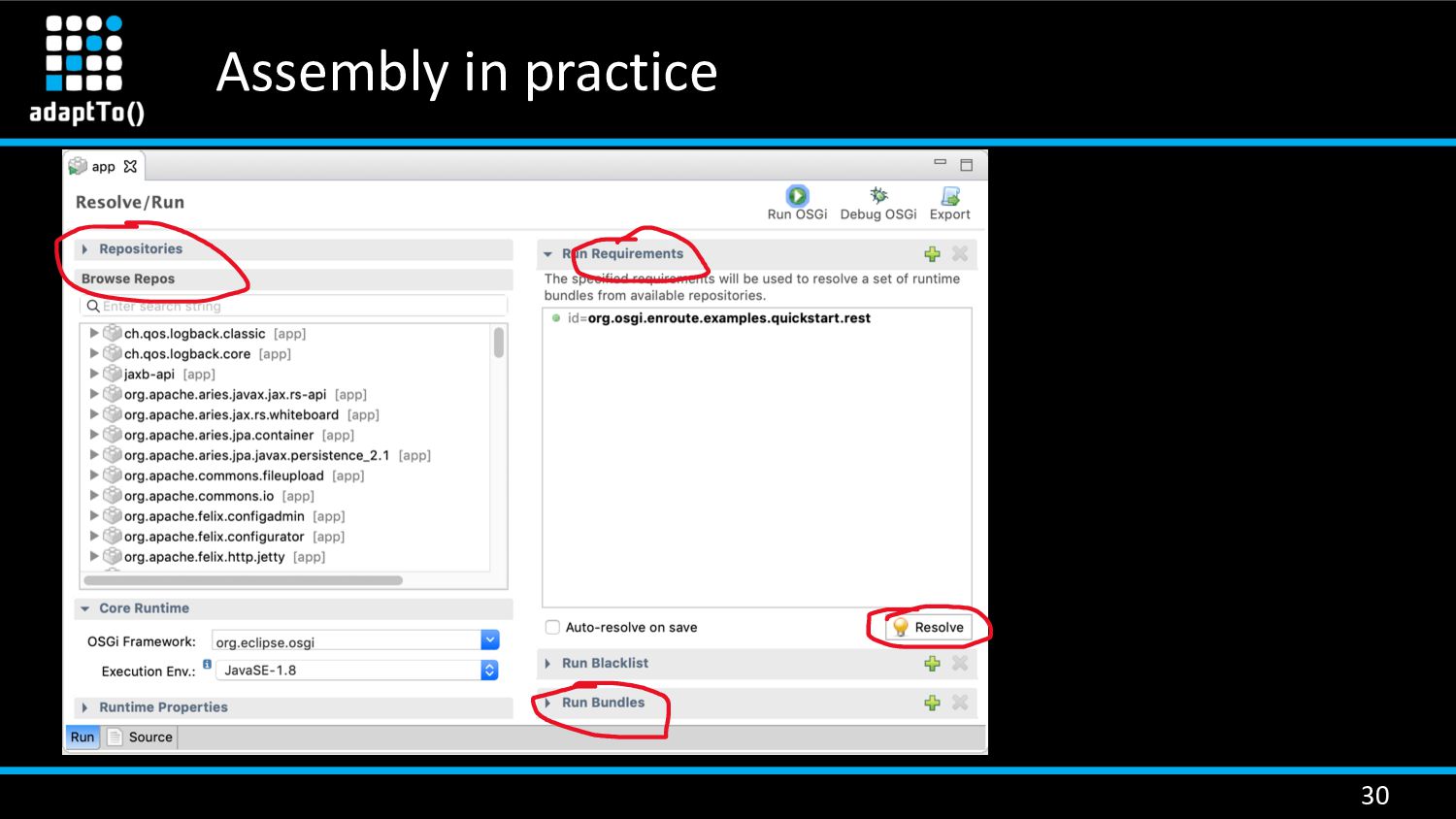
in parent § In each bundle define exports, requirements and capabilities using OSGi R7 annotations § Imports are handled automatically § Use bnd.bnd file only in case you need manual override
a package version? Hard to do manually § Configure semantic versioning plugin § Current API is compared to last release § Build failure when a package export version increase is needed
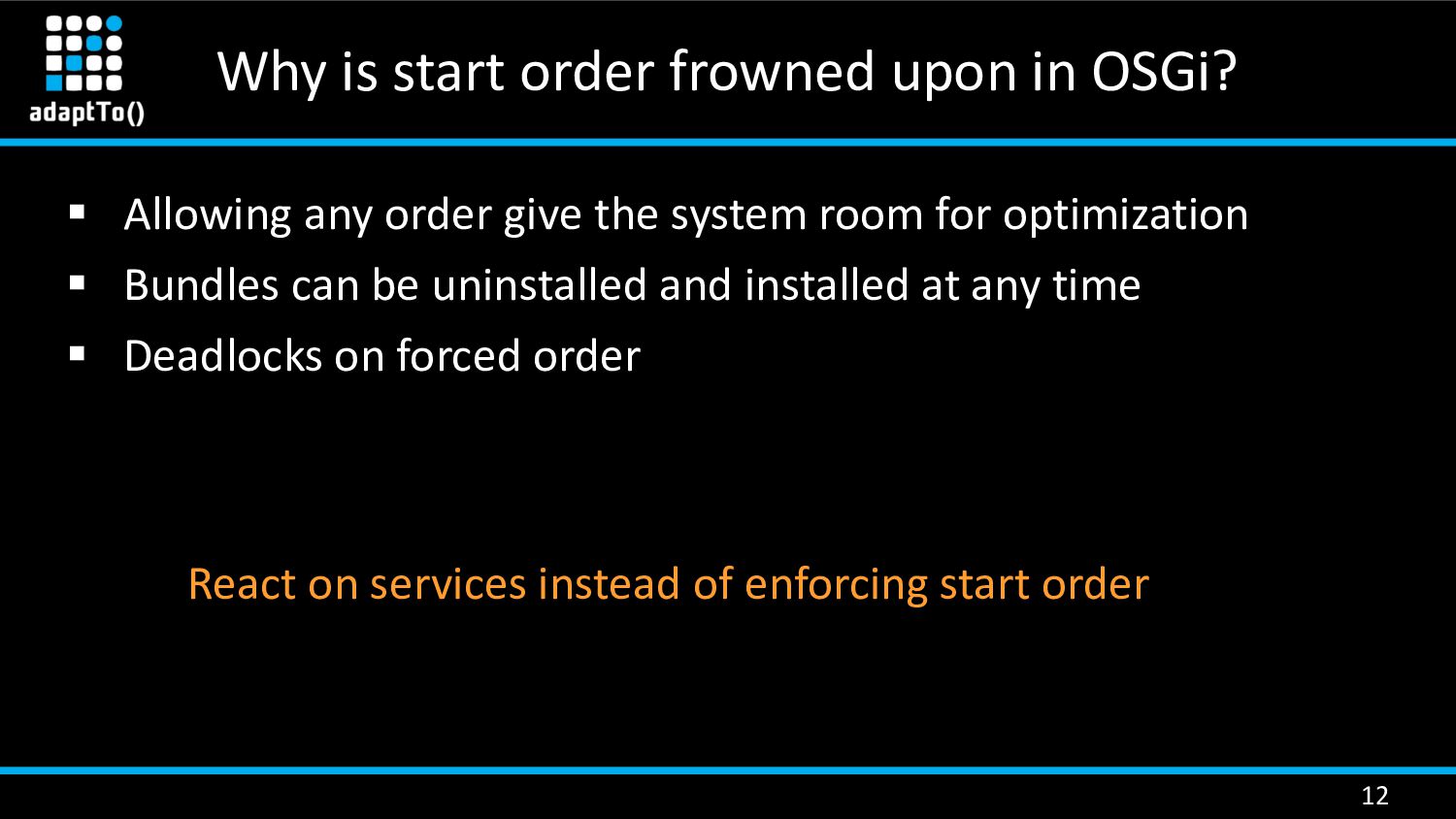
Allowing any order give the system room for optimization § Bundles can be uninstalled and installed at any time § Deadlocks on forced order React on services instead of enforcing start order
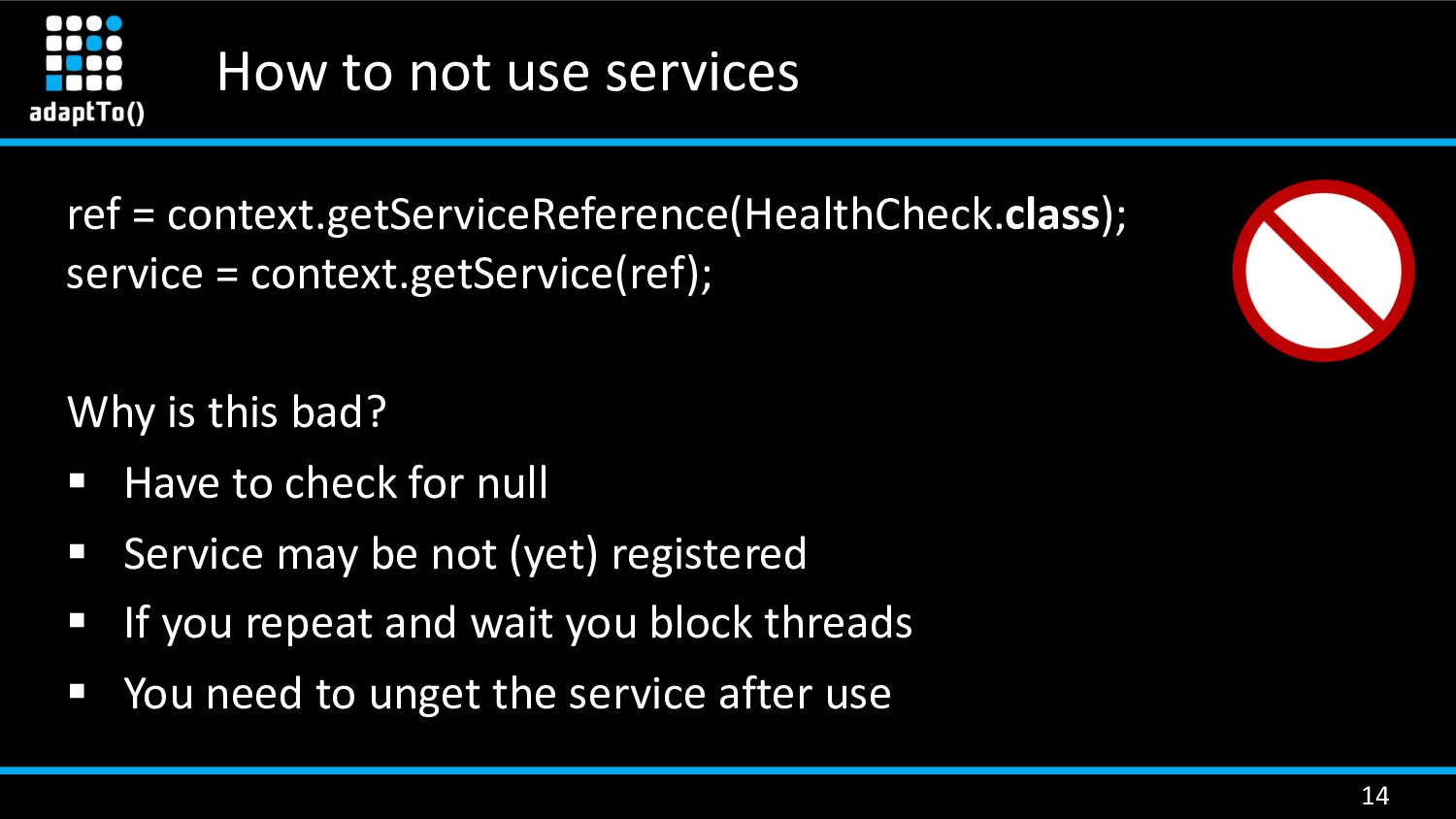
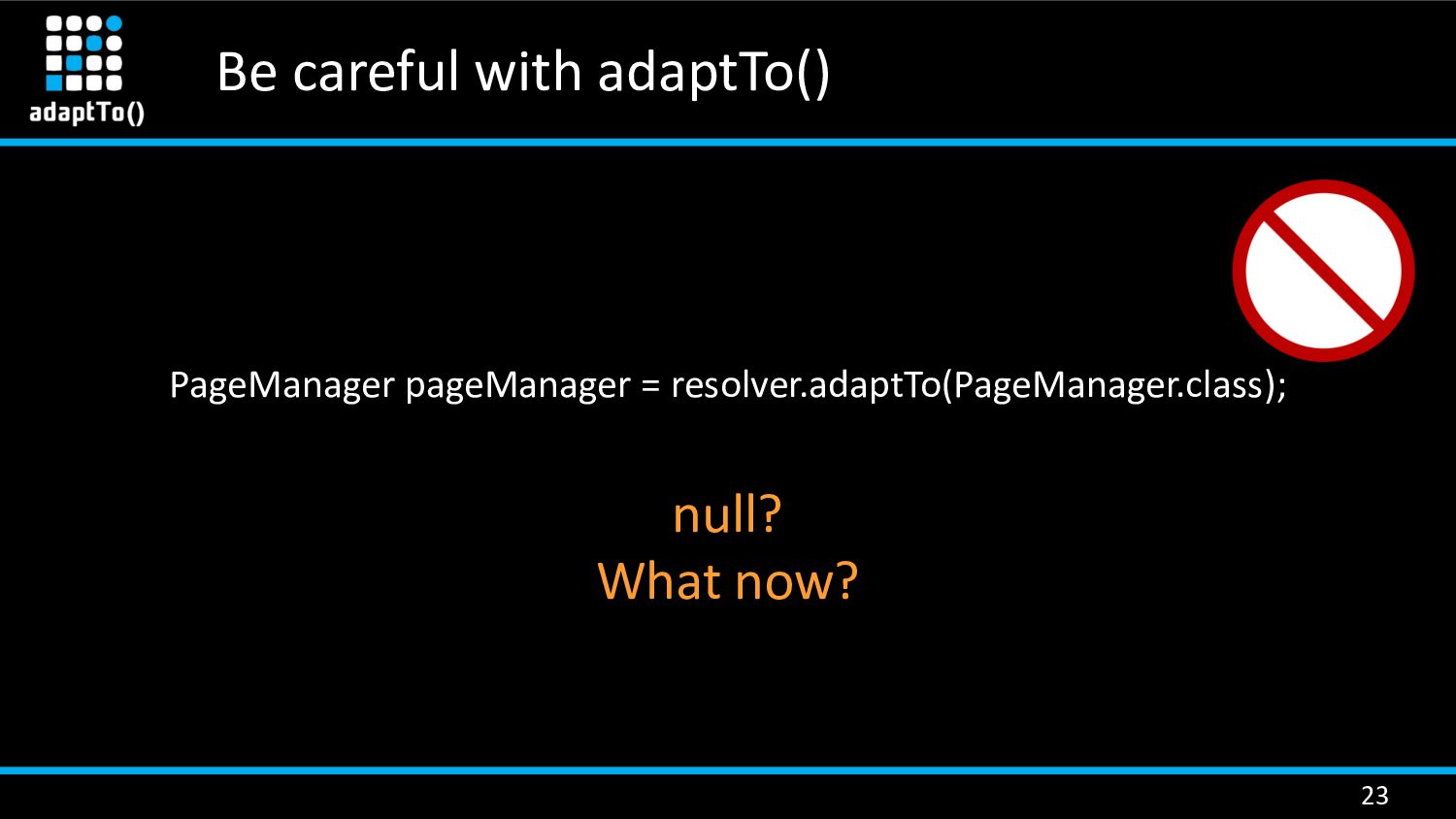
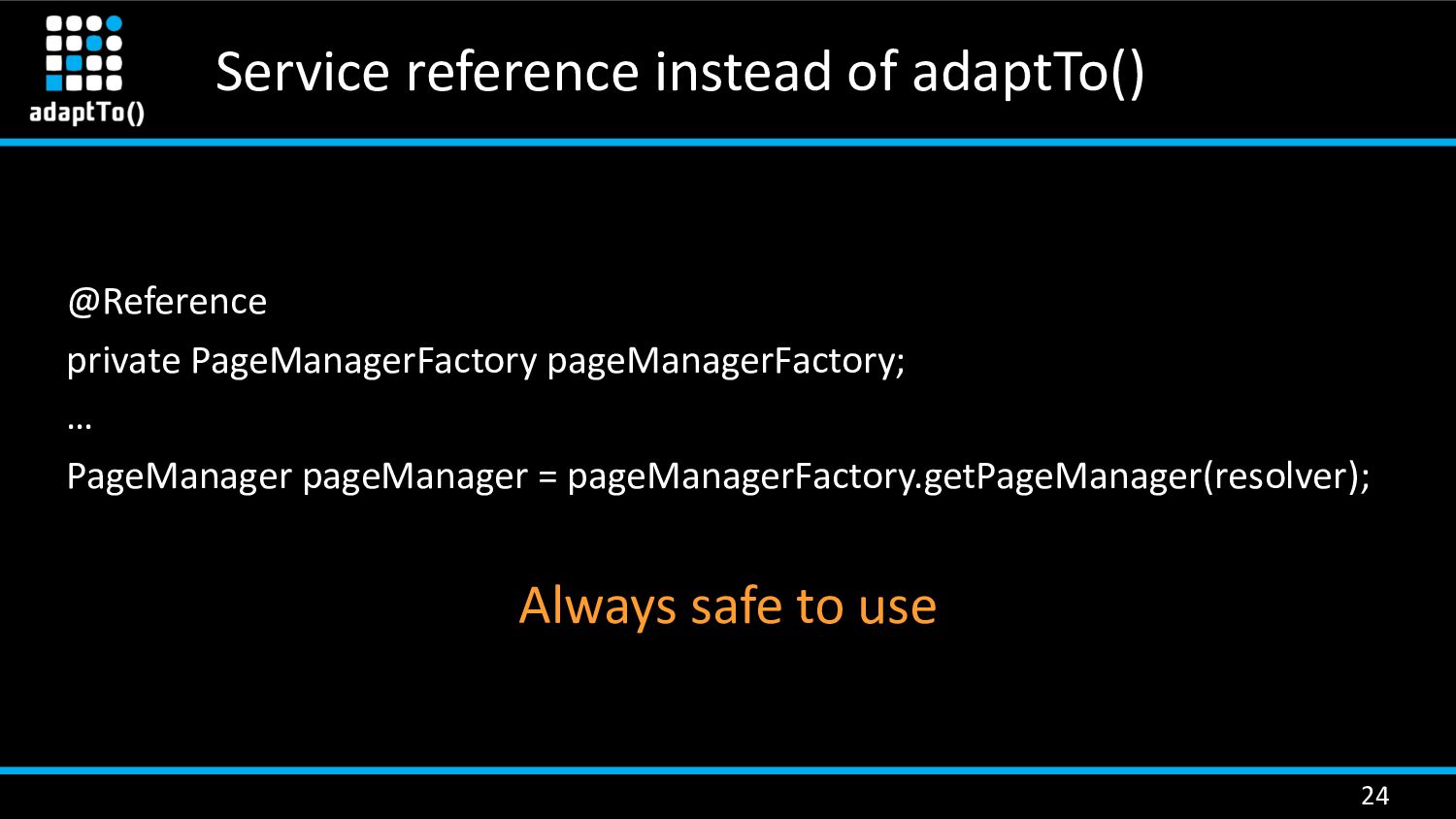
= context.getService(ref); Why is this bad? § Have to check for null § Service may be not (yet) registered § If you repeat and wait you block threads § You need to unget the service after use
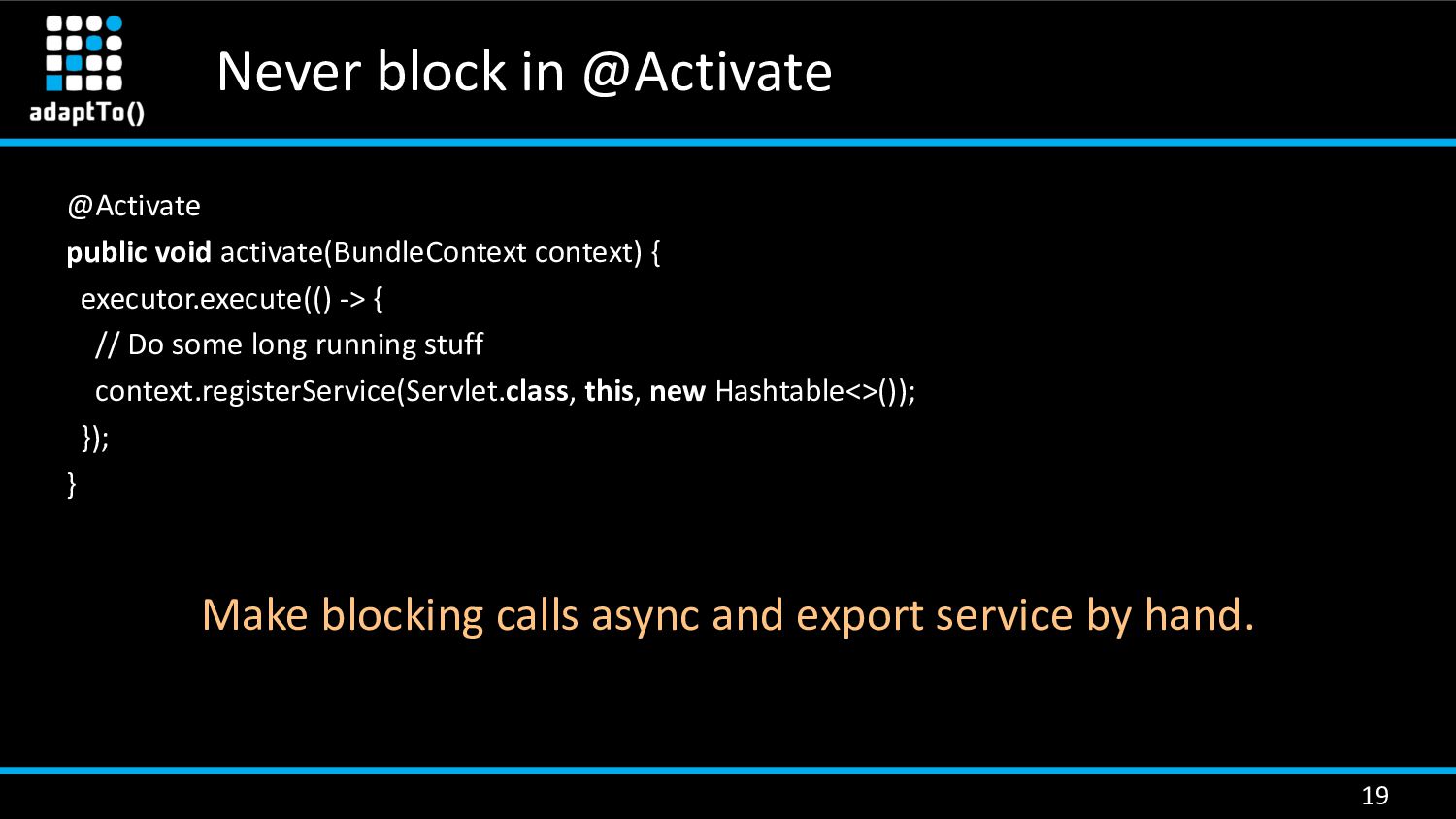
{ executor.execute(() -> { // Do some long running stuff context.registerService(Servlet.class, this, new Hashtable<>()); }); } Make blocking calls async and export service by hand.
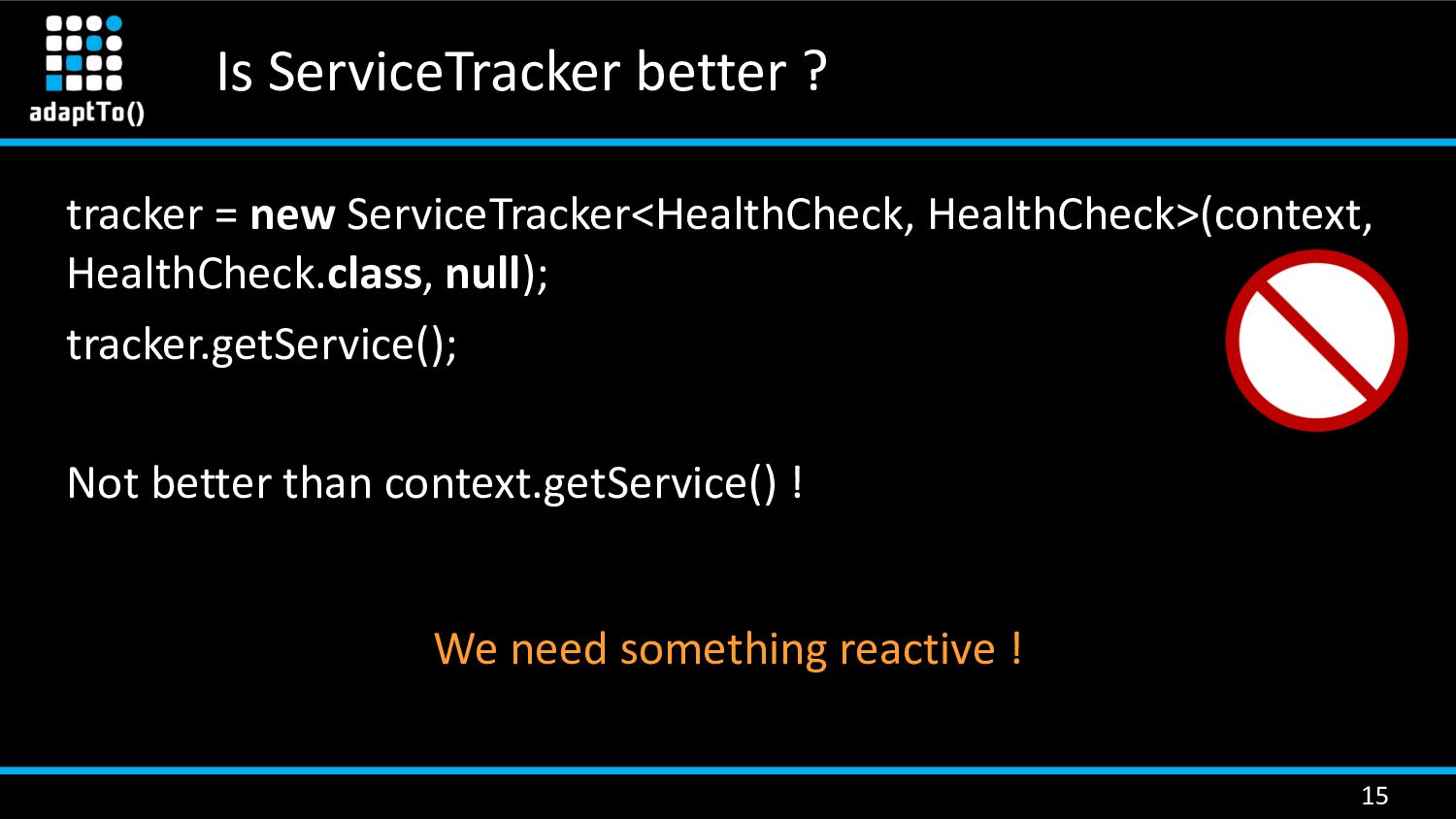
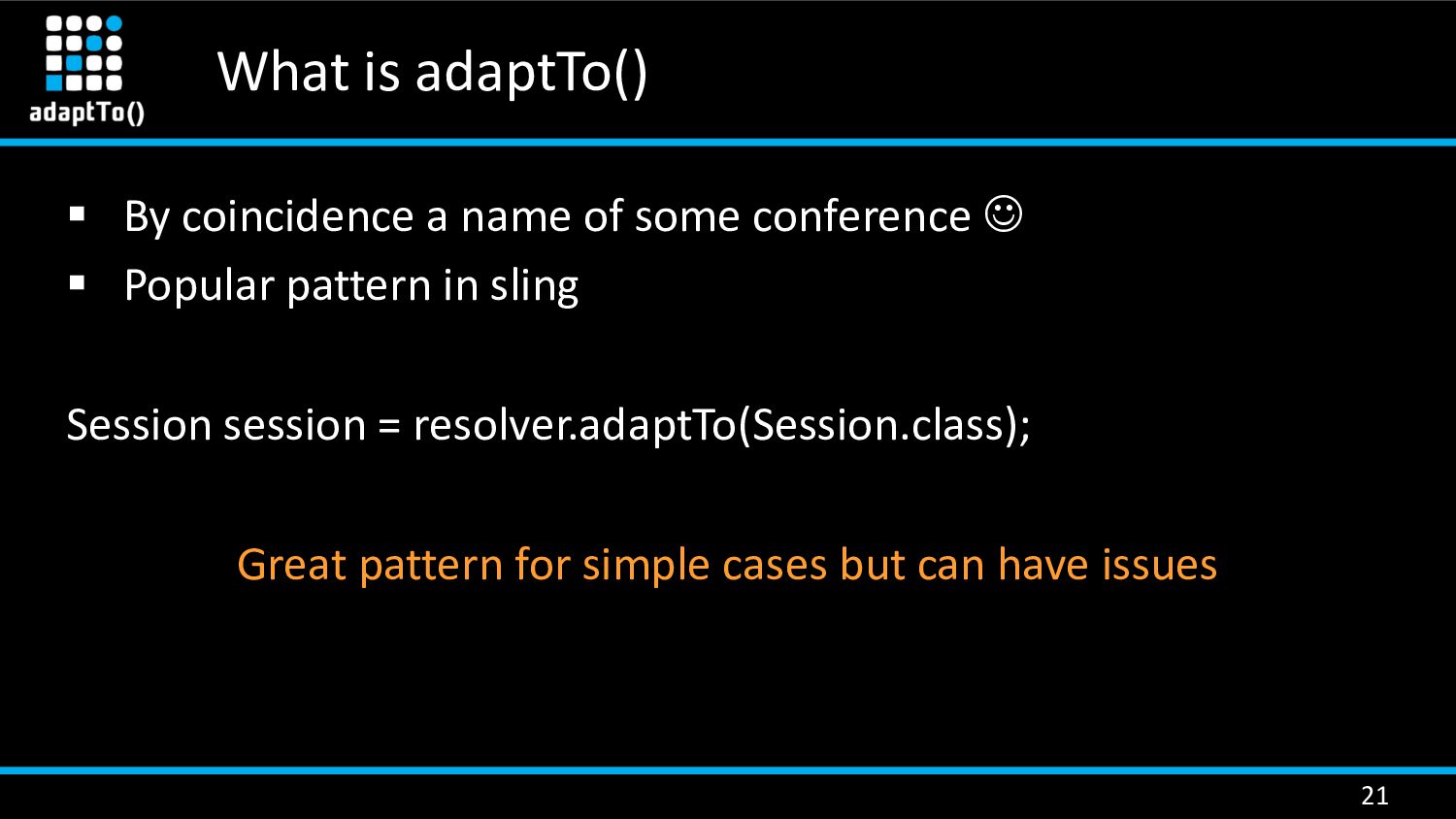
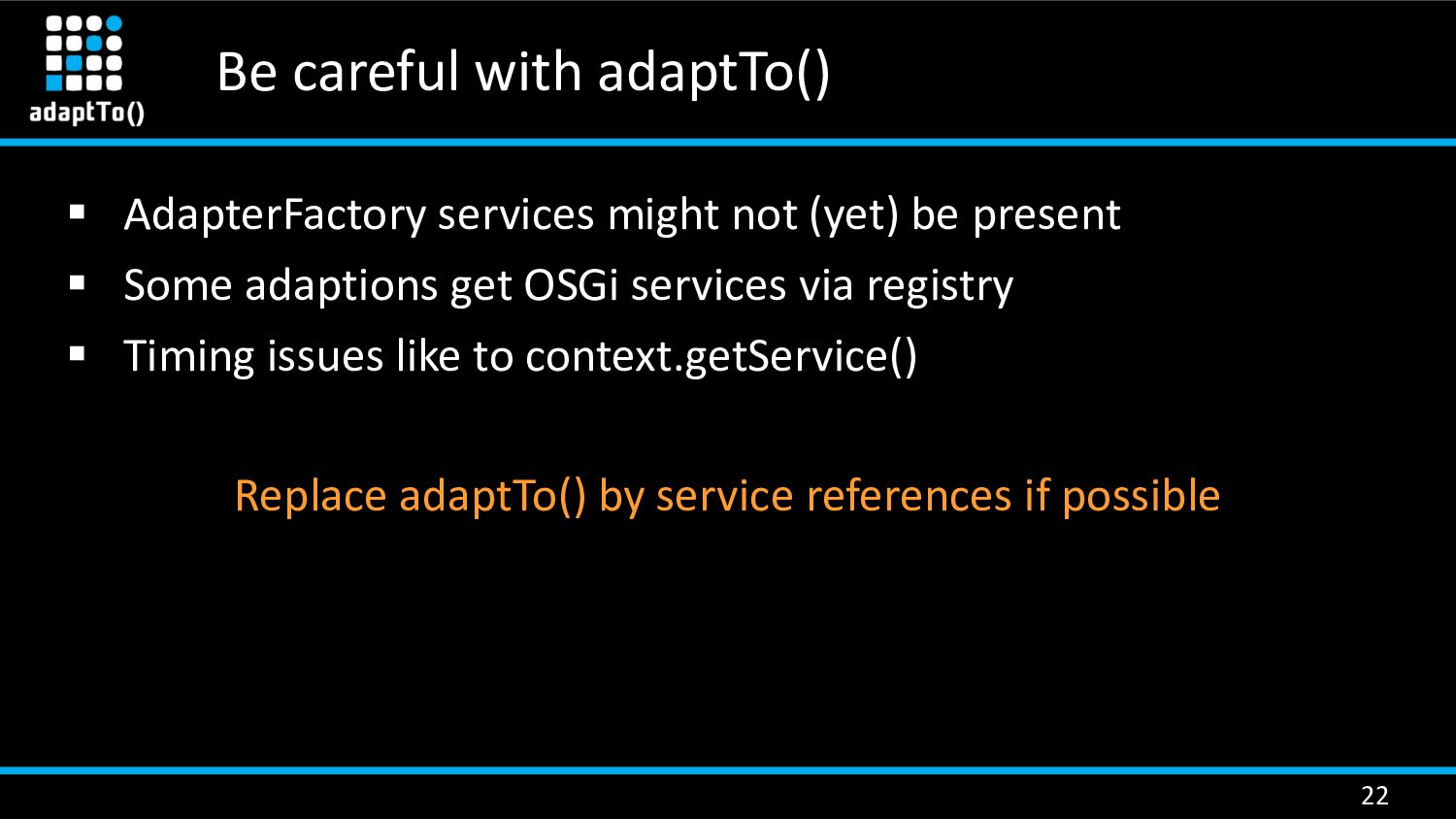
(yet) be present § Some adaptions get OSGi services via registry § Timing issues like to context.getService() Replace adaptTo() by service references if possible
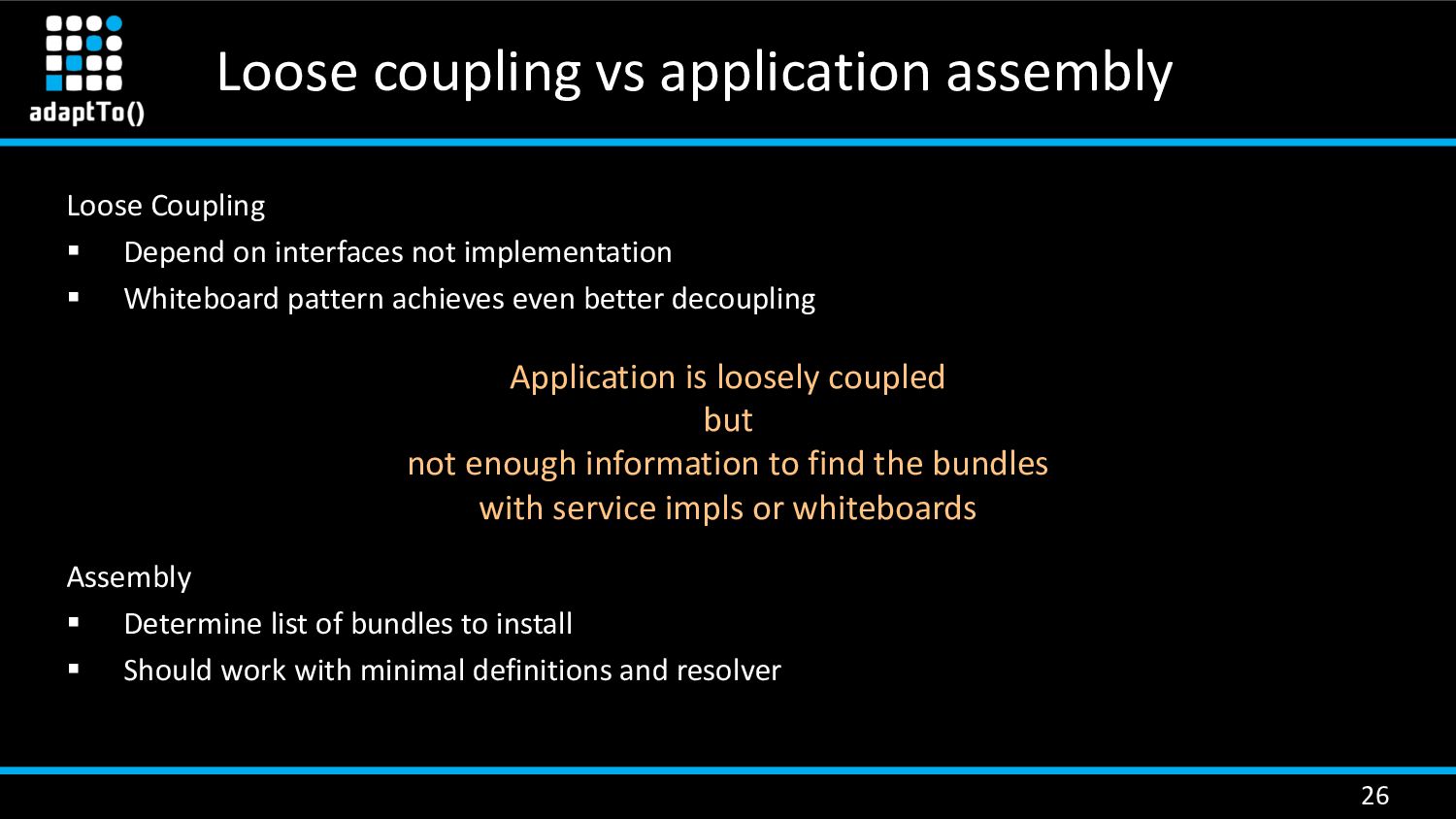
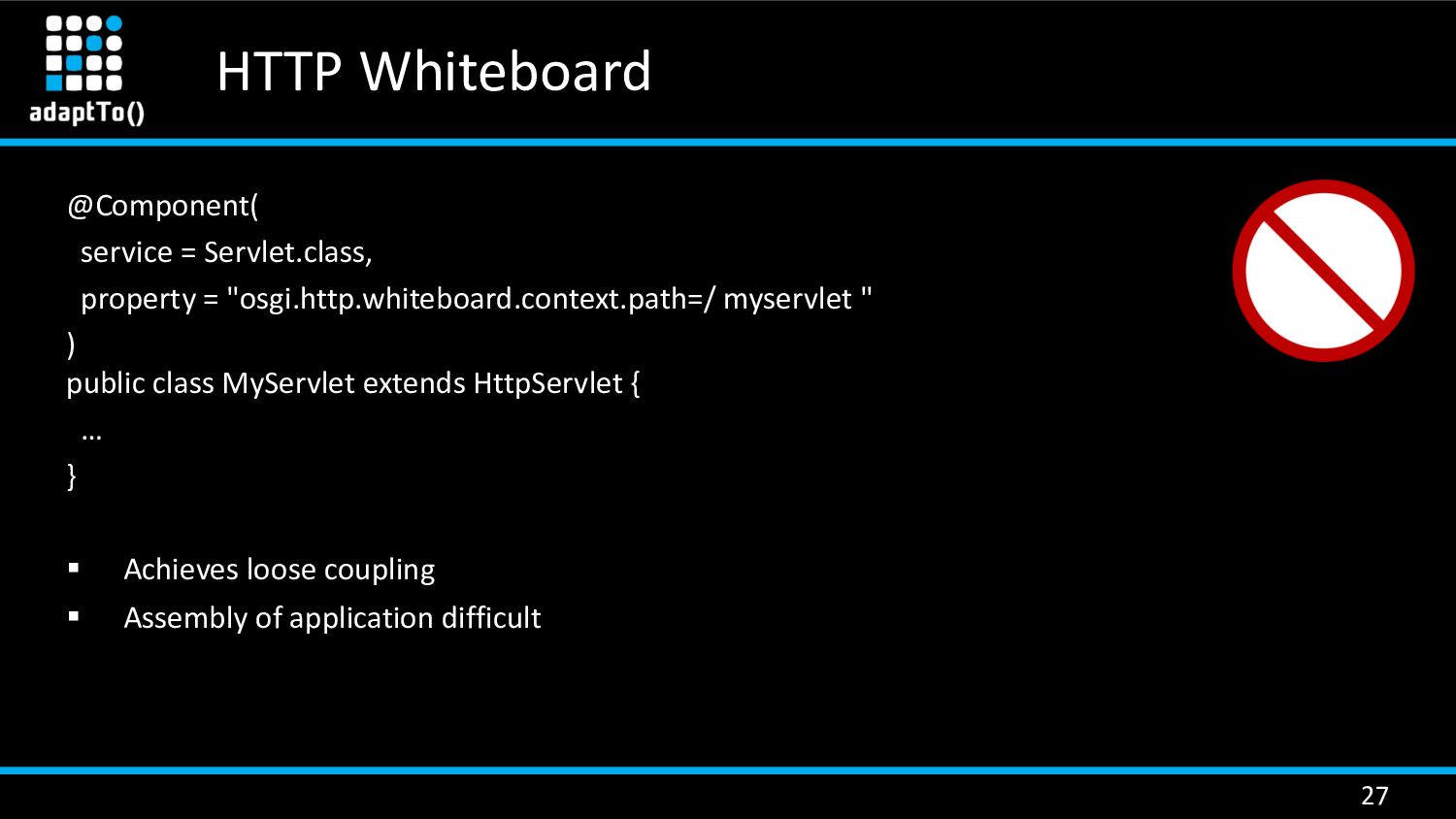
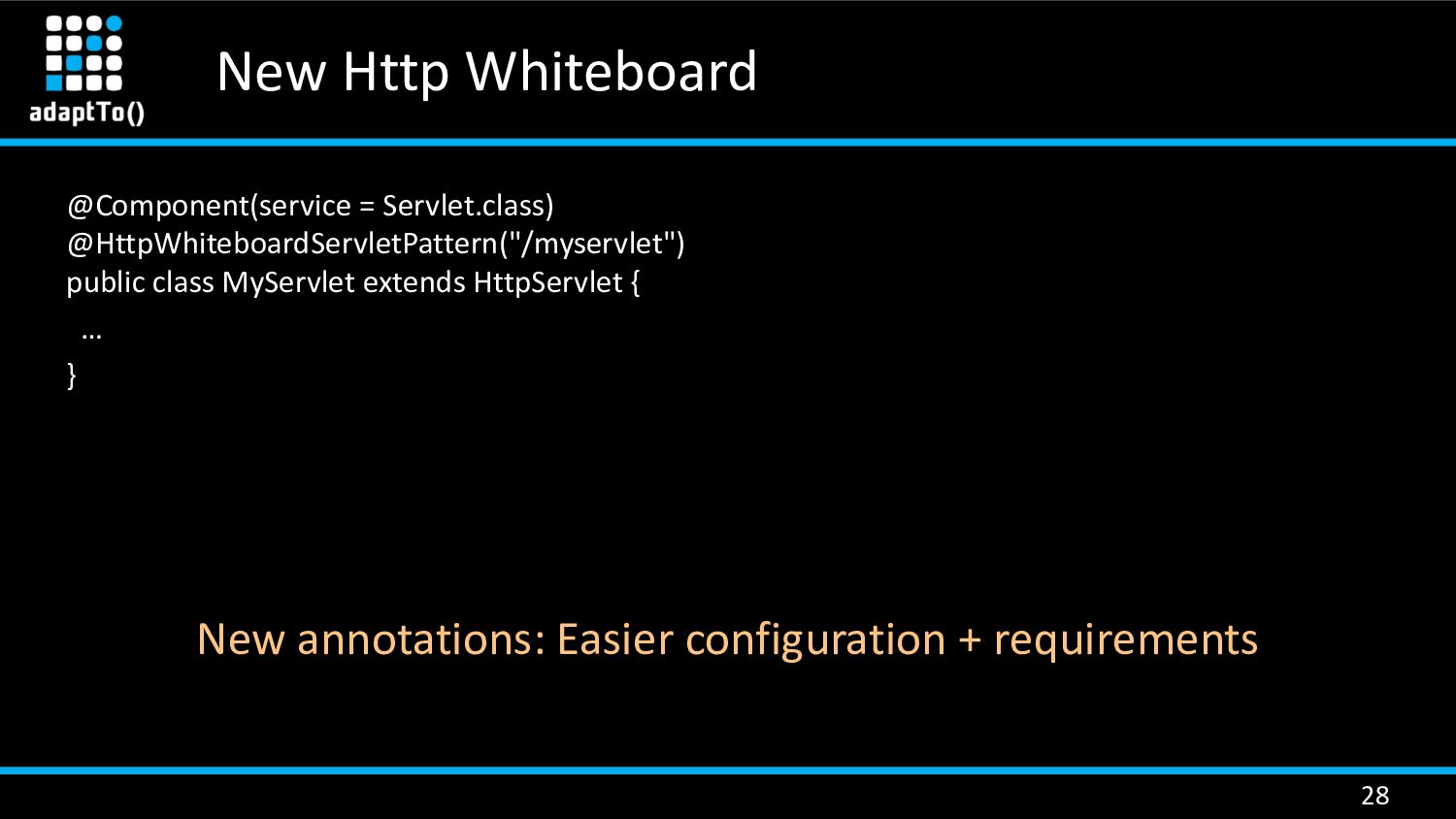
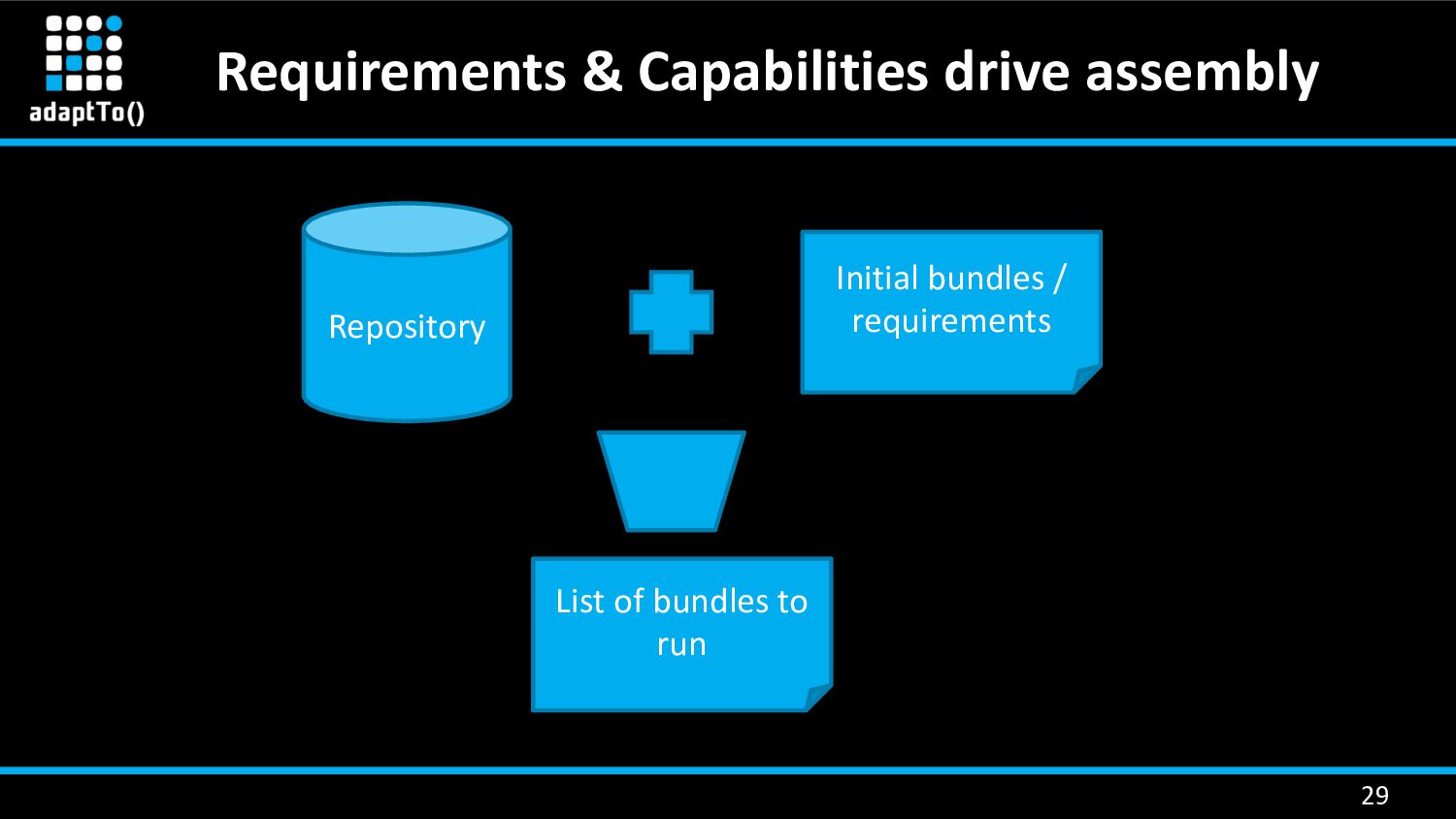
on interfaces not implementation § Whiteboard pattern achieves even better decoupling Assembly § Determine list of bundles to install § Should work with minimal definitions and resolver Application is loosely coupled but not enough information to find the bundles with service impls or whiteboards
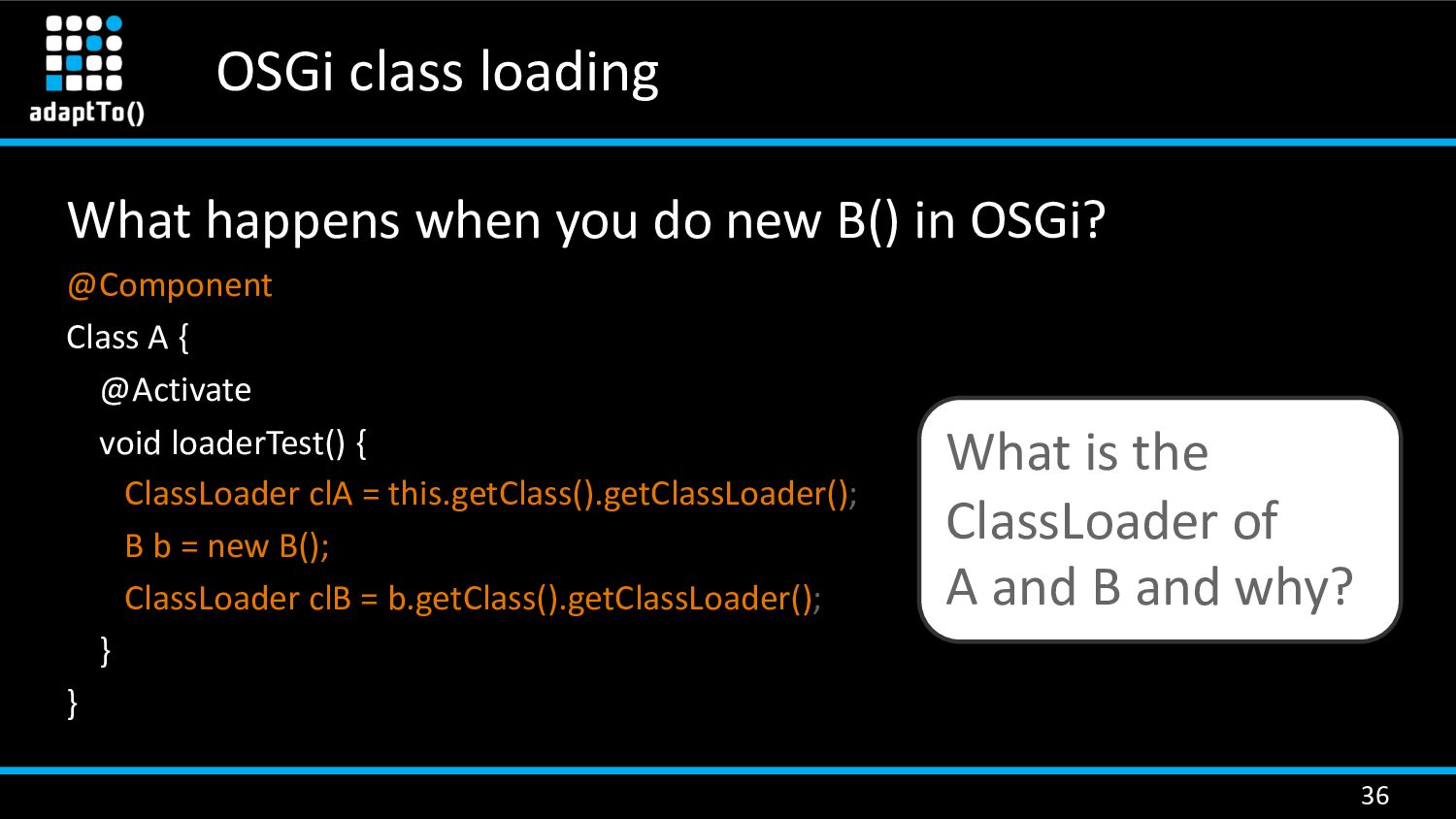
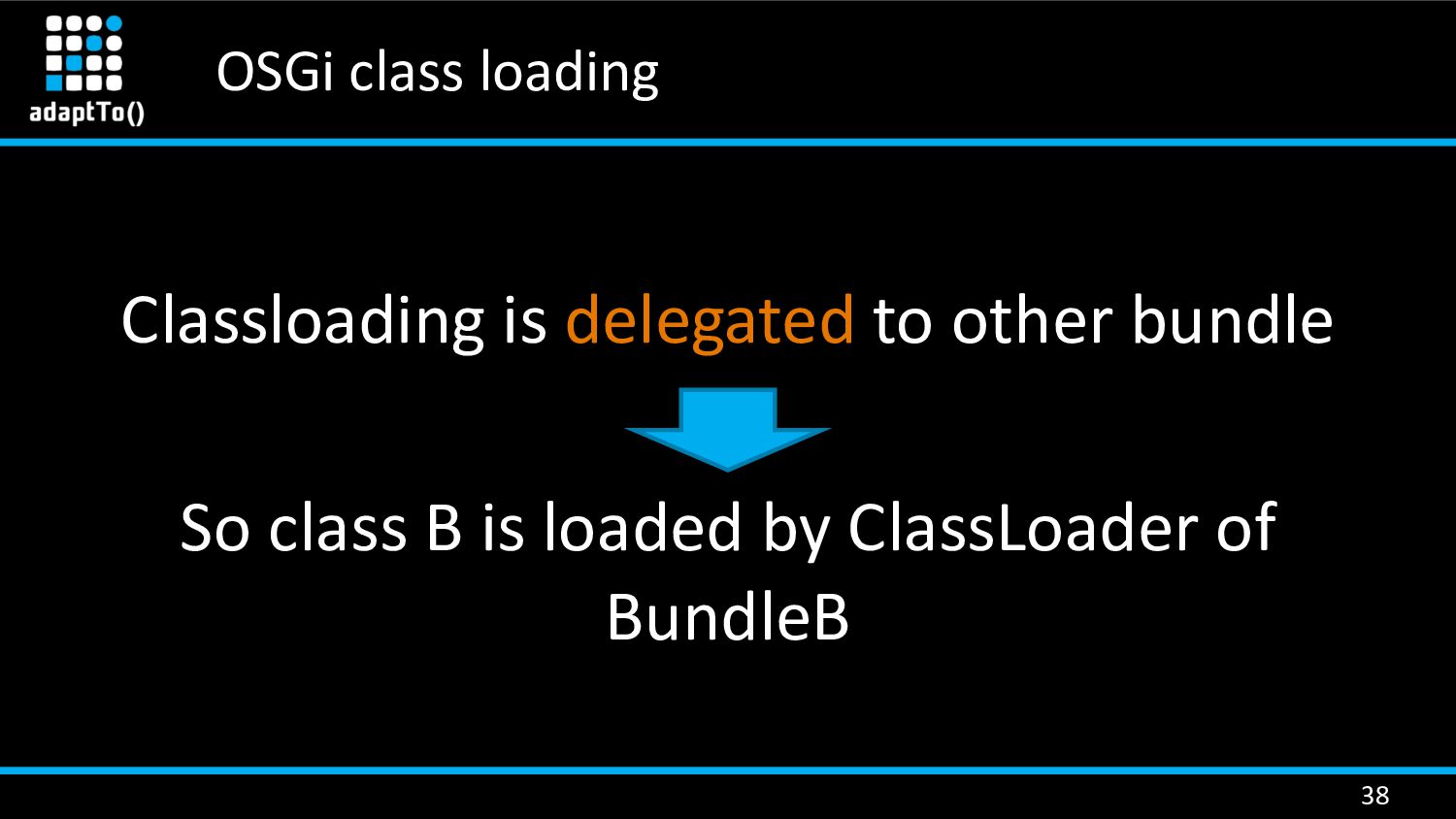
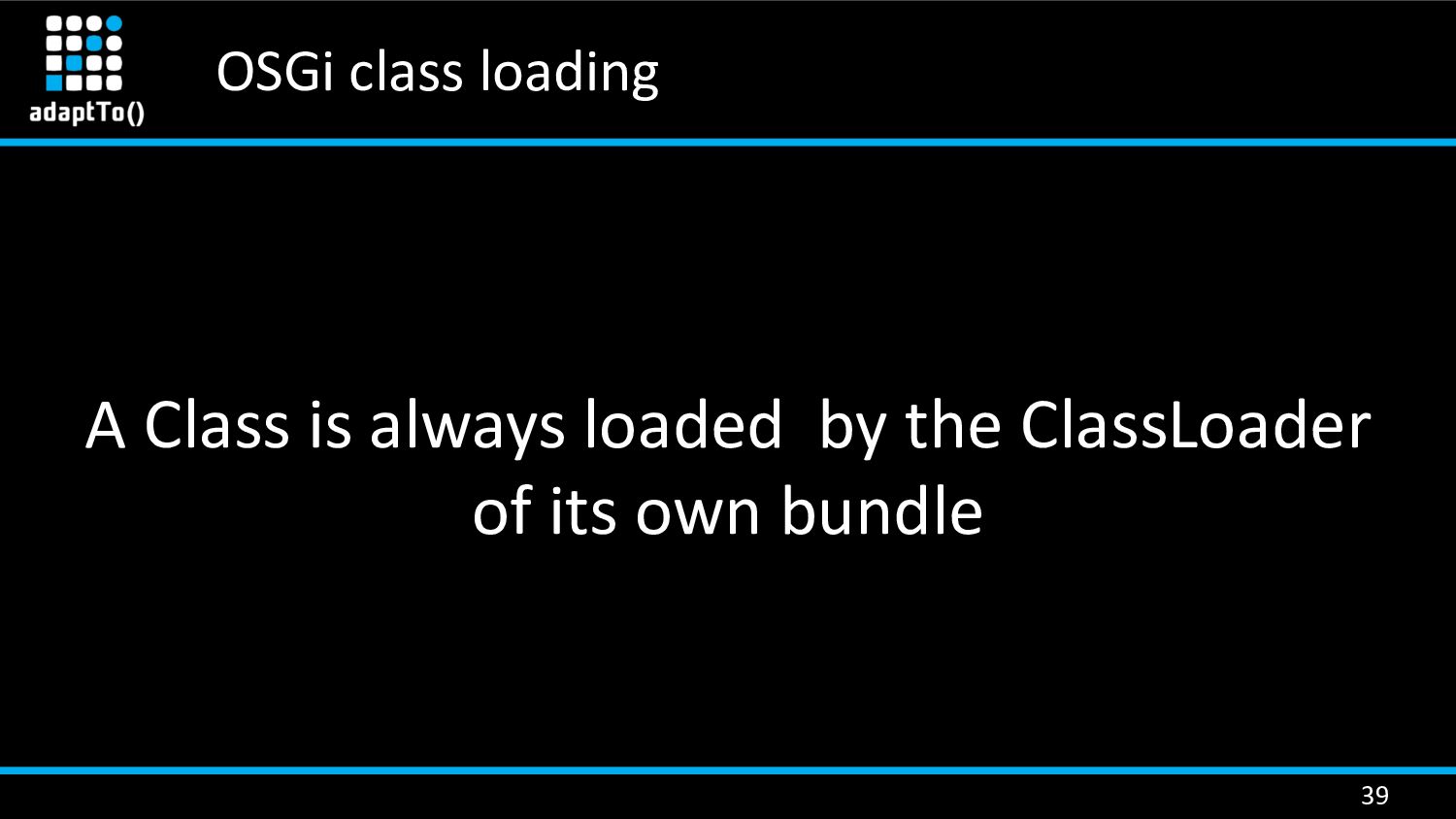
B() in OSGi? @Component Class A { @Activate void loaderTest() { ClassLoader clA = this.getClass().getClassLoader(); B b = new B(); ClassLoader clB = b.getClass().getClassLoader(); } } What is the ClassLoader of A and B and why?
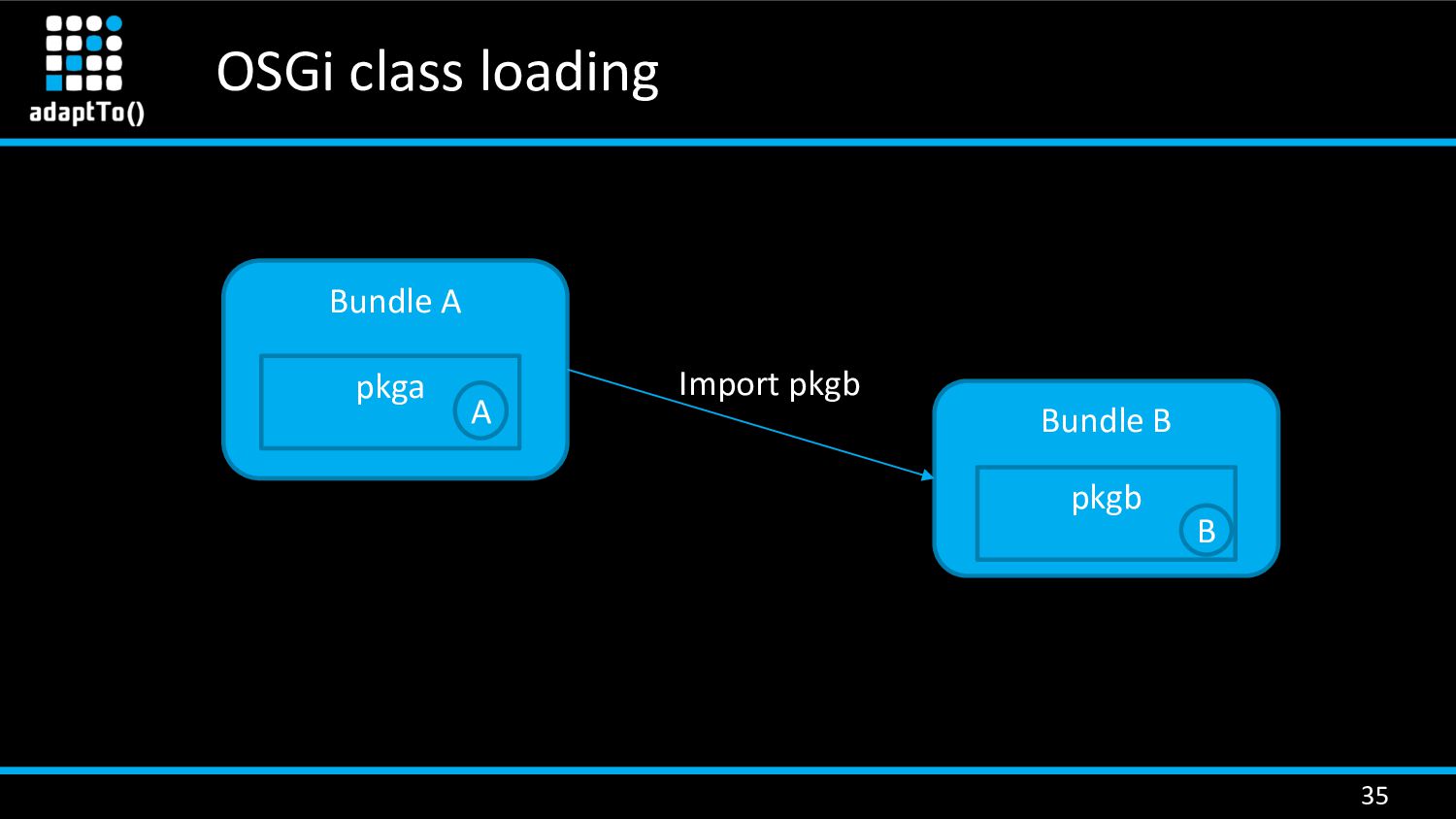
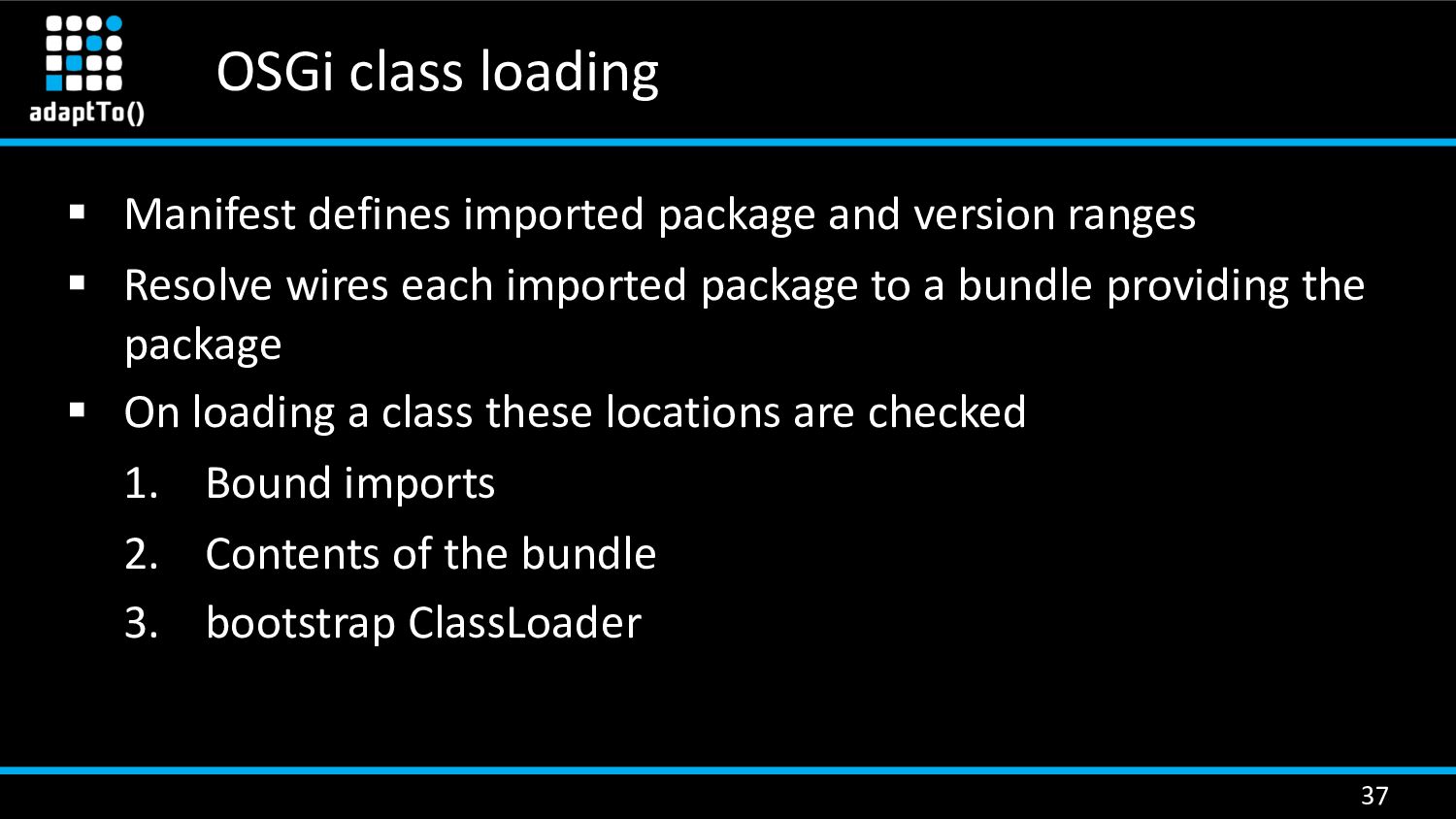
version ranges § Resolve wires each imported package to a bundle providing the package § On loading a class these locations are checked 1. Bound imports 2. Contents of the bundle 3. bootstrap ClassLoader

 SiteGround - Reliable hosting with speed, security, and support you can count on.


 cschneider1
 kasacchiful
 uyuki234
 akit37
 rshindo
 teyamagu
 lynnswap
 minodriven
 nao_randd
 panda728
 tosite
 deka_morita
 rollbear
 addyosmani
 shpigford
 mlcsv
 helmedeiros
 maggiecrowley
 rmw
 holman
 charlesmeaden
 raygrieselhuber
 signer
 skipperchong
 mza