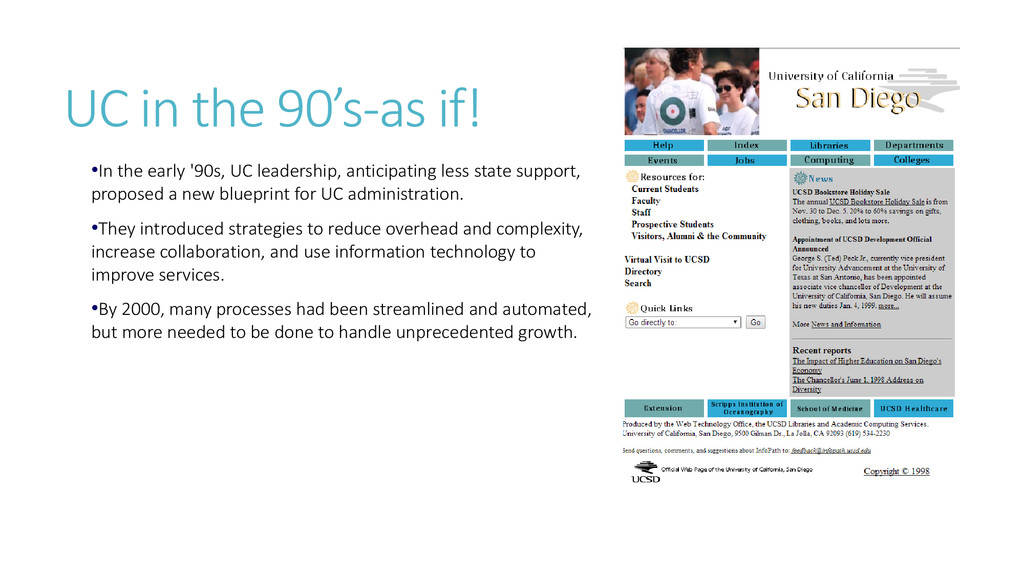
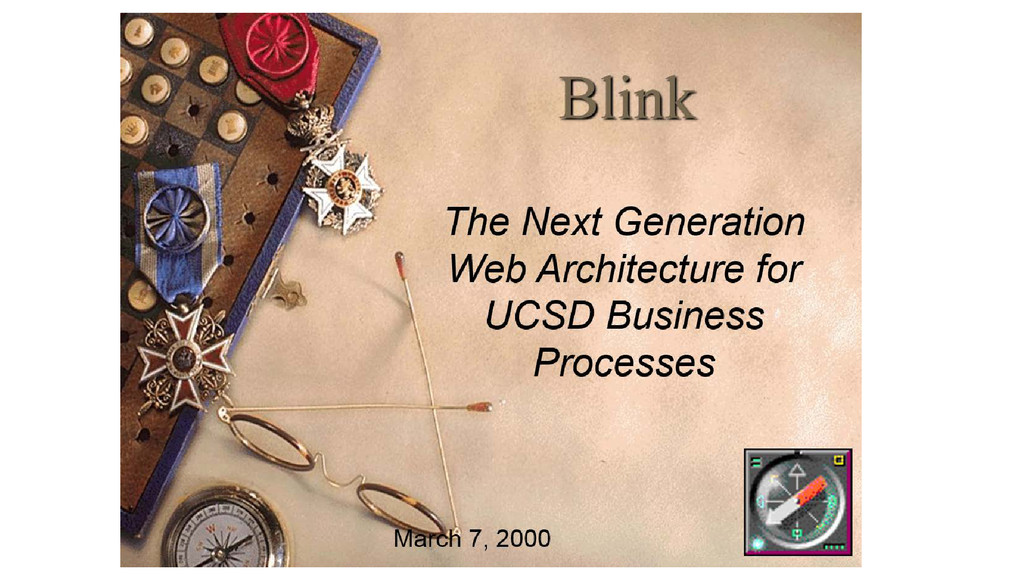
leadership, anticipating less state support, proposed a new blueprint for UC administration. •They introduced strategies to reduce overhead and complexity, increase collaboration, and use information technology to improve services. •By 2000, many processes had been streamlined and automated, but more needed to be done to handle unprecedented growth.
for the University of California proposed strategies to continue to deliver high quality administrative services and support in an environment of rapid growth. The New Business Architecture would create: • A collaborative environment where staff have ready access to the tools necessary to do their job efficiently and effectively • A workplace that allows University staff to maintain high levels of job satisfaction while providing the highest levels of customer service • An environment where technology solutions minimize time spent processing mundane, routine transactions
in 2000-2010: • Enrollment growth will generate faculty growth • Faculty growth will generate sponsored research • Business transactions will increase Admin resources won’t increase in proportion to campus growth: • Departments & central administrative units won’t be adequately staffed • New staff will not have adequate skills and training
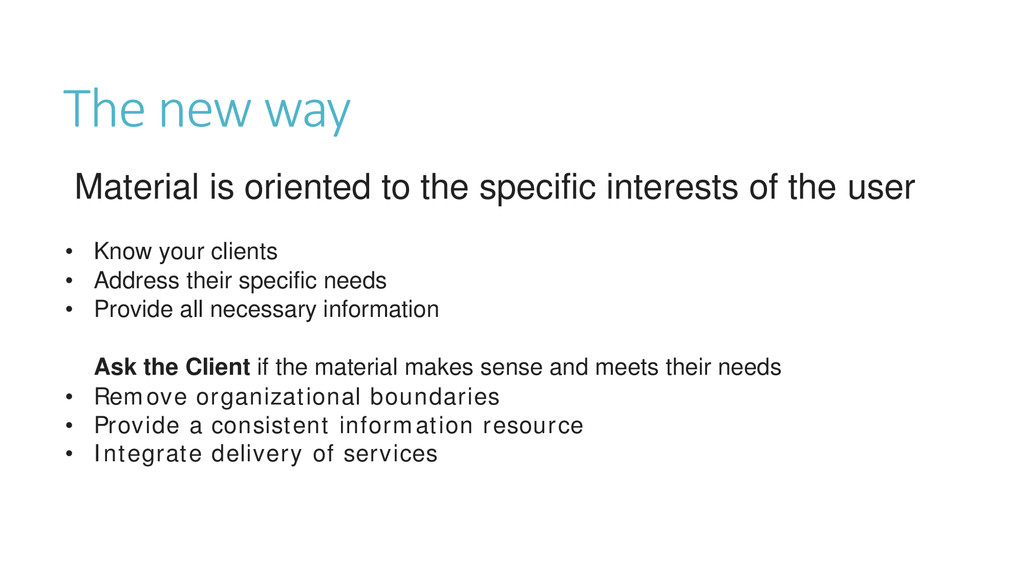
of the user • Know your clients • Address their specific needs • Provide all necessary information Ask the Client if the material makes sense and meets their needs • Remove organizational boundaries • Provide a consistent information resource • Integrate delivery of services
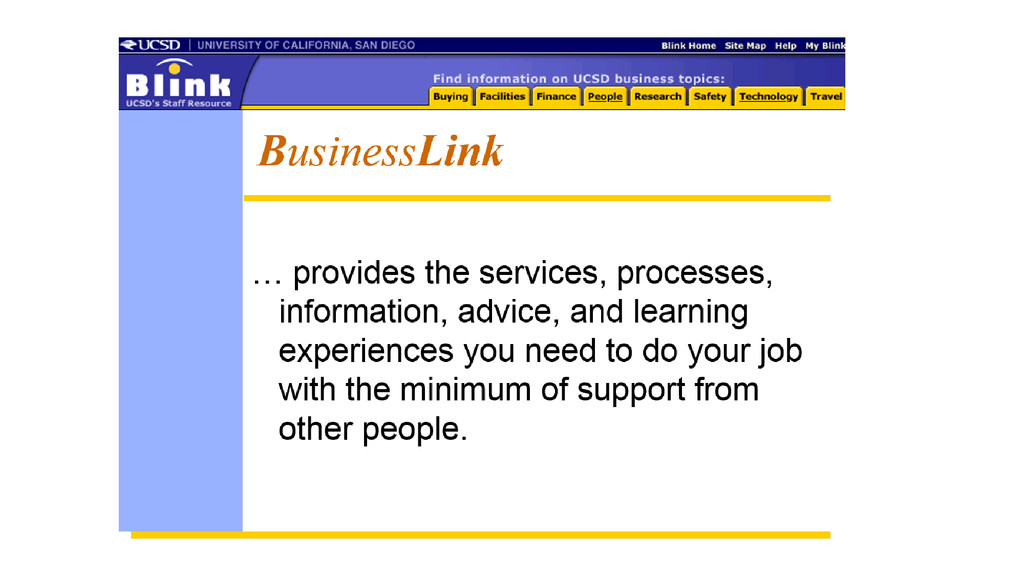
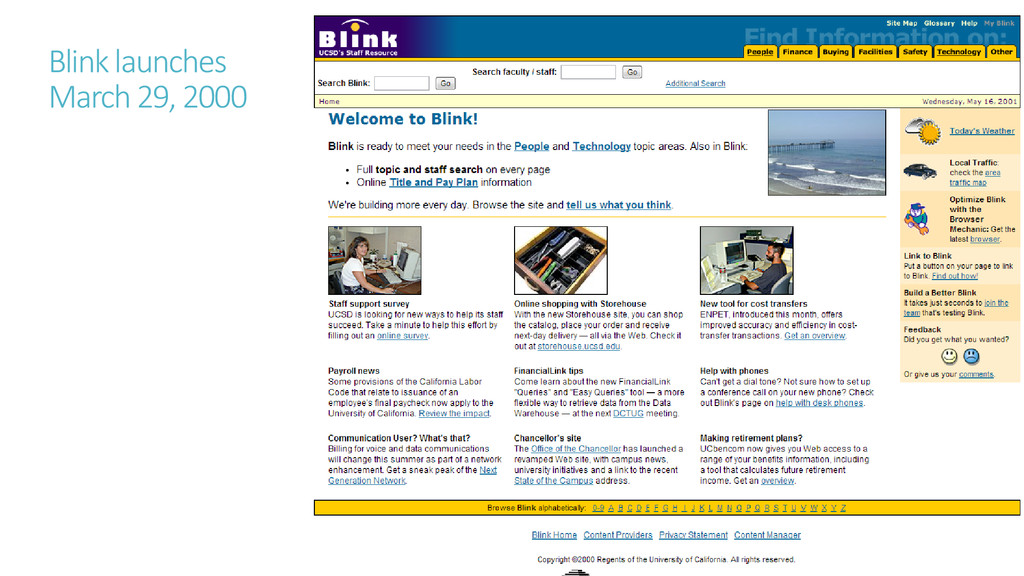
•Target user is new or less-experienced campus staff •More experienced staff can drill directly to detailed information and use Blink to stay on top of changes in process and policy •Content aims to be accurate, up-to-date, easy to read and understand (avoids legalese and uses “plain English”) •Site is easy to search and navigate, and oriented to the user’s point of view •Blink is constantly evolving based on user feedback and usability analysis
areas: HR (People) and Technology • Over the next few years, topics are added: Buying, Facilities, Finance, Research, Safety, and Travel • Other UCs use Blink as a resource •Blink SMEs become leaders in the interpretation of UC policies and procedures
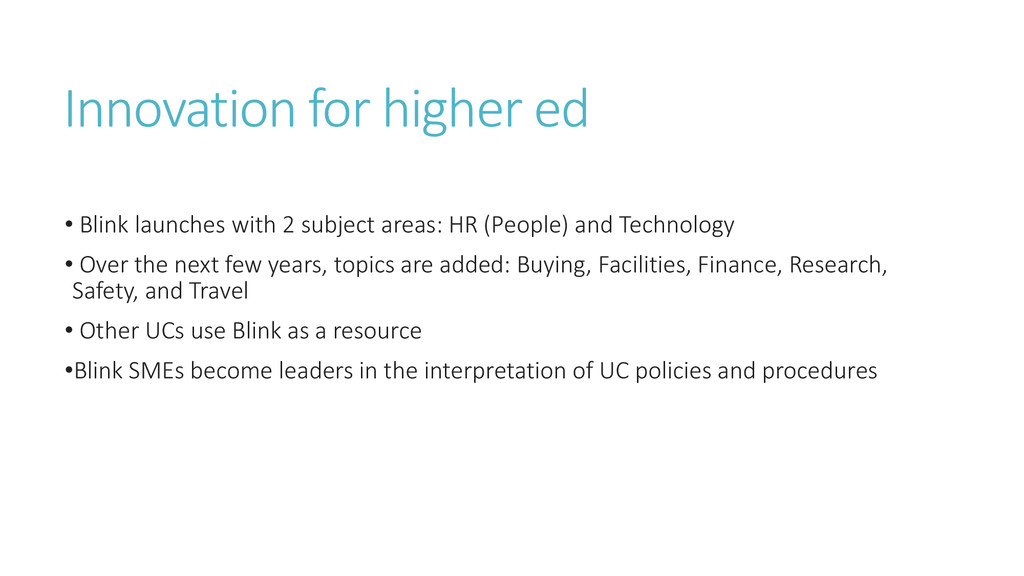
partners with Student Affairs to create a student portal •StudentLink is divided into content for students (TritonLink) and Faculty and Staff (Student Class/Info in Blink) •The Blink team becomes Portal Services
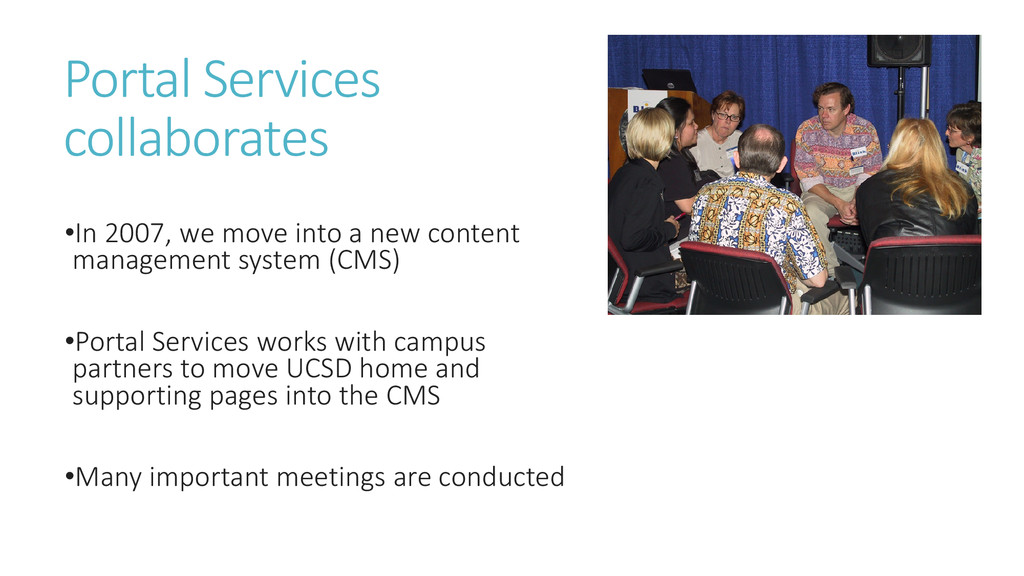
content management system (CMS) •Portal Services works with campus partners to move UCSD home and supporting pages into the CMS •Many important meetings are conducted
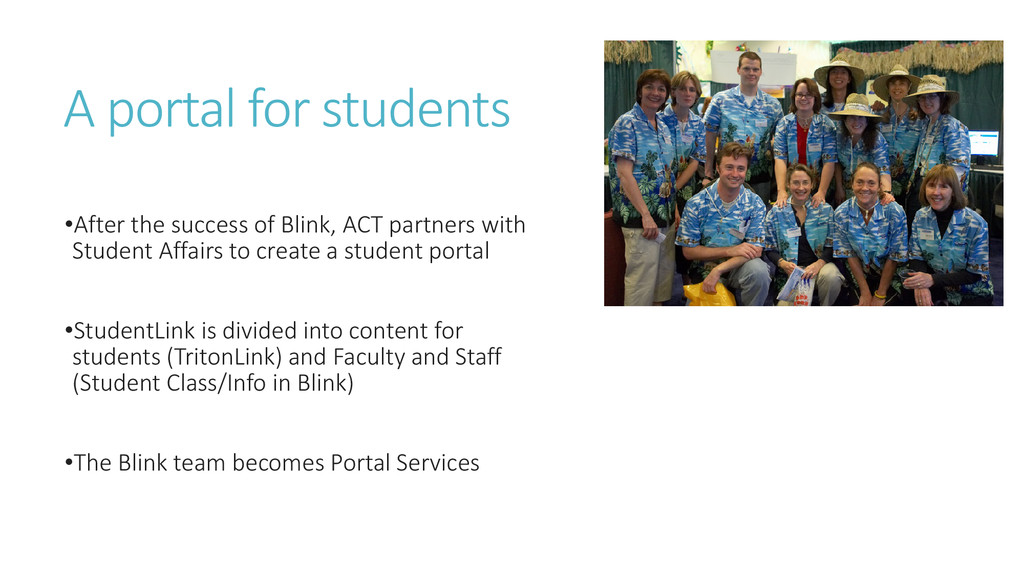
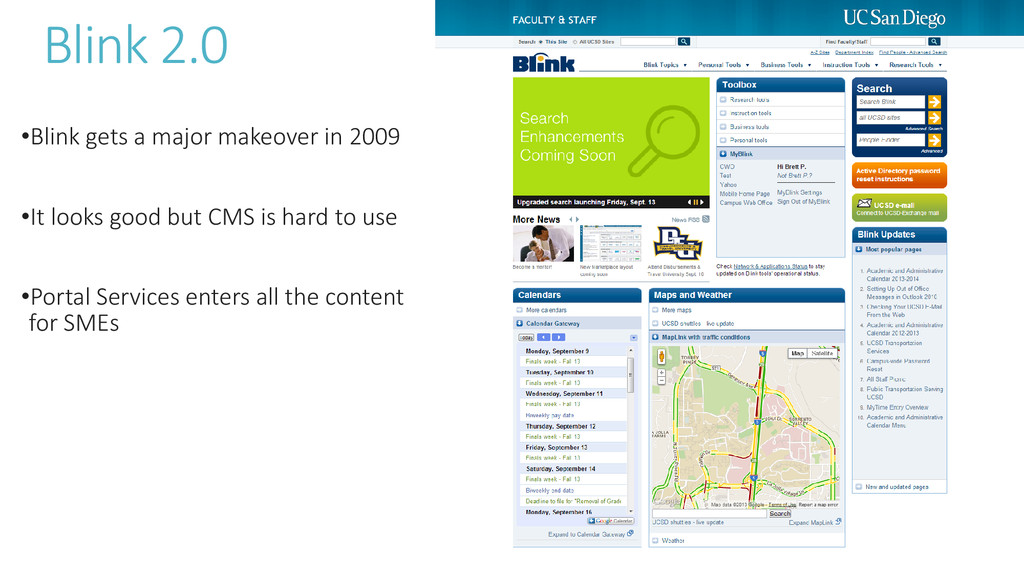
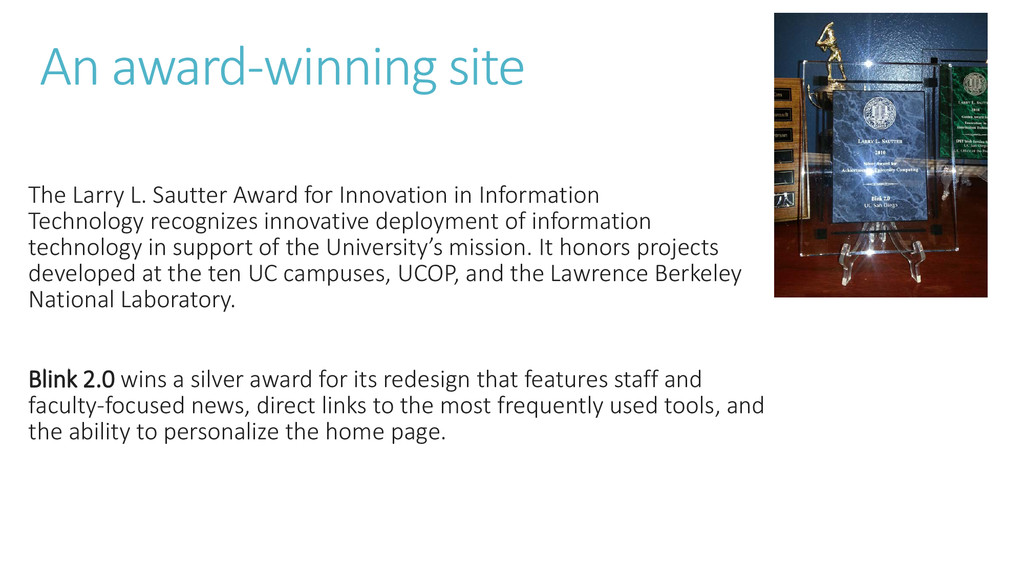
in Information Technology recognizes innovative deployment of information technology in support of the University’s mission. It honors projects developed at the ten UC campuses, UCOP, and the Lawrence Berkeley National Laboratory. Blink 2.0 wins a silver award for its redesign that features staff and faculty-focused news, direct links to the most frequently used tools, and the ability to personalize the home page.
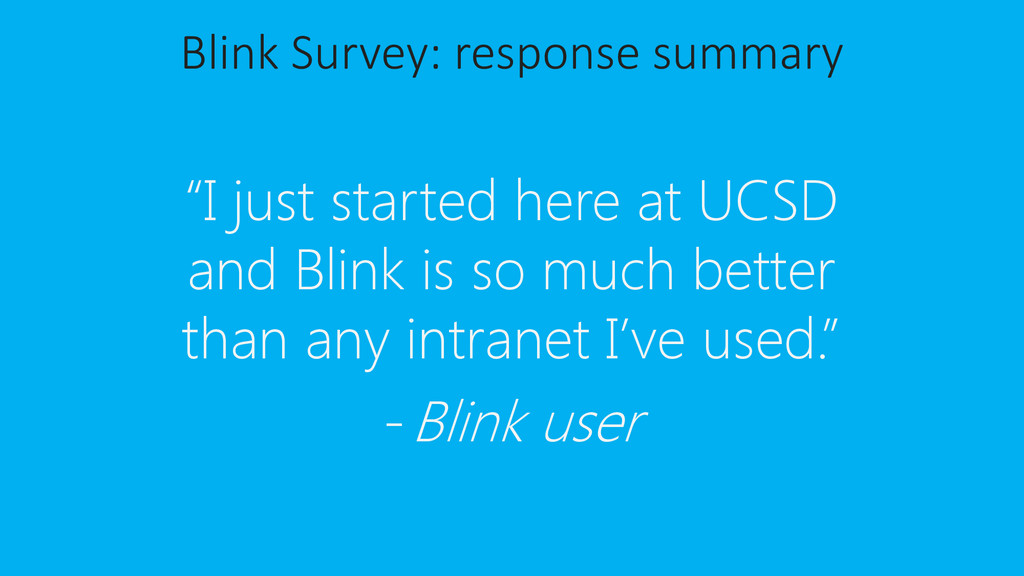
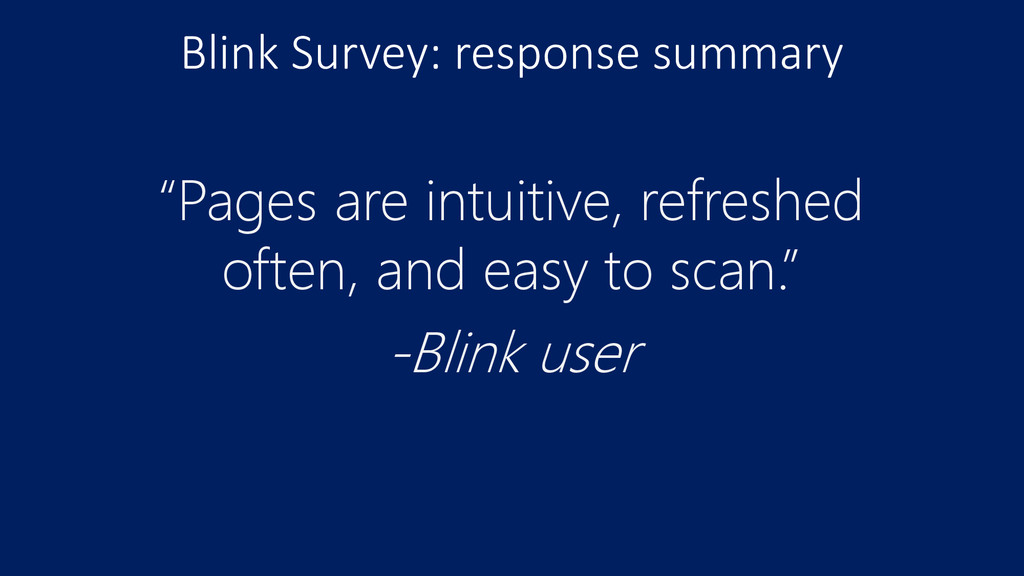
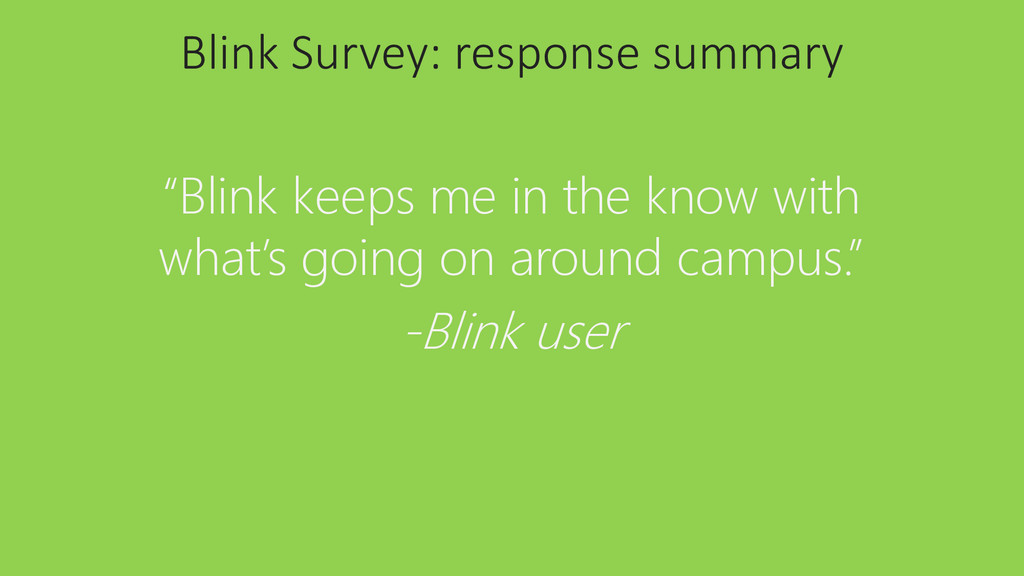
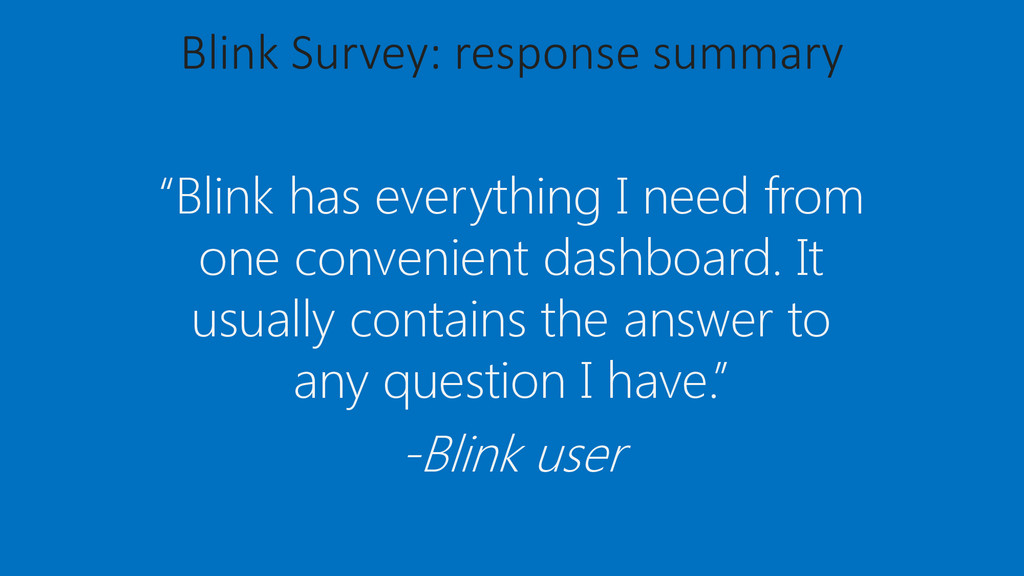
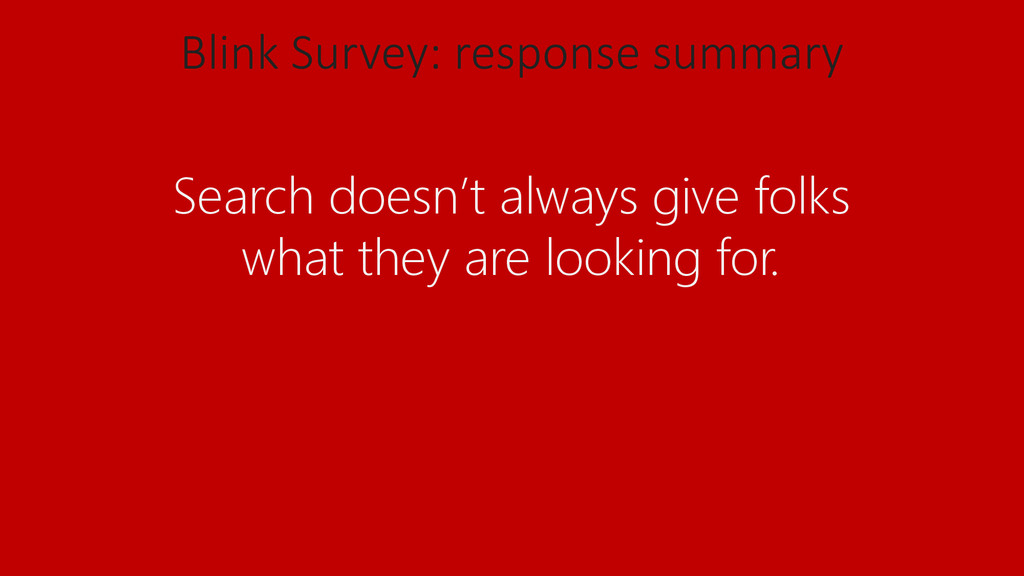
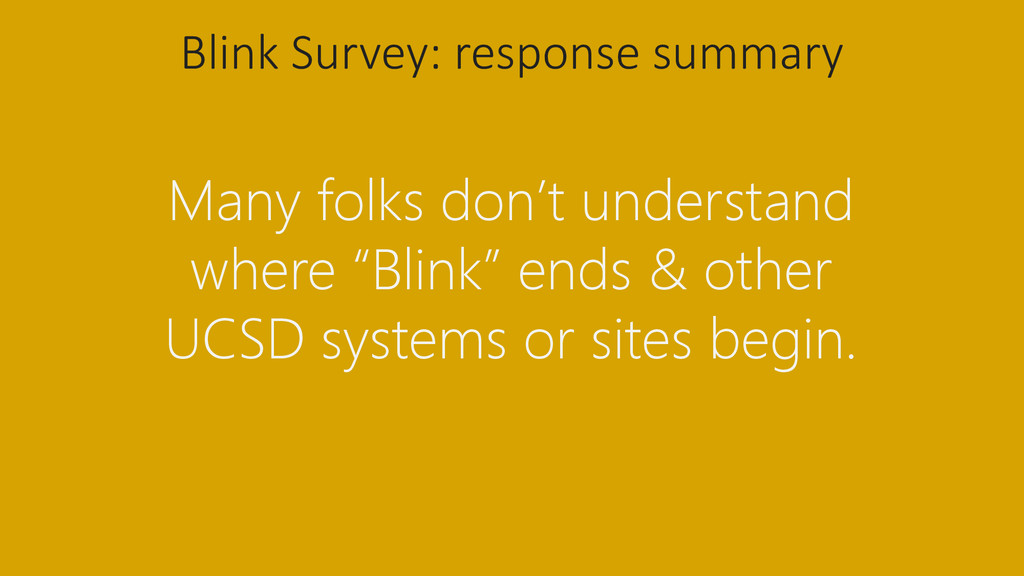
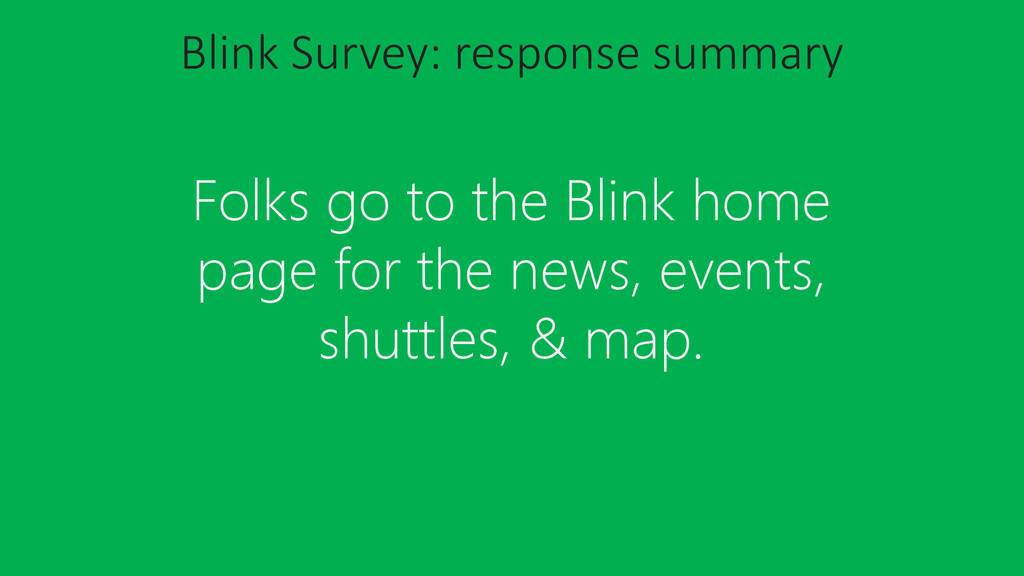
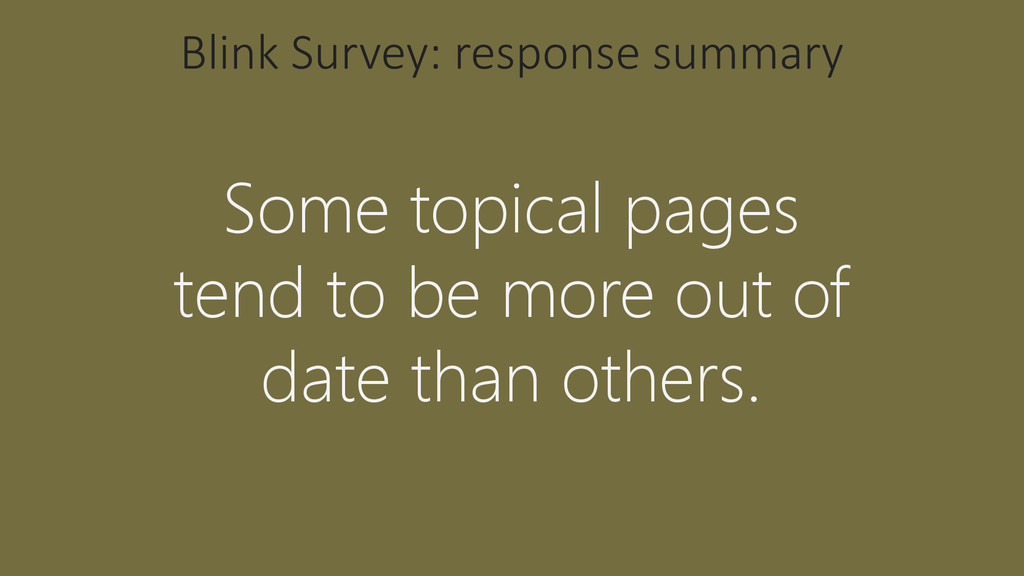
Are there specific pages you find particular useful? If so, please list them. How could Blink be improved? Are there specific pages you find hard to understand, incorrect, or out of date? If so, please list them.
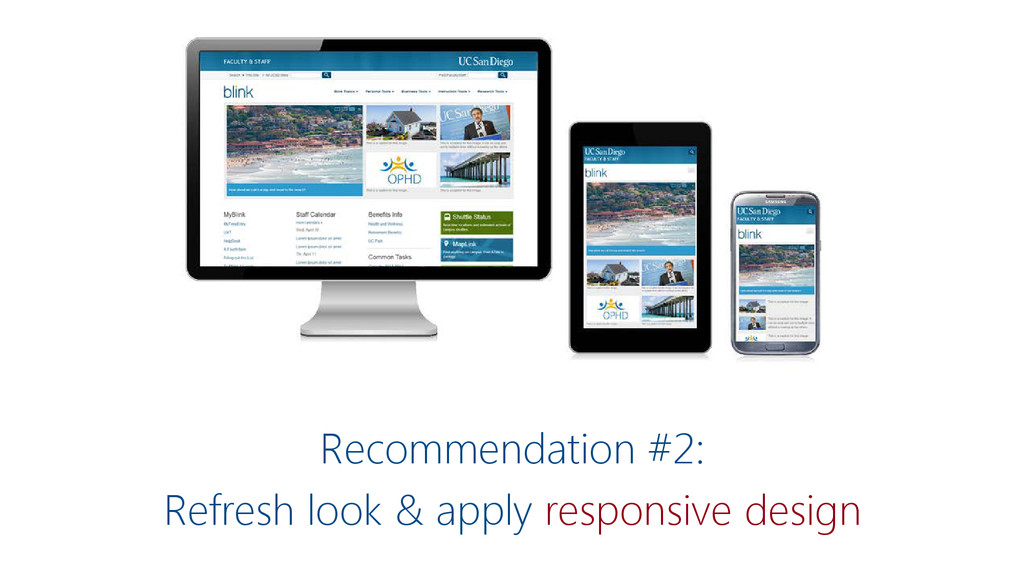
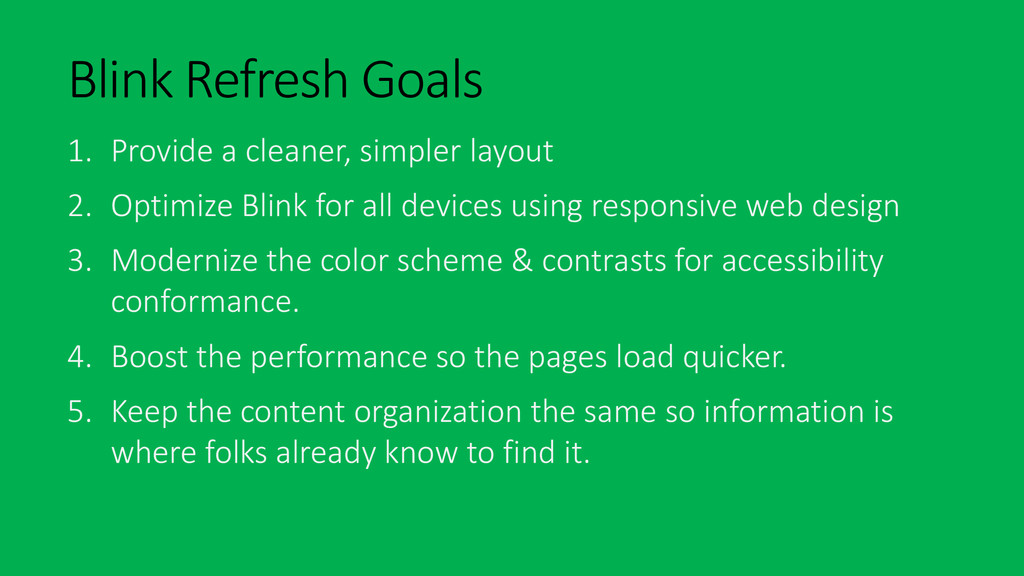
all devices using responsive web design 3. Modernize the color scheme & contrasts for accessibility conformance. 4. Boost the performance so the pages load quicker. 5. Keep the content organization the same so information is where folks already know to find it. Blink Refresh Goals
the experiment that the indication of the results were that the substance was wet to the touch, fluid, and necessary to sustain life, and that the term “water” was deemed to be the most essential information derived from the process.
a stone is in motion rolling down a hill or incline that that moving stone is not as likely to be covered all over with the kind of thick green moss that grows on stationary unmoving things and becomes a nuisance and suggests that those things haven’t moved in a long time and probably won’t move any time soon.


 cwo
cwo
 daidaidai
 ludicmind
 tokuty
 iktakahiro
 ykanoh
 kworkdev
 ivry_presentationmaterials
 bgpat
bgpat
 yu23ki14
 persolserverworks
 willnet
 odashi
 maltzj
 mfonobong
 tessaabrams
 jonoalderson
 kevinliebholz
 philnash
 marcoroth
 destraynor
 notwaldorf
 cassininazir
 tmiket
 mlcsv
mlcsv






![Chris Stuart Campus Web Office Content Writer/Editor [email protected]](https://files.speakerdeck.com/presentations/800ee880976201318c19429174363d15/slide_54.jpg)