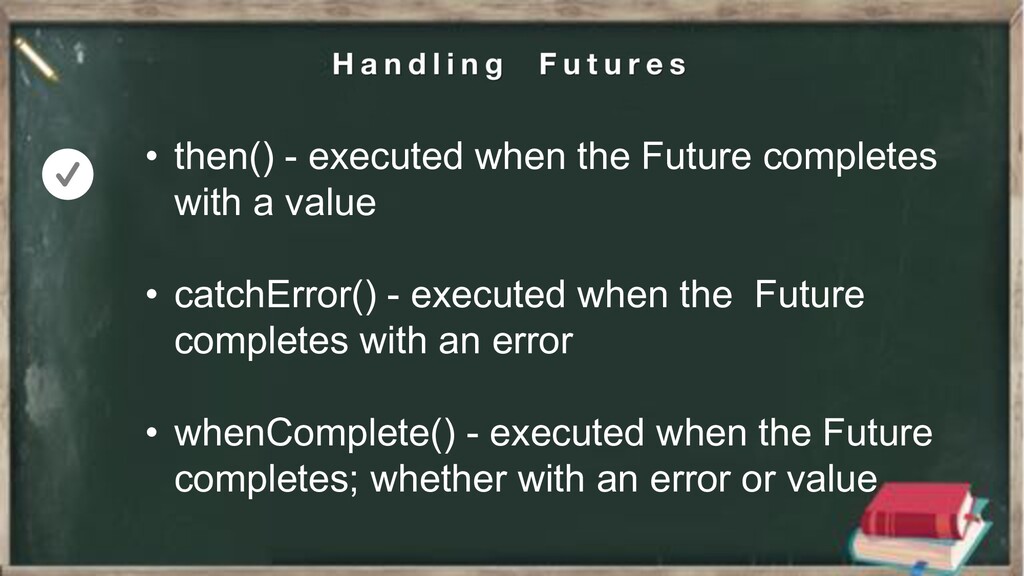
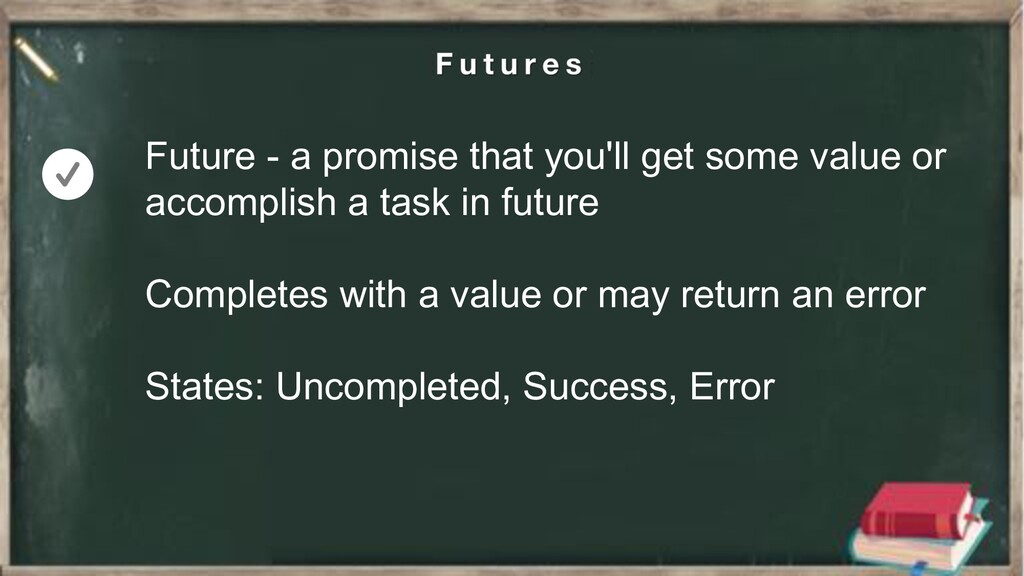
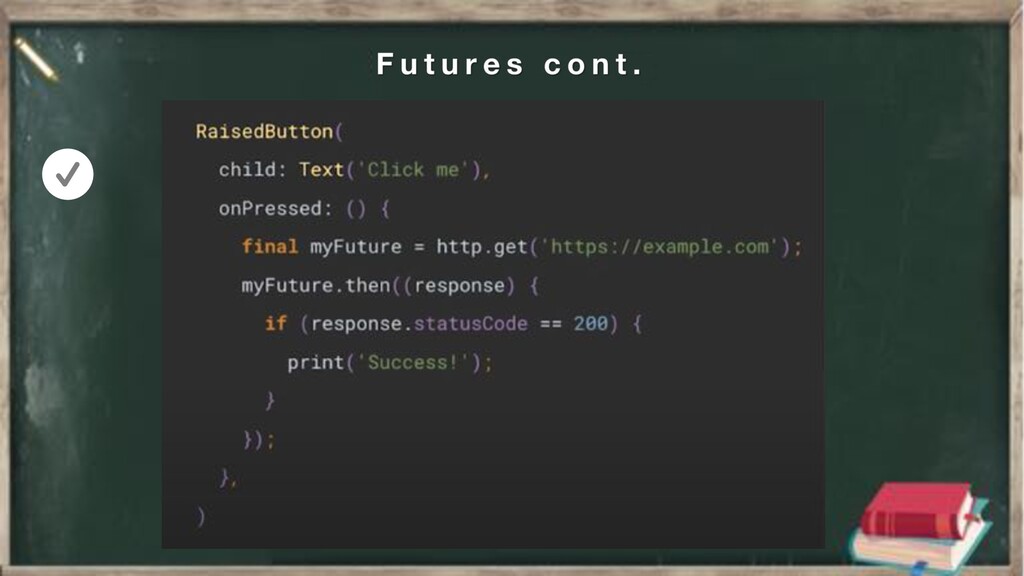
value • catchError() - executed when the Future completes with an error • whenComplete() - executed when the Future completes; whether with an error or value
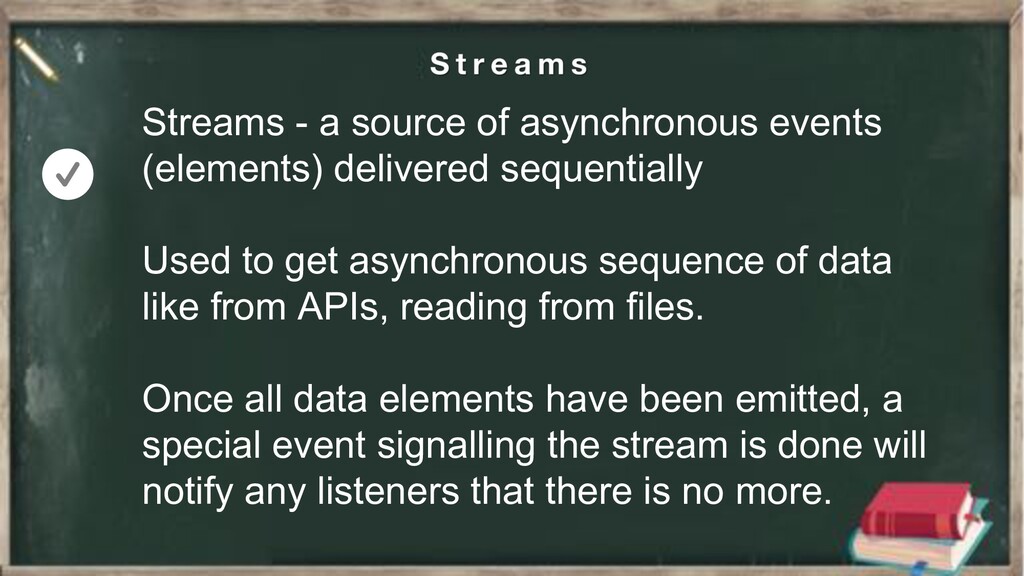
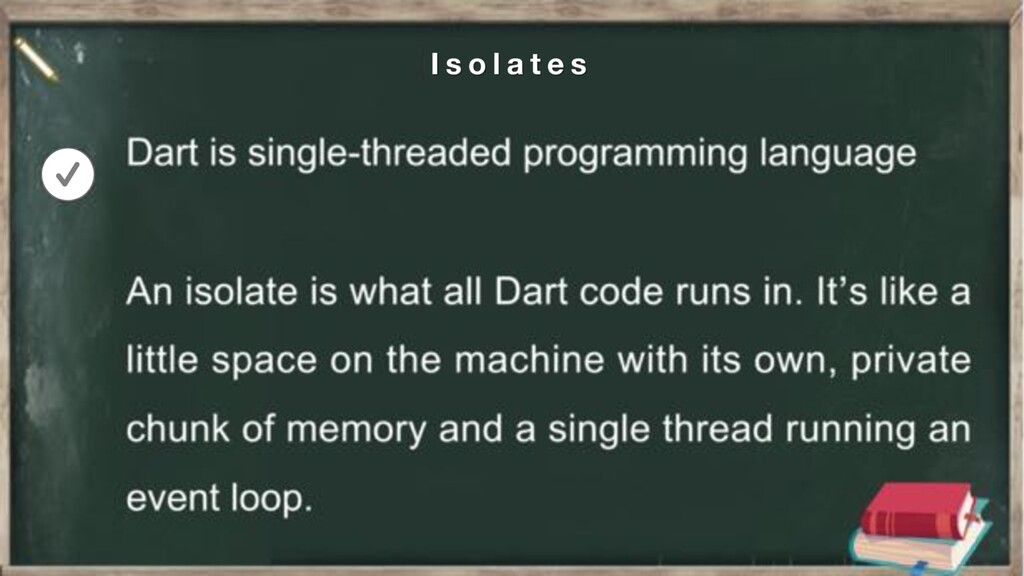
Used to get asynchronous sequence of data like from APIs, reading from files. Once all data elements have been emitted, a special event signalling the stream is done will notify any listeners that there is no more.


 danvick
 o0h
o0h
 ryu1013
 optim
optim
 nabondance
 dske104
 iwiwi
iwiwi
 teyamagu
 koic
koic
 moro
moro
 timakin
 jame2408
 florets1
 erikaheidi
 thekraken
 codingconduct
 malarkey
 khoart
 aleyda
 chrislema
 lara
lara
 samanthasiow
 sugarenia
 marcoroth
 pedronauck

![Events that execute asyncronously Future.value() Future.delayed(Duration) Future.error() Future.wait([])](https://files.speakerdeck.com/presentations/bd7334b09d2c4e63b9bd43c9ab86420b/slide_9.jpg)