change over time for many different reasons. Tooth decay, accidents, wear, gum disease, and other dental problems can affect the strength, appearance, and function of your teeth. When a tooth is damaged or missing, restorative dentistry can help address the problem and restore the function of your smile. Restorative dentistry includes dental treatments that repair damaged teeth or replace teeth that are missing. Depending on the condition of your teeth and your individual needs, treatment may involve a simple filling, a crown, a bridge, a denture, or another restorative option. Restorative treatment is not only about improving the appearance of your teeth. A damaged or missing tooth can affect chewing, speaking, and the way your remaining teeth function. Restoring the tooth can help support better oral function and make everyday activities more comfortable. At Dentistry at Millennium Park, patients in downtown Chicago can receive a range of restorative dental services designed to address damaged, weakened, or missing teeth. What Is Restorative Dentistry? Restorative dentistry is the area of dental care focused on repairing damaged or decayed teeth and replacing teeth that are missing. A tooth may require restorative treatment because of: • Tooth decay • A chipped or broken tooth • Cracks or fractures • Significant tooth wear • Large or damaged fillings • Infection or other dental problems • Missing teeth The appropriate treatment depends on the condition of the tooth, the amount of healthy tooth structure that remains, your overall oral health, and your dental goals. Dentistry at Millennium Park provides Restorative Dentistry along with several individual treatment options. Why Might You Need Restorative Dental Treatment? Teeth can often remain functional for many years with regular dental care, but damage can still occur. A cavity may become large enough to require a filling. A tooth that has lost significant structure may need additional protection from a crown. A missing tooth may require replacement with a bridge, denture, or implant restoration. Restorative treatment may help: Dentistry at Millennium Park · (224) 249-5977 · www.datmp.com Page 1
teeth • Restore areas affected by decay • Strengthen weakened teeth • Replace missing teeth • Improve chewing function • Restore the shape of damaged teeth • Protect remaining tooth structure • Support overall oral function Treatment is different for every patient. Your dentist can examine your teeth and discuss which options may be appropriate for your situation. Common Restorative Dentistry Treatments Restorative dentistry includes several different procedures. The treatment recommended for you depends on the condition of your teeth and your individual needs. Dental Fillings Dental decay can damage the structure of a tooth. When a cavity is identified, a dental filling may be used to remove the damaged portion and restore the tooth. Fillings can be used for many types of cavities, although the appropriate treatment depends on how much of the tooth has been affected. Your dentist will evaluate the tooth and determine whether a filling is an appropriate option. Learn more about Dental Fillings at Dentistry at Millennium Park. Dental Crowns A dental crown is a restoration that covers and protects a damaged or weakened tooth. Crowns may be considered when a tooth has significant structural damage or when a tooth needs additional protection following certain dental treatments. A crown can restore the shape and function of a tooth while providing coverage for the remaining tooth structure. Dentistry at Millennium Park offers Dental Crowns. Same Day Crowns Traditional dental crown treatment may require more than one appointment. Advances in dental technology have made it possible for some practices to provide crowns in a shorter timeframe. Dentistry at Millennium Park offers Same Day Crowns. Whether same day treatment is appropriate depends on the condition of the tooth and the specific restoration required. Dentistry at Millennium Park · (224) 249-5977 · www.datmp.com Page 2
missing tooth can leave a gap between neighboring teeth. A dental bridge can be used to replace one or more missing teeth by connecting a replacement tooth to supporting teeth. Bridges can help restore chewing function and fill a visible space created by a missing tooth. The suitability of a bridge depends on factors such as the location of the missing tooth and the condition of the surrounding teeth. Learn more about Dental Bridges. Dentures Dentures are removable dental appliances used to replace multiple missing teeth or, in some cases, an entire arch of teeth. Depending on the patient's needs, dentures may replace some or all of the teeth. Dentures can help restore chewing ability and support everyday activities such as speaking. Dentistry at Millennium Park provides Dentures for patients who need tooth replacement. Implant Restoration Dental implants can be used as part of a tooth replacement plan. The implant itself is placed in the jaw, while the visible restoration is designed to replace the missing tooth. Implant restoration may involve restoring an implant with a crown or another type of dental restoration. The appropriate restoration depends on the number and location of missing teeth and the overall treatment plan. Dentistry at Millennium Park provides Implant Restoration. Porcelain Restorations Porcelain can be used to create certain types of dental restorations. Porcelain restorations can be designed to closely match the appearance of natural teeth while restoring damaged or missing tooth structure, depending on the type of restoration required. Dentistry at Millennium Park offers Porcelain Restorations. Inlays and Onlays Some damaged teeth may not require a full crown but may have more extensive damage than would typically be treated with a simple filling. Inlays and onlays can be used to restore certain areas of damaged teeth. An inlay generally fits within the cusps of a tooth, while an onlay can extend over one or more of the tooth's cusps. Dentistry at Millennium Park · (224) 249-5977 · www.datmp.com Page 3
determine whether an inlay, onlay, filling, or crown is appropriate based on the amount and location of damage. Learn more about Inlays and Onlays. How Does a Dentist Determine Which Restoration You Need? There is no single restorative treatment that is right for every damaged tooth. Your dentist may consider several factors when evaluating your treatment options. These can include: • The amount of healthy tooth structure remaining • The size and location of the damaged area • Whether the tooth has decay • Whether the tooth is cracked or fractured • The condition of surrounding teeth • Your gum health • Your bite and chewing function • Whether the tooth is missing • Your previous dental treatment Your dentist may also use dental X rays or other technology when additional information is needed. Dentistry at Millennium Park offers Digital X Rays and a Full Mouth Health Scan as part of its dental technology services. The goal is to understand the condition of the tooth before deciding which restorative approach is appropriate. Filling or Crown: What Is the Difference? A filling and a crown can both be used to restore damaged teeth, but they serve different purposes. A filling generally restores a smaller area of a tooth that has been affected by decay or damage. A crown covers a larger portion of the tooth and may be recommended when the tooth has lost more structure or needs additional protection. The choice between a filling and a crown depends on the condition of the tooth. If you are unsure which treatment you may need, a dental examination can help determine the available options. Dentistry at Millennium Park · (224) 249-5977 · www.datmp.com Page 4
What Is the Difference? Inlays, onlays, and crowns can all be used to restore damaged teeth, but they do not cover the same amount of tooth structure. An inlay generally fits within the tooth's cusps. An onlay covers a larger area and may extend over one or more cusps. A crown covers the tooth more extensively. Your dentist can determine which restoration is appropriate based on the amount of damage and the remaining healthy tooth structure. What Happens During a Restorative Dental Appointment? The exact process depends on the treatment you need. A typical restorative appointment may begin with an examination of the affected tooth or teeth. Your dentist may ask about symptoms, previous dental treatment, and any concerns you have. Additional diagnostic information may be obtained when necessary. Once the condition of the tooth is understood, your dentist can discuss treatment options with you. For some treatments, the process can be completed in one appointment. Other restorations may require multiple visits. The treatment process can vary depending on the restoration, the condition of the tooth, and the technology being used. Can Restorative Dentistry Improve the Appearance of Your Teeth? Restorative dentistry primarily focuses on repairing and replacing teeth, but some restorations can also improve the appearance of damaged teeth. A restoration can be designed to restore the shape of a tooth and, depending on the material used, may be made to closely match the surrounding teeth. For patients whose primary concern is the appearance of otherwise healthy teeth, cosmetic dentistry may be a more appropriate area to explore. Dentistry at Millennium Park provides Cosmetic Dentistry, including Dental Bonding, Veneers, and Teeth Whitening. Restorative Dentistry for Missing Teeth Dentistry at Millennium Park · (224) 249-5977 · www.datmp.com Page 5
affect more than the appearance of your smile. A missing tooth can make chewing more difficult and may affect how the remaining teeth function. Replacing missing teeth can help restore oral function. Depending on your situation, tooth replacement options may include: • Dental bridges • Dentures • Implant restorations Your dentist can evaluate your oral health and discuss which option may be appropriate. For patients considering implants as part of their treatment, Implant Restoration is one of the restorative services available at Dentistry at Millennium Park. Restorative Dentistry and Gum Health The condition of your gums is an important consideration when planning restorative treatment. Healthy supporting tissues help provide a stable environment for your teeth and dental restorations. If gum disease is present, your dentist may recommend periodontal treatment before or alongside restorative care. Dentistry at Millennium Park offers Scaling and Root Planing for patients who require periodontal treatment. Maintaining good oral hygiene and attending regular dental examinations can also help protect your teeth and the tissues surrounding them. Restorative Dentistry After Tooth Decay Tooth decay is one of the common reasons a tooth may require restorative treatment. When decay is identified, the appropriate treatment depends on how much of the tooth has been affected. A small cavity may be treated with a filling. More extensive damage may require a crown or another type of restoration. The sooner a problem is identified, the more opportunities your dentist may have to discuss treatment options before the damage becomes more extensive. This is one reason regular Dental Exams and Cleanings are an important part of maintaining your oral health. How Can You Care for a Restored Tooth? Dentistry at Millennium Park · (224) 249-5977 · www.datmp.com Page 6
still needs regular care. Dental restorations are not a replacement for daily oral hygiene. Plaque can still collect around restored teeth and the surrounding gums. To care for your teeth after restorative treatment: Brush Regularly Brush your teeth with fluoride toothpaste and pay attention to the gumline and areas around restorations. Clean Between Your Teeth Cleaning between your teeth helps remove plaque and food particles from areas that a toothbrush cannot reach effectively. Attend Regular Dental Visits Regular examinations allow your dentist to monitor both your natural teeth and existing restorations. Follow Your Dentist's Instructions Your dentist may provide specific instructions depending on the type of restoration you receive. Avoid Using Your Teeth as Tools Using your teeth to open packages, cut objects, or bite hard non food items can damage natural teeth and restorations. How Long Do Dental Restorations Last? The lifespan of a dental restoration varies. Different restorations have different expected lifespans, and their durability can depend on factors such as: • The type of restoration • The material used • The condition of the supporting tooth • Oral hygiene • Bite forces • Teeth grinding or clenching • Diet and habits • Regular dental care No restoration lasts forever. Regular dental examinations can help your dentist monitor restorations and identify signs of wear or damage. If you grind or clench your teeth, your dentist may recommend a Nightguard when appropriate. Dentistry at Millennium Park · (224) 249-5977 · www.datmp.com Page 7
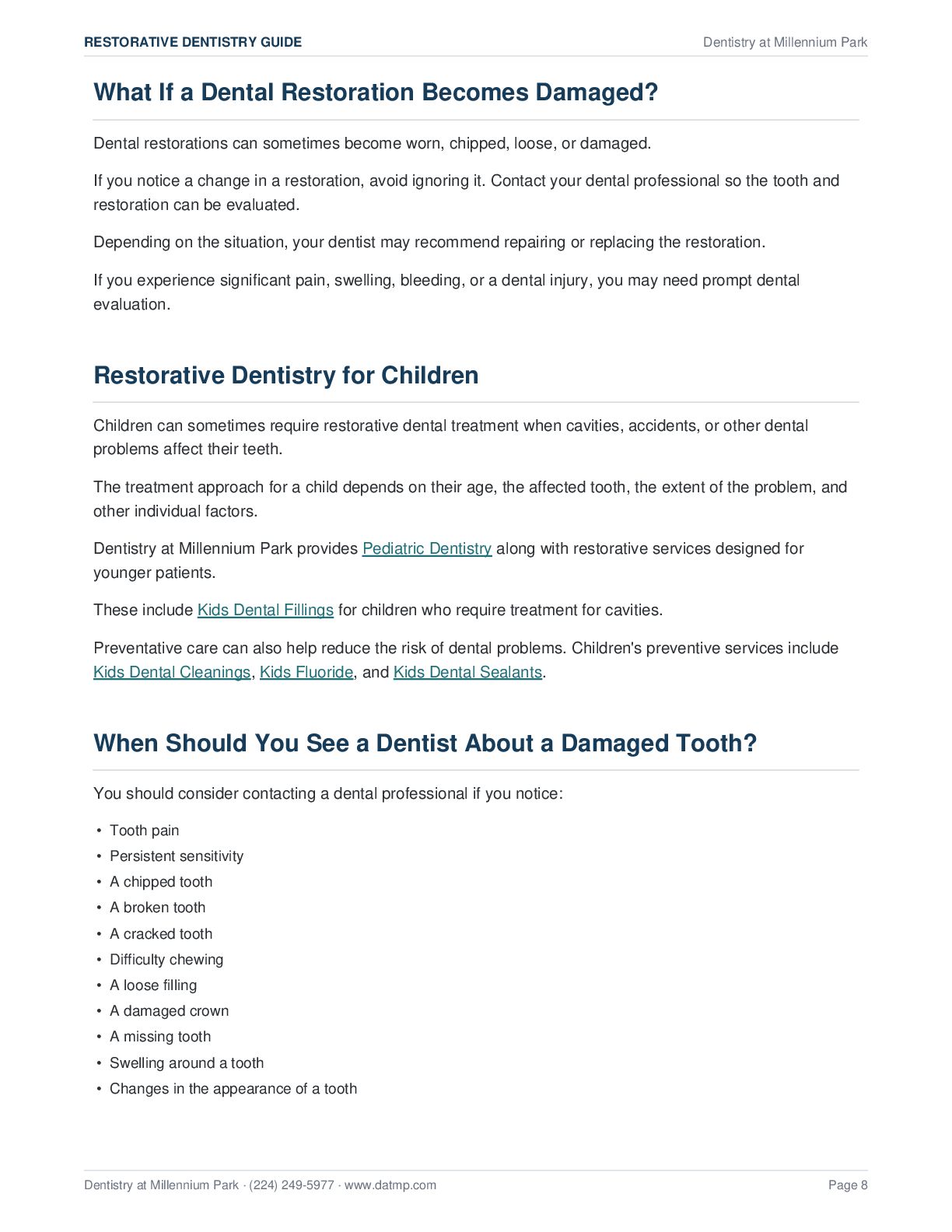
Dental Restoration Becomes Damaged? Dental restorations can sometimes become worn, chipped, loose, or damaged. If you notice a change in a restoration, avoid ignoring it. Contact your dental professional so the tooth and restoration can be evaluated. Depending on the situation, your dentist may recommend repairing or replacing the restoration. If you experience significant pain, swelling, bleeding, or a dental injury, you may need prompt dental evaluation. Restorative Dentistry for Children Children can sometimes require restorative dental treatment when cavities, accidents, or other dental problems affect their teeth. The treatment approach for a child depends on their age, the affected tooth, the extent of the problem, and other individual factors. Dentistry at Millennium Park provides Pediatric Dentistry along with restorative services designed for younger patients. These include Kids Dental Fillings for children who require treatment for cavities. Preventative care can also help reduce the risk of dental problems. Children's preventive services include Kids Dental Cleanings, Kids Fluoride, and Kids Dental Sealants. When Should You See a Dentist About a Damaged Tooth? You should consider contacting a dental professional if you notice: • Tooth pain • Persistent sensitivity • A chipped tooth • A broken tooth • A cracked tooth • Difficulty chewing • A loose filling • A damaged crown • A missing tooth • Swelling around a tooth • Changes in the appearance of a tooth Dentistry at Millennium Park · (224) 249-5977 · www.datmp.com Page 8
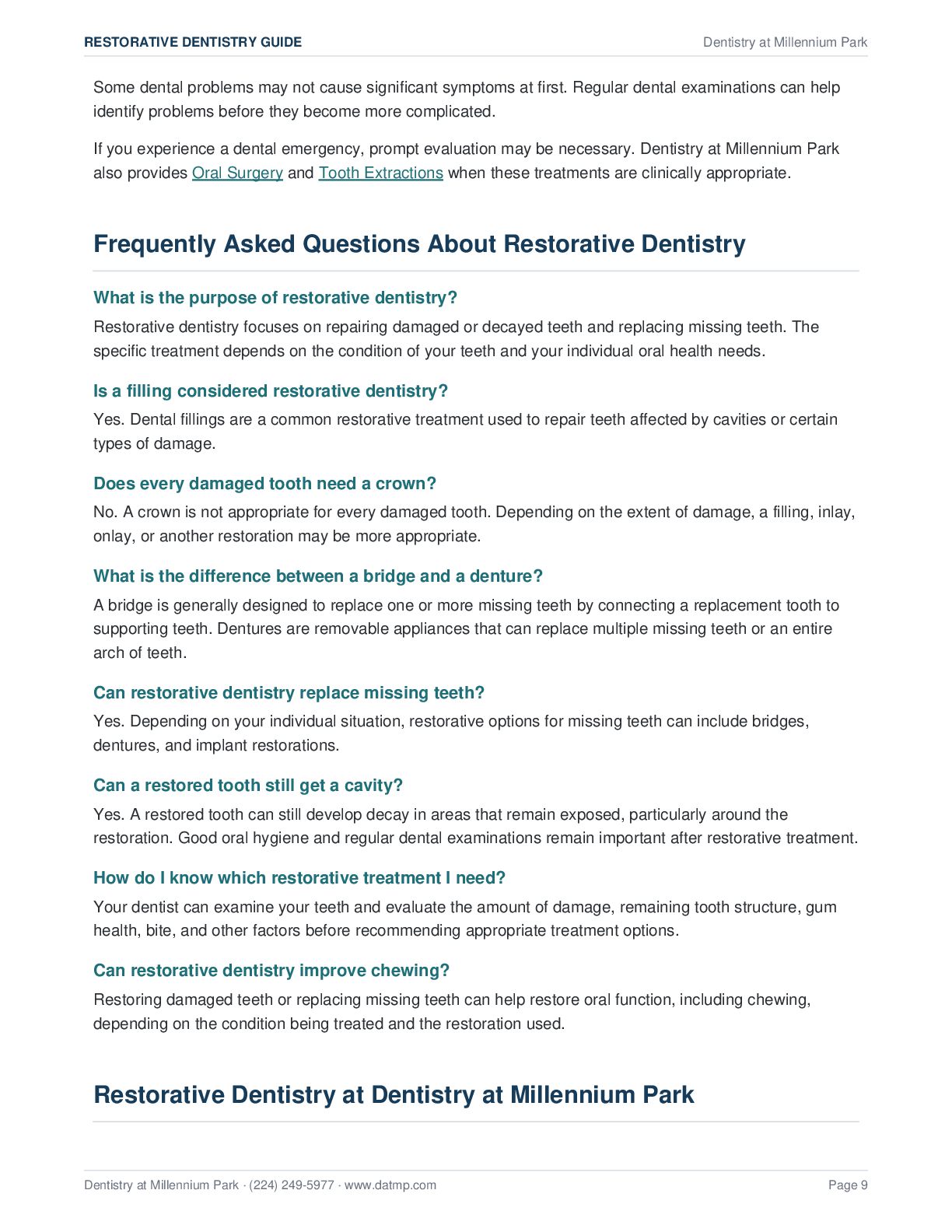
may not cause significant symptoms at first. Regular dental examinations can help identify problems before they become more complicated. If you experience a dental emergency, prompt evaluation may be necessary. Dentistry at Millennium Park also provides Oral Surgery and Tooth Extractions when these treatments are clinically appropriate. Frequently Asked Questions About Restorative Dentistry What is the purpose of restorative dentistry? Restorative dentistry focuses on repairing damaged or decayed teeth and replacing missing teeth. The specific treatment depends on the condition of your teeth and your individual oral health needs. Is a filling considered restorative dentistry? Yes. Dental fillings are a common restorative treatment used to repair teeth affected by cavities or certain types of damage. Does every damaged tooth need a crown? No. A crown is not appropriate for every damaged tooth. Depending on the extent of damage, a filling, inlay, onlay, or another restoration may be more appropriate. What is the difference between a bridge and a denture? A bridge is generally designed to replace one or more missing teeth by connecting a replacement tooth to supporting teeth. Dentures are removable appliances that can replace multiple missing teeth or an entire arch of teeth. Can restorative dentistry replace missing teeth? Yes. Depending on your individual situation, restorative options for missing teeth can include bridges, dentures, and implant restorations. Can a restored tooth still get a cavity? Yes. A restored tooth can still develop decay in areas that remain exposed, particularly around the restoration. Good oral hygiene and regular dental examinations remain important after restorative treatment. How do I know which restorative treatment I need? Your dentist can examine your teeth and evaluate the amount of damage, remaining tooth structure, gum health, bite, and other factors before recommending appropriate treatment options. Can restorative dentistry improve chewing? Restoring damaged teeth or replacing missing teeth can help restore oral function, including chewing, depending on the condition being treated and the restoration used. Restorative Dentistry at Dentistry at Millennium Park Dentistry at Millennium Park · (224) 249-5977 · www.datmp.com Page 9
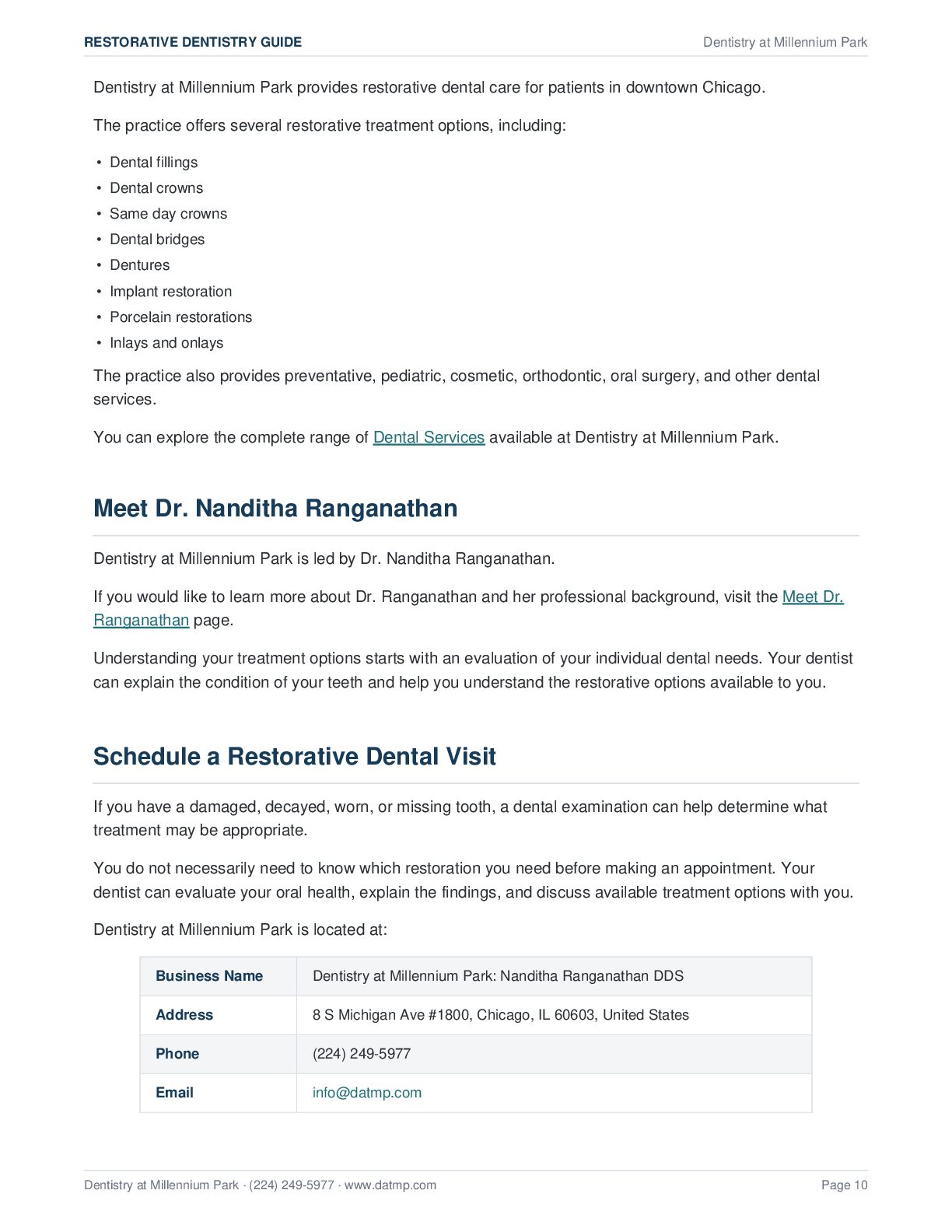
Park provides restorative dental care for patients in downtown Chicago. The practice offers several restorative treatment options, including: • Dental fillings • Dental crowns • Same day crowns • Dental bridges • Dentures • Implant restoration • Porcelain restorations • Inlays and onlays The practice also provides preventative, pediatric, cosmetic, orthodontic, oral surgery, and other dental services. You can explore the complete range of Dental Services available at Dentistry at Millennium Park. Meet Dr. Nanditha Ranganathan Dentistry at Millennium Park is led by Dr. Nanditha Ranganathan. If you would like to learn more about Dr. Ranganathan and her professional background, visit the Meet Dr. Ranganathan page. Understanding your treatment options starts with an evaluation of your individual dental needs. Your dentist can explain the condition of your teeth and help you understand the restorative options available to you. Schedule a Restorative Dental Visit If you have a damaged, decayed, worn, or missing tooth, a dental examination can help determine what treatment may be appropriate. You do not necessarily need to know which restoration you need before making an appointment. Your dentist can evaluate your oral health, explain the findings, and discuss available treatment options with you. Dentistry at Millennium Park is located at: Business Name Dentistry at Millennium Park: Nanditha Ranganathan DDS Address 8 S Michigan Ave #1800, Chicago, IL 60603, United States Phone (224) 249-5977 Email [email protected] Dentistry at Millennium Park · (224) 249-5977 · www.datmp.com Page 10
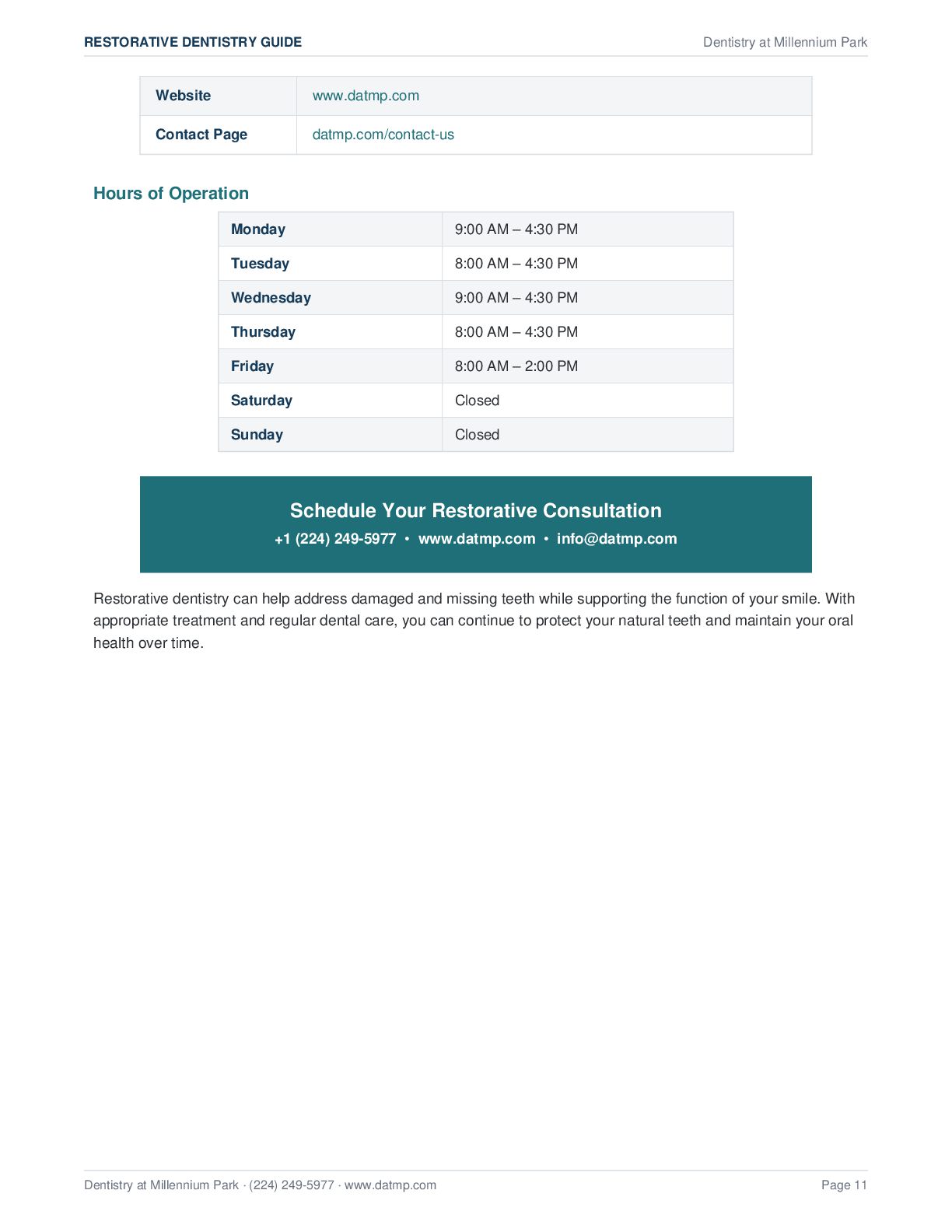
Page datmp.com/contact-us Hours of Operation Monday 9:00 AM – 4:30 PM Tuesday 8:00 AM – 4:30 PM Wednesday 9:00 AM – 4:30 PM Thursday 8:00 AM – 4:30 PM Friday 8:00 AM – 2:00 PM Saturday Closed Sunday Closed Schedule Your Restorative Consultation +1 (224) 249-5977 • www.datmp.com • [email protected] Restorative dentistry can help address damaged and missing teeth while supporting the function of your smile. With appropriate treatment and regular dental care, you can continue to protect your natural teeth and maintain your oral health over time. Dentistry at Millennium Park · (224) 249-5977 · www.datmp.com Page 11


 soudai
 uranoken
 signer
 akiraasano
 hiola
 fmarot
 pawan_pharm
 moriyuya
 ainischool
 quramy
 madoxten
 honzajavorek
 swwweet
 jakevdp
 maltzj
 samtorres
 sarafernandez
 marktimemedia
 productmarketing
 chriscoyier
 mongodb