Upgrade to Pro — share decks privately, control downloads, hide ads and more …

Lightweight unit testing for Titanium

Sponsored · SiteGround - Reliable hosting with speed, security, and support you can count on. →
Avatar for davidcyp davidcyp
December 14, 2016

Lightweight unit testing for Titanium

Introducing TiUnit, a lightweight framework to unit test your Titanium applications.

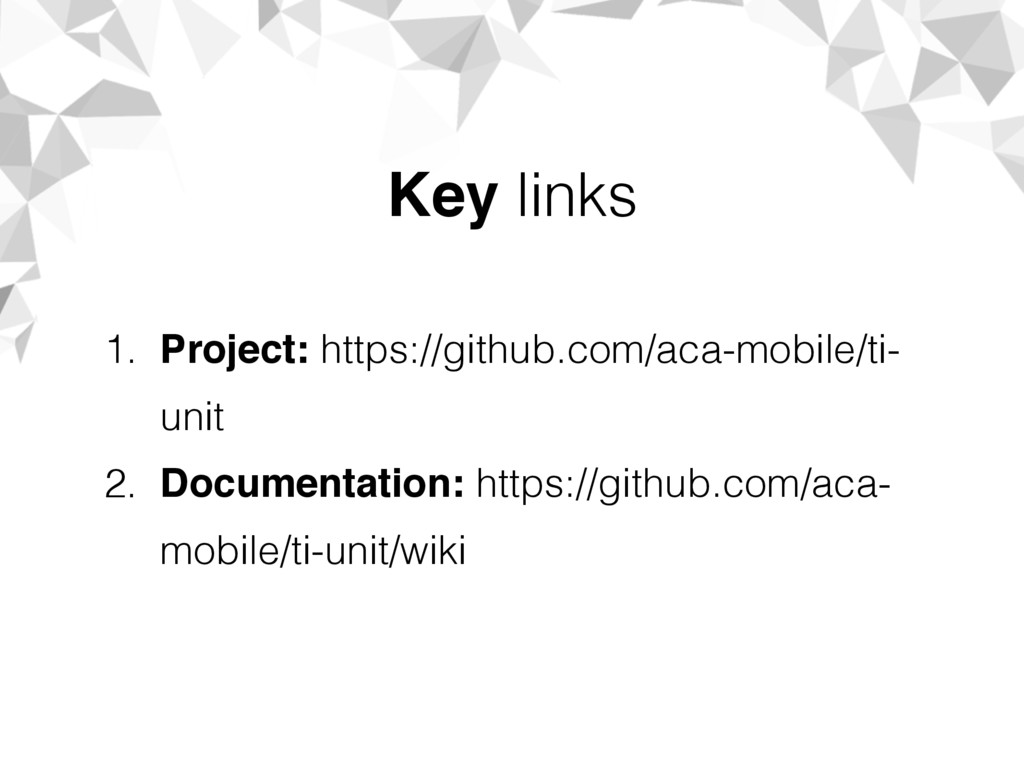
See https://github.com/aca-mobile/ti-unit

Avatar for davidcyp

davidcyp

December 14, 2016

Other Decks in Programming

Transcript

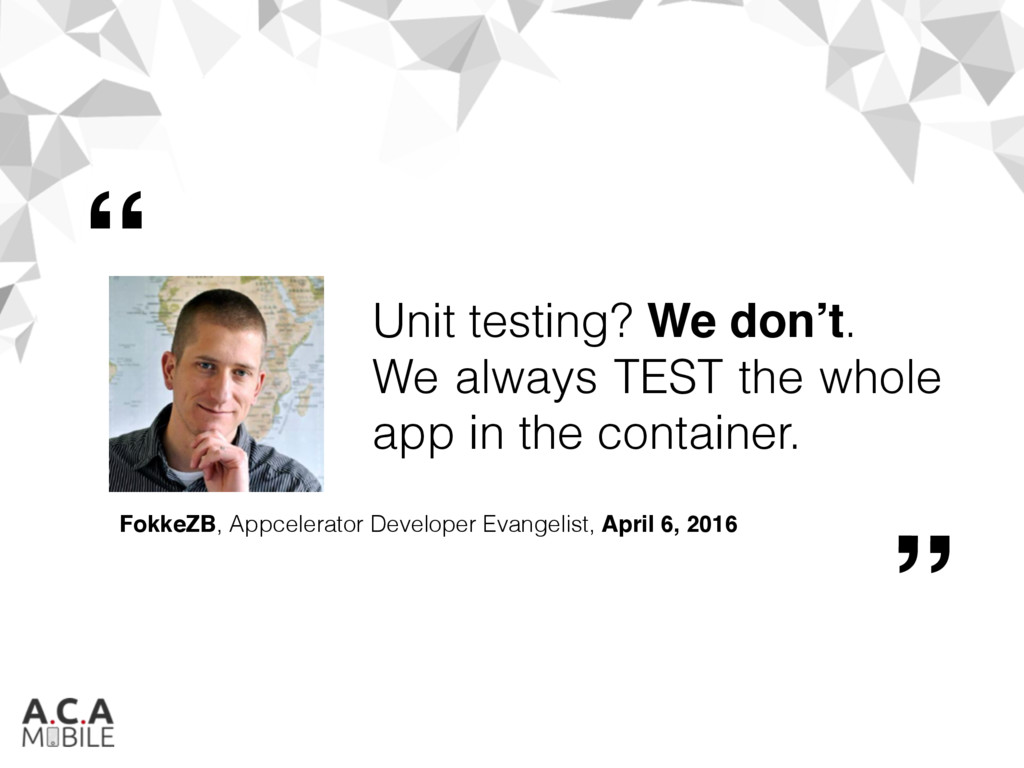
  1. FokkeZB, Appcelerator Developer Evangelist, April 6, 2016 Unit testing? We

    don’t. We always TEST the whole app in the container. “ “
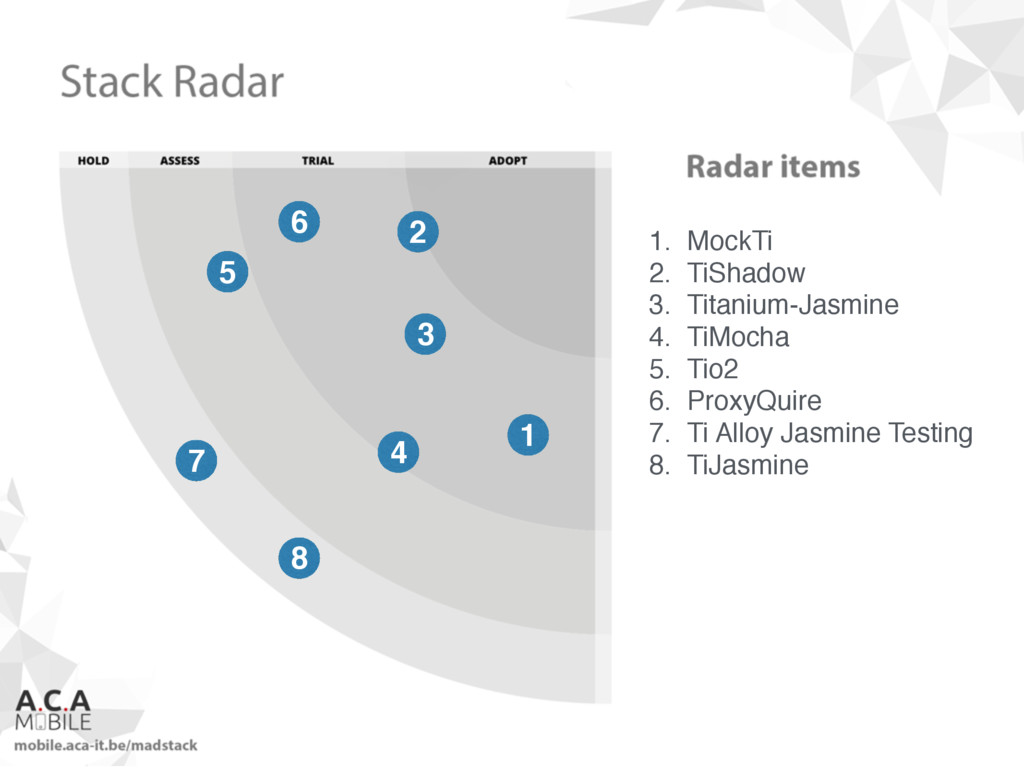
  2. 1. MockTi 2. TiShadow 3. Titanium-Jasmine 4. TiMocha 5. Tio2

    6. ProxyQuire 7. Ti Alloy Jasmine Testing 8. TiJasmine 4 2 3 1 5 6 8 7
  3. Has strategies for testing Alloy.CFG and Alloy.Globals, L(‘language-macro’) and $,

    callback testing, mocking the this context in callback functions
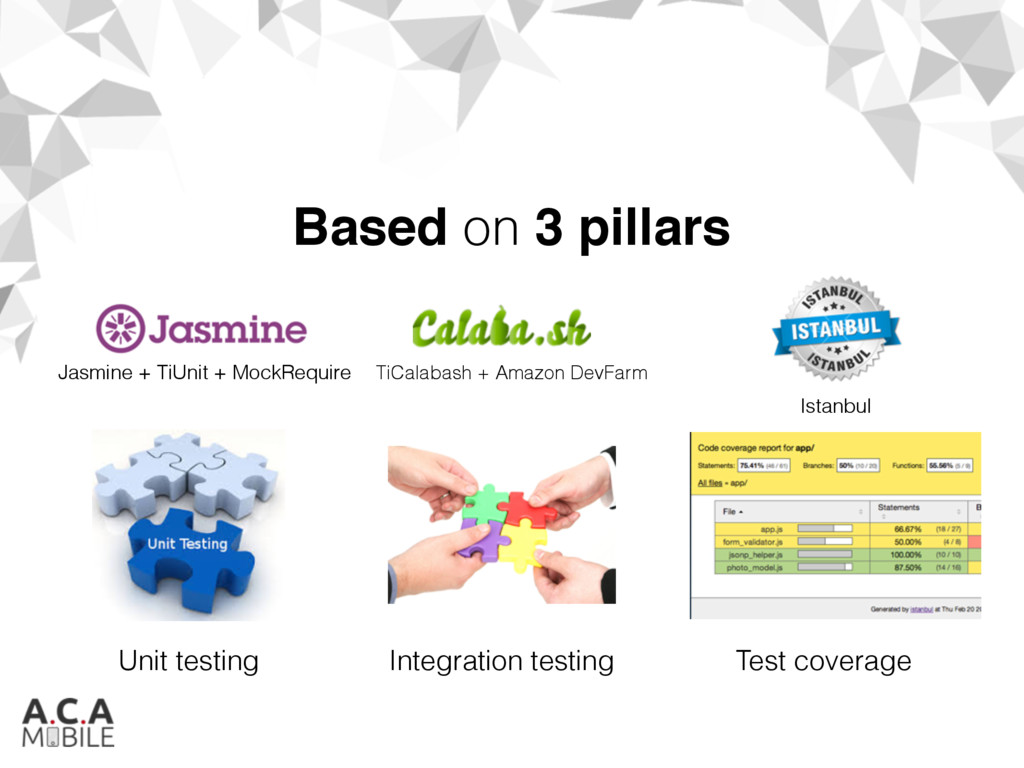
  4. Based on 3 pillars Unit testing Integration testing Test coverage

    Jasmine + TiUnit + MockRequire TiCalabash + Amazon DevFarm Istanbul
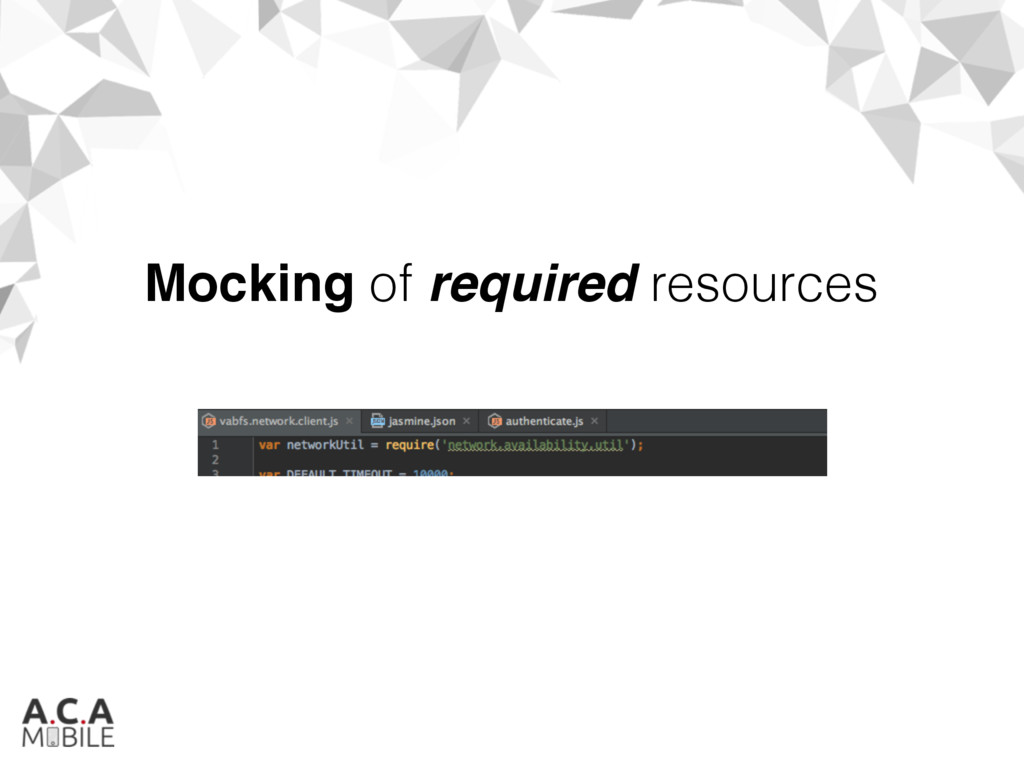
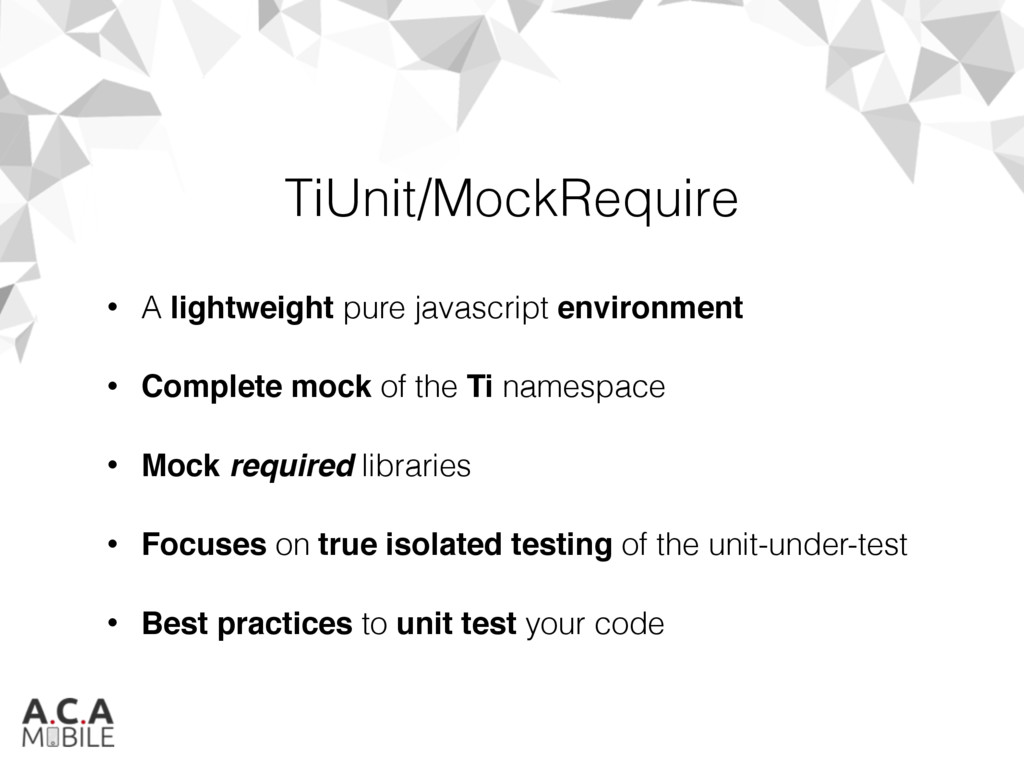
  5. TiUnit/MockRequire • A lightweight pure javascript environment • Complete mock

    of the Ti namespace • Mock required libraries • Focuses on true isolated testing of the unit-under-test • Best practices to unit test your code
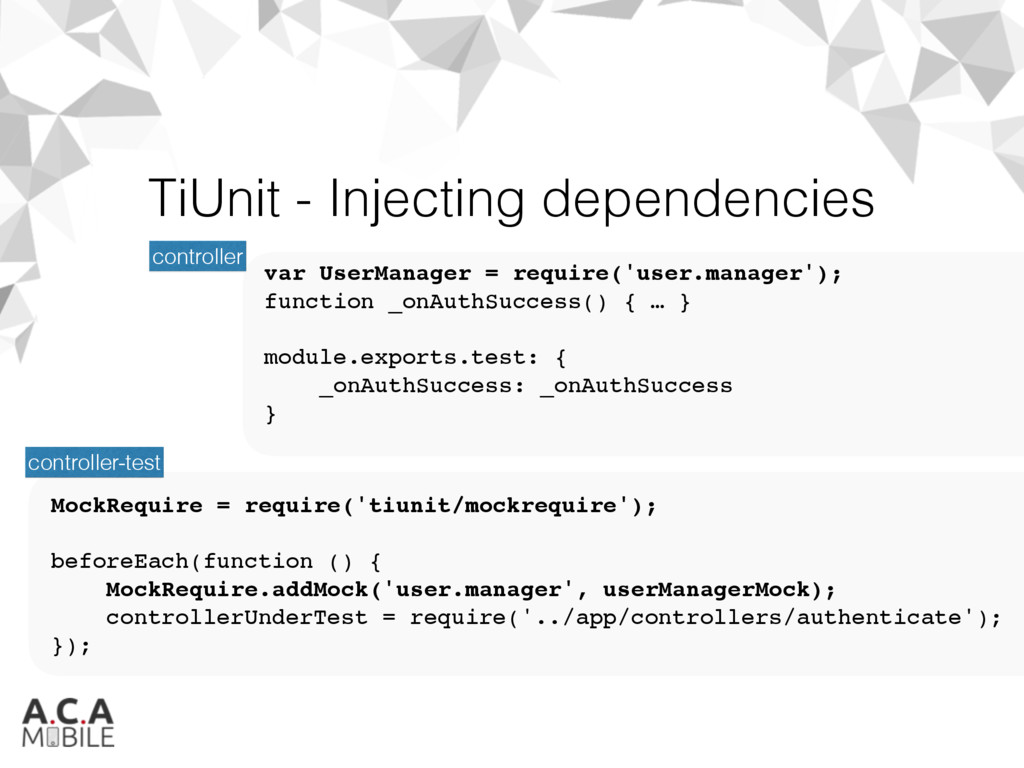
  6. TiUnit - Injecting dependencies MockRequire = require('tiunit/mockrequire'); beforeEach(function () {

    MockRequire.addMock('user.manager', userManagerMock); controllerUnderTest = require('../app/controllers/authenticate'); }); var UserManager = require('user.manager'); function _onAuthSuccess() { … } module.exports.test: { _onAuthSuccess: _onAuthSuccess } controller controller-test
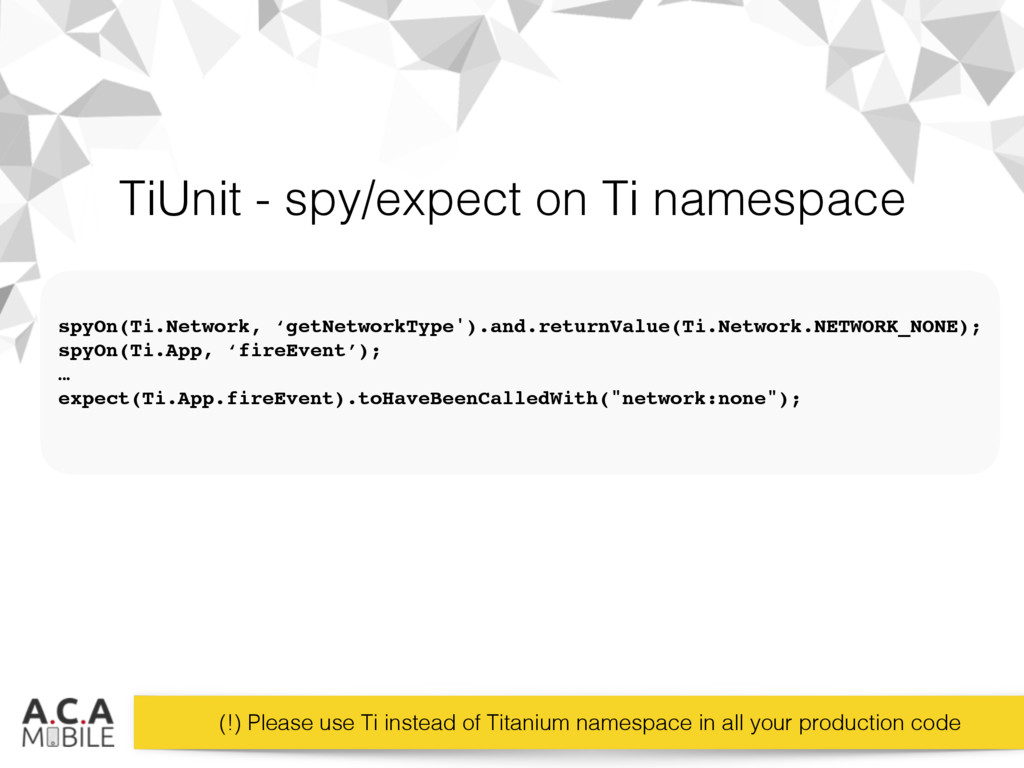
  7. TiUnit - spy/expect on Ti namespace spyOn(Ti.Network, ‘getNetworkType').and.returnValue(Ti.Network.NETWORK_NONE); spyOn(Ti.App, ‘fireEvent’);

    … expect(Ti.App.fireEvent).toHaveBeenCalledWith("network:none");
 
 (!) Please use Ti instead of Titanium namespace in all your production code
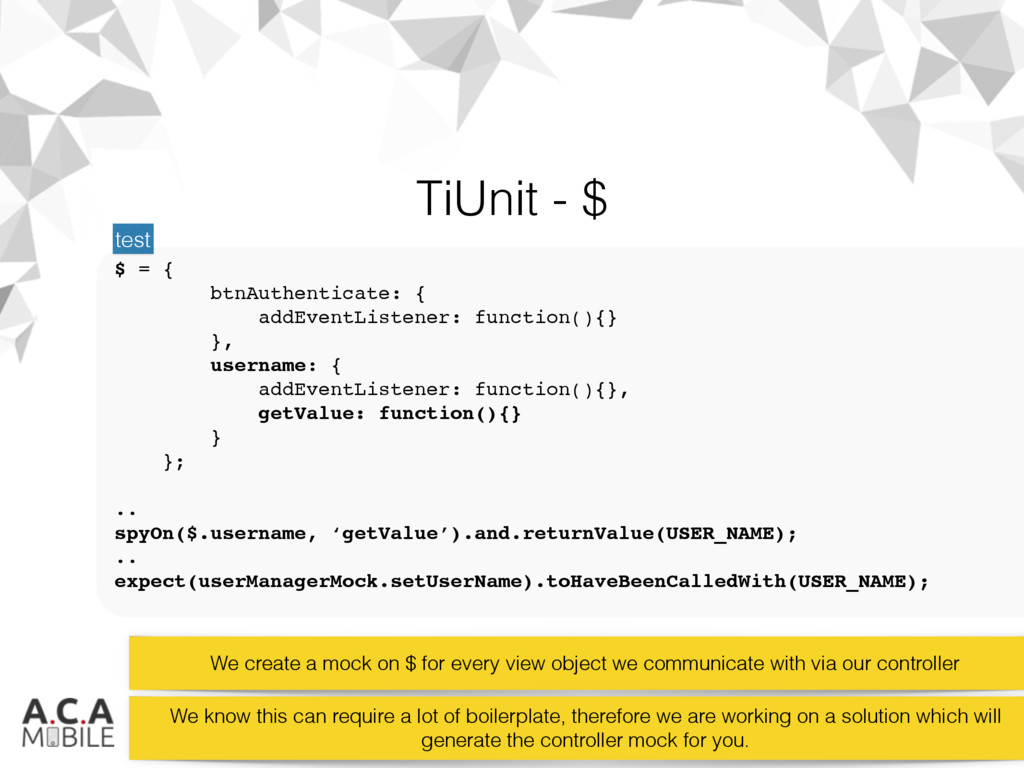
  8. TiUnit - $ $ = { btnAuthenticate: { addEventListener: function(){}

    }, username: { addEventListener: function(){}, getValue: function(){} } }; .. spyOn($.username, ‘getValue’).and.returnValue(USER_NAME); .. expect(userManagerMock.setUserName).toHaveBeenCalledWith(USER_NAME); test We create a mock on $ for every view object we communicate with via our controller We know this can require a lot of boilerplate, therefore we are working on a solution which will generate the controller mock for you.
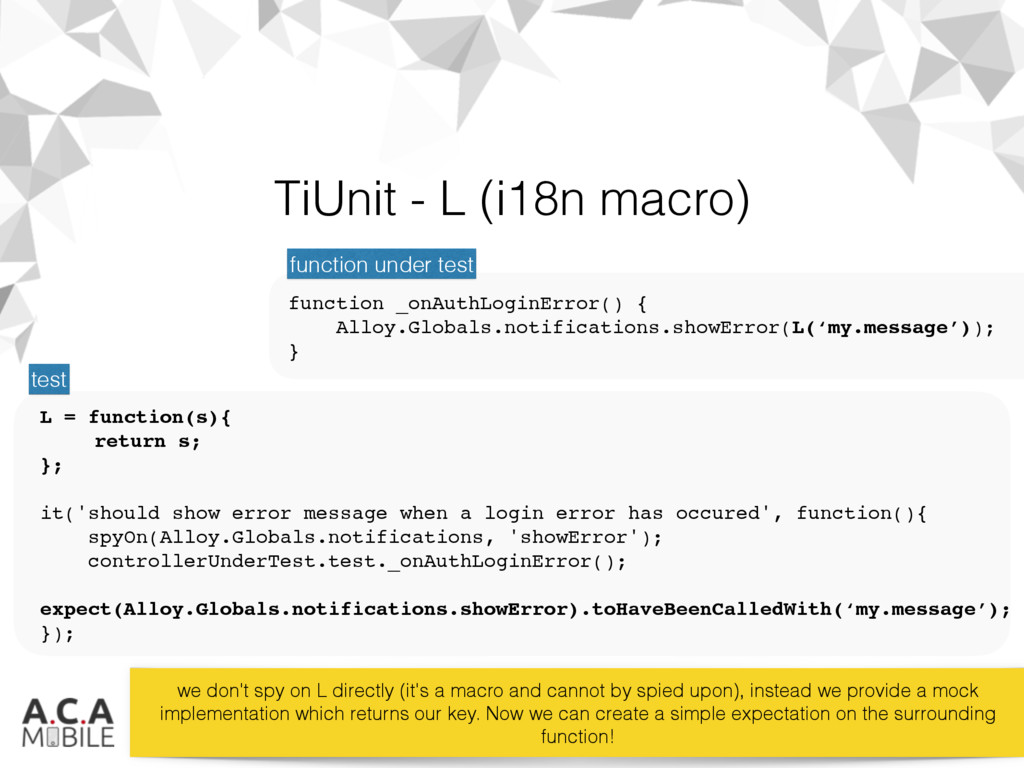
  9. TiUnit - L (i18n macro) L = function(s){ return s;

    }; it('should show error message when a login error has occured', function(){ spyOn(Alloy.Globals.notifications, 'showError'); controllerUnderTest.test._onAuthLoginError(); expect(Alloy.Globals.notifications.showError).toHaveBeenCalledWith(‘my.message’); }); function _onAuthLoginError() { Alloy.Globals.notifications.showError(L(‘my.message’)); } test function under test we don't spy on L directly (it's a macro and cannot by spied upon), instead we provide a mock implementation which returns our key. Now we can create a simple expectation on the surrounding function!
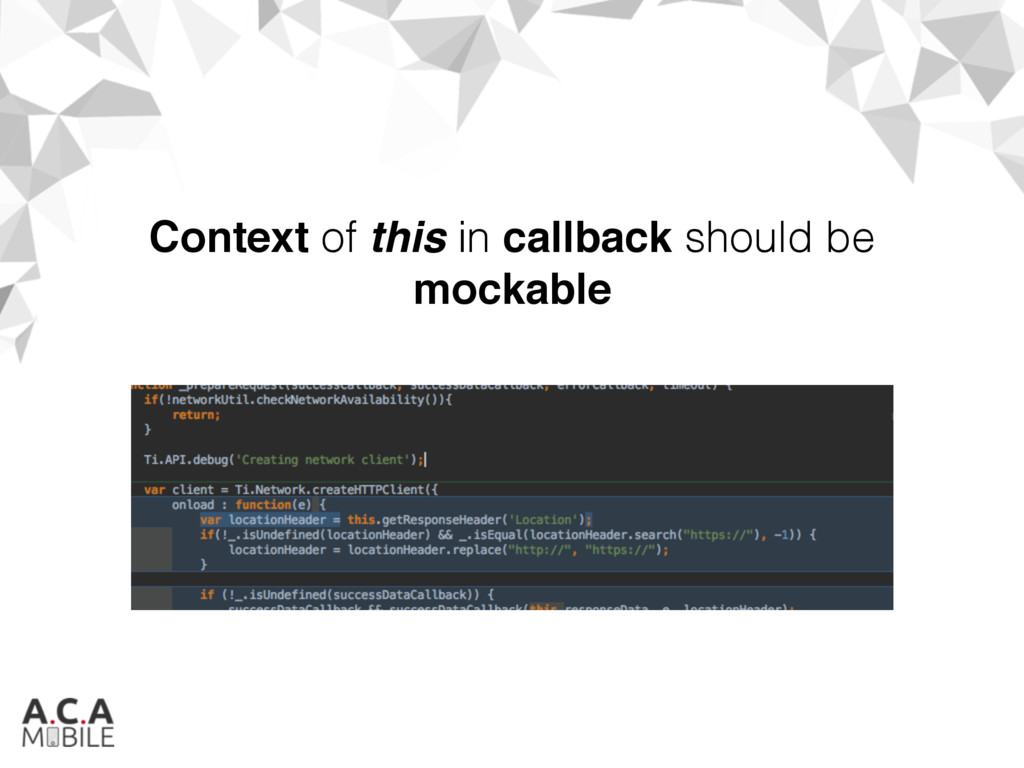
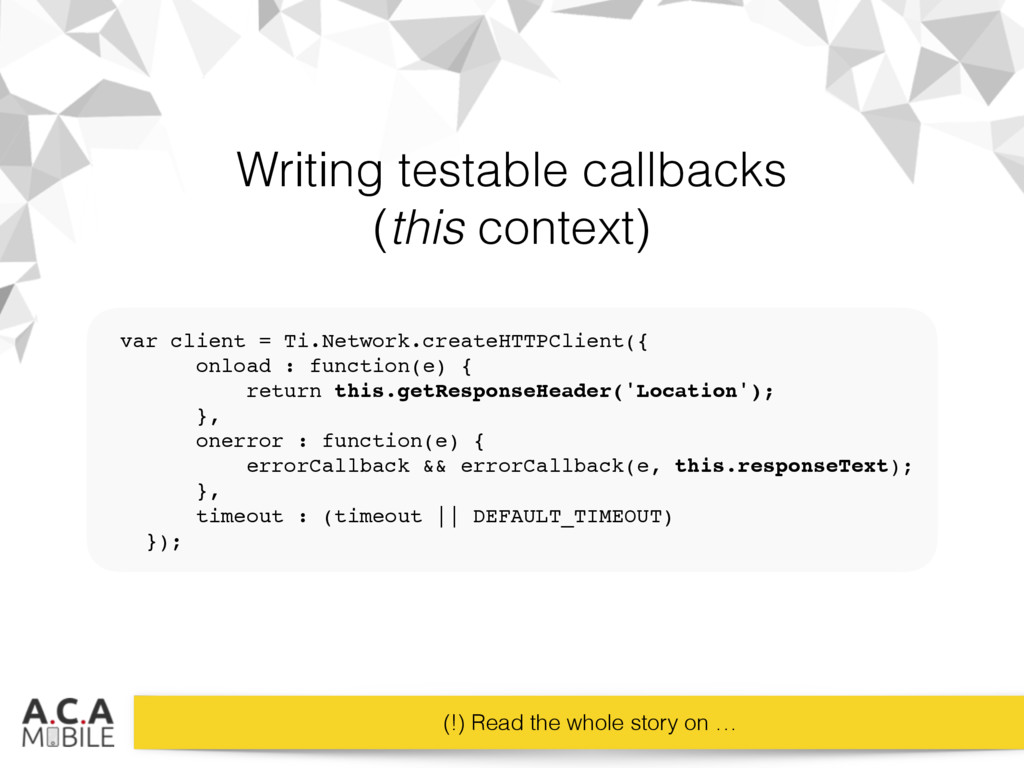
  10. Writing testable callbacks (this context) (!) Read the whole story

    on … var client = Ti.Network.createHTTPClient({ onload : function(e) { return this.getResponseHeader('Location'); }, onerror : function(e) { errorCallback && errorCallback(e, this.responseText); }, timeout : (timeout || DEFAULT_TIMEOUT) });
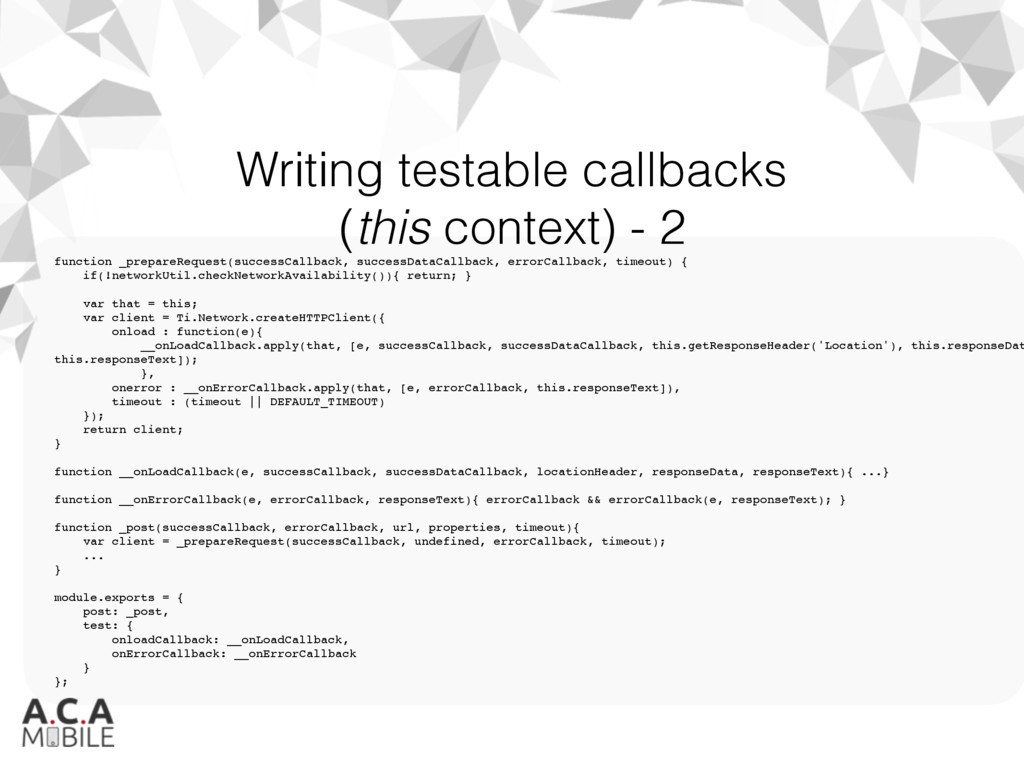
  11. Writing testable callbacks (this context) - 2 function _prepareRequest(successCallback, successDataCallback,

    errorCallback, timeout) { if(!networkUtil.checkNetworkAvailability()){ return; } var that = this; var client = Ti.Network.createHTTPClient({ onload : function(e){ __onLoadCallback.apply(that, [e, successCallback, successDataCallback, this.getResponseHeader('Location'), this.responseDat this.responseText]); }, onerror : __onErrorCallback.apply(that, [e, errorCallback, this.responseText]), timeout : (timeout || DEFAULT_TIMEOUT) }); return client; } function __onLoadCallback(e, successCallback, successDataCallback, locationHeader, responseData, responseText){ ...} function __onErrorCallback(e, errorCallback, responseText){ errorCallback && errorCallback(e, responseText); } function _post(successCallback, errorCallback, url, properties, timeout){ var client = _prepareRequest(successCallback, undefined, errorCallback, timeout); ... } module.exports = { post: _post, test: { onloadCallback: __onLoadCallback, onErrorCallback: __onErrorCallback } };
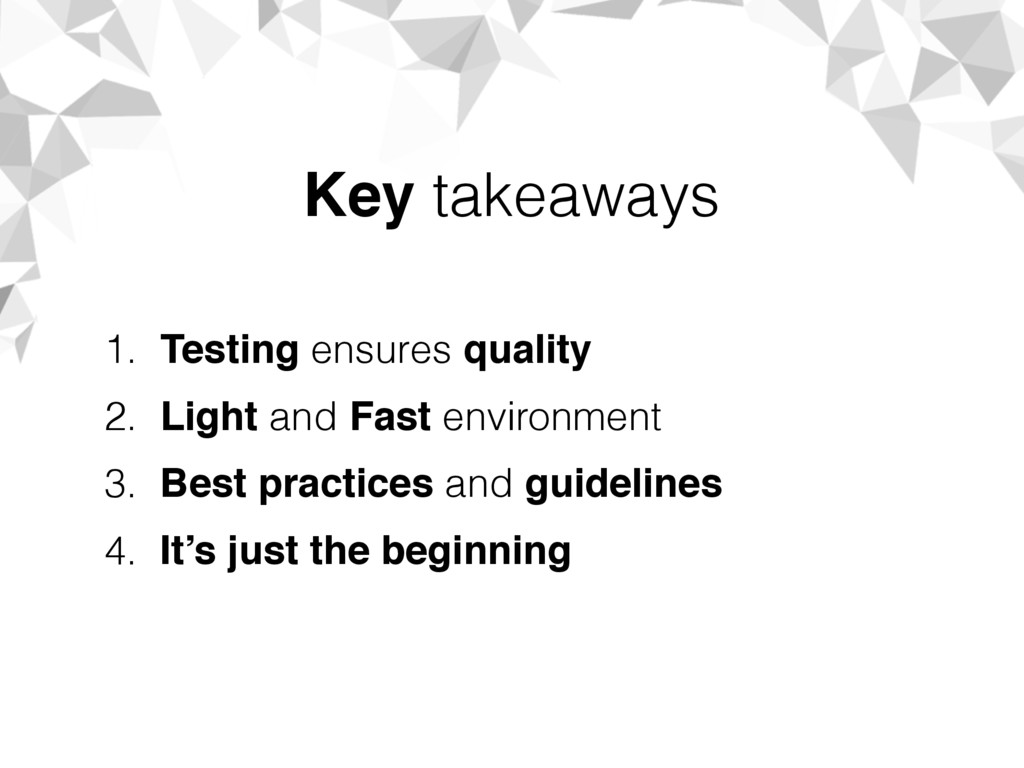
  12. Key takeaways 1. Testing ensures quality 2. Light and Fast

    environment 3. Best practices and guidelines 4. It’s just the beginning
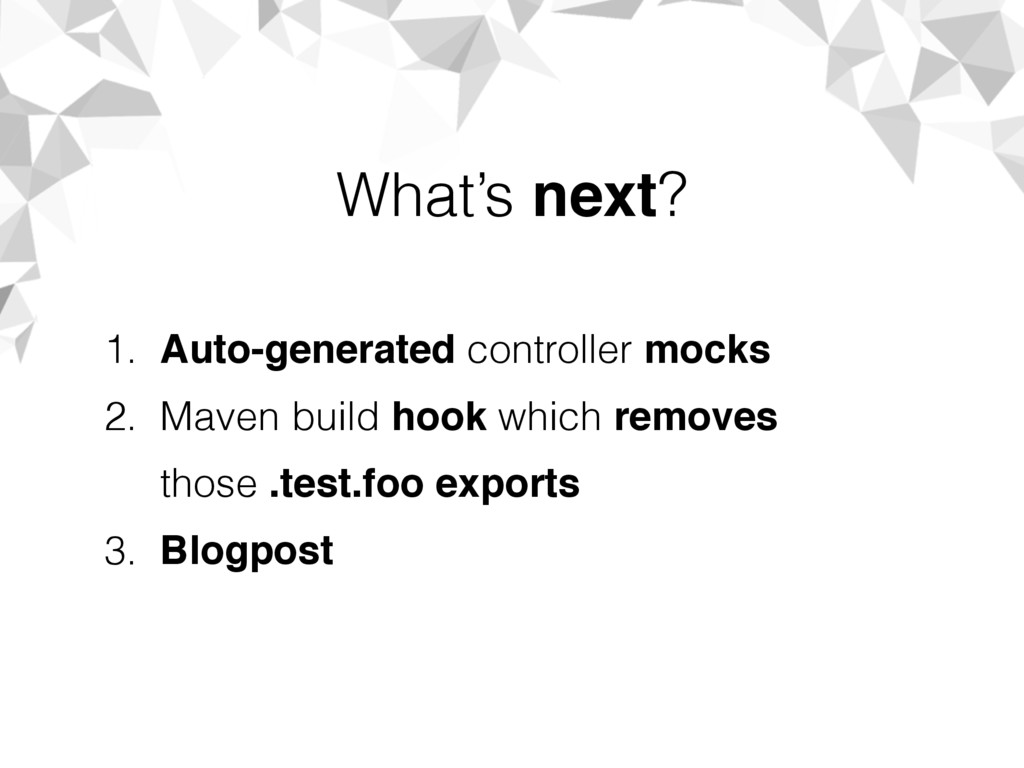
  13. What’s next? 1. Auto-generated controller mocks 2. Maven build hook

    which removes those .test.foo exports 3. Blogpost