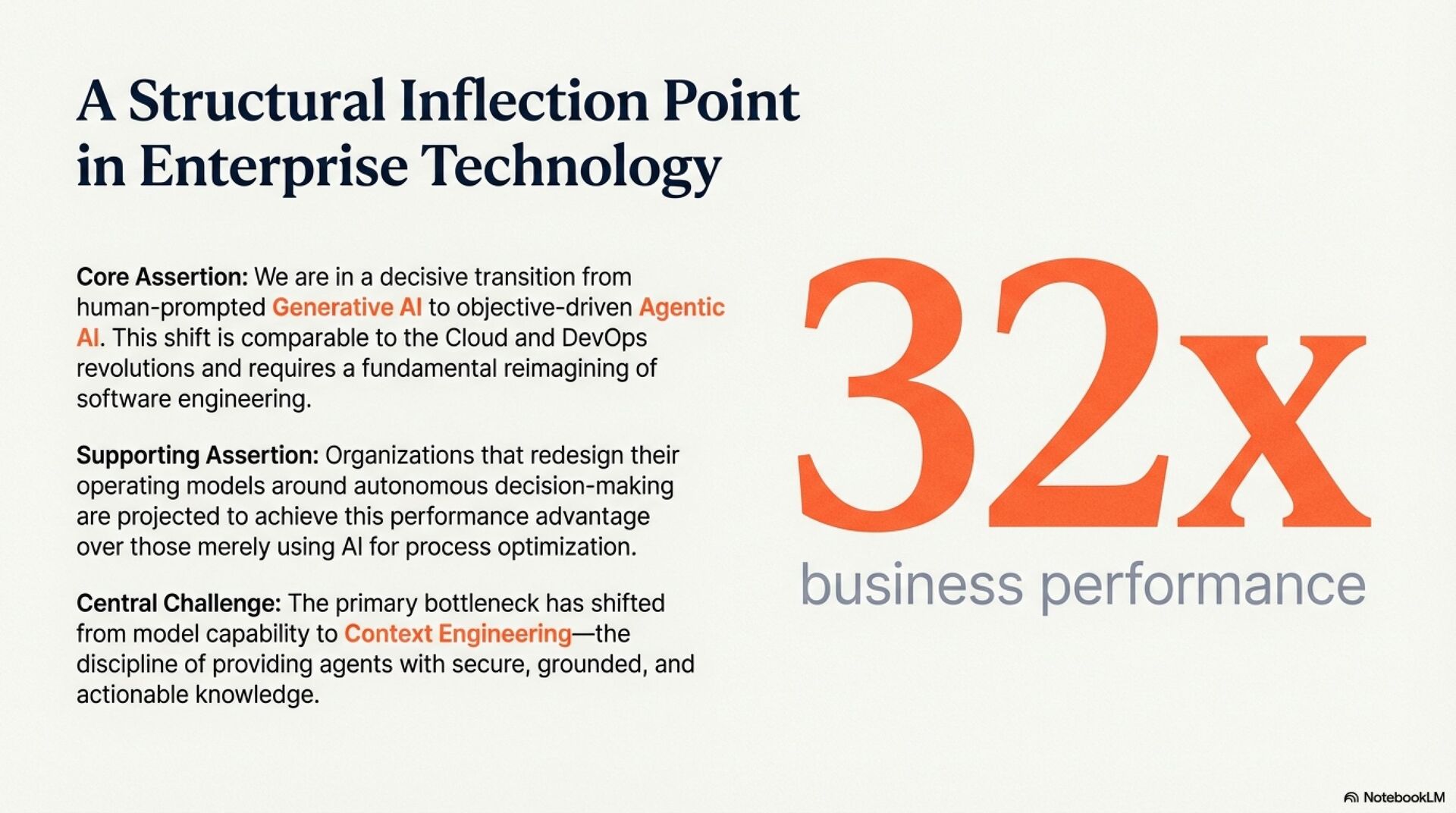
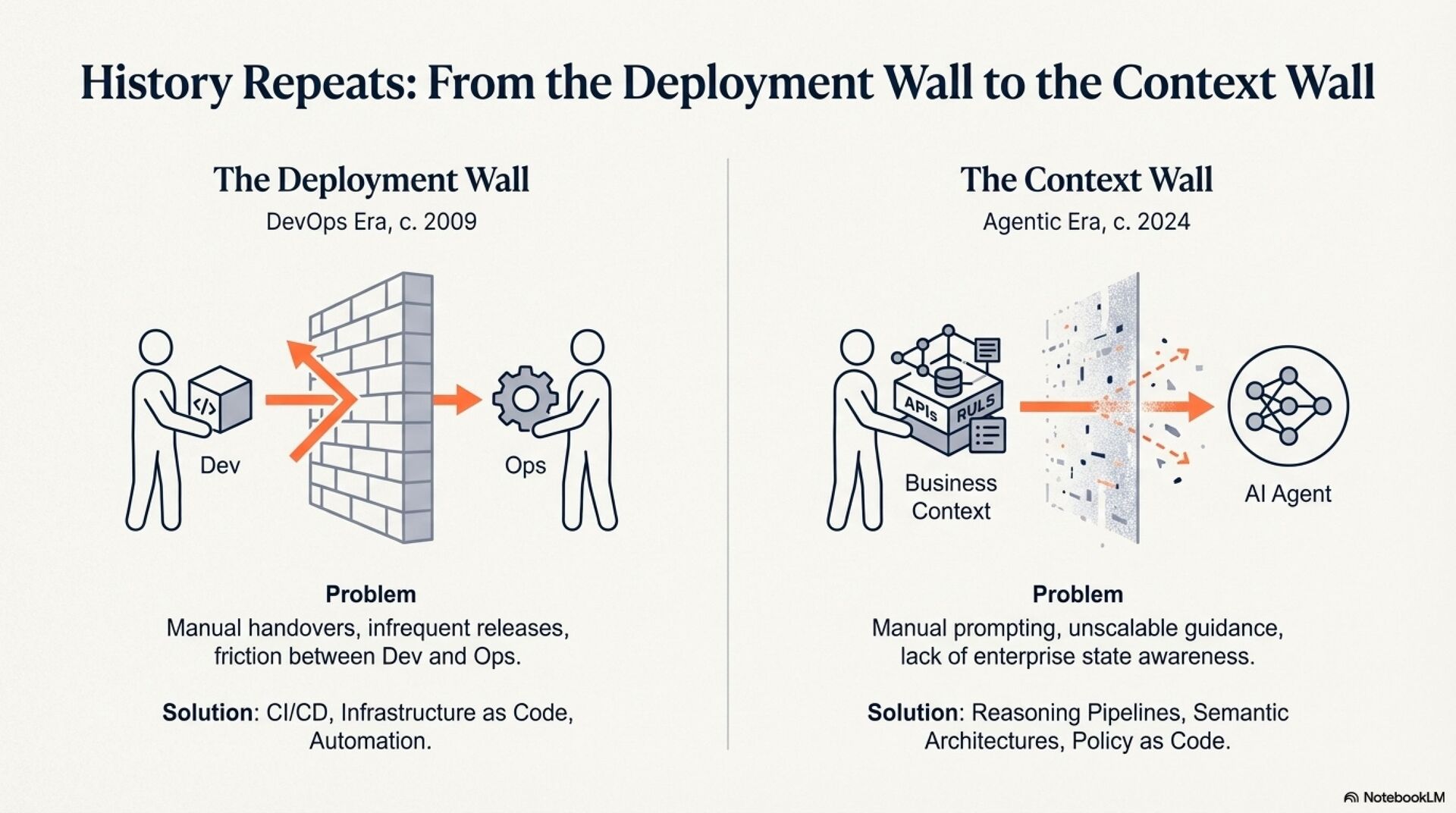
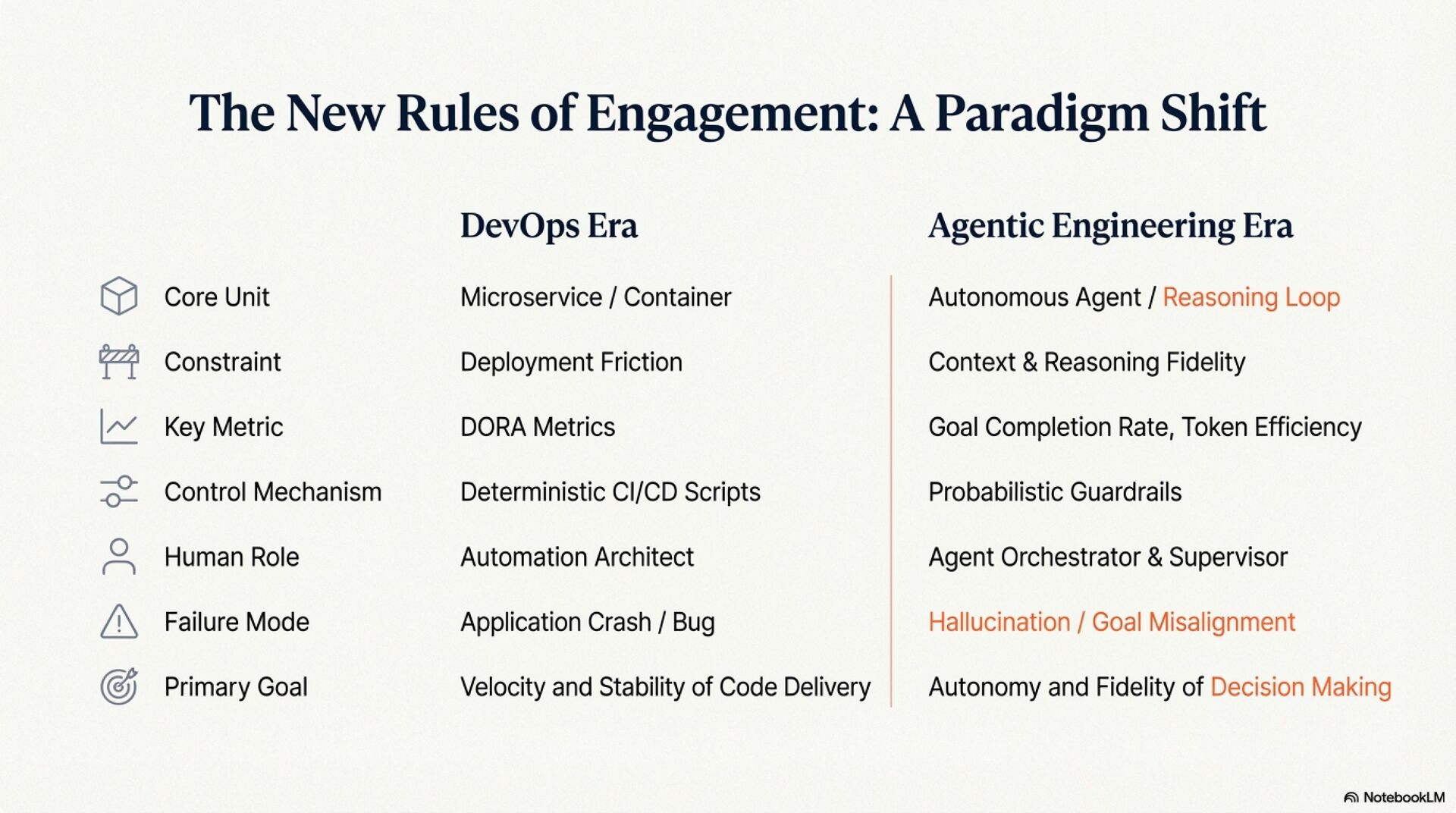
Agentic AI marks a structural turning point in enterprise technology. Where cloud moved infrastructure and DevOps removed the deployment wall, Agentic Engineering removes the context wall that limits current AI. The unit of work shifts from microservice to autonomous agent, and value moves from writing code to orchestrating reasoning, context and controlled execution.
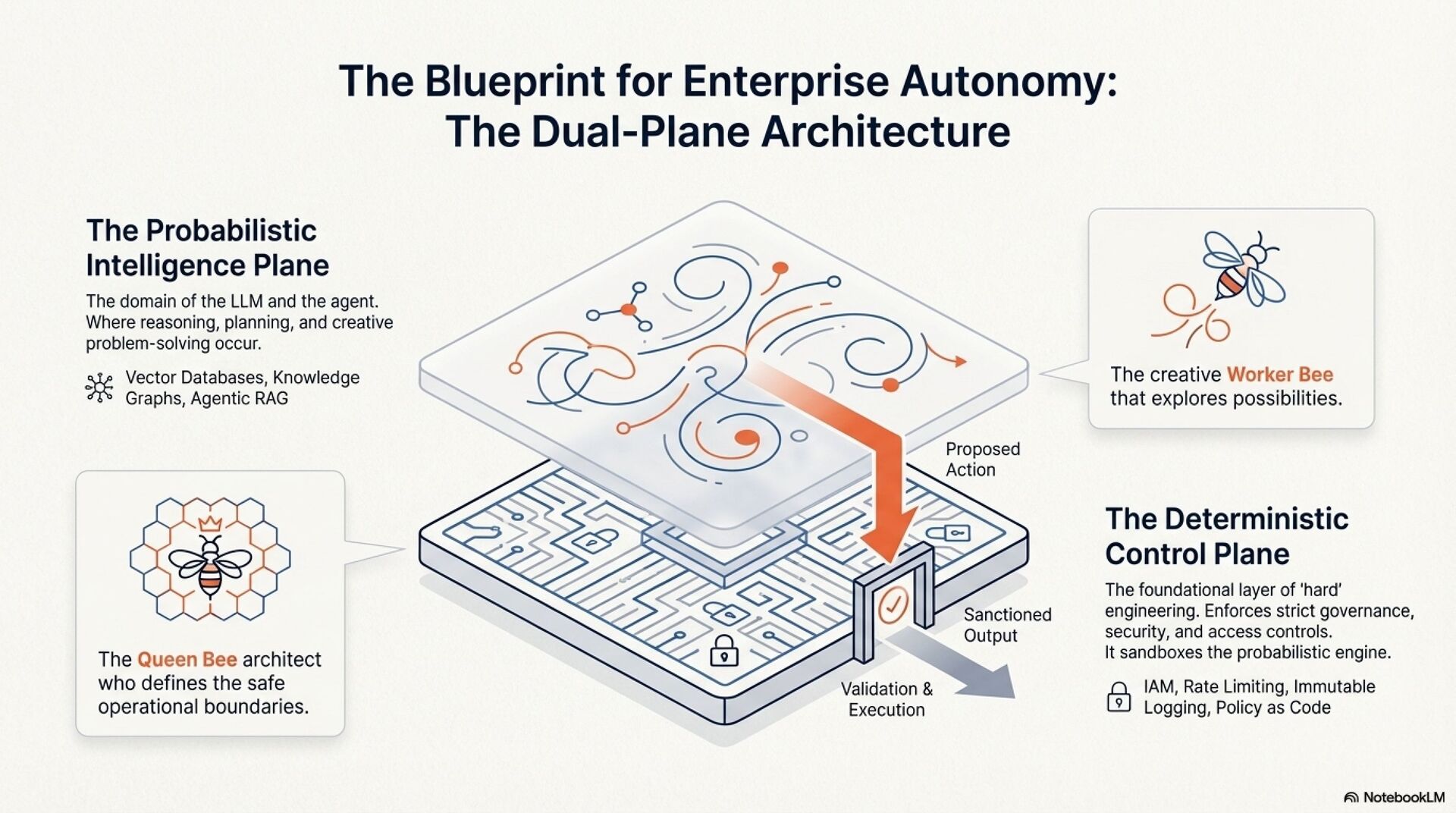
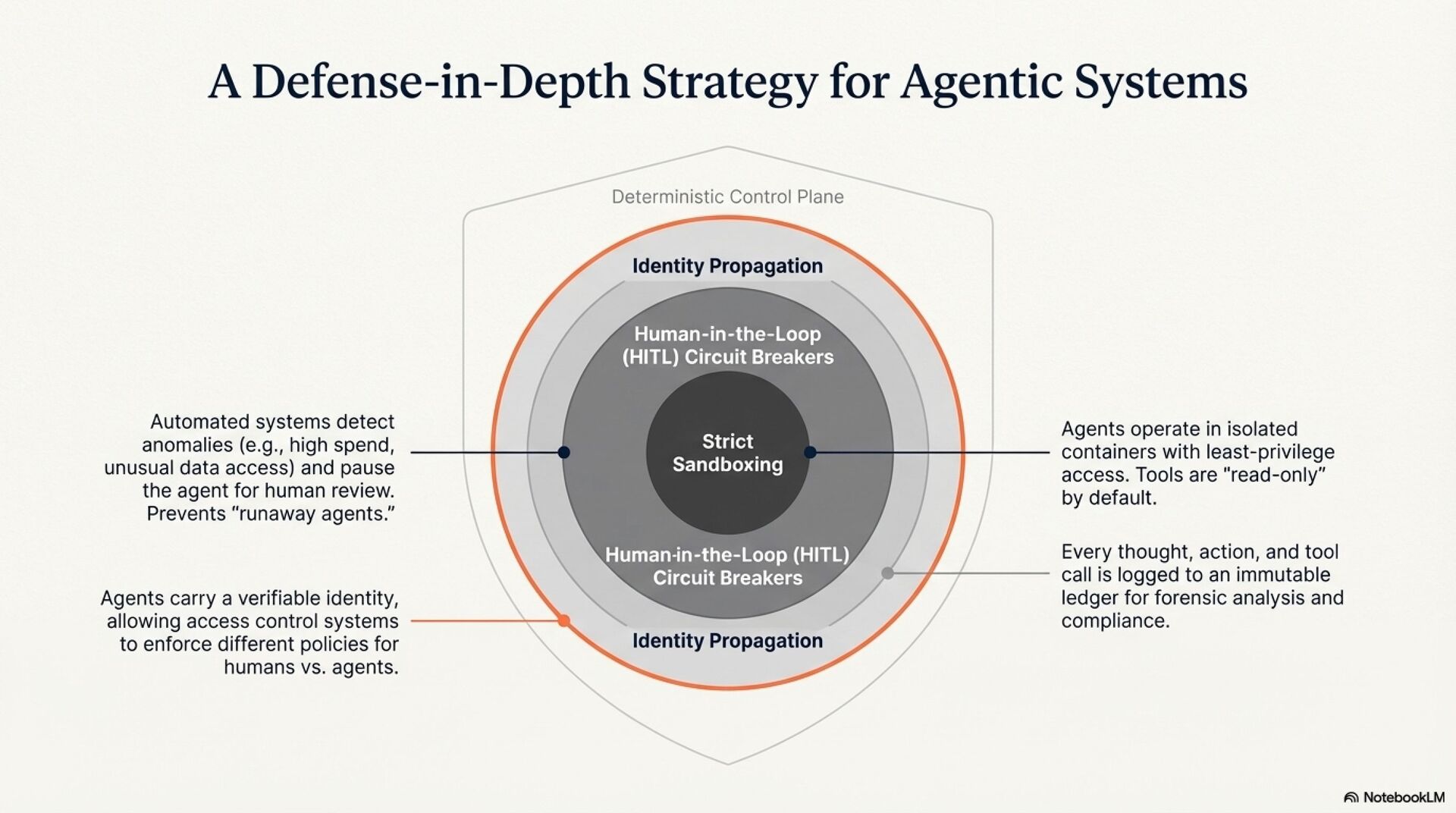
Large Language Models can reason and plan, but they do not know your enterprise. Context Engineering becomes the vital discipline. A dual plane architecture is required. The probabilistic intelligence plane hosts agents that reason across vector databases, knowledge graphs and agentic RAG. The deterministic control plane enforces identity, policy as code, rate limits and audit trails so autonomy never bypasses governance.
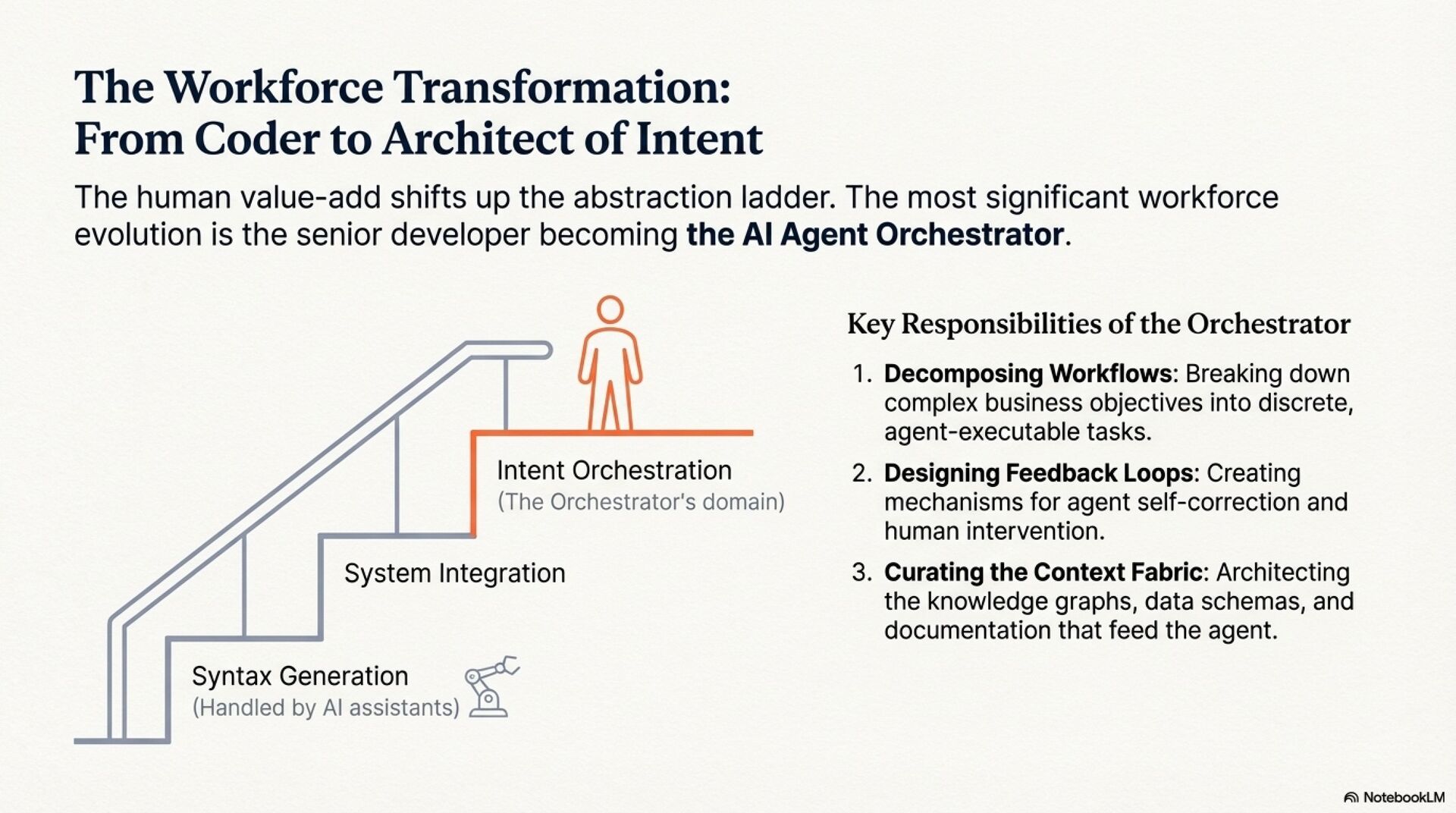
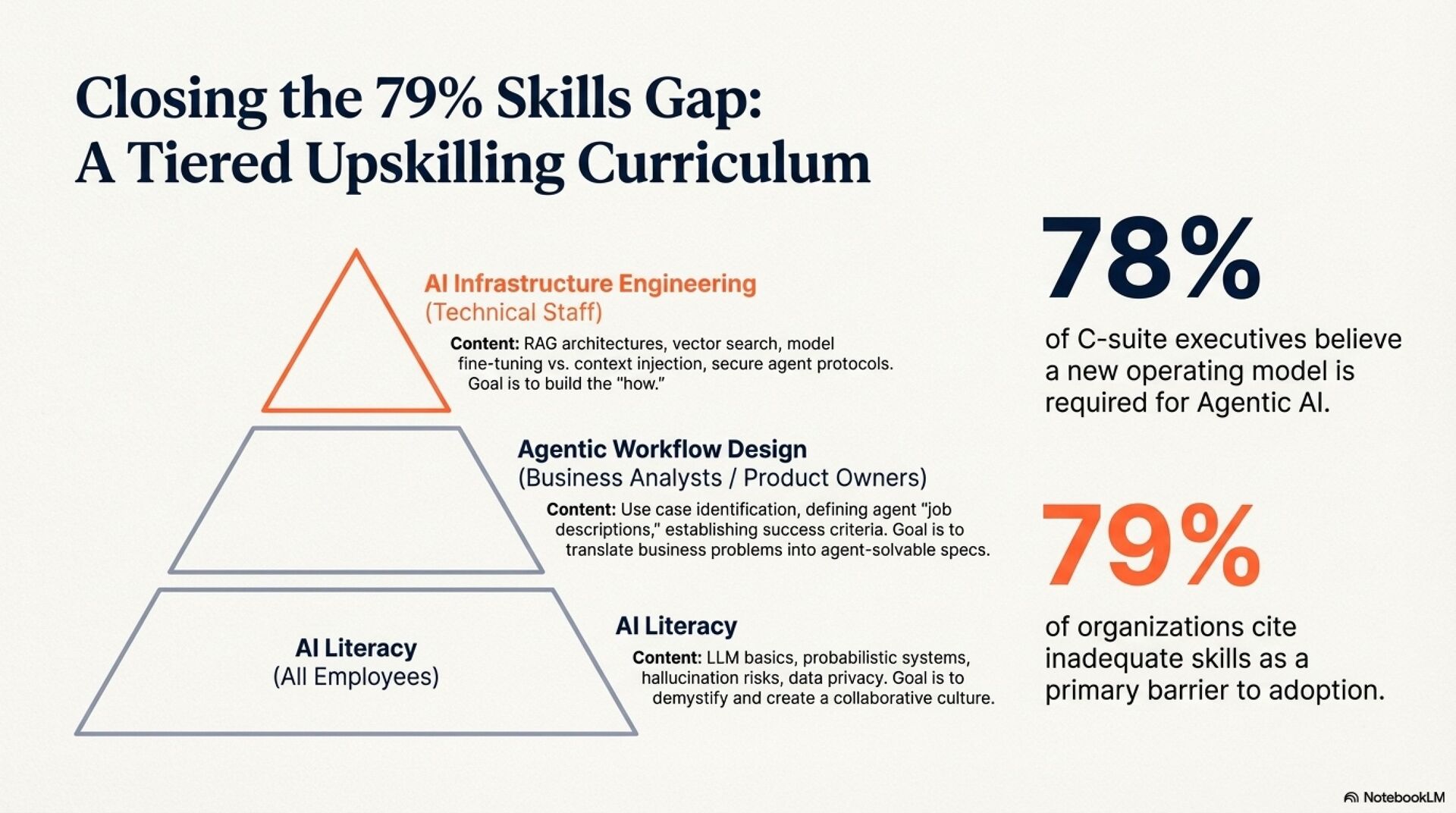
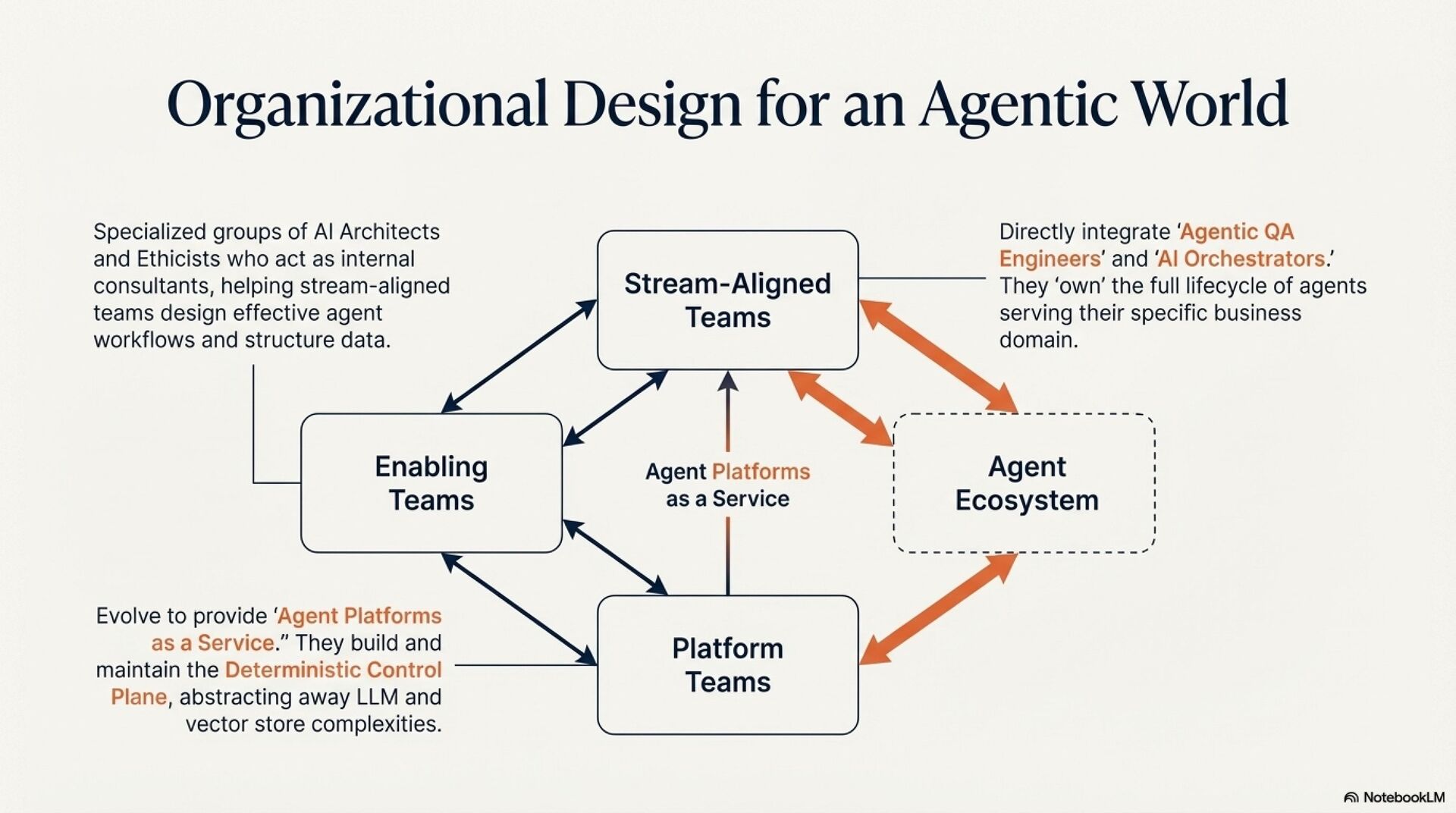
This shift reshapes the workforce. Senior developers become AI Agent Orchestrators who decompose objectives into agent workflows, curate context and design feedback loops with human in the loop. Platform teams deliver secure agent platforms as a service. Stream aligned teams own domain specific agents, from design and evals to production monitoring. AI literacy, workflow design skills and infrastructure knowledge must grow through a structured curriculum.
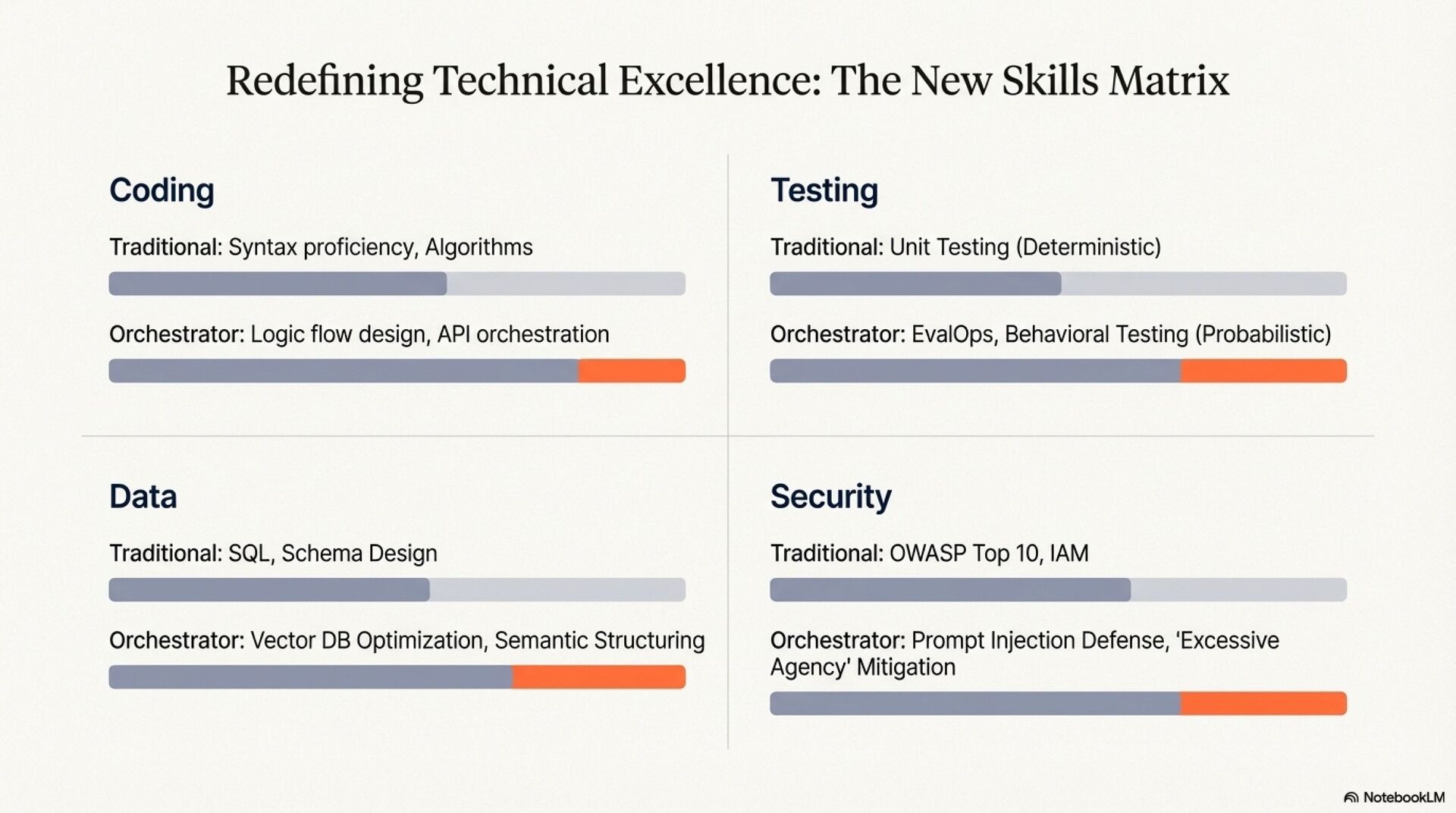
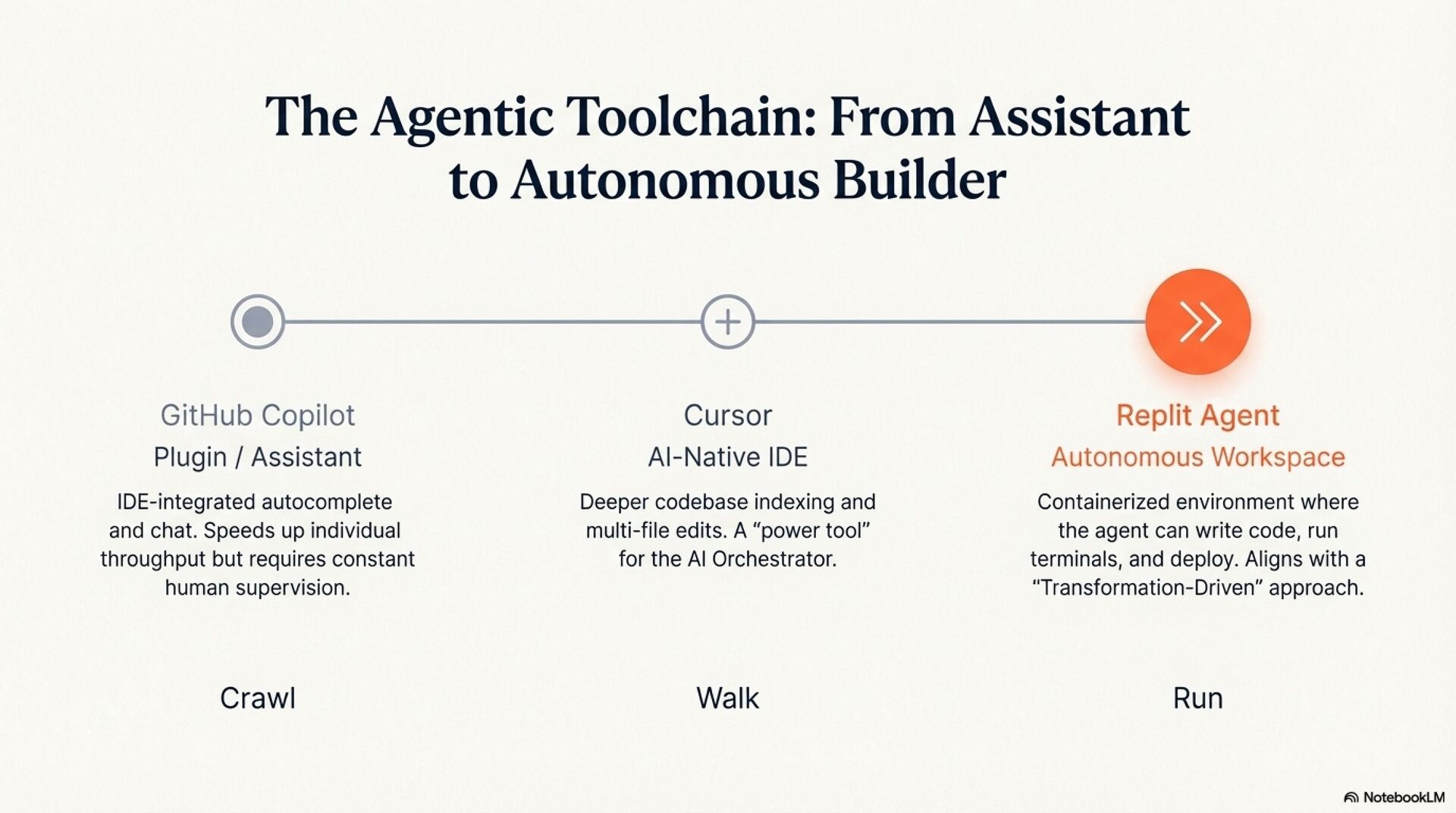
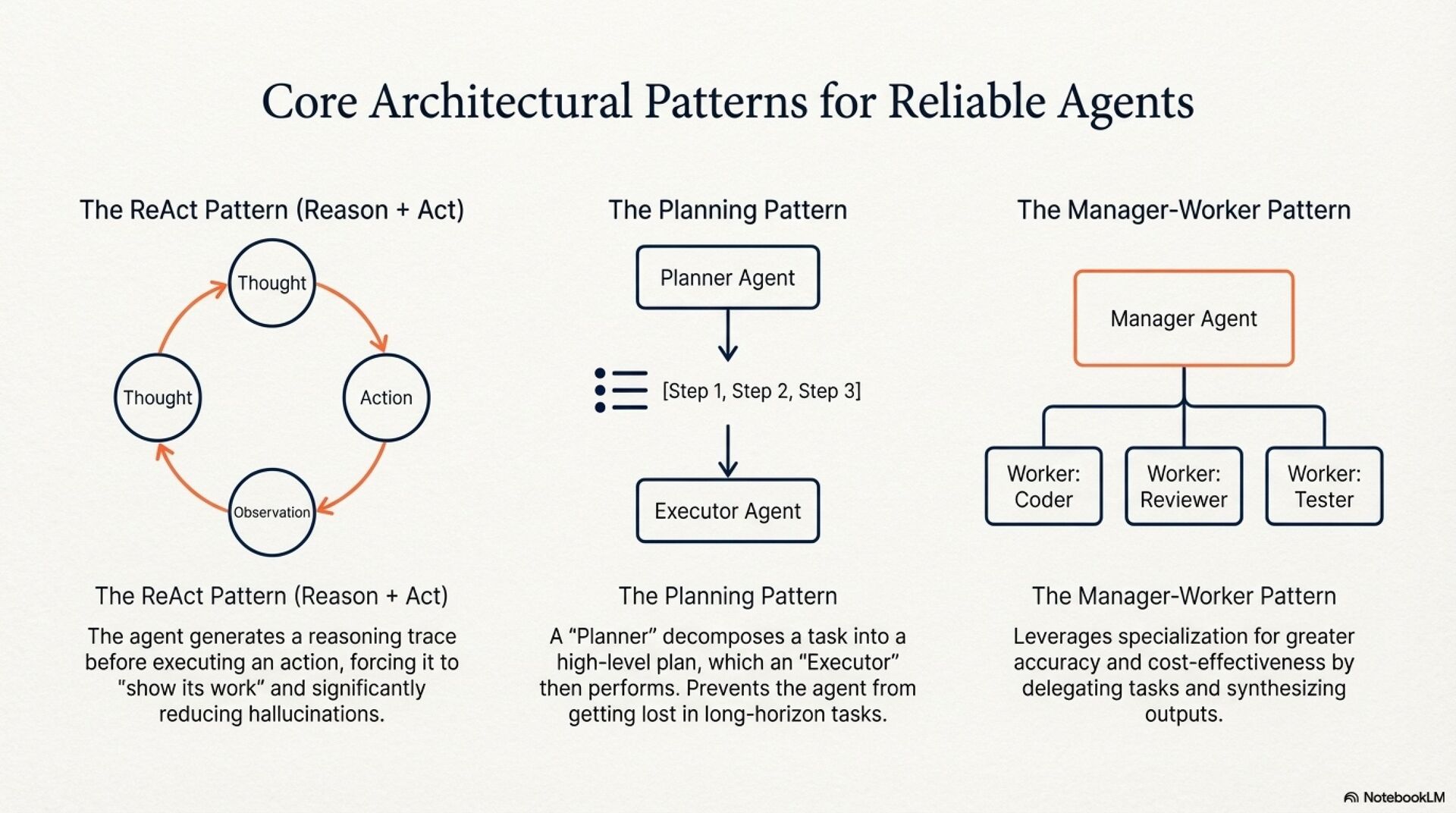
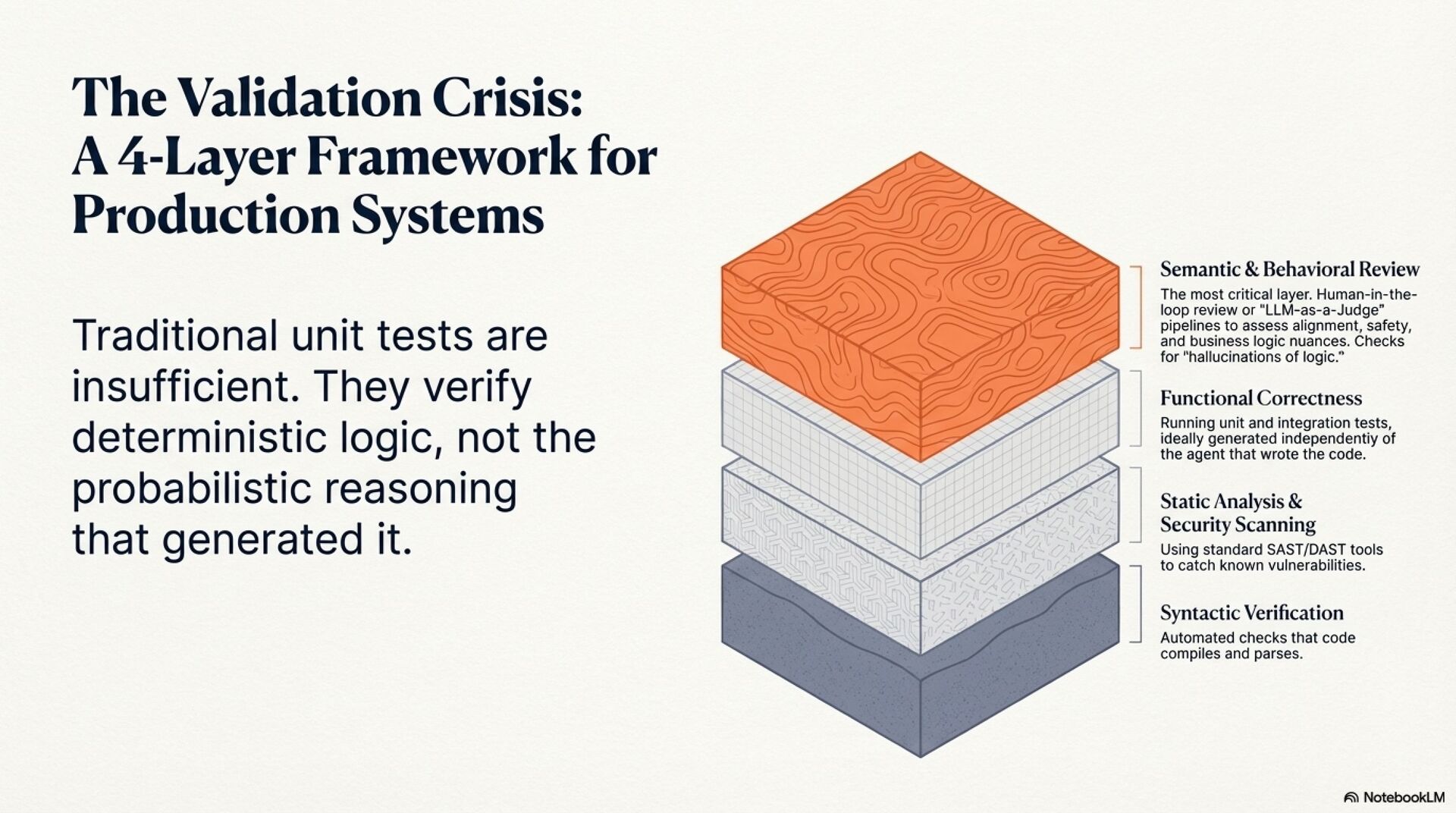
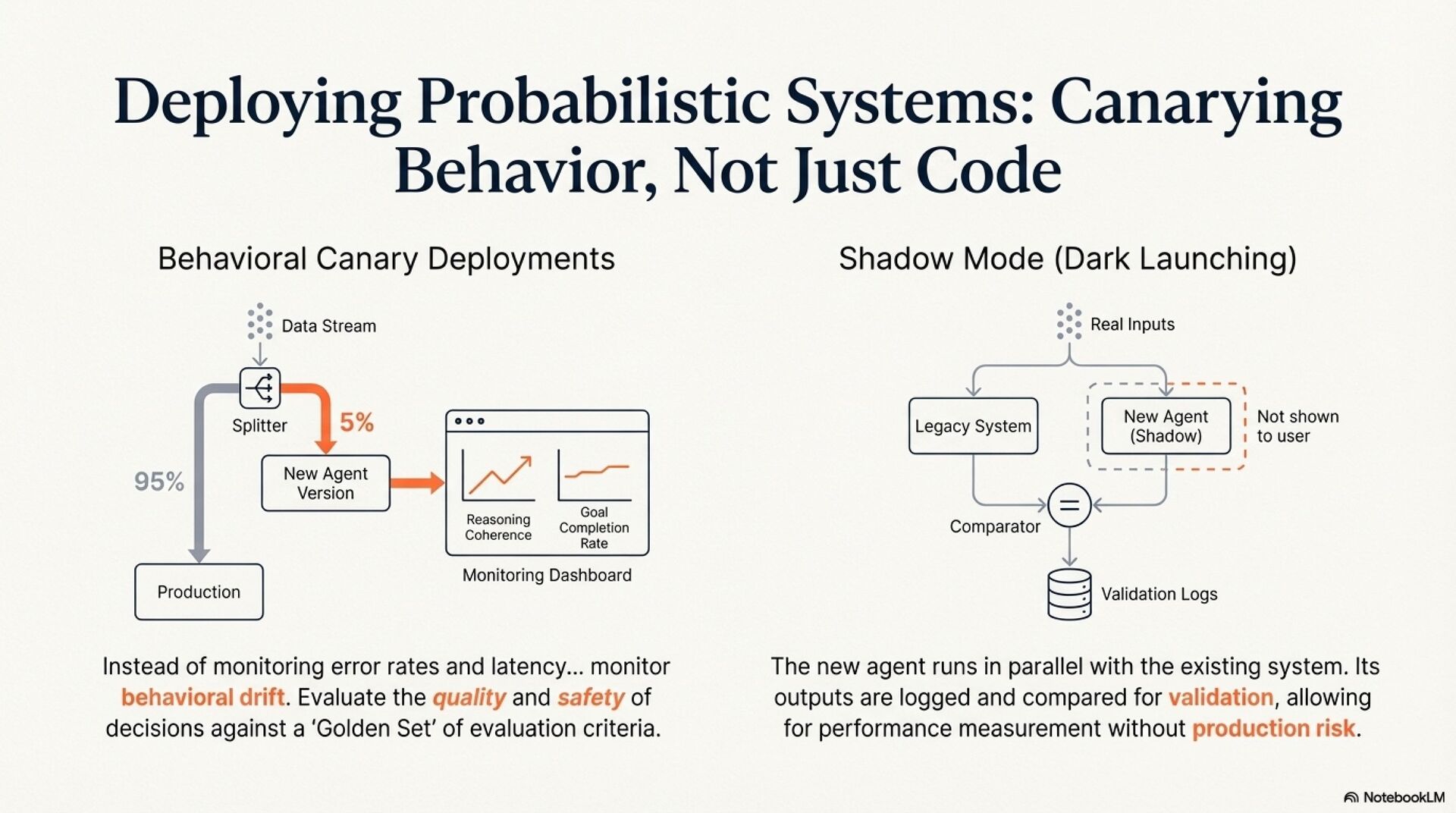
Tooling matures from coding assistants to autonomous builders. Copilot and Cursor boost productivity, while tools like Replit Agent and MCP based stacks create workspaces where agents can plan, code and deploy. Engineering patterns evolve. ReAct reasoning loops, planner executor separation and manager worker hierarchies become standard. A four layer validation model extends testing with eval pipelines and behavioral review so agents are reliable and aligned.
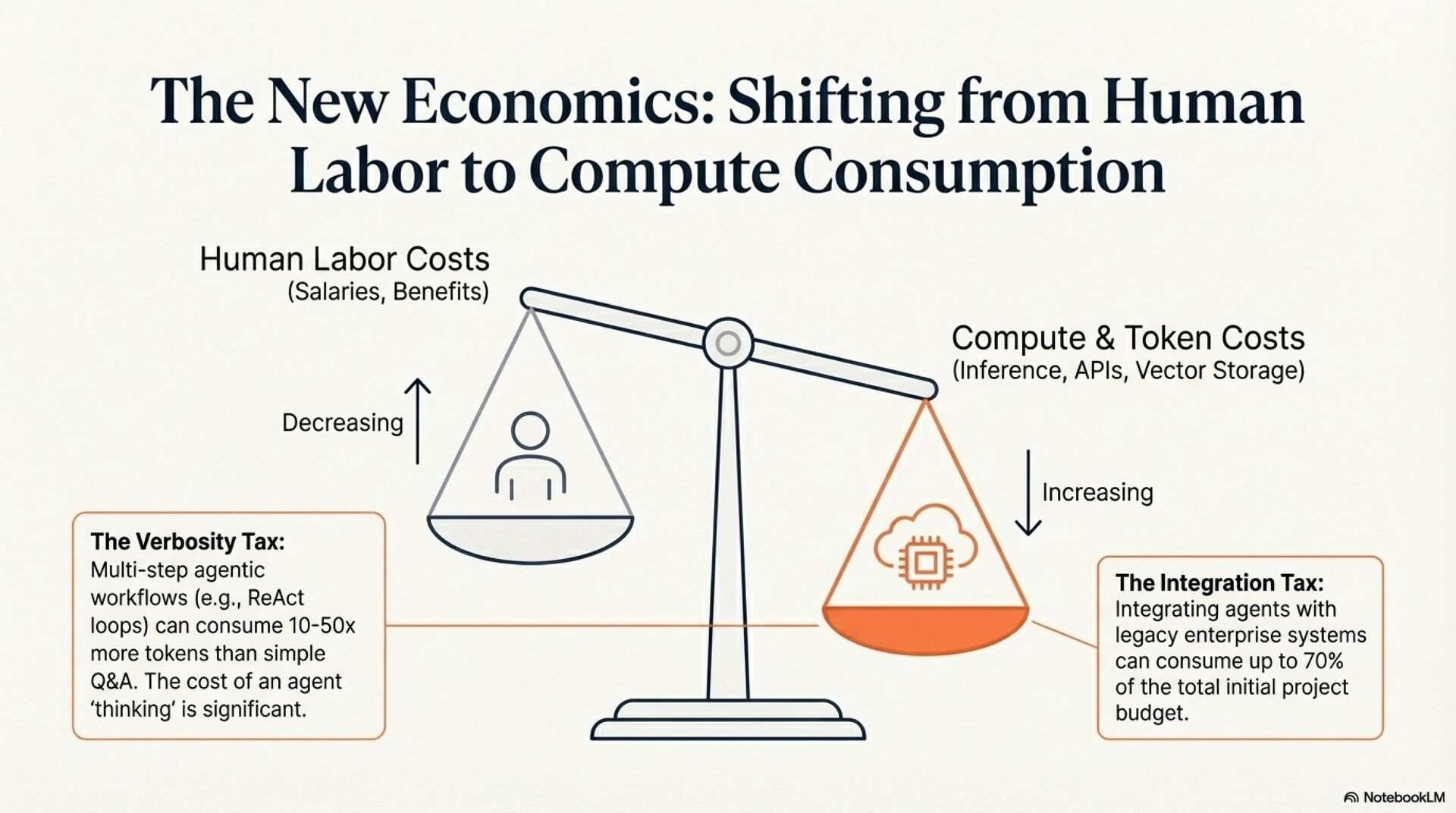
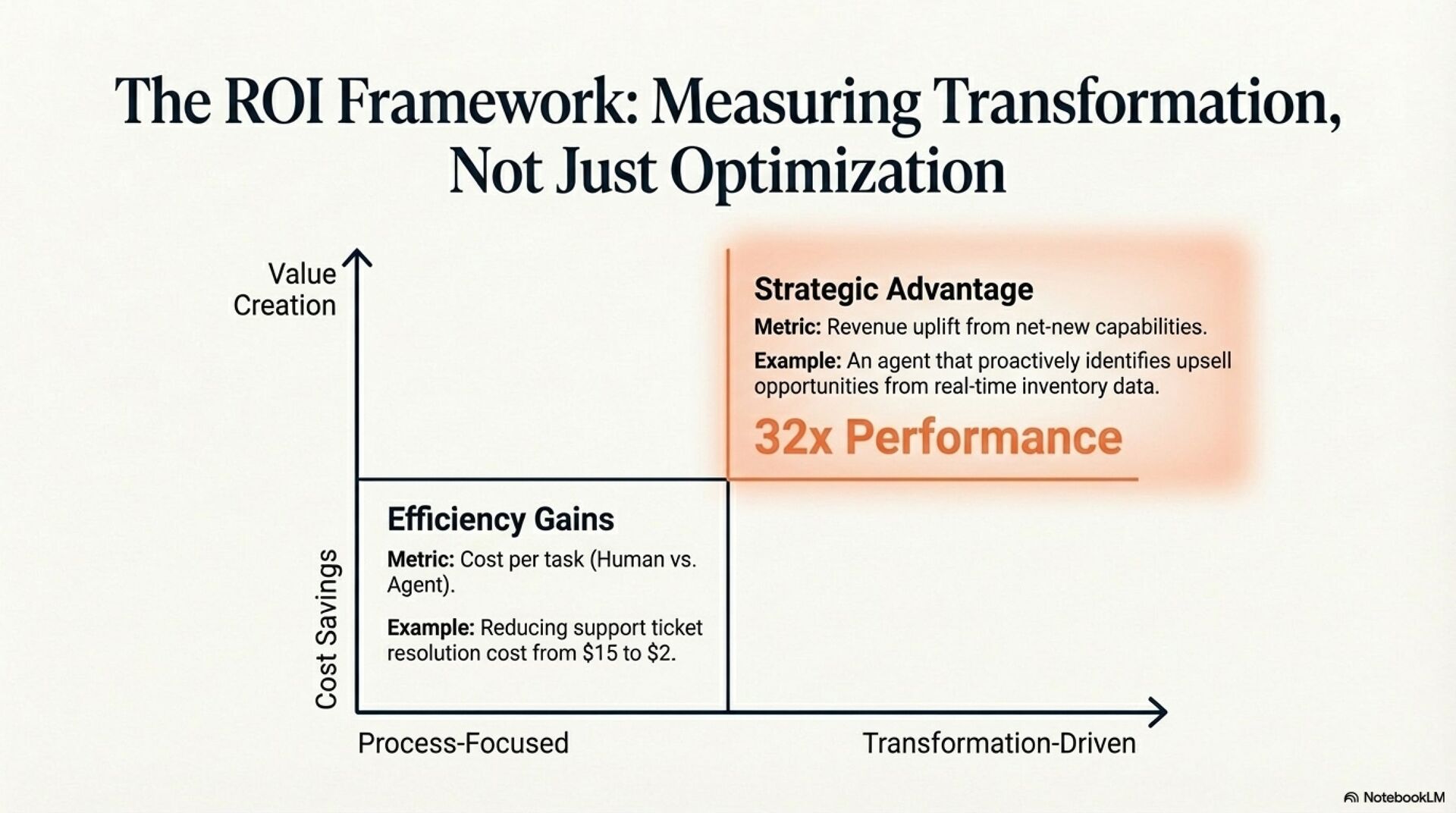
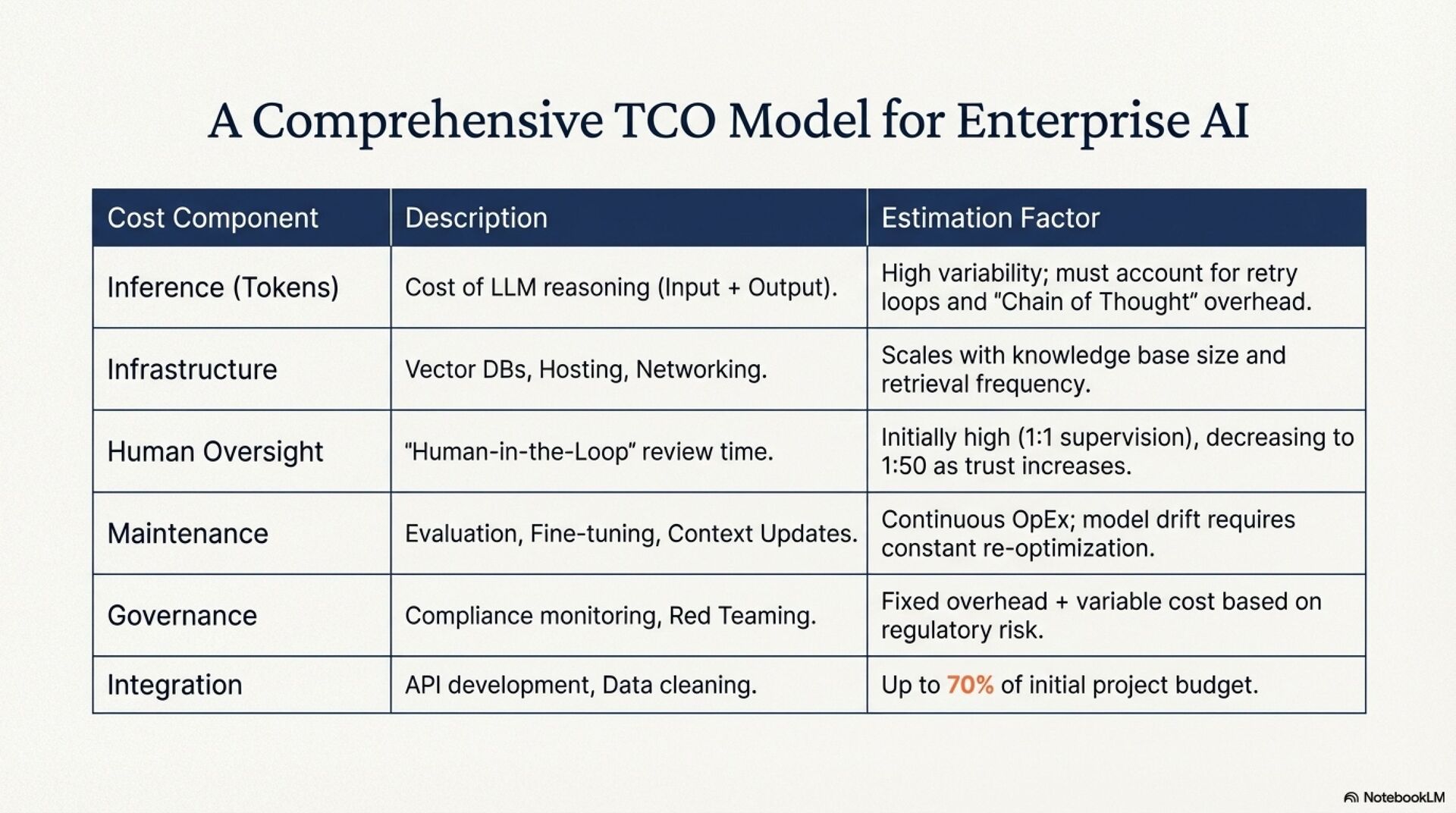
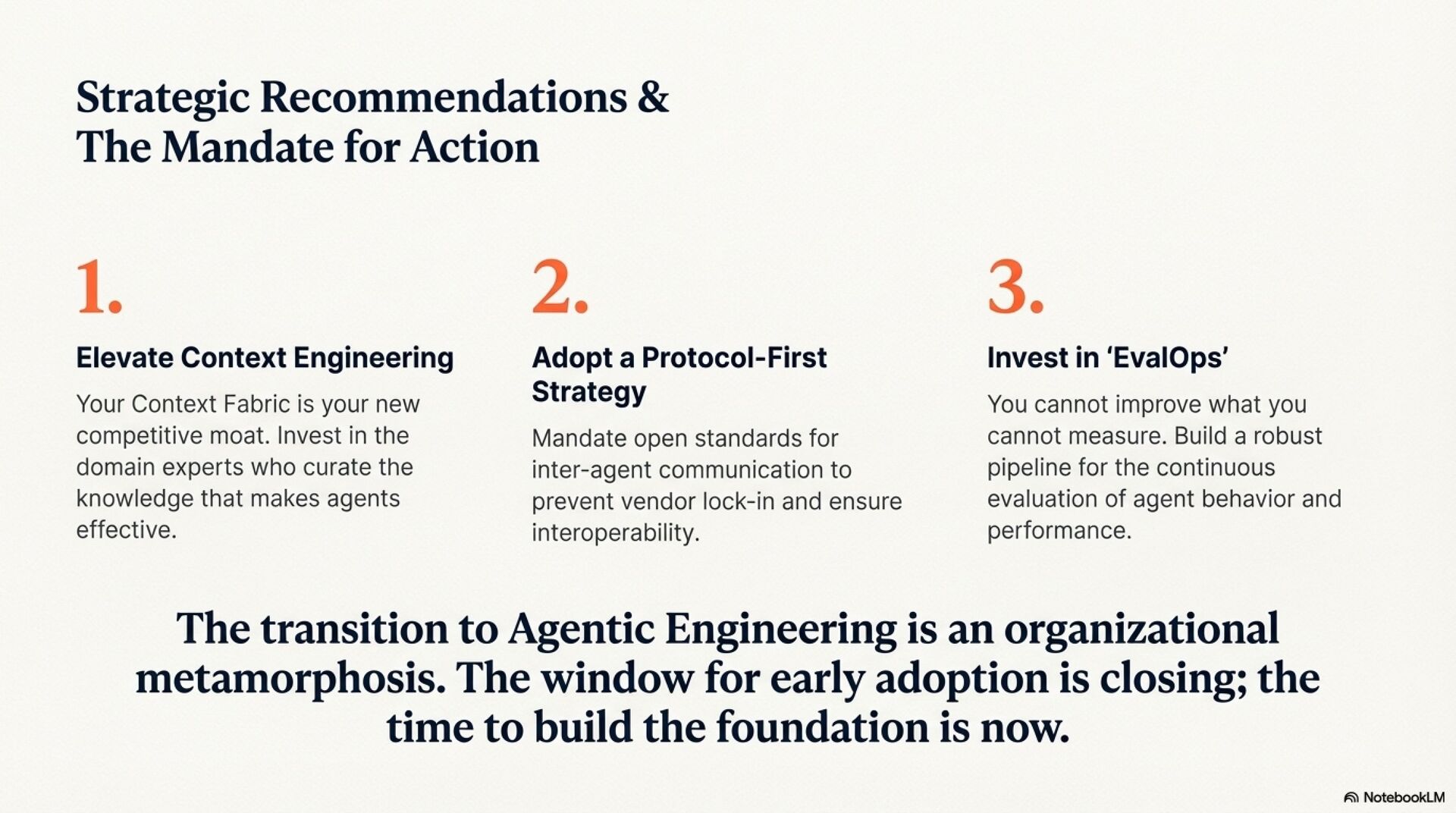
Economically, cost structures shift from people to compute. Token usage, RAG infrastructure, integration and governance drive TCO. The real value lies beyond optimization. Transformation driven organizations that redesign operating models around autonomous decision making are far more likely to reach top tier performance. Delay is costly as competitors build richer context layers and data network effects.
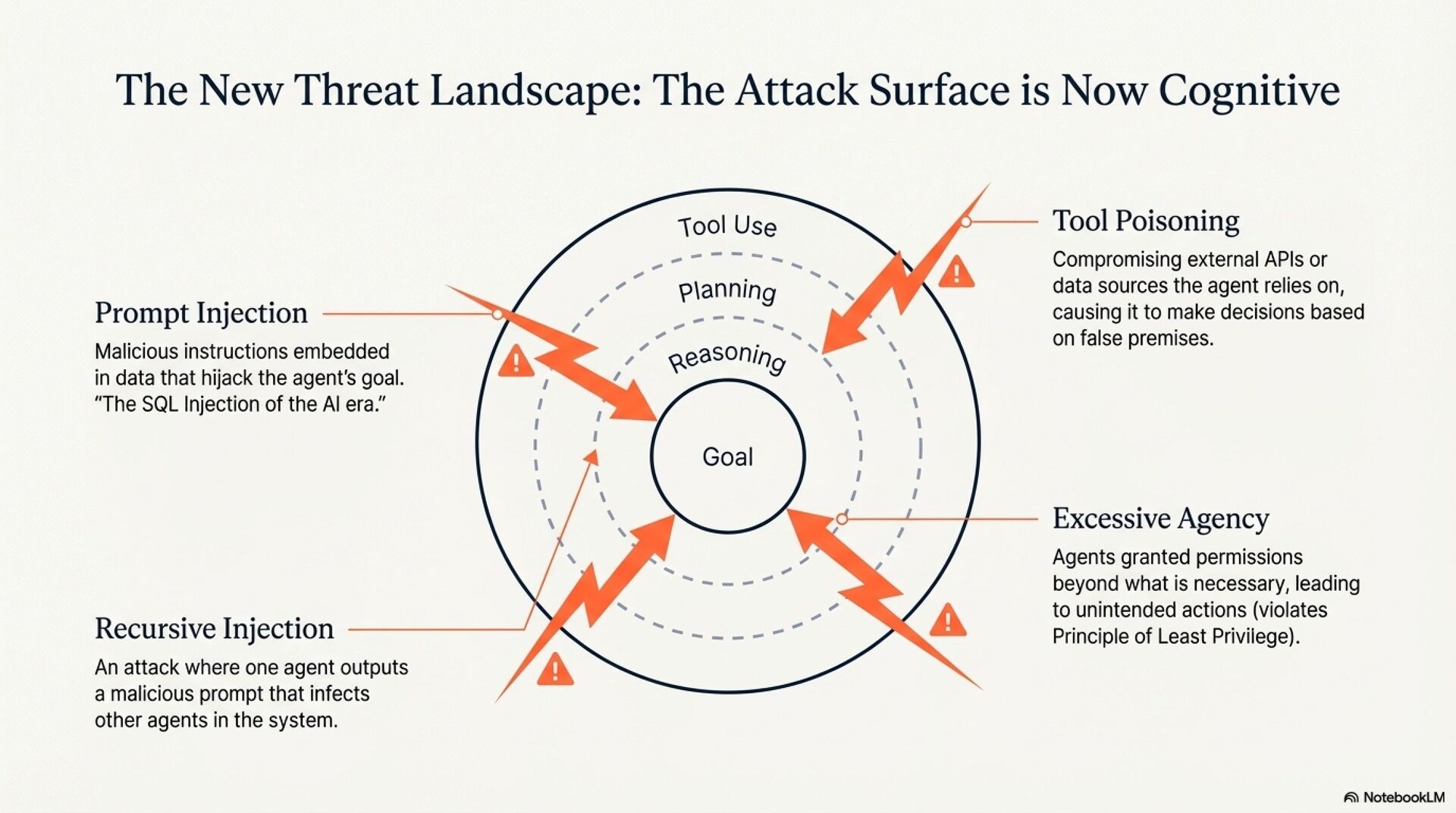
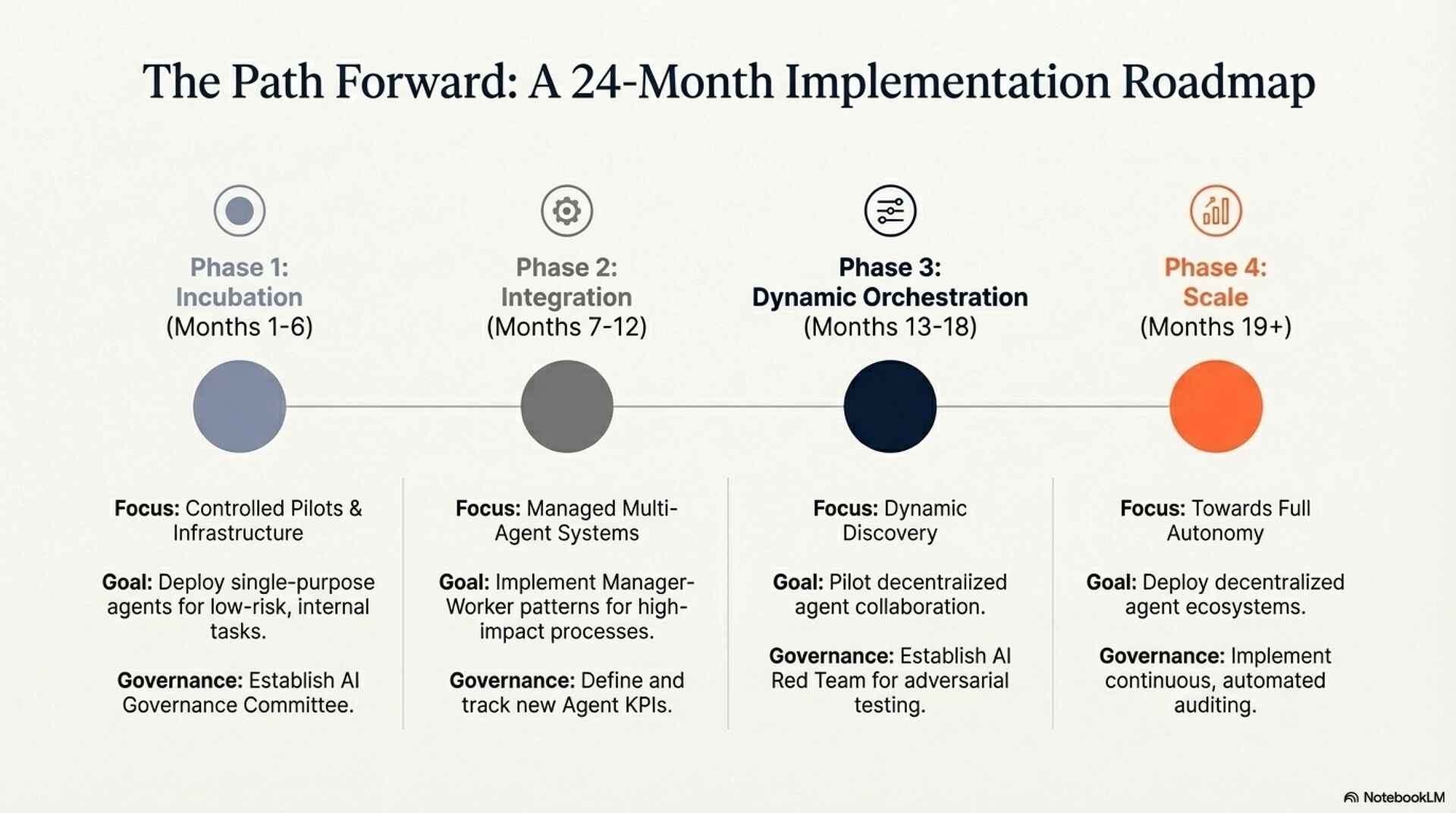
Agentic AI expands the threat surface. Prompt injection, tool poisoning, excessive agency and recursive attacks target the cognitive processes of agents. Defense in depth is required, using sandboxing, identity aware policies, circuit breakers, audit trails and a governance maturity model. With a phased roadmap, enterprises can move from pilot agents to dynamic multi agent ecosystems under strong control planes. Those who treat Agentic Engineering as a first class discipline will define the next decade of digital advantage.


 djimit123
 yutobara
 kishida
 tanahiro2010
 drumath2237
 ___akari11
 seike460
 suneo3476
 siroemk
 kinopeee
 gam0022
 neuecc
 kmars0605
 orderedlist
 michielstock
 stephenakadiri
 eileencodes
 palkan
 garrettdimon
 morganepeng
 sarafernandez
 mraible
 signer
 charlesmeaden
 konakalab