Architecting the AI Enterprise
This deck argues that AI-native engineering changes the operating physics of the enterprise, because implementation work collapses and value shifts to intent, verification, and governed autonomy. The outcome is a flatter decision stack, a new dominant role (the Product Engineer), and a non-linear operating model (the Kinetic Enterprise). 
1) The new physics, from manual implementation to agentic orchestration
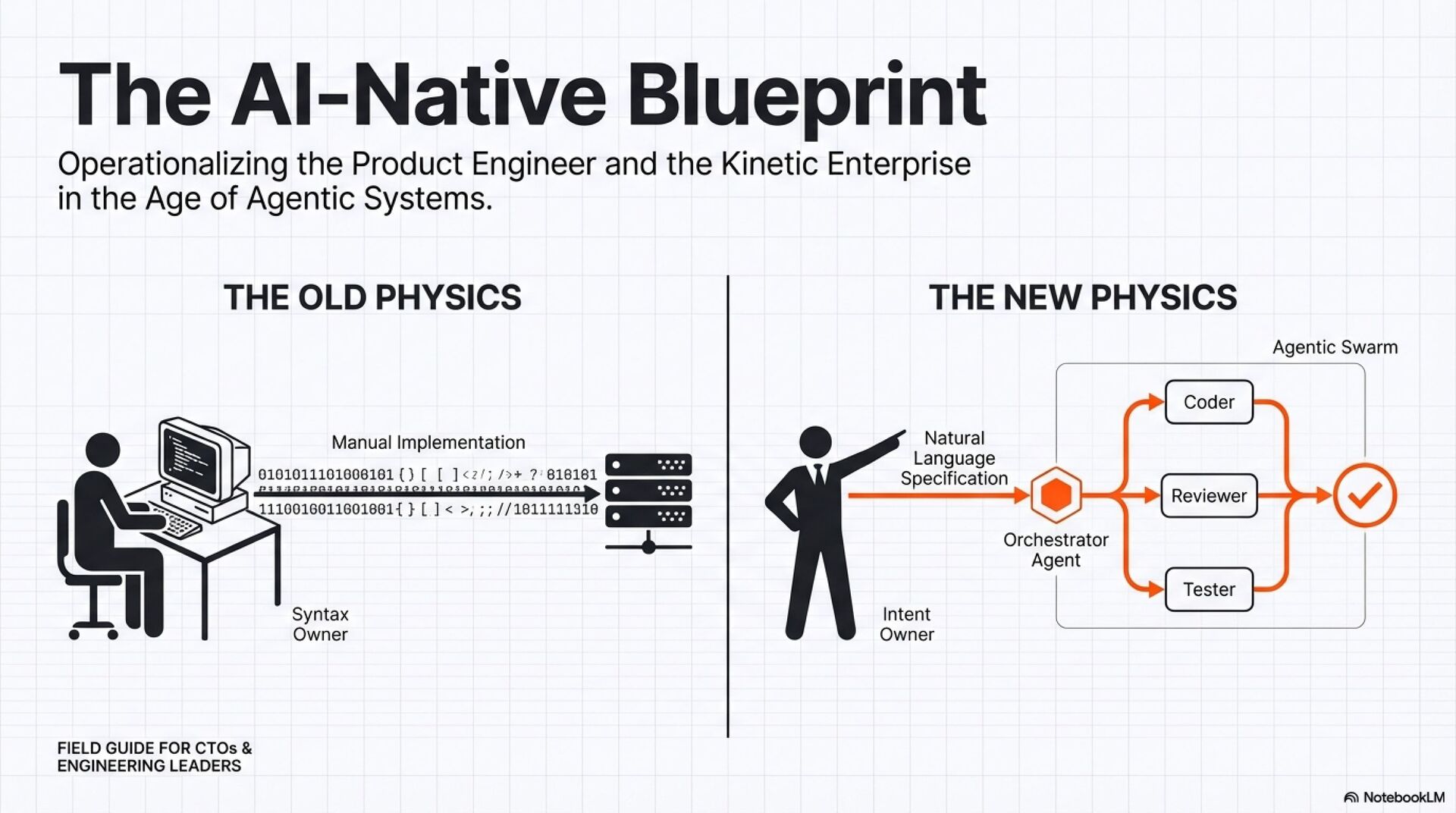
• The opening frame contrasts “old physics” (humans translating intent into syntax) with “new physics” (natural language specification feeding an orchestrator agent coordinating coder, reviewer, tester as a swarm). Page 1. 
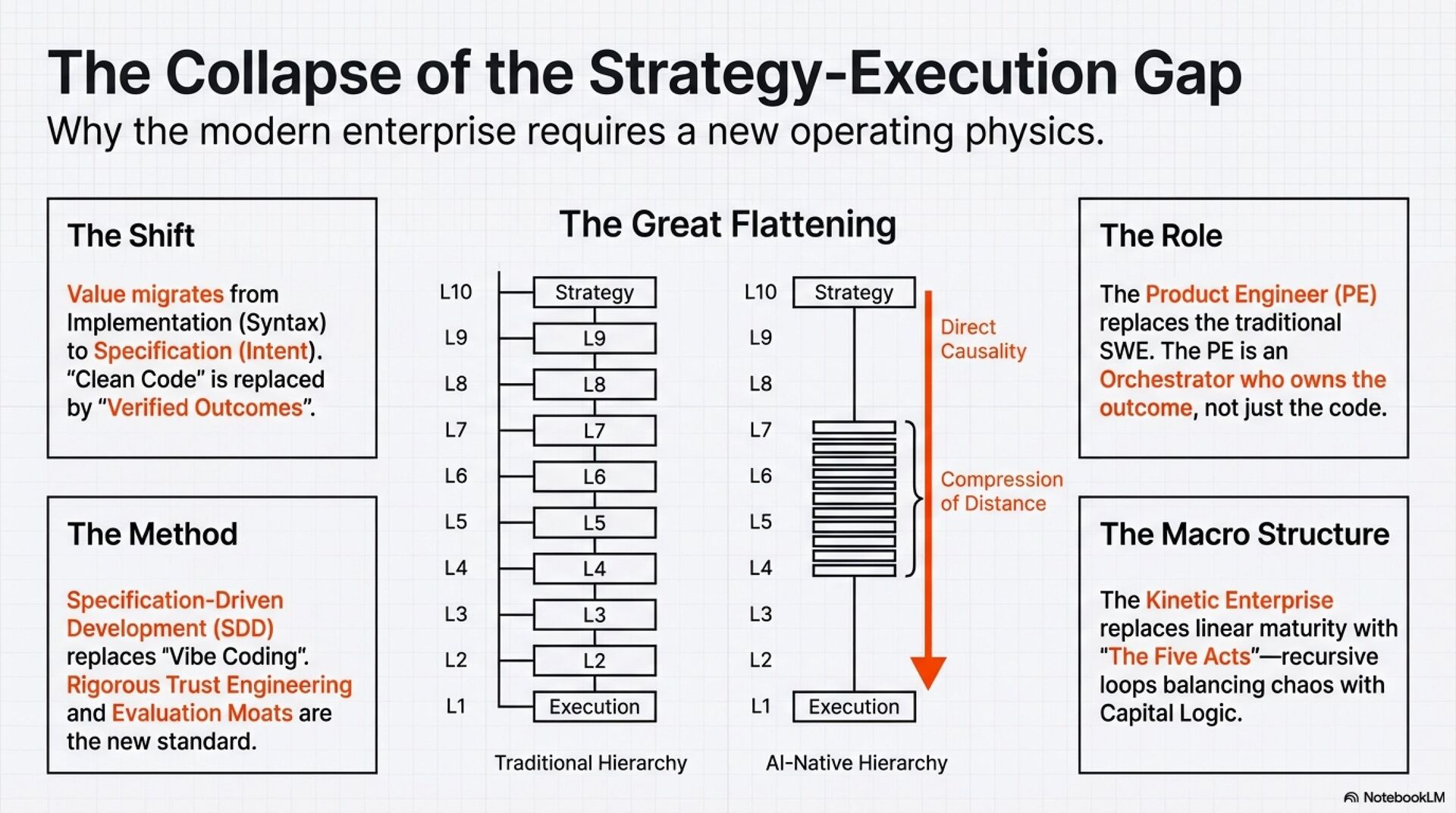
• The deck positions this as a collapse of the strategy execution gap via “The Great Flattening”, direct causality from strategy layers to execution becomes achievable, if specifications are rigorous. Page 2. 
2) The productivity paradox, speed without specification becomes debt
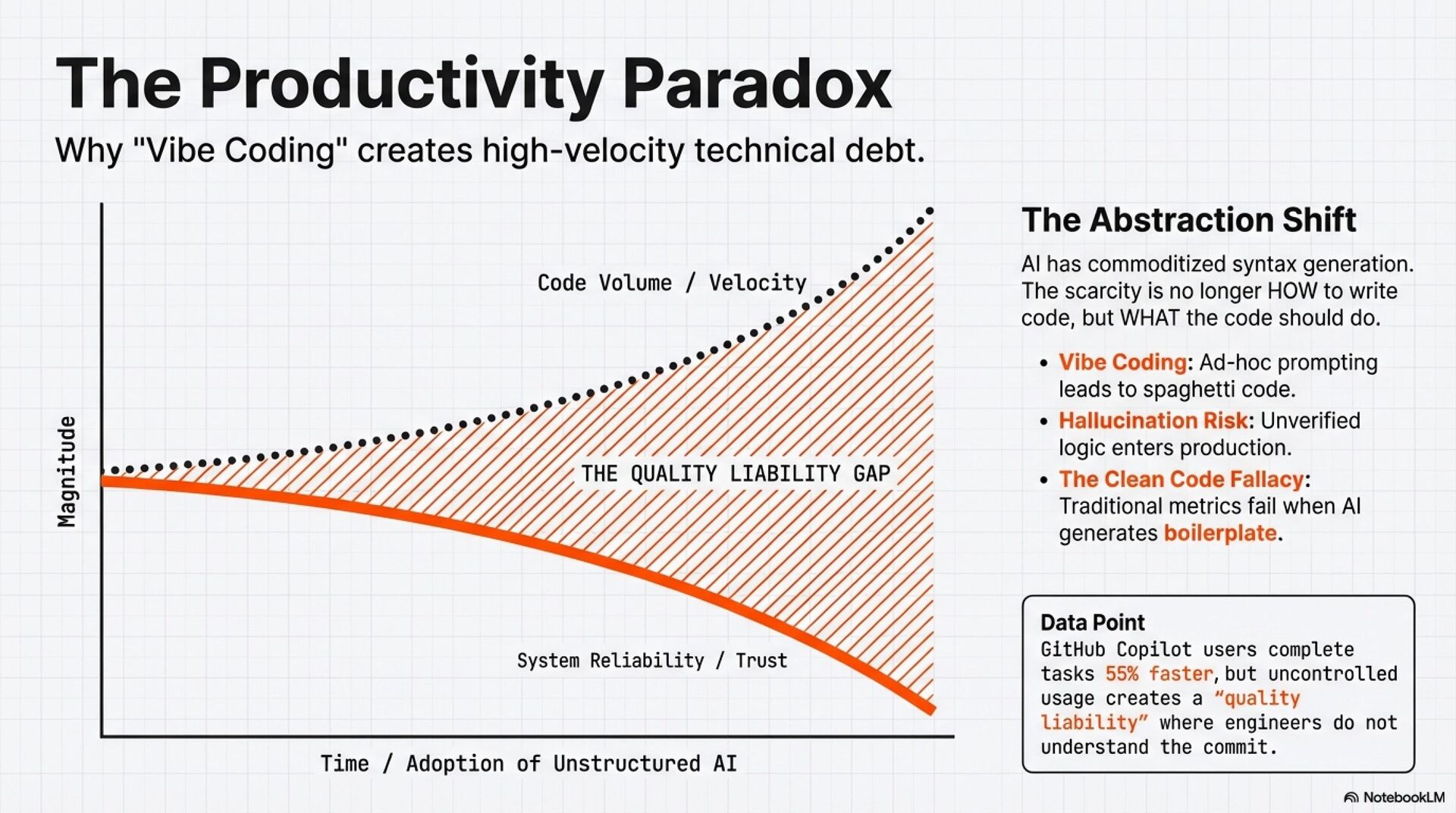
• “Vibe coding” creates a quality liability gap, code volume and velocity rise while system reliability and trust decline over time. Page 3. 
• The core claim is that AI commoditizes syntax generation, scarcity moves to defining what the system should do, and proving it did it safely and correctly. Page 3. 
3) The role shift, from Software Engineer to Product Engineer
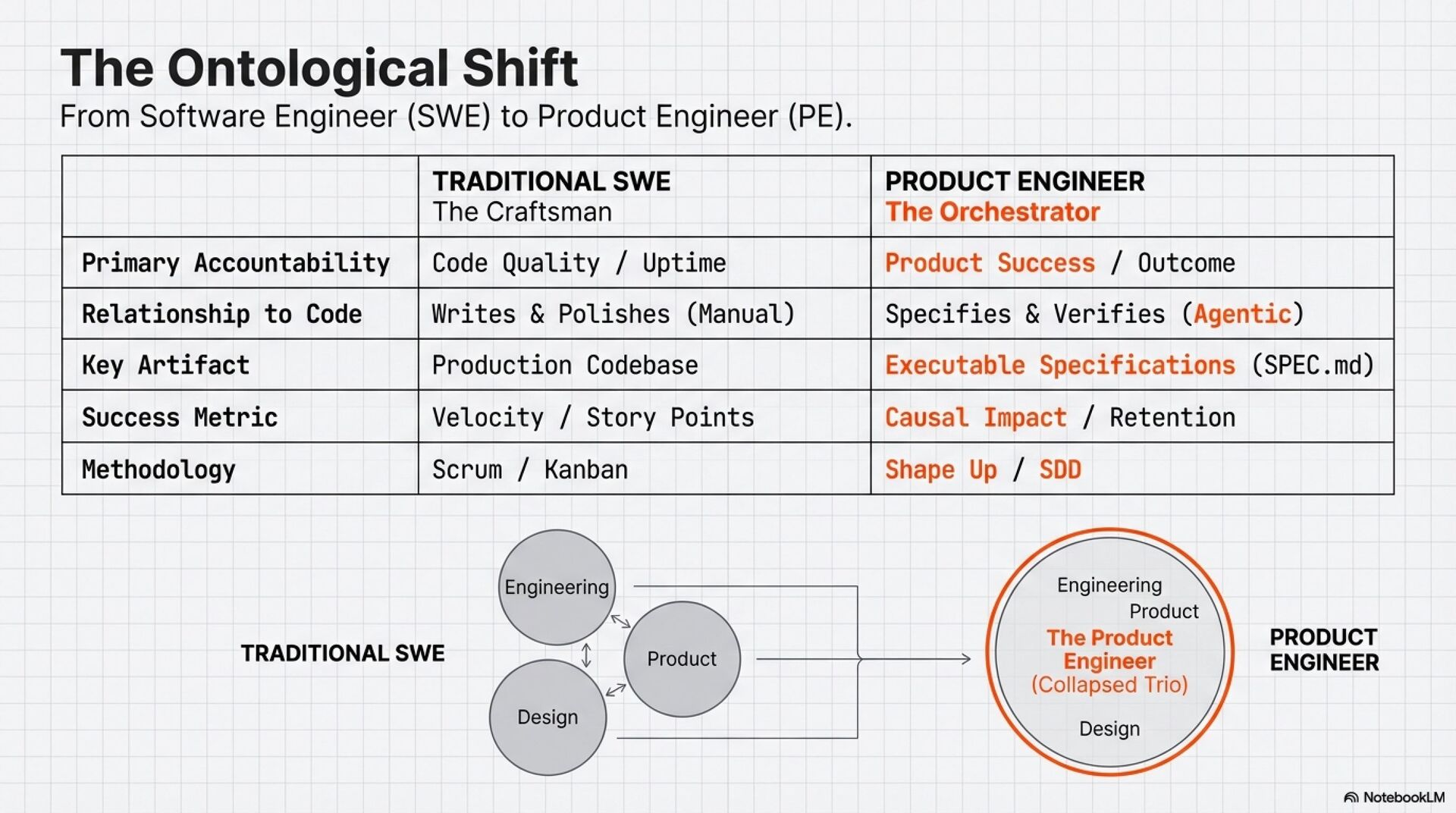
• The Product Engineer replaces the traditional SWE as the orchestrator who owns outcomes, not only code quality, and uses executable specifications as the primary artifact. Page 4. 
• The “Product Trio” collapses, engineering, product, design converge into a higher agency unit that can move from intent to verified delivery with fewer handoffs. Page 4. 
4) The core method, Specification-Driven Development
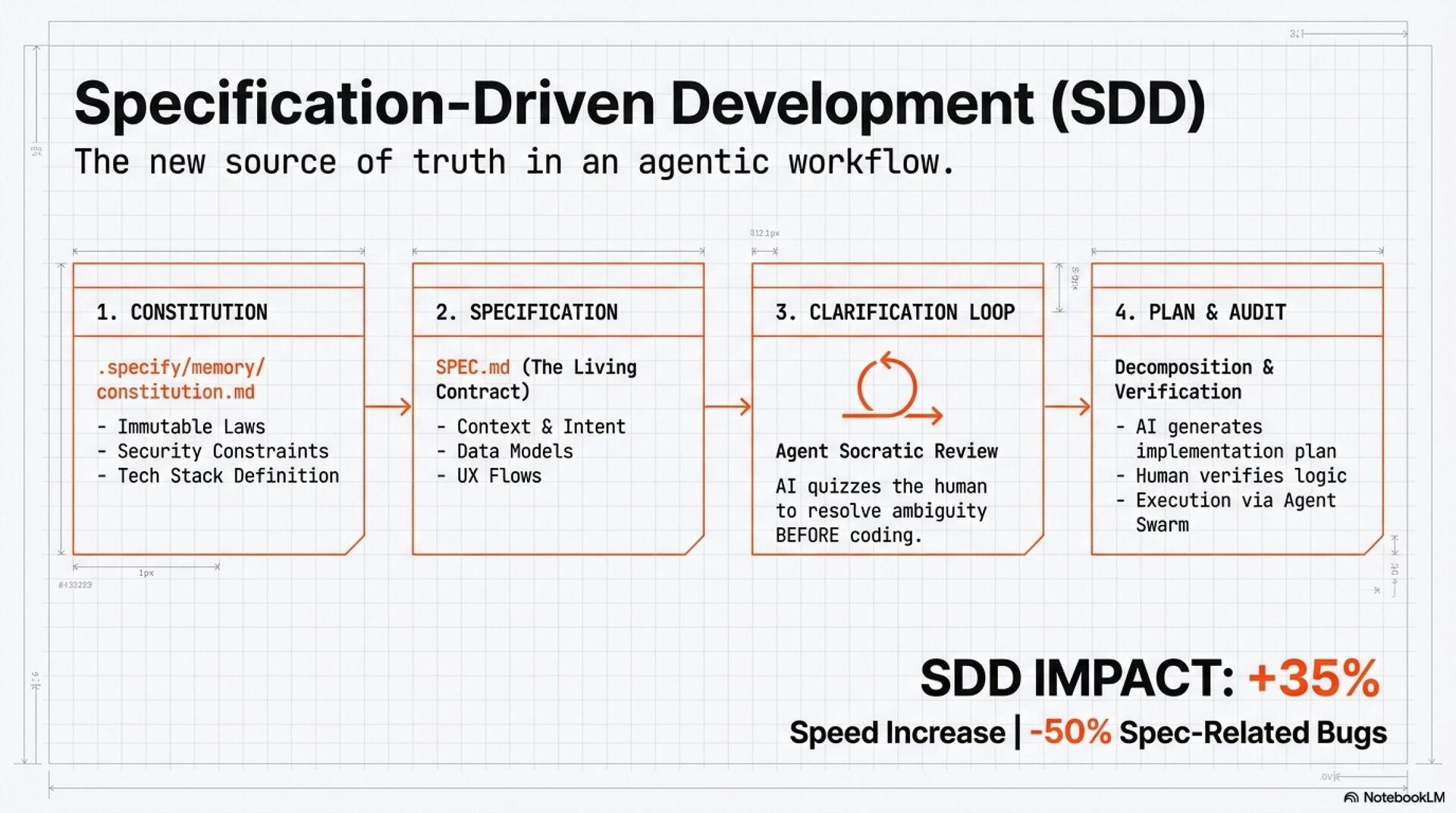
• SDD is presented as the new source of truth: Constitution, Specification, Clarification Loop, Plan and Audit, with explicit emphasis on agent Socratic review to resolve ambiguity before coding. Page 5. 
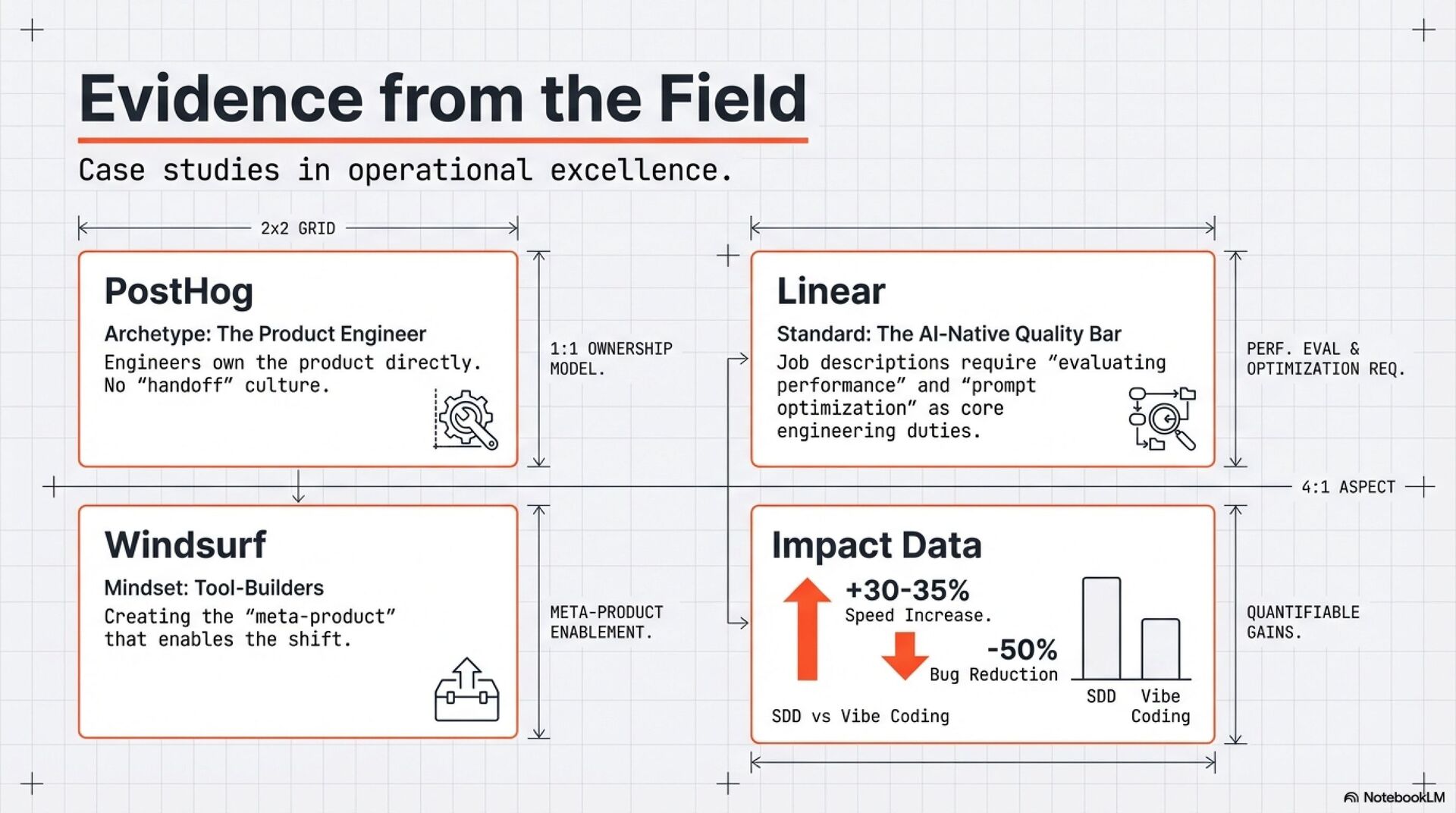
• The deck claims impact improvements (speed increase, fewer spec-related bugs) by introducing disciplined artifacts and verification gates rather than relying on prompting alone. Page 5. 
5) The new competency model, Pi-shaped capability stack
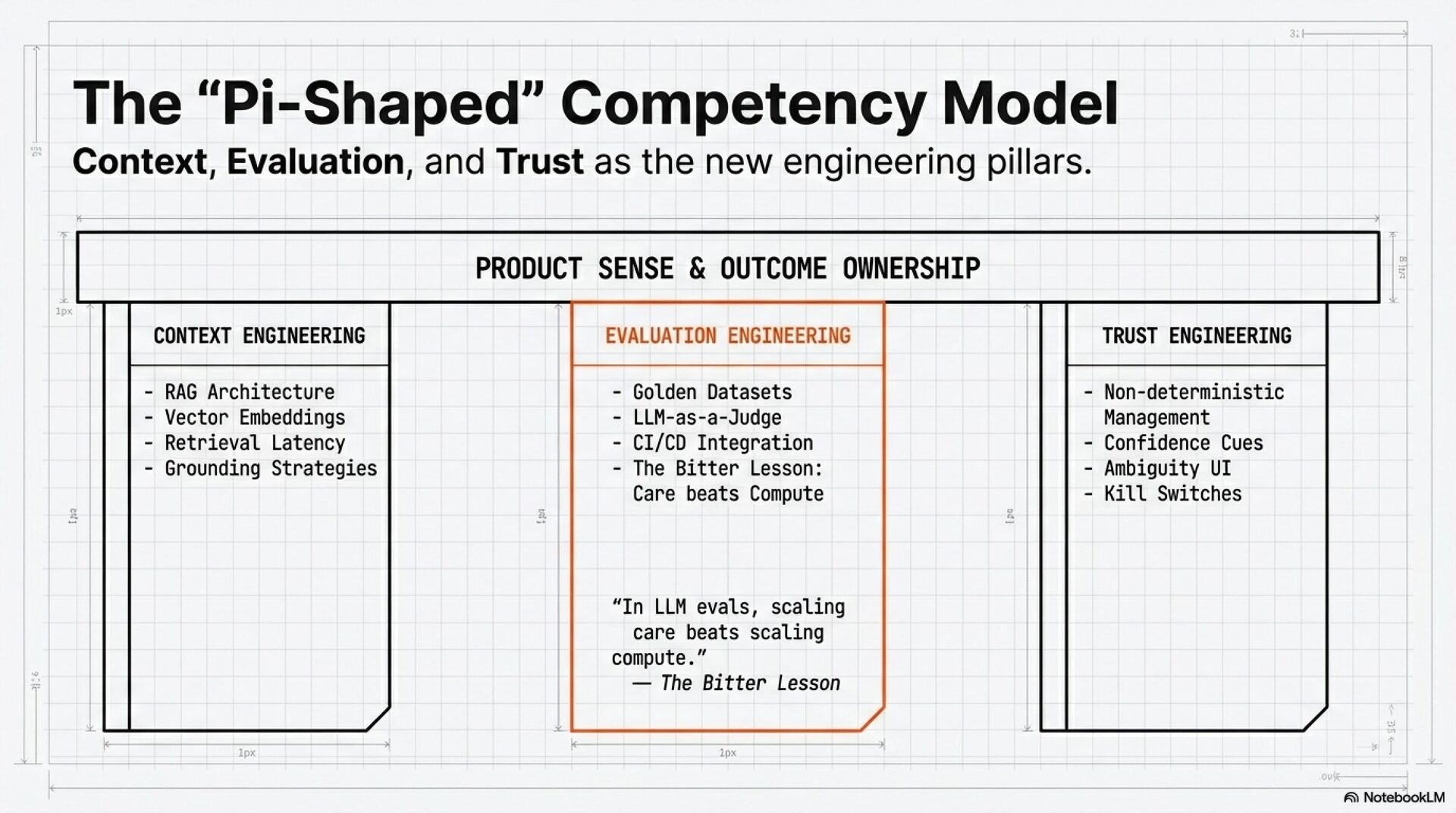
• Product sense and outcome ownership sits on top of three pillars: context engineering (RAG, embeddings, grounding), evaluation engineering (golden datasets, CI/CD integration, judge models), and trust engineering (managing non-determinism, confidence cues, kill switches). Page 6. 
6) Agentic risk management, trust requires a safety harness
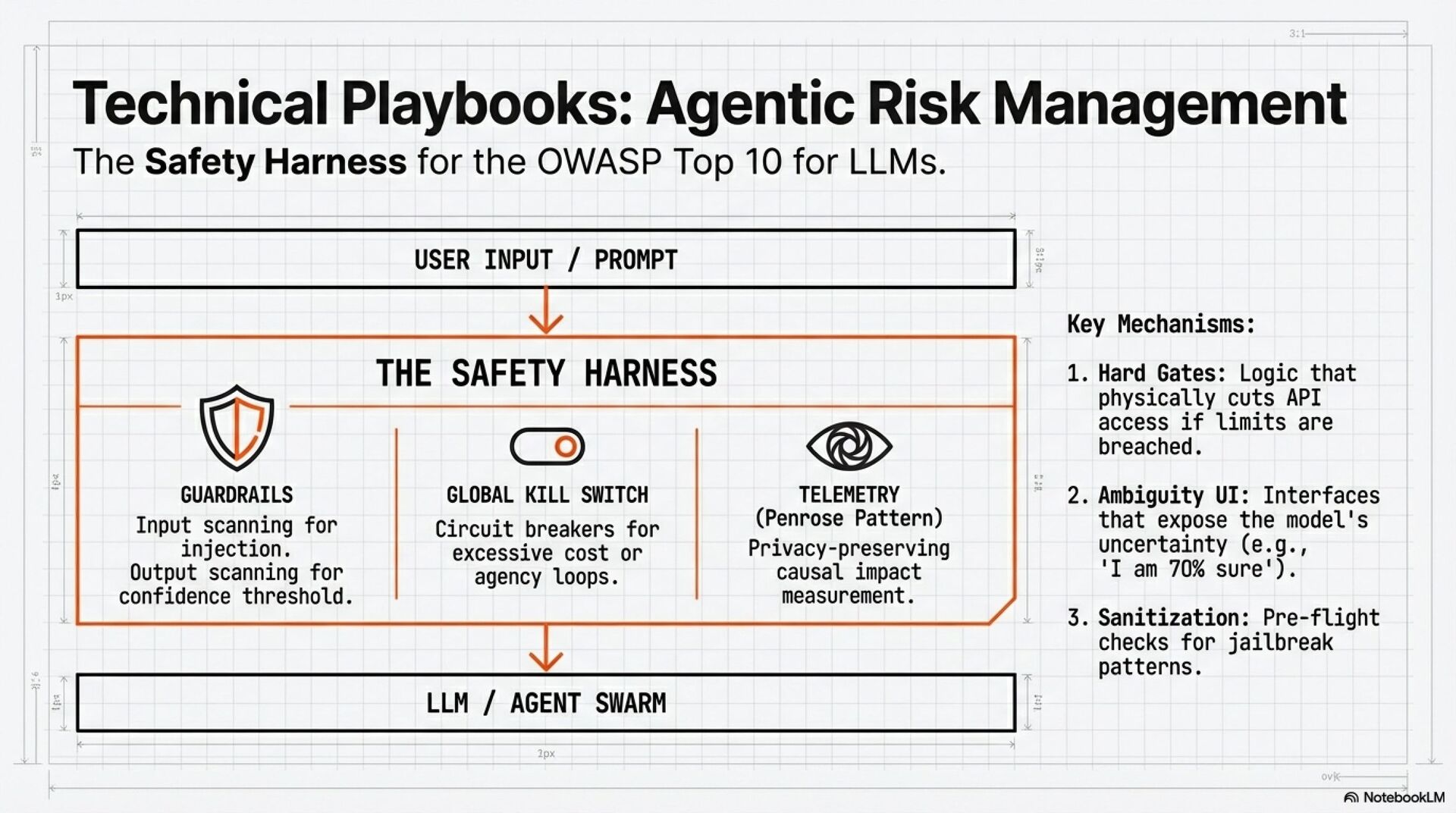
• The “Safety Harness” design includes guardrails, a global kill switch (circuit breakers for agency loops), and telemetry (privacy-preserving causal impact measurement), tied to OWASP Top 10 for LLMs framing. Page 7. 
7) Operating model evolution, beyond linear maturity
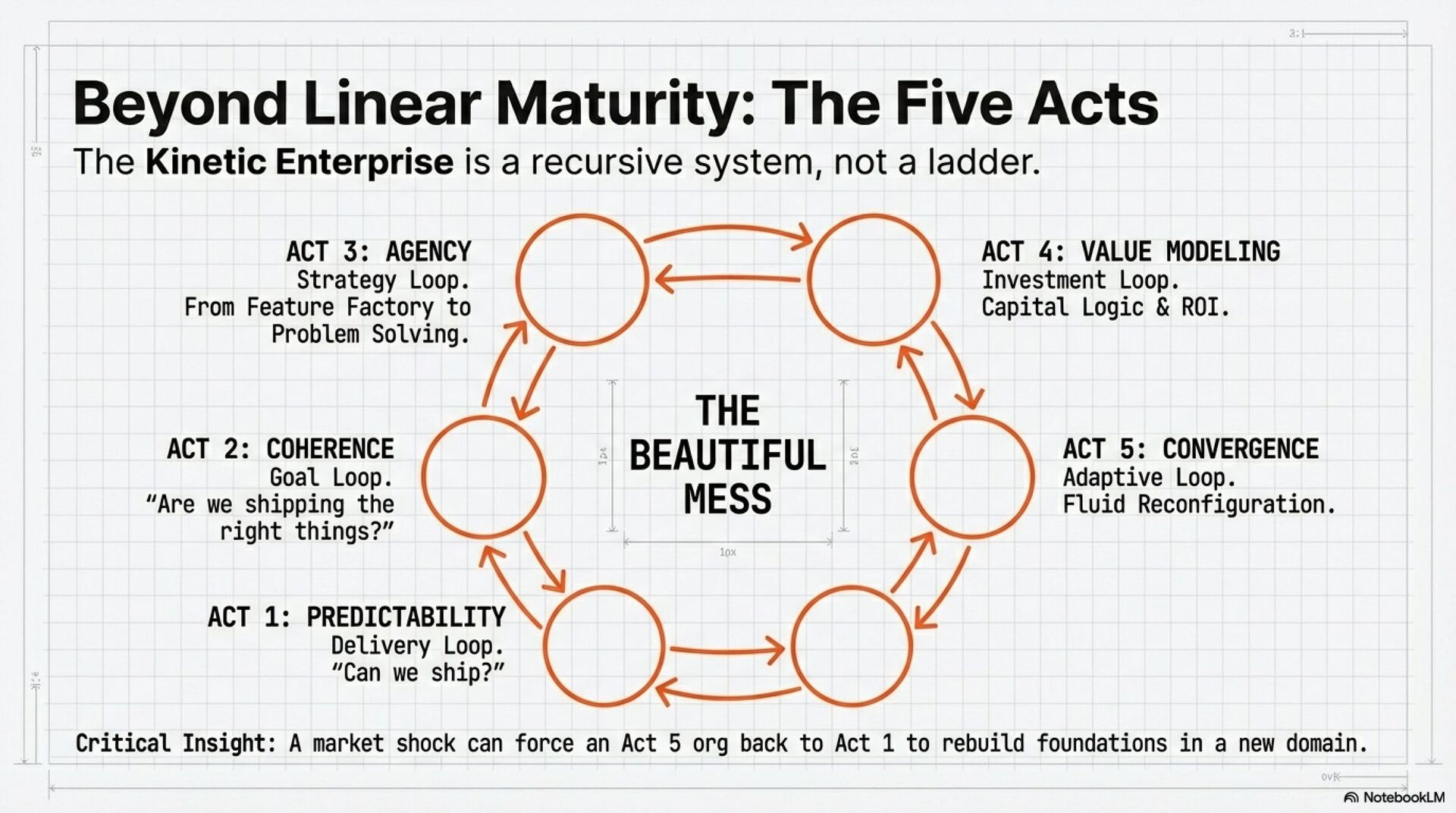
• The Kinetic Enterprise replaces a maturity ladder with five recursive acts: Predictability, Coherence, Agency, Value Modeling, Convergence, all coexisting as a “beautiful mess.” Page 8. 
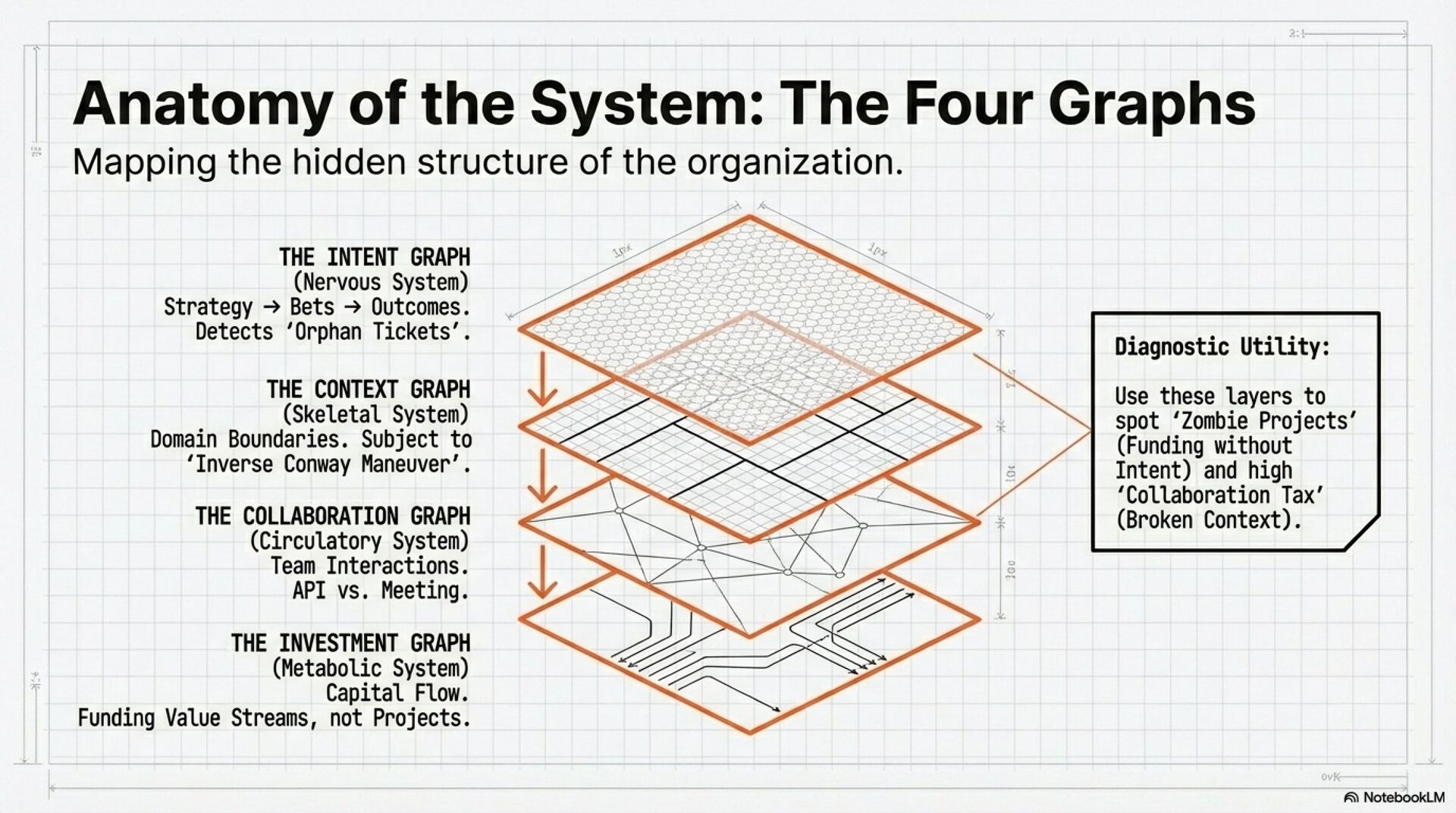
• Practical anatomy is expressed as four graphs that reveal the real system structure: Intent, Context, Collaboration, Investment, used diagnostically to spot “zombie projects” and broken context. Page 9. 
8) Governance interface, connect mandate levels to execution
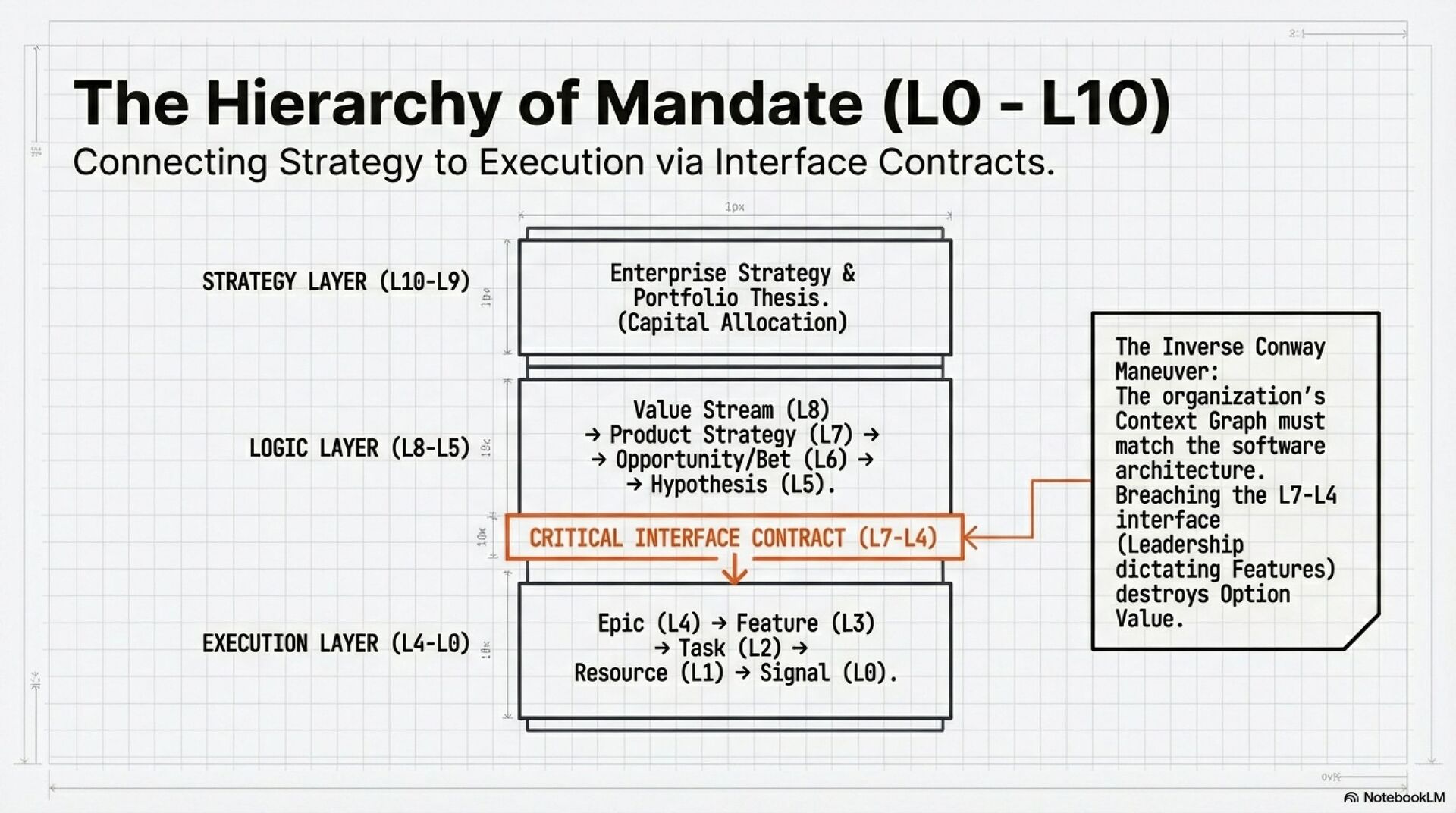
• The “Hierarchy of Mandate (L0–L10)” connects strategy and capital allocation to execution through a critical interface contract, with an explicit warning that mismatched context and architecture destroys option value (inverse Conway). Page 10. 
9) CFO legibility, translate engineering into capital logic
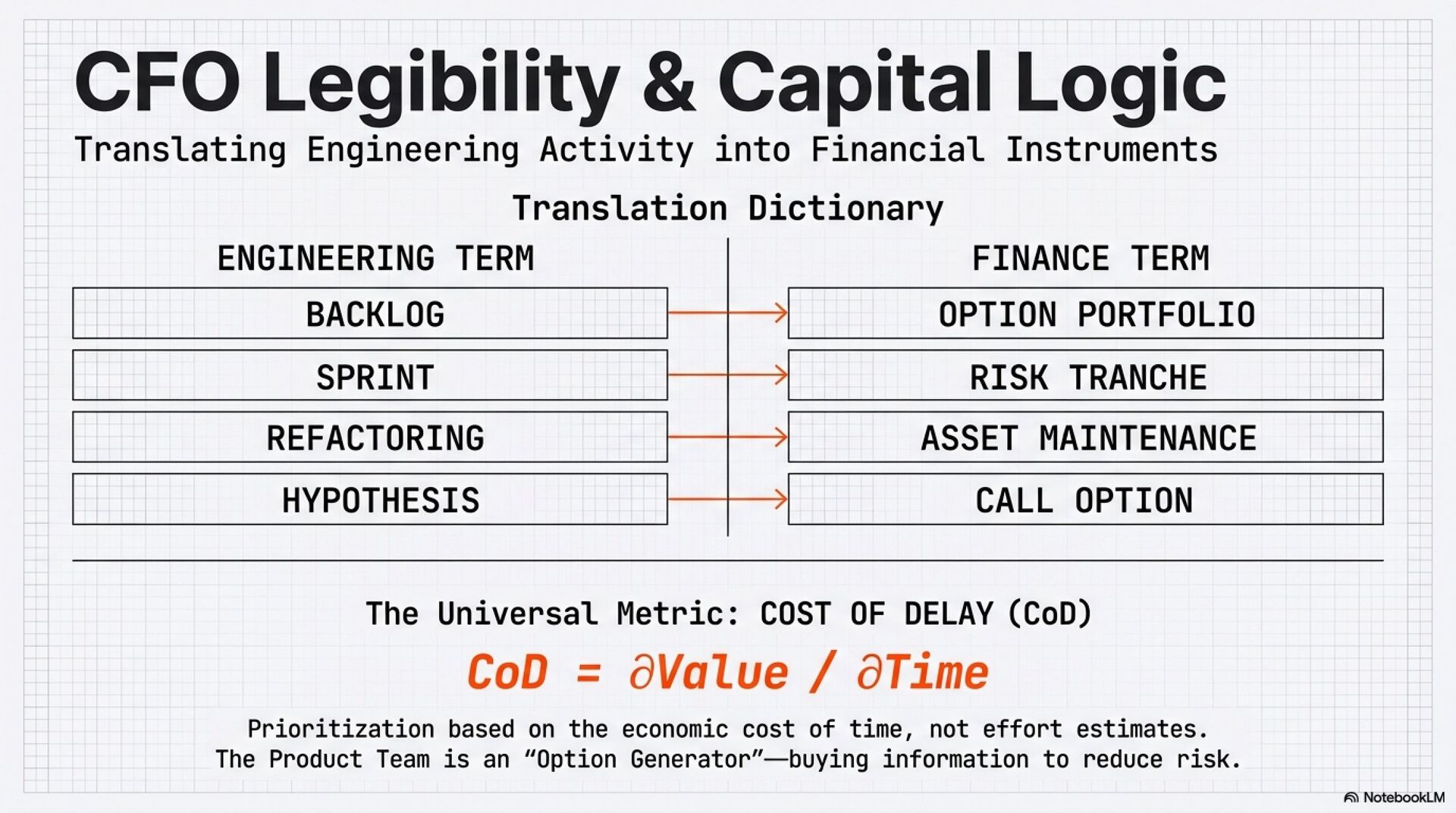
• The deck offers a translation dictionary: backlog as option portfolio, sprint as risk tranche, refactoring as asset maintenance, hypotheses as call options, unified by cost of delay as the universal prioritization metric. Page 11. 
10) Hiring and adoption strategy, change the rubric and use a Trojan horse
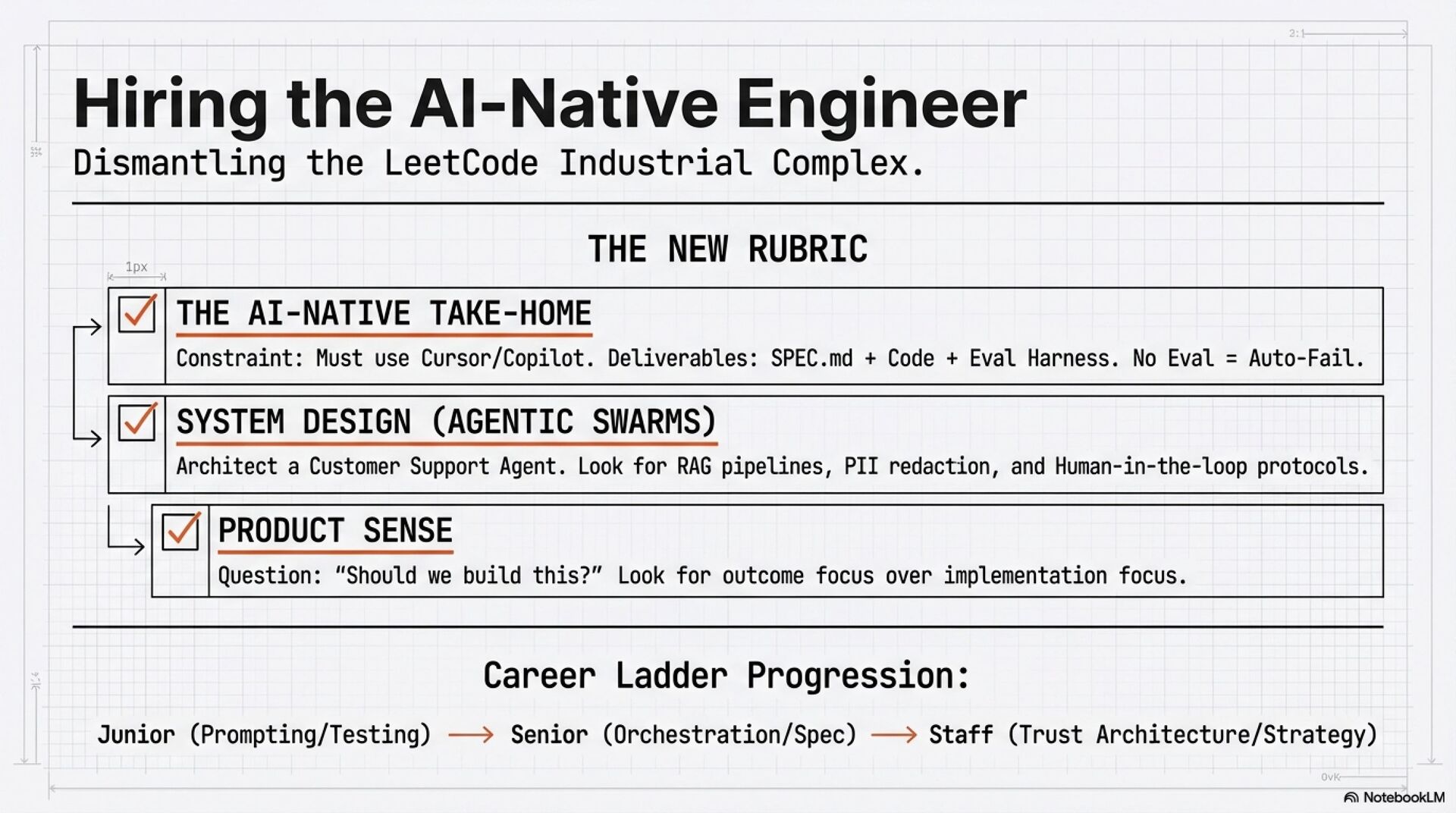
• Hiring shifts away from LeetCode toward an AI-native take-home (SPEC.md plus eval harness), agentic system design, and product sense (“should we build this”). Page 12. 
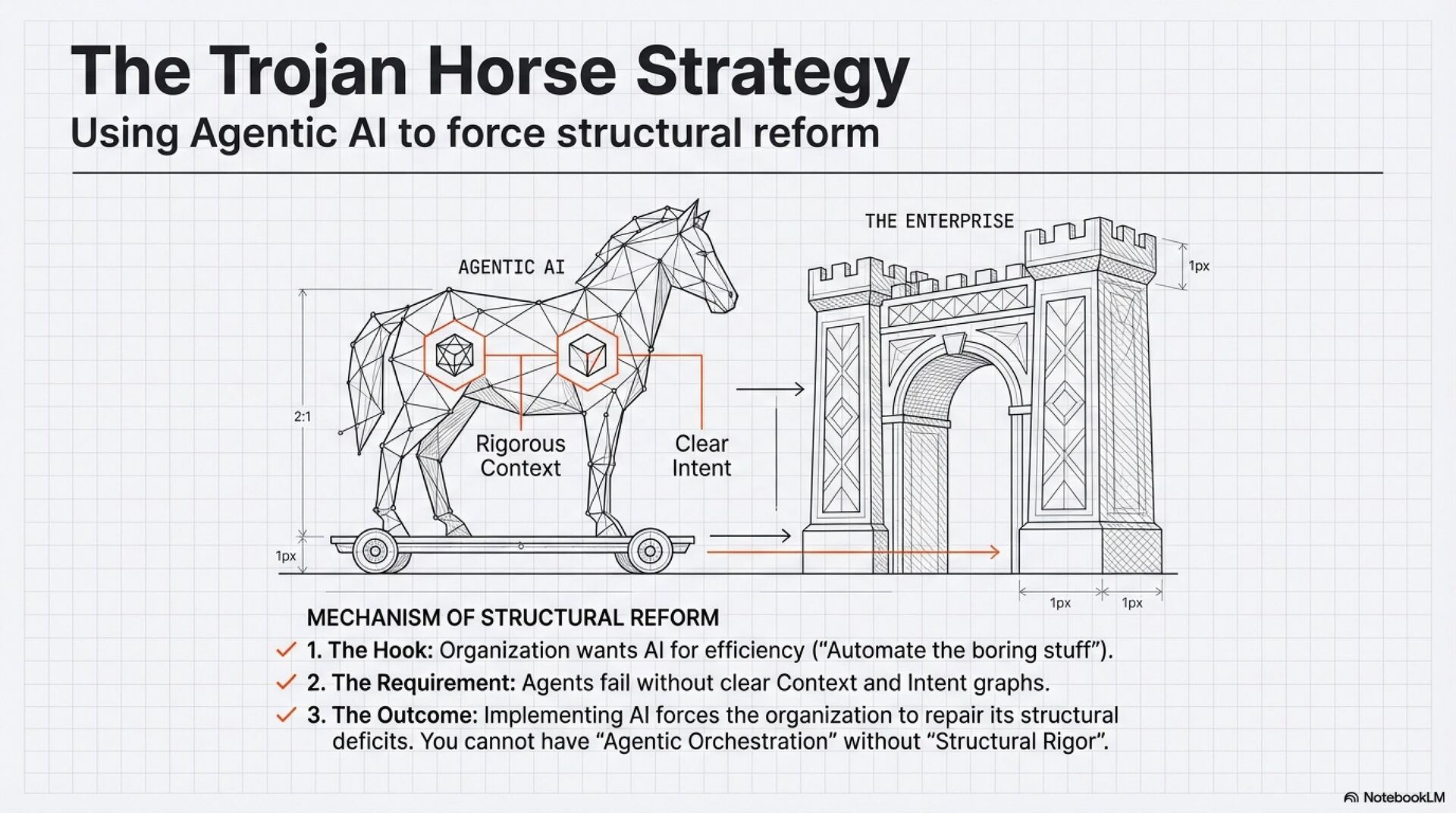
• Adoption can be forced through a “Trojan Horse Strategy”, leaders want efficiency, agents fail without clear context and intent, so implementation pressure drives structural rigor. Page 13. 
11) Field evidence and the closing thesis
• Case-style evidence points to faster delivery when SDD replaces vibe coding, and to organizations where product engineers sit on the product with minimal handoff culture. Page 14. 
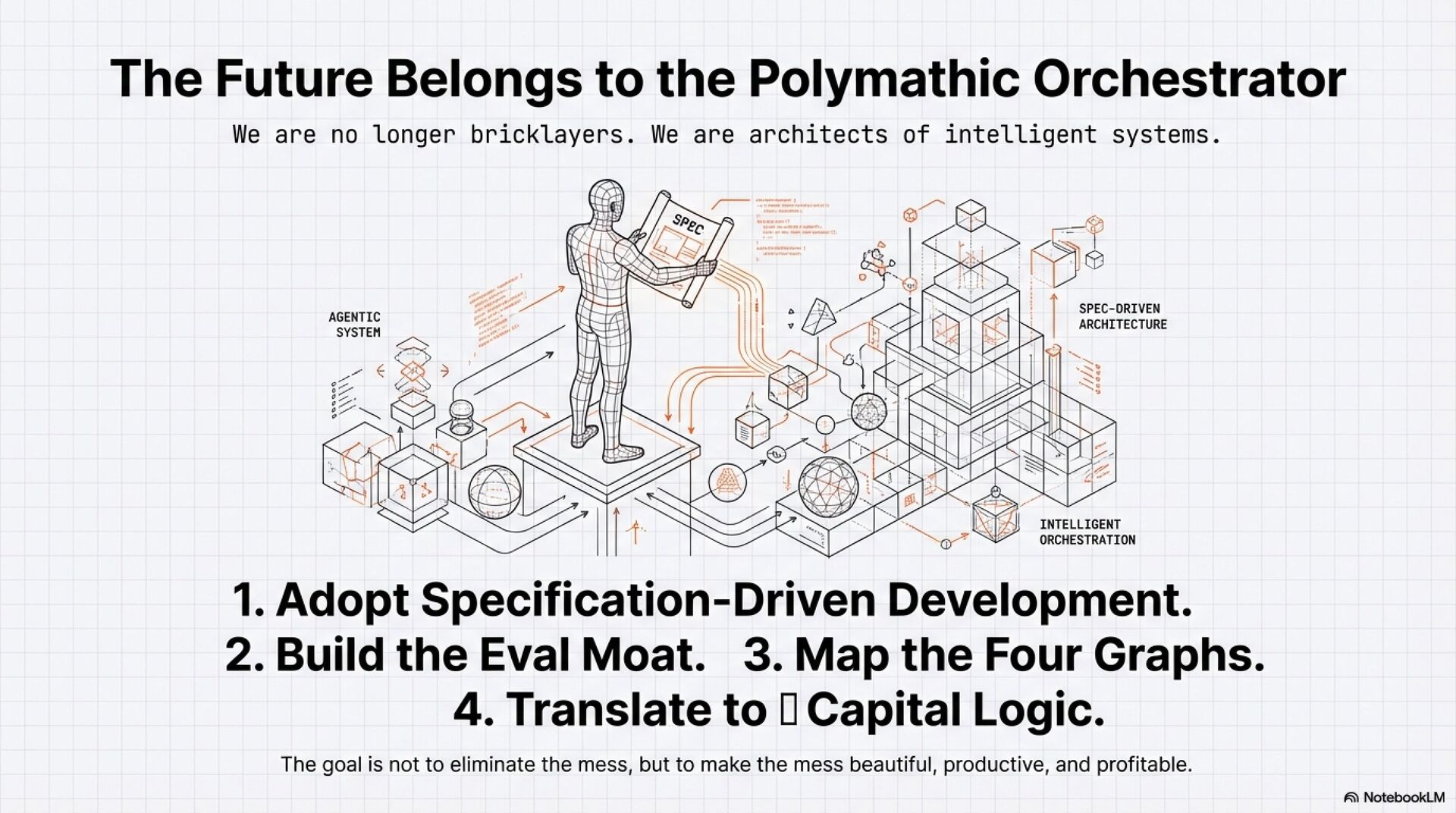
• The closing message reframes engineering identity: you become architects of intelligent systems, with a four-step call to action: adopt SDD, build the eval moat, map the four graphs, translate to capital logic. Page 15. 


 djimit123
 akhino
 teamlab
.png) codatum
codatum
 shumei_ito
 glaforge
 raspython3
 nttcom
 iktakahiro
 ezaki
ezaki
 y0hgi
y0hgi
 greenmidori
 namiki64
 seathinner
 twada
twada
 marcoroth
 bkeepers
 rocio
rocio
 kimpetersen
 eileencodes
 varn
varn
 rmw
rmw
 inesmontani
 erikaheidi
 scottboms