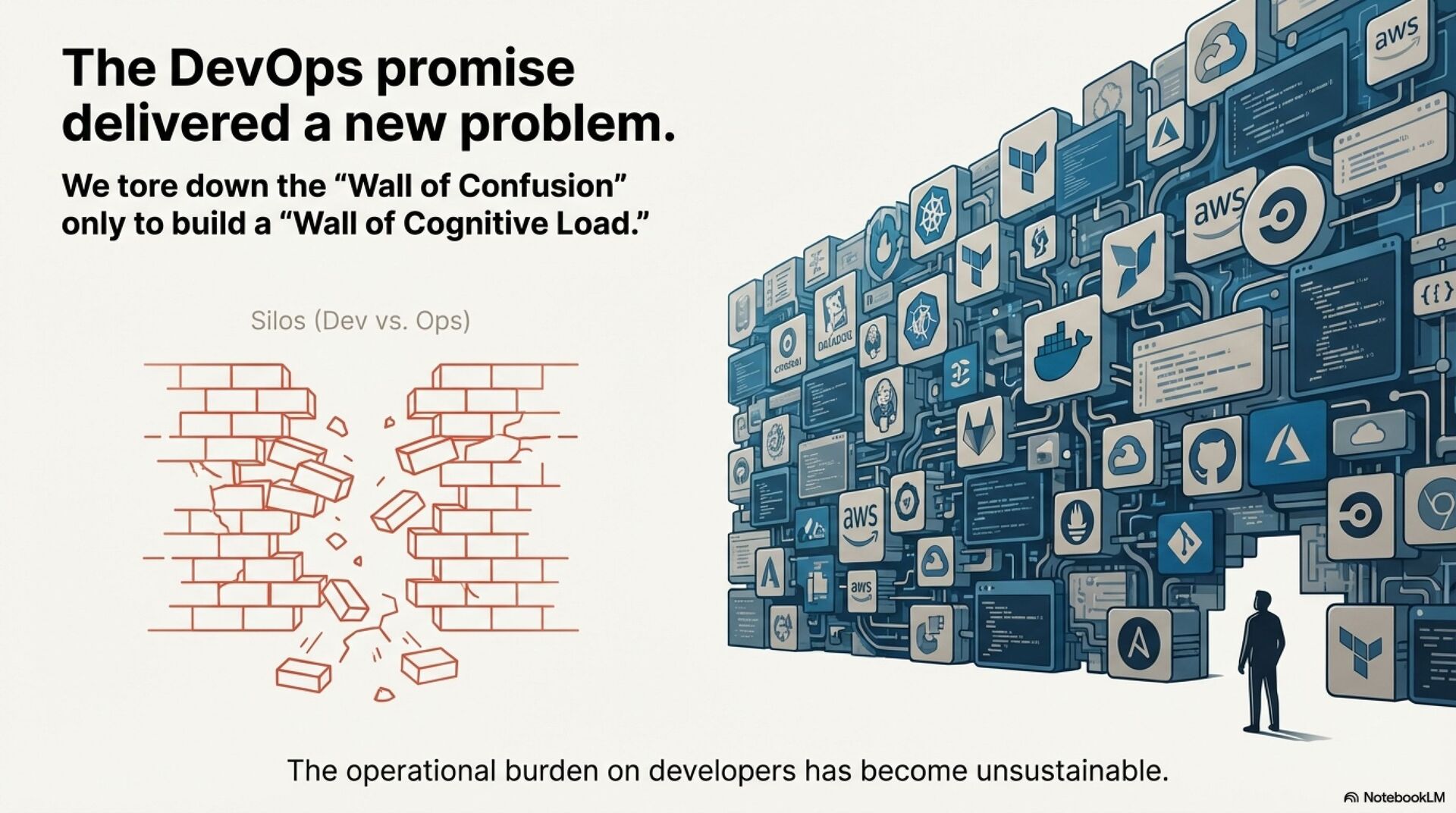
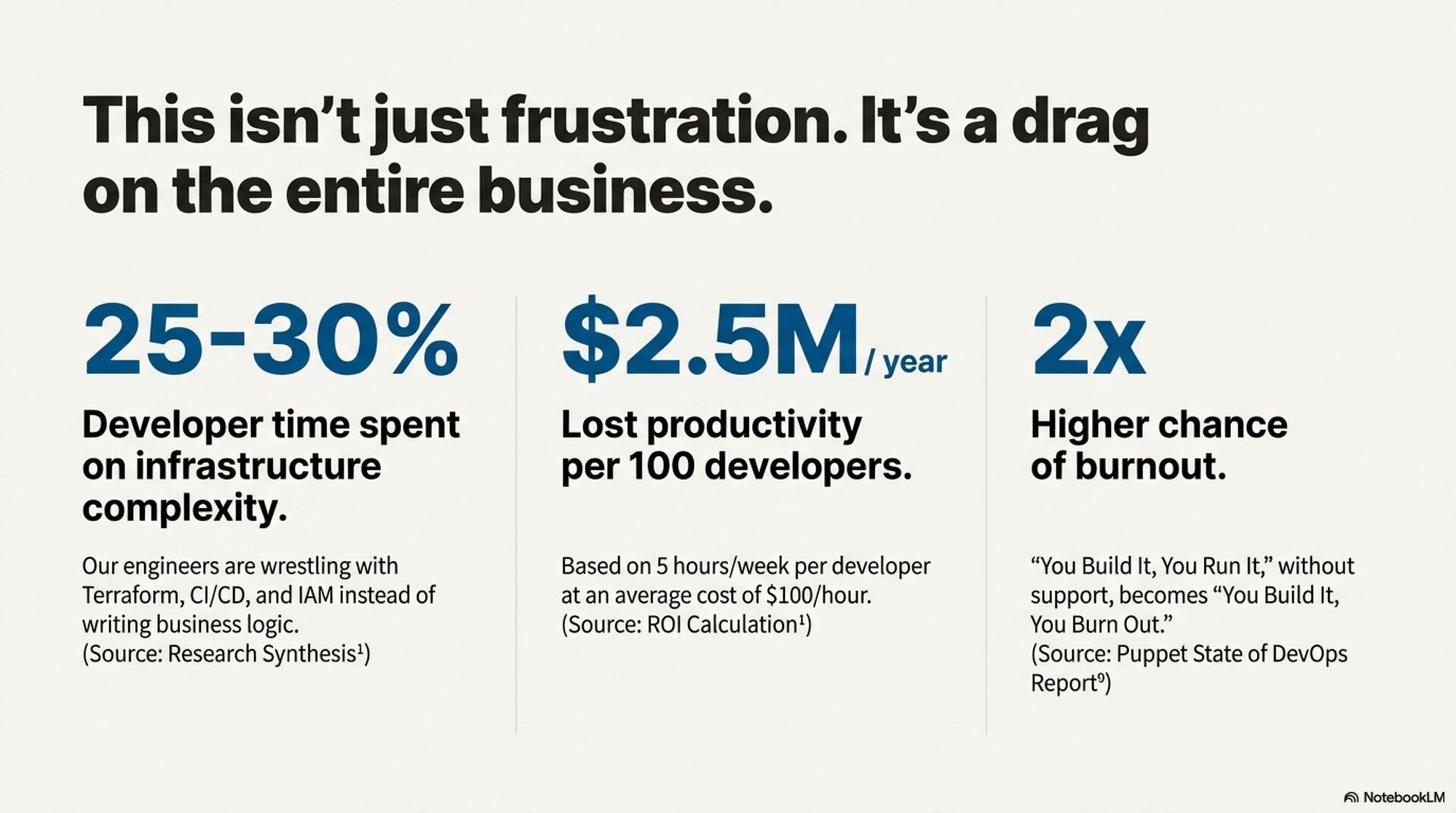
The software industry has reached a breaking point. After a decade of DevOps and the mantra “you build it, you run it,” teams now face an unsustainable explosion in cognitive load. Cloud native architectures, Kubernetes, microservices, CI/CD, networking, IAM, and observability have pushed responsibility far beyond what individual developers can carry. Productivity stalls, burnout rises, and TicketOps quietly returns.
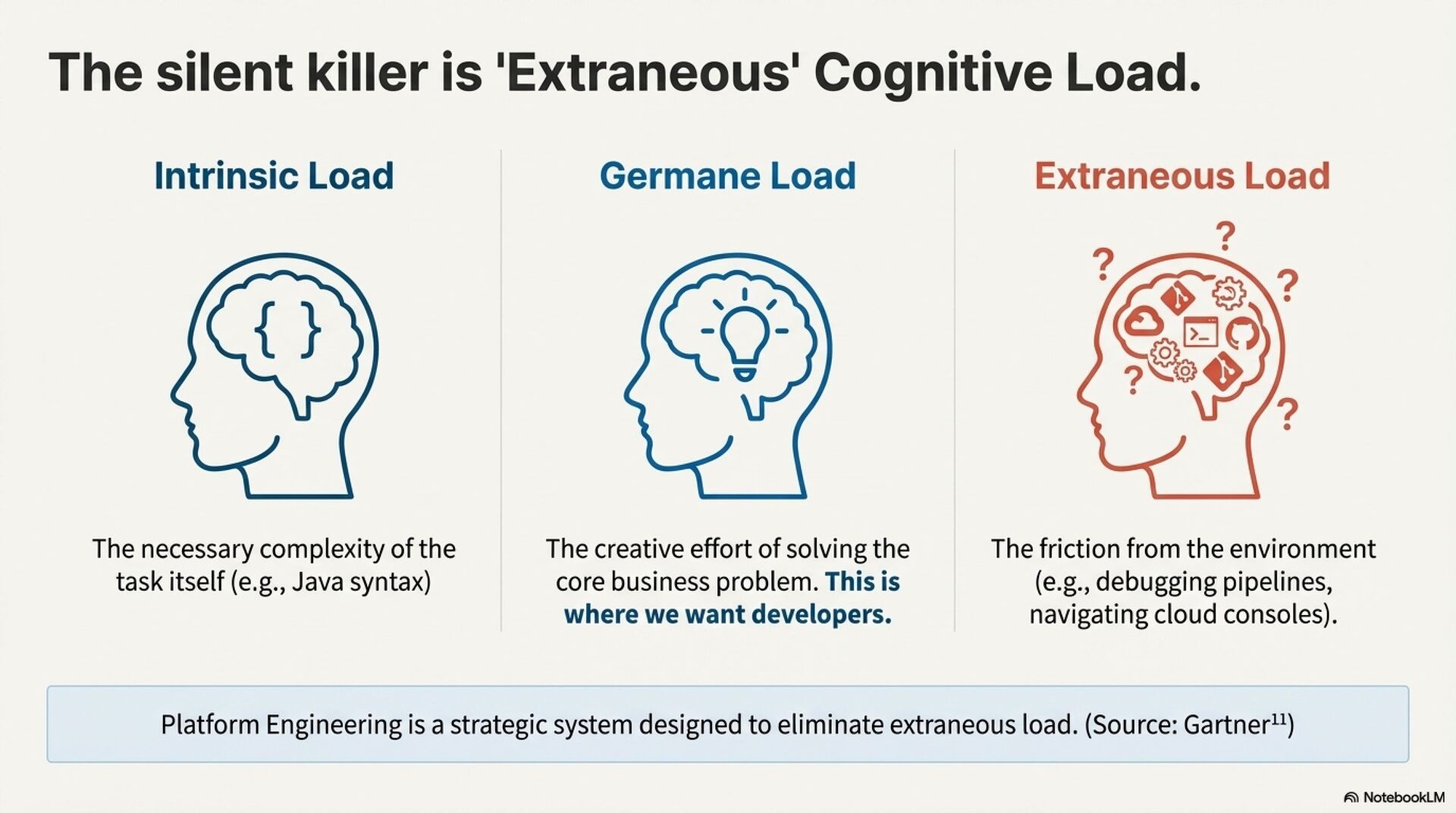
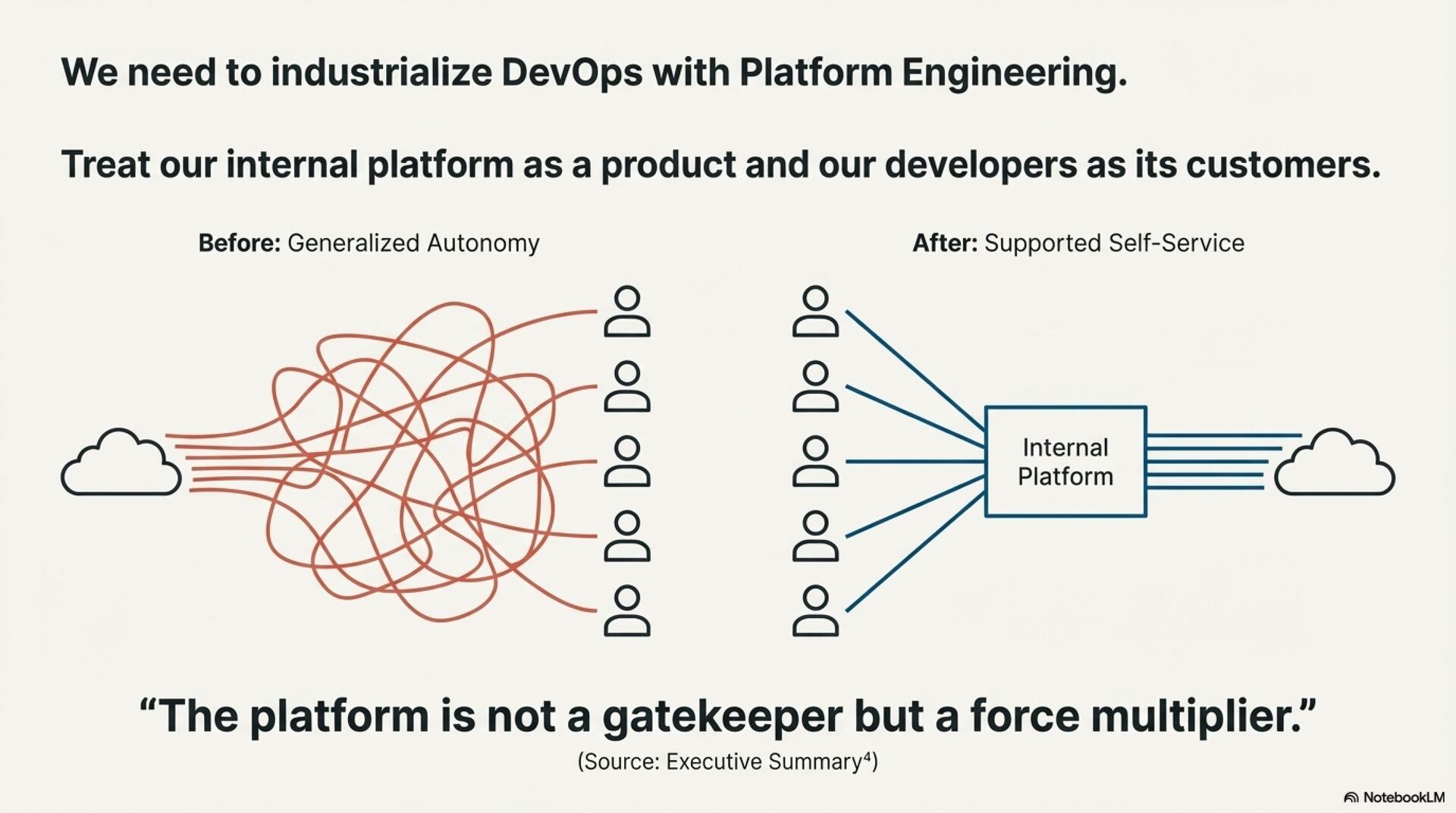
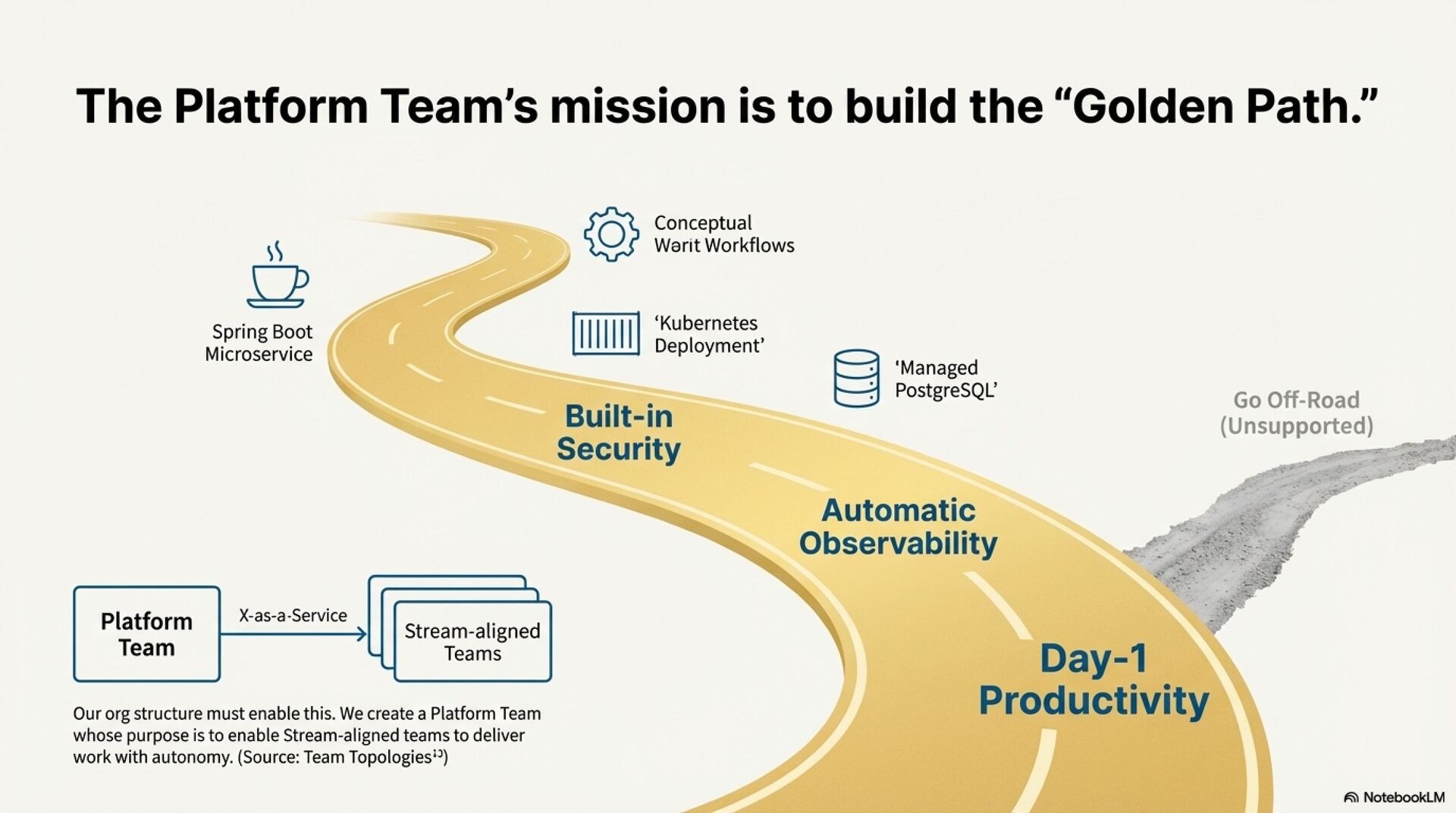
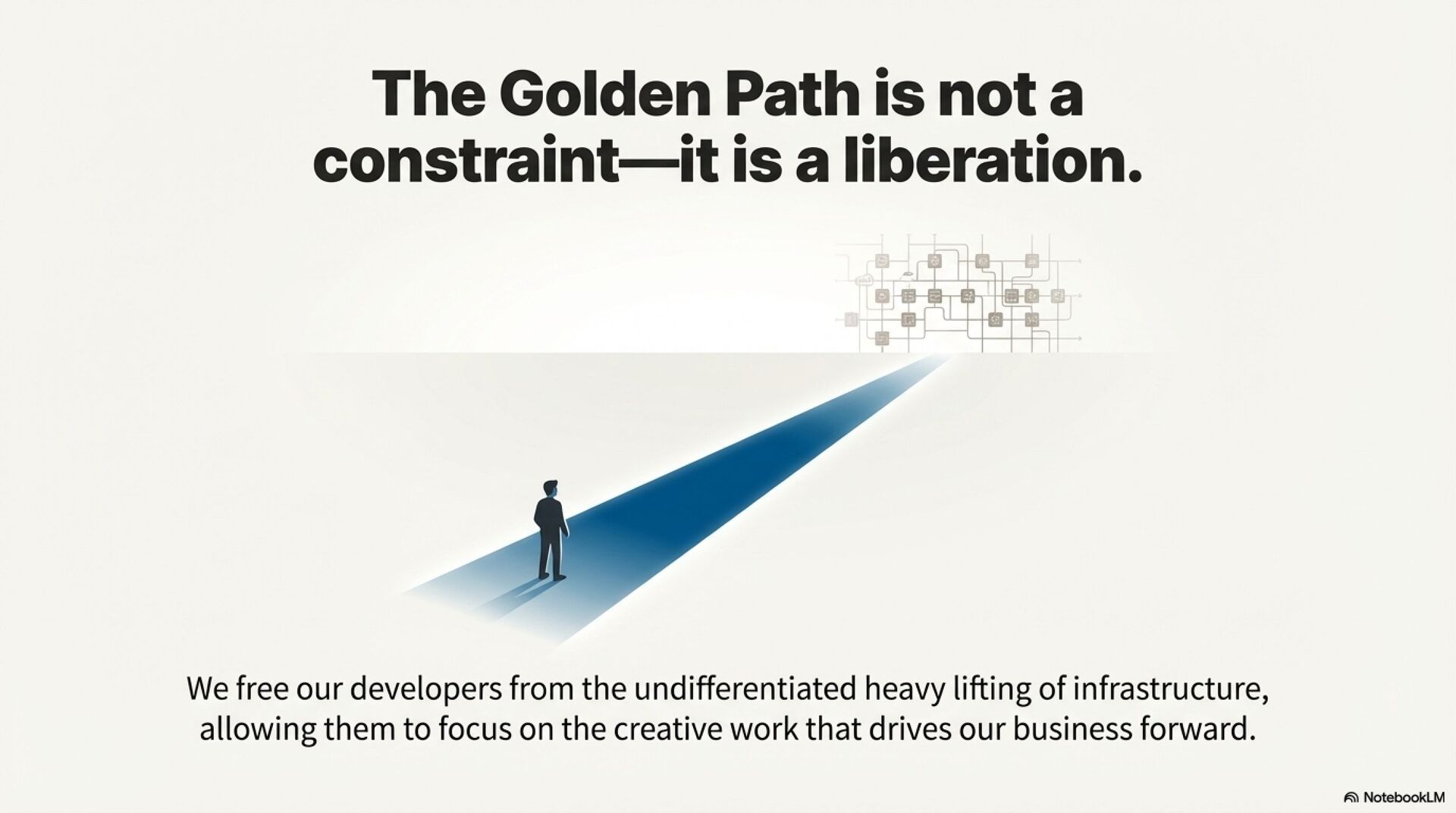
Platform Engineering emerges as the next evolutionary step, not a rejection of DevOps but its industrialization. By treating the platform as a product and developers as customers, organizations replace ad hoc tooling with a consistent, self service “Golden Path.” This reduces extraneous cognitive load and allows teams to focus on business value rather than infrastructure friction.
Cognitive Load Theory explains the crisis. Developers spend a disproportionate amount of time wrestling with Terraform state, debugging pipelines, jumping between dashboards, and managing cloud permissions. Platform Engineering targets this directly by abstracting infrastructure behind validated, typed contracts and reusable capabilities.
Team Topologies provides the structural backbone. Stream aligned teams deliver value. Platform teams build shared services. Enabling teams accelerate capability. Interaction modes shift from constant collaboration to clear “X as a Service” consumption. Combined with the Inverse Conway Maneuver, organizational design pushes the architecture toward clean, self service patterns.
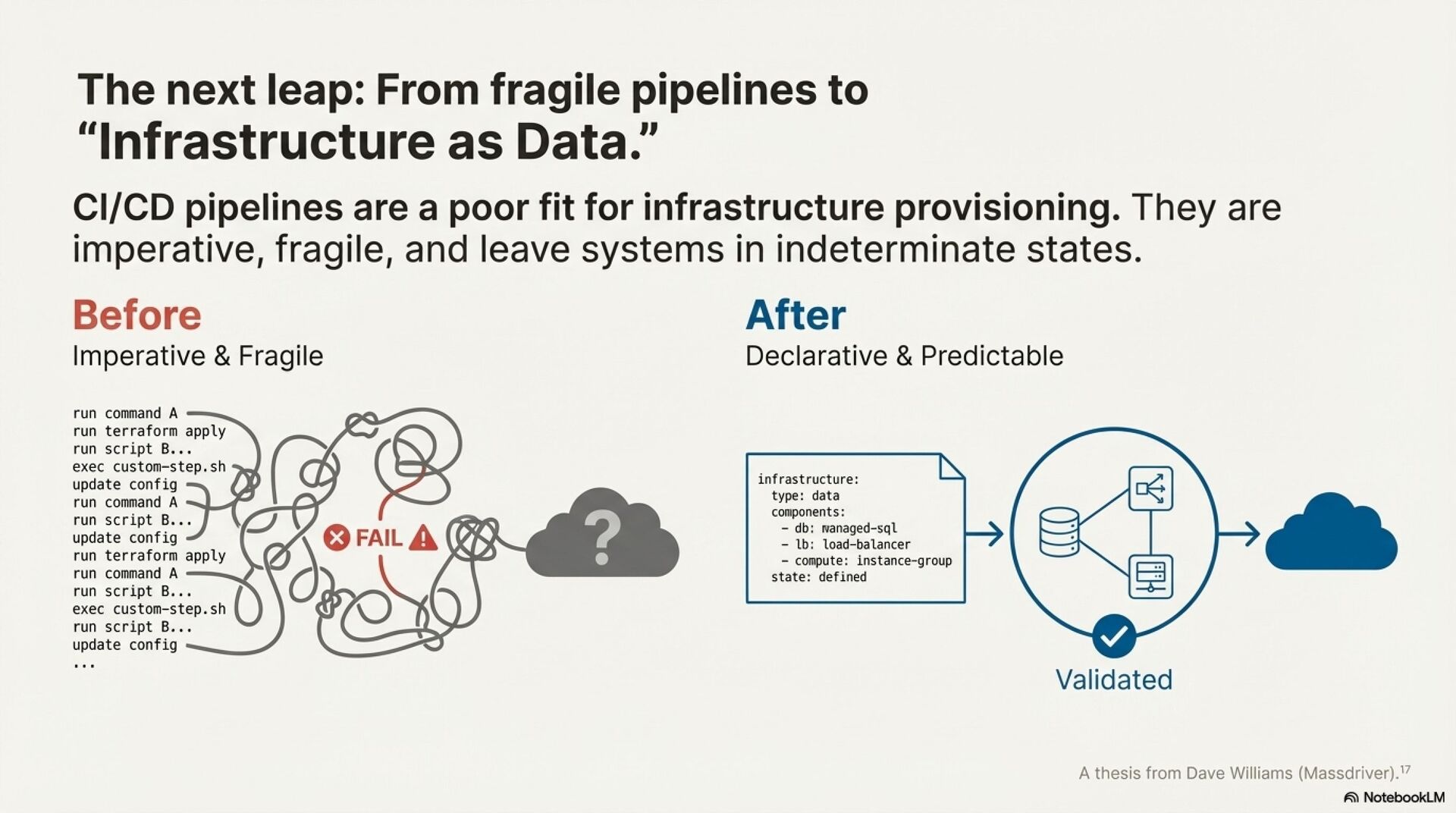
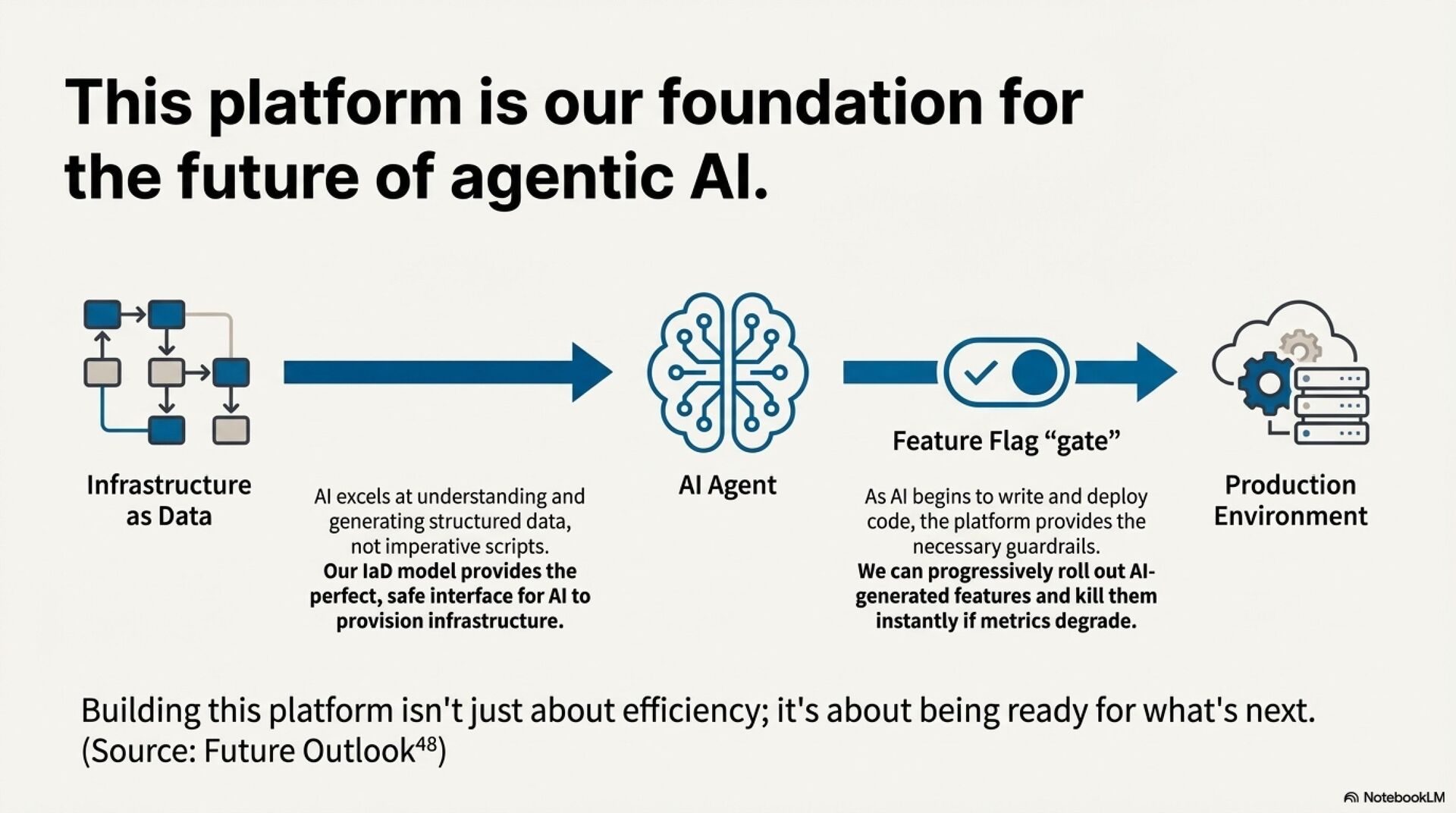
A key shift is the move from Infrastructure as Code to Infrastructure as Data. Traditional pipelines are fragile and imperative. Infrastructure as Data introduces typed schemas, graph based provisioning, visual models, and intelligent drift management through three way merging of desired, observed, and last known state. This creates safer, predictable, and AI ready infrastructure workflows.
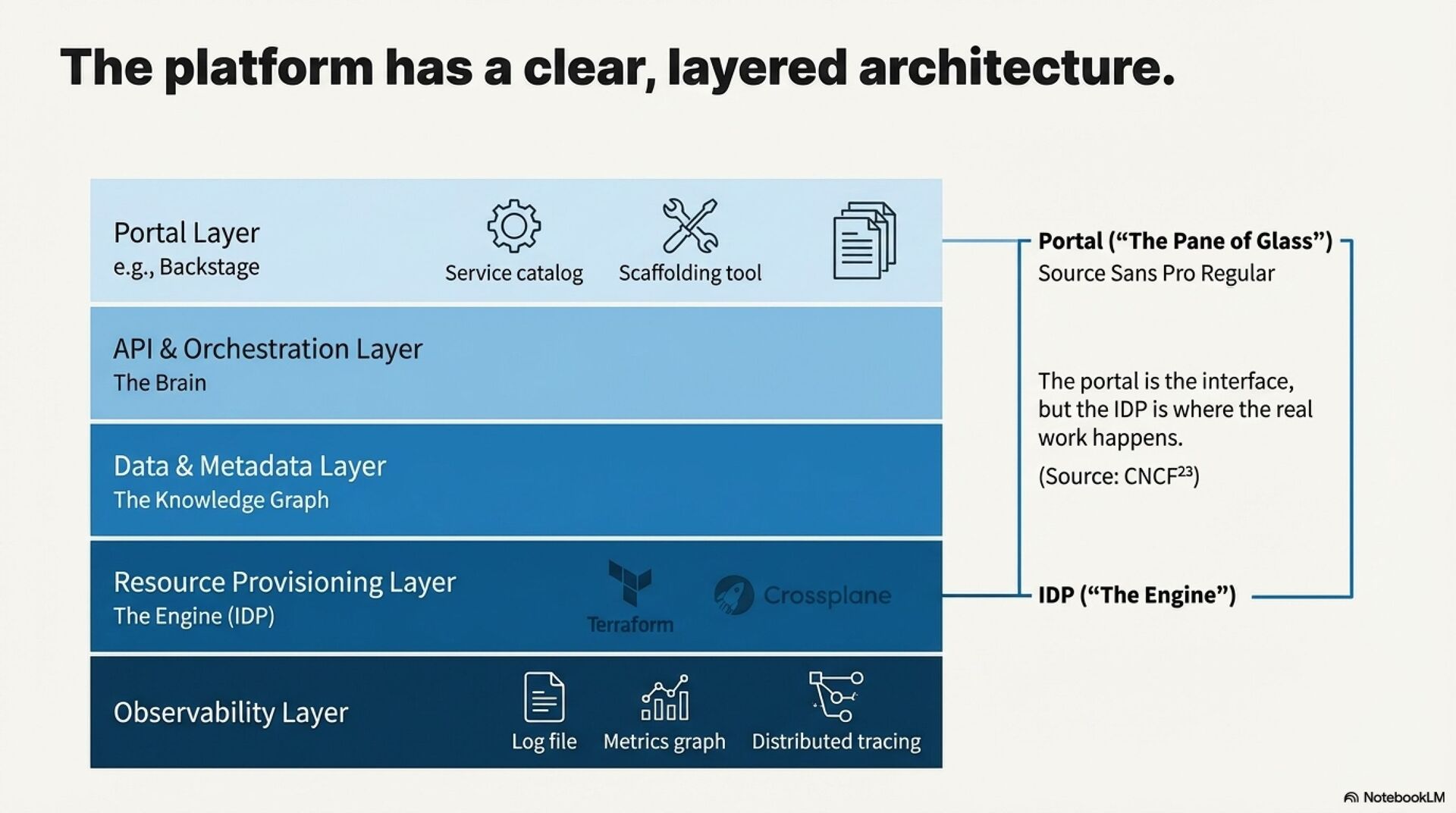
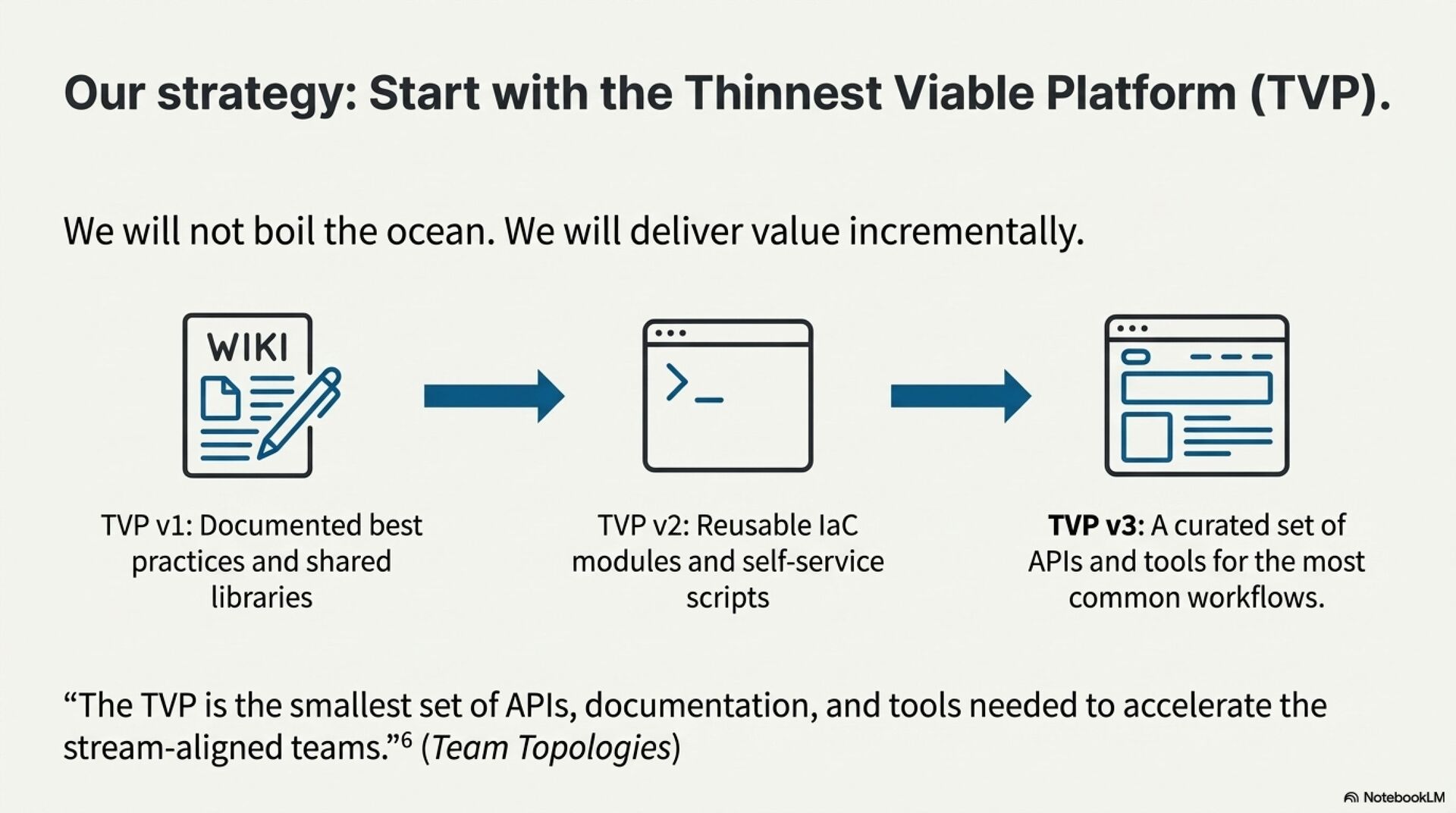
A modern internal platform comprises five layers: the developer portal, API and orchestration engine, metadata graph, provisioning layer, and observability tooling. The Golden Path sits across these layers as the recommended, fully supported workflow.
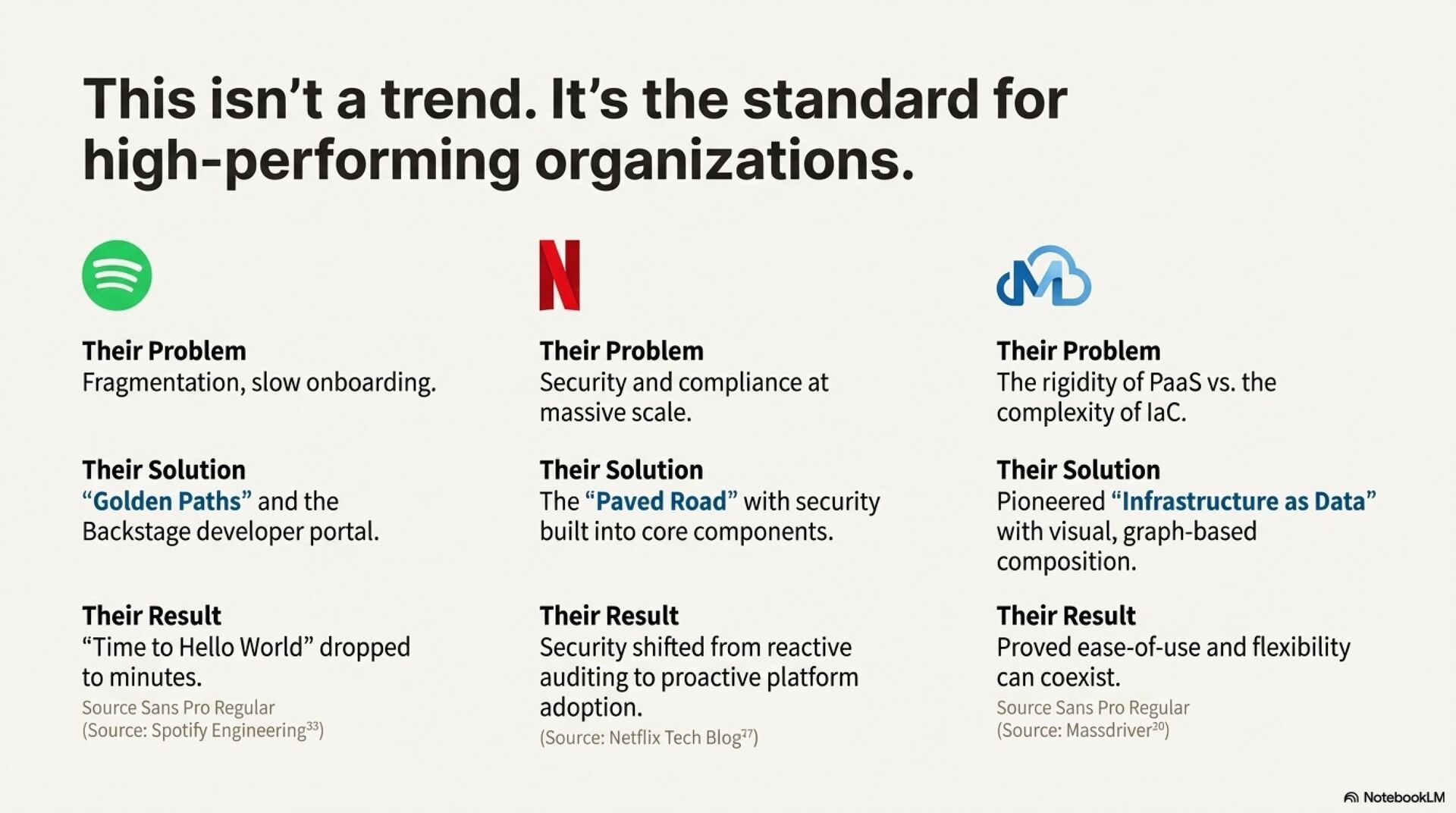
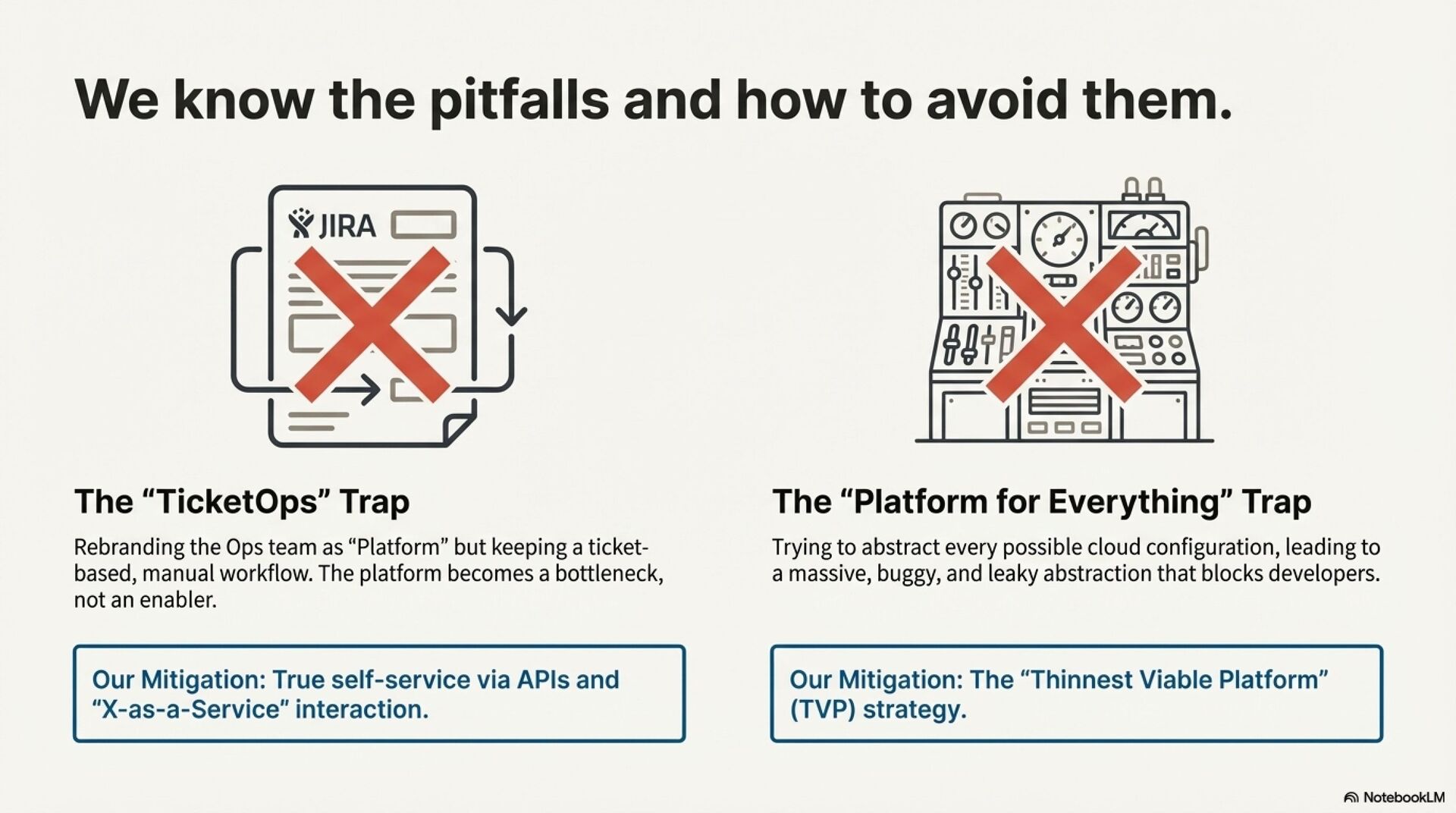
Real world cases highlight the impact. Spotify used Backstage to cut onboarding time drastically. Netflix embedded security into its Paved Road. Massdriver showed how typed data contracts enable both flexibility and ease of use. In contrast, failed initiatives often fall into TicketOps rebranding or over engineered, bloated platforms that nobody wants.
Platform Engineering delivers measurable business outcomes: faster delivery cycles, reduced tool sprawl, lower TCO, higher stability, and better retention. It also positions organizations for the next era where AI agents operate safely on structured infrastructure data with platform guardrails.
The conclusion is clear. Cognitive load is now the limiting factor in software delivery. “You build it, you run it” without support has become “you build it, you burn out.” Platform Engineering provides the strategic response: a product mindset, self service capabilities, strong abstractions, and a shift to Infrastructure as Data. It is the only scalable path forward for modern software organizations.


 djimit123
 csswizardry
 stephaniewalter
 mkilby
 tonyrice
 coloredviolet
 eileencodes
 62gerente
 stuffmc
 chrisshort
 axbom
axbom
 sstephenson
 michielstock