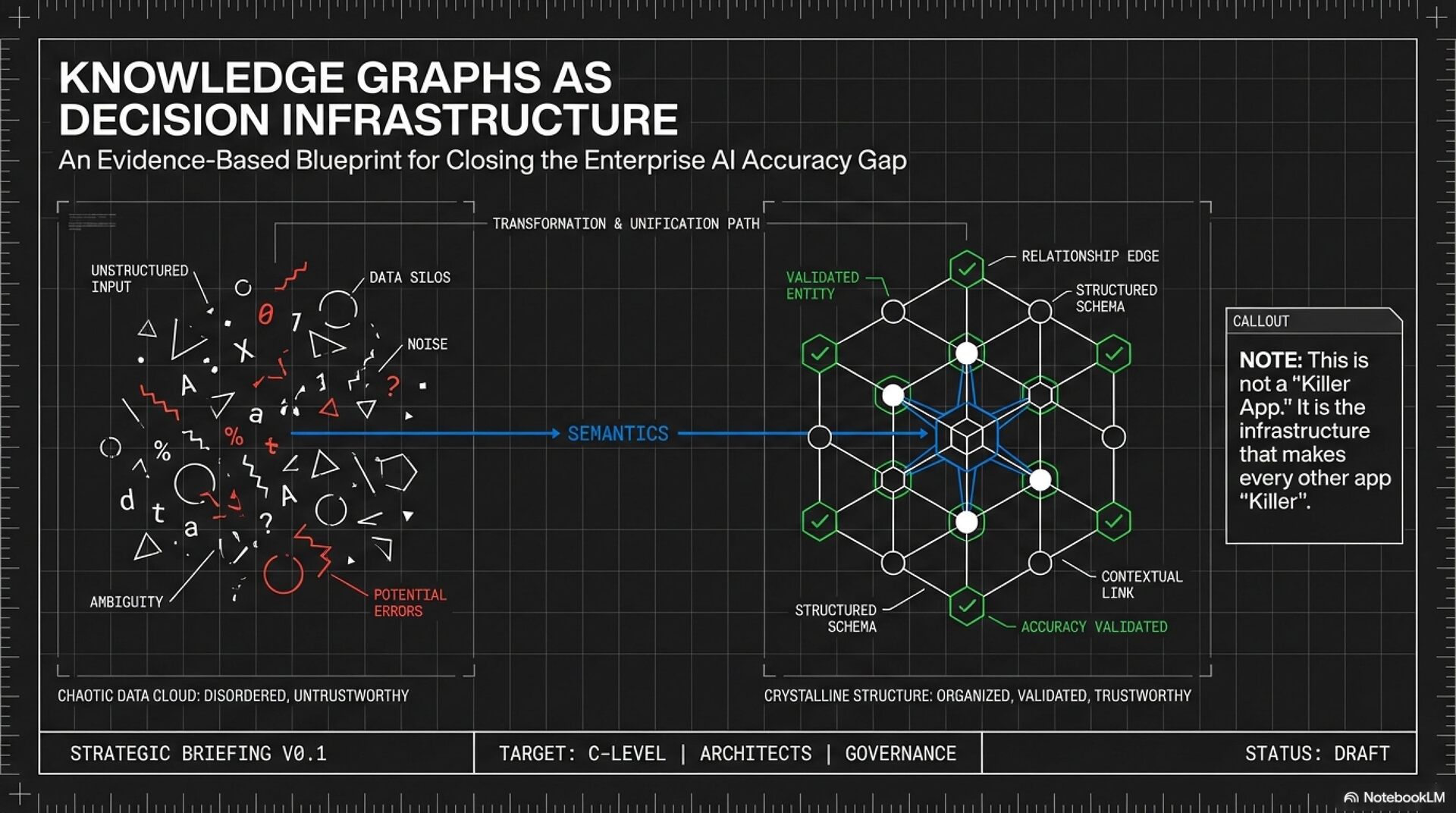
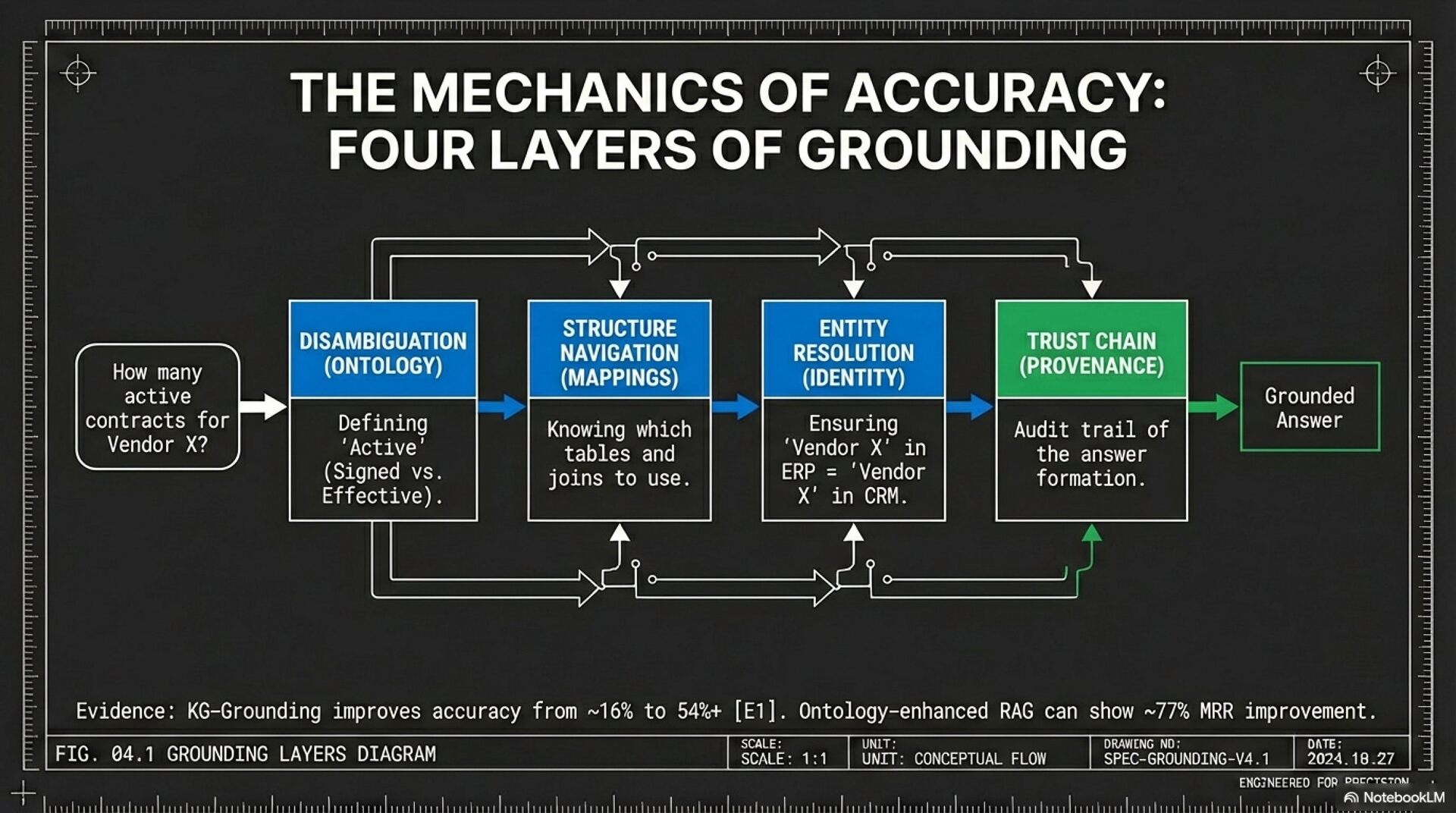
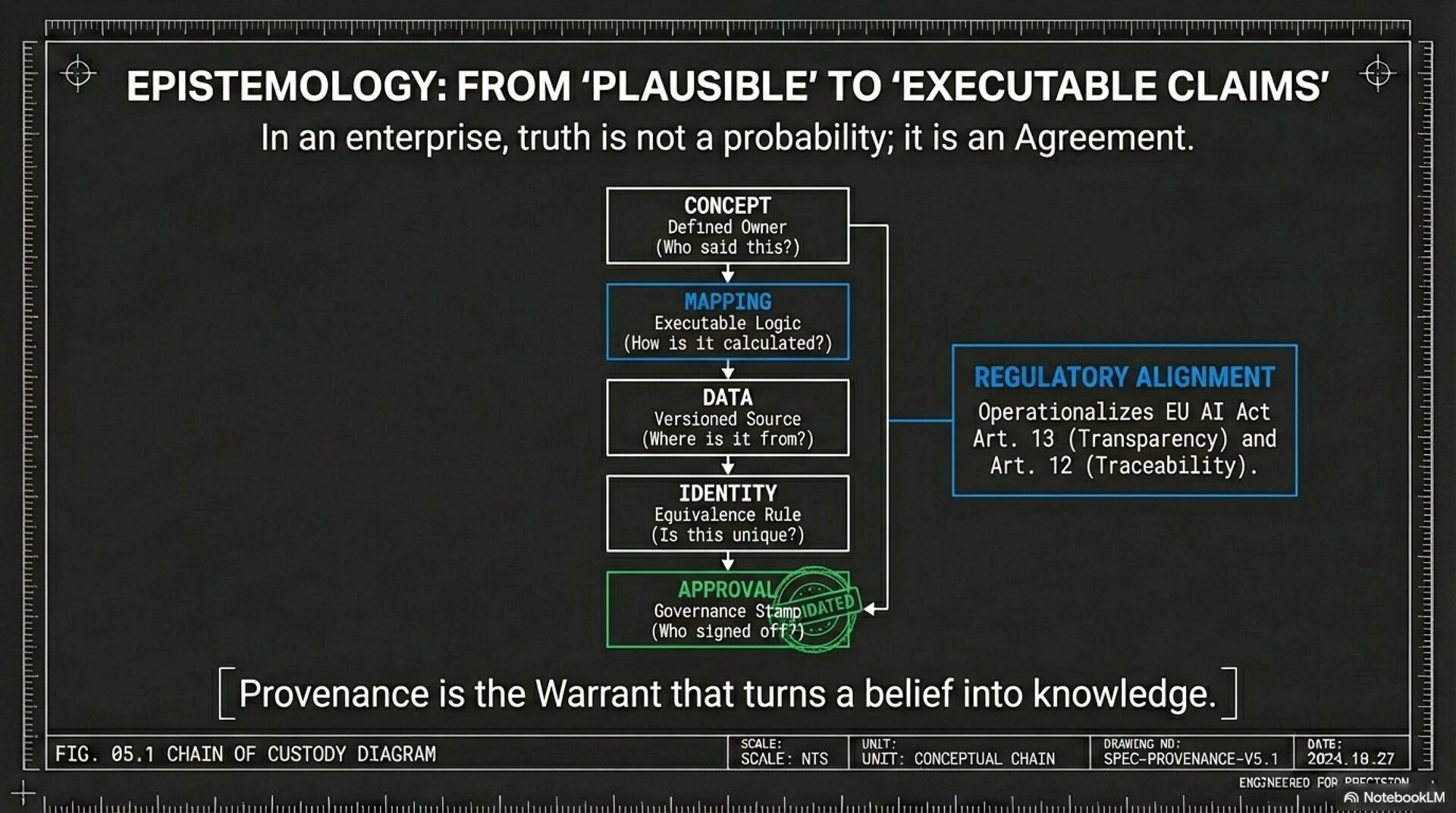
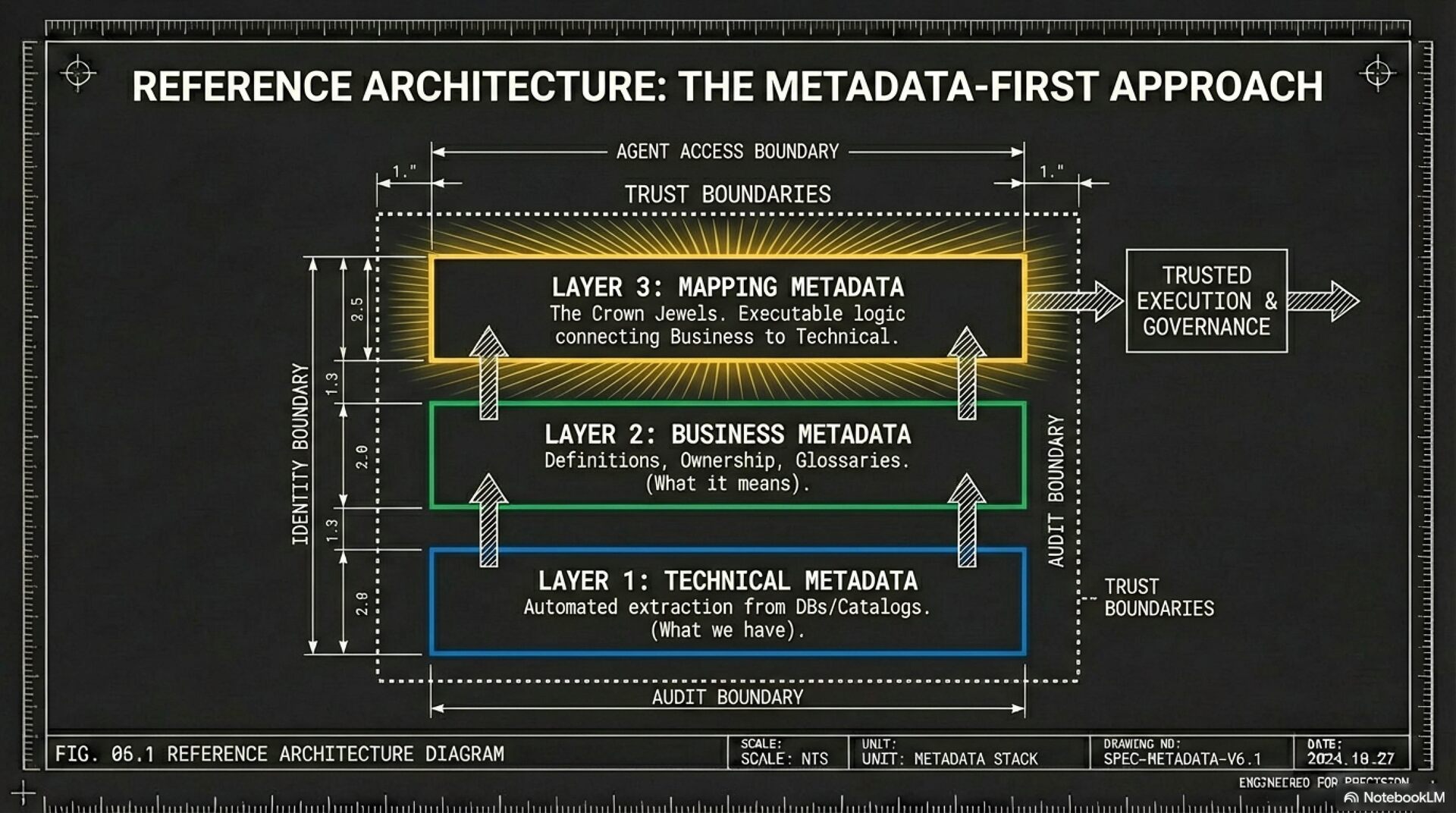
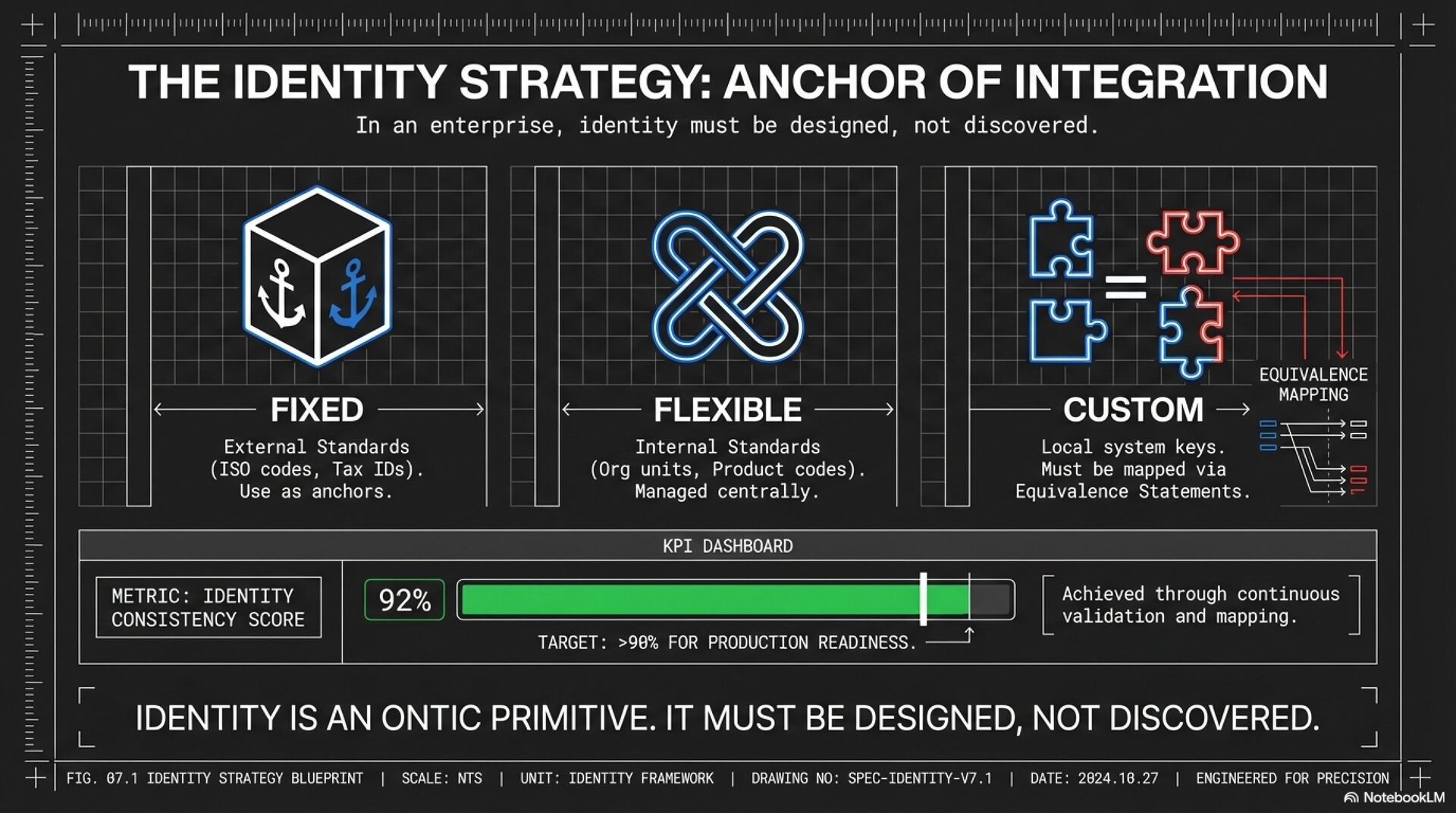
Enterprise AI currently faces a critical "accuracy gap" that prevents it from delivering significant decision-making value. Large Language Models (LLMs) generate plausible responses but lack epistemic guarantees. Without a governed semantic infrastructure—comprised of ontologies, identity management, and executable mappings—AI systems cannot meet the transparency and accountability standards required for enterprise operations and regulatory compliance (e.g., the EU AI Act).
Critical Takeaways
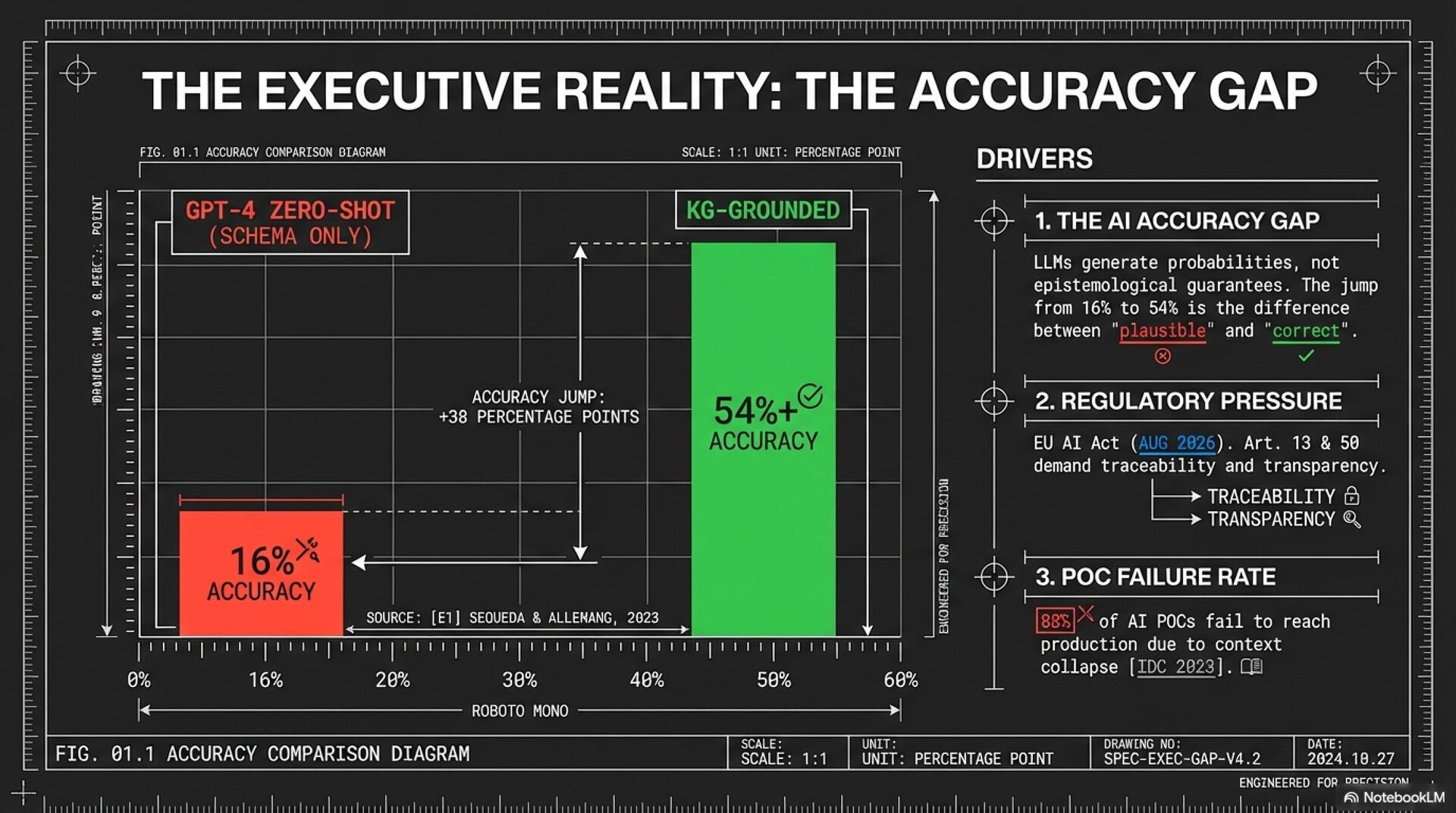
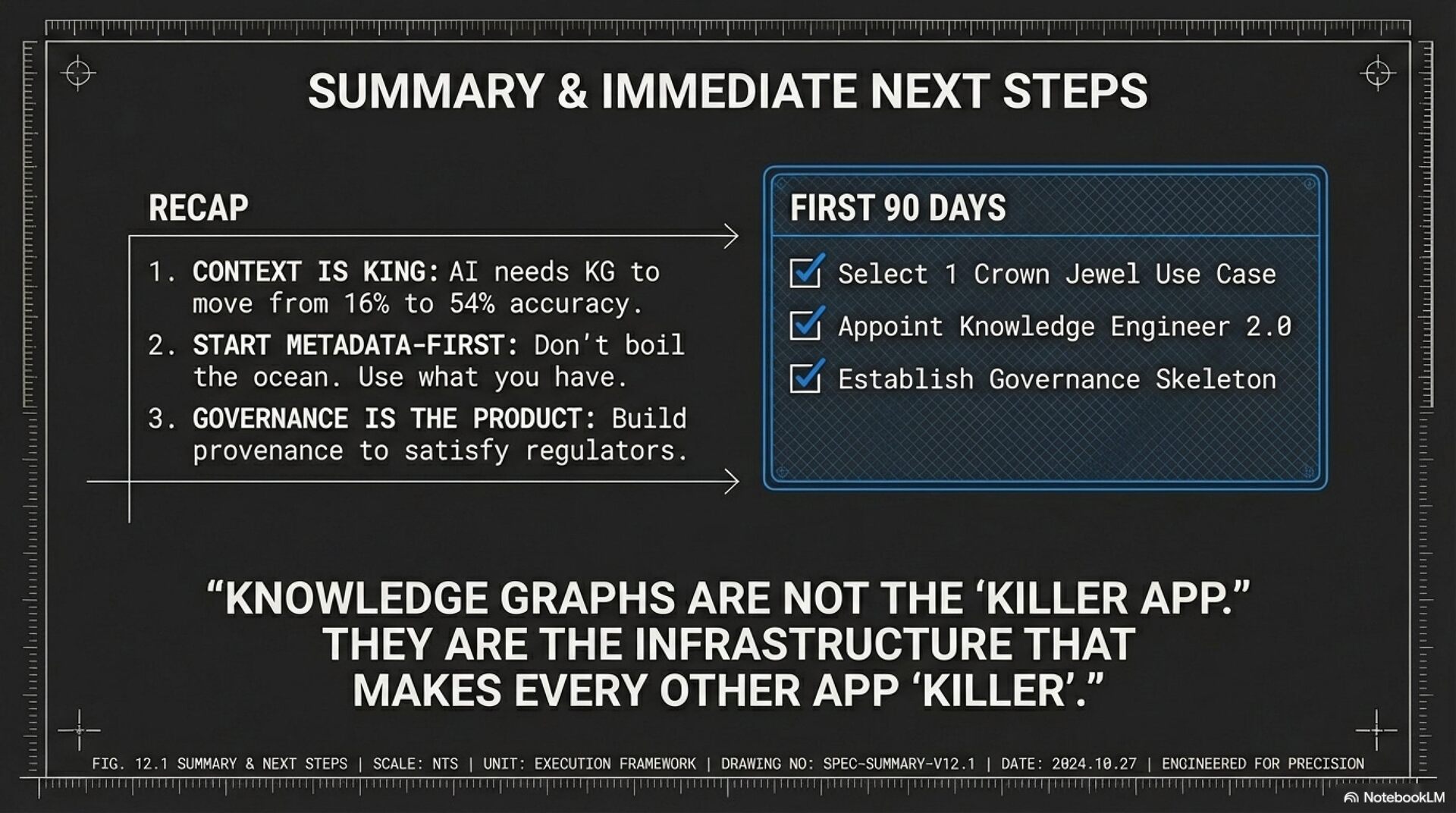
• The Accuracy Gap: Direct zero-shot SQL prompts on enterprise databases achieve only 16% accuracy. Grounding AI in a Knowledge Graph representation increases this accuracy to 54%, transforming it from unusable to decision-grade.
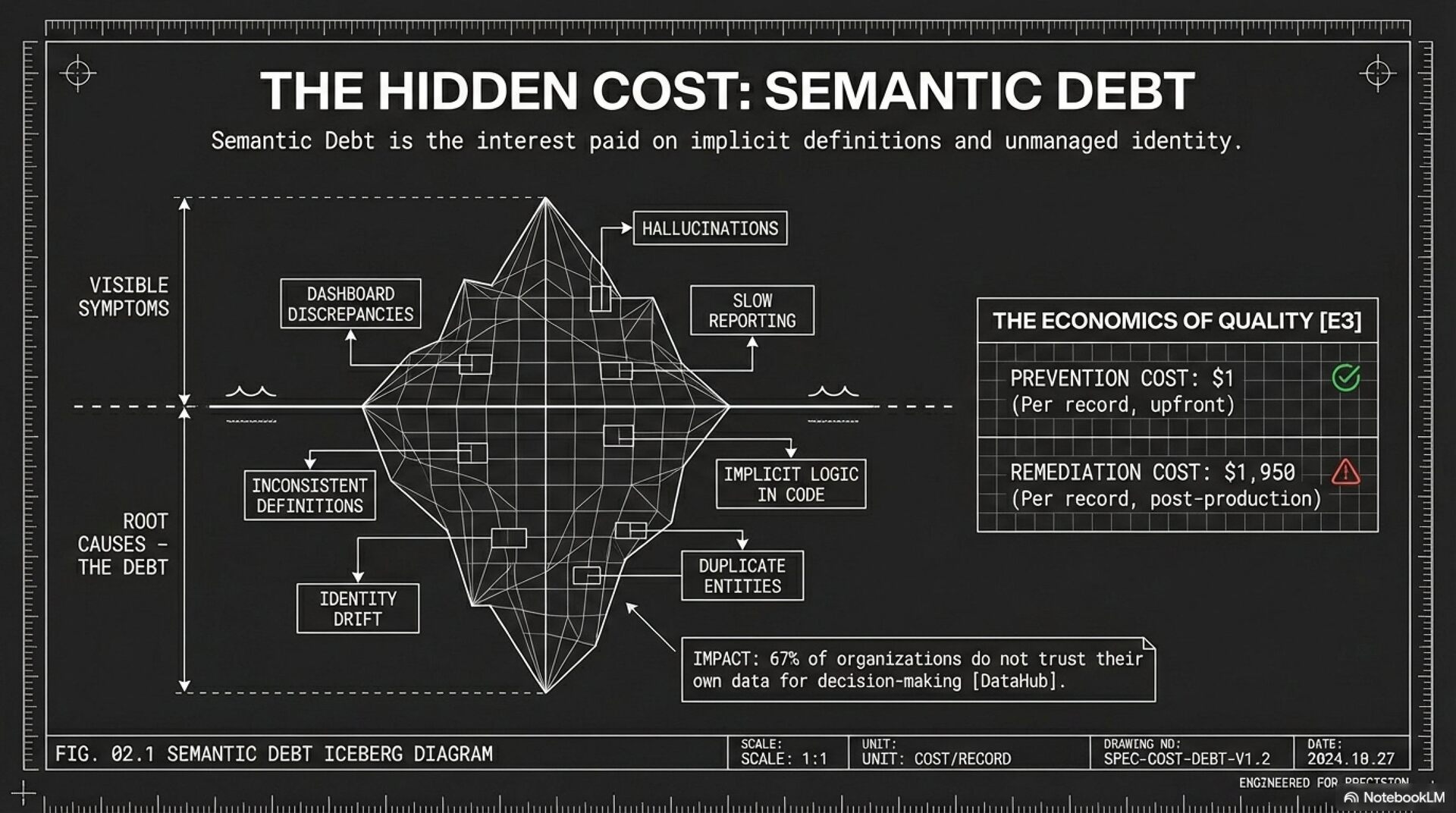
• Semantic Debt: Organizations are accumulating "semantic debt" when business definitions and data interpretations remain implicit. This debt results in high reconciliation costs, audit findings, and a lack of trust in data (67% of organizations currently do not trust their own data for decision-making).
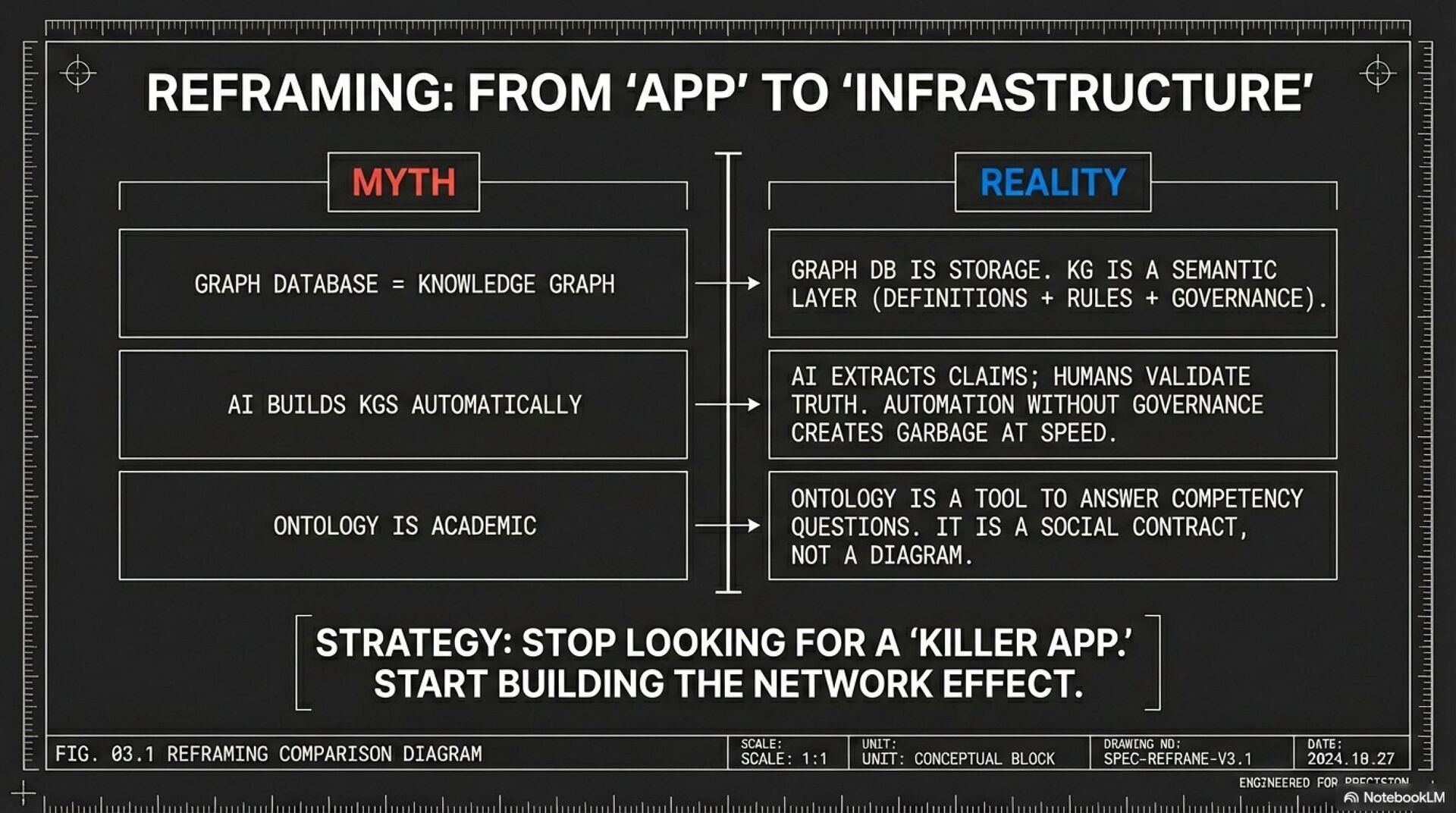
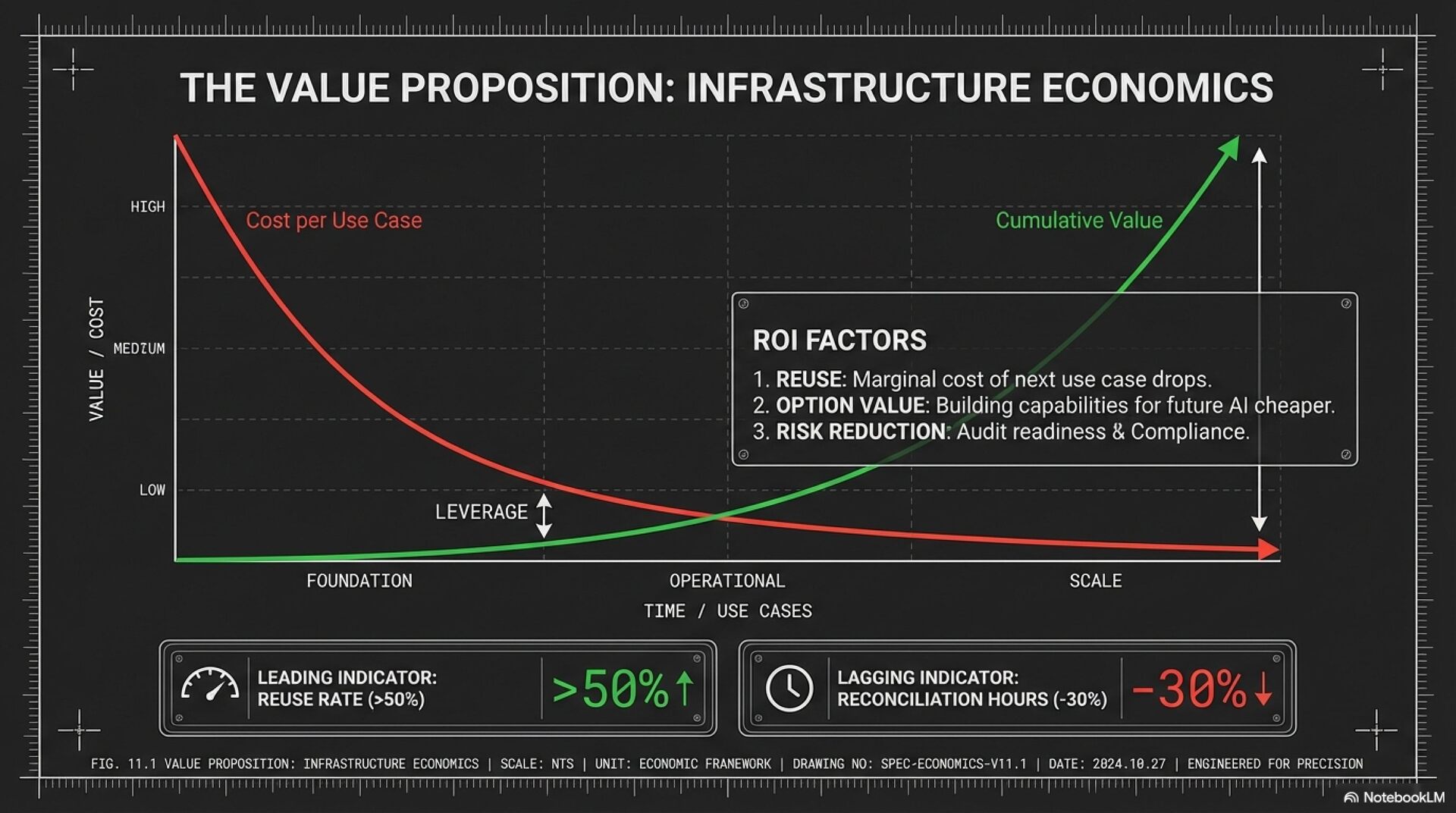
• Infrastructure over Applications: KGs should not be viewed as "killer apps" or mere graph databases. They are infrastructure layers that connect existing systems through shared semantics, providing compounding value through reuse and lower integration costs.
• Regulatory Urgency: The EU AI Act (effective August 2026) mandates transparency and traceability for high-risk AI. KGs provide the natural structure for these requirements.
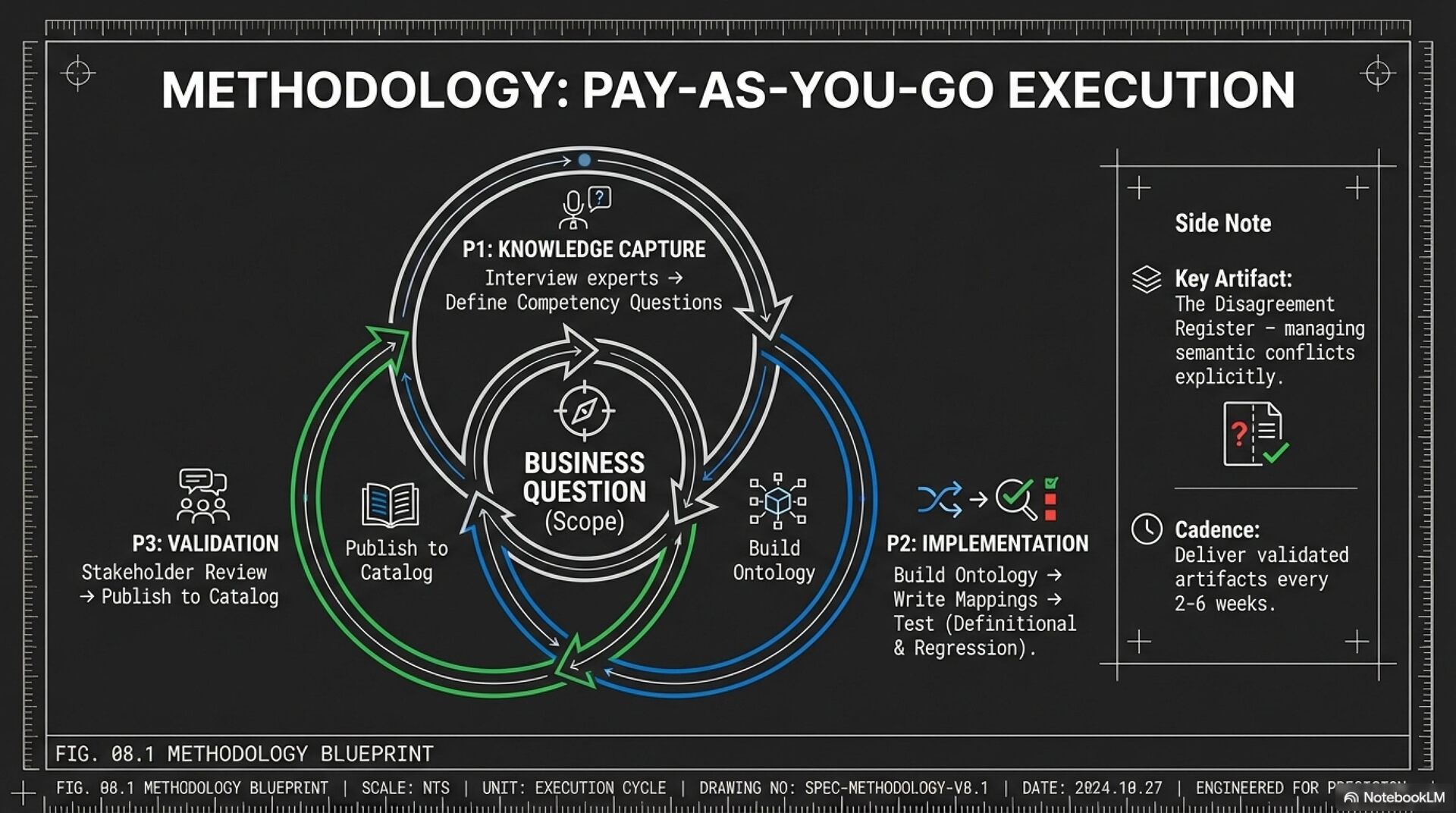
• Proven Methodology: Success requires a "Pay-As-You-Go" approach—iteratively solving specific business questions rather than attempting to model the entire enterprise at once ("Boil the Ocean").


 djimit123
 ezaki
ezaki
 takuroabe
 ama_ch
 nealle
 kash1064
 glaforge
 techtekt
 terapyon
 syuchimu
 codmoninc
 shugo
shugo
 sue445
 techseoconnect
 nikkihalliwell
 jlugia
 sferik
 inesmontani
 rasagy
 addyosmani
 aleyda
 cromwellryan
 marketingsoph
 afnizarnur