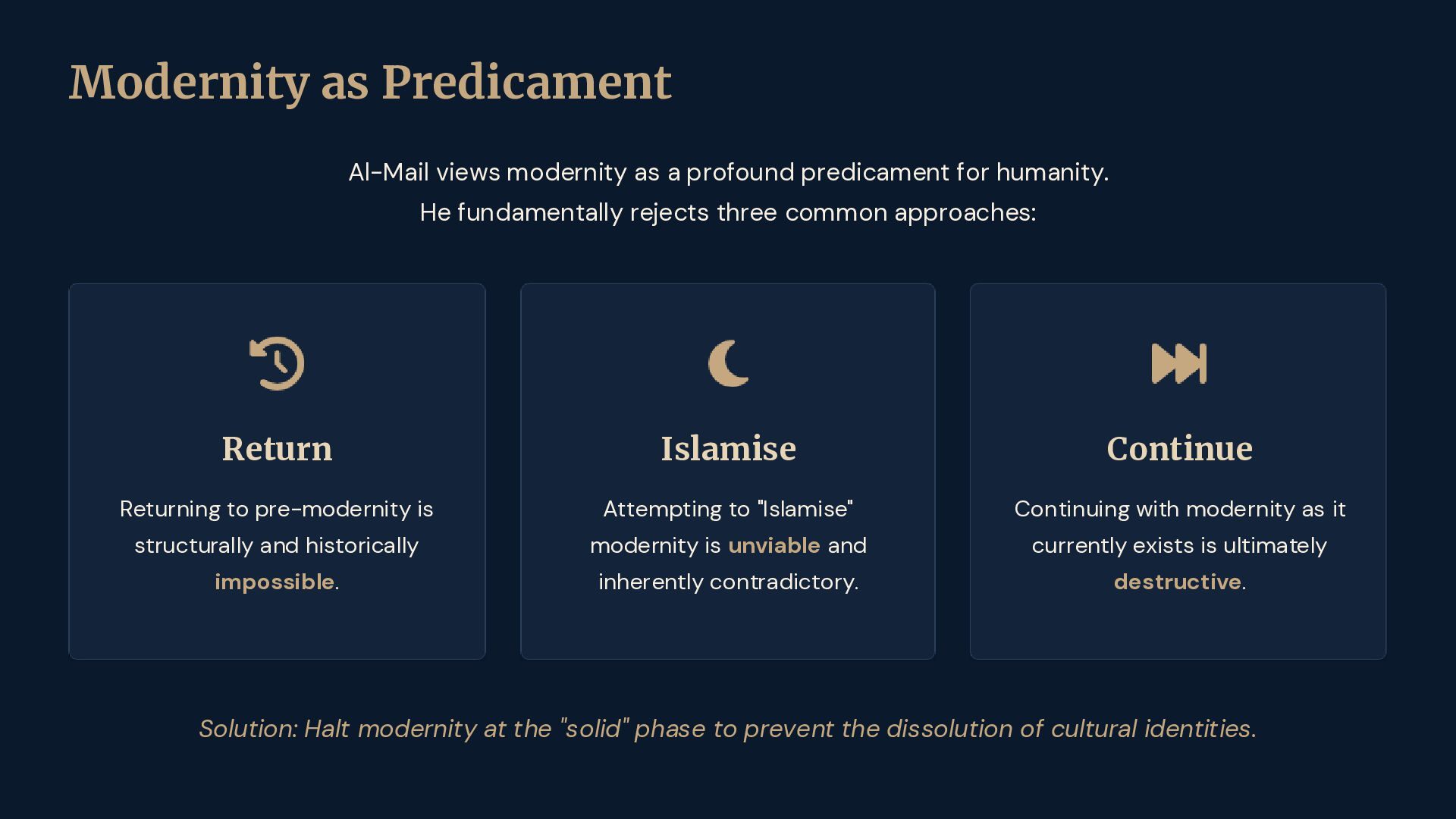
for humanity. He fundamentally rejects three common approaches: Return Islamise Continue Returning to pre-modernity is Attempting to "Islamise" Continuing with modernity as it structurally and historically modernity is unviable and currently exists is ultimately impossible. inherently contradictory. destructive. Solution: Halt modernity at the "solid" phase to prevent the dissolution of cultural identities.
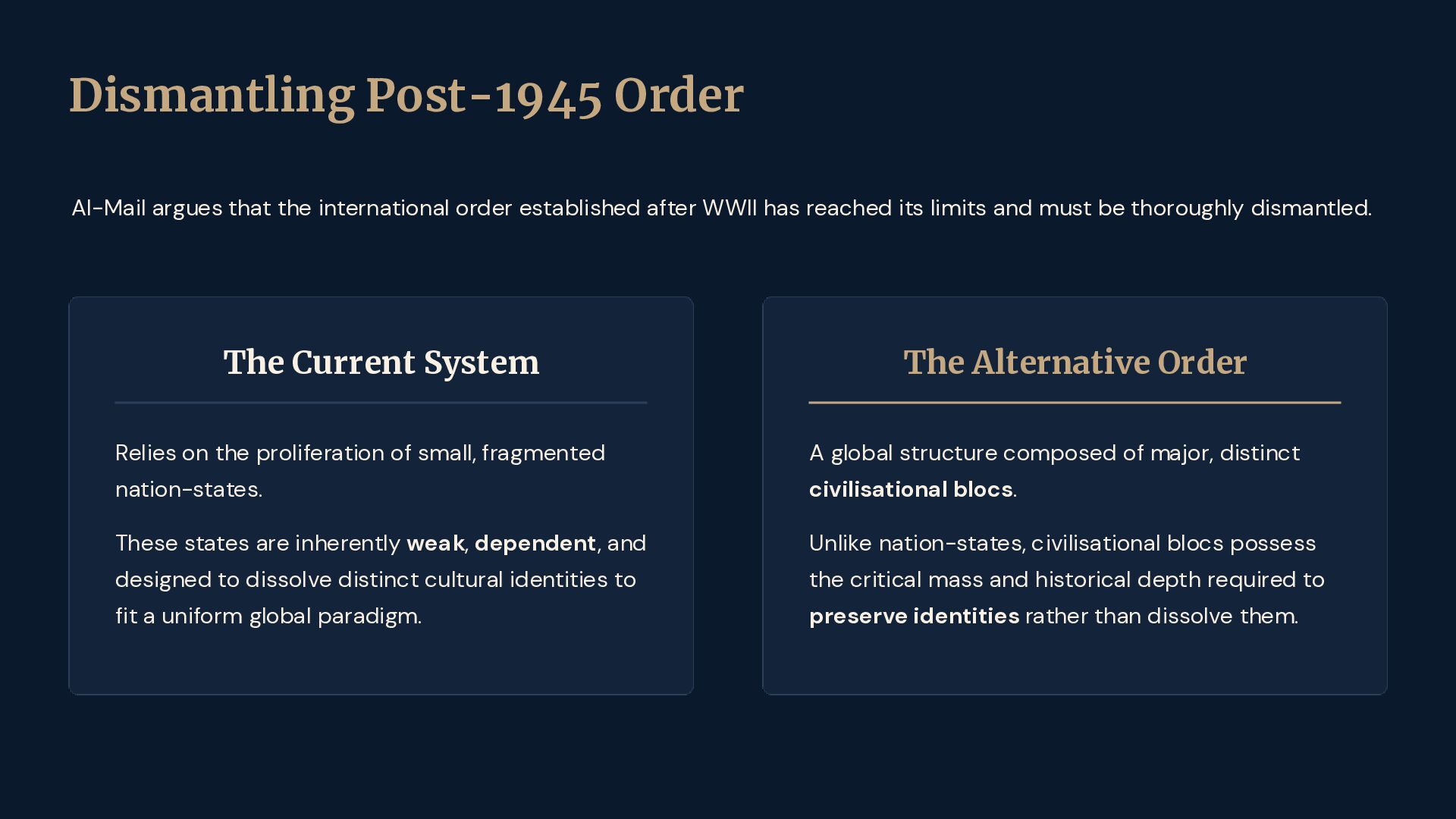
after WWII has reached its limits and must be thoroughly dismantled. The Current System The Alternative Order Relies on the proliferation of small, fragmented A global structure composed of major, distinct nation-states. civilisational blocs. These states are inherently weak, dependent, and Unlike nation-states, civilisational blocs possess designed to dissolve distinct cultural identities to the critical mass and historical depth required to fit a uniform global paradigm. preserve identities rather than dissolve them.
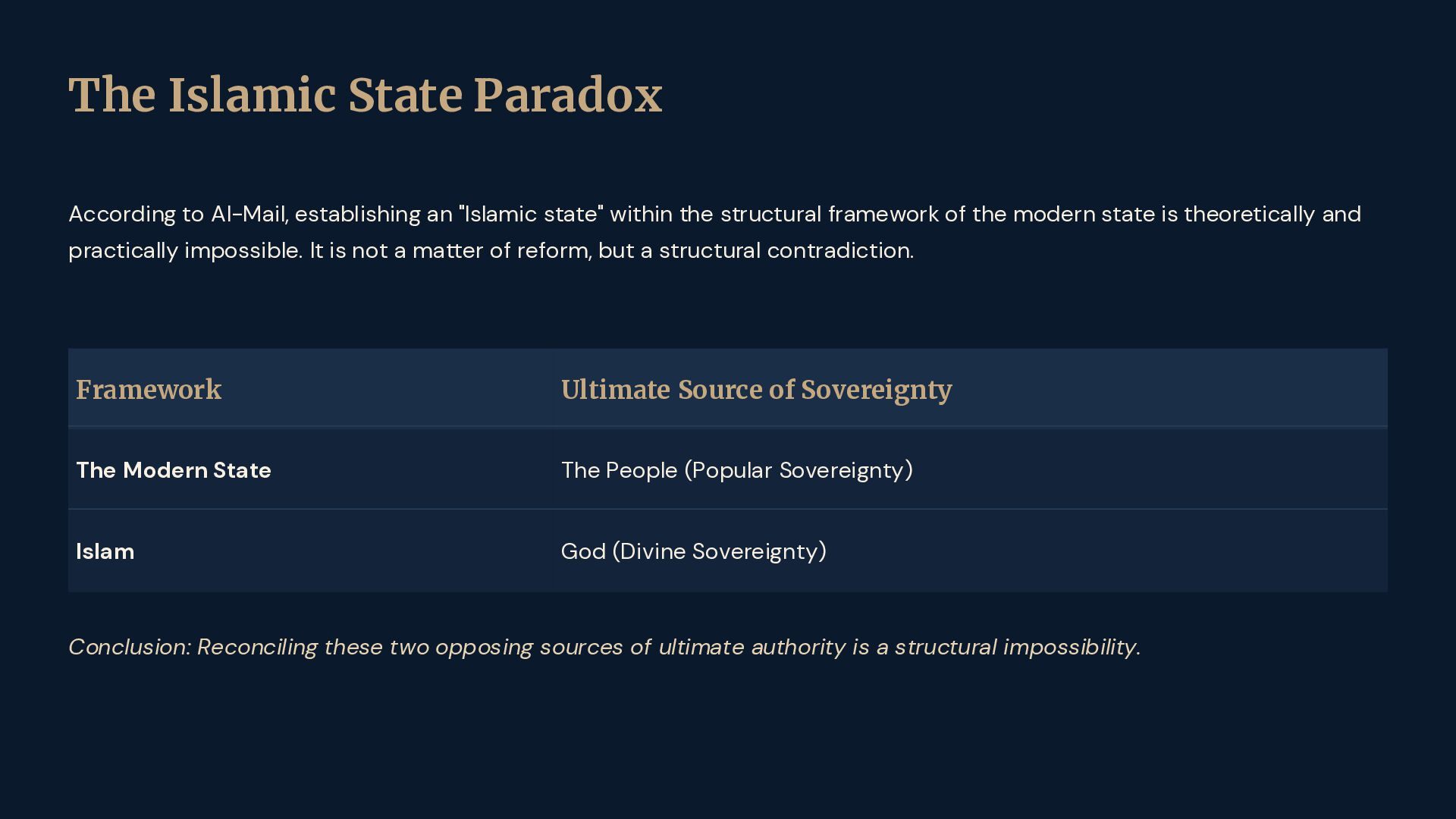
state" within the structural framework of the modern state is theoretically and practically impossible. It is not a matter of reform, but a structural contradiction. Framework Ultimate Source of Sovereignty The Modern State The People (Popular Sovereignty) Islam God (Divine Sovereignty) Conclusion: Reconciling these two opposing sources of ultimate authority is a structural impossibility.
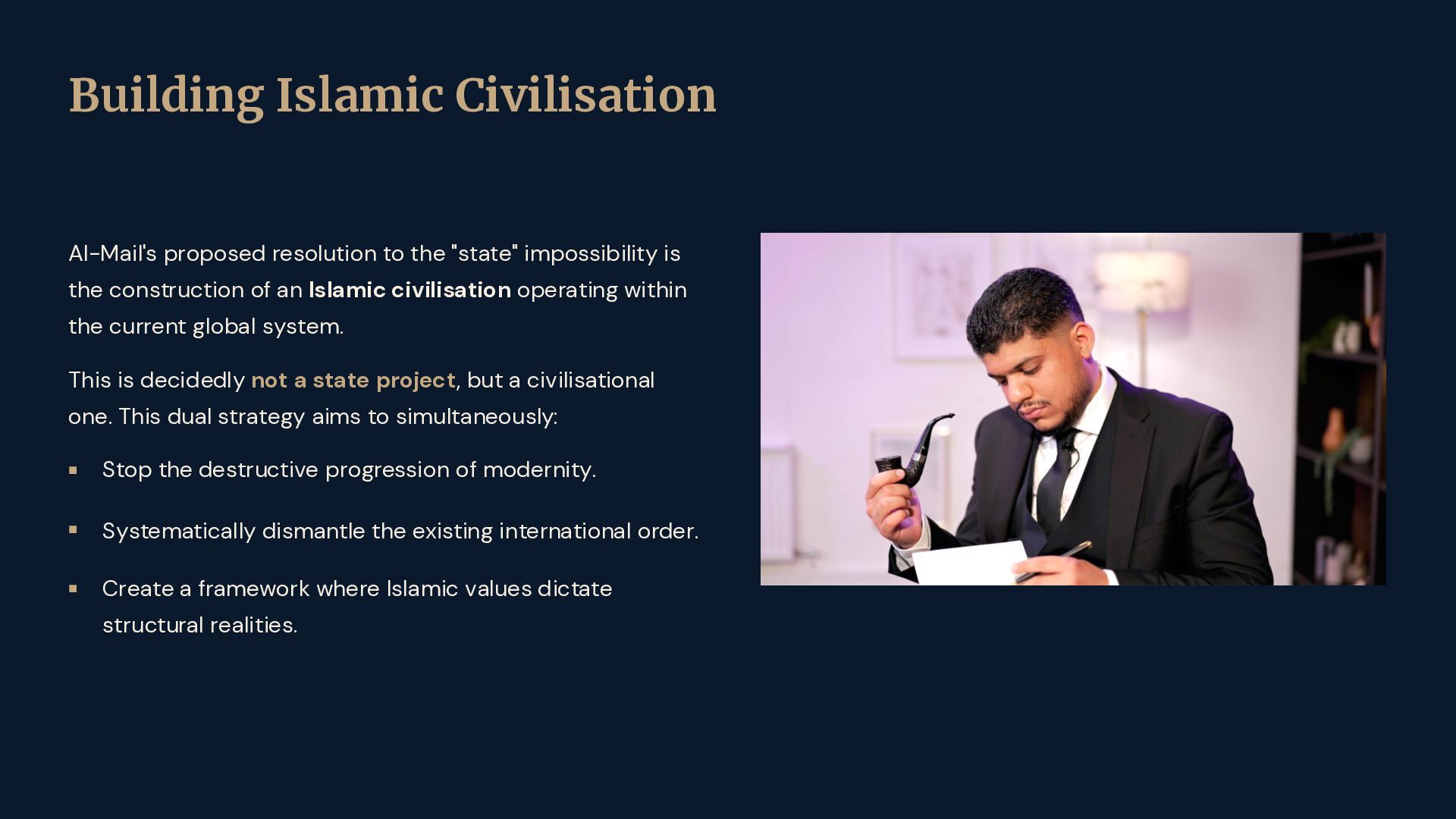
is the construction of an Islamic civilisation operating within the current global system. This is decidedly not a state project, but a civilisational one. This dual strategy aims to simultaneously: ▪ Stop the destructive progression of modernity. ▪ Systematically dismantle the existing international order. ▪ Create a framework where Islamic values dictate structural realities.
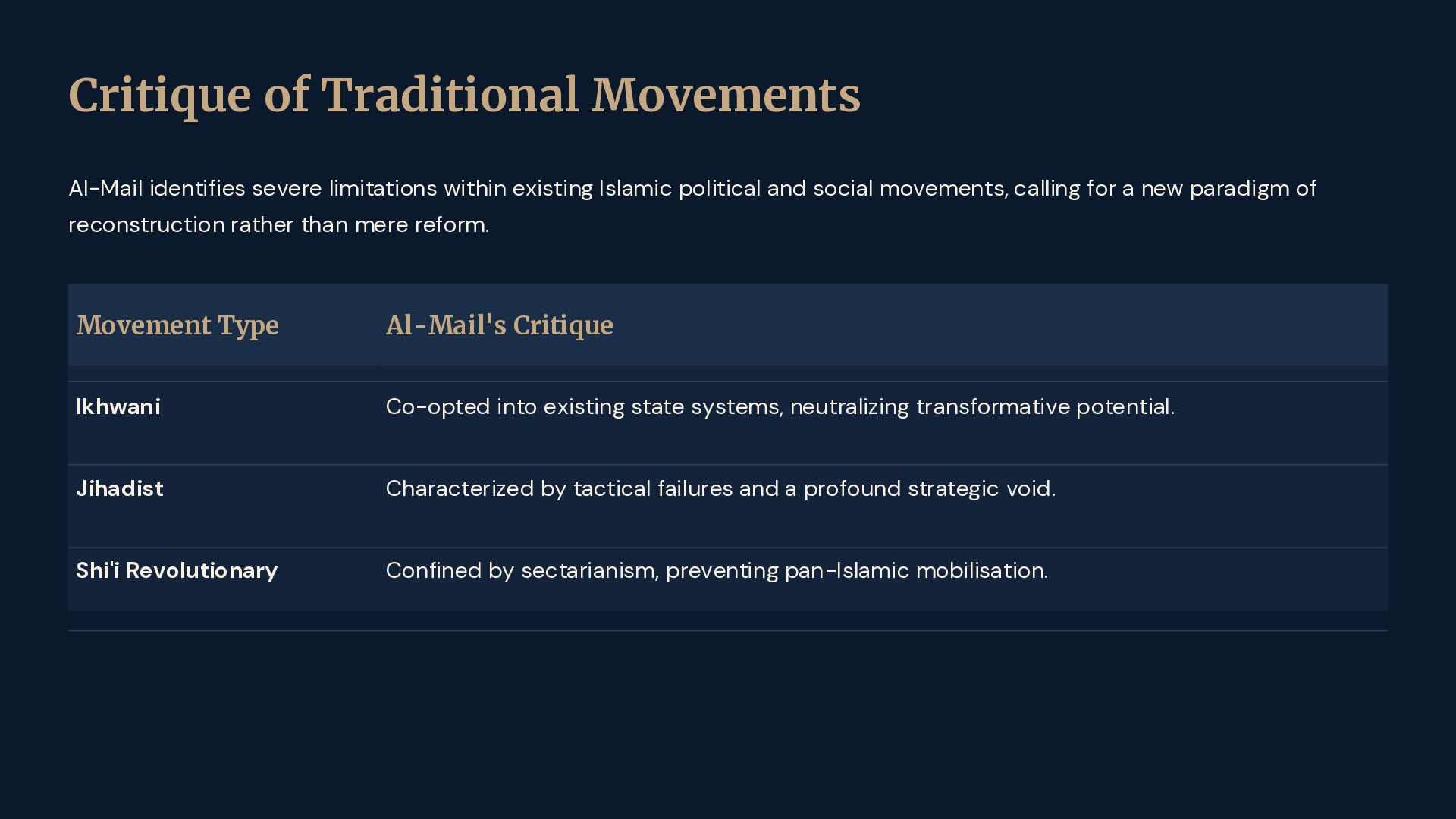
Islamic political and social movements, calling for a new paradigm of reconstruction rather than mere reform. Movement Type Al-Mail's Critique Ikhwani Co-opted into existing state systems, neutralizing transformative potential. Jihadist Characterized by tactical failures and a profound strategic void. Shi'i Revolutionary Confined by sectarianism, preventing pan-Islamic mobilisation.
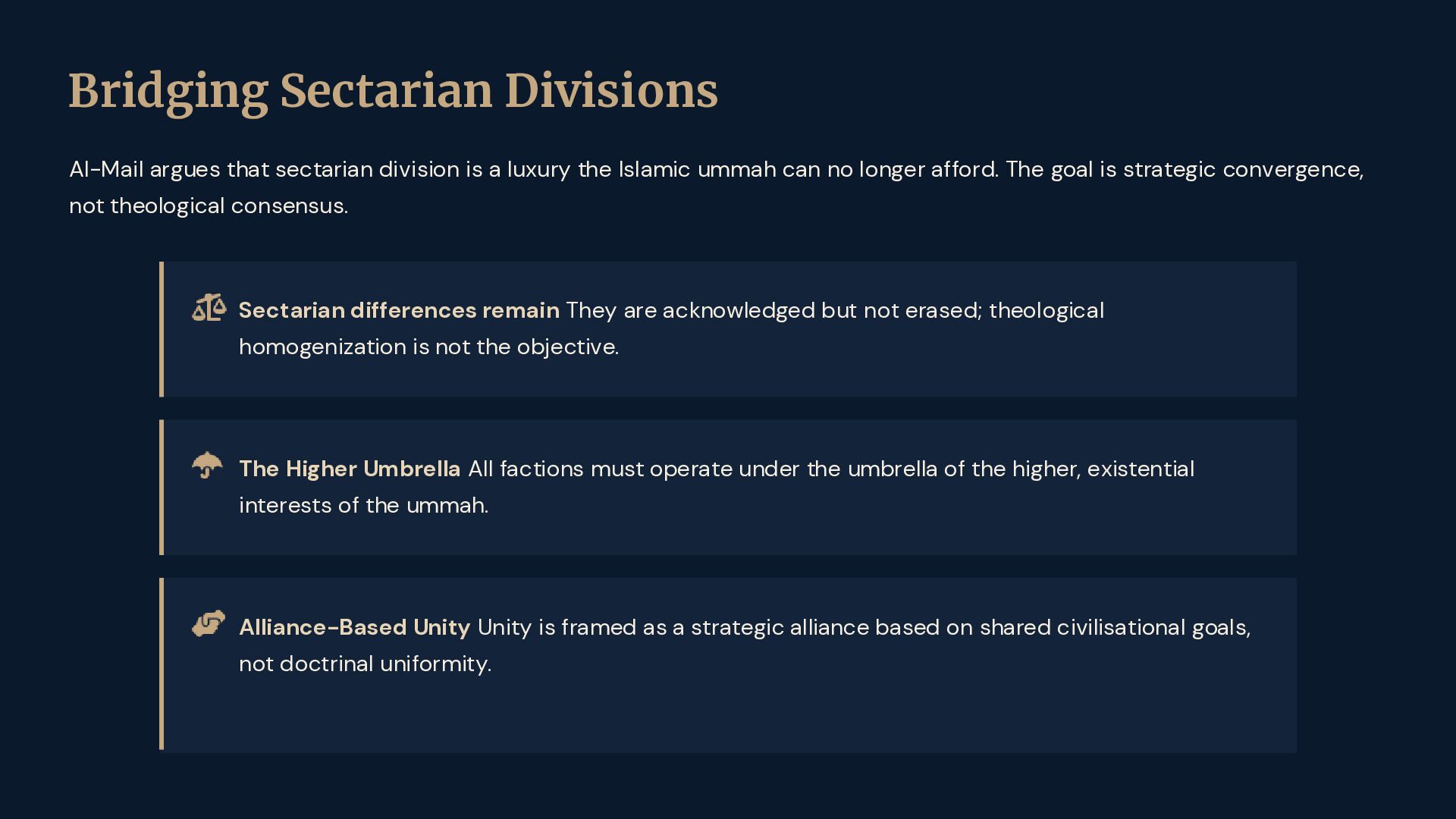
luxury the Islamic ummah can no longer afford. The goal is strategic convergence, not theological consensus. Sectarian differences remain They are acknowledged but not erased; theological homogenization is not the objective. The Higher Umbrella All factions must operate under the umbrella of the higher, existential interests of the ummah. Alliance-Based Unity Unity is framed as a strategic alliance based on shared civilisational goals, not doctrinal uniformity.
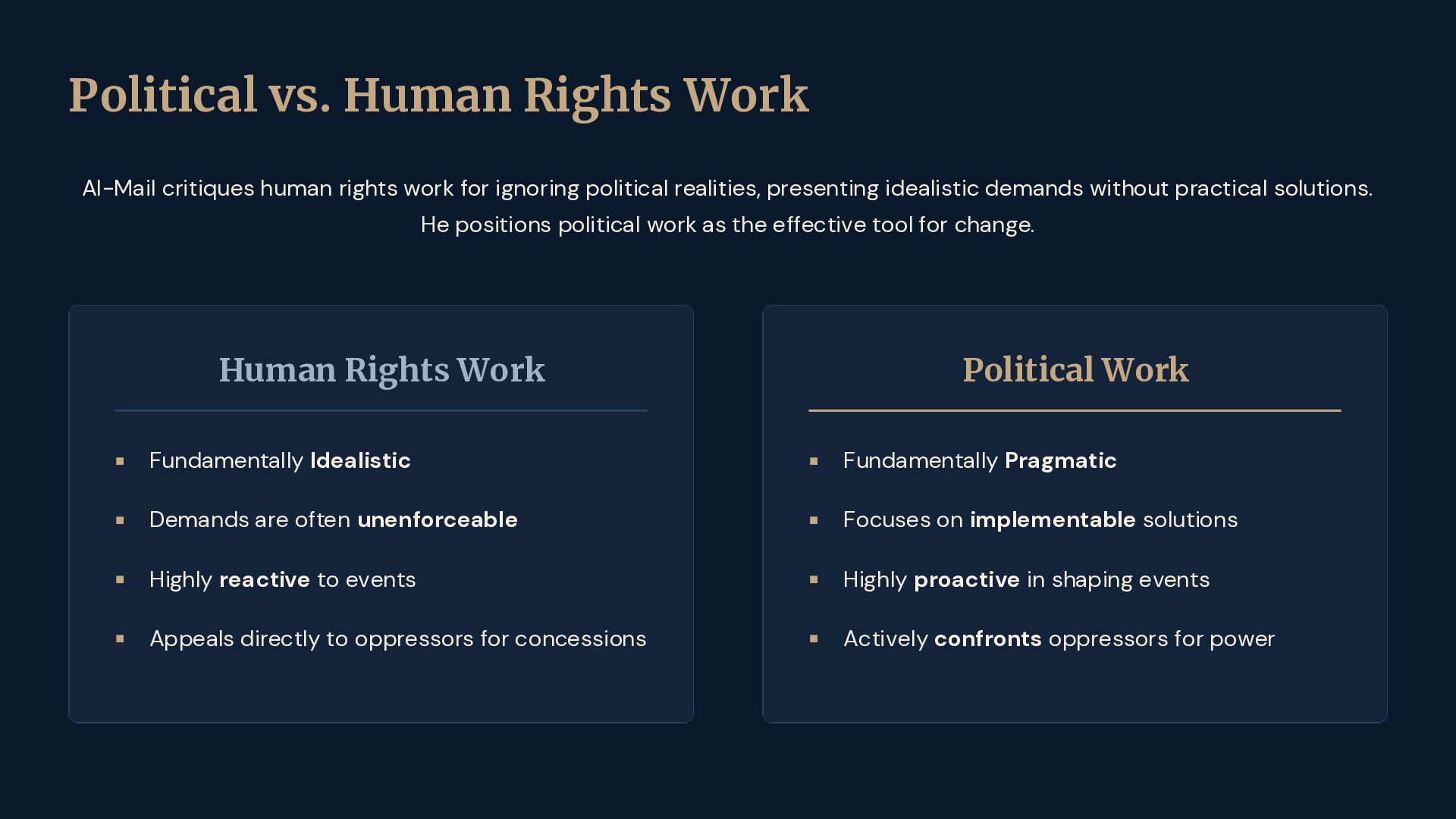
for ignoring political realities, presenting idealistic demands without practical solutions. He positions political work as the effective tool for change. Human Rights Work Political Work ▪ Fundamentally Idealistic ▪ Fundamentally Pragmatic ▪ Demands are often unenforceable ▪ Focuses on implementable solutions ▪ Highly reactive to events ▪ Highly proactive in shaping events ▪ Appeals directly to oppressors for concessions ▪ Actively confronts oppressors for power

 Your Podcast. Everywhere. Effortlessly.


 ainischool
 hiola
 signer
 camel_404
 eller86
 akiraasano
 yatabe
 drpoonamkc
 ishii_mit
 bvr7352
 matleenalaakso
 codingconduct
 tenderlove
 shpigford
 eitanlees
 livdayseo
 tapps
 palkan
 chikuwait
 chriscoyier
 rkaga
 akashhashmi
 badams