Upgrade to PRO for Only $50/Year—Limited-Time Offer! 🔥

FY 2024: MDC 10 - Endocrine, Nutritional and Me...

Avatar for e4health e4health PRO
April 03, 2024
320

FY 2024: MDC 10 - Endocrine, Nutritional and Metabolic Disorders

Avatar for e4health

e4health PRO

April 03, 2024
Tweet

Transcript

  1. H I M | C O D I N G

    & C D I | H E A LT H I T | R E V C Y C L E Empowering Better Health e4health tackles healthcare’s data, quality and revenue challenges empowering your providers to focus on better care.
  2. Objectives • Review MDC 10- Endocrine, nutritional and metabolic diseases

    and disorders with a focus on selected diagnoses and procedures. • Learner will acquire a basic understanding of the diagnoses and procedures included in MDC-10 • Discuss Query opportunities in MDC-10 • Review coding clinics relevant to the chosen topics in each DRG
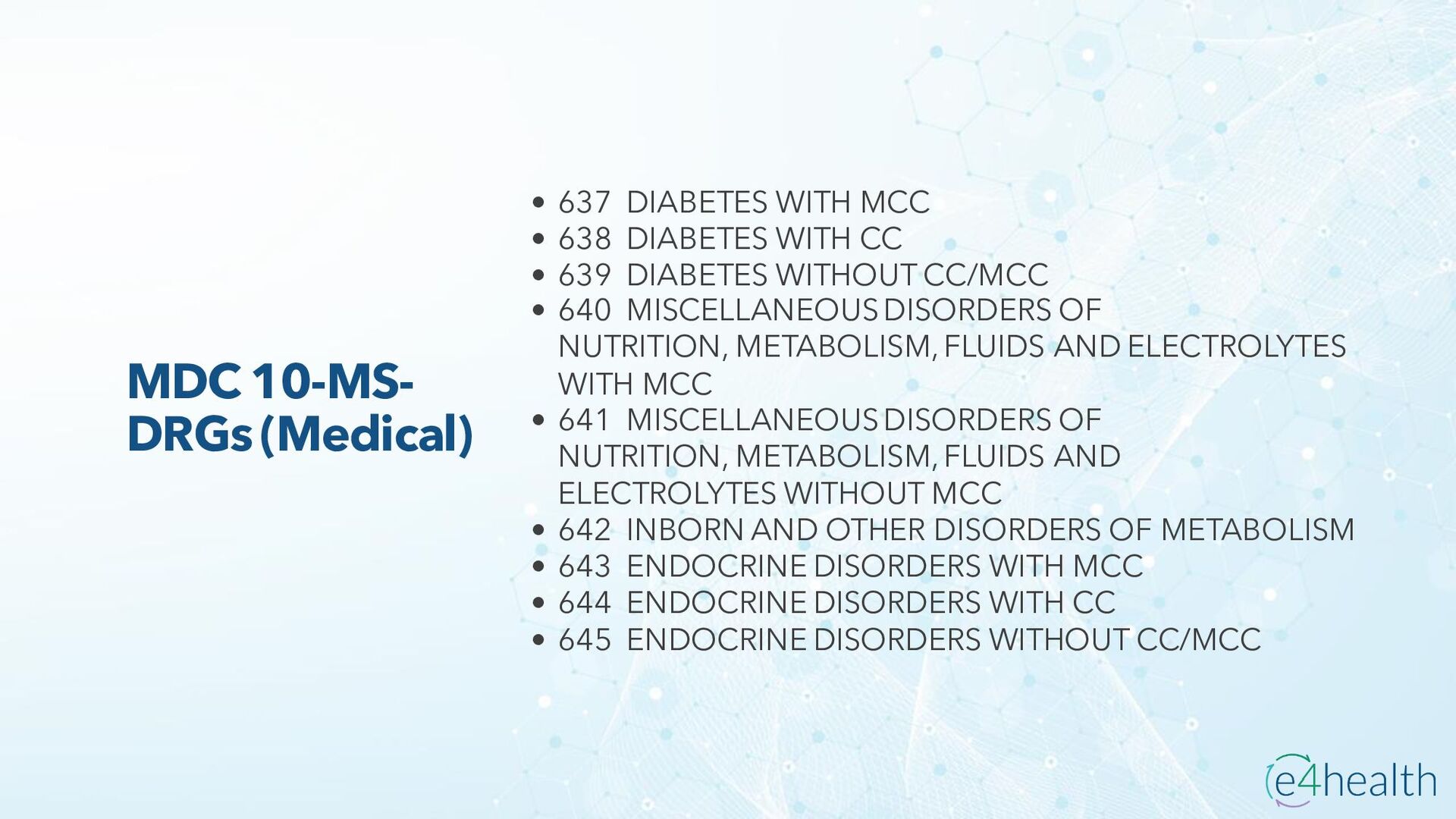
  3. MDC 10-MS- DRGs (Medical) • 637 DIABETES WITH MCC •

    638 DIABETES WITH CC • 639 DIABETES WITHOUT CC/MCC • 640 MISCELLANEOUS DISORDERS OF NUTRITION, METABOLISM, FLUIDS AND ELECTROLYTES WITH MCC • 641 MISCELLANEOUS DISORDERS OF NUTRITION, METABOLISM, FLUIDS AND ELECTROLYTES WITHOUT MCC • 642 INBORN AND OTHER DISORDERS OF METABOLISM • 643 ENDOCRINE DISORDERS WITH MCC • 644 ENDOCRINE DISORDERS WITH CC • 645 ENDOCRINE DISORDERS WITHOUT CC/MCC
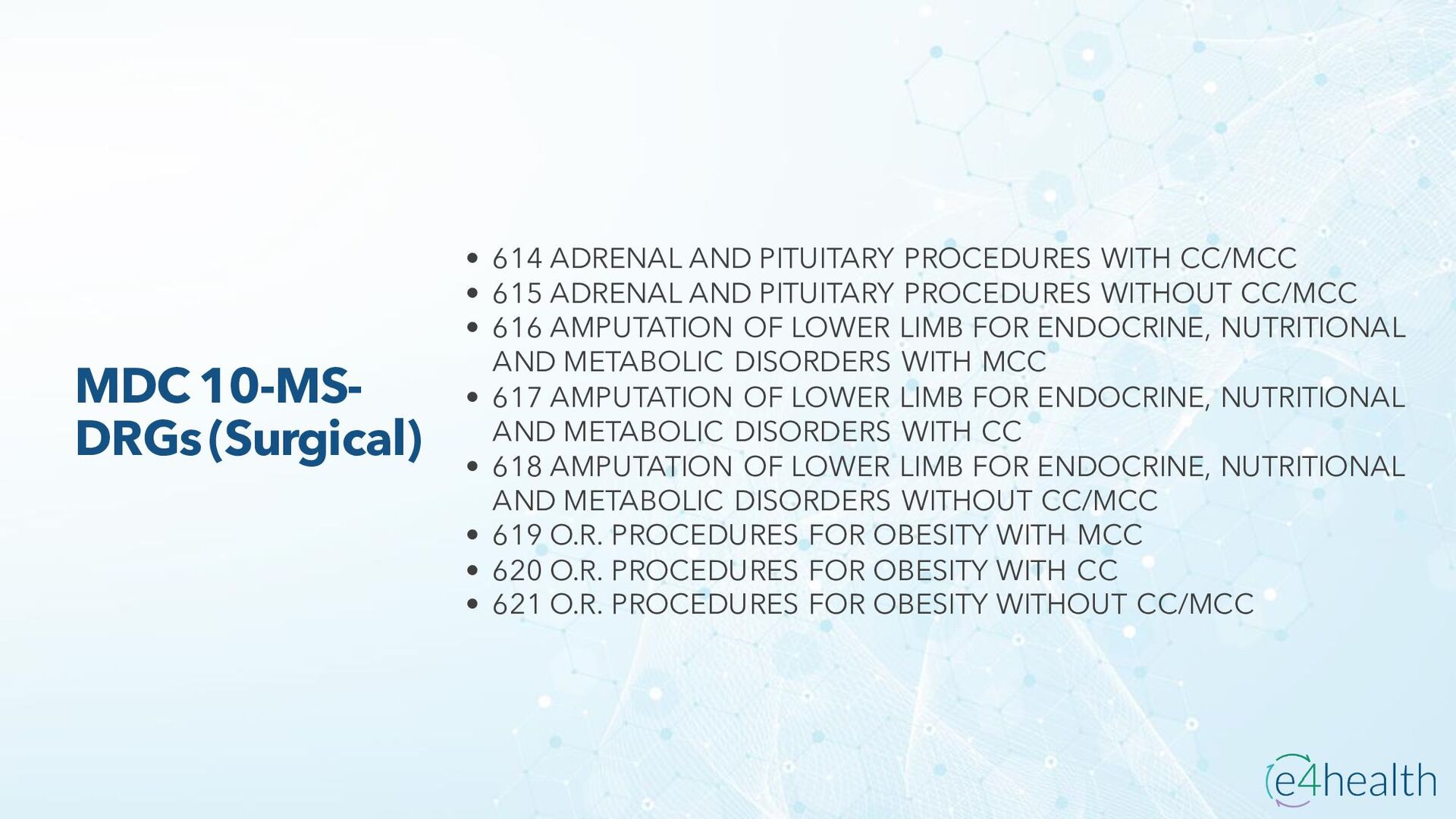
  4. MDC 10-MS- DRGs (Surgical) • 614 ADRENAL AND PITUITARY PROCEDURES

    WITH CC/MCC • 615 ADRENAL AND PITUITARY PROCEDURES WITHOUT CC/MCC • 616 AMPUTATION OF LOWER LIMB FOR ENDOCRINE, NUTRITIONAL AND METABOLIC DISORDERS WITH MCC • 617 AMPUTATION OF LOWER LIMB FOR ENDOCRINE, NUTRITIONAL AND METABOLIC DISORDERS WITH CC • 618 AMPUTATION OF LOWER LIMB FOR ENDOCRINE, NUTRITIONAL AND METABOLIC DISORDERS WITHOUT CC/MCC • 619 O.R. PROCEDURES FOR OBESITY WITH MCC • 620 O.R. PROCEDURES FOR OBESITY WITH CC • 621 O.R. PROCEDURES FOR OBESITY WITHOUT CC/MCC
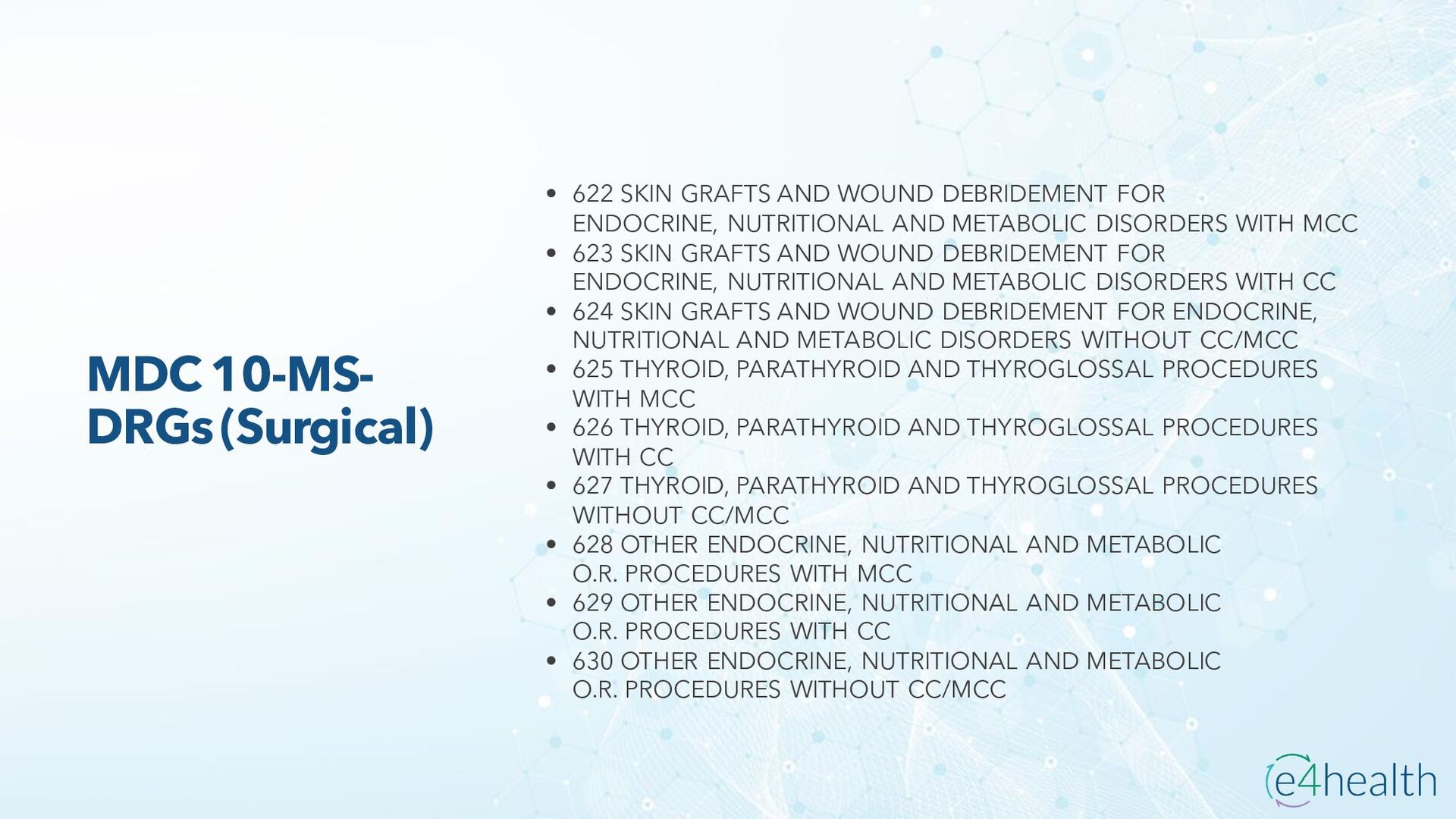
  5. MDC 10-MS- DRGs (Surgical) • 622 SKIN GRAFTS AND WOUND

    DEBRIDEMENT FOR ENDOCRINE, NUTRITIONAL AND METABOLIC DISORDERS WITH MCC • 623 SKIN GRAFTS AND WOUND DEBRIDEMENT FOR ENDOCRINE, NUTRITIONAL AND METABOLIC DISORDERS WITH CC • 624 SKIN GRAFTS AND WOUND DEBRIDEMENT FOR ENDOCRINE, NUTRITIONAL AND METABOLIC DISORDERS WITHOUT CC/MCC • 625 THYROID, PARATHYROID AND THYROGLOSSAL PROCEDURES WITH MCC • 626 THYROID, PARATHYROID AND THYROGLOSSAL PROCEDURES WITH CC • 627 THYROID, PARATHYROID AND THYROGLOSSAL PROCEDURES WITHOUT CC/MCC • 628 OTHER ENDOCRINE, NUTRITIONAL AND METABOLIC O.R. PROCEDURES WITH MCC • 629 OTHER ENDOCRINE, NUTRITIONAL AND METABOLIC O.R. PROCEDURES WITH CC • 630 OTHER ENDOCRINE, NUTRITIONAL AND METABOLIC O.R. PROCEDURES WITHOUT CC/MCC
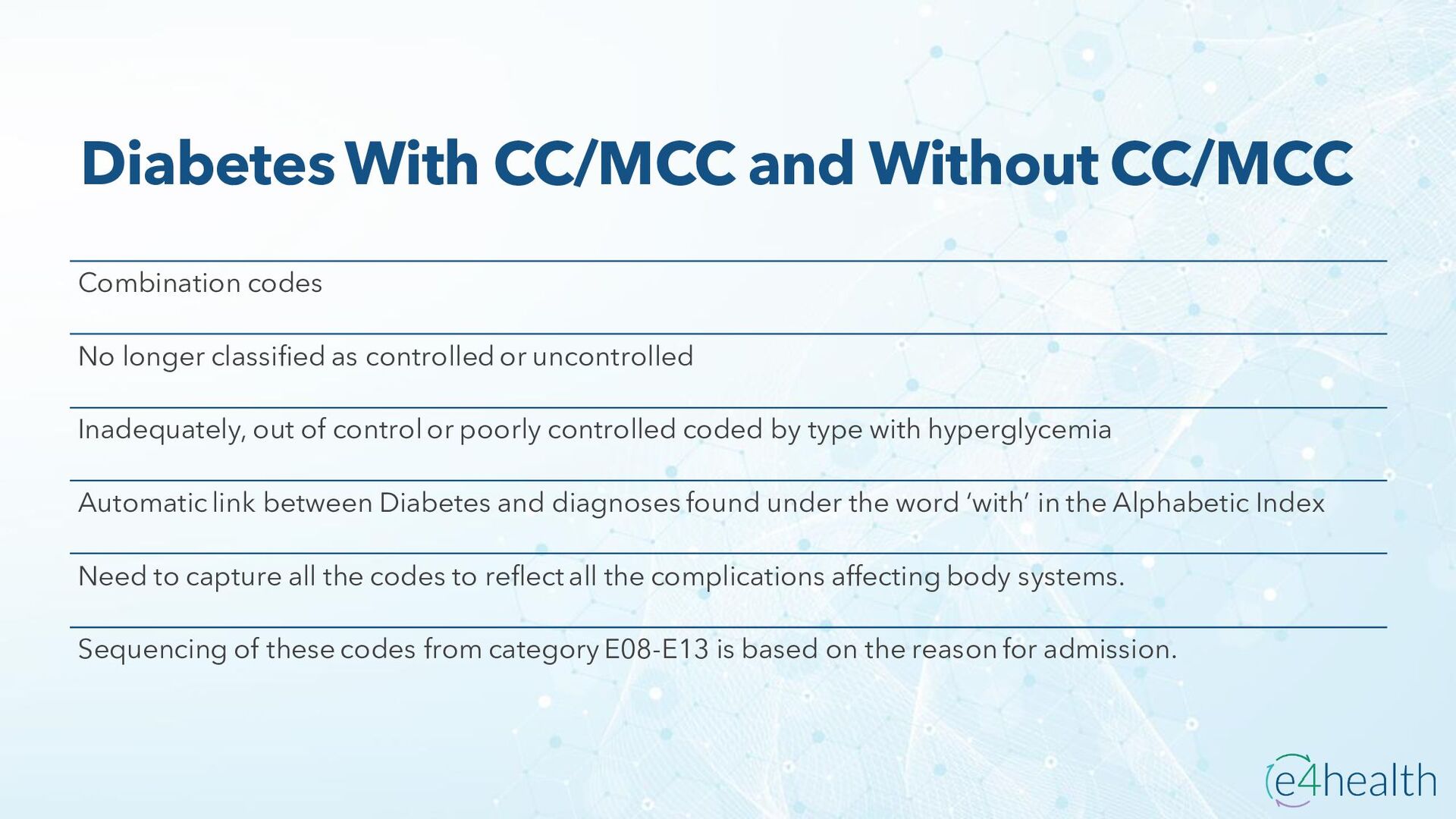
  6. Diabetes With CC/MCC and Without CC/MCC Combination codes No longer

    classified as controlled or uncontrolled Inadequately, out of control or poorly controlled coded by type with hyperglycemia Automatic link between Diabetes and diagnoses found under the word ‘with’ in the Alphabetic Index Need to capture all the codes to reflect all the complications affecting body systems. Sequencing of these codes from category E08-E13 is based on the reason for admission.
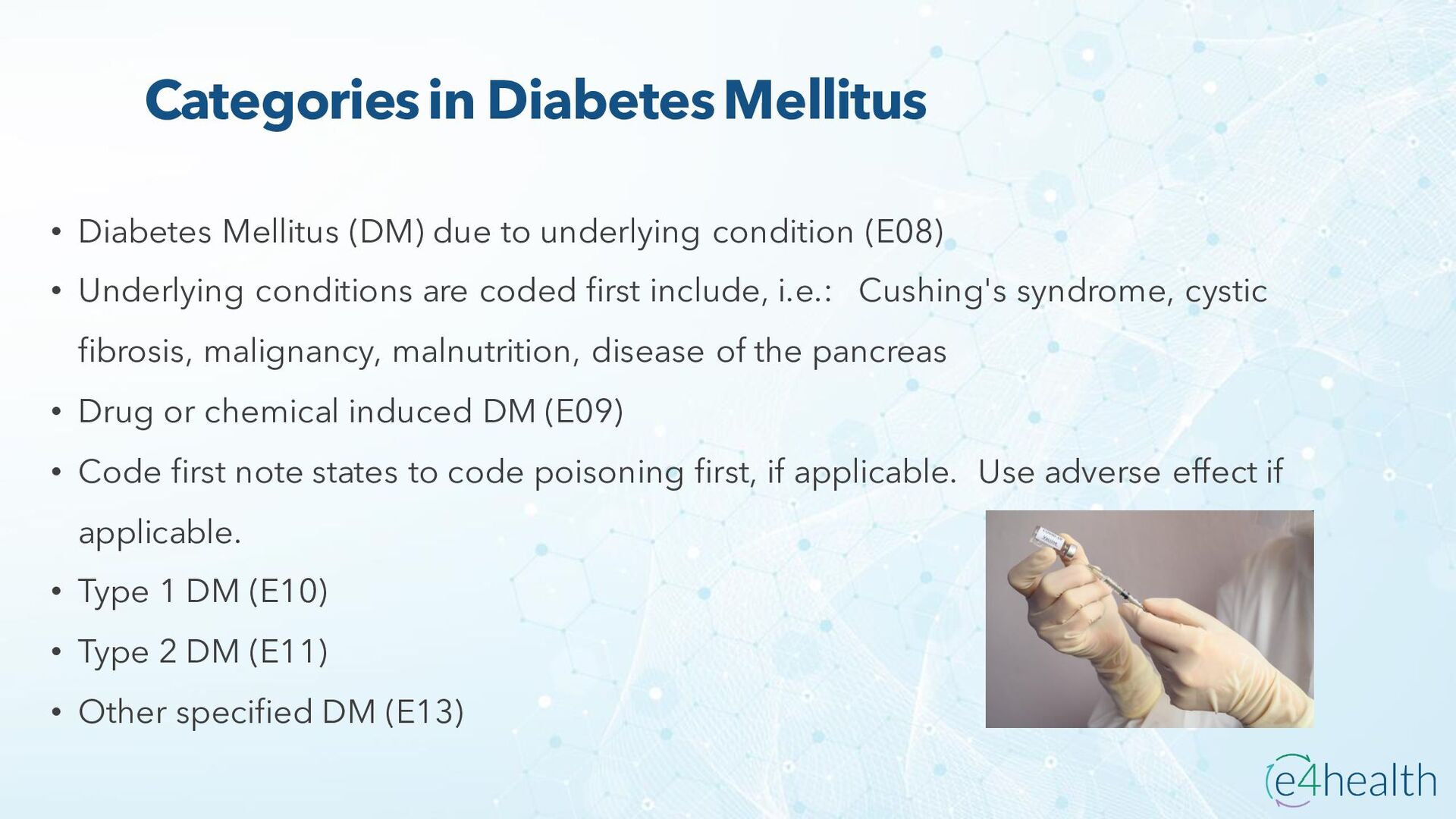
  7. Categories in Diabetes Mellitus • Diabetes Mellitus (DM) due to

    underlying condition (E08) • Underlying conditions are coded first include, i.e.: Cushing's syndrome, cystic fibrosis, malignancy, malnutrition, disease of the pancreas • Drug or chemical induced DM (E09) • Code first note states to code poisoning first, if applicable. Use adverse effect if applicable. • Type 1 DM (E10) • Type 2 DM (E11) • Other specified DM (E13)
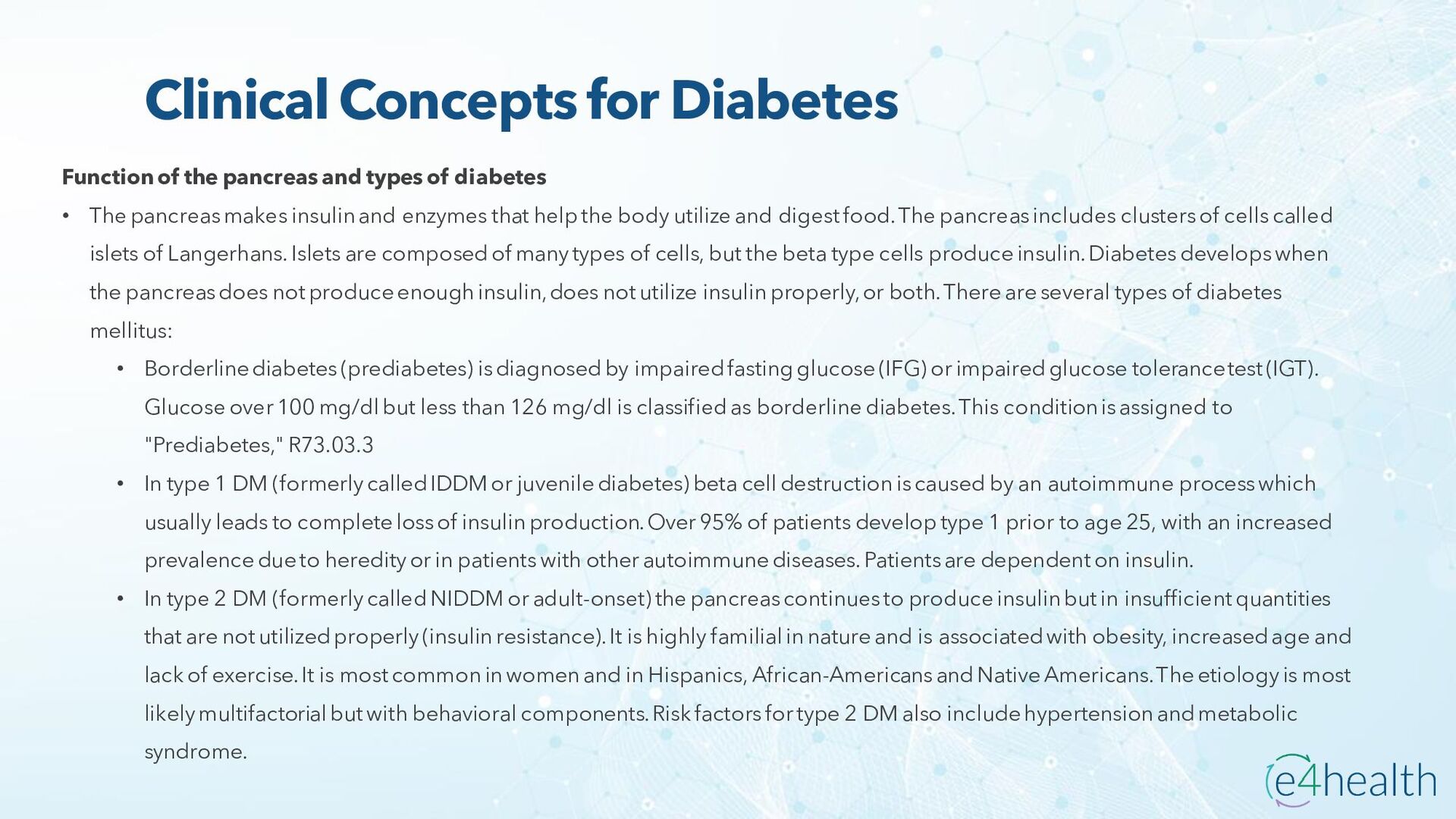
  8. Clinical Concepts for Diabetes Function of the pancreas and types

    of diabetes • The pancreas makes insulin and enzymes that help the body utilize and digest food. The pancreas includes clusters of cells called islets of Langerhans. Islets are composed of many types of cells, but the beta type cells produce insulin. Diabetes develops when the pancreas does not produce enough insulin, does not utilize insulin properly, or both. There are several types of diabetes mellitus: • Borderline diabetes (prediabetes) is diagnosed by impaired fasting glucose (IFG) or impaired glucose tolerance test (IGT). Glucose over 100 mg/dl but less than 126 mg/dl is classified as borderline diabetes. This condition is assigned to "Prediabetes," R73.03.3 • In type 1 DM (formerly called IDDM or juvenile diabetes) beta cell destruction is caused by an autoimmune process which usually leads to complete loss of insulin production. Over 95% of patients develop type 1 prior to age 25, with an increased prevalence due to heredity or in patients with other autoimmune diseases. Patients are dependent on insulin. • In type 2 DM (formerly called NIDDM or adult-onset) the pancreas continues to produce insulin but in insufficient quantities that are not utilized properly (insulin resistance). It is highly familial in nature and is associated with obesity, increased age and lack of exercise. It is most common in women and in Hispanics, African-Americans and Native Americans. The etiology is most likely multifactorial but with behavioral components. Risk factors for type 2 DM also include hypertension and metabolic syndrome.
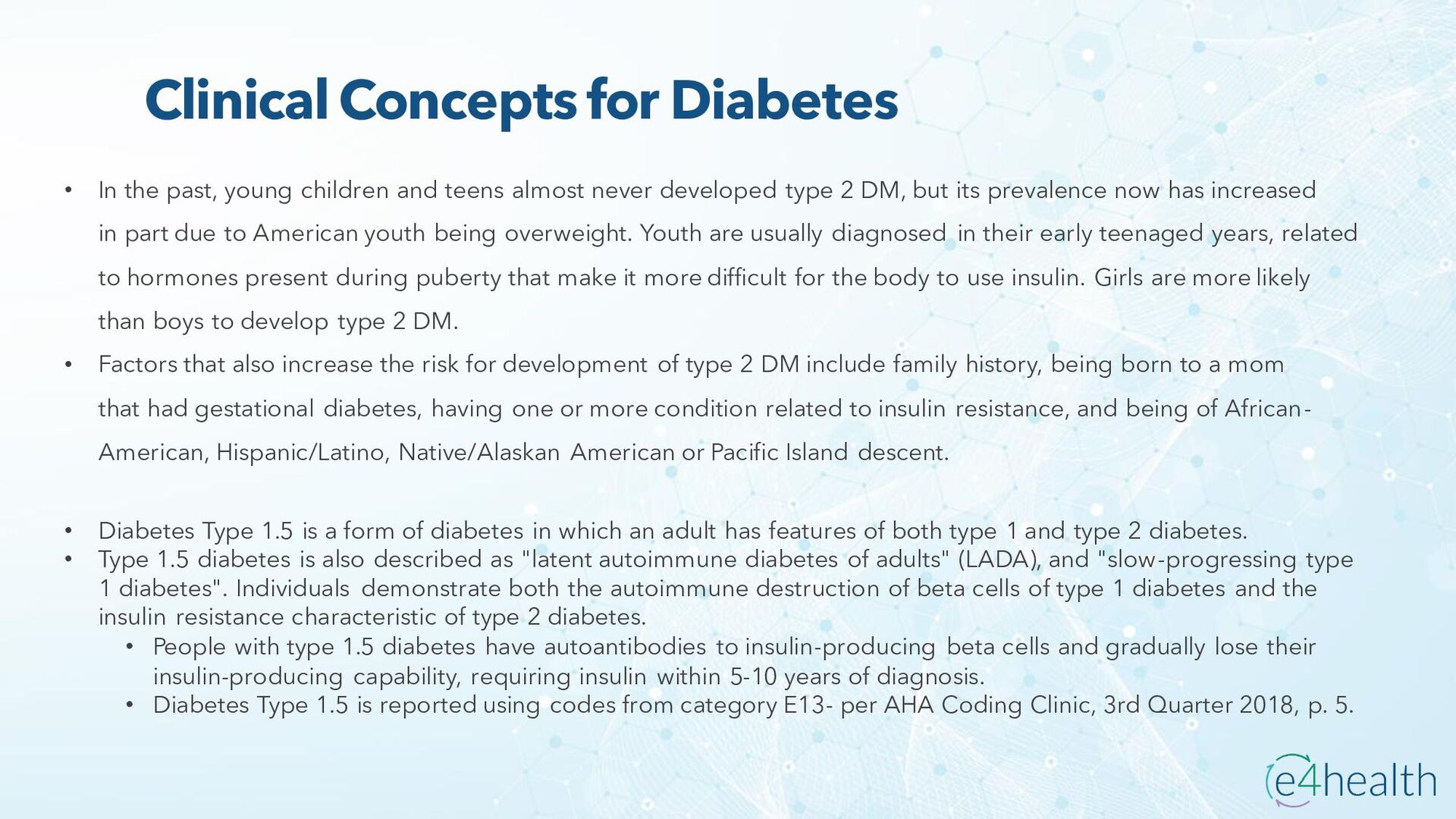
  9. Clinical Concepts for Diabetes • In the past, young children

    and teens almost never developed type 2 DM, but its prevalence now has increased in part due to American youth being overweight. Youth are usually diagnosed in their early teenaged years, related to hormones present during puberty that make it more difficult for the body to use insulin. Girls are more likely than boys to develop type 2 DM. • Factors that also increase the risk for development of type 2 DM include family history, being born to a mom that had gestational diabetes, having one or more condition related to insulin resistance, and being of African- American, Hispanic/Latino, Native/Alaskan American or Pacific Island descent. • Diabetes Type 1.5 is a form of diabetes in which an adult has features of both type 1 and type 2 diabetes. • Type 1.5 diabetes is also described as "latent autoimmune diabetes of adults" (LADA), and "slow-progressing type 1 diabetes". Individuals demonstrate both the autoimmune destruction of beta cells of type 1 diabetes and the insulin resistance characteristic of type 2 diabetes. • People with type 1.5 diabetes have autoantibodies to insulin-producing beta cells and gradually lose their insulin-producing capability, requiring insulin within 5-10 years of diagnosis. • Diabetes Type 1.5 is reported using codes from category E13- per AHA Coding Clinic, 3rd Quarter 2018, p. 5.
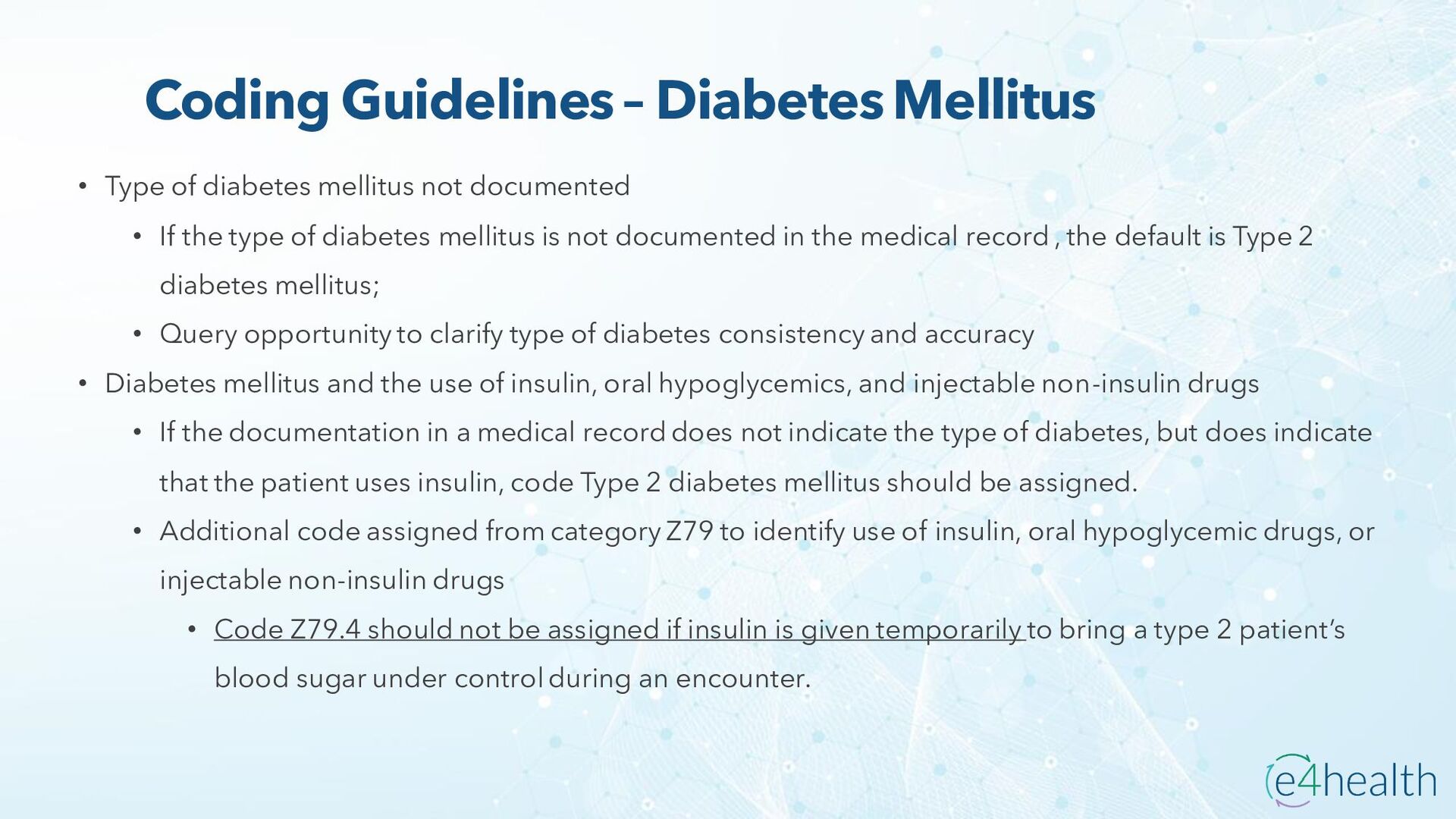
  10. Coding Guidelines – Diabetes Mellitus • Type of diabetes mellitus

    not documented • If the type of diabetes mellitus is not documented in the medical record , the default is Type 2 diabetes mellitus; • Query opportunity to clarify type of diabetes consistency and accuracy • Diabetes mellitus and the use of insulin, oral hypoglycemics, and injectable non-insulin drugs • If the documentation in a medical record does not indicate the type of diabetes, but does indicate that the patient uses insulin, code Type 2 diabetes mellitus should be assigned. • Additional code assigned from category Z79 to identify use of insulin, oral hypoglycemic drugs, or injectable non-insulin drugs • Code Z79.4 should not be assigned if insulin is given temporarily to bring a type 2 patient’s blood sugar under control during an encounter.
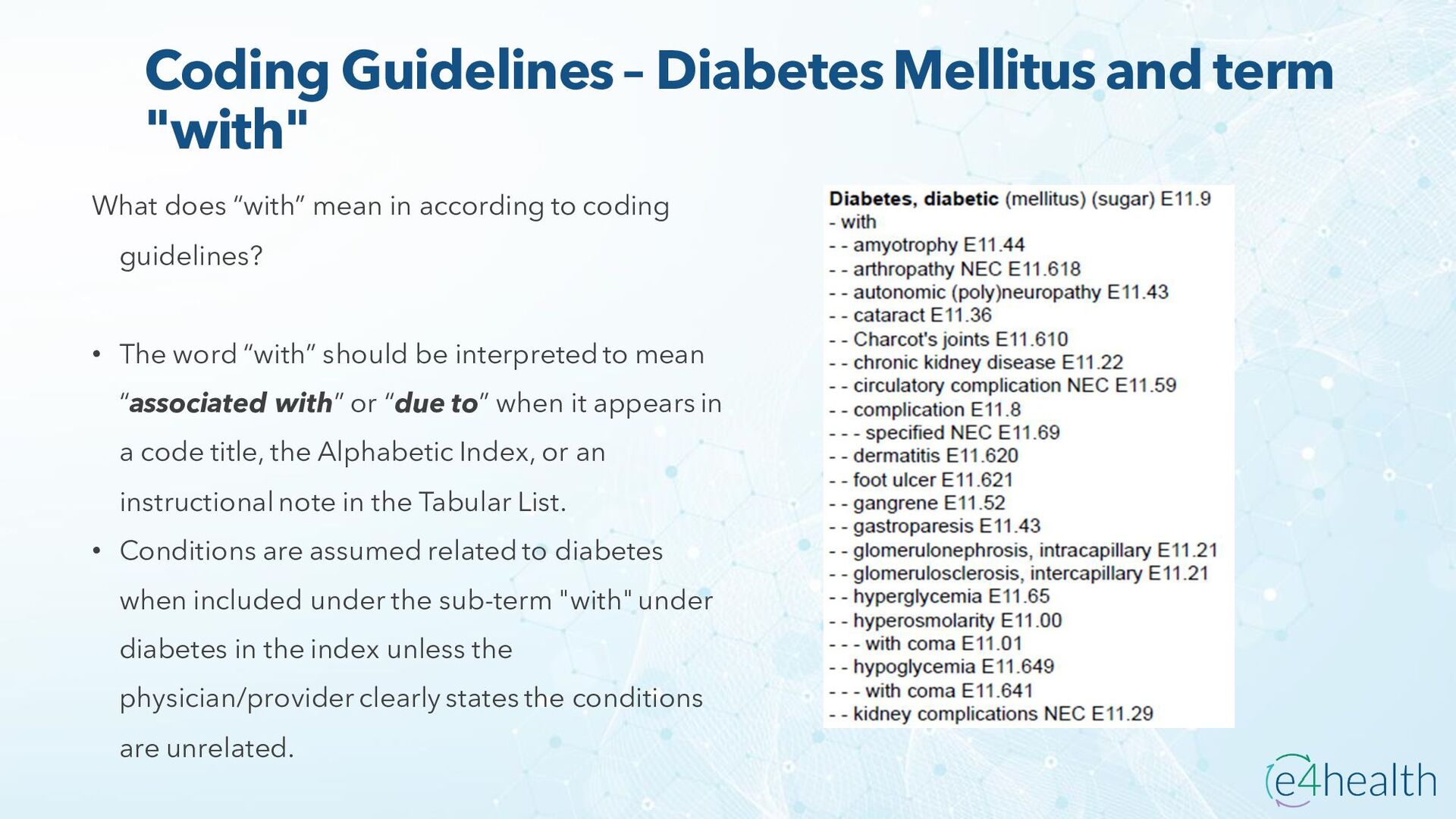
  11. Coding Guidelines – Diabetes Mellitus and term "with" What does

    “with” mean in according to coding guidelines? • The word “with” should be interpreted to mean “associated with” or “due to” when it appears in a code title, the Alphabetic Index, or an instructional note in the Tabular List. • Conditions are assumed related to diabetes when included under the sub-term "with" under diabetes in the index unless the physician/provider clearly states the conditions are unrelated.
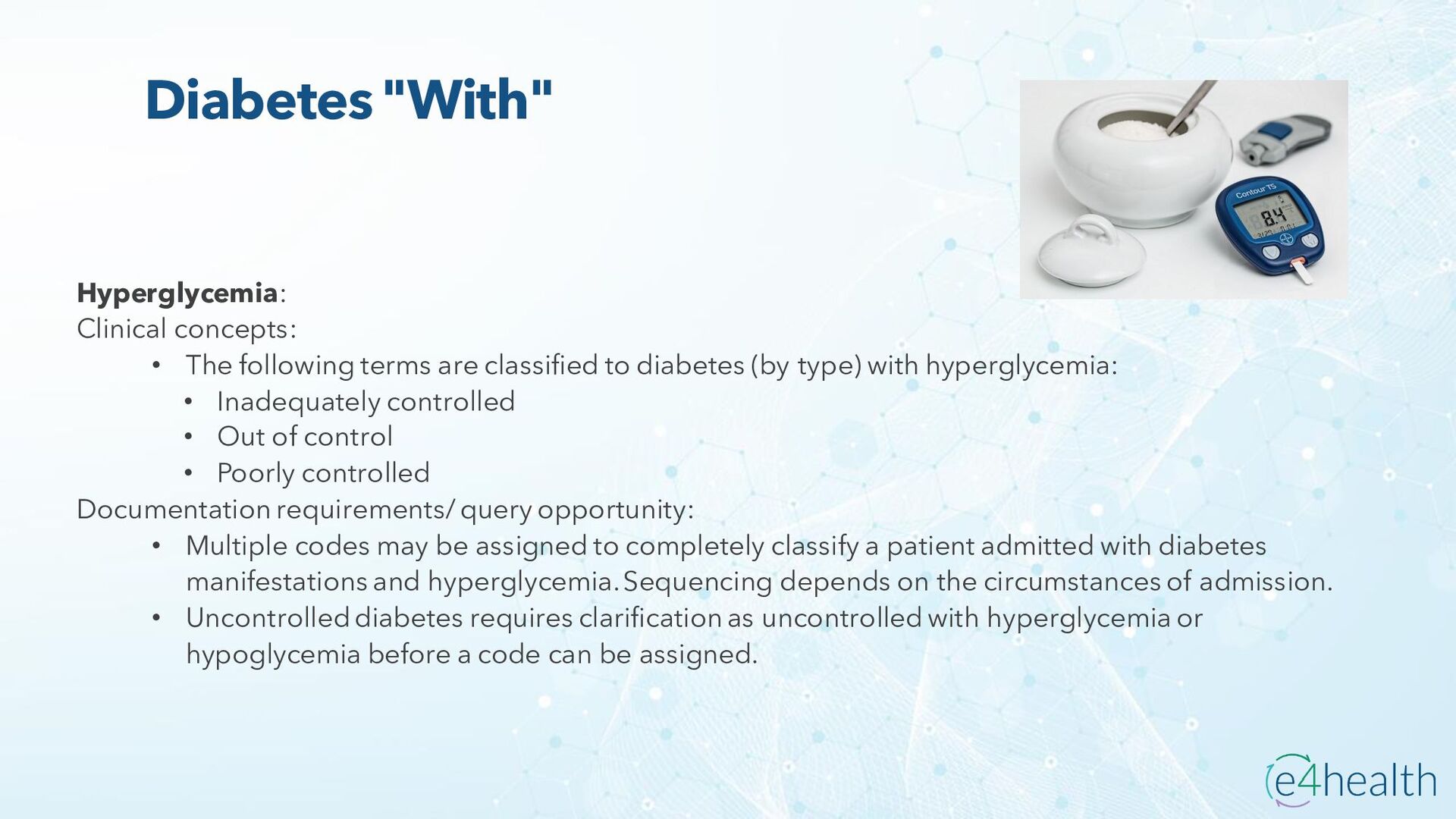
  12. Diabetes "With" Hyperglycemia: Clinical concepts: • The following terms are

    classified to diabetes (by type) with hyperglycemia: • Inadequately controlled • Out of control • Poorly controlled Documentation requirements/ query opportunity: • Multiple codes may be assigned to completely classify a patient admitted with diabetes manifestations and hyperglycemia. Sequencing depends on the circumstances of admission. • Uncontrolled diabetes requires clarification as uncontrolled with hyperglycemia or hypoglycemia before a code can be assigned.
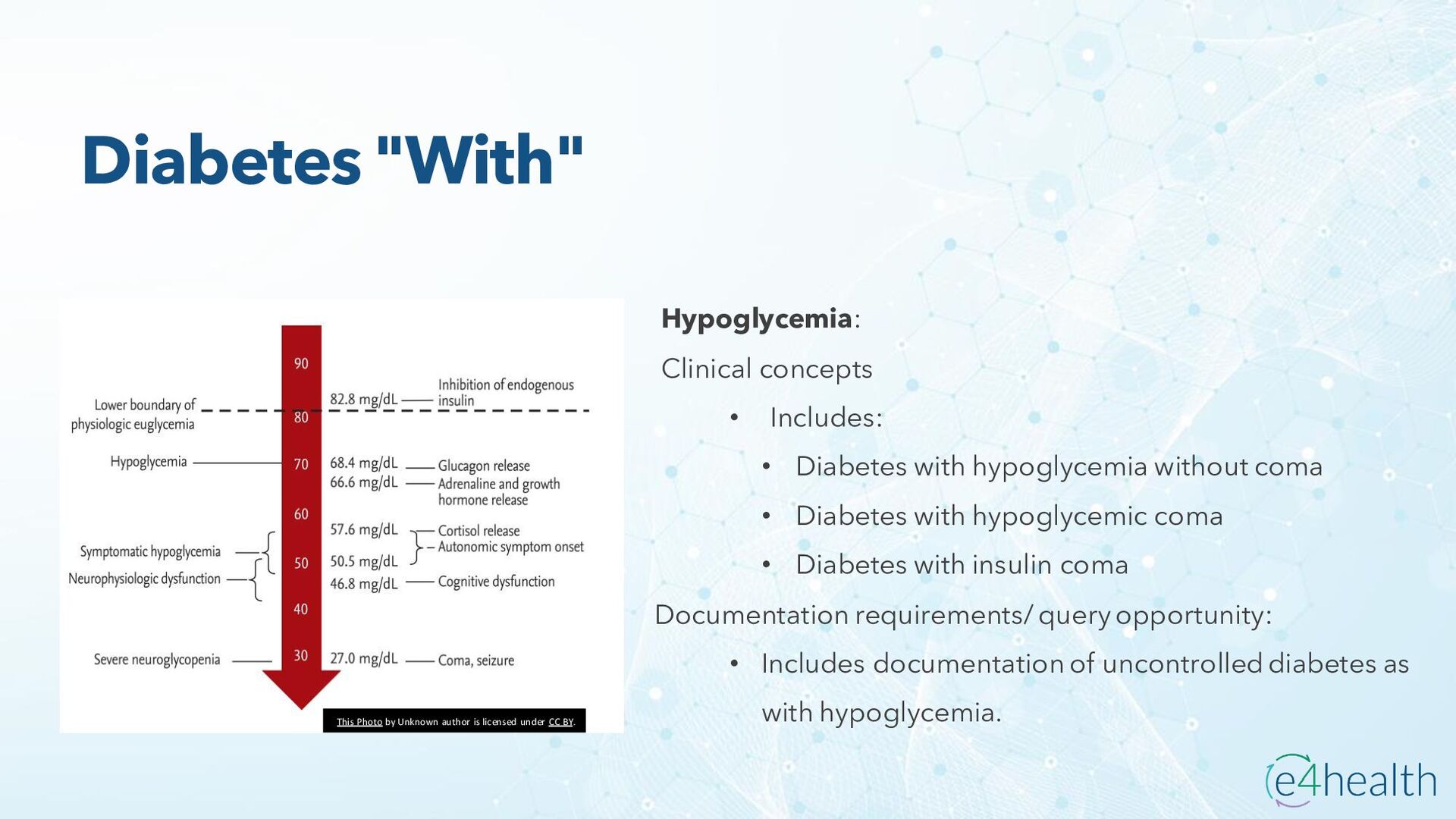
  13. Diabetes "With" Hypoglycemia: Clinical concepts • Includes: • Diabetes with

    hypoglycemia without coma • Diabetes with hypoglycemic coma • Diabetes with insulin coma Documentation requirements/ query opportunity: • Includes documentation of uncontrolled diabetes as with hypoglycemia. This Photo by Unknown author is licensed under CC BY.
  14. Diabetes "With" Hyperosmolarity: Clinical concepts • Hyperosmolarity with or without

    nonketotic hyperosmolar (NKHHC) hyperglycemic coma. • Hyperosmolarity is not usually found in Type 1 diabetes, and currently is not reportable in ICD-10-CM. • Occurs in type 2 diabetics (usually undiagnosed diabetes mellitus or neglected care of diabetes) • Signs and symptoms: significantly increased glucose levels, dehydration, acidosis, altered mental status, seizures, coma • Treatment: IV fluids, potassium, insulin • Hyperosmolarity is caused by extremely high glucose levels in the blood. This triggers a hyperosmolar response in which the body tries to filter the glucose from the blood by drawing fluid into the kidneys so the sugar can be excreted in the urine, The result is severe dehydration that can result in coma and death. Notes • Currently, there is not a specific code in category E10 to classify Type 1 diabetes with hyperosmolarity.
  15. Diabetes "With" Ketoacidosis (DKA): Clinical concepts • Occurs predominantly in

    type 1 diabetes • Signs and symptoms: nausea/vomiting, polyuria, dehydration, polydipsia, abdominal pain, acetone on breath, acidosis, low pH • Treatment includes: IV fluids, insulin, potassium, bicarbonate • Includes: • Ketoacidosis with and without coma • DKA is a complication due an insulin shortage in which the body switches to burning fatty acids, producing acidic ketone bodies that cause most of the symptoms and complications.
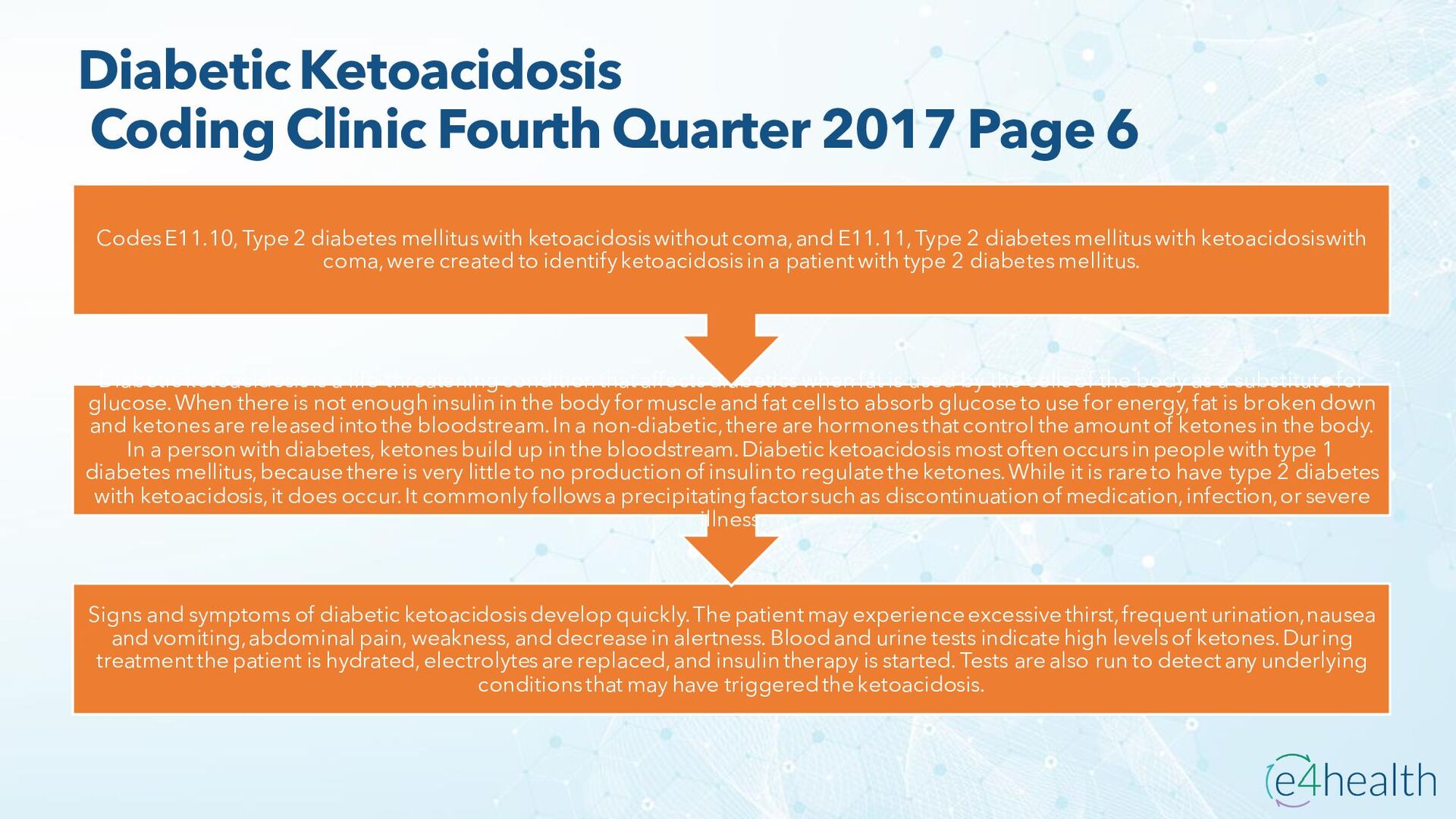
  16. Diabetic Ketoacidosis Coding Clinic Fourth Quarter 2017 Page 6 Signs

    and symptoms of diabetic ketoacidosis develop quickly. The patient may experience excessive thirst, frequent urination, nausea and vomiting, abdominal pain, weakness, and decrease in alertness. Blood and urine tests indicate high levels of ketones. During treatment the patient is hydrated, electrolytes are replaced, and insulin therapy is started. Tests are also run to detect any underlying conditions that may have triggered the ketoacidosis. Diabetic ketoacidosis is a life-threatening condition that affects diabetics when fat is used by the cells of the body as a substitute for glucose. When there is not enough insulin in the body for muscle and fat cells to absorb glucose to use for energy, fat is broken down and ketones are released into the bloodstream. In a non-diabetic, there are hormones that control the amount of ketones in the body. In a person with diabetes, ketones build up in the bloodstream. Diabetic ketoacidosis most often occurs in people with type 1 diabetes mellitus, because there is very little to no production of insulin to regulate the ketones. While it is rare to have type 2 diabetes with ketoacidosis, it does occur. It commonly follows a precipitating factor such as discontinuation of medication, infection, or severe illness. Codes E11.10, Type 2 diabetes mellitus with ketoacidosis without coma, and E11.11, Type 2 diabetes mellitus with ketoacidosis with coma, were created to identify ketoacidosis in a patient with type 2 diabetes mellitus.
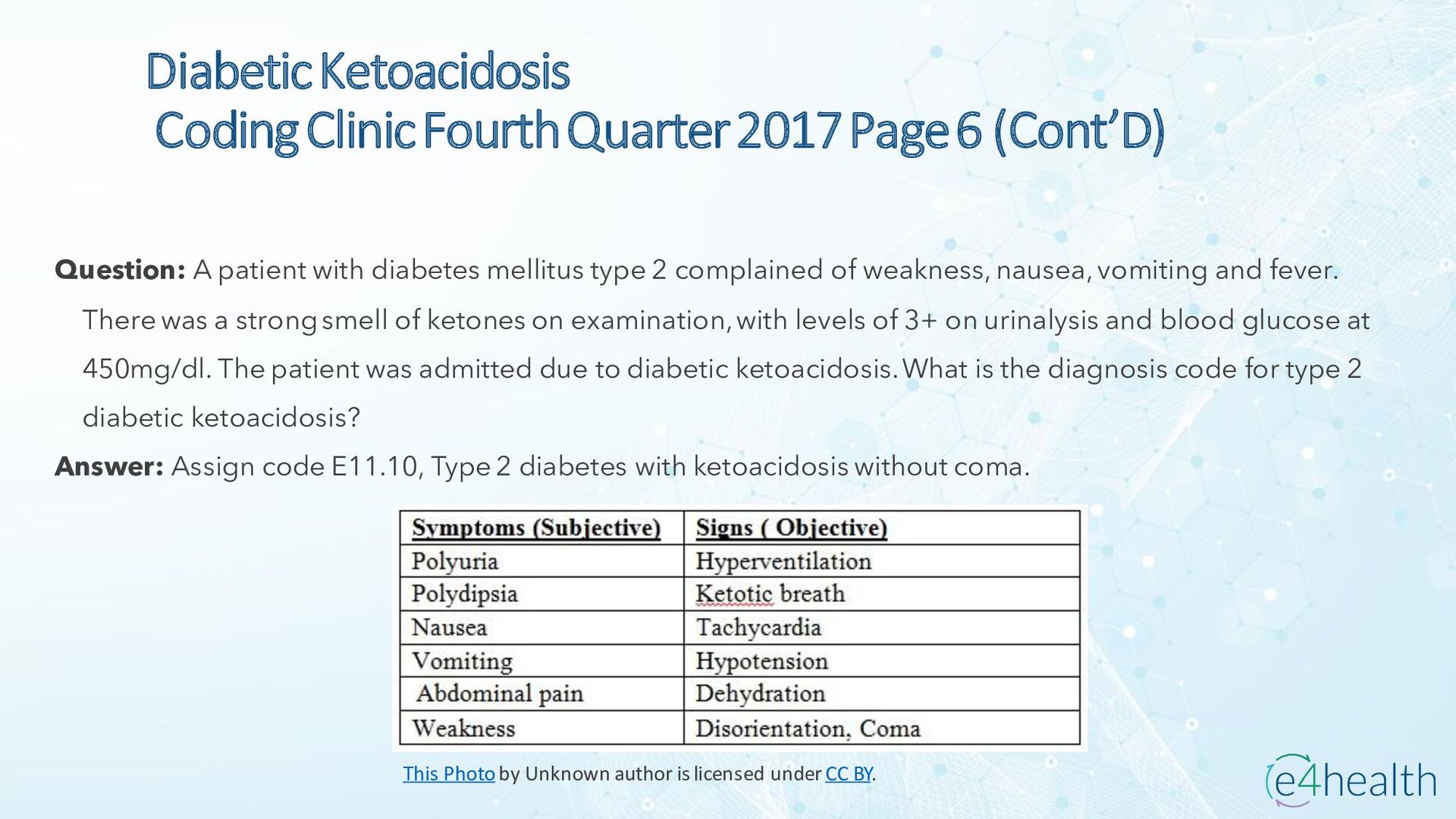
  17. Diabetic Ketoacidosis Coding Clinic Fourth Quarter 2017 Page 6 (Cont’D)

    Question: A patient with diabetes mellitus type 2 complained of weakness, nausea, vomiting and fever. There was a strong smell of ketones on examination, with levels of 3+ on urinalysis and blood glucose at 450mg/dl. The patient was admitted due to diabetic ketoacidosis. What is the diagnosis code for type 2 diabetic ketoacidosis? Answer: Assign code E11.10, Type 2 diabetes with ketoacidosis without coma. This Photo by Unknown author is licensed under CC BY.
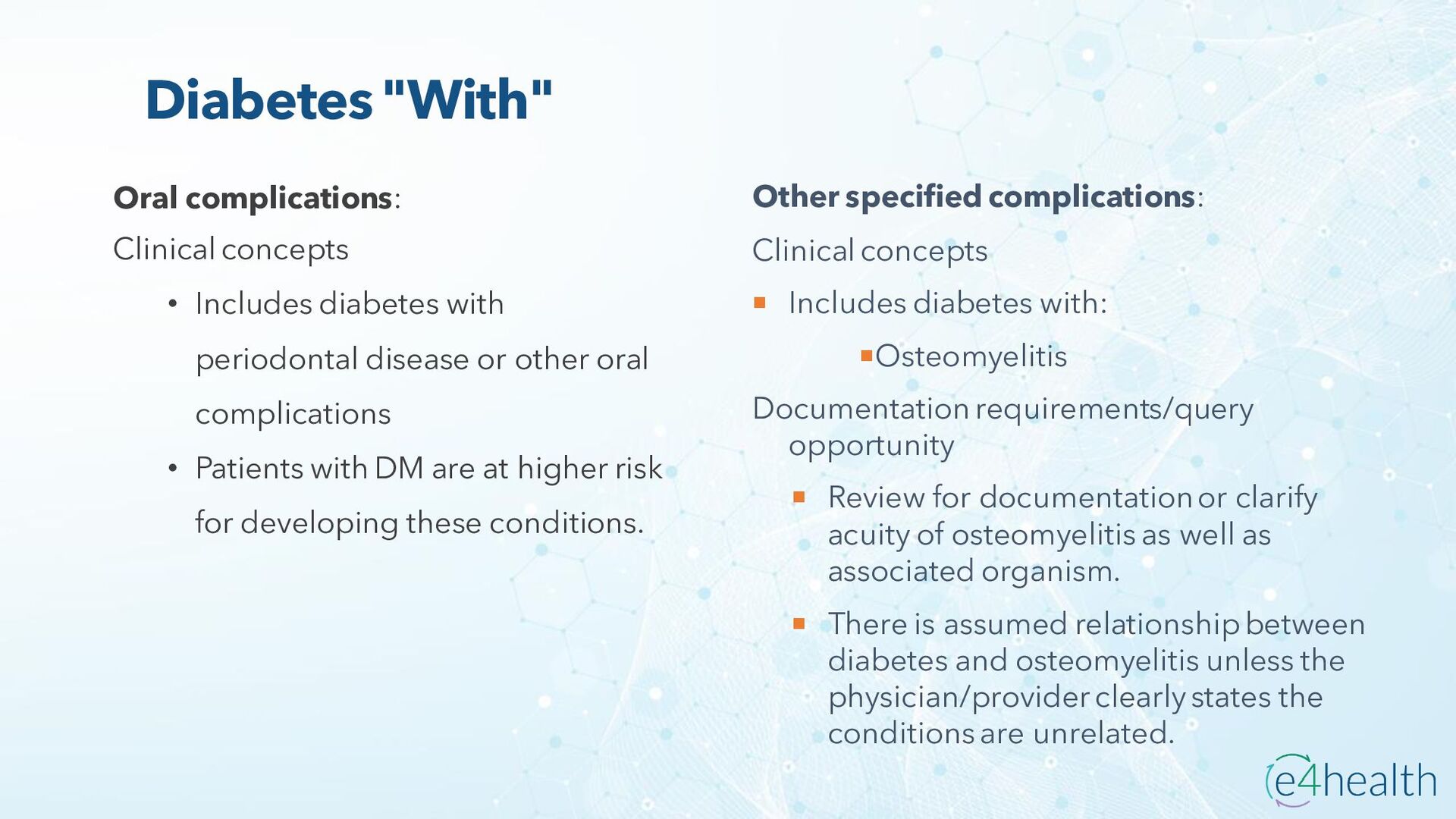
  18. Diabetes "With" Oral complications: Clinical concepts • Includes diabetes with

    periodontal disease or other oral complications • Patients with DM are at higher risk for developing these conditions. Other specified complications: Clinical concepts  Includes diabetes with: Osteomyelitis Documentation requirements/query opportunity  Review for documentation or clarify acuity of osteomyelitis as well as associated organism.  There is assumed relationship between diabetes and osteomyelitis unless the physician/provider clearly states the conditions are unrelated.
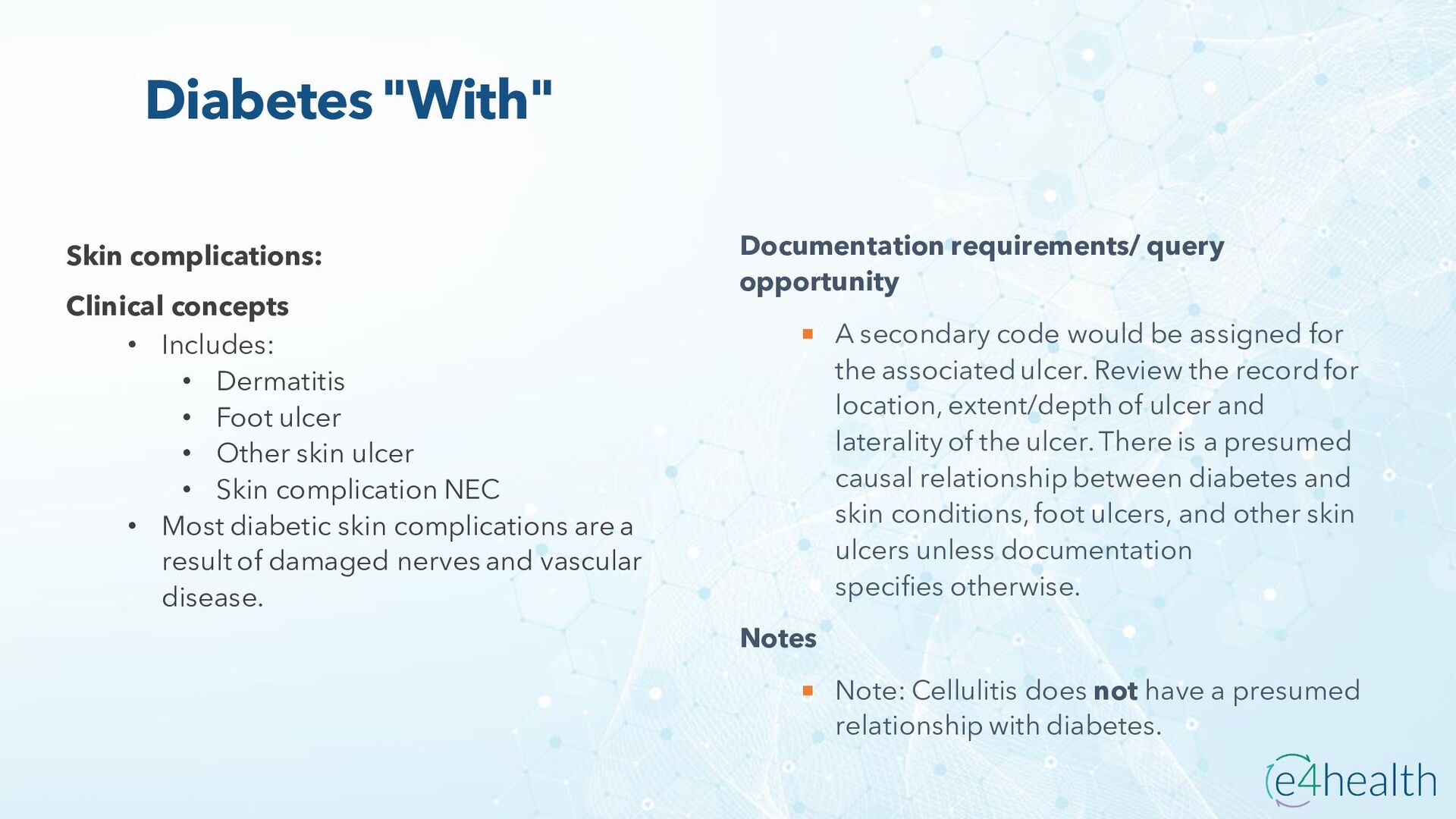
  19. Diabetes "With" Skin complications: Clinical concepts • Includes: • Dermatitis

    • Foot ulcer • Other skin ulcer • Skin complication NEC • Most diabetic skin complications are a result of damaged nerves and vascular disease. Documentation requirements/ query opportunity  A secondary code would be assigned for the associated ulcer. Review the record for location, extent/depth of ulcer and laterality of the ulcer. There is a presumed causal relationship between diabetes and skin conditions, foot ulcers, and other skin ulcers unless documentation specifies otherwise. Notes  Note: Cellulitis does not have a presumed relationship with diabetes.
  20. Diabetes "With" Unspecified complication: Documentation requirements/ query opportunity • Query

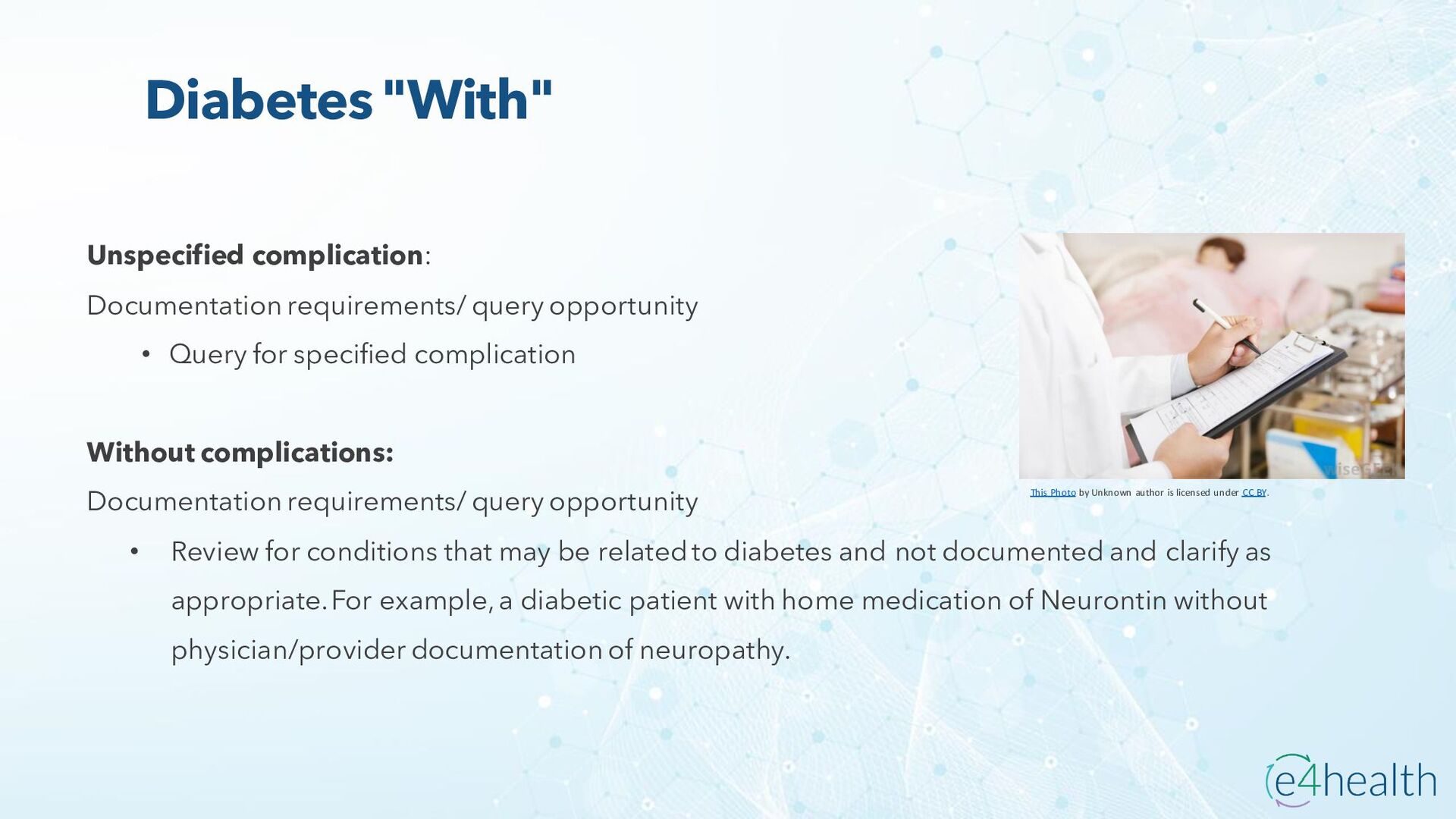
    for specified complication Without complications: Documentation requirements/ query opportunity • Review for conditions that may be related to diabetes and not documented and clarify as appropriate.For example, a diabetic patient with home medication of Neurontin without physician/provider documentation of neuropathy. This Photo by Unknown author is licensed under CC BY.
  21. Coding Guidelines - Secondary Diabetes Mellitus • Secondary diabetes is

    always caused by another condition or event. Secondary diabetes accounts for approximately 1-2% of all diabetes. Secondary diabetes may "bring out" primary diabetes in persons who are predisposed to developing primary diabetes. • Sequencing of the secondary diabetes codes in relationship to codes for the cause of the diabetes is based on the Tabular List instructions for categories E08, E09 and E13. • Codes under category E08 (Diabetes mellitus due to underlying condition) • Underlying conditions are coded first, i.e.: Cushing's syndrome, Cystic fibrosis, malignancy, malnutrition, disease of the pancreas) • Followed by the code under category E08 • Codes under category E09 (Drug or chemical induced diabetes mellitus) • This can be caused by adverse effect of correctly administered medication, poisoning, or sequela • Code first the poisoning due to drug or toxin • If adverse effect, follow Section I.C.19.e.5, where it states, assign the appropriate code for the nature of the adverse effect followed by the appropriate code for the adverse effect of the drug • Additional codes for the manifestation of the poisoning/toxin as well as the code under category E09
  22. Coding Guidelines - Secondary Diabetes Mellitus, continued •Identify complications/manifestations associated

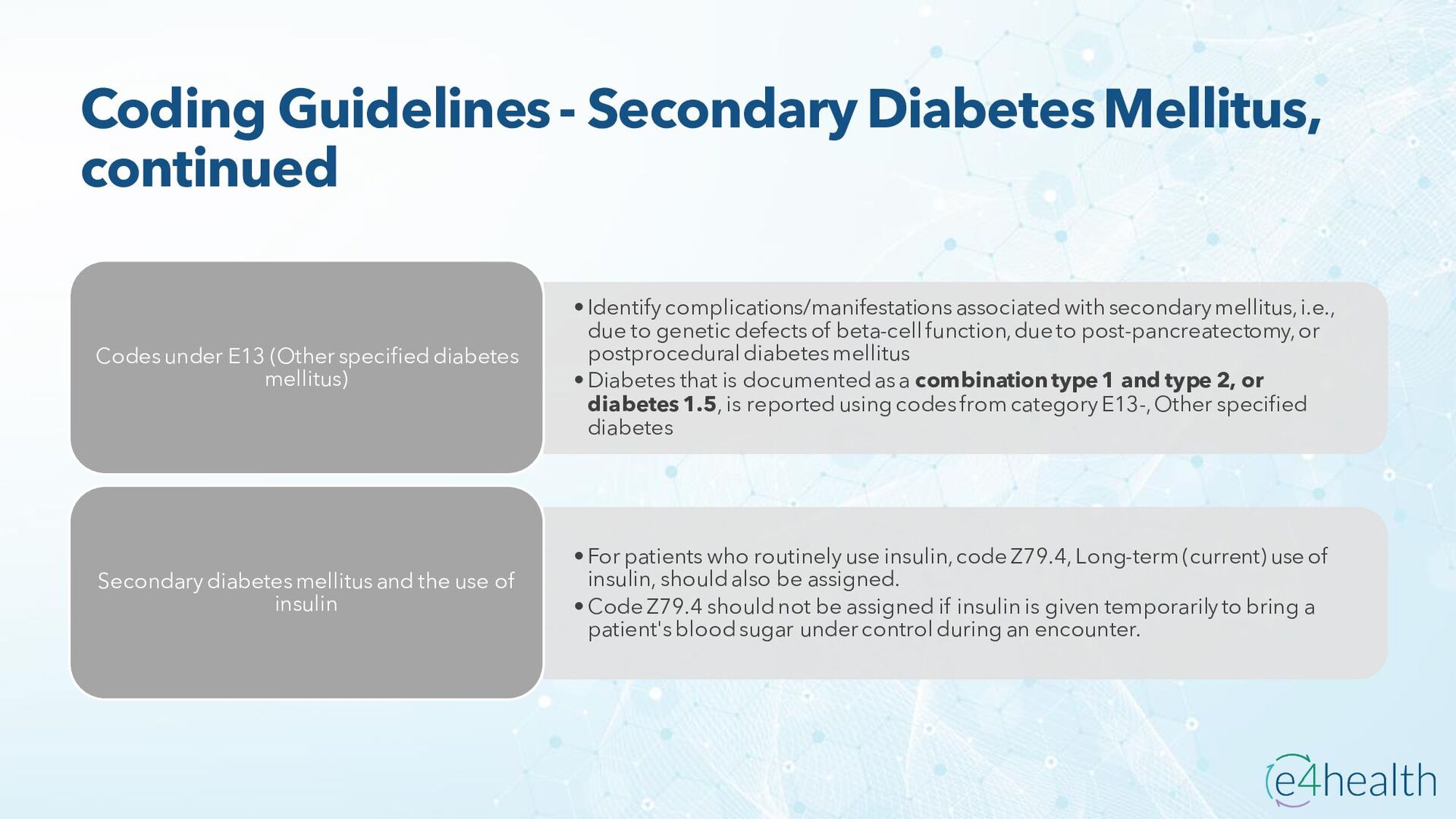
    with secondary mellitus, i.e., due to genetic defects of beta-cell function, due to post-pancreatectomy, or postprocedural diabetes mellitus •Diabetes that is documented as a combination type 1 and type 2, or diabetes 1.5, is reported using codes from category E13-, Other specified diabetes Codes under E13 (Other specified diabetes mellitus) •For patients who routinely use insulin, code Z79.4, Long-term (current) use of insulin, should also be assigned. •Code Z79.4 should not be assigned if insulin is given temporarily to bring a patient's blood sugar under control during an encounter. Secondary diabetes mellitus and the use of insulin
  23. Coding Guidelines - Secondary Diabetes Mellitus, continued Query opportunity: •

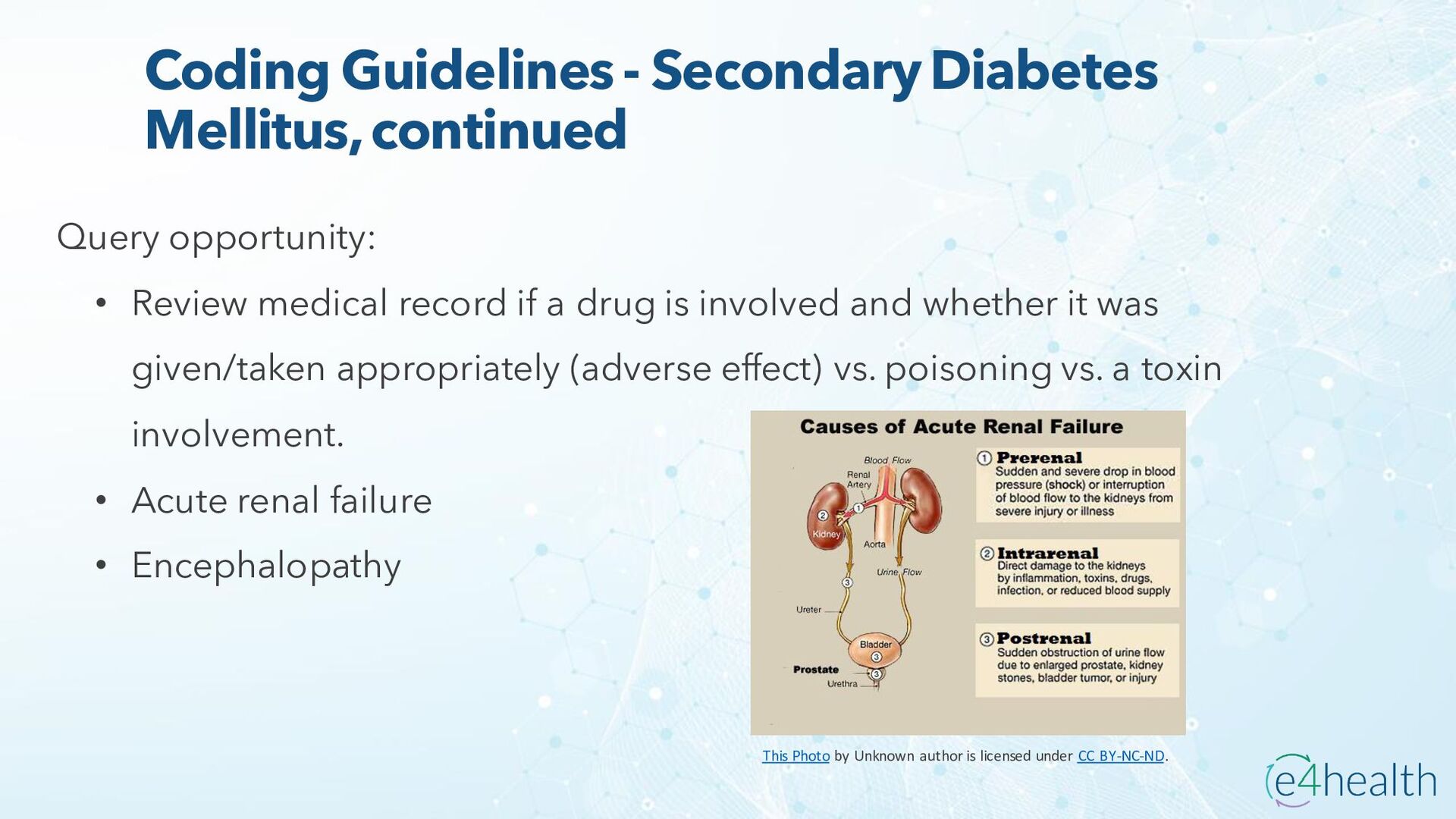
    Review medical record if a drug is involved and whether it was given/taken appropriately (adverse effect) vs. poisoning vs. a toxin involvement. • Acute renal failure • Encephalopathy This Photo by Unknown author is licensed under CC BY-NC-ND.
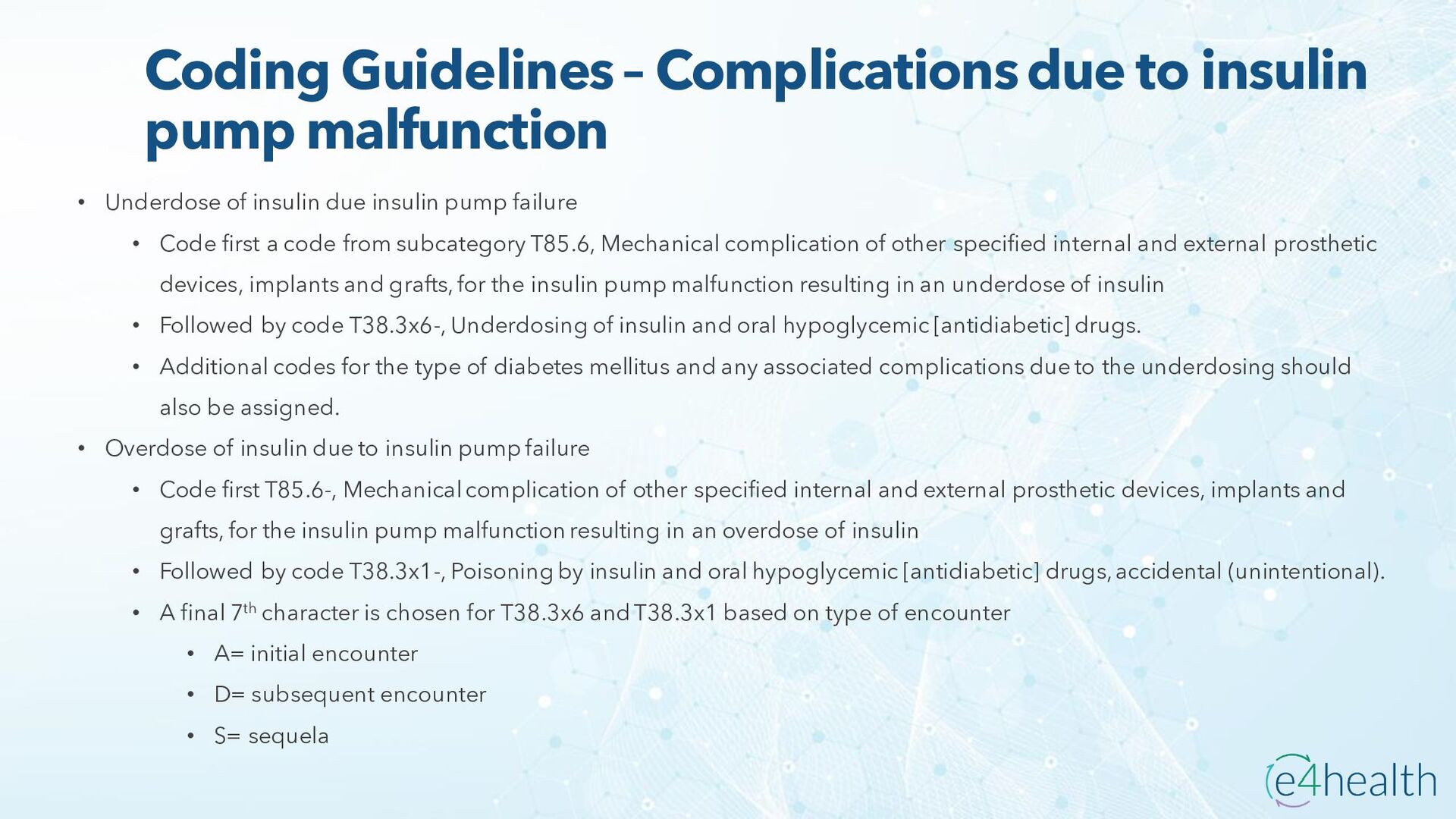
  24. Coding Guidelines – Complications due to insulin pump malfunction •

    Underdose of insulin due insulin pump failure • Code first a code from subcategory T85.6, Mechanical complication of other specified internal and external prosthetic devices, implants and grafts, for the insulin pump malfunction resulting in an underdose of insulin • Followed by code T38.3x6-, Underdosing of insulin and oral hypoglycemic [antidiabetic] drugs. • Additional codes for the type of diabetes mellitus and any associated complications due to the underdosing should also be assigned. • Overdose of insulin due to insulin pump failure • Code first T85.6-, Mechanical complication of other specified internal and external prosthetic devices, implants and grafts, for the insulin pump malfunction resulting in an overdose of insulin • Followed by code T38.3x1-, Poisoning by insulin and oral hypoglycemic [antidiabetic] drugs, accidental (unintentional). • A final 7th character is chosen for T38.3x6 and T38.3x1 based on type of encounter • A= initial encounter • D= subsequent encounter • S= sequela
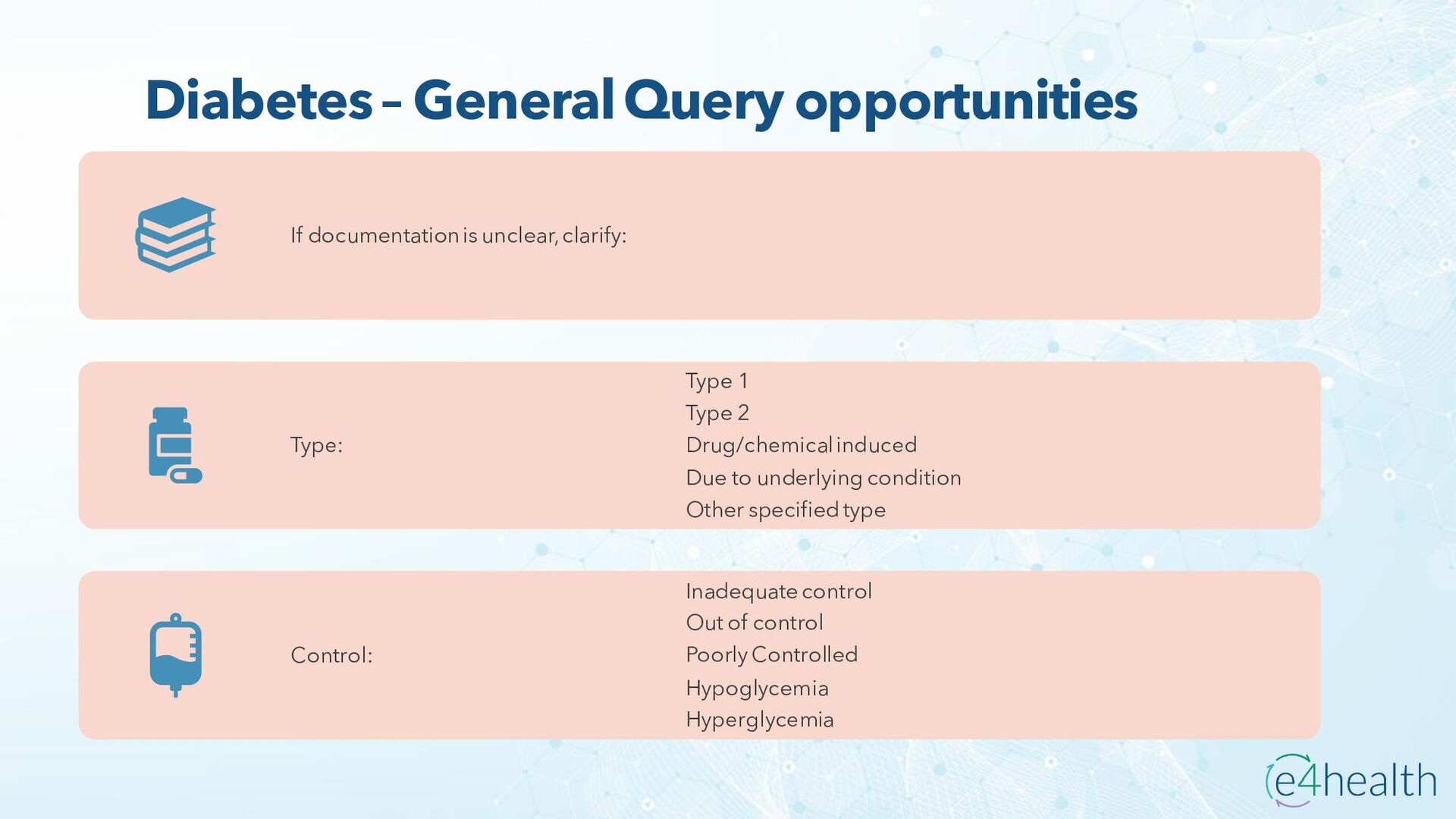
  25. Diabetes – General Query opportunities If documentation is unclear, clarify:

    Type: Type 1 Type 2 Drug/chemical induced Due to underlying condition Other specified type Control: Inadequate control Out of control Poorly Controlled Hypoglycemia Hyperglycemia
  26. Coding Guidelines – Body Mass Index For the Body Mass

    Index (BMI) … code assignment may be based on medical record documentation from clinicians who are not the patient’s provider (i.e., physician or other qualified healthcare practitioner legally accountable for establishing the patient’s diagnosis), since this information is typically documented by other clinicians involved in the care of the patient (e.g., a dietitian often documents the BMI and nurses often documents the pressure ulcer stages). However, the associated diagnosis (such as overweight, obesity, or pressure ulcer) must be documented by the patient’s provider. If there is conflicting medical record documentation, either from the same clinician or different clinicians, the patient’s attending provider should be queried for clarification. The BMI codes should only be reported as secondary diagnoses. As with all other secondary diagnosis codes, the BMI codes should only be assigned when they meet the definition of a reportable additional diagnosis (see Section III, Reporting additional Diagnoses).
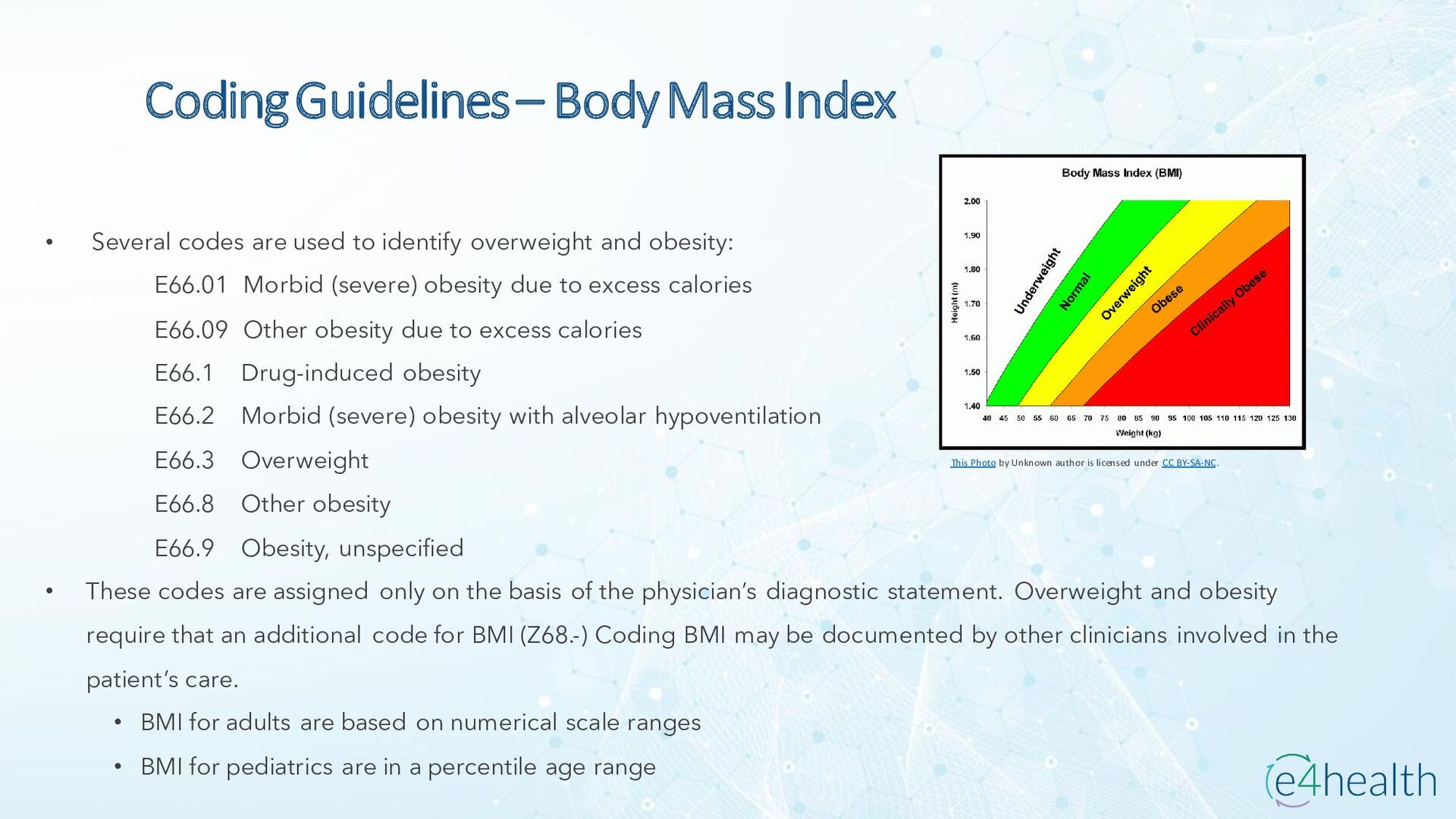
  27. Coding Guidelines – Body Mass Index • Several codes are

    used to identify overweight and obesity: E66.01 Morbid (severe) obesity due to excess calories E66.09 Other obesity due to excess calories E66.1 Drug-induced obesity E66.2 Morbid (severe) obesity with alveolar hypoventilation E66.3 Overweight E66.8 Other obesity E66.9 Obesity, unspecified • These codes are assigned only on the basis of the physician’s diagnostic statement. Overweight and obesity require that an additional code for BMI (Z68.-) Coding BMI may be documented by other clinicians involved in the patient’s care. • BMI for adults are based on numerical scale ranges • BMI for pediatrics are in a percentile age range This Photo by Unknown author is licensed under CC BY-SA-NC.
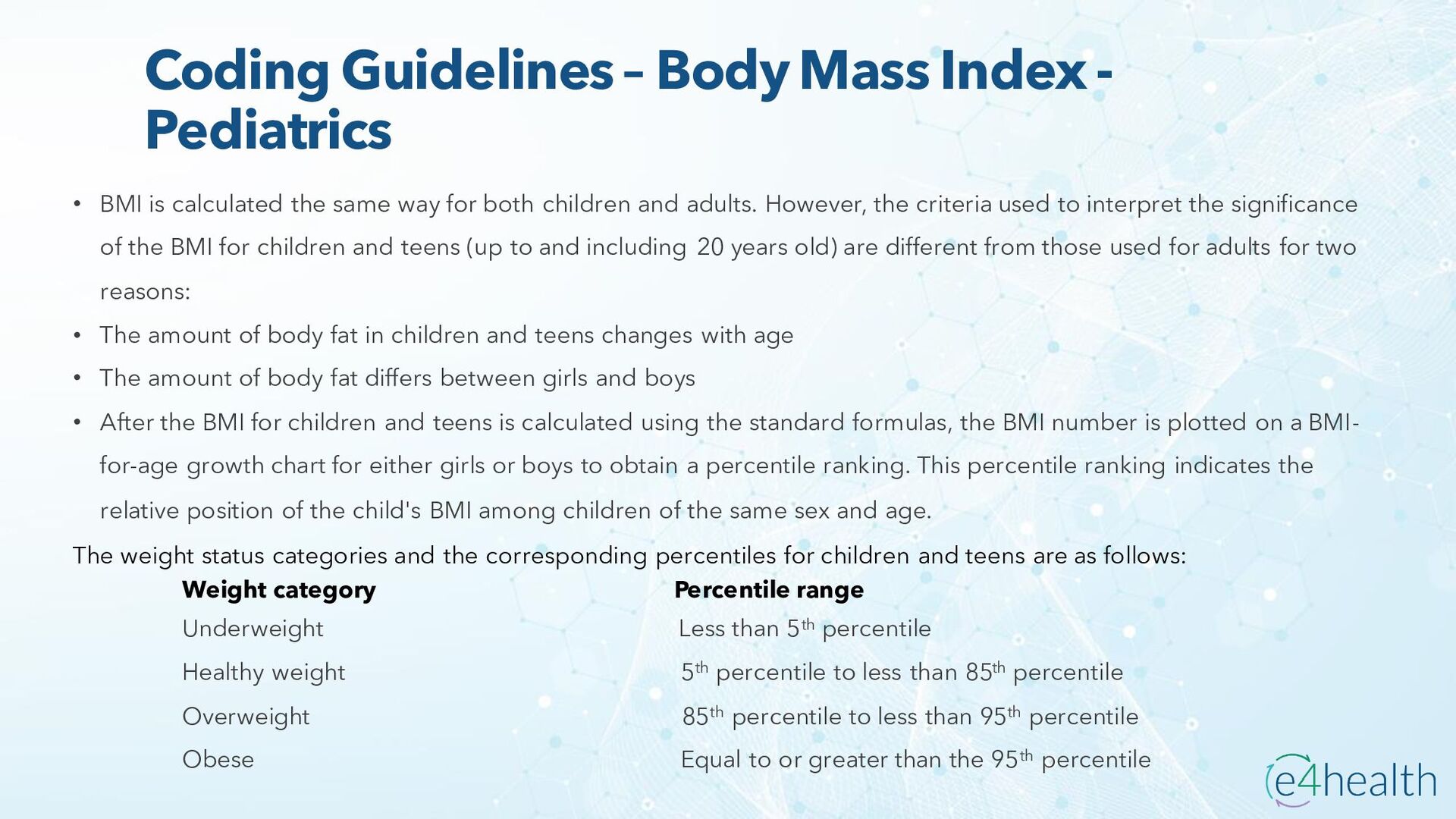
  28. Coding Guidelines – Body Mass Index - Pediatrics • BMI

    is calculated the same way for both children and adults. However, the criteria used to interpret the significance of the BMI for children and teens (up to and including 20 years old) are different from those used for adults for two reasons: • The amount of body fat in children and teens changes with age • The amount of body fat differs between girls and boys • After the BMI for children and teens is calculated using the standard formulas, the BMI number is plotted on a BMI- for-age growth chart for either girls or boys to obtain a percentile ranking. This percentile ranking indicates the relative position of the child's BMI among children of the same sex and age. The weight status categories and the corresponding percentiles for children and teens are as follows: Weight category Percentile range Underweight Less than 5th percentile Healthy weight 5th percentile to less than 85th percentile Overweight 85th percentile to less than 95th percentile Obese Equal to or greater than the 95th percentile
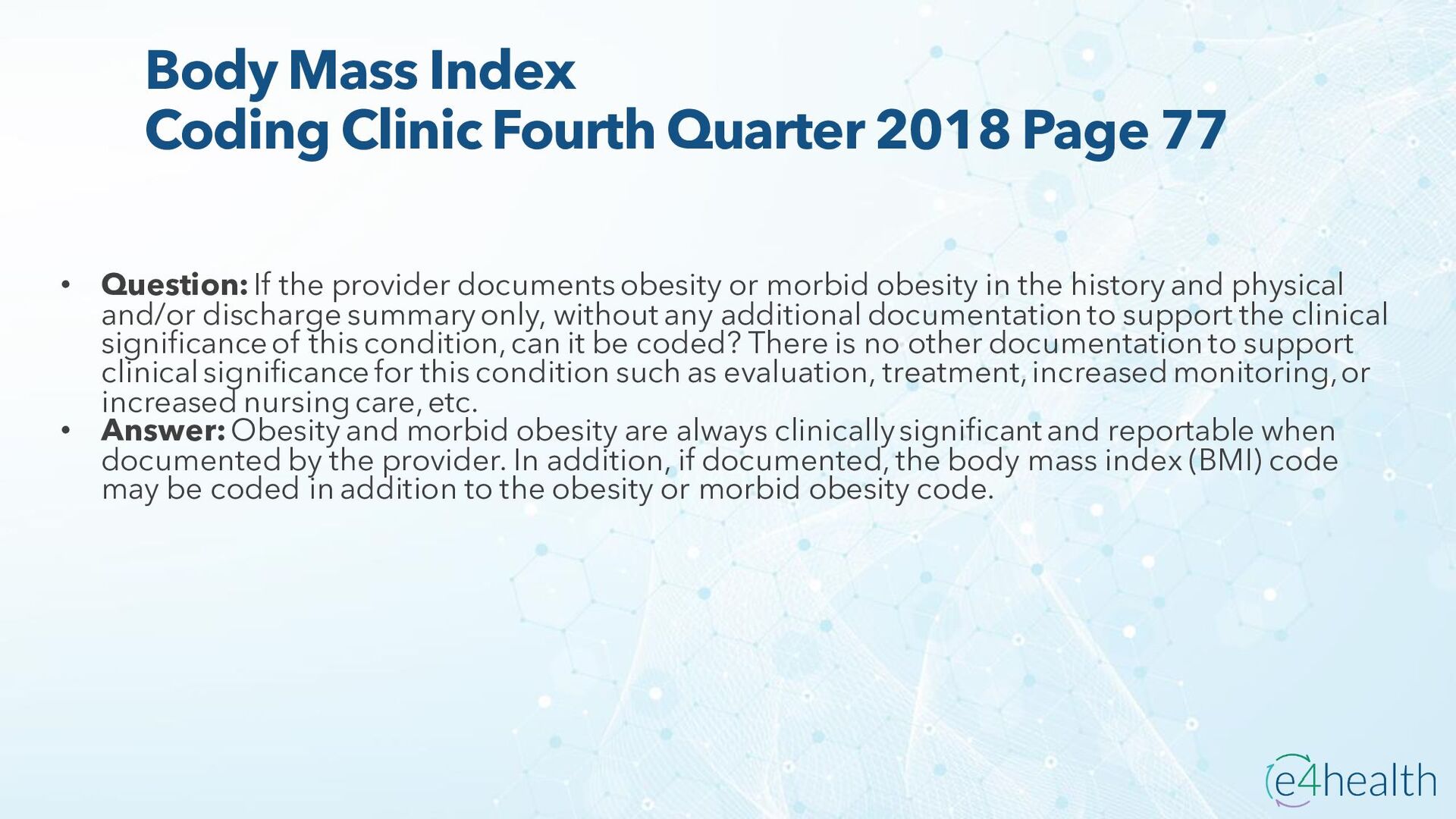
  29. Body Mass Index Coding Clinic Fourth Quarter 2018 Page 77

    • Question:If the provider documents obesity or morbid obesity in the history and physical and/or discharge summary only, without any additional documentation to support the clinical significance of this condition, can it be coded? There is no other documentation to support clinical significance for this condition such as evaluation, treatment, increased monitoring, or increased nursing care, etc. • Answer: Obesity and morbid obesity are always clinically significant and reportable when documented by the provider. In addition, if documented, the body mass index (BMI) code may be coded in addition to the obesity or morbid obesity code.
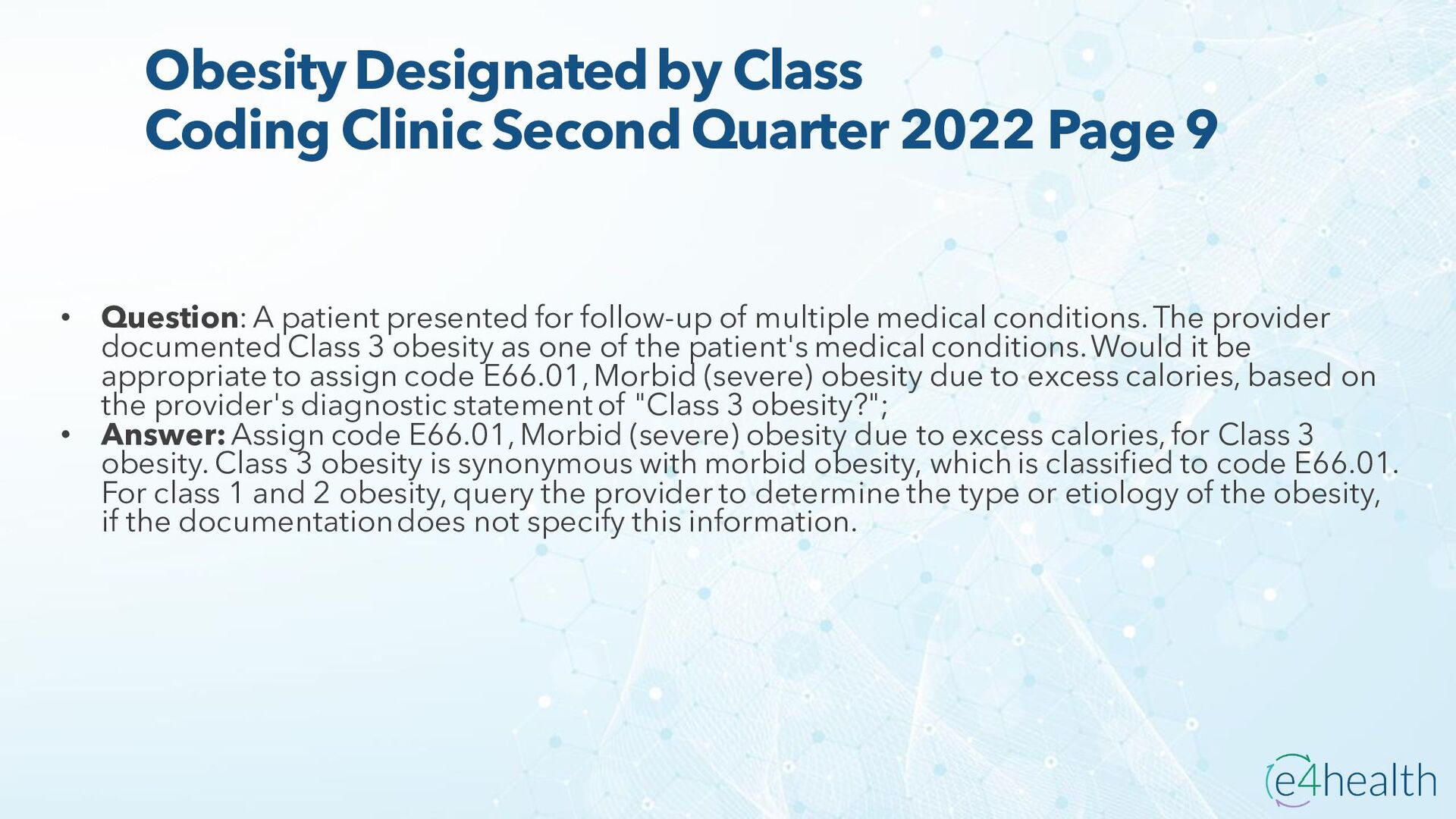
  30. Obesity Designated by Class Coding Clinic Second Quarter 2022 Page

    9 • Question:A patient presented for follow-up of multiple medical conditions. The provider documented Class 3 obesity as one of the patient's medical conditions. Would it be appropriate to assign code E66.01, Morbid (severe) obesity due to excess calories, based on the provider's diagnostic statement of "Class 3 obesity?"; • Answer: Assign code E66.01, Morbid (severe) obesity due to excess calories, for Class 3 obesity. Class 3 obesity is synonymous with morbid obesity, which is classified to code E66.01. For class 1 and 2 obesity, query the provider to determine the type or etiology of the obesity, if the documentation does not specify this information.
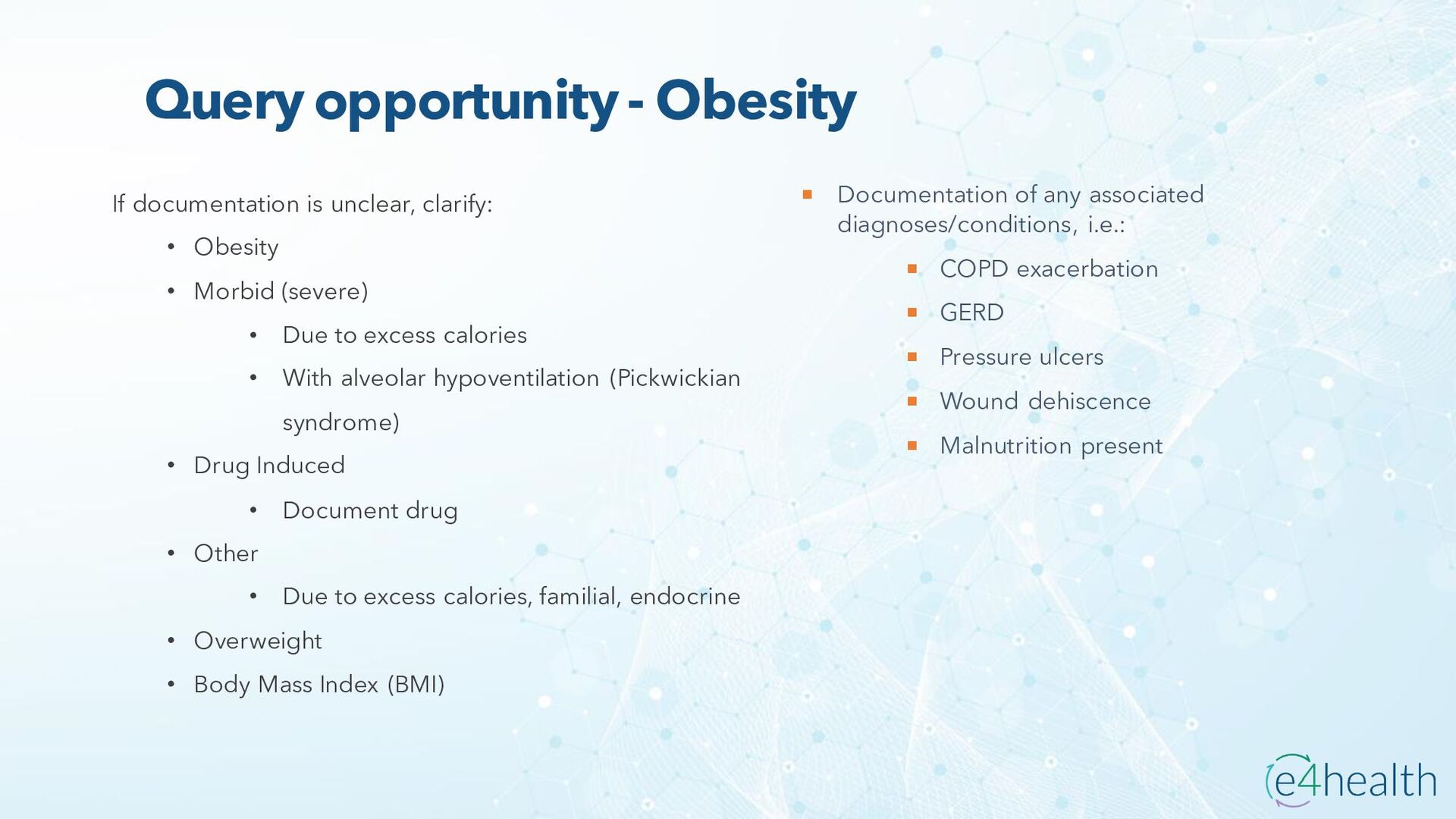
  31. Query opportunity - Obesity If documentation is unclear, clarify: •

    Obesity • Morbid (severe) • Due to excess calories • With alveolar hypoventilation (Pickwickian syndrome) • Drug Induced • Document drug • Other • Due to excess calories, familial, endocrine • Overweight • Body Mass Index (BMI)  Documentation of any associated diagnoses/conditions, i.e.:  COPD exacerbation  GERD  Pressure ulcers  Wound dehiscence  Malnutrition present
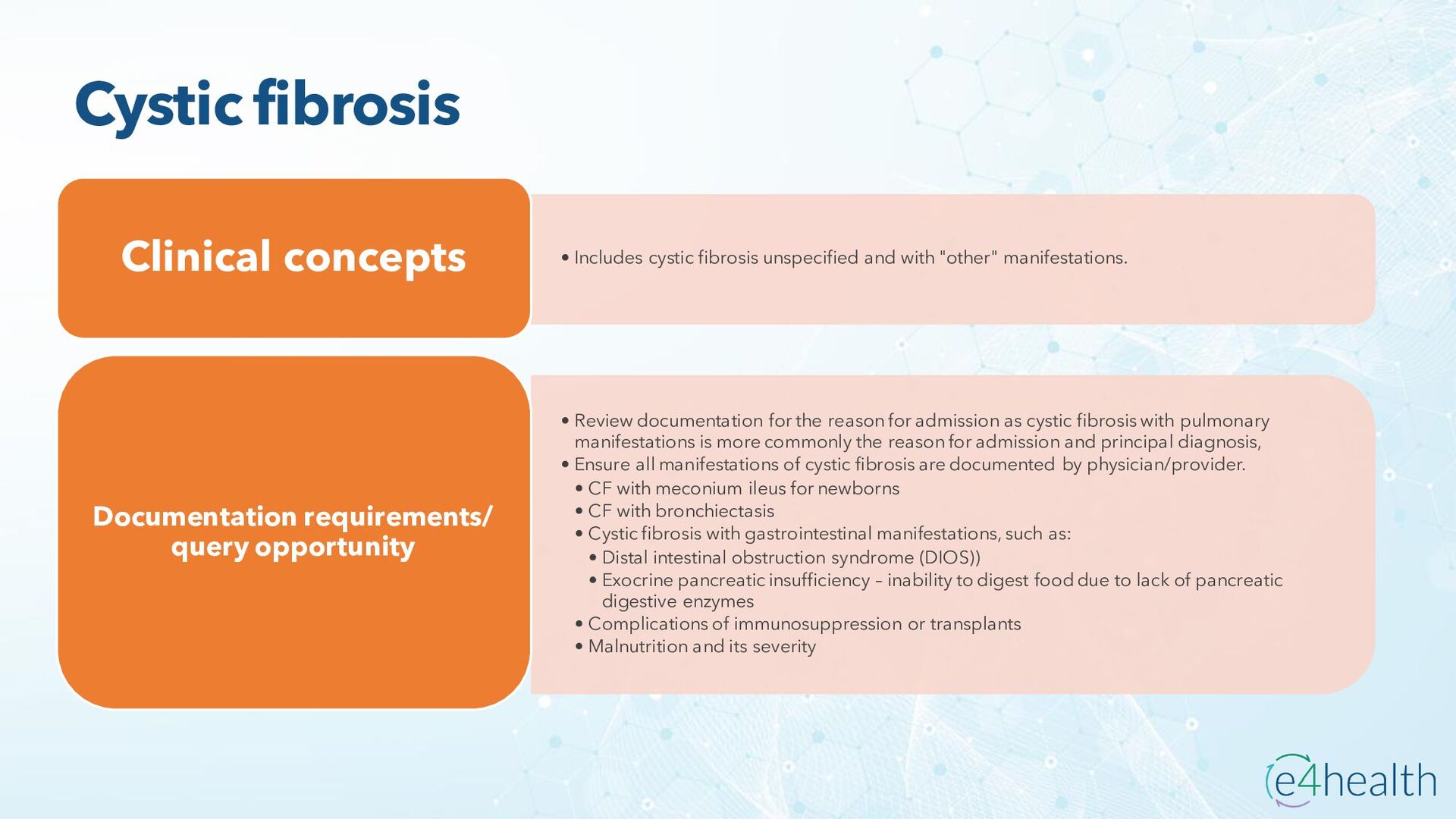
  32. Cystic fibrosis • Includes cystic fibrosis unspecified and with "other"

    manifestations. Clinical concepts • Review documentation for the reason for admission as cystic fibrosis with pulmonary manifestations is more commonly the reason for admission and principal diagnosis, • Ensure all manifestations of cystic fibrosis are documented by physician/provider. • CF with meconium ileus for newborns • CF with bronchiectasis • Cystic fibrosis with gastrointestinal manifestations, such as: • Distal intestinal obstruction syndrome (DIOS)) • Exocrine pancreatic insufficiency – inability to digest food due to lack of pancreatic digestive enzymes • Complications of immunosuppression or transplants • Malnutrition and its severity Documentation requirements/ query opportunity
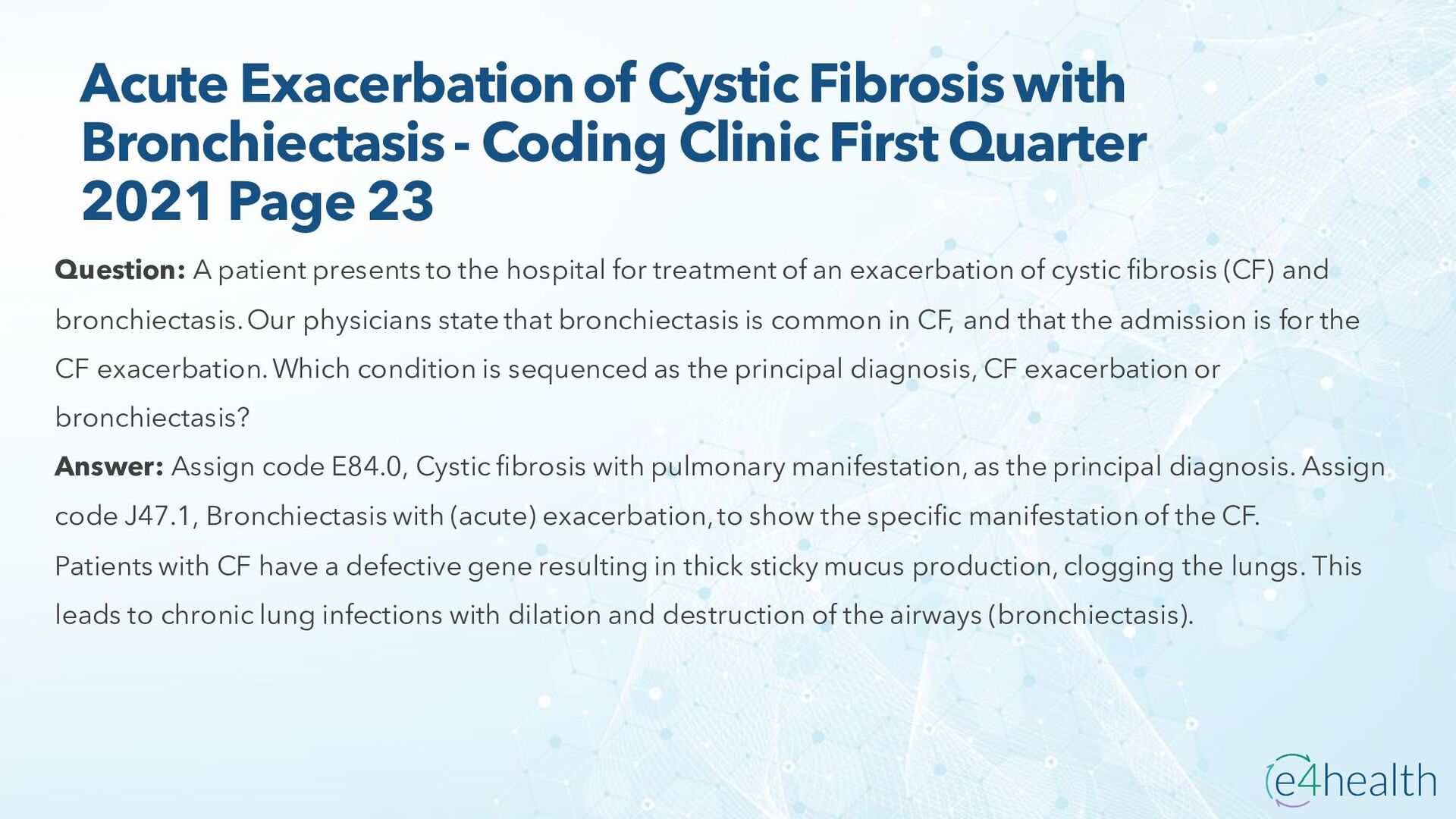
  33. Acute Exacerbation of Cystic Fibrosis with Bronchiectasis - Coding Clinic

    First Quarter 2021 Page 23 Question: A patient presents to the hospital for treatment of an exacerbation of cystic fibrosis (CF) and bronchiectasis. Our physicians state that bronchiectasis is common in CF, and that the admission is for the CF exacerbation. Which condition is sequenced as the principal diagnosis, CF exacerbation or bronchiectasis? Answer: Assign code E84.0, Cystic fibrosis with pulmonary manifestation, as the principal diagnosis. Assign code J47.1, Bronchiectasis with (acute) exacerbation, to show the specific manifestation of the CF. Patients with CF have a defective gene resulting in thick sticky mucus production, clogging the lungs. This leads to chronic lung infections with dilation and destruction of the airways (bronchiectasis).
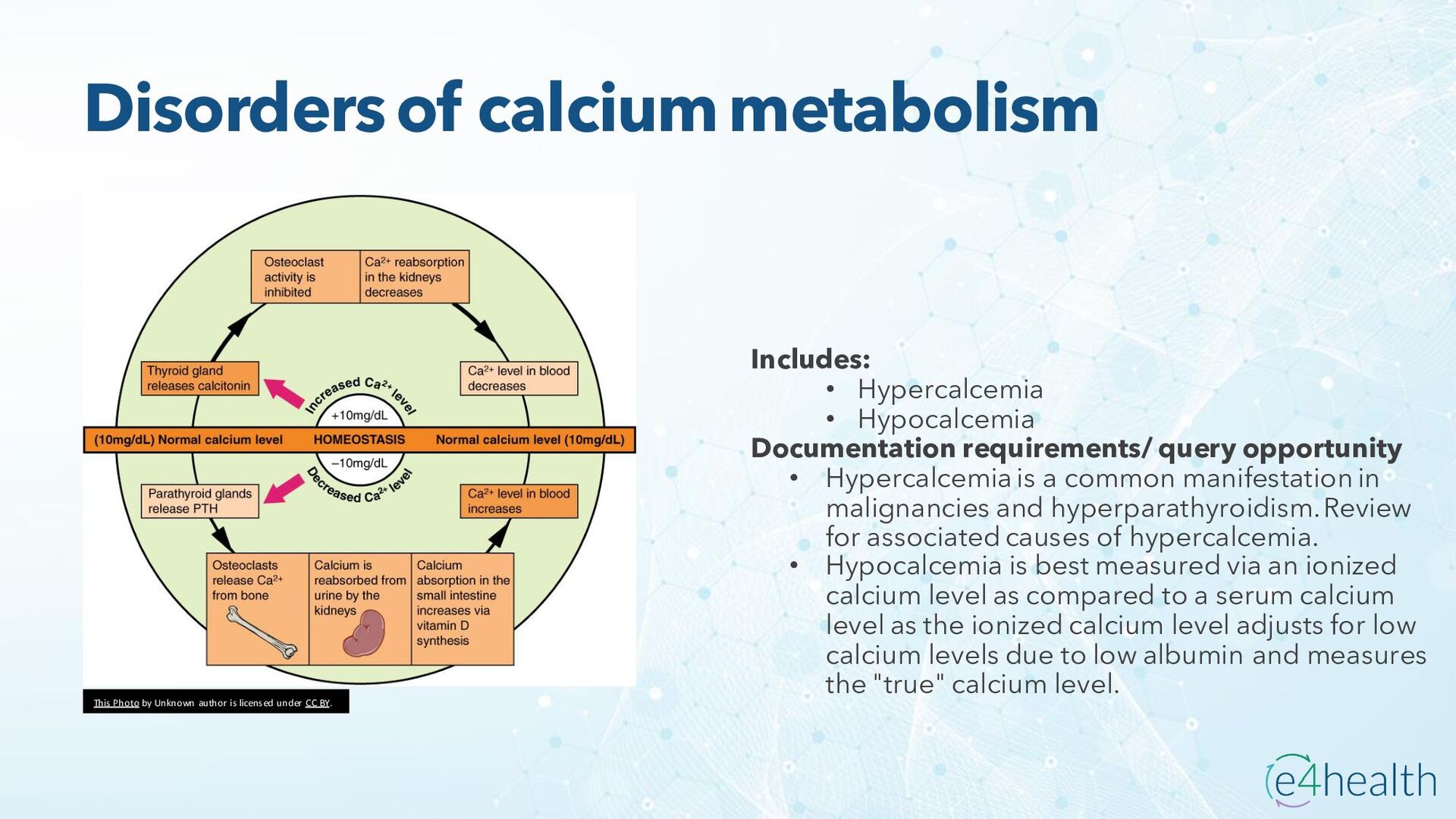
  34. Disorders of calcium metabolism Includes: • Hypercalcemia • Hypocalcemia Documentation

    requirements/ query opportunity • Hypercalcemia is a common manifestation in malignancies and hyperparathyroidism. Review for associated causes of hypercalcemia. • Hypocalcemia is best measured via an ionized calcium level as compared to a serum calcium level as the ionized calcium level adjusts for low calcium levels due to low albumin and measures the "true" calcium level. This Photo by Unknown author is licensed under CC BY.
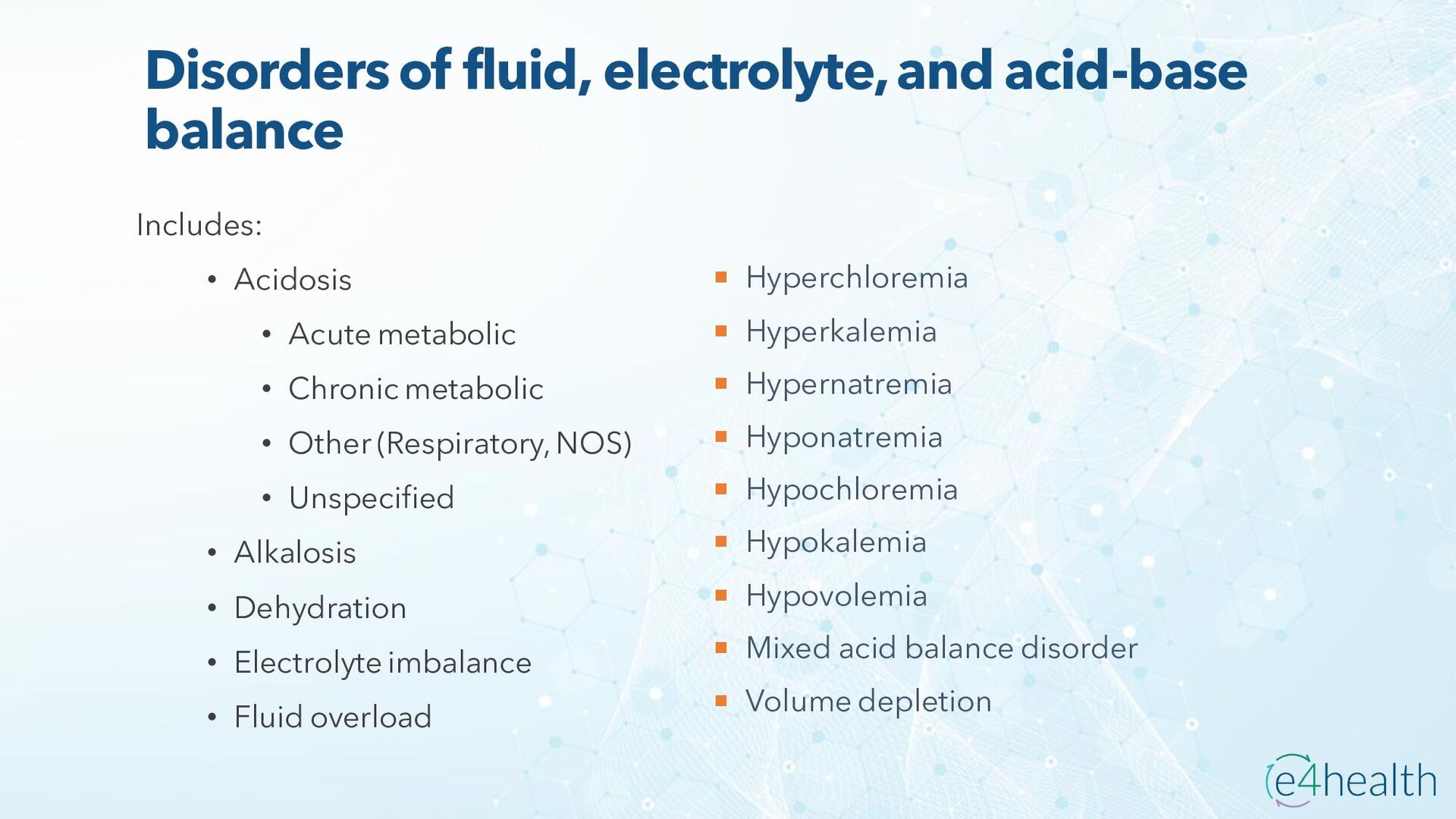
  35. Disorders of fluid, electrolyte, and acid-base balance Includes: • Acidosis

    • Acute metabolic • Chronic metabolic • Other (Respiratory, NOS) • Unspecified • Alkalosis • Dehydration • Electrolyte imbalance • Fluid overload  Hyperchloremia  Hyperkalemia  Hypernatremia  Hyponatremia  Hypochloremia  Hypokalemia  Hypovolemia  Mixed acid balance disorder  Volume depletion
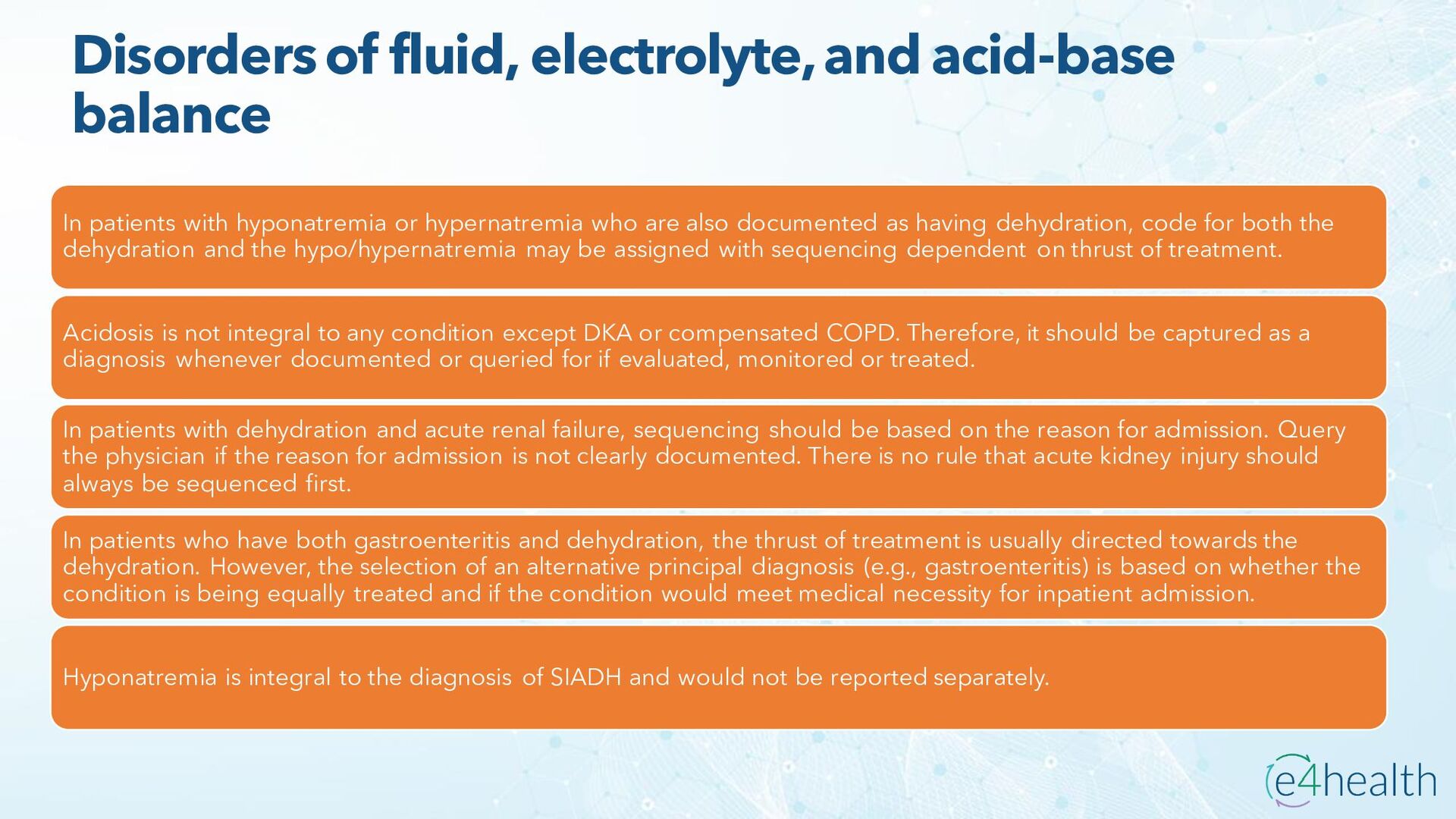
  36. Disorders of fluid, electrolyte, and acid-base balance In patients with

    hyponatremia or hypernatremia who are also documented as having dehydration, code for both the dehydration and the hypo/hypernatremia may be assigned with sequencing dependent on thrust of treatment. Acidosis is not integral to any condition except DKA or compensated COPD. Therefore, it should be captured as a diagnosis whenever documented or queried for if evaluated, monitored or treated. In patients with dehydration and acute renal failure, sequencing should be based on the reason for admission. Query the physician if the reason for admission is not clearly documented. There is no rule that acute kidney injury should always be sequenced first. In patients who have both gastroenteritis and dehydration, the thrust of treatment is usually directed towards the dehydration. However, the selection of an alternative principal diagnosis (e.g., gastroenteritis) is based on whether the condition is being equally treated and if the condition would meet medical necessity for inpatient admission. Hyponatremia is integral to the diagnosis of SIADH and would not be reported separately.
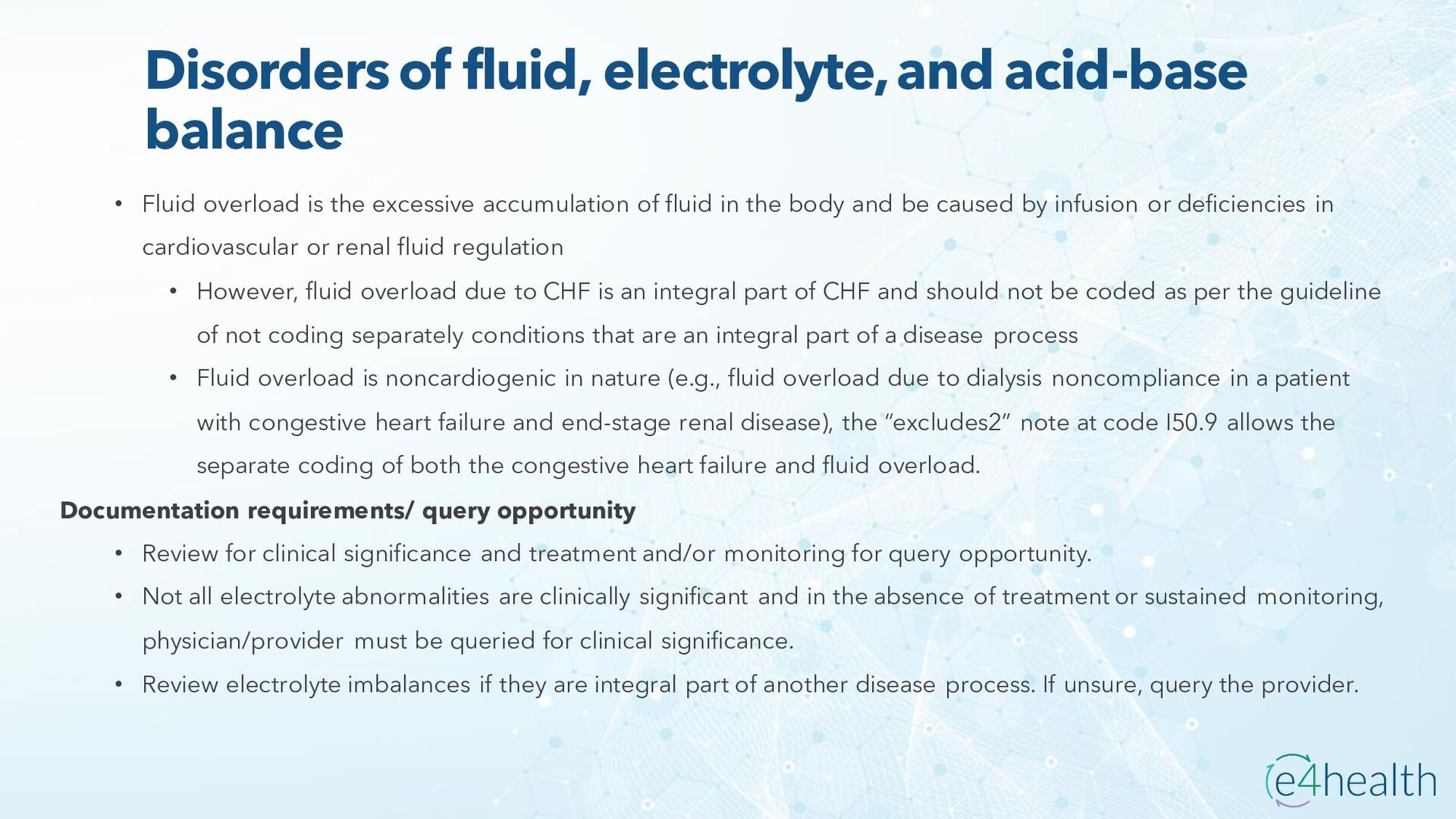
  37. Disorders of fluid, electrolyte, and acid-base balance • Fluid overload

    is the excessive accumulation of fluid in the body and be caused by infusion or deficiencies in cardiovascular or renal fluid regulation • However, fluid overload due to CHF is an integral part of CHF and should not be coded as per the guideline of not coding separately conditions that are an integral part of a disease process • Fluid overload is noncardiogenic in nature (e.g., fluid overload due to dialysis noncompliance in a patient with congestive heart failure and end-stage renal disease), the “excludes2” note at code I50.9 allows the separate coding of both the congestive heart failure and fluid overload. Documentation requirements/ query opportunity • Review for clinical significance and treatment and/or monitoring for query opportunity. • Not all electrolyte abnormalities are clinically significant and in the absence of treatment or sustained monitoring, physician/provider must be queried for clinical significance. • Review electrolyte imbalances if they are integral part of another disease process. If unsure, query the provider.
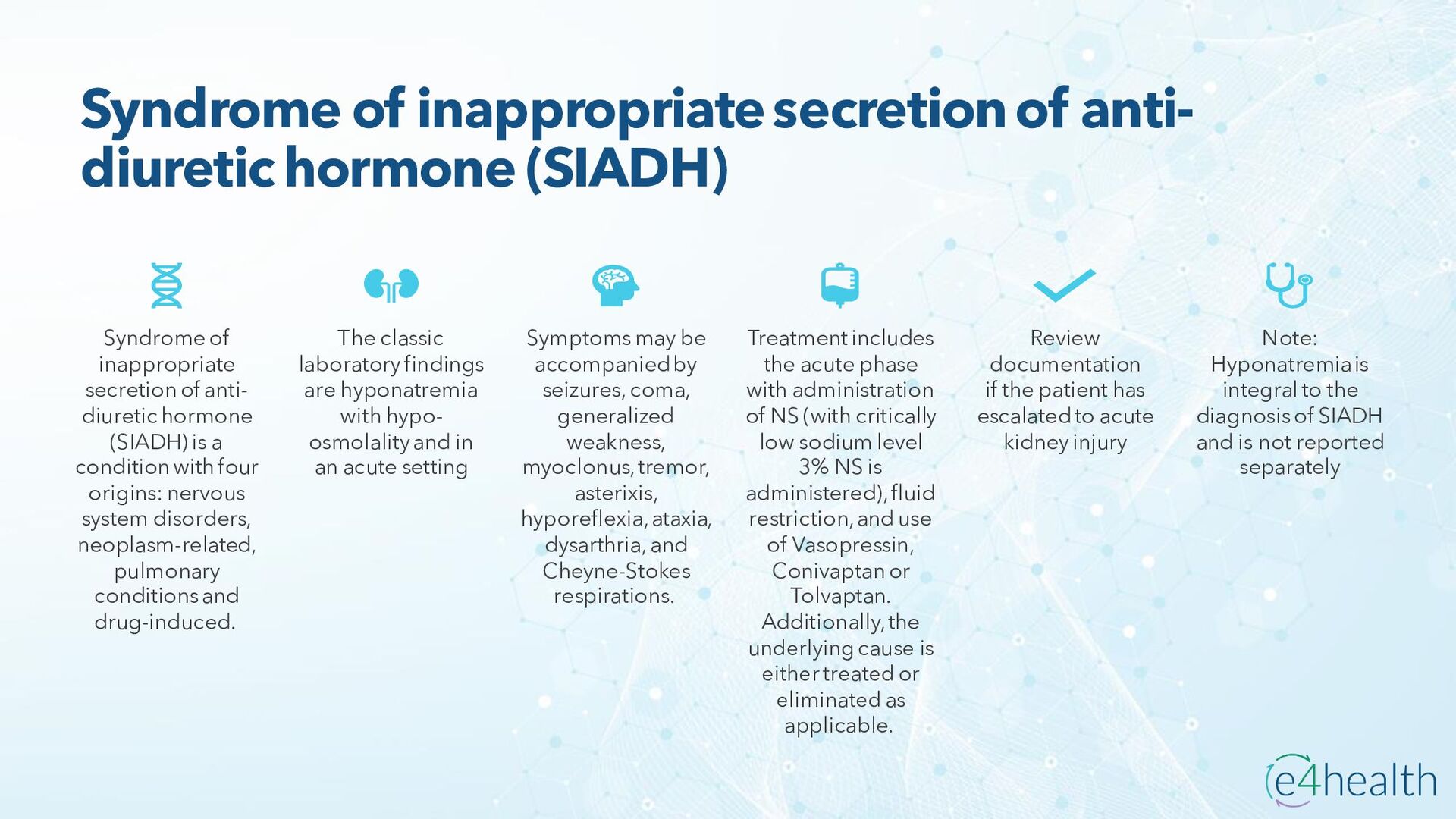
  38. Syndrome of inappropriate secretion of anti- diuretic hormone (SIADH) Syndrome

    of inappropriate secretion of anti- diuretic hormone (SIADH) is a condition with four origins: nervous system disorders, neoplasm-related, pulmonary conditions and drug-induced. The classic laboratory findings are hyponatremia with hypo- osmolality and in an acute setting Symptoms may be accompanied by seizures, coma, generalized weakness, myoclonus, tremor, asterixis, hyporeflexia, ataxia, dysarthria, and Cheyne-Stokes respirations. Treatment includes the acute phase with administration of NS (with critically low sodium level 3% NS is administered), fluid restriction, and use of Vasopressin, Conivaptan or Tolvaptan. Additionally, the underlying cause is either treated or eliminated as applicable. Review documentation if the patient has escalated to acute kidney injury Note: Hyponatremia is integral to the diagnosis of SIADH and is not reported separately
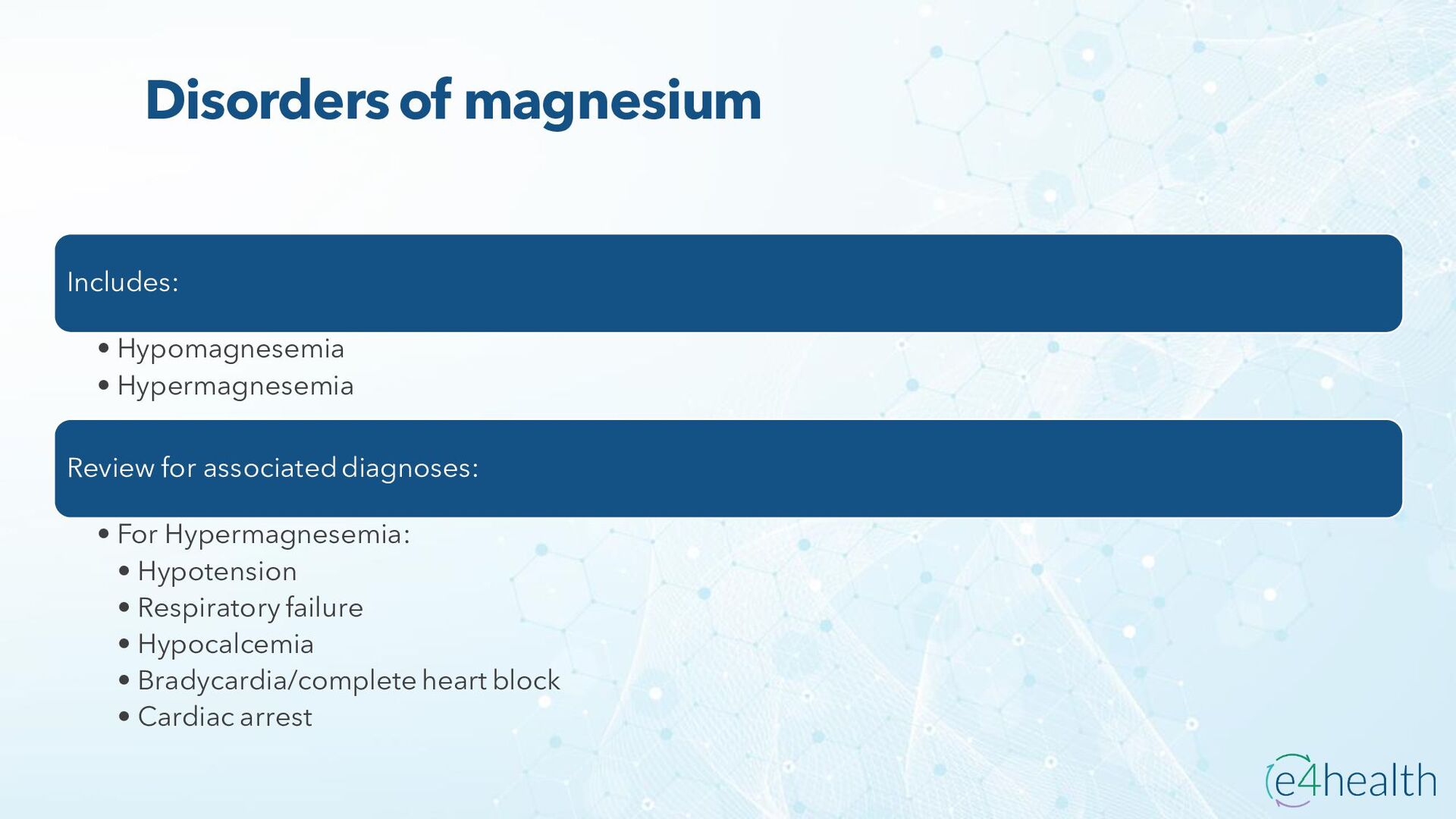
  39. Disorders of magnesium Includes: • Hypomagnesemia • Hypermagnesemia Review for

    associated diagnoses: • For Hypermagnesemia: • Hypotension • Respiratory failure • Hypocalcemia • Bradycardia/complete heart block • Cardiac arrest
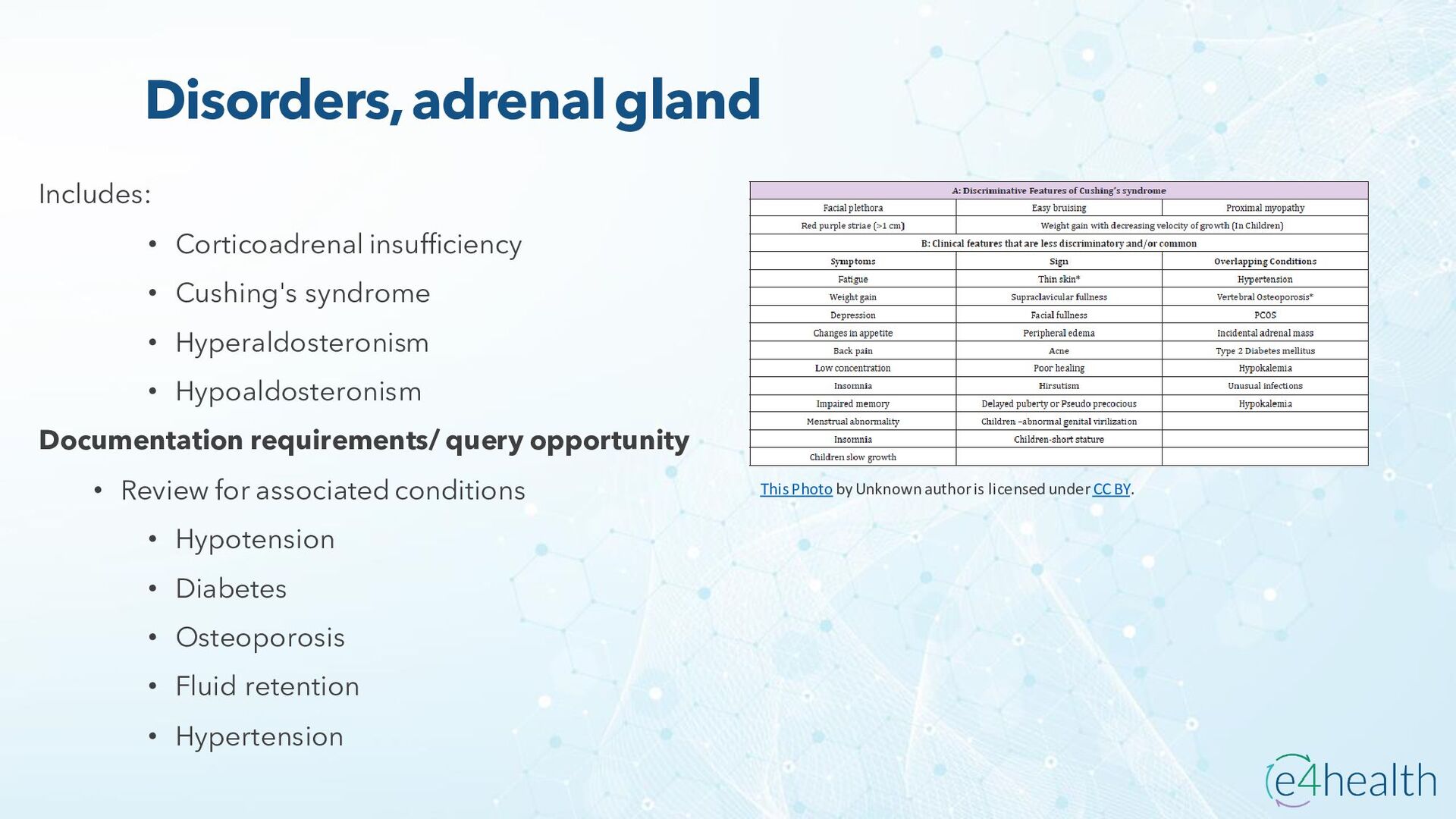
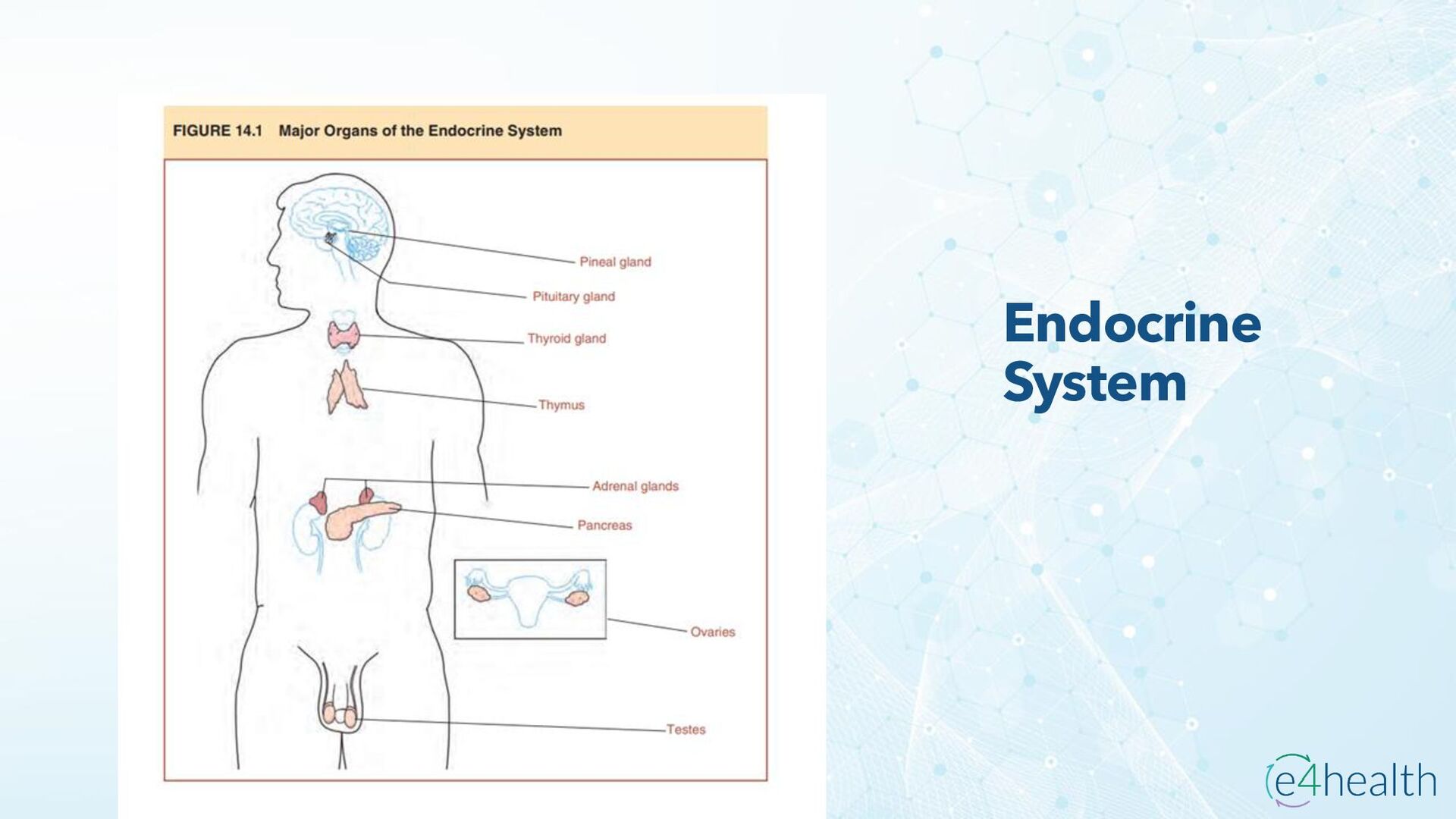
  40. Disorders, adrenal gland Includes: • Corticoadrenal insufficiency • Cushing's syndrome

    • Hyperaldosteronism • Hypoaldosteronism Documentation requirements/ query opportunity • Review for associated conditions • Hypotension • Diabetes • Osteoporosis • Fluid retention • Hypertension This Photo by Unknown author is licensed under CC BY.
  41. Disorders, endocrine, other Includes: • Androgen insensitivity syndrome • Carcinoid

    syndrome • Endocrine or hormone disturbance not further specified • Pineal gland dysfunction Documentation requirements/ query opportunity • Query for documentation of all sites of carcinoid tumors including clarification of pathology (malignant or benign). • Query for more specific diagnosis when endocrine or hormone disturbance is document only.
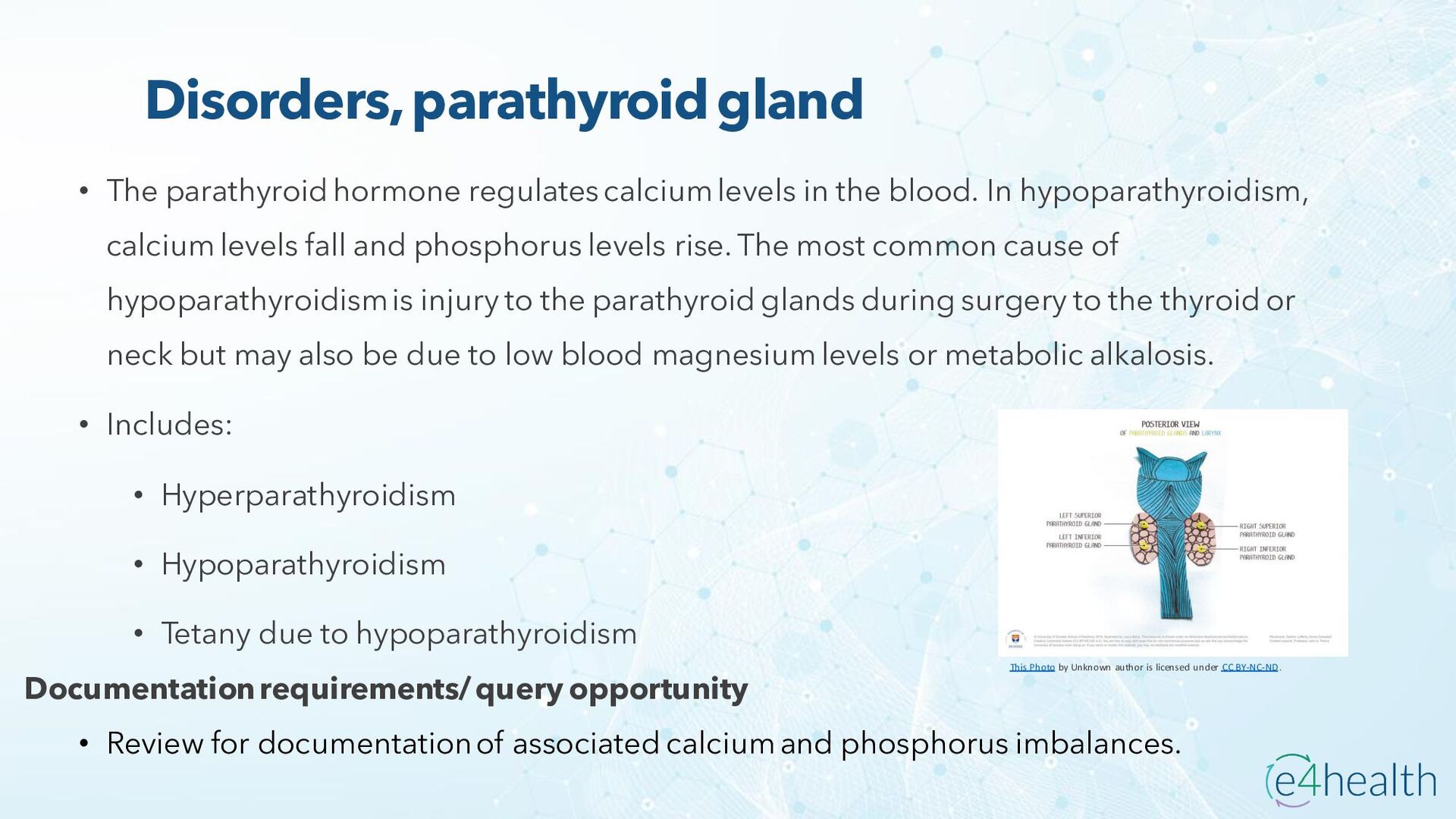
  42. Disorders, parathyroid gland • The parathyroid hormone regulates calcium levels

    in the blood. In hypoparathyroidism, calcium levels fall and phosphorus levels rise. The most common cause of hypoparathyroidism is injury to the parathyroid glands during surgery to the thyroid or neck but may also be due to low blood magnesium levels or metabolic alkalosis. • Includes: • Hyperparathyroidism • Hypoparathyroidism • Tetany due to hypoparathyroidism Documentation requirements/ query opportunity • Review for documentation of associated calcium and phosphorus imbalances. This Photo by Unknown author is licensed under CC BY-NC-ND.
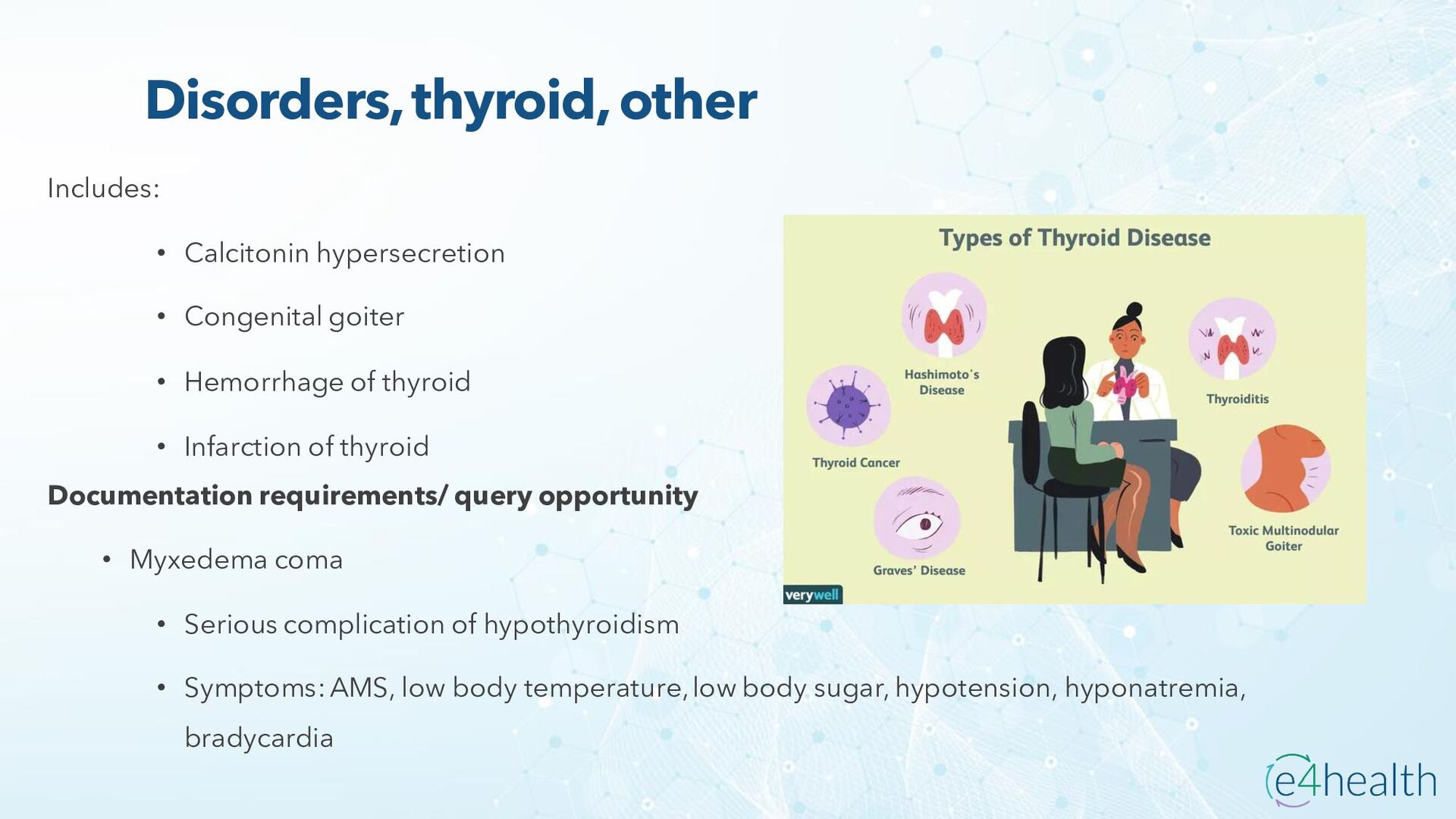
  43. Disorders, thyroid, other Includes: • Calcitonin hypersecretion • Congenital goiter

    • Hemorrhage of thyroid • Infarction of thyroid Documentation requirements/ query opportunity • Myxedema coma • Serious complication of hypothyroidism • Symptoms: AMS, low body temperature, low body sugar, hypotension, hyponatremia, bradycardia
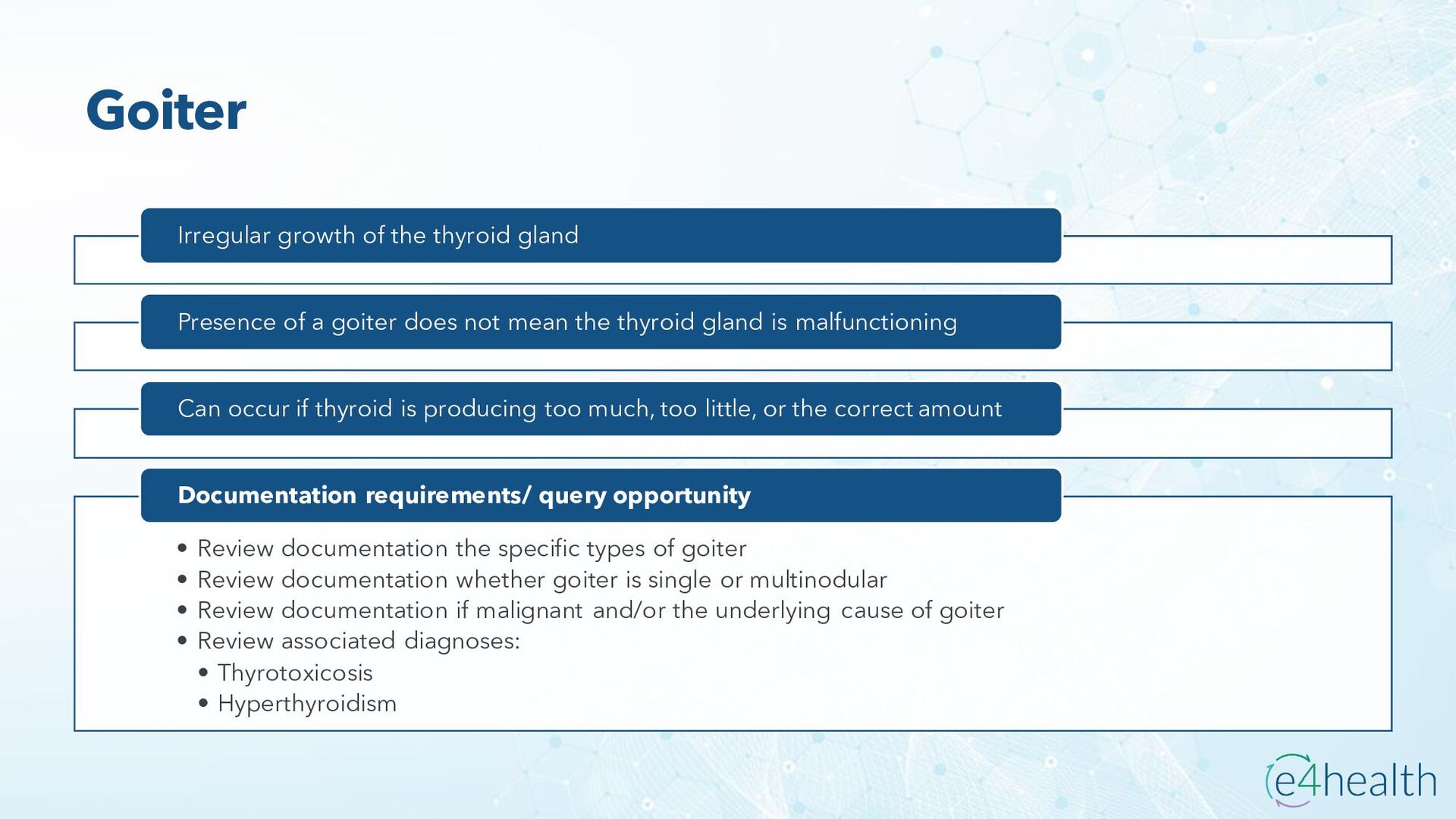
  44. Goiter Irregular growth of the thyroid gland Presence of a

    goiter does not mean the thyroid gland is malfunctioning Can occur if thyroid is producing too much, too little, or the correct amount • Review documentation the specific types of goiter • Review documentation whether goiter is single or multinodular • Review documentation if malignant and/or the underlying cause of goiter • Review associated diagnoses: • Thyrotoxicosis • Hyperthyroidism Documentation requirements/ query opportunity
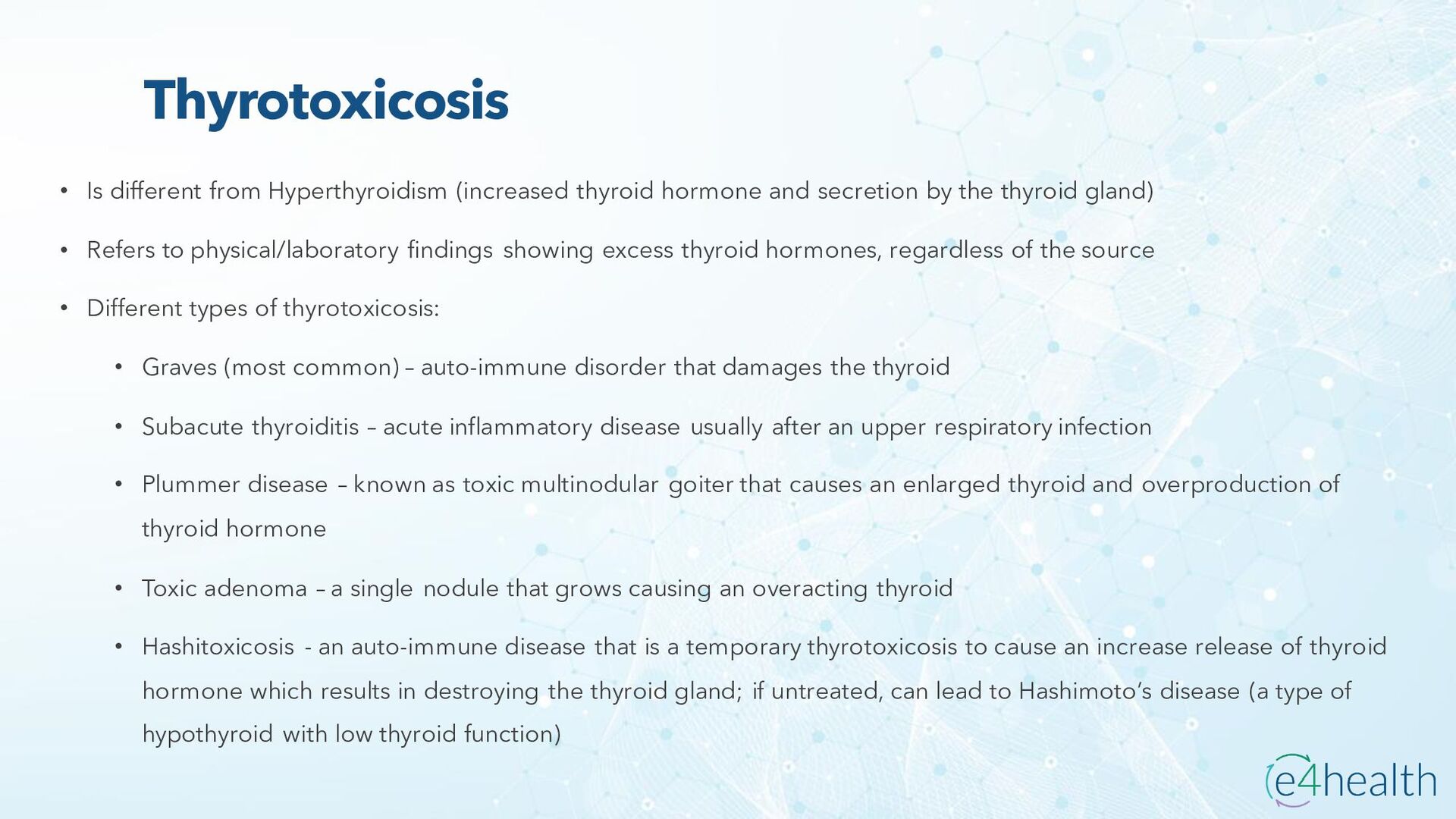
  45. Thyrotoxicosis • Is different from Hyperthyroidism (increased thyroid hormone and

    secretion by the thyroid gland) • Refers to physical/laboratory findings showing excess thyroid hormones, regardless of the source • Different types of thyrotoxicosis: • Graves (most common) – auto-immune disorder that damages the thyroid • Subacute thyroiditis – acute inflammatory disease usually after an upper respiratory infection • Plummer disease – known as toxic multinodular goiter that causes an enlarged thyroid and overproduction of thyroid hormone • Toxic adenoma – a single nodule that grows causing an overacting thyroid • Hashitoxicosis - an auto-immune disease that is a temporary thyrotoxicosis to cause an increase release of thyroid hormone which results in destroying the thyroid gland; if untreated, can lead to Hashimoto’s disease (a type of hypothyroid with low thyroid function)
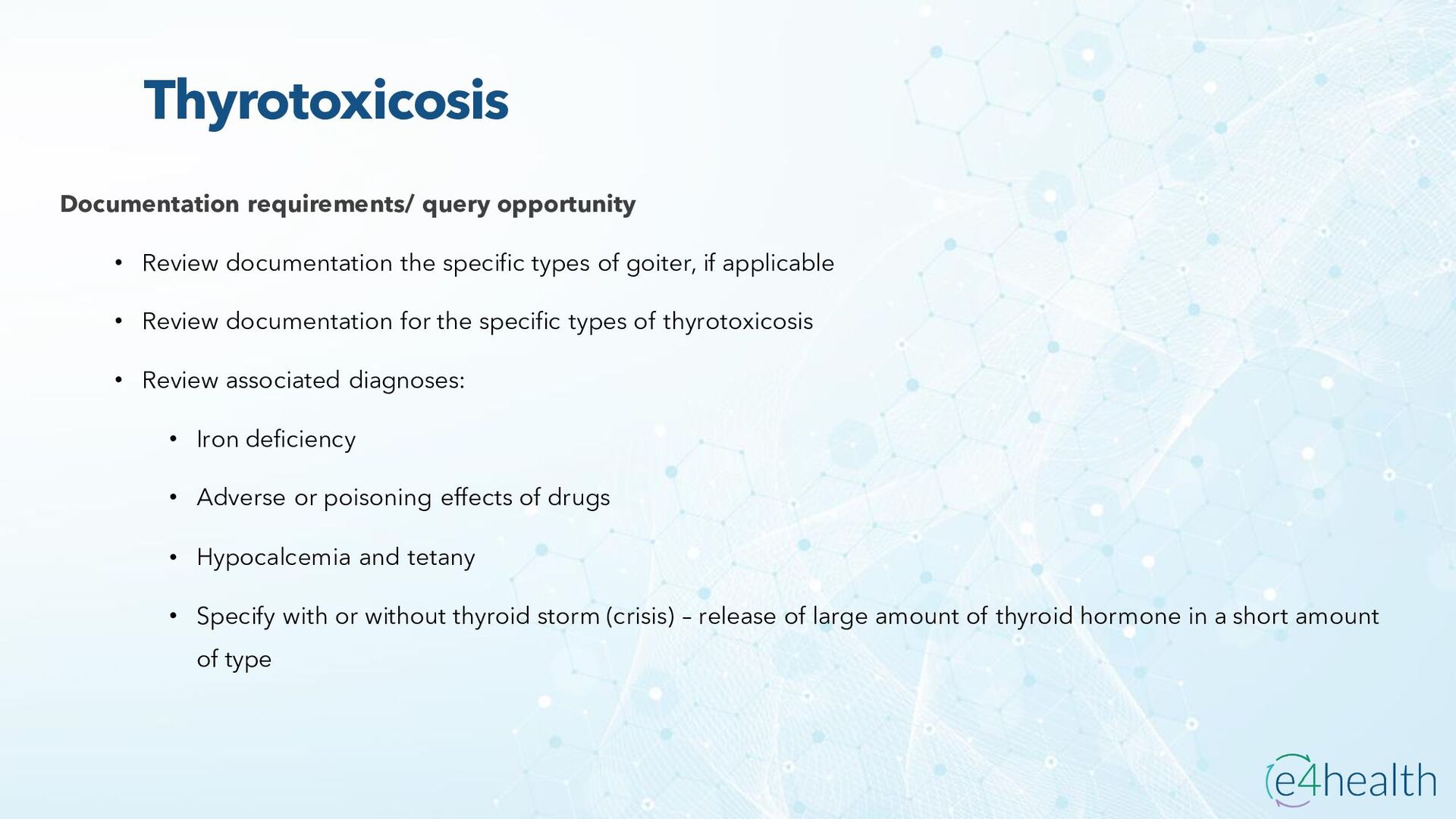
  46. Thyrotoxicosis Documentation requirements/ query opportunity • Review documentation the specific

    types of goiter, if applicable • Review documentation for the specific types of thyrotoxicosis • Review associated diagnoses: • Iron deficiency • Adverse or poisoning effects of drugs • Hypocalcemia and tetany • Specify with or without thyroid storm (crisis) – release of large amount of thyroid hormone in a short amount of type
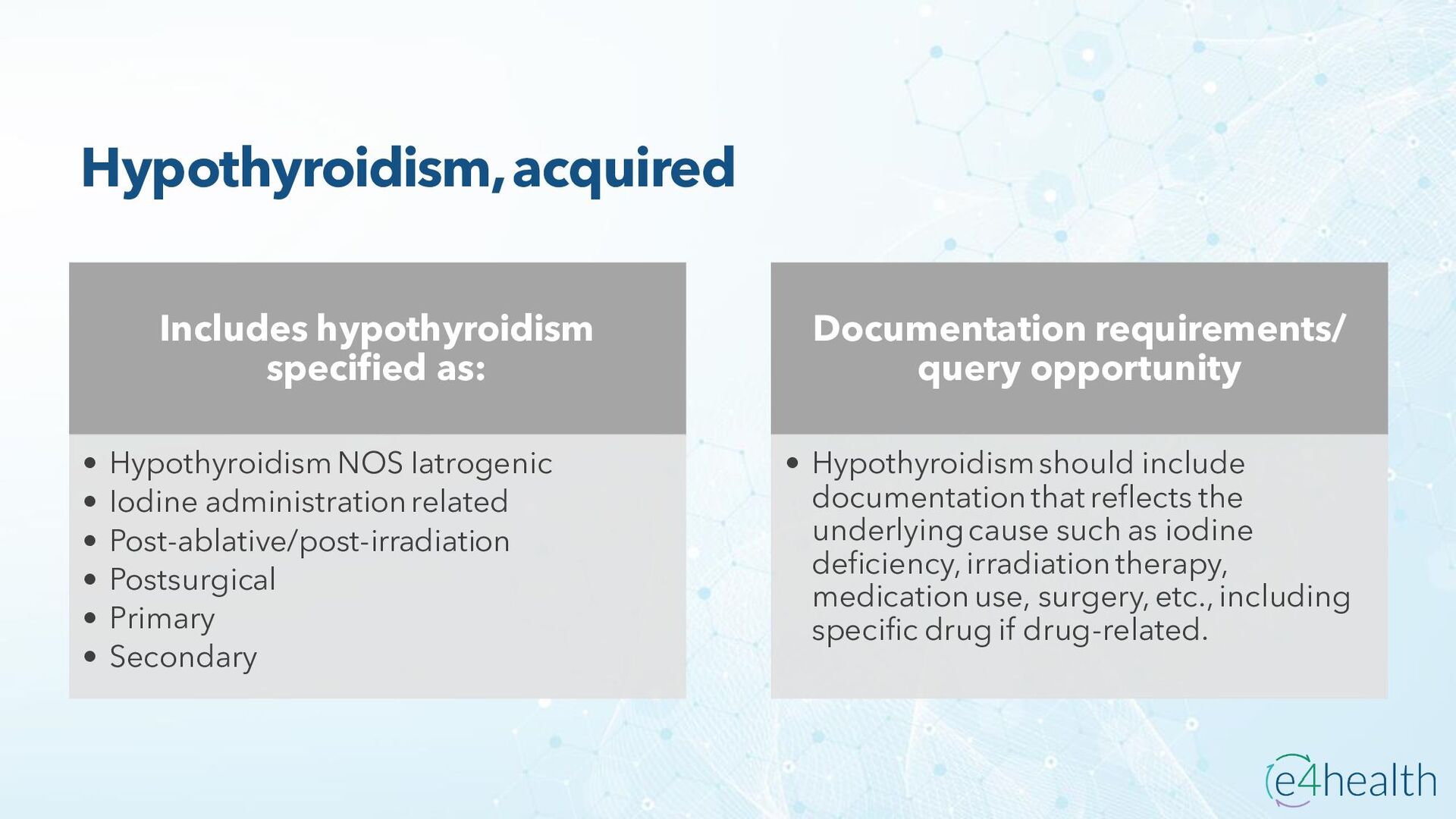
  47. Hypothyroidism, acquired Includes hypothyroidism specified as: • Hypothyroidism NOS Iatrogenic

    • Iodine administration related • Post-ablative/post-irradiation • Postsurgical • Primary • Secondary Documentation requirements/ query opportunity • Hypothyroidism should include documentation that reflects the underlying cause such as iodine deficiency, irradiation therapy, medication use, surgery, etc., including specific drug if drug-related.
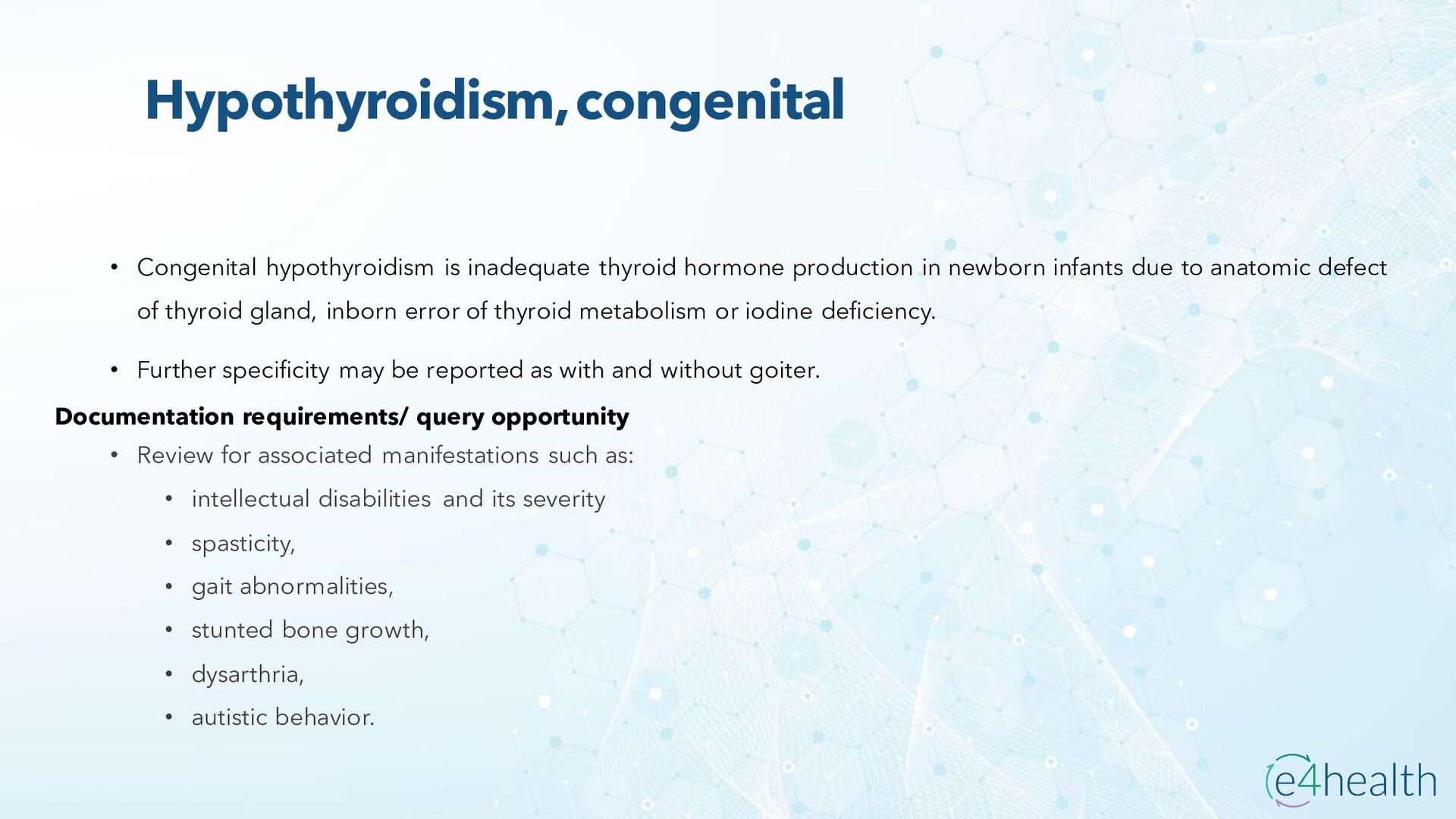
  48. Hypothyroidism, congenital • Congenital hypothyroidism is inadequate thyroid hormone production

    in newborn infants due to anatomic defect of thyroid gland, inborn error of thyroid metabolism or iodine deficiency. • Further specificity may be reported as with and without goiter. Documentation requirements/ query opportunity • Review for associated manifestations such as: • intellectual disabilities and its severity • spasticity, • gait abnormalities, • stunted bone growth, • dysarthria, • autistic behavior.
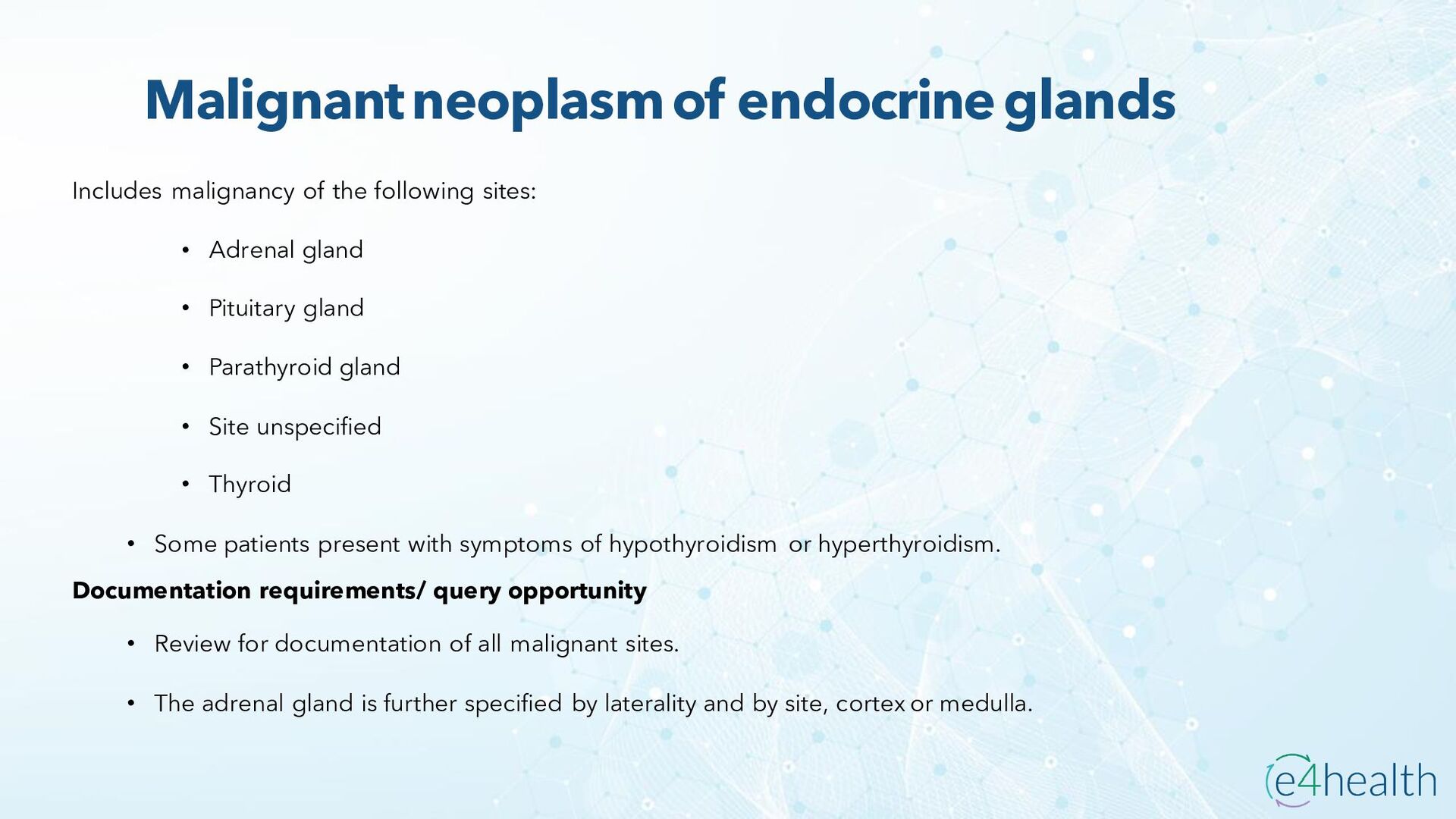
  49. Malignant neoplasm of endocrine glands Includes malignancy of the following

    sites: • Adrenal gland • Pituitary gland • Parathyroid gland • Site unspecified • Thyroid • Some patients present with symptoms of hypothyroidism or hyperthyroidism. Documentation requirements/ query opportunity • Review for documentation of all malignant sites. • The adrenal gland is further specified by laterality and by site, cortex or medulla.
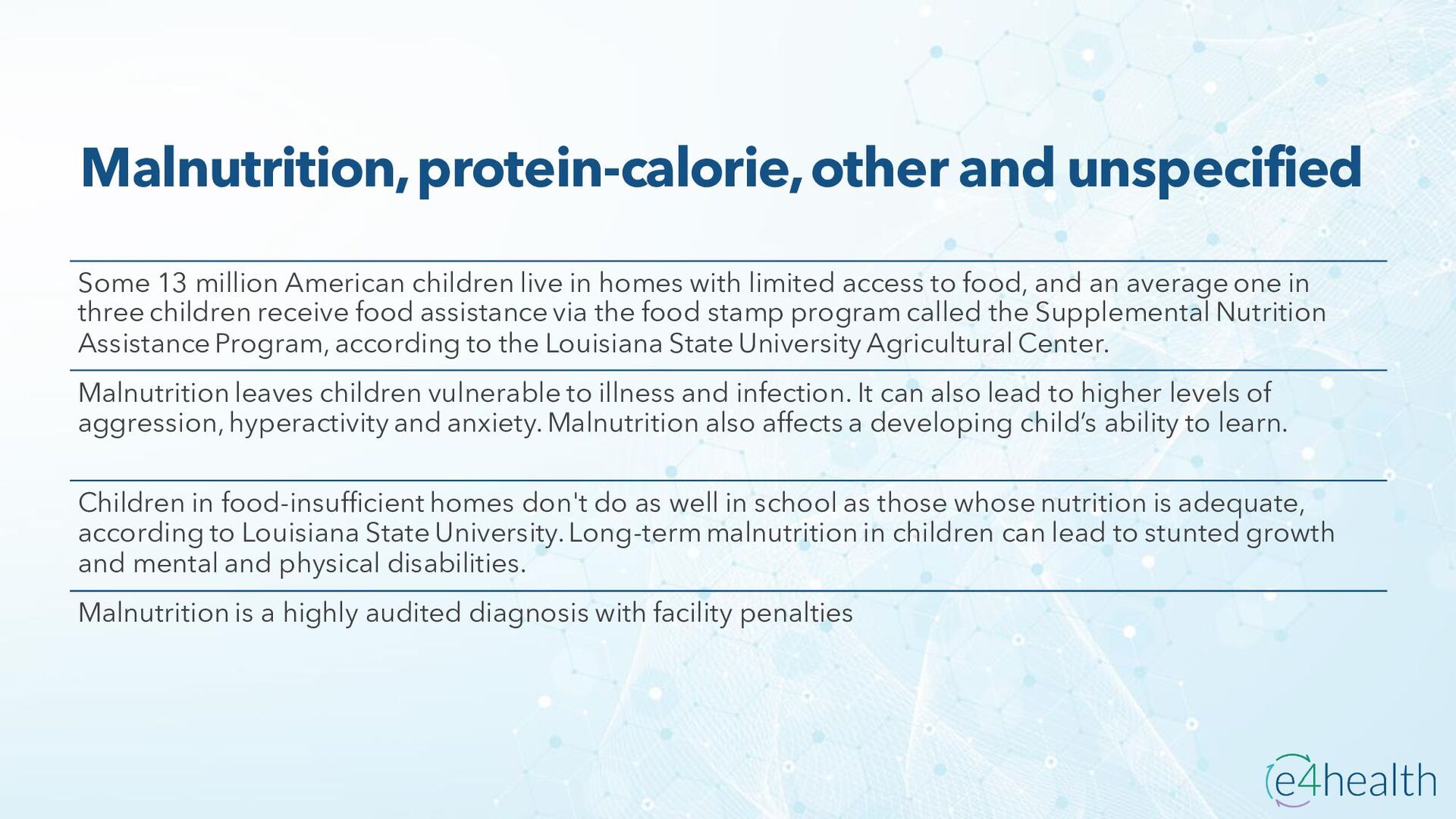
  50. Malnutrition, protein-calorie, other and unspecified Some 13 million American children

    live in homes with limited access to food, and an average one in three children receive food assistance via the food stamp program called the Supplemental Nutrition Assistance Program, according to the Louisiana State University Agricultural Center. Malnutrition leaves children vulnerable to illness and infection. It can also lead to higher levels of aggression, hyperactivity and anxiety. Malnutrition also affects a developing child’s ability to learn. Children in food-insufficient homes don't do as well in school as those whose nutrition is adequate, according to Louisiana State University. Long-term malnutrition in children can lead to stunted growth and mental and physical disabilities. Malnutrition is a highly audited diagnosis with facility penalties
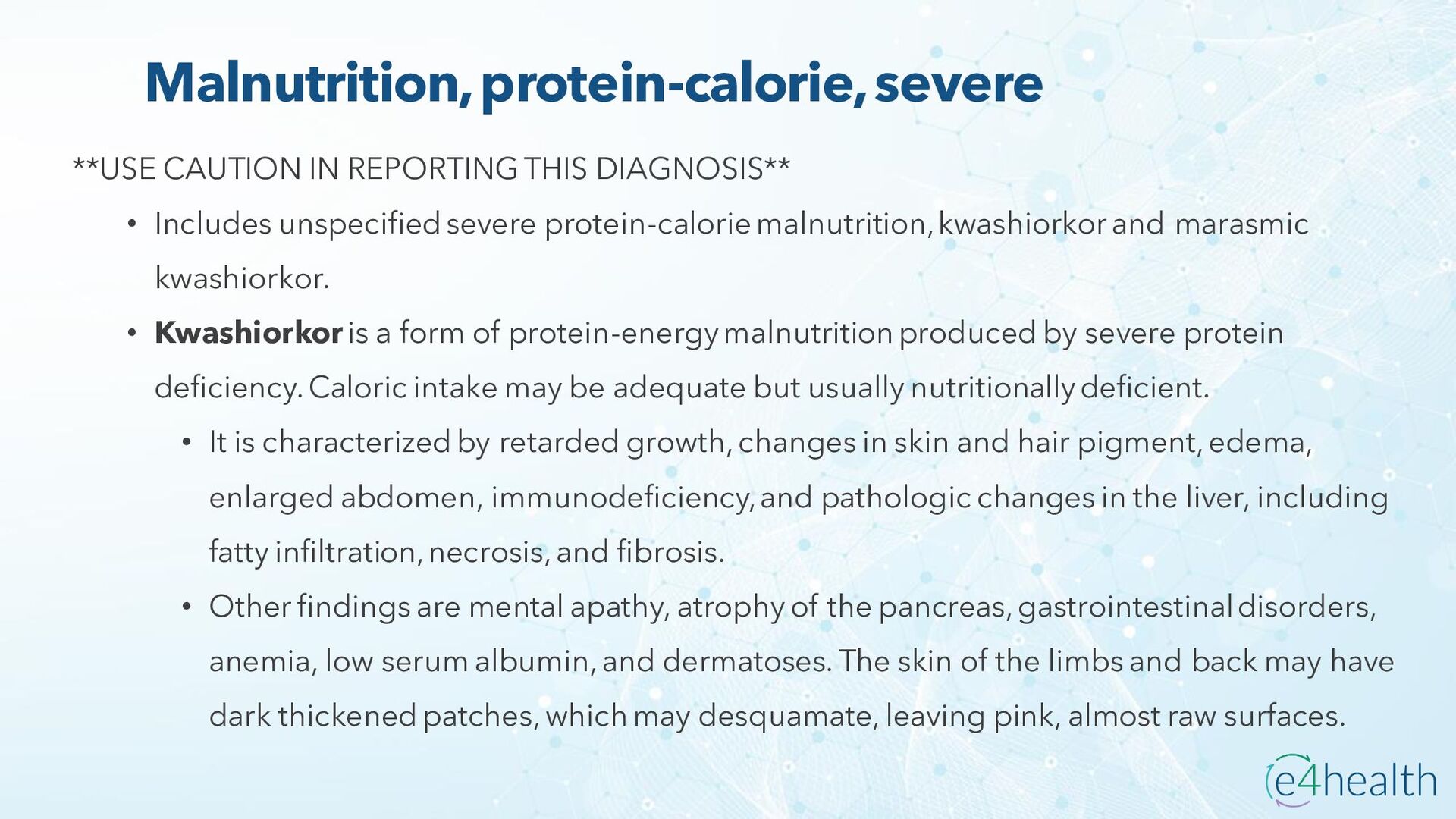
  51. Malnutrition, protein-calorie, severe **USE CAUTION IN REPORTING THIS DIAGNOSIS** •

    Includes unspecified severe protein-calorie malnutrition, kwashiorkor and marasmic kwashiorkor. • Kwashiorkor is a form of protein-energy malnutrition produced by severe protein deficiency. Caloric intake may be adequate but usually nutritionally deficient. • It is characterized by retarded growth, changes in skin and hair pigment, edema, enlarged abdomen, immunodeficiency, and pathologic changes in the liver, including fatty infiltration, necrosis, and fibrosis. • Other findings are mental apathy, atrophy of the pancreas, gastrointestinal disorders, anemia, low serum albumin, and dermatoses. The skin of the limbs and back may have dark thickened patches, which may desquamate, leaving pink, almost raw surfaces.
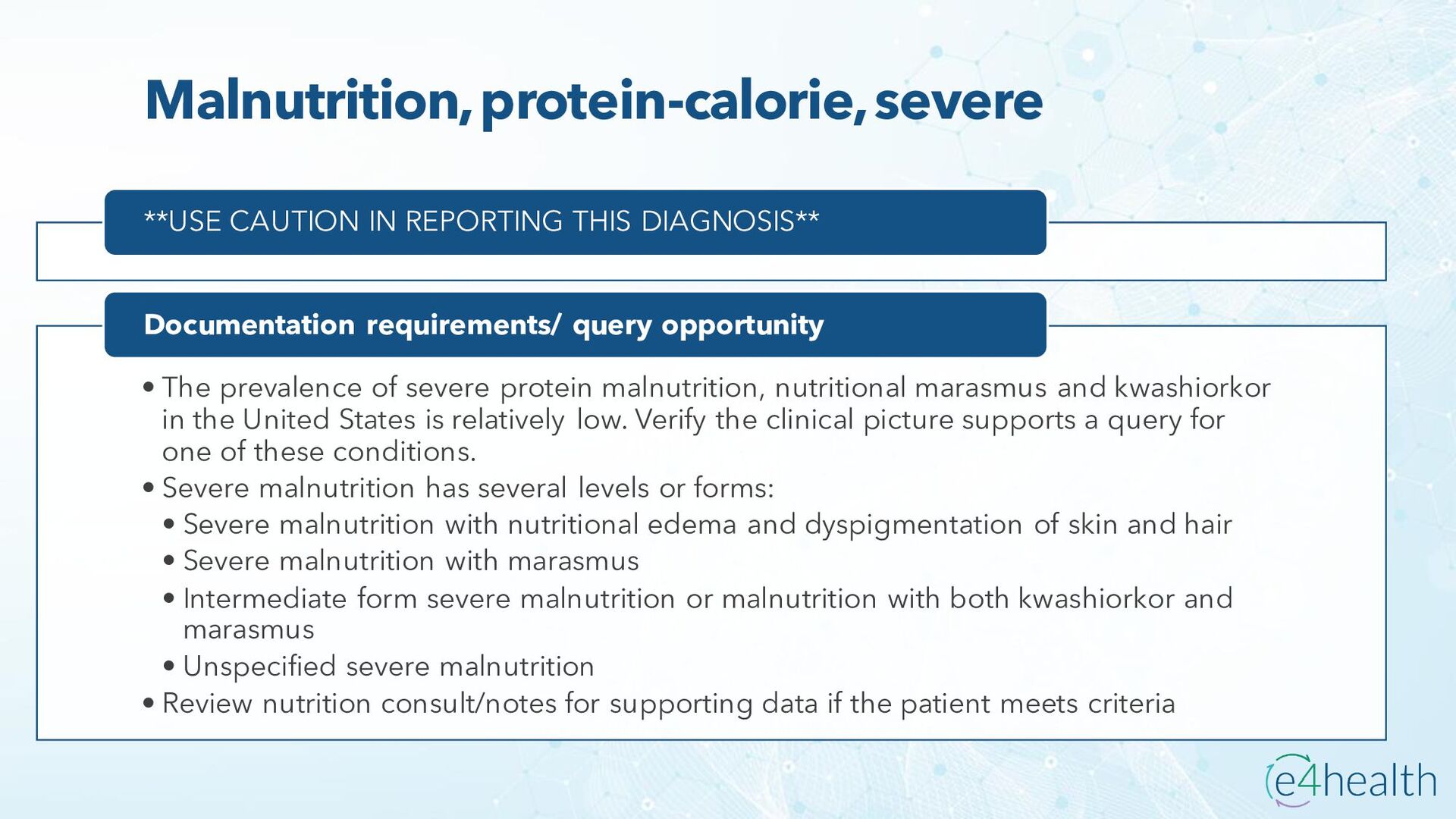
  52. Malnutrition, protein-calorie, severe **USE CAUTION IN REPORTING THIS DIAGNOSIS** •

    The prevalence of severe protein malnutrition, nutritional marasmus and kwashiorkor in the United States is relatively low. Verify the clinical picture supports a query for one of these conditions. • Severe malnutrition has several levels or forms: • Severe malnutrition with nutritional edema and dyspigmentation of skin and hair • Severe malnutrition with marasmus • Intermediate form severe malnutrition or malnutrition with both kwashiorkor and marasmus • Unspecified severe malnutrition • Review nutrition consult/notes for supporting data if the patient meets criteria Documentation requirements/ query opportunity
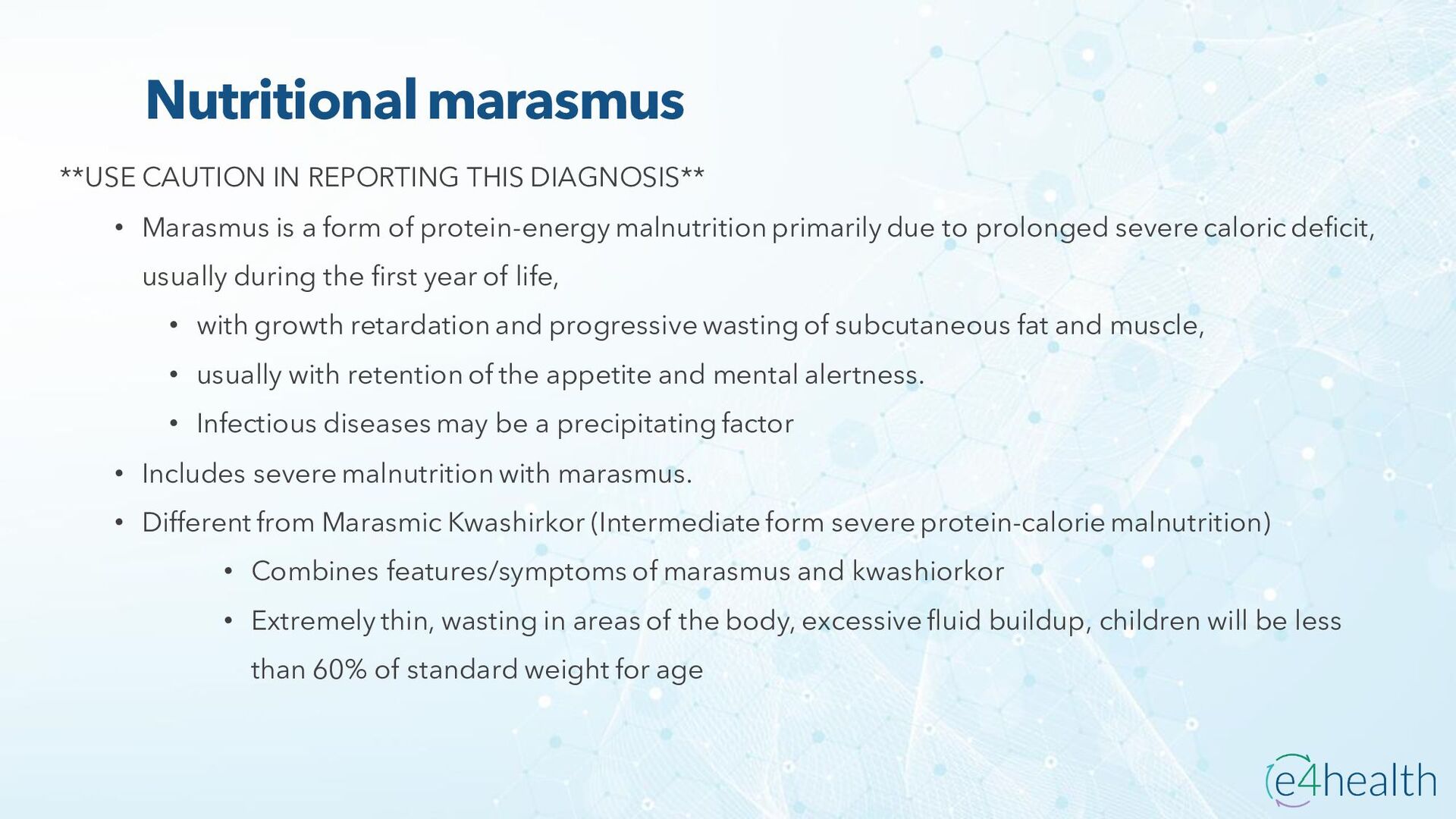
  53. Nutritional marasmus **USE CAUTION IN REPORTING THIS DIAGNOSIS** • Marasmus

    is a form of protein-energy malnutrition primarily due to prolonged severe caloric deficit, usually during the first year of life, • with growth retardation and progressive wasting of subcutaneous fat and muscle, • usually with retention of the appetite and mental alertness. • Infectious diseases may be a precipitating factor • Includes severe malnutrition with marasmus. • Different from Marasmic Kwashirkor (Intermediate form severe protein-calorie malnutrition) • Combines features/symptoms of marasmus and kwashiorkor • Extremely thin, wasting in areas of the body, excessive fluid buildup, children will be less than 60% of standard weight for age
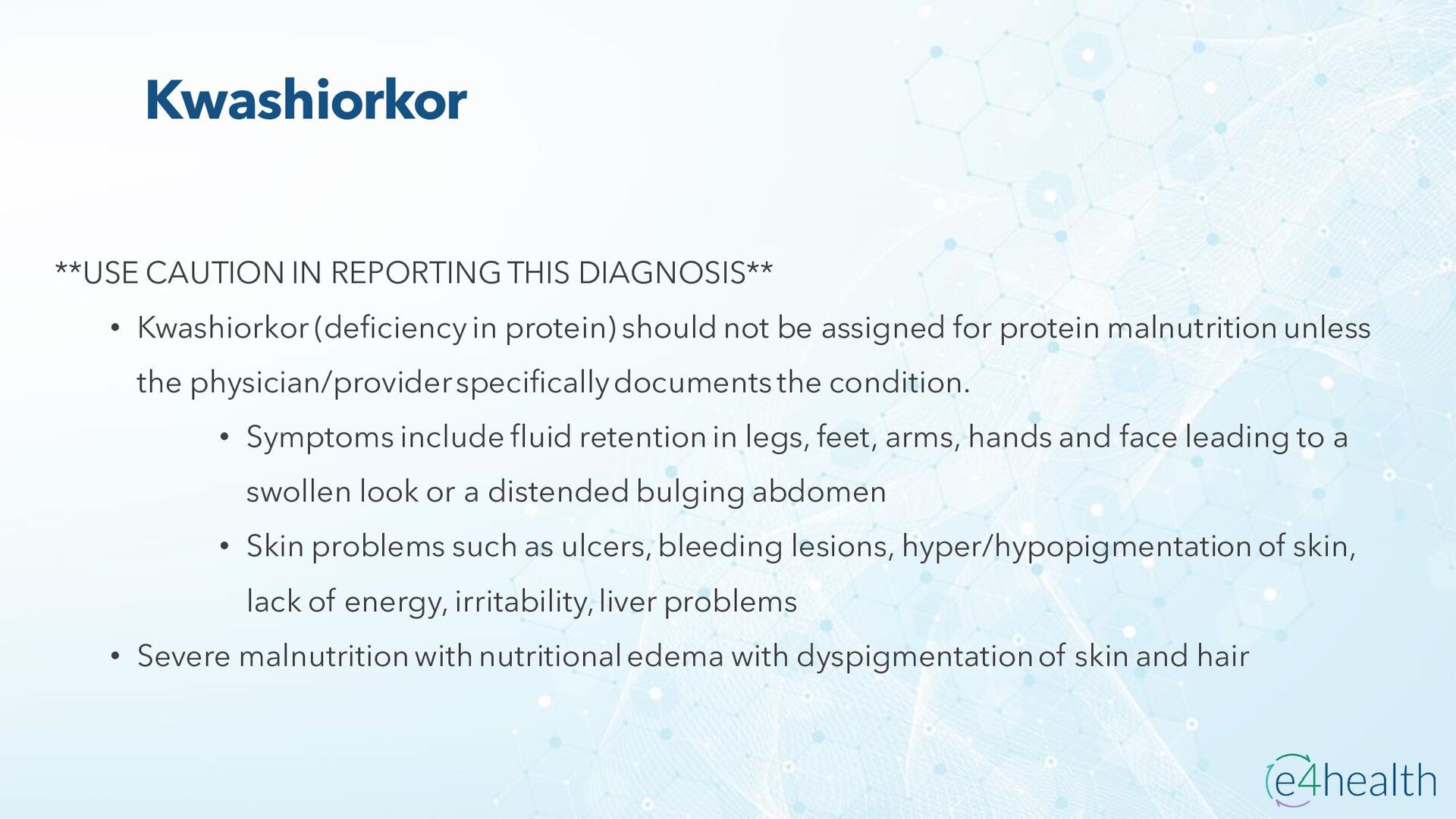
  54. Kwashiorkor **USE CAUTION IN REPORTING THIS DIAGNOSIS** • Kwashiorkor (deficiency

    in protein) should not be assigned for protein malnutrition unless the physician/provider specifically documents the condition. • Symptoms include fluid retention in legs, feet, arms, hands and face leading to a swollen look or a distended bulging abdomen • Skin problems such as ulcers, bleeding lesions, hyper/hypopigmentation of skin, lack of energy, irritability, liver problems • Severe malnutrition with nutritional edema with dyspigmentation of skin and hair
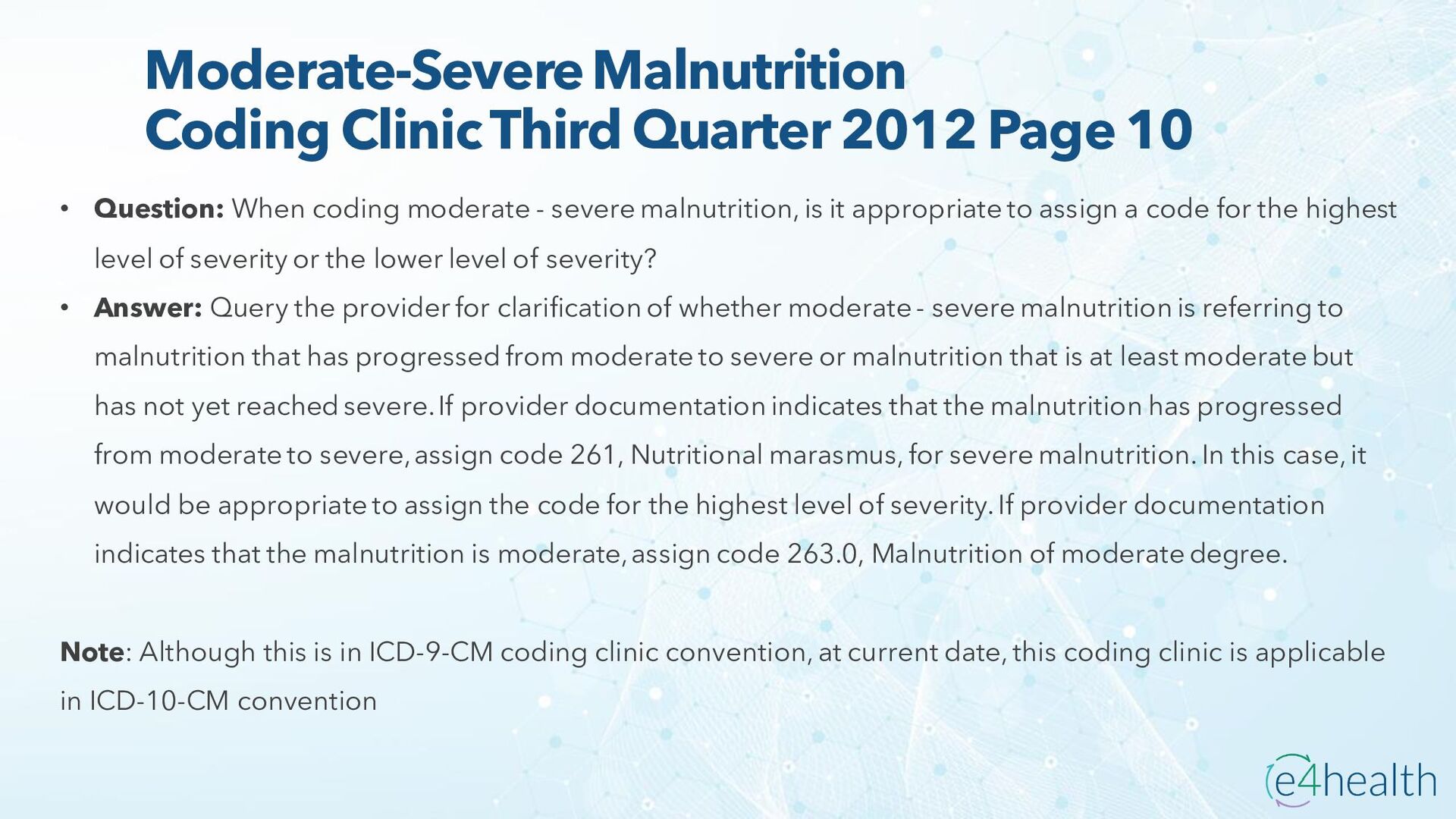
  55. Moderate-Severe Malnutrition Coding Clinic Third Quarter 2012 Page 10 •

    Question: When coding moderate - severe malnutrition, is it appropriate to assign a code for the highest level of severity or the lower level of severity? • Answer: Query the provider for clarification of whether moderate - severe malnutrition is referring to malnutrition that has progressed from moderate to severe or malnutrition that is at least moderate but has not yet reached severe. If provider documentation indicates that the malnutrition has progressed from moderate to severe, assign code 261, Nutritional marasmus, for severe malnutrition. In this case, it would be appropriate to assign the code for the highest level of severity. If provider documentation indicates that the malnutrition is moderate, assign code 263.0, Malnutrition of moderate degree. Note: Although this is in ICD-9-CM coding clinic convention, at current date, this coding clinic is applicable in ICD-10-CM convention
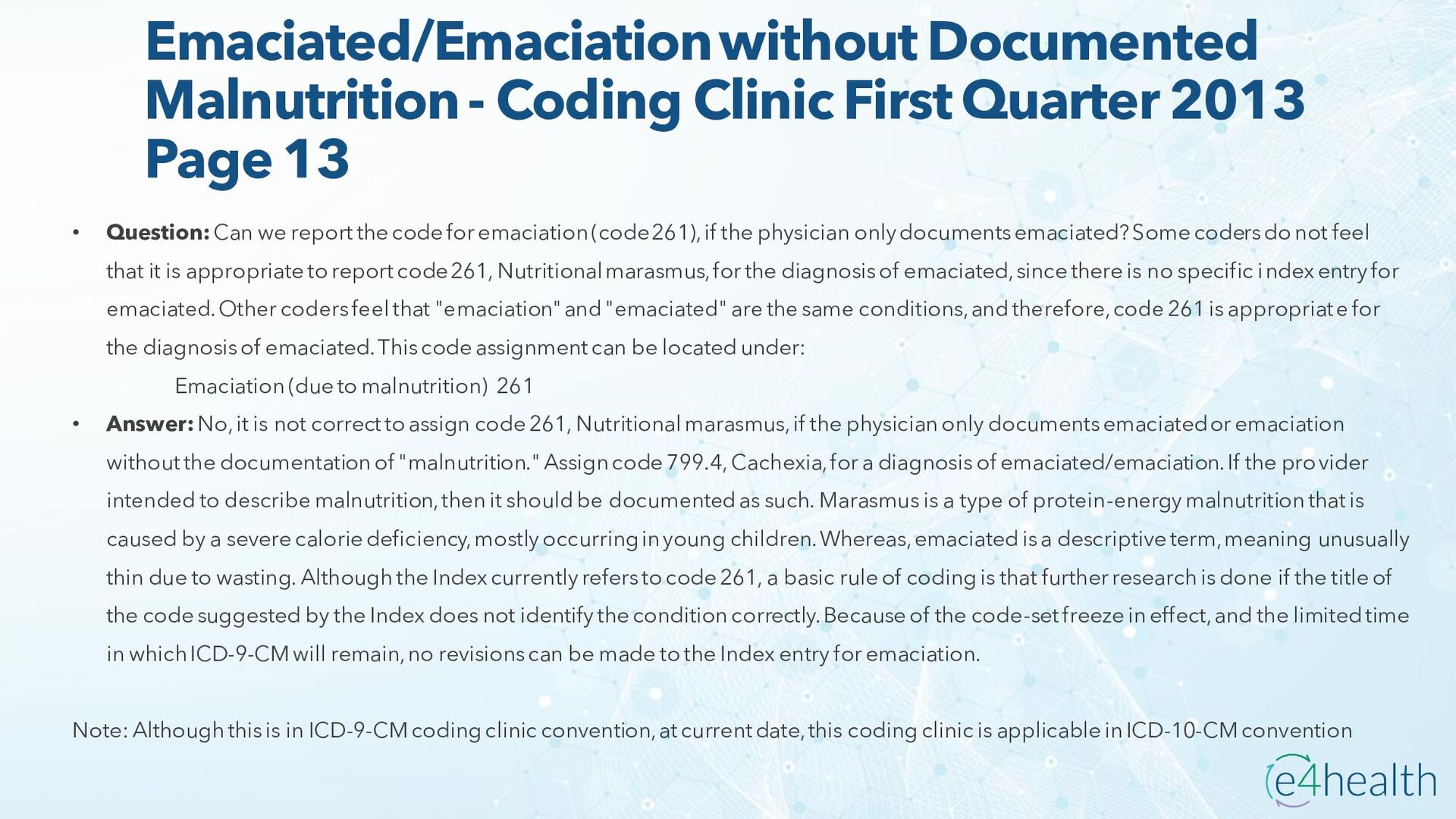
  56. Emaciated/Emaciation without Documented Malnutrition - Coding Clinic First Quarter 2013

    Page 13 • Question:Can we report the code for emaciation (code 261), if the physician only documents emaciated? Some coders do not feel that it is appropriate to report code 261, Nutritional marasmus, for the diagnosis of emaciated, since there is no specific index entry for emaciated. Other coders feel that "emaciation" and "emaciated" are the same conditions, and therefore, code 261 is appropriate for the diagnosis of emaciated. This code assignment can be located under: Emaciation (due to malnutrition) 261 • Answer:No, it is not correct to assign code 261, Nutritional marasmus, if the physician only documents emaciated or emaciation without the documentation of "malnutrition." Assign code 799.4, Cachexia, for a diagnosis of emaciated/emaciation. If the provider intended to describe malnutrition, then it should be documented as such. Marasmus is a type of protein-energy malnutrition that is caused by a severe calorie deficiency, mostly occurring in young children. Whereas, emaciated is a descriptive term, meaning unusually thin due to wasting. Although the Index currently refers to code 261, a basic rule of coding is that further research is done if the title of the code suggested by the Index does not identify the condition correctly. Because of the code-set freeze in effect, and the limited time in which ICD-9-CM will remain, no revisions can be made to the Index entry for emaciation. Note: Although this is in ICD-9-CM coding clinic convention, at current date, this coding clinic is applicable in ICD-10-CM convention
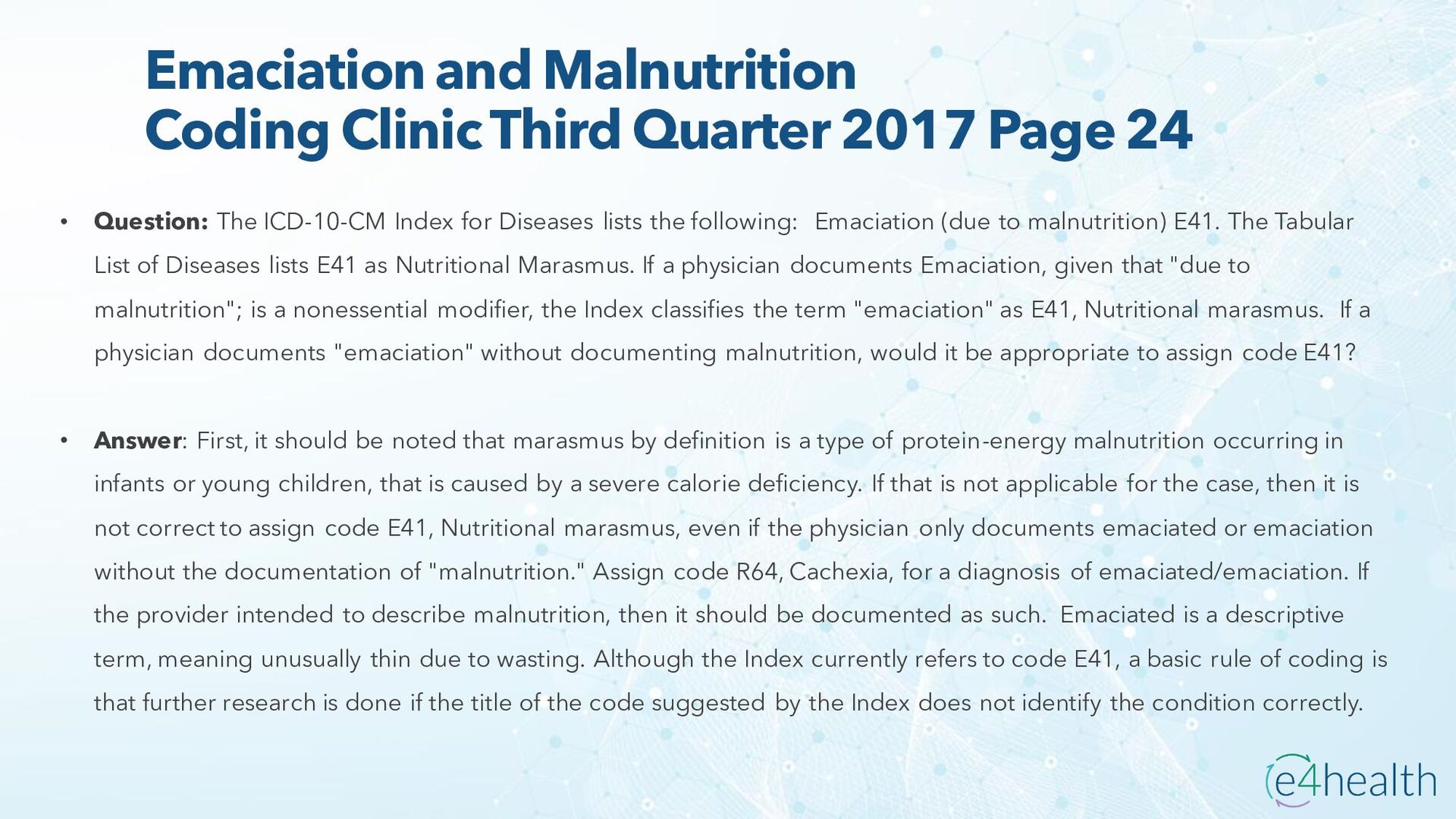
  57. Emaciation and Malnutrition Coding Clinic Third Quarter 2017 Page 24

    • Question: The ICD-10-CM Index for Diseases lists the following: Emaciation (due to malnutrition) E41. The Tabular List of Diseases lists E41 as Nutritional Marasmus. If a physician documents Emaciation, given that "due to malnutrition"; is a nonessential modifier, the Index classifies the term "emaciation" as E41, Nutritional marasmus. If a physician documents "emaciation" without documenting malnutrition, would it be appropriate to assign code E41? • Answer: First, it should be noted that marasmus by definition is a type of protein-energy malnutrition occurring in infants or young children, that is caused by a severe calorie deficiency. If that is not applicable for the case, then it is not correct to assign code E41, Nutritional marasmus, even if the physician only documents emaciated or emaciation without the documentation of "malnutrition." Assign code R64, Cachexia, for a diagnosis of emaciated/emaciation. If the provider intended to describe malnutrition, then it should be documented as such. Emaciated is a descriptive term, meaning unusually thin due to wasting. Although the Index currently refers to code E41, a basic rule of coding is that further research is done if the title of the code suggested by the Index does not identify the condition correctly.
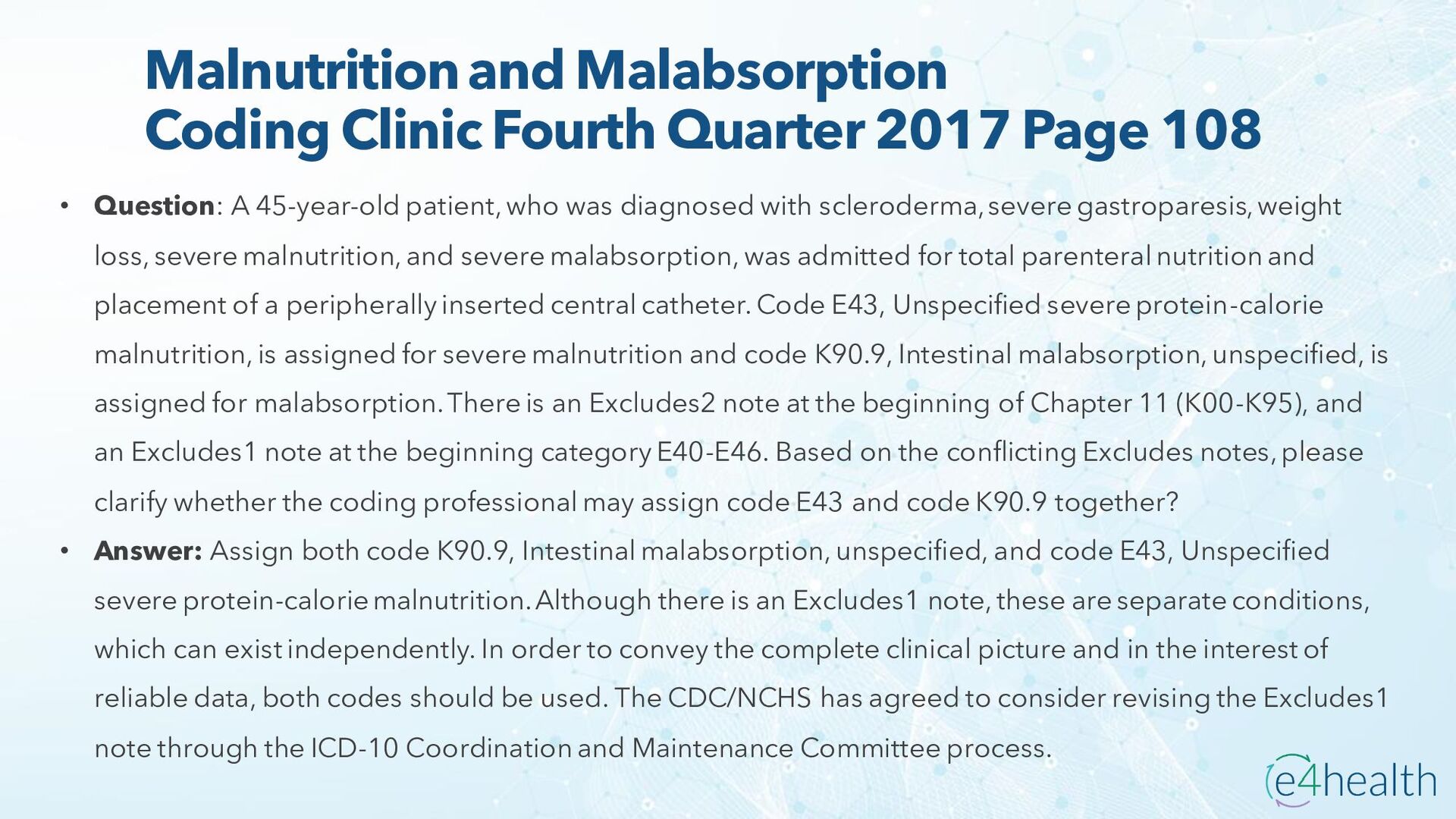
  58. Malnutrition and Malabsorption Coding Clinic Fourth Quarter 2017 Page 108

    • Question: A 45-year-old patient, who was diagnosed with scleroderma, severe gastroparesis, weight loss, severe malnutrition, and severe malabsorption, was admitted for total parenteral nutrition and placement of a peripherally inserted central catheter. Code E43, Unspecified severe protein-calorie malnutrition, is assigned for severe malnutrition and code K90.9, Intestinal malabsorption, unspecified, is assigned for malabsorption. There is an Excludes2 note at the beginning of Chapter 11 (K00-K95), and an Excludes1 note at the beginning category E40-E46. Based on the conflicting Excludes notes, please clarify whether the coding professional may assign code E43 and code K90.9 together? • Answer: Assign both code K90.9, Intestinal malabsorption, unspecified, and code E43, Unspecified severe protein-calorie malnutrition. Although there is an Excludes1 note, these are separate conditions, which can exist independently. In order to convey the complete clinical picture and in the interest of reliable data, both codes should be used. The CDC/NCHS has agreed to consider revising the Excludes1 note through the ICD-10 Coordination and Maintenance Committee process.
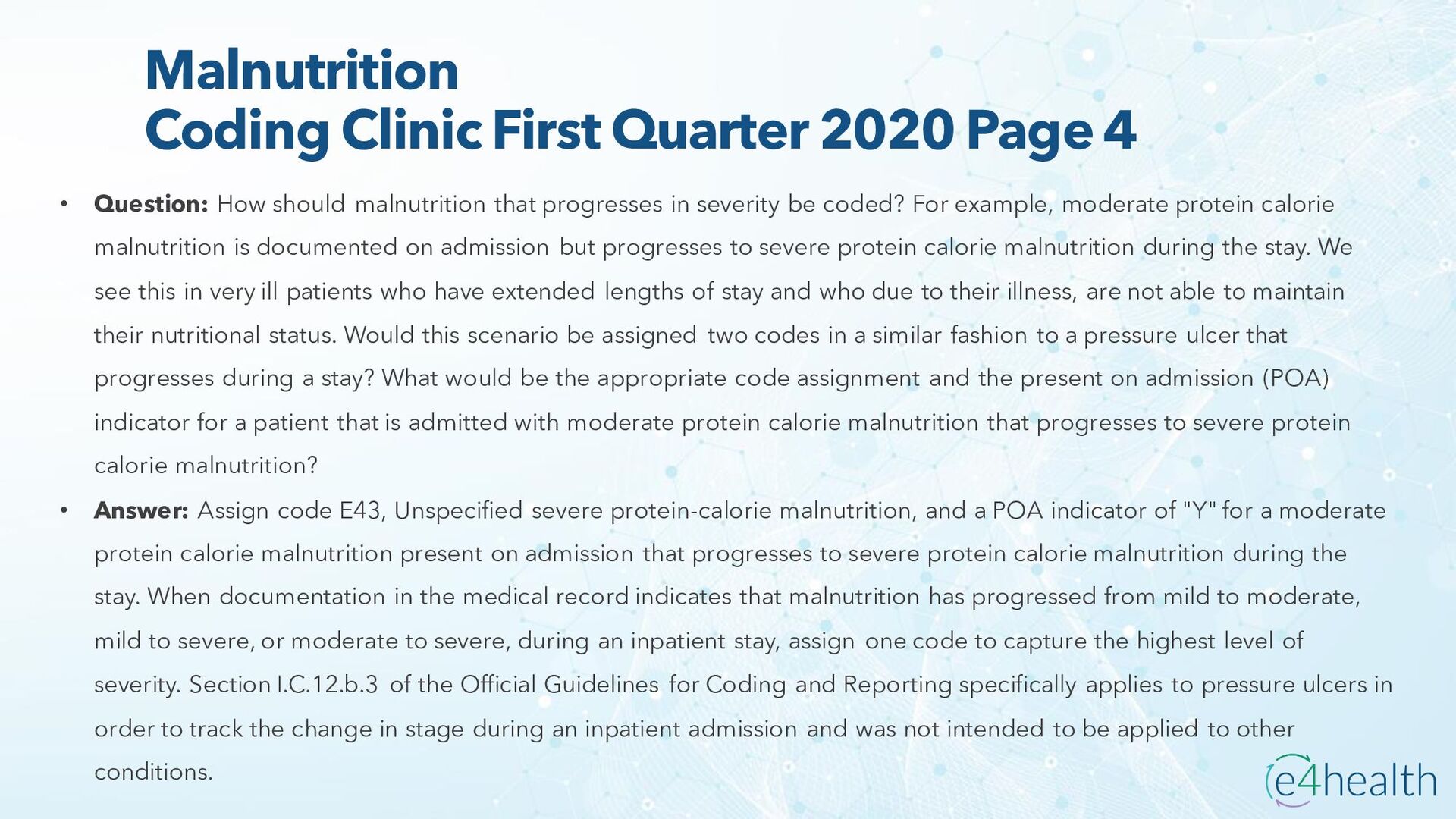
  59. Malnutrition Coding Clinic First Quarter 2020 Page 4 • Question:

    How should malnutrition that progresses in severity be coded? For example, moderate protein calorie malnutrition is documented on admission but progresses to severe protein calorie malnutrition during the stay. We see this in very ill patients who have extended lengths of stay and who due to their illness, are not able to maintain their nutritional status. Would this scenario be assigned two codes in a similar fashion to a pressure ulcer that progresses during a stay? What would be the appropriate code assignment and the present on admission (POA) indicator for a patient that is admitted with moderate protein calorie malnutrition that progresses to severe protein calorie malnutrition? • Answer: Assign code E43, Unspecified severe protein-calorie malnutrition, and a POA indicator of "Y" for a moderate protein calorie malnutrition present on admission that progresses to severe protein calorie malnutrition during the stay. When documentation in the medical record indicates that malnutrition has progressed from mild to moderate, mild to severe, or moderate to severe, during an inpatient stay, assign one code to capture the highest level of severity. Section I.C.12.b.3 of the Official Guidelines for Coding and Reporting specifically applies to pressure ulcers in order to track the change in stage during an inpatient admission and was not intended to be applied to other conditions.
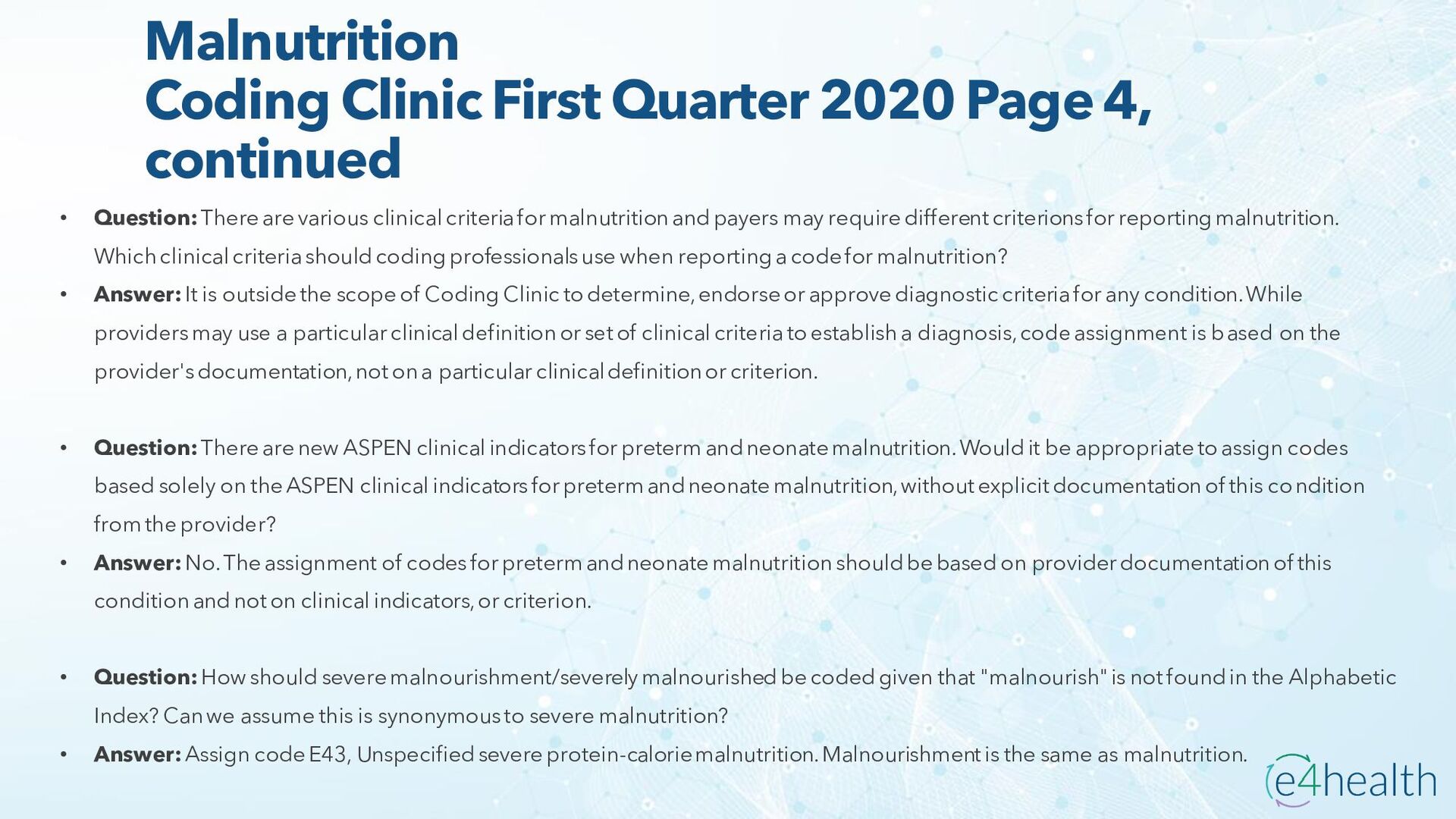
  60. Malnutrition Coding Clinic First Quarter 2020 Page 4, continued •

    Question:There are various clinical criteria for malnutrition and payers may require different criterions for reporting malnutrition. Which clinical criteria should coding professionals use when reporting a code for malnutrition? • Answer:It is outside the scope of Coding Clinic to determine, endorse or approve diagnostic criteria for any condition. While providers may use a particular clinical definition or set of clinical criteria to establish a diagnosis, code assignment is based on the provider's documentation, not on a particular clinical definition or criterion. • Question:There are new ASPEN clinical indicators for preterm and neonate malnutrition. Would it be appropriate to assign codes based solely on the ASPEN clinical indicators for preterm and neonate malnutrition, without explicit documentation of this condition from the provider? • Answer:No. The assignment of codes for preterm and neonate malnutrition should be based on provider documentation of this condition and not on clinical indicators, or criterion. • Question:How should severe malnourishment/severely malnourished be coded given that "malnourish" is not found in the Alphabetic Index? Can we assume this is synonymous to severe malnutrition? • Answer:Assign code E43, Unspecified severe protein-calorie malnutrition. Malnourishment is the same as malnutrition.
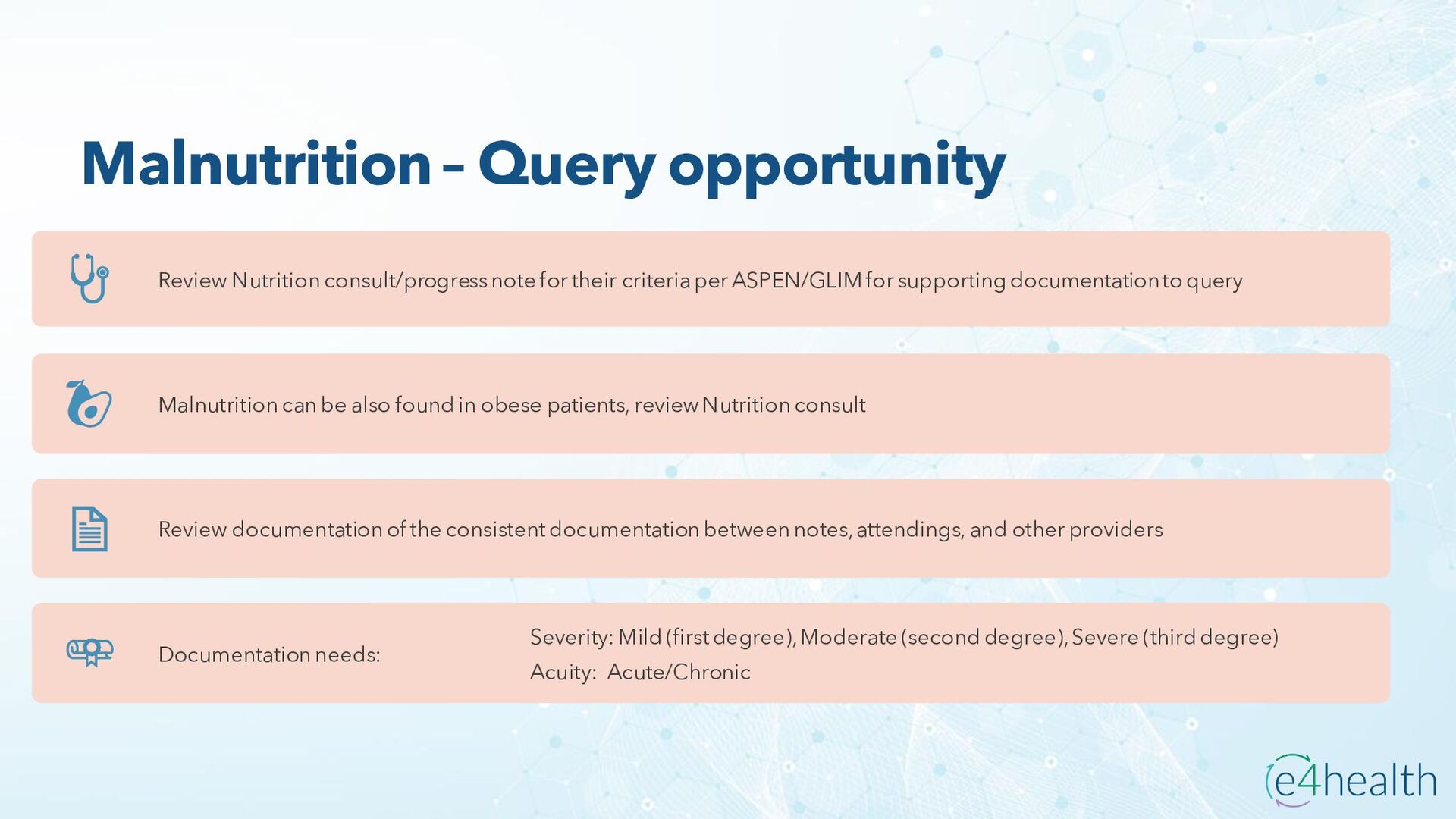
  61. Malnutrition – Query opportunity Review Nutrition consult/progress note for their

    criteria per ASPEN/GLIM for supporting documentation to query Malnutrition can be also found in obese patients, review Nutrition consult Review documentation of the consistent documentation between notes, attendings, and other providers Documentation needs: Severity: Mild (first degree), Moderate (second degree), Severe (third degree) Acuity: Acute/Chronic
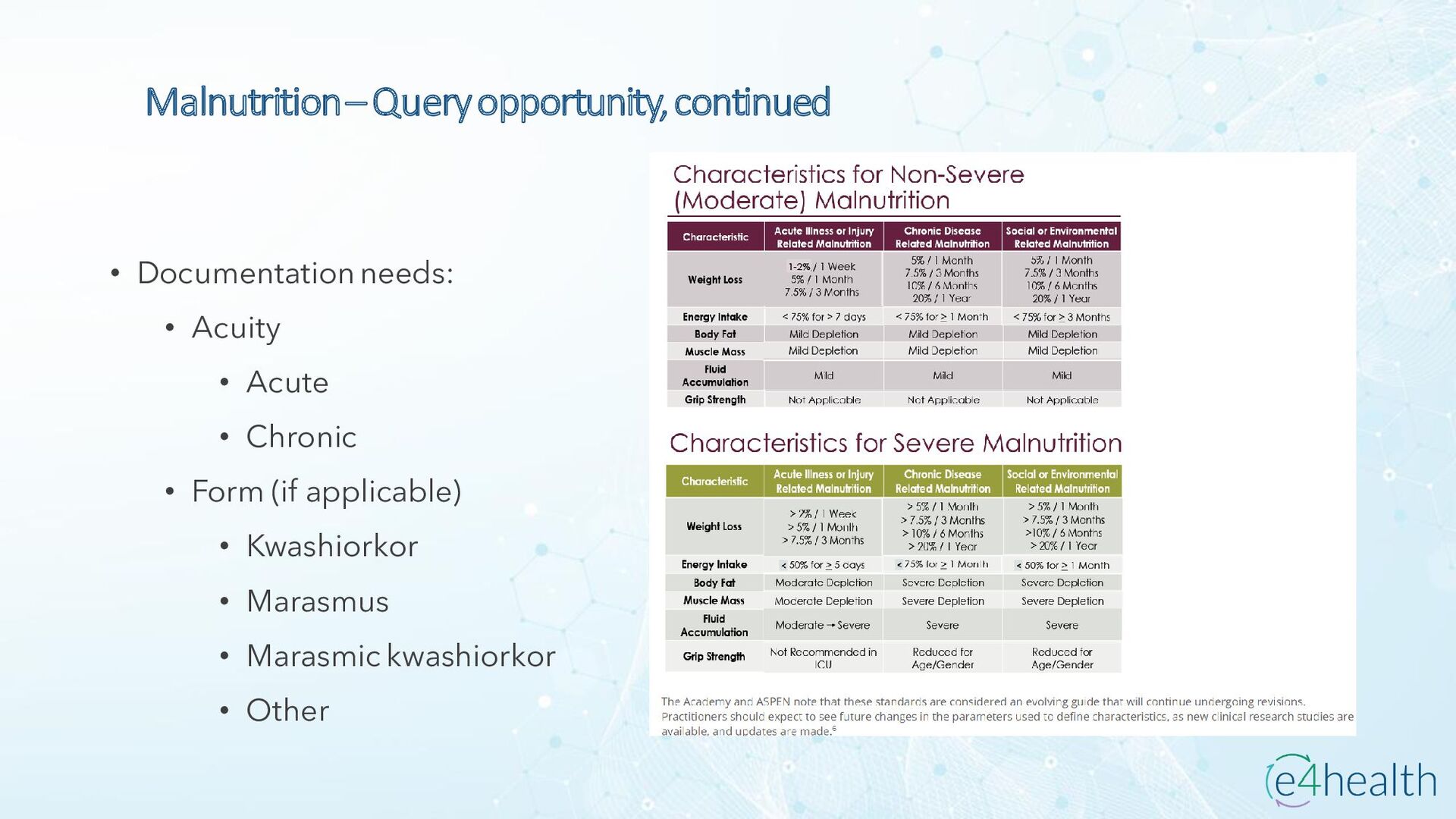
  62. Malnutrition – Query opportunity, continued • Documentation needs: • Acuity

    • Acute • Chronic • Form (if applicable) • Kwashiorkor • Marasmus • Marasmic kwashiorkor • Other
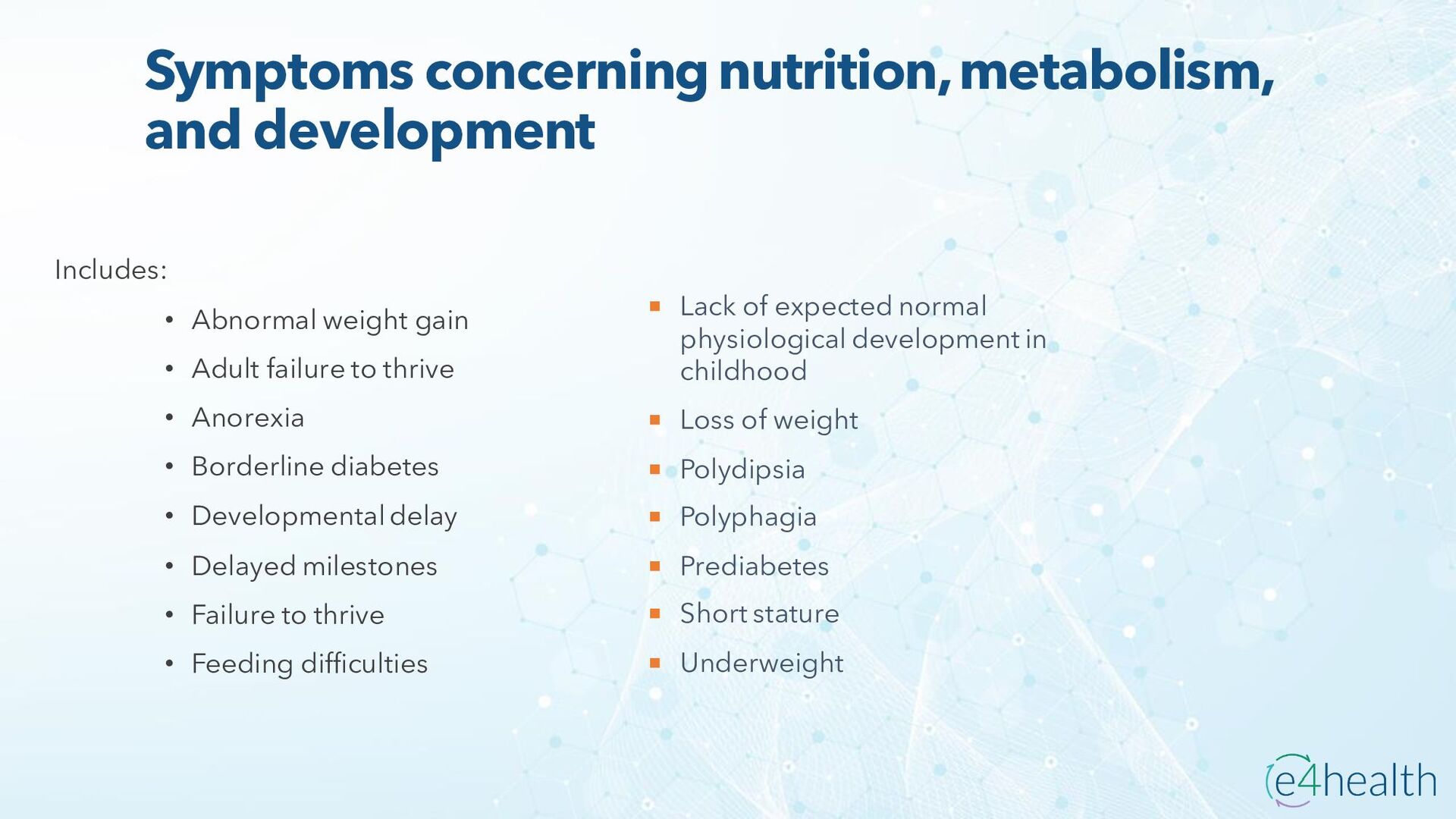
  63. Symptoms concerning nutrition, metabolism, and development Includes: • Abnormal weight

    gain • Adult failure to thrive • Anorexia • Borderline diabetes • Developmental delay • Delayed milestones • Failure to thrive • Feeding difficulties  Lack of expected normal physiological development in childhood  Loss of weight  Polydipsia  Polyphagia  Prediabetes  Short stature  Underweight
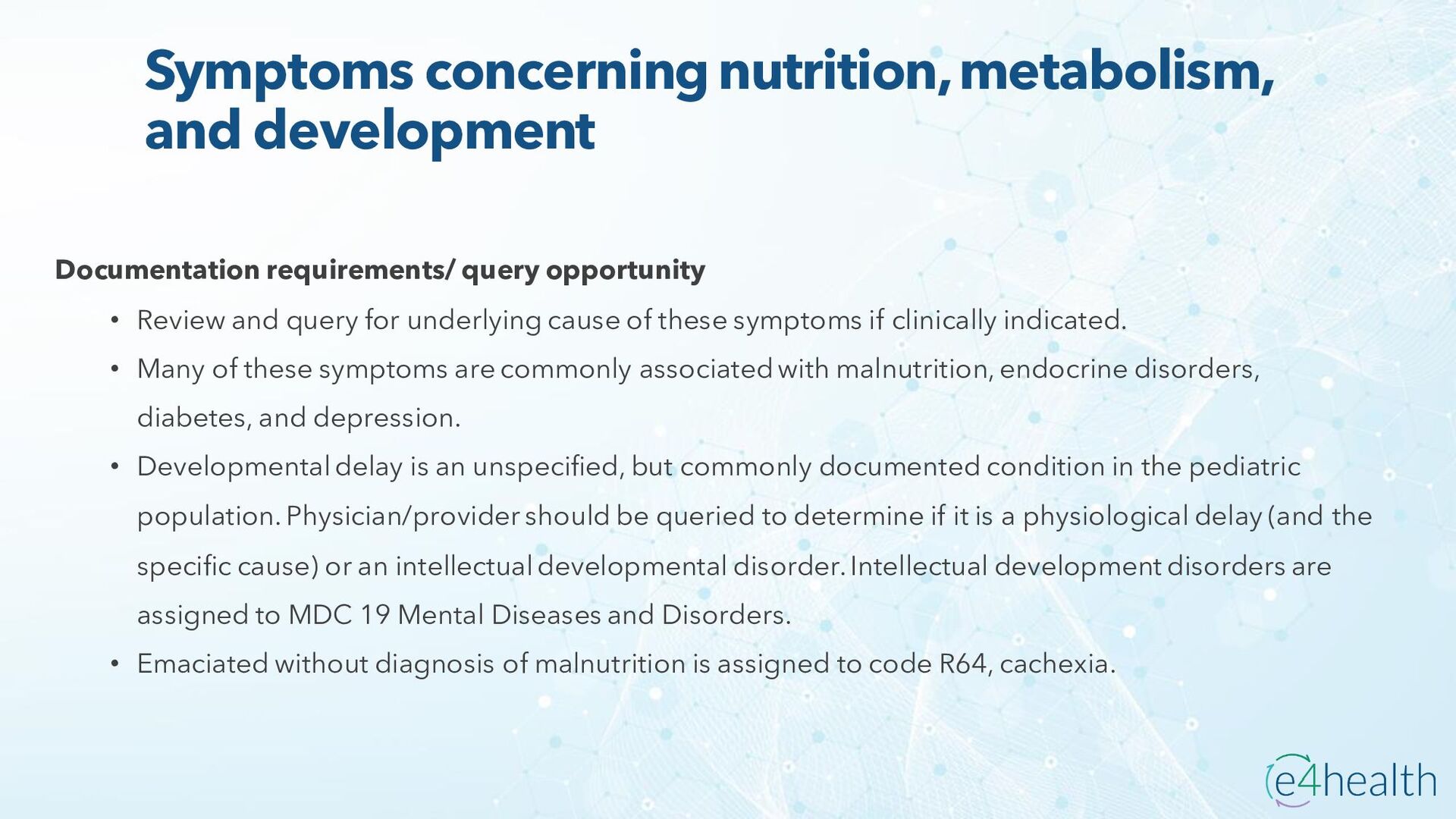
  64. Symptoms concerning nutrition, metabolism, and development Documentation requirements/ query opportunity

    • Review and query for underlying cause of these symptoms if clinically indicated. • Many of these symptoms are commonly associated with malnutrition, endocrine disorders, diabetes, and depression. • Developmental delay is an unspecified, but commonly documented condition in the pediatric population. Physician/provider should be queried to determine if it is a physiological delay (and the specific cause) or an intellectual developmental disorder. Intellectual development disorders are assigned to MDC 19 Mental Diseases and Disorders. • Emaciated without diagnosis of malnutrition is assigned to code R64, cachexia.
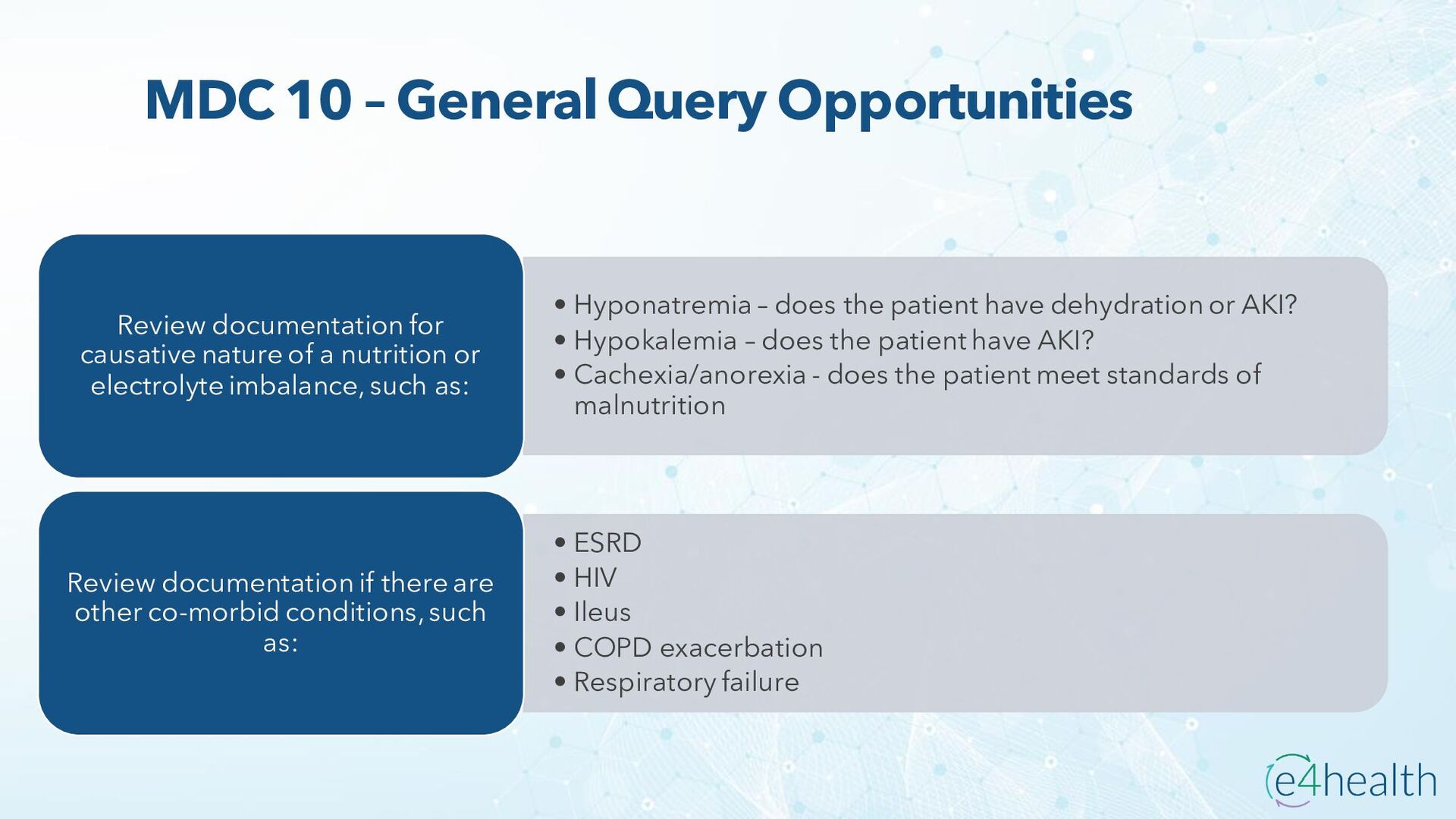
  65. MDC 10 – General Query Opportunities • Hyponatremia – does

    the patient have dehydration or AKI? • Hypokalemia – does the patient have AKI? • Cachexia/anorexia - does the patient meet standards of malnutrition Review documentation for causative nature of a nutrition or electrolyte imbalance, such as: • ESRD • HIV • Ileus • COPD exacerbation • Respiratory failure Review documentation if there are other co-morbid conditions, such as:
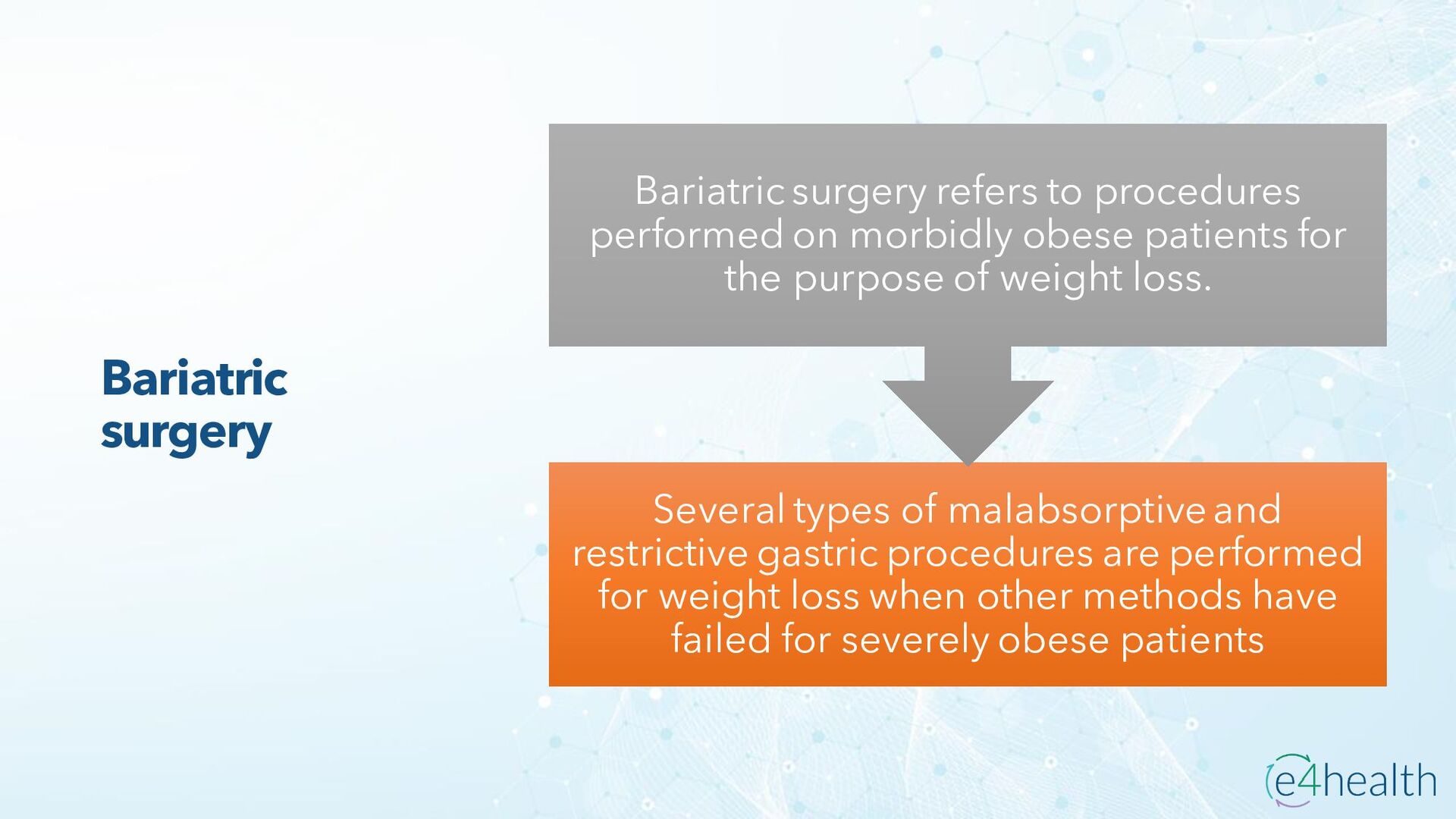
  66. Bariatric surgery Several types of malabsorptive and restrictive gastric procedures

    are performed for weight loss when other methods have failed for severely obese patients Bariatric surgery refers to procedures performed on morbidly obese patients for the purpose of weight loss.
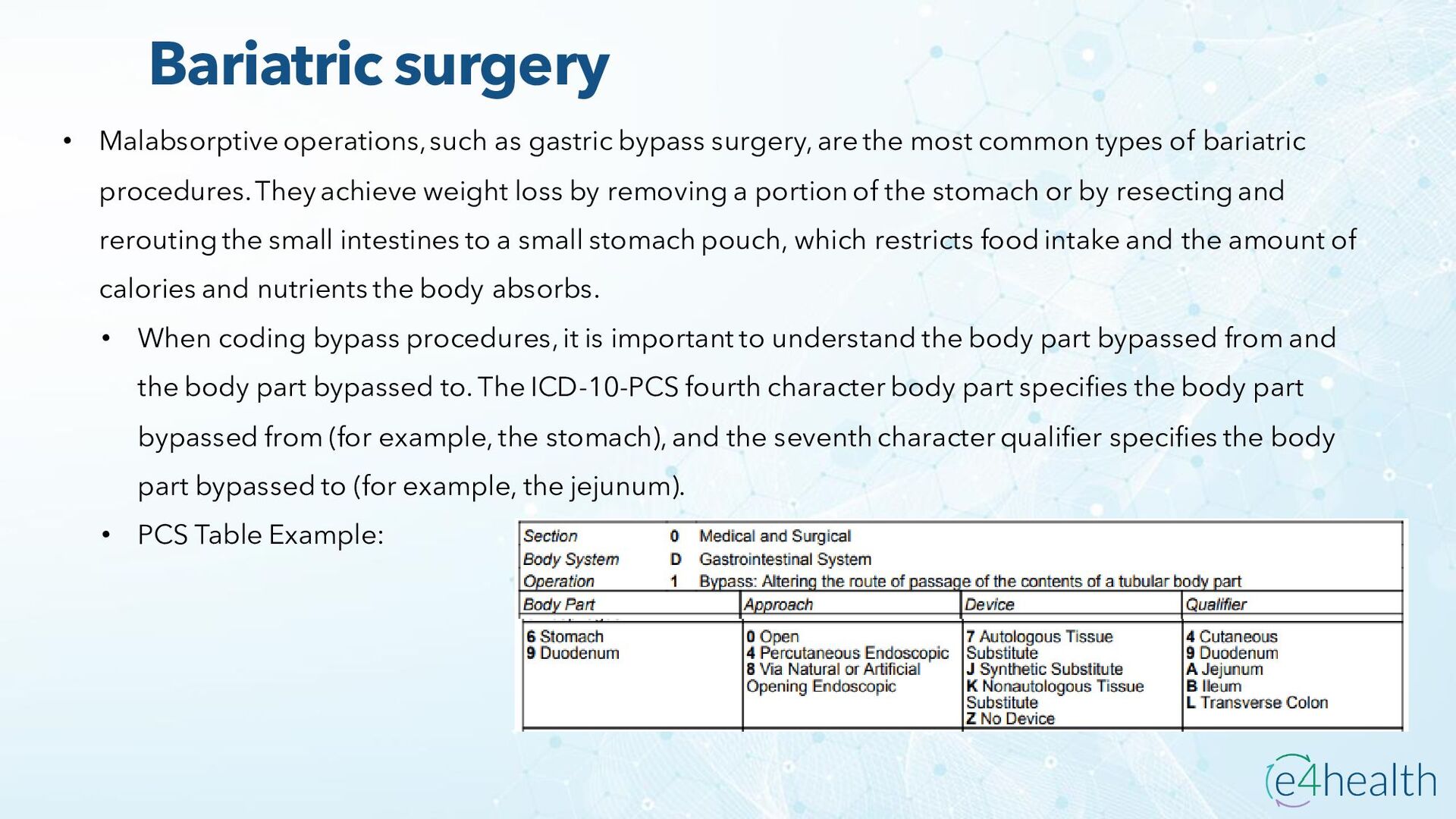
  67. Bariatric surgery • Malabsorptive operations, such as gastric bypass surgery,

    are the most common types of bariatric procedures. They achieve weight loss by removing a portion of the stomach or by resecting and rerouting the small intestines to a small stomach pouch, which restricts food intake and the amount of calories and nutrients the body absorbs. • When coding bypass procedures, it is important to understand the body part bypassed from and the body part bypassed to. The ICD-10-PCS fourth character body part specifies the body part bypassed from (for example, the stomach), and the seventh character qualifier specifies the body part bypassed to (for example, the jejunum). • PCS Table Example:
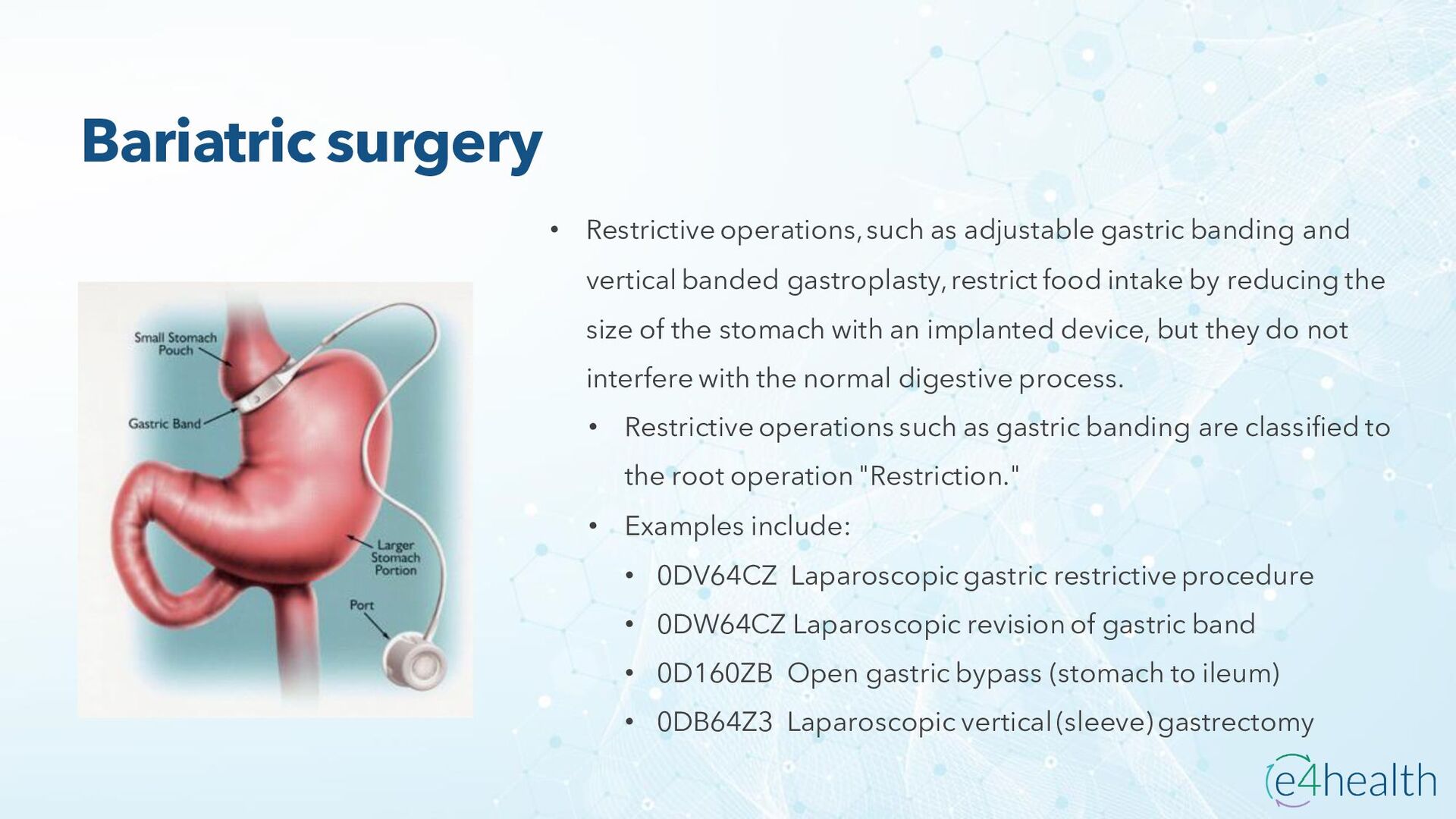
  68. Bariatric surgery • Restrictive operations, such as adjustable gastric banding

    and vertical banded gastroplasty, restrict food intake by reducing the size of the stomach with an implanted device, but they do not interfere with the normal digestive process. • Restrictive operations such as gastric banding are classified to the root operation "Restriction." • Examples include: • 0DV64CZ Laparoscopic gastric restrictive procedure • 0DW64CZ Laparoscopic revision of gastric band • 0D160ZB Open gastric bypass (stomach to ileum) • 0DB64Z3 Laparoscopic vertical (sleeve) gastrectomy
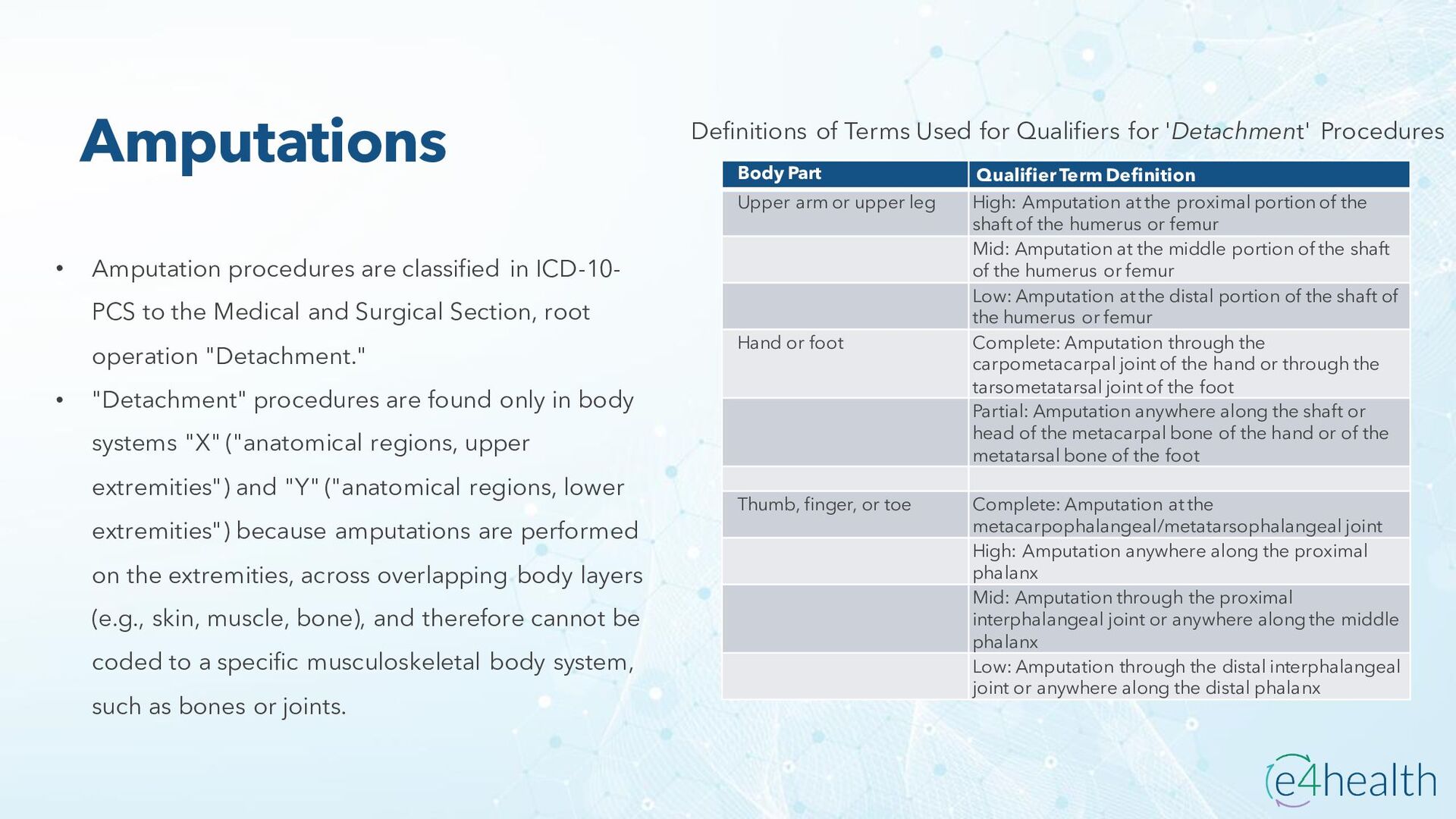
  69. Amputations • Amputation procedures are classified in ICD-10- PCS to

    the Medical and Surgical Section, root operation "Detachment." • "Detachment" procedures are found only in body systems "X" ("anatomical regions, upper extremities") and "Y" ("anatomical regions, lower extremities") because amputations are performed on the extremities, across overlapping body layers (e.g., skin, muscle, bone), and therefore cannot be coded to a specific musculoskeletal body system, such as bones or joints. Body Part Qualifier Term Definition Upper arm or upper leg High: Amputation at the proximal portion of the shaft of the humerus or femur Mid: Amputation at the middle portion of the shaft of the humerus or femur Low: Amputation at the distal portion of the shaft of the humerus or femur Hand or foot Complete: Amputation through the carpometacarpal joint of the hand or through the tarsometatarsal joint of the foot Partial: Amputation anywhere along the shaft or head of the metacarpal bone of the hand or of the metatarsal bone of the foot Thumb, finger, or toe Complete: Amputation at the metacarpophalangeal/metatarsophalangeal joint High: Amputation anywhere along the proximal phalanx Mid: Amputation through the proximal interphalangeal joint or anywhere along the middle phalanx Low: Amputation through the distal interphalangeal joint or anywhere along the distal phalanx Definitions of Terms Used for Qualifiers for 'Detachment' Procedures
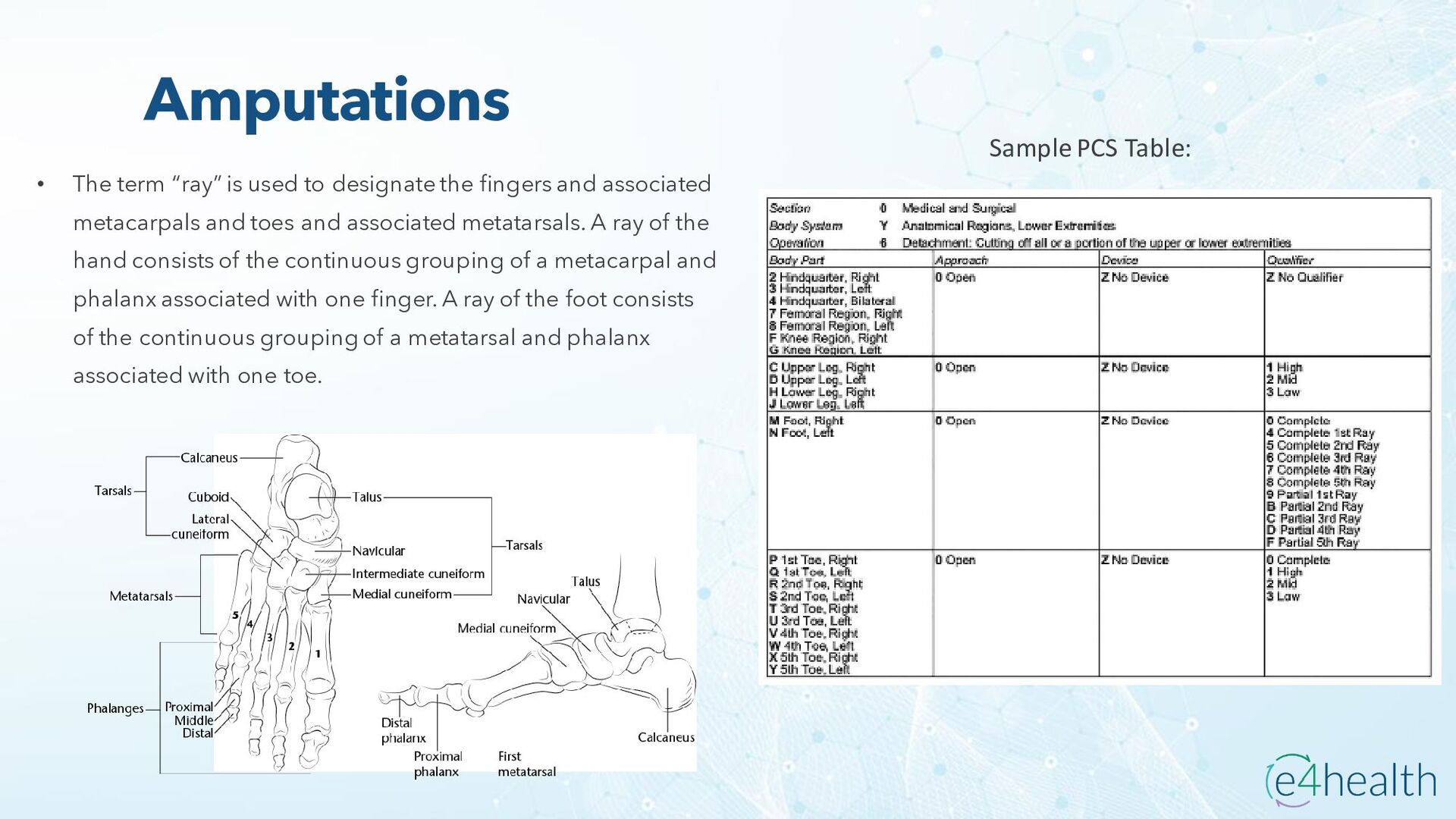
  70. Amputations • The term “ray” is used to designate the

    fingers and associated metacarpals and toes and associated metatarsals. A ray of the hand consists of the continuous grouping of a metacarpal and phalanx associated with one finger. A ray of the foot consists of the continuous grouping of a metatarsal and phalanx associated with one toe. Sample PCS Table:
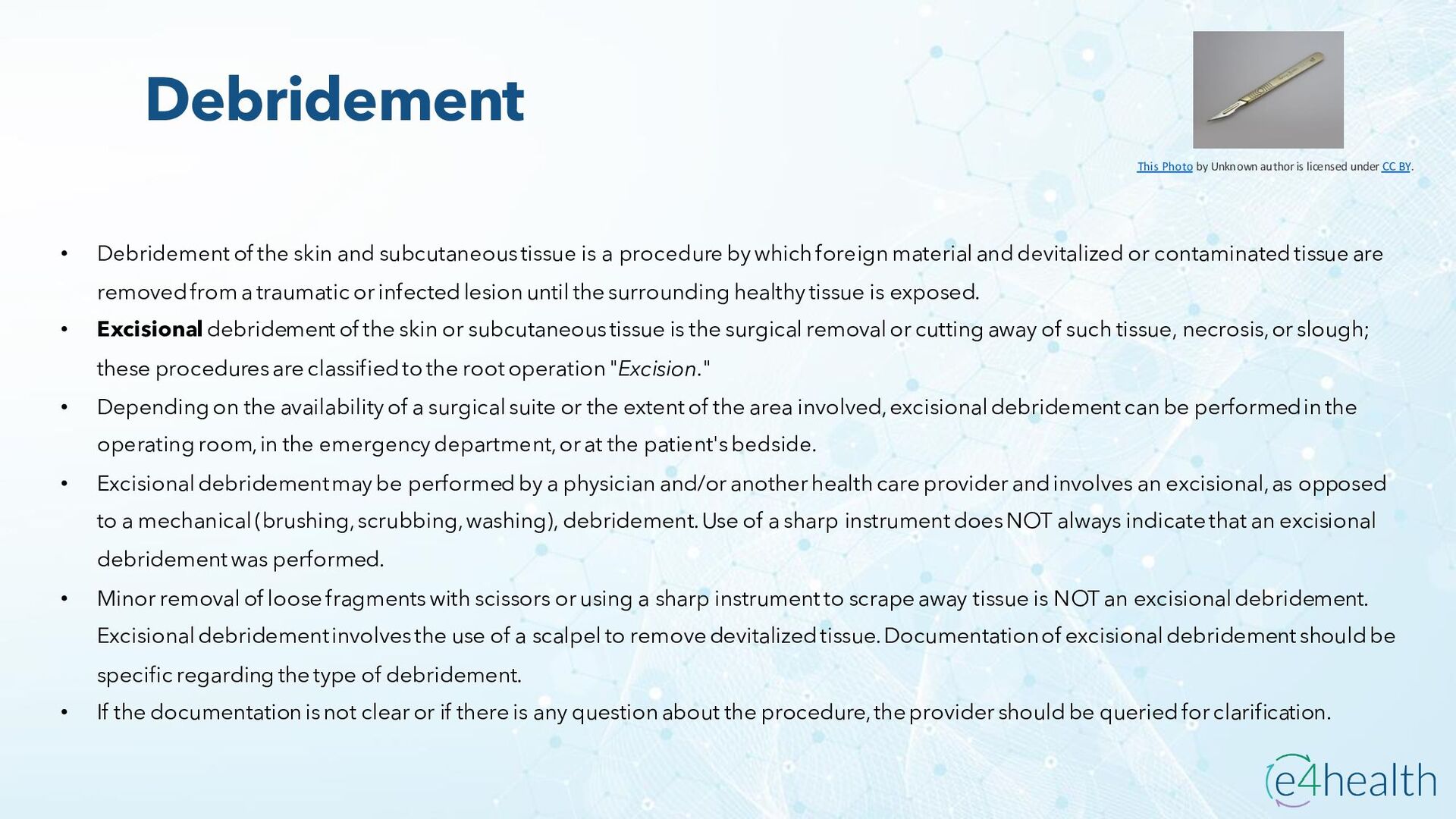
  71. Debridement • Debridement of the skin and subcutaneous tissue is

    a procedure by which foreign material and devitalized or contaminated tissue are removed from a traumatic or infected lesion until the surrounding healthy tissue is exposed. • Excisional debridement of the skin or subcutaneous tissue is the surgical removal or cutting away of such tissue, necrosis, or slough; these procedures are classified to the root operation "Excision." • Depending on the availability of a surgical suite or the extent of the area involved, excisional debridement can be performed in the operating room, in the emergency department, or at the patient's bedside. • Excisional debridement may be performed by a physician and/or another health care provider and involves an excisional, as opposed to a mechanical (brushing, scrubbing, washing), debridement. Use of a sharp instrument does NOT always indicate that an excisional debridement was performed. • Minor removal of loose fragments with scissors or using a sharp instrument to scrape away tissue is NOT an excisional debridement. Excisional debridement involves the use of a scalpel to remove devitalized tissue. Documentation of excisional debridement should be specific regarding the type of debridement. • If the documentation is not clear or if there is any question about the procedure, the provider should be queried for clarification. This Photo by Unknown author is licensed under CC BY.
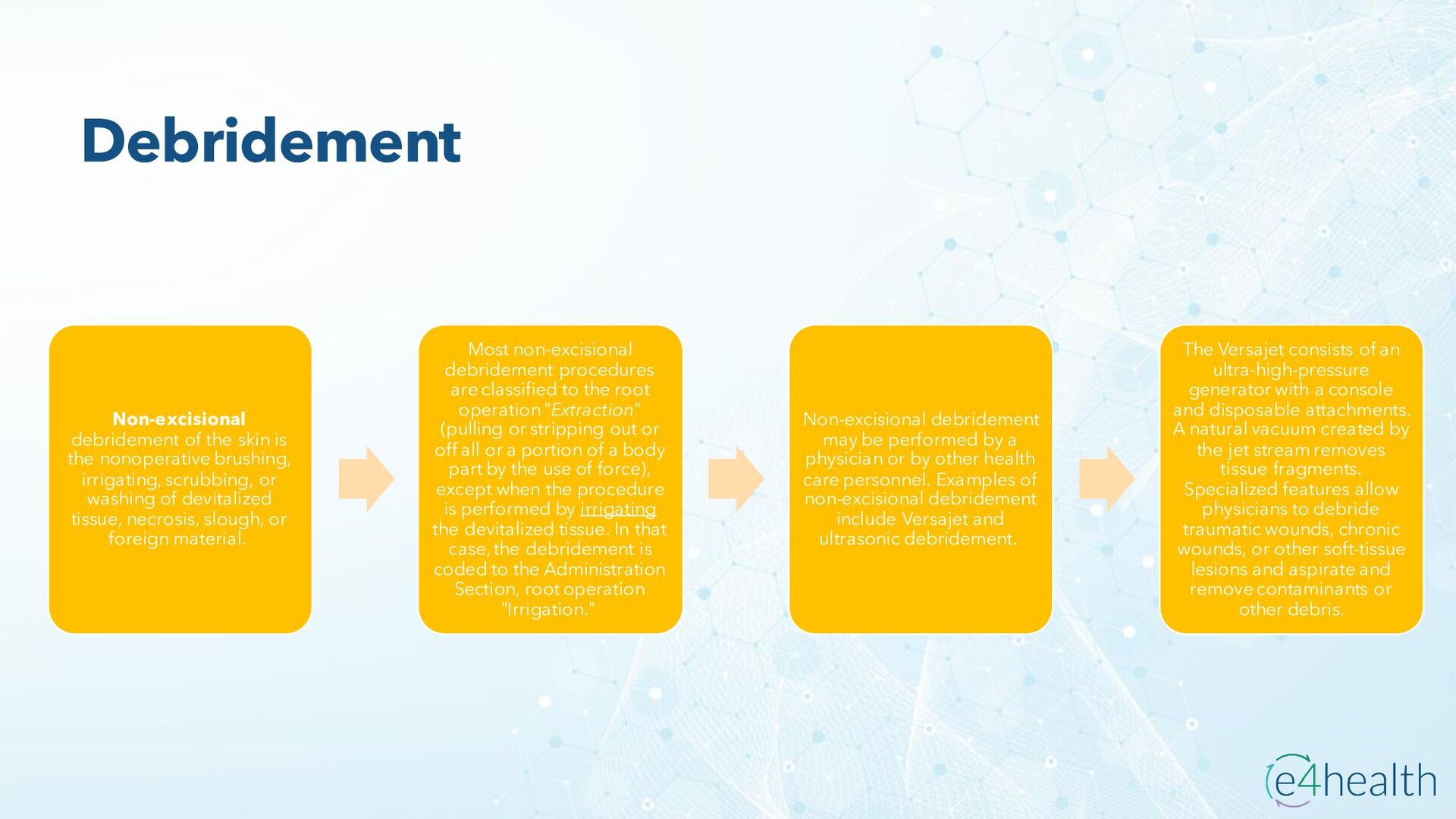
  72. Debridement Non-excisional debridement of the skin is the nonoperative brushing,

    irrigating, scrubbing, or washing of devitalized tissue, necrosis, slough, or foreign material. Most non-excisional debridement procedures are classified to the root operation "Extraction" (pulling or stripping out or off all or a portion of a body part by the use of force), except when the procedure is performed by irrigating the devitalized tissue. In that case, the debridement is coded to the Administration Section, root operation "Irrigation." Non-excisional debridement may be performed by a physician or by other health care personnel. Examples of non-excisional debridement include Versajet and ultrasonic debridement. The Versajet consists of an ultra-high-pressure generator with a console and disposable attachments. A natural vacuum created by the jet stream removes tissue fragments. Specialized features allow physicians to debride traumatic wounds, chronic wounds, or other soft-tissue lesions and aspirate and remove contaminants or other debris.
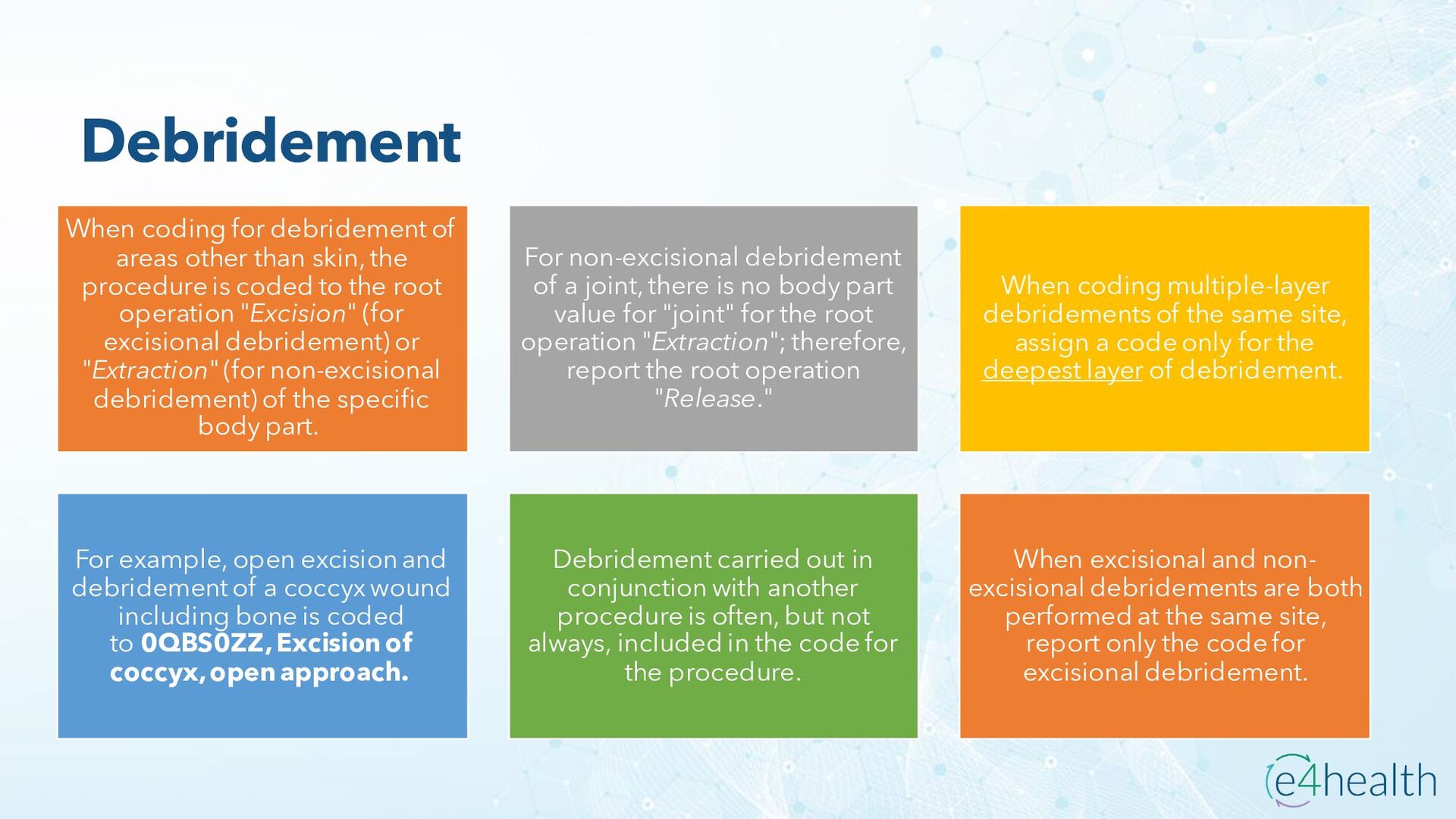
  73. Debridement When coding for debridement of areas other than skin,

    the procedure is coded to the root operation "Excision" (for excisional debridement) or "Extraction" (for non-excisional debridement) of the specific body part. For non-excisional debridement of a joint, there is no body part value for "joint" for the root operation "Extraction"; therefore, report the root operation "Release." When coding multiple-layer debridements of the same site, assign a code only for the deepest layer of debridement. For example, open excision and debridement of a coccyx wound including bone is coded to 0QBS0ZZ, Excision of coccyx, open approach. Debridement carried out in conjunction with another procedure is often, but not always, included in the code for the procedure. When excisional and non- excisional debridements are both performed at the same site, report only the code for excisional debridement.
  74. References • Overweight & Obesity Statistics - NIDDK (nih.gov) •

    http://www.livestrong.com/article/487412-malnutrition-in-america/ • Double burden of malnutrition in persons with obesity - PMC (nih.gov) • Hospitals Overbilled Medicare $1 Billion by Incorrectly Assigning Severe Malnutrition Diagnosis Codes to Inpatient Hospital Claims, A 03 17-00010 (hhs.gov) • Thyrotoxicosis - PubMed (nih.gov) • https://www.verywellhealth.com/thyroid-disease-causes-4013368 • https://thickit.com/blog/2022/09/29/5-things-practitioners-need-to-know-about-malnutrition/ • AHA ICD-10-CM and ICD-10-PCS Coding Handbook • ICD-10-PCS: An Applied Approach 2023 • Cengage: 3-2-1 CODE IT!