Upgrade to Pro — share decks privately, control downloads, hide ads and more …

Practical Ways to Improve Ecommerce Performance

Practical Ways to Improve Ecommerce Performance

Discover practical ways to improve online business performance through ecommerce marketing, marketplace management, product listing optimisation, and efficient operations. Learn how businesses can use data and customer insights to support sustainable growth.

Avatar for EcommAdvize

EcommAdvize

October 19, 2026

Other Decks in Business

Transcript

  1. Building a Sustainable Ecommerce Business Through Smarter Digital Practices Running

    a successful ecommerce business involves much more than uploading products and waiting for customers to place orders. Online retailers must understand customer expectations, maintain accurate product information, manage inventory, monitor sales performance, and adapt to changes in the digital marketplace. As competition continues to grow, businesses need practical systems that connect their marketing activities with everyday operations. Attracting website visitors is valuable, but converting those visitors into customers and delivering a reliable shopping experience are equally important. A sustainable approach to ecommerce focuses on improving the entire customer journey. By making informed decisions, strengthening internal processes, and using the right digital tools, businesses can create a stronger foundation for long term growth. Understanding the Changing Ecommerce Landscape Customer behaviour and online selling platforms continue to evolve. Shoppers compare prices, read product reviews, check delivery options, and expect accurate information before making purchasing decisions. Businesses that fail to meet these expectations may struggle to maintain customer confidence. Retailers should regularly review their websites, product listings, customer feedback, and sales performance to identify opportunities for improvement. They should also understand the competitive environment within their product categories. Rather than copying every new trend, businesses should focus on changes that support their customers and commercial objectives. A clear understanding of the market makes it easier to prioritise investments and avoid unnecessary spending.
  2. Create a Better Experience for Online Shoppers The quality of

    the shopping experience can influence whether visitors complete a purchase and return in the future. A website should make it easy for customers to discover products, compare options, understand prices, and complete checkout. Product pages need accurate descriptions, useful images, clear specifications, and transparent delivery information. Navigation should be straightforward, and the checkout process should work reliably across mobile devices and desktop computers. Businesses should also make customer support accessible. When shoppers can quickly find answers about delivery, returns, payments, and product suitability, they have fewer reasons to abandon a purchase. Customer experience improvements should be guided by evidence. Website analytics, customer enquiries, and feedback can help identify the areas where changes are most likely to make a difference. Make Marketing Decisions Based on Performance Effective online marketing requires a clear understanding of the audience, the products being promoted, and the results each activity produces. Businesses should avoid relying exclusively on website traffic or social media engagement when evaluating success. A practical marketing plan combines relevant content, search visibility, paid advertising where appropriate, and customer retention activities. Each channel should support a defined business objective, such as attracting qualified visitors, generating enquiries, or increasing profitable sales. Retailers can explore practical ecommerce growth resources from Ecomm Advize to learn more about improving online business performance and managing digital commerce activities. Regular performance reviews help businesses understand which campaigns generate valuable customers and which need adjustment. Tracking conversion rates, acquisition costs, average order value, and profit provides a more complete picture than measuring clicks alone.
  3. Improve Product Visibility Across Online Marketplaces Online marketplaces can give

    retailers access to established audiences, but competition can make product discovery challenging. Businesses need accurate listings, relevant product information, competitive offers, and dependable fulfilment to remain attractive to shoppers. Product titles and descriptions should communicate essential details without unnecessary repetition. Images should represent products accurately, while stock availability and delivery estimates must reflect what the business can actually provide. Retailers selling through several platforms should also maintain consistency across their catalogues. Differences in product specifications, pricing, or inventory information can create confusion and lead to avoidable customer complaints. Businesses looking for support with their selling channels can explore Ecomm Advize's marketplace and online retail resources. Choosing appropriate platforms and maintaining high quality listings can help retailers build a more organised presence across digital sales channels. Build Reliable Inventory and Fulfilment Processes Marketing success can create new problems when inventory and fulfilment processes are not prepared for increased demand. Products may become unavailable, orders may be delayed, and inaccurate stock records can lead to cancellations. Businesses should establish clear procedures for monitoring inventory, replenishing products, processing orders, and communicating delivery updates. Stock information should be updated consistently across the website and any connected marketplaces. Forecasting demand can help retailers prepare for seasonal fluctuations and identify products that require closer monitoring. Businesses should also review supplier reliability and consider how unexpected delays could affect customer commitments. Automation may reduce repetitive work, but it should be introduced carefully. The purpose is to improve accuracy and efficiency while ensuring that staff can identify and resolve exceptions when they occur.
  4. Use Data to Identify Opportunities for Improvement Reliable data helps

    ecommerce businesses move beyond assumptions and make more informed decisions. Sales reports, website analytics, marketplace dashboards, and customer feedback can reveal where performance is strong and where problems need attention. For example, high traffic combined with low conversion rates may indicate an issue with product pricing, page relevance, or checkout usability. Frequent cancellations could point to inventory inaccuracies, while repeated product returns may suggest unclear descriptions or quality concerns. Businesses should select measurements that relate directly to their objectives. Reviewing too many unrelated metrics can make it difficult to identify priorities. Regular reporting also creates an opportunity to compare performance over time. By testing changes and monitoring the results, retailers can determine which improvements deliver meaningful commercial value. Connect Business Operations With Long Term Growth As an ecommerce business expands, managing different activities independently becomes increasingly difficult. Marketing, catalogue management, inventory, customer service, and order fulfilment all influence one another. A promotional campaign may increase demand, but the business must have sufficient stock and fulfilment capacity to handle the additional orders. Similarly, a new marketplace can provide access to more customers but may introduce additional reporting, listing, and account management requirements. Businesses can review Ecomm Advize's ecommerce business solutions to understand how coordinated support may help them manage their online selling activities. Clear responsibilities, documented procedures, and consistent reporting help teams work more effectively. These foundations allow businesses to identify operational problems earlier and make expansion decisions based on their actual capabilities.
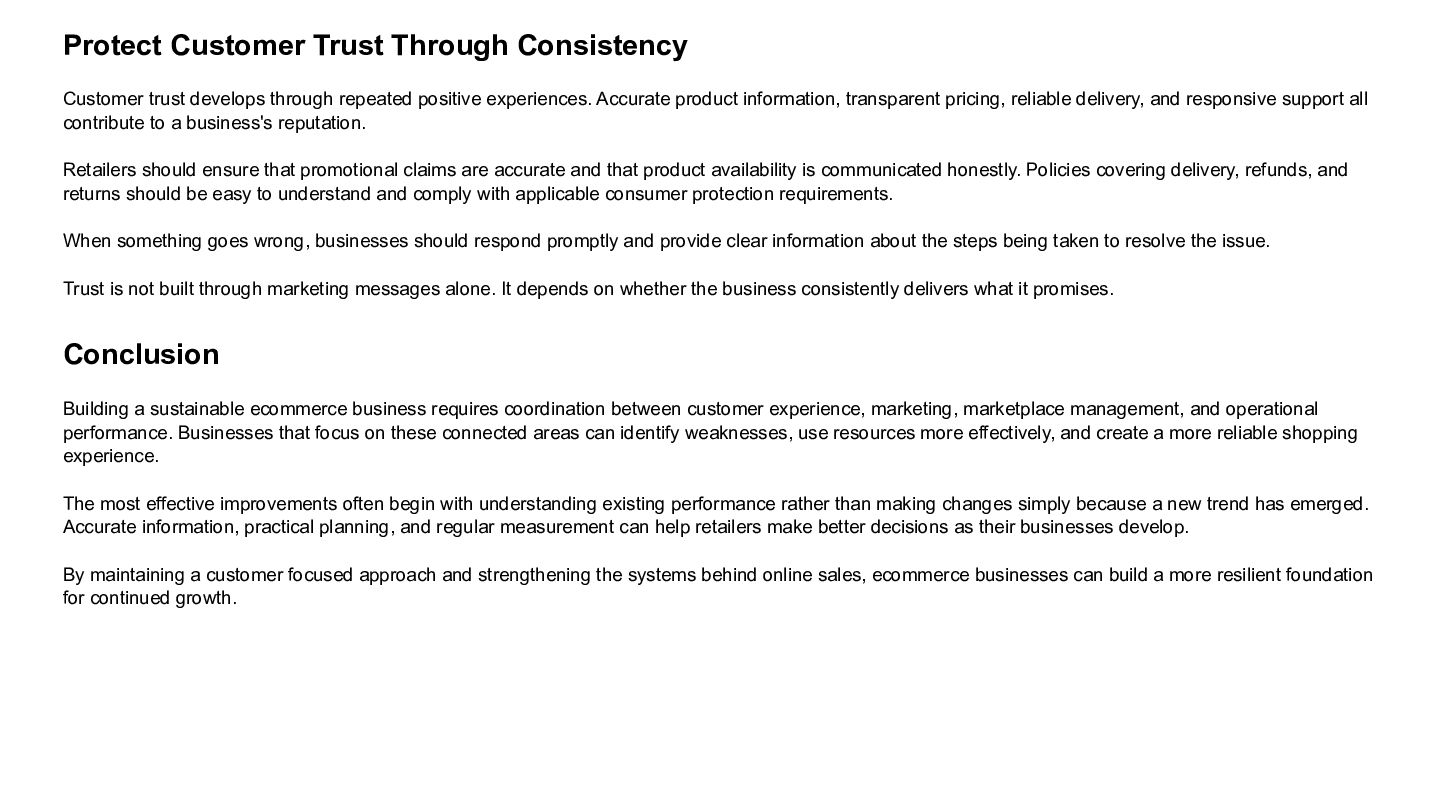
  5. Protect Customer Trust Through Consistency Customer trust develops through repeated

    positive experiences. Accurate product information, transparent pricing, reliable delivery, and responsive support all contribute to a business's reputation. Retailers should ensure that promotional claims are accurate and that product availability is communicated honestly. Policies covering delivery, refunds, and returns should be easy to understand and comply with applicable consumer protection requirements. When something goes wrong, businesses should respond promptly and provide clear information about the steps being taken to resolve the issue. Trust is not built through marketing messages alone. It depends on whether the business consistently delivers what it promises. Conclusion Building a sustainable ecommerce business requires coordination between customer experience, marketing, marketplace management, and operational performance. Businesses that focus on these connected areas can identify weaknesses, use resources more effectively, and create a more reliable shopping experience. The most effective improvements often begin with understanding existing performance rather than making changes simply because a new trend has emerged. Accurate information, practical planning, and regular measurement can help retailers make better decisions as their businesses develop. By maintaining a customer focused approach and strengthening the systems behind online sales, ecommerce businesses can build a more resilient foundation for continued growth.