plan, and communicate at work, but using it well takes more than copying and pasting.This project looks at how professionals apply AI to real communication and content tasks.
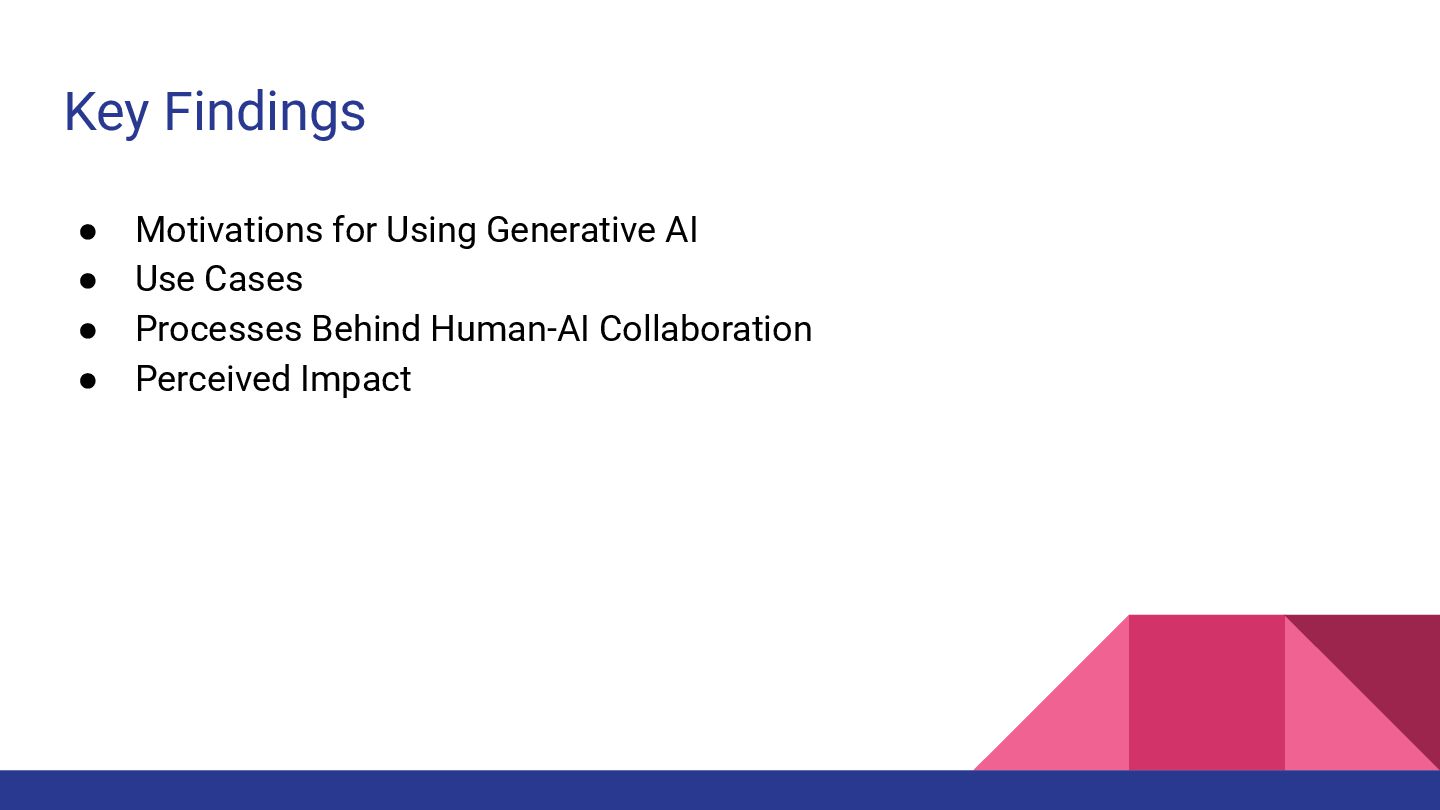
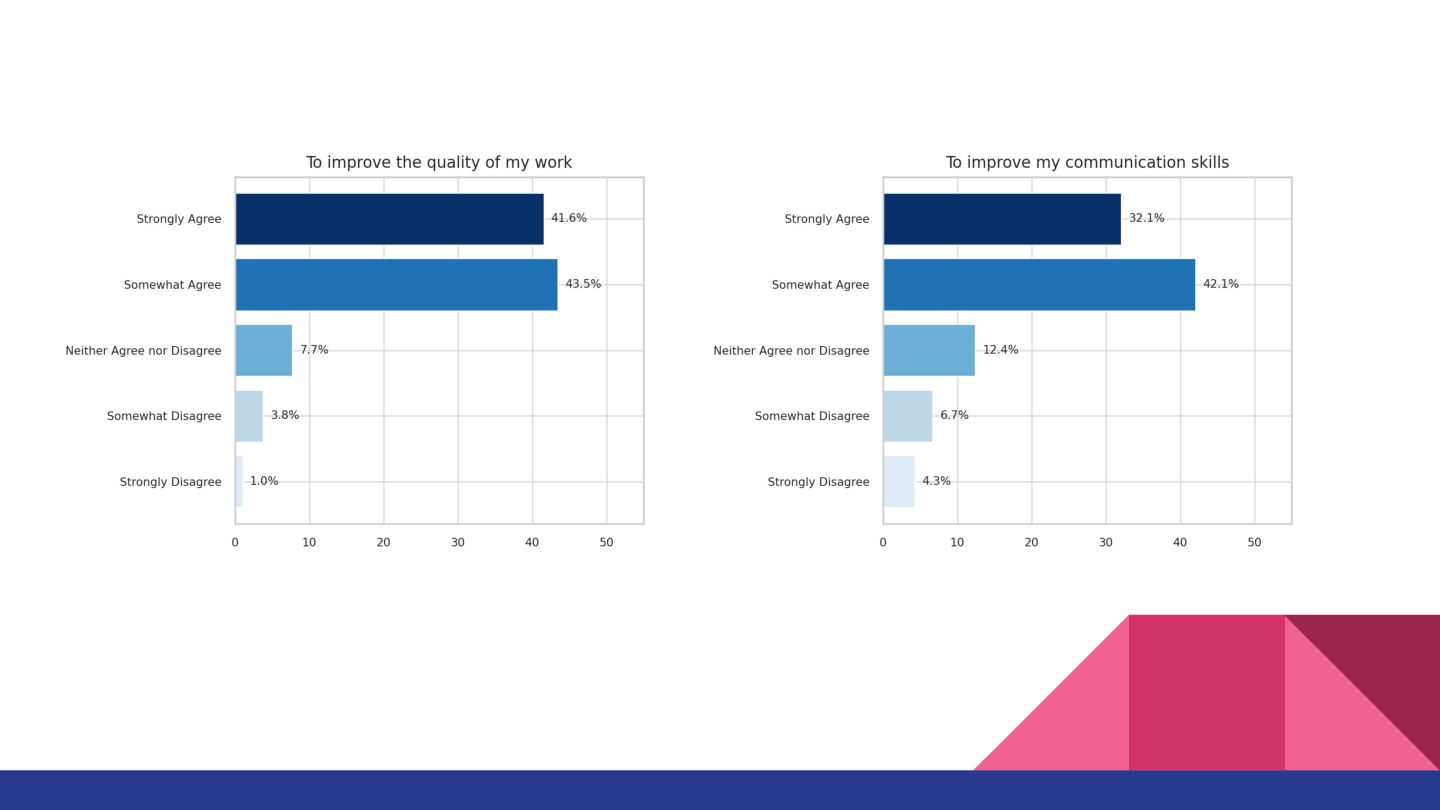
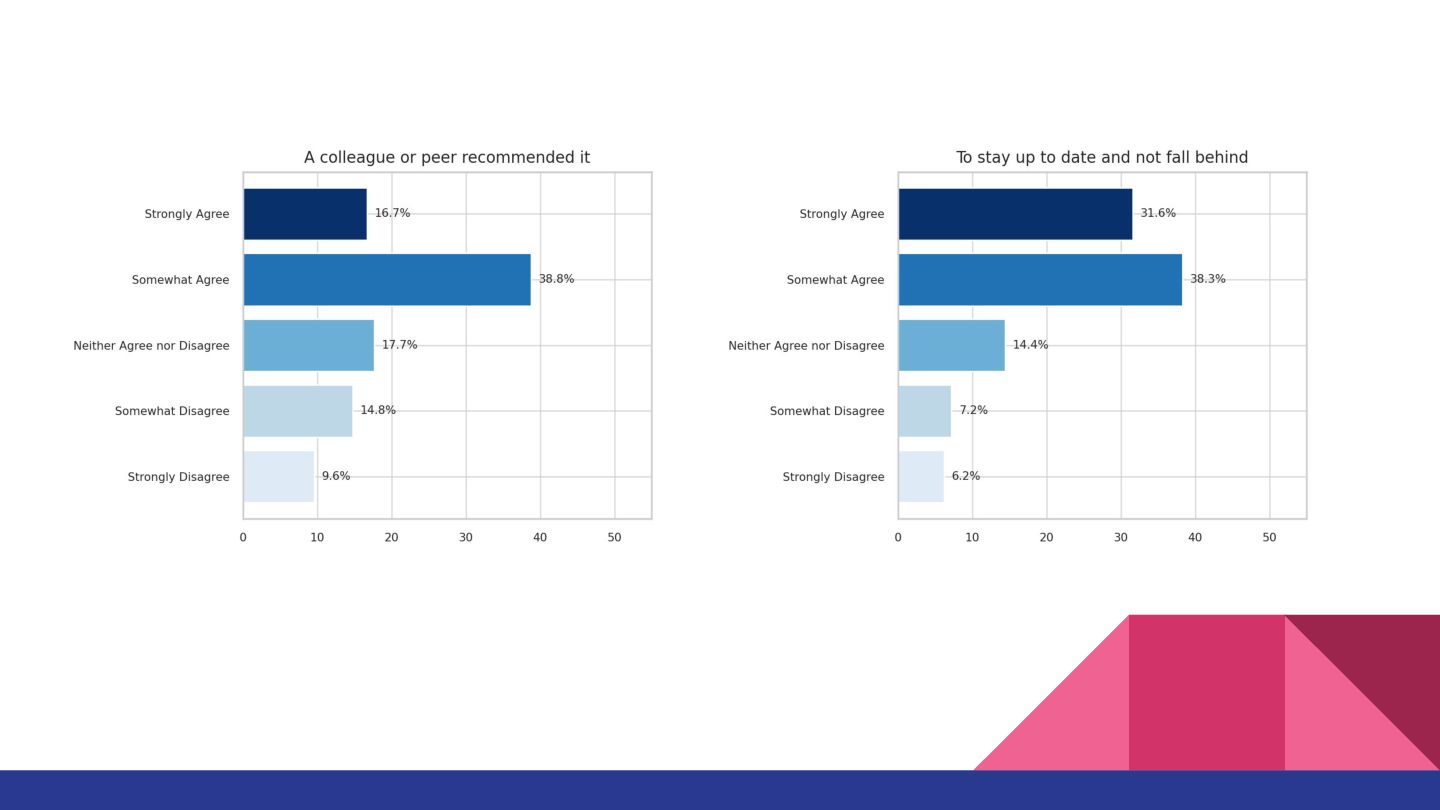
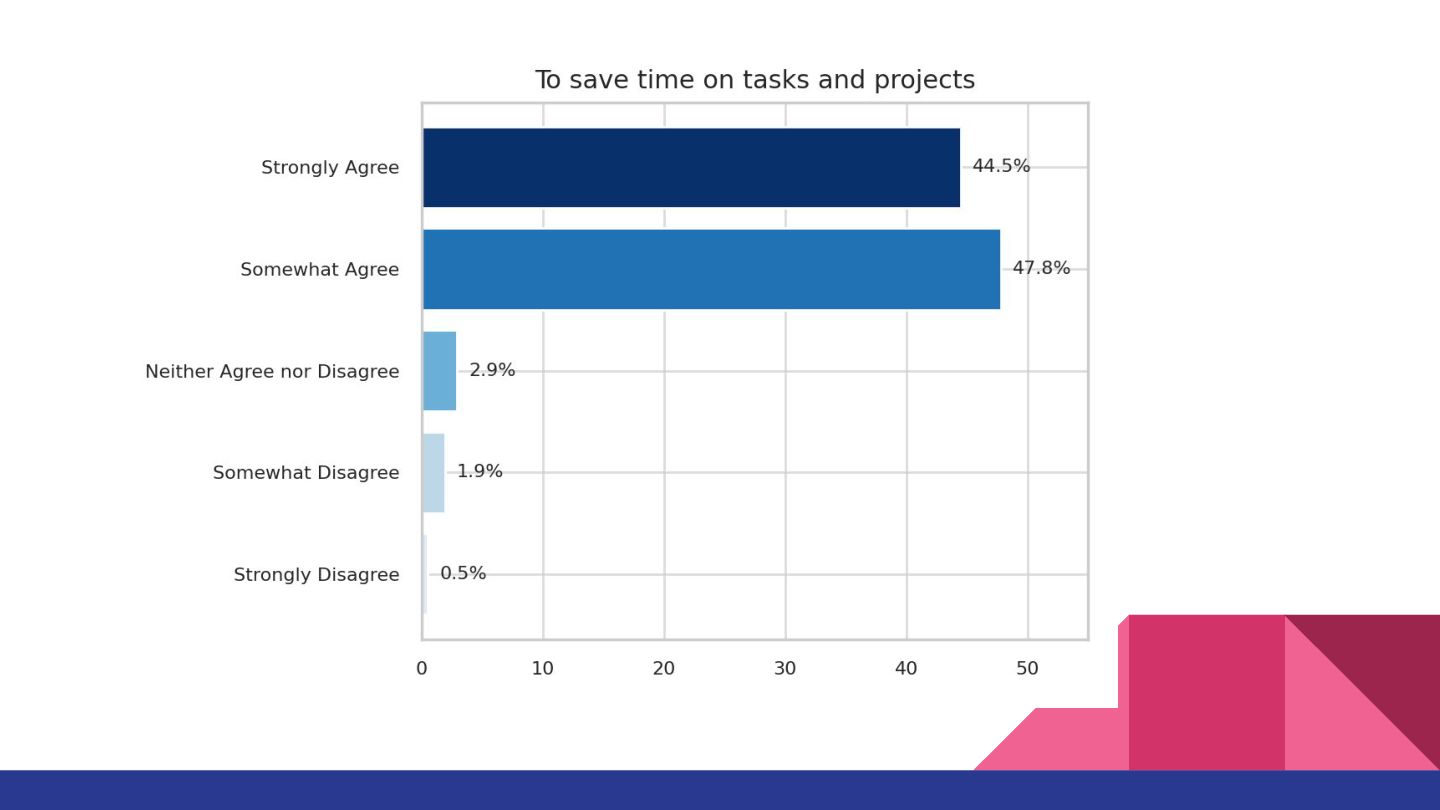
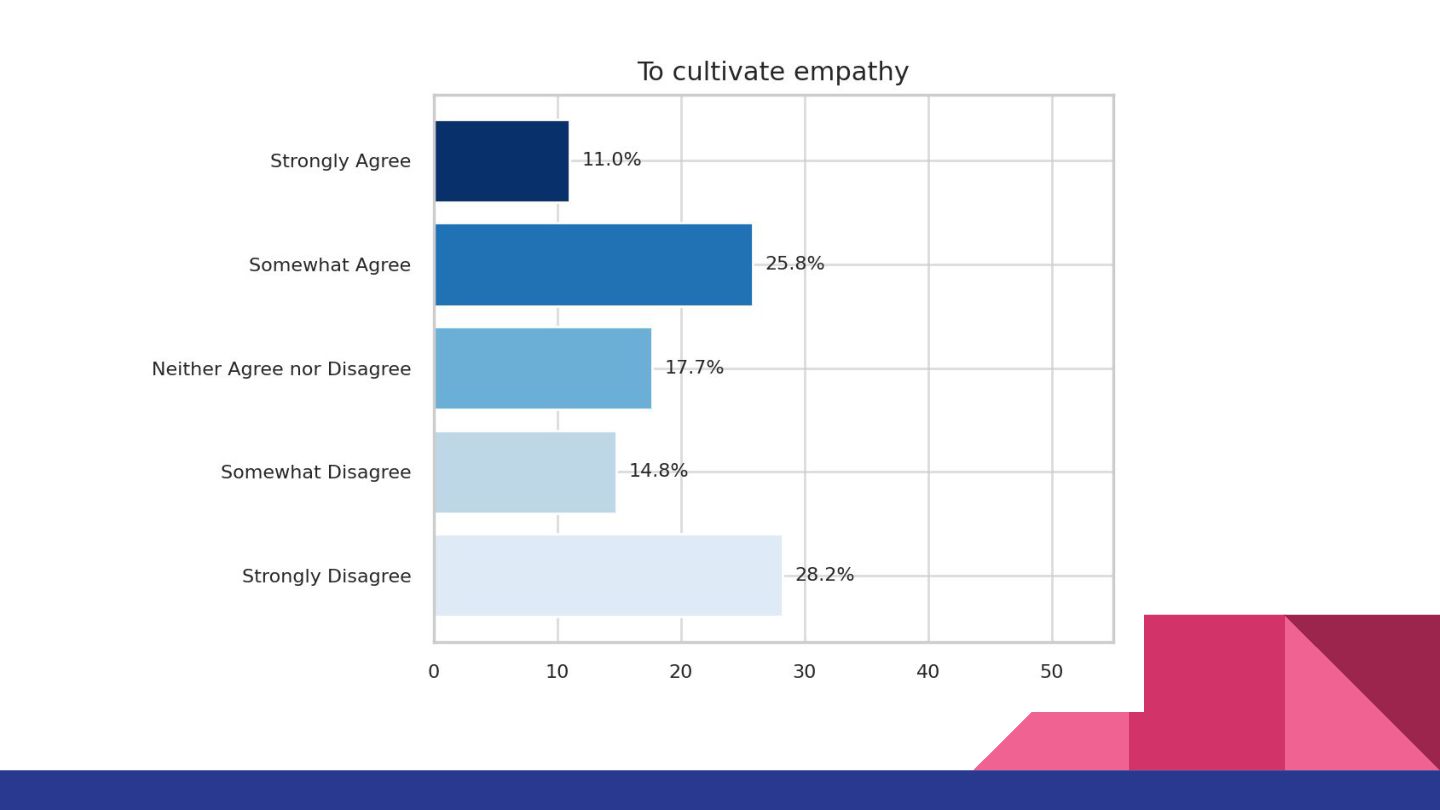
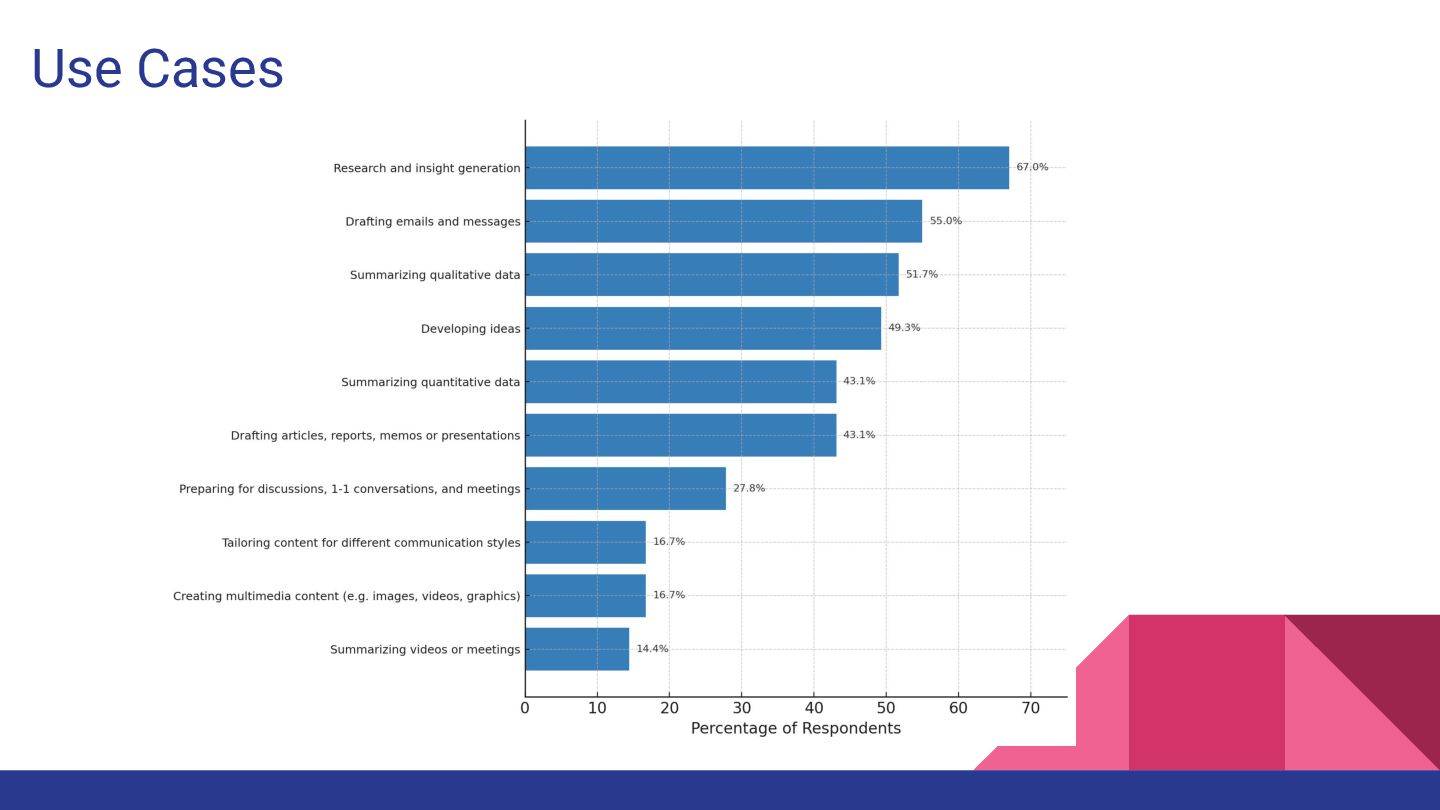
AI at work for communication and content-related tasks. The survey collected information on: • Motivations for using generative AI • Tasks they used generative AI for • Frequency of use • Perceived impact on work
a task with AI The following was observed: • How they phrased and revised prompts • What changes they made to the AI’s output • When and why they decided something was usable
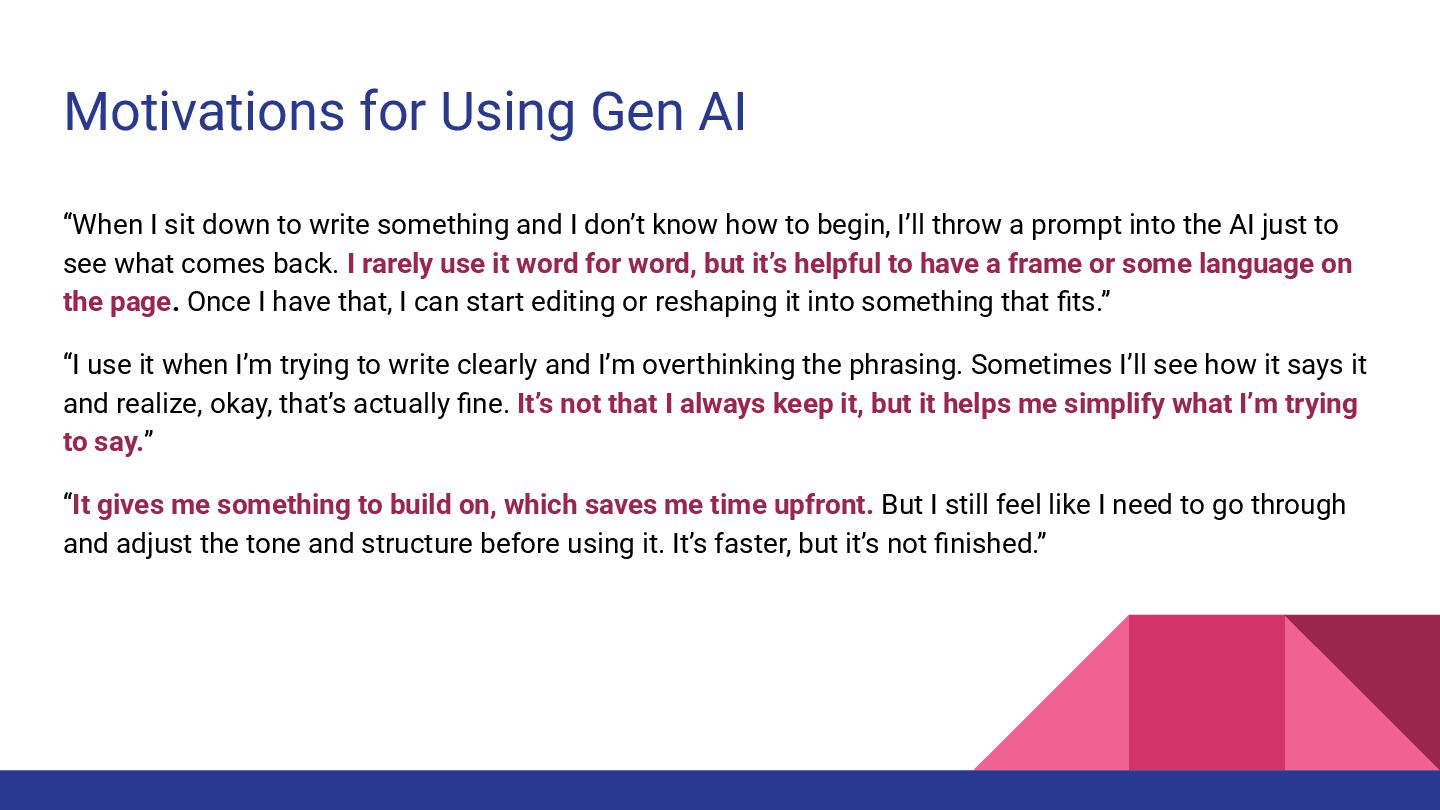
write something and I don’t know how to begin, I’ll throw a prompt into the AI just to see what comes back. I rarely use it word for word, but it’s helpful to have a frame or some language on the page. Once I have that, I can start editing or reshaping it into something that fits.” “I use it when I’m trying to write clearly and I’m overthinking the phrasing. Sometimes I’ll see how it says it and realize, okay, that’s actually fine. It’s not that I always keep it, but it helps me simplify what I’m trying to say.” “It gives me something to build on, which saves me time upfront. But I still feel like I need to go through and adjust the tone and structure before using it. It’s faster, but it’s not finished.”
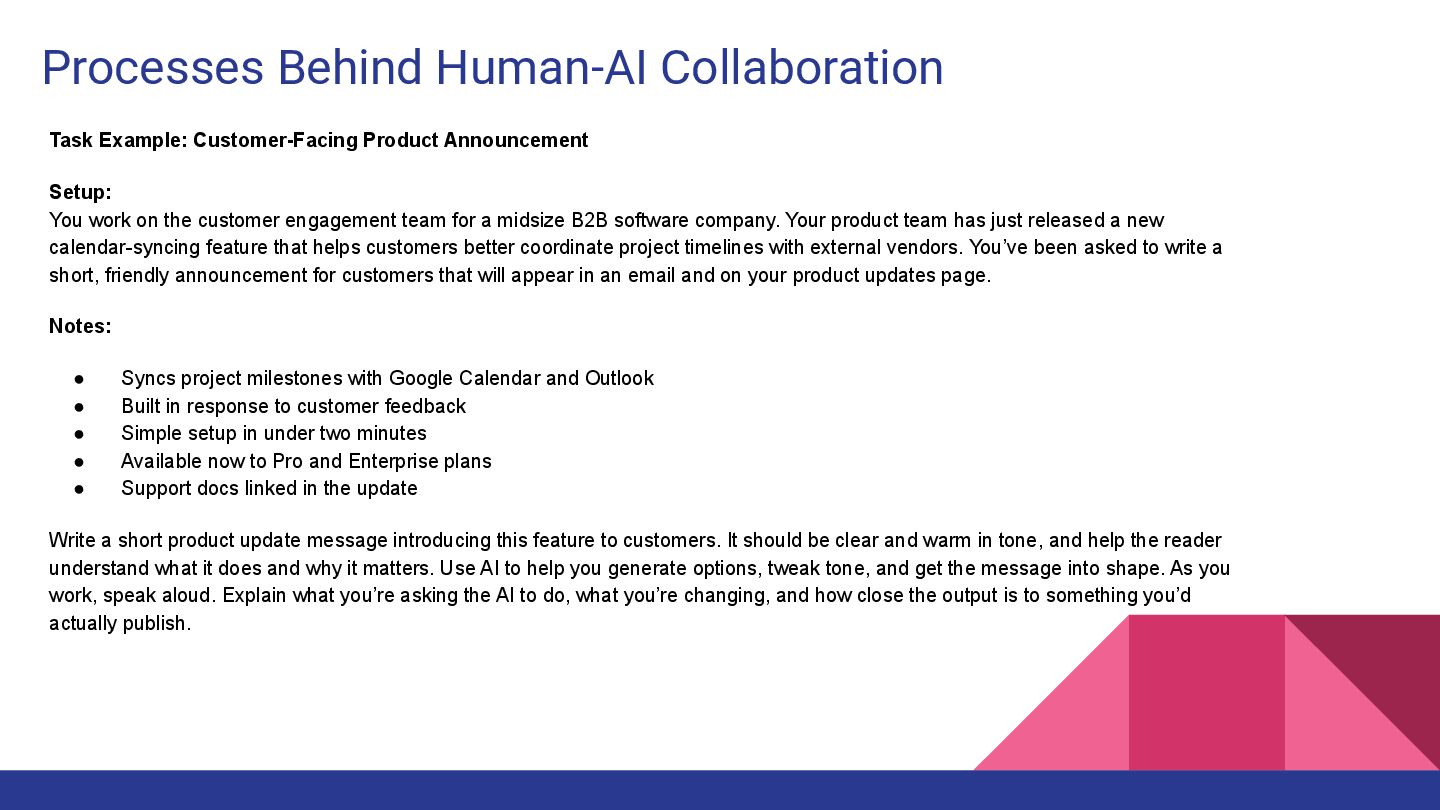
customer engagement team for a midsize B2B software company. Your product team has just released a new calendar-syncing feature that helps customers better coordinate project timelines with external vendors. You’ve been asked to write a short, friendly announcement for customers that will appear in an email and on your product updates page. Notes: • Syncs project milestones with Google Calendar and Outlook • Built in response to customer feedback • Simple setup in under two minutes • Available now to Pro and Enterprise plans • Support docs linked in the update Write a short product update message introducing this feature to customers. It should be clear and warm in tone, and help the reader understand what it does and why it matters. Use AI to help you generate options, tweak tone, and get the message into shape. As you work, speak aloud. Explain what you’re asking the AI to do, what you’re changing, and how close the output is to something you’d actually publish. Processes Behind Human-AI Collaboration
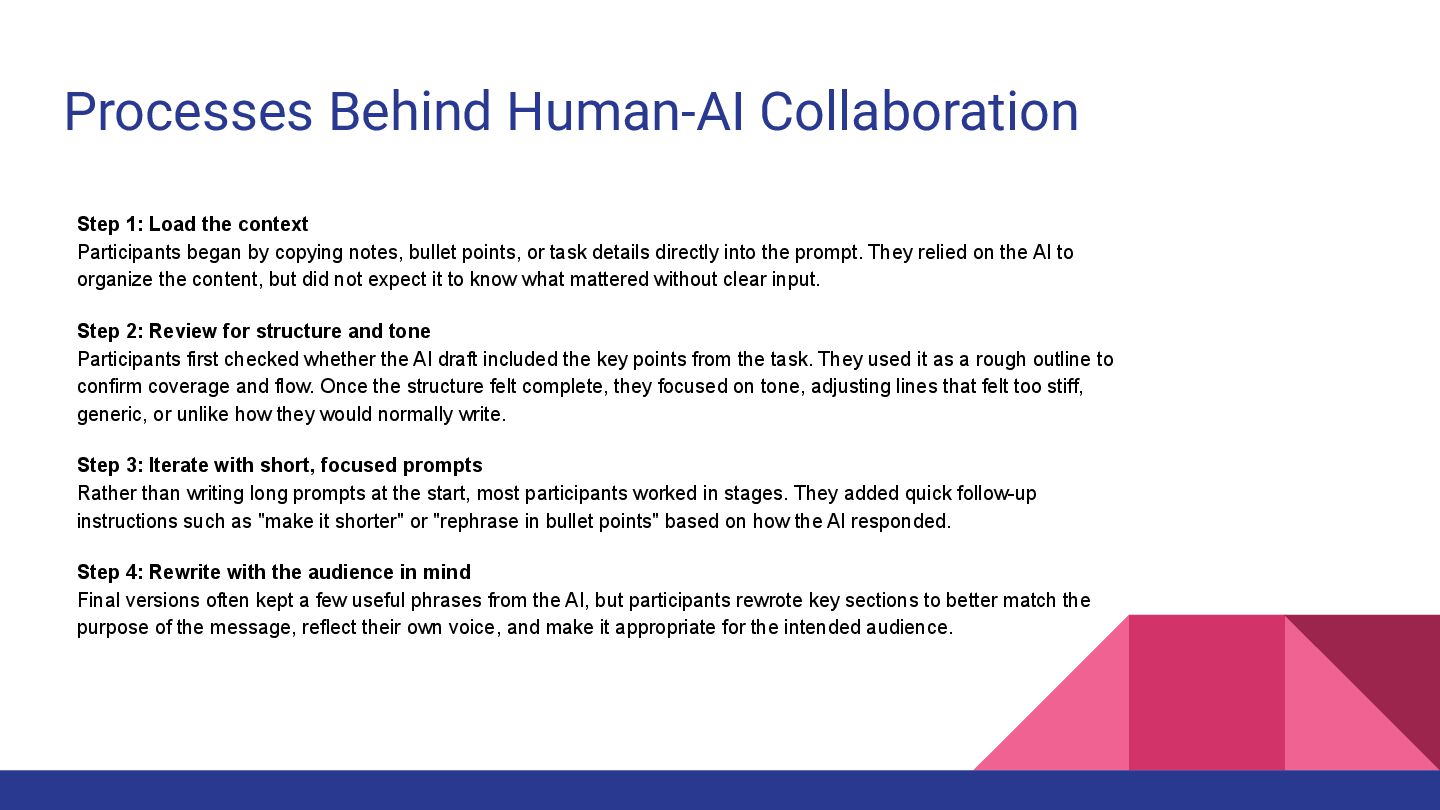
began by copying notes, bullet points, or task details directly into the prompt. They relied on the AI to organize the content, but did not expect it to know what mattered without clear input. Step 2: Review for structure and tone Participants first checked whether the AI draft included the key points from the task. They used it as a rough outline to confirm coverage and flow. Once the structure felt complete, they focused on tone, adjusting lines that felt too stiff, generic, or unlike how they would normally write. Step 3: Iterate with short, focused prompts Rather than writing long prompts at the start, most participants worked in stages. They added quick follow-up instructions such as "make it shorter" or "rephrase in bullet points" based on how the AI responded. Step 4: Rewrite with the audience in mind Final versions often kept a few useful phrases from the AI, but participants rewrote key sections to better match the purpose of the message, reflect their own voice, and make it appropriate for the intended audience.
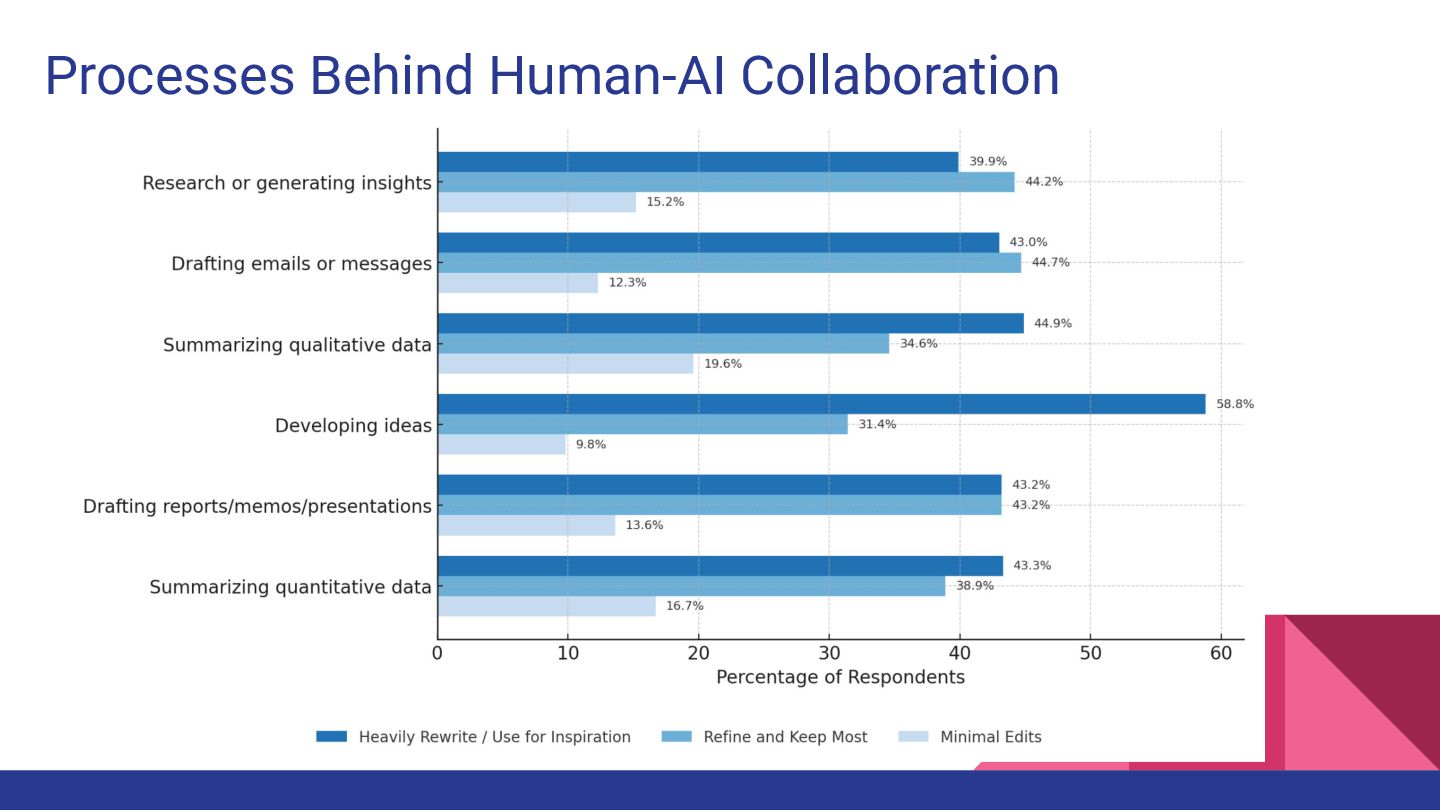
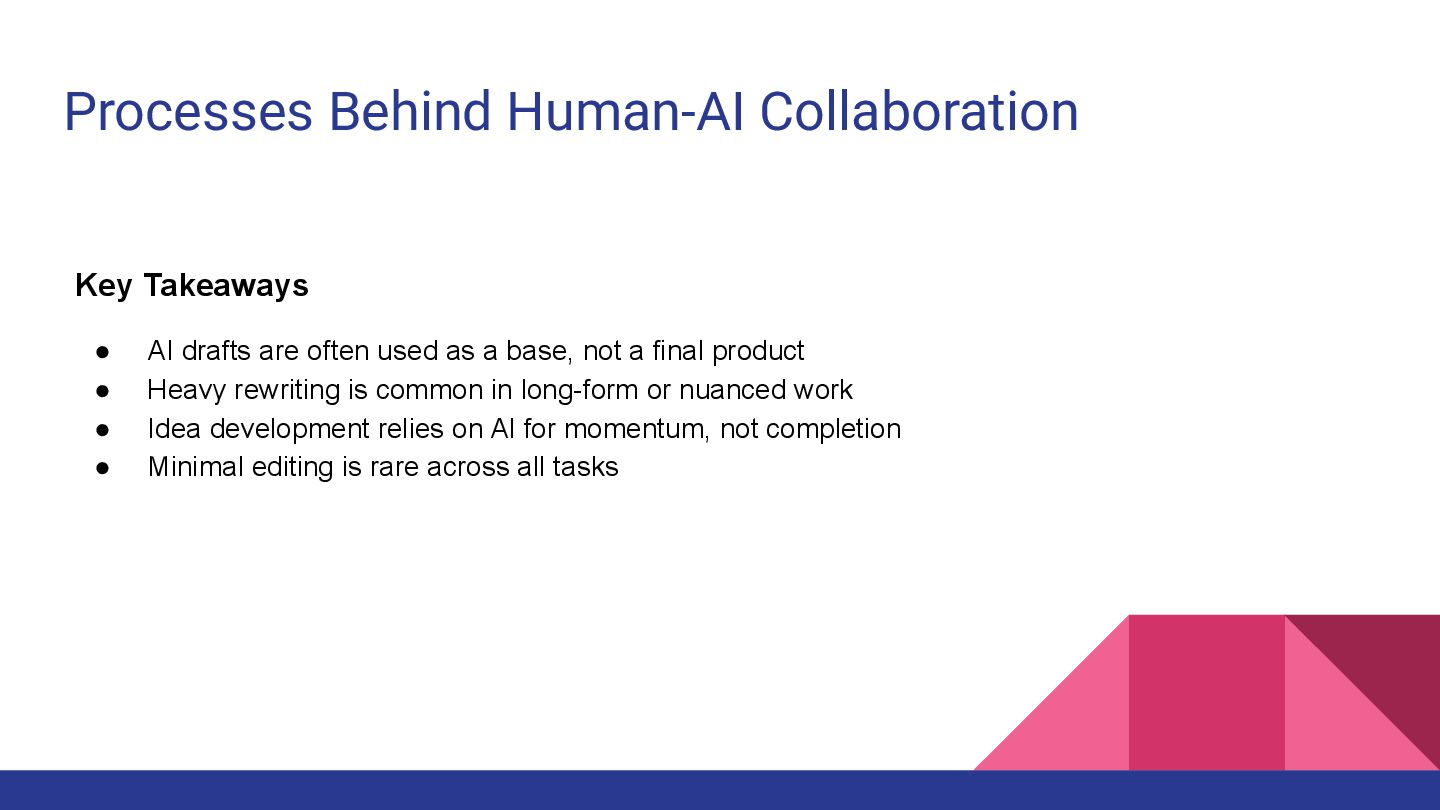
often used as a base, not a final product • Heavy rewriting is common in long-form or nuanced work • Idea development relies on AI for momentum, not completion • Minimal editing is rare across all tasks
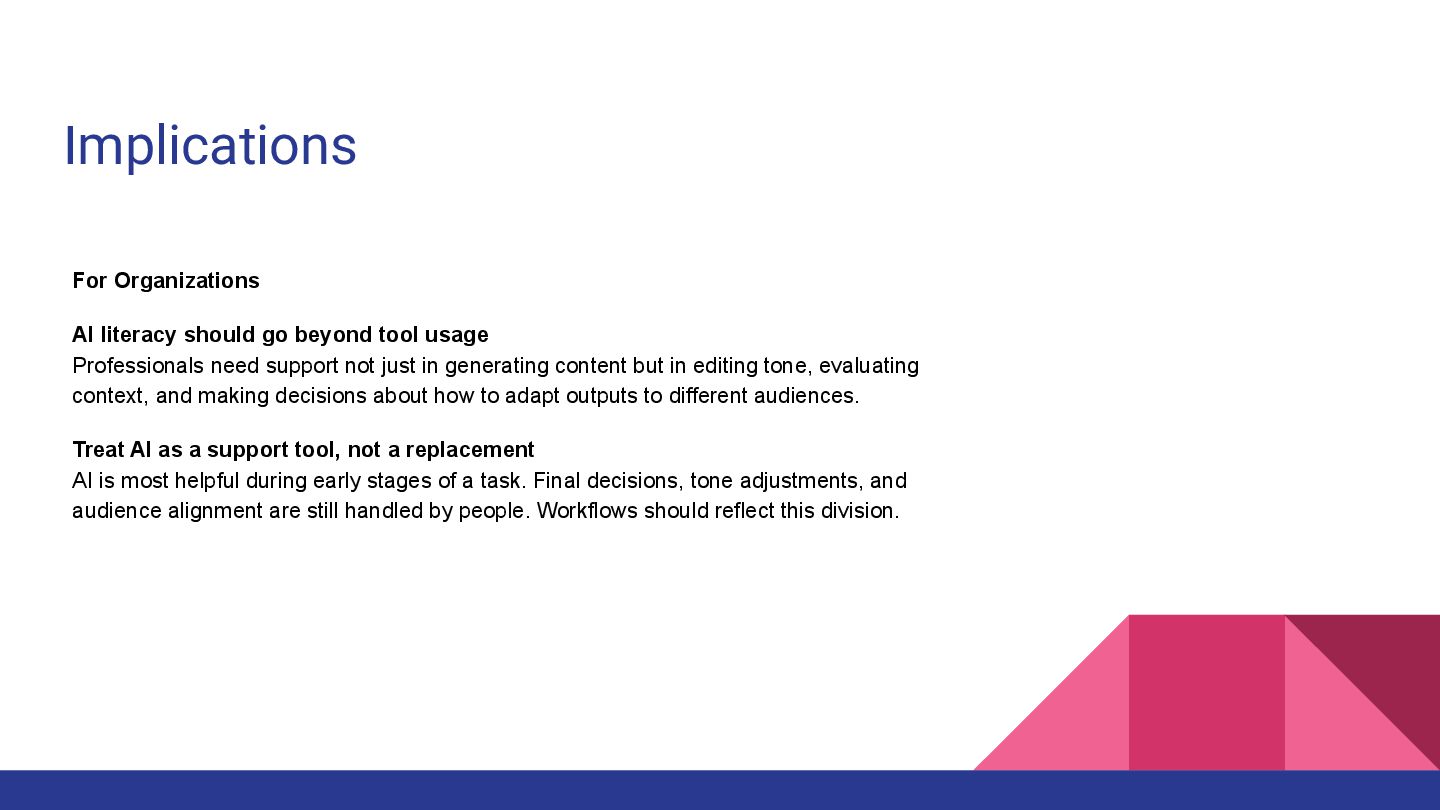
Professionals need support not just in generating content but in editing tone, evaluating context, and making decisions about how to adapt outputs to different audiences. Treat AI as a support tool, not a replacement AI is most helpful during early stages of a task. Final decisions, tone adjustments, and audience alignment are still handled by people. Workflows should reflect this division.
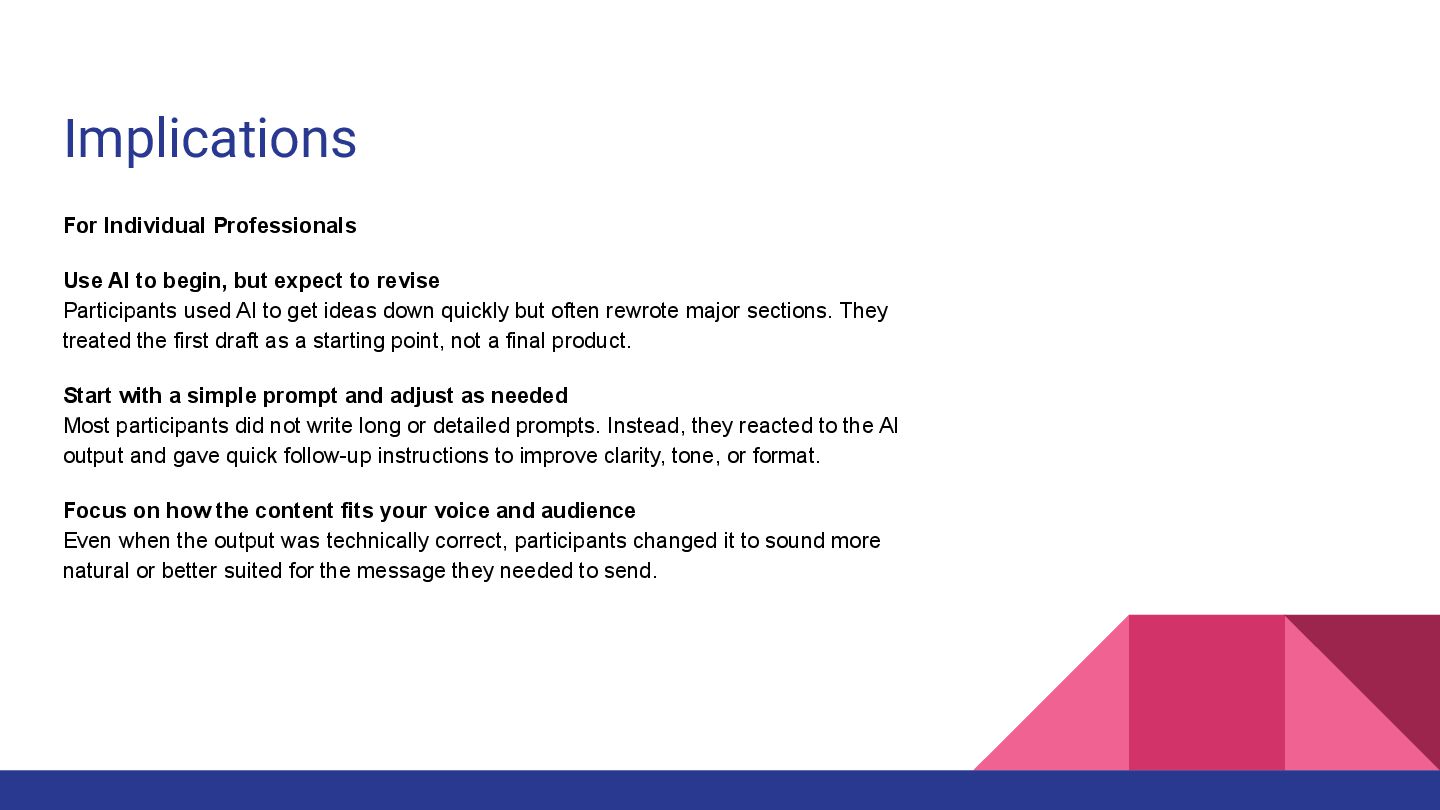
to revise Participants used AI to get ideas down quickly but often rewrote major sections. They treated the first draft as a starting point, not a final product. Start with a simple prompt and adjust as needed Most participants did not write long or detailed prompts. Instead, they reacted to the AI output and gave quick follow-up instructions to improve clarity, tone, or format. Focus on how the content fits your voice and audience Even when the output was technically correct, participants changed it to sound more natural or better suited for the message they needed to send.
AI use Investigate how people within the same team talk about, align on, or diverge in their use of AI tools. This could include when they use AI, what kind of edits they expect, and how they judge whether AI-generated content is appropriate for team communication. Study how AI use affects professionals’ communication confidence Track how individuals describe their clarity, tone awareness, or decisiveness after using AI across different tasks. Focus on the interpersonal and psychological dimensions of working with AI over time, not just output quality.


 emiliedubiel
 minecr
 takai
 keathley
 kimpetersen
 mayunak
 chikuwait
 skoyamalab
 dugsong
 sergeychernyshev
 popppiees
 mfonobong
 marcelosomers