Communities Shinji Enoki [email protected] in COSCUP 2026 2026-08-08 This work is licensed under a Creative Commons Attribution-ShareAlike 4.0 License.
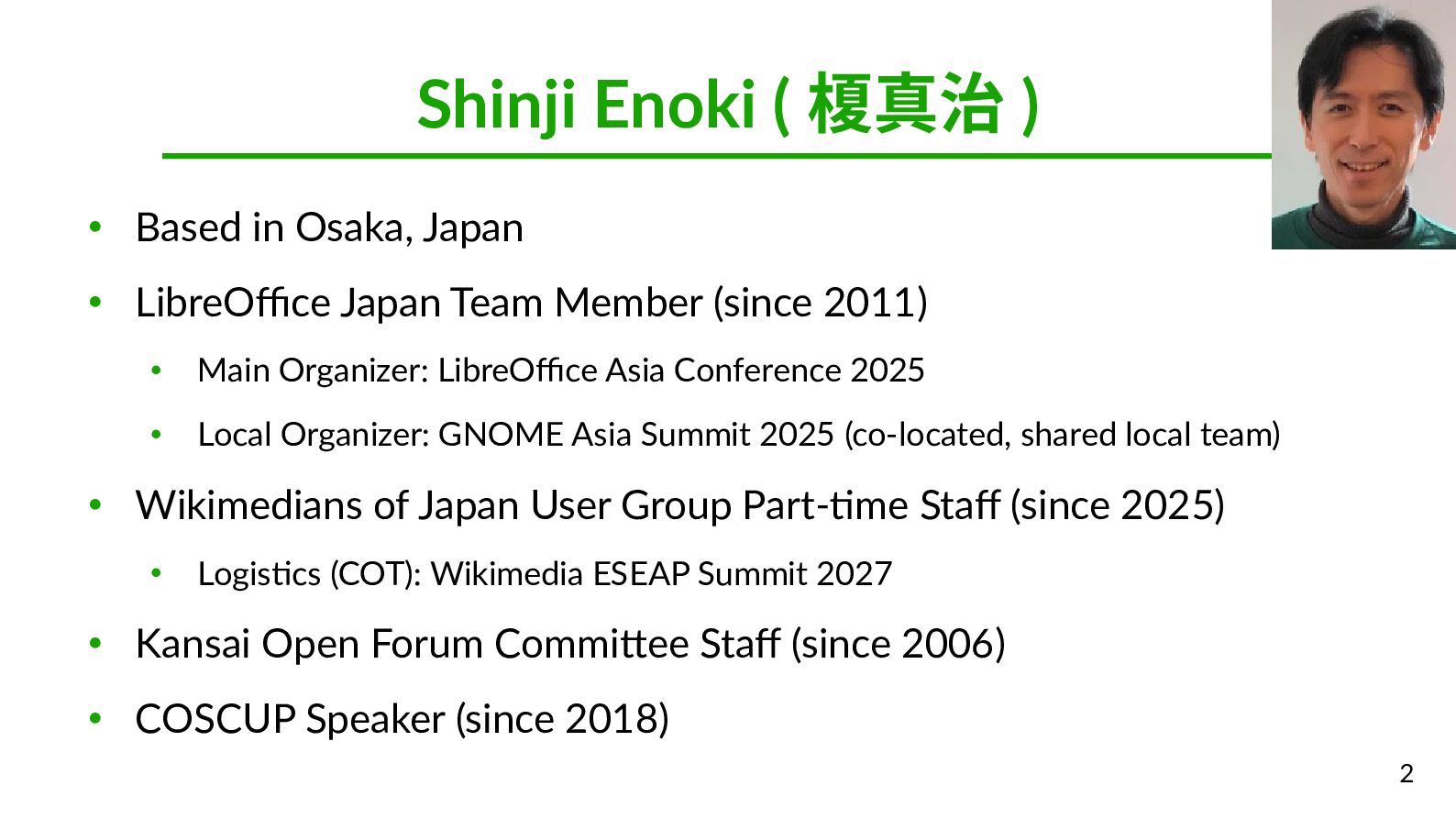
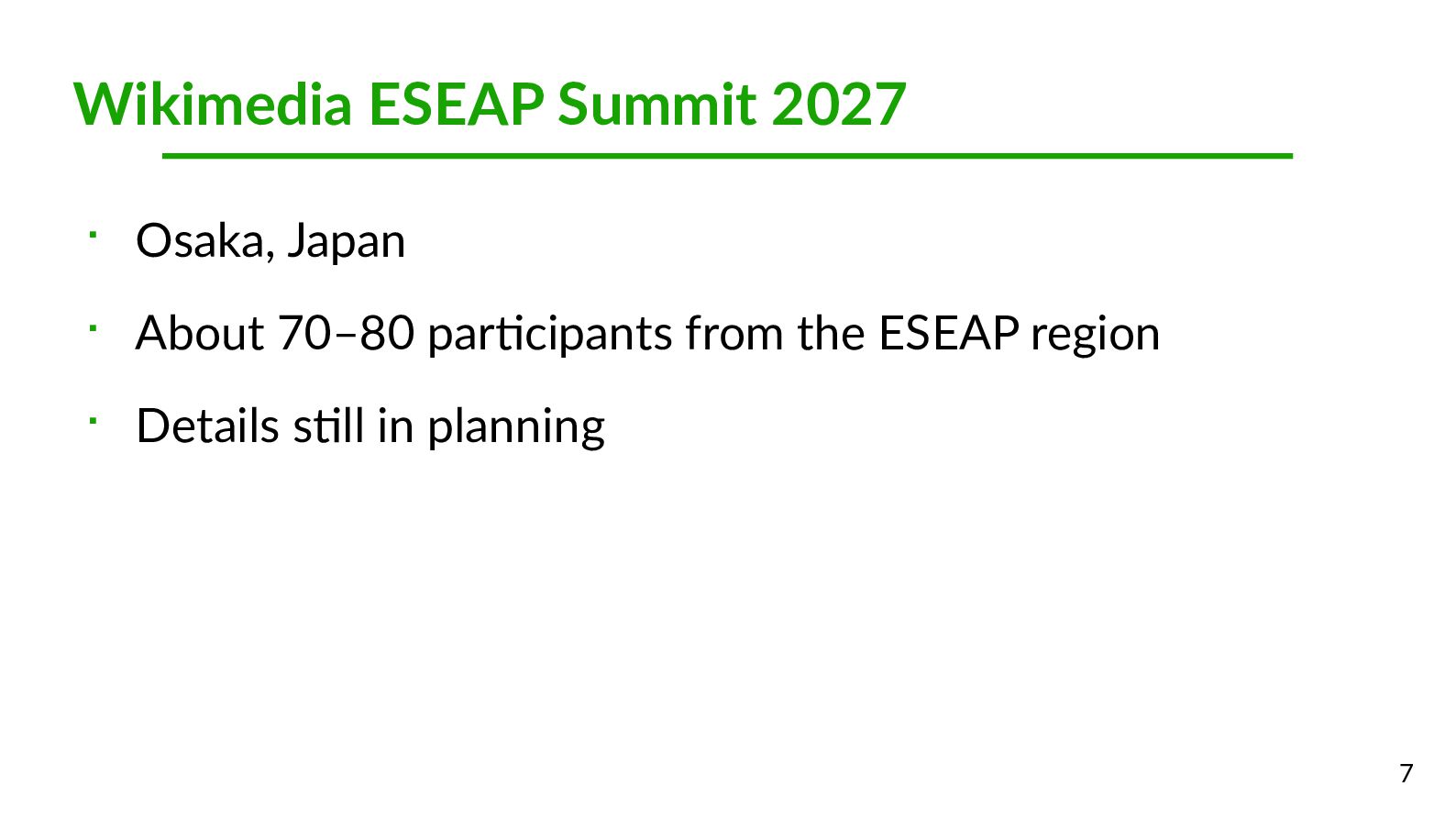
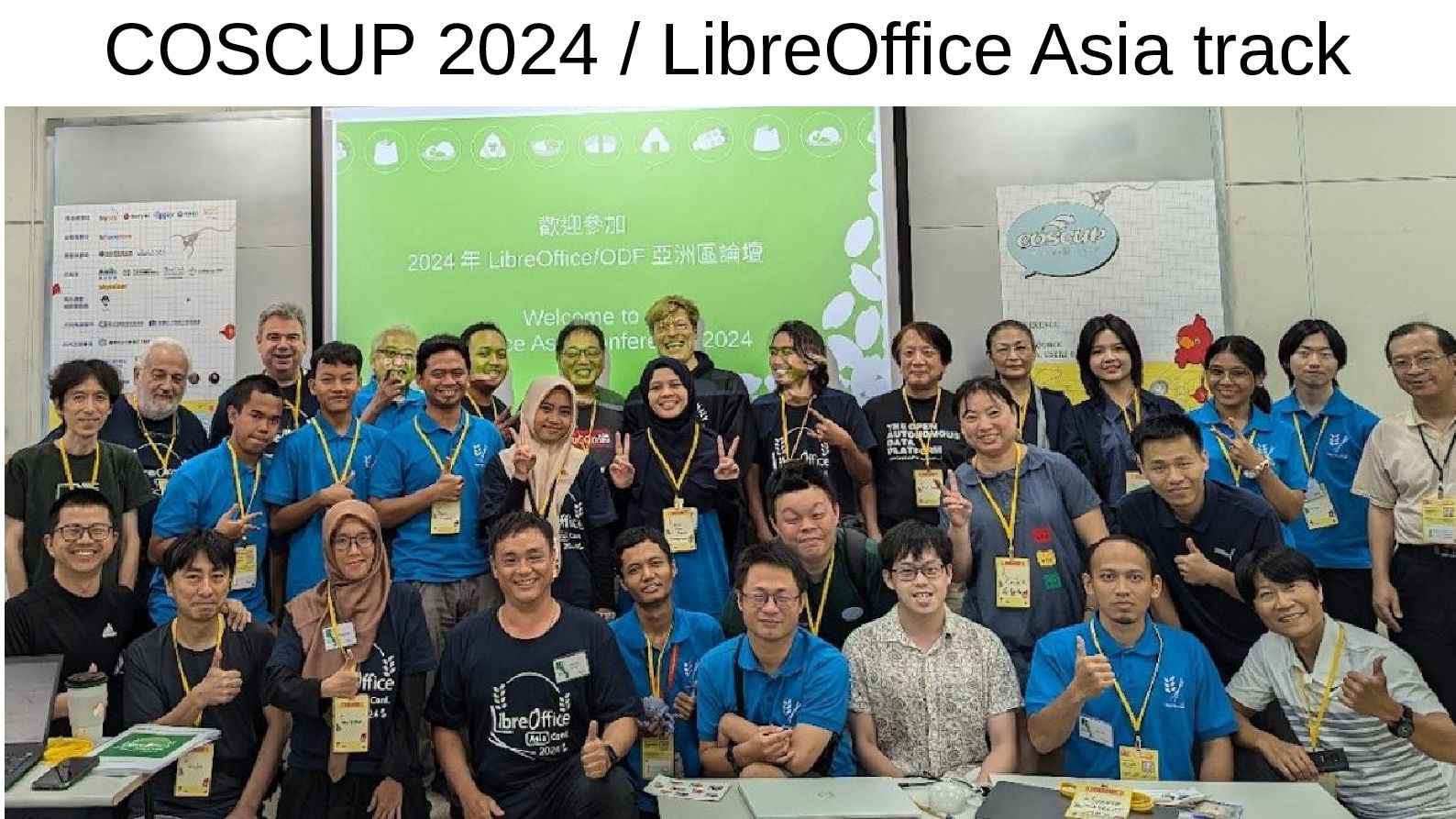
LibreOffice Japan Team Member (since 2011) Main Organizer: LibreOffice Asia Conference 2025 Local Organizer: GNOME Asia Summit 2025 (co-located, shared local team) Wikimedians of Japan User Group Part-time Staff (since 2025) Logistics (COT): Wikimedia ESEAP Summit 2027 Kansai Open Forum Committee Staff (since 2006) COSCUP Speaker (since 2018) 2
a general theory — just some things I've noticed, over 20 years of organizing events, and more recently, working across communities in Asia There's still a lot I don't know 4
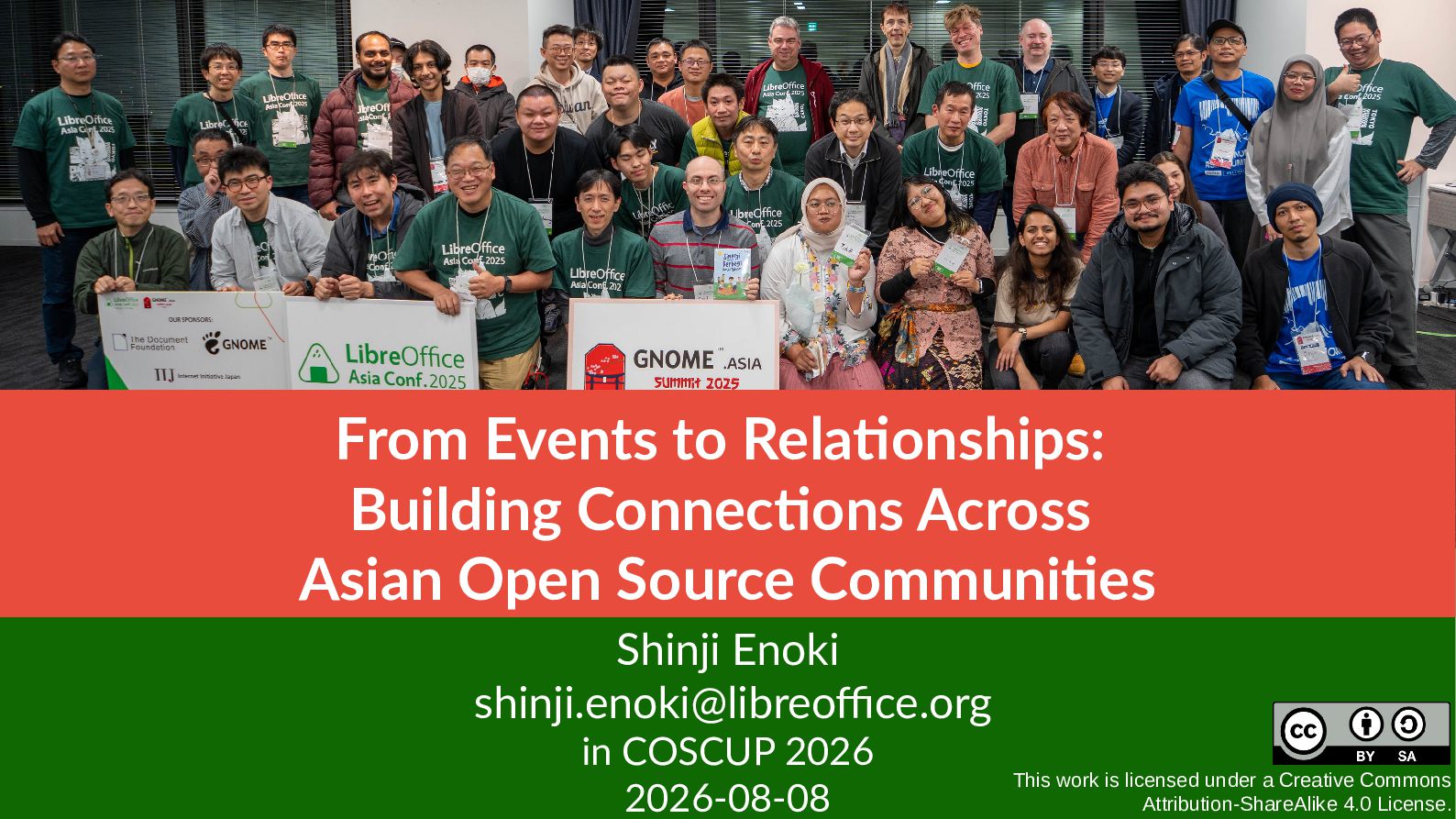
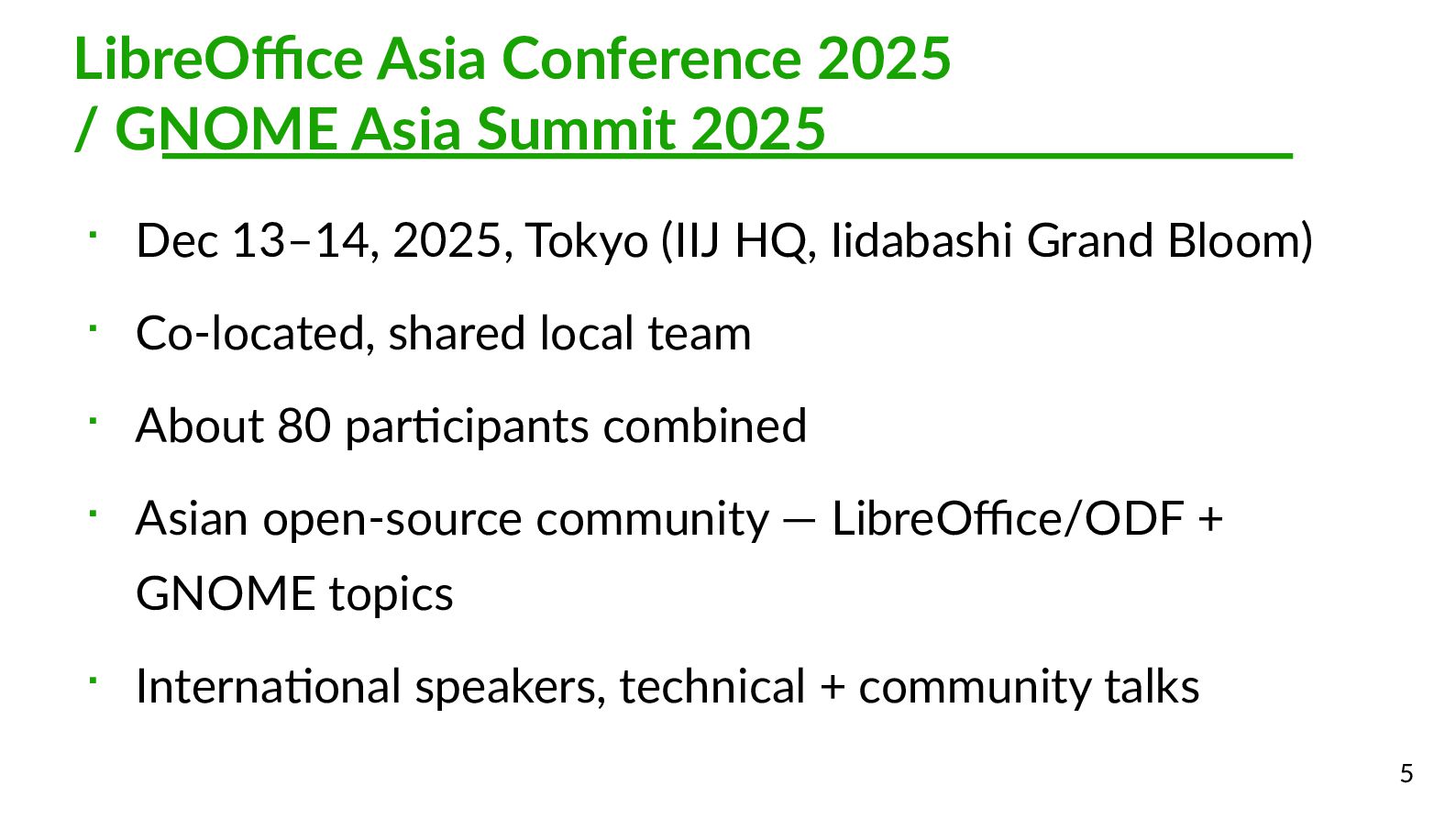
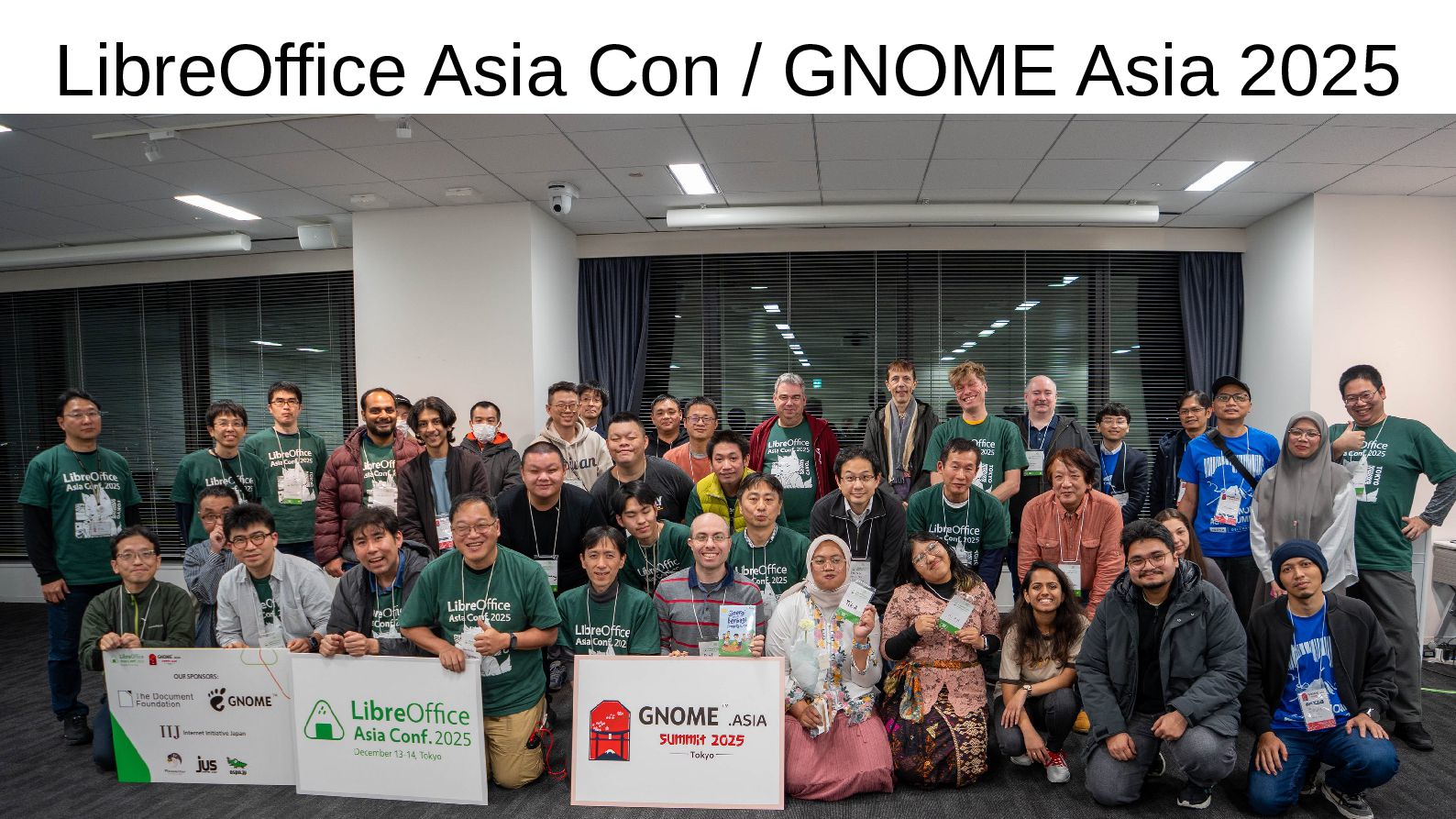
Dec 13–14, 2025, Tokyo (IIJ HQ, Iidabashi Grand Bloom) Co-located, shared local team About 80 participants combined Asian open-source community — LibreOffice/ODF + GNOME topics International speakers, technical + community talks 5
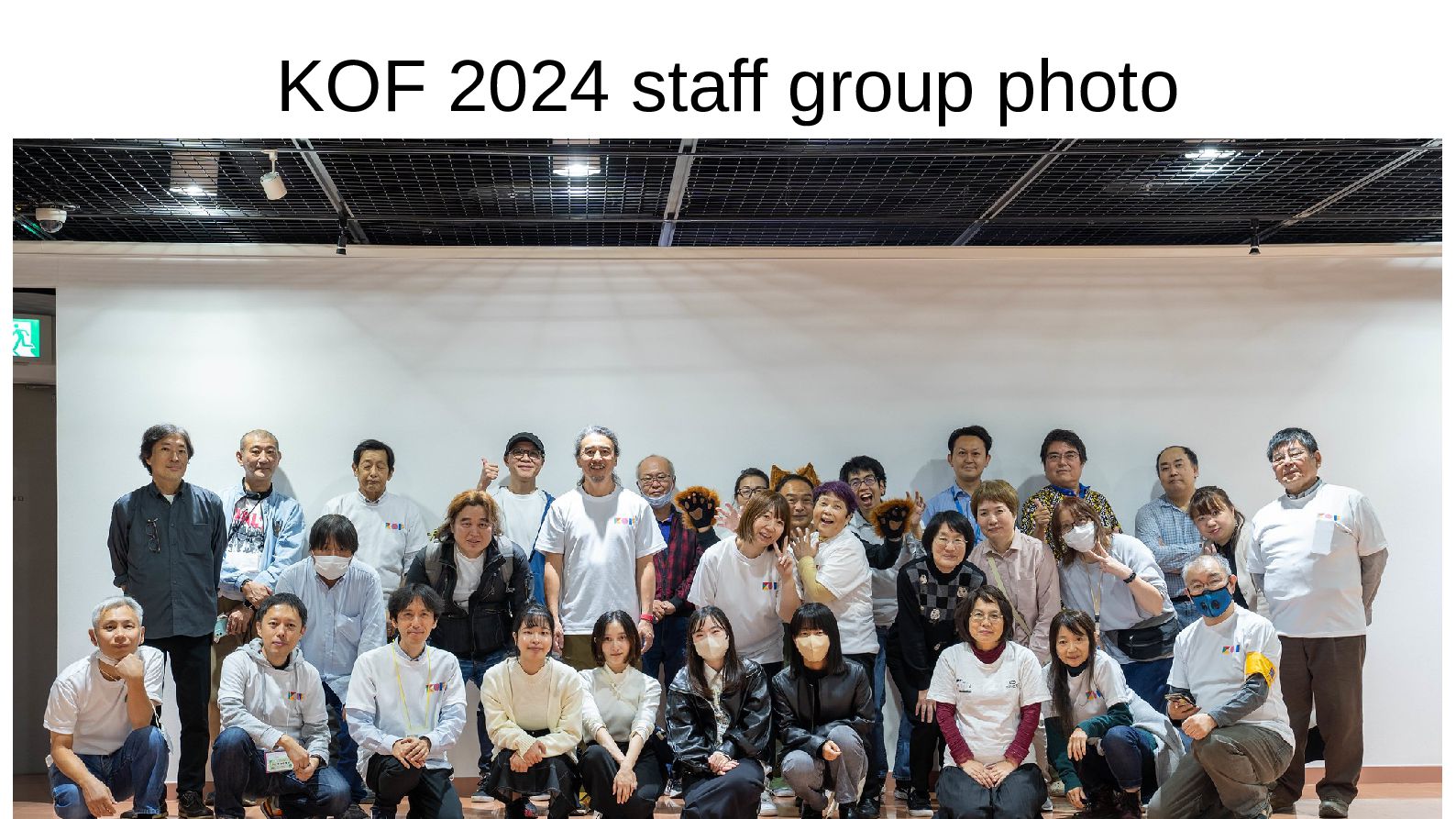
Started by volunteers from different communities, who formed an organizing committee Open source, open hardware, open data — broad "open" community I've volunteered on the organizing committee since 2006 11
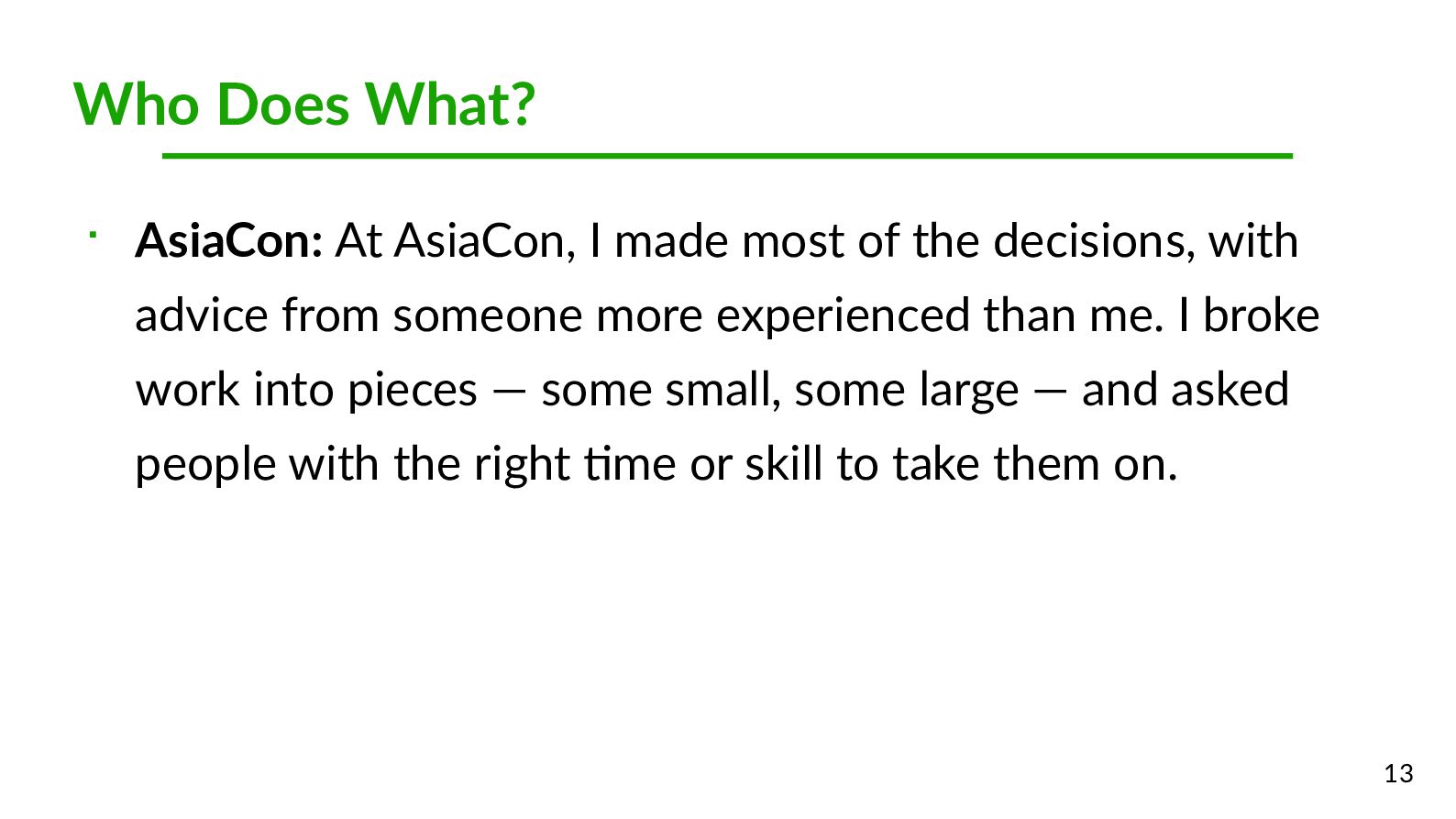
of the decisions, with advice from someone more experienced than me – I broke work into pieces — some small, some large — and asked people with the right time or skill to take them on 13
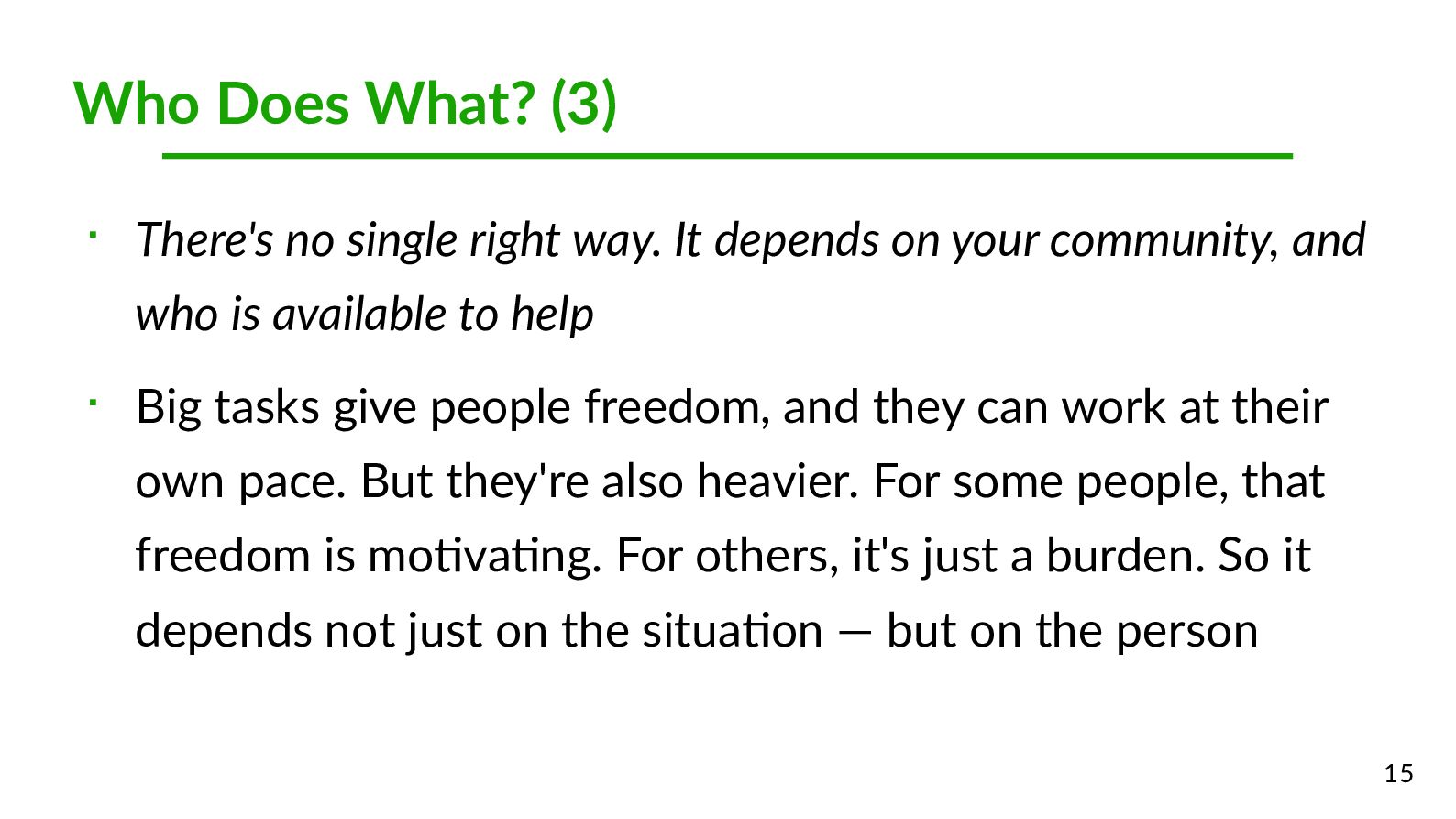
It depends on your community, and who is available to help Big tasks give people freedom, and they can work at their own pace. But they're also heavier For some people, that freedom is motivating. For others, it's just a burden. So it depends not just on the situation — but on the person 16
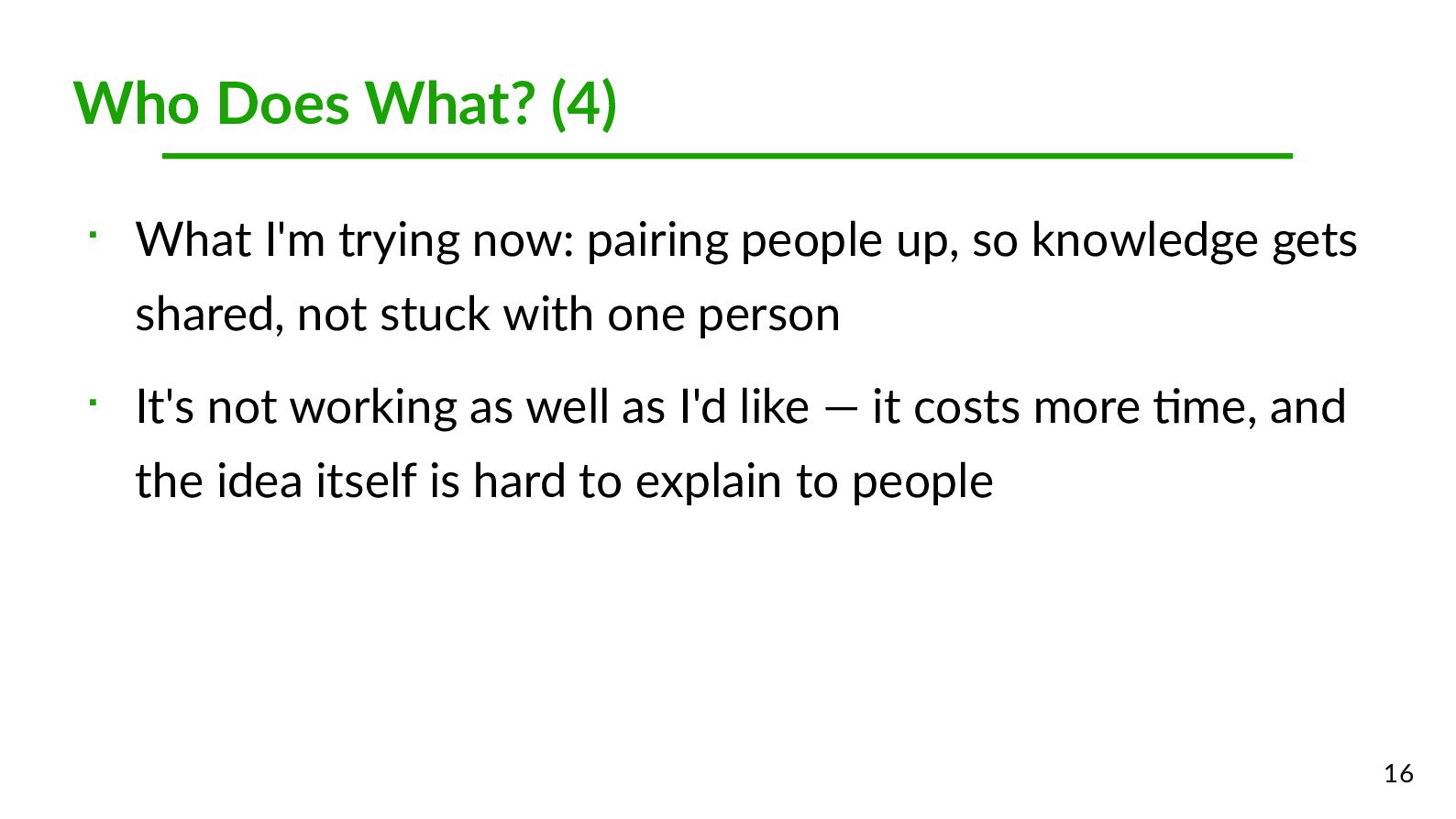
people up, so knowledge gets shared, not stuck with one person It's not working as well as I'd like — it costs more time, and the idea itself is hard to explain to people 17
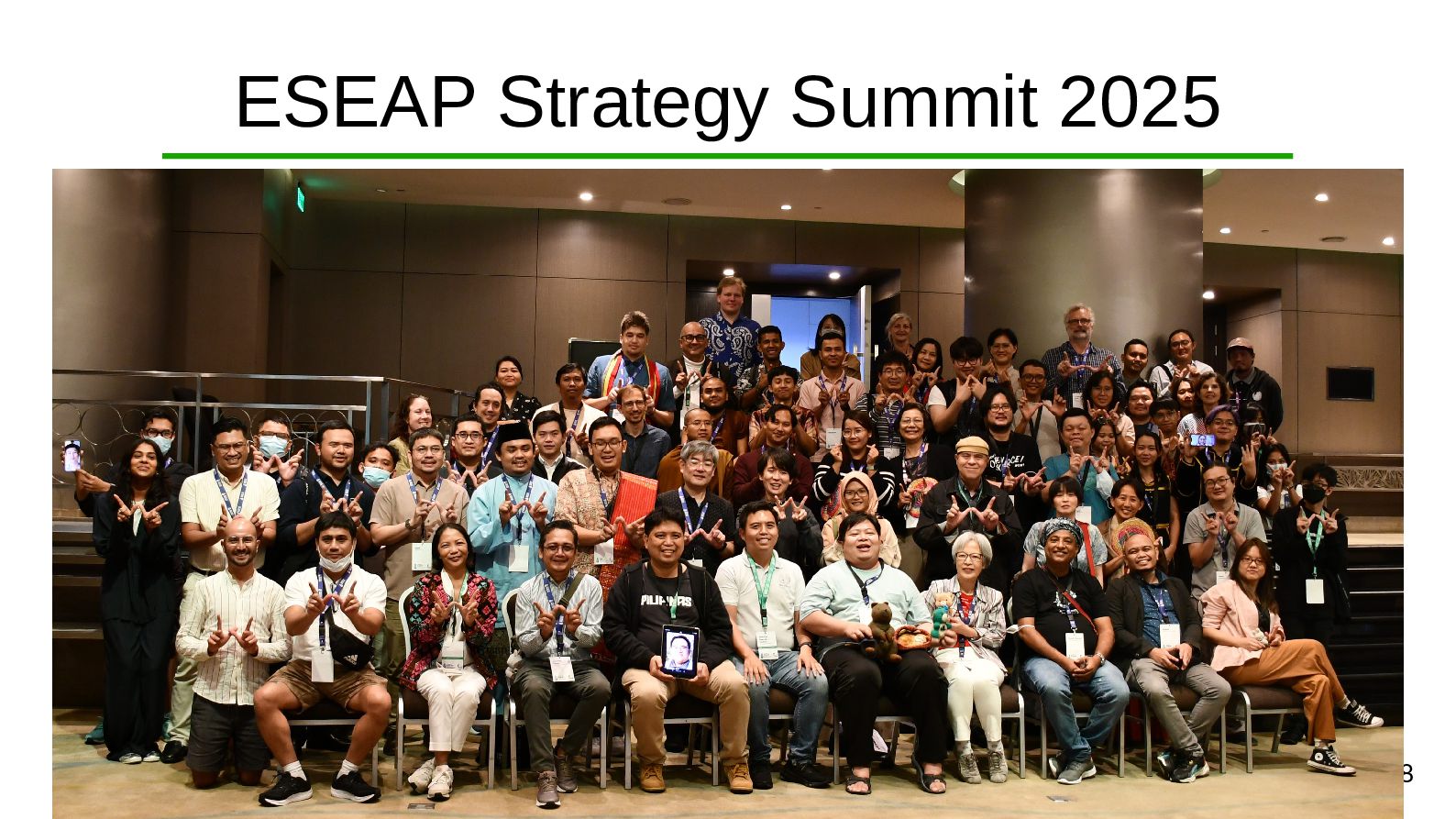
It gives people a reason to meet again ESEAP has one big Summit or Conference each year, plus a monthly online call, plus a newsletter. One big event, plus small regular touchpoints in between The lesson: – even if the event itself doesn't continue in the same form, having repeated chances to meet still strengthens relationships 19
at openSUSE Asia, co-located with COSCUP. This relationship grew stronger after I joined Wikimedians of Japan User Group in 2025. During this trip, I'll join a couple of meetups, a dinner with Wikimedia friends, and a dinner with friends from LibreOffice and AsiaCon. 20
Wikimedians who met at Wikimania later collaborated on edit-a-thons, like a Japan-Korea one, or one with Bolivia. The lesson: relationships don't grow all at once. They start small, in one place, and grow over years, in different places. But small, deliberate actions — staying for dinner, keeping in touch — help that growth along. 21
and getting to know each other, can build trust. Trust makes many things easier — working together, negotiating something difficult, or just asking a small favor. CJK-related discussions are one example. The effect is slow, but it is real. 22
seems to help: asking what someone is good at, and what they care about. Knowing that first often makes things easier later. Before AsiaCon, I helped at other conferences myself, and learned a lot from it. Then, at AsiaCon, people from other open source communities helped us in return 23
interpretation system for talks. It's a hard balance — not just about people, know-how, or budget, but also about trade-offs. Interpretation can also change how directly people communicate Not enough volunteers is a common problem. It happens everywhere, not just in one community If you have a good idea for the language barrier, please tell me — I'd love to hear it 24
and vegetarian options — hard to find in Japan, but we could use what another conference learned the year before This made the party more expensive. Some participants, from countries with a weaker currency, were not happy about the cost 25
visa at the last minute. But visa review takes time If you apply late, and it's rejected, there's no time to try again Documents need to tell one consistent story. In one case, someone applied as a student — but had already graduated by the time of the conference 26
one moment. But small things after it — staying for dinner, saying hi online later — can lead to more For organizers: How you break down and assign roles — small tasks, or big roles, top-down, or flat For organizers: How you keep connections alive between events — through structure, small touchpoints, and personal relationships 27


 enoki
enoki
 prog893
 gree_tech
 teamlab
 occhi
occhi
 yamanoku
 shugo
shugo
 puhitaku
 hiracky16
 nealle
 syuchimu
 greenmidori
 satoshi7
 holman
 aleyda
 techseoconnect
 baasie
 chriscoyier
 bryan
bryan
 smashingmag
 notwaldorf
 livdayseo
.png) helenjbeal
helenjbeal
 tapps
tapps
 62gerente
![Thank you Question? Shinji Enoki Email: [email protected]](https://files.speakerdeck.com/presentations/56698bd931244b9d8237fed025e9b239/slide_27.jpg)