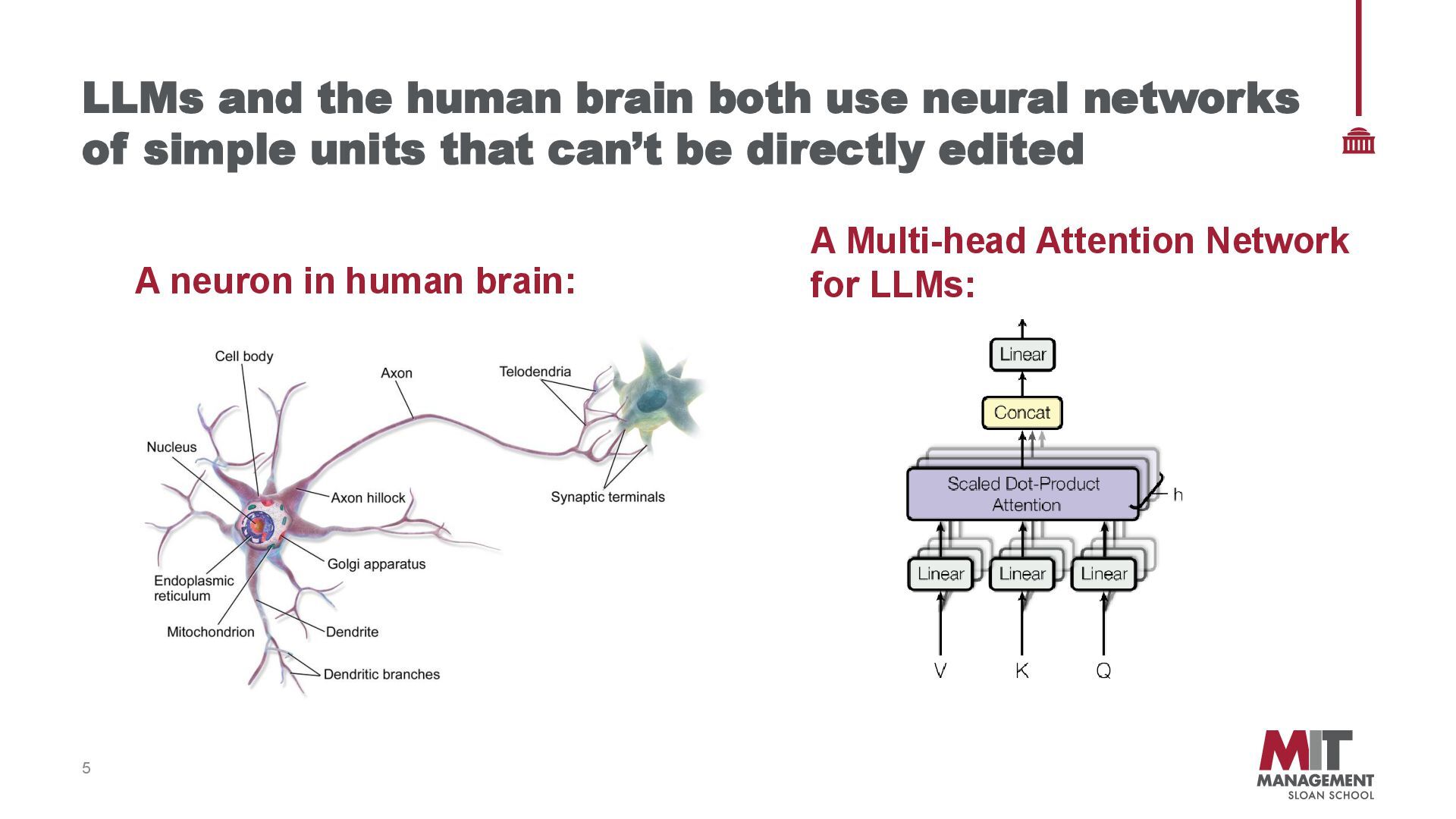
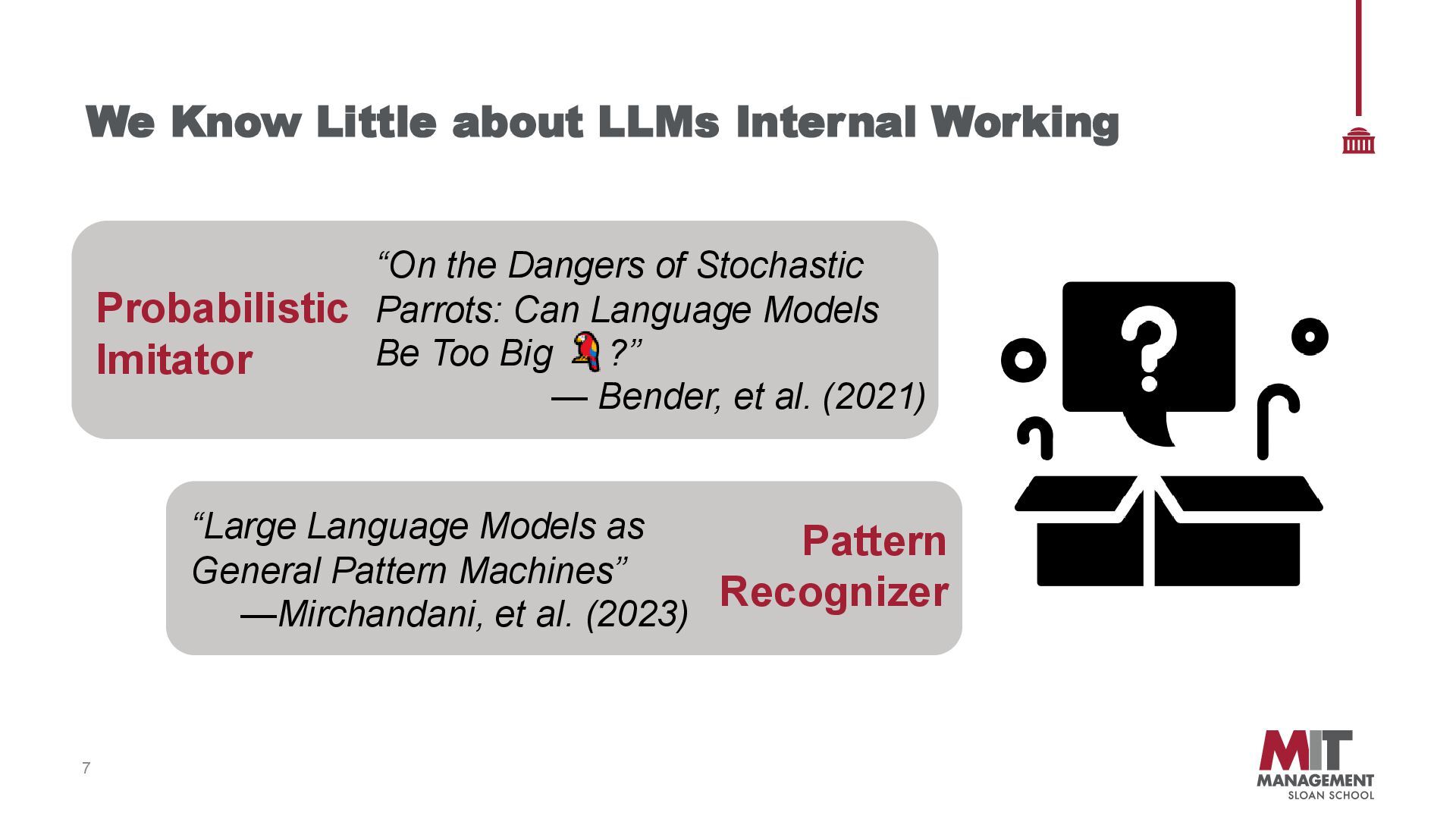
Too Big ?” — Bender, et al. (2021) Probabilistic Imitator 7 We Know Little about LLMs Internal Working “Large Language Models as General Pattern Machines” —Mirchandani, et al. (2023) Pattern Recognizer
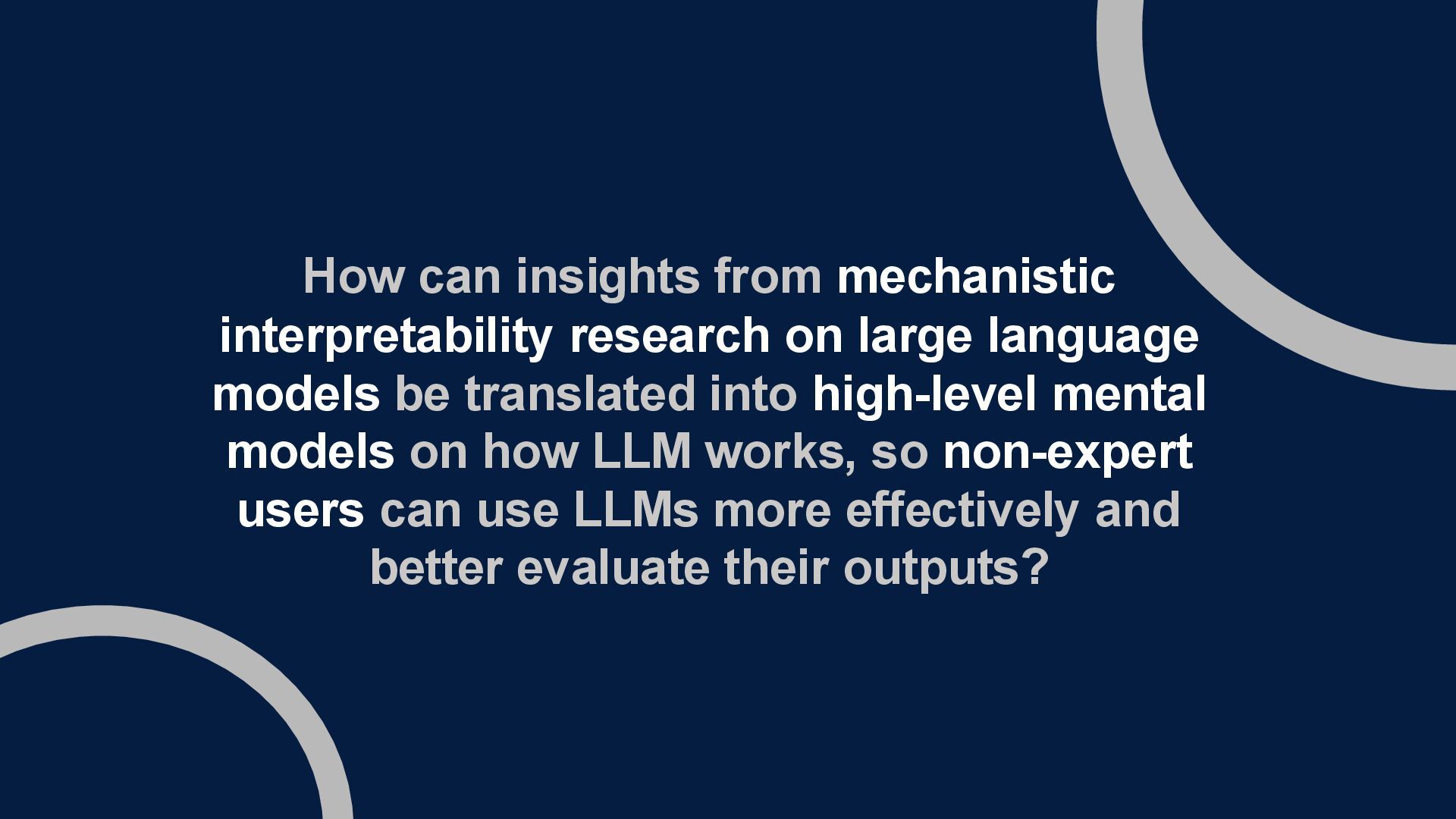
models be translated into high-level mental models on how LLM works, so non-expert users can use LLMs more effectively and better evaluate their outputs?
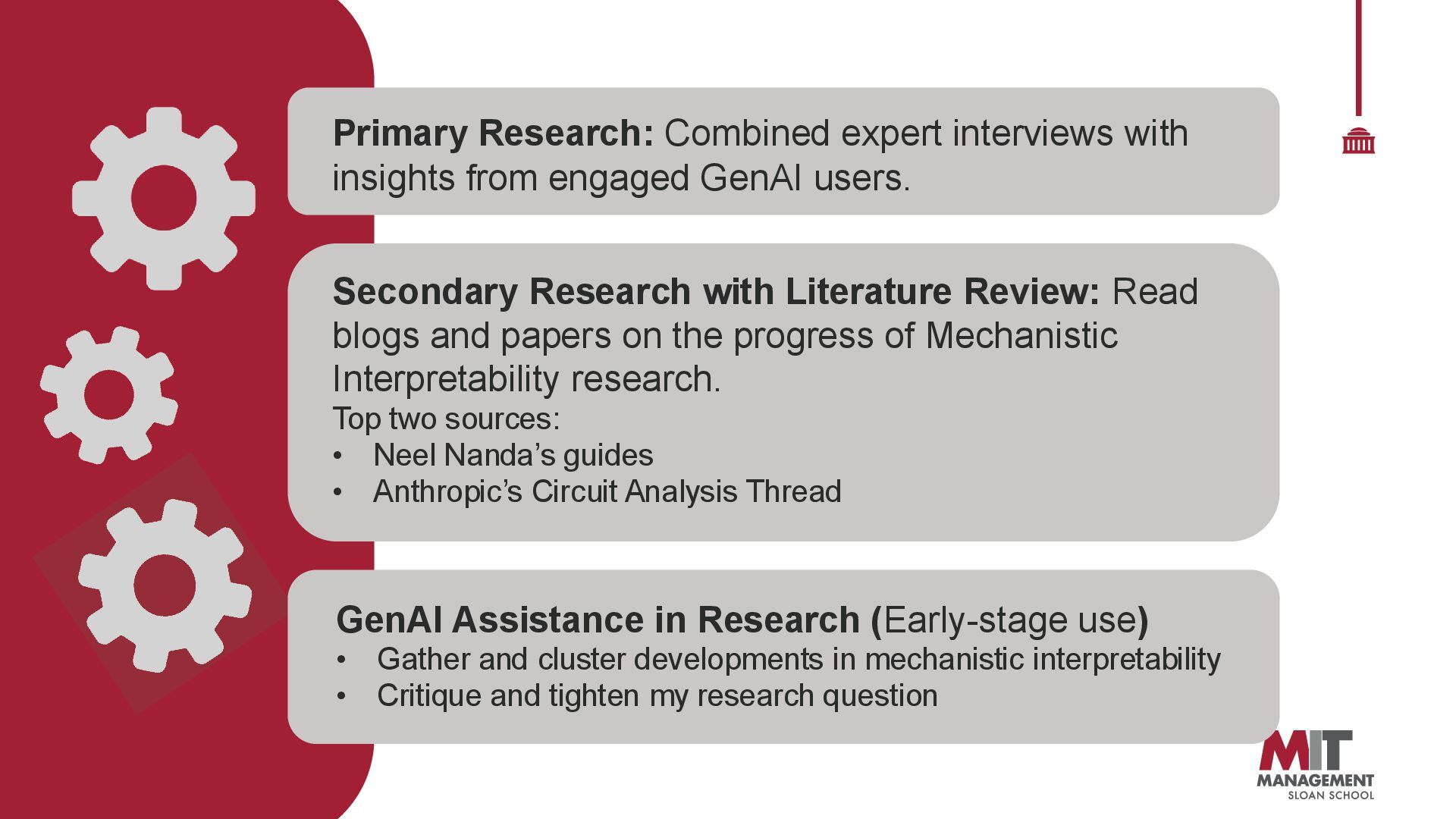
GenAI users. Secondary Research with Literature Review: Read blogs and papers on the progress of Mechanistic Interpretability research. Top two sources: • Neel Nanda’s guides • Anthropic’s Circuit Analysis Thread GenAI Assistance in Research (Early-stage use) • Gather and cluster developments in mechanistic interpretability • Critique and tighten my research question
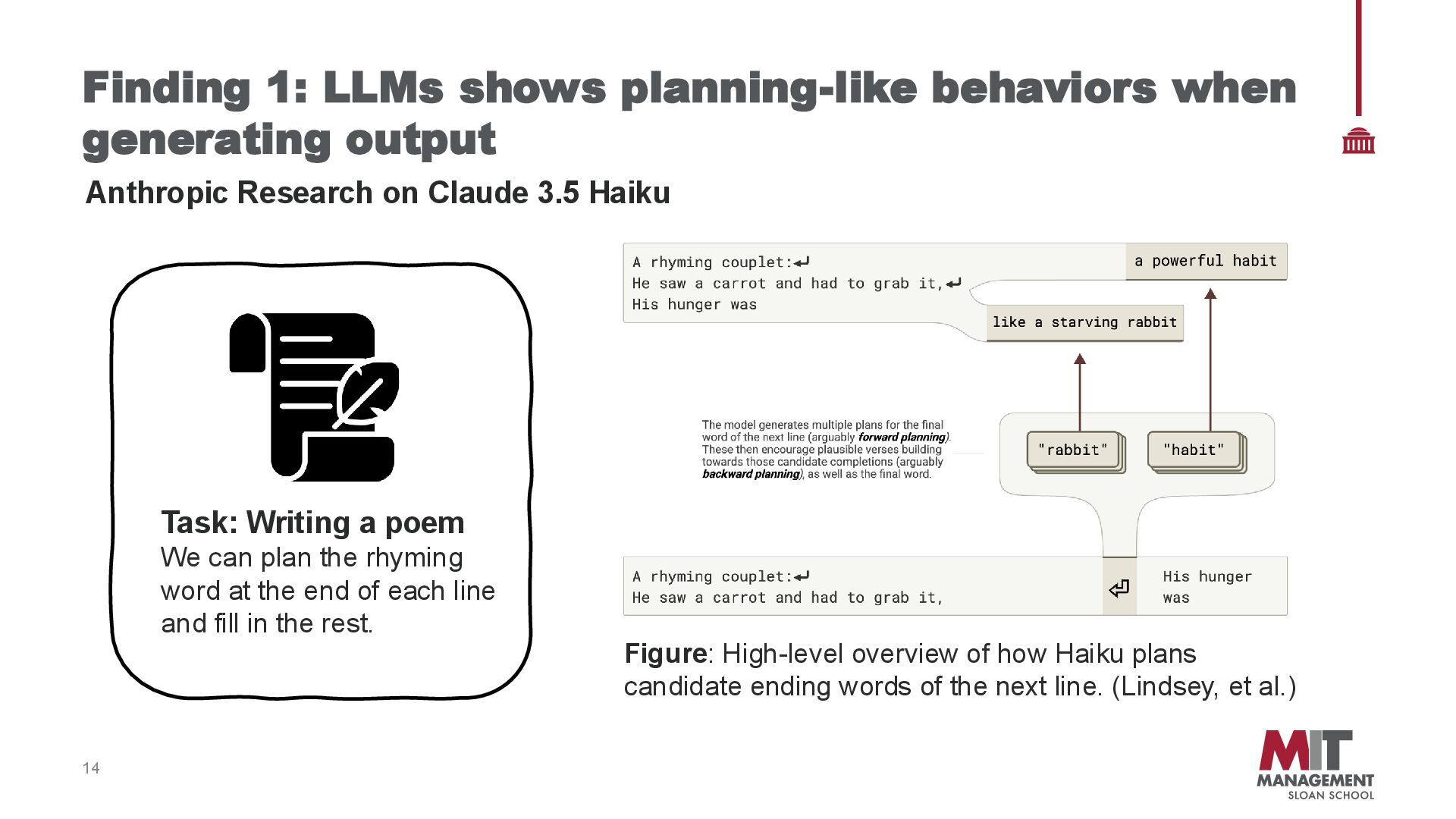
Anthropic Research on Claude 3.5 Haiku Task: Writing a poem We can plan the rhyming word at the end of each line and fill in the rest. Figure: High-level overview of how Haiku plans candidate ending words of the next line. (Lindsey, et al.)
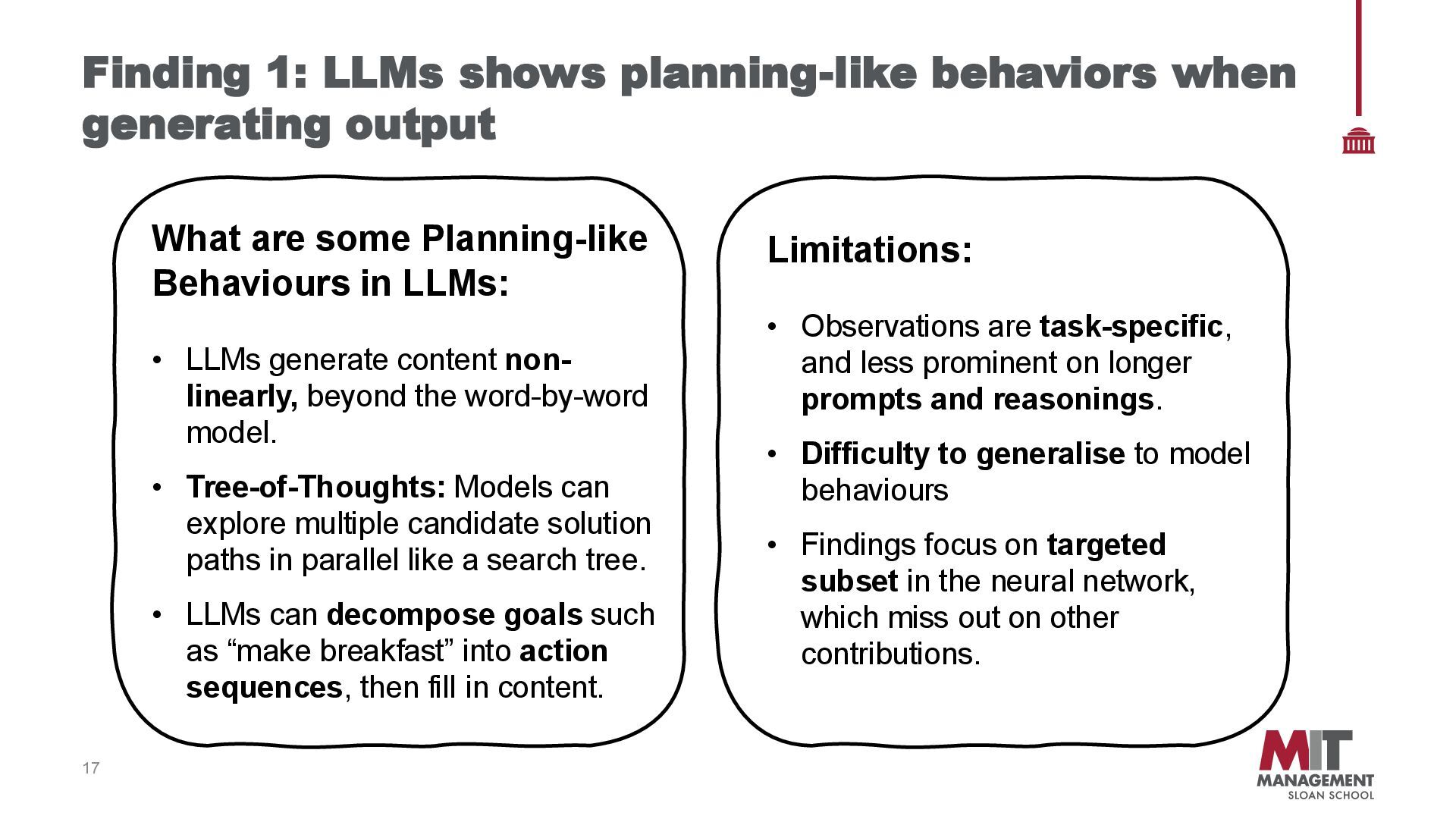
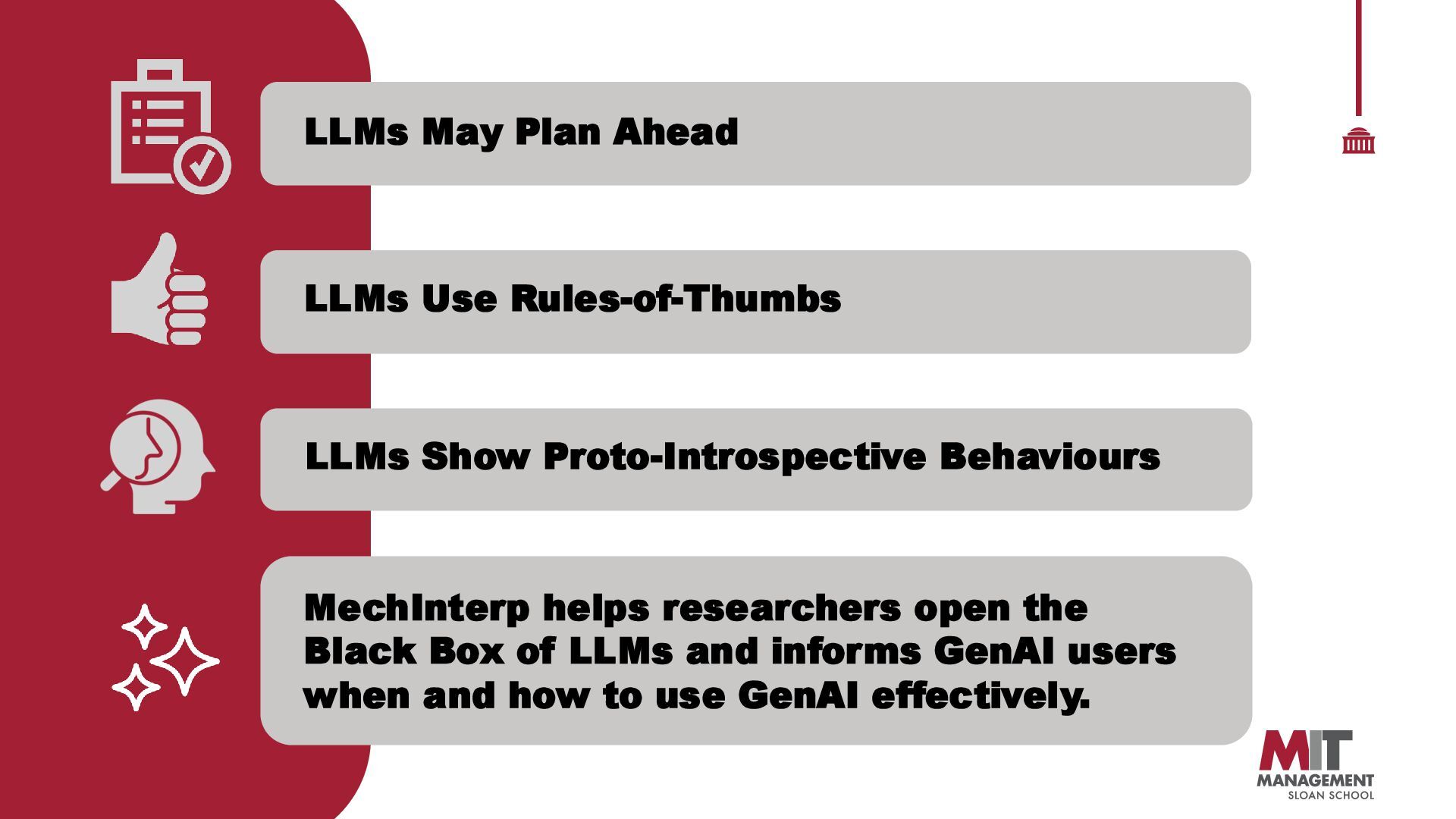
generate content non- linearly, beyond the word-by-word model. • Tree-of-Thoughts: Models can explore multiple candidate solution paths in parallel like a search tree. • LLMs can decompose goals such as “make breakfast” into action sequences, then fill in content. Limitations: • Observations are task-specific, and less prominent on longer prompts and reasonings. • Difficulty to generalise to model behaviours • Findings focus on targeted subset in the neural network, which miss out on other contributions. Finding 1: LLMs shows planning-like behaviors when generating output
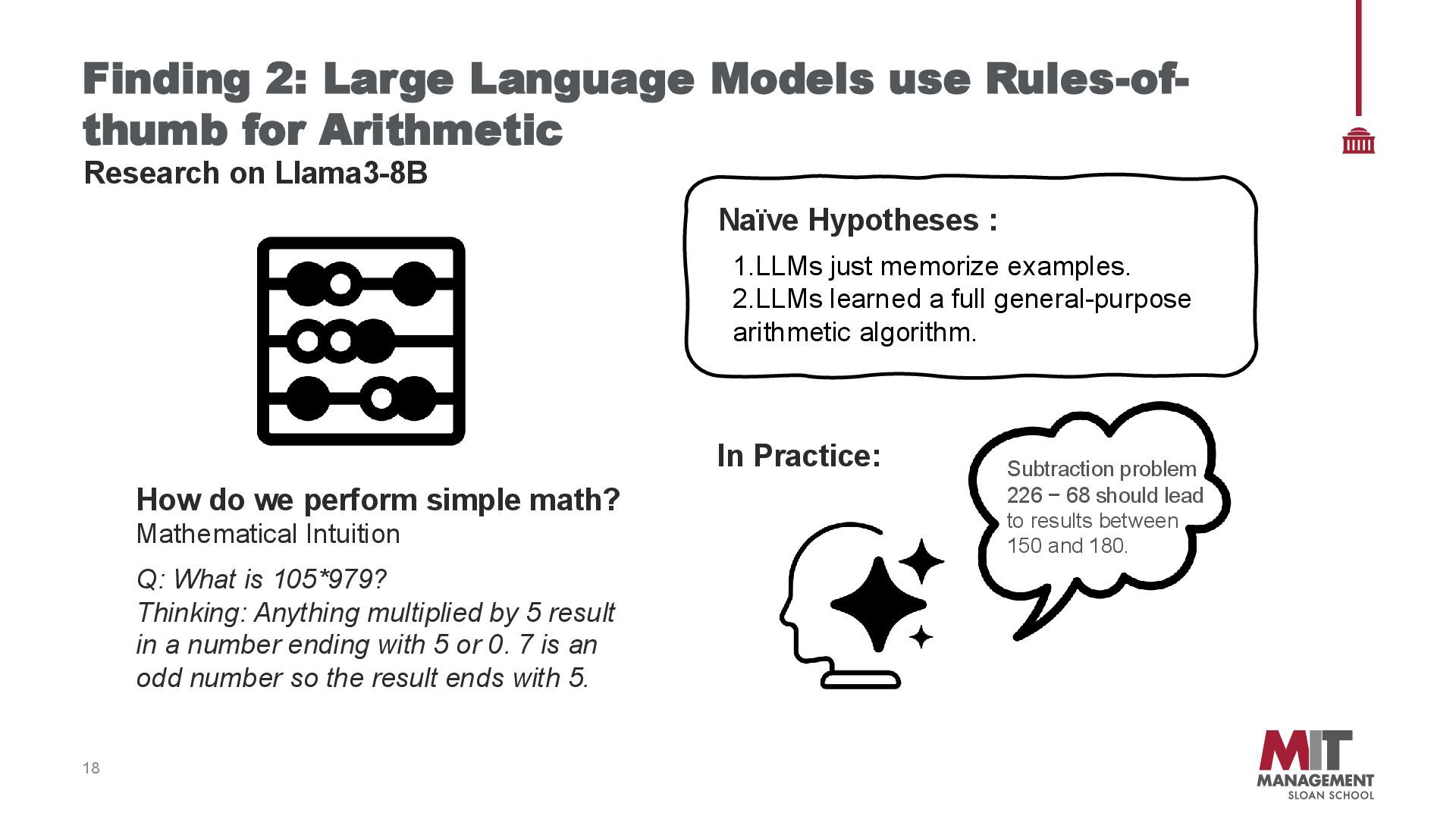
Mathematical Intuition Q: What is 105*979? Thinking: Anything multiplied by 5 result in a number ending with 5 or 0. 7 is an odd number so the result ends with 5. Finding 2: Large Language Models use Rules-of- thumb for Arithmetic 1.LLMs just memorize examples. 2.LLMs learned a full general-purpose arithmetic algorithm. Naïve Hypotheses : Subtraction problem 226 − 68 should lead to results between 150 and 180. In Practice:
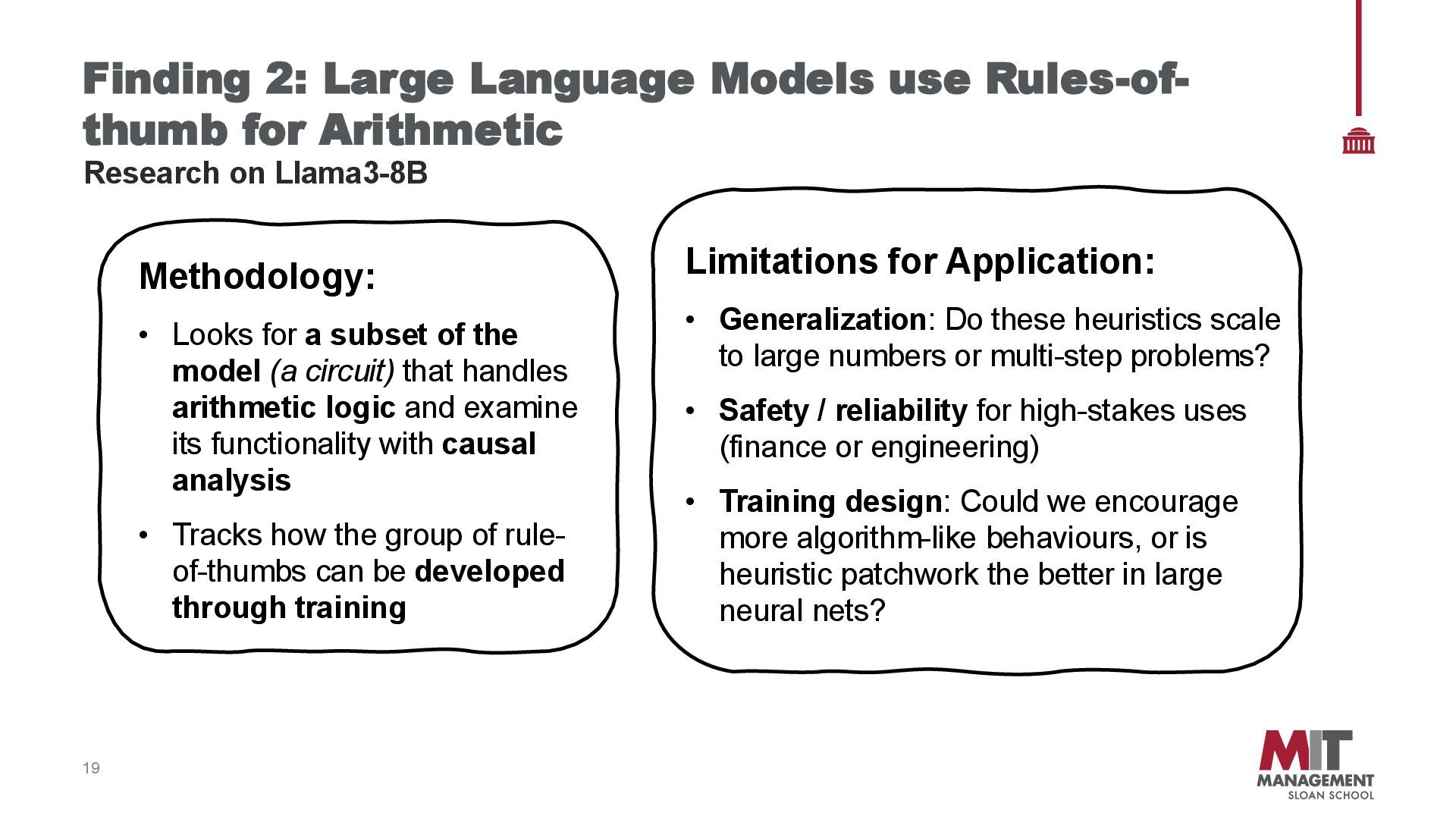
(a circuit) that handles arithmetic logic and examine its functionality with causal analysis • Tracks how the group of rule- of-thumbs can be developed through training Finding 2: Large Language Models use Rules-of- thumb for Arithmetic Limitations for Application: • Generalization: Do these heuristics scale to large numbers or multi-step problems? • Safety / reliability for high-stakes uses (finance or engineering) • Training design: Could we encourage more algorithm-like behaviours, or is heuristic patchwork the better in large neural nets? Research on Llama3-8B
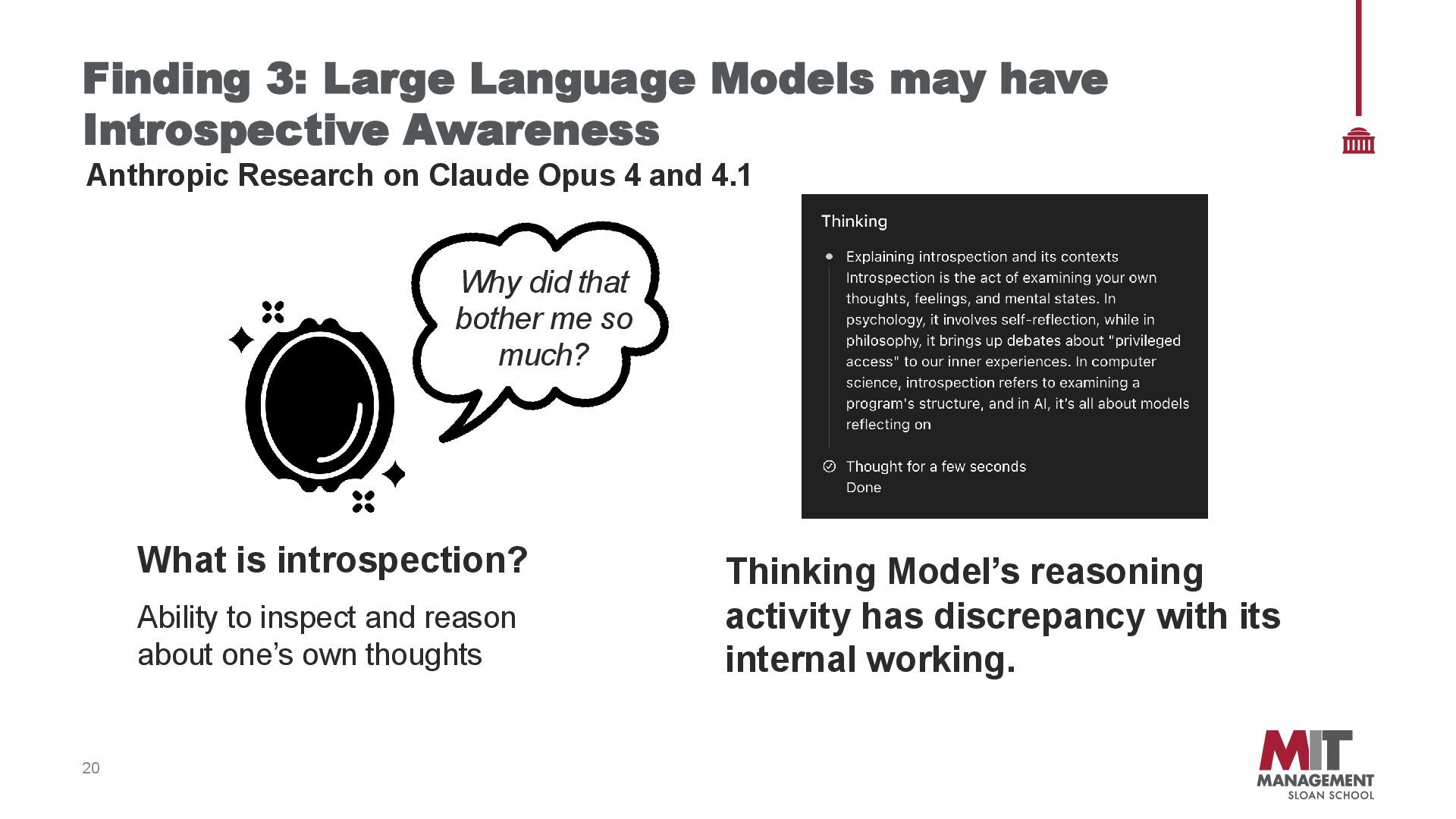
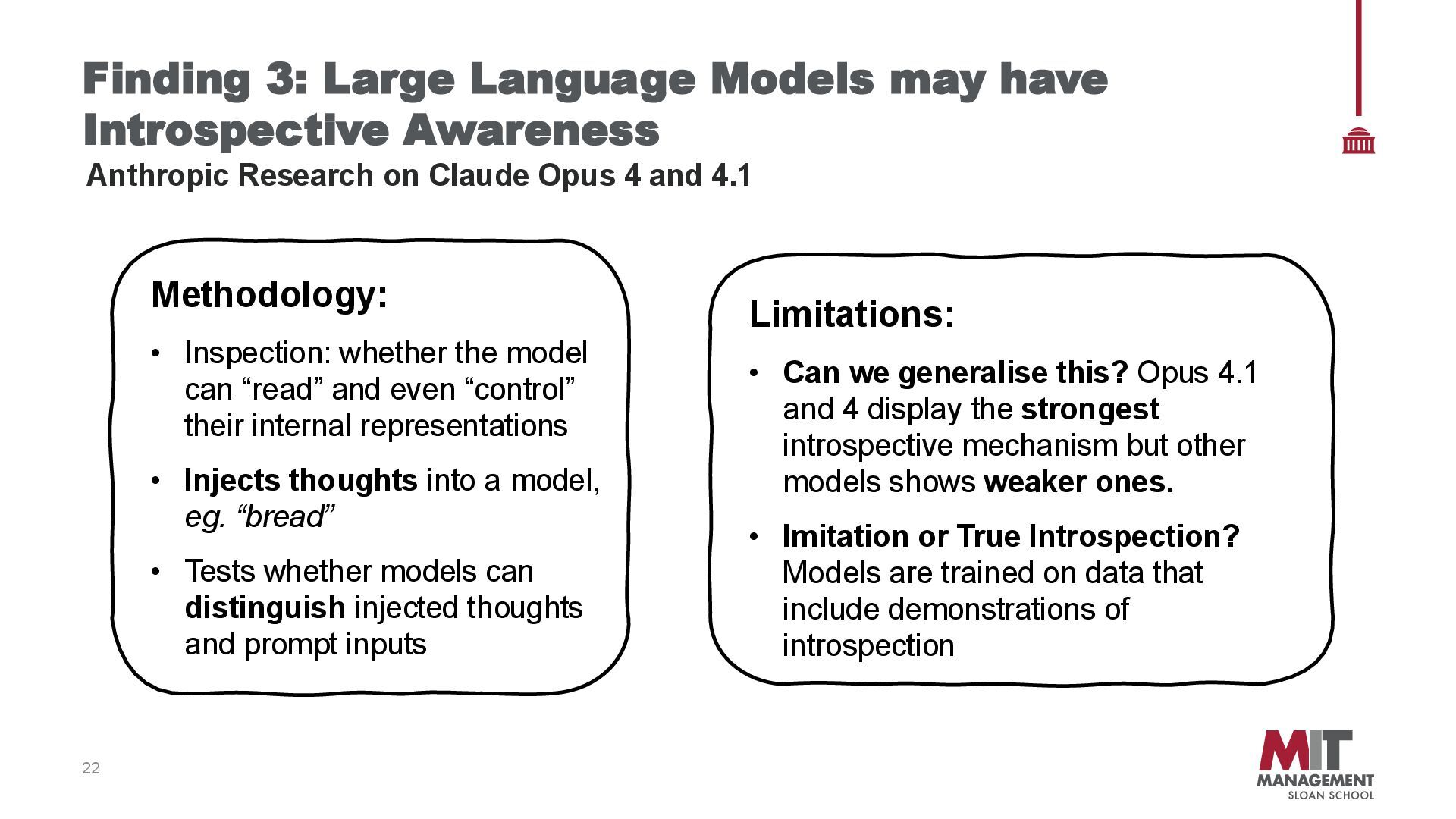
What is introspection? Ability to inspect and reason about one’s own thoughts Why did that bother me so much? Thinking Model’s reasoning activity has discrepancy with its internal working. Anthropic Research on Claude Opus 4 and 4.1
Anthropic Research on Claude Opus 4 and 4.1 Limitations: • Can we generalise this? Opus 4.1 and 4 display the strongest introspective mechanism but other models shows weaker ones. • Imitation or True Introspection? Models are trained on data that include demonstrations of introspection Methodology: • Inspection: whether the model can “read” and even “control” their internal representations • Injects thoughts into a model, eg. “bread” • Tests whether models can distinguish injected thoughts and prompt inputs
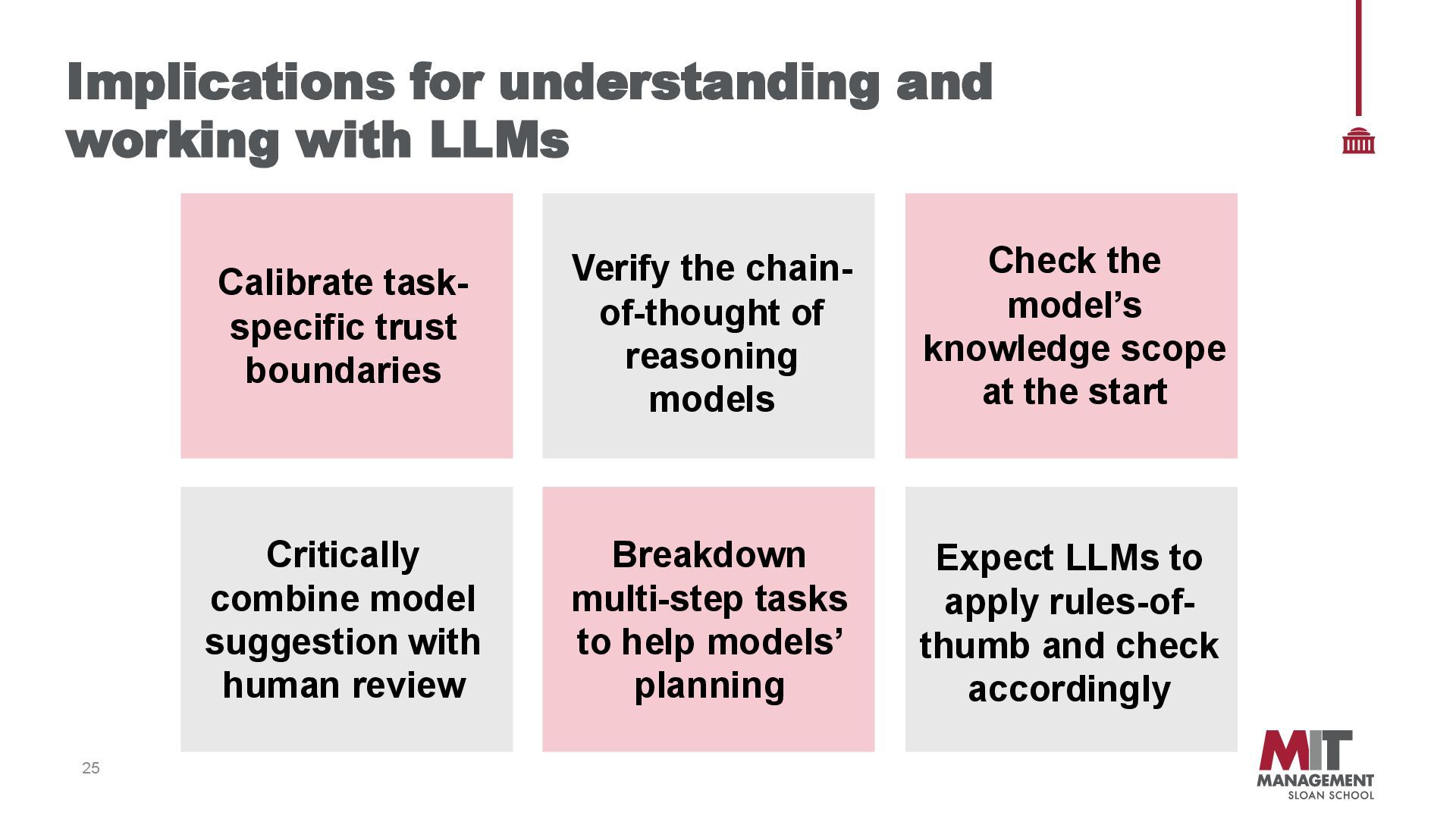
specific trust boundaries Check the model’s knowledge scope at the start Verify the chain- of-thought of reasoning models Breakdown multi-step tasks to help models’ planning Critically combine model suggestion with human review Expect LLMs to apply rules-of- thumb and check accordingly
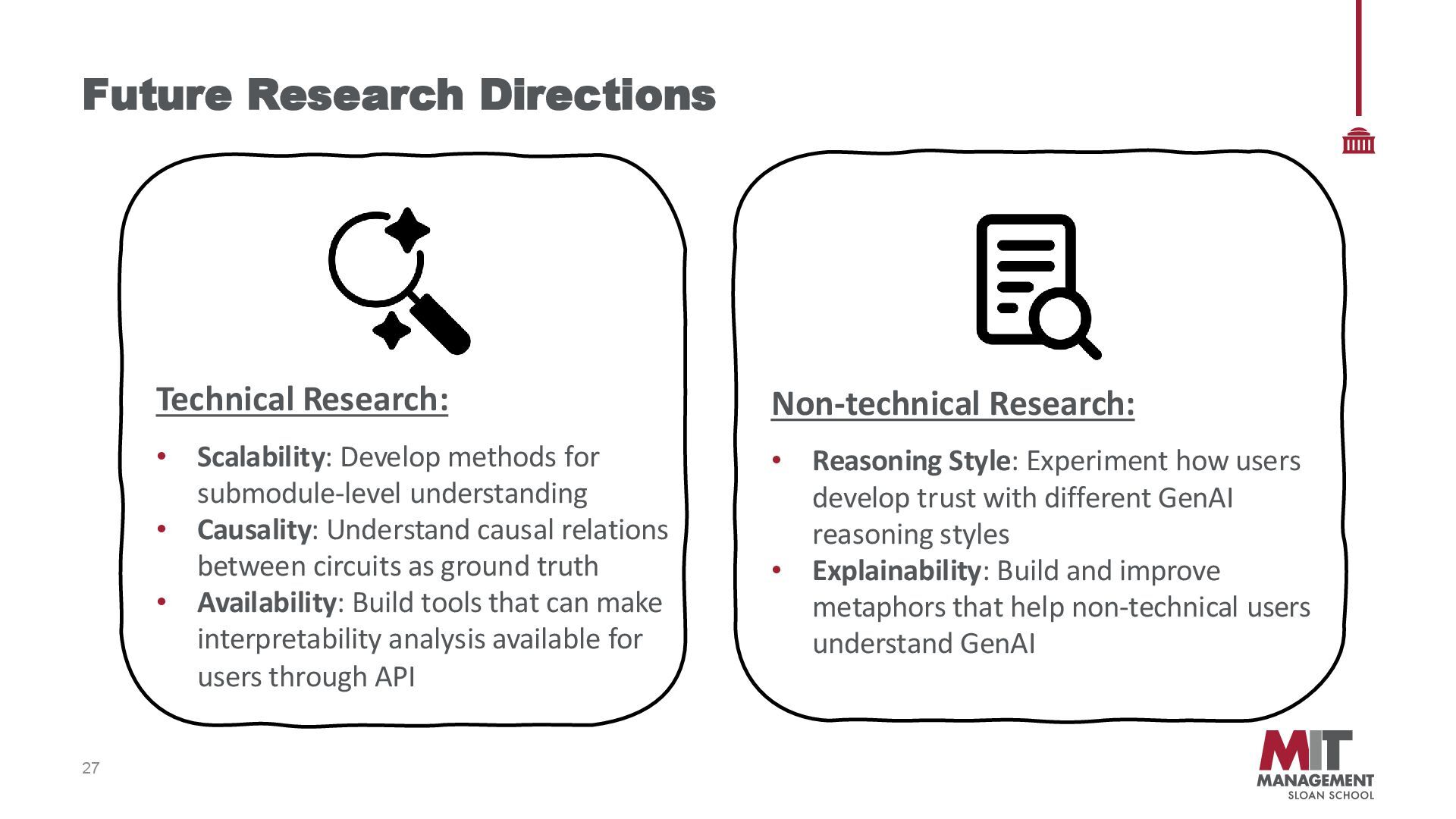
Causality: Understand causal relations between circuits as ground truth • Availability: Build tools that can make interpretability analysis available for users through API Non-technical Research: • Reasoning Style: Experiment how users develop trust with different GenAI reasoning styles • Explainability: Build and improve metaphors that help non-technical users understand GenAI 27 Future Research Directions
2023 • Multimodal Automated Interpretability Agent (MAIA), MIT CSAIL • Neel Nanda’s detailed MechInterp guide • Dario Amodei’s Blog on ‘the Urgency of Interpretability” • Myra Deng and her team’s work at Goodfire.ai • My advisor, Melissa • My teammates, Deeksha, Emery, and Taylor • STS at MIT Sloan and LTS at Wellesley College • My roommate Diana T. and friends Natalie N., Sophia S., and Helen Y.
On the Dangers of Stochastic Parrots: Can Language Models Be Too Big? . In Proceedings of the 2021 ACM Conference on Fairness, Accountability, and Transparency (FAccT ‘21), 2021. URL: https://doi.org/10.1145/3442188.3445922 2. Jack Lindsey, Wes Gurnee, et al. On the Biology of a Large Language Model. In Anthropic: Transformer Circuits Thread, 2025. URL: https://transformer- circuits.pub/2025/attribution-graphs/biology.html#dives-poems 3. Yaniv Nikankin, Anja Reusch, Aaron Mueller, and Yonatan Belinkov. Arithmetic without Algorithms: Language Models Solve Math with a Bag of Heuristics. On International Conference on Learning Representations, 2025. URL: https://arxiv.org/abs/2410.21272 4. Jack Lindsey, Emergent Introspective Awareness in Large Language Models. In Anthropic: Transformer Circuits Thread, 2025. URL: https://transformer- circuits.pub/2025/introspection/index.html


 erfertic
 tapps
 colly
 katarinadahlin
 rasmusluckow
 joshbly
 tmiket
 jacobian
 skipperchong
 aleyda
 popppiees
 holman
 coloredviolet