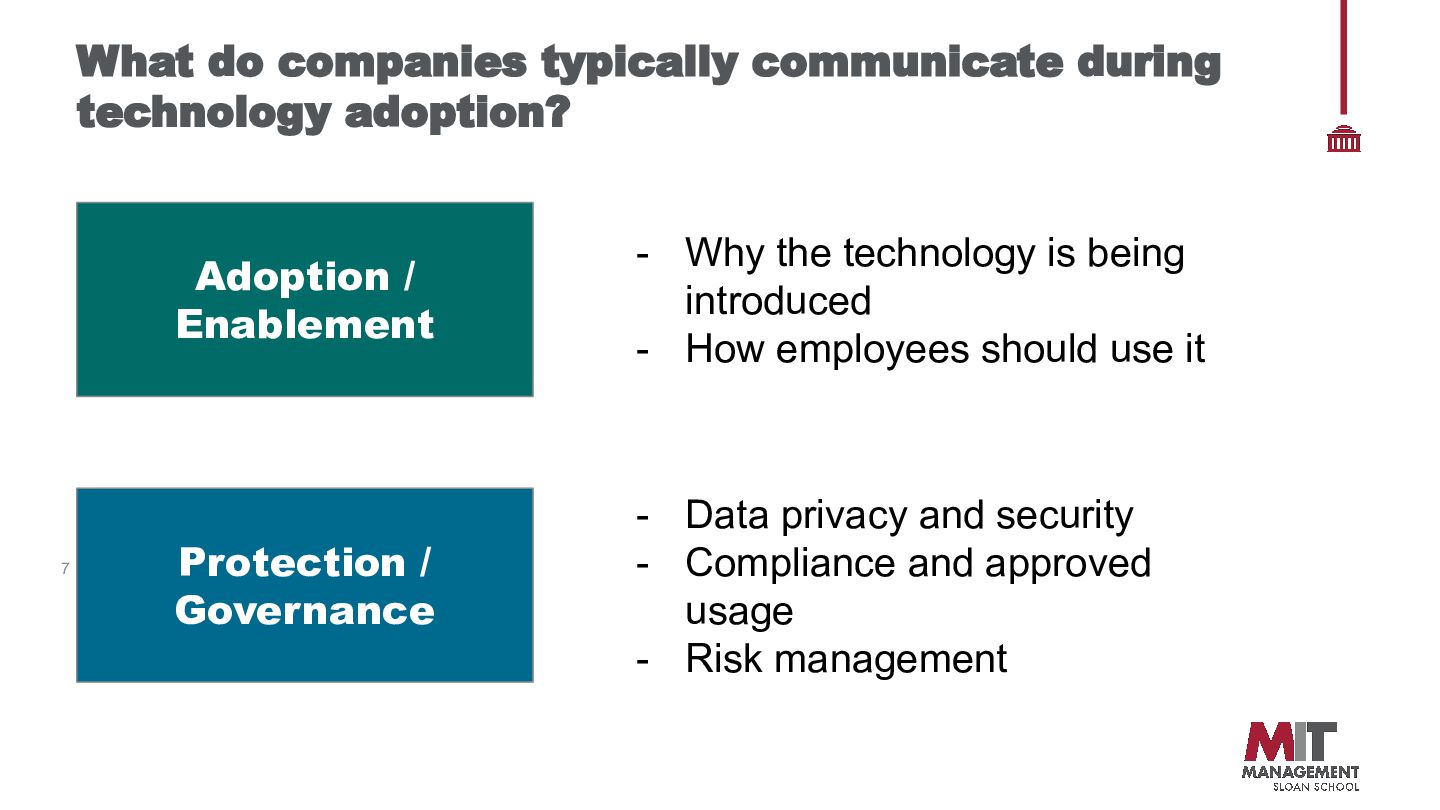
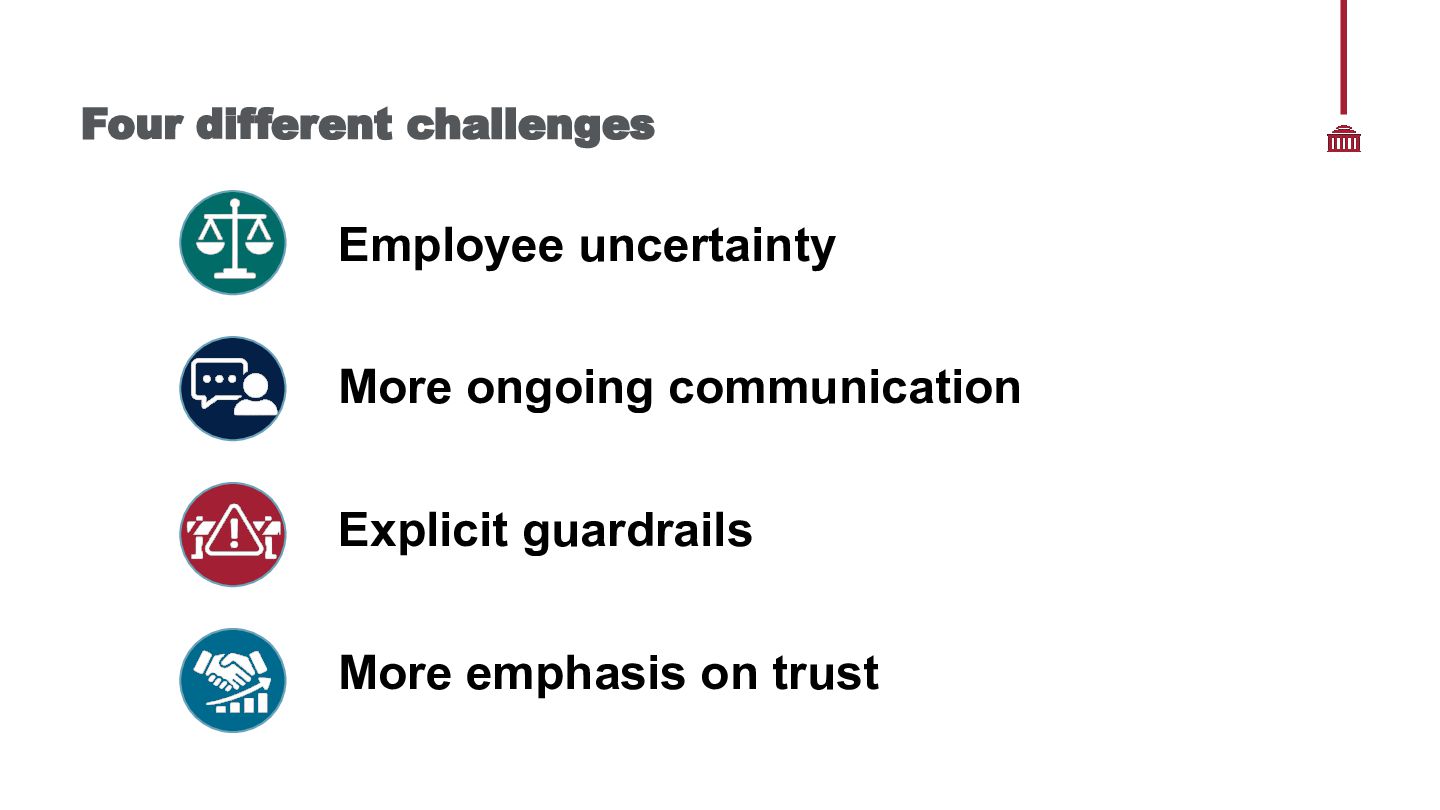
technology is being introduced - How employees should use it - Data privacy and security - Compliance and approved usage - Risk management What do companies typically communicate during technology adoption? 1
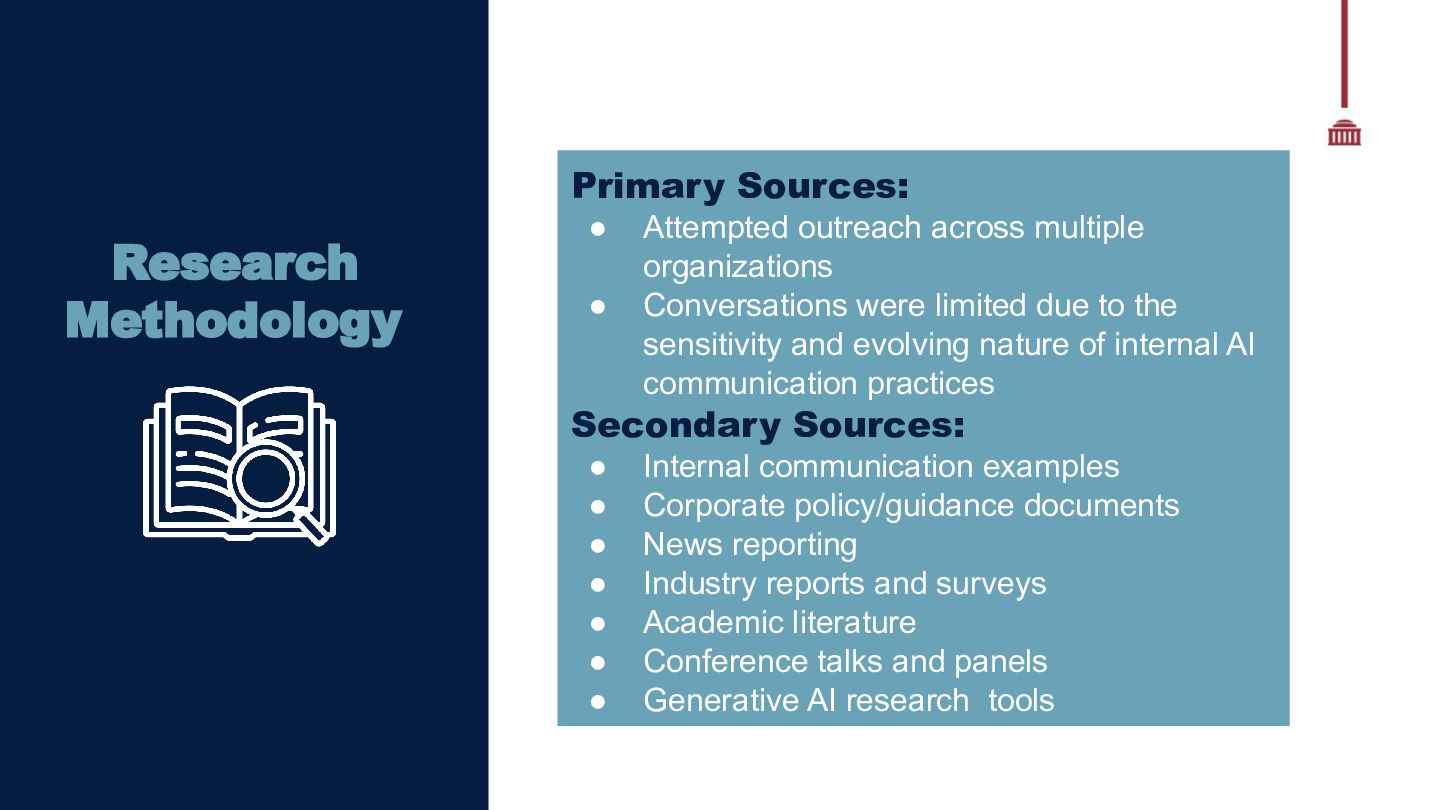
• Conversations were limited due to the sensitivity and evolving nature of internal AI communication practices Secondary Sources: • Internal communication examples • Corporate policy/guidance documents • News reporting • Industry reports and surveys • Academic literature • Conference talks and panels • Generative AI research tools
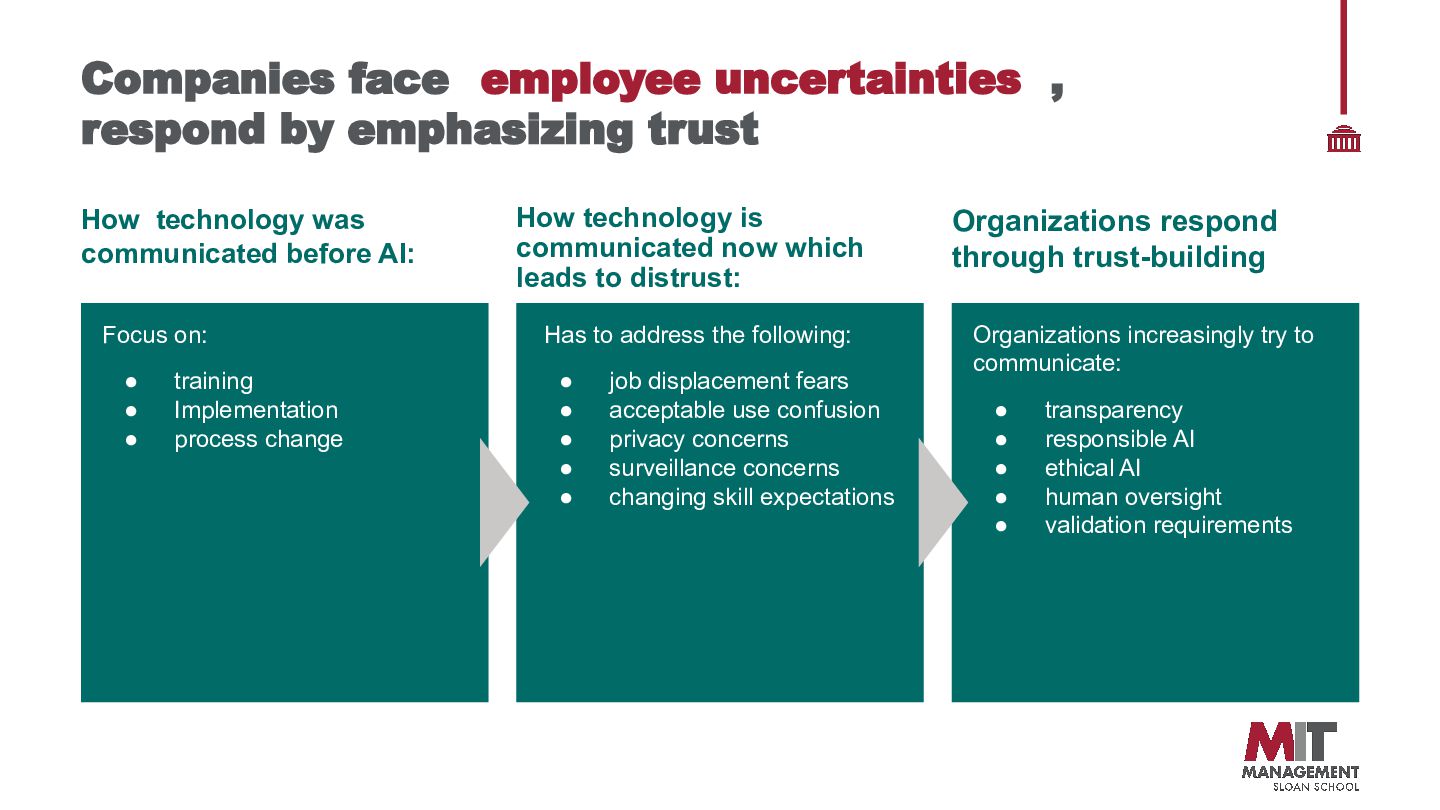
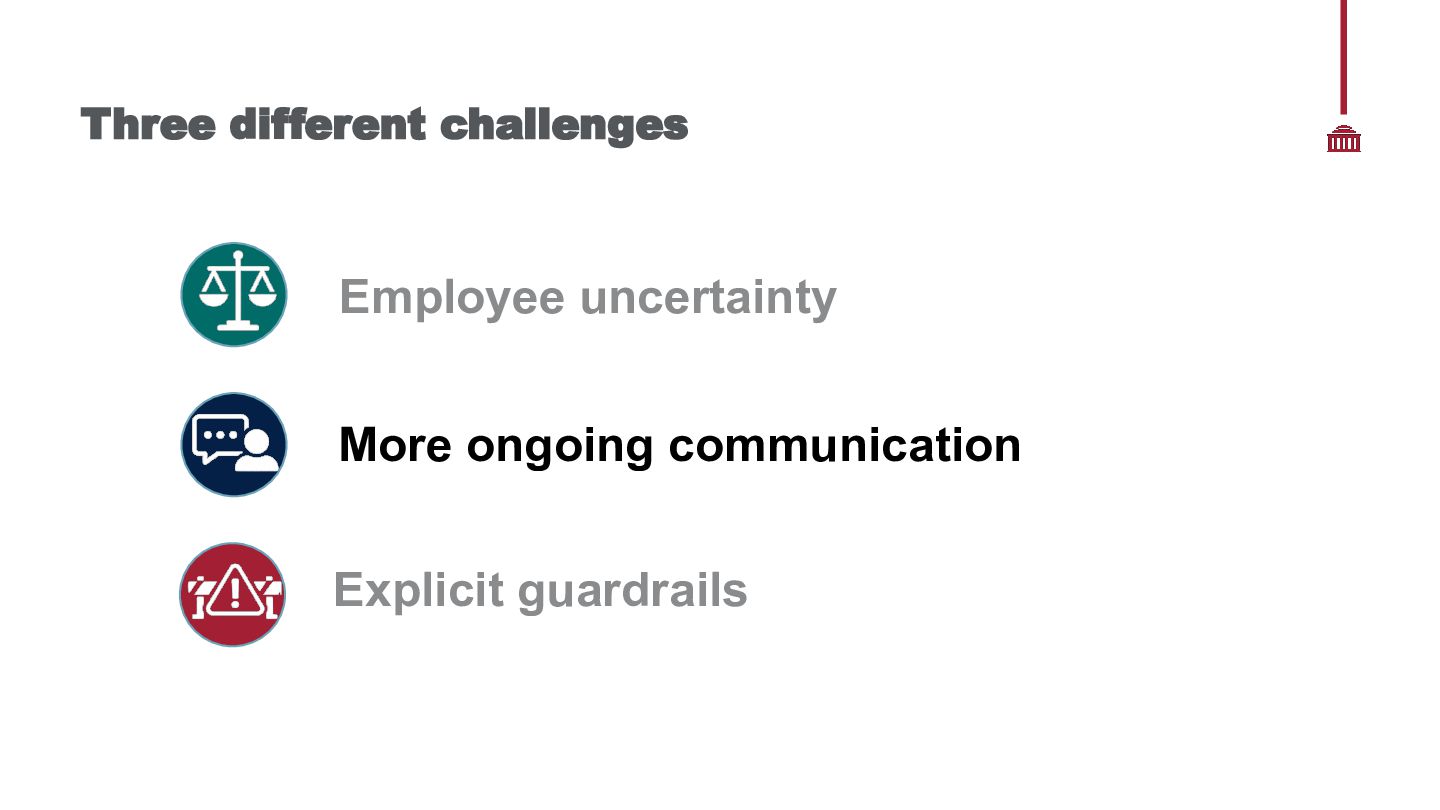
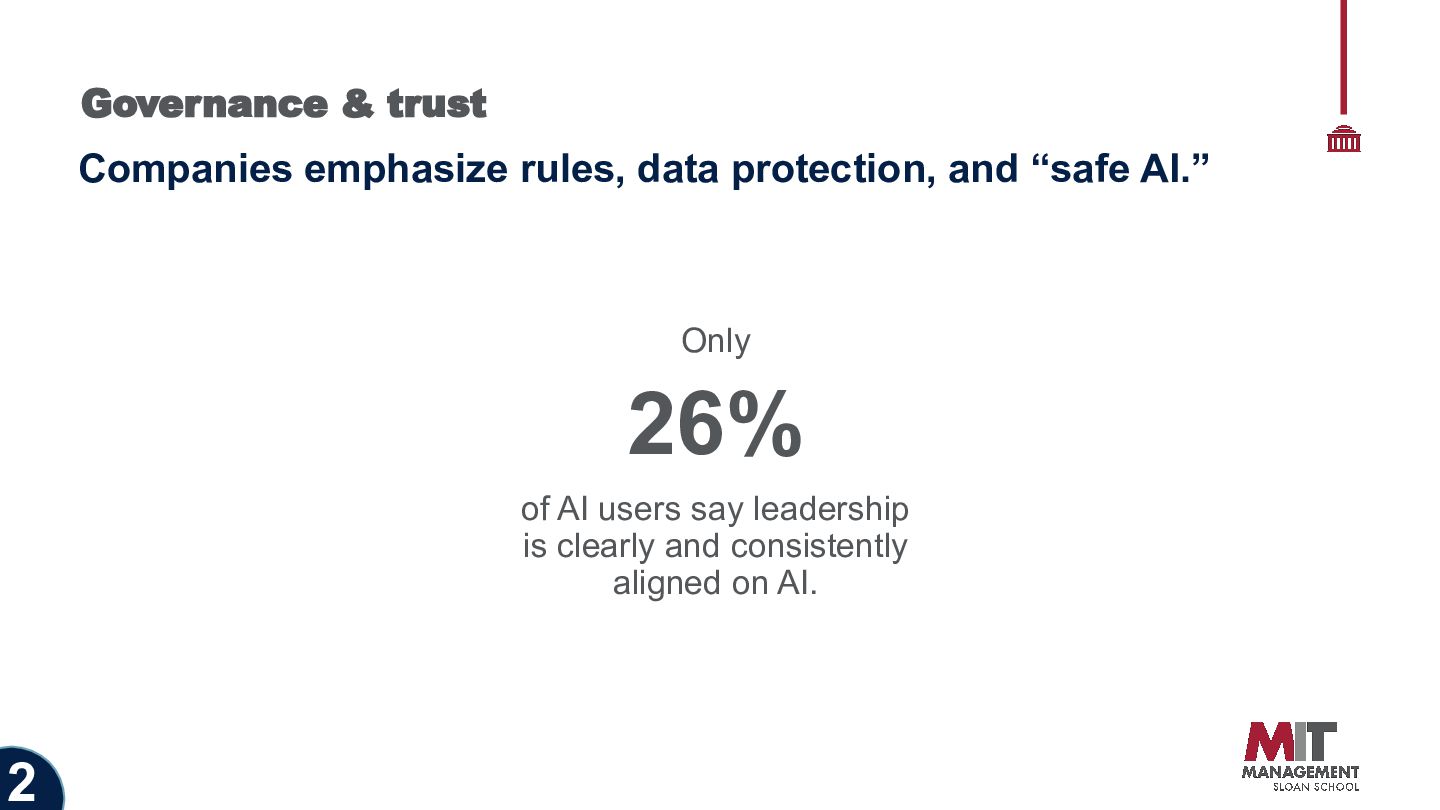
• Implementation • process change How technology is communicated now which leads to distrust: Has to address the following: • job displacement fears • acceptable use confusion • privacy concerns • surveillance concerns • changing skill expectations Companies face employee uncertainties , respond by emphasizing trust Organizations respond through trust-building Organizations increasingly try to communicate: • transparency • responsible AI • ethical AI • human oversight • validation requirements
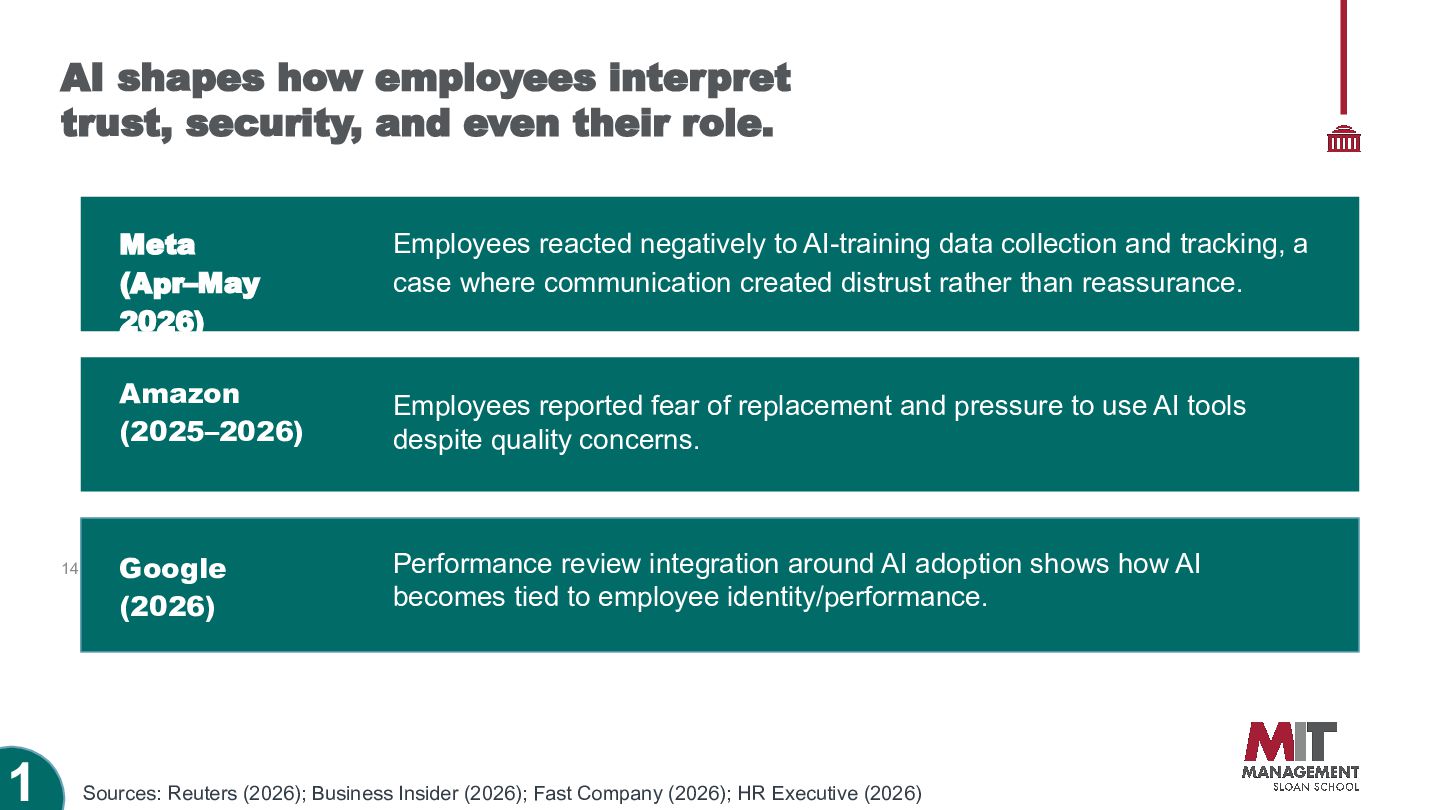
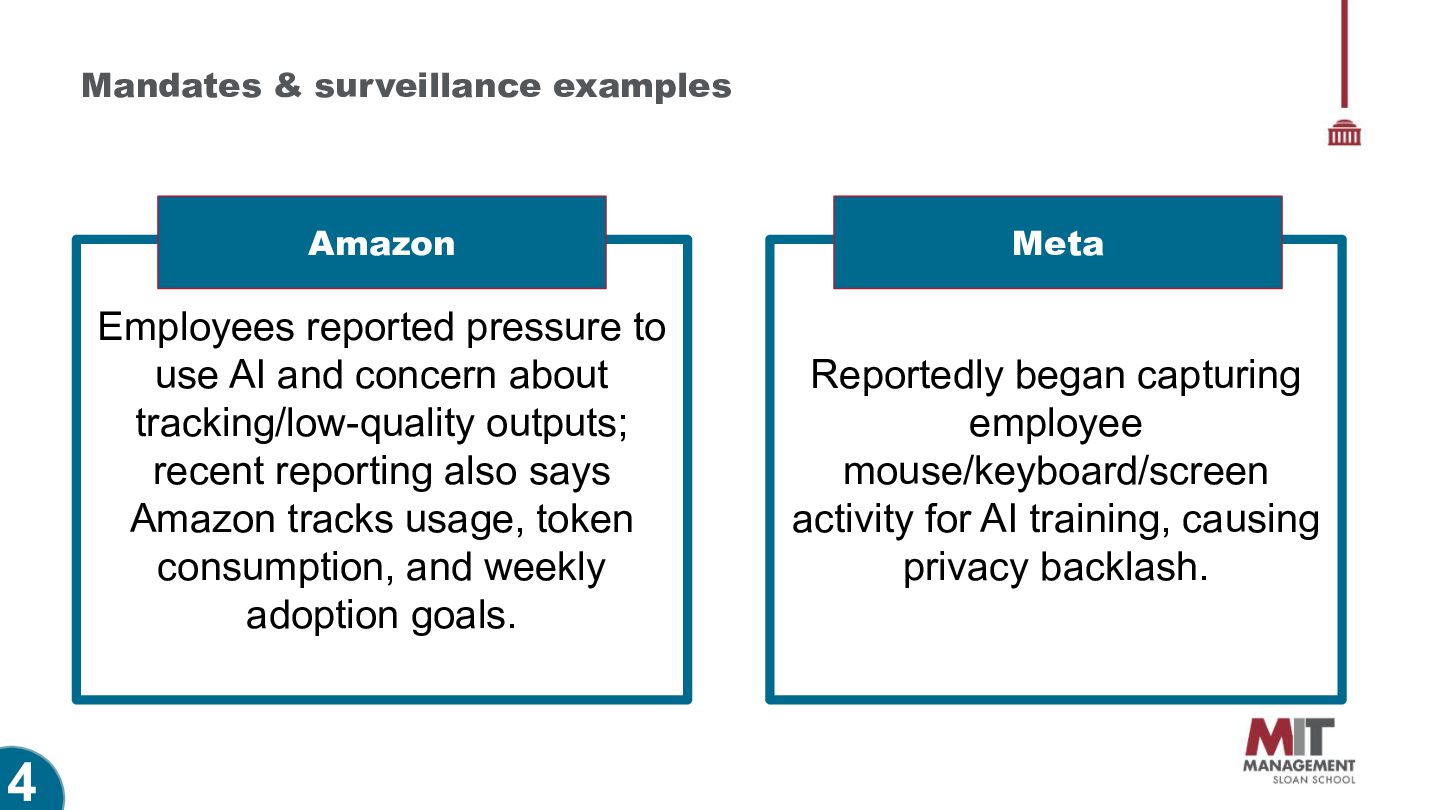
their role. Amazon (2025–2026) Google (2026) Meta (Apr–May 2026) 1 Sources: Reuters (2026); Business Insider (2026); Fast Company (2026); HR Executive (2026) Employees reacted negatively to AI-training data collection and tracking, a case where communication created distrust rather than reassurance. Employees reported fear of replacement and pressure to use AI tools despite quality concerns. Performance review integration around AI adoption shows how AI becomes tied to employee identity/performance.
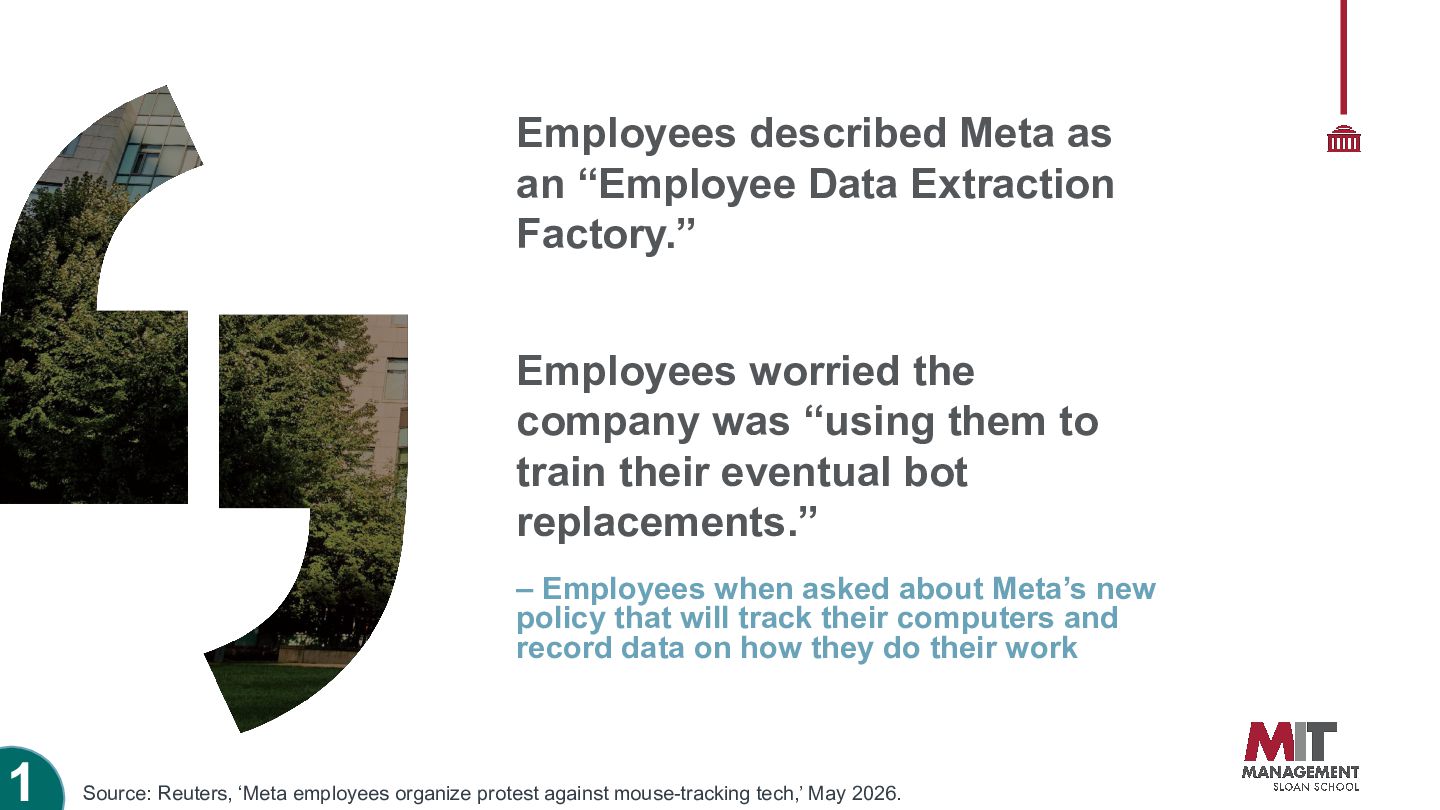
worried the company was “using them to train their eventual bot replacements.” – Employees when asked about Meta’s new policy that will track their computers and record data on how they do their work 1 Source: Reuters, ‘Meta employees organize protest against mouse-tracking tech,’ May 2026.
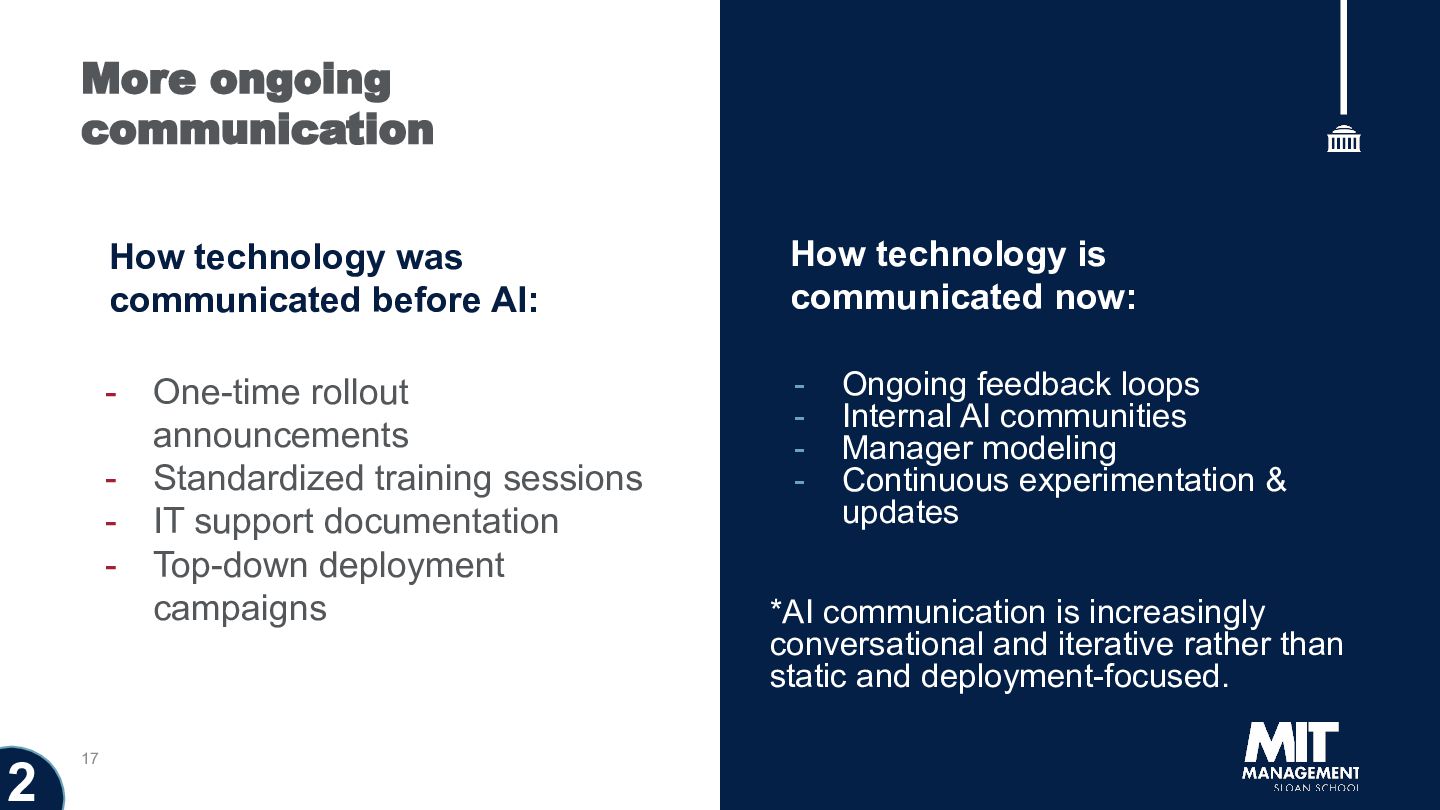
support documentation - Top-down deployment campaigns More ongoing communication 17 - Ongoing feedback loops - Internal AI communities - Manager modeling - Continuous experimentation & updates *AI communication is increasingly conversational and iterative rather than static and deployment-focused. How technology is communicated now: How technology was communicated before AI: 2
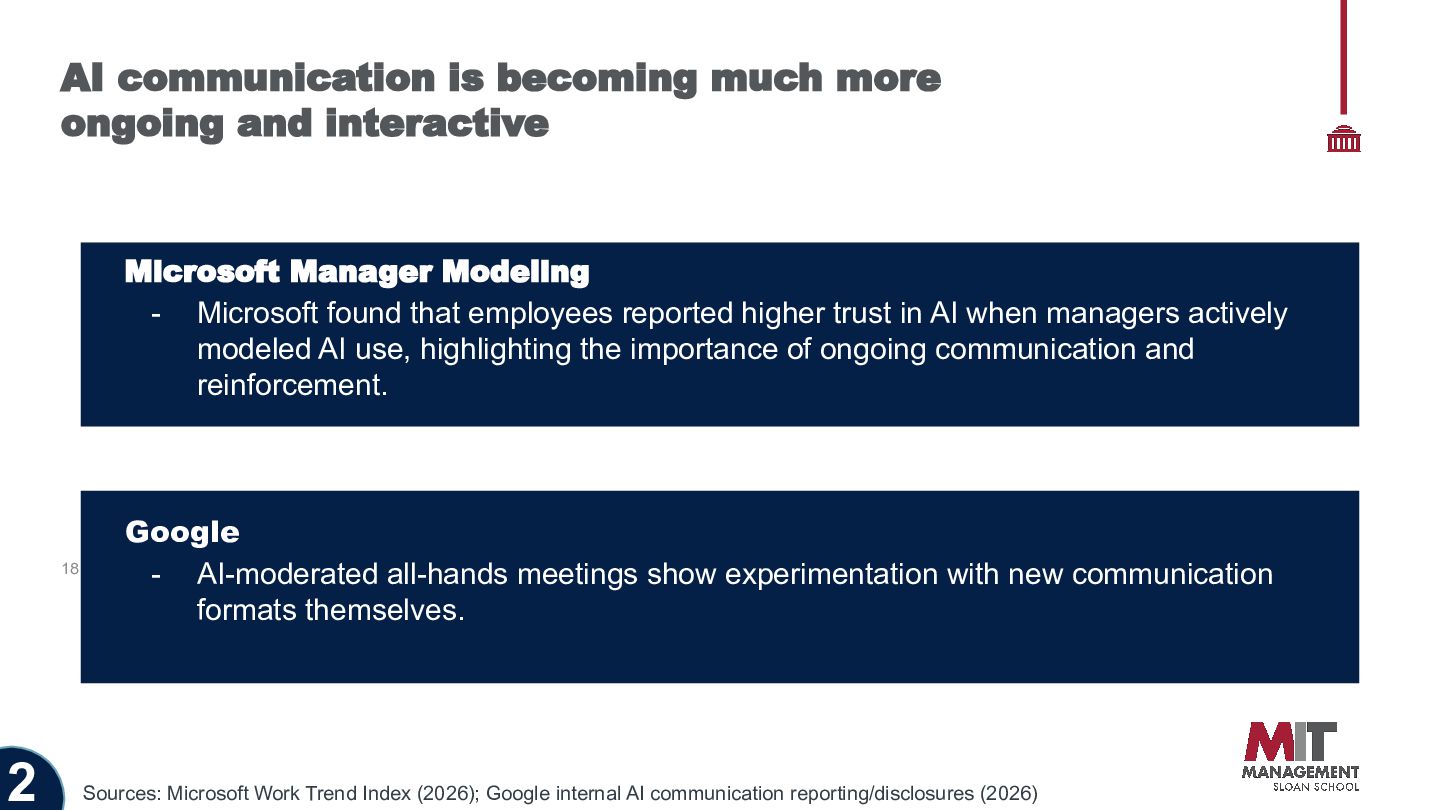
Google - AI-moderated all-hands meetings show experimentation with new communication formats themselves. Microsoft Manager Modeling - Microsoft found that employees reported higher trust in AI when managers actively modeled AI use, highlighting the importance of ongoing communication and reinforcement. 2 Sources: Microsoft Work Trend Index (2026); Google internal AI communication reporting/disclosures (2026)
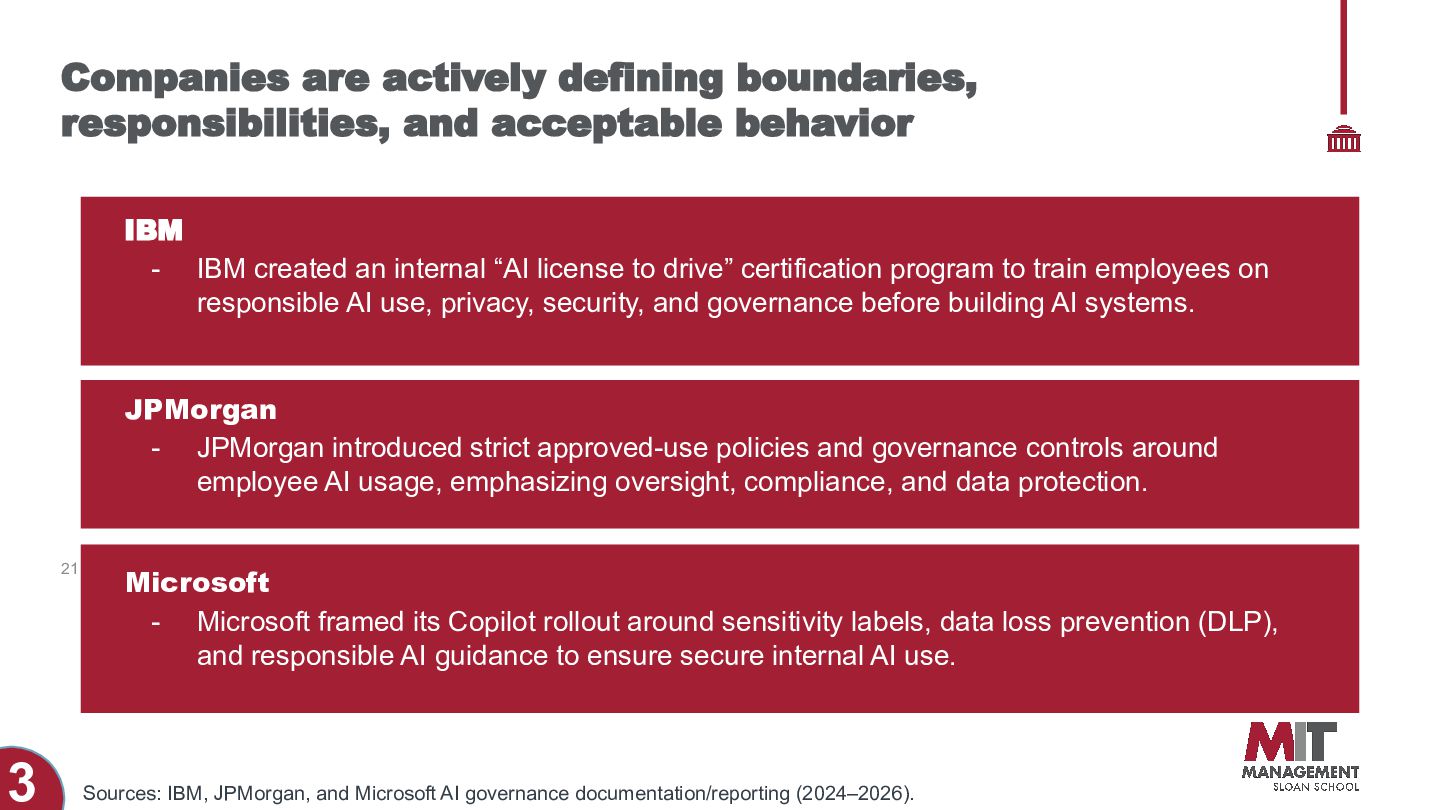
JPMorgan - JPMorgan introduced strict approved-use policies and governance controls around employee AI usage, emphasizing oversight, compliance, and data protection. IBM - IBM created an internal “AI license to drive” certification program to train employees on responsible AI use, privacy, security, and governance before building AI systems. Microsoft - Microsoft framed its Copilot rollout around sensitivity labels, data loss prevention (DLP), and responsible AI guidance to ensure secure internal AI use. 3 Sources: IBM, JPMorgan, and Microsoft AI governance documentation/reporting (2024–2026).
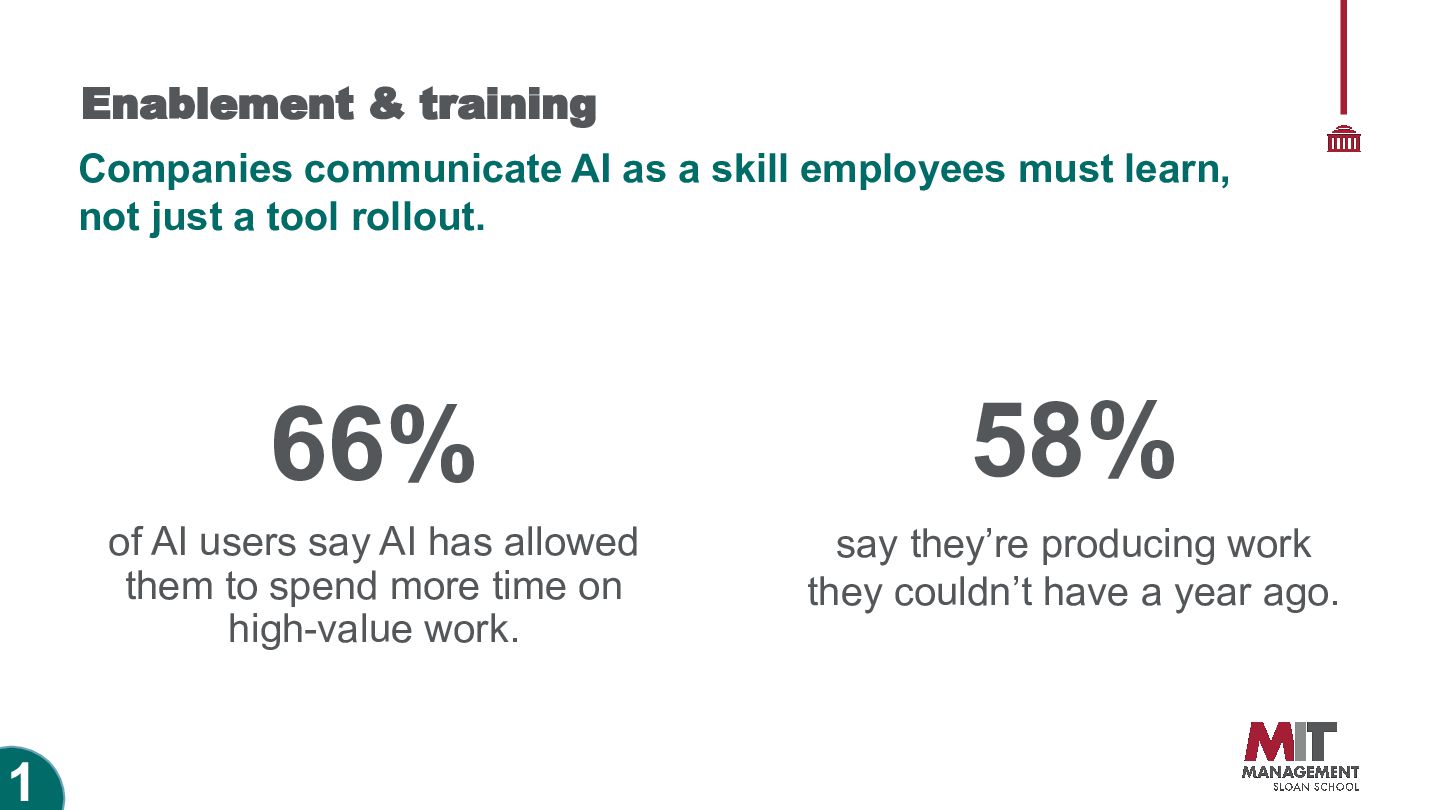
ago. 66% of AI users say AI has allowed them to spend more time on high-value work. Enablement & training Companies communicate AI as a skill employees must learn, not just a tool rollout. 1
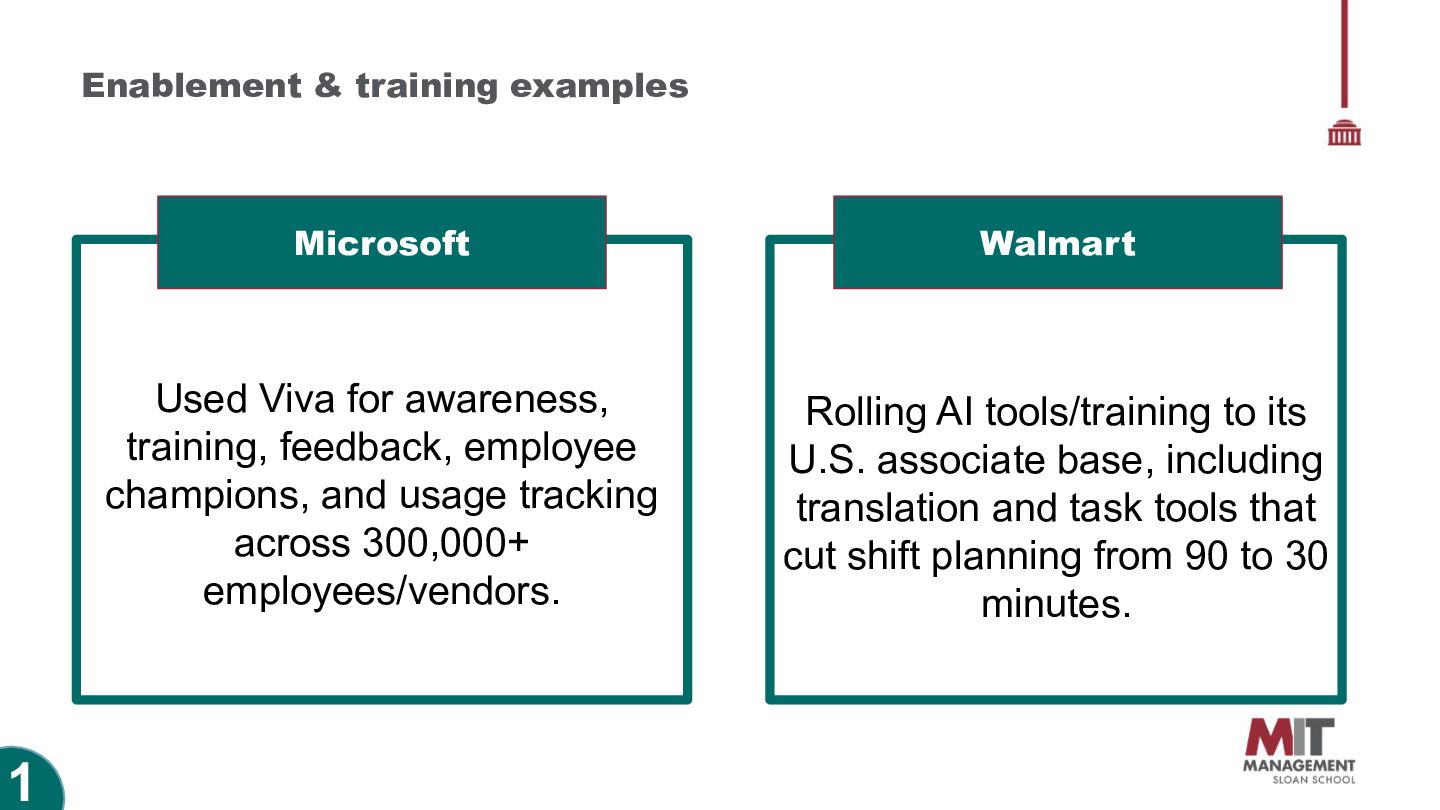
usage tracking across 300,000+ employees/vendors. Microsoft Rolling AI tools/training to its U.S. associate base, including translation and task tools that cut shift planning from 90 to 30 minutes. Walmart Enablement & training examples 1
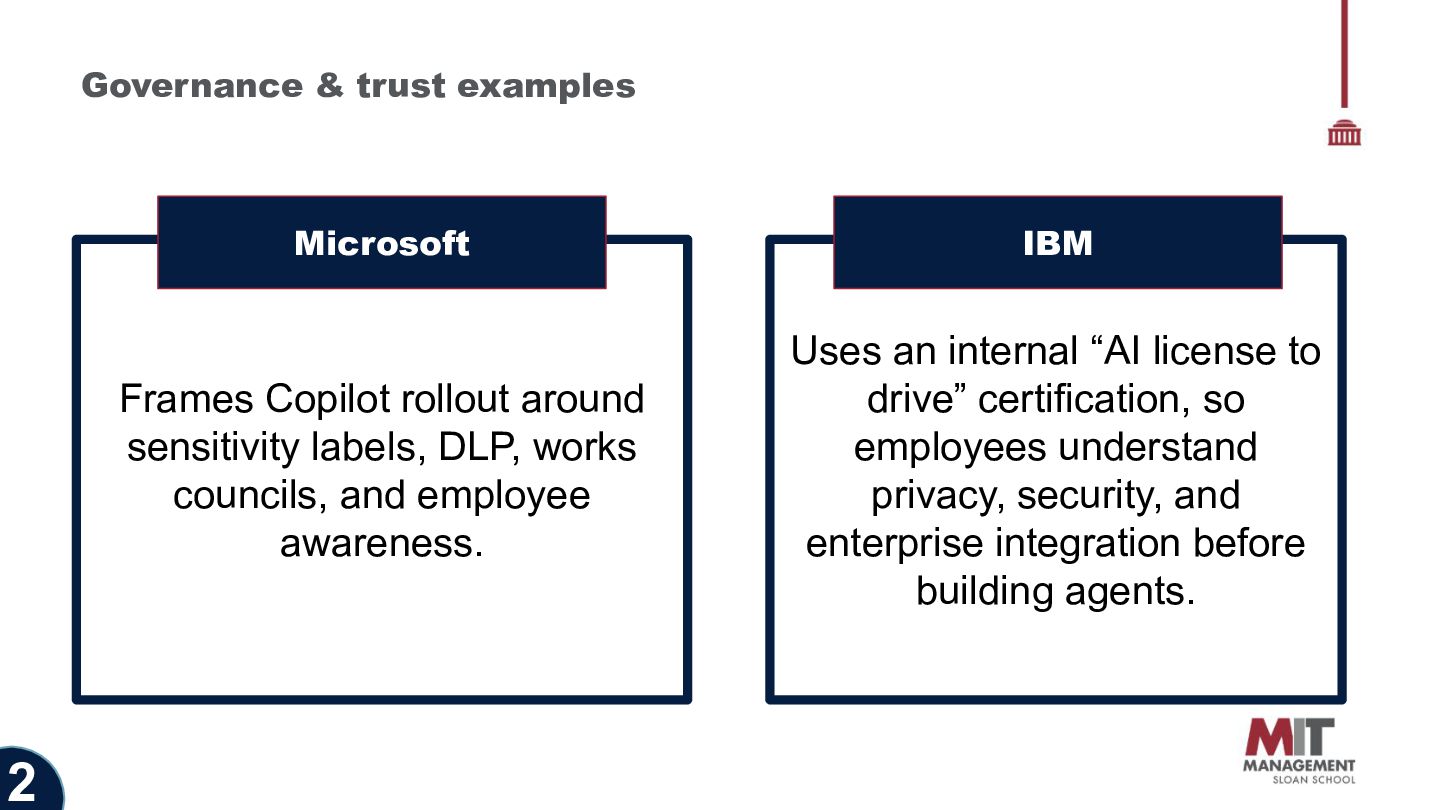
and employee awareness. Microsoft Uses an internal “AI license to drive” certification, so employees understand privacy, security, and enterprise integration before building agents. IBM Governance & trust examples 2
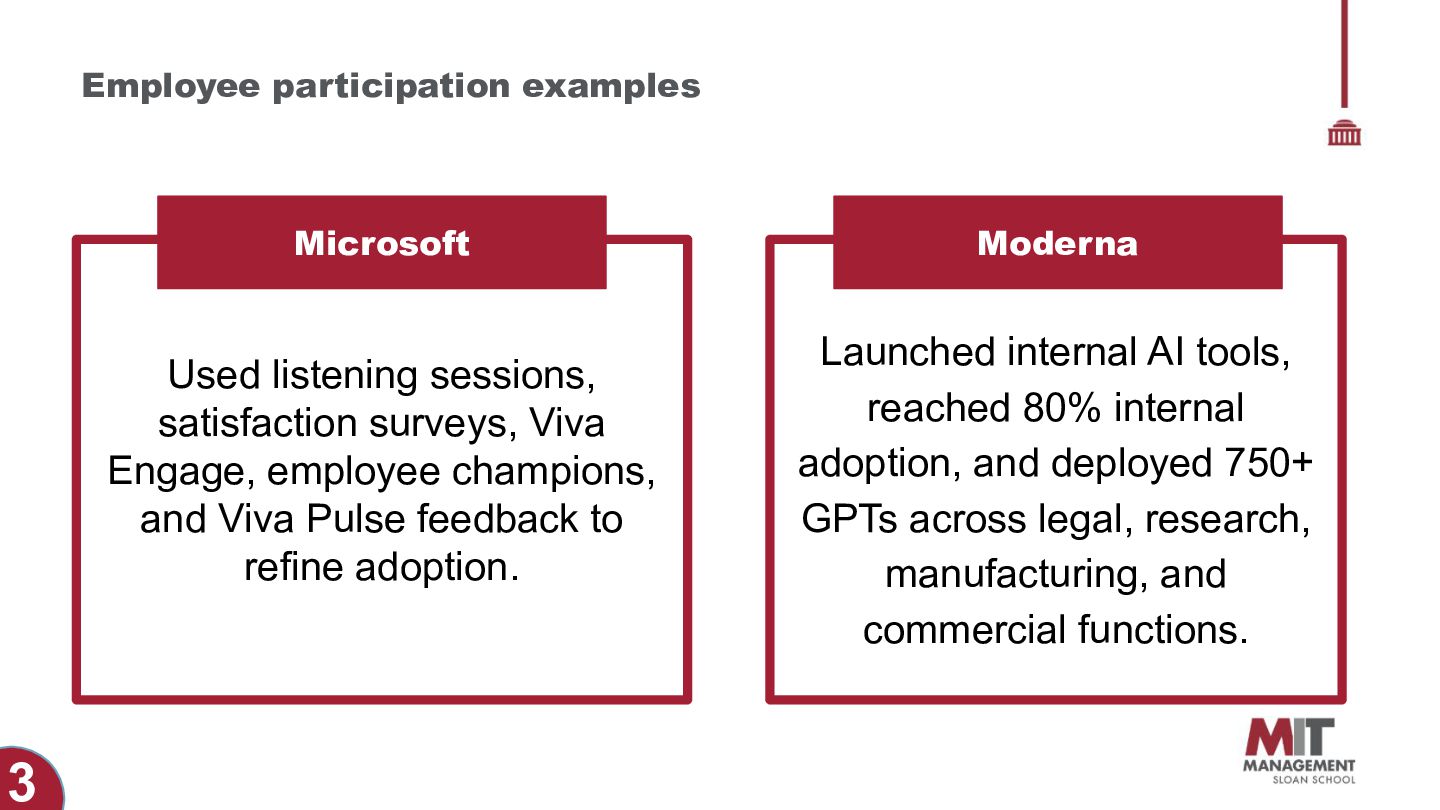
and Viva Pulse feedback to refine adoption. Microsoft Launched internal AI tools, reached 80% internal adoption, and deployed 750+ GPTs across legal, research, manufacturing, and commercial functions. Moderna Employee participation examples 3
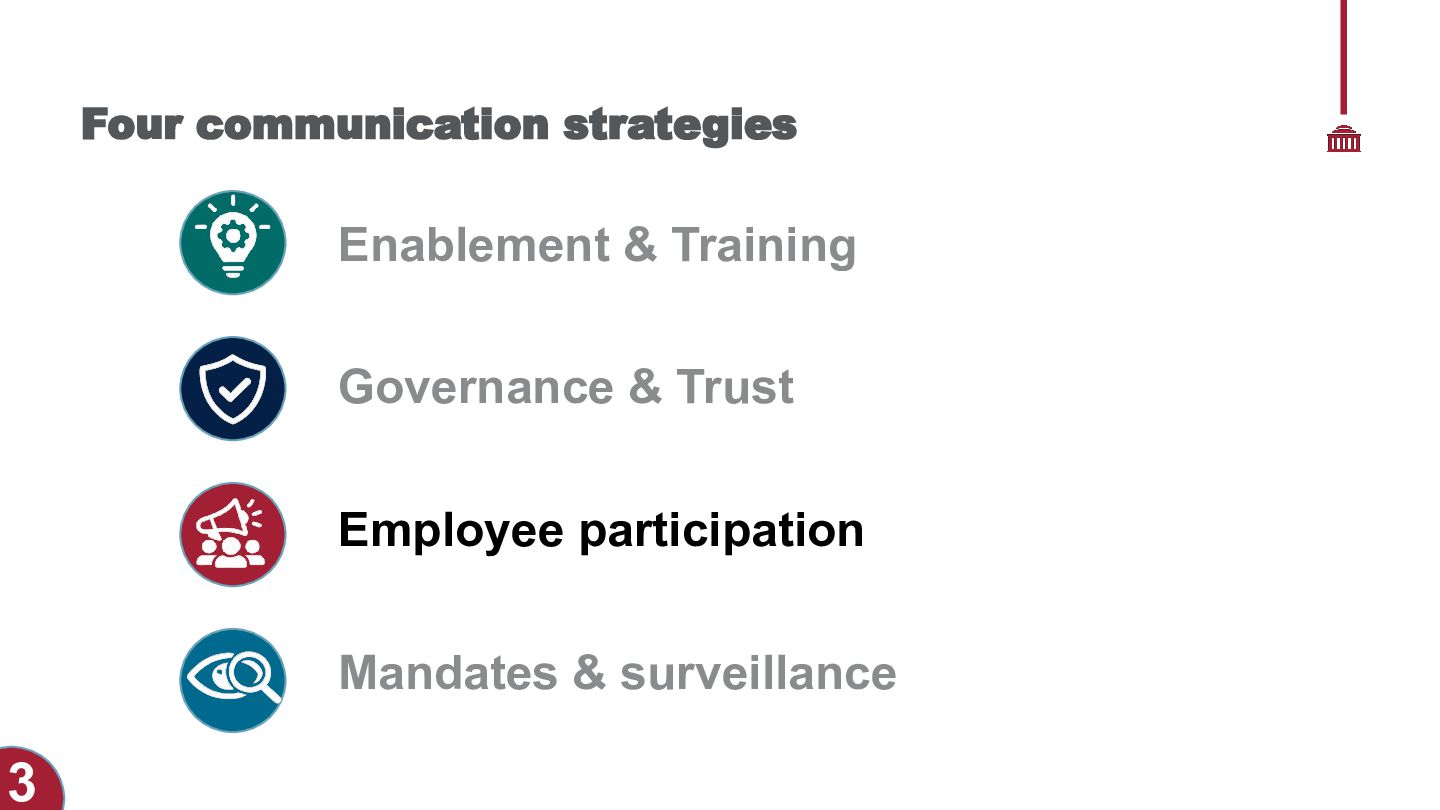
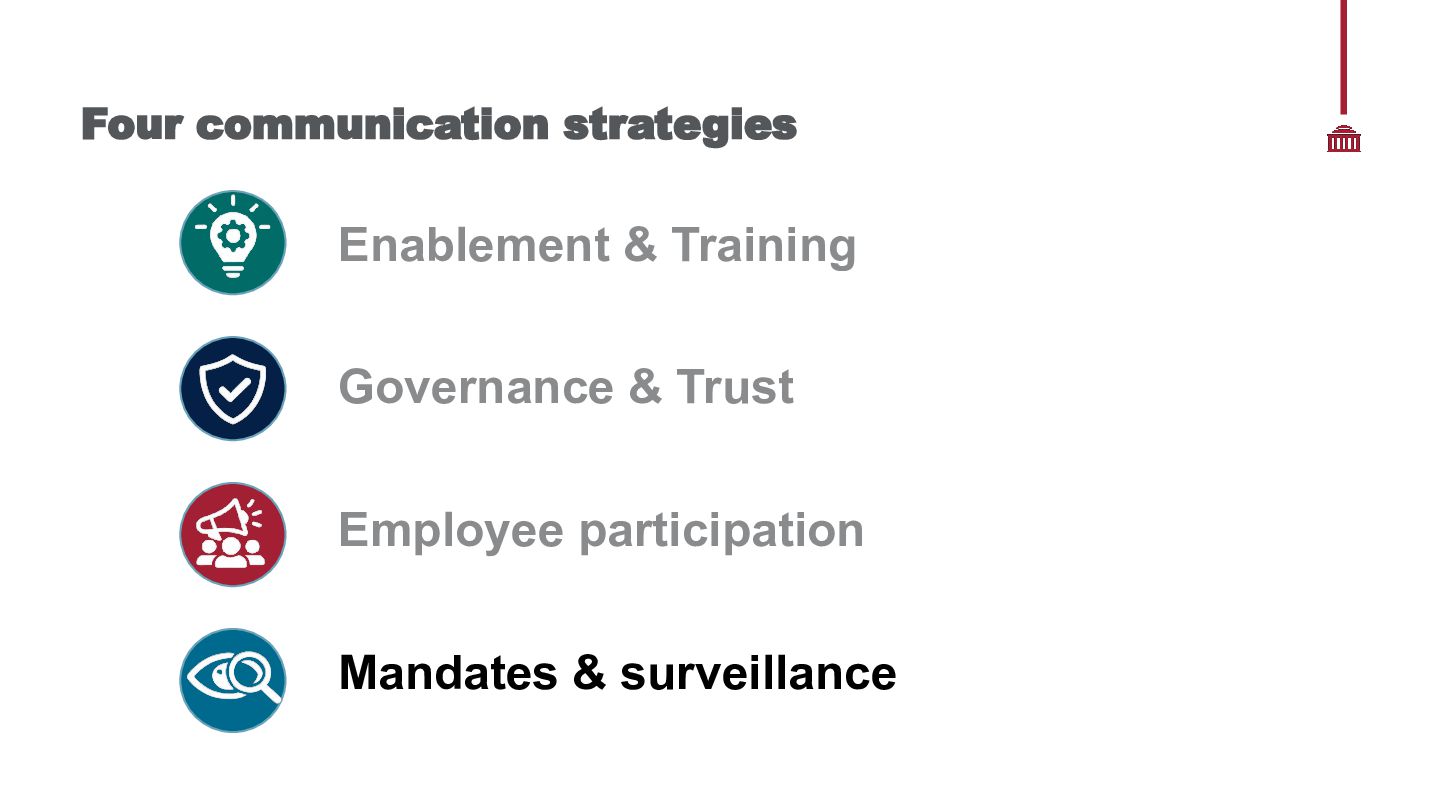
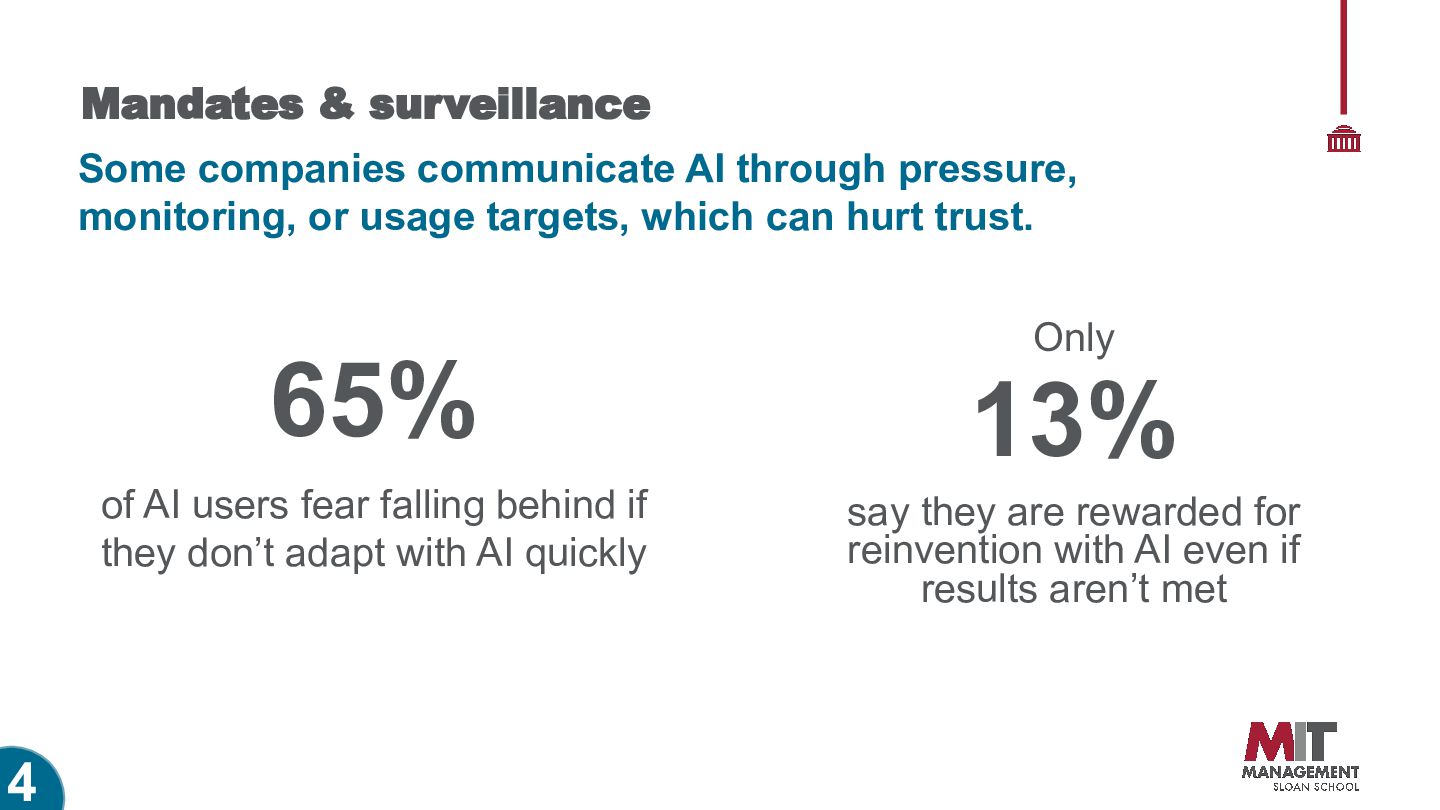
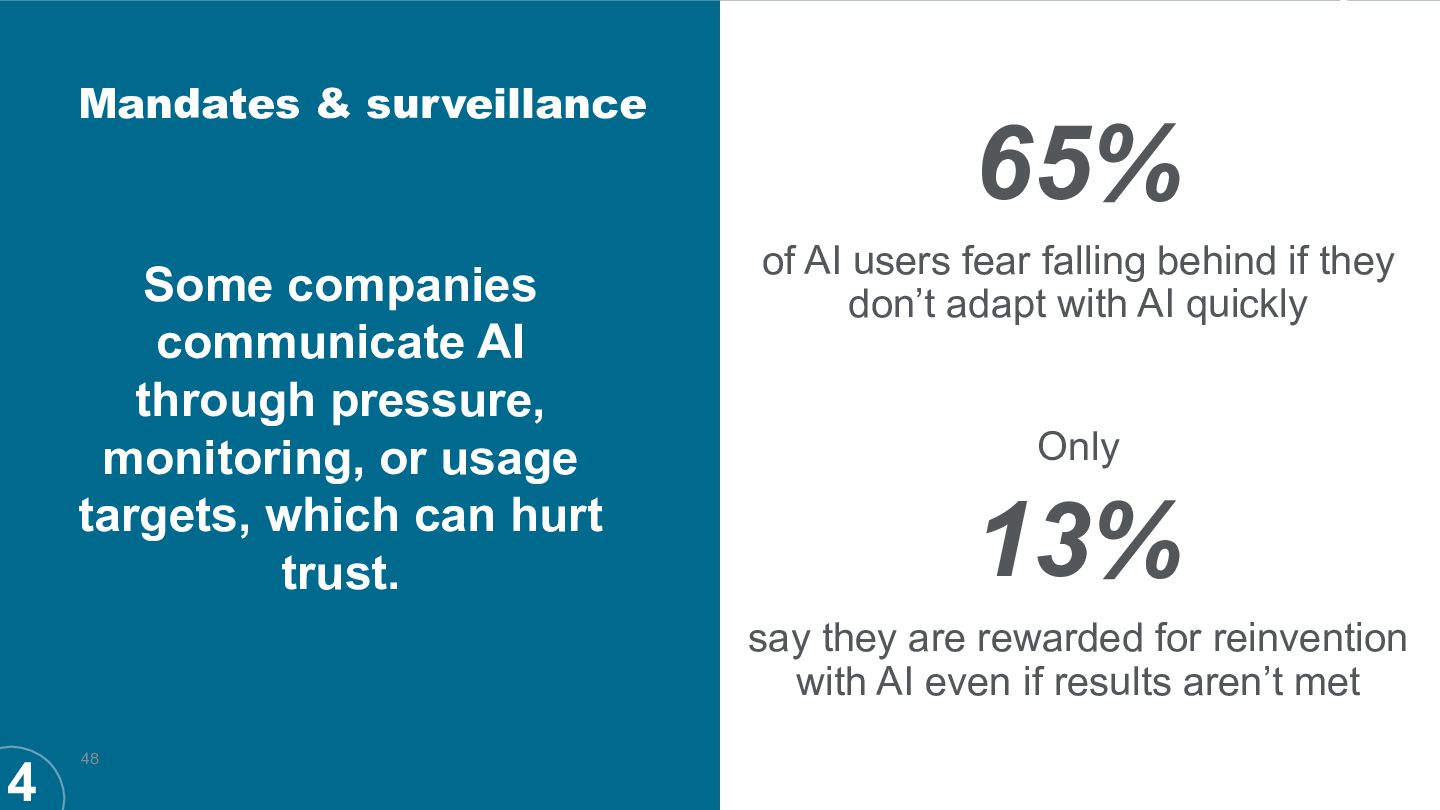
even if results aren’t met 65% of AI users fear falling behind if they don’t adapt with AI quickly Mandates & surveillance Some companies communicate AI through pressure, monitoring, or usage targets, which can hurt trust. 4
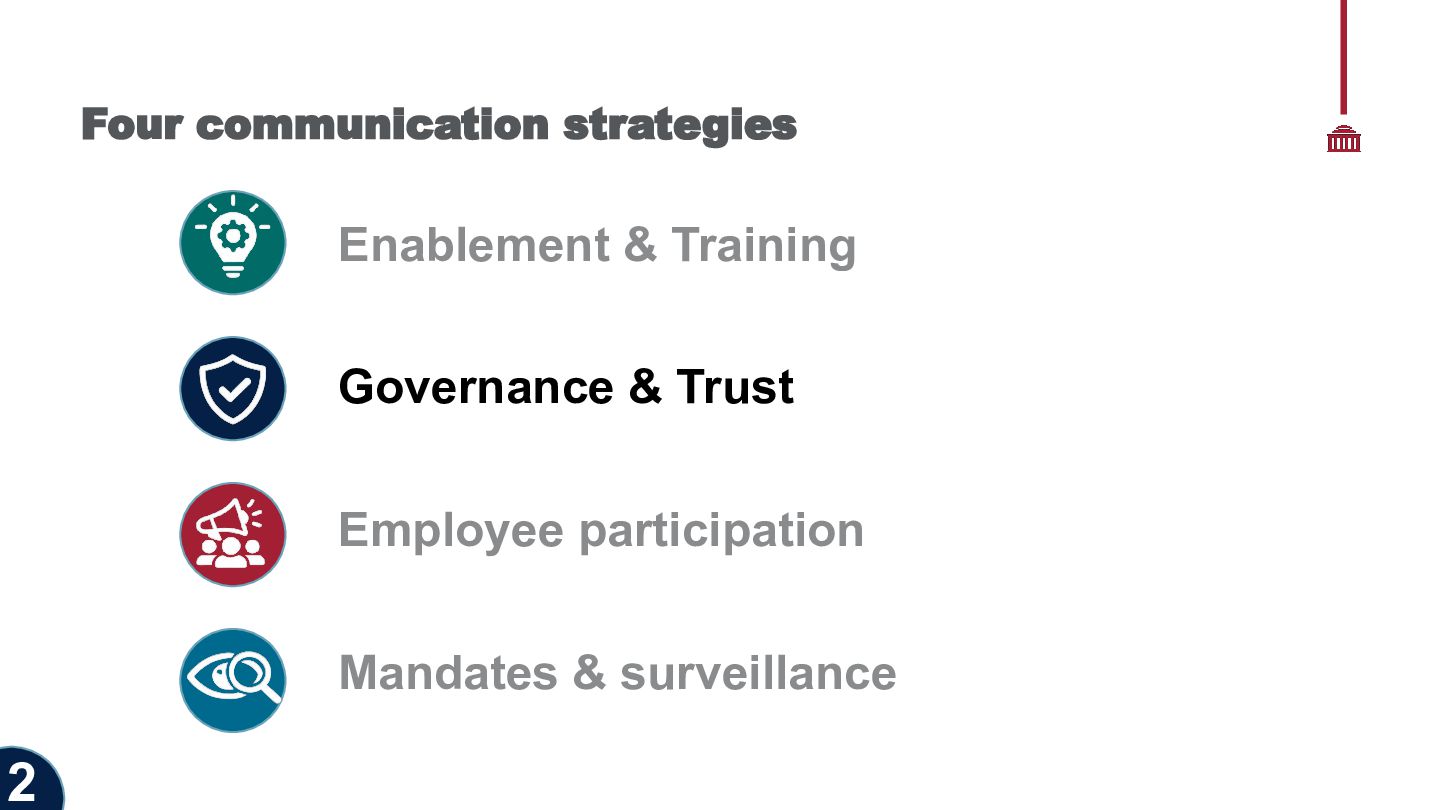
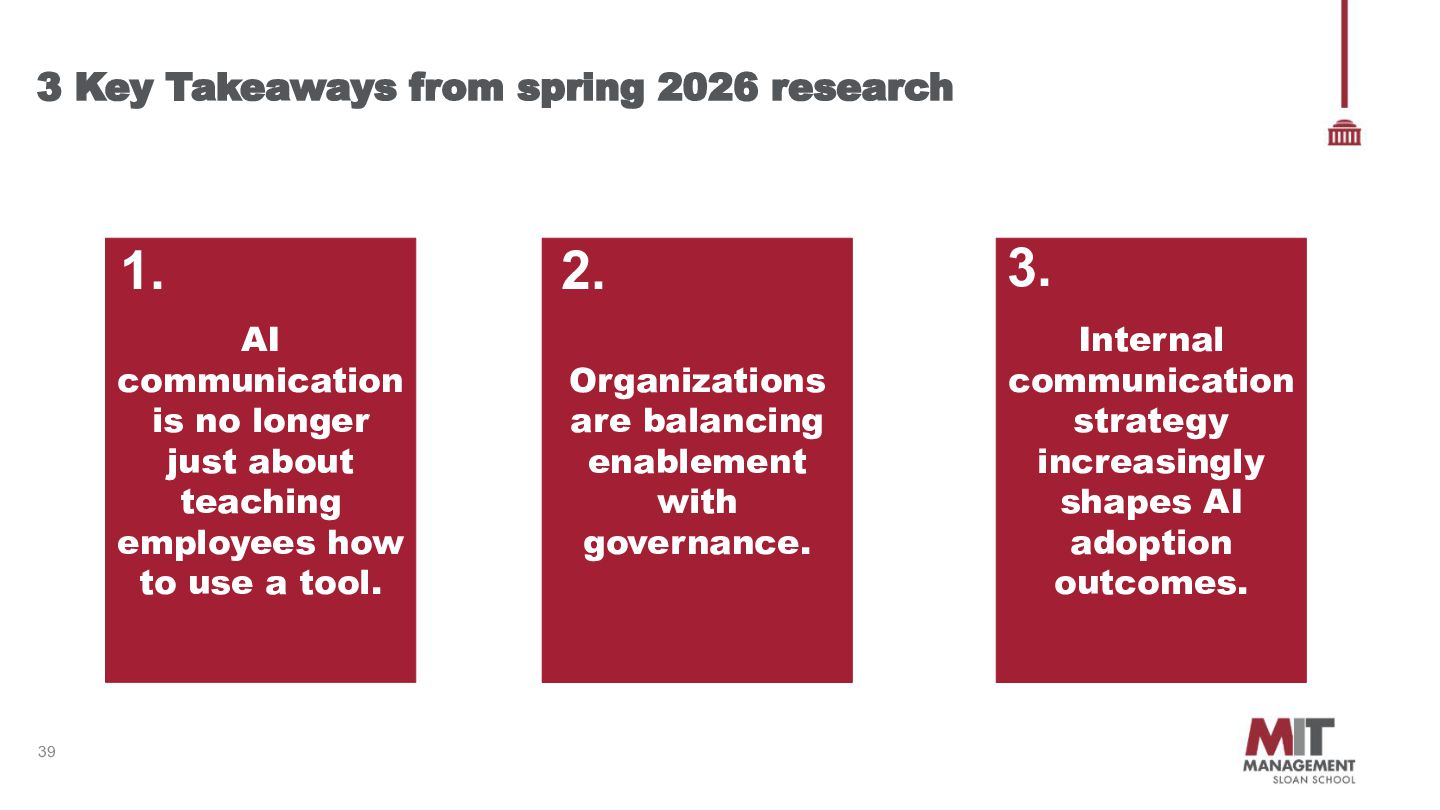
balancing enablement with governance. Internal communication strategy increasingly shapes AI adoption outcomes. AI communication is no longer just about teaching employees how to use a tool. 1. 2. 3.
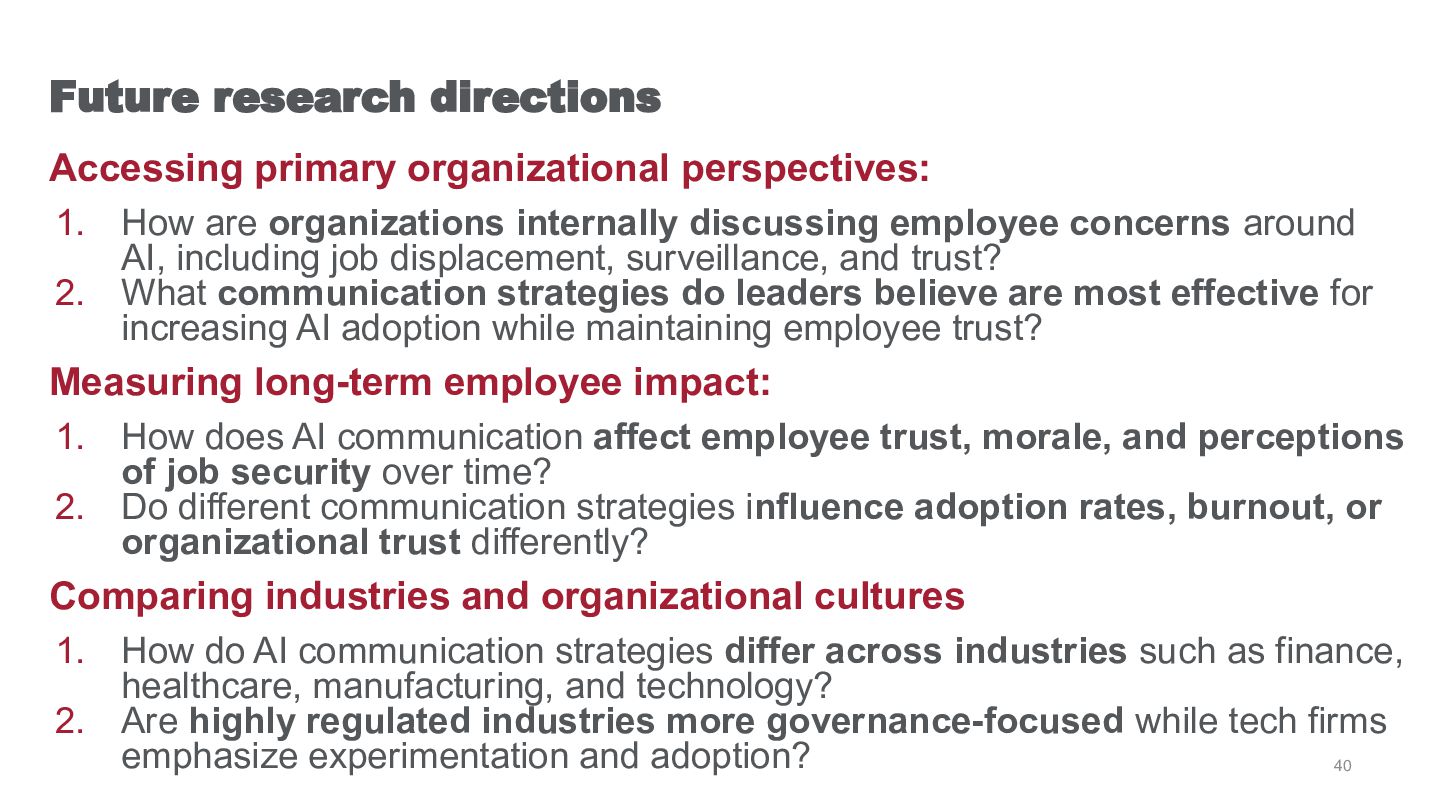
organizations internally discussing employee concerns around AI, including job displacement, surveillance, and trust? 2. What communication strategies do leaders believe are most effective for increasing AI adoption while maintaining employee trust? Measuring long-term employee impact: 1. How does AI communication affect employee trust, morale, and perceptions of job security over time? 2. Do different communication strategies influence adoption rates, burnout, or organizational trust differently? Comparing industries and organizational cultures 1. How do AI communication strategies differ across industries such as finance, healthcare, manufacturing, and technology? 2. Are highly regulated industries more governance-focused while tech firms emphasize experimentation and adoption? 40
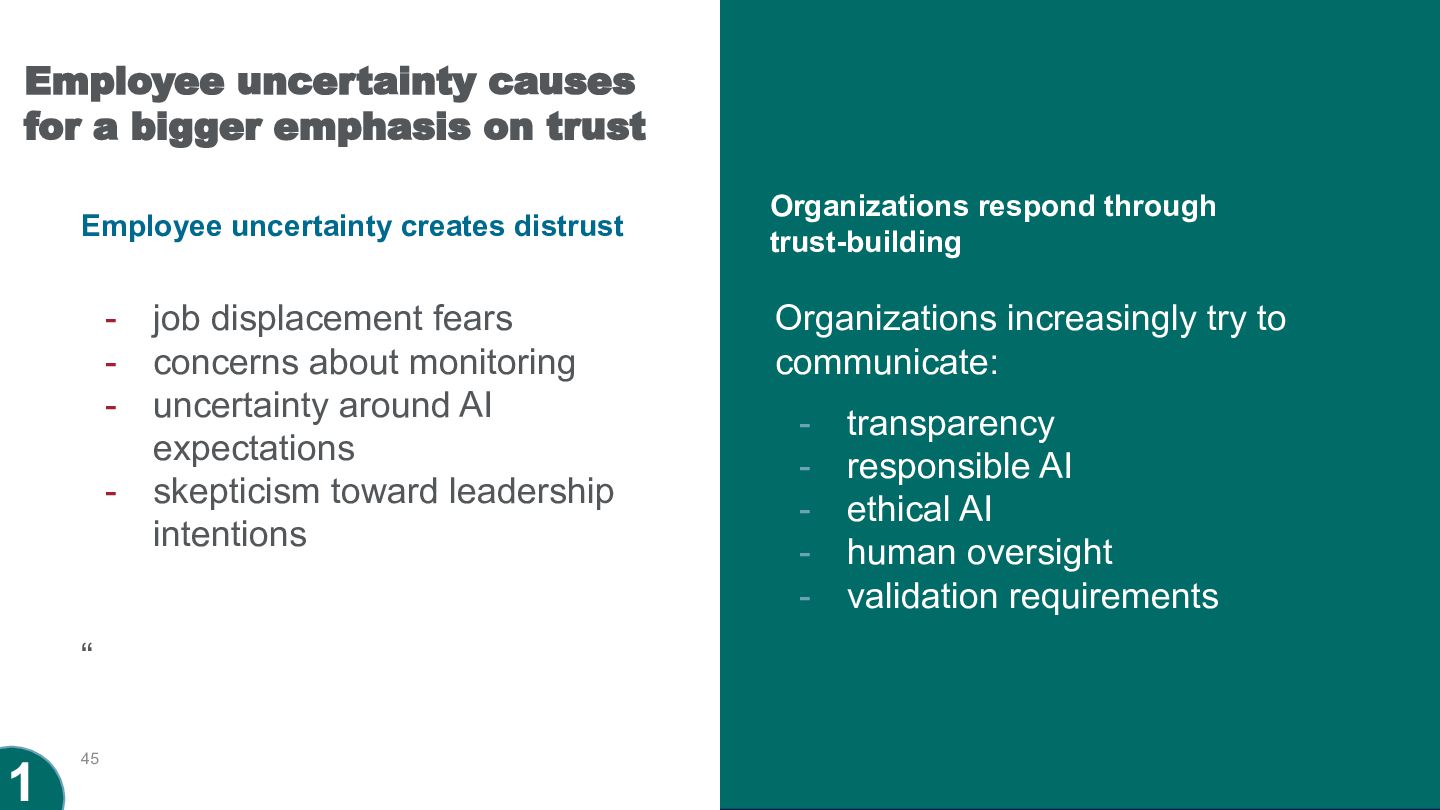
around AI expectations - skepticism toward leadership intentions “ Employee uncertainty causes for a bigger emphasis on trust 45 Employee uncertainty creates distrust Organizations respond through trust-building Organizations increasingly try to communicate: - transparency - responsible AI - ethical AI - human oversight - validation requirements 1
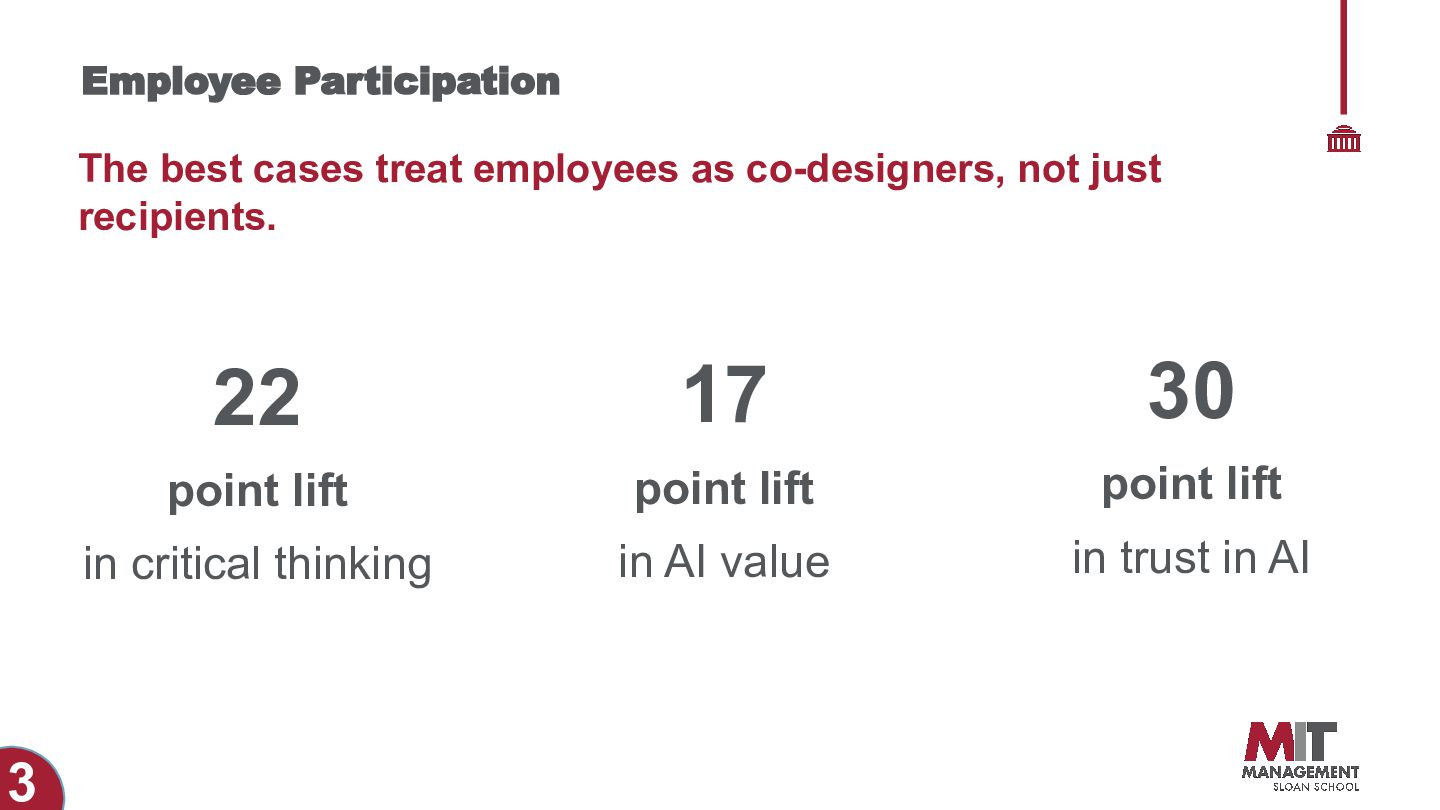
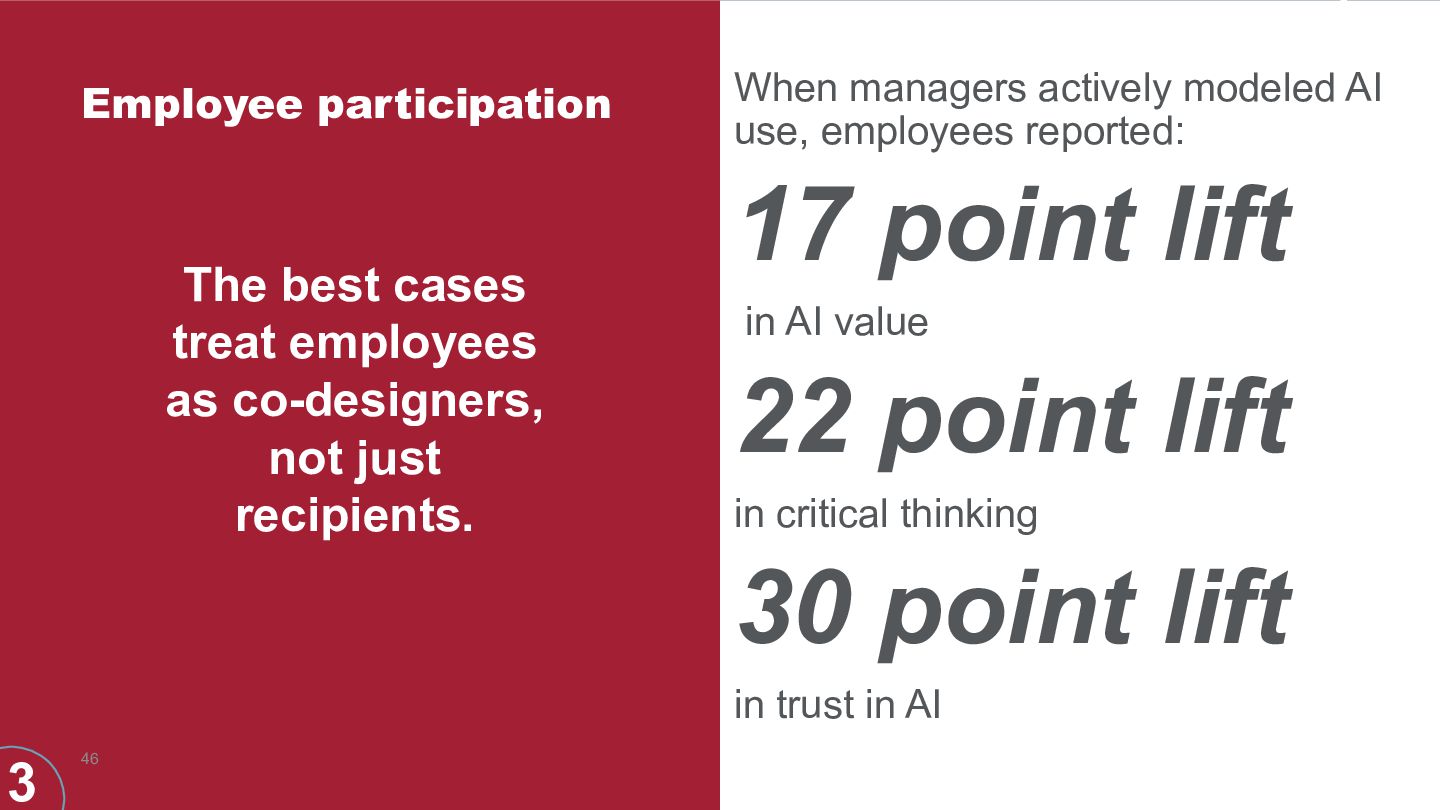
not just recipients. When managers actively modeled AI use, employees reported: 17 point lift in AI value 22 point lift in critical thinking 30 point lift in trust in AI 3
monitoring, or usage targets, which can hurt trust. 65% of AI users fear falling behind if they don’t adapt with AI quickly Only 13% say they are rewarded for reinvention with AI even if results aren’t met 4


 erfertic
 axbom
 tenderlove
 smashingmag
 jacobian
 paigeccino
 chriscoyier
 danielanewman
 eileencodes
 speakerdeck
 pwiseman
 portentint
 davidcarrasco