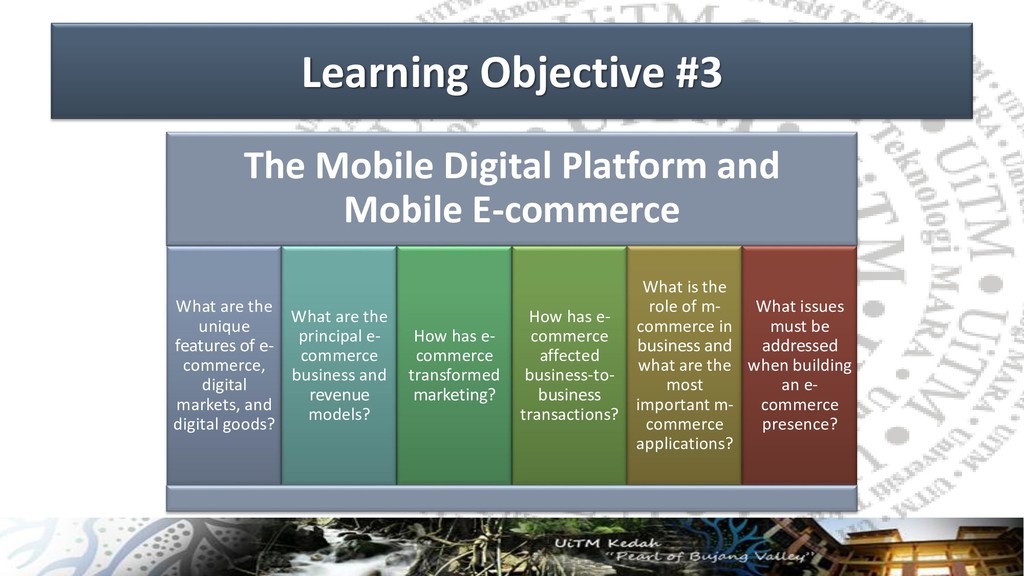
What are the unique features of e- commerce, digital markets, and digital goods? What are the principal e- commerce business and revenue models? How has e- commerce transformed marketing? How has e- commerce affected business-to- business transactions? What is the role of m- commerce in business and what are the most important m- commerce applications? What issues must be addressed when building an e- commerce presence?
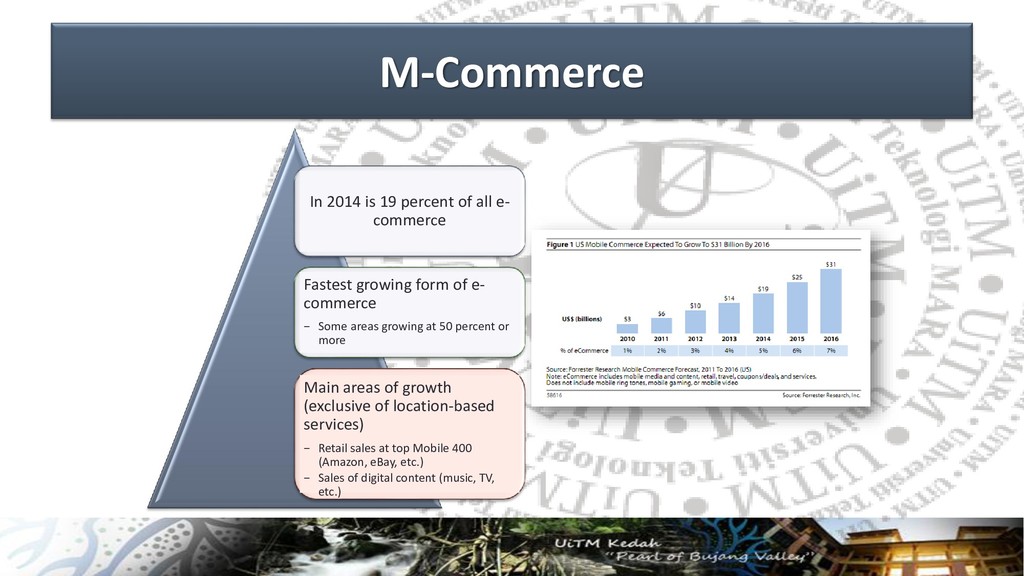
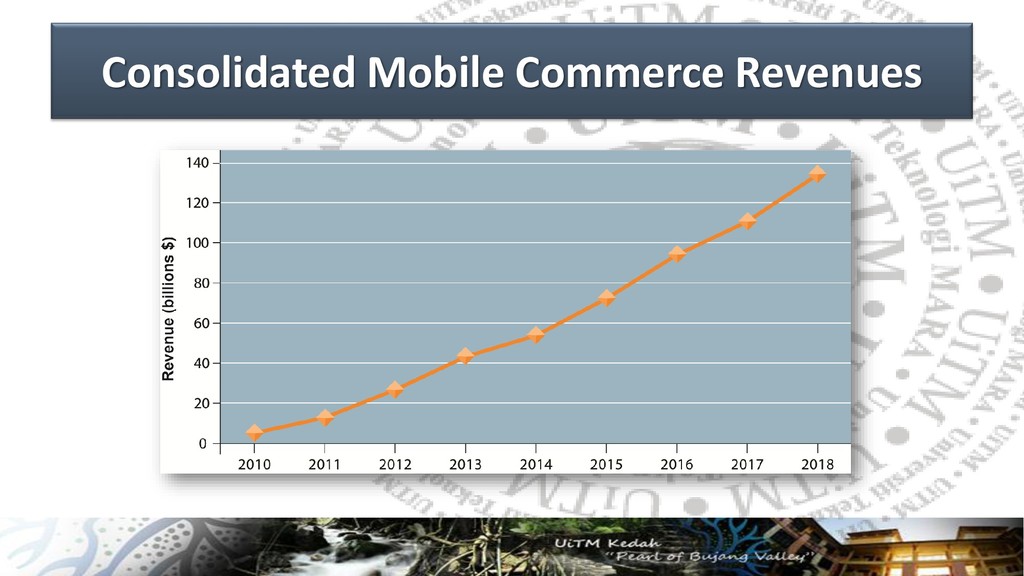
Fastest growing form of e- commerce − Some areas growing at 50 percent or more Main areas of growth (exclusive of location-based services) − Retail sales at top Mobile 400 (Amazon, eBay, etc.) − Sales of digital content (music, TV, etc.)
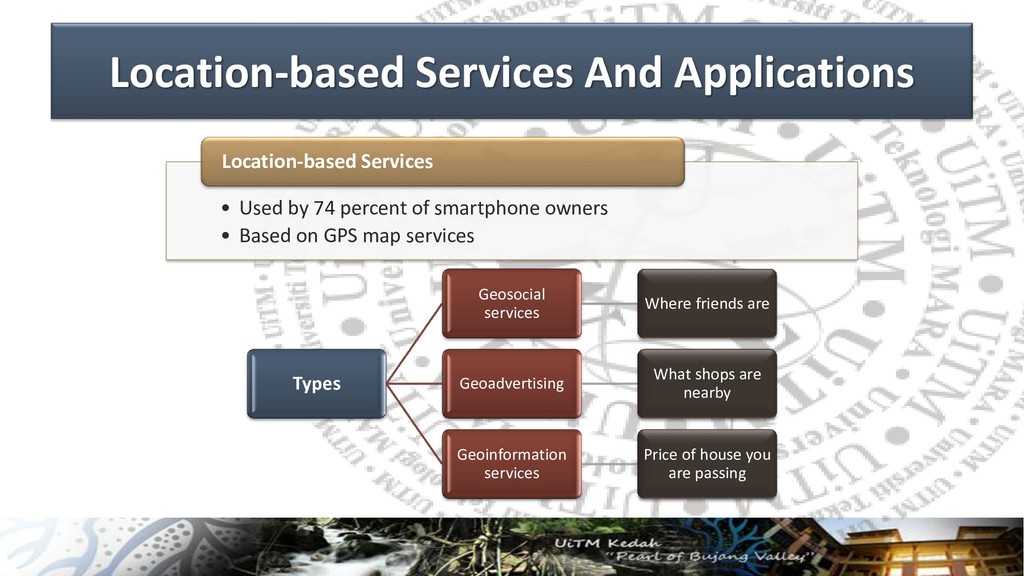
smartphone owners • Based on GPS map services Location-based Services Types Geosocial services Where friends are Geoadvertising What shops are nearby Geoinformation services Price of house you are passing
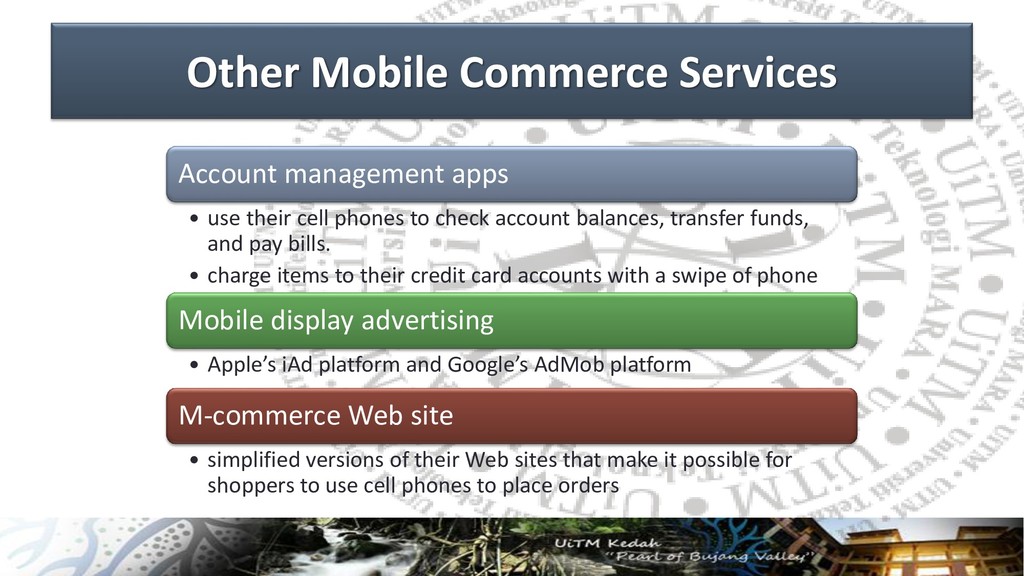
cell phones to check account balances, transfer funds, and pay bills. • charge items to their credit card accounts with a swipe of phone Mobile display advertising • Apple’s iAd platform and Google’s AdMob platform M-commerce Web site • simplified versions of their Web sites that make it possible for shoppers to use cell phones to place orders


 ernyahmad2018
 timakin
 maguroalternative
 tammyeverts
 legalontechnologies
 junya_okura
 akihiro0038
 tkito
 jcabot
 carta_engineering
 kmiya84377
 ymotongpoo
 nealle
 tapps
 inesmontani
 aleyda
 helenjbeal
 mfonobong
 leimatthew05
 garrettdimon
 sarafernandez
 badams
 katarinadahlin