Applications Management Information System (CSC408) Erny Arniza Ahmad Faculty of Computer and Mathematical Sciences Universiti Teknologi MARA (UiTM) Kedah
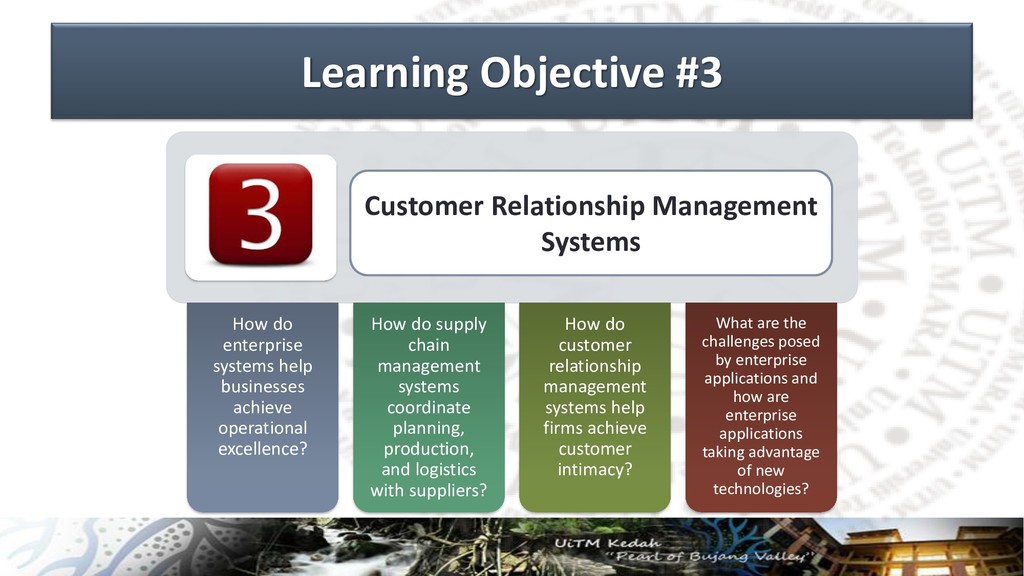
operational excellence? How do supply chain management systems coordinate planning, production, and logistics with suppliers? How do customer relationship management systems help firms achieve customer intimacy? What are the challenges posed by enterprise applications and how are enterprise applications taking advantage of new technologies? Customer Relationship Management Systems
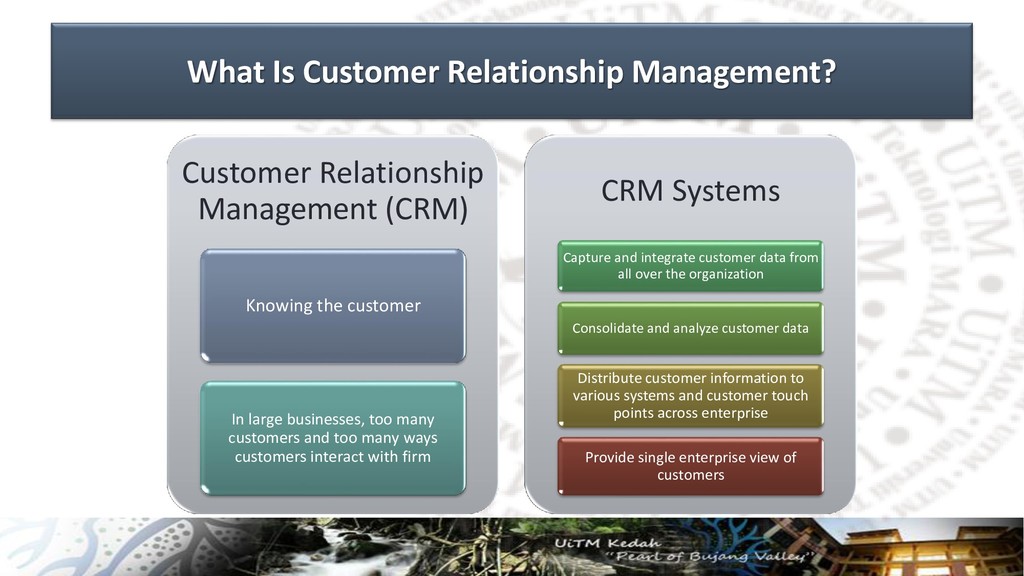
the customer In large businesses, too many customers and too many ways customers interact with firm CRM Systems Capture and integrate customer data from all over the organization Consolidate and analyze customer data Distribute customer information to various systems and customer touch points across enterprise Provide single enterprise view of customers
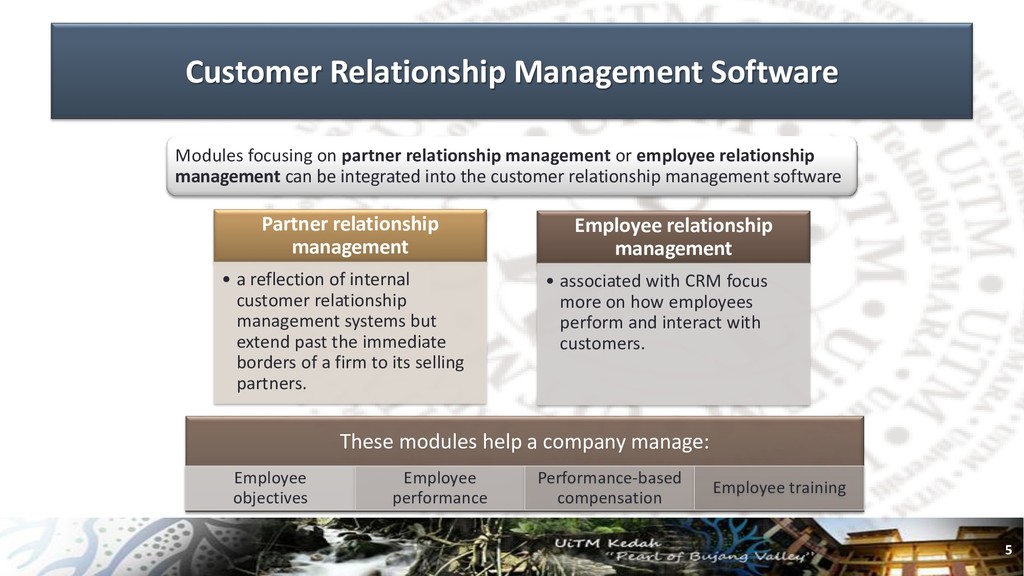
or employee relationship management can be integrated into the customer relationship management software 5 Partner relationship management • a reflection of internal customer relationship management systems but extend past the immediate borders of a firm to its selling partners. Employee relationship management • associated with CRM focus more on how employees perform and interact with customers. These modules help a company manage: Employee objectives Employee performance Performance-based compensation Employee training
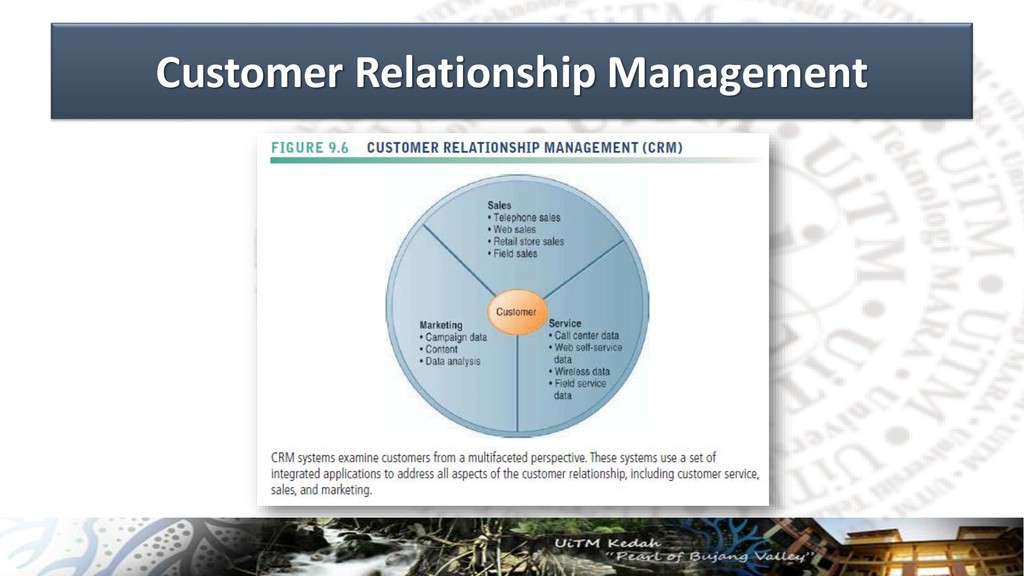
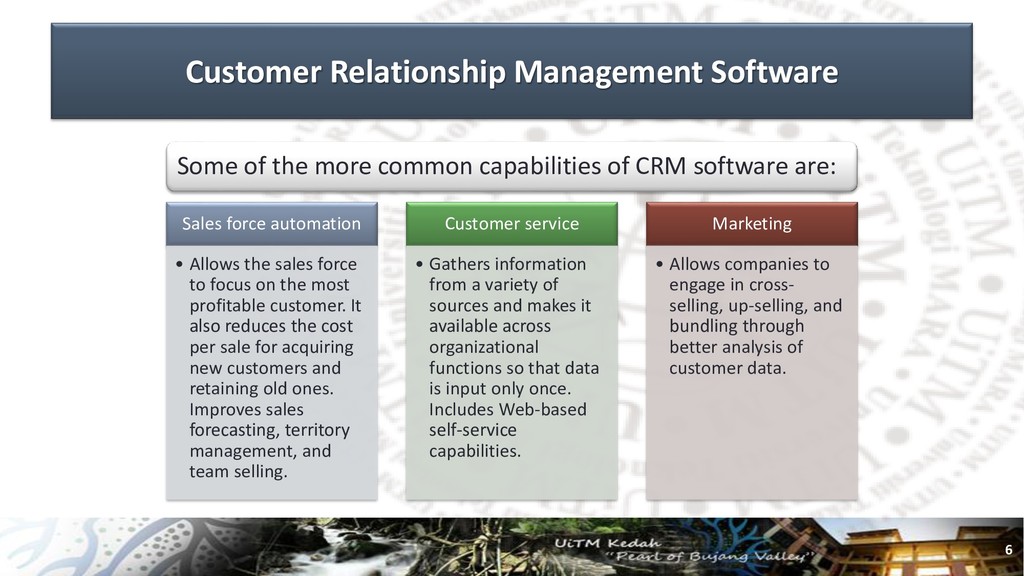
capabilities of CRM software are: Sales force automation • Allows the sales force to focus on the most profitable customer. It also reduces the cost per sale for acquiring new customers and retaining old ones. Improves sales forecasting, territory management, and team selling. Customer service • Gathers information from a variety of sources and makes it available across organizational functions so that data is input only once. Includes Web-based self-service capabilities. Marketing • Allows companies to engage in cross- selling, up-selling, and bundling through better analysis of customer data.
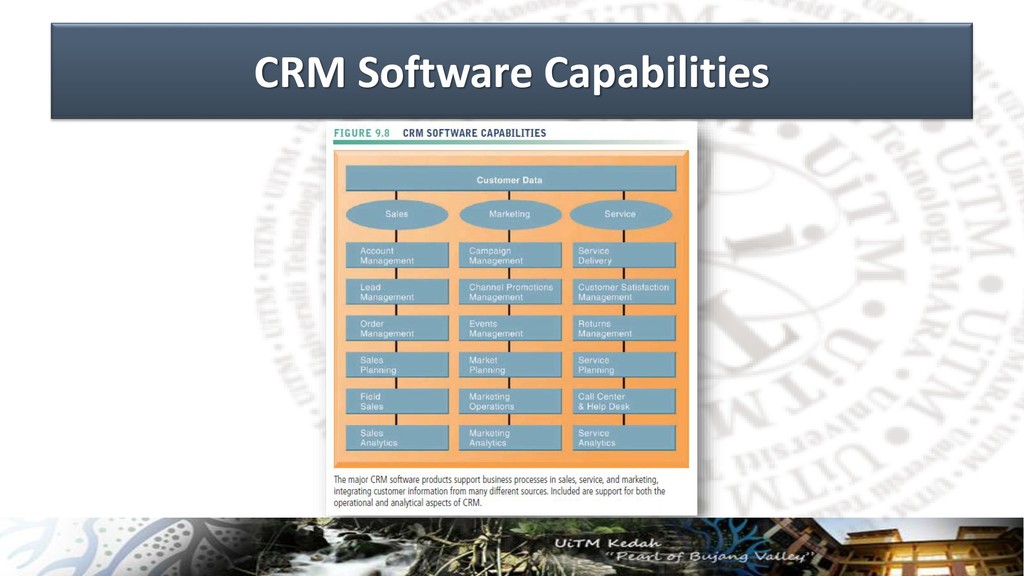
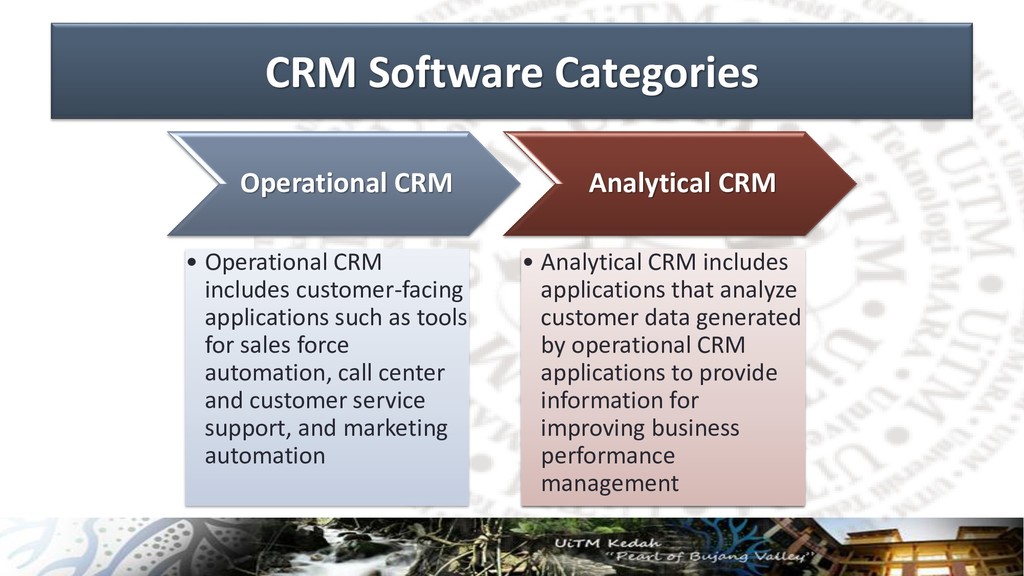
applications such as tools for sales force automation, call center and customer service support, and marketing automation Analytical CRM • Analytical CRM includes applications that analyze customer data generated by operational CRM applications to provide information for improving business performance management
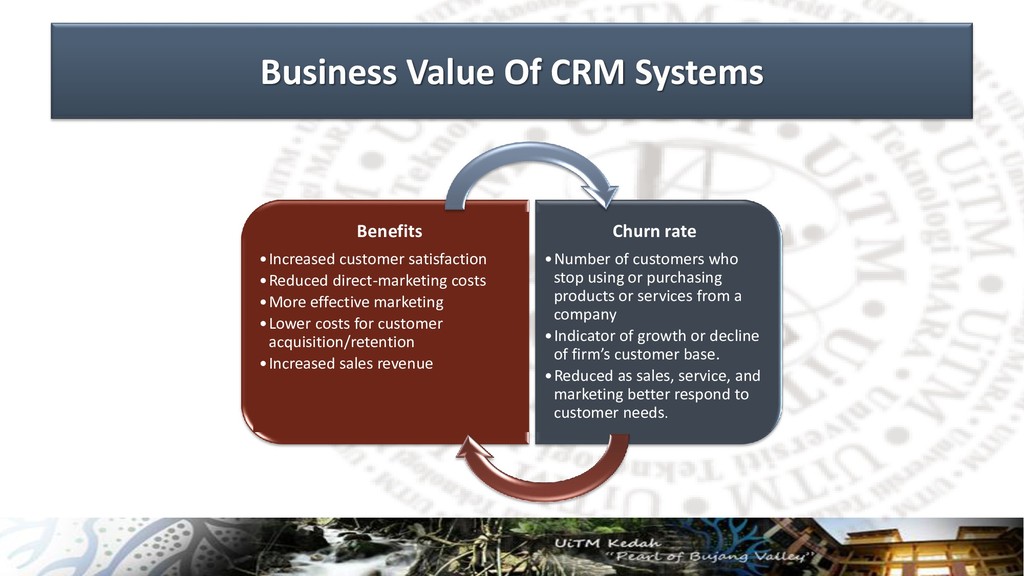
direct-marketing costs •More effective marketing •Lower costs for customer acquisition/retention •Increased sales revenue Churn rate •Number of customers who stop using or purchasing products or services from a company •Indicator of growth or decline of firm’s customer base. •Reduced as sales, service, and marketing better respond to customer needs.


 ernyahmad2018
 oidfj
 chmikata
 harutiro
 masasuzu
 torounit
 junya_okura
 staka121
 ryutakondo
 takaha4k
 wind111
 nejumi
 shadowhat
 emna__ayadi
 eileencodes
 rasmusluckow
 jonoalderson
 tammielis
 caitiem20
 productmarketing
 jonyablonski
 sabderemane
 panda_program
 samtorres
 bkeepers