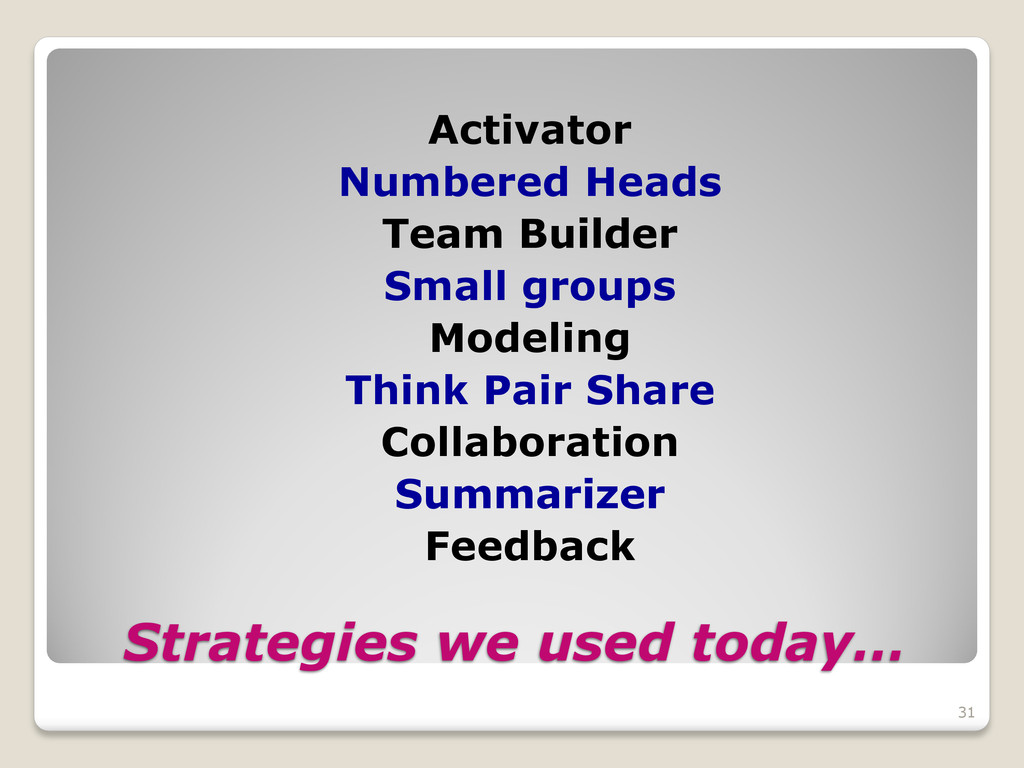
cooperation, and the ability to look beyond oneself, and tap into the team's resources to solve problems. Directions: Numbered Heads: complete the puzzle in the envelope. On the count of 3, you will open the envelope and put the puzzle together. Winning team is the one that solves it first. 2
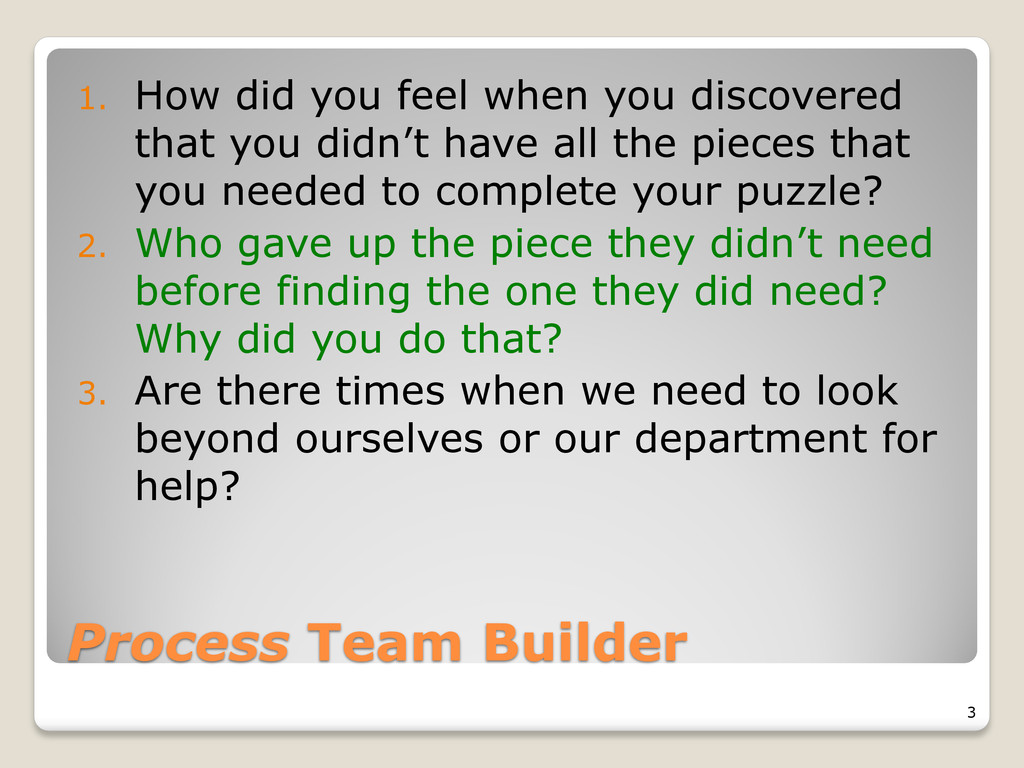
discovered that you didn’t have all the pieces that you needed to complete your puzzle? 2. Who gave up the piece they didn’t need before finding the one they did need? Why did you do that? 3. Are there times when we need to look beyond ourselves or our department for help? 3
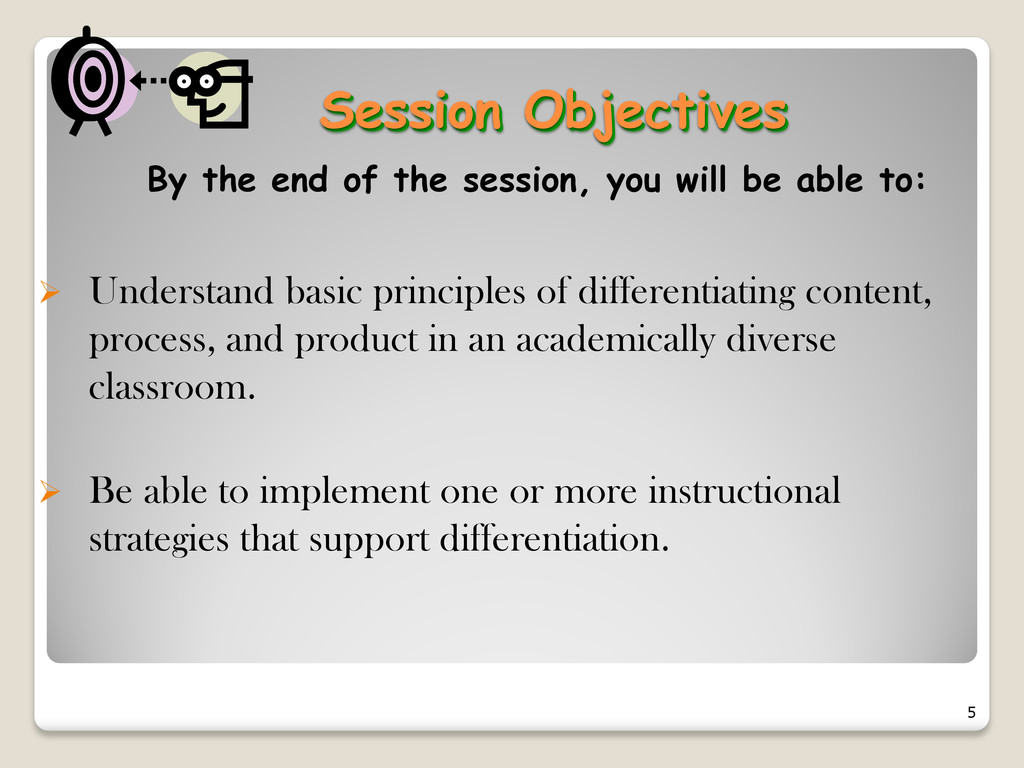
and product in an academically diverse classroom. Be able to implement one or more instructional strategies that support differentiation. By the end of the session, you will be able to: 5
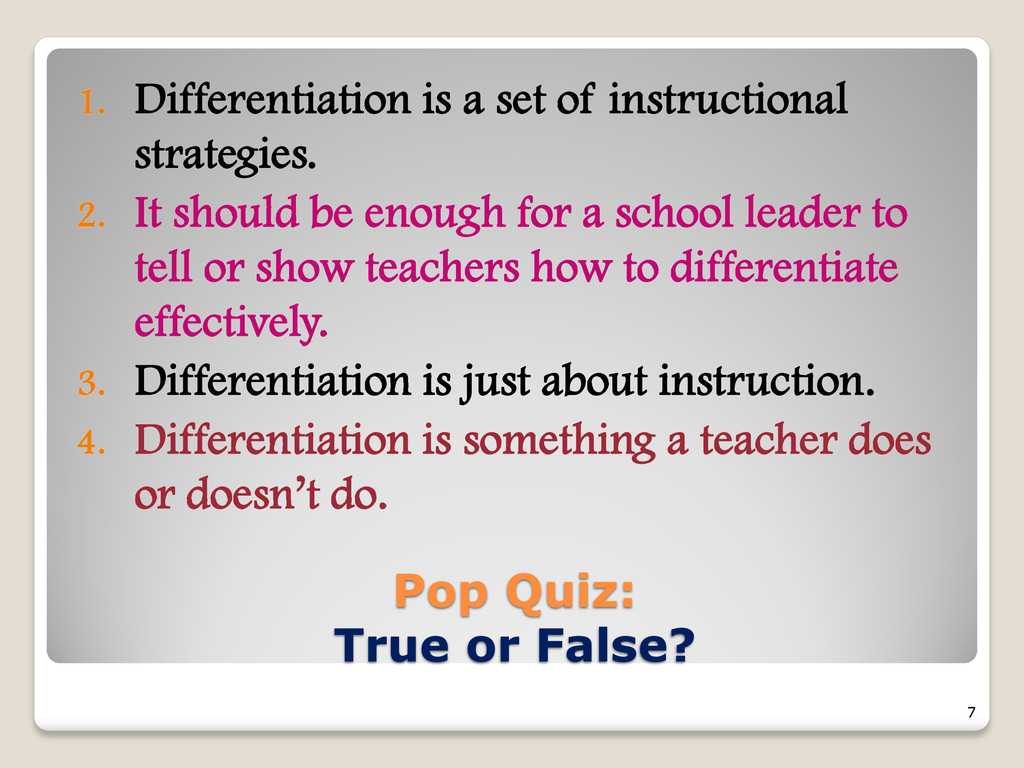
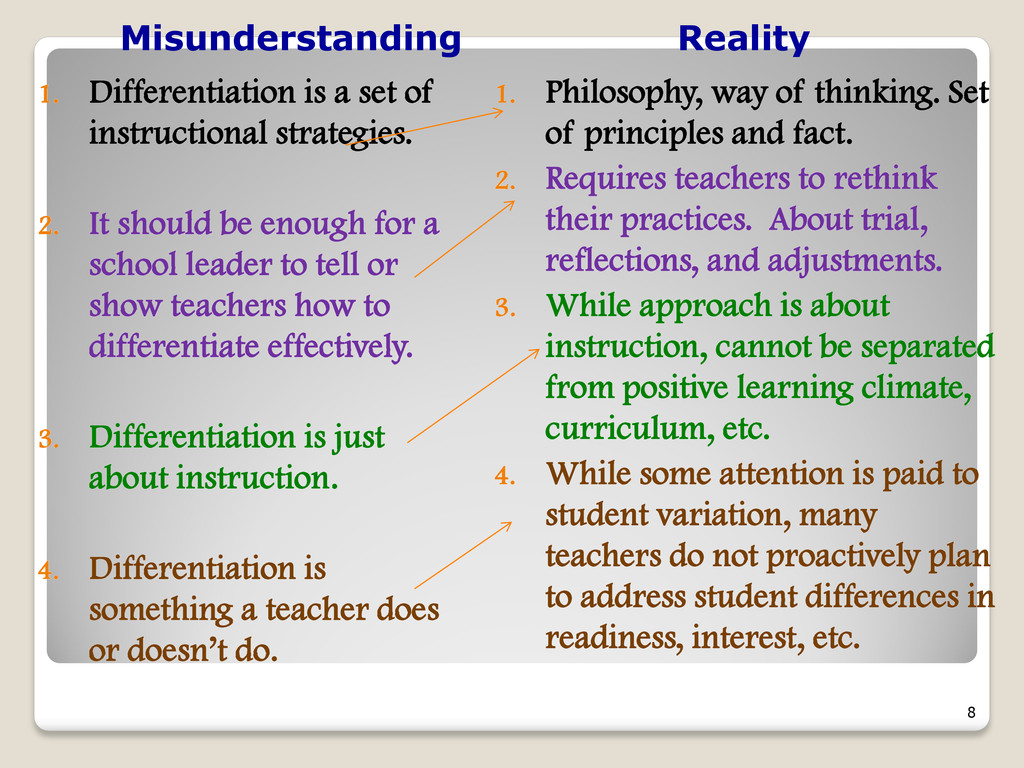
of instructional strategies. 2. It should be enough for a school leader to tell or show teachers how to differentiate effectively. 3. Differentiation is just about instruction. 4. Differentiation is something a teacher does or doesn’t do. 7
2. It should be enough for a school leader to tell or show teachers how to differentiate effectively. 3. Differentiation is just about instruction. 4. Differentiation is something a teacher does or doesn’t do. 1. Philosophy, way of thinking. Set of principles and fact. 2. Requires teachers to rethink their practices. About trial, reflections, and adjustments. 3. While approach is about instruction, cannot be separated from positive learning climate, curriculum, etc. 4. While some attention is paid to student variation, many teachers do not proactively plan to address student differences in readiness, interest, etc. 8
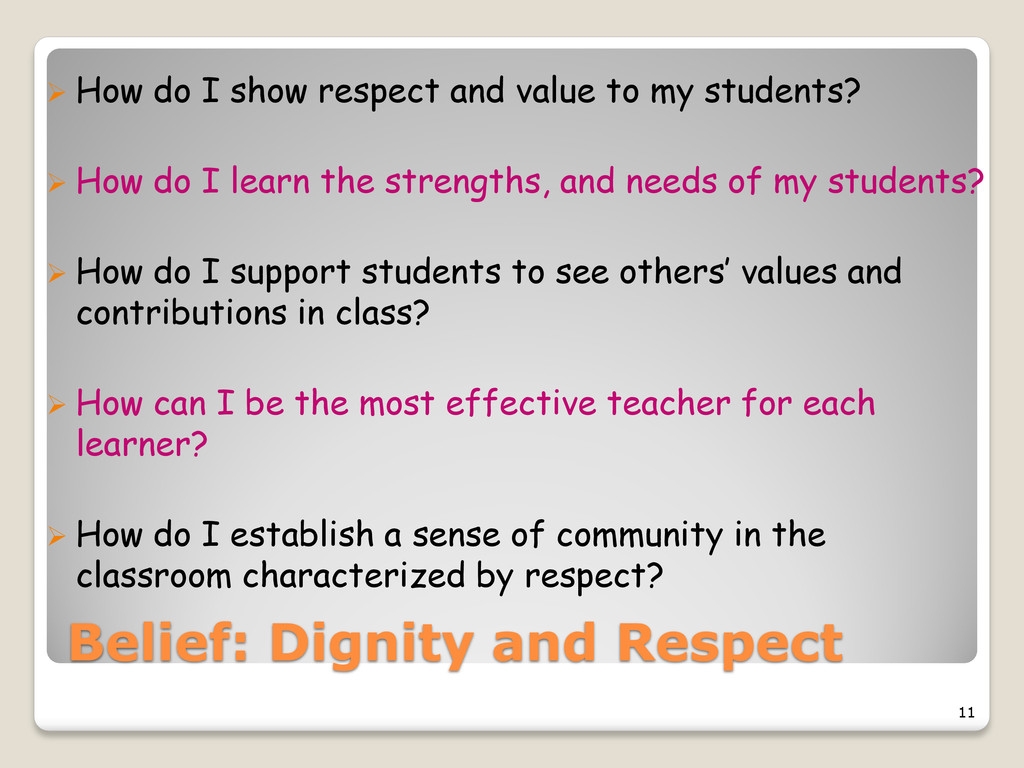
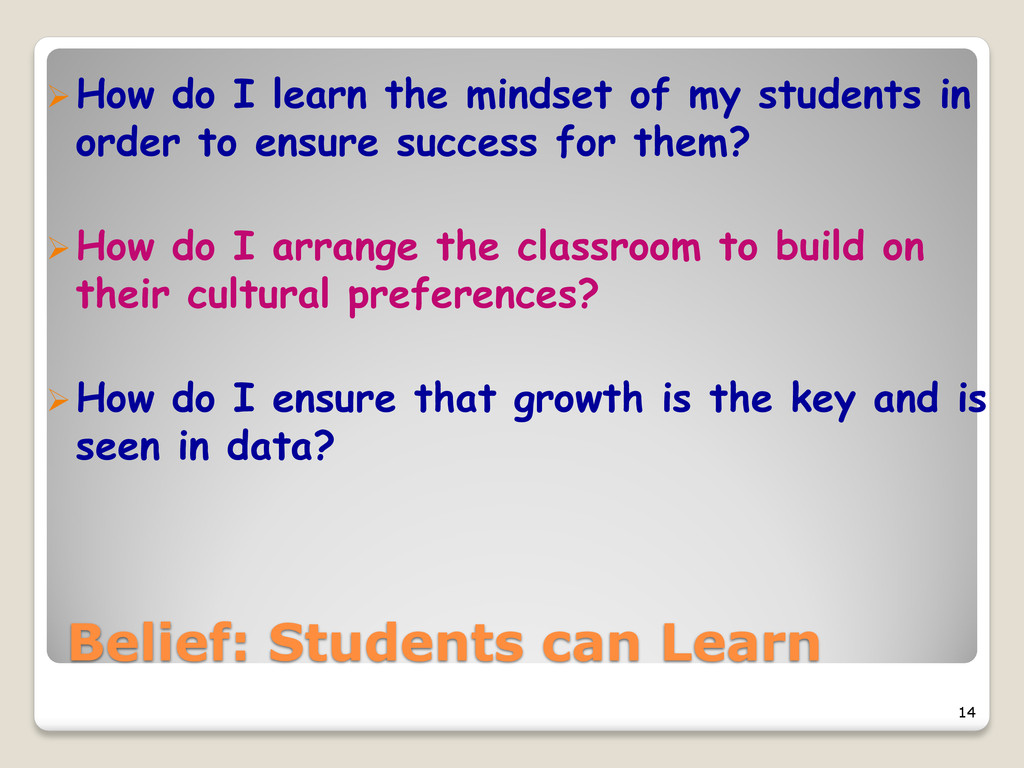
and value to my students? How do I learn the strengths, and needs of my students? How do I support students to see others’ values and contributions in class? How can I be the most effective teacher for each learner? How do I establish a sense of community in the classroom characterized by respect? 11
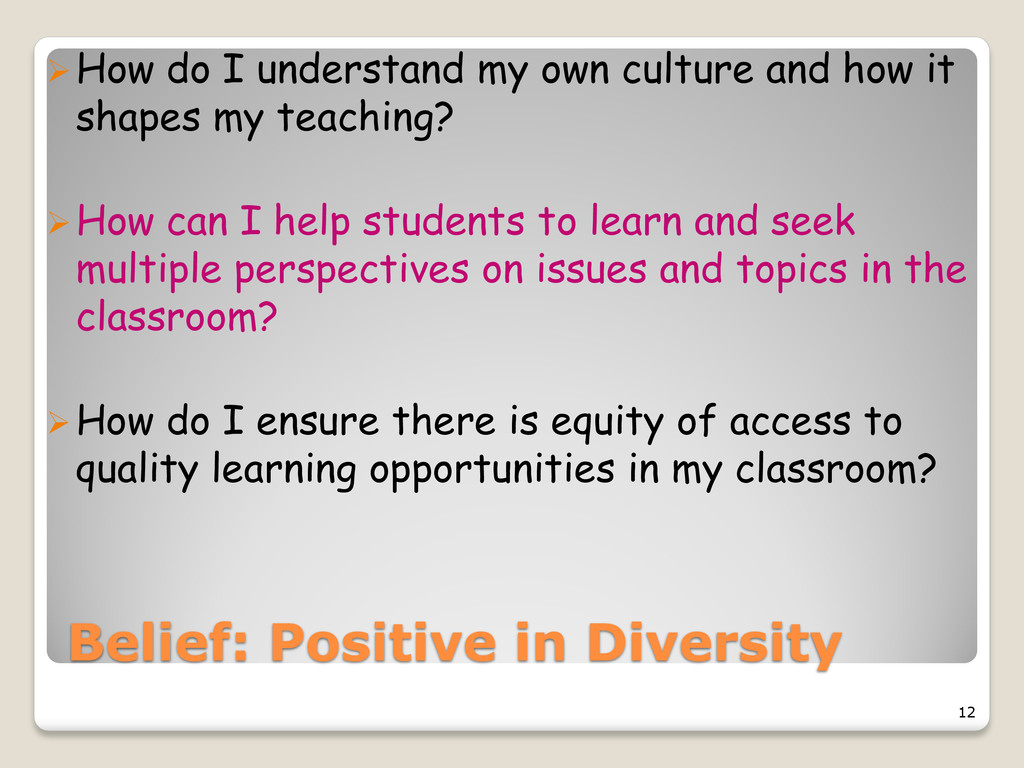
culture and how it shapes my teaching? How can I help students to learn and seek multiple perspectives on issues and topics in the classroom? How do I ensure there is equity of access to quality learning opportunities in my classroom? 12
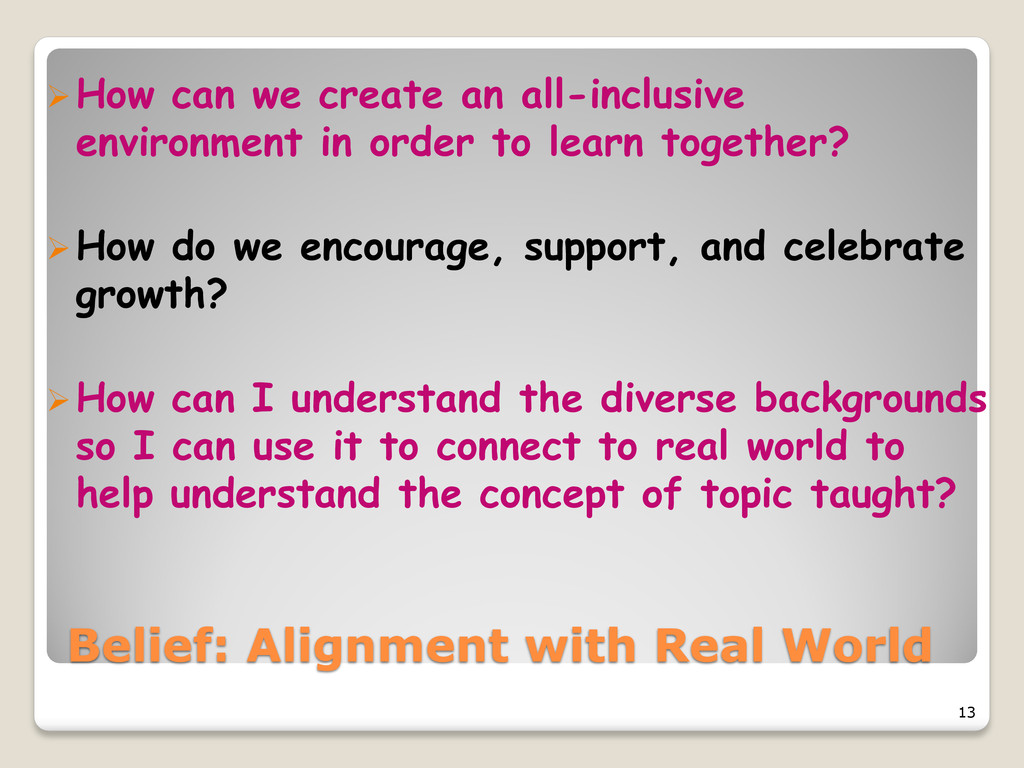
all-inclusive environment in order to learn together? How do we encourage, support, and celebrate growth? How can I understand the diverse backgrounds so I can use it to connect to real world to help understand the concept of topic taught? 13
of my students in order to ensure success for them? How do I arrange the classroom to build on their cultural preferences? How do I ensure that growth is the key and is seen in data? 14
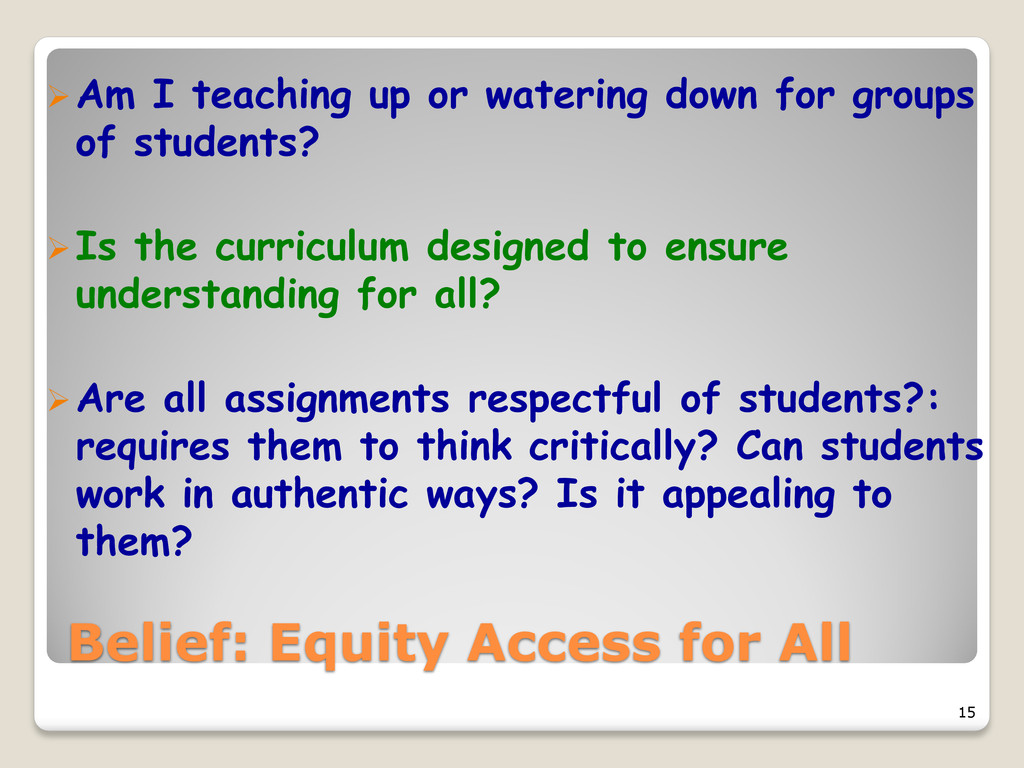
watering down for groups of students? Is the curriculum designed to ensure understanding for all? Are all assignments respectful of students?: requires them to think critically? Can students work in authentic ways? Is it appealing to them? 15
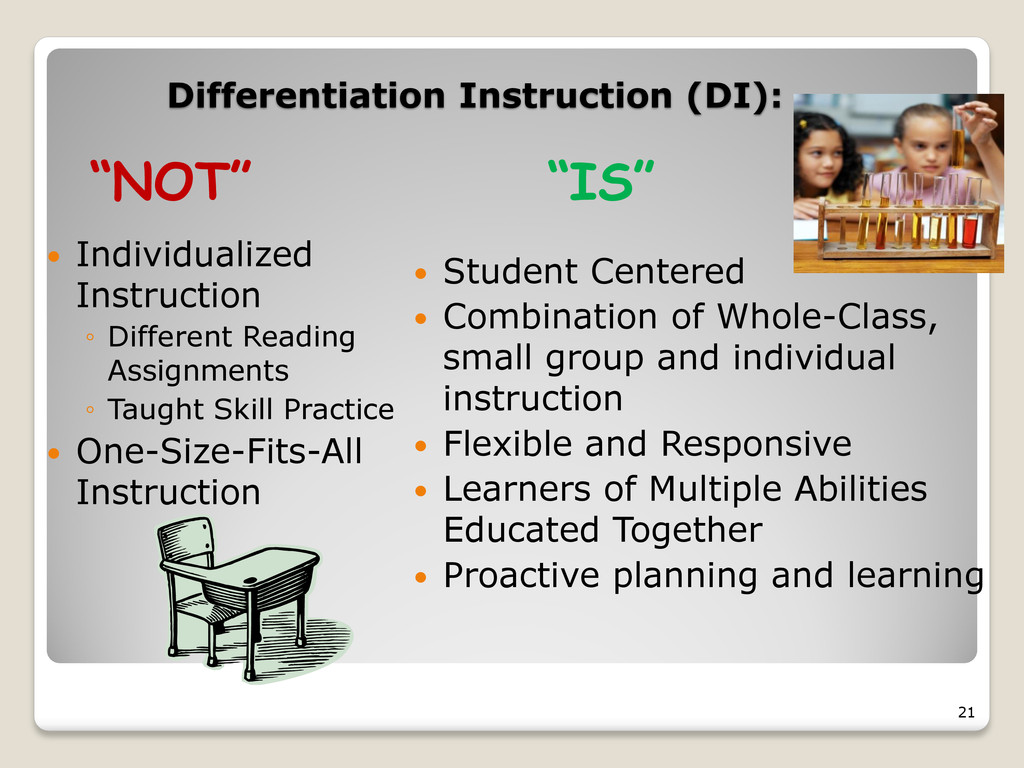
Reading Assignments ◦ Taught Skill Practice One-Size-Fits-All Instruction Student Centered Combination of Whole-Class, small group and individual instruction Flexible and Responsive Learners of Multiple Abilities Educated Together Proactive planning and learning 21
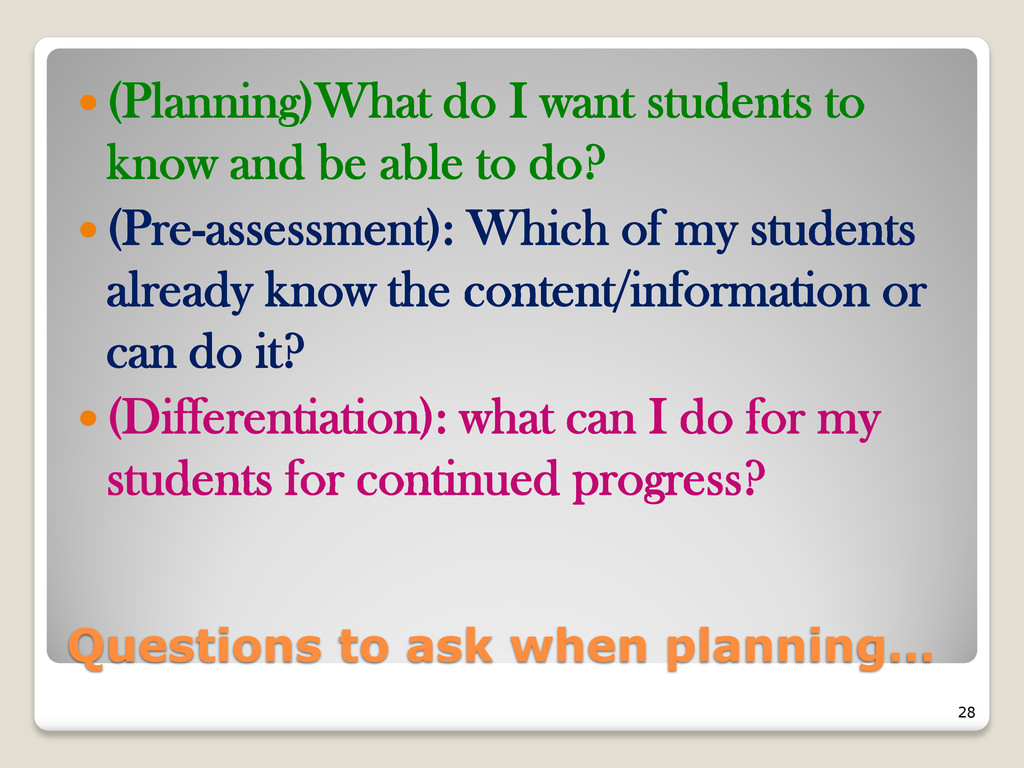
students to know and be able to do? (Pre-assessment): Which of my students already know the content/information or can do it? (Differentiation): what can I do for my students for continued progress? 28
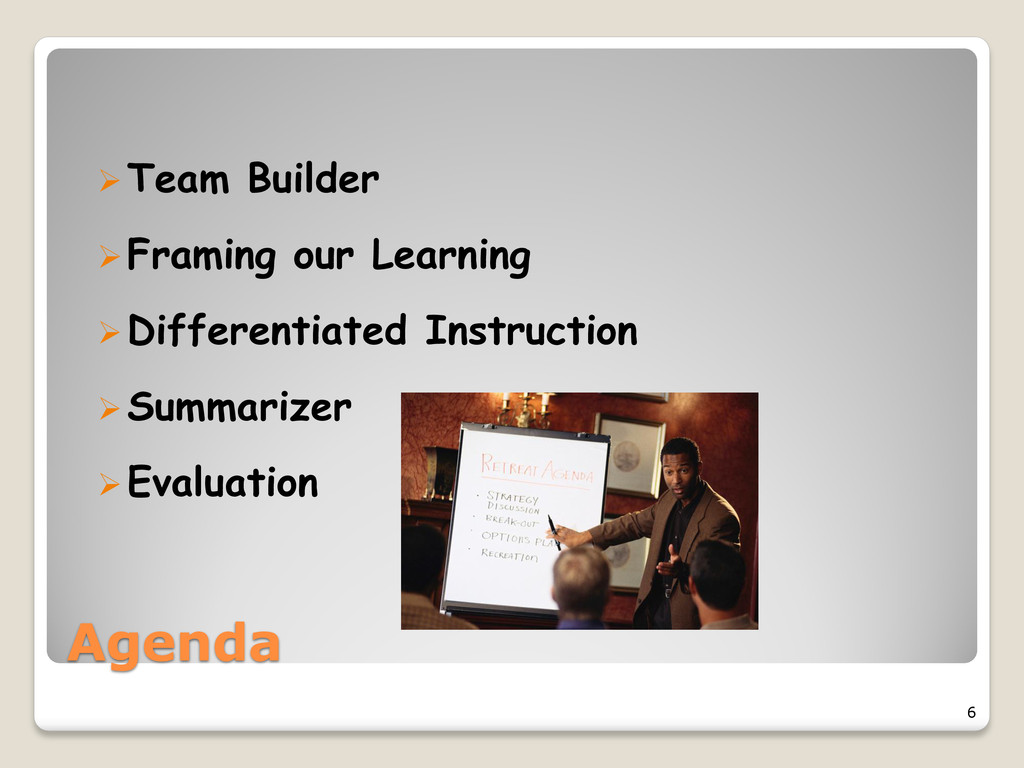
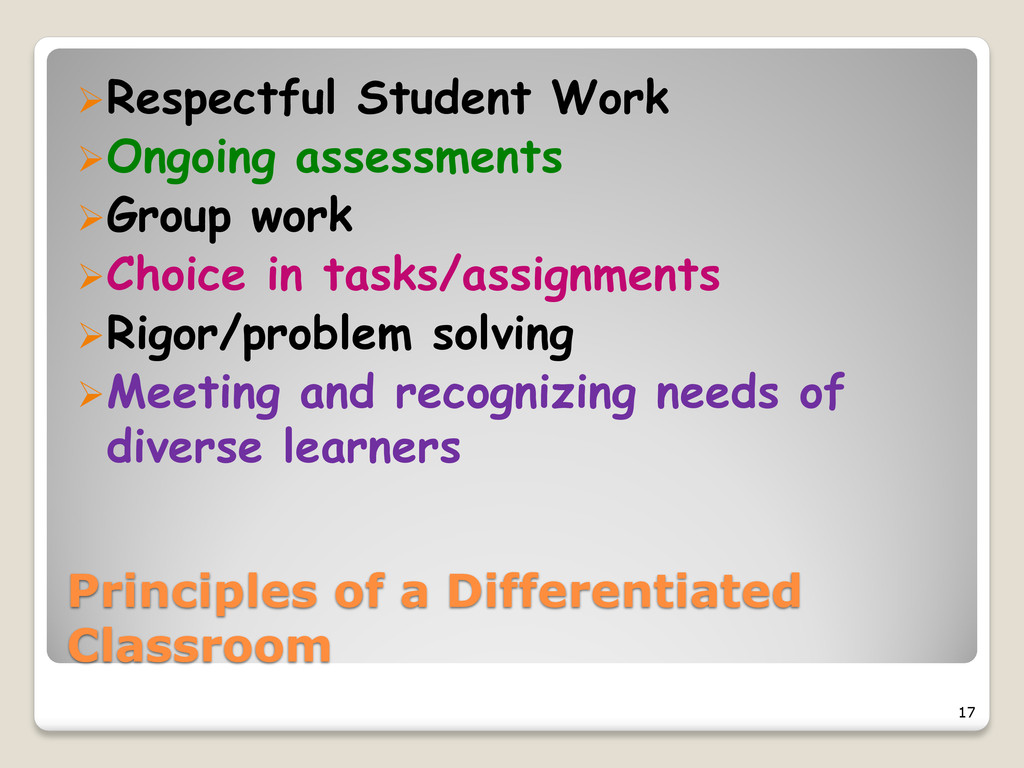
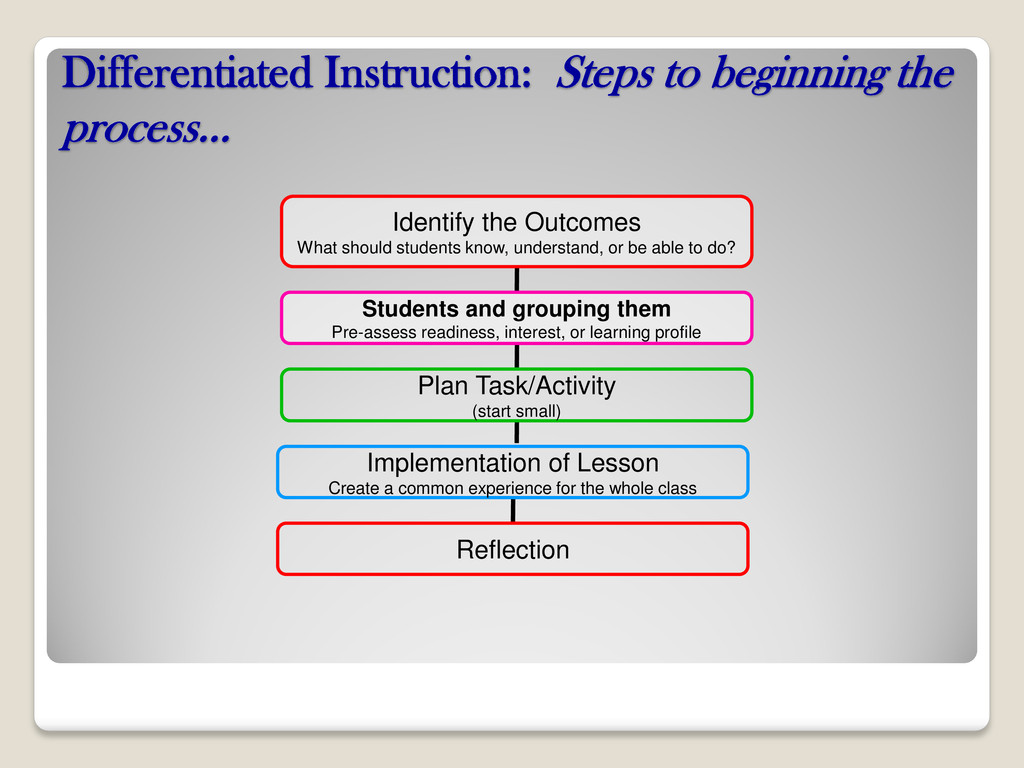
What should students know, understand, or be able to do? Students and grouping them Pre-assess readiness, interest, or learning profile Plan Task/Activity (start small) Implementation of Lesson Create a common experience for the whole class Reflection
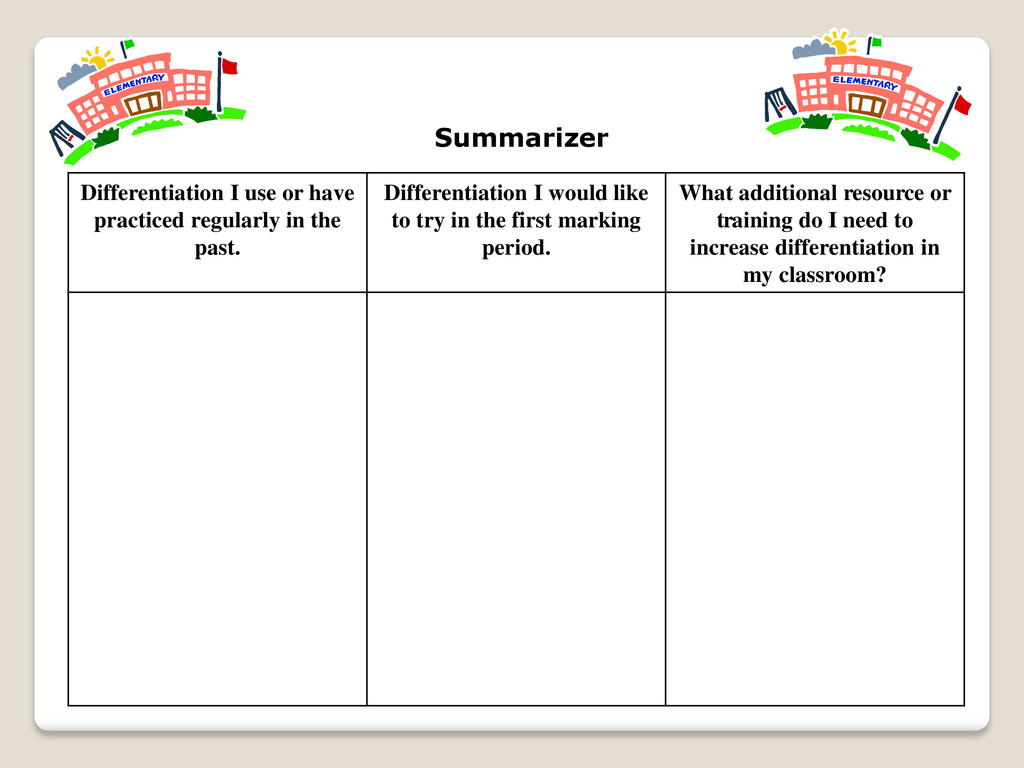
past. Differentiation I would like to try in the first marking period. What additional resource or training do I need to increase differentiation in my classroom?
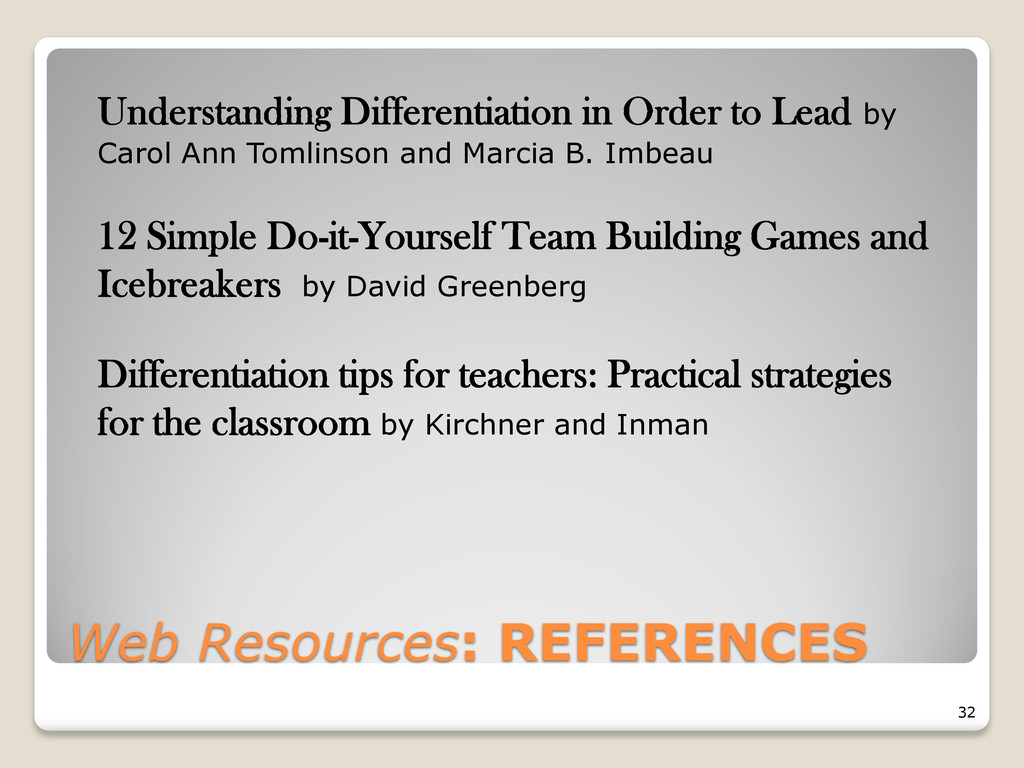
Carol Ann Tomlinson and Marcia B. Imbeau 12 Simple Do-it-Yourself Team Building Games and Icebreakers by David Greenberg Differentiation tips for teachers: Practical strategies for the classroom by Kirchner and Inman 32


 farhana
 mariooc
 uchi8977
 terazawa
 pawan_pharm
 sciencetokyo
 saorimurooka
 yatabe
 suisan
 tomit3
 ichiroc
 hiola
hiola
 lara
lara
 axbom
axbom
 davetheseo
 eileencodes
 frankvandijk
 tapps
tapps
 kastner
 joshbly
 uxyall
 nwiizo
 palkan
 codingconduct