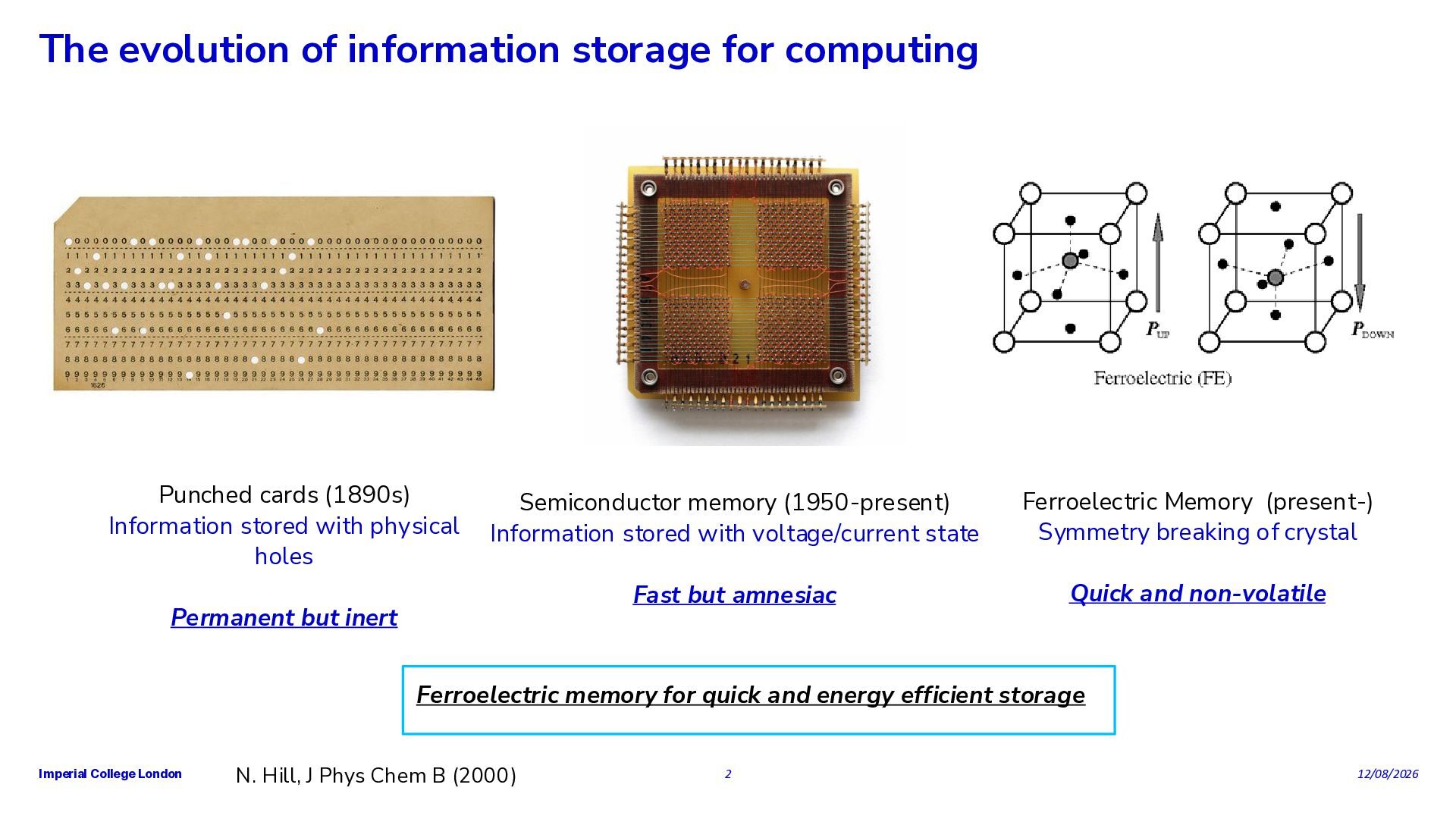
Information stored with physical holes Semiconductor memory (1950-present) Information stored with voltage/current state Ferroelectric Memory (present-) Symmetry breaking of crystal Fast but amnesiac Quick and non-volatile Permanent but inert Ferroelectric memory for quick and energy efficient storage Imperial College London N. Hill, J Phys Chem B (2000) 2 12/08/2026
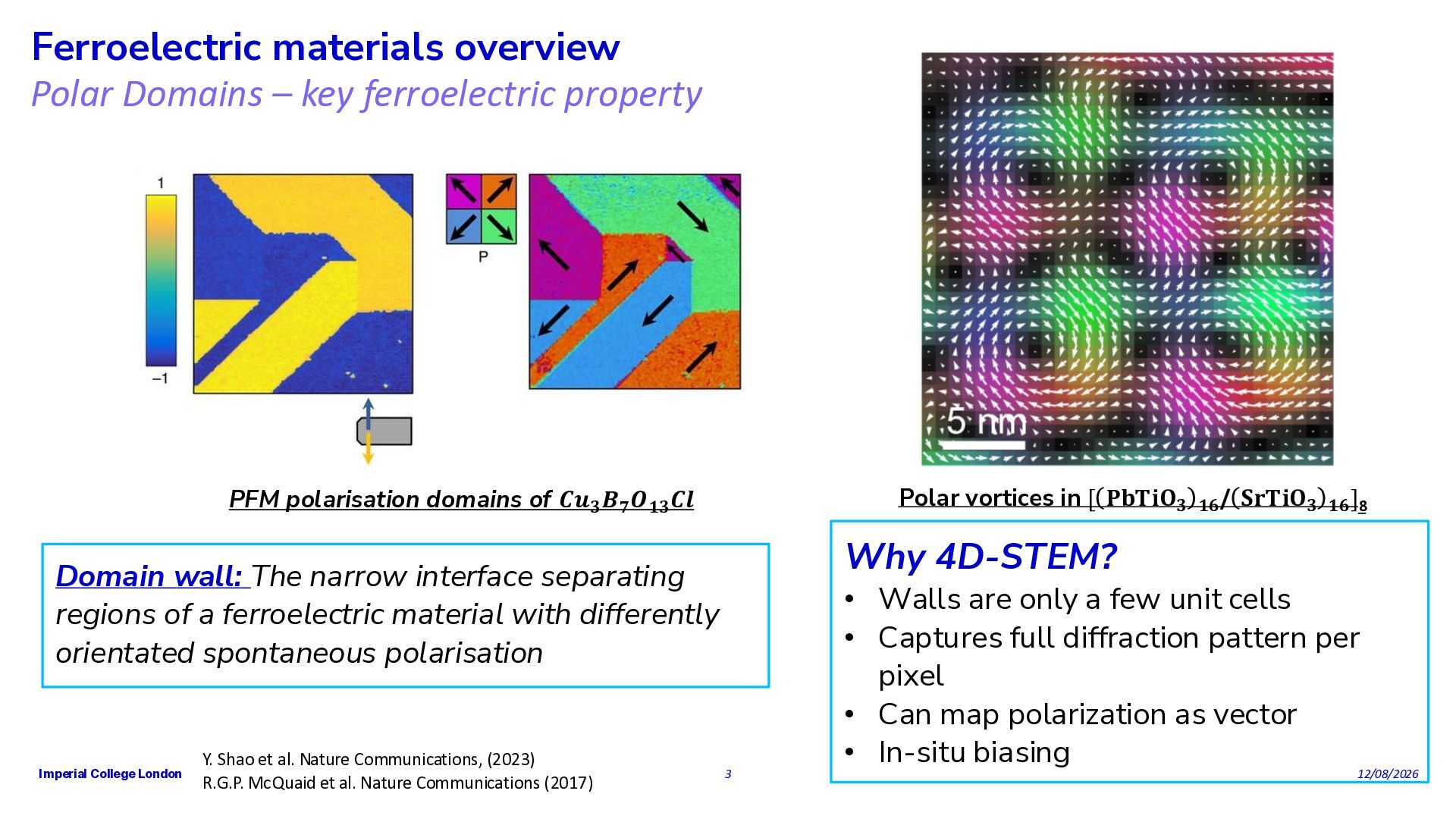
vortices in [ 𝐏𝐛𝐓𝐢𝐎𝟑 𝟏𝟔 / 𝐒𝐫𝐓𝐢𝐎𝟑 𝟏𝟔 ]8 PFM polarisation domains of 𝑪𝒖𝟑 𝑩𝟕 𝑶𝟏𝟑 𝑪𝒍 Why 4D-STEM? Domain wall: The narrow interface separating regions of a ferroelectric material with differently orientated spontaneous polarisation Imperial College London Y. Shao et al. Nature Communications, (2023) R.G.P. McQuaid et al. Nature Communications (2017) 3 • Walls are only a few unit cells • Captures full diffraction pattern per pixel • Can map polarization as vector • In-situ biasing 12/08/2026
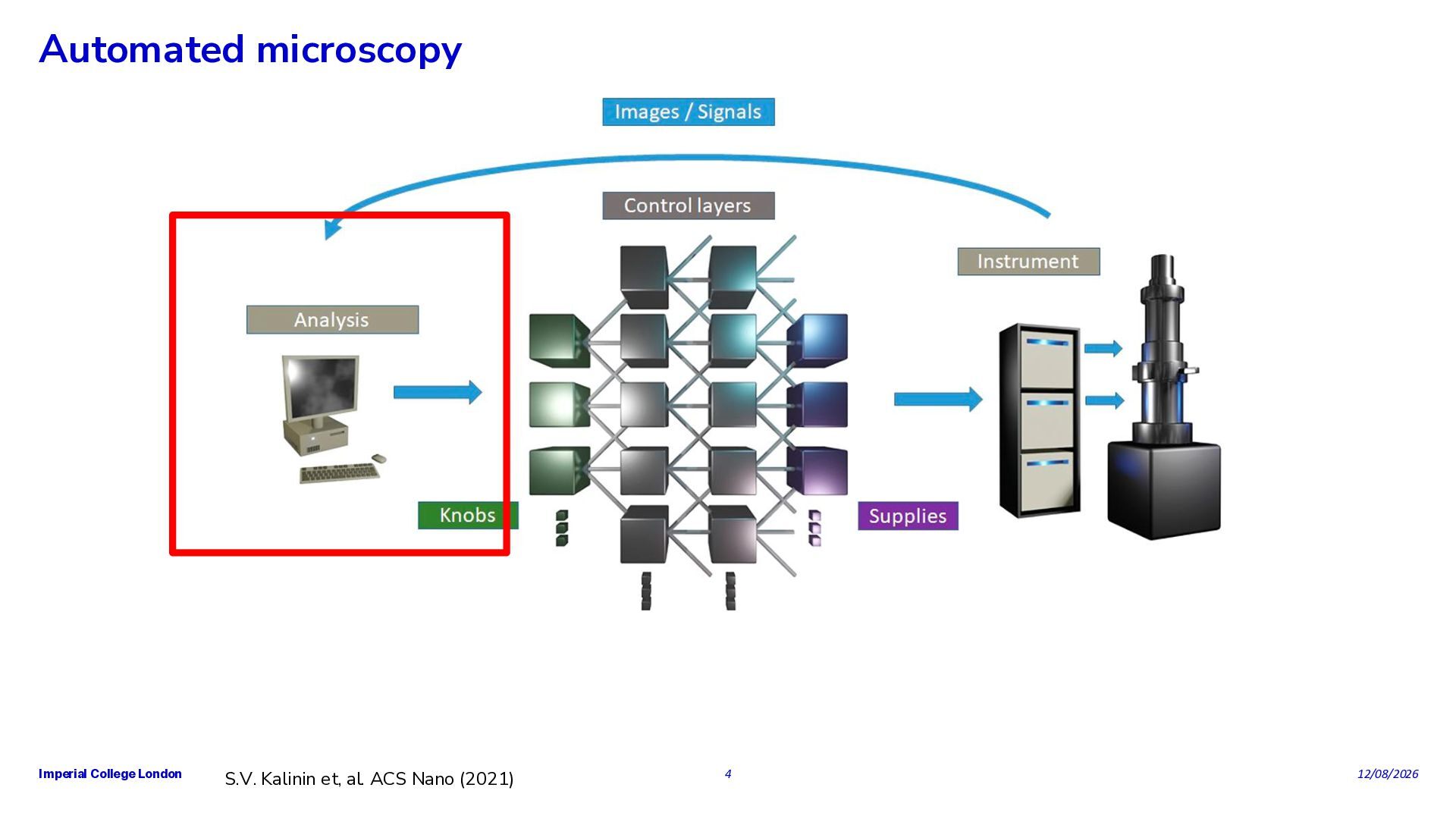
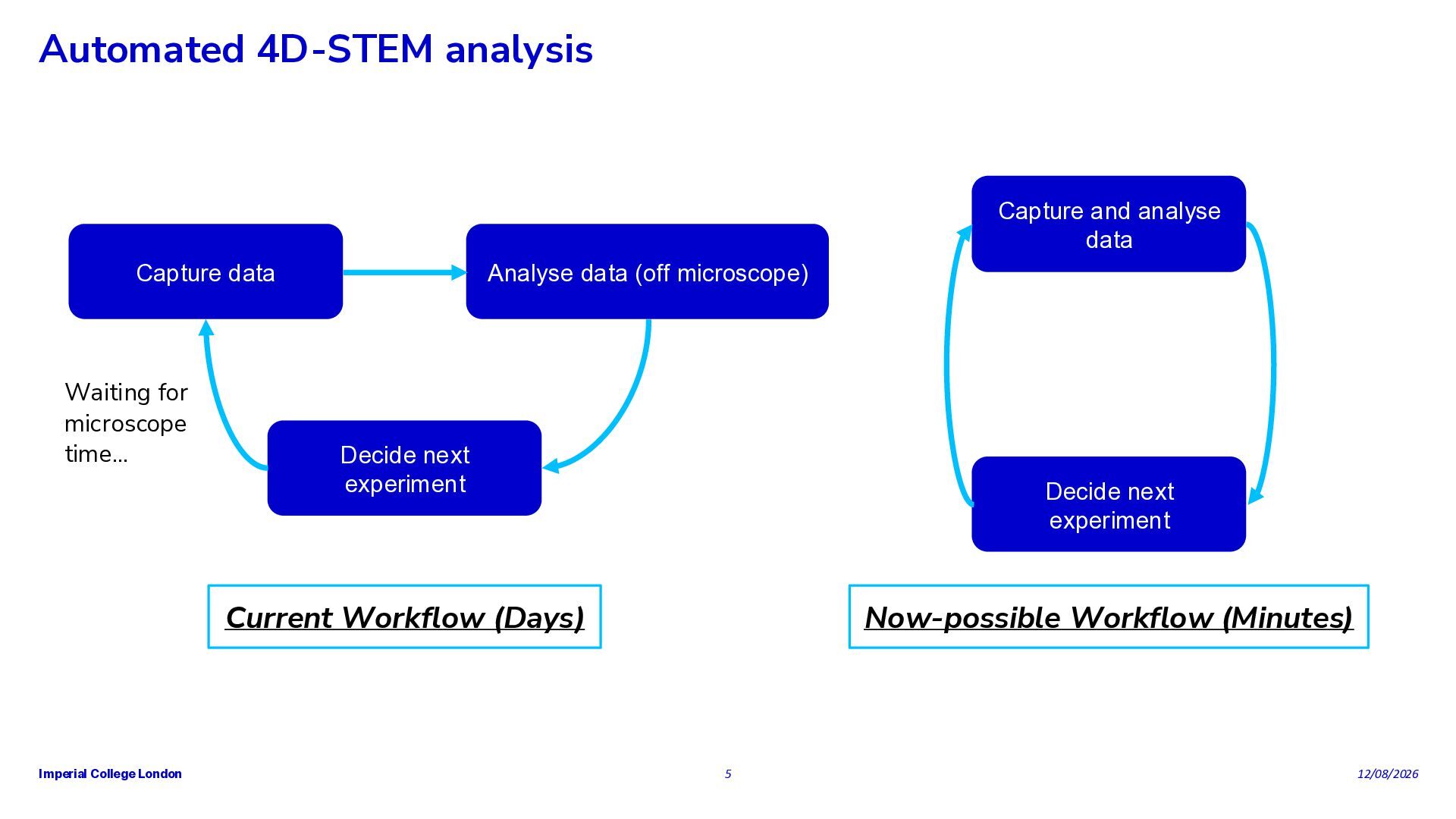
for microscope time… Analyse data (off microscope) Decide next experiment Decide next experiment Current Workflow (Days) Imperial College London Now-possible Workflow (Minutes) 5 12/08/2026
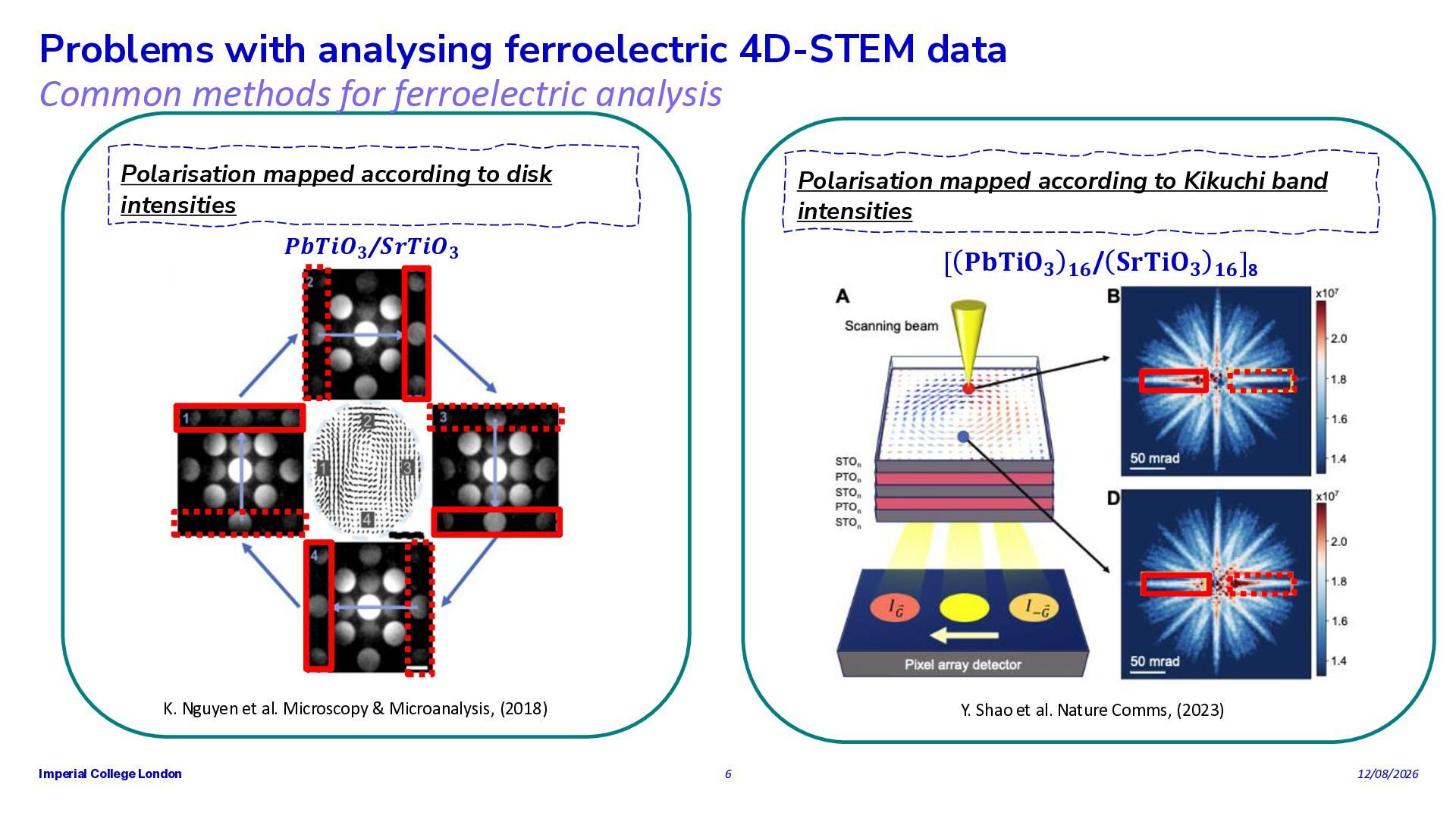
analysis Polarisation mapped according to disk intensities Polarisation mapped according to Kikuchi band intensities 𝑷𝒃𝑻𝒊𝑶𝟑 /𝑺𝒓𝑻𝒊𝑶𝟑 [ 𝐏𝐛𝐓𝐢𝐎𝟑 𝟏𝟔 / 𝐒𝐫𝐓𝐢𝐎𝟑 𝟏𝟔 ]8 K. Nguyen et al. Microscopy & Microanalysis, (2018) Imperial College London Y. Shao et al. Nature Comms, (2023) 6 12/08/2026
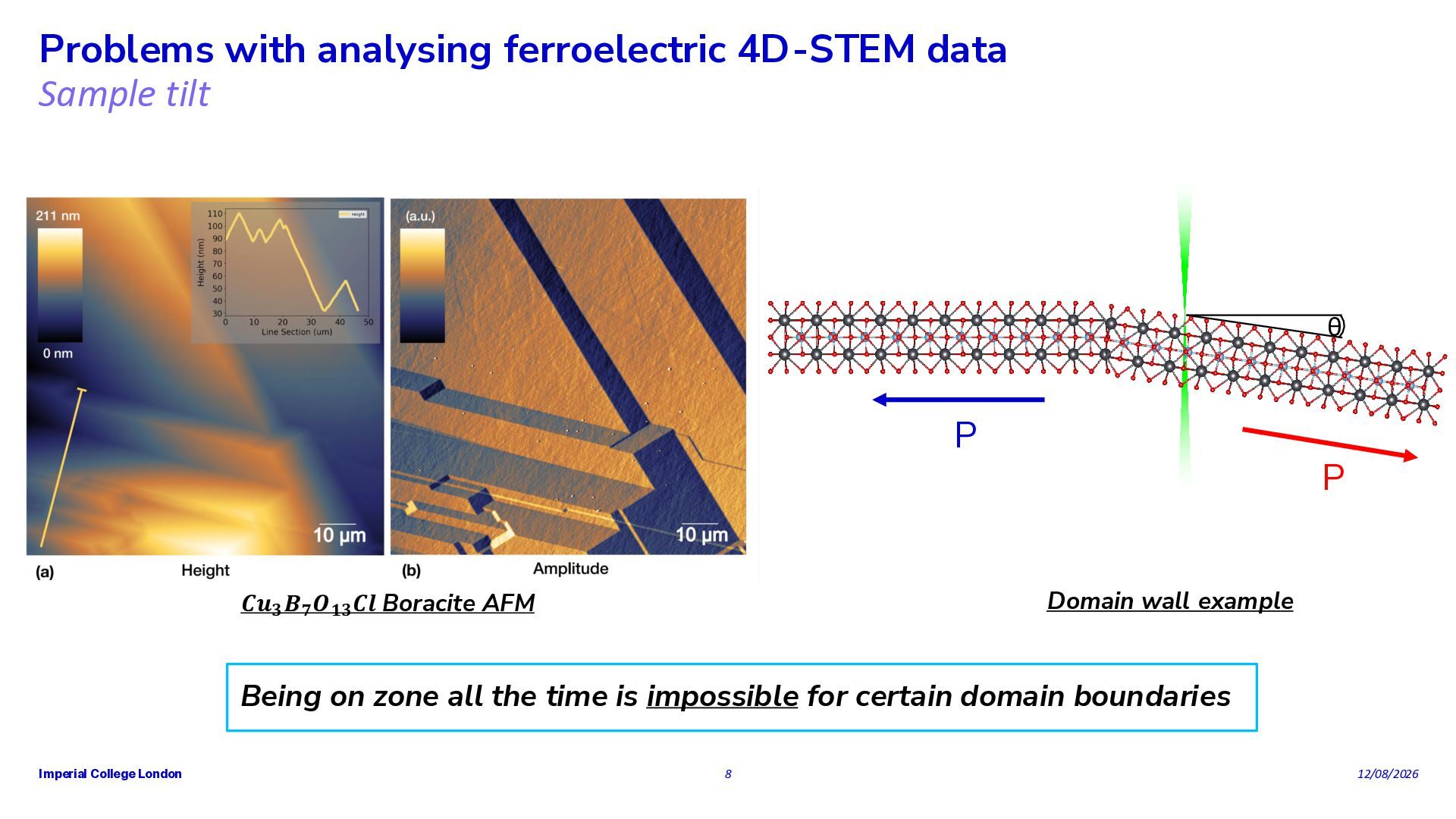
P Domain wall example 𝑪𝒖𝟑 𝑩𝟕 𝑶𝟏𝟑 𝑪𝒍 Boracite AFM Being on zone all the time is impossible for certain domain boundaries Imperial College London 8 12/08/2026
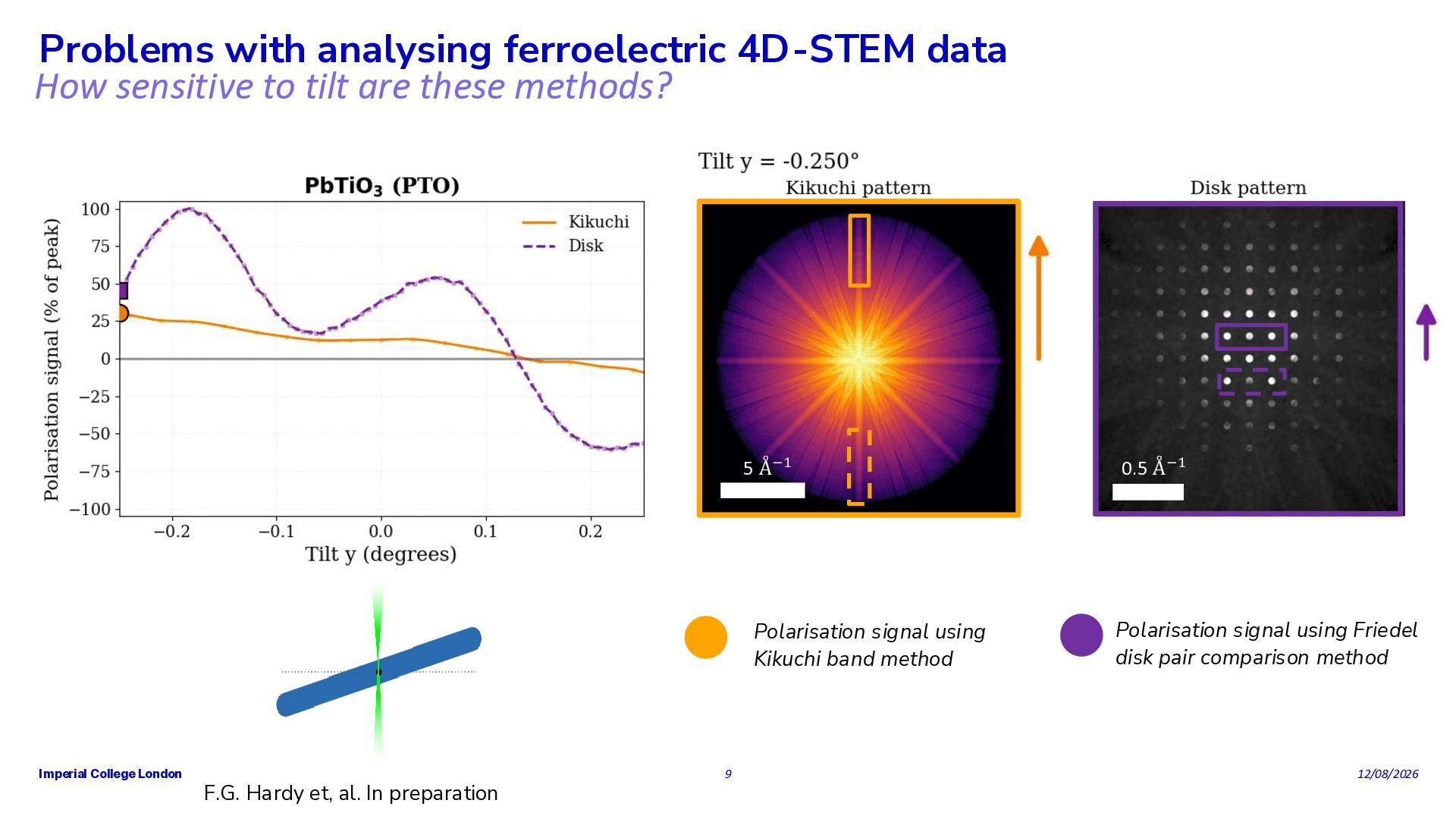
are these methods? Imperial College London F.G. Hardy et, al. In preparation 9 5 Å−1 0.5 Å−1 Polarisation signal using Kikuchi band method Polarisation signal using Friedel disk pair comparison method 12/08/2026
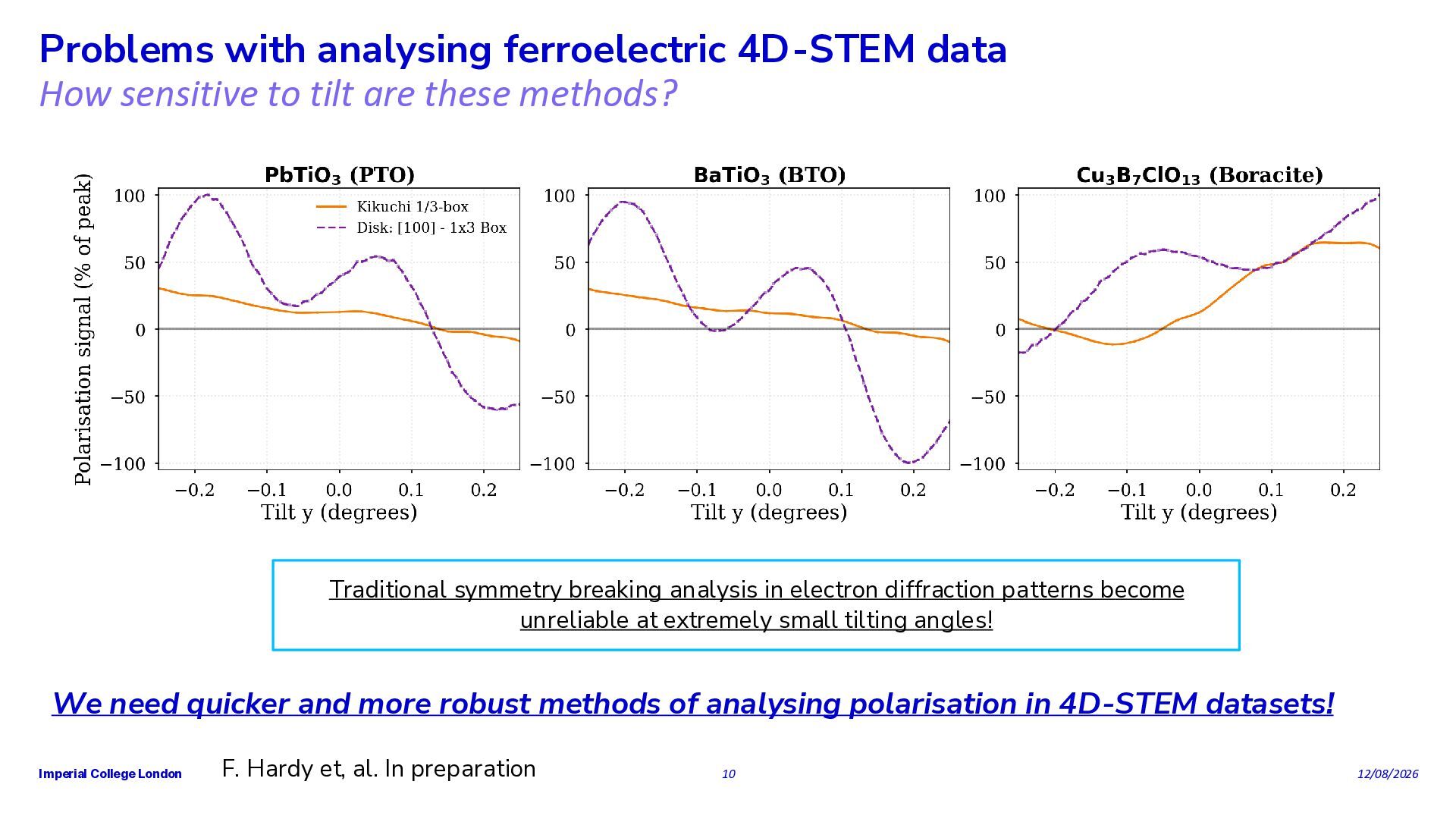
are these methods? Traditional symmetry breaking analysis in electron diffraction patterns become unreliable at extremely small tilting angles! We need quicker and more robust methods of analysing polarisation in 4D-STEM datasets! Imperial College London F. Hardy et, al. In preparation 10 12/08/2026
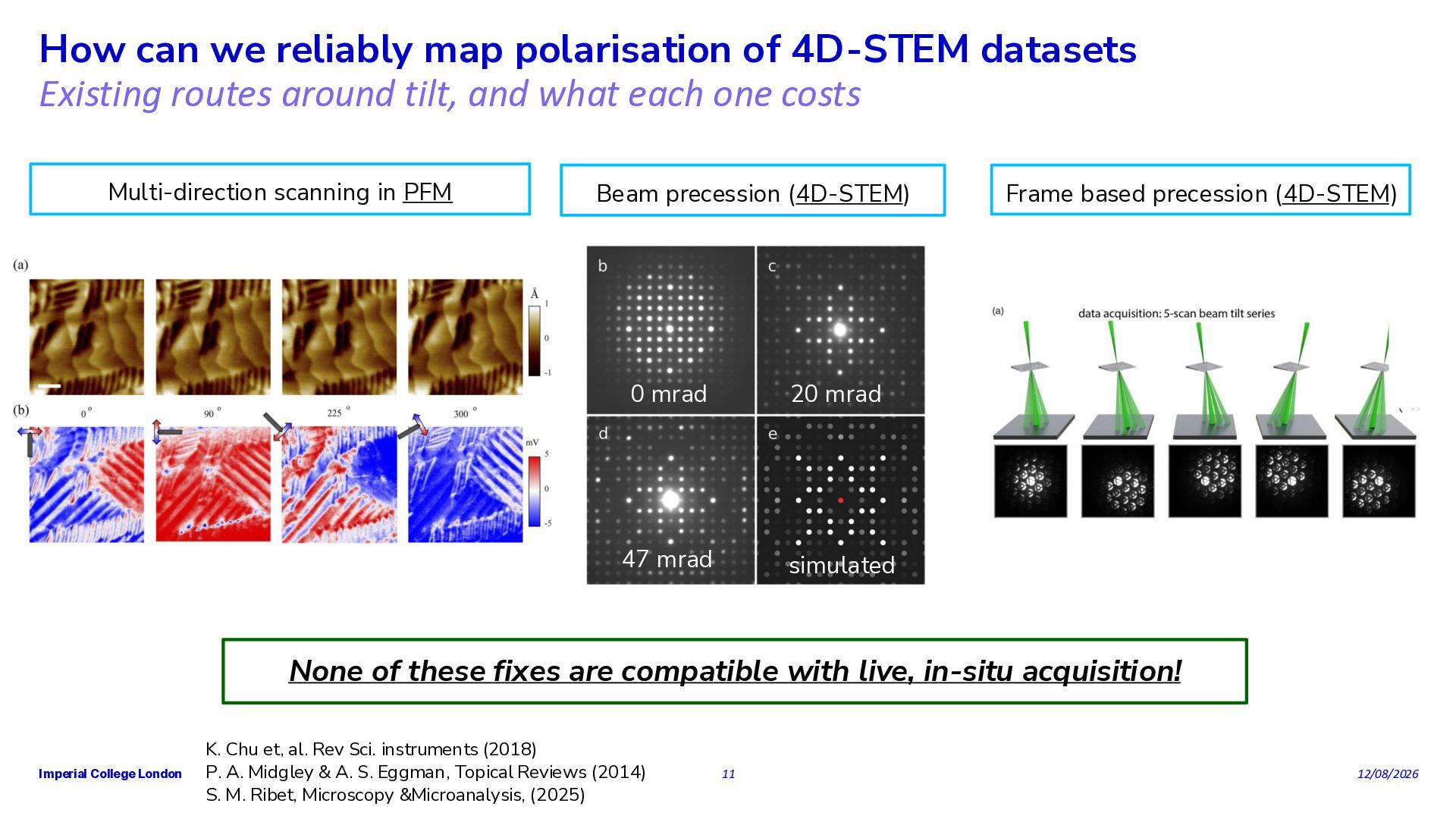
routes around tilt, and what each one costs Multi-direction scanning in PFM Beam precession (4D-STEM) 0 mrad 20 mrad 47 mrad simulated Frame based precession (4D-STEM) None of these fixes are compatible with live, in-situ acquisition! Imperial College London K. Chu et, al. Rev Sci. instruments (2018) P. A. Midgley & A. S. Eggman, Topical Reviews (2014) S. M. Ribet, Microscopy &Microanalysis, (2025) 11 12/08/2026
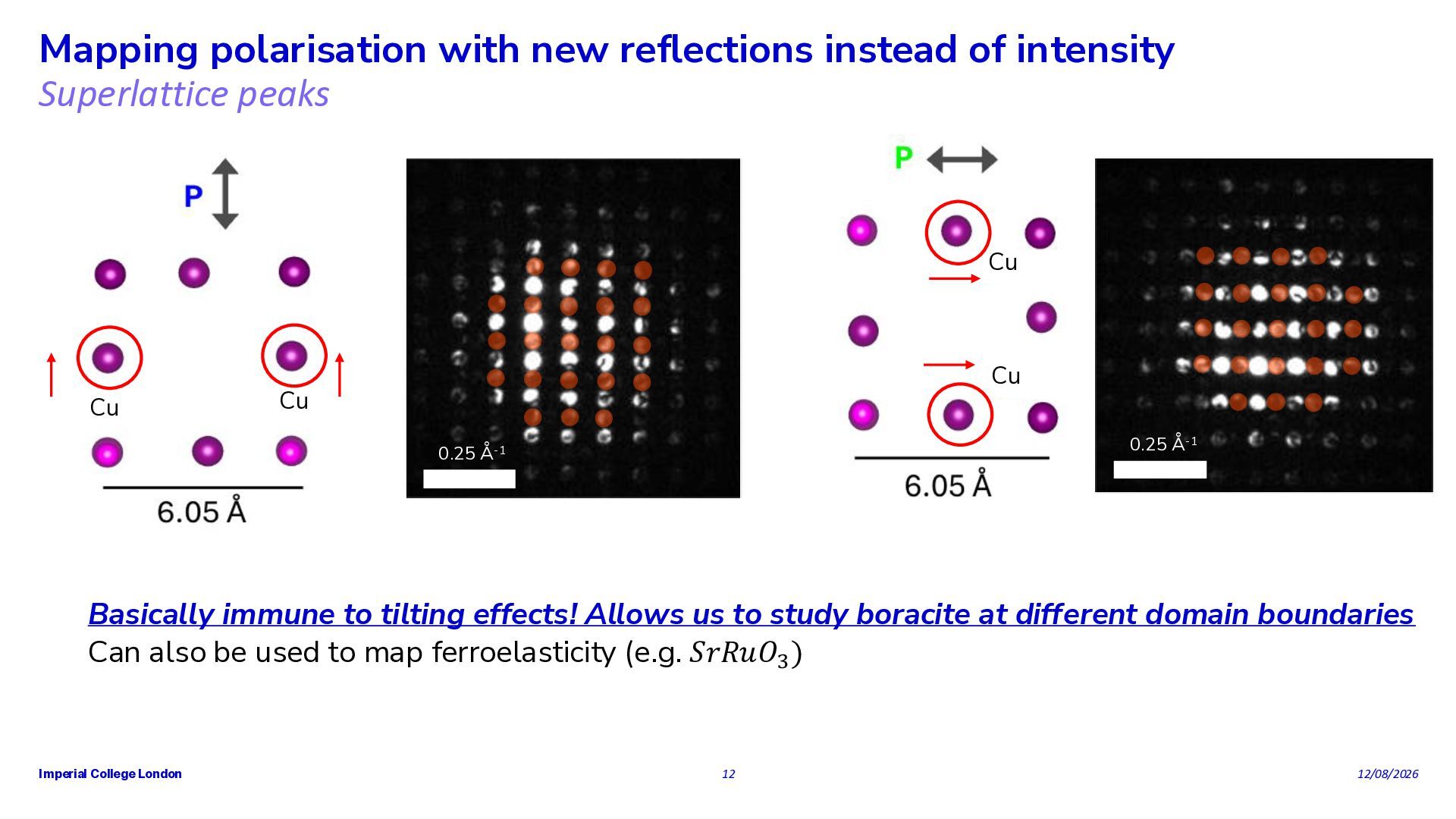
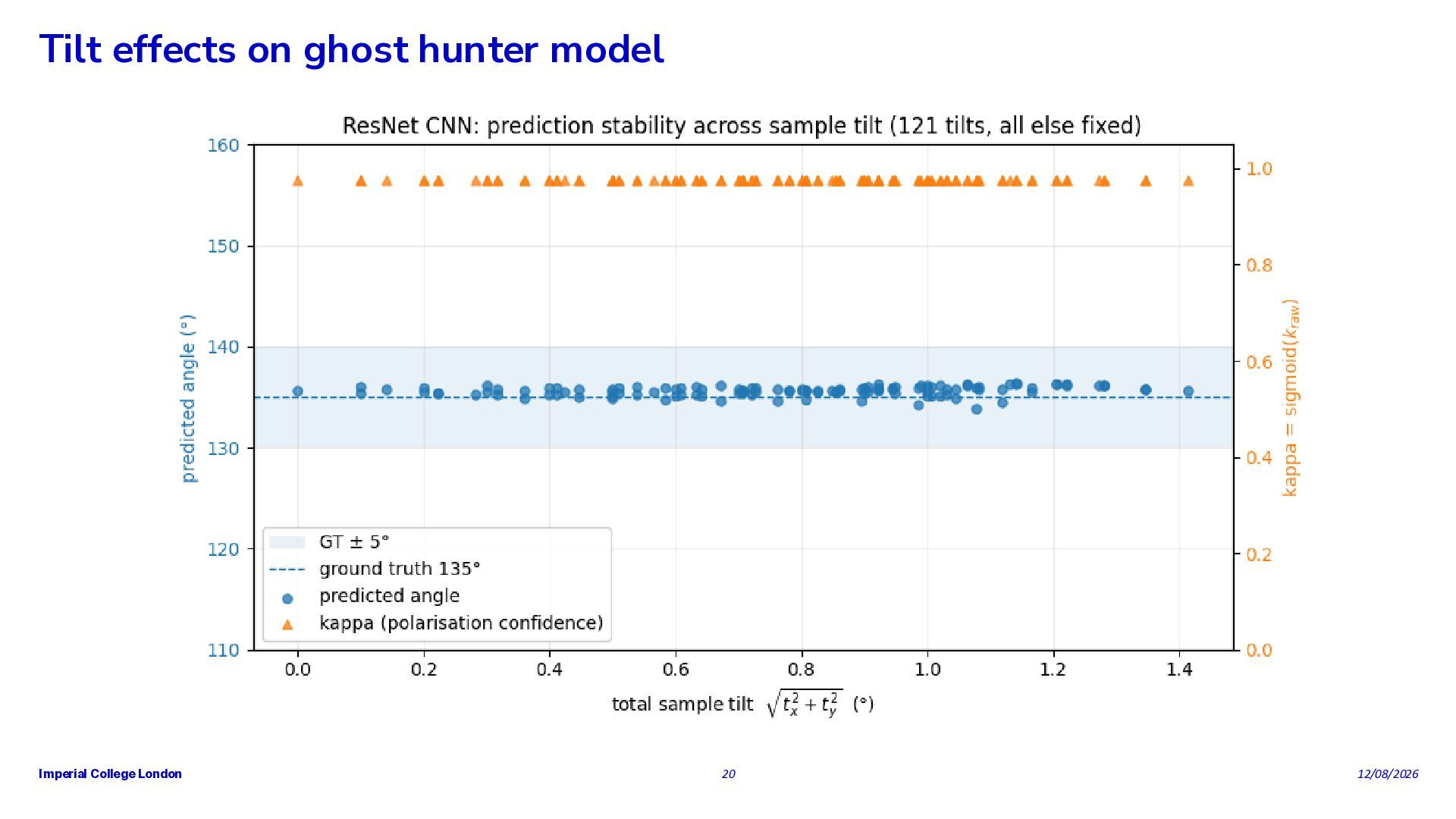
Cu Cu Cu Cu 0.25 Å-1 0.25 Å-1 Basically immune to tilting effects! Allows us to study boracite at different domain boundaries Can also be used to map ferroelasticity (e.g. 𝑆𝑟𝑅𝑢𝑂3 ) Imperial College London 12 12/08/2026
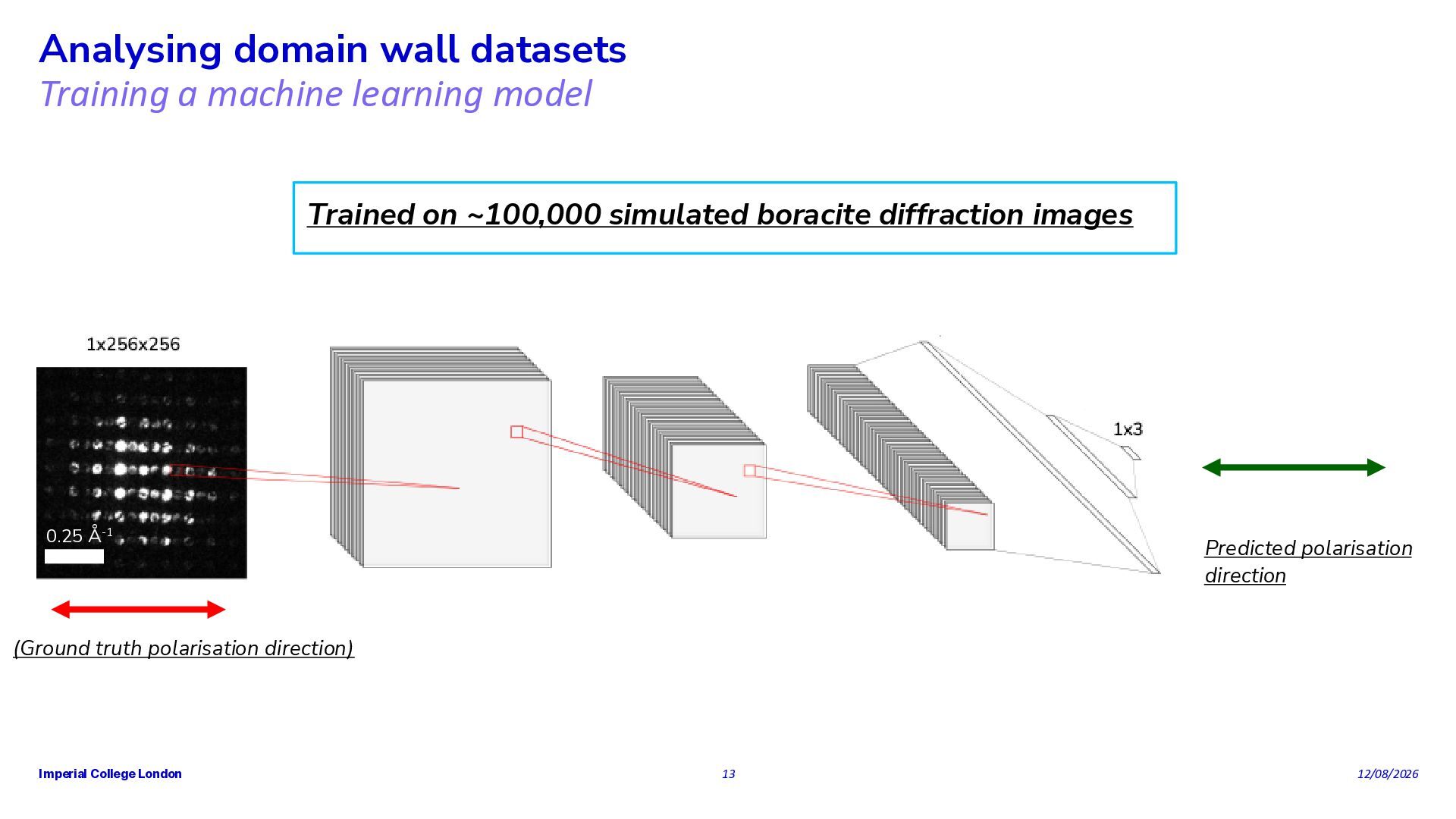
on ~100,000 simulated boracite diffraction images 0.25 Å-1 Predicted polarisation direction (Ground truth polarisation direction) Imperial College London 13 12/08/2026
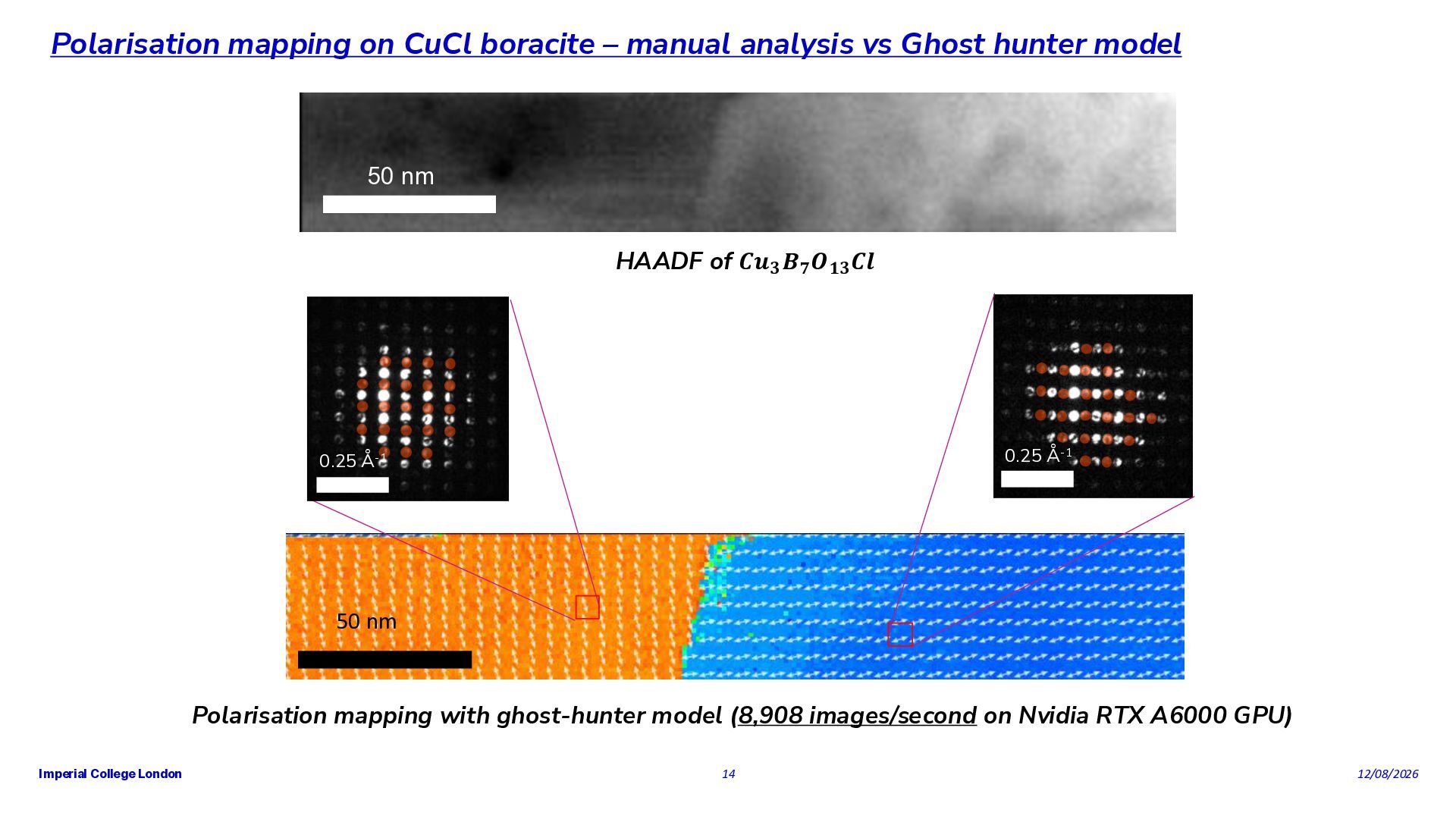
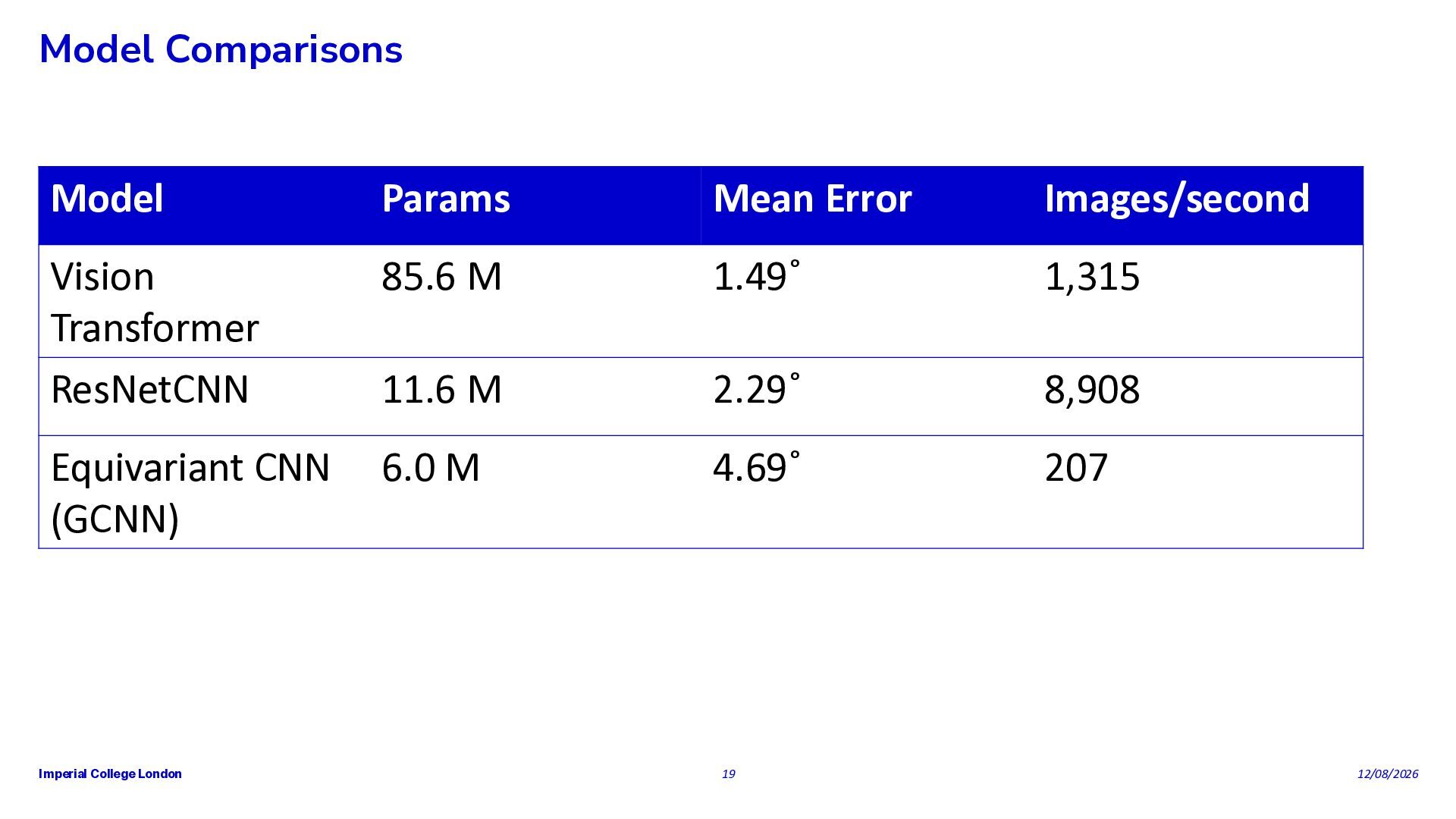
hunter model 50 nm HAADF of 𝑪𝒖𝟑 𝑩𝟕 𝑶𝟏𝟑 𝑪𝒍 0.25 Å-1 0.25 Å-1 50 nm Polarisation mapping with ghost-hunter model (8,908 images/second on Nvidia RTX A6000 GPU) Imperial College London 14 12/08/2026
sensitive to tilt 2. New methods for polarization analysis in 4D-STEM datasets required 3. Live mapping on microscope with advanced vision models now possible Imperial College London 17 12/08/2026
team Conroy group - Mariana Palos - Noah Schnitzer - Issa Saddiq - Geri Topore - Eda Colliver Fintan Hardy – [email protected] Imperial College London 18 12/08/2026


 shiell
 ontheslope
 hf149
 analokmaus
 sazimai
 xspa2012
 junkashihara
 institutdelelevage
 satai
 recsyslab
 ftakahashi
 geshan
 aleyda
 emna__ayadi
 geoffreycrofte
 apolaine
 michielstock
 addyosmani
 jonoalderson
 mlcsv
 rasmusluckow
 schroneko