Upgrade to Pro — share decks privately, control downloads, hide ads and more …

How Can I Avoid Matting When Using Multiple Hai...

How Can I Avoid Matting When Using Multiple Hair Bundles?

Avoiding matting when using multiple hair bundles requires a complete understanding of how extensions behave once installed and how daily habits affect their longevity. When several bundles are layered together, friction naturally increases, making proper care essential from the very beginning. The quality of the hair you choose plays a major role, as smoother, well-aligned strands are far less likely to tangle compared to lower-grade alternatives. Installation technique also matters, since tightly packed or unevenly placed wefts can create pressure points that encourage knotting over time. Maintaining consistent moisture is equally important because dry hair becomes rough and more prone to interlocking. Gentle detangling using the right tools helps preserve the smooth flow of the hair without causing unnecessary shedding or breakage. Nighttime protection is another critical factor, as friction from cotton pillowcases can quickly lead to matting if the hair is left uncovered. Wrapping the hair in satin or silk significantly reduces this risk and keeps the strands aligned. Washing routines should be balanced, using sulfate-free products to maintain softness without stripping natural smoothness. Overuse of heavy styling products should be avoided because buildup can make the hair sticky and harder to manage. Proper drying techniques also prevent stiffness that often leads to tangling. Styling choices like loose braids or buns help reduce daily friction between bundles. Environmental conditions such as humidity and wind can increase tangling, so protective styling during exposure is recommended. Regular maintenance routines ensure that small knots do not develop into larger mats. For better guidance on selecting and managing quality bundles, you can explore Bundle Head, which helps in understanding how proper bundle selection impacts long-term hair performance. Consistency in care routines is the most important factor in preventing matting. With the right habits, multiple bundles can remain smooth, soft, and manageable for a long time. Ultimately, prevention is always easier than fixing severe matting once it occurs.

Avatar for Fren Russo

Fren Russo

April 30, 2026

Other Decks in Business

Transcript

  1. How Can I Avoid Matting When Using Multiple Hair Bundles?

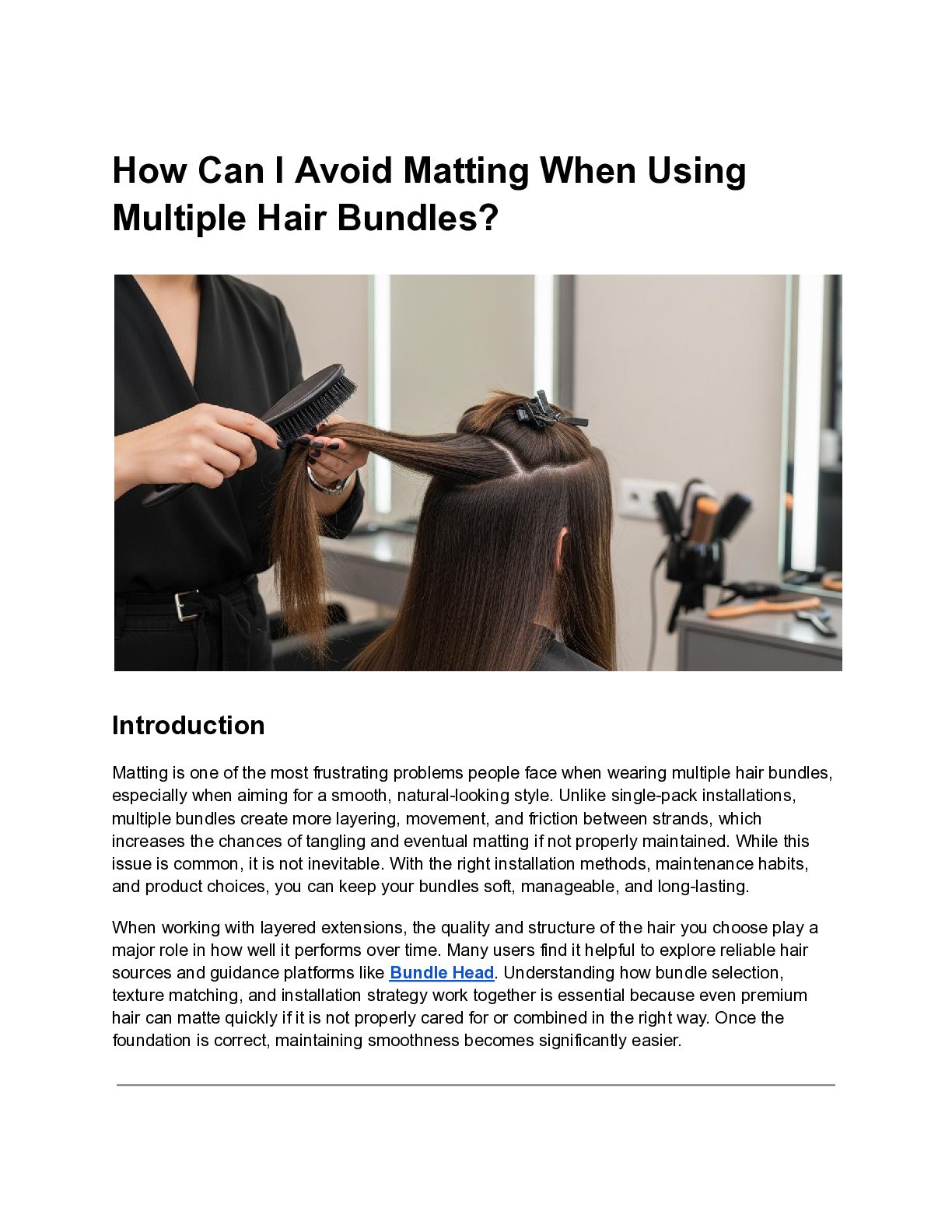
    Introduction Matting is one of the most frustrating problems people face when wearing multiple hair bundles, especially when aiming for a smooth, natural-looking style. Unlike single-pack installations, multiple bundles create more layering, movement, and friction between strands, which increases the chances of tangling and eventual matting if not properly maintained. While this issue is common, it is not inevitable. With the right installation methods, maintenance habits, and product choices, you can keep your bundles soft, manageable, and long-lasting. When working with layered extensions, the quality and structure of the hair you choose play a major role in how well it performs over time. Many users find it helpful to explore reliable hair sources and guidance platforms like Bundle Head. Understanding how bundle selection, texture matching, and installation strategy work together is essential because even premium hair can matte quickly if it is not properly cared for or combined in the right way. Once the foundation is correct, maintaining smoothness becomes significantly easier.
  2. Understanding Hair Bundles and Their Behavior Hair bundles are individual

    wefts of hair used to create fuller and longer hairstyles. When multiple bundles are installed, they are layered to achieve volume, length, or a specific style. While this layering creates a beautiful, natural look, it also introduces more interaction between strands. Every additional bundle increases friction points, which means more chances for tangling if the hair is dry, mismatched, or improperly maintained. Unlike natural hair that grows from a single scalp direction, extensions are sewn or bonded in sections. This means each bundle may move independently, especially when exposed to wind, sleep movement, or styling tools. Over time, this movement can cause strands to interlock, especially if the hair lacks moisture or if cuticle alignment is inconsistent. Understanding this behavior is the first step in preventing matting before it starts. Why Hair Bundles Mat Together Matting does not happen randomly—it is usually the result of several contributing factors working together. Understanding these causes helps you prevent the issue more effectively. 1. Friction Between Bundles When multiple bundles rub against each other during daily movement, friction increases. This is especially common in longer styles where the ends are constantly in motion. 2. Dryness and Lack of Moisture Dry hair is more likely to tangle because the strands become rough and brittle. Without moisture, cuticles lift and catch on neighboring strands. 3. Poor Installation Technique If bundles are sewn too tightly or placed without proper spacing, they can bunch together. This lack of separation encourages knotting. 4. Sleeping Without Protection Friction against cotton pillowcases can cause significant tangling overnight, especially when hair is loose. 5. Product Buildup
  3. Heavy oils, gels, and sprays can coat the hair and

    attract dust or dirt, making strands sticky and prone to matting. Choosing the Right Hair Bundles to Prevent Matting The foundation of preventing matting begins before installation. Selecting the right bundles can significantly reduce maintenance issues later. High-quality human hair with aligned cuticles tends to behave more predictably and resists tangling. Remy or virgin hair options are often preferred because the strands move in the same direction, reducing friction. Texture consistency is also important. Mixing very different textures (for example, silky straight with deep wave) can create uneven movement patterns, increasing tangling at overlap points. Another key factor is bundle density. Heavier bundles may seem fuller, but if not balanced correctly, they can create stress at the roots and encourage matting near the installation points. Proper selection ensures that the hair behaves as a unified system rather than separate, conflicting sections. Proper Installation Techniques Even the best hair can mat if it is installed incorrectly. Installation plays a critical role in how bundles interact with each other. Bundles should always be installed in a consistent direction to ensure smooth flow. If wefts are placed in opposing directions, strands will naturally clash and tangle. Spacing is another important factor. Overcrowding the scalp with too many bundles in a small area can restrict movement and cause friction buildup. A balanced installation allows air and movement between layers, reducing stress on the hair. Professional stylists often recommend leaving slight breathing room between wefts rather than stacking them too tightly. This reduces internal friction and helps maintain smoothness for longer periods. Daily Maintenance Routine
  4. Consistent care is one of the strongest defenses against matting

    when wearing multiple bundles. Brushing Technique Always use a wide-tooth comb or a soft bristle brush. Start from the ends and gradually work upward to avoid pulling knots downward into larger tangles. Detangling Frequency Light detangling once or twice a day can prevent small knots from forming into larger mats. Avoid aggressive brushing when the hair is dry. Moisture Balance Hydration is essential. Lightweight leave-in conditioners or moisturizing sprays help maintain softness without weighing the hair down. Product Control Avoid layering too many products. Excess buildup can create stickiness, which increases tangling risk between bundles. Night Care to Prevent Matting Nighttime is when most matting occurs because of prolonged friction and movement during sleep. Protecting your hair before bed is crucial. Wrapping the hair in a silk or satin scarf reduces friction significantly. Alternatively, satin bonnets or pillowcases can achieve similar protection. Loose braiding or twisting the hair before sleep also helps keep strands aligned and reduces unnecessary movement. This is especially useful for wavy or curly textures that are naturally more prone to tangling. Avoid sleeping with completely loose hair, as this allows bundles to rub against each other freely throughout the night. Washing and Conditioning Best Practices
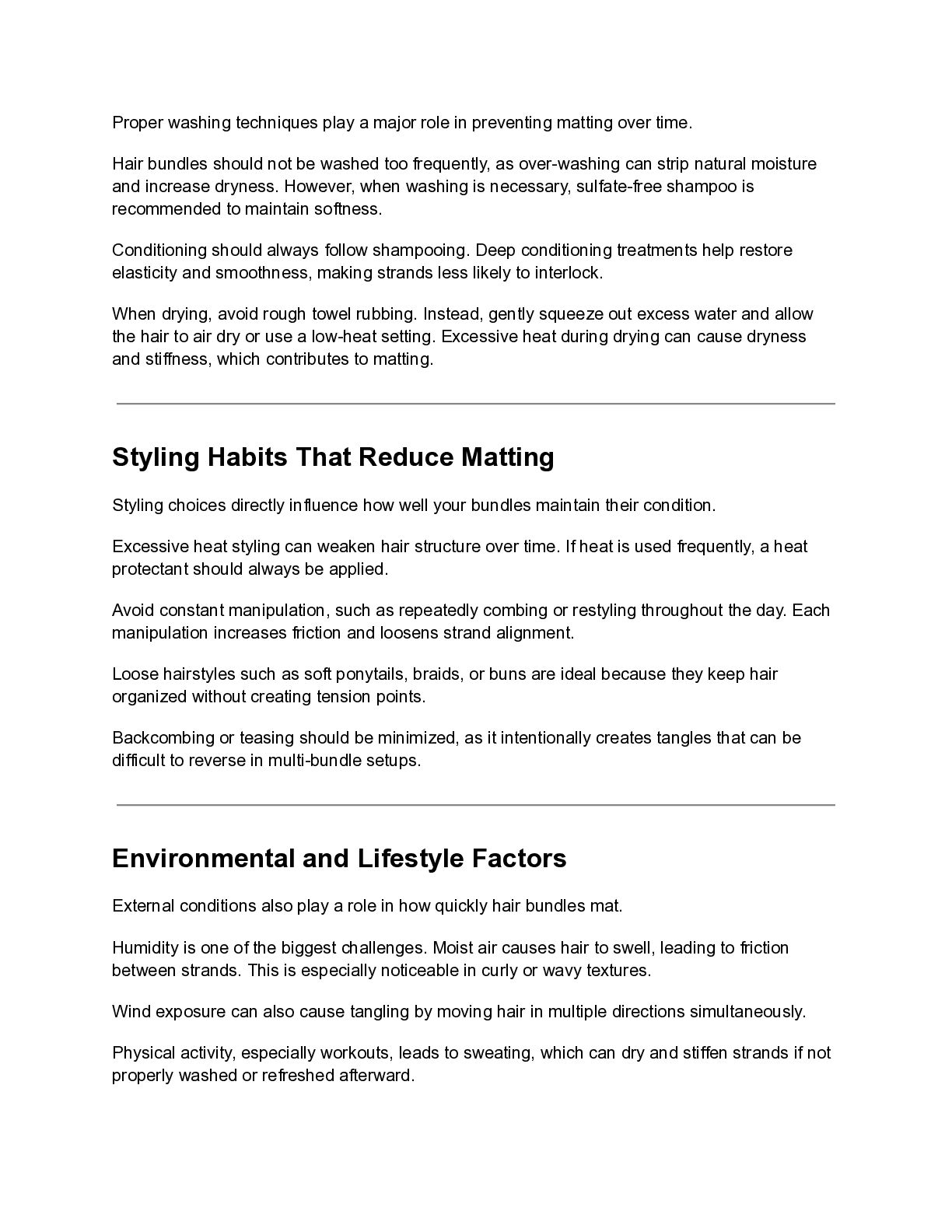
  5. Proper washing techniques play a major role in preventing matting

    over time. Hair bundles should not be washed too frequently, as over-washing can strip natural moisture and increase dryness. However, when washing is necessary, sulfate-free shampoo is recommended to maintain softness. Conditioning should always follow shampooing. Deep conditioning treatments help restore elasticity and smoothness, making strands less likely to interlock. When drying, avoid rough towel rubbing. Instead, gently squeeze out excess water and allow the hair to air dry or use a low-heat setting. Excessive heat during drying can cause dryness and stiffness, which contributes to matting. Styling Habits That Reduce Matting Styling choices directly influence how well your bundles maintain their condition. Excessive heat styling can weaken hair structure over time. If heat is used frequently, a heat protectant should always be applied. Avoid constant manipulation, such as repeatedly combing or restyling throughout the day. Each manipulation increases friction and loosens strand alignment. Loose hairstyles such as soft ponytails, braids, or buns are ideal because they keep hair organized without creating tension points. Backcombing or teasing should be minimized, as it intentionally creates tangles that can be difficult to reverse in multi-bundle setups. Environmental and Lifestyle Factors External conditions also play a role in how quickly hair bundles mat. Humidity is one of the biggest challenges. Moist air causes hair to swell, leading to friction between strands. This is especially noticeable in curly or wavy textures. Wind exposure can also cause tangling by moving hair in multiple directions simultaneously. Physical activity, especially workouts, leads to sweating, which can dry and stiffen strands if not properly washed or refreshed afterward.
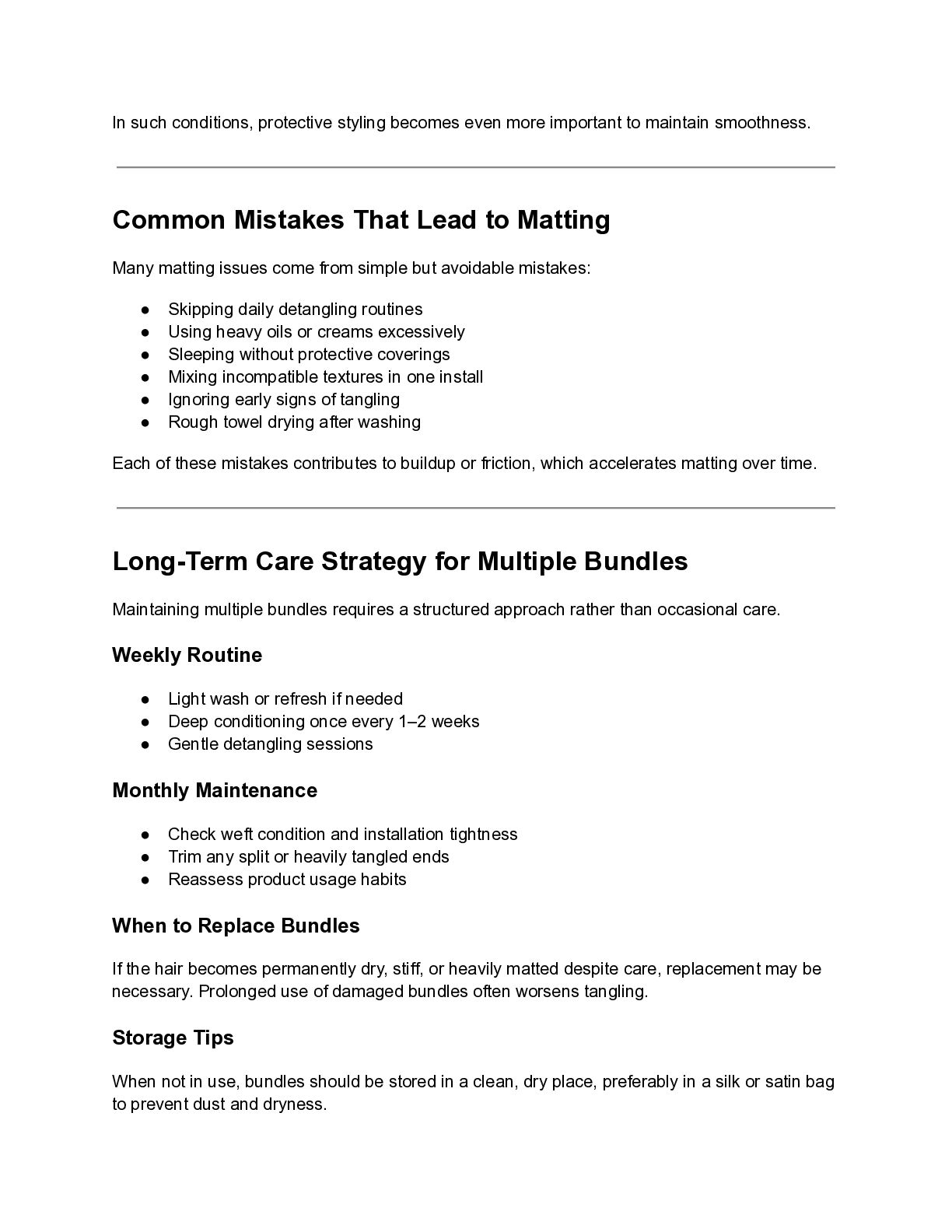
  6. In such conditions, protective styling becomes even more important to

    maintain smoothness. Common Mistakes That Lead to Matting Many matting issues come from simple but avoidable mistakes: •​ Skipping daily detangling routines •​ Using heavy oils or creams excessively •​ Sleeping without protective coverings •​ Mixing incompatible textures in one install •​ Ignoring early signs of tangling •​ Rough towel drying after washing Each of these mistakes contributes to buildup or friction, which accelerates matting over time. Long-Term Care Strategy for Multiple Bundles Maintaining multiple bundles requires a structured approach rather than occasional care. Weekly Routine •​ Light wash or refresh if needed •​ Deep conditioning once every 1–2 weeks •​ Gentle detangling sessions Monthly Maintenance •​ Check weft condition and installation tightness •​ Trim any split or heavily tangled ends •​ Reassess product usage habits When to Replace Bundles If the hair becomes permanently dry, stiff, or heavily matted despite care, replacement may be necessary. Prolonged use of damaged bundles often worsens tangling. Storage Tips When not in use, bundles should be stored in a clean, dry place, preferably in a silk or satin bag to prevent dust and dryness.
  7. Conclusion Avoiding matting when using multiple hair bundles is not

    about a single solution—it is about consistent care, proper installation, and mindful daily habits. From selecting high-quality bundles and ensuring correct installation to maintaining moisture balance and protecting hair at night, every step plays a role in keeping extensions smooth and manageable. When these practices are followed together, multiple bundles can remain soft, natural-looking, and easy to maintain over long periods.