$30 off During Our Annual Pro Sale. View Details »

Gaza’s Desalination Pivot: Turning a Thirst Tra...

Gaza’s Desalination Pivot: Turning a Thirst Trap into a Climate‑Peace Solution

Gaza is where climate vulnerability collides head‑on with political blockade. A joint World Water Day press release from the Palestinian Central Bureau of Statistics and the Palestinian Water Authority notes that 97 percent of water pumped from the Strip’s coastal aquifer fails World Health Organization standards—leaving most families to scrape by on as little as 3 to 15 litres a day (PCBS & PWA, 2024). When a July 2025 Israeli strike hit a queue of people filling jerrycans, Reuters described residents doubling back to brackish wells despite the risk of disease (Reuters, 2025). Layer the region’s projected heat on top of that. A 2021 study in npj Climate and Atmospheric Science warns that, without steep emissions cuts, parts of the Middle East and North Africa will face “super‑ and ultra‑extreme” heatwaves above 50 °C by late century (Zittis et al., 2021). With water scarce and temperatures soaring, Gaza’s humanitarian emergency easily mutates into a climate‑security tinderbox.

Avatar for Futoshi Tachino

Futoshi Tachino

November 12, 2025
Tweet

More Decks by Futoshi Tachino

Other Decks in Education

Transcript

  1. Gaza’s Desalination Pivot: Turning a Thirst Trap into a Climate-Peace

    Solution by Futoshi Tachino https://futoshitachino6.wordpress.com/
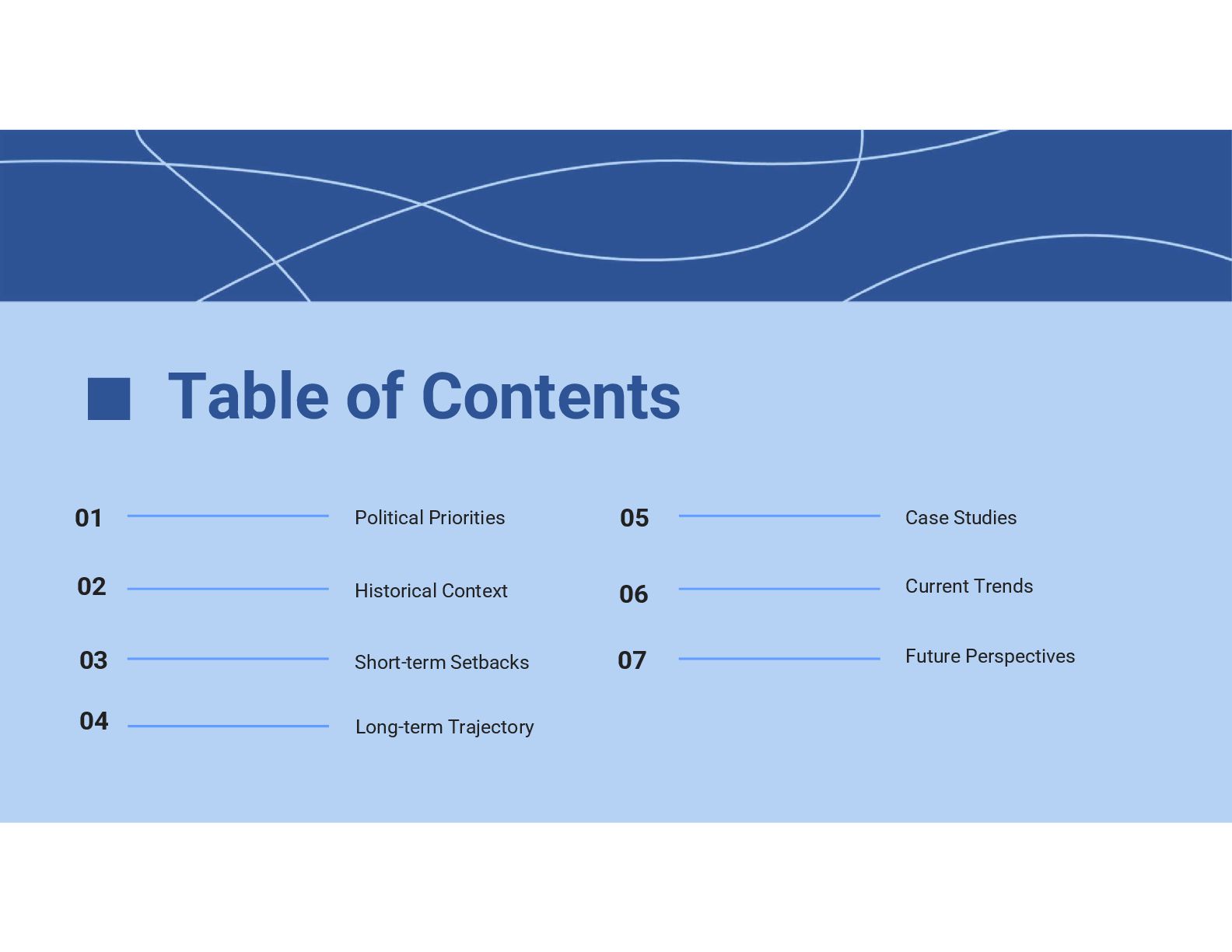
  2. Table of Contents Political Priorities 01 03 02 04 05

    06 07 Historical Context Short-term Setbacks Long-term Trajectory Case Studies Current Trends Future Perspectives
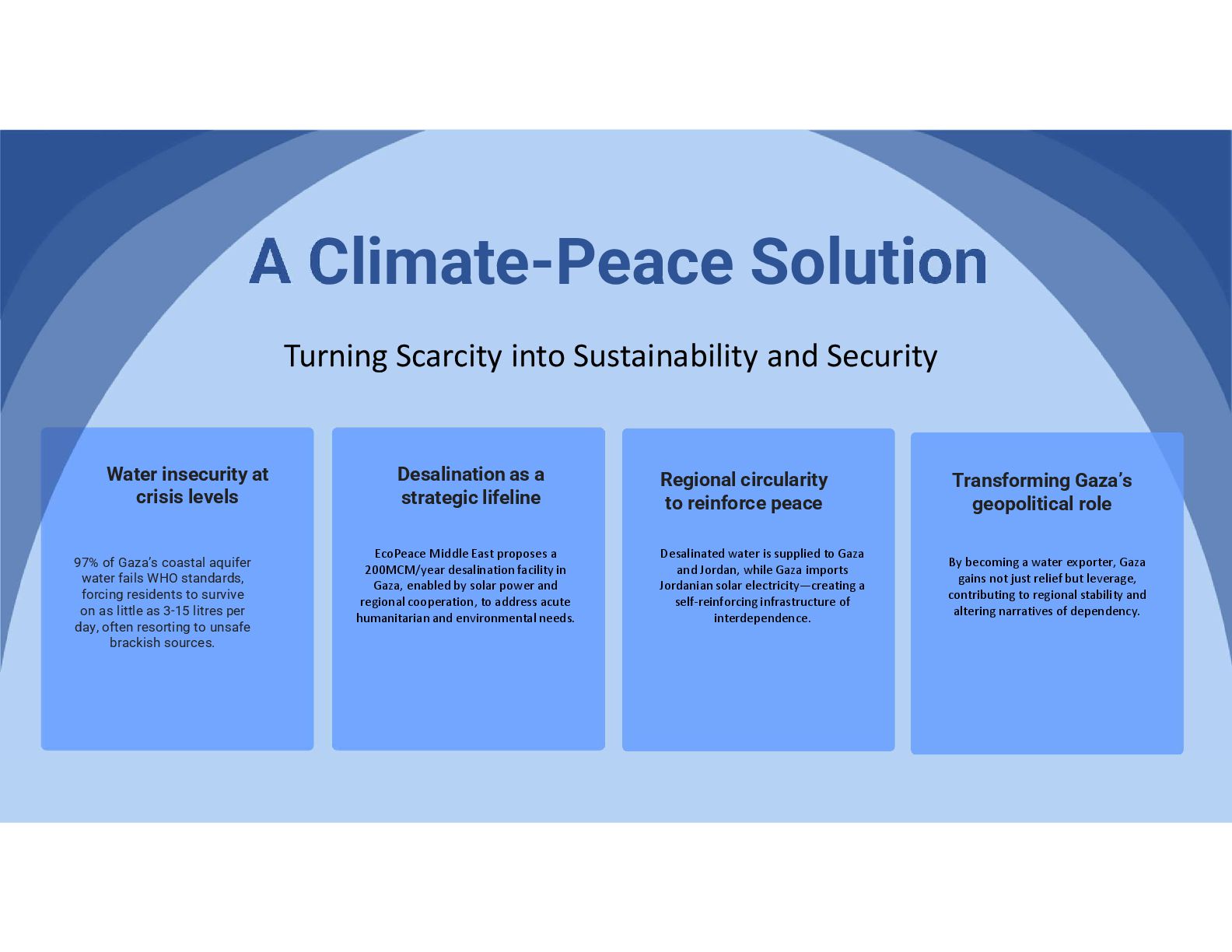
  3. A Climate-Peace Solution Water insecurity at crisis levels 97% of

    Gaza’s coastal aquifer water fails WHO standards, forcing residents to survive on as little as 3-15 litres per day, often resorting to unsafe brackish sources. EcoPeace Middle East proposes a 200MCM/year desalination facility in Gaza, enabled by solar power and regional cooperation, to address acute humanitarian and environmental needs. By becoming a water exporter, Gaza gains not just relief but leverage, contributing to regional stability and altering narratives of dependency. Turning Scarcity into Sustainability and Security Regional circularity to reinforce peace Desalination as a strategic lifeline Desalinated water is supplied to Gaza and Jordan, while Gaza imports Jordanian solar electricity—creating a self-reinforcing infrastructure of interdependence. Transforming Gaza’s geopolitical role
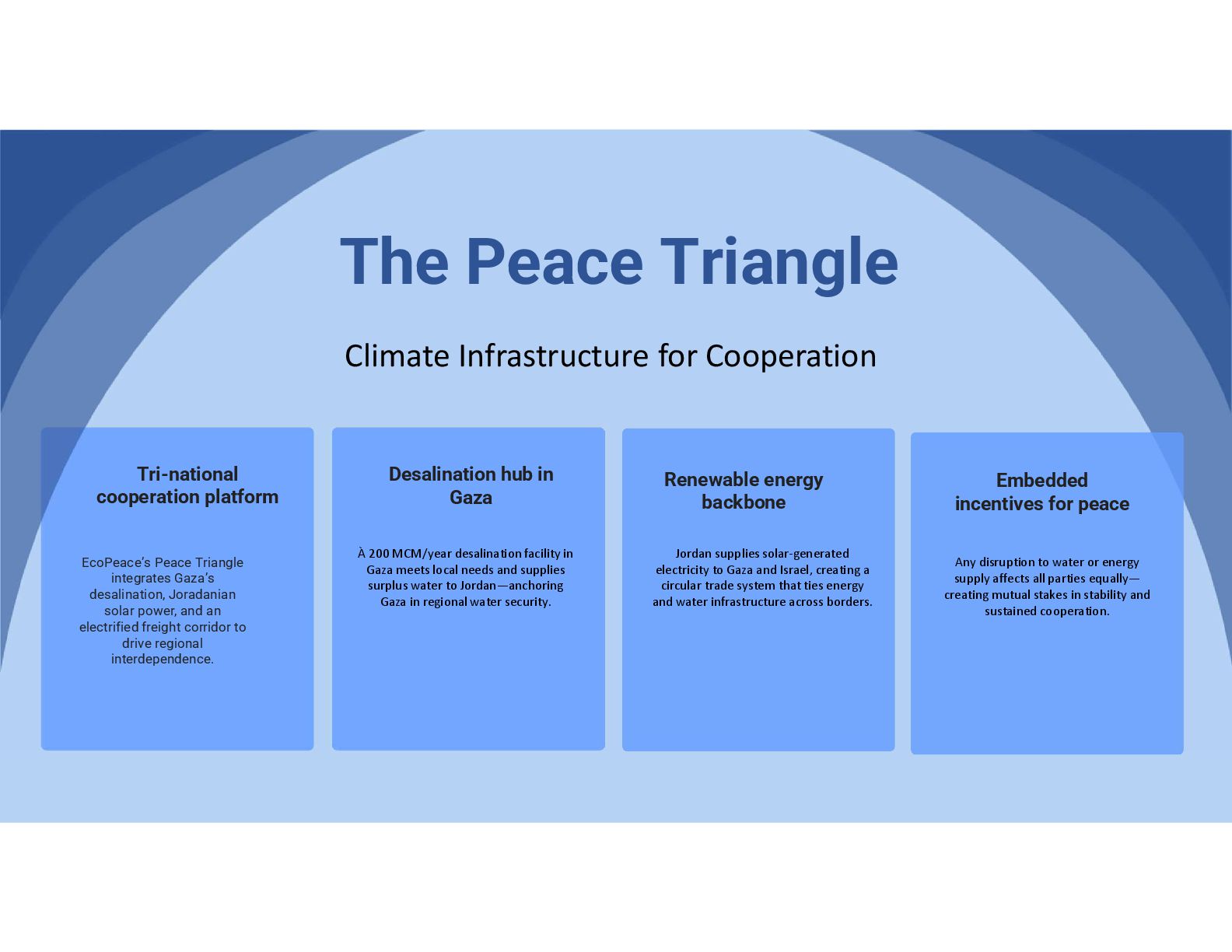
  4. The Peace Triangle Tri-national cooperation platform EcoPeace’s Peace Triangle integrates

    Gaza’s desalination, Joradanian solar power, and an electrified freight corridor to drive regional interdependence. À 200 MCM/year desalination facility in Gaza meets local needs and supplies surplus water to Jordan—anchoring Gaza in regional water security. Any disruption to water or energy supply affects all parties equally— creating mutual stakes in stability and sustained cooperation. Climate Infrastructure for Cooperation Renewable energy backbone Desalination hub in Gaza Jordan supplies solar-generated electricity to Gaza and Israel, creating a circular trade system that ties energy and water infrastructure across borders. Embedded incentives for peace
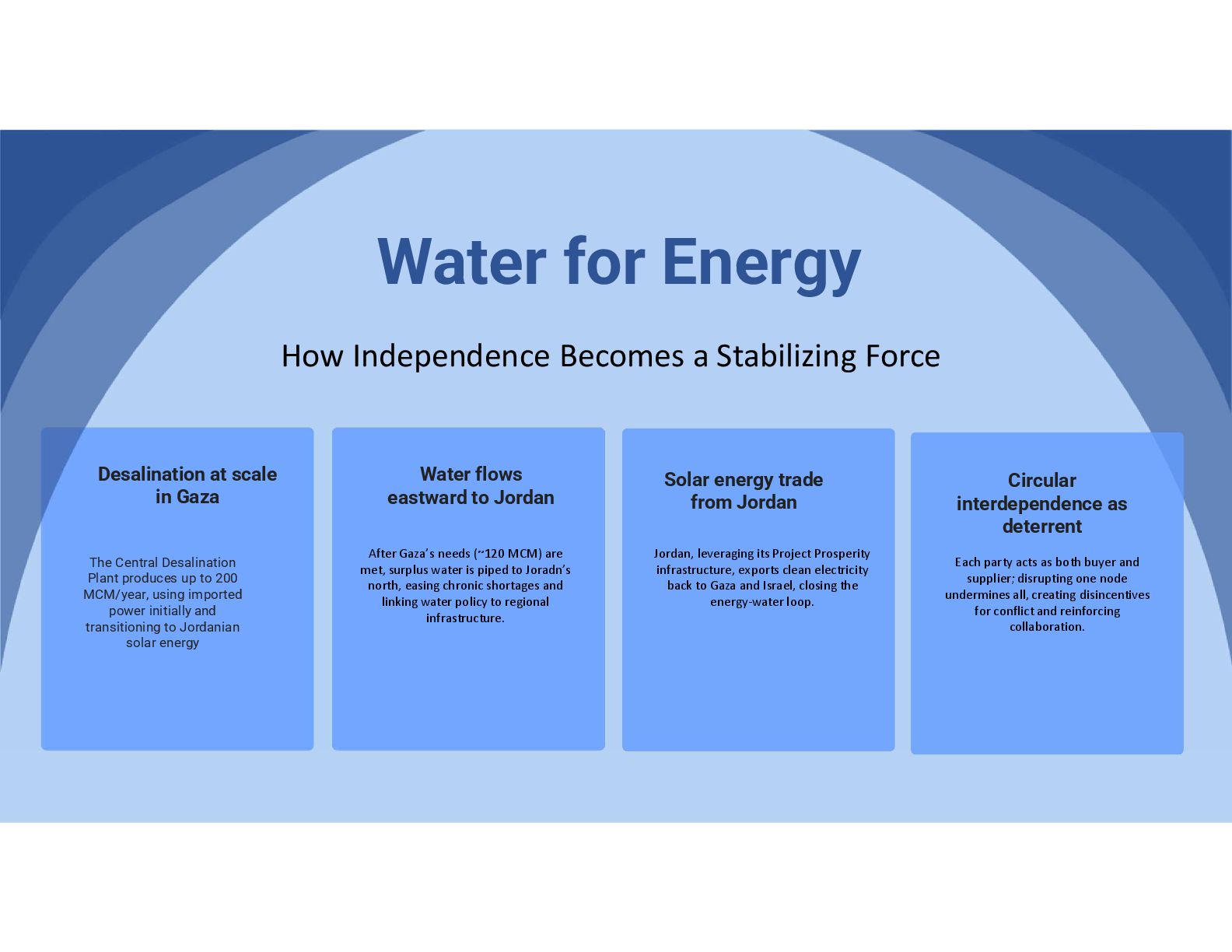
  5. Water for Energy Desalination at scale in Gaza The Central

    Desalination Plant produces up to 200 MCM/year, using imported power initially and transitioning to Jordanian solar energy After Gaza’s needs (~120 MCM) are met, surplus water is piped to Joradn’s north, easing chronic shortages and linking water policy to regional infrastructure. Each party acts as both buyer and supplier; disrupting one node undermines all, creating disincentives for conflict and reinforcing collaboration. How Independence Becomes a Stabilizing Force Solar energy trade from Jordan Water flows eastward to Jordan Jordan, leveraging its Project Prosperity infrastructure, exports clean electricity back to Gaza and Israel, closing the energy-water loop. Circular interdependence as deterrent
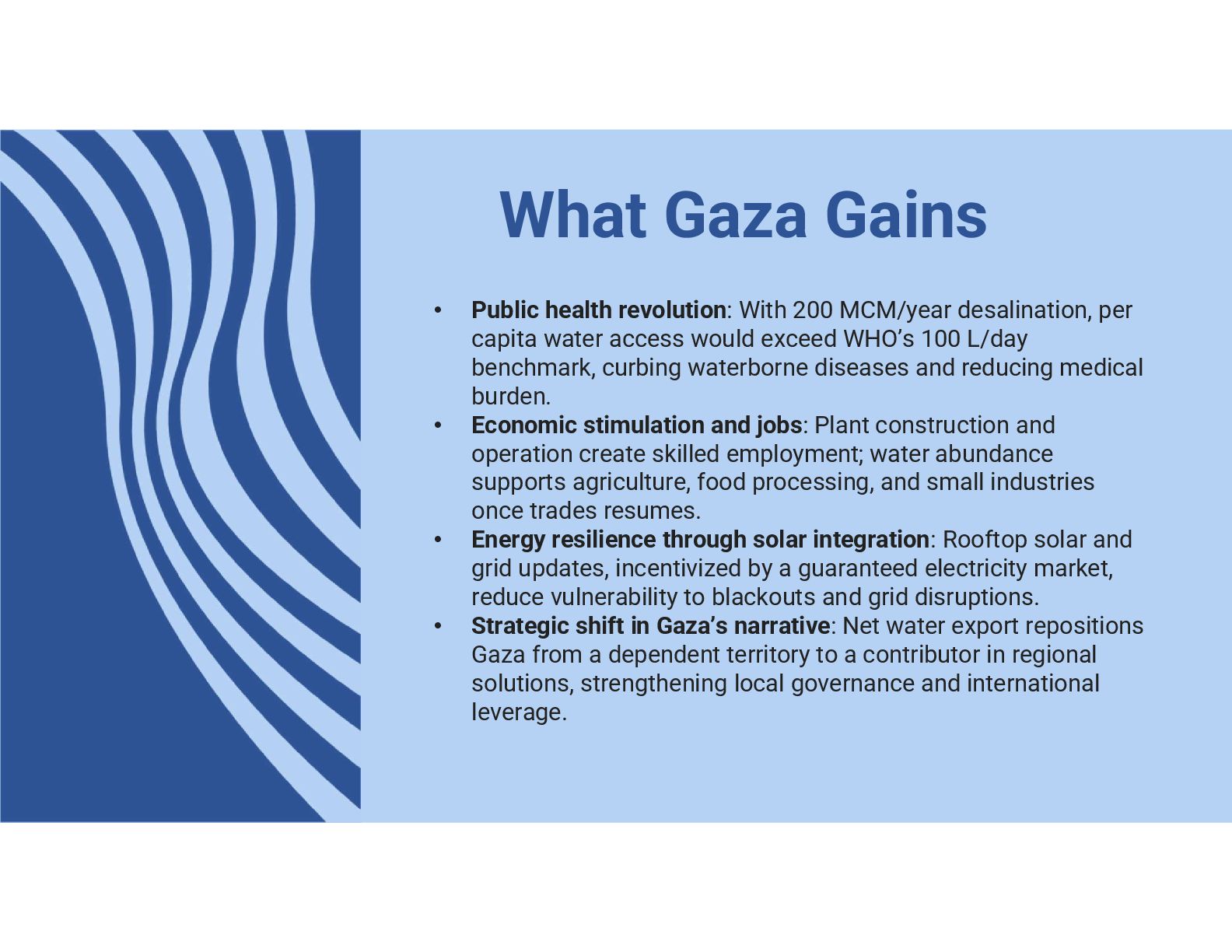
  6. What Gaza Gains • Public health revolution: With 200 MCM/year

    desalination, per capita water access would exceed WHO’s 100 L/day benchmark, curbing waterborne diseases and reducing medical burden. • Economic stimulation and jobs: Plant construction and operation create skilled employment; water abundance supports agriculture, food processing, and small industries once trades resumes. • Energy resilience through solar integration: Rooftop solar and grid updates, incentivized by a guaranteed electricity market, reduce vulnerability to blackouts and grid disruptions. • Strategic shift in Gaza’s narrative: Net water export repositions Gaza from a dependent territory to a contributor in regional solutions, strengthening local governance and international leverage.
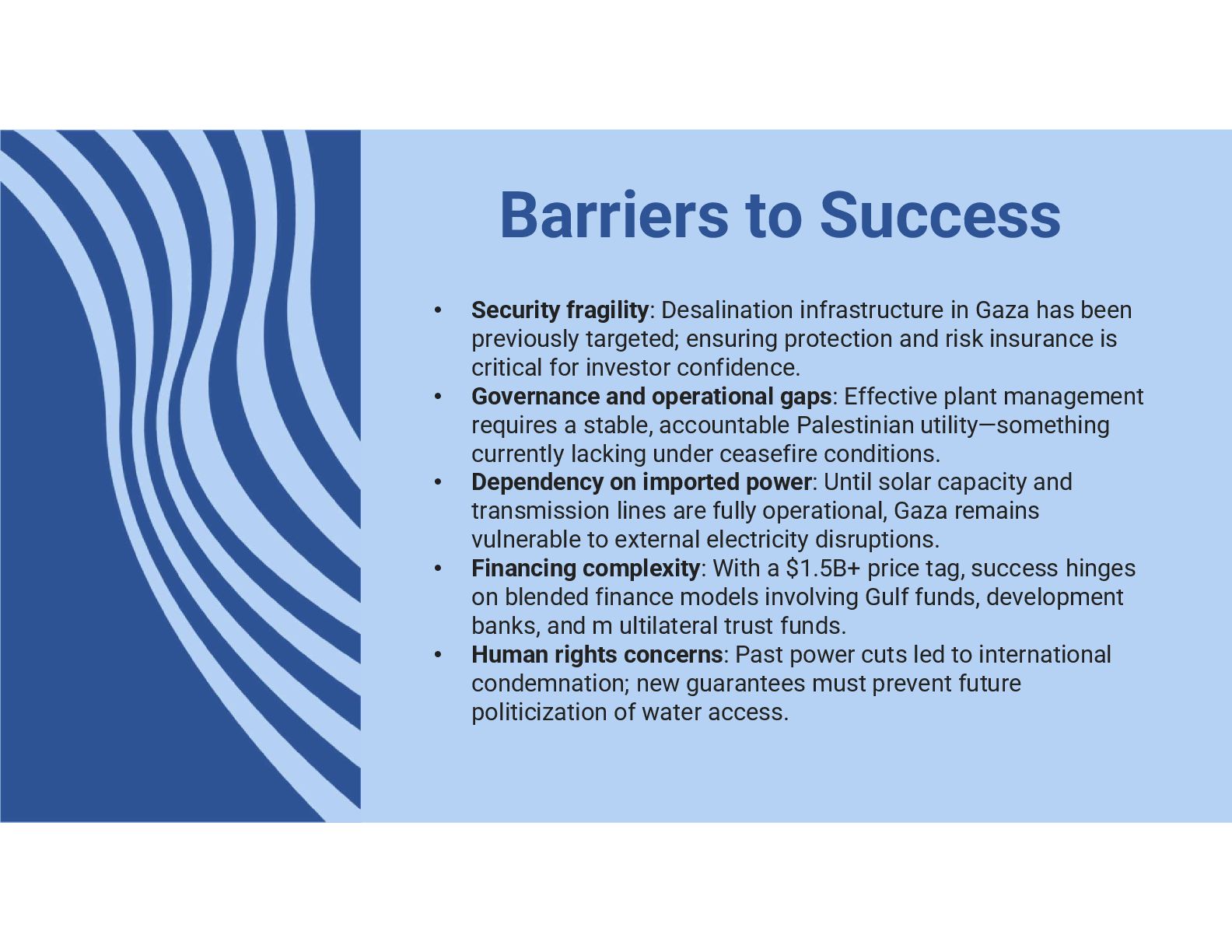
  7. Barriers to Success • Security fragility: Desalination infrastructure in Gaza

    has been previously targeted; ensuring protection and risk insurance is critical for investor confidence. • Governance and operational gaps: Effective plant management requires a stable, accountable Palestinian utility—something currently lacking under ceasefire conditions. • Dependency on imported power: Until solar capacity and transmission lines are fully operational, Gaza remains vulnerable to external electricity disruptions. • Financing complexity: With a $1.5B+ price tag, success hinges on blended finance models involving Gulf funds, development banks, and m ultilateral trust funds. • Human rights concerns: Past power cuts led to international condemnation; new guarantees must prevent future politicization of water access.
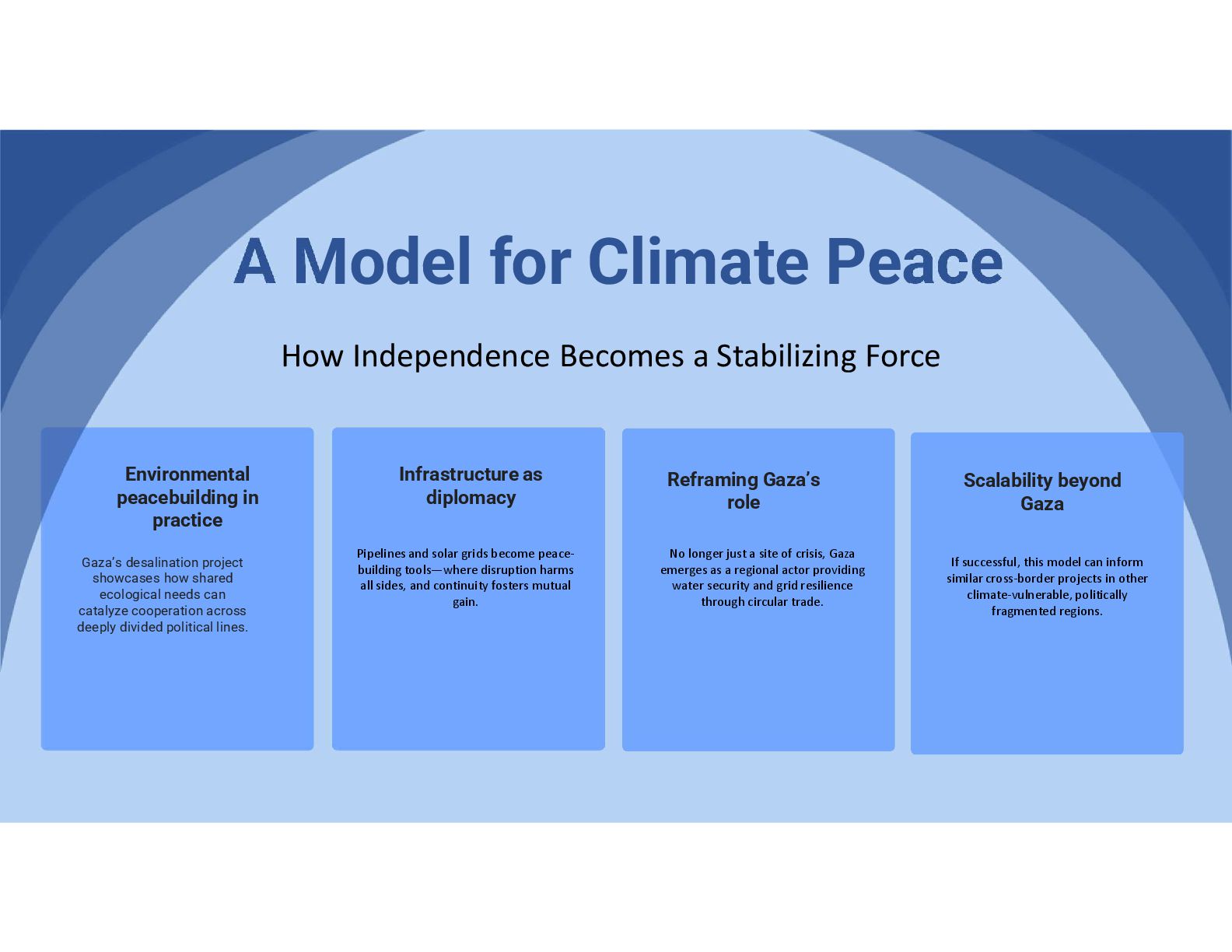
  8. A Model for Climate Peace Environmental peacebuilding in practice Gaza’s

    desalination project showcases how shared ecological needs can catalyze cooperation across deeply divided political lines. Pipelines and solar grids become peace- building tools—where disruption harms all sides, and continuity fosters mutual gain. If successful, this model can inform similar cross-border projects in other climate-vulnerable, politically fragmented regions. How Independence Becomes a Stabilizing Force Reframing Gaza’s role Infrastructure as diplomacy No longer just a site of crisis, Gaza emerges as a regional actor providing water security and grid resilience through circular trade. Scalability beyond Gaza
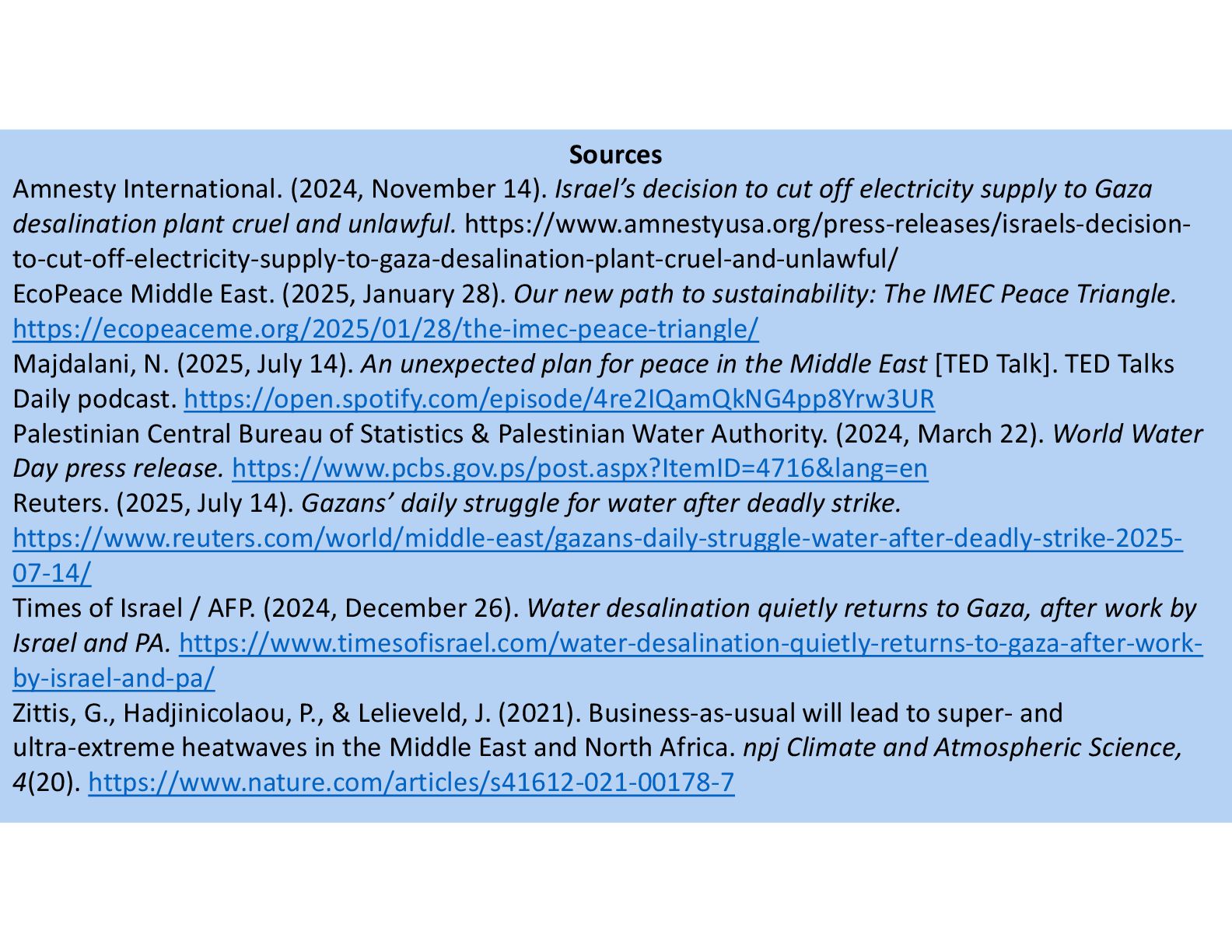
  9. Sources Amnesty International. (2024, November 14). Israel’s decision to cut

    off electricity supply to Gaza desalination plant cruel and unlawful. https://www.amnestyusa.org/press-releases/israels-decision- to-cut-off-electricity-supply-to-gaza-desalination-plant-cruel-and-unlawful/ EcoPeace Middle East. (2025, January 28). Our new path to sustainability: The IMEC Peace Triangle. https://ecopeaceme.org/2025/01/28/the-imec-peace-triangle/ Majdalani, N. (2025, July 14). An unexpected plan for peace in the Middle East [TED Talk]. TED Talks Daily podcast. https://open.spotify.com/episode/4re2IQamQkNG4pp8Yrw3UR Palestinian Central Bureau of Statistics & Palestinian Water Authority. (2024, March 22). World Water Day press release. https://www.pcbs.gov.ps/post.aspx?ItemID=4716&lang=en Reuters. (2025, July 14). Gazans’ daily struggle for water after deadly strike. https://www.reuters.com/world/middle-east/gazans-daily-struggle-water-after-deadly-strike-2025- 07-14/ Times of Israel / AFP. (2024, December 26). Water desalination quietly returns to Gaza, after work by Israel and PA. https://www.timesofisrael.com/water-desalination-quietly-returns-to-gaza-after-work- by-israel-and-pa/ Zittis, G., Hadjinicolaou, P., & Lelieveld, J. (2021). Business-as-usual will lead to super- and ultra-extreme heatwaves in the Middle East and North Africa. npj Climate and Atmospheric Science, 4(20). https://www.nature.com/articles/s41612-021-00178-7
  10. Futoshi Tachino is an environmental writer who believes in the

    power of small, positive actions to protect the planet. He writes about the beauty of nature and offers practical tips for everyday sustainability, from reducing waste to conserving energy. Find Futoshi Tachino at: Any Flip: https://anyflip.com/homepage/wrrac Audiomack: https://audiomack.com/futoshitachino-1 Bluesky: https://bsky.app/profile/futoshitachino.bsky.social Hashnode: https://futoshitachino6.hashnode.dev/ Medium: https://medium.com/@futoshitachino_55745 Speaker: https://www.spreaker.com/user/futoshi-tachino--18326940 Speaker Deck: https://speakerdeck.com/futoshitachino2 Substack: https://substack.com/@futoshitachino1 Vocal: https://vocal.media/authors/futoshi-tachino WordPress: https://futoshitachino6.wordpress.com/ X: https://x.com/FutoshiTachino YouTube: https://www.youtube.com/@FutoshiTachino-v9b